## Background
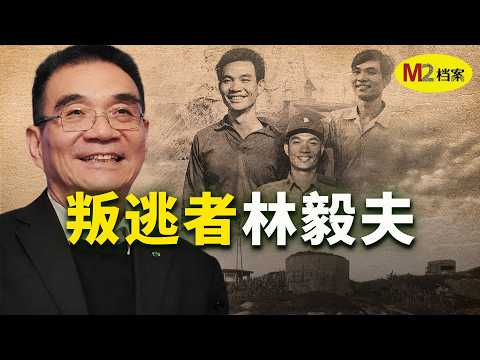
Published on May 23, 2026, by the YouTube channel M2 Story, this episode of the M2 Archives (M2档案) explores the highly controversial life of Justin Yifu Lin (Lin Yifu). The page description frames him as a former rising military star personally cultivated by Chiang Ching-kuo who dramatically defected from Kinmen to mainland China in 1979. It questions whether this polarizing figure—who transformed from a Taiwanese officer into a prominent Peking University professor, University of Chicago PhD, and World Bank Chief Economist—is an idealist, an opportunist, or a realist who simply chose the winning side of history.
## TL;DR
This deep-dive biographical profile tracks the cinematic and polarizing trajectory of economist Lin Yifu, beginning with his dramatic 1979 midnight swim from the elite Taiwanese military outpost of Mashan to communist-controlled Mainland China. The narrative deconstructs his early life as an elite National Taiwan University dropout turned KMT poster child, exploring the deep-seated professional frustrations and grand personal ambitions that drove him to defect just hours after witnessing a fellow defector's execution. Decades later, despite rising to global economic prominence and advising Beijing's top leadership, Lin remains a radioactive political symbol trapped between a Taiwanese military establishment that refuses to forgive his treason and a shifting mainland public increasingly skeptical of his grand economic predictions. Ultimately, his story is framed as a complex tragedy of a man whose monumental ambitions completely severed his ties to his homeland, leaving him permanently exiled from his roots.
## Atmosphere & style
The narrative carries a tense, cinematic, and deeply ironic tone, juxtaposing the cold, fog-shrouded realities of cold-war frontline military operations with the grand ideological shifts of cross-strait politics. It evokes a heavy sense of isolation and bittersweet tragedy, particularly during the heartbreaking account of Lin being forced to watch his father's funeral via a choppy internet livestream while his wife stands in his place. The storytelling feels like a gripping historical psychological thriller, capturing both the fierce, burning ambition of a brilliant intellectual and the cold, unyielding machinery of state propaganda and military honor that ultimately left him a man without a homeland.
## Key takeaways
- [00:00](https://www.youtube.com/watch?v=Y4py72JESh0&t=0s) Lin Yifu remains an intensely polarizing cross-strait figure, viewed by Beijing as a top-tier state policy advisor but branded by Taiwanese critics as a modern-day Wu Sangui and military traitor.
- [00:00](https://www.youtube.com/watch?v=Y4py72JESh0&t=0s) In a twist of profound irony, Lin successfully defected by swimming to the mainland on the exact same night he was forced to witness the execution of a captured Taiwanese defector.
- [03:12](https://www.youtube.com/watch?v=Y4py72JESh0&t=192s) The Taiwanese military initially declared Lin 'presumed dead' to avoid the deep institutional embarrassment of admitting that a highly publicized star officer had successfully deserted his post.
- [09:54](https://www.youtube.com/watch?v=Y4py72JESh0&t=594s) Lin’s early life was defined by intense poverty in Yilan, driving a relentless academic work ethic that propelled him to student leadership at National Taiwan University.
- [09:54](https://www.youtube.com/watch?v=Y4py72JESh0&t=594s) He shocked the nation by abandoning his elite education to enlist permanently, becoming the KMT regime's ultimate propaganda poster child for native Taiwanese loyalty.
- [15:10](https://www.youtube.com/watch?v=Y4py72JESh0&t=910s) Despite his intellectual pedigree, Lin was trapped by his own patriotic myth and forced into a slow, grinding grassroots military track on the tense frontline of Kinmen rather than being allowed to study abroad.
- [20:13](https://www.youtube.com/watch?v=Y4py72JESh0&t=1213s) Lin's defection was fueled by deep professional boredom, a cynical realization that cross-strait military alerts were used for public manipulation, and a feeling of political marginalization by mainstream military elites.
- [20:13](https://www.youtube.com/watch?v=Y4py72JESh0&t=1213s) To secure his escape, Lin gathered updated tide tables, ordered his sentries not to fire on communist frogmen, and swam 3,000 meters across the meridian line using ocean currents.
- [29:54](https://www.youtube.com/watch?v=Y4py72JESh0&t=1794s) Lin's request to return home for his father's funeral in 2002 triggered a massive political crisis, exposing a bizarre hypocrisy where the pro-independence DPP defended him to open a backchannel to Beijing, while the KMT fiercely condemned him.
- [29:54](https://www.youtube.com/watch?v=Y4py72JESh0&t=1794s) Taiwan's defense ministry has maintained an unyielding stance against Lin, ensuring he will face an immediate military tribunal for treason if he ever returns.
- [29:54](https://www.youtube.com/watch?v=Y4py72JESh0&t=1794s) In recent years, Lin's credibility on the Chinese internet has waned due to his repeatedly delayed predictions regarding when China will officially achieve high-income country status.
## Detailed walkthrough
### [00:00](https://www.youtube.com/watch?v=Y4py72JESh0&t=0s) The Defector’s Two Faces and the Disappearance at Mashan
In March 2026, during China’s Two Sessions, Chen Yunying—a Taiwanese deputy to the National People's Congress—made headlines by lamenting that her compatriots live in an "information cocoon," entirely cut off from mainland software like Doubao, KIMI, and DeepSeek. While Chen herself might not be a household name, her husband certainly is: Lin Yifu. A legendary yet highly polarizing figure, Lin’s reputation remains starkly split. Some revere him as a "state master" and top-tier policy advisor to Beijing, while critics brand him a modern-day Wu Sangui—a traitor. Decades before advising communist leadership, Lin was a rising star in Taiwan's military, hand-picked for greatness by Chiang Ching-kuo. His sudden defection to the mainland sparked decades of cross-strait tension. To some, he is a passionate idealist; to others, an incredibly shrewd and lucky realist.
The story truly begins on the afternoon of May 16, 1979, on the dumbbell-shaped island of Kinmen. A Taiwanese defector had been caught, and a gunshot echoed across Liaolo Bay as he was executed. Among the forced onlookers was a young company commander named Lin Zhengyi—the name Lin Yifu went by at the time. Forced to watch the execution to learn a lesson about loyalty, Lin publicly denounced the traitor. Yet, in a twist of cinematic irony, Lin himself would vanish into the waves that very night.
Lin commanded the 2nd Company, 5th Battalion, 851st Brigade of the 284th Division—better known as the prestigious "Mashan Company." Located at the northeast corner of Kinmen, Mashan was the closest Taiwanese outpost to the mainland, sitting a mere two kilometers away from the People’s Liberation Army (PLA) stronghold on Jiaoyu Island. As night fell, a heavy fog rolled in, a product of the warm southwest monsoon colliding with the frigid China Coastal Current. At 8:30 PM, Superior Private Tong Jingyao checked in with Captain Lin before heading to camp to pick up new recruits. By 9:30 PM, Tong returned, but the captain was nowhere to be found.
* **Execution as a Warning:** Lin Zhengyi was forced to witness a failed defector's execution on May 16, 1979, just hours before making his own escape.
* **The Mashan Company:** Only the most elite grassroots military officers were chosen to command this critical frontline outpost, which sat just two kilometers from PLA territory.
* **The Disappearance:** By 10:50 PM, patrolling officers confirmed that Captain Lin was missing from both his quarters and the observation posts, throwing the entire base into a panic.
---
### [03:12](https://www.youtube.com/watch?v=Y4py72JESh0&t=192s) Operation Thunder and the Phoenix of Beijing
As midnight passed with no sign of Captain Lin, the division headquarters erupted. Division Commander Zhou Zhongnan ordered an immediate sea search and coastal lockdown. At 1:20 AM, the Kinmen Defense Command launched "Operation Thunder"—a real-time combat contingency plan. During such an operation, soldiers and civilians alike donned white armbands, grabbed wooden clubs, and combed every square inch of the island. If a defector wasn't found within five days, full mobilization occurred; by day eight, the entire island was mobilized.
While Lin was nowhere to be found, the search party did uncover telling clues on the northwestern beach: a pair of sneakers marked "Company Commander," alongside a missing life jacket, canvas belt, canteen, compass, first-aid kit, military ID, and critically, operational combat plans and the commander's speeches on Kinmen's defense strategy. By morning, mainland military personnel were spotted through closed-circuit television, gathered and pointing at a specific shrubbery line on the opposite shore. Taiwan's military surmised that Lin had been shot and wounded by the PLA during his crossing, given the tense, shoot-first atmosphere of the era.
By May 26, the military officially listed Lin as "missing"—a classification chosen primarily because admitting a star officer had successfully defected was deeply embarrassing. Under Taiwanese military rules, a ground soldier missing for a year was declared dead. Thus, Lin was written off as deceased due to illness, and his family was awarded a compassionate allowance of over 475,000 New Taiwan Dollars, which his father and wife faithfully collected until 1987. The military assumed the embarrassment had blown over—until Lin "resurrected" in 1993. Taiwan’s Ministry of National Defense released an intelligence report revealing that Lin Yifu, a prominent figure at the Beijing Academy of Social Sciences, was actually the long-lost Lin Zhengyi.
* **Items Taken by Lin:** A life jacket, canvas belt, compass, canteen, first-aid kit, military ID, a company flag, and highly sensitive defense plans.
* **The "Presumed Dead" Pension:** Lin’s family received 475,000 NTD in government compensation under the assumption that he had died in active service.
* **The Paper Trail of Success:** After crossing, Lin was reportedly promoted three levels by the Xiamen Military Sub-district to a deputy regimental grade, went on to earn a master's degree from Peking University (1982), a PhD from the University of Chicago (1986), and eventually became the Chief Economist and Senior Vice President of the World Bank in 2008.
---
### [09:54](https://www.youtube.com/watch?v=Y4py72JESh0&t=594s) The Blood Pact and the Golden Boy's Ambition
To understand why a top-tier military asset would risk his life swimming across a freezing, heavily mined strait, one has to look back to 1975. Following the death of Chiang Kai-shek, 24 student representatives from the Republic of China Military Academy formed a fierce loyalty pact. They penned a vow in blood to "carry out Chiang's last wishes and return the capital to Nanjing," stamping it with their fingerprints. Decades later, journalists visiting the academy's history museum noticed a patch on the framed document: the name "Chen Guozhong" had been pasted over the original signature of the academy's golden boy—Lin Zhengyi.
Born in Yilan County in 1952, Lin grew up in poverty. His mother washed clothes to get by, and Lin worked odd jobs after school, hauling swill from a local hospital to feed pigs. Despite the chaotic night-market environment surrounding his home, Lin possessed a brilliant mind. He would sleep straight after dinner, wake up at midnight, and study until dawn. This relentless drive earned him a spot at the prestigious National Taiwan University (NTU).
At NTU, Lin quickly became a radical student leader during a tumultuous era marked by the Baodiao movement and Taiwan's exit from the United Nations. While other freshmen were adjusting to campus life, Lin founded the Freshman Student Representative Association and aggressively challenged university authorities. Future political heavyweight Zhao Shaokang, an upperclassman in Lin's department, remembered him as a fiery orator who constantly urged students to take to the streets, terrifying the university administration. Even a senior law student named Ma Ying-jeou took note of the heavily built, passionate youth from Yilan. However, Lin’s political zeal wrecked his first-semester grades. During a subsequent eight-week military training stint at Chenggongling, Lin shocked the nation by announcing he was quitting NTU to permanently enlist in the military.
* **The First Ever Drop-out:** Lin was the first student in over a decade of the Chenggongling program to abandon an elite university like NTU to join the army, framing it as a duty to fight the "undercurrent of appeasement toward evil" in the world.
* **The Regime’s Poster Child:** Because Chiang Ching-kuo wanted to cultivate native Taiwanese talent, Lin became an instant celebrity. The Director of the General Political Warfare Department, Wang Sheng, was so moved he gave Lin his own wristwatch on the spot.
---
### [15:10](https://www.youtube.com/watch?v=Y4py72JESh0&t=910s) The Golden Cage and the Slow Crawl to the Frontline
Lin graduated second in his military academy class, missing the top spot by a microscopic 0.01 points. This razor-thin margin sparked rumors of political sabotage. Analysts believe Lin was caught in a turf war between Wang Sheng’s political warfare faction and the traditional army elite, who allegedly docked Lin's scores just to spite Wang Sheng. Nevertheless, Chiang Ching-kuo personally looked after his star recruit, arranging for him to stay at the academy as a platoon leader and granting him a military scholarship to earn an MBA at National Chengchi University (NCCU).
During his time at NCCU, Lin's social circle took an unusual turn for a Nationalist poster child. He joined the Yilan Compatriot Association and befriended Chen Ju, a fierce anti-Kuomintang (KMT) dissident who would later become a cornerstone of the Democratic Progressive Party (DPP). He also crossed paths with other future DPP founders like Lin Zhengjie and Guo Zhengliang. While these associations may have planted seeds of political skepticism in Lin, his immediate career options after graduation were stifling.
Unlike his classmates who were sent to the United States on government dimes to earn PhDs and return as fast-tracked generals or high-level secretaries, Lin was forced into the grueling, slow-moving grassroots military track. The system that built him up as a patriotic symbol could not afford to let him leave for America; doing so would ruin the propaganda narrative. Thus, in February 1979, the highly intellectual MBA graduate was sent to command the grueling, tense Mashan outpost on the frontline of Kinmen.
* **The Strategic Value of Kinmen:** Regarded by Chiang Kai-shek as the defensive shield for Taiwan, Mashan sat just 1,800 meters from communist territory at low tide. It was a high-profile "window" frequently visited by top generals and dignitaries.
* **The Trap of the Persona:** Lin found himself trapped by his own propaganda image. Having renounced academic privilege for frontline glory, the state held him to that myth, stalling his career advancement.
---
### [20:13](https://www.youtube.com/watch?v=Y4py72JESh0&t=1213s) The Four Motives and the Midnight Swim
Life as the commander of "The World’s Number One Watchpost" was a parade of high-society buffering and deeply unfulfilling military minutiae. Lin regularly had to host visiting military elite, including high-ranking generals like Wang Sheng, He Yingqin, and Gu Zhutong. While he smiled and briefed the top brass on their "iron-clad will to resist the enemy," his internal frustrations were boiling over. Experts point to four distinct motives that drove Lin to defect. First was his stalled career path; second was a profound boredom and frustration with grassroots military administration. An intellectual who openly looked down on his military peers—once complaining that they had "the age of college students, the physical strength of middle school students, and the intellect of elementary school students"—Lin detested handling the mundane, day-to-day grievances of a hundred ordinary soldiers.
Third was a deep-seated feeling of being used and politically marginalized. By late 1978, cross-strait tensions artificially spiked due to the normalization of US-China relations. Lin, sharp-witted and highly cynical, recognized that the high-alert status was largely a psychological tool to unite a fractured public. During a brief leave to Taiwan, a moody Lin confessed over heavy liquor to an old classmate that he felt deeply alienated, targeted by "mainstream" military graduates, and trapped by a system that denied him permission to take the overseas study selection exams. Finally, his personal ambition simply outgrew the rigid Taiwanese system.
On the morning of May 26, Lin laid the groundwork for his escape. He asked his clerk for a new tide table, noting that the original was flawed. That night promised a massive, decade-low low tide. Days prior, he instructed his sentries on patrol not to fire on any communist "water ghosts" (frogmen) unless directly provoked, subtly ensuring his men wouldn’t accidentally shoot him when he entered the water. After his 8:30 PM meeting with Private Tong, Lin slipped away under the cover of night and dense fog. He stripped off his shoes, carefully navigated a minefield and anti-air landing spikes, scrambled over large brown boulders, and dived into the ocean.
* **The Swim:** A strong swimmer from his youth in Yilan, Lin swam roughly 3,000 meters, utilizing the ocean currents to cross the cross-strait meridian line within an hour.
* **The Capture:** According to journalist Evan Osnos, who interviewed Lin multiple times, Lin swam toward the mainland shore knowing it was heavily mined. He pulled a waterproof flashlight from his clothes and signaled the PLA in Morse code. A lone Chinese soldier waded into the water and arrested him.
---
### [29:54](https://www.youtube.com/watch?v=Y4py72JESh0&t=1794s) The Yilan Faction and the Broken Homecoming
In May 2002, Lin's father, Lin Huoshu, passed away in Yilan. Lin’s public request to return to Taiwan for the funeral triggered a massive political earthquake. One lawmaker observed that Beijing hadn't spent a dime, yet the mere rumor of Lin's return "acted like a missile fired into Taiwan." Strikingly, it was the pro-independence DPP—traditionally fiercely anti-Beijing—that led the charge to let him back. This anomaly was driven entirely by the "Yilan Faction."
Yilan was widely considered the sacred cradle of Taiwanese democracy, and many top DPP figures—including Yu Shyi-kun, Chen Dingnan, and Chen Ju—were Lin's childhood friends or school alumni. The DPP leadership, including then-President Chen Shui-bian, hoped to use the Yilan Faction's personal ties with Lin to open a backchannel to Beijing for commercial negotiations. The KMT and opposition lawmakers were furious, pointing out the hypocrisy of treating a military deserter like a "romantic idealist" and "the pride of Yilan." The internal political fighting grew so toxic that the funeral had to be delayed for over twenty days. Ultimately, Lin’s dream of returning fell apart. His wife, Chen Yunying, attended the funeral alone, wearing traditional sackcloth and carrying Lin's mourning attire to perform the prostrations on his behalf, while Lin watched a choppy internet livestream from a makeshift altar at Peking University.
When the KMT's Ma Ying-jeou took power, Lin tried again, but his path was blocked by his former camp commander turned Defense Minister, Kao Hua-chu. Kao stood firm, stating that as long as he ran the ministry, a traitor would never be forgiven or allowed back without facing a military tribunal. Today, with the political fading of the old Yilan Faction and a decade of a much harsher political landscape under newer DPP leadership, the 74-year-old Lin’s chances of returning home are virtually nonexistent. Meanwhile, his economic predictions have drawn scrutiny on the Chinese internet. Having confidently predicted that China would reach high-income country status by 2025, he later pushed the date to 2026, and recently to 2027—making it increasingly difficult for ordinary citizens facing economic hardship to empathize with his grandiose visions. The walkthrough concludes with a telling anecdote: before taking his post at the World Bank, Lin was asked what development philosophy he would bring to the institution. He instantly replied, "Emancipate the mind, and seek truth from facts"—a classic Communist Party slogan that prompted an immediate wave of laughter from the room.
* **Political Hypocrisy:** While radical independence advocates defended Lin as a victim of "different personal ambitions," hardline unifiers and military traditionalists became his fiercest enemies.
* **Chen Yunying’s Sacrifices:** A fellow academic prodigy from a wealthy furniture-manufacturing family, Chen stayed behind in Yilan, raised their two children alone under intense social stigma, and only reunited with Lin in the US in 1983.
* **The Unforgiven Status:** Despite higher-ranking defectors flying combat planes to the mainland over the years, Lin’s unique identity as an NTU intellectual turned KMT model soldier makes his legacy uniquely radioactive in Taiwanese politics.
## Notable quotes
> [00:00](https://www.youtube.com/watch?v=Y4py72JESh0&t=0s) Taiwanese compatriots live in an 'information cocoon,' entirely cut off from mainland software like Doubao, KIMI, and DeepSeek. — Chen Yunying
> [09:54](https://www.youtube.com/watch?v=Y4py72JESh0&t=594s) Carry out Chiang's last wishes and return the capital to Nanjing. — Military Academy Student Representatives
> [09:54](https://www.youtube.com/watch?v=Y4py72JESh0&t=594s) Undercurrent of appeasement toward evil. — Lin Zhengyi (Lin Yifu)
> [20:13](https://www.youtube.com/watch?v=Y4py72JESh0&t=1213s) The age of college students, the physical strength of middle school students, and the intellect of elementary school students. — Lin Zhengyi (Lin Yifu)
> [20:13](https://www.youtube.com/watch?v=Y4py72JESh0&t=1213s) Iron-clad will to resist the enemy. — Lin Zhengyi (Lin Yifu)
> [29:54](https://www.youtube.com/watch?v=Y4py72JESh0&t=1794s) Acted like a missile fired into Taiwan. — Anonymous Taiwanese Lawmaker
> [29:54](https://www.youtube.com/watch?v=Y4py72JESh0&t=1794s) A traitor would never be forgiven or allowed back without facing a military tribunal. — Kao Hua-chu
> [29:54](https://www.youtube.com/watch?v=Y4py72JESh0&t=1794s) Emancipate the mind, and seek truth from facts. — Lin Yifu
## Mentioned
Lin Yifu, Lin Zhengyi, Chen Yunying, Chiang Ching-kuo, Chiang Kai-shek, Zhou Zhongnan, Tong Jingyao, Chen Guozhong, Wang Sheng, Zhao Shaokang, Ma Ying-jeou, Chen Ju, Lin Zhengjie, Guo Zhengliang, He Yingqin, Gu Zhutong, Evan Osnos, Lin Huoshu, Yu Shyi-kun, Chen Dingnan, Chen Shui-bian, Kao Hua-chu, Doubao, KIMI, DeepSeek, National People's Congress, Peking University, University of Chicago, World Bank, National Taiwan University, National Chengchi University, Republic of China Military Academy, Democratic Progressive Party, Kuomintang, M2 Story, Beijing Academy of Social Sciences
[Source](https://www.youtube.com/watch?v=Y4py72JESh0)
Source quotes
[0:00] Chen Yunying: Taiwanese compatriots live in an 'information cocoon,' entirely cut off from mainland software like Doubao, KIMI, and DeepSeek.
[9:54] Military Academy Student Representatives: Carry out Chiang's last wishes and return the capital to Nanjing.
[9:54] Lin Zhengyi (Lin Yifu): Undercurrent of appeasement toward evil.
[20:13] Lin Zhengyi (Lin Yifu): The age of college students, the physical strength of middle school students, and the intellect of elementary school students.
[20:13] Lin Zhengyi (Lin Yifu): Iron-clad will to resist the enemy.
[29:54] Anonymous Taiwanese Lawmaker: Acted like a missile fired into Taiwan.
[29:54] Kao Hua-chu: A traitor would never be forgiven or allowed back without facing a military tribunal.
[29:54] Lin Yifu: Emancipate the mind, and seek truth from facts.