Ben Felix Pushes 5% Rule as Data Debunks Homeowner Happiness Edge
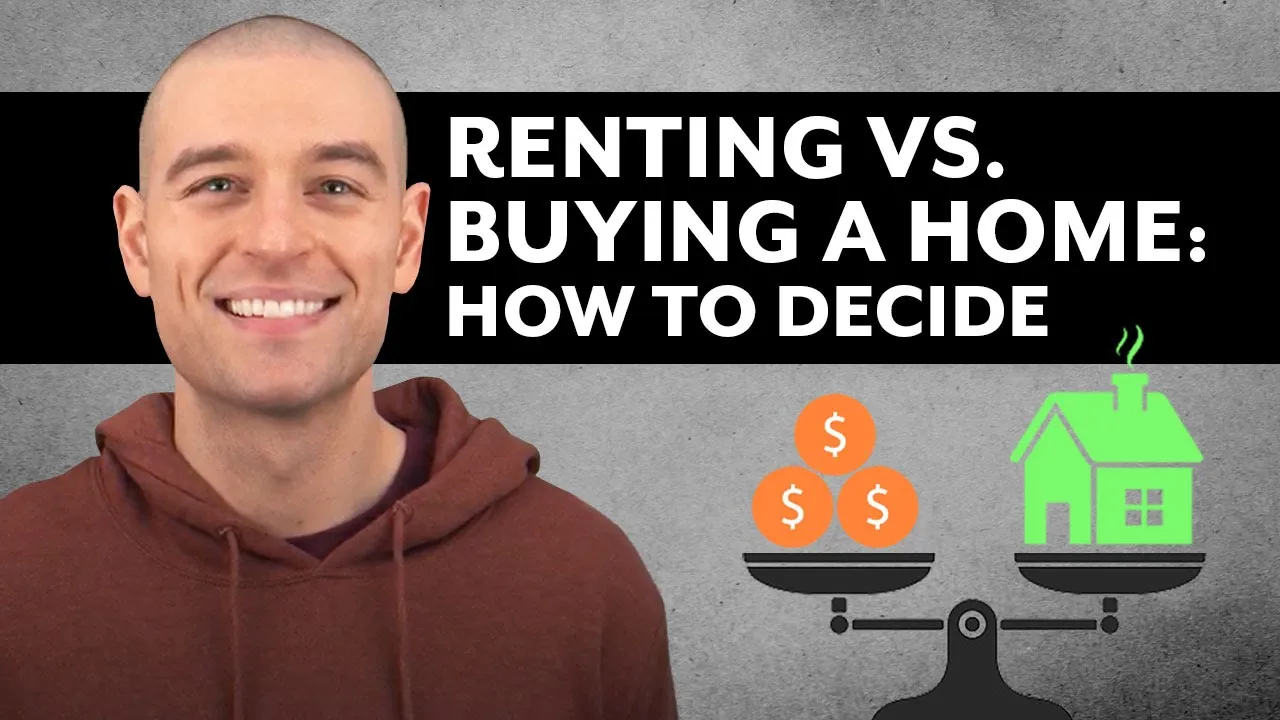
Ben Felix
Unrecoverable ownership costs average roughly 5% of a property's value annually while empirical research reveals homeownership yields zero durable gains in daily happiness over renting.
AI-assisted summary of Renting vs Buying a Home: How to Decide — original source. Check the original for full context.
Source published:
Key ideas
- Empirical studies across Germany, the US, and Switzerland show that homeowners are no happier than renters on average, largely due to affective forecasting errors, hedonic adaptation, and lost leisure time. (1:47)
- The unrecoverable carrying cost of homeownership can be estimated via the 5% rule: 1% for property taxes, 1% for structural maintenance and depreciation, and a 3% net opportunity cost of equity relative to a diversified stock portfolio. (9:17)
- Under the 5% rule, buying a $1,000,000 property incurs roughly $4,166 per month ($50,000 annually) in unrecoverable user costs, meaning renting an equivalent home below that figure is financially advantageous. (10:05)
- Long-term historical datasets, such as Robert Shiller's data back to 1628 and the 16-country study 'The Rate of Return on Everything', indicate real residential capital appreciation averages only 0.2% to 1.1% per year. (8:27)
Detailed notes
## Background Published by portfolio manager Ben Felix on YouTube on November 2, 2021, this video examines the complex trade-offs between renting and purchasing residential property. The channel description explains that making a housing decision requires carefully balancing interacting financial and non-financial considerations, noting that contrary to popular belief and societal expectations, renting is often the superior choice for both balance sheets and subjective well-being.
## TL;DR Ben Felix challenges the persistent personal finance dogma that renting is throwing money away, citing empirical studies to show that homeownership fails to deliver long-term happiness due to hedonic adaptation, positional competition, and the unadaptable stress of debt and commuting. Financially, owning incurs severe unrecoverable holding costs—namely property taxes, ongoing maintenance and structural depreciation, and the opportunity cost of equity—which Felix models into a baseline 5% annual user cost rule to compare against equivalent rents. While owning provides a forced savings mechanism and an inflation hedge, it also introduces geographic illiquidity and downside price volatility compared to the flexibility of renting. Felix illustrates that housing decisions should ultimately serve daily lifestyle needs, personal relationships, and autonomy rather than speculative wealth-building goals.
## Atmosphere & style The presentation is analytical, steady, and rigorously academic, leaning heavily on macroeconomic data and psychological literature rather than real estate hype. Felix delivers his points with calm, measured authority, systematically dismantling emotional assumptions with clear economic formulas and visual breakdowns. A brief, candid confession regarding his own recent decision to buy a home adds a touch of self-deprecating humor and relatable nuance, leaving the viewer with a grounded, clear-headed framework free of societal panic.
## Bulletin - [01:47](https://www.youtube.com/watch?v=q9Golcxjpi8&t=107s) Empirical studies across Germany, the US, and Switzerland show that homeowners are no happier than renters on average, largely due to affective forecasting errors, hedonic adaptation, and lost leisure time. - [09:17](https://www.youtube.com/watch?v=q9Golcxjpi8&t=557s) The unrecoverable carrying cost of homeownership can be estimated via the 5% rule: 1% for property taxes, 1% for structural maintenance and depreciation, and a 3% net opportunity cost of equity relative to a diversified stock portfolio. - [10:05](https://www.youtube.com/watch?v=q9Golcxjpi8&t=605s) Under the 5% rule, buying a $1,000,000 property incurs roughly $4,166 per month ($50,000 annually) in unrecoverable user costs, meaning renting an equivalent home below that figure is financially advantageous. - [08:27](https://www.youtube.com/watch?v=q9Golcxjpi8&t=507s) Long-term historical datasets, such as Robert Shiller's data back to 1628 and the 16-country study 'The Rate of Return on Everything', indicate real residential capital appreciation averages only 0.2% to 1.1% per year.
## Key takeaways - [00:00](https://www.youtube.com/watch?v=q9Golcxjpi8&t=0s) Societal pressure often frames renting as throwing money away, but renting can be financially and psychologically superior to owning. - [00:45](https://www.youtube.com/watch?v=q9Golcxjpi8&t=45s) Affective forecasting errors lead individuals driven by extrinsic goals—like status and prestige—to systematically overestimate the happiness homeownership will bring. - [01:47](https://www.youtube.com/watch?v=q9Golcxjpi8&t=107s) Cross-country empirical data reveals that while owners may report slightly higher reflective life satisfaction, they experience equal or lower day-to-day happiness and spend significantly more time on chores. - [02:47](https://www.youtube.com/watch?v=q9Golcxjpi8&t=167s) Hedonic adaptation quickly neutralizes the emotional boost of purchasing a home, turning the property into a background condition of life rather than a source of joy. - [03:46](https://www.youtube.com/watch?v=q9Golcxjpi8&t=226s) Homes are positional goods prone to comparison and buyer's remorse; the 'McMansions Effect' shows that the construction of larger nearby houses directly lowers existing homeowners' satisfaction. - [05:05](https://www.youtube.com/watch?v=q9Golcxjpi8&t=305s) High mortgage debt and long daily commutes are chronic, unadaptable stressors that correlate with elevated stress hormones, marital friction, and reduced well-being. - [06:26](https://www.youtube.com/watch?v=q9Golcxjpi8&t=386s) Both renting and owning incur unrecoverable costs; ownership involves ongoing property taxes (~1% of value) and maintenance/depreciation (~1% of value). - [07:15](https://www.youtube.com/watch?v=q9Golcxjpi8&t=435s) Physical buildings suffer from wear-and-tear and functional obsolescence, meaning owners pay for upkeep via regular cash expenditures or a diminished future sale price. - [08:27](https://www.youtube.com/watch?v=q9Golcxjpi8&t=507s) Real capital appreciation on residential real estate is historically modest (0.2% to 1.1% annually), meaning housing is not an inherently high-growth asset. - [09:17](https://www.youtube.com/watch?v=q9Golcxjpi8&t=557s) The opportunity cost of home equity represents the difference between expected real stock returns (~4% after fees) and real real estate appreciation (~1%), creating an approximate 3% net capital penalty. - [09:34](https://www.youtube.com/watch?v=q9Golcxjpi8&t=574s) Combining property taxes (1%), maintenance (1%), and equity opportunity cost (3%) yields the 5% baseline rule of thumb for imputed rent. - [10:20](https://www.youtube.com/watch?v=q9Golcxjpi8&t=620s) The 5% threshold shifts based on equity allocation, stock factor tilts, and whether non-housing investments are held in tax-sheltered accounts (RRSPs/TFSAs) versus taxable accounts. - [11:26](https://www.youtube.com/watch?v=q9Golcxjpi8&t=686s) Mortgages provide a forced-savings mechanism and hedge against rent inflation, but they expose owners to severe short-term price volatility and relocation lock-in risk. - [12:40](https://www.youtube.com/watch?v=q9Golcxjpi8&t=760s) Real contributors to human well-being include autonomy, mastery, nature, strong relationships, and community—not the legal title of homeownership. - [13:21](https://www.youtube.com/watch?v=q9Golcxjpi8&t=801s) Housing choices should be dictated by individual lifestyle factors, remote work flexibility, and local housing availability rather than financial speculation.
## Detailed walkthrough ### [00:00](https://www.youtube.com/watch?v=q9Golcxjpi8&t=0s) The Rent vs. Buy Dilemma and the Well-Being Question
Ben Felix, portfolio manager at PWL Capital, opens this episode of *Common Sense Investing* by challenging one of the most entrenched personal finance dogmas: the notion that renting is merely throwing money away. While the housing decision carries immense financial weight, it also fundamentally dictates geographical location, daily routines, and lifestyle allocation. Felix stresses that housing cannot be solved with a one-size-fits-all formula; instead, individuals must balance financial and non-financial variables and recognize how they compound over time. Ben Felix argues that “In many cases, contrary to conventional wisdom and societal pressure, renting is a better option than owning, both financially and from the perspective of well-being.”
Before examining the balance sheet, Felix focuses on whether homeownership actually delivers on its psychological promises. If buying property genuinely produced durable happiness, purely numerical counterarguments would hold little weight. However, behavioural science demonstrates that human beings suffer from severe shortcomings in affective forecasting—the capacity to predict one's future emotional state following major life changes or acquisitions. Material milestones such as purchasing real estate frequently stem from extrinsic motivations, which encompass pursuits like financial prestige, image, and social status.
Citing the 2010 study *Extrinsic Value Orientation and Affective Forecasting: Overestimating the Rewards, Underestimating the Costs*, Felix contrasts these external drivers with intrinsic aspirations such as community, intimacy, and personal development. Extrinsically motivated individuals not only experience lower baseline happiness, but they also systematically overestimate the emotional payoff of reaching their material milestones while ignoring the accompanying operational frictions and ongoing costs.
- Extrinsic goals revolve around status, wealth accumulation, and physical image. - Intrinsic goals centre on community connection, personal growth, and close relationships. - Extrinsically driven individuals consistently overestimate the lasting satisfaction derived from acquiring material assets.
[01:47](https://www.youtube.com/watch?v=q9Golcxjpi8&t=107s) Empirical Evidence on Homeownership and Life Satisfaction
Empirical research across multiple international datasets confirms that the psychological return on homeownership is largely an illusion. A 2020 study examining German data demonstrated that people significantly overestimate the long-term life satisfaction gains of transitioning from a rental property to an owner-occupied home, with the error being starkest among those motivated by extrinsic values. A 2011 study titled *The American Dream or the American Delusion?* controlled for income, housing quality, and physical health, revealing that homeowners were not better off across several subjective well-being metrics. In fact, homeowners derived greater distress from their housing situation, largely because of how they spent their time: they logged far fewer hours in active leisure and restorative recreation. Similarly, a 2019 Swiss study (*Homeownership and Happiness: Evidence for Switzerland*) determined that after controlling for variables such as wealth, income, and physical health, homeowners were either no happier or noticeably less happy than their renting counterparts.
Additional literature shows modest bumps in reflective life satisfaction alongside lower experiential day-to-day joy. A 2017 United States study found that while owners reported marginally elevated reflective scores when asked generally about their lives, they experienced less intense daily feelings of happiness than renters and devoted vastly more time to household chores and upkeep. Felix connects these findings to hedonic adaptation, noting that humans rapidly normalize new conditions. As Ben Felix observes, “We overestimate how much happier we will be by purchasing a home, but once we live there, the home becomes a condition of life rather than an aspiration and its impact on our daily well-being is neutralized.” Referencing the 2010 paper *If Money Doesn't Make You Happy, Then You Probably Aren't Spending It Right*, Felix concludes that moment-to-moment happiness is governed by our daily activities and time use rather than static background circumstances like property deeds.
- German 2020 study: Renters moving into homeownership consistently overestimate long-run life satisfaction gains. - American 2011 study: Homeowners derived more psychological strain from their housing and spent less time on active leisure. - Swiss 2019 study: Controlling for wealth, employment, health, and property quality leaves homeowners no happier or less happy than renters. - US 2017 study: Owners reported slightly higher reflective satisfaction but experienced lower intensity of momentary happiness and spent substantial hours on home upkeep.
[03:46](https://www.youtube.com/watch?v=q9Golcxjpi8&t=226s) Buyer's Remorse, Social Comparison, and the McMansion Effect
Major material purchases carry a psychological vulnerability that experiential purchases do not: rumination and comparison. Drawing on the 2010 paper *The Relative Relativity of Material and Experiential Purchases*, Felix highlights that material goods readily invite buyer's remorse because purchasers continually look backward at options they passed up, evaluate whether they could have purchased the same asset cheaper elsewhere, and contrast their purchase against what others have acquired. Properties amplify this vulnerability because they are inherently positional goods whose subjective value depends heavily on peer comparison rather than purely intrinsic shelter. Ben Felix explains that “Homes are positional goods, meaning that their appeal comes from, not only their intrinsic property as a place to live, but also from how it compares to the homes of peers.”
This dynamic is documented empirically in the 2019 paper *The McMansion Effect: Top House Size and Positional Externalities in U.S. Suburbs*. When large, high-end homes are built at the upper tier of a suburban neighborhood's size distribution, the subjective satisfaction that nearby residents derive from their own homes drops substantially. This positional dissatisfaction is most pronounced among households already occupying large homes and decays with physical distance from the new development. Rather than being content, exposed homeowners react to these local McMansions by discounting the value of their own residences, taking on additional debt, and striving to upscale to even larger properties to maintain relative standing.
```mermaid flowchart TD accTitle: The McMansion Effect Cycle accDescr: Flowchart illustrating how top-tier home construction triggers positional dissatisfaction, additional leverage, and upscaling among suburban homeowners.
subgraph Construction ["Suburban Development"] A["New Construction of Top-Size Homes ('McMansions')"] end
subgraph NeighborResponse ["Positional Externality"] B["Neighbors Compare Property to New Development"] C["Drop in Subjective Satisfaction with Existing Home"] end
subgraph Escalation ["Financial Reaction"] D["Homeowners Undervalue Current House"] E["Take on Additional Debt to Upscale"] end
A --> B B --> C C --> D D --> E ```
[05:05](https://www.youtube.com/watch?v=q9Golcxjpi8&t=305s) Experiential Spending vs. The Unadaptable Pains of Debt and Commuting
To bypass hedonic adaptation and social comparison, Felix suggests shifting spending away from massive, infrequent material acquisitions toward frequent experiential purchases. Activities such as treating a friend to dinner, enrolling in an engaging class, pursuing an immersive hobby, or practicing prosocial spending deliver sustained boosts to well-being because experiences are not easily adapted to or compared against others. Buying real estate represents the exact opposite: it is an enormous, concentrated material expenditure that risks making buyers "house poor" while exposing them to chronic, unadaptable stressors.
Two specific consequences of homeownership severely undermine well-being: financial leverage and traffic congestion. Citing *Happy Money: The Science of Happier Spending* by Elizabeth Dunn and Michael Norton, Felix notes that debt acts as a chronic psychological drag. In their book, Dunn and Norton summarize the data bluntly: “What we owe is a bigger predictor of our happiness than what we make.” Heavy debt burdens correlate with suppressed happiness and higher levels of marital friction. Commuting is similarly toxic; people never truly adapt to heavy traffic, and biological markers such as stress hormones remain elevated even after years of daily travel. When homebuyers move far away from employment centres to secure more square footage, they trade an asset to which they rapidly adapt for a grueling commute to which they never will.
- Frequent, small experiential purchases (hobbies, dining, shared courses) foster persistent well-being without hedonic decay. - Prosocial spending (buying for others) reliably enhances daily mood over self-directed material acquisition. - Unadaptable negative stressors of home purchases include elevated debt burdens, debt-induced marital discord, and long commutes in gridlock.
[06:26](https://www.youtube.com/watch?v=q9Golcxjpi8&t=386s) The Unrecoverable Costs of Homeownership: Property Taxes and Depreciation
Having explored the non-financial side, Felix addresses the financial mechanics, dismissing the claim that renting is financial waste. Renting carries clear, predictable outlays: contracted rent, basic utilities, and tenant insurance, which is substantially cheaper than a homeowner's policy. The true costs of homeownership, conversely, are opaque and routinely misunderstood. Ownership incurs distinct unrecoverable carrying costs: property taxes, routine maintenance, structural depreciation, insurance, and the opportunity cost of invested equity.
```mermaid flowchart LR accTitle: Renting vs Owning Cost Structures accDescr: Flowchart contrasting the visible expenses of renting against the multiple unrecoverable holding costs of homeownership.
subgraph RentingCosts ["Renting Outlays"] R1["Contracted Monthly Rent"] R2["Tenant Insurance"] R3["Basic Utilities"] end
subgraph OwningCosts ["Unrecoverable Ownership Outlays"] O1["Property Taxes (~1% of value)"] O2["Building Maintenance & Obsolescence (~1%)"] O3["Homeowner Insurance & Utilities"] O4["Opportunity Cost of Invested Equity"] end ```
Property taxes—which Felix models at 1% of the property's value each year—represent an unrecoverable fee paid for local services that delivers zero residual equity. Furthermore, physical buildings are depreciating physical assets subjected to both wear-and-tear and functional obsolescence as modern building codes, techniques, and aesthetic standards advance. Ben Felix emphasizes the unavoidable reality of this friction: “You either pay for the cost of maintenance with cash as you consume the home over time, or you pay for the depreciation through a lower sale price in the future.”
Historical data from the macro-historical study *The Rate of Return on Everything, 1870 to 2015* estimates ongoing maintenance and depreciation between 1% and 2% annually, excluding financing charges, taxes, and utilities. Similarly, Statistics Canada allocates a 1.5% building depreciation factor within the Consumer Price Index (CPI) basket. Multiplying this 1.5% structural depreciation rate by the typical ratio of building value to total property value yields a baseline maintenance cost of roughly 1% per year. Felix cautions that these relentless expenses—such as recurring weekend trips to home improvement stores—are almost always omitted when homeowners boast about capital gains.
- Property taxes: Estimated at approximately 1% of total property value annually, functioning as an unrecoverable expense. - Physical depreciation: Wear and tear from occupancy and weather. - Functional obsolescence: Aging building materials, outdated layouts, and evolving construction standards lowering an older building's relative value. - Maintenance benchmark: 1% to 2% historical average; roughly 1% of total property value after adjusting the 1.5% structural rate for the land-to-building split.
[08:27](https://www.youtube.com/watch?v=q9Golcxjpi8&t=507s) The Opportunity Cost of Home Equity and Real Returns
The final and frequently ignored carrying cost of homeownership is the opportunity cost of equity—the investment return sacrificed by locking capital into brick and mortar rather than deploying it into productive financial assets. To establish a baseline, Felix assumes this equity could otherwise be invested in a low-cost, broadly diversified portfolio of global equities held in a tax-sheltered vehicle. Measuring this trade-off requires understanding realistic expectations for real home price appreciation over long horizons.
While homeowners often anchor to recent localized real estate booms, deep historical records indicate that residential housing is not an explosive growth asset. In *Irrational Exuberance*, Nobel laureate Robert Shiller analyzed real estate data extending back to 1628, revealing that real, inflation-adjusted home price appreciation has historically averaged between 0.2% and 0.4% annually. Similarly, the comprehensive study *The Rate of Return on Everything, 1870 to 2015* calculated the real annual price appreciation across 16 developed nations at 1.1%. Felix rounds this baseline expectation to approximately 1% real growth per year, cautioning that recent regional spikes in Canadian cities reflect historical anomalies rather than reliable indicators of future real appreciation. Ben Felix frames this trade-off directly: “The opportunity cost of equity measures the cost of having money invested in a home instead of in something else.”
- Robert Shiller (*Irrational Exuberance*): Historical real home price growth averaged between 0.2% and 0.4% annually from 1628 onward. - *The Rate of Return on Everything* (1870–2015): 16-country real capital appreciation for residential real estate averaged 1.1% per year. - Long-run baseline expectation: Real capital appreciation of residential real estate is conservatively rounded to roughly 1% per year.
[09:17](https://www.youtube.com/watch?v=q9Golcxjpi8&t=557s) Deriving the 5% Rule: Expected Returns, Opportunity Costs, and Imputed Rent
Ben Felix explains that elevated price-to-rent ratios should not lead buyers to expect continued high returns; rather, the current ratio represents a historical anomaly. Historically, when housing prices run high relative to rents, that divergence resolves through falling real estate prices rather than rising rents. To properly evaluate the decision between owning and renting, one must compute the "user cost" (or imputed rent) of living in an owner-occupied property. Drawing from the PWL Capital Financial Planning Assumptions Update, Felix notes that the estimated expected real annual return on a 100% stock portfolio sits at 4.28%. Factoring in portfolio ownership costs such as management fees and withholding taxes rounds this estimate down to 4.0% real. When paired against a 1.0% expected real return on residential real estate, allocating equity toward a home yields a 3.0% net opportunity cost relative to equities.
Adding this 3.0% opportunity cost of equity to roughly 1.0% for annual property taxes and 1.0% for regular maintenance produces a total baseline user cost of 5.0% of the property's value each year. Felix points out the fundamental reality behind this math: “Another way to think about this is that you're paying rent whether you own a home or not.” While taking on a mortgage lowers the initial equity required, the massive ongoing cash flow commitments of servicing debt alongside maintenance and taxes mean the overall 5.0% equivalent cost threshold still holds.
```mermaid flowchart TD accTitle: The 5% User Cost of Housing accDescr: Diagram illustrating how property taxes, maintenance, and opportunity cost add up to the 5 percent user cost of homeownership. subgraph DirectCosts["Unrecoverable Out-of-Pocket Costs"] PT["Property Taxes (~1%)"] Maint["Maintenance Costs (~1%)"] end subgraph EquityCost["Capital Opportunity Cost"] StockRet["Expected Stock Return (~4%)"] RE_Ret["Expected Real Estate Return (~1%)"] StockRet -.->|"4% minus 1%"| OppCost["Net Opportunity Cost of Equity (3%)"] RE_Ret -.->|"4% minus 1%"| OppCost end DirectCosts --> ImputedRent OppCost --> ImputedRent["Total Annual User Cost (5% Imputed Rent)"] ```
Applying this rule to actual figures: - A $1,000,000 home translates into an imputed user cost of approximately $4,166 per month ($50,000 annually). If an equivalent property can be rented for $4,166 per month or less, renting is financially equivalent or superior. - Portfolios tilted more aggressively toward small-cap and value stocks carry higher expected returns, which increases the opportunity cost of home equity and pushes the equivalent rental threshold higher. - Conservative asset allocations lower the equity opportunity cost, yielding a lower rent-equivalent threshold. - The 5% baseline assumes investments grow in tax-sheltered accounts like Registered Retirement Savings Plans (RRSPs) and Tax-Free Savings Accounts (TFSAs). Because Canadian primary residences enjoy a full tax exemption on capital gains, a renter forced to invest in a taxable account faces lower after-tax stock returns, which shrinks the equity opportunity cost and decreases the target rental equivalent.
---
[11:26](https://www.youtube.com/watch?v=q9Golcxjpi8&t=686s) Economic Trade-Offs, Mobility Risks, and Well-Being
Beyond direct user costs, homeownership involves behavioral and structural tradeoffs. A mortgage serves as an automatic forced savings plan because individuals are far more inclined to skip a voluntary RRSP deposit than to miss a monthly mortgage payment; renters must exercise strict financial discipline to achieve the same balance sheet growth. Furthermore, owning offers an effective long-term hedge against rent inflation, anchoring shelter expenditures more predictably over decades.
However, housing markets feature significant short-term price volatility. While paper volatility matters little for a permanent "forever home," it turns into a severe financial hazard if a homeowner is forced to relocate. Renters retain unmatched flexibility to pivot whenever their neighborhood, dwelling, or career opportunities shift, avoiding the friction and downside risk of selling into a falling market. As Felix puts it: “Sure, owners can't be rent-evicted by a greedy landlord in a rising market, but they're taking on a lot more price risk in the event that they need to move in a falling market.” Homeowners are also far more frequently saddled with longer commutes. Academic research on happiness indicates that owning property does not meaningfully improve life satisfaction:
> “The literature relating happiness to home ownership makes it clear that homeowners are not happier than renters just because they own a home, even if they expected to be when they decided to buy.”
Rather than homeownership, genuine determinants of subjective well-being include spending time in nature, pursuing mastery in skills, feeling connected to a broader community, exercising autonomy, and nurturing strong personal relationships.
- Renters can successfully build net worth on par with homeowners provided they grasp user costs and invest their cash savings diligently. - Counting on past Canadian housing windfalls to repeat is dangerous: “Buying a home today on the expectation of unrealistically high housing appreciation in the future is more likely to do harm than good.”
---
[13:21](https://www.youtube.com/watch?v=q9Golcxjpi8&t=801s) Ben Felix’s Personal Decision and Final Takeaways
Injecting personal context, Felix shares a candid confession: “In the interest of full disclosure (chuckles), I recently bought a house after renting for all of my adult life.” He emphasizes that this purchase was dictated purely by lifestyle requirements rather than speculative wealth-building goals. Having the option to permanently work remotely eliminated any commute. He chose a long-term home in a secluded area close to hiking trails, water, amenities within walking distance in a nearby small town, a large garage to accommodate hobbies, and a 45-minute drive to his parents. The absolute lack of rental listings in that specific rural market made buying the only viable way to secure the living arrangement.
Conversely, while previously residing in the city and commuting to the office every single day, Felix chose to rent close to work because he knew it was not his permanent home base, and rental properties were readily available. In both life chapters, lifestyle needs drove the housing choice rather than financial speculation or societal expectations. He concludes by urging viewers to distribute this framework broadly, remarking that "a lot of people could benefit from this information right now," and directs viewers interested in deeper analysis to episodes 154 and 170 of the *Rational Reminder* podcast.
## Notable quotes > [00:00](https://www.youtube.com/watch?v=q9Golcxjpi8&t=0s) In many cases, contrary to conventional wisdom and societal pressure, renting is a better option than owning, both financially and from the perspective of well-being. — Ben Felix
> [05:05](https://www.youtube.com/watch?v=q9Golcxjpi8&t=305s) What we owe is a bigger predictor of our happiness than what we make. — Elizabeth Dunn and Michael Norton
> [01:47](https://www.youtube.com/watch?v=q9Golcxjpi8&t=107s) We overestimate how much happier we will be by purchasing a home, but once we live there, the home becomes a condition of life rather than an aspiration and its impact on our daily well-being is neutralized. — Ben Felix
> [06:26](https://www.youtube.com/watch?v=q9Golcxjpi8&t=386s) You either pay for the cost of maintenance with cash as you consume the home over time, or you pay for the depreciation through a lower sale price in the future. — Ben Felix
> [11:26](https://www.youtube.com/watch?v=q9Golcxjpi8&t=686s) Buying a home today on the expectation of unrealistically high housing appreciation in the future is more likely to do harm than good. — Ben Felix
> [03:46](https://www.youtube.com/watch?v=q9Golcxjpi8&t=226s) Homes are positional goods, meaning that their appeal comes from, not only their intrinsic property as a place to live, but also from how it compares to the homes of peers. — Ben Felix
> [11:26](https://www.youtube.com/watch?v=q9Golcxjpi8&t=686s) The literature relating happiness to home ownership makes it clear that homeowners are not happier than renters just because they own a home, even if they expected to be when they decided to buy. — Ben Felix
> [11:26](https://www.youtube.com/watch?v=q9Golcxjpi8&t=686s) Sure, owners can't be rent-evicted by a greedy landlord in a rising market, but they're taking on a lot more price risk in the event that they need to move in a falling market. — Ben Felix
## Mentioned Ben Felix, PWL Capital, Common Sense Investing, Extrinsic Value Orientation and Affective Forecasting: Overestimating the Rewards, Underestimating the Costs, The American Dream or the American Delusion?, Homeownership and Happiness: Evidence for Switzerland, If Money Doesn't Make You Happy, Then You Probably Aren't Spending It Right, The Relative Relativity of Material and Experiential Purchases, The McMansion Effect: Top House Size and Positional Externalities in U.S. Suburbs, Happy Money: The Science of Happier Spending, Elizabeth Dunn, Michael Norton, The Rate of Return on Everything, 1870 to 2015, Statistics Canada, Consumer Price Index (CPI), Robert Shiller, Irrational Exuberance, PWL Capital Financial Planning Assumptions Update, Registered Retirement Savings Plan (RRSP), Tax-Free Savings Account (TFSA), Rational Reminder
## Video description Meet with PWL Capital: https://calendly.com/d/3vm-t2j-h3p
Making the housing decision requires careful consideration of both the financial and non-financial impacts, and the way that they interact with each other. There is no universally right way to approach housing. In many cases, contrary to conventional wisdom and societal pressure, renting is a better option than owning, both financially and from the perspective of subjective well-being.
Referenced in this video: Extrinsic Value Orientation and Affective Forecasting: Overestimating the Rewards, Underestimating the Costs https://sdtheory.s3.amazonaws.com/SDT/documents/2010_SheldonGunzNicholsFerguson_JOP.pdf Does the Dream of Home Ownership Rest Upon Biased Beliefs? A Test Based on Predicted and Realized Life Satisfaction https://papers.ssrn.com/sol3/papers.cfm?abstract_id=3660256 The American Dream or the American Delusion? The Private and External Benefits of Homeownership for Women https://papers.ssrn.com/sol3/papers.cfm?abstract_id=1877163 Homeownership and Happiness: Evidence for Switzerland https://digitalcollection.zhaw.ch/bitstream/11475/18640/3/2019_Hofmann-Umbricht_Homeownership-and-happiness-Switzerland_SREJ.pdf The relationship between homeownership and life satisfaction in Germany https://www.econstor.eu/bitstream/10419/51372/1/672468557.pdf Is a Fixer-Upper Actually a Downer? https://www.tandfonline.com/doi/full/10.1080/10511482.2017.1367317 If Money Doesn't Make You Happy Then You Probably Aren't Spending It Right https://scholar.harvard.edu/files/danielgilbert/files/if-money-doesnt-make-you-happy.nov-12-20101.pdf The relative relativity of material and experiential purchases https://pubmed.ncbi.nlm.nih.gov/20053039/ The McMansion Effect: Top House Size and Positional Externalities in U.S. Suburbs https://papers.ssrn.com/sol3/papers.cfm?abstract_id=3378131 Book: Happy Money https://dunn.psych.ubc.ca/book-happy-money/ Shelter in the Canadian CPI: An overview https://www150.statcan.gc.ca/n1/pub/62f0014m/62f0014m2017001-eng.htm Theory of Homes and Jobs https://warwick.ac.uk/fac/soc/economics/staff/ajoswald/homejobs.pdf
------------------ Follow Ben Felix on - Twitter: https://twitter.com/benjaminwfelix - LinkedIn: https://www.linkedin.com/in/benjaminwfelix/
Visit Rational Reminder: www.https://rationalreminder.ca/
Follow the Rational Reminder on: - Twitter: https://www.twitter.com/RationalRemind
Visit PWL Capital: https://www.pwlcapital.com/teams/passmore-felix/
Follow PWL Capital on: - Twitter: https://twitter.com/PWLCapital - Facebook: https://www.facebook.com/PWLCapital - LinkedIn: https://www.linkedin.com/company/pwl-capital/
You can find the Rational Reminder podcast on Google Podcasts: https://www.google.com/podcasts?feed=aHR0cHM6Ly9yYXRpb25hbHJlbWluZGVyLmxpYnN5bi5jb20vcnNz Apple Podcasts: https://itunes.apple.com/ca/podcast/the-rational-reminder-podcast/id1426530582?mt=2 Spotify Podcasts: https://open.spotify.com/show/6RHWTH9iW7hdnA7eAg7ukO?si=hjZNfLKuSjSeWX38GPqhVA ------------------
[Source](https://www.youtube.com/watch?v=q9Golcxjpi8)