Jonathan Blow Urges Developers to Bypass Schools With Systemic Games
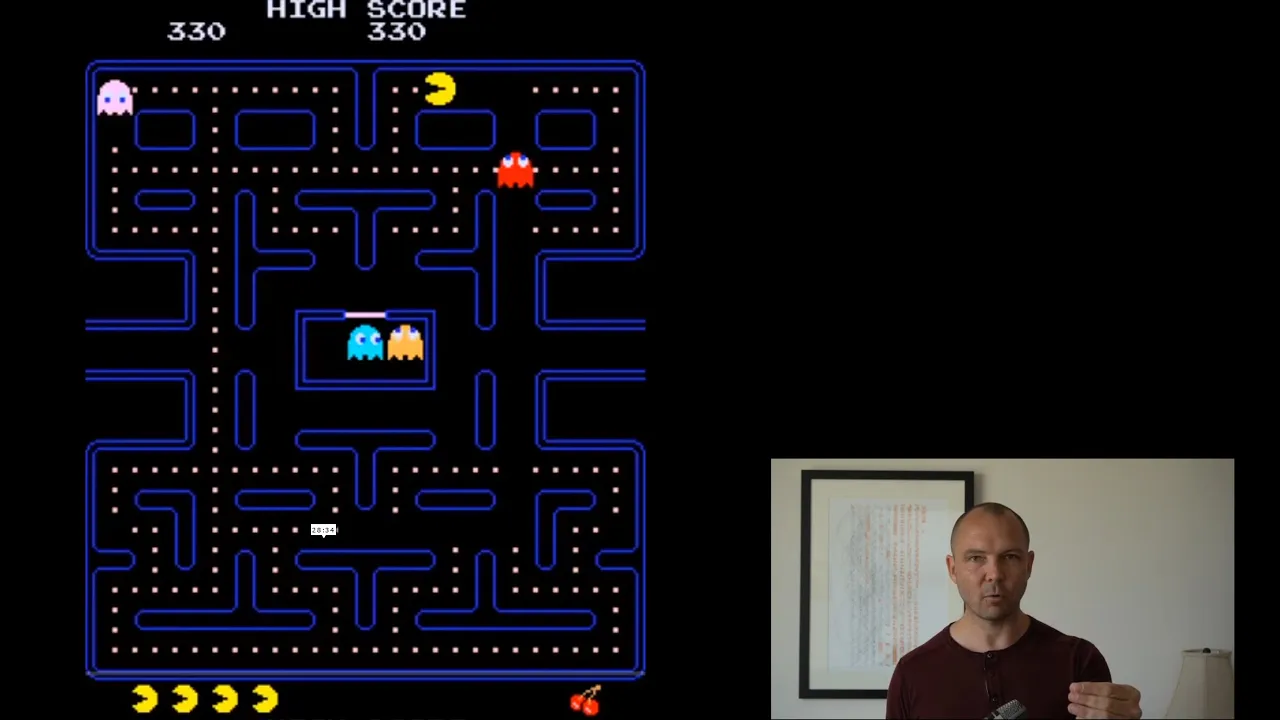
Talk: Video Games and the Future of Education — Jonathan Blow

Jonathan Blow

Gamification fails because it superimposes extrinsic classroom incentives onto print curricula, requiring designers to circumvent institutional bureaucracies and build systemic software that teaches pre-verbal intuition before books introduce formal notation.

AI-assisted summary of Talk: Video Games and the Future of Education — original source. Check the original for full context.

Source published:

Key ideas

  • Most educational games fail because they attempt to wrap existing print curricula in shallow interactive mechanics rather than designing natively around the unique interactive capabilities of video games. (49:52)
  • Video games excel at transmitting structural, pre-verbal mental models and mechanical intuition, which should precede and augment precise symbolic and textual learning from books. (41:44)
  • Gamification relies on extrinsic rewards like badges and points that traditional institutions already operate, effectively 'schoolifying' games rather than leveraging intrinsic systemic engagement. (77:23)
  • Instead of seeking bureaucratic institutional approval, educational game developers should distribute directly to players online, targeting learners whom mainstream factory-model schooling fails. (88:24)

Detailed notes

## Background Published on YouTube by independent game developer Jonathan Blow on July 20, 2020, "Talk: Video Games and the Future of Education" documents a 90-minute lecture followed by an extended audience Q&A session. The presentation outlines a practical approach for improving education through video games, directly contrasting native interactive design against existing commercial and academic efforts.

## TL;DR Blow examines historical shifts in human communication—from mimicry and speech to written legal codes and mathematical notation—to frame video games as an independent medium uniquely capable of transmitting non-linguistic mental models. He criticizes conventional "gamification" as an ineffective rebranding of institutional schooling's extrinsic reward systems, arguing that shallow badges and metric gaming fail to foster authentic intellectual engagement. Drawing on commercial systems like PlayerUnknown's Battlegrounds, The Witness, and Zachtronics' engineering titles, Blow demonstrates that video games excel at cultivating systems literacy and pre-verbal intuition through rapid mechanical feedback. Rather than replacing books or seeking bureaucratic approval from entrenched universities, developers should build standalone, intrinsically engaging games that establish intuitive conceptual foundations before students engage with formal symbolic texts.

## Atmosphere & style The presentation carries an unhurried, contemplative, and rigorously analytical atmosphere, underscored by Blow's measured cadence and uncompromising intellectual skepticism. The experience feels like an intimate technical seminar, moving methodically from evolutionary anthropology and mathematical history into candid critiques of educational institutions and gaming cliches. During the extensive Q&A, the mood becomes conversational yet blunt, marked by Blow's characteristic refusal to flatter institutional dogma or endorse well-intentioned but structurally flawed game designs.

## Bulletin - [49:52](https://www.youtube.com/watch?v=qWFScmtiC44&t=2992s) Most educational games fail because they attempt to wrap existing print curricula in shallow interactive mechanics rather than designing natively around the unique interactive capabilities of video games. - [41:44](https://www.youtube.com/watch?v=qWFScmtiC44&t=2504s) Video games excel at transmitting structural, pre-verbal mental models and mechanical intuition, which should precede and augment precise symbolic and textual learning from books. - [01:17:23](https://www.youtube.com/watch?v=qWFScmtiC44&t=4643s) Gamification relies on extrinsic rewards like badges and points that traditional institutions already operate, effectively 'schoolifying' games rather than leveraging intrinsic systemic engagement. - [01:28:24](https://www.youtube.com/watch?v=qWFScmtiC44&t=5304s) Instead of seeking bureaucratic institutional approval, educational game developers should distribute directly to players online, targeting learners whom mainstream factory-model schooling fails.

## Key takeaways - [04:56](https://www.youtube.com/watch?v=qWFScmtiC44&t=296s) Historically, new communication media—such as structured language, writing, mathematical notation, and film—augment and complement prior media rather than rendering them obsolete. - [21:47](https://www.youtube.com/watch?v=qWFScmtiC44&t=1307s) To be a distinct expressive medium, video games must communicate unique ideas through interactivity and systemic reactivity that cannot be duplicated by literature or film. - [33:47](https://www.youtube.com/watch?v=qWFScmtiC44&t=2027s) All games are fundamentally educational because immediate feedback loops build intuitive mental models of nonlinear systems and empirical hypothesis testing. - [41:44](https://www.youtube.com/watch?v=qWFScmtiC44&t=2504s) Puzzles in games like Braid and The Witness demonstrate that game systems can instill structural competence in players before they are able to verbally articulate the rules. - [48:06](https://www.youtube.com/watch?v=qWFScmtiC44&t=2886s) Books and games serve complementary pedagogical roles: games build felt intuition and dynamic possibility spaces upfront, while books provide precise numerical and factual details. - [52:22](https://www.youtube.com/watch?v=qWFScmtiC44&t=3142s) Engineering and puzzle games like SHENZHEN I/O, Opus Magnum, and Miegakure impart rapid prototyping habits, spatial intuition, and engineering mindsets by operating in clean, abstracted problem spaces. - [01:13:41](https://www.youtube.com/watch?v=qWFScmtiC44&t=4421s) Gamification reduces game design to extrinsic reward mechanics like badges and points, which function as bribes that devalue intrinsic curiosity and signal that the underlying activity is undesirable. - [01:23:54](https://www.youtube.com/watch?v=qWFScmtiC44&t=5034s) Society faces an urgent need for systems literacy, and engaging with systemic, emergent games offers an intuitive grasp of nonlinear dynamics and unintended consequences. - [01:32:50](https://www.youtube.com/watch?v=qWFScmtiC44&t=5570s) Developing effective educational games currently lacks an established tradition of practice, requiring designers to build exemplar titles and establish craft foundations from the ground up. - [01:46:49](https://www.youtube.com/watch?v=qWFScmtiC44&t=6409s) Games are fundamentally unsuited for traditional storytelling compared to linear media, meaning designers should focus on native systemic mechanics rather than narrative lessons. - [01:11:02](https://www.youtube.com/watch?v=qWFScmtiC44&t=4262s) Effective educational games should prioritize engaging mechanical systems over strict real-world simulation accuracy, allowing compelling gameplay to build domain enthusiasm. - [01:28:24](https://www.youtube.com/watch?v=qWFScmtiC44&t=5304s) Developers should build alternative educational games distributed directly to end users on open platforms rather than trying to reform slow, credential-driven educational bureaucracies.

## Detailed walkthrough ### [00:00](https://www.youtube.com/watch?v=qWFScmtiC44&t=0s) Introduction and Background

Jonathan Blow opens the presentation by thanking viewers for attending his first-ever talk delivered from home via video. Acknowledging the unpredictability of putting material on the internet—where viewers arrive from diverse backgrounds with differing levels of prior knowledge—he offers an introductory framing. He explains that he originally presented a version of this talk the previous year at a small interdisciplinary conference. That initial version ran only 36 minutes because he rushed through the material, speeding past concepts that deserved deeper explanation. In revising the presentation to expand on those points, his run-through reached 90 minutes. He estimates the live session will fall between an hour and an hour and a half, followed by an open-ended Q&A session in the Twitch chat for as long as questions persist and he feels like answering them.

Blow establishes his perspective by outlining his background in the game industry: he has been a professional video game designer and programmer running his own game development company since 1996, and an amateur developer since roughly age ten. Crucially, he emphasizes that he does not work in the education field—a distinction he predicts will become obvious as the presentation proceeds. Instead, his purpose is to offer the distinct perspective of a video game developer on where education can go by examining video games as a modern technology in the context of the historical technologies that preceded them.

[02:38](https://www.youtube.com/watch?v=qWFScmtiC44&t=158s) Demonstrative Learning and the Advent of Language

To establish how new communication tools reshape learning, Blow poses a thought experiment set in prehistory before the advent of structured language. He imagines a primitive human attempting to learn a vital, multi-step skill like building a fire when neither party possesses syntax, complex sentences, or grammar beyond basic names or utterances. He notes parenthetically that while archaeology does not definitively establish whether structured language preceded the mastery of fire, the hypothetical assumes fire came first. In such an environment, knowledge transfers strictly via mimicry and visual demonstration. Human sympathy neurons fire when watching others perform actions, allowing people to learn non-linguistically without explicit instruction. While simple motor skills like running or swimming are easily acquired through direct observation, technical tasks like fire-making require sustained repetition.

Pure demonstration, however, suffers from severe situational bottlenecks. A demonstrator can only teach with the materials and conditions at hand; if it begins to rain, they cannot easily demonstrate fire-making and are reduced to pantomime. The emergence of structured language shatters these physical constraints. Language enables learners to ask clarifying questions, request repetitions, and explore counterfactual environmental scenarios—such as how to adapt fire-building techniques when encountering high winds or where to gather kindling in a different biome beyond the forest to the east.

```mermaid flowchart TD accTitle: Evolution of Pedagogical Technologies accDescr: Progression from mimicry to spoken language to written record. subgraph Prehistoric["Pre-Linguistic"] A["Mimicry & Observation"] -->|"Limited to present context"| B["Direct Action / Physical Skills"] end subgraph OralEra["Spoken Language"] C["Counterfactuals & Questions"] --> D["Fiction & Moral Fables"] end subgraph WrittenEra["Written Language"] E["Fixed Text & Permanence"] --> F["Objective Law & Institutions"] end A -.->|"Synthesized with"| C C -->|"Recorded into"| E ```

[04:56](https://www.youtube.com/watch?v=qWFScmtiC44&t=296s) The Complementarity of Demonstration and Language

Blow warns against assuming that language is strictly superior to the demonstration that preceded it. To illustrate the limitations of language alone, he imagines someone attempting to teach fire-making purely through spoken instructions—describing stick sizes, rubbing techniques, friction torque, and kindling selection without ever showing the physical process. A student taught solely by description would face immense trial and error because a large portion of the human mind relies on visual input and mimicry. Visual demonstration carries a massive bandwidth of information that cannot be encapsulated in verbal or textual explanations.

As Blow emphasizes, the ideal pedagogical model is not the replacement of physical demonstration by verbal explanation, but their integration:

> “Mimicry is very effective sometimes at some things, language is very effective sometimes at some things; a fusion of mimicry plus language is superior to either one alone.”

This interactive synthesis—where a teacher demonstrates a physical action while simultaneously explaining priorities and answering questions—remains the gold standard for teaching bodily and tactile disciplines such as sports and martial arts. Blow makes it explicit that this dynamic serves as a direct metaphor for his central thesis regarding video games: games represent a newly emerging technological medium, and one should never assume they are strictly better than earlier media on their own, but rather that their fusion with other tools yields the greatest outcome.

[07:10](https://www.youtube.com/watch?v=qWFScmtiC44&t=430s) Storytelling, Moral Compression, and the Written Word

Structured language expands human capabilities beyond addressing practical contingencies to imagining situations that never existed and never will. This development gave rise to storytelling and the role of the storyteller. Blow notes that stories are not merely entertaining, but fundamentally educational tools deeply embedded in human psychology. While mimicry operates across short, immediate timescales—such as watching someone swim or rub two sticks together—stories compress long timescales into compact narratives. Historical fables and allegories distill decades of accumulated life experience into moral lessons, allowing a community to impart hard-won ethical standards to younger generations much faster than unassisted trial and error would allow.

The subsequent invention of writing introduces a level of precision and permanence impossible within oral traditions, where words naturally morph from retelling to retelling:

> “It gives you a kind of precision that you never had before, because you can say what the exact words are rather than the general idea, which would have the exact words change from telling after telling in an oral tradition.”

Blow illustrates the transformative impact of writing using the legal system. In an oral culture, the law is subjective and volatile—often shifting according to the whims or grievances of a ruler from week to week. In contrast, a written code inscribed on stone creates objective permanence. Because everyone knows the text does not change, the law gains social trust and accountability; a citizen can point to an inscription carved twenty years prior to prove an action is not an arbitrary violation. Blow concludes the segment by observing that while these points may seem obvious, modern society is so saturated with these foundational communication technologies that people routinely take their immense power for granted and forget that they are technologies at all.

[10:58](https://www.youtube.com/watch?v=qWFScmtiC44&t=658s) Historical Technologies and the Evolution of Written Thought

Jonathan Blow begins by proposing that we stop and consciously examine fundamental human communication technologies that have become second nature to us. Because writing and other cultural forms feel so natural today, their underlying mechanics are rarely analyzed, yet studying their evolution helps us understand the trajectory of video games. Blow notes that proposing novel or unconventional uses for games as technological advancements might seem outlandish, but human history repeatedly demonstrates similar trajectories across other media: “I just want to say that we've done this before with other topics in a lot of different ways and so if you expect it to happen with games in the future is not unlikely.”

Writing originally provided a medium for recording precise, unchanging, and specific explanations, unlocking realms of abstract thought—such as mathematics—that had previously felt intangible. However, the form that writing takes fundamentally dictates how effectively ideas can be grasped. To illustrate this, Blow presents a passage from Euclid's *Elements*, demonstrating how mathematics was communicated in antiquity:

> "If a first magnitude has to a second the same ratio as a third has to a fourth, and also a fifth has to the second the same ratio as a sixth to the fourth, then the sum of the first and fifth has to the second..."

Blow remarks that if people find modern mathematics classes difficult, Euclid’s version represents an entirely different ordeal.

```mermaid flowchart TD accTitle: Evolution of Mathematical Representation accDescr: Diagram tracing the development of math from verbal geometric descriptions to modern symbolic equations.

subgraph Ancient["Verbal Representation"] E["Euclid's Elements<br/>(Lengthy geometric rhetoric)"] end

subgraph SymbolicDev["Invention of Operational Symbols"] P["Addition '+' (1360)"] --> M["Subtraction '-' (1490)"] M --> S["Square Roots (c. 1540)"] end

subgraph Modern["Modern Symbolic Manipulation"] F["Fractions: a/b + e/b = (a+e)/b"] Eq["Terse Modern Equations<br/>(Differential / Field Equations)"] end

E --> SymbolicDev SymbolicDev --> Modern ```

[13:06](https://www.youtube.com/watch?v=qWFScmtiC44&t=786s) The Invention and Leverage of Mathematical Notation

Blow explains that Euclid’s cumbersome paragraph simply expresses a relationship easily captured in a basic modern formula:

$$\text{If } \frac{a}{b} = \frac{c}{d} \quad \text{and} \quad \frac{e}{b} = \frac{f}{d}, \quad \text{then } \frac{a+e}{b} = \frac{c+f}{d}$$

In modern education, this specific relationship is rarely taught as an isolated theorem because symbolic manipulation provides a broader, more powerful general rule: when adding fractions with common denominators, one simply sums the numerators. While Euclid’s prose was a monumental achievement for its era, symbolic notation unlocked a dramatically superior method of cognition.

Developing this notation required centuries of slow conceptual breakthroughs: - The symbol for addition ($+$) first appeared in the year 1360. - It took another 130 years (around 1490) to adopt the subtraction symbol ($-$). - Roughly 50 years later, the square root symbol emerged, finally establishing a paradigm for mathematical notation.

Blow displays a dense, modern mathematical equation laden with Greek characters, noting that while it looks intimidating to the uninitiated, its terse elegance allows deep comprehension of complex phenomena. Translating that single modern equation into Euclid's prose would require reams of descriptive pages, making it nearly impossible to learn or study. Crucially, the underlying truth of the mathematics has not changed; rather, “the technology that we use to approach the mathematics can make the learning of the material and the practice of the material have a tremendously different flavor.”

[16:15](https://www.youtube.com/watch?v=qWFScmtiC44&t=975s) Expressive Media: Novels, Instrumental Music, and Film

Language continued to branch into artistic domains beyond practical mathematics. Modern experimental novels differ radically from ancient epic poetry like *The Iliad*. Fiction writers wield an expansive set of tools—manipulating plot, character, mood, prose style (direct versus florid and descriptive, shifts in voice depending on active characters), and the macro-architecture of how unseen narrative elements assemble.

To demonstrate that communication can function completely detached from language, plot, or character, Blow turns to purely instrumental music. He plays an audio excerpt to the audience, inviting them to sit in silence and examine how music communicates emotional and structural weight without words.

Cutting the audio track after about a minute, Blow quips that “it feels like a crime to shut something like that off,” urging the audience to revisit the piece outside a lecture setting. Music proves that profound communication can occur entirely outside verbal storytelling.

Film similarly blends narrative elements with specialized tools—cinematography, lighting, acting, and musical scoring. However, Blow stresses that cinema’s rich multisensory nature does not make it superior to the novel or to music; each medium has irreconcilable trade-offs. For example, if a story centers on a man paralyzed by an intricate internal dilemma who discusses his thoughts with no one: - Attempting to portray this literally in cinema fails because film struggles with internal monologues. - A novel thrives here because literature excels at tracing internal consciousness. - Translating such an internal struggle to cinema demands symbolic and visual abstraction, which fundamentally alters what the story is about.

[21:47](https://www.youtube.com/watch?v=qWFScmtiC44&t=1307s) Identifying the Inherent Strengths of Video Games

Applying this media theory to interactive software, Blow asserts that if video games represent a legitimate, distinct medium, they must possess intrinsic communication capabilities that no other medium can duplicate:

> “Games should be better at communicating some kinds of things that other media can't do, otherwise games isn't a medium.”

Discovering these unique properties is challenging because culture lacks established precedents in older media to clearly describe or categorize these mental processes. Simultaneously, developers and educators must accept the inverse rule: games will inevitably perform worse than older media at certain tasks. Rather than forcing games to mimic novels or films, the challenge lies in uncovering the precise forms of understanding that interactivity and systems natively convey.

[22:43](https://www.youtube.com/watch?v=qWFScmtiC44&t=1363s) Non-Linguistic Communication and Why Games React

Jonathan Blow opens by highlighting a specific strength of video games that he enjoys exploring as a designer: non-linguistic communication, or the art of transmitting complex ideas directly into a player's mind without relying on words. While older, analog "granddad games" possess traces of this capability, it is fundamentally more natural and rapidly developing within video games. In an old-style board game, players are entirely dependent on reading an external rulebook just to understand what they are supposed to be doing. Even if an author tries to write concisely, players frequently have to pause mid-game, consult the text, and sort through confusion over interpretations.

```mermaid flowchart TD accTitle: Board Game Rules vs Video Game Feedback accDescr: Contrast between how players learn board games via external rulebooks versus video games via interactive feedback loops.

subgraph Analog["Traditional Board Games"] A["External Rulebook"] -->|"Requires reading & parsing"| B["Player Actions"] B -.->|"Board just sits there"| A end

subgraph Digital["Video Games (e.g., Pac-Man)"] C["Direct Player Action"] -->|"Instant input"| D["System Reactions"] D -->|"Non-linguistic feedback"| C end ```

The ability to encode precise rules into text was itself a major technological advancement in human history, but programming integrated circuits unlocked an entirely different paradigm. Early arcade cabinets still featured rudimentary placards explaining basic point values—such as ten points for a standard dot or fifty points for a flashing dot—and introducing the ghost characters. Yet nobody truly learned to play a game like *Pac-Man* by reading placards. Beyond occasionally observing whoever was ahead in line at the arcade cabinet, players learned almost entirely through direct, immediate interaction:

> “A video game reacts to you and that ability to reacts to react to you creates this ability to learn in this particular way.”

- **Rulebooks as technology:** Detailed written rule sets only became possible once writing advanced to a specific level of technical clarity. - **The learning loop in *Pac-Man*:** A player eats dots and watches the score increase, runs into a ghost and dies, or consumes an energizer pill, watches the ghosts turn blue and flee, and realizes they can now turn around and eat the ghosts. - **Mechanical responsiveness:** Board games remain static pieces of cardboard that cannot react dynamically, whereas video games immediately test and respond to player agency.

---

[25:37](https://www.youtube.com/watch?v=qWFScmtiC44&t=1537s) Higher-Order Knowledge and the Complexity of Modern Systems

As a player spends more time with a game, the nature of what they learn shifts from baseline mechanics to high-order systemic patterns. In *Pac-Man*, an experienced player quickly realizes that early stages carry little lethal risk and stops playing purely for survival. Instead, they shift toward score maximization: lingering deliberately near a corner, baiting all four ghosts into close proximity, and grabbing the power pellet at the last possible second to guarantee enough time to devour every ghost for massive point bonuses. If a player were to write down everything they know about *Pac-Man* in linguistic form—such as navigation patterns across individual ghosts, safe pathing routines, and the exact thresholds where careful survival must supersede scoring—it would fill many pages.

Modern games, however, dwarf *Pac-Man* in scope and intricacy. Players regularly invest hundreds or thousands of hours into massive contemporary games, which means the volume of discoverable knowledge has expanded exponentially. When speakers argue that games facilitate learning, they typically pick a safe, mildly successful educational title or a retro classic. Blow deliberately rejects that soft approach, choosing instead to analyze a modern, complex game that polite society frequently dismisses as culturally worthless:

> “Because I like a challenge I'm gonna pick a kind of game that's usually denigrated that people would say doesn't have a societal value right it there's not a kind of game that people would say there's not educational value in that there's not moral value in right and I'm gonna try to show you that there is.”

Blow turns to *PlayerUnknown's Battlegrounds* (*PUBG*). In *PUBG*, roughly one hundred players parachute unarmed onto an island, scrounge through buildings for weapons and equipment, and eliminate one another until a single survivor remains. While mainstream discourse habitually labels it a mindless, violent video game and tosses it out of serious discussion, Blow insists that understanding games as a medium requires taking their actual mechanics seriously. If games possess a distinct power to facilitate learning, that power must be readily identifiable in mainstream commercial hits, not merely in curated academic experiments.

---

[29:38](https://www.youtube.com/watch?v=qWFScmtiC44&t=1778s) Empirical Learning in Massive Possibility Spaces

When players spend hundreds or thousands of hours inside *PUBG*, they are not engaging in mindless repetition. Instead, they are repeatedly exploring a game that possesses a vast "state space"—a massive, nonlinear possibility space filled with shifting variables. In each match, the player parachutes into entirely different contexts: landing in the west versus the east, dropping into heavily contested towns versus secluded farmsteads, or facing distinct behavioral metas depending on the time of day, such as encountering regional playstyles from Korean servers.

```mermaid flowchart LR accTitle: The Empirical Cycle in PUBG accDescr: The loop of forming hypotheses, testing them across match iterations, and separating bad luck from flawed strategy.

A["Hypothesis Formation<br>(e.g., Mid-game zone tactics)"] --> B["Empirical Test<br>(Match execution)"] B --> C["Observation across 15+ Iterations<br>(Accounting for RNG / bad hands)"] C --> D["Systemic Conclusions<br>(Internalized game knowledge)"] D --> A ```

By traversing these scenarios repeatedly, the player develops a rich mental model of how the game's systems function across early, mid, and late phases. Early on, when the map is crowded with poorly equipped opponents, aggressive looting may prove optimal; in the late game, when the play area contracts and every remaining survivor is heavily armed, entirely different positioning strategies are required. Blow notes that navigating this loop mirrors scientific experimentation or empirical philosophy:

> “And it's a little bit like practicing science or you know some kind of empirical philosophy because you get to form your own ideas about what's a good idea to do and then you get to empirically validate right...”

- **Forming empirical hypotheses:** A player tests a specific idea, such as holding an open area when the blue zone closes, and observes whether it succeeds or fails across multiple attempts. - **Isolating randomness:** Just like evaluating hands in poker, the player learns through dozens of iterations to distinguish between a bad tactical decision and simple misfortune from random variables. - **Simulating real-world experience:** Revisiting complex, nonlinear scenarios from varying angles and contexts is historically how human beings acquired deep, practical life experience—an intuitive learning process that modern games simulate directly on a scale never before possible.

[33:47](https://www.youtube.com/watch?v=qWFScmtiC44&t=2027s) Nonlinear State Spaces and Why All Games Are Educational

Jonathan Blow illustrates how deep expertise is acquired using an analogy of learning to farm from a veteran who has worked the land for decades. To an apprentice, the farmer’s advice sounds nonsensical, contradictory, or needlessly intricate: waking up to one weather pattern dictates a specific task, but an imperceptible shift in atmospheric conditions demands an entirely different action. This happens because experts construct sophisticated internal models of complex, highly nonlinear state spaces. These spaces are defined by surprises—such as low-probability events carrying outsized consequences, or disproportionate system reactions where an identical action yields an unexpected result. Humans only grasp these hidden dynamics by repeatedly interacting with the underlying system over time.

Because this interactive feedback loop is native to the medium, Blow argues that every video game fundamentally educates the person playing it:

> “And so because of this I say that all games are educational, right: Pac-Man, PlayerUnknown's Battlegrounds, even regular old educational games, right?”

However, society rarely views commercial titles like *Pac-Man* or *PlayerUnknown's Battlegrounds* (*PUBG*) as educational because their systems lack real-world applicability. Players rigorously validate rules and tactical models within the isolated simulation of *PUBG*, but those behaviors do not translate to surviving a physical combat encounter. Blow emphasizes that while players "empirically validate" hypotheses within that synthetic reality, those conclusions rarely hold up when projected onto our actual universe. This disconnect represents both the central obstacle preventing video games from functioning as conventional educational tools and the primary creative opportunity for redesigning how educational games work.

[36:20](https://www.youtube.com/watch?v=qWFScmtiC44&t=2180s) Developing Braid and Designing for Clarity of Transmission

When developing his acclaimed puzzle platformer *Braid*, Blow had not yet formally mapped out his theories on non-linguistic communication, but he was actively experimenting to discover what made game mechanics resonate. He discovered that the desire to build the best possible game compelled him to learn design principles on the fly, mirroring how a player's desire to succeed forces them to understand game mechanics. Through iterative testing, he found that puzzle levels improved dramatically as they became simpler and starker.

Extraneous elements—such as complex geometry, visual clutter, or incidental enemies to dodge—diluted the central mechanic of a puzzle. A puzzle worked best when stripped to its absolute essence: a pure, plainly presented situation that challenged the player to deduce how its rules functioned. Reaching this design clarity required abandoning mainstream game design conventions:

> “In this game it was like, actually no, we want less things grabbing the player's attention because many of those things are distractions, and distractions reduce the clarity of transmission of the ideas of the level.”

Rather than continually bombarding players with new stimuli to manufacture excitement, Blow deliberately pruned away interactive noise so that the core concepts could be transmitted cleanly to the player's mind without linguistic intervention.

```mermaid flowchart LR accTitle: Level Design Iteration in Braid accDescr: Progression from complex, noisy level layouts to stark, distilled puzzle presentations. subgraph Traditional["Traditional Approach"] A["Visual Clutter"] B["Extraneous Monsters"] C["Attention Distractions"] end subgraph Distilled["Braid Iteration"] D["Stark Geometry"] E["Pure Core Mechanics"] F["Clarity of Transmission"] end Traditional -->|"Iterative pruning"| Distilled ```

[38:43](https://www.youtube.com/watch?v=qWFScmtiC44&t=2323s) Non-Linguistic Communication in The Witness

With *The Witness*, Blow elevated this design philosophy into the primary creative pillar of the project: systematically exploring non-verbal communication through puzzle mechanics. Set on an uninhabited island covered in puzzle panels resembling outdoor LCD displays, the game offers zero tutorial text or spoken explanations. A player walking up to an early bank of panels finds only the first monitor active, displaying a grid with rounded black and white markers and a line to trace. The player must deduce the puzzle's underlying language solely by testing inputs—choosing between going along the top, through the middle, or around the bottom.

Solving that introductory panel creates what Blow characterizes as an astonishing moment of purely non-linguistic learning:

> “And as soon as you solve this first panel, a magical moment of non-linguistic communication happens that I'm still fascinated by and still want to understand as best as I can, because it's not just that you gain a logical fact that this particular path on this particular puzzle resulted in a solution state of true.”

The visual presentation—the symmetry of the route, the opposing colors of the markers, and their positioning—communicates an intuitive set of rules. Subsequent panels immediately build on this unstated foundation: the second puzzle indicates that paths can start and end in opposite corners rather than proceeding straight through the center, while the third shows that multiple markers of the same type can be grouped together. Every single puzzle in the sequence acts as an idea formulated to be communicated without spoken or written language.

[41:44](https://www.youtube.com/watch?v=qWFScmtiC44&t=2504s) Pre-Verbal Knowledge and Games as an Independent Medium

Playtesting *The Witness* uncovered a revealing psychological phenomenon. When players engaged with an advanced panel in a sequence were asked what they were doing, they frequently struggled to articulate their strategy. They paused, hesitated, and offered disjointed statements about running clockwise versus counterclockwise, or their tentative hypotheses about empty spaces. Only after several minutes of fumbling could they convert their mental process into coherent sentences. This struggle demonstrated that the operational logic was already present in their brains, but because it entered without words through the interactive feedback loop, converting it into verbal language required active, deliberate translation.

While some players instinctively pre-verbalized their reasoning as they worked, catching unprompted players before they had translated their thoughts exposed the raw transfer of structural knowledge:

> “And so that was confirmation to me, if I needed it—which I didn't really, but that kind of experiment in this game was confirmation to me that games is its own medium; it's not just pictures and sound and controls.”

Games stand apart as an independent medium because they can transfer complex mental models into human consciousness without relying on text, spoken commentary, or illustrative art. For designers attempting to reinvent education through interactive software, analyzing the unique mechanics of this non-verbal communication—and identifying which domains of knowledge it conveys better than linear text—is an indispensable requirement.

[44:52](https://www.youtube.com/watch?v=qWFScmtiC44&t=2692s) Intuitive Competence vs. Fact-Based Knowledge in Games

Jonathan Blow highlights a fascinating property of video games: players can develop immense competence in a complex system without knowing any of the underlying numerical facts. He illustrates this using *PUBG* (*PlayerUnknown's Battlegrounds*). An experienced player instinctively understands weapon trade-offs: an AK-47 hits hard and does massive damage, but has wild recoil that is difficult to mitigate with attachments, making it optimal for close-quarters rather than long-distance engagements. Conversely, an M4 fires faster, has far less recoil, accepts more attachments, and excels at longer ranges, even though each individual round deals less raw damage.

```mermaid flowchart TD accTitle: Learning Modes - Books vs Games accDescr: Diagram contrasting top-down abstract learning in books with bottom-up experiential learning in games.

subgraph BookPath["Learning from Books (Traditional Schooling)"] direction TB B1["Explicit Rules & Damage Tables"] --> B2["Theoretical Memorization"] B2 --> B3["Eventual Abstract Intuition (Years)"] end

subgraph GamePath["Learning from Games (Experiential)"] direction TB G1["Direct Interaction & Play"] --> G2["Felt Dynamics & Recoil Control"] G2 --> G3["Rapid Intuitive Competence"] end ```

The underlying mathematical rules governing *PUBG*—such as precise hit-point damage versus Level 2 or Level 3 body armor, range-dropoff curves, and recoil formulas—are exceedingly complex. Virtually no players memorize this invisible rule set, yet they handle these systems with ease. Trying to learn these dynamics strictly from a book would resemble an excruciatingly dry math or physics lecture. Blow argues that “it would take probably years of studying that material before you would get the kind of intuition that you can get much more naturally by playing a game like PUBG.” This dynamic provides a crucial clue for reforming education: games can build deep, natural intuition across complex subjects far faster than assembling abstract facts page by page over a lifetime.

- In *PUBG*, players intuitively calibrate engagement distances, firing rates, and recoil without reading exact spreadsheets or formulas. - Traditional schooling works in reverse: it starts with abstract numerical rules and formulas, leaving students to slowly deduce intuitive practical meaning over years. - Video games offer an alternative path by letting learners internalize structural dynamics directly through experience.

---

[48:06](https://www.youtube.com/watch?v=qWFScmtiC44&t=2886s) The Respective Strengths of Books and Games

Blow clarifies that games are not universally superior to books, warning against replacing traditional text-based education entirely. Books excel at conveying fixed, precise factual data. Printed text does not change over time, allowing dense tables of numbers to be referenced, bookmarked, or photographed on a phone for immediate retrieval. Replicating a reference book inside a game forces users into an interactive state just to read static text, which merely mimics a book while doing a substantially worse job.

```mermaid flowchart LR accTitle: Media Complementarity accDescr: Diagram illustrating how games and books serve distinct complementary functions in an educational curriculum.

subgraph G["Games: Intuition First"] G1["Interactive Simulation"] G2["Dynamic Systems"] G3["Felt Understanding"] end

subgraph B["Books: Reference Second"] B1["Precise Numerical Facts"] B2["Static Text & Tables"] B3["Rapid Random Access"] end

G -->|"Builds intuition for"| B ```

Returning to his earlier campfire analogy, Blow explains that an effective curriculum requires both mediums playing to their unique strengths. Rather than using games to display static information, games should leverage their interactive mechanics to build intuition first, followed by books providing precise facts. As Blow notes: “when I talk about the special powers of games during this speech, I'm really talking about the things that games can do that other media cannot.”

- Books remain unmatched for conveying precise numerical facts and providing instant, random-access lookup. - In-game encyclopedia screens or interactive text dumps represent games mimicking books poorly rather than using their native interactive strengths. - A balanced educational curriculum should not replace books with games, but rather place games upfront to establish systemic intuition before drilling down into textual details.

---

[49:52](https://www.youtube.com/watch?v=qWFScmtiC44&t=2992s) Why Most Educational Games Fail

Educational games are almost universally disliked because creators fundamentally misunderstand how media function. Creators typically take existing book curricula or lecture notes, embed that raw content inside software, and slap shallow interactive wrappers on top in a misguided attempt to make studying fun. Blow rejects this approach as deeply flawed, arguing that learning structures refined over decades for printed text cannot be transplanted into interactive software.

Blow explains that “this is really why most educational games are bad is they're trying to take a book-shaped peg and fit it in a game-shaped hole and you're just going to make a mess if you do that or break things.” If a developer wants a game to be good, it must operate within the unique design space that games naturally inhabit. Being overly literal about forcing predefined school facts into game mechanics ruins both the game's design and its educational value.

- Most educational software fails because it transposes text-heavy instructional frameworks directly into an interactive environment. - Educational structures refined over generations are optimized specifically for print, making them a poor fit for video games. - Making an effective educational tool requires designing a good game natively within the mechanics that video games execute well.

---

[52:22](https://www.youtube.com/watch?v=qWFScmtiC44&t=3142s) Clean Problem Spaces: SHENZHEN I/O and Zach-like Design

To illustrate how to teach complex fields properly, Blow considers how he would structure an independent programming school. Rather than following high school or university curricula, he would provide minimal introductory reading and then immerse students in games by Zachtronics, specifically highlighting *SHENZHEN I/O*. In *SHENZHEN I/O*, the player designs circuit boards within an electronics manufacturing setting, placing chips, routing traces, and writing low-level assembly language code to accomplish engineering objectives.

Crucially, the game uses a fictional, stripped-down assembly language and artificial microcontrollers rather than real-world hardware. Blow emphasizes that this fictionalization is precisely why the game works: “The assembly language in this game is so limited in functionality that it's comical, right? It's kind of hilarious, and it's kind of hilarious how feeble these little circuits are, especially compared to what we have today.” This clean, highly constrained problem space strips out real-world messiness, making experimentation engaging while preserving rigorous, goal-oriented engineering logic. Players iteratively refine their work, motivated by post-level histograms and leaderboards that reveal friends who solved the same puzzle using far fewer execution cycles or fewer parts.

- In *SHENZHEN I/O*, players lay down microcontrollers, route board connections, and write compact assembly routines to meet technical specifications. - The assembly architecture and microcontrollers are entirely fictional, deliberately constrained, and far simpler than real-world electronics. - The game's constraints create an approachable, elegant problem space that encourages deep optimization and creative problem-solving. - Built-in friend leaderboards motivate players to obsessively refactor ugly, inefficient implementations to minimize component counts and cycle times.

[55:40](https://www.youtube.com/watch?v=qWFScmtiC44&t=3340s) The Rapid Iteration Loop and the Spirit of Engineering

```mermaid flowchart TD accTitle: The Iteration Loop in Engineering Games accDescr: Diagram illustrating how rapid iteration leads to refactoring and deep engineering intuition in Zachtronics games.

subgraph Iteration["The Optimization Cycle"] A["Crude, Functional Solution"] --> B["Identify & Apply Local Fixes"] B --> C["Synergistic Improvements"] C --> D["New Architectural Perspective"] end

subgraph Refactor["The Engineering Leap"] D --> E["Complete Redesign"] E --> F["Delete Unneeded Components"] end

subgraph DeepLearning["Educational Outcome"] F --> G["The Spirit of Engineering<br/>(Intuitive Problem Solving)"] end ```

Playing an engineering puzzle game like *SHENZHEN I/O* pulls the player into a relentless cycle of refinement. You start by assembling something that is clumsy or barely functional, but as you iterate, you spot an optimization here and another improvement there. Because those two adjustments work in tandem, a third possibility suddenly opens up. As Jonathan Blow explains, this rapid iteration transforms an initially terrible build into something genuinely elegant. Eventually, viewing the system from this new vantage point prompts an even bigger leap: you realize an entirely different architecture makes the first three components completely unnecessary, allowing you to delete them altogether. That loop is not merely enjoyable; it exposes the core mechanism of how real engineering happens.

The overt subject matter in *SHENZHEN I/O* is a fictional assembly language and simplified chip routing, but Blow argues that its true educational value lies elsewhere. Traditional educational institutions—even top-tier computer science programs like the one Blow attended—frequently graduate bachelor’s degree holders and even PhDs who have never internalized this mindset. “It is unacknowledged because we're looking for the education in the wrong place: we're looking for the education in terms of knowing about specific circuits or specific programming language, when the actual education here is the deep spirit of engineering, right, and that's way more important.” Real-world assembly programming is often bloated and frustrating, but having the internalized memory of navigating complexity and refining an ugly prototype into an elegant solution gives practitioners the confidence and instinct to tackle real engineering problems.

- The value of games like *SHENZHEN I/O* does not lie in mastering a fictional instruction set, but in absorbing the habit of rapid prototyping, refactoring, and component reduction. - Human minds learn by forming patterns from successful experiences, transferring high-level problem-solving approaches to entirely different real-world scenarios.

[58:55](https://www.youtube.com/watch?v=qWFScmtiC44&t=3535s) *Opus Magnum* and Aggregate Motivation Across Disciplines

Blow showcases another Zachtronics title, *Opus Magnum*, demonstrating an animated GIF export of a clean, efficient machine he constructed to solve a complex puzzle. In *Opus Magnum*, players build physical mechanisms using programmable mechanical arms to assemble, bond, and transmute alchemical elements. Rather than strictly adhering to real-world chemistry, the game operates in a stylized alchemical universe where physical components occupy discrete spaces over time. The challenge becomes an intricate puzzle of spatial sequencing, collision avoidance, and mechanical choreography.

Although the game does not simulate real chemistry, Blow points out that it delivers a potent entry point into the discipline. Spending a hundred hours orchestrating atoms and bonds within a compelling mechanical framework builds an intuitive affinity and appreciation for chemical principles that a dry introductory lecture cannot match. Blow suggests that if an educational ecosystem were populated by an array of such games—each emphasizing engineering and procedural problem-solving while touching lightly on adjacent subjects like chemistry—their cumulative impact on student enthusiasm and foundational context would be immense.

- *Opus Magnum* allows players to export looping animated GIFs of their completed solutions, giving them a tangible artifact of their mechanical design to take pride in. - The game emphasizes spatial sequencing and scheduling the physical actions of mechanical arms over strict scientific simulation. - Blow argues that indirect, aesthetically rich exposure provides a far better emotional on-ramp for academic subjects than traditional introductory coursework.

[01:01:31](https://www.youtube.com/watch?v=qWFScmtiC44&t=3691s) *Miegakure* and High-Dimensional Intuition

Moving beyond engineering games, Blow highlights *Miegakure*, an upcoming four-dimensional puzzle game developed by Marc ten Bosch. Unlike games or media that colloquially label time as the fourth dimension in an Einsteinian sense, *Miegakure* implements four true spatial dimensions, rendering a 3D cross-section that shifts as the player moves and rotates through 4D space. Blow shows gameplay footage demonstrating the player character walking through a miniature environment and manipulating objects across dimensions, illustrating the mind-bending sensation of viewing and navigating an extra degree of spatial freedom.

While navigating four spatial dimensions might seem to lack practical real-world utility, Blow stresses that the cognitive training it provides is extraordinarily advanced. Professional mathematicians spend decades developing the mental apparatus required to visualize, conceptualize, and navigate abstract, higher-dimensional spaces. By placing the player in an interactive world governed by these mathematical laws, *Miegakure* imparts that geometric intuition directly and rapidly. “Now this isn't going to teach you like theorems about math in dimensions higher than three, but it gives you the feel of it and it gives you the experience of playing with it; it gives you both instinct for what kinds of things can happen in four dimensions and it gives you inspiration because you had fun with it, it gives you motivation, let's say, right?” Getting high school students to genuinely attempt visualizing 4D geometry would be a triumph for any teacher, yet the game achieves that engagement naturally through play.

- *Miegakure* presents genuine four-dimensional Euclidean space, allowing players to manipulate blocks across perpendicular axes not available in conventional 3D environments. - Traditional mathematical curricula require years of formal abstraction before students grapple with high-dimensional spaces, whereas interactive systems can build direct spatial intuition almost immediately.

[01:05:27](https://www.youtube.com/watch?v=qWFScmtiC44&t=3927s) *Mini Metro* and Capturing the Essence of a Domain

Blow concludes his survey of external games with *Mini Metro*, a minimalist transit simulation about designing an efficient subway network on a stylized city map. The game makes no pretense of replacing a technical textbook on civil engineering or actual transit logistics; passenger flows, track layouts, and train dynamics are drastically simplified. However, by paring away administrative overhead and focusing purely on throughput, bottleneck mitigation, and line capacity, the game successfully captures the core aesthetic and intellectual essence of transit design.

Reflecting on all four games—*SHENZHEN I/O*, *Opus Magnum*, *Miegakure*, and *Mini Metro*—Blow observes that none of them were created by an educational committee or designed to satisfy a formal curriculum. They succeed as educational experiences precisely because their creators were passionate about a specific subject, recognized what made that domain intellectually thrilling, and discovered an authentic game mechanic to express that fascination directly to the player. As Blow summarizes: “And really that's not because somebody designed them to be part of a curriculum; it's because they found the value in the subject matter and found an effective way to communicate that value to the player.”

- *Mini Metro* strips away real-world construction and logistical details to focus on the dynamic tension of network topology and capacity management. - The most powerful educational games succeed not through curriculum compliance, but because their core mechanics reflect the genuine intrinsic value of their underlying domains.

[01:06:57](https://www.youtube.com/watch?v=qWFScmtiC44&t=4017s) An Unreleased Educational Prototype: The Knot-Tying Mechanics

Jonathan Blow shares a project he has only shown to a handful of people on a couple of occasions: his own prototype for an educational game, developed around 2010 or 2011 during the early stages of making *The Witness*. At the time, it was an exploratory side project driven by a simple question: what would an educational game look like if he designed one? Blow clarifies that this is not an active development project, but something dug out of deep freeze to illustrate his philosophy. Switching off his camera feed to run the prototype full screen, he demonstrates a minimalist interactive space where the core manipulation involves lines in space.

The prototype presents lines whose positions and angles can be manipulated. Dragging a red handle shifts a white line up and down across an immovable yellow line. At their intersection, an interactive point appears. Clicking this point twists the two lines around each other. As Blow notes, in game development, visual flair and polished animations are added late in the process; early on, the entire focus is on testing concepts and systems: “When you work on video games one of the things that you do like later on is make it look and feel nice and early you just try to get the concepts down and that's what I was doing here.”

Advancing to a second level, the complexity expands. Players gain more interactive choices and can experiment with twisting lines or bridging gaps. The player might notice interaction points that sit between parallel lines rather than direct intersections, allowing them to spawn a white connecting ribbon across strands. While the build lacks formal win states, Blow explains that typical objectives would involve routing a line between goalposts on the edge of the screen, maximizing the number of times a line bounces back and forth through directional crossings, or triggering novel states. This open-ended discovery loop encourages players to poke at the system and observe what happens when different interaction types collide.

[01:11:02](https://www.youtube.com/watch?v=qWFScmtiC44&t=4262s) Intuition vs. Formal Rigor: The Secret Feynman Diagrams

The structural twist of the prototype lies in its hidden subject matter. While it initially presents itself as a pure abstract puzzle game about knots, ribbons, and bouncing vectors, its mechanics map directly onto real-world physics:

> “Toward the end of the game it would be like hey now you know some stuff about particle physics because all these things that you've been doing are actual particles from the real world and that would just be a fun funny thing to do.”

The lines and intersections in the game represent particle interactions, functioning essentially as interactive Feynman diagrams. Blow points out that the behaviors naturally emphasized in the game diverge from what an academic particle physics textbook would prioritize. In the prototype, creating an arrangement where a line bounces back and forth dozens of times makes for compelling gameplay, but in actual quantum field theory, such a cascading sequence represents an exceedingly low-probability event. Furthermore, the game operates in one spatial dimension plus time rather than the three spatial dimensions of the physical world.

Blow argues that this divergence is not a defect, but a necessary strength. Educational game designers must grant themselves the freedom to prioritize what makes a game mechanically rewarding, rather than obsessing over strict academic replication. As Blow emphasizes: “What you're doing is you're building familiarity and you're building intuition and you're you're just making a fun game that gets people excited about the subject and and wanting to know more right and so you should allow it to be different you should allow it to be whatever makes a game good.”

```mermaid flowchart TD accTitle: System Mechanics vs Underlying Educational Reality accDescr: Diagram contrasting player surface mechanics with real world particle physics concepts.

subgraph PlayerExperience["Player Perspective (Game Layer)"] A["Drag lines & handles"] --> B["Connect ribbons across gaps"] B --> C["Maximize bounces & intersections"] end

subgraph EducationalReality["Underlying Reality (Physics Layer)"] D["1D spatial representation"] E["Feynman diagram vertices"] F["Extremely low-probability quantum interactions"] end

PlayerExperience -.->|"Instills intuitive feel for"| EducationalReality ```

[01:13:41](https://www.youtube.com/watch?v=qWFScmtiC44&t=4421s) The Illusion of "Gamification"

Returning to his presentation slides, Blow transitions from his demonstration to the prevailing industry consensus on games in learning. He argues that genuine interactive system design stands in stark opposition to how games are conventionally applied to education. The dominant framework is centered around the buzzword "gamification," a term popularized around 2010. Blow expresses deep irritation with the concept:

> “There's this term that was concocted some time around 2010 called gamification and people think that this is the kind of thing that you use to get people interested and this term annoys me so much I'm going to try to explain why.”

Displaying a Google search interest graph, Blow notes he originally hoped the obsession with gamification was a short-lived fad of the early 2010s that would fade away. Instead, sustained search volume shows that educators, administrators, and designers of low-quality websites remain fixated on it—quipping that for reasons unknown, search volume reveals "gamification is big in Utah." At its core, gamification reduces games to superficial motivational scaffolding: tacking achievements, badges, leaderboards, and extrinsic rewards onto tasks that are inherently uninteresting, in an attempt to coerce engagement.

[01:15:24](https://www.youtube.com/watch?v=qWFScmtiC44&t=4524s) Borrowed Mechanics Done Badly: Medals, Badges, and Schools

Blow condemns gamification as fundamentally misguided because the mechanics it claims as unique game innovations did not originate in video games at all. Rewarding accomplishments with medals, badges, and honors has existed for centuries in institutions that execute them far better than video games or software platforms ever have. In the military, medals carry genuine weight and cultural respect precisely because they are scarce, demanding serious and often perilous achievement. By contrast, digital achievements are hand-outs given for baseline participation:

> “If you get a medal in a video game they're on a website it's like it means that you at least were able to breathe through your mouth long enough to stay alive to get the medal but it doesn't mean much more than that right and so these are things first of all that have been done better in other places.”

He illustrates that institutional badge and leveling mechanics precede digital games across diverse civilian domains: - **Youth organizations:** Groups like the Boy Scouts and Cub Scouts established systematic merit badge progressions long before video games existed. - **Corporate loyalty programs:** Airlines instituted frequent-flyer tiers and leveling systems decades prior to the gamification movement, followed by grocery store rewards programs. - **Traditional schooling:** Letter grades, honor rolls, gold stars, and disciplinary points have always been the operating framework of modern education.

Blow stresses that what makes video games distinct and powerful—the legacy stretching from *Pac-Man* to modern interactive systems—is the exploration of deep, rule-based systems, not Pavlovian reward trackers. Because institutional schools have spent decades refining extrinsic reward economies, attempting to revolutionize learning by introducing gamified point systems is redundant and shallow: “And so if your plan about how to improve education is we're gonna bring gamification to schools they've already been doing this forever and they're better at it than you so what are you talking about this isn't gonna solve anything.”

[01:17:23](https://www.youtube.com/watch?v=qWFScmtiC44&t=4643s) Gamification vs. Schoolification

Jonathan Blow challenges the entire premise of the educational gamification movement. He points out that traditional schools have already been packed with external reward mechanisms for generations, yet students remain disengaged and bored. He proposes a sharp rebranding of the phenomenon: “So maybe instead of calling this stuff gamification we should call it schoolification first of all so why would you schoolify your games and then why would you schoolify your schools like we're trying to bring schools into the future.” If the fundamental goal is modernization, copying the stale reward frameworks of the classroom makes no sense.

```mermaid flowchart TD accTitle: Intrinsic Play vs Schoolified Gamification accDescr: Contrasting genuine video game engagement driven by innate curiosity with the superficial extrinsic reward layers of gamification.

subgraph Genuine["Core Driver of Genuine Games"] A["Innate Human Drive: Explore, Learn, Improve"] --> B["Deep Systemic Engagement"] end

subgraph Schoolified["Schoolification / Gamification Layer"] C["Rotting Core: Disengagement in School"] --> D["Cosmetic Coating: Badges, XP, Banana Points"] D -.->|"Does not fix"| C end ```

Blow argues that authentic video games do not succeed because of an external layer of badges, points, or cosmetic levels. Humans possess a deep, natural drive to explore, learn, and improve at challenging tasks, and well-designed games tap directly into that core impulse. Society developed powerful technologies like written language, yet never mastered teaching them in a way that preserves intrinsic excitement, resulting in students falling asleep in class. Blow compares tacking extrinsic rewards onto broken schooling to painting over rotting wood in a house instead of replacing the damaged structural lumber. Adding layers like reaching level 55, grinding a hundred experience points to level 56, or chasing “trillion banana points” represents the most tedious, superficial aspect of game design. While such cynical manipulation might temporarily alter behavior, it inflicts significant psychological and cognitive costs on the player.

[01:20:27](https://www.youtube.com/watch?v=qWFScmtiC44&t=4827s) *Punished by Rewards* and the Opportunity Cost of Manipulation

Turning to educational psychology, Blow cites Alfie Kohn’s book *Punished by Rewards*, which demonstrated long before the tech industry coined “gamification” that extrinsic reward systems frequently demotivate learners and cause severe lasting damage. Human beings are cognitively sophisticated; they quickly perceive the hidden implications of incentives. Blow explains: “I know that I need to be bribed in order to do the things so I know that it's probably not something that I should be wanting to do right.” Offering a bribe to study an academic subject immediately signals that the material is inherently unpleasant or devoid of intrinsic interest.

Extrinsic structures also divert student motivation away from mastery and toward metric gaming. Training exceptional scientists requires cultivating individuals who possess deep, positive psychological associations with the practice of scientific discovery itself. Shifting student focus toward chasing arbitrary badges conditions them to pursue external rewards rather than genuine understanding. Blow underscores that stripping games down to a carrot-and-stick motivational harness strips them of meaning:

- Gamification discards the medium's expressive power and treats players like donkeys chasing a carrot tied to a stick. - Players recognize when they are being patronized or manipulated, breeding cynicism. - Squandering interactive media purely as an extrinsic behavioral mechanism creates an enormous opportunity cost, abandoning games' potential to convey profound systemic meaning.

[01:23:54](https://www.youtube.com/watch?v=qWFScmtiC44&t=5034s) Systems Thinking and Emergent Literacy

Blow redirects the discussion to the true pedagogical power of interactive media: instilling systems thinking. Complex modern disciplines, such as economics, are typically taught through textbooks full of dry prose and assertions about how forces and constraints interact. In contrast, games let players experience systemic dynamics firsthand, building direct, visceral intuition far faster than abstract theory can provide.

Blow argues that our increasing technological capacity has radically magnified our impact on the planet, outstripping our institutional ability to manage environmental, economic, and technological systems: “So systems literacy is becoming something of an emergency it's important in a way that it's never been in the past and so we need to develop systems literacy society-wide right we need to train people in systems thinking and the way to do that is by engaging with systems right and so I think you could do way worse than to have people play a lot of video games to put it frankly at least the systemic kind.”

He draws a sharp dividing line between linear games—those focused on rigid cinematic storytelling and scripted “if-statements” that offer little systemic agency—and complex systemic games. While triple-A consoles once heavily favored linear movie-like productions, the industry's landscape has dramatically shifted toward massive systemic titles like *Fortnite* and *PUBG*. When players immerse themselves in one complex interactive system, observe its rules, and then repeat that process across several different games, they develop an intuitive meta-knowledge of emergent behavior. This systemic literacy cultivates a responsive “spider-sense,” enabling people to spot nonlinear volatility, feedback loops, and unintended consequences whenever they confront unfamiliar real-world systems.

[01:27:37](https://www.youtube.com/watch?v=qWFScmtiC44&t=5257s) Meta-System Awareness and Experiential Learning

Jonathan Blow emphasizes that there is a profound difference between reading about abstract systemic phenomena—such as surprise nonlinear responses to inputs—and actually experiencing them firsthand. While an educational text might tell students about nonlinear dynamics repeatedly in the hope that they retain the concept, games force players to confront these mechanisms directly. When a player gets severely burned once or twice by a complex system inside a fictional universe, they develop a lasting respect and an intuitive grasp that passive study cannot replicate.

This experiential background fosters what Blow calls a "meta-system awareness"—an instinct for how dynamic, interconnected systems behave under pressure. Frequent gamers often possess this intuition naturally, yet society fails to cultivate or deploy this capability on a wider scale. Blow laments this neglect as a tragic waste of a medium uniquely suited to providing the exact mental models people need to navigate modern complexity.

- “And there's a very big difference between reading about surprise non-linear responses to inputs a few times until hopefully you've been told and will remember that there's a big difference between that and experiencing it a few times and like being burned hard once or twice in fictional universes by this thing right you'll carry a different respect for it and a different understanding and so there's this meta system awareness that that certain people who have played a lot of games have that we could be giving to a lot more people and we aren't and that is a shame because it's a waste we have this capability that we need and they we are not deploying now.”

---

[01:28:24](https://www.youtube.com/watch?v=qWFScmtiC44&t=5304s) Problem One: Institutional Inertia and the Cable TV Parallel

Anticipating skepticism, Blow addresses the primary obstacle to his vision: the reality that traditional educational institutions will almost certainly never adopt it. What he proposes is deeply unconventional. It demands respecting games as a distinct medium with specific strengths and limitations that rarely map cleanly onto existing curricula. Traditional schooling systems, both in the United States and globally, are massive bureaucracies deeply invested in self-preservation and perpetuating familiar methods that are known to produce predictable outcomes. Introducing an unproven, playful methodology appears inherently irresponsible to administrators whose core operational mandate has become institutional survival.

```mermaid flowchart TD accTitle: Distribution Shift in Education accDescr: How direct internet distribution bypasses bureaucratic education systems, similar to the transition from cable bundles to streaming platforms.

subgraph Legacy["Traditional Models (Bundled & Rigid)"] A["Institutional Schooling<br/>Curriculum bundles & self-perpetuation"] B["1980s-90s Cable TV<br/>Forced channel bundles"] end

subgraph Disruption["Direct Digital Distribution"] C["Internet Distribution<br/>Steam / Epic Games Store / Direct download"] D["On-Demand Platforms<br/>YouTube / Streaming video"] end

subgraph Outcome["Learner Autonomy"] E["Direct engagement with<br/>inherently fun, educational games"] F["Complete obsolescence of<br/>unwanted institutional overhead"] end

A -.->|"bypassed by"| C B -->|"replaced by"| D C --> E D --> F ```

However, Blow argues that internet distribution makes institutional approval irrelevant. Because truly effective educational games must be genuinely enjoyable on their own merits, developers do not need institutional gatekeepers; they can distribute games directly to players via Steam, the Epic Games Store, or independent downloads. Blow draws an analogy to the collapse of cable television packages from the 1980s and 1990s. Consumers once paid for massive, forced channel bundles just to get the few channels they actually wanted, but the rise of YouTube and direct video streaming rendered those legacy bundles obsolete. In the same way, as individual educational games prove their efficacy over time, traditional institutional education may eventually be viewed as an archaic bundle that learners can simply circumvent.

- “And of course the second reason is that large organizations always always part of their job becomes survival and self perpetuation because that's why they still exist right and so the traditional educational system is not really gonna go for the kind of thing that I'm talking about.” - “And if we start doing this successfully in a number of cases enough that you can look at this and see that a non-traditional kind of education is happening by putting all these individual pieces together then maybe at some point traditional education starts looking like cable TV from the 80s or 90s where people had to buy all these bundles of cable TV channels and like I don't want to pay for all these I just want these ones over here the good ones of course now nobody watches cable TV and everybody watches YouTube so...”

---

[01:31:15](https://www.youtube.com/watch?v=qWFScmtiC44&t=5475s) Problem Two: Credential Signaling and Underserved Learners

A second major counterargument is social signaling: many students attend high school and elite universities not for substantive learning, but to acquire prestige and credentials. Blow advises against trying to tackle this credentialing problem up front. The immediate objective should be discovering what games can uniquely teach, rather than attempting to construct a comprehensive replacement for academic credentialing systems.

Furthermore, Blow argues that credential-seekers are not the audience innovators should care about serving. Recounting his own college experience, Blow notes that he attended a top-tier computer science university (UC Berkeley) and came within a single semester of graduating, yet chose to drop out because the environment was actively suffocating him. He felt depressed and emotionally dead inside school, but thrived once he stepped outside of it. The current educational apparatus consistently fails many brilliant, highly motivated people who simply do not conform to standardized structures. Blow suggests that by building educational games tailored for those underserved, capable learners, developers can create tremendous value and let the legacy credentialing machine collapse under its own weight later.

- “A lot of people go to universities or high school even really for the social status and not for the actual learning and I don't think we should try to solve this problem right now firstly because I think it's more important that we determine actually what games are good at and how we can use them and and that should come before trying to build a full educational system out of those things anyway or something that would replace anything but secondly I don't think these are the people that we should worry about right so...” - “I was very close to graduating I I only had about one semester of classes left to take and I just left because I couldn't take it being in school anymore like I was depressed being in school I felt like I was dying inside being in school and then I would be much better outside of school.” - “Our current system is not serving a lot of people very well many of those people are very smart and very industrious and they just don't fit into the thing that we have and so I think you could do quite well just by looking for and addressing those people with this new kind of educational game and worrying about the traditional system a little later on it might honestly fall apart on its own at some point and...”

---

[01:32:50](https://www.youtube.com/watch?v=qWFScmtiC44&t=5570s) The Deepest Problem: Starting from Zero without a Tradition of Practice

Blow identifies the most profound challenge facing this vision: making great games is exceptionally difficult, and educational games almost universally turn out terrible. The core reason for this failure is that the medium currently has zero accumulated tradition of practice for this style of game design. In established artistic or engineering disciplines, creators can draw upon proven examples, shared craft knowledge, and institutional momentum to solve hard problems. In game-based education, practitioners are effectively starting from scratch.

Blow confesses that he is unaware of anyone anywhere in the world pursuing this paradigm on a serious, full-time basis. Even commercial games with enormous accidental educational value were not designed with the deliberate goal of establishing an educational methodology, and Blow admits that he himself is currently occupied with other software and design projects. Establishing this field requires laying the foundation brick by brick. The pragmatic way forward is to identify "low-hanging fruit"—subjects with clear, intuitive underlying structures that lend themselves naturally to interactive systems—and build early exemplar games that demonstrate what works.

- “And maybe the real deepest problem is it's really hard to make these games like we've said most educational games are bad what do we what do we do about that how do we make them good well a you know pay attention to the issues I was talking about but B we're sort of at the hardest point of trying to attack this problem right now because we don't have a tradition of people who are building the knowledge of how you do these games well of what kinds of things work of what don't we don't have that many examples of things that work that you can draw on when you're doing something new and once you have a tradition of practice it has a kind of momentum of its own that can help you make headway and solve problems.” - “The stuff that I'm talking about about how to use games here is is sufficiently different enough from what's actually happening that I'm not aware of anyone in the world who is actually doing this seriously full-time not even me right I've dabbled in some of this stuff but I'm working on other stuff right now right and these authors of these other games are you know they're making games that like I've said have a great deal of educational merit but they're not making it with the eye of of building this kind of tradition in this kind of institution and so we need to get maybe some people started on that and and then it'll take a long time like you have to build the building brick by brick but there are at least some easy places to start there's some low-hanging fruit...”

---

[01:34:42](https://www.youtube.com/watch?v=qWFScmtiC44&t=5682s) Recapitulation: Intuition First, Books Second, and an Unwritten Future

Blow steps back to summarize the central principles of interactive education explored throughout the lecture. Video games communicate an entirely distinct category of information compared to text or lectures. While they are ill-suited for conveying rote numerical facts, they excel at delivering direct mechanical intuition. Because games are systemic, responsive, and nonlinear, they foster real-time problem-solving, grant learners the freedom of autonomous inquiry, and instill an empirical, scientific habit of mind through continuous hypothesis testing. Crucially, Blow clarifies that games should never replace books; rather, education should use games *first* to build rock-solid foundational intuition, making subsequent book-based formalisms far easier to grasp.

```mermaid flowchart LR accTitle: Games and Books Pedagogical Sequence accDescr: Sequence showing games used first to establish intuition followed by books for formalization.

A["Interactive System<br/>(Video Game)"] -->|"generates"| B["Deep Mental Models &<br/>Direct Intuition"] B -->|"primes learner for"| C["Symbolic Texts<br/>(Books & Theory)"] C -->|"provides"| D["Formal Mastery &<br/>Rigorous Notation"] ```

Acknowledging that his concepts may feel abstract, distant, or hard to act upon immediately, Blow notes that this friction is inherent to any genuinely nascent technology. He deliberately titled his presentation "Video Games and the Future of Education" rather than the present, because realizing an education system that is deeply engaging, thorough, and devoid of the cynical manipulation of "gamification" or token school rewards is an ongoing generational task. To illustrate how small beginnings yield monumental civilizational shifts, Blow invokes an analogy to human prehistory: just as primitive humans sat around fires in caves after a day of survival, casually experimenting with pigments on rocks and tree bark, monumental cultural institutions often start from modest, seemingly tenuous play.

- “I don't think you should try to replace books with games I think you should augment an educational system by using games with books and probably use games first or earlier because you get to intuition that is very hard to get to in a traditional way.” - “I called this video games and the future of education right I didn't call this talk video games in the present of education and the reason is because it isn't very easy to see the things that I'm talking about and so I would encourage you to think about it really hard I maybe not really hard but but really thoroughly or were with good good energy and good motivation because I think there's a lot to do here and again I want to end I want to end by making the point that you know things that seem small or that seem tenuous in the beginning can end up being quite large and quite impactful and huge right.”

[01:37:38](https://www.youtube.com/watch?v=qWFScmtiC44&t=5858s) The Parable of the Cave Painter: How Systems of Thought Emerge

To illustrate the long, slow development of representational technologies, Blow tells a story about an early human painting on the wall of a cave—not necessarily because people permanently live there, but because the shelter keeps rain off the rock so the work lasts longer. The painter conceives an unorthodox idea: trying to draw pictures "less well." Naturalistic rendering is difficult; capturing exact colors and shapes is punishingly hard. But he notices an alternative approach.

```mermaid flowchart TD accTitle: Evolution of Symbolic Representation accDescr: Progression from realistic depiction through iconic simplification to mature symbolic language. subgraph EarlyStage["Early Cave Phase"] A["Realistic Attempt<br/>Hard to render, smudges easily"] --> B["Caricature & Feature Extraction<br/>Exaggerating Sue's pigtails"] end subgraph EvolutionStage["Generational Evolution"] B --> C["Streamlined Iconic Symbols<br/>Clear claws define a dog"] C --> D["Broad Cultural Adoption<br/>Shared conceptual space"] end subgraph MatureStage["Mature Writing System"] D --> E["Nuanced, Abstract Language<br/>Efficient communication at scale"] end ```

The painter notices a neighbor girl named Sue who wears her hair in pigtails. If he draws her realistically, the pigtails blend into the rest of her silhouette, and nobody can recognize her. But if he sketches her head with absurdly exaggerated pigtails, everyone instantly identifies Sue. The depiction stops being a pure sensory copy and starts behaving like her name. When he tries explaining this breakthrough around the fire, his drunken peers mock him: - They ask why anyone would intentionally draw worse and advise him to just practice drawing realistically. - He pushes back with the example of drawing a dog: sketching clear, exaggerated claws and distinct legs ensures viewers recognize it as a dog even if the paint smudges after exposure to rain. - Despite their indifference, he perseveres, establishing minimal, iconic figures that gradually spread across generations.

Over centuries, as descendants explore that conceptual space, tenuous visual sketches evolve into streamlined, abstract writing systems capable of communicating nuanced ideas across millions of people. Blow concludes his formal talk by applying this metaphor directly to game design:

> “That’s how all these technological advancements start, and so if we have an opportunity like that in games, we should take it seriously because it could really—he could really become something.”

He emphasizes that we are still in the absolute infancy of this medium: we have barely pieced together the initial shapes at the start of the road, but the mere possibility of reaching a mature symbolic language makes modern game design deeply exciting. With that, Blow concludes the 90-minute formal presentation, takes a brief break to refill his water, and opens the floor to audience questions.

---

[01:41:41](https://www.youtube.com/watch?v=qWFScmtiC44&t=6101s) Q&A Begins: Mandatory School Lists, *Miegakure*, and Aphantasia

After joking with the chat about prehistoric cave beer and mind-altering substances preceding writing, Blow takes his first questions:

``` +-------------------------------------------------------------------------------------------------------+ | Question: Should games be placed on mandatory reading/playing lists in schools? | +-------------------------------------------------------------------------------------------------------+ | Blow’s stance: Making anything mandatory is usually an initial mistake, though it can sometimes work. | | The primary questions must always be whether the games are genuinely good and actually achieve the | | intended purpose. | +-------------------------------------------------------------------------------------------------------+ | Question: Why isn't Marc ten Bosch's 4D puzzle game Miegakure considered part of this tradition? | +-------------------------------------------------------------------------------------------------------+ | Blow’s stance: Miegakure was born out of personal enthusiasm for exploring 4D geometry, rather than an | | explicit effort to deliver an educational takeaway. Furthermore, traditional "educational games" are | | plagued by tropes that make them poor; participating in a new tradition requires conscious commitment.| | While Miegakure lets players intuitively discover 4D constraints, it does not explicitly guide them | | through formal mathematical theorems. | +-------------------------------------------------------------------------------------------------------+ ```

A viewer asks whether having aphantasia (the inability to visualize mental imagery) alters the mental system people form while playing. Blow replies that while it might indeed alter subjective cognition, evaluating internal, highly subjective mental states from the outside is exceedingly difficult.

---

[01:44:48](https://www.youtube.com/watch?v=qWFScmtiC44&t=6288s) Design Rigor: Cutting Bad Ideas and the *SHENZHEN I/O* Mindset

A viewer asks how an aspiring designer can explore this design space without wasting immense amounts of time and energy, given how costly game development is. Blow responds that designers must cultivate absolute honesty about the limitations of the medium. Even skilled designers routinely refuse to accept that there are things video games inherently do poorly.

Once a developer gains sufficient experience, identifying the flawed or non-functional elements of a prototype is relatively straightforward. The real failure comes from an unwillingness to cut those flawed components away:

> “You need to do that with your game design and most people don’t, and that’s one reason why I think this kind of a game is very, very valuable because it can teach you the value of doing that, right?”

Referencing Zachtronics' *SHENZHEN I/O*, Blow explains that design iteration should function just like solving an engineering puzzle: - Developers must relentlessly rewrite and iterate until earlier, self-congratulatory ideas are revealed to be entirely superfluous. - Designers must aggressively resist falling in love with their first ideas. - Treating initial concepts as sacred creates an artificial ceiling on design quality above which the project cannot rise.

---

[01:46:49](https://www.youtube.com/watch?v=qWFScmtiC44&t=6409s) Storytelling Deficits, Non-STEM Examples, and Educational Film

Blow responds to a question about whether video games could eventually replace books for teaching narrative in schools with an emphatic denial:

> “No, games are terrible at stories; they’re one of the things I was alluding to when I said that games are bad at things.”

Turning to whether game-based learning can address social and linguistic skills rather than purely STEM topics, Blow agrees that it is entirely possible, even though clear examples remain scarce: - A segment within *Frog Fractions 2* tackles interpersonal communication in a fundamentally thoughtful way. - The interactive fiction game *The Gostak* explores language and syntax comprehension through a world constructed out of invented vocabulary. - Both titles demonstrate how games can engage linguistic reasoning outside textbook formats.

Finally, a viewer asks if movies and music should play a larger role in educational curricula. Blow reflects on his own schooling, recalling watching *The Mechanical Universe* physics films. While those videos were engaging, school curricula featured far fewer high-quality media resources than they could have. Blow expresses a quiet disappointment that traditional educational institutions have historically underutilized these complementary media.

[01:48:41](https://www.youtube.com/watch?v=qWFScmtiC44&t=6521s) Crafts vs. Games, "Gamification," and Physics in *Kerbal Space Program*

Reflecting back on his own school years, Jonathan Blow remarks that a tremendous opportunity was squandered in grade school, and he worries the same fate might befall video games. While he sees some parallel between the tacit, subtle knowledge conveyed by traditional crafts and what games teach, he notes a critical structural distinction: craft disciplines evolved to produce physical objects with interesting material properties, whereas games are explicitly authored communication systems.

When a viewer asks whether "gamification" can address the logistics of education—such as making one-on-one instruction scalable—Blow immediately rejects the premise, clarifying that superficial reward layers are the exact opposite of what he advocates:

> “I mean if so gamification is not what I was talking about I think that's a bad word as I said so I'm not sure what you mean I'm not sure if you're asking if gamification can ruin teaching or if non gamification uses of games can improve teaching so maybe we need a more specific question there.”

Another viewer suggests *Kerbal Space Program* as an ideal example of educational game design, but Blow disagrees based on his personal experience. Pausing briefly to sit down and adjust his crooked camera angle—joking that sitting down whenever you want is a key perk of giving talks from home—he explains that the simulation felt too janky and frustrating to play. For Blow, technical execution cannot be divorced from the core design:

> “Anyway the reason why Kerbal's physics being so broken bothered me is because it's a game about physics you can't really have super broken physics in a game about physics like that doesn't that fundamentally doesn't make sense to me.”

[01:52:57](https://www.youtube.com/watch?v=qWFScmtiC44&t=6777s) Designing Systemic Games: Barter, Simplification, and Bad Research

A commenter asks whether simplifying reality in a game inherently deceives the player. Blow counters that simplification is completely honest as long as the designer does not falsely claim the model represents total reality; dishonesty only arises when developers claim their simplified abstractions are exact replicas of the real world.

Asked how an aspiring designer might take a naive yet actionable approach to moving educational games forward—for instance, creating a game about economic bartering—Blow warns against sitting down with a narrow, predefined didactic message. Instead, the designer should build a functioning system and observe what dynamic behaviors emerge:

> “You want to build a system that's like the system that you want to talk about and then see what's interesting about that system that you built right which is a very different approach than most educational games do today.”

In the case of bartering, that means defining items, transaction mechanics, and exploring compelling systemic variables: - Distinguishing between perishable goods and non-perishable goods. - Contrasting large items with small items. - Finding inherent points of friction or interest within the exchange rules and letting the dynamic system play out rather than scripting a lesson.

A viewer then links a blog post claiming to present evidence against using games before books. Glancing at the screenshots on stream, Blow dismisses the study's relevance because it evaluated poorly made software:

> “I don't think that you can study the effects of bad educational games and and come to valid conclusions about what good educational games would [do] that just doesn't make sense to me but yeah I'll read that later.”

[01:56:02](https://www.youtube.com/watch?v=qWFScmtiC44&t=6962s) Historical Fiction, Language Learning, and Pacing

Addressing questions about which academic subjects represent "low-hanging fruit," Blow argues there is no universal list; individual creators should pursue systems they personally understand and feel driven to explore. When asked about non-systemic learning—such as absorbing historical trivia from grand strategy games—Blow acknowledges its incidental value, noting that high school history would have been far more meaningful to him if games had provided preliminary narrative context. Nevertheless, he considers passive historical flavor a secondary detour:

> “I think if you're really trying to develop the technology of communicating via games that's more like a side cul-de-sac than the main thing that you should be thinking about.”

Regarding language acquisition, Blow views it as exceptionally difficult rather than low-hanging fruit. Natural language relies heavily on vocal production and delicate social nuance, which current software cannot evaluate well unless the focus is constrained entirely to written text.

When a viewer asks about pacing curriculum into bite-sized exercises akin to game progression, Blow notes that traditional curricula already pace formulas and equations deliberately, but institutional education fails because it cannot adapt that pace dynamically to individual learners. Crucially, attempting to shoehorn a dogmatic lesson into a game destroys its interactive potential:

> “Probably not that probably makes it very hard because again when you contract to a specific message you're throwing away a lot of what is good about games which is the ability to see this possibility space from many angles in many ways.”

```mermaid flowchart TD accTitle: Systemic Game Design vs Didactic Educational Design accDescr: A diagram contrasting Jonathan Blow's open systemic approach with rigid didactic game design.

subgraph OpenSystem ["Blow's Open Systemic Approach"] A["Model Real Systems<br>(e.g. Barter rules, perishable vs durable goods)"] B["Explore Possibility Space<br>(Player investigates behaviors from multiple angles)"] C["Tacit & Deep Understanding"] A --> B --> C end

subgraph DidacticModel ["Conventional / Didactic Approach"] D["Pre-scripted Lesson / Moral<br>(Force specific conclusion)"] E["Contracted Mechanics<br>(Discards broader systemic nuance)"] F["Superficial 'Gamification' / Rote Recall"] D --> E --> F end ```

[02:00:43](https://www.youtube.com/watch?v=qWFScmtiC44&t=7243s) Institutional Indoctrination vs. Individual Exploration

Noticing programmer Casey Muratori in the stream chat, Blow takes up Muratori's question: whether the deeper barrier to exploratory learning is that educational authorities have a vested interest in controlling the exact conclusions children reach. Blow acknowledges the tension, recognizing that formal schooling has always doubled as a socialization mechanism:

> “So obviously you know I mean I've certainly been aware my whole life because it was part of the cultural knowledge that educational institutions are also indoctrination machines right like we we know that and just try to maintain our individuality throughout that time or something right.”

Blow reflects on how cultural dynamics impact long-term civilizational competition across different historical time scales. While American culture historically emphasized non-conformity and individuality, institutional pipelines still enforce rigorous ideological conformity for anyone seeking an advanced degree. In Blow's view, coercing students into predetermined conclusions actively degrades society's intellectual capacity:

> “I guess what I'm getting at is that that may actually be hurting us in the long term maybe it doesn't hurt us that bad because most people in the world are doing that but if you actually wanted to break through to the next level of educational performance maybe what you actually need is open competition between different [approaches].”

[02:03:36](https://www.youtube.com/watch?v=qWFScmtiC44&t=7416s) Indoctrination and Competition; Games and Storytelling

Jonathan Blow returns to the concept of indoctrination, framing it as an ongoing question of educational philosophy: to what degree should students be guided into particular frameworks, and what degree of choice should they have? He notes that in an ideal competitive environment—pointing out that “America is supposed to be the land of letting people outcompete each other, right?”—competing approaches could go head-to-head to discover methods tremendously more effective than current pedagogy. While the word "indoctrination" carries an inherently negative connotation, he observes that its absence is not always positive. He references a documentary on Flat Earthers, noting that those individuals likely feel completely un-indoctrinated, yet the result is undeniably harmful.

Turning to a question about whether video games have a deficiency in conveying story and plot compared to theater, Blow gives a bluntly emphatic answer: “Yes, games are terrible at story. Games are terrible at story.” When another viewer later protests that saying all games are bad at stories is like saying all movies are crap, Blow flatly rejects the comparison: “No it isn't, like saying that, for reasons that I explained at length at the start of this talk.”

[02:05:13](https://www.youtube.com/watch?v=qWFScmtiC44&t=7513s) Earned Medals, Systemic Drift, and Gacha Mechanics

Addressing whether badges or medals have any legitimate role when they recognize hard and worthy achievements, Blow agrees that they can. Pointing to competitive multiplayer games, he notes that in *PUBG* (*PlayerUnknown's Battlegrounds*), winning is genuinely difficult, so tracking one's win count feels meaningful. The issue is not that achievement markers are inherently flawed, but that gamification has made them cheap and wildly overused.

A viewer then asks whether an educational game could remain very "on the nose"—such as simply doing math equations where the user clicks around a bit more. Blow reiterates his design philosophy: a creator must allow the game to slide into the design space where its interactive mechanics function best, even if that leads away from the initial concept. Trying to force it to stay strictly literal is like “hammering it into the backboard and not letting it move.” When asked whether visual novels or gacha games qualify as real games in the context of deep communication, Blow explains that while they are technically video games, they do not tap into the medium's communicative and systemic strengths in any profound way. As for his long-rumored quantum mechanics game, he remarks that while he might build it someday, he currently has too much on his plate.

[02:07:28](https://www.youtube.com/watch?v=qWFScmtiC44&t=7648s) The Pitfall of Traditional Domain Experts

When asked whether creating this new tradition of educational games requires consulting existing subject-matter experts to validate that academic disciplines are accurately captured, Blow expresses deep skepticism. While domain knowledge can occasionally assist, experts are fundamentally specialized in existing paradigms. If game designers succeed, they will arrive somewhere vastly different from the current educational status quo.

Blow warns that relying too heavily on established authorities will inevitably drag experimental design back to conventional teaching models:

> “If you listen too much to what experts in today's systems tell you to do, you're going to drag yourself back toward today's systems because that's what they understand and that's what they know how to work.”

Rather than seeking institutional validation, designers need the courage to strike out into the wild and discover new interactive territory on their own.

[02:09:00](https://www.youtube.com/watch?v=qWFScmtiC44&t=7740s) The Myth of Game Addiction and Institutional Inertia

Responding to a viewer concerned about avoiding "destructive game addiction," Blow pushes back against the premise, stating that he does not see game addiction as a severe widespread crisis. While he has occasionally felt mild addiction-like impulses for brief moments, he argues that society misdiagnoses the situation entirely. Games are legitimately interesting, engaging, and rich, yet culture dismisses time spent playing them as wasted:

> “In reality, a lot of what happens, for example, in a classroom really is not that interesting and really is an annoying waste of time, right? And so we have our metrics reversed in that sense.”

On the topic of school privatization, Blow doubts that private institutions are an immediate silver bullet for novel educational games. While public school bureaucracy is slow to change, private schools carry their own rigid agendas and conservative habits. More fundamentally, the tools do not yet exist: creators must first build compelling, functional educational games and prove they work before expecting any school system to adopt them.

[02:12:28](https://www.youtube.com/watch?v=qWFScmtiC44&t=7948s) Real-World Learning versus Abstract Simulation

A participant asks whether it is always superior to learn by doing the "real thing" rather than engaging with a game simulation. Blow acknowledges that hands-on practice is ideal when feasible, but points out that many advanced domains are completely inaccessible to beginners. A teacher cannot simply hand a third-grader group theory or Lie algebras and expect them to perform real advanced mathematics; intuitive scaffolding is required to bridge that gap.

Touching briefly on gamification, Blow describes it as an attempt to fight one vice with another, reiterating that shallow reward mechanics add zero educational value. When another viewer questions automated simulators that instantly check math and physics answers—arguing that manual verification is an essential part of the discipline—Blow agrees that crude auto-checking is a poor approach, but clarifies that this reflects the low quality of current educational software rather than an intrinsic limitation of interactive design.

[02:14:39](https://www.youtube.com/watch?v=qWFScmtiC44&t=8079s) Discrete If-Else Logic versus Continuous Systems

Blow explains the technical distinction between brittle script interactions and true systemic interactions in game architecture. A brittle interaction relies on hardcoded checks (`if`/`else`), whereas a systemic interaction is driven by continuous mathematical equations where logic branching occurs only at the outer boundary:

```mermaid flowchart LR accTitle: Systemic Game Interaction Flow accDescr: Continuous mathematical calculations feed into an attribute, triggering a condition only at the boundary. subgraph Systemic ["Continuous System"] A["Spatial Proximity / Physics"] --> B["Continuous Equation"] B --> C["Hit Points Attribute"] end subgraph Boundary ["Edge Event"] C -->|"HP <= 0"| D["Barrel Explodes"] end ```

In a proper system, variables like distance and force continuously govern an entity's hit points, and only at the extreme limit does an event trigger (e.g., the barrel exploding).

Closing out the segment, Blow responds to several quick audience prompts: - **Game engines as educational software:** Existing engines like Unity or Godot are not inherently educational games, though a software environment could theoretically be designed that way. - **Utility versus art:** Functional educational utility and artistic expression in games are not completely separate or orthogonal; rather, they point in slightly different directions. - **Reading lists and "low-hanging fruit":** Blow has no reading list to recommend and declines to prescribe which academic subjects to tackle first. He urges interested developers to embrace that uncertainty as an open frontier where they have the chance to make a genuinely significant contribution.

[02:17:08](https://www.youtube.com/watch?v=qWFScmtiC44&t=8228s) Low-Hanging Fruit, Future Neurotechnology, and the Persistence of Mediums

Addressing why he cannot readily catalog all the "low-hanging fruit" for educational game design, Jonathan Blow clarifies that identifying intuitive gaps in a discipline requires domain-specific mastery: “the reason I don't totally know what the low-hanging fruit is is because oftentimes to see that you need education in the subject already and I don't have education in the majority of subjects so I can't see what somebody who knows about a particular topic can see.” After briefly dismissing a question about *Parable of the Polygons* because he hasn't played it, he tackles a viewer's speculative question asking whether neurotechnology will advance enough to inject knowledge straight into human brains before game designers figure out how to teach through systems.

Blow is skeptical of technological determinism. While he follows Neuralink and supports its research, he stresses that their own team admits practical applications are far off, and nobody knows what that technology will eventually become. Furthermore, new technologies rarely eliminate older expressive forms entirely: “I think it's unlikely that something like games would be completely replaced by any other technology because that's just not really ever what we see right again you know like writing didn't replace demonstration movies didn't replace music even though movies are like a super set of music in some way right it's just it's a different thing.”

Responding to an audience observation that his talk focused almost entirely on self-contained, single-player experiences, Blow dryly corrects them: “I literally talked about PUBG for a long time.” When asked if current market economics discourage his vision of intrinsic gamification, he states plainly that he has no interest in tailoring ideas to current commercial educational software; his focus is purely on the untapped potential of what games could actually accomplish.

---

[02:19:53](https://www.youtube.com/watch?v=qWFScmtiC44&t=8393s) Social Critique in Games, Writing Essays, and Schooling as a Factory

When asked whether games serve as an effective medium for criticizing social systems, Blow expresses reservations. He observes that social commentary in games usually relies on traditional storytelling techniques—narrative, setting, and atmosphere—which he believes other expressive art forms handle far better: “I'm interested in what the system of a game will do.” He then considers a query on whether making games could serve as a pedagogical tool in the way humanities programs assign essays. He dismisses both sides of the comparison, emphasizing that humanities essay-writing mostly persists to give students busywork while training them to become poor writers. Moreover, game development is dramatically harder than writing an essay, so assigning it as general schoolwork makes little sense.

Blow then delves into why people often report that they only started enjoying learning after finishing their formal schooling. Modern society has never solved the core challenge of how to transfer its vast reservoir of knowledge gracefully to the next generation:

```mermaid flowchart TD accTitle: Structural Flaws of the Factory Education Model accDescr: Diagram illustrating how the industrial schooling model produces baseline competency but stifles organic enthusiasm for learning.

subgraph FactoryModel["Factory-Style Schooling"] A["Societal Knowledge Base"] --> B["Standardized Factory Curriculum"] B --> C["Baseline Literacy & Competence"] B --> D["Burnout & Disengagement"] end

subgraph AlternativeModel["Alternative Systemic Approaches"] E["Playable Systems & Games"] --> F["Intuitive, Tacit Mastery"] F --> G["Intrinsically Motivated Learning"] end ```

He explains that while industrial school models impart baseline competence, they are rigid and leave vast room for improvement. When a viewer worries that discarding classical education risks jeopardizing human progress, Blow reiterates that he is not advocating an abrupt replacement: “I'm not suggesting completely replacing an existing system I'm suggesting building something as an alternative on the side that more and more people could opt into over time if it is effective and good.”

- **Humanities essays**: Viewed by Blow as ineffective busywork that fails to produce good writers. - **Game-making in the classroom**: Deemed excessively complex and impractical as an essay alternative. - **Factory education model**: Delivers minimum functional competence but systematically suppresses the joy of learning. - **Curricular breadth**: Dismisses worries about needing multiple specialized games: “Why not have a lot of games focused on different points what's wrong with that I mean I don't see a problem with that.”

---

[02:23:25](https://www.youtube.com/watch?v=qWFScmtiC44&t=8605s) Systems Modeling, High Risks, and Web Learning Tools

Blow checks out Brilliant.org in real time after an audience member suggests its interactive problem-solving mirrors the intuition-building Blow advocates. Glancing at the homepage, Blow observes that it looks like “a mixture of good ideas and bad ideas and tedious ideas all in a bag shaken up,” holding back further judgment without a deeper review. When a participant notes that even small games demand high production effort and high financial risk, Blow points out that risk is an unavoidable reality of development: “I mean yes but the risk and the cost are high no matter what so you might as well do something interesting with that risk that's always been my philosophy.” He also bookmarks Andy Matuschak's essay *Why Books Don't Work* for later reading.

A user named Tyler raises a crucial technical caveat: what happens when a system-based game teaches mechanics that do not accurately map onto reality, leading players to internalize false conclusions? Blow confirms that he raised this precise hazard earlier in the talk:

> “The trick is that both the people making the games and the people playing them need to be clear that that is not what we're doing right we're not trying to represent an accurate system from which you should definitely map conclusions right from the fictional world to the real world that is not in general going to be a correct thing to do or a feasible thing to do right so the challenge as a game designer is to find something that is useful educationally that does not require that step...”

Turning to incremental educational platforms like Codecademy, Blow doubts they deliver meaningful, deep understanding. He acknowledges that if an incremental web tool genuinely achieves high engagement and successfully conveys nuanced, difficult topics, nobody needs to disrupt it; however, he does not believe modern tech-startup offerings achieve that level of mastery.

---

[02:27:21](https://www.youtube.com/watch?v=qWFScmtiC44&t=8841s) Toddler Toys, Montessori Systems, and the Neglect of Tacit Knowledge

Responding to Tyler's observation that toys for infants stimulate cognitive faculties without explicitly drilling concrete facts, Blow agrees that the concept parallels his approach: infant toys encourage open-ended neural development rather than rote tasks. Asked whether the Montessori method embodies the intrinsic motivation he seeks, Blow admits he has neither attended nor taught at a Montessori school, but offers an evolutionary perspective on educational doctrines:

> “I would say that when it comes to any formalized system like Montessori or anything like that if it were actually dramatically better at educating people in it in a straightforward way that was obvious to everyone then it would have one right so like the fact that Montessori has been around for so long and it just hasn't won and taken over makes me think that you know there's not a blatantly obvious educational advantage in terms of knowledge imparted...”

Blow concedes that Montessori methods may yield happier, more emotionally well-adjusted students—a trade-off parents might gladly accept even if academic knowledge drops by 5 percent. But if it reliably delivered superior intellectual mastery, it would have dominated mainstream education decades ago. Finally, answering a question about whether standard academic institutions neglect tacit, non-verbal intuition, Blow confirms: “Yes I think that that is the case quite strongly well I think the system as a system under appreciates the role of” tacit knowledge, which games are uniquely structured to cultivate.

[02:29:46](https://www.youtube.com/watch?v=qWFScmtiC44&t=8986s) Tacit Knowledge, Zach Barth, and Multiplayer Dynamics

Jonathan Blow returns to the concept of tacit knowledge in schooling. He reflects that the authors of textbooks and the original architects of educational programs may have understood at a high level how vital tacit knowledge is. However, traditional education structures the delivery so that tacit knowledge is deferred: “look, the tacit knowledge will be transferred to you way later like at the end or maybe gradually over time by a good teacher through osmosis and the thing is I mean that does work to some degree a little bit but it also doesn't work to a large degree right or people never get there people never get to where they're going to pick up the tacit knowledge.”

```mermaid flowchart TD accTitle: Traditional vs Game-Based Tacit Knowledge Transfer accDescr: Comparison showing traditional education delaying tacit knowledge versus video games providing direct experiential discovery.

subgraph Traditional["Traditional Education"] T1["Explicit Textbooks & Lectures"] --> T2["Delayed / Osmotic Transfer"] T2 --> T3["High Drop-off / Never Reached"] end

subgraph GameBased["Playful Exploration"] G1["Direct System Interaction"] --> G2["Iterative Play & Discovery"] G2 --> G3["Intrinsic Tacit Fluency"] end ```

A viewer brings up Zach Barth of Zachtronics, noting that Barth talks about building systems that are easy to teach rather than strictly matching real-world edge cases, and that prioritizing real-world accuracy often kills what makes games captivating. Blow smiles, noting that this sounds like exactly what he argued: “Zach's point was what's captivating about games is often killed when your priority is teaching real-world knowledge that sounds like the same thing I said so I'm sorry if I just said the same things as Zach says but that maybe that means we're both right.”

Turning to a question about multiplayer games in educational design, Blow notes that multiplayer is simply a design parameter, but games with large player bases offer a distinct advantage: equilibrium-seeking behavior. While a single-player game can have broken, unbalanced mechanics that players never notice because they do not stumble upon the exploits, multiplayer environments quickly force players to discover exploits. This drives the design toward robust, well-tuned dynamic systems that may ultimately hold higher educational value.

- Single-player games allow unbalanced mechanics to slip by unnoticed by casual players. - Large multiplayer systems uncover exploits rapidly, forcing equilibrium and deeper system tuning.

---

[02:31:50](https://www.youtube.com/watch?v=qWFScmtiC44&t=9110s) The Addiction Debate and Mobile Game Design

Blow is asked to reconcile his earlier skepticism of video game addiction with his past lecture *Video Games and the Human Condition*, where he had argued that many modern designs purposefully circumvent player boredom to synthesize compulsive behavior. Blow clarifies that both perspectives coexist: many game designers are indeed relatively unethical and actively seek to hook users, yet sustaining genuine addiction across a society is surprisingly difficult because players eventually grow bored and acclimate.

He highlights mobile games on iOS as a clear case study: “iOS games have gotten very boring it's the same couple of things they're basically not games right they're basically completely these kind of attempted addiction systems and they do make a lot of money so people are playing them right but actually this is something that varies from country to country.” He observes that while in parts of Asia mobile gaming remains deeply integrated into daily cultural life, in the United States its peak influence has crested: “at least in the US I feel like the heyday of people playing iOS games is a little bit in the past like they're they're still there but they're not as big as they were before because like people sort of acclimated to it right they said oh yeah we kind of know we kind of know what this is we got what we were gonna get out of this stimulation wise and like it's kind of boring now.” While malicious engagement loops exist, Blow concludes: “yes both things are true there are game designers out there doing stuff that I really don't like on the other hand it's not like a threat to society right now I don't think.”

---

[02:33:58](https://www.youtube.com/watch?v=qWFScmtiC44&t=9238s) Starting from Game Capabilities, Grades, and Repetitive Drudgery

Asked about teaching philosophical concepts through games, Blow urges the audience to focus on methodology rather than trying to paste external topics into game engines. Designers must begin with the medium's native strengths rather than arbitrary subject targets: “start with the thing that games good at that games are good at that nobody else is good at and see what you can use that for if you can use that for philosophy then use that for philosophy if you can't then don't but like starting the other way around is more like you're throwing darts at a wall where you don't even know if the targets on the wall you know it's like it doesn't seem that productive to me.”

Addressing the growing movement of educators who advocate eliminating letter grades, Blow acknowledges that non-graded assessment can function, pointing out that an evaluation system akin to military medals—earned for specific achievements rather than distributed routinely—could work without resembling the superficial point structures of modern "gamification."

Responding to an audience objection that real learning fundamentally requires repetitive drudge work, Blow counters by citing popular competitive games: “well playing PUBG is repetitive drudge work but people still want to do it it's the question is whether the repetitive drudge work goes in a direction that's intrinsically interesting or not right which sounds like a paradox but it's actually not and we know that because we have examples from games like all the time.”

- Starting with a subject like philosophy and forcing it into a game is backwards; design must begin with interactive system affordances. - Alternative evaluation could mirror earned decorations (e.g., military medals) rather than coercive grading or shallow point badges. - Repetitive mechanics are engaging in games like *PUBG* because the loop feeds into an intrinsically compelling, emergent goal.

---

[02:36:24](https://www.youtube.com/watch?v=qWFScmtiC44&t=9384s) Rote Memorization vs. Deep Systems and the Feynman Diagram Prototype

When a viewer asks about overcoming the historical Prussian education model—geared toward routine memorization for industrial factory workers—Blow clarifies that he is not attempting to reform industrial rote training: “I'm trying to promote systems that lead eventually to deep expertise if your job is to just get people to memorize a bunch of facts then maybe you just want to do spaced repetition learning or something and you don't need video games and that's fine but what I'm talking about here is a different thing.”

He pushes back against the fear that educational games are too costly to build because the market is tiny, reiterating that genuinely well-designed educational games are simply compelling video games that people actively enjoy playing, not dried-out institutional software. When asked about a fully simulated chemistry lab, Blow notes that an effective educational interactive system would intentionally deviate from reality rather than faithfully replicating mundane laboratory chores.

Asked if he still presents his own Feynman diagram prototype as a model educational game, Blow rejects the praise: “no because that game's not done you can't play it nobody can sit down and play that Feynman diagram game I was just using an example of something I was working on that was to the degree that it was worked on that was consistent with these ideas that I'm putting forth.”

---

[02:38:03](https://www.youtube.com/watch?v=qWFScmtiC44&t=9483s) Applicability to Humanities and Universal Curiosity

Blow firmly dismisses the concern that game-based learning is inherently biased toward STEM or logic-oriented disciplines. History, for instance, does not have to be reduced to rote memorization of dates and lists. Instead, interactive mechanics offer mental frameworks: understanding Roman legion maneuvers becomes far more memorable when tied to spatial understanding from military strategy games, and understanding complex diplomacy is enriched by experiencing game systems centered on bargaining: “if you've played games about negotiation if you've done negotiation that gives you a little hook to understand that right and and that hook doesn't have to be about history it can just be about negotiation do you know what I'm saying it applies from a different direction in a different way.”

```mermaid flowchart LR accTitle: Procedural Anchors for Humanities Learning accDescr: How game mechanics serve as intuitive hooks for historical and abstract understanding.

subgraph GameMechanic["Interactive System / Mechanic"] M1["Military Formations"] M2["Bargaining & Negotiation"] end

subgraph TacitHook["Intuitive Mental Hook"] H1["Spatial Dynamics"] H2["Incentive Structures"] end

subgraph AcademicSubject["Historical Insight"] A1["Roman Military Strategy"] A2["Failed Historical Treaties"] end

M1 --> H1 --> A1 M2 --> H2 --> A2 ```

To close the section, a participant questions whether human curiosity about systems is universal or confined to a small subset of gamers. Blow insists that exploratory curiosity is baked into the human species: “no it holds for all people because it's an evolutionarily instilled drive it's universal.” While individual inclinations vary across subjects, Blow argues that everyone exhibits curiosity when material links to their core interests. Finally, he refutes the assertion that video games are inherently about inhabiting a low-responsibility mental state, rejecting the notion that games exist merely as passive escapes from obligation.

[02:41:01](https://www.youtube.com/watch?v=qWFScmtiC44&t=9661s) The Trap of "Educational Games" and Reflections on the Talk Length

An audience member remarks that whenever an innovative video game is released, it seems to teach players unexpectedly, yet the moment education is brought into the conversation, people immediately default to discussing millions of didactic or philosophical games. Jonathan Blow agrees, pointing out that this framing constitutes the core problem. Because all games are inherently educational, accepting the segregated category of "educational games" immediately cedes ground: “The fight is won by starting with the games that we have that are good, not by starting with the educational games that we have that are bad.” When someone mentions the buzzword "serious games" that had once been trendy, Blow notes that he considered addressing that phrase in the presentation, but had to cut it because the talk was already expanding far beyond his original plan.

Reflecting on the presentation's pacing, Blow expresses genuine surprise at how what had previously been a 36-minute lecture ballooned into an hour and a half. While he added fresh material, he acknowledges that he deliberately spoke at a slower, more deliberate cadence. He self-critically observes that he felt he did not explain a couple of concepts as clearly as he would have liked, but nevertheless hopes the audience found the material intelligible and worthwhile.

[02:42:12](https://www.youtube.com/watch?v=qWFScmtiC44&t=9732s) Limits of Intuition and Rote Memorization

A viewer poses a theoretical question: given that Blow argues games are primarily powerful tools for cultivating intuition, are there "high-hanging fruit" domains where intuition actually does a poor job of capturing the salient aspects of a system? Blow analyzes the question from two different angles. If framed in terms of the total space of all potential knowledge and capability, human understanding is only a small sliver of that vast unknown territory. Within that broader space, Blow suspects there are enormous areas where intuition offers little leverage simply because humans lack the conceptual language to even describe or approach them.

Looking at the question through the lens of the existing educational establishment, Blow concedes that building intuition through interactive systems may not fit every academic task. Tasks that prioritize rote memorization, for instance, fundamentally require sheer recall rather than systemic grasp: “Like if your goal is to memorize a bunch of things, you've just got to memorize a bunch of things, you just have to know these things right; intuition, like memorizing things is not fundamentally about intuition.” At the same time, Blow qualifies that intuition can still indirectly aid retention by helping learners categorize facts and contextualize information, meaning each subject must ultimately be evaluated on a case-by-case basis.

[02:43:52](https://www.youtube.com/watch?v=qWFScmtiC44&t=9832s) Zachtronics' *SHENZHEN I/O* and Stream Sign-off

Before signing off, Blow addresses a specific gaming question from the chat asking whether he ever completed the "kelp harvesting robot" puzzle in *SHENZHEN I/O*. Blow explains that he finished every level included in the initial launch version of the game when it first arrived. He jokingly complains about Zachtronics' development habit of updating puzzle rosters after release: “Zachtronics does this thing where they like take out all the good levels a couple weeks after release and then add a bunch more, and I didn't play after that happened.” Having completed everything present during that original release window, Blow wraps up the Q&A, expresses his gratitude to everyone who attended the livestream, and signs off.

## Notable quotes > [02:41:01](https://www.youtube.com/watch?v=qWFScmtiC44&t=9661s) The fight is won by starting with the games that we have that are good, not by starting with the educational games that we have that are bad. — Jonathan Blow

> [21:47](https://www.youtube.com/watch?v=qWFScmtiC44&t=1307s) Games should be better at communicating some kinds of things that other media can't do, otherwise games isn't a medium. — Jonathan Blow

> [04:56](https://www.youtube.com/watch?v=qWFScmtiC44&t=296s) Mimicry is very effective sometimes at some things, language is very effective sometimes at some things; a fusion of mimicry plus language is superior to either one alone. — Jonathan Blow

> [02:07:28](https://www.youtube.com/watch?v=qWFScmtiC44&t=7648s) If you listen too much to what experts in today's systems tell you to do, you're going to drag yourself back toward today's systems because that's what they understand and that's what they know how to work. — Jonathan Blow

## Mentioned Jonathan Blow, Euclid, Elements, Homer, The Iliad, Pac-Man, PlayerUnknown's Battlegrounds, PUBG, Braid, The Witness, Twitch, YouTube, Alfie Kohn, Punished by Rewards, Boy Scouts, Cub Scouts, Fortnite, Marc ten Bosch, Miegakure, Mini Metro, Opus Magnum, SHENZHEN I/O, Zachtronics, Casey Muratori, Epic Games Store, Frog Fractions 2, Kerbal Space Program, Steam, The Gostak, The Mechanical Universe, UC Berkeley, Unity, Godot, Parable of the Polygons, Neuralink, Andy Matuschak, Brilliant.org, Codecademy, Maria Montessori, Zach Barth, Richard Feynman

## Video description A 90-minute speech about how to improve education using video games -- how to actually do it, in contrast to what is currently being tried. Followed by a Q&A session.

[Source](https://www.youtube.com/watch?v=qWFScmtiC44)

中文简报

乔纳森·布洛呼吁开发者利用系统性游戏绕过学校教育 游戏化之所以失败,是因为它将课堂的外在激励强加于纸质课程之上;这要求设计师绕开机构官僚体系,构建系统性软件,以便在书籍引入形式化符号之前培养前语言直觉。 布洛审视了人类交流的历史演变——从模仿和口语到成文法典及数学符号——将电子游戏界定为一种能够独特传达非语言心智模型的独立媒介。他批评常规的“游戏化”不过是对体制化学态外在奖励机制的无效换皮,并指出浅薄的徽章和刷分机制无法激发真正的求知欲。借助《绝地求生》(PlayerUnknown's Battlegrounds)、《见证者》(The Witness)以及扎克特罗尼克斯(Zachtronics)工程类游戏等商业系统,布洛证明了电子游戏能够通过快速的机制反馈,极佳地培养系统素养和前语言直觉。开发者不应试图取代书籍,也不该向根深蒂固的高校寻求官僚式认可,而应构建独立且具有内在吸引力的游戏,在学生接触正式符号文本之前为其奠定直觉性的概念基础。 大多数教育游戏之所以失败,是因为它们试图将现有的纸质课程包裹在浅显的交互机制中,而不是原生围绕电子游戏的独特交互能力进行设计。 (49:52) 电子游戏极擅长传达结构化的、前语言的心智模型以及机械直觉,这些直觉应当先于来自书籍的精确符号与文本学习,并对其起到补充作用。 (41:44) 游戏化依赖于徽章和点数等传统体制早已采用的外在奖励,这实际上是将游戏“学校化”,而非利用内在的系统性参与感。 (77:23) 教育游戏开发者不应去寻求官僚机构的认可,而应直接通过网络面向玩家分发,以此触达那些被主流工厂模式学校教育辜负的学习者。 (88:24)

Reading summary

Video game designer Jonathan Blow argues that interactive games represent an independent, non-linguistic medium uniquely capable of imparting direct mechanical intuition and systems literacy. Rather than cramming existing curricula into games or relying on superficial gamification, Blow proposes using interactive systems to build foundational intuition before introducing formal, symbolic texts. Non-Verbal Knowledge and Interactive Feedback (22:43) Unlike traditional media or board games that depend on textual rulebooks, video games communicate through instantaneous, non-linguistic feedback loops. Blow observes that human cognition processes physical and visual demonstration with far greater bandwidth than spoken or written language alone. During playtests for his puzzle game The Witness, players routinely solved complex panel sequences while remaining entirely unable to articulate their reasoning in words for several minutes, demonstrating that structural knowledge was operating in their minds prior to verbal translation. Because interactive software continuously responds to player inputs, it allows learners to explore complex, nonlinear state spaces through direct experimentation. By deliberately removing extraneous audiovisual clutter and interactive noise—a principle Blow refined while developing Braid—designers can transmit core conceptual models cleanly without relying on text, dialogue, or explicit narration. Intuition First, Symbolic Books Second (44:52) Blow identifies a major divergence between explicit factual memorization and experiential competence. In commercial titles such as PlayerUnknown's Battlegrounds (PUBG), players develop sharp tactical intuition regarding recoil patterns, damage falloff, and weapon trade-offs entirely through play, without ever consulting or memorizing the underlying numerical damage tables. Crucially, Blow clarifies that games are not meant to replace books, just as the invention of writing or mathematical notation did not render physical demonstration obsolete. Instead, he advocates using games first to establish deep intuitive models, which subsequently makes absorbing formal symbolic notation and theoretical texts far easier. Traditional schooling often reverses this relationship, forcing students through years of abstract rules before granting any visceral experience of the underlying system. The Flaws of Gamification and Curriculum Transposition (73:41) Blow contends that most educational software fails because designers attempt to force a "book-shaped peg into a game-shaped hole" by wrapping standard textbook lessons in shallow digital interfaces. He is equally critical of the industry buzzword "gamification," which reduces games to extrinsic reward scaffolds such as badges, points, and progress bars. Blow points out that merit badges and ranking tiers existed long before video games in institutions like the military, Boy Scouts, and letter-grade schooling, where they carried genuine meaning rather than serving as digital participation handouts. Citing Alfie Kohn’s book Punished by Rewards, Blow stresses that offering extrinsic bribes to learners signals that the subject matter is inherently uninteresting or unpleasant, conditioning students to manipulate metrics rather than pursue mastery. Furthermore, Blow emphasizes that video games are fundamentally ill-suited for narrative storytelling and rote memorization, and creators must accept these limitations rather than trying to make games fulfill every educational function. Constrained Systems and Real-World Transfer (52:22) Rather than building literal, hyper-accurate simulations, Blow points to minimalist engineering games as superior models for learning. Zachtronics titles such as SHENZHEN I/O (featuring a comically restricted assembly language) and Opus Magnum (involving spatial, alchemical mechanisms) establish stripped-down, highly constrained problem spaces. These boundaries remove real-world logistical noise, compelling players to master algorithmic optimization, resource limits, and iterative debugging. Similarly, the transit game Mini Metro abstracts away civil engineering details to capture the core aesthetic of network throughput and bottleneck mitigation. Blow argues that cultivating this form of systems thinking is an urgent civilizational priority, as modern society increasingly grapples with sprawling ecological, economic, and technological networks that traditional, linear education fails to prepare students to manage. Blow concludes that legacy educational bureaucracies and elite universities are unlikely to adopt system-based games due to institutional inertia and their focus on credential signaling. Rather than trying to reform traditional schools or consult conventional domain experts who favor existing paradigms, Blow advises creators to distribute experimental educational games directly over the internet to underserved, self-directed learners, while maintaining clarity that simplified game mechanics represent pedagogical models rather than exact mirrors of reality.

精炼阅读摘要

游戏开发者Jonathan Blow认为,电子游戏本质上是一种基于交互与非语言反馈的独立媒介,其核心教育价值在于先于书本理论为学习者建立非线性的系统直觉,而非生搬硬套文字教材或推行表面化的“游戏化”机制。 非语言沟通与直觉先行 (4:56) 人类认知不完全依赖语言,示范与模仿蕴含着大量言语无法传达的高带宽信息。数学符号从1360年出现加号、1490年出现减号,再到平方根符号历经数百年演进,以极简形式压缩了欧几里得时代繁复的叙述。Blow指出,电子游戏继承了非语言沟通的优势,能够通过即时的物理和逻辑反馈,将复杂的思维模型直接植入玩家大脑。在测试《见证者》(The Witness)时,许多玩家能够熟练解开高级谜题,却需要花费数分钟才能将脑中已掌握的操作逻辑转化为口头语言,证明操作性知识在语言介入前就已经在意识中建立。 这种机制使游戏具备了独特的教学顺序:先通过操作建立直观感知,再由书本符号完成形式化总结。例如在《绝地求生》(PUBG)中,玩家无须背诵具体的伤害数值表或后坐力衰减曲线,就能凭直觉准确权衡AK-47近战高爆发但后坐力难以控制、M4稳定性好且射程更远的性能差异。这种先建立系统直觉再对接文字理论的路径,比传统教育直接要求学生死记硬背枯燥抽象的公式更为高效。 系统思维与所有游戏的教育本质 (33:47) 真正的专业技能往往建立在对复杂、非线性状态空间的内部心智模型之上。如同经验丰富的老农会根据细微的天气转变调整农事,复杂系统充斥着不成比例的连锁反应与低概率事件。Blow认为,正因所有游戏都在让玩家通过反复试错来理解底层规则与非线性状态,从《吃豆人》(Pac-Man)到《绝地求生》,本质上所有游戏都具备教育属性。资深玩家在《吃豆人》中不会只求生存,而是计算引诱幽灵的走位与吃下能量豆的时机,这本身就是在运行高度复杂的系统认知。 随着现代社会对环境、经济与技术的干预规模空前扩大,全社会建立系统素养(systems literacy)已变得极为紧迫。然而,传统学科(如经济学)往往通过干燥的书本断言来讲解系统规律,缺乏鲜活性。具有连续数学方程和动态变量交互特征的系统型游戏,能够让学习者亲身感受各要素之间的张力,培养出实时的假设检验能力与科学探索习惯。 传统教育游戏与“游戏化”的失效 (49:52) 市面上绝大多数“教育游戏”普遍口碑不佳,原因在于开发者试图把针对印刷媒介优化了数十年的文字大纲与讲义,生硬移植到交互式软件中。Blow将其形容为“试图把书本形状的钉子敲进游戏形状的孔里”,既毁了游戏设计,又丧失了教育功能。与此同时,自2010年左右泛滥的“游戏化”(gamification)概念将游戏简化为徽章、排行榜与积分等外在奖励机制,不仅错位,更是本末倒置。 勋章与等级制度在军队、童子军、航空公司里程奖励甚至传统学校的成绩单中早已存在数百年,且在这些领域具有更高权威性。Blow引用Alfie Kohn《被奖励惩罚》(Punished by Rewards)的观点指出,外在贿赂会向学习者传递不良信号,暗示学习内容本身枯燥无聊,从而破坏内在探索动力,促使学生转向钻营规则与分数。游戏化剥离了媒介真正的表达能力,将学习者视作追逐胡萝卜的受控者,催生了冷漠与形式主义。 原生系统抽象与工程直觉的表达 (52:22) 真正有效的游戏教学不应追求对现实世界的绝对写实模拟,而应提炼某一领域的精神内核与约束条件。Blow以Zachtronics开发的作品为例:《深圳I/O》(SHENZHEN I/O)创造了功能极其羸弱的虚构汇编语言和微控制器,正是这种高度约束、剥离现实杂质的干净问题空间,促使玩家不断重写和优化代码;《炼金术》(Opus Magnum)并不遵循真实化学,但通过空间机械臂与时序调度,培养了对分子结合与机械编排的亲近感;《极简地铁》(Mini Metro)则剔除工程细务,专注于通量和瓶颈控制。 这些优秀作品并非出自教育委员会或课程标准的编排,而是创作者出于对特定领域的由衷热爱,并找到了呈现该领域魅力的本土交互机制。即便在文科领域,战略游戏中对行军阵型的空间感知,或谈判模拟中对筹码博弈的体会,同样能为理解罗马军事战术或历史条约提供直观的心智支架。Blow强调,这种抽象绝非欺骗玩家,只要开发者坦诚游戏只是提炼模型而非现实镜像,就能为学习者提供极具价值的认知切入点。 体制惰性与绕过传统认证的路径 (88:24) 推动基于系统性游戏的教育模式,面临的最大障碍并非技术瓶颈,而是传统官僚教育体制的自我保全惰性。现有学校体系更倾向于维持已知、可控的评估流程,对任何尚未被验证的新颖教学法天然抗拒;此外,大量学生就读高等院校的主要动机是获取社会地位认证,而非追求实际认知成长。Blow以自己当年从加利福尼亚大学伯克利分校(UC Berkeley)计算机专业退学的经历为例,指出标准化体制往往压抑了最具天赋与自主探索精神的学习者。 因此,Blow主张游戏开发者现阶段不应试图直接改造学校体系或接管文凭认证机器。如同互联网直接发行颠覆传统有线电视套餐一样,开发者应借助数字化渠道,直接为那些未被体制满足的自主学习者提供工具。在设计流程上,开发者必须保持严苛态度,放弃对叙事(Blow认为游戏极其不擅长叙事)或预设灌输答案的执念,勇敢剔除多余的视觉与交互噪音,专注于让系统自身的涌现行为启发玩家。 Blow指出,系统化游戏教学仍处于类似早期岩洞壁画摸索符号表意规律的萌芽阶段。要实现这一愿景,创作者必须尊重游戏这一媒介的内在特性与边界,先在核心系统上构建有效范例,而非过早迎合既有的权威专家、学校体制或文凭机制。

Detailed notes — zh

## Background 该视频由知名独立游戏制作人与程序员 Jonathan Blow 于 2020 年 7 月 20 日发布在 YouTube 频道。视频简介指出,这是一场时长约 90 分钟的公开演讲,旨在探讨如何真正利用电子游戏革新教育体系,彻底反思并批判当前主流的做法,并在演讲结束后附带了针对在线观众的长篇问答(Q&A)环节。 ## TL;DR Jonathan Blow 从人类知识传递的技术演进史(动作模仿、语言、寓言与文字)切入,指出电子游戏作为一种独立媒介,其杀手级特性在于完全绕过显式文字的高维“非语言沟通”与复杂系统直觉的构建。他痛批市面上流行的“游戏化(Gamification)”本质上是换汤不换药的“学校化”,即用低级的外部积分与徽章奖励扼杀了人类内在的求知欲。通过解析《绝地求生》(PUBG)、《时空幻境》(Braid)、《见证者》(The Witness)以及 Zachtronics 的《深圳 I/O》等作品,Blow 论证了优秀游戏如何让玩家自发进行科学假设检验并内化工程精神。他主张未来的教育不应以游戏完全取代书籍,而是应让游戏先行为学习者建立宏观的元系统认知与直觉支架,随后再通过传统媒介填充精密事实,从而在现有僵化的流水线学校体制之外自下而上地孵化出全新传统。 ## Atmosphere & style 整场分享呈现出一种极具独立气质的极客思辨氛围:镜头前的 Jonathan Blow 朴素、冷静而毫无虚饰,带着学者兼资深工匠特有的严密逻辑,慢条斯理地将看似庞杂的哲学、历史与工程隐喻层层推演。没有浮夸的商业演示或煽动性修辞,他的叙述在冷峻解剖现有教育弊病与痛批伪“游戏化”时显得尖锐辛辣、毫不留情,而在展示早期粒子物理原型与四维空间认知实验时又流露出对智力探索纯粹的浪漫与着迷。随着从结构化讲演自然过渡到松弛、即兴的 Twitch 弹幕问答,整场活动带给听众一种在数字荒原中聆听先驱者点燃篝火、重新思考文明认知工具底层的深沉思索感。 ## Bulletin - [33:47](https://www.youtube.com/watch?v=qWFScmtiC44&t=2027s) Jonathan Blow 指出所有游戏本质上都具教育性,传统“教育游戏”之所以普遍失败,在于强行将书本式的显性事实与说教塞入游戏外壳,忽视了游戏作为动态系统传递非语言认知与直觉的独特媒介属性。 - [01:17:23](https://www.youtube.com/watch?v=qWFScmtiC44&t=4643s) 现行教育体系与科技界热衷的“游戏化”(Gamification)本质上只是将枯燥的评分与奖惩外壳套在腐朽内容上的“学校化”,外部动机和廉价勋章不仅无法解决问题,反而会严重侵蚀人类天生的求知欲与探索本能。 - [47:22](https://www.youtube.com/watch?v=qWFScmtiC44&t=2842s) 游戏在传授精准不变的事实与叙事上存在天然劣势,但在建立高维复杂系统直觉、培养工程精神与试错迭代上具备压倒性优势,未来的教育应先由游戏打底建立直觉,再由书本介入补充精准细节。 - [01:32:50](https://www.youtube.com/watch?v=qWFScmtiC44&t=5570s) 构建新型教育游戏目前处于完全“零基础”阶段,传统官僚机构难以主动变革,开拓者应绕过现有体制与学术权威,借助互联网数字分发渠道自下而上地积累实践范式。 ## Key takeaways - [04:56](https://www.youtube.com/watch?v=qWFScmtiC44&t=296s) 人类知识传递从纯动作模仿演进到语言与文字,每种媒介都有其特定权衡;电子游戏不是为了彻底取代传统媒介,而是作为一种新兴技术与既有手段协同融合。 - [11:35](https://www.youtube.com/watch?v=qWFScmtiC44&t=695s) 文字与数学符号体系的演进(如加减号和代数方程的发明)彻底改变了人类学习与思考数学的认知效率,媒介表达技术的升级能够将原本极其冗繁的知识高度浓缩。 - [22:43](https://www.youtube.com/watch?v=qWFScmtiC44&t=1363s) 电子游戏具备强大的非语言沟通机制,能够通过即时互动回路直接在玩家脑海中建立规则直觉与心智模型,无需依赖自然语言的中介灌输。 - [29:38](https://www.youtube.com/watch?v=qWFScmtiC44&t=1778s) 主流商业游戏(如《绝地求生》)拥有庞大的可能性空间,玩家在其中通过实证假设、测试排除随机变量并归纳出高维系统规律,这一认知模式比死记硬背枯燥数据高效得多。 - [36:20](https://www.youtube.com/watch?v=qWFScmtiC44&t=2180s) 《时空幻境》与《见证者》的实践表明,优秀的系统化游戏需要主动剔除干扰项以提升核心思想的传输信噪比,玩家在形成非语言直觉后往往需要专门的转译过程才能外显为口头语言。 - [47:22](https://www.youtube.com/watch?v=qWFScmtiC44&t=2842s) 书籍擅长静态、高精度与不可变的结构化参数,游戏则擅长因果模拟与动态演绎;最理想的教学次序是先用游戏建立宏观系统直觉,随后再使用书籍补充具体事实。 - [52:22](https://www.youtube.com/watch?v=qWFScmtiC44&t=3142s) 《深圳 I/O》等硬核工程解谜游戏虽采用虚构指令集与假想芯片,但通过受限问题空间与排行榜反馈,极为高效地传授了传统高校往往无法培养的工程精神、排障直觉与重构意识。 - [01:19:41](https://www.youtube.com/watch?v=qWFScmtiC44&t=4781s) 剥离出积分、勋章等外部奖励的“游戏化”是对游戏媒介价值的扭曲,正如阿尔菲·科恩在《奖励的惩罚》中所述,这种胡萝卜大棒手段会严重破坏学生的内在动机与求知欲。 - [01:23:46](https://www.youtube.com/watch?v=qWFScmtiC44&t=5026s) 在科技与人类社会系统高度交织的今天,系统素养已成为紧迫的社会需求,通过复杂系统游戏培养出的“元系统意识”能让人面对未知非线性风险时具备敏锐的洞察直觉。 - [01:27:37](https://www.youtube.com/watch?v=qWFScmtiC44&t=5257s) 传统教育体系受制于官僚机构的自我延续本能与社会文凭认证机制,无法主动自我革新,新型教育游戏应绕过体制壁垒,利用 Steam 等平台自下而上地为边缘学习者提供替代方案。 - [01:57:13](https://www.youtube.com/watch?v=qWFScmtiC44&t=7033s) 优秀的游戏设计必须在制作过程中允许机制自然滑向最佳表达空间,而不是死板地将预设的说教主题钉在设计上;强行压缩可能性空间以传达特定口号会毁掉游戏的核心价值。 - [02:29:46](https://www.youtube.com/watch?v=qWFScmtiC44&t=8986s) 游戏在文学叙事上极其拙劣,其不可替代的价值在于培养默会知识(Tacit Knowledge);现有教育体系长期将默会知识推迟到教学末期,导致绝大多数学习者中途掉队。 ## Detailed walkthrough ### [00:00](https://www.youtube.com/watch?v=qWFScmtiC44&t=0s) 演讲开场与主旨:游戏人眼中的教育未来 Jonathan Blow 在演讲开始时感谢了所有在线观众。这是他第一次在家中通过网络视频向公众发表演讲。他坦言,把演讲放在互联网上的一个有趣之处在于,你完全不知道会有谁来看,也不知道听众具有怎样的背景知识与理解层次。因此,尽管他平时演讲不喜欢做冗长的自我介绍,这次还是破例做了一个前言。这场演讲的原型是他在前一年的一场跨学科小型会议上发表的,当时的时长仅为 36 分钟,由于时间紧迫,他不得不以极快的节奏匆匆带过许多原本值得深挖的内容。为了理清解释并把概念讲透,他重新扩充了内容,没想到演练时居然讲了整整 90 分钟。对于这场直播,他预计时长将在一个小时到 90 分钟之间,并在结束后将录像完整上传至 YouTube,同时在 Twitch 聊天室为留下的观众进行问答,直到大家问完或他不想再答为止。 Jonathan Blow 明确界定了自己的专业视角与局限。他解释道:“I am a video game designer and programmer and I run a company that makes video games and I've been doing that for a long time professionally since 1996 and in an amateur way since I was like I guess 10 years old something like that and well I have a lot of thoughts about these things I do not work in education which will be obvious to most people as I continue on through the talk so what I have to say here is the perspective from a video game person about where we can take education now”(我是一名电子游戏设计师和程序员,经营着一家制作游戏的公司;自 1996 年以来我便以此为职业,而业余制作游戏更是能追溯到大概 10 岁左右;我对这些事情有很多想法,但我并不在教育行业工作——随着演讲的进行大家会很明显地看出这一点——所以我在这里要谈的,完全是一个游戏行业人士对于‘我们能把教育带向何方’的视角)。 ### [02:20](https://www.youtube.com/watch?v=qWFScmtiC44&t=140s) 史前人类的学习方式:模仿与语言的萌芽 为了探讨电子游戏这种极其现代的技术,Blow 认为首先必须回顾人类技术的历史。他提出一个思想实验:假设人类生活在极其遥远的史前时代,想要学习一项关乎生存的宝贵技能——比如如何生火。但在那个时代,人类尚未发明结构化的语言,彼此之间或许只能发出单音节感叹或呼喊名字,却无法说出完整的句子。虽然从人类学上尚无法确定究竟是结构化语言先出现,还是人工生火技能先出现,但他在此处暂且假定生火先于语言。 在缺乏语言的情况下,人类主要依靠极强的主动模仿能力进行学习。当我们注视他人做动作时,大脑中的神经元(如镜像神经元)会被激活,使人类能够在没有任何人进行显式口头教学的情况下掌握技能。像跑步、游泳这种基础身体行为相对容易学会,但生火涉及多个精密复杂的步骤,技术门槛较高,需要通过长期反复观察才能掌握。然而,纯粹依靠模仿存在致命的瓶颈:示范者只能受限于手头的材料与当下的环境。如果当时天降大雨,示范者便无法演示生火,只能尴尬地比划哑剧。一旦结构化语言被发明出来,学习者便拥有了提问与探究的能力——他们可以询问“这部分我没看懂,能不能重复一遍”、“如果刮大风该怎么办”,或者“如果走到东边森林之外,那里的环境不同,我该去哪里找引火柴”。语言赋予了沟通前所未有的广度与灵活性。 ### [04:56](https://www.youtube.com/watch?v=qWFScmtiC44&t=296s) 示范与语言的融合:视频游戏角色的隐喻 Blow 提醒听众,即便语言功能如此强大,人类也绝不能自视甚高,误以为语言在所有层面都绝对优于动作示范。他设想了一种极端场景:如果一个人试图完全不用任何动作演示来教别人生火,仅仅口头讲述:“伙计,生火是这样的,拿两根这么粗的树枝,快速搓动其中一根,像这样可以增加扭矩,确保树枝是干的,然后找来引火物……”即便解释得巨细靡遗,听者走入野外后若不经过大量的摸索与碰壁,依然很难成功生火。这是因为对方大脑中负责动作模仿与视觉感知的广大区域完全没有接收到可供临摹的信号,而肉眼观察动作时所吸收的视觉信息带宽是极其惊人的,这是几句文本描述无论如何也无法压缩的。 因此,语言并非绝对优于动作示范,反之亦然。对于很多技能而言,模仿在特定场景下极为高效,语言则在抽象归纳时威力巨大。Jonathan Blow 强调:“A fusion of mimicry Plus language is superior to either one alone right when you can interactively ask questions the guy can tell you what's more important what's less important that is the best way that we know to learn a lot of things today”(模仿与语言的融合超越了二者中的任何单一形式;当你可以进行互动式提问,而对方能指出哪些要点更重要、哪些次要时,这便是我们如今所知学习绝大多数事物的最佳方式)。在武术、体育等需要调动身体的领域中,一对一教学至今仍在沿用这种模式。Blow 特别指出,这正是整场演讲关于电子游戏的核心隐喻:电子游戏作为一种全新的媒介与技术,并不会在每一个单独维度上都压倒传统手段;但正如历史上的演进一样,当它与既有教学手段相互融合时,才会激发出最强大的教育效果。 ```mermaid flowchart TD accTitle: 知识传递技术的演进与融合 accDescr: 展示从纯模仿、纯语言到动捕示范与语言融合,并延伸至故事与书写的演化路径 subgraph DirectSkills["具象技能传递"] A["纯动作模仿 (Mimicry)<br/>直观、高视觉带宽,但受制于即时环境"] B["纯语言解释 (Language)<br/>具抽象提问能力,但缺乏动作视觉输入"] C["示范 + 语言交互融合<br/>问答排疑 + 直观模仿(如武术、体育)"] A --> C B --> C end subgraph AbstractKnowledge["抽象认知与社会协作"] D["口头虚构故事 (Storytelling)<br/>跨时间尺度的道德与经验压缩"] E["文字书写 (Writing)<br/>确定词句、消除歧义、赋予法律客观信任"] C --> D D --> E end ``` ### [07:11](https://www.youtube.com/watch?v=qWFScmtiC44&t=431s) 从故事虚构到文字书写:经验的压缩与规则的固化 当人类掌握了结构化语言后,其能力边界迅速向外扩张。人们不再仅仅探讨“东边森林外去哪找引火柴”这种具体的生存假设,而是能够构想完全脱离现实的纯粹虚构情境,讲故事(storytelling)这一专门技艺由此诞生。故事不仅具有高度的娱乐性,其深层内核更具有强大的教育功能。Blow 分析指出,模仿针对的是极短时间尺度的动作(比如看人游泳或生火),但故事却能封装那些个体若凭自身经历可能需要几十年才能积累下来的漫长经验。历史上的寓言与道德故事,正是群体为了确立社会公认的正确道德行为而总结的结晶。如果一个人只靠在生活中跌打滚撞,往往需要耗费数十年的人生阅历才能形成成熟的处世与道德判断力;而故事的真正价值,就是让人类无需亲自经历每一场试错,便能快速抵达那种成熟的心智状态。 语言技术的下一步跃迁是文字书写(writing)的发明。文字赋予了语言前所未有的精确性。在口头传说中,每一次转述都会微调甚至篡改词句;而书写将具体的字词固定下来,使其不再随时间流逝而失真。这一技术飞跃催生了制度的重大进化——成文法的出现。当法律被确凿地记录下来(例如刻在石头上),它不仅不会随意变动,更关键的是“所有人都知道它不会轻易改变”,这种元认知(meta ability)为社会规则注入了巨大的公信力与客观性。在纯口传时代,法律可能只是国王每周心血来潮的一句话,君王若厌恶某人即可随意更改规矩治其罪;而面对刻在石碑上的成文法,人们便能理直气壮地证明该条款在 20 年前便已写定,并非针对眼前的突发私怨。Blow 总结道,无论是模仿、口语、叙事还是文字书写,这些在今天看来平淡无奇、甚至容易被忽略其“技术属性”的工具,恰恰构成了人类文明不断叠加的技术基石。 - 原始动作模仿受限于现实环境(如雨天无法演示点火),而语言赋予了人类探讨“假设性条件”与双向问答的能力。 - 单纯口头描述生火极度缺乏视觉带宽支持,导致听者仍需经历极高成本的盲目试错。 - 寓言故事的本质是在压缩时间维度,用极短的倾听时间换取个体数十年生活才能凝结的道德与社会认知。 - 书面文字的价值不仅在于精准留存信息,更在于建立全社会皆知的“规则不可随意更改性”,从而催生了客观制度与社会信任。 ### [10:58](https://www.youtube.com/watch?v=qWFScmtiC44&t=658s) 从技术演进看媒介:我们如何把神奇变得理所当然 很多基础能力在今天看来已经像是人类与生俱来的本能,但它们本质上都是经过漫长演变才确立的技术。Jonathan Blow 指出,人们往往忽略了这些日常事物的演变轨迹,因此有必要停下脚步,换一种不同寻常的视角去审视这些媒介的固有属性。如果我们想探讨游戏在未来的可能性,就必须理解游戏目前所处的历史阶段。 Jonathan Blow 坦言,如果自己现在提出关于游戏未来的“疯狂想法”——比如游戏可以如何被应用、它们将带来怎样的技术飞跃——听众可能会觉得异想天开。但他提醒大家,人类在历史上探索其他媒介与领域时,早就经历过一模一样的过程。Jonathan Blow 指出:“我想说明的是,我们在很多不同领域的其他主题上早就经历过这种演进,因此如果你期望这在未来的游戏中发生,那并非天方夜谭。” ```mermaid flowchart TD accTitle: 媒介与表达技术的演进路径 accDescr: 展示从口头到早期书写,再到符号化表达与新兴互动媒介的演进过程。 subgraph 表达方式的历史迭代 A["文字发明之前:口头叙事与记忆"] --> B["早期文字与几何描述:欧几里得《几何原本》"] B --> C["符号体系革命:加减号、代数符号、现代公式"] C --> D["多元成熟媒介:现代小说、纯器乐、电影"] end D --> E["新兴媒介探索:电子游戏独特表达形态"] ``` --- ### [11:35](https://www.youtube.com/watch?v=qWFScmtiC44&t=695s) 从欧几里得《几何原本》到符号代数:表达技术的跃迁 文字这项技术的进步催生了全新的应用方式。以欧几里得的《几何原本》(Euclid's *Elements*)为例,文字使得人们可以用一种精确、恒定不变的方式记录并传播那些原本无形、难以捕捉的知识体系,比如数学。然而,即便同样是记录数学,所采用的技术层级也存在天壤之别。 在欧几里得的时代,学习数学需要阅读充斥整页的纯文本口诛笔录,例如“若第一量与第二量之比等于第三量与第四量之比,且第五量与第二量之比等于第六量与第四量之比,则第一量与第五量之和与第二量之比……”Jonathan Blow 调侃道:“如果你现在讨厌上数学课,那你真该去试试当年的数学课。”直到人类发明了现代数学符号体系,原本需要一整页冗长文字表述的命题,如今只用一行极其简练的公式便能概括:若 $\frac{a}{b} = \frac{c}{d}$ 且 $\frac{e}{b} = \frac{f}{d}$,则同分母分数相加可以直接合并分子。现代人甚至不再需要以几何原本的方式死记硬背,因为符号代数赋予了我们更普适的认知工具。 - 欧几里得时代的数学表述完全依赖自然语言长篇累牍的文字叙述,理解门槛极高且极度繁琐。 - 符号操作技术将同分母分数相加提炼为高度通用、易于儿童掌握的规则。 - 这种符号技术的飞跃并未贬低欧几里得时代的成就,但它彻底改变了人类思考与学习数学的效率。 --- ### [14:03](https://www.youtube.com/watch?v=qWFScmtiC44&t=843s) 数学符号的缓慢诞生与现代公式的力量 现代人习以为常的符号体系,在探索初期其实举步维艰。加号($+$)作为数学符号首次出现是在 1360 年;而发明一个加号似乎耗尽了当时的创造力,人类足足又花了 130 年才在文献中引入减号($-$);再过了大约 50 年,根号($\sqrt{}$)才被创造出来。然而一旦这套符号范式确立,各种数学符号便喷涌而出,彻底解放了抽象思维。 Jonathan Blow 展示了一个由希腊字母组成的现代微分或场方程。虽然不懂数学的人看着它会觉得晦涩可怕,但这行紧凑的公式承载着极其庞大的物理与数学信息。如果退回到欧几里得的文字时代去写这个方程,不仅需要消耗整整一叠纸张,而且几乎不可能被人理解和学习。对此,Jonathan Blow 总结道:“虽然数学本身是一样的,但我们用来切入数学的技术,会让学习与实践这门学问的过程展现出截然不同的风味。” - 1360 年:加号($+$)首次作为数学符号被使用。 - 1490 年左右(相隔约 130 年):减号($-$)才被发明并使用。 - 约 50 年后:根号($\sqrt{}$)等一系列代数符号相继涌现,开启了符号表意的大门。 - 认知效率转变:同一套数学真理,依托先进的表意符号技术,其可学习性与传播效率产生了质的飞跃。 --- ### [16:15](https://www.youtube.com/watch?v=qWFScmtiC44&t=975s) 文学演变与非语言沟通:纯器乐的聆听实验 语言的发展不仅体现在实用与科学领域,也深刻改变了虚构叙事艺术。现代实验小说在叙事结构、角色塑造、语气基调上展现出的丰富度,与《荷马史诗》(如《伊利亚特》)时期相比已经发生了天翻地覆的进化。作者不仅能自如切换直白或华丽的文字风格,还能设计读者肉眼无法直接察觉的抽象结构。 然而,除了小说与电影这种依赖故事和角色的媒介之外,Jonathan Blow 更关注一种完全不依赖语言的沟通形式。为了说明这一点,他在现场播放了一段纯器乐演奏,邀请全场观众安静聆听。听完后他坦言:“在说话说到一半时掐断这样美妙的声音简直就像犯罪”,但这个实验直观地证明了:没有任何词句、没有情节和角色,音乐依然完成了一种深刻而独特的沟通。Jonathan Blow 强调:“我今天想讲的、或者说想要探讨的,是一种不依赖语言、也不关乎故事或角色的沟通方式。” - 现代小说通过解构情节、人物、视角与抽象的文本架构,展示了媒介演进后的极高表现力。 - 纯器乐证明了非语言(non-linguistic)沟通的真实存在与强大感染力。 - 沟通不等于讲故事,探索独立于情节之外的信息传达机制是理解新媒介的关键。 --- ### [19:58](https://www.youtube.com/watch?v=qWFScmtiC44&t=1198s) 媒介的特异性与权衡:从电影、小说到电子游戏 电影同样拥有独特的沟通范式。它虽然借鉴了小说的剧情、角色与情绪,但也演化出了摄影、灯光、演技与配乐等专属语言。然而,媒介之间并不存在谁优谁劣,关键在于各自的权衡取舍(Trade-offs)。例如,若要表现一个内心极度纠结、因权衡利弊而陷入行动瘫痪的角色,小说是绝佳的载体,因为文字擅长细致入微地剖析内心独白;若强行拍成电影,导演就必须将其转化为象征性的视觉隐喻,而这往往会改变故事原有的本质。 Jonathan Blow 由此切入对电子游戏的思考:每一种媒介都有不可替代的长处,也必然有其固有的短板。如果游戏算得上一门真正的媒介,它就必须擅长传达某些其他媒介无法表达的东西。Jonathan Blow 明确指出:“游戏理应在传达某些事物上比其他媒介做得更好,那是其他媒介做不到的;否则,游戏根本就称不上是一种媒介。”发掘这些游戏独有的特质,正是当代开发者面临的真正使命;与此同时,人们也必须清醒地接受,游戏在某些表达维度上注定会比传统媒介逊色。 - 媒介特性与适配性:小说擅长传达复杂的内在思辨,电影擅长视觉呈现与感官氛围,强行跨媒介改编往往会扭曲表达核心。 - 媒介独立的判准:游戏必须具备其他媒介无法替代的独有表达维度,才具备作为一门独立媒介的存在意义。 - 辩证的媒介观:接纳游戏独特优势的同时,也必须坦然承认它在特定表达领域相对于文学或电影的固有劣势。 ### [22:43](https://www.youtube.com/watch?v=qWFScmtiC44&t=1363s) 非语言沟通:电子游戏与传统桌游的学习差异 电子游戏拥有一种独特的表达机制——非语言沟通(non-linguistic communication),即在完全不借助文字的情况下直接将概念传递到玩家的大脑中。这种能力并非电子游戏所独有,古老的传统实体游戏也略带这种特性,但在电子游戏中它变得极其自然且发展迅猛。在传统桌游时代,玩家必须阅读一本规则书;即便作者极力精简文字、简化规则,玩家仍要在开始前弄懂到底要做什么,甚至在游玩过程中频繁停下来查阅规则、为概念争议不休。文字的发明使得编写复杂规则书的桌游成为可能,而现代集成电路的编程能力则催生了全新的游戏形式。 街机初期的游戏虽然也在机台上印有面向注意力较短人群的微型“规则卡”(例如标明吃小豆得 10 分、大能量豆得 50 分以及介绍幽灵名字等),但这从来不是玩家真正掌握《吃豆人》(Pac-Man)的方式。绝大多数人是通过旁观排在前面的玩家,或者直接上手投币来学会的。玩家在亲自游玩时会迅速察觉到核心因果链:吃到豆子分数上涨,碰到幽灵角色暴毙,吃到大能量球后幽灵变成蓝色四散逃窜,此时自己反过来可以吃掉它们。这种即时反馈是实体桌游无法实现的,Jonathan Blow 强调:“You can't really do this kind of learning with a board game because a board game doesn't react to you right a board game just sits there a video game reacts to you and that ability to reacts to react to you creates this ability to learn in this particular way.” ### [25:37](https://www.youtube.com/watch?v=qWFScmtiC44&t=1537s) 从《吃豆人》的高阶模式到现代复杂游戏 随着玩家游戏水平的提高,所领悟的内容也从底层操作逐步跃升至高阶模式。例如,熟练玩家会意识到前期关卡难度极低、不容易死,因此重点转变为最大化赚取分数:主动蹲守在角落引诱四个幽灵聚拢过来,在最后一刻压哨吞下大药丸,从而以最高概率将它们一网打尽以获得翻倍的高分。如果把一个精通《吃豆人》的玩家脑中的直觉与技巧全部转换为文字语言,那将写满整整好几页纸——包括游戏前期与后期的走位路线、在何种节点必须转攻为守、以及各个幽灵各异的巡回追踪 AI 逻辑。 即便《吃豆人》已经内含如此丰富的可习得机制,但与现代体量的巨型游戏相比仍然十分简陋。当今的玩家常常在一款大型游戏中沉浸数百乃至上千小时,这意味着现代游戏中蕴藏着呈指数级增长的学习内容。如果探讨如何用游戏重塑教育,就必须从这种海量学习机制中汲取经验。很多教育工作者在论证游戏价值时,往往喜欢挑选一些勉强算得上成功的传统“严肃教育游戏”,但 Jonathan Blow 认为这远远不够,必须直接审视当下最为复杂、甚至遭受主流社会偏见的现代商业游戏。 - **文字化知识的体量**:看似简单的《吃豆人》,其背后包含的走位路线策略、幽灵追踪算法特征与危险规避时机,转化成文本需要耗费大量篇幅。 - **教育游戏选材的盲区**:常规教育研究往往只敢讨论轻量、温和的益智游戏,刻意回避高复杂度、高自由度的大型主流作品。 ### [27:41](https://www.youtube.com/watch?v=qWFScmtiC44&t=1661s) 挑战社会偏见:以《绝地求生》(PUBG)作为系统学习样本 为了直面核心问题,Jonathan Blow 刻意挑选了一款常被大众舆论贬低为“缺乏社会价值、没有教育意义、道德败坏”的暴力逃杀游戏——《绝地求生》(PlayerUnknown's Battlegrounds,简称 PUBG)。在这款百人跳伞降落孤岛、搜集物资并互相射杀直至决出最后生还者的游戏中,主流社会通常会将其粗暴归类为纯粹的暴力发泄,并排除在正规探讨之外。 Jonathan Blow 驳斥了这种浅薄的态度,并阐明了研究游戏媒介的根本逻辑:“And in fact if there is something that games good at if there is something that games are very good at that we can leverage for education we probably should be able to find that thing that games are very good at in most games otherwise they're maybe not that good at it you know what I'm saying.” 如果游戏作为一种媒介真的拥有能够赋能教育的卓越特质,那么这种特质必然普适于该媒介的所有主流优秀代表作之中;如果只能在少数特制游戏里找到,就说明游戏本身根本不具备这种媒介优势。 ### [29:38](https://www.youtube.com/watch?v=qWFScmtiC44&t=1778s) 庞大的状态空间与实证科学式的试错迭代 玩家沉浸在《绝地求生》这类游戏中的数百上千小时,绝非机械麻木的重复劳动,而是在一个规模极为庞大的“状态空间”(state space)或可能性空间中进行高维探索。玩家在每一次对局中面临的环境配置都截然不同:降落在岛屿东侧还是西侧、资源点是拥挤冲突还是人迹罕至、面对的对手是本地玩家还是风格迥异的韩国战队等。多次重复的实战在玩家心智中逐步构建出对这个极度非线性系统的全局认知。 在这个过程中,玩家掌握策略的方式类似于“实践科学研究”或经验主义哲学: 1. **形成假设**:根据局势(如圈形收缩、中距离开阔地形)构想一种战术方案。 2. **实证检验**:在实战中执行该策略并观察结果。 3. **区分随机性**:玩家会像打扑克一样辨别哪些失败是源于战术缺陷,哪些仅仅是因为随机生成的不可抗力(手牌不好)。 4. **归纳总结**:经过 15 到 16 次同类情境的测试后,剔除偶然噪点,总结出该策略在特定上下文中的普适胜率与应对准则。 ```mermaid flowchart TD accTitle: 游戏中的实证学习循环 accDescr: 展示玩家在广阔可能性空间中通过假设检验与排除随机噪点来提升认知的流程 subgraph HypothesisStage["假设与执行"] A["观察复杂战场情境<br/>(非线性可能性空间)"] --> B["构想应对战术<br/>(形成假设)"] B --> C["实战执行与验证"] end subgraph EvaluationStage["评估与归纳"] C --> D{"分析战局结果"} D -->|"剔除单局随机变量<br/>(如扑克发牌运气)"| E["多次迭代验证<br/>(15-16次对照测试)"] E --> F["提炼高阶系统规律<br/>(建立心智模型)"] end F -->|"指导下一局高阶决策"| A ``` 通过胜负机制与计分反馈驱动,玩家在短时间内不断遍历极为复杂的动态系统。Jonathan Blow 指出,这种从不同角度、不同语境反复切入某一情境并摸清复杂系统行为规律的学习模式,在过去唯有通过极为漫长且代价高昂的现实“人生经验”才能获得,而这正是现代复杂电子游戏为人类心智带来的前所未有的探索工具。 ### [33:47](https://www.youtube.com/watch?v=qWFScmtiC44&t=2027s) 专家的非线性心智模型与所有游戏的“教育性” 向具有数十年农耕经验的老农学习种田时,初学者往往会觉得对方的话难以理解。老农可能会说:清晨起来如果天气是某种细微的状况,就必须去做某件事;但如果天气呈现出一种初学者眼中毫无差别的微小变化,其含义则完全相反,必须立刻去做另一件事,否则后果严重。对于门外汉而言,这些指引听起来可能毫无逻辑、前后矛盾,甚至不可理喻。然而,实际情况是专家在脑海中对高度非线性的状态空间构建了极其精细的心智模型。这些系统充满了意料之外的转折——可能是一个极低概率但破坏力极大的事件,也可能是一种高度非线性的响应模式:平时采取某个操作系统都会给出某种反馈,但在特定条件下系统却会突然产生截然不同的反应。人类正是通过一次又一次与系统的互动,逐步习得这些深层规律的。 ```mermaid flowchart TD accTitle: 游戏规则与现实世界的经验验证差异 accDescr: 对比玩家在游戏规则内部验证行为有效性与将规则映射到现实世界时的失效过程。 subgraph GameSystem["游戏微宇宙 (如 PUBG)"] A["玩家采取行动"] --> B["系统非线性响应"] B --> C["经验验证<br/>形成闭环心智模型"] end subgraph RealWorld["现实世界"] D["真实战术/物理规律"] end C -.->|"跨领域映射 (通常失效)"| D ``` 从这一底层机制来看,Jonathan Blow 提出了一个颠覆常规的论断:所有的游戏本质上都是教育性的。不论是《吃豆人》(Pac-Man)、《绝地求生》(PlayerUnknown's Battlegrounds, PUBG),还是传统的教育游戏,它们都在传授系统规律。人们之所以不把绝大多数商业游戏归为“教育游戏”,唯一的区别在于这些游戏所建立的模型缺乏现实世界的适用性。在《绝地求生》中摸索出的最有效的战斗策略,一旦搬到现实世界的真实战场中去实践,很可能会导致灾难性的后果。在谈到游戏内学到的技能时,Jonathan Blow 指出:“这就是为什么我在幻灯片上的‘经验验证’外面加了讽刺的引号,因为你只是针对那个特定的宇宙在进行经验验证,但当你把那些结论映射到现实世界时,它们的有效性可能——而且很大概率——根本无法存续,即便那个游戏的玩具宇宙在某些方面看起来与现实很像。”这种局限性既是制作真正教育游戏的壁垒,同时也孕育着巨大的机遇。 ### [36:20](https://www.youtube.com/watch?v=qWFScmtiC44&t=2180s) 《时空幻境》(Braid) 的启示:化繁为简与纯粹性 在开发独立游戏名作《时空幻境》(Braid)的早期,Jonathan Blow 尚未形成关于“非语言沟通”的系统理论,但他始终对探索电子游戏的可能性抱有浓厚的兴趣。正如玩家为了通关会主动去学习机制一样,创作者为了把作品打磨到极致,也会在制作过程中被迫学到许多设计规律。在持续迭代关卡的过程中,他察觉到一个反直觉的现象:关卡的设计越简单、越质朴,谜题背后的核心思想传达得反而越清晰。 这促使开发团队主动削减无关要素。早期的关卡设计包含更复杂的几何结构和更多的互动元素,甚至包括需要玩家躲避的小怪物。但实验证明,这些元素非但不能强化玩法,反而成了杂质。Jonathan Blow 意识到,游戏在最纯粹的状态下表现最好——屏幕上呈现出一种极度精简的特定局势,玩家面对画面思考其本质并寻找解法。这种设计取向需要违背商业游戏开发的传统直觉。传统设计往往认为娱乐性等同于持续向玩家抛出挑战和刺激以争夺注意力;然而在《时空幻境》中,设计理念完全倒转了过来。正如 Jonathan Blow 所总结的:“在开发快结束时我是这样看待它的:实际上我们希望尽量减少吸引玩家注意力的事物,因为其中许多都是干扰项,而干扰会降低关卡核心思想的传递清晰度。” - 创作者追求作品极致的过程,与玩家追求玩好游戏的过程完全一样,都会倒逼自身产生深度的认知学习。 - 《时空幻境》的关卡演进路径是从复杂的几何结构、大量互动杂项,逐步迭代为极简主义的纯粹解谜空间。 - 传统游戏设计偏向于不断给玩家施加刺激,但纯粹的谜题传递思想需要去除干扰项,以保证思想传输的信噪比。 ### [38:43](https://www.youtube.com/watch?v=qWFScmtiC44&t=2323s) 《见证者》(The Witness) 中的非语言沟通与认知现象 吸取了《时空幻境》的经验后,Jonathan Blow 在着手设计《见证者》(The Witness)时,将“探索非语言沟通”列为了游戏开发的首要核心议题。在游戏中,玩家漫步在一个遍布谜题的孤岛上,周围竖立着许多类似 LCD 屏幕的谜题面板。初次面对面板时,游戏不会提供任何文字教程,不会弹窗解释圆角矩形或黑白标记的含义,完全依靠玩家自主交互。面对第一块面板,玩家其实只有三条可能的路线:从上方走、走中间,或者绕下方。 ```mermaid flowchart LR accTitle: 见证者中的非语言知识内化与外显化过程 accDescr: 展示玩家如何通过交互输入在未经过语言中介的情况下建立规则认知,并在被提问时转化为口头语言。 A["谜题面板交互<br/>(黑白点/对称性/试错)"] --> B["非语言心智模型建立<br/>(规则直觉内化于脑中)"] B --> C["外部口头提问<br/>('你现在在做什么?')"] C --> D["认知转译阻滞<br/>(犹豫、结巴、寻找词汇)"] D --> E["完整人类自然语言阐述<br/>(规则外显化)"] ``` 当玩家通过中间线路解开第一个面板时,奇妙的非语言沟通就此发生。玩家获得的绝不仅是“该特定路径返回了布尔值 True”这样一个单纯的逻辑事实;谜题的排版、线条的对称性以及黑白斑点的极性分布,都在无声地向玩家传递暗示。接下来的面板迅速在此基础上叠加新规则:第二块面板揭示了起点与终点可以位于对角,第三块面板则表明分隔线同侧可以包含多个同色标记。每一个谜题都承载着一个可以用语言表述、但绝非通过语言设计出来的思想。 在测试过程中,一种极具启发性的认知现象频繁出现:当观察一名刚接触游戏、正在解这一系列最后一道谜题的玩家时,如果上前询问对方“你现在为了解开这道题正在尝试做什么”,对方往往会瞬间语塞,发出“额……那个……”的声音。他们结结巴巴地试图解释,表示自己觉得线条应该顺时针走而不是逆时针走、某些空白区域可能有某种作用,往往需要艰难组织两三分钟的语言,才能最终用流畅完整的人类语句把自己的解题逻辑说清楚。 这有力地证明:那些完整的规则模型早已经存在于玩家的大脑中,但由于这些信息是通过游戏交互回路而非语言灌输进去的,大脑在初涉阶段并未将其编码为词汇。尽管有部分习惯于在思考时进行自我内心独白(pre-verbalize)的玩家可以直接作答,但大部分玩家都展现出了这种从非语言直觉到语言转译的过程。这一发现确证了游戏作为一个独立媒介的根本地位,正如 Jonathan Blow 所强调的:“这对我来说是一种确认——即便我并不真的需要这种确认——但这游戏里的这类实验向我证实了游戏是一种独立的媒介,它绝不仅仅是画面、声音和操控的简单组合;因为我们能够把思想传递到人们的头脑中,而这些思想并非来自画面,并非来自音效,也并非来自某种线性的语言。”若要将游戏应用于教育,首要任务就是彻底弄清这种非语言沟通的独特属性及其适用边界。 ### [044:52] 逆向学习:在没有具体数字事实下建立直觉能力 Jonathan Blow 指出,电子游戏最令人着迷的特质之一,在于玩家可以在完全不了解底层具体事实和数据的情况下,获得极高的操作能力与情境认知。这与学校通过书本进行教学的模式方向完全相反。以多人战术竞技游戏《绝地求生》(PUBG)为例,玩家在游玩过程中会建立深刻的直觉:他们清楚 AK-47 威力极大,击中敌人非常致命,但后坐力极难控制,很难通过配件来大幅减轻抖动,因此玩家会自觉避免在超远距离交火中使用它,而在近距离作战中它却极具优势;相反,玩家知道 M416 后坐力小得多、射速更高,虽然单发子弹伤害不如 AK-47,但适合中远距离压枪,并且能装配更多战术配件。 然而,几乎没有哪个熟练玩家能确切背出底层的具体数值。没人知道 AK-47 面对三级防弹衣或二级防弹衣时到底造成多少点绝对伤害,也没人知道它与 M416 在相同护甲条件下的精确数值差距是多少。游戏背后的隐藏规则和控制后坐力的数学公式极其复杂,但玩家根本不需要先去背诵这些代码参数,就能在游戏里应对自如并掌握高超技巧。 如果试图通过书本去学习同样一套 PUBG 的作战知识,流程就会变成:翻开书本,枯燥地阅读“AK-47 在某距离造成 X 点伤害,在某距离衰减为 Y 点,护甲削减比例为 Z,后坐力按某种曲线逐发递增……”Jonathan Blow 直言,这会变成“你上过的最无聊的数学或物理课”,而且可能需要埋头死读数年,才能勉强获得别人玩几天游戏就能自然形成的情境直觉。这种直觉获取的巨大效率差异,正是重构未来教育的关键线索。 ```mermaid flowchart TD accTitle: 传统书本教学与游戏化学习的认知获取路径对比 accDescr: 展示了传统书本自底向上的数据死记硬背路径,与游戏自顶向下的系统直觉沉浸路径的对比。 subgraph BookPath["书本教学路径(低效、枯燥)"] B1["底层抽象数值与规则<br/>(伤害公式、后坐力常数)"] --> B2["耗费数年记忆与推导"] B2 --> B3["迟缓或难以成型的系统直觉"] end subgraph GamePath["游戏探索路径(高效、自然)"] G1["直接沉浸式交互体验<br/>(开火、控枪、实战反馈)"] --> G2["无需背诵具体事实与数字"] G2 --> G3["迅速建立深层肌肉记忆与系统直觉"] end ``` - 书本学习强制从最底层、孤立的数字参数开始堆叠,容易让人丧失兴趣且周期漫长。 - 游戏允许玩家绕过显式数据,在复杂多变的高维交互中直接建立对系统因果律的宏观掌控。 - “我们宁愿去玩游戏获得那种体验,也不愿去读教科书来获得那种体验,这是一个线索,我们可以利用这一点来改善教育。”Jonathan Blow 强调。 ### [047:22] 媒介分工:为何不能用游戏完全替代书籍 Jonathan Blow 将这一结论推广到任何需要耗费大量时间才能建立直觉与专业认知的学科。在物理、工程等领域,如果能借助游戏系统快速建立高维认知,人们就能跨越逐页啃书的漫长阻碍,甚至触及过去人类在有限寿命内难以通过书本理解的认知深度。但他随即严正澄清:这绝不意味着游戏在所有维度上都优于书籍,教育体系绝不能陷入盲目剔除书本的极端。 书籍在传达精准、固定的事实方面具有绝对优势。纸质文字不会随时间推移而随机变动,一页纸可以容纳海量高密度的精密参数,读者只需翻开对应页码就能查阅,或者拍照存进手机随时调取。相比之下,如果试图在一款游戏里强行塞入一本参考书的功能,玩家必须经历开机、加载、将游戏推进到特定交互状态才能看到数据,效率极低。很多游戏内置了庞大的百科全书或日志系统,但在 Jonathan Blow 看来,这只是“游戏在拙劣地模仿书本”,完全没有发挥出交互系统本身的杀手级特性。 Jonathan Blow 强调,正如他在演讲开篇用“生火需要不同引火介质”所打的比方一样,成熟的教育体系必须让两种媒介协同运作: > “你不会想用游戏取代所有的书,因为游戏并非擅长所有事情;但你希望游戏出现在那里,事实上,我认为你会希望游戏先出现。” - 媒介特性差异:书籍擅长承载高精度、不可变、便于随时翻阅的结构化静态事实;游戏擅长动态演绎、因果模拟与培养高维系统直觉。 - 模拟误区:游戏如果仅用来展示静态文字或充当交互式百科,是放弃自身长处去迎合短处。 - 学习次序:最理想的教育形态是先让游戏介入,帮学习者快速建立起宏观的直觉框架,随后再利用书籍补充精准的事实与细节。 ### [049:52] 现有教育游戏的根本败因:方形积木硬塞进圆形孔洞 市面上现存的绝大多数所谓“教育游戏”之所以彻底失败、令人避之不及,核心病灶在于开发者完全不懂不同媒介的本质区别。每种媒介都有其擅长传递的特定知识形态与认知效率。然而,绝大多数教育游戏的立项逻辑极为肤浅:开发团队通常直接照搬现行教科书或课堂面授的既有内容,将其强行塞入一个游戏外壳中,再拼凑一些自以为好玩的互动关卡作为获取信息的“奖励手段”。 Jonathan Blow 痛斥这种设计思路从底层原理上就是完全错误的: > “这真的是大多数教育游戏很糟糕的原因:它们正试图把一根书本形状的木桩塞进一个游戏形状的孔洞里,如果你这么做,只会搞得一团糟或者把东西弄坏,它根本行不通。” 一门课程的书本教学大纲,是经过百年迭代后才与“书籍”这一媒介形态适配的产物。如果开发者不重构教学逻辑,而是机械地把针对文字阅读设计的教学切片硬套进游戏引擎,其体验必然支离破碎。要让书成为好书,就必须遵循文本的极致表达;要让游戏成为好游戏,就必须在游戏最具优势的交互领域深耕,探索那些书本无能为力的高维系统领域。 | 媒介维度 | 传统书籍与课堂讲义 | 现有平庸教育游戏 | 真正发挥特性的优秀游戏 | |:--- |:--- |:--- |:--- | | **知识呈现形式** | 线性文本、精准事实、静态公式 | 披着游戏皮的书本内容、答题弹窗 | 动态系统、规则演变、隐式约束 | | **理解建立路径** | 逐页阅读、局部事实逐步拼接 | 被打断的游玩体验、强行记忆 | 在试错与探索中直接涌现系统直觉 | | **媒介匹配度** | 历经长期迭代,契合静态符号传达 | **错配**:书本型木桩硬塞入游戏型孔洞 | 顺应游戏动态交互与探索的天然法则 | ### [052:22] 从《深圳 I/O》看真正有效的工程思维培养 人们常常抱有一种理所当然的执念:做教育游戏就必须把“要教的特定学科知识点”直白生硬地写进代码里。Jonathan Blow 告诫大家必须摆脱这种认知惯性。过于直白地追求“教特定的显式知识”,往往是毁灭一款游戏好玩度与深度的罪魁祸首。他表示,如果自己去开办一所私立编程学校,绝对不会沿用美国高中或大学的传统教学范式;在给出少量的基础书本材料引入概念后,他会立刻让学生去玩 Zachtronics 开发的硬核工程解谜游戏,尤其是《深圳 I/O》(SHENZHEN I/O)。 在《深圳 I/O》设定的虚构世界中,玩家需要设计微型电路板:在板子上排布芯片、绘制引脚连线,并使用一种极其受限的假想汇编语言编写控制逻辑。Jonathan Blow 强调,这绝对不是传统意义上的教育游戏,游戏里的芯片不是真实的商业芯片,汇编指令集在现实中也并不存在。甚至该游戏极其好玩的核心原因,恰恰在于它“不是教育游戏”——它的汇编语言简陋微弱到近乎搞笑,微控制器的计算能力低劣到滑稽。但正因为这种高度受限、经过艺术提炼的问题空间,剔除了现实硬件中冗杂的脏数据,让逻辑法则变得极为纯粹,赋予了玩家极高的探索与实验乐趣。 《深圳 I/O》不是漫无目的的玩具,而是具备高度目标导向的工程挑战。当玩家好不容易拼凑出一个丑陋、勉强达标的解决方案时,排行榜系统会给玩家当头一棒:好友不仅解决了问题,其程序运行的时钟周期少得不可思议,使用的元器件成本也远低于自己。这种巨大的优化空间与工程反思,彻底激发了玩家自主重构架构、死磕极致性能的执念,而这正是现实中最稀缺、最高阶的程序员工程素养。 - Zachtronics 的《深圳 I/O》通过极度受限的假想指令集,构建了比现实工业世界更纯粹的逻辑闭环。 - 虚构与受限不仅没有削弱学习价值,反而提供了现实工程教学无法企及的高效正反馈。 - 游戏内置的计分板机制(比较运行周期、元件成本、代码行数),以纯粹的内在驱动力促使玩家主动进行代码重构与性能压榨。 ### [55:40](https://www.youtube.com/watch?v=qWFScmtiC44&t=3340s) 工程精神的真正传递:从《深圳 I/O》的迭代说起 在讨论 Zachtronics 出品的编程解谜游戏《深圳 I/O》(SHENZHEN I/O)时,Jonathan Blow 深入剖析了那种近乎顿悟式的迭代体验。当玩家看到别人更高效的成绩时会惊呼“这怎么可能?”,随后回到自己的设计中开始不断改动:调整一个细微之处,发现性能有所提升;再改动另一处,发现两者结合竟解锁了全新的构思通道;最终玩家恍然大悟——原来换一种全局视角,先前的三处缝补方案完全可以被整体剔除,因为那些冗余元件压根不再需要。Blow 指出,这种从糟糕草案迅速迭代到优雅方案的过程,不仅极具乐趣,更是传统教育从未成功传授的核心能力。 Blow 强调,玩家在游戏里掌握的虚构汇编语言或简化的布线规则本身并不具备现实直接迁移价值——现实中针对真实微控制器的汇编通常庞大、丑陋且臃肿,开发体验相当令人沮丧。然而,游戏传授的是远比具体工具重要得多的东西。正如 Jonathan Blow 所言:“实际上,我认为你从这款游戏中学到的最主要、最重要的东西是一件极其宝贵的事物,那就是工程精神、编程精神以及解决这类工程问题的精神。” 这种工程精神在传统学校体系中严重缺失。Blow 提到,哪怕是从他所就读的全美顶尖计算机院校毕业的本科生,甚至许多博士生,都从未真正建立起这种工程意识。人类大脑通过范例来归纳模式,当玩家在《深圳 I/O》中经历过把一团乱麻重构成精妙系统的全过程后,这种肌肉记忆在日后面对现实复杂系统时便会自然浮现。公众之所以尚未认可这类游戏的教育价值,是因为大家总在错误的地方寻找教育——紧盯着是否教了具体电路或编程语法,而忽略了更为根本的思维训练。 ```mermaid flowchart TD accTitle: 游戏工程思维向现实能力的迁移机制 accDescr: 展示从游戏内虚构规则的迭代到潜意识模式形成,最终作用于现实工程问题的完整过程。 subgraph GameLoop["游戏内迭代体验"] A["初始粗糙解法"] --> B["局部微调与组合"] B --> C["顿悟重构 / 剔除冗余"] end subgraph MentalModel["心智模型构建"] C --> D["工程精神与排障直觉"] D --> E["非死记硬背的范式认知"] end subgraph RealWorld["现实迁移"] E --> F["面对复杂恶劣系统"] F --> G["敢于大幅重构与深度优化"] end ``` ### [58:58](https://www.youtube.com/watch?v=qWFScmtiC44&t=3538s) 《奥秘工匠》:空间编排、炼金机制与学科兴趣的唤醒 Blow 转向展示了 Zachtronics 的另一款代表作《奥秘工匠》(Opus Magnum)。该游戏在解谜成功后会自动输出精美的循环动图,让玩家能够直观欣赏自己构建的机械运转,产生强烈的成就感。游戏的世界观设定在一个遵循炼金术而非现代化学定律的微观世界中,玩家需要编写指令驱动机械臂,进行原子的抓取、键合、断键与空间搬运。 Blow 解释道,虽然该作看似与化学相关,但它并不追求对现实学科的机械还原,其核心本质在于“空间以及随时间推移物体占据空间的序列排布”,本质上仍属于编程与泛工程学范畴。然而,如果一个学生先玩上一百小时《奥秘工匠》并体会到操纵微观粒子的美感,日后走进枯燥的化学课堂时,其内在驱动力与对学科的亲切感将截然不同。这种散落在各处、不刻意追求单一课程目标的解谜体验,其长期的综合效应足以大幅拓宽学习者的认知上下文与探索欲。 - **解谜产物展示**:游戏允许玩家导出自己设计的动态循环 GIF,Blow 展示了一个自己构建的相对高效、整洁的机械臂编排方案。 - **机制与学科映射**:机制涵盖原子吸附、成键、断键及机械臂程序化运转,看似炼金虚构,实则深植空间与时序调度。 - **教育生态设想**:通过充满趣味的游戏在学生心中埋下微小兴趣支点,聚沙成塔,从而从根本上扭转传统被动教学的乏味面貌。 ### [01:01:40](https://www.youtube.com/watch?v=qWFScmtiC44&t=3700s) 《Miegakure》:打破认知壁垒的高维空间直觉构建 在展示外部同行的探索时,Blow 介绍了尚在开发中的四维解谜游戏《Miegakure》(由 Marc ten Bosch 开发)。游戏要求玩家在看似常规的小型关卡中推动箱子,但其底层空间拥有完整的四个空间维度,玩家在任意时刻只能观察到其中的三维截面,必须通过维度投影的切换来进行穿行与互动。Blow 澄清,这绝非通俗科幻里把爱因斯坦时空中的“时间”偷换为第四维的讨巧做法,而是不折不扣的四维欧几里得空间。 Blow 随后播放了游戏早期的一段演示视频,展示角色如何在三维截面间来回切换、穿越障碍。Blow 坦言,就实用主义而言,现实中极少有人需要直接操作四维空间;但从认知升级的角度来看,这类游戏能让人迅速逼近高阶能力。高中数学老师如果能让一群学生自发、充满热情地尝试在脑海中对四维物体进行空间成像,便已是极大的教学成就。正如 Jonathan Blow 所指出的那样:“高级数学家试图去思考或可视化各种奇特空间,或是去探索由特定数学规则构型所构建出的事物,按照我们现有的教学方式,往往需要多年的钻研才能触及;但这款游戏向我们证明,我们完全可以更直接地抵达其中的一部分。”游戏带给玩家的不是枯燥的高维数学定理证明,而是对四维空间的身体感知、运动直觉与探究冲动。 ### [01:05:27](https://www.youtube.com/watch?v=qWFScmtiC44&t=3927s) 《迷你地铁》与优质游戏自发的教育穿透力 作为最后一个外部案例,Blow 提到了极简设计游戏《迷你地铁》(Mini Metro)。在这款游戏中,城市地图与地铁运营机制都被进行了极高程度的抽象与理想化。Blow 直言,自己绝不可能将这款游戏视作能够取代现实轨道交通规划教材的工具,因为那根本不是它的初衷;相反,它以一种人人皆可理解的交互语言,准确抓取了交通系统设计的内核体验。 在总结展示的四款游戏时,Blow 阐明了他对教育游戏本质的底层判断。正如 Jonathan Blow 所总结的:“我在这里介绍的这四款游戏,本身全都是极其优秀的作品,同时也是我会拿来进行教育的游戏;但究其根本,并不是因为有人把它们设计成了教学大纲的一部分,而是因为开发者挖掘出了该题材本身的价值,并找到了向玩家有效传达这种价值的方式。”真正的教育性不是浮于表面的知识灌输,而在于将复杂系统的内在魅力与规律提炼为生动的可交互体验。 ### [01:06:57](https://www.youtube.com/watch?v=qWFScmtiC44&t=4017s) 粒子物理原型游戏演示与设计构想 Jonathan Blow 向观众展示了一个他极少公开过的项目——这是他在大约九到十年前(2010 或 2011 年左右)、开发《见证者》(The Witness)初期所制作的一款教育游戏原型。他当时只是想尝试探索一个问题:如果由他来做一款教育游戏,它究竟会是什么样?Blow 特别澄清,这并不是他目前正在积极研发的内容,而是从冰封的历史档案中翻出来的概念演示。 ```mermaid flowchart LR accTitle: 粒子物理游戏机制流程 accDescr: 展示玩家如何从基础拉线连结逐步探索出费曼图与粒子物理机制的过程。 subgraph Phase1["基础交互探索"] A["拖拽红把手移动白线"] --> B["交点处点击/扭结"] B --> C["线段间生成新连结"] end subgraph Phase2["系统行为涌现"] C --> D["多次弹跳/跨越转向"] D --> E["自由探索未知组合机制"] end subgraph Phase3["核心隐喻揭示"] E --> F["线段与交点 = 一维费曼图"] F --> G["顿悟:玩家早已掌握粒子物理交互"] end ``` Blow 关掉摄像头切换到全屏,向观众展示这款机制看起来像“系绳结”的游戏原型。玩家通过红色的操作手柄上下拖动白色线条,白线与不可控的黄线产生交叉点。点击这些交点,线条就会相互缠绕扭结。随着关卡复杂化,交互点不再仅仅出现在交叉处,还能在平行线条之间拉出新的白色缎带进行连结。虽然原型阶段尚未加入具体的关卡目标,但他设想的目标可能包括引导线条穿过边缘的门柱、挑战让线条在碰撞中反复反弹的最大次数,或是触发前所未见的交互形态。这套玩法的“底牌(punchline)”在于:玩家以为自己只是在玩一个奇特的结绳益智游戏,直到游戏末尾才会揭晓——所有这些线条与交点的运作规则,实际上对应的是真实世界中的基本粒子与费曼图(Feynman diagrams)。 - **开发背景**:制作于 2010–2011 年间,属于《见证者》早期阶段的业余探索原型。 - **视觉与设计理念**:早期开发专注于确立核心概念与规则系统,平滑的动画与打磨通常留到后期处理。 - **顿悟机制**:“toward the end of the game it would be like hey now you know some stuff about particle physics because all these things that you've been doing are actual particles from the real world”——Jonathan Blow 解释道,让玩家在不知不觉中掌握复杂科学概念是极具趣味性的设计手法。 --- ### [01:12:05](https://www.youtube.com/watch?v=qWFScmtiC44&t=4325s) 游戏直觉与严肃学术研究的差异 针对这个基于费曼图的原型,Jonathan Blow 指出,教育游戏在呈现学科内容时必须允许自身与现实中的严肃学术研究产生偏差。例如,在演示中展示的“粒子多次反复弹跳碰撞”的情境,在真实世界的物理学中对应的是概率极低的罕见事件;更重要的是,游戏为了操作与理解的便利,建立在一个一维空间系统之上,而不是真实物理所处的三个空间维度。 Blow 强调,为了做出一款好游戏,必须容许这种差异的存在。如果强行照搬现实中的低概率或完整维度,游戏体验就会变得沉闷且难以探索。教育游戏的核心价值不在于精确复刻教科书,而在于为玩家建立直觉、熟悉感与探索的动力,从而激发他们进一步深入了解该学科的渴望。正如 Jonathan Blow 所断言:“and you should allow it to be different in order to get the best game possible”。只要能做出优秀的游戏体验,就应该优先拥抱最有利于游戏性的规则设计。 --- ### [01:13:38](https://www.youtube.com/watch?v=qWFScmtiC44&t=4418s) 游戏化(Gamification)的虚妄与误区 Jonathan Blow 将话题转向教育界与科技界的主流做法,痛批了“游戏化(gamification)”这一在 2010 年左右被生造出来的词汇。他调侃原本以为这种风潮在 2010 年代初达到顶峰后就会逐渐消退,但令人沮丧的是,它至今仍然被教育界以及那些千方百计想把用户绑在垃圾网站上的开发者奉为圭臬(他还幽默地吐槽不知道为什么犹他州的人对游戏化格外痴迷)。所谓游戏化,无非是剥离出成就、徽章、积分排行榜等外在奖励机制,试图用它们来强行驱动人们去做那些原本枯燥无味的事情。 Blow 尖锐地反驳了“徽章与奖励源于游戏”的谎言。他指出,勋章与荣誉体系在现实世界中已经存在了数百年甚至数千年,而且传统机构做得远比游戏行业严肃且有效。例如在军队中,勋章代表着极其严峻的牺牲与奉献,军方绝不会随意分发,其威望恰恰源于其稀缺性;而现代网站或劣质游戏里的成就徽章,“只要你能用嘴呼吸活着就能拿到”,毫无内在价值。童军组织(Boy Scouts)、航空公司的常旅客里程积分配套、乃至普通杂货店的会员积分,都远早于游戏界引入成就系统的时间。甚至学校自身早就拥有成绩单、小红花等奖励制度,并且运用得比外来开发者更为纯熟。试图靠把这种换汤不换药的“游戏化”带回学校来拯救教育,完全是思维肤浅的产物,根本解决不了任何根本问题。 - **军队勋章对比**:“the reason the medals are valuable is that they don't give them to everyone, right? They're given to people who earn them. If you get a medal in a video game or on a website, it's like it means that you at least were able to breathe through your mouth long enough to stay alive to get the medal, but it doesn't mean much more than that”——Jonathan Blow 辛辣讽刺现代数码徽章毫无分量。 - **历史渊源**:军队、童子军、航空公司会员里程系统均在数字游戏出现成就机制前成熟运作;真正属于游戏的核心特质从《吃豆人》(Pac-Man)时代甚至更早就已确立,绝不是这套后来拙劣借用过来的奖励皮套。 - **教育本质冲突**:学校早已深谙外部奖励机制,单纯将学校已有的打分套路包装成“游戏化”再推回给学校,对真正的教育革新毫无助益。 ### [01:17:23](https://www.youtube.com/watch?v=qWFScmtiC44&t=4643s) “学校化”而非“游戏化”:烂木头不能靠刷漆掩盖 Jonathan Blow 尖锐地批评了当时风靡一时的“游戏化”(gamification)概念。他指出,学校体系长期以来就充斥着徽章、分数和评级这类手段,而现实结果是大量孩子在学校里根本提不起兴趣,觉得课堂枯燥乏味。正因如此,他讽刺道:“也许我们不应该把这些东西叫做‘游戏化’,而应该先叫它‘学校化’(schoolification)。”如果所谓的“游戏化”只是把学校里那套让人厌烦的奖励机制搬进游戏,然后再把这套改头换面的东西塞回学校,根本就是在倒退,谈何把教育带向未来。 真正优秀的游戏之所以吸引人,绝不是因为浮于表面的积分和徽章,而是深深植根于人类的本能——人类天生就有探索未知、学习新事物以及提升自身能力的渴望。当一款游戏设计得当时,它能与这种求知欲产生深刻共鸣;然而,现有的教育系统虽然掌握了文字和语言等先进技术工具,却从未真正掌握“如何教学”的艺术,导致学生在课堂上昏昏欲睡、求知欲被彻底压制。Blow 用房屋修缮打了个生动的比方:如果屋子里的木头已经腐烂,唯一正确的做法是把烂木头彻底换掉,而不是在表面刷上一层油漆假装修好了。面对早已失去吸引力的传统课堂,教育者需要重构整个学习场景来唤醒学生的天然渴望,而不是铺设一层虚假的奖励机制去哄骗他们。 ```mermaid flowchart TD accTitle: 真正游戏与伪游戏化(学校化)的驱动对比 accDescr: 对比人类内在学习驱动力与外部奖励操纵机制的根本分歧 subgraph INTRINSIC["真正游戏的内在机制"] A["人类天性:探索、求知、自我提升"] --> B["深度系统交互与反馈"] B --> C["自主投入与心流体验"] end subgraph EXTRINSIC["学校化 / 伪游戏化(刷漆掩盖)"] D["枯燥/腐朽的教学内容"] --> E["等级、积分、香蕉点数等奖励外壳"] E --> F["学生意识到被操控 / 产生倦怠"] end ``` ### [01:19:41](https://www.youtube.com/watch?v=qWFScmtiC44&t=4781s) 奖励的惩罚:外部动机对内在求知欲的破坏 当游戏开始充斥着“你升到了55级,还差100经验值升到56级”、“你获得了多少点数,甚至几万亿香蕉点数”时,Blow 直言这正是游戏中最无聊的部分,真正的玩家绝不是为了这些数字而留下来。虽然这种赤裸裸的行为操控在短期内确实能促使人们做出某种行为,但它伴随着极其高昂的代价:受众清楚地知道自己正在被操控,同时教育者也付出了巨大的机会成本。 Blow 重点引用了教育学者阿尔菲·科恩(Alfie Kohn)的经典著作《奖励的惩罚》(*Punished by Rewards*)。该书早在“游戏化”概念诞生前就系统阐述了外部奖励系统如何摧毁人们的内在动机,带来深远的负面损害: - 人类具有高度的认知敏锐度(cognitively sophisticated),完全能看透外部胡萝卜背后的意图;如果必须通过贿赂才让你去学某一门科目,“学生心里立刻就会明白:这东西要是没有贿赂,大概本身一点意思都没有”。 - 外部奖励直接扭曲了学习的目的与心理认知。Blow 强调,培养顶尖科学家需要的是发自内心热爱科学、对科研探索抱有积极心理联结的人;如果单纯靠通关打卡式的奖励机制把学生推过科学训练,培养出来的只是一群为了拿奖励而钻营的人,而非追求真理的探索者。 - 将游戏降格为“绑在驴子眼前的胡萝卜”,是对游戏媒介表达能力的巨大浪费。正如 Jonathan Blow 所批评的:“你正在付出一种机会成本,把原本可以用来传达深刻且有趣意义的渠道,变成了一个做别的事情的工具,从而彻底丢失了这个媒介原有的价值。” ### [01:23:46](https://www.youtube.com/watch?v=qWFScmtiC44&t=5026s) 系统思维与系统素养的紧急性 脱离了空洞的积分外壳后,游戏的核心价值在于它是一个“复杂系统”(complex system)。Blow 阐述道,游戏能够帮助人们建立至关重要的“系统思维”(systems thinking)。以经济学为例,当前的教学方式主要是让学生去啃大量理论书籍,阅读在特定外力或约束条件下经济系统如何运作的断言;这种抽象灌输需要耗费极长时间才能培养出对系统行为的直觉。而优秀的游戏通过直接的动态互动,能让玩家以更直观、更迅速的方式感知系统的底层运行规律。 随着现代人类科技力量的暴增,重塑世界的能力越来越强,但社会对自身创造的庞大系统——无论是生态系统、政治系统、金融经济系统,还是庞杂的科研与产业生产体系——往往缺乏全面且高效的驾驭能力。Blow 发出警告:“系统素养正在变成一种紧急事态(something of an emergency),它变得前所未有的重要。”为了在全社会范围内普及系统思维,必须让人沉浸到系统中去交互和体验。 对此,Blow 直言不讳地指出:“坦率地说,让大家去多玩电子游戏——至少是系统型游戏——比其他很多办法都强得多。”他回顾道,一二十年前主流商业界充斥着模仿电影叙事的线性流程 3A 大作,当时重视游戏系统性的开发者往往处于少数派边缘;但如今市场上最具统治力的作品(如《堡垒之夜》(Fortnite)以及《绝地求生》(PUBG)等)无一例外都是高度依赖规则涌现、充满动态交互的复杂系统。当玩家深入沉浸在一个又一个不同的复杂系统游戏中,细致观察其变量互动与连锁反应时,便能提炼出一种超越单一领域的“元系统知识”(meta knowledge of systems)。面对现实中陌生且非线性的复杂体系时,这种敏锐的系统直觉就像“蜘蛛感应”一样被激活,让人在危机显露之初就能洞察到潜藏的反直觉风险。 ### [01:27:37](https://www.youtube.com/watch?v=qWFScmtiC44&t=5257s) 元系统意识与传统教育体系的阻力 Jonathan Blow 强调了亲身体验与纸上谈兵之间的巨大鸿沟。仅仅在书本上读过几次“对输入产生的非线性突发响应”,并指望自己能记住,这与亲自在虚拟世界中体验过几次、甚至被非线性系统狠狠教训过一两次是完全不同的。经历过后者的人会对系统产生截然不同的敬畏感与理解力。玩过大量游戏的人往往具备一种“元系统意识”(meta system awareness),这种能力本可以赋予更多的人,然而现存的教育体制却完全没有利用这种潜力,造成了巨大的资源与能力浪费。 对于这种理想主义构想,Jonathan Blow 直面了常听到的各种质疑。第一个核心障碍就是现有的传统教育体系:从现实层面看,现有体制根本不会接受这种理念。这套构想一旦推导至逻辑终点,就会显得极其反传统。它要求人们尊重游戏独特的传播机制、优点以及弱点,而游戏擅长的东西往往与现有教学大纲没有太多交集。庞大的教育体系在全世界根深蒂固,各方都在竭力维持现状;现存体系至少被证明在某种程度上“有效”,而让大家去尝试一种完全未经验证的全新方式,在许多人看来甚至显得极其不负责任——尤其是当学习者在过程中看起来还在享受乐趣的时候。此外,大型官僚机构的本能永远包含“自我延续”与“生存”,因此绝不可能主动拥抱这种颠覆性的变革。 幸好,互联网技术打破了传统的围墙。由于理想的教育游戏本身就必须具备独立的趣味性,玩家完全可以绕过学校,直接从 Steam 或 Epic Games Store 等平台自主下载体验。Blow 设想,如果这种成功的案例足够多,人们就能看到通过积攒这些独立片段所拼凑出的非传统教育形态。届时,传统教育可能会落得像八九十年代有线电视(Cable TV)一样的下场:当年人们不得不购买昂贵的电视频道捆绑包,忍受一堆垃圾内容;而如今,几乎没人再看有线电视,大家都转向了 YouTube。 ```mermaid flowchart TD accTitle: 游戏教育普及与传统教育解绑路径 accDescr: 展示教育游戏如何通过数字平台分发并最终对传统捆绑式教育造成冲击的演变流程。 subgraph Distribution["自主分发链路"] A["高趣味度教育游戏"] --> B["Steam / Epic 商店分发"] B --> C["学习者自主获取"] end subgraph Transformation["形态演进与冲击"] C --> D["拼凑式非传统教育成型"] D --> E["传统教育暴露出'捆绑包'弊端"] E --> F["类似有线电视被 YouTube 取代"] end ``` - Jonathan Blow 坦言:“Large organizations always always part of their job becomes survival and self perpetuation because that's why they still exist right and so the traditional educational system is not really gonna go for the kind of thing that I'm talking about.” - 书本概念与真实体验的差距,在于是否在虚拟世界里因非线性规律“被狠狠烫伤过一两回”(burned hard once or twice in fictional universes)。 - 这种变革无需依赖体制内自上而下的审批,完全可以通过数字分发渠道自下而上地野蛮生长。 --- ### [01:31:15](https://www.youtube.com/watch?v=qWFScmtiC44&t=5475s) 社会信号问题与辍学者的困境 针对“学校提供的社会身份信号(Signaling)该如何解决”的第二大疑虑——即大部分人读高中或大学本质上是为了获取社会地位和文凭背书,而非为了真正学到知识——Jonathan Blow 明确表示目前根本不需要解决这个问题。首先,当前的首要任务是探索游戏究竟擅长什么、如何把游戏用好,这远比直接构建一套能彻底替代现有学历文凭的庞大体系更为关键;其次,那些只为了追求社会地位和认证而上学的人,根本不是这套新系统首要关注的目标群体。 现行教育体制辜负了大量聪明且勤奋的人。Jonathan Blow 分享了自己的亲身经历:他曾就读于全美顶尖的计算机科学名校,但最终并没有拿到学位证书。他在离毕业只剩最后一个学期、只差几门课的时候选择退学,原因纯粹是无法再忍受学校的环境。在学校里他感到极度抑郁,仿佛内心正在枯萎死亡;而一旦离开学校,他的整个状态就大大好转。 许多优秀的人甚至撑不到大学最后一年就会被现行体系挤压出去。他们极具才华、充满干劲,却唯独无法适应僵化的学校模式。面向这批被体制遗弃、无法适应旧模式的人群去量身打造这种新型教育游戏,本身就蕴含着巨大的价值;至于传统教育体制,任其在未来随着时代变迁自行瓦解即可。 - Jonathan Blow 回忆自己退学时的感受:“I only had about one semester of classes left to take and I just left because I couldn't take it being in school anymore like I was depressed being in school I felt like I was dying inside being in school and then I would be much better outside of school.” - 学校的核心职能之一是“社会地位象征与阶层背书”,但这不应成为探索新型教学媒介的绊脚石。 - 解决那些被现有体制压抑、聪明且具有实干精神的边缘学习者的需求,是新型游戏化教育极具前景的切入点。 --- ### [01:32:50](https://www.youtube.com/watch?v=qWFScmtiC44&t=5570s) 行业传统的匮乏与构建教育游戏的大未来 制作出优秀的教育游戏是极其艰难的,这也是整个领域面临的最深层困境。目前市面上绝大多数教育游戏质量奇差,而破解困境的难度恰恰处于顶峰,原因在于整个行业目前处于完全的“零基础”状态(starting at zero),根本没有形成一套成熟的实践传统(tradition of practice),缺乏公认的成熟设计范式和可供借鉴的成功案例。即便是一些做出了极具教育价值作品的独立开发者,其初衷也不是为了建立这样一种系统性的教育机构或实践传统;就连 Blow 自己也坦承,他目前主要精力也在其他项目上,全世界几乎没有任何人在全职、严肃地开拓这条道路。 要突破这种局面,必须像砌砖一样一砖一瓦地积累,先从容易摘取的低垂果实(low-hanging fruit)开始,选择那些更容易通过游戏媒介进行传达的学科切入。在梳理全篇演讲的核心论点时,Blow 再次进行了系统复盘: | 维度 | 传统媒介(书本等) | 游戏媒介特性与价值 | |:--- |:--- |:--- | | **信息类型** | 侧重抽象符号、公式与具体数字 | 侧重传递直觉(Intuition)与元系统认知 | | **思维训练** | 线性接收知识、被动记忆结论 | 交互式即时决策,培养解决问题的思路 | | **验证机制** | 课后习题、被动核对标准答案 | 经验性实证验证(Empirical Validation),类似科学探索 | | **探索自由度** | 线性章节推进、路径高度固定 | 非线性系统,支持自由探索各个子系统分支 | | **应用时序** | 常作为第一接触面直接灌输概念 | 建议置于前期打底,建立底层直觉后再配合书本深化 | Jonathan Blow 强调,自己绝不主张用游戏彻底取代书本,而是用游戏来增强教育体系,通过游戏先建立起难以通过传统讲授获得的底层直觉,再结合书本进行深度升华。之所以许多人对这些设想感到难以置信或无从下手,是因为技术和理念仍处于极早期。面对全新的未来事物,人们在真正见到其实体之前总是很难想象它的模样。 他指出,正因如此,他将本次演讲命名为《电子游戏与教育的**未来**》,而非《电子游戏与教育的**现状**》。这种未来的教育体系将比现行模式更有效、更引人入胜、在某些层面上更加透彻,且绝不包含“游戏化积分”(Gamification)或学校奖惩机制那种虚伪扭曲的功利说教。演讲最后,Blow 带领听众回溯到原始人类在山洞中围绕火堆的场景:就像钻木取火与原始人在岩石树木上的随手涂鸦一样,所有最初看似微不足道、脆弱稚嫩的探索,最终都将成长为改写人类文明的参天大树。 - Jonathan Blow 坦白业界的现状:“The stuff that I'm talking about about how to use games here is is sufficiently different enough from what's actually happening that I'm not aware of anyone in the world who is actually doing this seriously full-time not even me right.” - 针对演讲名称的含义,Blow 总结道:“I called this video games and the future of education right I didn't call this talk video games in the present of education and the reason is because it isn't very easy to see the things that I'm talking about.” - 真正的教育游戏绝不是披着积分外衣的强制打卡,而是利用游戏作为动态系统的本质,引导学习者通过自主实验完成认知构建。 ### [01:37:38](https://www.youtube.com/watch?v=qWFScmtiC44&t=5858s) 从洞穴壁画到文字系统的技术演进隐喻 Jonathan Blow 构造了一个原始时代的思想实验,用来类比游戏媒介在教育领域的开端与演化潜力。假设你身处远古洞穴,忽然冒出一个想法:“嘿,我要在洞穴岩壁上画点东西。”这倒不是因为大家都常住洞穴,而是因为洞穴挡雨,岩画能够保存得久一些。在绘制的过程中,你琢磨出一种完全不同的绘画思路:与其费尽心机去把东西画得“逼真”——去还原准确的轮廓和色彩本就极难——不如尝试“画得不那么像”。例如,隔壁邻居家有个名叫 Sue 的小女孩,平时梳着双马尾。如果按照现实比例去画她,马尾很容易融入身体轮廓,没人认得出;但如果故意画出巨大、夸张的马尾辫,旁人一眼就能看出画的是 Sue。你意识到,这幅夸张的画像已经超越了纯粹的写实再现,它直接指代了她本人,其功能就如同她的名字一样。 然而,同伴们喝得酩酊大醉,对这种构想嗤之以鼻:“你干嘛故意画得更烂?这太蠢了,老老实实学怎么画得更好吧。”你试图解释,比如画一只狗,若刻意清晰突出它的爪子和腿部特征,哪怕日后岩壁被雨水浸蚀模糊,人们依然能辨认出那是狗,而一团写实却模糊的污渍就毫无意义了。同伴们完全听不进去,你只能独自继续摸索。随着时间推移,这种更加符号化(iconic)、少一点具象写实的简化画法逐渐从狭窄的场景走向更广泛的应用。经过数代人的迭代演化,它变得愈发精炼、愈发远离字面写实,最终形成了一套在最初不可想象的高度精密、富有丰富细微差别的符号系统——文字。 Blow 借此点出整个演讲的核心论点:任何伟大的技术进步在初始阶段都极其微弱、极简,游戏在教育领域的应用眼下正处于这样的史前阶段。我们甚至连最初那批简化的“图形”都还没完全摸索出来,只触碰到了某些零星形状的边缘。但正因为处于这样一个原点,未来的可能性才令人无比兴奋。Blow 借此结束了长达 90 分钟的正式演讲,并在稍作休息补水后开启问答环节(Q&A)。 - 符号化与文字的演变:从具象写实到高度抽象、符号化的信息传递,本质上是借由认知概念空间的拓展来极大提升沟通与表达的效率。 - 游戏媒介的发展阶段:电子游戏用于传授严谨知识的技术路径目前仍处于极早期,尚待开发者像发明文字前身那样去摸索基础的“表意语法”。 - Blow 在正式演讲结束时总结道:“That's how all these technological advancements start and so if we have an opportunity like that in games we should take it seriously because it could really become something.”(所有这些技术进步都是这样起步的,因此如果我们在游戏中拥有这样的机遇,就应当认真对待,因为它真的大有可为。) ```mermaid flowchart TD accTitle: 洞穴壁画演化为符号系统的过程 accDescr: 展示从逼真写实绘画到夸张特征提取,再到符号化演变直至高级文字系统的发展链条。 subgraph Phase1["具象再现与局限"] A["逼真写实绘制<br/>(难画、易受损褪色、难辨认)"] end subgraph Phase2["特征提取与符号萌芽"] B["提取核心辨识特征<br/>(如夸张的 Sue 的马尾、狗的爪子)"] C["图像获得代称属性<br/>(图像等同于名字/指代实体)"] end subgraph Phase3["代际迭代与抽象系统"] D["符号化简化与非具象化"] E["形成成熟精密的符号系统<br/>(文字与抽象语言系统)"] end A --> B B --> C C --> D D --> E ``` --- ### [01:41:41](https://www.youtube.com/watch?v=qWFScmtiC44&t=6101s) 问答开始:必玩书单、洞穴啤酒与《Miegakure》的本质属性 在问答开始前,Blow 针对聊天室中“是否应将游戏纳入学校必读书单/必玩清单”的提问给出了简短回应。他认为,一旦某件事变成“强制性”(mandatory)的,本身就已经走偏了一点;更关键的本质问题在于,被挑选出来的游戏是否真的是好游戏,以及它们是否真正达到了预期的效果。伴随着观众对“洞穴人喝啤酒”的弹幕调侃,Blow 笑着反驳说,人类在发明文字甚至更早之前就肯定掌握了致幻或精神活性物质,“不然你以为文字是怎么来的?”紧接着,Blow 的笔记本电脑短暂卡死后恢复,他挑选了现场观众关于 Marc ten Bosch 开发的四维几何解谜游戏《Miegakure》(初见)的提问。 观众提问为什么 Blow 没有把《Miegakure》归入他在演讲中所推崇的这种教育/概念探索传统。Blow 剖析了其细微区别:《Miegakure》的诞生根源在于作者对四维几何本身的狂热与纯粹探索欲,而并非像传统教育游戏那样处心积虑地去给玩家塞一个预设的“学习收获”(takeaway)。传统教育游戏往往带着刻板的标签,而正是那些用来定义“传统教育游戏”的特征让这类游戏变得难玩且低效;《Miegakure》或许能促进玩家自行去发现关于世界的某些几何定理或可能性,但它并不按部就班地引导玩家推演数学定理。要真正进入 Blow 所构想的全新传统,开发者必须明确意识到这种范式的存在并主动朝该方向深挖,这与现存的游戏开发路径有着微妙但关键的偏差。 - 强制教育的局限:强制阅读或游玩往往扼杀自主动力,重点应放在游戏本身的交互设计质量与其教学机制是否匹配上。 - 《Miegakure》的驱动力:源于对高维几何的探索热情,属于纯粹的机制探索,而非预设教学目标的工具化产品。 - 传统教育游戏的悖论:Jonathan Blow 直言:“Traditional educational games aren't good and if you're gonna call your thing traditionally educational game it's maybe not going to be good because the things that we use to identify those games are are the things that make them bad.”(传统的教育游戏并不好,如果你的作品被称为传统教育游戏,它可能好不到哪去,因为我们用来识别那些游戏的特征,恰恰是让它们变烂的原因。) --- ### [01:44:09](https://www.youtube.com/watch?v=qWFScmtiC44&t=6249s) 游戏设计优化:无情剔除糟粕与摆脱第一直觉陷阱 针对观众提出的“LOGO 编程语言中的海龟绘图(Logo Turtle)”和西摩·佩珀特的经典著作《头脑风暴》(Mindstorms),Blow 表示自己上学时极短暂地用过 Logo,但并没有读过《Mindstorms》。随后有观众问及心盲症(Aphantasia,无法在脑海中生成心像)是否会影响人们内心的思维系统构建,Blow 坦言从游戏设计师的角度去探讨这种高度主观的心理现象极为困难。随后,一位观众提出了极具实操性的问题:游戏开发极其耗费精力与时间,设计师该如何高效地探索这一设计空间并优化研发流程? Blow 强调,最核心的一点是必须严肃正视“电子游戏到底不擅长什么”,以及“自己的具体设计有哪些缺陷”。很多哪怕十分优秀的设计师,也常常无法认清自己作品中哪些部分是糟糕的。在实践中,只要稍加练习,辨别设计中拉胯的部分其实并不难,难的是下决心将它们“无情地切除”(cut those away),并用更有效的机制取而代之。很多人由于对自己最初的构想产生情感依赖,几乎从不进行这种断舍离。 Blow 以 Zachtronics 旗下的硬核工程解谜游戏《深圳 I/O》(SHENZHEN I/O)为例:玩家在其中必须不断推翻、迭代代码与硬件布局,意识到之前自以为聪明的技巧随着新方案的出现已经变得冗余且不再必要。做游戏设计同样必须具备这种死磕的精神(dogged pursuit)。Blow 警示开发者绝对不要自恋于自己的最初构想,因为一旦你盲目认为第一方案极佳,它就会变成限制你向上突破的坚硬天花板。 - 研发优化的核心动作:快速识别设计中的无效与劣质部分,毫不留情地将其剔除,避免在无效机制上耗费美术和工程成本。 - 迭代思维借鉴:像在《深圳 I/O》中写汇编和布线一样设计游戏机制,随优化进程果断放弃旧有的“小聪明”方案。 - Blow 告诫设计师不要过早自我满足:“It can teach you the value of, you know, not thinking your first ideas are super good because if you think they're super good that places a ceiling above which you cannot rise.”(这能教会你一个道理:千万别觉得自己的第一想法超级棒,因为如果你认为它们极好,那就给自己设下了一道无法逾越的上限天花板。) --- ### [01:46:49](https://www.youtube.com/watch?v=qWFScmtiC44&t=6409s) 叙事局限、社会语言学游戏与影视在教育中的角色 在后续的互动中,观众问及既然书籍一直是教授叙事(narrative)的首选媒介,游戏未来是否有取代或接管文学叙事教学的可能。Blow 斩截地给出了否定回答:“No, games are terrible at stories.”(不,游戏讲故事非常糟糕。)他指出,叙事正是他此前提到“游戏所不擅长的事物”之一。游戏的长处在于系统、规则与动态交互,强行用它来搬运传统叙事往往扬短避长。 接着有观众指出,演讲中列举的优秀游戏(如 Zachtronics 的解谜作品等)大都偏向理工科(STEM)方向,游戏是否也有可能用来教授社会学或语言学技能?Blow 对此给予了肯定。他指出这类清晰的范例目前确实较少,但并非没有。例如《青蛙分数 2》(Frog Fractions 2)中就有一段关卡从根本逻辑上探讨了沟通的本质;另一款名为《The Gostak》(一款使用自构伪语编写词汇的交互小说解谜游戏)的作品,同样以极其深刻有趣的方式展现了语言沟通与语境解码机制。Blow 承认自己在整理讲稿时没有第一时间想起它们,否则完全应该将它们写入本次演讲作为范例。 最后,有观众探讨音乐和电影是否也应在未来教育中扮演更重要的角色。Blow 认为答案是肯定的,但这也恰恰反衬出现有传统教育体制的迟钝与令人沮丧之处。以他自己的求学经历为例,高中物理课上老师曾播放过《机械宇宙》(The Mechanical Universe)系列经典科教片,效果非常出色且引人入胜;然而在整个教育体系中,这种高质量视听媒介的应用规模与它本应发挥的潜力相比,依然少得可怜。 - 游戏对叙事的拙劣表现:Blow 坚决反对将游戏视为小说的替代品,认为故事是游戏媒介的天然弱项,不应本末倒置。 - 语言学与社会技能游戏范例: - 《Frog Fractions 2》:包含关于底层信息交流机制的探索。 - 《The Gostak》:通过纯粹的形式语言探索语言学、语法结构与意义生成的互动小说经典。 - 传统视听媒介在体制内的闲置:诸如《The Mechanical Universe》等优质科普影片本可极大改善物理等学科的教学体验,但在现行教育体制中其普及度与使用频率依然远远不足。 ### [01:48:41](https://www.youtube.com/watch?v=qWFScmtiC44&t=6521s) 游戏与传统手艺的区别、反思“游戏化”与坎巴拉太空计划 回顾早年的求学经历,Jonathan Blow 感慨当时错失了巨大的教育机会,而如今对待游戏的态度或许也正重蹈覆辙。在谈及游戏与手艺(crafts)学习的相似性时,他承认两者在传授隐性经验上有相通之处,但指出了一个核心差异:游戏系统是专门为了交流与传意而被刻意创造出来的;而手艺的核心在于探索创造具有特定性质物品的方法,而非为了交流信息而设计。面对观众关于“游戏化”(gamification)能否解决一对一教学资源匮乏的提问,Blow 再次表达了他对这个词的厌恶,强调他所推崇的从来不是浮于表面、堆砌积分徽章的“游戏化”,而是利用系统本身来承载认知的非游戏化游戏设计。 谈及《坎巴拉太空计划》(Kerbal Space Program, KSP)是否为优秀的系统化教育典范时,Blow 提出了直截了当的异议。在调整摄像头并坐下的间隙,他解释自己尝试玩 KSP 时感觉体验极其生硬和不稳定(janky),上手难度过高。他尖锐地指出其逻辑硬伤: > “Anyway the reason why Kerbal's physics being so broken bothered me is because it's a game about physics, you can't really have super broken physics in a game about physics like that doesn't fundamentally make sense to me.”(不管怎样,坎巴拉的物理系统如此破烂之所以让我难以忍受,是因为它本身就是一款关于物理的游戏;你绝不能在一款讲物理的游戏里把物理做得漏洞百出,这从根本上就说不通。) - 手艺旨在探索物品的制作方式与内在特性,而设计严密的游戏系统则是专门为了传达概念与心智模型而编写的媒介。 - 面对“简化系统是否算欺骗玩家”的疑问,Blow 认为只要开发者不宣称游戏即现实,简化就不是谎言;真正的欺骗仅发生在你硬说简化模型就是真实全貌时。 --- ### [01:53:16](https://www.youtube.com/watch?v=qWFScmtiC44&t=6796s) 实用原型设计方法:以“以物易物”系统为例 当被问及若要采取一种朴素却切实可行的行动来推动游戏教育,比如制作一款讲授“以物易物”(bartering)的游戏时该如何着手,Blow 强调建立设计传统的重要性。他不赞成一开始就带着极度具体、想要灌输的说教意图去立项,而是主张先搭建起一个具有相关特质的动态系统,再去观察这个系统自然涌现出什么有趣的机制。这种设计哲学与现存绝大多数教育游戏恰恰相反。 ```mermaid flowchart TD accTitle: 系统化游戏设计流程 accDescr: 对比传统说教型教育游戏与Jonathan Blow提倡的系统涌现型设计流派 subgraph Conventional["传统教育游戏设计路径"] A["预设具体教条/说教结论"] --> B["设计固定线性关卡"] B --> C["压缩可能性空间,沦为单向说教"] end subgraph Emergent["Blow提倡的涌现型设计路径"] D["界定核心机制与对象<br/>(例如交易方式、易腐/耐用品、大小体积)"] --> E["搭建交互系统并运行观察"] E --> F["在涌现的趣味与多角度视角中探索规律"] end ``` 针对以物易物的案例,开发者首先需要给玩家提供交易的方式和可供交易的物品,然后思考其中的核心张力:是某些物品容易腐烂变质,还是某些物品体积过大难以搬运?找到这些值得探究的变量并放进系统,接着让系统自行运转,看看会发生什么。 随后有观众在聊天室贴出一篇博客文章,声称掌握了反对“先玩游戏再读书”理念的研究证据。Blow 粗略浏览截图后指出,文中举例的教育游戏看起来粗糙低劣,研究糟糕教育游戏的负面效应根本不能代表优秀系统化游戏的作用: > “I don't think that you can study the effects of bad educational games and come to valid conclusions about what good educational games would do, that just doesn't make sense to me.”(我认为你不能通过研究糟糕教育游戏带来的影响,就得出优质教育游戏会带来何种效果的有效结论,这在我看来毫无逻辑。) 至于哪些学科属于好下手的“低垂果实”(low-hanging fruit),Blow 认为因人而异,关键在于开发者自己对思考和探索什么样的问题怀有最强的自驱力。 --- ### [01:56:28](https://www.youtube.com/watch?v=qWFScmtiC44&t=6988s) 非系统化内容、语言学习障碍与预设结论的弊病 关于某些策略游戏带来的非系统性历史知识(如时代背景、地名历史事件),Blow 承认其有用性。他回忆如果自己高中历史课前能玩到相关游戏,至少能建立起历史脉络的上下文框架,但他随即指出这只是借用了游戏受欢迎的外壳,属于“次要的死胡同”,并未触及通过系统交流的真正核心。被问及《我的世界》(Minecraft)时,他表示需看具体的教学应用场景而定。而在语言教学上,Blow 认为这绝非易事,目前也未见成功之作,因为真正的语言学习离不开张嘴说话以及感知人际交际中微妙的情境差异,单纯依靠软件程序很难捕捉和反馈这些细微语感。 有观众提出,游戏善于循序渐进地展现规则,而传统教学往往直接扔给学生一堆公式让人做题,游戏设计思路是否能改进书本和课程编写。Blow 指出传统教学大纲其实也有自己的步调,问题在于现行体制无法做到因人而异,而是按既定课时强行塞给全班统一的公式块。对于“如果一款游戏带着某种明确预设的主题信息,还能否成为优秀的系统化教育游戏”的提问,Blow 给出了否定回答: > “When you contract to a specific message, you're throwing away a lot of what is good about games, which is the ability to see this possibility space from many angles in many ways.”(当你把一切收缩压缩到一个特定的说教信息上时,你就丢弃了游戏中许多最宝贵的特质——即从诸多角度、以多种方式全面观察整个可能性空间的能力。) --- ### [02:00:43](https://www.youtube.com/watch?v=qWFScmtiC44&t=7243s) 对话 Casey Muratori:教育机器的灌输本质与独立探索 程序员 Casey Muratori 向 Blow 抛出了一个深层问题:让孩子自主探索学习是否面临着更本质的阻碍,因为教育系统中的许多成年人本能地想要掌控孩子最终得出的结论?Blow 直言这是一个极其复杂且敏感的议题。他从小就意识到主流教育机构在传授知识的同时,在本质上也是“意识形态灌输机器”(indoctrination machines),学生往往需要艰难地维持自己的独立人格才能熬过整个过程。 Blow 探讨了如何通过让教育更加个性化、定制化与交互化,来对抗这种单一灌输。他将视角提升到人类文明竞争的宏观尺度,指出不同社会在不同的时间维度上竞争,文化特征直接影响这种竞争力。例如美国文化传统上推崇非从众心理(non-conformist)与个体独特性,但现实中若想拿到更高学位,又不得不顺从整套扼杀个性的标准化灌输流水线。Blow 警告这种内在矛盾长期来看可能会削弱社会的创新活力与竞争力;如果真正想要实现教育效能的跨越式跃升,必须打破单一规训,允许不同思想路径与教育范式展开开放而真实的竞争。 ### [02:03:36](https://www.youtube.com/watch?v=qWFScmtiC44&t=7416s) 灌输、自由竞争与叙事的缺陷 Jonathan Blow 探讨了教育体系中的灌输程度以及学生的自主选择权。他指出,美国本应是一个让不同方案自由竞争的地方,如果放手让不同理念相互角逐,看看哪一种能在竞争中胜出,或许能孕育出远比现状高效得多的教育形式。虽然“灌输”(indoctrination)一词通常带有贬义,但 Blow 认为它有时也具有积极意义;例如在探讨地平论的纪录片中,那些坚信“地平说”的人可能觉得自己彻底摆脱了主流的“灌输”,但在这种情境下未受正统科学认知熏陶显然是负面的。因此,界定什么是正确的认知是一个极其复杂且持续的过程。随后,面对观众关于电子游戏在传达剧情叙事上是否不如戏剧等媒介的提问,Blow 直截了当地重申自己的严苛立场:“Games are terrible at story.”(游戏在讲故事方面极其糟糕)。 - Jonathan Blow 认为,如果允许不同程度的灌输与选择权在教育领域自由竞争,可能会催生出远超现存体制的优秀教育成果。 - 当有观众反驳“说所有游戏故事都很差,就像说所有电影都是垃圾一样”时,Blow 果断回绝并指出两者截然不同,他在演讲开篇已对此作了详尽的媒介本质层面的论证。 --- ### [02:05:13](https://www.youtube.com/watch?v=qWFScmtiC44&t=7513s) 勋章机制的定位、设计的漂移与抽卡游戏 在回答奖励与勋章(medals)的意义时,Jonathan Blow 承认,当勋章仅用于表彰那些真正艰难且值得追求的目标时,它们确实有其价值。他举例说,在玩《绝地求生》(PUBG)时,因为获胜极为困难,所以吃鸡的胜场数至关重要,当这个数字增加时玩家会发自内心地在乎;问题不在于机制本身,而在于目前的教育产品对这种外在奖励过度滥用。针对“能否做一款直白(on-the-nose)的游戏,比如单纯让玩家在屏幕上点来点去做数学”的提问,Blow 强调游戏设计必须允许作品在探索中发生偏移:“You need to let the game slide into the space where it is the best, and that will inevitably involve it sliding away from your starting point a little bit, and you need to be able to accept that and know that that's going to happen and let it happen.”(你必须让游戏滑向它能发挥最佳效果的空间,这必然会导致它在一定程度上偏离你的初始起点,你必须接受这点并顺其自然)。如果设计过于死板,就如同把创意硬钉在篮板上动弹不得。 ```mermaid flowchart LR accTitle: Game Design Space vs Rigid Concept accDescr: 展现从僵化起点向最佳游戏空间的演化过程 subgraph Rigid["僵化设计 (On-the-nose)"] A["固定初始概念\n(如单纯刷数学题)"] end subgraph Dynamic["自然演化 (Systemic Play)"] B["允许设计滑动\n(Let it slide)"] C["最佳表达空间\n(内在直觉与系统结合)"] end A -->|"摆脱强行钉死"| B B --> C ``` 谈及抽卡游戏(Gacha games)或视觉小说(VN)时,Blow 认为虽然它们在广义上属于电子游戏,但并没有触及他所强调的深层媒介沟通属性,也没有在此方向上做深度的努力。关于自己此前构想的量子力学游戏,他坦言因手头待办事项太多,目前并无具体发布计划。 --- ### [02:07:28](https://www.youtube.com/watch?v=qWFScmtiC44&t=7648s) 摆脱既有专家绑架与对“游戏成瘾”的重新审视 针对新传统是否需要现有学术或学科专家来验证其精髓的疑问,Jonathan Blow 提出了尖锐的警示。他认为现有专家往往精通的是现有体制与陈旧方法,如果这套游戏化教育探索取得成功,最终结果将与既有系统大相径庭。过度听从既有专家的建议,只会把开拓者重新拽回陈旧的泥潭中,因为那是专家唯一理解并熟悉的操作模式;当下最需要的是开发者勇敢走入荒野,去开拓全新的道路。在被问及教育游戏是否会加剧破坏性的游戏成瘾(destructive game addiction)时,Blow 坦言自己从未深切体会过所谓的长期游戏成瘾,并对此现象的定性表示怀疑。他指出,社会往往不承认游戏真正有趣的方式,而把时间投入游戏一概斥为“浪费时间”;事实上,课堂上发生的大多数事情才真正无趣且令人恼火地浪费时间,整个社会的评估指标完全本末倒置了。 - 现有专家精通的是传统教学逻辑;若完全听从其指导,将阻碍真正颠覆性系统媒介的设计演进。 - 社会由于未能理解游戏在机制与系统层面的深层吸引力,错误地将游戏时间视作虚度,反倒美化了课堂上的低效。 --- ### [02:11:16](https://www.youtube.com/watch?v=qWFScmtiC44&t=7876s) 私立学校试验田与系统化交互的本质 谈及学校私立化是否能为新型学习方式提供契机时,Jonathan Blow 指出,无论是公立还是私立系统,要让它们采纳这套方法,首先得由开拓者把真正行之有效的产品做出来。私立学校虽然存在保守和自身利益考量,但偶尔也会出现愿意进行实验性创新的机构。对于“为什么不直接做实物,而要用游戏模拟”的质疑,Blow 解释说初学者无法直接跨入真实的高级抽象领域——比如面对三年级小学生,你不可能直接向其灌输李代数(Lie algebras)或群论(group theory),必须借助媒介搭建认知桥梁。随后,Blow 区分了代码中的普通条件分支与真正的“系统化交互”(systemic interaction): ```mermaid flowchart TD accTitle: Systemic Interaction Logic accDescr: 展现从数学方程运算到外围分支判断的系统化交互流程 subgraph SystemCalculation["底层连续系统"] D["物理与数学方程运算"] E["各种影响因素叠加\n(如距离近远/爆炸波及)"] F["生命值 (Hit Points) 动态变化"] end subgraph EdgeTrigger["边缘分支判断"] G{"生命值 <= 0?"} H["木桶爆炸 (Barrel Explodes)"] end D --> E E --> F F --> G G -- "Yes" --> H G -- "No" --> D ``` 系统化交互并不依赖层层嵌套的简单 `if-else`,而是底层由大量数学与方程驱动演化,条件分支仅存在于最边缘(例如生命值归零时炸药桶才会爆炸,而炸药桶的受损程度受距离等各种物理参数连续影响)。 - 类似 Unity 或 Godot 这类游戏引擎,虽然本身不直接被当作教育游戏,但完全可以被设计为一种学习与探索的系统化工具。 - 游戏的“实用性”与“艺术性”并非水火不容或完全正交,二者只是指向略有不同的维度。 - Blow 拒绝为听众列出“最容易下手的学科”清单;他认为探索哪个学科最适合游戏化正是开发者施展才华、做出重大贡献的契机所在。 ### [02:17:08](https://www.youtube.com/watch?v=qWFScmtiC44&t=8228s) 低垂的果实、Neuralink 与媒介替代的迷思 观众提问教育游戏中是否存在容易下手的“低垂果实”(low-hanging fruit),Jonathan Blow 坦言自己并不知道。他解释说,要想看出某个学科中哪些部分容易被做成好游戏,通常需要先对该领域拥有深入的教育背景,而他对绝大多数学科并不精通,因此无法拥有专家的敏锐视角。随后有人提及益智游戏《Parable of the Polygons》,Blow 表示自己从未玩过。 紧接着,有听众提出一个略显科幻的技术奇点问题:等到我们摸索出如何做出这类高级教育游戏时,神经科技(neuro-technology)是否已经先进到可以直接把知识写入大脑,从而彻底淘汰整个教育行业?Blow 表现得很理智,他提到自己虽然赞赏 Neuralink 正在尝试的方向,但即便是他们自己也会承认,这类技术成熟还需要极其漫长的时间。更重要的是,Blow 从媒介史的角度反驳了“新技术会彻底取代旧事物”的技术决定论:“Writing didn't replace demonstration, movies didn't replace music, even though movies are like a super set of music in some way; it's just a different thing.”在他看来,游戏不可能被任何新技术彻底淘汰,正如文字未能取代口传身授、电影即便融合了音乐也并未终结独立音乐一样,不同媒介提供的是不可替代的体验与表达形式。 ### [02:19:09](https://www.youtube.com/watch?v=qWFScmtiC44&t=8349s) 游戏批评现实的局限与教育学的误区 当有观众指出他的演讲似乎全都在讲单人游戏、忽视商业逻辑时,Blow 带着几分反讽反驳说自己明明花了很大篇幅分析《绝地求生》(PUBG)这种大型多人竞技游戏;至于现有教育软件的商业模式,他明确表示“完全不在乎目前已有的教育游戏的经济学,我只在乎我们未来能做出什么”。面对利用游戏批判社会体制的提问,Blow 直言这绝非他感兴趣的方向。他指出,目前多数试图批判社会现实的游戏,依然严重依赖情节、世界观和氛围设定等文学手法,而这些用电影或文学等其他传统媒介表现要高效得多:“I'm interested in what the system of a game will do.” 随后观众问到,让学生亲自“制作游戏”是否能成为一种优秀的教学手段,就像人文学科里写论文那样。Blow 对此嗤之以鼻,不仅痛批人文学科的论文写作本质上是一种低效、折磨人且主要为了“让学生看起来有事可做”的考核手段,还把人们训练成了拙劣的写作者。如果连写论文都行不通,制作游戏就更是天方夜谭,因为做游戏的技术门槛和认知负担要比写论文高出几个数量级,直接用来日常教学并不现实。 ### [02:21:26](https://www.youtube.com/watch?v=qWFScmtiC44&t=8486s) 工业化学校体系的短板与教育替代方案 讨论转向为什么许多人离开学校后才真正爱上学习。Blow 指出,根源在于社会至今尚未真正解决“如何将人类累积的知识有效传递给下一代”的核心难题。现行的流水线工厂式学校体系虽然能维持基本的知识普及,但上限极低,完全有巨大的改进空间;如果教学方式真正变好,学习本身就会变得让人享受。有观众担忧废除传统教学方法会危及文明的根基,Blow 澄清自己绝非主张激进地拆除现有体制,而是倡导在体制之外建立一种平行的替代方案:“I'm not suggesting completely replacing an existing system; I'm suggesting building something as an alternative on the side that more and more people could opt into over time if it is effective and good.” 面对不同学科之间频繁切换、需要海量针对性小游戏的问题,Blow 耸耸肩反问:“这有什么问题?多做一些聚焦于不同知识点的游戏难道不好吗?”当有人问起在线学习平台 Brilliant.org 是否实现了他所推崇的直觉教学时,Blow 扫了一眼其主页,谨慎地评价其界面看起来像是“好点子、坏点子和枯燥想法胡乱混杂在一起的产物”,缺乏深入判断的前提下不愿盲目下结论。 ### [02:24:18](https://www.youtube.com/watch?v=qWFScmtiC44&t=8658s) 虚拟系统的映射风险与直觉驱动的启蒙 谈到小成本独立实验游戏的风险极高时,Blow 坦言风险和成本无论如何都摆在那里:“The risk and the cost are high no matter what, so you might as well do something interesting with that risk.”这就是他一贯的哲学,他从来不会去刻意迎合大众口味制作注定大卖的平庸产品。针对听众 Tyler 提出的关键技术隐患——如果游戏内的虚拟系统与现实规律不完全匹配,学生是否会推导出完全错误的现实结论?Blow 强调这正是设计师必须警惕的陷阱: > “We're not trying to represent an accurate system from which you should definitely map conclusions from the fictional world to the real world; that is not in general going to be a correct thing to do or a feasible thing to do.” 游戏的真正使命是设计出既能带来认知直觉,又不依赖向现实进行机械生硬投射的机制。虽然这在当下看起来极度困难,但只要先例与范式建立起来,后人就会驾轻就熟。对于像 Codecademy 这样切碎知识点、强目标导向的编程教学网站,Blow 认为它们缺乏深度,硅谷近年产出的绝大多数所谓教育工具根本无法达到让学习者透彻掌握复杂概念的境界。Tyler 进而指出,给低幼婴儿设计的益智玩具往往不追求教授具体技能,而是激发大脑的综合感知与直觉,这与 Blow 的理念有异曲同工之妙;Blow 赞同两者确实存在相通之处。 ### [02:27:51](https://www.youtube.com/watch?v=qWFScmtiC44&t=8871s) 蒙台梭利模式的现实检验与默会知识的缺席 在被问及蒙台梭利(Montessori)教育法是否更好实现了内在动机驱动时,Blow 说明自己并未经历过该体系,无法给出权威评价。但他从演化与实证的角度提出了犀利的洞察:任何高度体系化的教育模式如果真能在知识传授效果上实现压倒性的跨越,经过这么长时间的发展,它早就凭借无可争议的优势击败传统模式成为绝对主流了。既然它未能在全球范围内彻底取代公立教育,就说明它在纯粹的知识传授效率上没有不可辩驳的优势。当然,它可能在人格健全、幸福感等其他维度做出了有价值的权衡。 本节最后,观众精准地总结了 Blow 全场演讲的核心命题之一:游戏的核心价值在于培养“默会知识”(tacit knowledge,即内隐/意会知识),而现行的教育体制是否严重低估了默会知识的地位?Blow 斩钉截铁地给出了肯定回答: > “Yes, I think that that is the case quite strongly.” Blow 强调,现有的官僚化教育体系从系统层面上就彻底轻视甚至忽视了默会认知在人类智力发展中所起到的基石作用。 ### [02:29:46](https://www.youtube.com/watch?v=qWFScmtiC44&t=8986s) 默会知识的传递与 Zach Gage 的核心洞见 Jonathan Blow 首先探讨了教育系统中“默会知识”(tacit knowledge,即内隐/隐性知识)的处理方式。他指出,许多编写教材或自顶向下设计教育项目的人,或许在宏观层面上理解默会知识的重要性,但目前的课程结构却把默会知识推到最后:“看吧,默会知识会在很晚的时候才传授给你,比如在课程结束时,或者由一位好老师随着时间推移通过潜移默化(osmosis)慢慢灌输给你”。然而,这种做法虽然偶尔起效,但在很大程度上是失效的,多数学生根本走不到能领悟默会知识的那一步就半途而废了。 随后,观众提到独立游戏开发者 Zach Gage(Zachtronics 风格探讨)曾表示:游戏设计应该做容易教学的系统,而不必强求能应用到现实场景;如果优先考虑传授现实知识,往往会扼杀游戏最吸引人的特质。Blow 笑着表示赞同:“这听起来和我刚才说的一模一样,如果我和 Zach 说了同样的话,那我表示抱歉,但这可能意味着我们俩都是对的。” 对于多人游戏是否能给教育带来加成的问题,Blow 认为这只是游戏的一个参数,单人或多人皆可。不过多人游戏有一个独特优势:当大量玩家涌入时,会形成一种“寻找系统平衡”(system equilibrium finding)的机制。在单人游戏中,系统即便存在失衡或漏洞,普通玩家也未必能察觉;但在多人游戏中,玩家一定会找出漏洞(exploit),迫使系统规则不断自我完善,这或许会让它具备更高的教育价值。 ```mermaid flowchart TD accTitle: 传统教育与游戏化默会知识获取的路径对比 accDescr: 对比传统教育将默会知识推迟到后期,与游戏化系统让玩家在实践中直接寻找平衡并获取深层理解。 subgraph Traditional["传统教育路径"] T1["高层大纲设计"] --> T2["死记硬背显性事实"] T2 --> T3["漫长等待 / 优秀教师潜移默化"] T3 -->|大部分人中途掉队| T4["极少数人获得默会知识"] end subgraph GameSystems["优质游戏系统路径"] G1["规则与交互系统"] --> G2["玩家探索机制与漏洞"] G2 --> G3["多人博弈 / 自我达成动态平衡"] G3 -->|直接上手体验| G4["早期内化默会理解"] end ``` --- ### [02:31:50](https://www.youtube.com/watch?v=qWFScmtiC44&t=9110s) 游戏成瘾的争论与移动端成瘾机制的消退 针对观众提出的质疑——“你前面说游戏成瘾不是大问题,但这是否与你多年前在《视频游戏与人类处境》(Video Games and the Human Condition)演讲中抨击许多游戏设计试图绕过无聊、人工合成成瘾性的观点相矛盾?”Blow 明确回应,这两者并不矛盾。 Blow 解释称,一方面确实存在很多缺乏职业道德的开发者,专门设计诱导成瘾的系统;但另一方面,要想让人长期上瘾绝非易事。以 iOS 手机游戏为例,它们充斥着高度同质化的成瘾套路,从根本上说甚至不算真正的游戏。虽然这类游戏吸金无数,但在美国,手游狂热的巅峰期实际上已经过去了。公众已经适应了这些套路,大家心知肚明这类刺激的底细,由于没有新内容输入,玩家最终还是会感到厌倦。虽然在亚洲部分地区,手游依旧深度嵌入日常文化,但在美国热度已有所回落。因此 Blow 总结道:“确实有游戏设计师在做一些我非常厌恶的事情,但另一方面,我认为它眼下并不构成对社会的威胁。” - **成瘾设计的局限**:纯粹依靠廉价刺激和数值刺激的手游,终究会被玩家的审美疲劳和适应机制抵消。 - **哲理游戏的误区**:针对能否用游戏阐释哲学概念的提问,Blow 强调必须先从“游戏擅长而其他媒介做不到的独特交互能力”出发;如果反过来先定一个宏大主题再往里生搬硬套,“就好像你在朝一堵根本不知道有没有靶子的墙上扔飞镖一样徒劳”。 --- ### [02:34:57](https://www.youtube.com/watch?v=qWFScmtiC44&t=9297s) 成绩评定、枯燥重复与深层专长的培养 围绕教育界部分人主张废除评分制度(grades)的讨论,Blow 认为完全可以构建一个没有评分的良好评价体系,但必须保留某种明确的衡量基准。他类比道,这就像军队中的勋章,它们不会被随随便便滥发,每个人都能清楚看到你达成了哪些实质成就。他特别强调,这种机制与目前粗制滥造的商业“游戏化”(gamification)打卡徽章完全是两码事。 有观众提出疑问:学习的核心难道不就是枯燥的重复性苦工(repetitive drudge work)吗?Blow 拿《绝地求生》(PUBG)进行了针锋相对的反驳: > “玩《绝地求生》也是重复性的苦工,但人们依然渴望去玩;核心问题在于,这种重复性的苦工是否在朝向一个具有内在趣味的方向推进。” 对于“普鲁士流水线教育模型”的探讨,Blow 表示自己并不打算在宏观上纠缠打破体制的说辞,他真正专注的是“能够最终通向深层专长(deep expertise)的系统”。如果教学目标纯粹是让学生死记硬背一堆事实,那么使用间隔重复(spaced repetition)等记忆工具足矣,根本用不着搬出电子游戏。 --- ### [02:37:02](https://www.youtube.com/watch?v=qWFScmtiC44&t=9422s) 游戏在文理学科的应用及好奇心的普适性 面对“用游戏革新教育成本过高、受众狭小”的悲观论调,Blow 再次澄清,自己所主张的绝非传统市面上那些生硬无聊的“教育游戏”(educational games),那些失败的产品自然该被淘汰,真正优秀的设计本身就是极具趣味性的。当被问及此前展示的费曼图(Feynman diagram)原型是否算成功案例时,Blow 坦率否认:“不算,因为那个游戏还没做完,现在谁也玩不了;我只是拿它来举例说明,我正在进行的原型探索与我今天阐述的理念是一致的。” Blow 还驳斥了“游戏化教学必然偏向数理逻辑、歧视人文学科”的说法。他以历史教学为例指出,人们记住历史往往是因为找到了兴趣锚点: - **概念挂钩(Hooks)**:学生如果缺乏具体感知,罗马军团或凯撒大帝的战事往往只是一串冰冷的年代;但如果玩过讲究战阵编队的游戏,就拥有了直观视觉记忆去挂钩历史。 - **机制理解**:了解历史上某次外交谈判的破裂,如果学生曾玩过深度谈判博弈游戏,就能立刻领悟背后的博弈困境。这种认知锚点不需要游戏本身披着历史外衣,底层机制相通即可。 最后,针对“人类是否普遍拥有探索系统的好奇心”这一质疑,Jonathan Blow 斩钉截铁地表示,这种好奇心并非小众特质:“它适用于所有人,因为这是一种在进化中深植于本能的驱动力,是全人类通用的。”尽管每个人在不同领域的具体兴趣点有所差异,但只要能找到切入点将其与好奇心相连,任何人都能展现出强大的探索欲望;同时他也断然否认了“游戏本质上只是一种低责任状态的逃避”这种消极定调。 ### [02:41:01](https://www.youtube.com/watch?v=qWFScmtiC44&t=9661s) 重新定义“教育游戏”与演讲时长的反思 有观众向 Jonathan Blow 提问,指出似乎每当一款具有创新性的游戏面世时,它都会以 Blow 所描述的那种出人意料的方式起到教学作用;然而一旦大家正式开始讨论“教育”,所有人又立刻扎堆去聊那些市面上数不胜数的哲学或传统教育类游戏。Blow 对此表示强烈赞同,认为这正是整个问题的症结所在。他在演讲中反复强调“所有游戏都是教育游戏”,因此一旦陷入传统“教育游戏”的狭隘语境,这场思想战役就等于已经输了。Blow 明确指出:“The fight is won by starting with the games that we have that are good, not by starting with the educational games that we have that are bad.” 随后提问者提到了曾经风靡一时的“严肃游戏”(serious games)这一糟糕词汇。Blow 坦言自己原本打算在演讲中谈及这个概念,但由于演讲篇幅实在太长而作罢。他十分不解这次分享为何会膨胀到一个半小时——上次做同样的演讲只用了 36 分钟。虽然这次他确实补充了一些新内容,但他觉得主要原因是自己讲得更慢了,而且某些关键概念的阐释效果其实不如以往理想。不过他依然希望观众能够理解其中的核心观点,并从中有所收获。 ### [02:42:12](https://www.youtube.com/watch?v=qWFScmtiC44&t=9732s) 直觉的局限性与记忆型学习 观众进一步提出一个颇具深度的问题:Blow 既然认为游戏最擅长的是构建直觉,那么是否存在一些“高垂之果”(难以触及的高阶领域),使得直觉在捕捉系统的核心特征(salient aspects)时显得力不从心?Blow 认为这个问题可以从两个不同维度去拆解: ```mermaid flowchart TD accTitle: 直觉构建的两种认知维度 accDescr: 对直觉与系统理解关系的两个不同视角分析 subgraph GrandSpace ["广阔知识空间 (大多未知)"] G1["全人类未知领域"] G2["直觉可能失效<br/>(缺乏对应概念语言)"] G1 --> G2 end subgraph CurrentEdu ["现有教育体系 (特定任务)"] C1["机械记忆任务<br/>(纯背诵/知识检索)"] C2["直觉辅助分类与情境化"] C1 -.->|"直觉无法替代背诵,但提供认知支架"| C2 end ``` 第一个维度是站在人类可能学习、理解或擅长的一切知识的完整空间来看。那个庞大的空间对人类而言绝大部分是未知的,我们目前所掌握的只是其中极小的一个子集。Blow 指出:“Probably there's huge portions of that big space that we don't even have the conceptual language to talk about.”在那些未知的广阔领域中,直觉很可能确实无法帮助人们建立理解。 第二个维度是相对于现有的教育体系而言。如果一门学科的核心目标仅仅是让学生机械地记忆大量孤立的事实或数据,那么通过游戏传递直觉并不能直接替代死记硬背。Blow 解释道:“Memorizing things is not fundamentally about intuition.”但他同时补充,直觉依然具备间接价值:如果一个人能够借助直觉更好地对知识进行分类并将其放入具体的认知情境中,记忆的留存效果往往会大幅提升,但这必须具体问题具体分析。 - 在现有教育框架下,纯粹依赖死记硬背的任务并非直觉的强项。 - 良好的系统直觉有助于学习者建立知识框架与分类逻辑,间接辅助记忆。 ### [02:43:52](https://www.youtube.com/watch?v=qWFScmtiC44&t=9832s) 谈《深圳 I/O》与直播结语 在问答环节的尾声,有观众询问 Blow 是否打通了 Zachtronics 开发的益智编程游戏《深圳 I/O》(SHENZHEN I/O)中的“海带收割机器人”(kelp harvesting robot)关卡。Blow 回忆称,他在该游戏刚发售时通关了原版发布的所有关卡。他调侃 Zachtronics 总是喜欢在游戏发售几周后移除一些优秀关卡并塞入大量新内容,而他在那波更新之后就没再玩过了,但他确实打穿了发售初期的所有内容。随后,Blow 结束了互动,向在线参与的观众致谢并正式下播。 ## Notable quotes > [02:41:01](https://www.youtube.com/watch?v=qWFScmtiC44&t=9661s) The fight is won by starting with the games that we have that are good, not by starting with the educational games that we have that are bad. — Jonathan Blow > [01:56:28](https://www.youtube.com/watch?v=qWFScmtiC44&t=6988s) When you contract to a specific message, you're throwing away a lot of what is good about games, which is the ability to see this possibility space from many angles in many ways. — Jonathan Blow > [01:53:16](https://www.youtube.com/watch?v=qWFScmtiC44&t=6796s) I don't think that you can study the effects of bad educational games and come to valid conclusions about what good educational games would do, that just doesn't make sense to me. — Jonathan Blow > [02:17:08](https://www.youtube.com/watch?v=qWFScmtiC44&t=8228s) Writing didn't replace demonstration, movies didn't replace music, even though movies are like a super set of music in some way; it's just a different thing. — Jonathan Blow > [02:24:18](https://www.youtube.com/watch?v=qWFScmtiC44&t=8658s) We're not trying to represent an accurate system from which you should definitely map conclusions from the fictional world to the real world; that is not in general going to be a correct thing to do or a feasible thing to do. — Jonathan Blow ## Mentioned Jonathan Blow, Casey Muratori, Marc ten Bosch, Zach Gage, Alfie Kohn, Euclid, Richard Feynman, Braid, The Witness, Pac-Man, PlayerUnknown's Battlegrounds, SHENZHEN I/O, Opus Magnum, Miegakure, Mini Metro, Frog Fractions 2, The Gostak, Kerbal Space Program, Minecraft, Fortnite, Zachtronics, Neuralink, Brilliant.org, Codecademy, Steam, Epic Games Store, YouTube, Twitch ## Video description A 90-minute speech about how to improve education using video games -- how to actually do it, in contrast to what is currently being tried. Followed by a Q&A session. [Source](https://www.youtube.com/watch?v=qWFScmtiC44)

Source quotes

[161:01] Jonathan Blow: The fight is won by starting with the games that we have that are good, not by starting with the educational games that we have that are bad. [116:28] Jonathan Blow: When you contract to a specific message, you're throwing away a lot of what is good about games, which is the ability to see this possibility space from many angles in many ways. [113:16] Jonathan Blow: I don't think that you can study the effects of bad educational games and come to valid conclusions about what good educational games would do, that just doesn't make sense to me. [137:08] Jonathan Blow: Writing didn't replace demonstration, movies didn't replace music, even though movies are like a super set of music in some way; it's just a different thing. [144:18] Jonathan Blow: We're not trying to represent an accurate system from which you should definitely map conclusions from the fictional world to the real world; that is not in general going to be a correct thing to do or a feasible thing to do.

Source quotes

[161:01] Jonathan Blow: The fight is won by starting with the games that we have that are good, not by starting with the educational games that we have that are bad. [21:47] Jonathan Blow: Games should be better at communicating some kinds of things that other media can't do, otherwise games isn't a medium. [4:56] Jonathan Blow: Mimicry is very effective sometimes at some things, language is very effective sometimes at some things; a fusion of mimicry plus language is superior to either one alone. [127:28] Jonathan Blow: If you listen too much to what experts in today's systems tell you to do, you're going to drag yourself back toward today's systems because that's what they understand and that's what they know how to work.

Original transcript

[0:00] all right thank you everybody for [0:02] showing up it's great to have so many [0:03] people here at my first speech I've [0:06] delivered from home via video one fun [0:11] thing about putting something all over [0:13] the internet is you don't know who's [0:14] going to watch it and what their [0:18] background might be what they understand [0:19] so I don't usually put intros but I'll [0:23] do one here this speech is a little bit [0:25] unusual I first gave it last year at a [0:30] small conference that was [0:31] interdisciplinary so it's more geared [0:33] toward people I don't know I don't want [0:39] to say who it's geared toward but just [0:40] like for a general audience let's say [0:42] right and that original version of the [0:44] speech was 36 minutes long but I kind of [0:48] blasted through it and you know sped [0:51] through some things that I thought could [0:54] could deserve more time spent on them [0:57] and I wanted to work on some of the [0:59] explanations of some things so I made a [1:02] revised version of the speech here I and [1:05] when I ran through the time it ended up [1:07] being 90 minutes I don't know exactly [1:09] how that happens so I don't think this [1:11] final version will be 90 but it'll be [1:13] somewhere probably between an hour and [1:15] 90 minutes if you miss any of it if [1:18] that's too long for you the whole thing [1:20] will go up on YouTube later we will do [1:23] questions and answers at the end if you [1:25] stick around in the twitch chat so I [1:29] don't know how long the whole session [1:31] will be we'll go for as long as people [1:32] have questions and or as long as I feel [1:35] like answering them [1:37] I am a video game designer and [1:41] programmer and I run a company that [1:43] makes video games and I've been doing [1:45] that for a long time [1:47] professionally since 1996 and in an [1:50] amateur way since I was like I guess 10 [1:54] years old something like that and [1:59] well I have a lot of thoughts about [2:01] these things I do not work in education [2:04] which will be obvious to most people as [2:07] I continue on through the talk so what I [2:10] have to say here is the perspective from [2:13] a video game person about where we can [2:16] take education now video games are a [2:21] very modern technology right and so if I [2:25] want to talk about a modern technology [2:28] it'll help me to do that by talking [2:30] about the history of technology and just [2:33] generally what the technologies that [2:35] we've had have been like so let's [2:38] pretend that you're living in the old [2:40] days like the really old days like you [2:42] see here on the screen and you want to [2:45] learn some valuable skill like how to [2:47] build a fire but we don't actually have [2:49] language yet human beings have not [2:52] invented structured languages maybe you [2:54] have some utterances maybe you have [2:55] names but we don't have the ability to [2:58] speak sentences because somebody had to [3:01] invent that head right this is a bit of [3:04] a hypothetical because we don't actually [3:06] know historically which came first the [3:09] advent of structured language or the [3:12] ability of man to create fire but we're [3:16] just going to say for now language came [3:18] later even though it quite possibly [3:19] could have been the other way around so [3:21] you want to learn this valuable skill [3:23] and how can you do it if you don't have [3:24] language well human beings are very good [3:27] at mimicry and at watching another [3:30] person perform an action you know we [3:32] have sympathy neurons that go off in our [3:35] brain when we see other people doing [3:36] things and that's a big part of how we [3:39] learn you know non linguistically right [3:42] non without anyone even explicitly [3:47] teaching us we can learn things just by [3:48] by watching them right and so if you [3:51] were to to learn a very basic skill like [3:54] how to swim or how to how to run you [3:57] know that's not so hard [3:59] something like fire that involves many [4:01] steps and is a little bit technical [4:03] maybe harder to learn but you could do [4:06] it through sustained repetition right [4:10] the problem is that without language [4:13] there's a little bit of a limit to what [4:14] you can do right somebody can show you [4:16] how to how to make fire but but only [4:19] with the ingredients at hand only with [4:21] the environment at hand right if it's [4:23] raining right now I can't really show [4:25] you how to make fire I could just kind [4:27] of pantomime right but once you have [4:29] language you can ask questions you can [4:31] say like hey I don't understand this [4:34] part or could you repeat this part or [4:35] what if it's really windy what do I do [4:37] or if I'm off beyond the forest in the [4:40] east where do I find kindling because [4:43] it's environments different over there [4:45] and and we have this more sophisticated [4:49] way of communicating [4:51] once we've invented language right but [4:56] the that shouldn't let us get on our [4:58] high horse and think that language is [4:59] superior to demonstration right because [5:02] if you were to imagine that somebody [5:04] tries to build you a fire without it [5:06] tries to teach you how to build a fire [5:07] without showing you anything right it's [5:10] just like I'm just gonna tell you dude [5:12] here's how you build a fire you get a [5:13] stick you get another stick they're [5:15] about yay big [5:16] you like rub one really fast you can get [5:18] extra torque by doing this right make [5:20] sure this one is dry get Kinlan whatever [5:22] you try to explain all these things that [5:25] person is probably not going to be able [5:27] to go out and just build a fire without [5:29] a great deal of trial and error because [5:31] this whole this entire large section of [5:36] their mind has not been shown how to do [5:39] thing is it has not seen something that [5:42] it can mimic [5:42] and it didn't intake that visual [5:45] information right there's a tremendous [5:47] amount of information visual tremendous [5:51] amount of bandwidth worth of visual [5:53] information that comes in when you watch [5:54] something that isn't encapsulated in a [5:57] textual explanation like that and so we [6:01] have to see that language is not [6:03] strictly superior to the demonstration [6:05] that came before it right mimicry is [6:07] very effective sometimes at some things [6:09] language is very effective sometimes at [6:12] some things a fusion of mimicry Plus [6:14] language is superior to either one alone [6:17] right when you can interactively ask [6:19] questions the guy can tell you what's [6:21] more important what's less important [6:22] that is the best way that we know to [6:24] learn [6:25] a lot of things today most things [6:28] especially things that are taught [6:30] one-on-one are taught this way like [6:31] martial arts sports you know anything [6:35] like that especially things involving [6:36] the body I want to be very clear that [6:41] this is a metaphor for what I'm going to [6:43] be saying about video games later video [6:45] games are a newer technology right we [6:48] should not assume that video games are [6:50] strictly better at any particular thing [6:52] we should expect as we see in other [6:55] examples that in fusion with other [6:57] things they create the best result oh [7:01] yeah my I tried for the most part to [7:04] keep a picture from cutting off slides [7:06] but this slide was at at the last second [7:08] and I didn't do that [7:10] sorry anyway so once you have structured [7:13] language once you have structured [7:17] language you can suddenly use it to do a [7:21] lot more things so instead of talking [7:23] about this hypothetical situation of [7:25] where do I find kindling beyond the [7:26] forest in the east [7:27] you can now talk about situations so [7:30] hypothetical that they never have [7:31] existed and never will exist right you [7:33] can create fiction you can have this job [7:36] of storytelling where people build skill [7:38] at spinning elaborate fictions and we [7:41] all know that stories are very [7:42] entertaining but they're also [7:43] educational right which is one of the [7:46] reasons why human beings love stories so [7:48] much if you if you dig down deeply [7:51] enough right now the thing that stories [7:56] are educational about historically is a [8:00] different realm of subject matter than [8:02] something that you can directly show do [8:05] mimicry on right so mimicry happens at [8:08] very short timescales like I'm watching [8:09] you swim I'm watching you build a fire [8:12] but stories they can encapsulate [8:15] knowledge that in the absence of the [8:17] story would require a long time scale to [8:20] collect yourself so so one example you [8:23] know historically we have fables we have [8:25] stories with morals and that you know [8:27] the goal of these was to try to indicate [8:30] this is a correct moral behavior that [8:34] has been societally decided or at least [8:36] decided by some small to medium-sized [8:38] group [8:39] and sometimes this was hard-won [8:41] knowledge right if you're just living [8:42] your life for you know it might take you [8:48] decades before you're able to assimilate [8:50] enough experiences to where you you have [8:55] a mature ability to observe a situation [8:59] and respond in in what we would consider [9:01] a morally advanced way and what stories [9:05] do is try to get you to that morally [9:07] advanced point faster now after you've [9:13] got structured language you may figure [9:16] out how to write things down after a [9:18] while right and that again changes what [9:20] you're able to do with language right [9:23] because it gives you a kind of precision [9:26] that you never had before because you [9:28] can say what the exact words are rather [9:30] than the general idea which which would [9:33] have the exact words change from telling [9:35] after telling in an oral tradition right [9:37] so you say these are the exact words [9:41] they're not going to change and so we [9:44] can be very specific for example about [9:46] what the law is right so you can make a [9:48] law that doesn't change and then you get [9:50] this this meta ability that arises from [9:52] that because it's not just that the law [9:55] doesn't change but that everybody knows [9:57] that the law doesn't change and that [9:59] adds trust to the idea of the law and it [10:02] adds objectivity to the idea of the law [10:04] right in an oral tradition maybe the law [10:06] is just whatever the king decided to say [10:09] this week right I mean he has to make [10:11] laws all the time anyway so maybe if [10:13] he's mad at someone he's just gonna [10:15] change this law and throw throw the guy [10:17] in prison or something but once you have [10:21] written law you can say no look this [10:23] this law clearly is not about this [10:25] situation because it was written 20 [10:27] years ago in stone it's its objective [10:30] and trustable right and so even though [10:32] this is all these are all different [10:33] categories of language they have [10:35] different abilities now on the one hand [10:37] all this stuff that I'm saying it maybe [10:40] seems kind of dumb and obvious I guess [10:42] but on the other hand all these things [10:46] are things that we take for granted [10:48] today ever [10:49] we're just drowning and all of these [10:52] technological capabilities that we've [10:54] developed that we don't even think of as [10:55] technolog technologically based [10:58] abilities anymore [10:59] they're just natural to us right and so [11:01] part of what I want to do is just stop [11:04] and look at these things and just [11:06] observe them in a way we don't usually [11:07] and see what their properties are [11:11] because those might tell us about games [11:13] and part of what I want to do is make [11:15] the case that games today if I start [11:17] saying wacky stuff about games that they [11:19] could be used this way or they could be [11:20] used that way and this would be an [11:21] advancement in technology I just want to [11:24] say that we've done this before with [11:26] other topics in a lot of different ways [11:28] and so if you expect it to happen with [11:30] games in the future is not unlikely [11:35] alright so writing advances and we find [11:38] other things to do with it so here is a [11:41] page from Euclid's elements right once [11:43] you have writing that lets you be lets [11:47] you explain something in an unchanging [11:49] way and in a way that's very precise and [11:51] specific you can start exploring things [11:53] and communicating knowledge in those [11:55] realms that would have seen q intangible [11:58] and hard to grab on to before such as [11:59] mathematics right but there are several [12:04] levels of technology at which you could [12:06] even do that so here's a passage from [12:09] Euclid's elements and if you were trying [12:10] to learn math back in the time of Euclid [12:12] this would be what you were trying to [12:14] learn a ton and ton of things that sound [12:19] like of a first magnitude has to a [12:21] second the same ratio as a third has to [12:23] a fourth and also a fifth has to the [12:25] second the same ratio as a six to the [12:26] fourth and the Sun with first and the [12:27] fifth has a second so on and so on if [12:30] you don't like math class now you know [12:32] try try this math class right that's [12:35] what it was like until at some point we [12:38] developed the technology to actually [12:40] write mathematical notation right and so [12:44] this that you see on the screen right [12:45] now this if a over B is C over D and u [12:48] over B is equal to F over B over D sorry [12:52] then that sum on the bottom line that's [12:55] the equivalent of this giant page of [12:56] text but it's actually much more [12:58] understandable if you've been introduced [12:59] to mathematical notation if you haven't [13:02] it might look a little bit cryptic but [13:03] once you learn it it's actually pretty [13:06] simple and in fact this entire paragraph [13:09] from elements is something that's so [13:13] simple we wouldn't really even bother to [13:15] teach it this way today because this [13:16] symbolic manipulation of mathematics is [13:19] so powerful that we teach kids the [13:21] manipulation we see this line on the [13:23] bottom it is just like look the way we [13:26] explain it to kids is like look if you [13:28] want to add two fractions you can do [13:30] that you can add the numerators if they [13:32] have the same denominator right that is [13:35] a more general rule that encapsulates [13:36] this case and many other cases and so [13:39] once you have that you're much more [13:41] powerful than somebody who's trying to [13:43] memorize a bunch of these things [13:46] however again that is not to slight this [13:50] technology here because this technology [13:52] is a tremendous advancement over what we [13:55] had before that anyway coming up with [14:03] mathematical notation was pretty hard it [14:06] took us a long time to come up with the [14:08] idea of writing plus as a symbol that [14:11] was first done in the year thirteen [14:12] sixty and apparently that was so hard to [14:19] come up with that it took us another [14:20] hundred and thirty years after that to [14:22] come up with the idea of - but then once [14:24] we could write plus and minus then you [14:27] know only after another fifty years we [14:29] started doing square roots and then the [14:31] cat was out of the bag and we sort of [14:32] saw the pattern and how to do all of [14:35] these different kinds of writing of [14:37] mathematical notation and if you get to [14:40] the present day [14:42] you see equations that look like this [14:45] and this is a I mean it it looks scary [14:49] if you're not used to Greek letters I [14:51] guess but it's a very terse equation [14:52] that is very important and the [15:00] understanding of it is greatly aided by [15:02] our ability to write things in [15:05] mathematical notation the way that we [15:07] write them today if you were to try to [15:10] write this equation back in the way that [15:13] you chlid did well it probably [15:16] depends on what exactly the rules are of [15:17] what concepts you're allowed to use and [15:19] what you're allowed to write but it's [15:21] probably many many pages it's possibly a [15:23] whole giant ream of pages just to [15:26] explain what this equation tells you and [15:29] it would probably be really hard to [15:31] understand it would probably be a lot [15:33] harder to study a lot harder to learn [15:34] right and so that is the difference that [15:37] this technological advancement has made [15:39] between these two cases and now the [15:42] point to make is mathematics is sort of [15:45] the same right the knowledge the kind of [15:50] knowledge that we're trying to learn in [15:51] in both these cases actually especially [15:54] this case versus this case because it's [15:56] really the same it's the same [15:57] mathematics but the technology that we [16:01] use to approach the mathematics can make [16:03] the learning of the material and the [16:05] practice of the material have a [16:07] tremendously different flavor right and [16:09] the flavours that we've discovered these [16:10] days are very advantageous to the [16:12] flavors in the old days now language [16:15] evolved in other areas besides strictly [16:23] pragmatic ones right so the telling of [16:26] fiction has evolved so if you read a [16:28] novel like a modern experimental novel [16:30] it's going to be very different from [16:32] something like The Iliad right and [16:35] novels you know every author has their [16:38] own style of what they're doing it's a [16:40] it's a medium that has a tremendous [16:42] amount of expressivity they often will [16:45] play with basic elements like plot and [16:47] character and mood authors will pick [16:50] style like do I want to write in a very [16:52] direct style do I want to write in a [16:54] florid and descriptive style do I want [16:57] to change that based on what character [16:59] is active in the novel or do I not do I [17:02] want to experiment with the structure of [17:04] the whole novel of how these abstractly [17:06] shaped pieces that the reader never [17:09] really directly sees how those things [17:12] fit together right all of those things [17:13] are active in a modern novel it's been [17:17] the forum has experienced a lot of [17:20] progress and a lot of experimentation [17:21] and then of course we have something [17:24] like music and I want to go into music [17:25] because I've been talking about novels [17:28] and I'm going to talk about movies in a [17:29] and we all know that those have stories [17:33] in them but what I'm talking about today [17:35] or what I want to get to talking about [17:37] is a kind of communication that doesn't [17:39] rely on language and that isn't about [17:42] story or character or anything like that [17:45] and so purely instrumental music is a [17:51] good way to visit that kind of [17:52] communication in a way that we're [17:54] familiar with to explore what it can do [17:56] and so I'm gonna do a really dumb [17:59] experiment right now [18:01] right which is I'm just gonna play I'm [18:04] gonna play this song and just take it a [18:08] minute to do this exercise of just [18:10] listening to it with the goal of seeing [18:16] what music is like like how does it [18:18] communicate how does it feel to listen [18:20] to music and on the one hand this sounds [18:22] kind of dumb because we all know what [18:23] music is like but on the other hand it's [18:25] relevant to what we're talking about [18:27] it's useful to turn your attention there [18:28] and actually this is a practice that you [18:31] could spend your whole life doing so [18:33] I'll play this for a second [18:42] [Music] [18:50] [Music] [19:03] [Music] [19:14] [Music] [19:26] it feels like a crime to shut something [19:28] like that off but we're going to do that [19:31] for now I encourage you to listen to it [19:35] later not in the middle of a bunch of [19:39] talking but you know we can just make [19:42] the point that that is a very different [19:44] kind of communication than this or this [19:49] but there is communication happening [19:53] there right it's a different flavor it's [19:55] a different kind of communication and of [19:58] course film has its own kind of [20:00] communication that much like novels [20:02] incorporates elements like plot and [20:04] character and mood but as well has its [20:10] own elements that are unique to its [20:12] genre or that it shares with neighboring [20:13] genres so there are things like acting [20:15] or lighting and cinematography and the [20:18] music that is used to score the movie [20:21] and many other elements right that's [20:22] what makes cinema cinema and people who [20:26] work in cinema have figured out how to [20:27] use those elements very effectively over [20:29] the past many decades but again this [20:33] doesn't mean of course that cinema is [20:36] superior to music alone or to novels or [20:40] to anything else they're just different [20:42] and you do different things in the [20:43] different media right again there are [20:46] trade-offs so if you wanted to make a [20:47] movie about a guy who's paralyzed by [20:52] decision making he's having some [20:54] intricate thought process about whether [20:56] or not he should do a certain thing this [20:58] way or that way and he's not really [21:00] talking to anyone about it he's just [21:01] thinking about it [21:03] maybe you shouldn't make that a movie [21:05] right maybe that should be a novel [21:07] because that's an area where novels do [21:09] quite well is explaining internal [21:10] thought processes where movies are quite [21:12] poor or if you made it a movie you might [21:15] make it a less literal movie and a more [21:18] symbolically evocative movie that [21:21] translates internal thought processes [21:23] individual things but in doing so you [21:26] would be changing what the story is [21:29] about [21:30] right and so you have to respect these [21:33] different media you have to respect that [21:35] the media are different from each other [21:36] and all have their strengths and all [21:40] have their weaknesses right so yeah so [21:47] when we get to video games we should be [21:51] looking for this right I've just gone [21:53] through a bunch of media and said that [21:55] they all have their strengths and their [21:57] weaknesses and that should be the same [21:58] for games games should be better at [22:01] communicating some kinds of things that [22:04] other media can't do otherwise games [22:06] isn't a medium right and figuring out [22:11] what those things are might be difficult [22:13] because we wouldn't necessarily have an [22:15] example of other media doing them well [22:17] enough to call them out as a specific [22:20] mental thing right that might be our job [22:22] is to discover those things now at the [22:24] same time we should expect games to be [22:28] worse than other media at some kinds of [22:32] communication because that's the way [22:33] everything is every medium has things [22:36] that it's not good at now one of the [22:42] things that I think games are pretty [22:43] good at and that I've had a good time [22:45] exploring is non linguistic [22:46] communication right getting ideas into [22:50] the head of the player without words and [22:56] that is a it's an interesting capability [23:00] that I think all games have including [23:03] you know non video games but old old [23:05] granddad games right even have this but [23:08] it's something that is a lot more [23:10] natural for video games and is being [23:12] explored much more rapidly in video [23:14] games so here's an old style board game [23:17] and if you want to learn to play a game [23:20] like this you you read a rule book right [23:25] and then hopefully the author of the [23:27] rule book tried to be concise and keep [23:29] the rules simple and all this stuff but [23:31] you need to read this to know even what [23:33] you're supposed to be doing and then you [23:36] know often it'll be complicated enough [23:38] you have to stop and read the rules in [23:40] the middle of the game and you'll be [23:41] confused about what's correct and all [23:42] these things [23:46] now that said just this is an [23:49] advancement in technology right once [23:52] upon a time we didn't have the ability [23:54] to write in this specific of a way so [23:56] you probably wouldn't have had a game [23:58] like this back before we had that [24:00] capability but the capability to write [24:01] gives us the capability to have this [24:03] kind of game [24:04] now the capability to program things on [24:06] integrated circuits has given us this [24:08] other kind of game and the early games [24:11] in the arcades actually kind of had [24:13] rural books like this [24:15] they were simplified for people with [24:16] short attention spans right but they [24:19] sort of had stuff like hey you know this [24:21] dot is worth ten points and the big dot [24:23] is worth 50 points you can't see it [24:24] because it's blinking off right now and [24:26] these are the different ghosts and all [24:28] that but this is not really how anyone [24:34] learns to play pac-man right I mean [24:36] maybe you start to learn by watching [24:38] your friend play if there are some who [24:40] ever is ahead of you in line because [24:41] back in the day arcade games often had [24:44] lines but mostly you would learn to play [24:47] pac-man by playing pac-man right and you [24:50] start out and you realize like oh I [24:52] started eating the dots and they go away [24:53] and my score goes up and a ghost hits me [24:55] and I die and and all that sort of [24:58] things like oh I eat the the big pill [25:00] and the ghosts turn blue and run away [25:02] and then I can eat them and these are [25:04] all discoverable and in fact quite [25:06] rapidly discovered in a game like [25:08] pac-man pac-man and this is not only an [25:15] ability unique to games but an ability [25:17] unique to video games you can't really [25:19] do this kind of learning with a board [25:21] game because a board game doesn't react [25:23] to you right a board game just sits [25:25] there a video game reacts to you and [25:28] that ability to reacts to react to you [25:30] creates this ability to learn in this [25:32] particular way now as you become better [25:37] at the game the things that you learn [25:40] become a little bit more advanced right [25:42] so like in after you've played a few [25:49] times you might realize oh the early [25:51] levels are pretty easy so I don't really [25:54] have to worry about dying too much [25:56] and instead I'm gonna try to maximize my [25:58] score I'll dislike hang out near this [26:00] corner and bait these ghosts over to me [26:01] and then I'll be right there ready to [26:03] get the pill and I'll get it at the last [26:04] second when the ghosts are closest to me [26:06] which maximizes the likelihood that I'll [26:08] be able to eat all four of them and get [26:10] tons and tons of points right you get [26:12] good at that kind of thing as you get [26:13] better at the game and the things that [26:17] you learn become ever and ever higher [26:19] order as you keep going until at the end [26:22] you actually know a great deal about [26:23] pac-man right if you were to write down [26:26] everything you knew in linguistic form [26:29] about pac-man it would be many pages at [26:32] least like by the time you explain that [26:34] kinds of patterns you would run early in [26:36] the game versus late in the game you [26:37] know where in the game you really have [26:39] to start worrying about you know staying [26:43] alive in a more or less a careful way [26:46] what the different navigation patterns [26:50] of the different ghosts tend to be [26:51] there's just a lot of knowledge like [26:53] that right even in a simple game like [26:56] this but pac-man is tremendously simpler [26:59] than most games today right today we [27:02] have these giant giant giant games that [27:05] people play for hundreds or thousands of [27:06] hours and what does that do well it [27:09] means there's a whole lot more to learn [27:11] in these modern games which should be [27:14] instructive if we want to talk about [27:15] learning and talk about how games can be [27:18] used for learning now usually when [27:21] people are going to make an example that [27:24] video games can be effective at learning [27:28] they would pick you know like an [27:30] educational game that was mildly [27:32] successful or you know by some criterion [27:35] or you know pac-man or some something [27:39] but we want a modern game that's [27:41] complicated and because I like a [27:42] challenge [27:43] I'm gonna pick a kind of game that's [27:45] usually denigrated that people would say [27:47] doesn't have a societal value right it [27:52] there's not a kind of game that people [27:57] would say there's not educational value [27:58] in that there's not moral value in right [28:01] and I'm gonna try to show you that there [28:02] is Sona pick this game player unknowns [28:05] battlegrounds which at this point is [28:08] waning in popularity but it was pretty [28:10] popular a few years ago and the scenario [28:14] in this game is well it's a multiplayer [28:17] game and there's about a hundred people [28:19] who parachute down from the sky and land [28:21] on this island and as you can see from [28:23] the picture the job is to attempt to [28:26] shoot each other and you do that by [28:30] scrounging around in the beginning you [28:32] have you know nothing and you search all [28:35] these buildings and try to find things [28:37] to fight each other with and whoever's [28:39] alive at the end of the game is the [28:44] winner right and so usually this would [28:45] be classified as a violent video game [28:47] and you know tossed out of polite [28:53] discussion as like something that's not [28:55] worth considering but if we want to take [28:57] games seriously as a medium we have to [29:00] understand the medium right and we have [29:03] to take things very seriously and in [29:06] fact if there is something that games [29:07] good at if there is something that games [29:09] are very good at that we can leverage [29:11] for education we probably should be able [29:14] to find that thing that games are good [29:16] at in most games otherwise they're maybe [29:18] not that good at it you know what I'm [29:20] saying so let's talk about this game for [29:31] so [29:38] like I've said people may play this game [29:41] if they're into it for hundreds of hours [29:43] or thousands of hours that's not too [29:44] unusual but they're not doing a [29:48] mindlessly repetitive activity that [29:50] whole time right they're playing [29:52] iterations of a game that has a very [29:56] large what we call a state space a very [29:58] large space of possibilities of what [30:00] could happen and they're playing [30:02] different different iterations with [30:07] different configurations in that space [30:09] that's not a very very easily [30:12] understandable way of explaining this [30:14] I'll just say there's a lot that can [30:21] happen in a game like this and as you [30:23] play it over and over you see the kinds [30:25] of things that can happen from different [30:27] angles and different different scenarios [30:30] so one time you might land on the west [30:32] of the island another time you might [30:34] land on the east of the island one time [30:37] you might land in a place where a lot of [30:39] other people chose to land another time [30:41] you might not right and so you do this [30:45] over and over there are different [30:46] islands in the game right like if you [30:49] play at a certain time of day there [30:50] might be a lot of players from Korea in [30:52] and they they might have different [30:53] strategies that they use and so you [30:55] start to see the space of this game over [30:57] and over from different perspectives and [31:00] that builds up in your mind of view of [31:03] this very complex very nonlinear [31:08] possibility space of this game and [31:10] you're just doing it over and over right [31:13] so well just like with pac-man you start [31:19] to learn what's a good idea in various [31:22] contexts you start to learn well you [31:25] know at the beginning of the game when [31:27] there are a lot of players alive but [31:29] most of them are poorly armed this [31:32] particular kind of strategy or behavior [31:34] might be beneficial for me to engage in [31:36] but in the late game when there are many [31:38] fewer players but the playfield has [31:40] contracted and everybody is very well [31:42] supplied I want to behave in this other [31:44] kind of way right and you start building [31:48] up this knowledge of this game through [31:51] iteration after [31:52] iteration after iteration right and it's [31:56] a little bit like practicing science or [32:00] you know some kind of empirical [32:02] philosophy because you get to form your [32:03] own ideas about what's a good idea to do [32:07] and then you get to empirically validate [32:09] right so you might say hey in the [32:14] mid-game you know FM in an open area I [32:17] want to try to do the following thing [32:19] when the zone closes let me try that oh [32:22] you know maybe it didn't work this time [32:24] but maybe part of observing the space [32:26] over and over is realizing that there's [32:27] a random element like there are than [32:29] games like poker or something like that [32:30] and to realize when you got dealt a bad [32:32] hand so you might say well I'm gonna [32:34] keep trying that strategy and maybe [32:36] after I've tried it 15 or 16 times I'm [32:38] gonna see generally what's true about [32:40] what was beneficial in what wasn't [32:42] beneficial and then I'm going to draw [32:43] some conclusions and that is how you [32:45] become a better player and games are [32:47] trying to make you a better player [32:48] because they have a score or a victory [32:51] condition right okay now the thing about [32:56] this is the amount of time that you can [32:58] spend playing and the number of [32:59] repetitions lets you see a much more [33:02] complex shape of you know what of what [33:08] is the behavior of this system of the [33:10] game then we normally have been able to [33:12] get in the past you know even in the [33:14] time of pac-man [33:15] the system of pac-man is much simpler [33:18] than the system of player unknowns [33:19] battlegrounds and so as we've been [33:21] building these more complex games we've [33:23] been giving people the ability to [33:26] explore these more complex systems more [33:30] directly right and well this kind of [33:36] revisiting a situation over and over [33:38] from different angles and in different [33:39] contexts is normally the kind of [33:41] learning that people get from life [33:44] experience and that we consider to be [33:45] very valuable right so if you wanted to [33:47] learn how to farm from some guy who's [33:49] been farming from decades and he's [33:51] trying to convey his knowledge to you he [33:53] might say a lot of things that are hard [33:54] to understand in the beginning like look [33:56] if you get up in the morning and the [33:57] weather is this particular way go do [34:00] this thing but if the weather is like [34:02] slightly different in a way that seems [34:04] to the same to a beginner that means [34:06] something totally different and go do [34:08] this other thing right away because [34:09] that's critical right and it might sound [34:12] nonsensical to you or just illogical or [34:15] inconsistent or too hard to understand [34:17] but what actually happens is experts [34:20] build very detailed models of these [34:25] highly nonlinear state spaces that [34:28] contain surprises right that contains [34:31] sharp turns that contain you know what I [34:33] mean by a surprise is well maybe there's [34:37] a low probability event that that can be [34:39] very significant if it happens or maybe [34:42] there's a very nonlinear response where [34:44] you know you do a particular action and [34:46] usually the system responds in a [34:48] particular way but once in a while it [34:50] responds in this totally other way right [34:51] these are the things that we learn over [34:53] time by engaging in re-engaging with [34:55] systems and so because of this I say [34:59] that all games are educational right [35:00] pac-man player unknowns battlegrounds [35:03] even regular old educational games right [35:07] but we don't think of most video games [35:09] as educational and the reason is because [35:11] they don't tend to have real-world [35:13] applicability in the way that we want [35:17] educational games to have today when we [35:19] say it's educational right so the when [35:22] I've learned the rules of players [35:24] unknown unknowns battlegrounds those [35:28] rules mostly only mostly your only [35:32] valuable in that world right [35:34] I probably shouldn't try to fight in the [35:36] real world with the tactics that I [35:38] learned are most effective in pub G and [35:40] that's why on this slide I put [35:41] empirically validate in sarcasm quotes [35:44] because you're empirically validating [35:46] things for that particular universe but [35:49] the validity of those conclusions may [35:52] not and probably does not survive if you [35:56] map it onto the real world even if that [35:58] toy universe of the game seems similar [36:01] in some ways to the real world and this [36:02] is actually both the barrier to making [36:06] educational games but also an [36:08] opportunity all right so [36:20] back when I started working on this game [36:22] braids I hadn't developed this line of [36:26] thought about non linguistic [36:27] communication but I was open to it I was [36:30] very interested in just seeing what [36:33] videogames can be like when you [36:35] experiment with them and what makes them [36:37] better and what makes them worse and I [36:40] wanted this game to be as good as [36:41] possible right [36:44] just like when you're playing a game the [36:46] fact that you want to do well causes you [36:48] to learn things right when you're making [36:49] something if you want it to be the best [36:50] thing that it can be that causes you to [36:52] learn things and so as I was working on [36:55] the game I learned that somehow the [37:00] levels got better the simpler they were [37:05] this is a puzzle game right and the [37:09] ideas behind the puzzles would come [37:11] through the game more clearly when the [37:13] levels were relatively Stark when they [37:15] didn't have a lot of details that were [37:16] irrelevant to the puzzle idea when they [37:19] didn't have a lot of you know extra [37:22] challenges like little monsters that you [37:24] had to get out of the way of in order to [37:26] do the puzzle the game works the best [37:28] when it's pure and there's just a [37:31] particular situation and you're that's [37:33] very simply described on the screen and [37:36] you're just like what is this and you [37:37] have to figure it out and so over the [37:40] course of the game's development the [37:42] designs of the levels iterated from more [37:45] complex level geometry and more [37:48] interactive elements toward the design [37:50] that we see in the game today [37:52] and this actually took a little bit of [37:58] willingness to be untraditional because [38:02] you know usually if you're designing a [38:04] game you're very concerned with people [38:06] being entertained by your game an [38:08] entertainment means challenge that means [38:10] throwing a bunch of stuff at the player [38:12] it means giving the player a lot of [38:13] things to grab their attention and in [38:15] this game it was like actually no we [38:16] want less things grabbing the players [38:18] attention because many of those things [38:19] are distractions and distractions reduce [38:22] the clarity of transmission of the ideas [38:26] of the level that's how I thought about [38:28] it by the end of [38:29] development I didn't have those ideas [38:31] that clearly in the beginning so when I [38:43] started working on the design of this [38:45] game the witness I was very interested [38:48] in this way of communication that I had [38:51] seen in braid and said you know I want [38:55] to make one of the top agenda points of [38:58] this game to explore this method of [39:00] communication and see what we can do [39:02] with it in this game you wander around [39:09] this island that you see here in it's [39:10] full of puzzles and a lot of the puzzles [39:12] look like these LCD screen things that [39:15] are in the environment and you walk up [39:18] and you can trace lines on them here in [39:20] this picture we see these puzzles in a [39:22] solved state but normally you would walk [39:25] up to this row of panels and just the [39:27] left one would be lit and the rest of [39:28] them would be unlit and you solve it and [39:30] it lights up the next one right and when [39:34] you come up to this first panel the game [39:39] doesn't tell you anything about what to [39:40] do it doesn't say hey these [39:43] black-and-white and rounded rectangles [39:45] mean a particular thing it just lets you [39:48] interact with it and figure that stuff [39:49] out and so when you try to solve this [39:52] puzzle there's really only three things [39:54] you can do you can go the top the middle [39:57] or around the bottom and you know the [40:01] middle one is right and as soon as that [40:03] as soon as you solve this first panel a [40:08] magical moment of not of non linguistic [40:11] communication happens that I'm still [40:13] fascinated by and still want to [40:15] understand as best as I can because it's [40:19] not just it's not just that you gain a [40:24] logical fact that this particular path [40:28] on this particular puzzle resulted in a [40:32] solution state of true right that is [40:34] that is not the only thing that happens [40:36] because the layout of this puzzle right [40:38] the way that it's formatted tells you [40:42] something it's not real [40:43] definite thing but it's like oh there's [40:45] something about the symmetry of where [40:46] the line is right and the spots and the [40:49] spots being you know polar opposite [40:52] colors something about that is [40:54] suggestive and as the player you don't [40:56] exactly know what any of that means but [41:01] we managed to build upon it right and so [41:04] in this second puzzle it's saying an [41:07] idea that adds on to the first one it's [41:09] saying also by the way you don't [41:11] necessarily have to start in the middle [41:13] and go straight between you could start [41:15] in one corner and go to the other corner [41:16] and then the third puzzle here says oh [41:18] you know there could be more than one [41:21] spot on one side of this group that [41:24] you're drawing your line around and so [41:28] the way that I think about the game is [41:30] that every puzzle has an idea like this [41:33] usually it's an idea that you could [41:36] express in words but that's not really [41:38] the way the puzzles were designed the [41:40] puzzles were designed to be non [41:41] linguistic right and so something [41:44] interesting happened which is if you go [41:48] up to someone who's new to the game and [41:49] is working on the last puzzle in the [41:52] sequence and you ask this person like [41:53] hey what are you trying to do right now [41:55] to solve this puzzle often not always [41:58] but often they'll be like and and know [42:02] they'll start to try to explain it to [42:03] you and they won't know how to explain [42:04] it what they're doing so they'll start [42:06] to say well you know I'm trying to draw [42:11] this line between these things they'll [42:13] hesitate a lot and get facts out like [42:17] you know I think I need to go clockwise [42:19] and not counterclockwise because of this [42:21] and I'm not sure what the blank space is [42:24] mean here but I think I think I can do [42:26] this or that with them and it might take [42:28] them a couple minutes and then they can [42:29] eventually coherently explain to you you [42:32] know in full sentences in normal human [42:35] language like exactly what they're [42:37] trying to do and that was fascinating to [42:39] me when that started happening because [42:41] what that meant was that all that [42:42] information was in their mind but they [42:46] didn't know how to put it into into [42:49] language because it didn't go in via [42:52] language right it went in simply through [42:56] this interactive loop [42:57] you have you know with between the game [43:01] and the player now that doesn't happen [43:03] with everybody right so some people I'm [43:06] not exactly sure what the percentages [43:07] are I didn't keep careful data about the [43:09] hisses some people will just be able to [43:12] explain to you what they're doing and I [43:14] think the difference is that some people [43:17] when they're working on a problem like [43:19] reason to themselves about what they're [43:21] trying to do and explain internally to [43:23] themselves like I'm trying to blah blah [43:26] blah I mean I do that when I'm trying to [43:28] solve hard things sometimes so I think [43:31] you know sometimes people pre verbalize [43:33] and do that work but sometimes you can [43:35] catch people before they've done that [43:37] and then they have to verbalize in the [43:39] process of explaining to you and so that [43:41] was confirmation to me if I needed it [43:43] which I didn't really but but that kind [43:45] of experiment in this game was [43:47] confirmation to me that games is its own [43:49] medium it's not just pictures and sound [43:51] and controls why because we're able to [43:54] get ideas into people's minds that [43:56] didn't come through the pictures that [43:59] didn't come through the sound effects [44:00] that didn't come through a you know [44:03] linear language right is a different [44:06] thing and if we want to use games for [44:12] education we want to understand this [44:14] thing and a few other things as well as [44:17] we can and see what its properties are [44:20] and figure out how to use it the most [44:21] effectively so what is this thing this [44:30] way that we can communicate non-verbally [44:32] and how can we apply it right we should [44:35] expect again just like some media are [44:37] better at communicating some kinds of [44:39] knowledge than other media we should [44:40] expect the same to be true with games we [44:42] should expect that there are some things [44:44] that we can communicate non-verbally way [44:47] better than other things try to [44:49] communicate verbally or linguistically [44:50] right but then we should also expect [44:52] that games are not good at some things [44:54] right now another thing that fast needs [44:56] to me about games which you can see [44:59] again in games like pub G is that [45:04] players can gain competence without [45:06] knowing specific facts so there's a [45:08] sense in which they learn in [45:10] the opposite direction of how you would [45:13] learn in school from books right so if [45:15] I'm playing pub G so you might know in [45:17] this game that the ak-47 does a lot of [45:21] damage right it hits other players [45:22] really hard but it's hard to control the [45:24] recoil and it's hard to add things to it [45:26] to mitigate the recoil and so you maybe [45:29] only want to use it in scenarios where [45:31] you're not going to get in a super [45:34] long-distance engagement right but it [45:36] could be much more effective than other [45:37] things up close but then you might know [45:39] oh but the m4 it doesn't have nearly as [45:42] much recoil it fires at a higher rate of [45:44] speed and each individual round does [45:47] less damage but it's effective at longer [45:49] range and I can get more attachments for [45:50] that right so these are all things that [45:52] you know from playing pub G for a while [45:54] but you don't actually know the numbers [45:55] right you don't know how many points of [45:59] damage [46:00] an ak-47 does versus a player with level [46:04] 3 armor or a player with level 2 armor [46:06] versus what an m4 does in either of [46:08] those cases as well like the actual [46:10] invisible rule set of this game is very [46:12] very complicated if you take into [46:15] account all the numbers like what are [46:16] the numbers that you know actually [46:18] control how much recoil happens when and [46:21] you know how well do players understand [46:23] that almost no players understand that [46:25] stuff very clearly but they're able to [46:29] deal with it right they're able to gain [46:32] confidence here now if you were to learn [46:36] this kind of stuff from books without [46:39] doing it you would have to go in the [46:40] other direction you would start out [46:42] reading a book saying an ak-47 does this [46:45] many points of damage at this range and [46:47] this much at this range and that's [46:48] affected by armor in the following way [46:50] and recoil increases at blah-blah-blah [46:53] or decreases it would be it would be [46:55] just like the most boring math or [46:57] physics class that you've ever been in [46:59] and it would take probably years of [47:01] studying that material before you would [47:03] get the kind of intuition that you can [47:05] get much more naturally by playing a [47:07] game like pub G right we would much [47:11] rather play it to get the experience [47:13] than read the books to get that [47:14] experience and that's a clue we can use [47:16] that right we can use that to make [47:18] education better and so the general [47:22] point I want to make is of course not [47:24] just about shooting games it's about [47:26] anything any subject that takes a long [47:32] time of instruction before you can get [47:35] to a point of understanding and [47:38] expertise where you have the actual [47:39] intuition about that subject right maybe [47:44] you can get to the intuition much faster [47:46] with games as opposed to having to [47:47] assemble it piece by piece page by page [47:50] over time with text right we might be [47:53] able to get to places in games much more [47:56] easily than books can get to or in fact [47:59] that books can't practically get to you [48:02] within the lifetimes of people now that [48:06] said as I said a few times the games [48:11] aren't going to be better at everything [48:12] right books are actually better for [48:14] example at communicating precise facts [48:17] because again the writing doesn't change [48:19] over time you can throw a ton of very [48:25] precise numbers on a page and people can [48:27] go very easily flip to that page and [48:29] read them and even if you have a game [48:31] that's pretending to be a book you have [48:33] to like boot up the game and get it into [48:35] a particular interactive State that's [48:37] just different from like picking up a [48:39] book and turning it to the page we're [48:41] like taking a photo of the book so you [48:42] have it on your phone [48:43] conveniently like all of these things [48:48] they just work better for bucks right [48:51] now sometimes games do contain like [48:54] bodies of knowledge like this inside the [48:56] game but I don't really consider them [48:59] like that's that's a point at which [49:03] games are kind of mimicking books as [49:06] opposed to doing the things that are in [49:07] the wheelhouse of the game itself right [49:10] so when I talk about the special powers [49:13] of games during this speech I'm really [49:15] talking about the things that games can [49:16] do that other media cannot write and so [49:19] you can kind of pretend to be a book but [49:21] I I think it's substantially less good [49:23] than an actual book right so just like [49:25] the analogy of building a fire at the [49:27] beginning of this talk you actually want [49:29] both of these things at once in one [49:30] educational program right you don't want [49:33] to replace all books with games because [49:36] games aren't good at everything [49:37] right but you want games to be there and [49:42] in fact I would say you want them to be [49:44] there first I think we're going to talk [49:45] about this in a little while we'll come [49:47] back to it if I forgot so now of course [49:52] we have educational games today not just [49:54] entertainment games there are lots of [49:56] educational games they're almost always [49:59] completely terrible right nobody really [50:03] likes to play them if they don't have to [50:04] why are they terrible well there's lots [50:09] of reasons but I think the biggest [50:13] reason is this failure to failure to [50:17] understand the different media right I'm [50:20] gonna I'm gonna keep saying this it [50:22] bears like it's the key point in some [50:25] way like taking this very seriously is [50:28] one of the key points of this talk right [50:30] which is again different media [50:32] communicate different ways that [50:34] communicate different types of [50:37] information or different types of [50:39] knowledge or understanding with [50:42] different levels of effectiveness right [50:44] depending on the flavor of the knowledge [50:46] and usually when somebody goes to make [50:49] an educational game they're taking [50:51] something that we already teach with [50:53] books right or in-person instruction and [50:56] they try to to you know mmm just embed [51:01] that information in a game and then try [51:03] to make the game more fun by having it [51:04] be like an interactive way to get to [51:07] that information and that's actually [51:08] fundamentally incorrect right you [51:12] shouldn't do that and the reason you [51:14] shouldn't do that is because again the [51:16] space of what you can easily understand [51:19] or effectively or efficiently understand [51:21] from books is different from the space [51:24] of what you can effectively understand [51:25] in games if you want a book to be good [51:28] you make it you try as best as you can [51:33] to make it a good book right if you want [51:36] a game to be good you try as best as you [51:38] can to make it a good game which means [51:40] you need to play in the area that games [51:43] are good at which is something that [51:44] books don't really know anything about [51:45] so if you go to a book or if you go to [51:49] an educational program that was [51:50] structured to be taught through [51:51] books that structure was iterated over [51:54] time to be effective when taught through [51:56] books and you're trying to bring it to [51:57] games and it's a completely [51:59] inappropriate structure right and so [52:01] this is really why most educational [52:04] games are bad is they're trying to do [52:06] they're trying to take a book shaped peg [52:09] and fit it in a game shaped hole and [52:11] you're just gonna make a mess if you do [52:13] that or break things it doesn't work [52:15] very well okay now one of these things [52:22] that we think and I'm going to try to [52:25] change your mind about this a little bit [52:34] but one of these things that we think [52:36] almost implicitly about what it means to [52:41] take to make an educational game is that [52:43] you're trying to take specific [52:44] information that we want to teach people [52:46] and put it in the game right I'm [52:49] snapping back one stepping back one step [52:52] from saying it's information that came [52:54] from an existing educational program or [52:56] from an existing book and I'm just [52:57] saying well you know if you want to [52:59] learn you know you know physics or [53:06] something here's a set of things that [53:07] you need to know right but again the [53:13] thing about games is you need to stay in [53:14] the space where games are good and being [53:17] too on-the-nose about exactly what [53:19] information you're trying to put into [53:21] the game is dangerous it can easily [53:23] result in a bad game and so if I were to [53:25] go teach things like for example if I [53:28] were to go teach programming in my own [53:31] little private programming school I [53:33] wouldn't do it the way that high schools [53:38] or universities in the US do it [53:40] certainly I would start people out in a [53:41] different way I might give them a little [53:44] bit of introductory material that's in [53:46] book form but after that I would start [53:47] them on games like these games from Zack [53:49] Tronics which anybody can download and [53:52] play on the PC or maybe some other [53:55] platforms here's one of my favorite [53:58] games called Chandra and IO and in this [54:00] game [54:03] it's sort of a puzzle game but the [54:06] puzzles are open-ended it's it's more [54:08] like how successfully do you accomplish [54:10] these particular tasks you're trying to [54:12] build a circuit board in this fictional [54:15] universe that accomplishes some [54:17] particular task and you can build the [54:21] circuit board by laying down these chips [54:22] and routing these lines between them and [54:24] also making little assembly language [54:26] programs on each chip now this is not an [54:34] educational game these are not real [54:36] chips this is not a real assembly [54:39] language and in fact that's actually [54:41] part of why it's a fun game is because [54:43] it's not an educational game the [54:45] assembly language in this game is so [54:47] limited in functionality that it's [54:50] comical right it's kind of hilarious and [54:52] it's kind of hilarious how feeble these [54:54] little circuits are especially compared [54:56] to what we have today right but that's [54:58] that's kind of funny and it's what makes [55:00] the game fun right and the constrained [55:05] problem space that's like cleaner than [55:07] what you have in the real world makes it [55:09] more fun to play around an experiment [55:10] but again it's not a toy it's [55:12] goal-oriented you're trying to achieve [55:13] goals and the fact that you're trying to [55:15] achieve those goals makes you work hard [55:16] right especially after you've you know [55:20] supposedly solved a particular level [55:23] you've got something that that does the [55:24] job but you're like oh that was hard and [55:27] my solution is really ugly and I could [55:29] barely do it and I just I just don't [55:30] like what I did and then you look on the [55:32] scoreboard and one of your friends has a [55:34] way better score than you like his thing [55:36] runs in way fewer cycles or he used way [55:38] fewer components and you're like how is [55:40] that even possible [55:41] right and then you go back and hit ER 8 [55:43] on your thing and you're like oh I can [55:44] make this improvement over here and [55:46] that's better then I can make this other [55:47] improvement over here and that's better [55:49] oh and because I did those two [55:51] improvements in tandem that opens up [55:53] this possibility over here and you see [55:55] this way that you could rapidly iterate [55:57] from something that's kind of terrible [55:58] to something that's really good and then [56:00] at some point you may say wait a minute [56:03] now that I see this differently because [56:05] my solution is different I realized I [56:08] could do this thing over here that [56:09] actually makes those first three [56:11] improvements completely unnecessary now [56:13] because those components are gone right [56:15] and that's the experience of playing a [56:17] game like this it's really fun and [56:18] really interesting now what are you [56:22] learning right I've said that all games [56:25] are educational [56:25] well you're learning this fake assembly [56:27] language fictional assembly language [56:29] you're learning this you know simplified [56:32] chip routing thing but actually I think [56:35] the main most important thing that you [56:37] learned from this game is something that [56:39] is very very valuable and that is the [56:43] spirit of engineering and the spirit of [56:47] programming and the spirit of [56:48] problem-solving on an engineering [56:51] problem like this and I think it is [56:53] taught very very effectively in these [56:56] games much more effectively in fact than [56:59] in school right and so you know there [57:03] are people who graduate from the the [57:06] college where I went which is a a top [57:09] computer science school in the u.s. [57:11] there are people who graduate from there [57:13] with a bachelor's degree who have no [57:14] real concept of this of this true spirit [57:18] of engineering that I'm talking about or [57:20] in fact people with PhDs don't even know [57:22] it's our educational system is not very [57:24] good at teaching but when you experience [57:27] it in a game like this you can bring [57:32] that experience to the real world right [57:35] you're not going to bring you're not [57:38] going to bring this assembly language to [57:39] the real world in fact if you're working [57:40] an assembly on a real chip it's usually [57:43] much more of a bummer because it's this [57:44] giant ugly bloated terrible thing right [57:47] but after you do something with these [57:51] systems that are very complicated and [57:53] very hard to deal with it might remind [57:55] you like oh yeah it's kind of like that [57:57] time in Shenzhen i/o when I did that [58:00] really ugly thing but I improved that [58:05] drastically and so maybe I can do that [58:07] here right and even if you don't [58:08] explicitly think that you know our minds [58:10] our minds learn by example they're good [58:13] at forming new patterns based on the [58:15] things that we've seen in the things [58:17] that we've done that are successful and [58:18] so it can actually affect you at a very [58:20] deep level and get you something that [58:22] would be very hard to get right through [58:25] a traditional computer science school [58:27] and so I think this is actually very [58:28] valuable [58:29] as an educational game in a way that is [58:33] unacknowledged right [58:35] it is unacknowledged because we're [58:38] looking for the education in the wrong [58:40] place we're looking for the education in [58:42] terms of knowing about specific circuits [58:45] or specific programming language when [58:48] the actual education here is the deep [58:52] spirit of engineering right and that's [58:55] way more important so here's another [58:58] game by Zack tronics called opus Magnum [58:59] I can show you just a little image of [59:03] what this looks like when you [59:03] successfully solve a problem I'm where [59:07] are we there we go so wait there we go [59:16] so this game [59:18] it lets you output little animated [59:20] images of your solution so you can be [59:22] proud of them after you've done them and [59:25] it's really nice like this is a [59:27] relatively efficient and clean solution [59:29] that I came up with from what seemed [59:33] like a very hard problem at first this [59:35] game it's you know the fiction behind it [59:41] is that you're making these little nano [59:43] machines it's in a world where you know [59:47] alchemy they're the the rules of alchemy [59:49] are governing these little tiny [59:52] particles and not the rules of chemistry [59:54] and so obviously it is not trying to be [59:56] too on-the-nose in terms of the things [60:00] that it's teaching it's just chemistry [60:02] ish but you like kind of put atoms [60:04] together and form bonds and break bonds [60:06] and again solve problems in the spirit [60:12] of engineering but here the problems [60:13] tend to be more spatial and about the [60:16] sequence of what occupies space over [60:18] time and it's just really it's just [60:22] really fascinating like I you know you [60:25] also programmed the the moves of these [60:27] little manipulators these little gray [60:29] arms that you see moving back and forth [60:31] and you know it's probably a little bit [60:35] better about education like if I wanted [60:38] to use this as an educational game it's [60:39] probably a little bit more about [60:40] programming or [60:42] general engineering than something like [60:43] chemistry but it can impart a little bit [60:46] of understanding of chemistry or a [60:48] little bit of motivation to think that [60:49] chemistry is cool right if you spent a [60:52] hundred hours playing this game doing [60:53] cool stuff you probably have more [60:55] appreciation for chemistry than if you'd [60:57] never did anything in chemistry and then [60:59] you show up in a boring class one day [61:00] right and so if you start to think about [61:03] what an educational system would be like [61:05] if you had these little things all over [61:08] the place that aren't aren't all trying [61:10] to do one specific thing but it's like [61:12] oh this is mostly programming but [61:13] there's a little bit of coolness of [61:15] vaguely about chemistry here you can [61:22] imagine the aggregate effect of all of [61:23] these things being quite large in terms [61:26] of the motivation of people to learn [61:28] things or of the amount of context the [61:30] amount of understanding that they have [61:31] going in that last game from other [61:40] people I want to show here is this game [61:42] called me a cocoon a witch this one is [61:44] not out yet the previous games are out [61:46] you can go play them this one is not out [61:49] hopefully it'll be out sometime in the [61:52] future this is a puzzle game where you [61:56] walk around these small puzzle worlds [61:59] and you try to push blocks around and do [62:02] things to to manipulate objects in this [62:04] space but the trick is that the space is [62:07] four-dimensional spatially right and not [62:09] three-dimensional and this isn't the [62:11] weird thing that people like to cutely [62:12] know about we're like oh time is the [62:14] fourth dimension in Einstein II and [62:16] space-time that's not what this is [62:17] there's actually four dimensions of [62:19] space and you can only see three at a [62:21] time so I'm going to play the beginning [62:22] of a video from that website to sort of [62:24] show you the flavor of this [62:32] this doesn't really show you [62:34] problem-solving in the game but it shows [62:36] you kind of what it's like to move [62:38] around and shift dimensions [63:07] now on the one hand that is not very [63:11] explicitly educational because when are [63:14] you going to need to know about [63:16] manipulating four dimensions of space [63:18] but on the other hand in terms of both [63:21] the spirit of what you might be learning [63:23] and and just in terms of developing [63:26] advanced skills this is very advanced [63:28] and it can get you to to a very senior [63:33] level of ability very quickly because [63:36] you want to solve these puzzles in this [63:37] space and so you try hard to visualize [63:39] this space that is four-dimensional [63:41] right [63:42] like if you're a high school math [63:43] teacher and you manage to get a [63:45] significant proportion of your students [63:47] to be able to even try visualizing [63:51] things in 4d or be enthusiastic about [63:53] that that has to be just like a rousing [63:55] success in that context right but in [63:57] games we can do that very quickly like [64:00] almost immediately and people enjoy it [64:02] right now this isn't going to teach you [64:06] like theorems about math in in [64:09] dimensions higher than three but it [64:13] gives you the feel of it and it gives [64:14] you the experience of playing with it it [64:16] gives you both instinct for what kinds [64:21] of things can happen in four dimensions [64:22] and it gives you inspiration because you [64:25] had fun with it it gives you motivation [64:27] let's say right so that's what's [64:33] fascinating to me here too is that this [64:35] is the kind of thing this is this is [64:38] representative of the kind of thing that [64:40] advanced math match mathematicians do [64:42] right advanced mathematicians try to [64:46] think about or visualize all kinds of [64:50] strange spaces or you know what what [64:54] things are constructed by particular [64:56] configurations of mathematical rules [64:58] that is something that takes many years [65:00] of study to get to the way that we teach [65:02] it right now but we can this game shows [65:05] us that we can get there much more [65:07] directly at least two portions of that [65:10] right and then maybe if we start [65:13] building that educational structure it [65:15] will also reveal some neighboring [65:16] portions that we don't [65:17] even know are there Oh one more game [65:27] mini Metro right this is a game about [65:30] building a subway system it is a and [65:33] extremely simplified an idealized subway [65:35] system in a very idealized map of a city [65:41] and I wouldn't ever put this forth as a [65:44] thing that would replace any kind of [65:49] book that teaches you how to build a [65:51] real subway system in real life right [65:52] but that's not what it's trying to do it [65:55] is trying to capture the essence right [65:59] the the spirit of what this kind of [66:03] transit system design is like in a very [66:05] simplified way in a very accessible way [66:07] but that's interesting on its own merit [66:10] and fun right like I have no plans to [66:12] ever become a transit designer but I can [66:15] play mini Metro and enjoy it because [66:17] it's not really trying to be an [66:18] educational game at least I don't think [66:20] so I don't want to put words in the [66:21] designers mouth but anyway of these [66:24] games that I've covered here all four of [66:25] these are just really good games in [66:28] their own right and they're games that I [66:29] would use educationally but really [66:35] that's not because somebody designed [66:37] them to be part of a curriculum it's [66:40] because they found the value in the [66:43] subject matter and found an effective [66:45] way to communicate that value to the [66:47] player [66:57] all right so I want to show something [67:01] that I've only shown a small number of [67:03] people on a couple of occasions which is [67:04] my own attempt at making an educational [67:07] game I did this about nine or ten years [67:11] ago it was 2011 or 2010 and it was early [67:16] in working on the witness I just had [67:17] this little side project where I wanted [67:19] to say if I was doing an educational [67:20] game you know what would it be like and [67:28] well we'll talk about that a bit I do [67:32] want to say this is not something that [67:33] I've actively been working on right it's [67:36] something I'm digging out of cold freeze [67:37] from a long time ago well and let's just [67:41] look at it and so that we get full [67:44] screen I'm going to turn the camera off [67:46] for a second here [67:51] BAM oh no that's the wrong thing BAM [67:55] all right don't turn off the angle [67:58] screen okay so this game was going to be [68:04] a maybe a sort of a knot-tying game or [68:07] something like that where the things [68:10] that you manipulate are all lines and [68:12] you can change the directions of the [68:13] lines right so well and also their [68:15] positions sometimes so I have this [68:17] little handle and I can drag this thing [68:20] up and down and you know that drags this [68:28] white line up and down with it and then [68:30] you know this yellow line I can't really [68:32] control that one just this white one [68:34] with this red handle but where they [68:37] intersect it makes a little interactive [68:39] point here and I can click on this and [68:41] it maybe twists the lines around each [68:43] other maybe we would have a nice tying [68:47] things together animation or something [68:49] you know when when you work on video [68:52] games one of the things that you do like [68:53] later on is make it look and feel nice [68:55] and early you just try to get the [68:57] concepts down and that's what I was [68:59] doing here so after I've tied these [69:01] together as I sort of move this line up [69:04] and down the the point moves up and down [69:07] as well [69:10] now this particular level doesn't have [69:12] much more to it than that but of course [69:15] we can start a second level that has [69:17] more stuff and suddenly we have a lot [69:21] more choices about what we can do [69:22] interactively and we can try again what [69:25] we did before we can like twist these [69:27] guys around each other this way and see [69:28] what happens but then it's like okay [69:30] wait a minute [69:31] usually these interacting in your action [69:33] points we're on intersections but I as [69:36] the player can notice that like now [69:38] there's one like between these so what [69:40] happens here and you do this thing where [69:42] you kind of make a new little white [69:44] ribbon and tie it across these guys and [69:49] you know you can just sort of start [69:51] playing with it now the degree to which [69:53] I made this game already I was still [69:58] experimenting with what the rules should [69:59] be and how it should work and so it [70:01] doesn't have explicit goals yet but the [70:03] goals were going to be something like [70:04] you know just try to get the line to go [70:06] between some goal posts you know out on [70:08] the edge of the level somewhere or you [70:13] know there might be additional things [70:15] like hey you know to make a point like [70:18] hey how many times can you make this [70:21] thing bounce back and forth as you have [70:25] these things cross and change directions [70:27] right or try to do try to make something [70:32] that you've never seen before like maybe [70:34] there's a goal of a certain type of [70:35] thing landing up here and you're like [70:37] what's that and you realize oh wait I [70:40] can click on this that's that's [70:42] different and interesting I've never [70:44] I've never sort of done that and then [70:48] whoa and then what's that right so you [70:51] can explore as the player you can [70:53] explore and start to learn the system [70:54] and and start to see what these [70:57] different kinds of interactions do with [70:58] each other right and so now the [71:02] punchline of this game is that it's [71:04] supposed to be just an interesting game [71:06] about this weird rule set of tying [71:09] together knots and stuff except well the [71:16] first thing to say is that that that can [71:18] be very interesting in its own right [71:19] because when we go to make experimental [71:21] video games with nudism [71:22] that's one of the main things we try to [71:24] do is try to find some set of gameplay [71:26] mechanics that are different from what [71:28] people have explored before or to [71:30] explore them in a different way [71:32] right but the punch line to this is that [71:36] toward the end of the game it would be [71:37] like hey now you know some stuff about [71:41] particle physics because all these [71:43] things that you've been doing are actual [71:46] particles from the real world and that [71:50] would just be a fun funny thing to do [71:51] and and maybe someday I'll still make [71:53] this game but since that may not happen [71:55] I always wanted to show it here I guess [71:57] some people were saying that I've shown [71:59] this somewhere before so maybe there's [72:00] some other talk online all right I show [72:02] this to now again it's worth pointing [72:05] out that the subject matter that you [72:06] would end up naturally exploring in a [72:08] game like this is different from what [72:11] you would do in the real world if you [72:13] were trying to be explicitly educational [72:14] and you should allow it to be different [72:16] in order to get the best game possible [72:17] so this thing that I showed with like [72:20] lots of lots of bounces can I get more [72:26] bounces there we go this thing that I [72:27] showed with lots of bounces would [72:30] correspond to a very low probability [72:32] event if you were looking at actual [72:34] Fineman diagrams or something [72:36] especially because well this this that [72:42] we're looking at right now has one [72:43] spatial dimension instead of three [72:45] spatial dimensions like you would have [72:47] in the actual world right and so this [72:50] type of situation is much easier to [72:54] create in a little game universe and [72:55] much easier to gravitate toward which [72:58] makes it different from what you would [73:01] do in a serious study of these phenomena [73:03] but that's okay because what you're [73:06] doing is you're building familiarity and [73:08] you're building intuition and you're [73:10] you're just making a fun game that gets [73:13] people excited about the subject and and [73:16] wanting to know more right and so you [73:19] should allow it to be different you [73:20] should allow it to be whatever makes a [73:22] game good all right let's get back to [73:29] the slides [73:29] this is note to myself which I [73:32] remembered thank you but it's always [73:34] good to have a note [73:38] all right so what I am talking about [73:41] here is about harnessing this ability of [73:45] games way that is not the way that games [73:52] have usually been applied to education [73:56] it's not the kind of thing that people [73:59] usually do when they think about [74:01] applying games to education right [74:03] there's this term that was concocted [74:06] some time around 2010 called [74:09] gamification and people think that this [74:11] is the kind of thing that you use to get [74:15] people interested and this term annoys [74:17] me so much I'm going to try to explain [74:20] why I'm showing this graph here of [74:22] interest because I sort of thought that [74:24] this was something that spiked around [74:26] you know the early 2010's and went away [74:28] kind of but it apparently hasn't gone [74:30] away [74:30] I guess lots of people in education [74:32] still think about this really a lot of [74:36] people making bad websites where they [74:40] want to like keep you glued to their bad [74:42] website think about this and yeah it's [74:44] weird I don't know why people like [74:45] gamification so much in Utah but [74:47] apparently gamification is big in Utah [74:52] well what is it well it's this idea that [74:55] you can use some of these elements from [74:57] games like achievements or badges or [75:00] other kinds of rewards and you can use [75:03] those to motivate people and get them to [75:05] do the things that you want them to do [75:07] that are otherwise not that fun I guess [75:15] and well I think this is really bad for [75:22] a lot of reasons let me try to explain [75:24] first of all this stuff didn't come from [75:26] games right this kind of thing about [75:28] giving giving out achievements and [75:30] badges and rewards has been around for [75:33] hundreds or thousands of years by people [75:36] who did it better than video games have [75:38] done it right if you're in the military [75:40] and you get a medal you probably did [75:43] something really serious to get that [75:44] medal and the military knows that they [75:46] don't give [75:46] to everyone right they know that the [75:49] reason that you get respect for having a [75:51] medal the reason the medals are valuable [75:53] is that they don't give them to everyone [75:54] right they're given to people who earn [75:55] them if you get a medal in a video game [75:58] they're on a website it's like it means [76:00] that you at least were able to breathe [76:02] through your mouth long enough to stay [76:03] alive to get the metal but it doesn't [76:05] mean much more than that right and so [76:07] these are things first of all that have [76:09] been done better in other places and not [76:13] this military's like you have [76:15] organizations like the Boy Scouts or Cub [76:18] Scouts I don't know this is Boy Scouts [76:20] copying that right um you have you know [76:25] airlines have been doing this forever [76:27] where you like get frequent flyer miles [76:29] and and level up all of this came before [76:31] this gamification trend so why are [76:33] people saying this came from games when [76:36] games like actually added it later right [76:38] the things that are true to games have [76:41] been around since well video games [76:42] especially have been around since [76:44] pac-man or before [76:45] whereas this thing is actually something [76:47] we got from other places and did badly [76:49] so gamification is weird and you know [76:53] who else does all this stuff in addition [76:54] to like you know airlines grocery stores [76:58] armies in whoever schools have already [77:01] been doing this for a long time and so [77:03] if your plan about how to improve [77:04] education is we're gonna bring [77:06] gamification to schools they've already [77:08] been doing this forever and they're [77:10] better at it than you so what are you [77:12] talking about this isn't gonna solve [77:15] anything [77:16] right it's just a bunch of I don't know [77:20] what it is it's it's the product of [77:22] people who are not thinking very [77:23] carefully about what is about what is [77:28] going on and so you know schools already [77:33] full of this kind of thing and have been [77:34] for a long time and you know what a lot [77:36] of kids have trouble being engaged [77:38] schools are boring a lot of the time [77:40] right so maybe instead of calling this [77:43] stuff gamification we should call it [77:44] school offical first of all so why would [77:47] you school a fie your games and then why [77:49] would you school if I your schools like [77:51] we're trying to bring schools into the [77:52] future if you have a problem so here's [77:56] the thing here's the thing [77:59] the reason that actual video games not [78:03] this weird layer of rewards and badges [78:06] that we've pasted it on top but the [78:08] reason that actual video games are [78:10] enjoyable and that people like them is [78:12] because human beings have a drive to [78:15] explore they have a drive to learn they [78:19] have a drive to get better at things [78:20] right and games when they are doing well [78:26] hook into that in a deep way in a [78:30] significant way that lets them learn [78:32] things and lets them become better at [78:34] things right somehow you know so this [78:42] technological advancement that we've [78:44] performed that gave us all this great [78:45] writing and language that has allowed us [78:47] to do things we never completely got [78:50] mastery of it in terms of when it came [78:51] to teaching it so we have all these [78:53] schools where people are even though [78:55] they're supposed to be learning they're [78:57] not like engaged in learning they're not [78:59] enjoying learning this Drive of the [79:01] human to learn is not kicking in in [79:03] those environments right and so that's [79:05] the problem right the fact that this kid [79:06] is like asleep in class is the problem [79:10] and if you have a problem like that like [79:13] if the boards in your house are like the [79:15] wood is rotting you need to replace the [79:17] wood right you don't paint over it and [79:19] say oh it's better right [79:21] so if school is like this you need to [79:24] re-envision the school so that people's [79:26] natural desire to learn is engaged you [79:30] don't want to put a bunch of fake stuff [79:31] over the top [79:32] to try to trick them into engaging with [79:36] the material right so when a game like [79:41] this adds all these layers of like oh [79:43] you're level 55 and only a hundred more [79:47] experience points to level 56 and you [79:49] have this many of this points and this [79:50] many of these other points and this many [79:52] trillion banana points like this is the [79:56] boring part of what we do people don't [79:57] play these games because of this stuff [79:59] now speaking of matters of cynical [80:04] manipulation of human beings I do think [80:06] these things are effective to some [80:09] degree in getting people to behave in a [80:11] certain way [80:13] but this comes at a cost [80:16] all right it comes at the cost that [80:18] people know that they are being [80:20] manipulated all right and it comes at an [80:22] opportunity cost so let me talk about [80:23] that oh wait actually let me talk about [80:25] this [80:27] so alfie kohn has this book called [80:30] punished by rewards who wherein he [80:33] presents a very interesting viewpoint [80:35] about how these kinds of reward systems [80:38] can actually be very demotivating right [80:41] and do more damage than good and [80:43] actually do very serious damage this [80:45] book was written a long time before this [80:48] whole gamification thing happened that's [80:52] how long this kind of stuff has been [80:53] going on in schools I don't know I don't [80:56] know maybe hundreds of years I don't I [80:58] don't know what education was like a [80:59] couple hundred years ago but he makes a [81:01] very good case now I can summarize it [81:04] you should you should read the book but [81:06] I can summarize it by saying that human [81:09] beings no human beings are cognitively [81:14] sophisticated right we know how to read [81:17] what's going on so if you're gonna bribe [81:19] somebody like if you're gonna bribe me [81:22] to to study a subject right if you're if [81:27] you're gonna bribe me to pretend I'm [81:28] interested in a subject I know that it's [81:30] probably not that interesting without [81:32] the bribe right I know that I need to be [81:35] bribed in order to do the things so I [81:37] know that it's probably not something [81:39] that I should be wanting to do right or [81:42] if I'm performing some activity well [81:49] we'll just say we'll just say the other [81:51] thing that happens in these scenarios is [81:53] you shift why students or just whoever [81:56] is doing the behavior right you change [82:01] the reason why they are doing things [82:03] right if you want to train really good [82:05] scientists you need people who are [82:07] interested in science who really like [82:10] the idea of being good at science who [82:14] who have positive mental and [82:17] psychological associations with science [82:20] and the way science is done and if you [82:21] try to bribe them to [82:23] [Music] [82:25] to get through the science track instead [82:30] you're changing what happens in their [82:33] mind right and and your your you're [82:35] raising people who are trying to get the [82:37] rewards and not actually trying to get [82:39] the learning and so I don't know I [82:41] didn't just do a very good explanation [82:42] of this maybe I'll try to do it again at [82:45] the end and we'll cut that into the [82:47] video but it's a book you should read if [82:50] you're interested in these things so the [82:53] other thing I have to say about [82:54] gamification is it doesn't mean anything [82:57] I've spent most of this talk talking [82:59] about the way that games can convey [83:03] information the way that they can [83:04] communicate and when you say you're [83:06] doing gamification that's not the part [83:08] of games that you're using you're using [83:09] just this part that's a carrot on a [83:11] stick tied to the donkey right to keep [83:13] the donkey going forward and that like [83:16] doesn't mean anything except of course [83:18] because people are cognitively [83:20] sophisticated it means that they're [83:24] manipulate they're being manipulated and [83:25] they know they're being manipulated [83:26] right but it doesn't mean anything but [83:29] besides that and so you're kind of [83:32] paying an opportunity cost where you're [83:34] taking this channel that could be a [83:36] serious conveyor of deep and interesting [83:40] meaning and you're turning it into [83:43] something that's doing something else [83:44] and so you're losing that channel [83:46] alright now I've described games as [83:54] being complex systems several times in [83:57] this talk and I think that one of the [83:59] things that games can do is help you [84:03] develop systems thinking let's talk [84:06] about what that is for a second right so [84:08] some of the subjects that we want to [84:09] teach are about complex systems so for [84:12] example if you want to learn economics [84:15] right now the way you do it is by [84:16] reading a whole bunch of books that make [84:19] assertions about how economic systems [84:22] will behave in certain scenarios when [84:25] certain forces are applied or certain [84:28] constraints are applied right that's the [84:31] same kind of thing that we learn in [84:33] games except we learn it a lot more [84:34] directly and intuitively right so [84:36] economics is an exam [84:38] people of a study that is fundamentally [84:44] about how systems behave and we're [84:46] teaching it in this way that we've said [84:48] is is maybe not that good it takes you a [84:49] long time to start to get to the [84:53] intuition that you would have of a [84:55] system whereas maybe a game can take you [84:57] more directly to that intuition right [84:59] and systems are becoming more and more [85:01] important because you know as our [85:04] technological power increases our [85:08] ability to shape the world has increased [85:10] and well we don't necessarily have [85:13] complete grasp over all our systems [85:15] right now whether they're environmental [85:17] systems political systems economic [85:19] systems or even just technological like [85:21] we have this huge system of [85:24] technological research and production [85:26] that I don't think that we're managing [85:27] very efficiently or very well right now [85:29] so systems literacy is becoming [85:32] something of an emergency it's important [85:35] in a way that it's never been in the [85:37] past and so we need to develop systems [85:42] literacy society-wide right we need to [85:45] train people in systems thinking and the [85:47] way to do that is by engaging with [85:49] systems right and so I think you could [85:52] do way worse than to have people play a [85:55] lot of video games to put it frankly at [85:58] least the systemic kind now there are [85:59] certain kinds of video games that are [86:01] not about systems for example linear [86:03] story games or any kind of game that's [86:05] like a linear sequence from from one [86:07] piece to another that doesn't doesn't [86:08] give you really much choice about how [86:11] things play out or where the way things [86:13] play out is controlled by if statements [86:14] as opposed to systemic interactions [86:16] right and you know a decade or two ago I [86:20] used to think that I was a little bit in [86:23] the minority because I valued the [86:25] systems part of games and I didn't [86:27] really like these games that were [86:29] pretending to be movies and being all [86:30] linear and stuff and because those seem [86:33] to be the biggest money-making games of [86:36] the time you know all these triple-a [86:38] console games the thing that's happened [86:39] though is the biggest games in the world [86:41] are these system games now you know [86:43] stuff like like fortnight right [86:45] fortnight is not a linear story based [86:48] game it's a complex system game like pub [86:52] G [86:52] like I was talking about before but [86:54] maybe more chaotic than that but so if [86:58] you take people who play one game and [87:00] observe that system very carefully and [87:03] intensely for a while and play another [87:04] game and observe that system and play [87:06] another game and observe that system we [87:08] can get to this kind of meta knowledge [87:10] of systems where you kind of understand [87:12] how systems can behave and you respect [87:15] systems and you have a feel for things [87:18] that may happen and that's very [87:20] important right because then when you're [87:22] in some novel system whether it's an [87:23] economic system or something else you [87:25] can get a little tingling of your spider [87:28] sense right you can be like oh I I don't [87:31] like what I'm looking at here because [87:32] this reminds me of these other times [87:34] when I saw very nonlinear surprising [87:37] responses to inputs I don't want to [87:39] provoke that here and there's a very big [87:41] difference between reading about [87:44] surprise non-linear responses to inputs [87:46] a few times until hopefully you've been [87:51] told and will remember that there's a [87:53] big difference between that and [87:54] experiencing it a few times and like [87:56] being burned hard once or twice in [87:59] fictional universes by this thing right [88:01] you'll carry a different respect for it [88:03] and a different understanding and so [88:04] there's this meta system awareness that [88:08] that certain people who have played a [88:11] lot of games have that we could be [88:13] giving to a lot more people and we [88:14] aren't and that is a shame because it's [88:18] a waste we have this capability that we [88:21] need and they we are not deploying now [88:24] whenever I have a talk and I say a bunch [88:27] of idealistic things about games like [88:29] this people are always like oh there's [88:31] problems with what you're saying in blah [88:32] blah blah and yes there are I want to [88:34] confront a few problem number one is it [88:37] realistically the educational system [88:39] will never go for what I am talking [88:42] about [88:42] oh that's let me [88:50] no problem is that computers are [88:56] terrible okay so problem number one is [89:00] that what I have described is if you [89:06] take it to its its logical extension [89:09] it's very unconventional I'm saying hey [89:12] you need to you need to understand that [89:14] games have a certain way of [89:15] communicating you need to respect what [89:18] that way is you need to respect what [89:19] it's good at and what it's not good at [89:21] and you need to look for the things that [89:22] it's good at which by the way will not [89:24] necessarily interact heavily with what [89:28] we are currently teaching and will [89:29] nevertheless be very valuable right now [89:32] the problem with that is we have huge [89:36] huge systems both in my country and [89:39] around the world that are very invested [89:42] in propagating the kind of system that [89:44] we already have in part because people [89:48] know what works to the extent that it [89:50] works and I'm saying we should go do [89:51] something that is not known to work at [89:54] all and that's all seems irresponsible [89:56] especially if people look like they're [89:57] having fun while they're doing these [89:59] things and of course the second reason [90:01] is that large organizations always [90:06] always part of their job becomes [90:11] survival and self perpetuation because [90:13] that's why they still exist right and so [90:16] the traditional educational system is [90:18] not really gonna go for the kind of [90:20] thing that I'm talking about [90:21] fortunately do the technology of the [90:24] internet we maybe don't have to worry [90:25] about that that much because what I've [90:27] been saying is that these games should [90:30] be enjoyable on their own regardless of [90:33] the supposed educational content and so [90:35] if a game is a fun game people might [90:38] just want to download it over steam or [90:39] the epic store or somewhere right and if [90:42] we start doing this successfully in a [90:44] number of cases enough that you can look [90:47] at this and see that a non-traditional [90:49] kind of education is happening by [90:52] putting all these individual pieces [90:53] together then maybe at some point [90:55] traditional education starts looking [90:56] like cable TV from the 80s or 90s where [90:59] people had to buy all these bundles of [91:02] cable TV channels and [91:03] like I don't want to pay for all these I [91:05] just want these ones over here the good [91:08] ones of course now nobody watches cable [91:11] TV and everybody watches YouTube so [91:15] problem number two what about this [91:16] signaling that people get from school a [91:18] lot of people go to universities or high [91:23] school even really for the social status [91:26] and not for the actual learning and I [91:29] don't think we should try to solve this [91:31] problem right now firstly because I [91:33] think it's more important that we [91:35] determine actually what games are good [91:38] at and how we can use them and and that [91:40] should come before trying to build a [91:42] full educational system out of those [91:43] things anyway or something that would [91:45] replace anything but secondly I don't [91:50] think these are the people that we [91:51] should worry about right so I mentioned [91:53] before that I went to a top computer [91:55] science school I did not actually [91:57] graduate with a computer science degree [91:59] I was very close to graduating I I only [92:02] had about one semester of classes left [92:05] to take and I just left because I [92:08] couldn't take it [92:10] being in school anymore like I was [92:12] depressed being in school I felt like I [92:14] was dying inside being in school and [92:16] then I would be much better outside of [92:18] school [92:19] now I lasted till my last year of [92:21] college but a lot of people don't write [92:22] we our current system is not serving a [92:25] lot of people very well many of those [92:28] people are very smart and very [92:29] industrious and they just don't fit into [92:32] the thing that we have and so I think [92:34] you could do quite well just by looking [92:37] for and addressing those people with [92:39] this new kind of educational game and [92:41] worrying about the traditional system a [92:43] little later on it might honestly [92:45] fall apart on its own at some point and [92:50] maybe the real deepest problem is it's [92:52] really hard to make these games like [92:53] we've said most educational games are [92:55] bad what do we what do we do about that [92:59] how do we make them good well a you know [93:03] pay attention to the issues I was [93:04] talking about but B we're sort of at the [93:07] hardest point of trying to attack this [93:09] problem right now because we don't have [93:11] a tradition of people who are building [93:14] the knowledge of how you do [93:16] Gamze well of what kinds of things work [93:19] of what don't we don't have that many [93:21] examples of things that work that you [93:23] can draw on when you're doing something [93:25] new and once you have a tradition of [93:28] practice it has a kind of momentum of [93:30] its own that can help you make headway [93:33] and solve problems [93:34] now it's not easy to build a whole [93:38] tradition of people especially because [93:39] we're starting at zero and I literally [93:41] mean zero the stuff that I'm talking [93:43] about about how to use games here is is [93:50] sufficiently different enough from [93:52] what's actually happening that I'm not [93:53] aware of anyone in the world who is [93:56] actually doing this seriously full-time [93:59] not even me right I've dabbled in some [94:01] of this stuff but I'm working on other [94:03] stuff right now right and these authors [94:05] of these other games are you know [94:09] they're making games that like I've said [94:11] have a great deal of educational merit [94:12] but they're not making it with the eye [94:15] of of building this kind of tradition in [94:18] this kind of institution and so we need [94:20] to get maybe some people started on that [94:22] and and then it'll take a long time like [94:25] you have to build the building brick by [94:26] brick but there are at least some easy [94:27] places to start there's some low-hanging [94:29] fruit there are some subjects that might [94:31] be easier to teach than others right or [94:34] some some subjects that seem more [94:37] amenable at first to communication via [94:39] games than others so anyway to recap [94:43] what we said about games they convey [94:46] their own kind of information that is [94:48] different from the kind that come [94:49] through other media they're very good at [94:51] imparting intuition maybe not so good at [94:53] imparting concrete numbers but maybe [94:55] that's actually fine and good they teach [94:59] you how to think your way through [95:01] problems because they're interactive and [95:03] you have to decide what to do on the [95:04] spot they teach a kind of empirical [95:07] validation that is kind of like science [95:08] they allow for freedom of inquiry [95:10] because again we didn't really cover [95:13] this but again because they're [95:14] interactive and systemic games tend to [95:16] be nonlinear you can decide which part [95:17] of the system to go do right now I don't [95:21] think you should try to replace books [95:23] with games I think you should augment an [95:26] educational system by using games with [95:28] books and problem [95:29] use games first or earlier because you [95:32] get to intuition that is very hard to [95:34] get to in a traditional way so if any of [95:38] this sounds unconvincing to you or like [95:40] something you can't take action on and I [95:42] would just like to say like well that's [95:44] because it's really early because we're [95:46] not using games in this way right now [95:48] and when we haven't done something yet [95:51] at all especially if it's actually a new [95:53] technology nobody knows what it looks [95:55] like and we don't we don't have the [95:56] example to draw from we don't know what [95:58] it's gonna feel like when it's actually [96:00] a thing right and so because it's the [96:02] future it's hard to see by definition [96:03] right I do think that we can end up with [96:08] a system of Education that is much more [96:11] effective than what we have right now [96:13] much more engaging much more much more [96:19] thorough in some aspects and that is not [96:23] cynical in the way that gamification [96:25] wants us to be or the way that these [96:27] school rewards want us to be you know [96:31] but I do think that that's in the future [96:32] and you know I called this video games [96:34] in the future of Education right I [96:36] didn't call this talk video games in the [96:38] present of Education and the reason is [96:40] because it isn't very easy to see the [96:44] things that I'm talking about and so I [96:45] would encourage you to think about it [96:47] really hard I may be not really hard but [96:51] but really thoroughly or were with good [96:55] good energy and good motivation because [96:57] I think there's a lot to do here and [97:01] again I want to end I want to end by [97:03] making the point that you know things [97:09] that seem small or that seem tenuous in [97:11] the beginning can end up being quite [97:12] large and quite impactful and huge right [97:15] so imagine again we're back in the old [97:17] days like you spent the day learning how [97:19] to make fire right at the beginning of [97:23] the talk and now you're hanging out with [97:25] some friends in a cave like having some [97:29] beers or something and and you've been [97:31] painting on stuff today in your spare [97:34] time you've been painting in on trees [97:36] and rocks and stuff and now that you're [97:38] in the cave you have the idea like hey [97:39] I'll paint some stuff on the wall of the [97:41] cave [97:42] not really because um not really because [97:45] people live in caves but like you're [97:47] like hey maybe it won't get rained on [97:50] and this painting will last a little bit [97:51] longer right [97:52] and you know you start painting things [97:55] and you you had this idea the other day [97:57] that you want to explore a little bit [97:59] more about actually trying to draw [98:00] pictures like less well in some sense [98:04] you want to draw things like it's hard [98:06] to draw things that look like the thing [98:09] that you're drawing it's hard to get the [98:10] colors and the shape and all this stuff [98:14] but but you found this other way to to [98:18] use your your pigments right like you [98:22] know like there's this little girl you [98:23] know from from the family that lives [98:25] next to you her name is sue and she [98:26] wears her hair in these pigtails right [98:28] and if you like draw her head with these [98:30] really big exaggerated pigtails people [98:33] know it's her whereas if you draw if you [98:35] draw her like with realistically scaled [98:37] pigtails that kind of fade into the rest [98:39] of the shape and people don't know it's [98:41] her and you've been thinking about that [98:43] and you're like wait you know we could [98:46] use this and but the other guys are [98:48] drunk and you're trying to explain it to [98:49] them and they're like why do you want to [98:50] draw less well that's stupid man and [98:52] you're like no cuz like the picture of [98:56] Sue could actually it it kind of means [98:59] her in some way like it could be like [99:03] kind of like a picture of like what her [99:05] name is like it sort of does the same [99:07] job as being her name but like like in a [99:11] drawing like isn't that a trip and [99:13] they're like oh man whatever like that's [99:15] that stupid you know just learn to draw [99:18] better you should learn to draw better [99:19] and you're like no man like look if you [99:21] draw a dog but you draw the legs really [99:23] clearly with like some if you draw the [99:25] the claws and stuff then people can tell [99:27] it's a dog whereas if you otherwise if [99:30] you draw it and it's like gets on a rock [99:32] and it gets rained on after a while it's [99:33] a smudge and people can't tell what it [99:35] is and they're like yeah great [99:37] but whatever you know people just don't [99:39] listen to you and so you go off and you [99:41] keep working on this right and maybe [99:44] someday you develop some simplified ways [99:47] of of drawing things that are a little [99:49] bit more iconic and a little bit less [99:51] realistic and it's it's you know they [99:54] see limited use and then they see [99:55] wider use and then they see wider use in [99:57] overtime these things evolve into a more [99:59] streamlined form where they become even [100:01] more iconic and even less literal and [100:04] you're finding both you and your [100:06] descendants and the people for [100:08] generations who have been employing the [100:11] system that started very tenuous and [100:13] very minimal and very simple have found [100:15] by virtue of occupying this conceptual [100:18] space ways to elaborate on the ideas [100:20] make them more effective make them more [100:22] efficient to use make them more [100:24] efficient to communicate with until in [100:27] the end you end up with something quite [100:29] sophisticated with a tremendous amount [100:30] of nuance that you wouldn't have been [100:32] able to imagine in the beginning and [100:34] that are useable to a great degree of [100:38] effectiveness by a very large number of [100:40] people right that's how all these [100:43] technological advancements start and so [100:45] if we have an opportunity like that in [100:46] games we should take it seriously [100:49] because it could really he could really [100:52] become something and so the thing to [100:54] realize is that we're just at the [100:55] beginning here [100:56] we haven't even figured out how to make [100:58] really these pictures at the beat at the [101:03] beginning of the at the beginning of the [101:05] road we've sort of started to figure out [101:07] maybe pieces of a couple of the shapes [101:09] but but we're not even at this point [101:11] that you see here but getting to that [101:14] point the possibility of getting to that [101:19] point means that you live in exciting [101:20] times and that this could be an [101:21] interesting thing to think about and [101:24] that's it for the formal part of the [101:26] talk today thanks for sitting with me it [101:30] did end up being 90 minutes I apologize [101:32] for that [101:33] I'm going to refill my water and then we [101:36] will take questions back in a minute [101:41] games to the mandatory reading playing [101:44] lists in schools I think if they're [101:45] mandatory that's already a little bit of [101:47] a mistake but it could be effective but [101:49] the real question is are they good games [101:53] and are they doing what you want them to [101:57] do [102:01] you get one of those cave beers dude you [102:04] can bet that people had mind-altering [102:07] substances before we had rioting come on [102:09] how do you think we got rioting oh my [102:15] laptop just froze everybody so I wait [102:18] wait it's back why don't I say me a guy [102:24] oh it's Hamish why don't I see me a guy [102:26] CUDA is being in this tradition because [102:30] there is a difference so Samia CUDA is [102:36] made out of enthusiasm for four [102:40] dimensional geometry and and for [102:43] exploring that which is a little bit of [102:45] a different thing than explicitly trying [102:52] to give people a take away like you [102:56] would with an educational game I'd it's [102:58] a subtle difference you know and part of [103:00] what I'm arguing I mean on the one hand [103:02] I'm sort of arguing it's not a [103:03] traditional educational game on the [103:05] other hand I'm saying well educational [103:07] games traditional educational games [103:09] aren't good and if you're gonna call [103:11] your thing traditionally educational [103:13] game it's maybe not going to be good [103:15] because the things that we use to [103:17] identify those games are are the things [103:22] that make them bad right but so I think [103:26] I think to be in that tradition you have [103:30] to know that you're in that tradition [103:32] and be working on the tradition and [103:33] you'll just end up going a slightly [103:34] different way then we are already going [103:37] if you know what I mean am I sure it [103:40] doesn't teach you theorems there are [103:42] things that I will know are possible or [103:45] impossible um I mean you might teach you [103:48] theorems that you could help or it might [103:52] it might facilitate you discovering [103:56] theorems about the world for yourself [103:59] but it it doesn't really guide you [104:01] through the of course last last I played [104:03] was a long time ago and who knows it [104:05] might be different yeah did I ever use [104:09] the logo turtle in school briefly have I [104:12] read Mindstorms No [104:13] I have a Fantasia do I think that [104:21] changes the I don't mean sentence is a [104:27] little bit grammatically weird but do I [104:28] think that changes the the system that [104:33] people have in their head it may it may [104:38] actually um it's very hard to talk about [104:41] highly subjective things from a game [104:48] designer perspective how do you begin to [104:49] explore this space game Veltman takes a [104:52] lot of energy and time how can you [104:53] optimize this process okay the one thing [104:55] I have to say about that is actually [104:59] take seriously what I was talking about [105:01] so a lot of game designers even good [105:03] game designers do not take seriously [105:05] that there are things that video games [105:08] are bad at and things that video games [105:10] even particular designs that you might [105:13] come up with it's actually not that hard [105:15] once you've practiced a bit to see which [105:18] parts of the designs are not good right [105:21] but people and you need to cut those [105:24] away right because we especially if [105:27] you're doing something weird like like [105:29] being educational you need to be able to [105:31] cut those away and and replace that [105:34] piece of it with something that works [105:36] better and people just don't do that [105:38] almost ever it's weird and you need to [105:44] be you need to be quite dogged in your [105:49] pursuit of that it kind of needs to be [105:51] like solving a puzzle in his act Ronix [105:54] game like Shen Jay and I oh right let's [105:56] let's flip back to that iterate and [106:07] iterate and and maybe you realize that [106:09] stuff that you thought was smart before [106:11] isn't necessary anymore because you have [106:12] a better solution you need to do that [106:14] with your game design and most people [106:16] don't and that's one reason why I think [106:18] this kind of a game is very very [106:19] valuable because it can teach you the [106:21] value of doing that right again [106:24] everywhere not just programming but like [106:26] design it can teach you [106:27] the value of you know not thinking your [106:32] first ideas are super good because if [106:34] you think they're super good that place [106:36] is a ceiling above which you cannot rise [106:40] you know what I'm saying [106:49] since books have traditionally been the [106:52] preferred medium for teaching narrative [106:53] in schools is there a place for games to [106:56] supplant or replace them for narrative [106:58] no games are terrible at stories they're [107:03] one of the things I was alluding to when [107:05] I said that games are bad at things a [107:09] lot of the examples of games that given [107:12] provide in the direction it was stem I [107:16] think it's possible for games to be [107:17] educational or through guard to social [107:19] linguistic skills yes yes we have fewer [107:26] clear examples of those but for example [107:30] there's a piece of frog fractions - [107:33] that's about communication in a [107:36] fundamental way that's interesting [107:37] there's an interactive fiction game [107:39] called the gaw stack that's about [107:42] communication in a way that's [107:43] interesting those things didn't quite [107:45] occur to me when I was thinking of games [107:47] to talk about here but I could have put [107:51] them in this talk [108:00] should music and movies also play a [108:02] bigger role in the future of education [108:06] it's an interesting question like I [108:13] would say yes I mean if anything that's [108:17] a way to be disheartened about the [108:21] traditional educational institutions [108:23] like you know when I was in school we [108:26] definitely had movies that were a little [108:28] bit educational and stuff in some areas [108:31] more than others so for example in [108:32] physics we would watch the mechanical [108:34] universe videos and like those were all [108:35] cool and stuff but there wasn't that [108:38] much of that compared to how much there [108:40] could have been I don't I don't know [108:41] what it's like obviously to be in grade [108:43] school now but I mean I feel like a [108:50] tremendous opportunity was squandered [108:52] even back then so maybe that same thing [108:56] will happen with games I don't know but [109:01] I think there is a parallel between the [109:02] subtle things games teach you and the [109:03] things you learned from crafts a little [109:05] bit but there's a big difference between [109:06] because the games that I'm talking about [109:08] have systems that were explicitly [109:09] authored to communicate or as crafts [109:12] were not really specifically authored to [109:14] communicate they were authored to be an [109:17] interesting way of making things that [109:19] are that making things that have [109:22] interesting properties in the end right [109:24] and that's a different thing to have any [109:28] thoughts on gamification Zim packs on [109:30] the logistics of teaching [109:42] by that you mean how one-on-one teaching [109:44] can be very effective but not effective [109:47] but not feasible for everyone can [109:50] gamification affect this in any way [109:54] I mean if so gamification is not what I [110:01] was talking about I think that's a bad [110:03] word as I said so I'm not sure what you [110:07] mean I'm not sure if you're asking if [110:09] gamification can ruin teaching or if non [110:12] gamification uses of games can improve [110:14] teaching so maybe we need a more [110:16] specific question there [110:17] I think computers can add something [110:26] particular to games that couldn't be [110:27] done without them yes I talked about [110:28] that in the talk you can go rewind it [110:34] it's a perfect example game for this [110:36] talk is Kerbal space program I actually [110:38] don't think so I mean when I tried to [110:40] play Kerbal so janky that it was I don't [110:48] know it was just too hard to play maybe [110:53] it's been improved I don't know I'm [110:58] gonna take a minute to rename the camera [111:00] and sit down because I've been [111:37] okay this is going to be a weird angle [111:39] if it's too weird I'll move it again but [111:42] that's another advantage of doing a talk [111:44] at home is that you you can just sit [111:51] down if you want [112:07] anyway the reason why kerbals physics [112:10] being so broken bothered me is because [112:12] it's a game about physics you can't [112:15] really have super broken physics in a [112:17] game about physics like that doesn't [112:18] that fundamentally doesn't make sense to [112:20] me here let me [112:42] okay maybe that's better my head's not [112:45] sticking off the top cameras crooked who [112:47] cares we're rolling with it doesn't [112:57] simplifying things in games somewhat [112:59] lied to the person give them the wrong [113:00] idea of what it's really like no not if [113:02] you don't claim that that's what it's [113:04] really like that's the key right if you [113:06] claim that is what it's really like [113:07] you're lying and I agree that that would [113:13] not be good [113:16] mm-hmm what would you consider to be a [113:20] maybe naive but actionable approach to [113:21] moving the needle on this sitting down [113:25] and trying to make a game to teach like [113:26] bartering for example and just trying to [113:29] make it better well again I think so [113:33] this is a thing we're establishing a [113:34] tradition would help right because again [113:36] I think it's it's very difficult and not [113:39] very fruitful to sit down and try to be [113:43] too specific about what you're about [113:49] specific ideas that you're trying to [113:51] convey you want to build a system that's [113:55] like the system that you want to talk [113:57] about and then see what's interesting [113:58] about that system that you built right [114:01] which is a very different approach than [114:02] most educational games do today so if if [114:08] you want to do a game about bartering [114:14] obviously you need some way to barter [114:16] and then you need some things to barter [114:19] and then you need to put that together [114:21] in a way that's interesting like what is [114:23] it about barter that's interesting is it [114:25] that some goods are perishable and some [114:26] aren't is it that some goods are larger [114:30] and others are smaller like what is it [114:32] and maybe you can explore all of those [114:34] things like just find some things that [114:39] are interesting like that and then build [114:41] those points of interest and then see [114:43] what the system does [114:51] this blog posts presents evidence [114:53] contrary to my use games before books [114:55] mentality I mean obviously I'm not going [115:03] to sit here and read this on stream [115:19] I have a feeling I disagree quite [115:21] strongly with what's being said here but [115:23] I'm gonna have to go read it at some [115:25] point and again I mean there are [115:30] screenshots in here of educational games [115:33] that look terrible so like I don't I [115:36] don't think that you can study the [115:38] effects of bad educational games and and [115:44] come to valid conclusions about what [115:46] good educational games would - that just [115:49] doesn't make sense to me but yeah I'll [115:51] read that later [116:02] you're curious what subjects I consider [116:04] low-hanging fruit I don't know you just [116:05] start playing with it like see what what [116:08] works for you like different people have [116:12] different ideas about what they like to [116:13] explore and about what they find easy to [116:17] think about or what they're most [116:19] motivated to think about what's my take [116:28] on non systems learning in games for [116:30] example historical stuff and some [116:32] strategy games um I think that can be [116:36] very helpful for example I would have [116:41] learned a lot more in my high school [116:42] history classes if I had some exposure [116:45] to that stuff through games I would've [116:47] at least had context for all the [116:49] different things but at the same time [117:00] that doesn't really get to the heart of [117:03] what makes games interesting right it's [117:05] a useful aspect of games that we might [117:07] be able to use that people like games so [117:10] if you have a game in a historical [117:12] period then people maybe can absorb [117:14] something about that but I don't think [117:18] you know I think if you're really trying [117:21] to develop the technology of [117:23] communicating via games that's more like [117:26] a side cul-de-sac than the main thing [117:30] that you should be thinking about [117:48] what do I think about Minecraft is a [117:50] kind of educational game I mean I'd have [117:55] to that have to see how it's being used [117:58] to answer that question I think [118:14] thoughts on using games to teach [118:16] language there have been a number of [118:18] games that I've seen that kind of try to [118:19] teach language and I haven't seen anyone [118:21] do a good job at it yet it's hard [118:27] because I would say that that's not [118:30] low-hanging fruit because you need [118:32] people to speak really in order to learn [118:37] a language and well unless you're just [118:41] trying to teach the written language or [118:42] something but that's it's not usually [118:44] what what we want to teach and so you [118:47] need people to be able to speak and you [118:49] need the nuances of what they say to [118:51] matter because language is about nuance [118:54] and like having having a program do that [118:58] it's just not it's very hard territory [119:16] you think games are great at teaching [119:18] the rules piece by piece if certain pace [119:19] to make sure players not overwhelmed [119:21] it's fine to you about playtesting and [119:23] education in the understand you're [119:24] usually given a bunch of rules and then [119:26] they say do the exercises do you think [119:29] that would be a good application of game [119:30] design of writing books courses I mean [119:32] maybe I mean the thing to realize is [119:33] like educational programs are paced in [119:41] the way that you're talking about it's [119:43] just that that pace is not really [119:46] adjusted on a per person basis usually [119:51] right so when they give you a bunch of [119:54] rules or equations or something that's [119:56] usually the little nugget of equations [119:59] that I mean that they felt was necessary [120:09] to get you through the material in a [120:10] certain amount of time right do I think [120:18] you can make a good educational game in [120:20] a systemic sense if it is designed to [120:22] have a specific message about the system [120:23] probably not that probably makes it very [120:25] hard because again when you contract to [120:27] a specific message you're throwing away [120:29] a lot of what is good about games which [120:31] is the ability to see this possibility [120:33] space from many angles in many ways [120:43] oh hey Casey do I think there is an [120:46] underlying issue involved in allowing [120:48] children to explore learning themselves [120:50] because the kinds of adults often [120:52] involved in education have a vested [120:54] interest in controlling the conclusion [120:55] at which the children alive arrive [121:09] I mean that's a complex topic obviously [121:22] I haven't thought about that one very [121:24] seriously yet right so so obviously you [121:27] know I mean I've certainly been aware my [121:29] whole life because it was part of the [121:30] cultural knowledge that educational [121:33] institutions are also indoctrination [121:35] machines right like we we know that and [121:40] just try to maintain our individuality [121:43] throughout that time or something right [121:46] can we reduce the degree to which these [121:50] are indoctrination machines or or can we [122:00] give you a choice about the degree to [122:02] which you participate in that or [122:03] something maybe I think that making [122:07] education more customized and [122:08] individualized and interactive might [122:12] help with that and that like if you [122:18] think about that okay there are [122:23] different time scales on which societies [122:25] compete right and there are there are [122:30] cultural there are aspects of every [122:35] culture that affect its ability to [122:37] compete in one way or another that may [122:39] manifest at different time scales and we [122:41] have this thing where you know Americans [122:44] are for example in principle less less [122:48] conformist than than some other [122:51] societies and so are we we have more of [122:52] an idea of individuality being a good [122:55] thing or at least we used to you may not [122:56] have that anymore but then we still have [123:01] this indoctrination process that runs [123:02] counter to that individuality in which [123:04] it's very important to participate in if [123:06] you want your advanced degree right and [123:08] so I guess what I'm getting at is that [123:15] that may actually be hurting us in the [123:17] long term maybe it doesn't hurt us that [123:19] bad because most people in the world are [123:21] doing that but if you actually wanted to [123:24] break through to the next level of [123:27] educational performance maybe what you [123:30] actually need is open competition [123:33] between different [123:36] levels of indoctrination into what and [123:40] to what degree and to what degree of [123:43] choice students have in that and just [123:45] see what outcompetes what because [123:47] America is supposed to be the land of [123:49] letting people out compete each other [123:50] right and that might allow you to get to [123:55] something tremendously more effective [123:57] than what we have now at the same time [123:58] I've been using the word indoctrination [124:00] which is often used in a negative but I [124:01] mean sometimes it's positive like you [124:05] know like the Flat Earth people in that [124:08] Flat Earth documentary probably feel [124:11] pretty unand doctrine ated but it's a [124:14] negative in that instance and so [124:16] figuring out what's right is is [124:19] difficult in an ongoing process right so [124:22] I don't know that's what I think about [124:25] that do I think there is a deficiency in [124:32] the medium of video game to convey story [124:34] plot in contrast to theatre for example [124:36] yes games are terrible at story games [124:40] are terrible at story [124:52] I'm skipping over some questions that I [124:55] feel like we're just covered in the talk [124:57] so you know if you got here late and I [125:01] don't answer your question maybe you can [125:03] go look at it again or something [125:13] is there a space for metals when they [125:15] only recognize hard and worthy goals I [125:17] think so like there are some things that [125:19] matter like like if I've played pub G [125:23] right the number of pubs e wins that I [125:27] have because it's hard to win that [125:29] matters and I care when that number goes [125:32] up and so there is there is a place for [125:35] that it's just way overused is there a [125:48] way to make on the nose game for [125:49] examples what if the games just let's do [125:51] some math we just allow the user to [125:55] click around a little more well again I [125:56] would argue that if you're doing that if [126:00] you don't let you need to let the game [126:02] slide into the space where it is the [126:05] best and that will inevitably involve it [126:09] sliding away from your starting point a [126:11] little bit and you need to be able to [126:12] accept that and know that that's going [126:14] to happen and let it happen and that's [126:19] what I meant by like if you keep things [126:21] too on-the-nose it's like you're [126:22] hammering it into the backboard and not [126:24] letting it move and that's not good [126:27] actually would I call gotcha games or [126:35] viens games not really no not they don't [126:40] they don't I mean there are video games [126:42] right but they don't get to these these [126:49] communicative aspects of video games [126:51] that I'm talking about in any especially [126:53] deep way I should say right they're not [126:55] trying to do that for sure but like I [126:58] said in the early part of the talk all [126:59] games contain this kind of communication [127:02] to begin with [127:08] what am i releasing the quantum [127:10] mechanics game I don't know I might make [127:11] it someday but I have too much happening [127:15] right now to make it [127:28] do I envision this tradition as [127:30] requiring involvement from existing [127:32] experts in order to validate that the [127:33] essence of these disciplines is [127:34] adequately captured I mean it depends [127:37] who the experts are I mean could could [127:40] it that'd be helpful maybe sometimes the [127:42] problem is existing experts are experts [127:46] in the existing thing and what I'm [127:48] saying is that if we do a good job we'll [127:51] end up at a point very very different [127:53] from this existing thing and so some of [127:55] that expert knowledge probably transfers [127:57] over but a lot of it doesn't and a lot [127:58] of it will be contrary to the most [128:00] productive things to do right so [128:01] sometimes you need to be willing to just [128:03] go out in the wild and try to find your [128:05] way and that's what we need right now [128:08] like you know if you listen too much to [128:15] what experts in today's systems tell you [128:18] to do you're going to drag yourself back [128:20] toward today's systems because that's [128:21] what they understand and that's what [128:22] they know how to work often saying all [128:32] games are bad stories is like saying all [128:33] movies are crap and oh it isn't no it [128:35] isn't no it isn't like saying that [128:43] for reasons that I explained at length [128:46] at the start of this talk so if you [128:49] didn't see that you can go see it [129:00] what alternatives to games are there to [129:03] accomplish imparting of intuition and [129:05] motivation I don't know like this is a [129:14] talk about games that's what I've been [129:15] thinking about with respect to this [129:28] how can we walk the edge in terms of [129:30] using games for education but not lose [129:31] even more to destructive game addiction [129:33] because [129:47] I'm not sure to what degree destructive [129:49] game addiction is really a thing you [129:54] know like I've never been I've had [129:56] addiction like feelings with regard to [129:58] playing video games but only for short [130:00] periods of time and not very often and [130:05] maybe that some people are a lot more [130:06] susceptible to that than other people [130:08] but I don't feel like this is a huge [130:10] problem that we have I feel like more [130:13] what we have is that games are actually [130:15] legitimately kind of interesting a lot [130:17] of the time and we don't acknowledge [130:21] that societally we don't acknowledge the [130:23] way in which they're interesting and we [130:25] don't see that the way that they're [130:26] interesting and so we categorize [130:27] spending a lot of time playing games as [130:30] wasting time when in reality in reality [130:36] a lot of what happens for example in a [130:38] classroom really is not that interesting [130:40] and really is an annoying waste of time [130:42] right and so we have our metrics [130:45] reversed in that sense and so I don't [130:49] feel like there's a danger I don't feel [130:51] like we're on a precipice of games [130:53] becoming too addictive or anything like [130:55] that [130:56] that's not been my reality [131:16] do I think increased privatization of [131:18] schools could help create opportunities [131:20] for these new and interesting types of [131:21] learnings um yes but where we are at [131:29] with this technology it's up to us to [131:32] prove that this is a good thing that can [131:34] work before you can expect for example [131:37] some privatized school to pick it up and [131:40] run with it like we actually have to [131:42] build the thing before people can use it [131:47] you know what I'm saying and so I [131:49] wouldn't worry that much about private [131:52] like you know public schools yes it's a [131:55] big institution that's hard to change [131:57] but so are private school like private [131:59] schools have their own agendas that you [132:03] may not agree with they have their own [132:05] ways of doing things they're often [132:06] pretty conservative but at least you [132:11] know private schools can come along that [132:14] that the reason for existing is to do [132:18] their own thing and be a little [132:19] experimental and so you know [132:21] occasionally maybe isn't it better to [132:28] learn by doing the real thing instead of [132:29] playing a game that simulates the thing [132:31] kind of yes but well usually not always [132:35] however you can't always do the real [132:38] thing right like doing real advanced [132:44] mathematics how do you get to where you [132:46] can do that you can't like sit a third [132:50] grader down and say you know these are [132:55] Lee algebras and blah blah blah you know [132:58] here's group theory they're not going to [133:00] be able to do it most people you have to [133:05] get them there somehow [133:10] how do you communicate to people that [133:11] your game went through many iterations I [133:13] it's not a priority so what I say that [133:20] gamification is sort of trying to fight [133:21] one vice with another yeah sort of I [133:25] mean it's it's not a value-add in any [133:34] way let's say that [133:47] when it comes to math and physics [133:48] checking if an answer is correct is an [133:50] integral part of those disciplines and [133:52] you can't get rid of it providing the [133:55] simulator that instantly checks doesn't [133:56] make such sense to me yeah I don't think [134:02] that I would do it that way but you're [134:05] you're assuming a lot about what a good [134:07] math game would look like and I think I [134:09] think the correct response is not to say [134:12] that can't be good it's to say that's [134:15] not the good way to make a math game [134:19] right now that may be the way a lot of [134:22] math games are but again we've [134:23] established most educational games are [134:25] terrible [134:39] you understand what an if-else [134:41] interaction in a videogame code would [134:43] look like what would a systemic [134:45] interaction look like a systemic [134:47] interaction is more like some math [134:50] happens some equations happen and then [134:53] maybe you have an if statement somewhere [134:56] but it's at the very edge like if [134:59] hitpoints goes below zero then the [135:01] barrel explodes but there's a whole lot [135:04] of things that effect hit points then [135:07] how high or low they are and proximity [135:10] to the barrel is the degree to which [135:12] they affect the barrel right that kind [135:15] of thing makes it a system could I think [135:20] of a game engine like unity or Godot as [135:22] an educational game in its own right you [135:24] I mean I wouldn't think of the existing [135:26] things that way but you could design [135:28] something that way yes spoke about games [135:38] as utility and not as art feel the two [135:42] or maybe not that separate I don't think [135:47] they're that separate I mean they're [135:50] definitely pointing in slightly [135:53] different directions but they're not [135:54] like orthogonal have I ever had a [136:01] gameplay mechanic that I was divergent [136:03] on ie instant feeling versus gradual I [136:07] don't know what divergent on means you [136:08] mean that I didn't know how to decide [136:11] which way it should be sometimes [136:23] you didn't quite understand how the [136:25] tradition that I'm talking about is [136:26] different from me a guy could Irish in [136:27] John I know that was the first question [136:29] that I answered [136:30] maybe you ants maybe we've got so many [136:32] questions in the backlog that you didn't [136:33] see that I don't know is there a [136:38] recommended reading list to pair with [136:39] this lecture no I wish what subject do [136:43] you feel would benefit the most from [136:44] each I don't know do you please don't [136:45] ask me what subject or what's the [136:47] low-hanging fruit because I don't [136:49] totally know that's if you're interested [136:54] in making that kind of game it's kind of [136:56] up to you to explore but that's a good [136:58] opportunity because you know it it means [137:03] that you have something significant that [137:07] you can do that you can contribute and [137:08] the reason I don't totally know what the [137:10] low-hanging fruit is is because [137:14] oftentimes to see that you need [137:16] education in the subject already and I [137:19] don't have education in the majority of [137:21] subjects so I can't see what somebody [137:24] who knows about a particular topic can [137:27] see how about terrible of the polygons [137:34] it contains puzzles and is about a toy [137:36] universe I never played that don't you [137:42] think that by the time we figure out how [137:44] to make games like this we will have [137:45] neuro technology advanced enough to [137:47] directly inject knowledge into the brain [137:48] or entering education obsolete [138:02] who can predict the future right I mean [138:07] I know I like what neuro-link is doing I [138:12] think it's I think it's good but even [138:14] they will tell you what they're working [138:16] on is a long time out who knows what [138:19] that will become when it will become [138:21] anything and what it will be like and [138:23] who knows if it would supplant any [138:29] particular kind of communication or not [138:32] I think it's unlikely that something [138:38] like games would be completely replaced [138:42] by any other technology because that's [138:44] just not really ever what we see right [138:45] again you know like writing didn't [138:49] replace demonstration movies didn't [138:51] replace music even though movies are [138:54] like a super set of music in some way [138:56] right it's just it's a different thing [139:02] it's never what we say what we see my [139:09] talk seems to focus on self-contained [139:11] single-player games I literally talked [139:13] about pub G for a long time do you think [139:15] the economics of educational games don't [139:18] incentivize my view of gamification I [139:20] don't care about the economics of [139:23] currently existing educational games I [139:25] care about what we could make if I given [139:31] any thought to ways these names could be [139:32] misdirected seems that deliberately that [139:35] correspondence to real-life concepts and [139:39] I mean sure don't do that [139:53] that's questions seem to keep scrolling [139:56] in faster than I can go down them how do [140:05] I feel about using games as a way to [140:06] criticize social systems I mean it's not [140:10] my favorite thing because again I mean [140:16] usually the way this is done is through [140:17] like plot and setting and mood and I [140:20] think that that is much more effectively [140:22] done in other genres of expression I'm [140:32] interested in what the system of a game [140:34] will do [140:42] do I see game-making [140:44] as a useful pedagogical tool a bad [140:48] analog being writing essays in humanity [140:51] studies well I do think writing essays [140:53] in humanity studies is pretty terrible [140:55] it's not that useful so I don't know why [140:58] we still do it except that you have to [140:59] look like you're giving students work to [141:01] do we're certainly teaching people to be [141:05] bad writers that way I don't know I [141:13] think making games is too hard it's way [141:17] harder than writing essays and writing [141:19] essays doesn't even work that well so [141:20] why would you do it a lot of people [141:26] would say they like learning where after [141:27] they got out of school well I think the [141:29] reasons for that are a lot of what we're [141:33] saying like we have never fully coped [141:37] with we have never fully solved the [141:41] problem of how to communicate this [141:42] knowledge that we societally have that [141:45] we would like to impart to people right [141:47] we have these these factory like ways of [141:49] doing it that we call you know the [141:52] school system and the school system does [141:55] some things well right like it's not [141:57] like people come out of there completely [141:59] without education but I think we can do [142:02] a lot better right and I think if you [142:05] did better people would like it a lot [142:07] more right I think that goes hand in [142:12] hand well in most scenarios those things [142:14] go hand in hand if we replace classical [142:19] methodology we may be risking our future [142:21] since it brought us here [142:25] yeah I'm not suggesting completely like [142:28] I said during the talk I'm not [142:29] suggesting completely replacing an [142:31] existing system I'm suggesting building [142:33] something as an alternative on the side [142:35] that more and more people could opt into [142:37] over time if it is effective and good [143:02] traditional curriculum can move quickly [143:04] between topics how you avoid needing a [143:06] lot of different games focused on [143:07] different points why not have a lot of [143:11] games focused on different points what's [143:12] wrong with that I mean I don't see a [143:21] problem with that [143:25] am i aware of brilliant dot-org well not [143:29] a game you feel at the practical way [143:31] that they're teaching various concepts [143:32] has great potential for providing the [143:35] intuition I was talking about let me see [143:38] oh I mean so so these kinds of [143:53] I don't know I mean just from glancing [143:56] at the homepage it's not something I'm [143:58] super familiar with just glancing at the [144:01] homepage it looks like a mixture of good [144:03] ideas and bad ideas and tedious ideas [144:05] all in a bag shaking up so it's hard to [144:08] say but I don't know because I don't [144:13] really know seems to you that the small [144:18] game even a small game is really hard to [144:21] make if you want people to play it so [144:23] it's hard to try new things out when the [144:25] risk and the costs are both so high I [144:26] mean yes but the risk and the cost are [144:29] high no matter what so you might as well [144:32] do something interesting with that risk [144:34] that's always been my philosophy I mean [144:36] like I don't design regular games that [144:40] are likely to be big sellers I don't [144:42] know if you noticed it's just not my [144:44] model right just in room for development [144:48] in the tradition of books for learning [144:50] as well for example in the thoughts of [144:52] why books don't work by any Matusik I [144:54] actually haven't read I know Andy but I [144:55] haven't read that particular thing so [144:57] I'm taking the link into my buffer and I [145:00] will read that later as well Tyler says [145:04] wouldn't there be a risk in the system [145:06] based educational game with systems [145:07] don't entirely map to the real world [145:08] properly [145:09] it's possible the conclusion students [145:11] could draw from swings an end up being [145:12] correct incorrect yeah I said that [145:13] during the talk actually I mean the [145:19] trick is that both the people making the [145:22] games and the people playing them need [145:24] to be clear that that is not what we're [145:27] doing right we're not trying to [145:29] represent an accurate system from which [145:32] you should definitely map conclusions [145:36] right from the fictional world to the [145:38] real world that is not in general going [145:43] to be a correct thing to do or a [145:44] feasible thing to do right so the [145:49] challenge as a game designer is to find [145:51] something that is useful educationally [145:57] that does not require that step right [146:04] and I think that's the kind of thing [146:05] that sounds hard right now but if you [146:06] build a tradition of it it becomes more [146:08] obvious how to do it because you see a [146:10] lot of examples what do I think about [146:13] educational tools that are just very [146:14] goal-oriented and work in small [146:15] increments eg websites like web Academy [146:19] and other such basic programming [146:20] educational tools is a similar to what [146:23] games that educate players I mean I [146:25] don't think so most of these things that [146:29] I've seen are they're not trying to [146:33] teach you anything particularly deep or [146:36] important or I don't know I shouldn't [146:41] really say without without looking at [146:43] the sites in question honestly but I [146:49] mean if if you have a program to teach [146:52] people something in small increments and [146:55] it works and you have huge engagement [146:57] and everybody successfully comes through [146:59] it and knows what you wanted them to [147:02] know with all the subtlety that you [147:03] wanted them to know that thing then [147:05] that's successful and you probably don't [147:06] need to tinker with that hardly at all [147:08] right however I don't think that [147:12] describes almost anything especially not [147:15] new things being done in Silicon Valley [147:18] that are educational Tyler says again [147:21] ever look at toys made for really young [147:22] children many of them are basically [147:24] meant to stimulate the brains of babies [147:26] without like trying to teach any [147:27] specific skill kind of seems like a [147:30] version of what I'm promoting for games [147:32] in education um yeah I would say that [147:35] that's not completely dissimilar I mean [147:42] that's interesting I hadn't drawn that [147:44] parallel I think they're different [147:45] things but they're not like super [147:49] different they're not like opposite [147:51] things for example do I think the [147:55] Montessori method is a better example of [147:56] intrinsically motivated learning I did [147:58] not go to a Montessori School I can't [148:00] say much about it I've not been a [148:02] Montessori educator I can't say much [148:04] about that so I mean I understand that [148:08] part of the goal is to be intrinsically [148:10] motivated but I can't speak to whether [148:13] it achieves that goal in a reasonable [148:14] way or whether [148:19] whether it comes at at a cost um I would [148:23] say I would say that when it comes to [148:27] any formalized system like Montessori or [148:30] anything like that if it were actually [148:32] dramatically better at educating people [148:35] in it in a straightforward way that was [148:38] obvious to everyone then it would have [148:40] one right so like the fact that [148:42] Montessori has been around for so long [148:44] and it just hasn't won and taken over [148:46] makes me think that you know there's not [148:53] a blatantly obvious educational [148:57] advantage in terms of knowledge imparted [148:59] I mean maybe that's not true but I would [149:02] guess all other things being equal that [149:04] that's true now maybe it makes other [149:06] trade offs maybe you're just happier [149:08] more well-adjusted person after going [149:10] through that and that's worth you know [149:12] not learning more or maybe learning you [149:13] know 5% less or whatever and that's [149:15] totally fine but like if it was actually [149:20] better at getting you to know things [149:23] substantially I would I would guess that [149:25] it would have one seems one of the main [149:28] theses of my talk is that games can help [149:30] develop tacit knowledge do you think the [149:32] current education system under [149:33] appreciates the role of tacit knowledge [149:34] yes I think that that is the case quite [149:37] strongly well I think the system as a [149:44] system under appreciates the role of [149:46] tacit knowledge I think the people who [149:48] maybe write some of the textbooks or [149:51] originally designed some of the [149:53] educational programs from a high level [149:56] understood the important role of tacit [149:59] knowledge but the way it's structured is [150:01] just like look the tacit knowledge will [150:02] be transferred to you way later like at [150:05] the end or maybe gradually over time by [150:10] a good teacher through osmosis and the [150:12] thing is I mean that does work to some [150:15] degree a little bit but it also doesn't [150:18] work to a large degree right or people [150:22] never get there people never get to [150:23] where they're going to pick up the tacit [150:25] knowledge [150:29] Zach of Zach Tronics has talked about [150:31] making systems they're easy to teach not [150:33] necessarily ones that are applicable to [150:34] real situations [150:36] Zach's point was a what's captivating [150:39] about games is often killed when you [150:40] priority is teaching real-world [150:42] knowledge that sounds like the same [150:45] thing I said so I'm sorry if I just said [150:47] the same things as access but that may [150:49] be that means we're both right do I feel [150:54] like games have a place in the education [150:57] system since its point was never to [150:59] explore ideas and be interesting um who [151:02] says how does multiplayer factor into [151:05] the educational aspect of gaming I I [151:08] mean that's just a parameter some games [151:10] could be multiplayer others you know [151:13] don't have to be definitely multiplayer [151:19] games that have a lot of players have [151:22] like a system equilibrium finding aspect [151:25] that doesn't occur very easily in single [151:29] player games like single player games [151:30] can have kind of broken or unbalanced [151:33] systems and most players might not [151:35] notice it because they don't find the [151:37] exploit but multiplayer games will find [151:39] the exploit and so the system needs to [151:41] be better and that might mean it has [151:47] more educational value maybe I said [151:50] earlier that it don't believe there's a [151:52] problem with game addiction but that [151:53] seems to contradict my claims I made in [151:55] my video games in the human condition [151:56] dog years ago or I claimed that a lot of [151:58] game design is about circumventing [152:00] people's boredom and attempting to [152:01] synthesize addiction well yeah I mean [152:02] both of those things are true like on [152:04] the one hand a lot of these game [152:07] designers are relatively unethical [152:09] people who just trying to get you [152:13] addicted on the other hand it's not that [152:15] easy like some people you know spend a [152:19] lot of times in front of games because [152:21] of that but I think usually people get [152:24] bored of it right like like for example [152:29] iOS games have gotten very boring it's [152:33] the same couple of things they're [152:36] basically not games right they're [152:37] basically completely these kind of [152:39] attempted addiction [152:40] systems and they do make a lot of money [152:43] so people are playing them right but [152:48] actually this is something that varies [152:50] from country to country because what I'm [152:52] gonna say now maybe doesn't apply in a [152:54] lot of other places but at least in the [152:57] US I feel like the heyday of people [153:01] playing iOS games is a little bit in the [153:03] past like they're they're still there [153:06] but they're not as big as they were [153:07] before because like people sort of [153:11] acclimated to it right they said oh yeah [153:13] we kind of know we kind of know what [153:15] this is we got what we were gonna get [153:17] out of this stimulation wise and like [153:19] it's kind of boring now right because [153:21] nothing new was offered there now I do [153:24] know that when I have traveled in [153:26] certain parts of Asia I've seen much [153:30] more in the way of like mobile games [153:32] being a huge part of active everyday [153:34] culture there but like here I don't feel [153:36] like that's true in the same way and so [153:40] it's just to say that like yes both [153:42] things are true there are game designers [153:45] out there doing stuff that I really [153:48] don't like on the other hand it's not [153:51] like a threat to society right now I [153:53] don't think what do I think about [153:58] explaining philosophical concepts [154:01] through video games I mean I want to [154:03] keep it on topic right I mean also [154:05] there's been a lot of random questions [154:06] about what do you think about doing a [154:07] game that does blah and I'm like well I [154:10] mean I was talking about a specific [154:12] thing today which is using the genre [154:16] specific capabilities that games have to [154:19] communicate in a way that other things [154:20] can't right and if you can find a way [154:22] start with that start with the thing [154:26] that games good at that games are good [154:28] at that nobody else is good at and see [154:30] what you can use that for if you can use [154:32] that for philosophy then use that for [154:33] philosophy if you can't then don't [154:36] but like starting the other way around [154:40] is more like you're throwing darts at a [154:42] wall where you don't even know if the [154:43] targets on the wall you know it's like [154:46] it doesn't seem that productive to me [154:57] there's a pretty big cohort of educators [155:00] who are totally against grades is that a [155:02] step in the right direction or a step [155:03] backward um I mean [155:17] I think you could do a good system that [155:20] didn't have grades but I do think you [155:22] need something you know like if you had [155:29] something like you know metals in the [155:31] army where they don't just give them out [155:34] like that could be a thing right and you [155:36] just wouldn't need grades and you'd be [155:38] like oh this person got these but it [155:41] that would not look like the [155:42] gamification thing that we have right [155:44] now right I want to stress very clearly [155:46] that would be a different thing you [155:50] think a big part of learning is still [155:51] essentially repetitive drudge work well [155:54] playing Cub G is repetitive dredge work [155:57] but people still want to do it [155:58] it's the question is whether the [156:01] repetitive Drudge work goes in a [156:05] direction that's intrinsically [156:06] interesting or not right which sounds [156:11] like a paradox but it's actually not and [156:15] we know that because we have examples [156:17] from games like all the time you think [156:24] albino raccoon was getting at the [156:25] Prussian education model routine [156:26] memorization for assembly line workers [156:28] with that dichotomy need to be broken [156:30] for game education to work well that's I [156:32] mean that's not the kind of thing that [156:33] I'm interested in talking about here or [156:36] that I'm trying to promote I'm trying to [156:40] promote systems that lead eventually to [156:42] deep expertise if your job is to just [156:45] get people to memorize a bunch of facts [156:49] then maybe you just want to do spaced [156:52] repetition learning or something and you [156:54] don't need video games and that's fine [156:57] but what I'm talking about here is a [157:00] different thing feels like the cost to [157:02] try to revolutionize education through [157:04] games could be too high since games [157:05] teach that useful concepts are insanely [157:06] difficult to make and the market is [157:09] quite small this is the majority of [157:10] people proudest find my whole point was [157:12] that these games are fun that was my [157:14] whole point [157:18] again if you visualize a traditional [157:21] educational game that's not what I'm [157:22] talking about [157:23] I agree those games are bad I'm not [157:25] saying to make those [157:31] if we could fully simulate a chemistry [157:34] lab do I think people would make it and [157:35] learn from it I mean I think if you [157:39] could do that you would do it in such a [157:41] way that it was not identical to the [157:43] real-world chemistry lab what I still [157:46] uphold the Fineman diagram game is a [157:48] good example of educational games no [157:50] because that games not done you can't [157:52] play it nobody can sit down and play [157:54] that Fineman diagram game I was just [157:56] using an example of something I was [157:57] working on that was to the degree that [158:00] it was worked on that was consistent [158:02] with these ideas that I'm putting forth [158:03] is it a problem that a system like this [158:05] would be inherently biased toward logic [158:07] based classes no because it's not it's [158:09] not biased toward anything not really [158:18] because again we're not trying to make [158:21] these things where you memorize facts or [158:23] whatever like you would from a book so [158:25] that's not the point [158:26] right so like if you wanted to teach [158:33] history or something right then [158:48] like the reason that people learn [158:52] history well is usually if they find it [158:54] interesting if they're interested in the [158:56] subject matter and if you if you know [158:58] something about the subject matter you [159:00] might be more interested and so for [159:02] example you know knowing all the history [159:07] of Rome with you know Caesar and all [159:10] these things you might remember that [159:15] stuff better if you had a visual to tie [159:17] it to you and that visual might be like [159:19] any random you know military formation [159:22] game that you played or something or [159:24] like I'm trying to think of a better [159:30] example I had one and then I dropped it [159:32] because it's been hours even drives [159:39] students away further from knowledge [159:41] based classes like history so you know [159:43] like a historical event like a [159:47] negotiation that was attempted and [159:49] failed or something right if you've [159:51] played games about negotiation if you've [159:53] done negotiation that gives you a little [159:54] hook to understand that right and and [159:58] that hook doesn't have to be about [159:59] history it can just be about negotiation [160:01] do you know what I'm saying [160:03] it applies from a different direction in [160:05] a different way one of the premises of [160:08] your talk was at natural human curiosity [160:10] compels people to explore game systems [160:12] and discover their dynamics am I sure [160:14] this doesn't only hold for a subset of [160:15] people no it holds for all people [160:18] because it's an evolutionarily instilled [160:20] drive it's universal is there a problem [160:29] of in curious students like on the one [160:35] hand curiosity is kind of a strategy you [160:38] can have people that are more curious [160:39] about any random topic or less curious [160:42] than any random topic but everybody has [160:44] some things that they're interested in [160:46] and if you can connect to those things [160:50] that they're interested in they'll [160:51] probably be interested aren't games [160:55] intrinsically about being at a low [160:57] responsibility State No [160:59] I don't think so unless I misunderstand [161:01] what you're saying by that seems like [161:06] almost every time an innovation of an [161:07] innovative game comes out it teaches [161:09] unexpectedly in the way you describe as [161:10] soon as we discuss education everyone [161:12] starts talking about 5 million [161:13] philosophy games yeah I mean yes that's [161:16] part of the problem right like like I [161:18] was saying in the talk all games are [161:20] educational games and so if as soon as [161:23] you say the phrase educational games you [161:26] have to start talking about this [161:27] specific thing you kind of already lost [161:29] the fight right the fight is won by [161:34] starting with the games that we have [161:35] that are good not by starting with the [161:37] educational games that we have that are [161:39] bad you know what I'm saying it was also [161:43] the Horde phrase serious games which was [161:45] in vogue for a while yeah I was gonna [161:46] put that in this talk and it was just [161:48] too long like I didn't honestly don't [161:50] know how this became an hour and a half [161:52] talk it was 36 minutes last time I gave [161:54] it and I did add some stuff but like I [161:59] also just spoke slower because I wanted [162:01] to and I actually didn't do as good of a [162:03] job explaining a couple things as I wish [162:05] I did I don't know hopefully it made [162:07] sense and people got something out of it [162:12] you say games the thing games are good [162:16] for is for building intuition do you see [162:18] high hanging fruit for which intuition [162:20] does a poor job of capturing the salient [162:23] aspect of a system I'm you know that's a [162:28] weird question because you're sort of [162:29] asking a question about there's two ways [162:37] to take that question one is about the [162:39] space of all things that we could learn [162:41] or understand or be good at and we don't [162:43] know what that space looks like right [162:44] that's a space mostly unknown to us what [162:47] we know is what we are able to learn and [162:50] understand and communicate and be good [162:52] at and and that's a subset of the whole [162:54] space right and so if you're saying is [162:57] there something that intuition isn't [163:01] good at helping people understand within [163:02] the big space I'd say like probably [163:04] probably there's huge portions of that [163:06] big space that we don't even have the [163:08] conceptual language to talk about yeah [163:12] if you mean relative to the current [163:16] educational system are there things that [163:17] imparting intuition via games is bad at [163:22] helping with I would say probably yeah [163:24] like you know look well it depends I [163:29] mean like if your goal is to memorize a [163:32] bunch of things you've just got to [163:33] memorize a bunch of things you just have [163:34] to know these things right intuition [163:38] like memorizing things is not [163:40] fundamentally about intuition but again [163:42] you may remember things better if you're [163:45] able to categorize them and put them in [163:46] context better which the intuition may [163:48] help with so I don't know you would have [163:50] to look at that on a case-by-case basis [163:52] did I ever beat kelp harvesting robot in [163:56] Shenzhen um I beat all the levels from [163:59] the original game when it was first [164:01] released like Zac Tronics does this [164:03] thing where they like take out all the [164:05] good levels a couple weeks after release [164:07] and then add a bunch more and I didn't [164:09] play after that happened I played it [164:10] like right when it came out so whatever [164:12] was in it at that time I've done a live [164:16] so yeah all right I think I'm gonna sign [164:20] off here everybody thank you for coming [164:22] by thanks everybody