Lilium Cuts Jet Engines to 30 in Design Freeze for EASA Approval
Lilium
Enlarging ducted fan diameters allows Lilium to trim engine and battery counts without sacrificing thrust, preserving the power density required to hit its 175-kilometer commercial range target.
AI-assisted summary of Aircraft Development Update — original source. Check the original for full context.
Source published:
Key ideas
- Lilium has converged its production aircraft design post-PDR, enlarging ducted fan diameter slightly to reduce engine count from 36 to 30 and battery packs from 12 to 10 while maintaining total thrust and a 2,500 W/kg hover power density. (3:17)
- The company submitted its complete certification Means of Compliance proposals to EASA in April 2022 and has finished two of four scheduled Design Organization Approval audits. (1:20)
- Independent testing by Energy Assurance confirmed Lilium's exclusive Zenlabs/Customcells silicon-anode battery delivers 2,500 W/kg specific power even at a 20% state of charge. (5:54)
- Commercial mission projections target a 175 km operational range at maximum takeoff weight with a 45-second vertical hover and landing, supported by new running landing capability for diversion reserves. (5:54)
Detailed notes
## Background Published on YouTube by Lilium on June 9, 2022, this update features Lilium's Chief Technology Officer, Alastair McIntosh, sharing progress on the company's aircraft development program. According to the description, the video covers major updates regarding the program status, aircraft design refinements, and regulatory certification.
## TL;DR Lilium CTO Alastair McIntosh outlines the maturation of the Lilium Jet following its Preliminary Design Review (PDR) and successful wing transition flight tests with the subscale demonstrator Phoenix. The update details the company's dual-track certification strategy with EASA and the FAA, supported by submitted Means of Compliance and ongoing Design Organization Approval audits. McIntosh also explains key airframe and propulsion optimizations, notably increasing ducted fan diameter to reduce engine count from 36 to 30 while adding running landing capability. Finally, performance data from Zenlabs silicon-anode cells confirms a sustained hover power density of 2,500 W/kg at 20% state of charge, underpinning a projected 175-kilometer operational mission range at maximum takeoff weight.
## Atmosphere & style The presentation carries a composed, engineering-driven atmosphere characterized by technical precision and industrial pragmatism. McIntosh speaks with the steady, measured cadence of a seasoned aerospace executive, grounding theoretical capabilities in empirical flight data and stringent regulatory milestones. Rather than relying on futuristic hype, the video delivers a methodical and reassuring account of technical convergence, conveying quiet confidence in the aircraft's transition from experimental prototype to certifiable commercial product.
## Bulletin - [03:17](https://www.youtube.com/watch?v=qZ73PftBfFg&t=197s) Lilium has converged its production aircraft design post-PDR, enlarging ducted fan diameter slightly to reduce engine count from 36 to 30 and battery packs from 12 to 10 while maintaining total thrust and a 2,500 W/kg hover power density. - [01:20](https://www.youtube.com/watch?v=qZ73PftBfFg&t=80s) The company submitted its complete certification Means of Compliance proposals to EASA in April 2022 and has finished two of four scheduled Design Organization Approval audits. - [05:54](https://www.youtube.com/watch?v=qZ73PftBfFg&t=354s) Independent testing by Energy Assurance confirmed Lilium's exclusive Zenlabs/Customcells silicon-anode battery delivers 2,500 W/kg specific power even at a 20% state of charge. - [05:54](https://www.youtube.com/watch?v=qZ73PftBfFg&t=354s) Commercial mission projections target a 175 km operational range at maximum takeoff weight with a 45-second vertical hover and landing, supported by new running landing capability for diversion reserves.
## Key takeaways - [00:05](https://www.youtube.com/watch?v=qZ73PftBfFg&t=5s) Proprietary computational toolsets augment standard aerospace software to model aerodynamics, flight control laws, acoustic profiles, and structural loads. - [00:05](https://www.youtube.com/watch?v=qZ73PftBfFg&t=5s) The subscale demonstrator Phoenix successfully achieved full wing transition and flow attachment, validating aerodynamic handover from engine thrust to fixed wings. - [01:20](https://www.youtube.com/watch?v=qZ73PftBfFg&t=80s) Lilium pursues EASA as its primary certification authority alongside concurrent bilateral cross-validation with the US FAA. - [01:20](https://www.youtube.com/watch?v=qZ73PftBfFg&t=80s) Regulatory groundwork advanced through contribution to the 2019 SC-VTOL framework, obtaining CRI-A01 in 2020, and completing two of four Design Organization Approval audits. - [01:20](https://www.youtube.com/watch?v=qZ73PftBfFg&t=80s) Complete certification Means of Compliance proposals were officially submitted to EASA in April 2022. - [03:17](https://www.youtube.com/watch?v=qZ73PftBfFg&t=197s) Following Preliminary Design Review (PDR), Lilium locked in its production design configuration with updated ducted fan dimensions. - [03:17](https://www.youtube.com/watch?v=qZ73PftBfFg&t=197s) Reducing total engines from 36 to 30 lowers production and maintenance costs while improving aerodynamic balance and acoustic duct damping. - [03:17](https://www.youtube.com/watch?v=qZ73PftBfFg&t=197s) Airframe refinements include moving the main wing higher and further aft on the fuselage, as well as adding winglets to the front canard. - [03:17](https://www.youtube.com/watch?v=qZ73PftBfFg&t=197s) Cruise power consumption operates at roughly one-tenth of hover power density, preserving battery capacity for regional transit. - [03:17](https://www.youtube.com/watch?v=qZ73PftBfFg&t=197s) Introduction of running landing capability allows short rolling landings on conventional runways, unlocking reserve battery energy during diversions. - [03:17](https://www.youtube.com/watch?v=qZ73PftBfFg&t=197s) Extensive architectural redundancy across 30 engines, distributed flaps, and 10 isolated battery packs is engineered to satisfy EASA's strict 10⁻⁹ catastrophic failure rate threshold. - [05:54](https://www.youtube.com/watch?v=qZ73PftBfFg&t=354s) Lilium secured an exclusive market agreement for Zenlabs-designed, Customcells-manufactured high-power cells validated by Energy Assurance. - [05:54](https://www.youtube.com/watch?v=qZ73PftBfFg&t=354s) The proprietary cell chemistry maintains a hover specific power density of 2,500 W/kg even at a depleted 20% state of charge. - [05:54](https://www.youtube.com/watch?v=qZ73PftBfFg&t=354s) At operational empty weight, the Lilium Jet has a projected physical range of approximately 250 kilometers (155 miles). - [05:54](https://www.youtube.com/watch?v=qZ73PftBfFg&t=354s) Projected operational mission range stands at ~175 km at maximum takeoff weight, including a 45-second vertical hover landing and a 20% reserve margin.
## Detailed walkthrough ### [00:05](https://www.youtube.com/watch?v=qZ73PftBfFg&t=5s) Aerodynamic Modeling and the Transition Milestone
Lilium’s aircraft architecture—centered on main wings, a front canard, and distributed electric propulsion—has remained fundamental to the company’s vision from its inception. As the technical design has matured, Lilium has supplemented standard commercial aerospace software with proprietary computational tools. These internal toolsets allow engineering teams to model aircraft and engine aerodynamics, complex flight control laws, acoustic signatures, and structural loads, providing the rapid iteration capability necessary to refine the aircraft's architecture.
Computational simulations are systematically validated against empirical physical data. Beyond controlled closed-environment wind tunnel experiments, the company relies heavily on its real-world flight test campaign. The subscale technology demonstrator, named Phoenix, has been conducting test flights since 2019 to validate the aircraft architecture in open atmospheric conditions. The program achieved a key flight-test milestone by completing wing transition and achieving flow attachment on the main wing, where aerodynamic lift is handed over from the thrust of the engines directly to the fixed wings. Alastair McIntosh highlights the significance of this phase: “This is a significant step forward. It's the most difficult maneuver that a VTOL aircraft can undertake.”
- Proprietary simulation platforms model aerodynamics, flight control laws, environmental acoustics, and structural loading. - Subscale demonstrator Phoenix has served as the real-world flight testbed since 2019. - Transition milestone proved aerodynamic flow attachment on the main wing, shifting lift generation from pure engine thrust to the wing surface.
[01:20](https://www.youtube.com/watch?v=qZ73PftBfFg&t=80s) The Certification Roadmap and Regulatory Approvals
Developing an electric vertical takeoff and landing (eVTOL) vehicle for regional air mobility requires navigating industrial and regulatory realities alongside aerodynamic engineering. McIntosh stresses that commercial viability demands a pragmatic understanding of certification from day one: “You can build something new that flies, but can't be certified. You can build something that can be certified, but can't be built at scale. You can build something at scale, but can't be sold profitably to a real market.” To anchor this effort, Lilium recruited veteran aerospace engineering leaders with proven track records of guiding complex aircraft through full regulatory approvals.
Lilium treats the European Union Aviation Safety Agency (EASA) as its primary certification authority while concurrently pursuing bilateral cross-validation with the US Federal Aviation Administration (FAA). Lilium contributed directly to EASA and EUROCAE working groups, aiding the establishment of the Special Condition for VTOL (SC-VTOL) regulatory framework published in 2019. In 2020, EASA granted Lilium its CRI-A01 certification basis, establishing the explicit technical requirements the jet must satisfy. By April 2022, Lilium submitted its complete set of certification Means of Compliance (MoC) proposals, detailing how each safety mandate will be proven. In parallel, the company completed the second of four scheduled Design Organization Approval (DOA) audits required for EASA to formally authorize Lilium to design and certify commercial aircraft. McIntosh underscores the necessity of this regulatory discipline: “An aircraft cannot be certified and launched without strict adherence to this process from the beginning. Otherwise, you only have a prototype.”
```mermaid flowchart TD accTitle: Lilium Certification Pathway accDescr: Progression of regulatory milestones from initial framework development to design organization approval audits. subgraph Regulatory_Basis["Regulatory Basis"] A["SC-VTOL Framework (2019)<br/>Co-developed with EASA & EUROCAE"] --> B["CRI-A01 Certification Basis (2020)<br/>Formal requirements set by EASA"] end subgraph Compliance_Audits["Compliance & Approvals"] B --> C["Means of Compliance Proposals (April 2022)<br/>Methods to demonstrate safety"] C --> D["Design Organization Approval (DOA)<br/>2 of 4 audits completed"] D --> E["Concurrent FAA Cross-Validation<br/>Dual-market commercial pathway"] end ```
- Primary authority: EASA; secondary concurrent validator: FAA. - SC-VTOL regulatory foundation published in 2019 with Lilium's working-group participation. - CRI-A01 certification basis received from EASA in 2020. - Complete Means of Compliance (MoC) proposals submitted to EASA in April 2022. - Two of four planned EASA DOA audits successfully completed.
[03:17](https://www.youtube.com/watch?v=qZ73PftBfFg&t=197s) PDR Convergence and Airframe Optimization
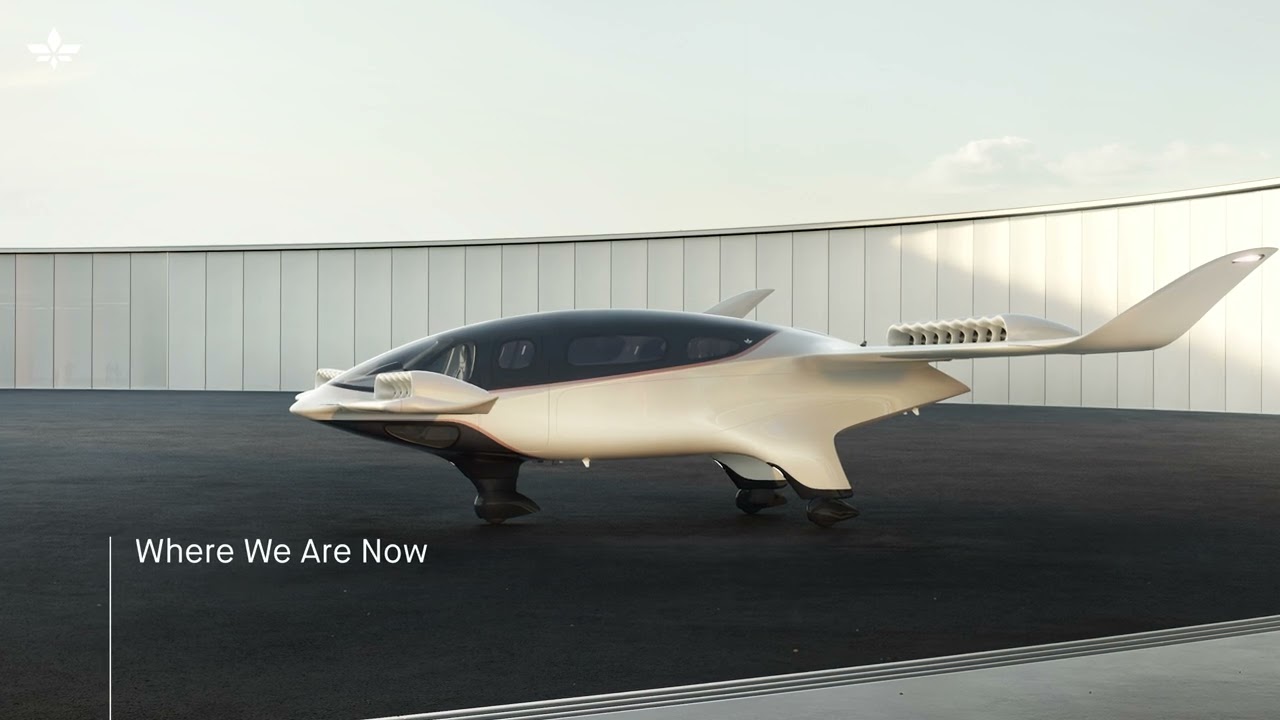
Following the completion of its preliminary design review (PDR), Lilium locked in its production aircraft design configuration. McIntosh expresses strong conviction in this frozen configuration: “We've converged on a final design, which we have every confidence safely achieves the performance our launch customers require.” Central to this update is the optimization of the electric ducted fan architecture. By increasing the diameter of the ducted fans by a few percent, engineers were able to trim the engine count down from 36 to 30 while delivering identical total thrust and system efficiency. This change enhances the aerodynamic balance between the main wing and canard, decreases manufacturing and maintenance costs, and allows for superior acoustic damping liners inside the ducts to suppress community noise.
Airframe adjustments accompany the propulsion refinement: the main wing has been moved slightly aft and higher on the fuselage, and winglets were added to the canard to clean up airflow and boost aerodynamic efficiency. Cruise power density is reduced to one-tenth of hover power density, preserving battery capacity for extended range. The revised propulsion architecture preserves a 3:1 engine-to-battery ratio, meaning the total battery pack count scales down from 12 to 10 units while maintaining an overall hover power density of roughly 2,500 W/kg in a lighter package.
Lilium also incorporated running landing capability to enhance operational flexibility and satisfy certification reserve mandates. This landing mode allows the aircraft to divert to conventional runway alternatives and execute a short rolling touchdown, tapping into battery energy reserves that cannot be safely depleted during a pure vertical landing. To achieve commercial air transport certification, the architecture uses extensive redundancy—spanning 30 independent engines, distributed control flaps, 10 separated battery packs, and multiple flight control computers—to satisfy EASA's strict failure probability threshold of $10^{-9}$, or less than one catastrophic failure per one billion flight hours.
- Ducted fan diameter increased by a few percent, reducing the total engine count to 30. - Battery pack count reduced from 12 to 10, maintaining a 3:1 engine-to-pack ratio. - Hover power density preserved at ~2,500 W/kg; cruise power density sits at 1/10th of hover power. - Geometric changes: main wings shifted upward and rearward; canard equipped with winglets. - Running landing capability added to unlock reserve energy margins and facilitate airport diversions. - Redundant architecture engineered to satisfy the commercial $10^{-9}$ safety standard ($\le 1$ catastrophic failure per $10^9$ flight hours).
[05:54](https://www.youtube.com/watch?v=qZ73PftBfFg&t=354s) High-Power Cell Architecture and Mission Range Targets
The energy storage system powering the Lilium Jet is the result of years of screening dozens of cell formats. Lilium selected a proprietary cell designed by Zenlabs and manufactured by Customcells, secured under an exclusive supply agreement for Lilium's market segment. McIntosh emphasizes the significance of this selection: “The battery is exclusive to Lilium within our target market and we believe it could be one of the highest performance cells that is practical for eVTOL in existence today.” Unlike standard market cells that specialize either in high specific energy or high specific power, independent test data from Energy Assurance demonstrates that the Zenlabs silicon-anode cell delivers both simultaneously. Crucially, the cell sustains its required hover specific power output of 2,500 W/kg down to a 20% state of charge (SoC).
These engineering parameters substantiate the program's commercial mission specifications. At operational empty weight (OEW), the jet maintains a projected physical range of approximately 250 kilometers (155 miles) when executing a short vertical takeoff and landing. Under real-world commercial operations at maximum takeoff weight (MTOW), the jet delivers a projected operational mission radius of roughly 175 kilometers. This operational profile incorporates a vertical takeoff, cruise, and a conservative 45-second vertical hover and landing sequence, terminating with 20% battery state of charge remaining. McIntosh notes that these operational calculations deliberately omit the supplemental reserve margins made accessible by the new running landing capability. As energy storage technology advances, Lilium plans to integrate upgraded battery chemistries into the airframe to expand passenger stage lengths over time.
- Cell partner: Zenlabs (design) and Customcells (manufacturing), exclusive to Lilium in its segment. - Performance validated by independent testing firm Energy Assurance. - Sustained power output: 2,500 W/kg at 20% state of charge. - Physical range: ~250 km (155 miles) at operational empty weight with short VTOL. - Projected operational range: ~175 km at maximum takeoff weight, factoring in a 45-second vertical hover landing and a 20% reserve SoC. - Rolling landing capability provides additional reserve margins beyond base operational range figures.
## Notable quotes > [01:20](https://www.youtube.com/watch?v=qZ73PftBfFg&t=80s) You can build something new that flies, but can't be certified. You can build something that can be certified, but can't be built at scale. You can build something at scale, but can't be sold profitably to a real market. — Alastair McIntosh
## Mentioned Alastair McIntosh, Lilium, Phoenix, European Union Aviation Safety Agency, Federal Aviation Administration, EUROCAE, Zenlabs, Customcells, Energy Assurance, Lilium Jet
## Video description Lilium's Chief Technology Officer, Alastair McIntosh, provides an update on the program, aircraft design, and certification.
[Source](https://www.youtube.com/watch?v=qZ73PftBfFg)