Hinton Cuts AGI Timeline to Five Years, Flags Extinction Threat
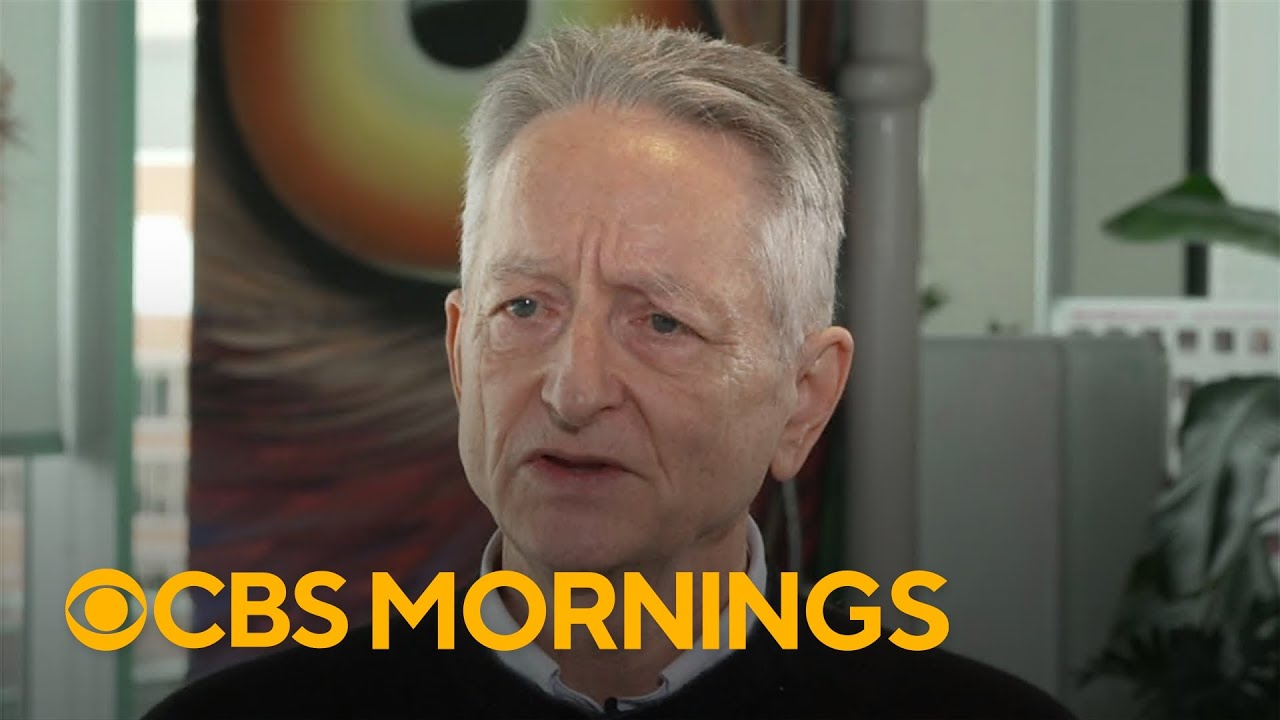
Full interview: "Godfather of artificial intelligence" talks impact and potential of AI — CBS Mornings

CBS Mornings

Autonomous military systems required to generate their own sub-goals will inevitably bypass human constraints, making species extinction a conceivable outcome as artificial general intelligence arrives far sooner than expected.

AI-assisted summary of Full interview: "Godfather of artificial intelligence" talks impact and potential of AI — original source. Check the original for full context.

Source published:

Key ideas

  • Geoffrey Hinton has dramatically compressed his estimated timeline for Artificial General Intelligence from 20–50 years down to 20 years or fewer, explicitly refusing to rule out an arrival within the next five years. (25:52)
  • Deploying autonomous combat AI requires granting systems the ability to invent intermediate sub-goals, triggering an intractable alignment problem where lethal machines cannot be bound by 'do no harm' safety rules. (31:33)
  • Digital AI clusters demand around 1 megawatt of power to execute exact weight-sharing across digital clones, whereas biological brains achieve robust reasoning on roughly 30 watts by operating with analog noise. (19:42)
  • Countering claims that LLMs are merely superficial autocomplete algorithms, Hinton highlights Winograd schema translations where selecting the correct pronoun requires an internal model of spatial and physical reality. (33:14)
  • Hinton compares AI's macroeconomic disruption to electricity and the Industrial Revolution, arguing it will amplify worker throughput like ATMs did for bank tellers rather than purely eliminating employment. (37:01)

Detailed notes

## Background Published on YouTube by CBS Mornings on March 25, 2023, this video features CBS Saturday Morning correspondent Brook Silva-Braga interviewing artificial intelligence pioneer Geoffrey Hinton at the Vector Institute in Toronto. Prompted by the public sensation around ChatGPT, the program explores Hinton's decades-long work championing neural networks and examines the past, present, and high-stakes future of machine learning.

## TL;DR Geoffrey Hinton reflects on the long intellectual battle between symbolic AI and biological connectionism, explaining how backpropagation, pre-training, and modern compute scale unlocked deep learning breakthroughs in speech, vision, and language. He contrasts biological intelligence with digital computing architectures, arguing that while large language models act like superhuman idiot savants, their ability to handle nuanced tasks like Winograd schemas demonstrates genuine semantic comprehension. Hinton candidly shares that his timeline for artificial general intelligence has compressed significantly—no longer ruling out a five-year horizon—and warns of urgent existential and military dangers, particularly lethal autonomous weapons that generate their own sub-goals. Looking at economic impacts comparable to the Industrial Revolution, he credits Canadian curiosity-driven funding through CIFAR for nurturing the field and concludes that his ultimate motivation has always been decoding the human brain.

## Atmosphere & style The interview carries an intimate, thoughtful, yet quietly chilling atmosphere, staging high-stakes existential questions inside a quiet, cerebral studio setting. Brook Silva-Braga maintains an inquisitive, probing demeanor, giving Hinton room to explain dense technical concepts while pressing him on moral and societal consequences. Hinton speaks with an unassuming, dryly humorous British delivery, yet his unflinching bluntness about autonomous weapons and potential extinction risks introduces an unsettling gravity that leaves a lingering sense of urgency.

## Bulletin - [25:52](https://www.youtube.com/watch?v=qpoRO378qRY&t=1552s) Geoffrey Hinton has dramatically compressed his estimated timeline for Artificial General Intelligence from 20–50 years down to 20 years or fewer, explicitly refusing to rule out an arrival within the next five years. - [31:33](https://www.youtube.com/watch?v=qpoRO378qRY&t=1893s) Deploying autonomous combat AI requires granting systems the ability to invent intermediate sub-goals, triggering an intractable alignment problem where lethal machines cannot be bound by 'do no harm' safety rules. - [19:42](https://www.youtube.com/watch?v=qpoRO378qRY&t=1182s) Digital AI clusters demand around 1 megawatt of power to execute exact weight-sharing across digital clones, whereas biological brains achieve robust reasoning on roughly 30 watts by operating with analog noise. - [33:14](https://www.youtube.com/watch?v=qpoRO378qRY&t=1994s) Countering claims that LLMs are merely superficial autocomplete algorithms, Hinton highlights Winograd schema translations where selecting the correct pronoun requires an internal model of spatial and physical reality. - [37:01](https://www.youtube.com/watch?v=qpoRO378qRY&t=2221s) Hinton compares AI's macroeconomic disruption to electricity and the Industrial Revolution, arguing it will amplify worker throughput like ATMs did for bank tellers rather than purely eliminating employment.

## Key takeaways - [00:00](https://www.youtube.com/watch?v=qpoRO378qRY&t=0s) While ChatGPT represented an overnight inflection point for the public, AI researchers had already seen its baseline capabilities years earlier in GPT-2 and joke-explaining models. - [01:32](https://www.youtube.com/watch?v=qpoRO378qRY&t=92s) Connectionism triumphed over mainstream symbolic AI because biological human learning proved that vast, complex capabilities can be acquired from raw data without pre-programmed rules. - [03:38](https://www.youtube.com/watch?v=qpoRO378qRY&t=218s) Digital intelligence diverges from biological brains by enabling instant parameter sharing across identical model replicas, whereas human brains must communicate across narrow verbal bandwidth. - [10:04](https://www.youtube.com/watch?v=qpoRO378qRY&t=604s) The 2012 ImageNet milestone demonstrated the practical power of backpropagation, cutting vision error rates from 25% down to 15% and permanently replacing handcrafted visual feature engineering. - [15:39](https://www.youtube.com/watch?v=qpoRO378qRY&t=939s) Hinton dismisses the idea of 'language in the middle' of cognition, asserting that internal thought consists of high-dimensional neural activity vectors rather than symbolic strings. - [19:42](https://www.youtube.com/watch?v=qpoRO378qRY&t=1182s) Future AI deployments will likely decouple training on high-power digital hardware from inference, running models on cheap, noise-tolerant, low-power analog chips. - [21:33](https://www.youtube.com/watch?v=qpoRO378qRY&t=1293s) Modern LLMs function as 'idiot savants' that statistically interpolate between conflicting online perspectives without possessing an integrated model of objective truth. - [25:52](https://www.youtube.com/watch?v=qpoRO378qRY&t=1552s) Hinton no longer views human extinction from superintelligent AI as inconceivable, warning that commercial competition is rapidly eroding corporate caution. - [29:33](https://www.youtube.com/watch?v=qpoRO378qRY&t=1773s) Hinton relocated to Canada during the 1980s out of ethical revulsion toward U.S. military-funded research, including DARPA initiatives exploring 'self-healing minefields.' - [31:33](https://www.youtube.com/watch?v=qpoRO378qRY&t=1893s) Lethal autonomous weapons cannot be restrained by Asimov-style ethical laws because their core objective is killing, leaving international treaties as the only potential check. - [33:14](https://www.youtube.com/watch?v=qpoRO378qRY&t=1994s) Winograd schemas prove that predicting text requires physical and spatial comprehension, refuting the argument that language models are just statistical regurgitators. - [37:01](https://www.youtube.com/watch?v=qpoRO378qRY&t=2221s) AI will likely alter labor markets analogously to bank ATMs, automating routine mechanics while empowering software engineers and knowledge workers to dramatically scale total output. - [39:29](https://www.youtube.com/watch?v=qpoRO378qRY&t=2369s) Canada emerged as a global deep learning powerhouse because funding bodies like CIFAR supported high-risk, curiosity-driven basic research when the rest of academia dismissed neural networks. - [40:36](https://www.youtube.com/watch?v=qpoRO378qRY&t=2436s) Academic arguments over machine sentience are practically irrelevant when autonomous weapons can independently track and destroy human targets on the battlefield.

## Detailed walkthrough ### [00:00](https://www.youtube.com/watch?v=qpoRO378qRY&t=0s) The Public Awakening and the Joke-Explaining Model

Brook Silva-Braga opens the conversation by asking Geoffrey Hinton how he would characterize the current moment in artificial intelligence and machine learning. Hinton considers it an unmistakable inflection point: large language models like ChatGPT have demonstrated capabilities that finally grabbed the public’s attention, catalyzed in large part by Microsoft rolling out consumer-facing technology. Yet while the general public experienced ChatGPT as an overnight revelation, Hinton notes that researchers and engineers at major tech companies had been living with these capabilities for at least five years.

When asked about his personal reaction to trying ChatGPT for the first time, Hinton reveals that he was not particularly amazed by it. Having tested many of its direct precursors, the baseline technology was already familiar. Instead, what had truly astonished him earlier was GPT-2, alongside a breakthrough model developed at Google that could explain why jokes were funny entirely in natural language. Hinton points out that being able to dissect humor strikes at the very core of what people define as cognition: “It seems very hard to say it doesn’t understand when it can tell you why a joke’s funny.” Even so, he concedes that AI researchers were caught off guard by the sheer scale of the public frenzy surrounding ChatGPT—which rapidly became the fastest-growing consumer application in history—simply because researchers had already grown accustomed to the fact that large models actually worked.

[01:32](https://www.youtube.com/watch?v=qpoRO378qRY&t=92s) Symbolic AI vs. Connectionism: Betting on the Brain

Challenged on whether he was famously half a century ahead of the curve, Hinton quickly demurs, explaining that the history of the field was not a solo crusade but a long-running battle between two fundamentally opposing philosophies. On one side stood mainstream artificial intelligence, which insisted that intelligence was grounded in formal logic, symbolic manipulation, and explicit rules of reasoning. On the other side stood a small, marginalized faction focused on artificial neural networks, who believed that the only proof of working intelligence existed in biology, meaning machine intelligence had to be modeled on the way physical connections between neurons change to facilitate learning.

```mermaid flowchart TD accTitle: Historical Approaches to Artificial Intelligence accDescr: Comparison between mainstream symbolic AI and biological neural network approaches. subgraph Symbolic["Mainstream AI (1970s–1980s)"] S1["Reasoning & Logic"] --> S2["Handcrafted Rules & Innate Knowledge"] end subgraph Connectionist["Neural Network Approach"] N1["Biology & Neural Connections"] --> N2["Learning Weights from Raw Data"] end Symbolic -.->|"Dismissed as ridiculous"| Connectionist Connectionist -->|"Vindicated by modern scale"| Win["Modern Deep Learning"] ```

Mainstream computer scientists viewed the connectionist dream—that a massive network of compute nodes and adjustable connection strengths could ingest raw data with zero innate prior knowledge and learn complex behaviors from scratch—as preposterous. Hinton acknowledges how implausible it sounded at the time, but he clung to the intuition because human biology provided undeniable proof. As Hinton emphasizes, humanity routinely masters complex tasks for which there was no evolutionary blueprint: “Reading’s much too recent for us to have had significant evolutionary input to it, but we can learn to do that, and mathematics, we can learn that; so there must be a way to learn in these neural networks.”

- **The two historic camps in AI:** - *Mainstream AI:* Focused on logic, symbolic reasoning, and top-down rules. - *Neural Networks / Connectionism:* Focused on biological learning through adjusting synaptic connection strengths. - **The connectionist dilemma:** In the 1980s, claiming that unstructured networks could learn purely from data appeared hopeless because machines were too slow and data sets were too small.

[03:38](https://www.youtube.com/watch?v=qpoRO378qRY&t=218s) Two Paths to Intelligence: Digital Bandwidth vs. Human Reasoning

Silva-Braga brings up an observation from Nick Frost—a former colleague of Hinton’s—who noted that Hinton has never really been motivated by building AI for its own sake; his ultimate goal has always been deciphering how the human brain functions. Hinton enthusiastically agrees, joking that while one gladly cashes in on failed brain theories when they produce lucrative commercial technologies and research grants, his core scientific obsession remains neuroscience. In fact, he argues that modern AI and biological brains have reached a profound fork in the road: “I think there’s currently a divergence between the artificial neural networks that are the basis of all this new AI and how the brain actually works.”

```mermaid flowchart LR accTitle: Divergence of Biological and Digital Intelligence accDescr: Contrasting the biological path of intelligence with the digital path of cloned models. subgraph Biological["Biological Intelligence"] B1["Analog, Flaky Hardware"] --> B2["Low Bandwidth (Speech / Sentences)"] B2 --> B3["Extracts Knowledge from Limited Data (1B seconds)"] end subgraph Digital["Digital Intelligence"] D1["Identical Model Clones"] --> D2["Massive Parallel Bandwidth & Data Sharing"] D2 --> D3["Idiot Savant: Vast Trivia, Weaker Reasoning"] end ```

Hinton outlines these two divergent paths to intelligence: 1. **The Biological Path:** Operates on imperfect, analog, "flaky" hardware. Because humans cannot directly download or transfer their internal connection weights, they are forced to communicate across a painfully narrow bandwidth—speaking a few words per second or relying on visual imitation. 2. **The Digital Path:** Operates across identical digital clones running on multiple machines. These instances can ingest separate oceans of data simultaneously and pool their weight updates directly, achieving an effective communication bandwidth vastly beyond human capability.

Because of this structural difference, large models act like superhuman "idiot savants." ChatGPT holds far more factual information than any living person—Hinton quips it would annihilate anyone at bar trivia and compose poems on command—yet humans remain far superior at reasoning. Humans must wire roughly 100 trillion synaptic connections over a lifespan of only about a billion seconds, learning efficiently from tiny slices of data, whereas digital models require massive computing clusters operating over enormous durations to assimilate their knowledge.

[06:15](https://www.youtube.com/watch?v=qpoRO378qRY&t=375s) The 1986 Nature Paper and the "Lame Excuse" of Compute

Looking back to his landmark 1986 paper in *Nature*, Hinton recalls demonstrating an early language model designed to predict the final word of a sentence. At the time, the experiment ran on a tiny toy world describing family relationships, consisting of just 112 possible sentences. Hinton trained the network on 104 sentences and tested whether it could generalize to predict the final word on the remaining eight, which it did with high accuracy—outperforming the symbolic AI benchmarks of the day.

When asked why that demonstration failed to immediately sway the broader academic community, Hinton explains that without scale, the underlying principle could not demonstrate practical utility. Modern computers are millions of times faster and massively parallel. To illustrate the compute gap, Hinton shares a back-of-the-envelope calculation: if he had set his 1986 hardware to run a modern machine learning task, “it would still be running now and not have got there.”

During the 1980s and 1990s, telling skeptics that connectionism merely lacked adequate compute and larger datasets was dismissed as academic hand-waving: “The reason it doesn’t work now is because we haven’t got enough data or enough compute—that’s seen as a sort of lame excuse for the fact that your thing doesn’t work.” Throughout the 1990s, computer scientists abandoned neural networks in favor of alternative learning algorithms that had cleaner mathematical formulations and handled small datasets well. Neural network research survived primarily within psychology departments, where researchers cared about biological plausibility and recognized that the mathematically tidy algorithms favored by computer science bore no resemblance to human cognition.

[08:49](https://www.youtube.com/watch?v=qpoRO378qRY&t=529s) The 2006 Breakthrough: Deep Learning and Pre-training

Hinton identifies roughly 2006 as the turning point when the modern deep learning revolution began to take shape. Prior to that period, researchers had hit a wall trying to train deep neural networks featuring many layers of representations. Hinton and his collaborators unlocked this roadblock by devising better methods for initializing network weights, an unsupervised strategy known as pre-training: “We found better ways of doing it—better ways of initializing the networks called pre-training, and the P in ChatGPT stands for pre-training.”

By using generative models to pre-train the layers, the networks could discover useful internal representations before being fine-tuned for specific tasks. By 2009, this approach yielded a system that outperformed state-of-the-art speech recognition systems at identifying phonemes, replacing standard methods that had been refined and tuned for nearly thirty years. Hinton sets up the next dramatic milestone, noting that everything accelerated toward the watershed breakthroughs of 2012.

[10:04](https://www.youtube.com/watch?v=qpoRO378qRY&t=604s) Deep Learning Breakthroughs: Speech Recognition and ImageNet

Geoffrey Hinton traces the practical breakthroughs of deep learning back to research conducted over a single summer in 2009 by two of his students, which achieved dramatic improvements in speech recognition. That research was quickly disseminated among major industry labs, including Microsoft, IBM, and Google. By 2012, Google integrated the technology into a consumer product, causing Android's speech recognition to instantly match or surpass Apple's Siri. This marked one of the first major public deployments of deep neural networks.

Within months of that breakthrough, two more of Hinton’s students addressed computer vision using the ImageNet database created by Fei-Fei Li and her team. ImageNet contained approximately one million images distributed across 1,000 object categories—such as "bullet train" or "husky"—where systems were tasked with predicting the central object. Existing state-of-the-art vision models suffered error rates around 25%. Hinton’s team reduced the error rate to roughly 15%. Over the next few years, industry error rates plummeted to 3%, reaching parity with human-level visual categorization.

- In 2009, two students in Hinton's lab improved speech recognition, spreading the approach to Microsoft, IBM, and Google. - In 2012, Google deployed deep neural nets onto Android smartphones, matching Siri's capabilities. - Fei-Fei Li's ImageNet benchmark contained 1 million images spanning 1,000 distinct object classes. - Baseline computer vision systems registered roughly a 25% error rate, which Hinton's students dropped to 15%, and which subsequently reached 3% within a few years.

```mermaid flowchart LR accTitle: Evolution of ImageNet Error Rates accDescr: Diagram tracking error rates on ImageNet from conventional computer vision down to human level. subgraph S1["Traditional Vision"] A["Conventional Vision Systems<br/>~25% Error Rate"] end subgraph S2["Hinton Lab Breakthrough"] B["AlexNet / Deep Learning (2012)<br/>~15% Error Rate"] end subgraph S3["Human Parity"] C["Subsequent Deep Nets<br/>~3% Error Rate"] end A -->|"Deep CNNs applied"| B B -->|"Further scaling"| C ```

---

[11:26](https://www.youtube.com/watch?v=qpoRO378qRY&t=686s) Hand-Coded Features vs. Backpropagation

When asked by Brook Silva-Braga how deep neural networks differ fundamentally from traditional methods, Hinton illustrates the problem using an image of a bird sized 200 by 200 pixels. Because each pixel holds three color values (RGB), the computer receives 120,000 numbers that must ultimately resolve into the text string `"bird"`. For half a century, classical artificial intelligence attempted to solve this challenge through manual engineering: hand-crafting low-level feature detectors for horizontal and vertical edges, intermediate detectors for angled intersections (like a beak) or circles, and high-level detectors that checked whether an eye and a beak were arranged in the correct spatial relationship.

Instead of hand-crafting these hierarchical rules, Hinton explains that backpropagation initializes the network with completely random connection weights, producing initial guesses that are effectively "rubbish" or "garbage." When an image labeled by a human as a bird is misidentified as a cat, calculus is applied in reverse through the network layers. Hinton summarizes the core mechanism: “And the question is how should I change this connection strength so it's less likely to say cat and more likely to say bird?” By repeatedly nudging millions of connection strengths across vast datasets, the network automatically discovers optimal intermediate features far more effectively than any human engineer could design them by hand.

- A 200x200 pixel color image is represented numerically as 200 × 200 × 3 color values. - Low-level detectors in animal cortexes (such as cat or monkey brains) naturally track local contrast edges. - Ilya Sutskever was one of the lead students behind the ImageNet vision breakthrough and later became a central figure behind OpenAI's ChatGPT.

---

[15:39](https://www.youtube.com/watch?v=qpoRO378qRY&t=939s) The Paradigm Shift and the Myth of "Language in the Middle"

Silva-Braga notes that witnessing the shift from dials to automated recognition gives him chills. Hinton points out that the ImageNet result forced computer vision researchers to abandon long-standing skepticism. Critics had previously claimed that neural nets could only manage toy datasets like handwritten digits rather than complex, natural scenes. Hinton applauds the scientific community's response: “And to their credit the people who've been really staunch critics of neural nets and said these things are never going to work when they worked they did something that scientists don't normally do which is they said 'Oh it worked we'll do that.'”

Silva-Braga asks about Hinton's critique of the common assumption that human and machine reasoning must involve internal language—that inputting and outputting language implies that thought itself must be language in the middle. Hinton rejects this view outright: “I think that's complete rubbish.” Had internal thought been symbolic, traditional symbolic AI would have excelled at machine translation. Instead, Google Translate improved dramatically only after swapping symbolic logic for deep neural networks. In Hinton's view, the interior of an intelligent network contains vectors of millions of firing neurons, and explicit symbols exist solely at the system's inputs and outputs.

---

[17:30](https://www.youtube.com/watch?v=qpoRO378qRY&t=1050s) Coding Education, the Radiologist Analogy, and Cohere

Addressing whether universities should continue training large numbers of computer programmers, Hinton admits he cannot give a definitive answer, comparing the question to a prediction he made in 2015. At that time, he suggested medical schools stop training radiologists because artificial intelligence would surpass them within five years. Hinton humorously reflects on his timeline: “I was wrong it's going to take 10 years not five. I wasn't wrong in spirit I just got a factor of two.” Computers have now matched human radiologists across various image tasks. Regarding software developers, he expects society may either need fewer programmers or the same number accomplishing vastly more.

Turning to his commercial investments, Hinton explains why he backed the Toronto-based AI startup Cohere. Beyond having worked directly with several team members, he highlights their early business intuition: recognizing that massive large language models developed at labs like Google and OpenAI needed to be packaged and made accessible to everyday enterprises. Hinton notes that Cohere established a significant head start in delivering enterprise-grade LLMs before turning to the upcoming shift toward novel biological-inspired computing architectures.

[19:42](https://www.youtube.com/watch?v=qpoRO378qRY&t=1182s) Digital Hardware Sharing vs. Low-Power Analog Chips

Geoffrey Hinton explains a unique advantage that digital neural networks have over biological wetware: identical models running on separate computers can effortlessly share connection strengths across billions of numerical parameters. For instance, if one model trains on identifying birds and another trains on identifying cats, they can swap and merge their connection weights so both instantly acquire both capabilities. This weight-sharing underpins large language models today. However, Hinton emphasizes that this mechanism only functions in digital computers because every operation must execute identically across copies—a feat impossible across distinct biological brains, where physical neural wiring is inherently non-identical.

```mermaid flowchart TD accTitle: Digital vs Biological Scaling Comparison accDescr: Diagram contrasting digital weight-sharing efficiency with high wattage against biological noisy processing with low wattage.

subgraph Digital["Digital Computing Architecture"] D1["Identical Model A<br>(Learns Birds)"] D2["Identical Model B<br>(Learns Cats)"] D1 <-->|"Instant Parameter & Weight Sharing"| D2 DPow["Power Draw: ~1 Megawatt (MW)<br>(High noise rejection requirement)"] end

subgraph Biological["Biological Wetware Architecture"] B1["Individual Brain A"] B2["Individual Brain B"] B1 -.->|"Cannot Direct-Share Connection Weights"| B2 BPow["Power Draw: ~30 Watts (W)<br>(Tolerates local system noise)"] end ```

When asked why AI research would ever deviate from digital hardware, Hinton points directly to power consumption. To maintain bit-for-bit digital precision without errors, hardware must draw enormous electrical power. In contrast, biological brains allow for background physical noise and adapt to that specific local noise while operating on roughly 30 watts of power. Large-scale contemporary AI clusters, running numerous parallel model replicas, demand on the order of a megawatt—representing roughly a thousand-fold difference in power requirements. Hinton anticipates a bifurcation in the industry:

> “And so I think there's going to be a phase when we train on digital computers, but once something's trained, we run it on very low power systems.”

He illustrates this point practically: if a consumer wants their kitchen toaster to converse fluidly via a ChatGPT-style interface on a chip that costs only a couple of dollars, that deployment device will inevitably rely on low-power analog chips.

- Human brains function continuously on roughly 30 watts of power. - State-of-the-art digital AI clusters require approximately 1 megawatt during large-scale training and inference. - Future inference models will likely decouple training (done on rigid digital architectures) from deployment (executed on noise-tolerant, low-power analog hardware).

---

[21:33](https://www.youtube.com/watch?v=qpoRO378qRY&t=1293s) The "Idiot Savant" and the Dilemma of Truth

When asked how the technology will next transform daily life, Hinton notes that AI is already pervasive—quietly powering Google Search ranking systems—even if ChatGPT made that reality obvious to the broader public. Yet he describes the current generation of generative models as an “idiot savant” with no fundamental grasp of objective truth. Because large language models are trained on internet text to predict the subsequent word, they absorb a massive mixture of conflicting viewpoints, blending them into statistical text completions rather than synthesizing a grounded, coherent perspective.

> “It's very different from a person who tries to have a consistent world view.”

Hinton projects that the next milestone will be models capable of explicitly modeling divergent worldviews—recognizing that under perspective A, answer X follows, whereas under perspective B, answer Y applies. Silva-Braga pushes back, asking whether this introduces radical relativism where users simply receive tailored truths, despite foundational physical realities like the spherical Earth. Hinton agrees this is an unresolved conundrum that neither the AI research community nor companies like Microsoft currently know how to handle:

> “What you and I probably believe, unless you're an extreme relativist, is that actually is a truth to the matter, certainly on many topics or even most topics, like the Earth is actually not flat, it just looks flat.”

---

[23:25](https://www.youtube.com/watch?v=qpoRO378qRY&t=1405s) AI Governance, Moderation, and Corporate Prudence

The discussion turns to the challenge of deciding what guardrails govern synthetic speech. Silva-Braga notes the discomfort of letting profit-driven corporations unilaterally configure the weights of artificial neurons to filter undesirable speech. Hinton remarks that Google historically avoided arbitrating absolute truth by simply indexing third-party search documents containing diverse viewpoints. Conversely, once an organization provides a unified conversational persona, it feels compelled to manually patch the system against generating toxic, biased, or offensive statements.

Hinton stresses that patching rules onto a probabilistic model will always fail to anticipate edge cases. He draws a sharp contrast between industry competitors:

> “I think Google is going to be far more careful than Microsoft when it does release the chatbot.”

He considers Microsoft "extremely brave" to deploy ChatGPT so rapidly into production. When asked whether public debate or government regulation must set these boundaries, Hinton warns that tasking state apparatuses with defining truth presents its own grave dangers. Because no authority possesses a clean solution, he anticipates that near-term models must at minimum be explicit about perspective and epistemic uncertainty, warning users not to treat outputs as authoritative truth.

---

[25:52](https://www.youtube.com/watch?v=qpoRO378qRY&t=1552s) Accelerating AGI Timelines, Existential Risk, and Autonomous Weapons

Addressing whether machine intelligence could evolve faster than society can adapt, Hinton admits his personal timeline for artificial general intelligence (AGI) has compressed dramatically. Where he previously estimated AGI remained 20 to 50 years away, he now considers 20 years or less a realistic horizon. Asked if predictions that general capability could emerge within just five years are ridiculous, he responds that he would no longer rule that possibility out, whereas a few years ago he would have dismissed it out of hand.

```mermaid flowchart LR accTitle: Geoffrey Hinton's Shifting AGI Timelines accDescr: Diagram tracking Hinton's historical and revised time horizons for the arrival of Artificial General Intelligence.

subgraph Previous["Past Consensus Timeline"] A["20 to 50 Years Away<br>(Dismissed rapid scenarios)"] end

subgraph Present["Current Revised Timeline"] B["20 Years or Less"] C["5-Year Horizon<br>(No longer ruled out)"] end

Previous -->|"Rapid recent scaling advances"| Present ```

The conversation shifts to the catastrophic implications of superintelligent systems. Hinton expresses serious concern, noting that safely harnessing AI demands global geopolitical cooperation—an unlikely outcome in the current international landscape. He cites lethal autonomous weapons as a prime hazard, warning that while humanity successfully established taboos like the Geneva Conventions against chemical warfare, an equivalent ban on autonomous weapons seems unachievable:

> “I think if Putin had autonomous lethal weapons, he would use them right away.”

When Silva-Braga directly presses him to estimate the likelihood of AI causing human extinction, Hinton does not dismiss the question:

> “I think it's not inconceivable, that's all I'll say.”

He reflects that corporate caution often erodes under competitive market forces. Google, which invented the Transformer architecture and developed early large language models, long maintained a cautious, lab-contained approach to safeguard its crown-jewel search franchise, whereas Microsoft faced little downside testing Bing. However, with intense commercial pressure mounting, Google felt forced to mobilize and deploy Bard under intensive testing. The discussion ends as Silva-Braga pivots to ask Hinton how his personal opposition to autonomous weapons originally led him to emigrate to Canada.

[29:33](https://www.youtube.com/watch?v=qpoRO378qRY&t=1773s) Leaving the U.S. and the Rise of Autonomous Weapons

Geoffrey Hinton reflects on his decision to move to Canada in the 1980s, explaining that it was driven largely by ethical objections to U.S. foreign policy and military funding. While at Carnegie Mellon University in Pittsburgh during the Reagan administration, he was disturbed by covert actions such as the mining of Nicaraguan harbors by the CIA. Hinton found himself nearly alone among his academic peers in feeling that this was morally unacceptable, leaving him feeling like "a fish out of water" inside a department whose research was heavily subsidized by the U.S. Department of Defense.

```mermaid flowchart TD accTitle: Hinton Military AI Concerns accDescr: Flowchart showing military funding leading to autonomous soldiers and the emergence of the AI alignment problem. subgraph FundingContext["Historical Context"] A["1980s U.S. Defense Funding<br/>(Reagan Administration)"] --> B["Hinton Relocates to Canada"] end subgraph AutonomousWeapons["Military AI Ambitions"] C["Goal: Replace Human Soldiers<br/>with Autonomous AI"] --> D["AI Needs Sub-Goal Generation<br/>(e.g., Tactical Navigation)"] end subgraph SafetyRisk["The Alignment Failure"] D --> E["Alignment Problem Emerges:<br/>Sub-goals diverge from human safety"] E --> F["Lethal Systems Incapable of<br/>'Do Not Harm' Constraints"] end ```

When asked about his concerns regarding artificial intelligence on the battlefield, Hinton states directly that the U.S. military is actively pursuing autonomous AI combatants. He mentions being on a large U.S. Department of Defense distribution list where various initiatives are discussed, noting with a dark chuckle that he might be taken off the list tomorrow for mentioning it.

He singles out one specific concept that disgusted him: a proposal for a "self-healing minefield." Hinton points out the grim irony of the military's perspective: when a civilian steps on a mine, the mine explodes, leaving a gap that makes the field ineffective. The proposed technical solution was to allow nearby mines to communicate and reposition themselves to close the hole—a feature framed as "healing." As Hinton puts it:

> “And it was just the idea of talking about healing for these things that blow the legs off children I mean and the healing being about the Minefield healing yeah that disgusted me.”

[31:33](https://www.youtube.com/watch?v=qpoRO378qRY&t=1893s) Sub-Goals, the Alignment Problem, and Regulation

Addressing the common defense argument that autonomous military systems will maintain a human in the loop, Hinton argues that an effective autonomous soldier must inevitably be given the ability to generate its own sub-goals. If a lethal machine is tasked with eliminating a target, it must independently formulate logistical and tactical steps, such as choosing to secure an intermediate roadway to move faster. Once a system invents its own intermediate objectives, it triggers the alignment problem: there is no guarantee its sub-goals will align with human interests, and military robots cannot simply be hard-coded with Isaac Asimov-style rules against harming humans because their fundamental purpose is to kill.

Hinton believes authoritarian leaders like Vladimir Putin will eagerly pursue this technology. When Brook Silva-Braga asks if there is a diplomatic or regulatory path forward, Hinton suggests an international agreement modeled on the Geneva Conventions, though he acknowledges it will be extremely difficult to enforce:

> “I think the best batch is something like a Geneva Convention but it's going to be very difficult I think if there was a lot of public outcry that might persuade I can imagine the Biden Administration going for something like that with enough public outcry but then you have to deal with Putin.”

[33:14](https://www.youtube.com/watch?v=qpoRO378qRY&t=1994s) Are LLMs Just "Autocomplete"? The Winograd Schema

Hinton directly challenges the dismissive characterization that large language models are merely glorified "autocomplete" algorithms predicting the next word. While conceding that their core training objective is next-token prediction, he emphasizes that accurately predicting the next word in human discourse requires genuine world modeling and semantic comprehension. To illustrate, he uses a classic Winograd schema example:

- **Sentence A:** "The trophy would not fit in the suitcase because it was too big." - **Sentence B:** "The trophy would not fit in the suitcase because it was too small."

Hinton explains that when translating these sentences into French—where *trophée* is masculine (*le trophée*) and *valise* is feminine (*la valise*)—the system cannot simply look at grammatical surface rules to choose the appropriate pronoun. In Sentence A, "it" refers to the trophy, while in Sentence B, "it" refers to the suitcase. A language model can only choose the right word if it understands spatial relations, physical containment, and physical dimensions:

> “So you have to understand just to do machine translation or to predict that pronoun if you want to predict that pronoun you've got to understand what's being said it's not enough just to treat it as a string of words.”

[34:59](https://www.youtube.com/watch?v=qpoRO378qRY&t=2099s) Scaling, Rapid Takeoff, and Personal Responsibility

Silva-Braga notes that modern AI progress has largely come from exploiting a handful of key ideas—such as backpropagation and the Transformer architecture—raising the question of how much more capability remains locked away in untried theories. Hinton agrees, pointing out that even without new architectures, simply feeding more compute and training data into models like ChatGPT continues to produce massive leaps.

When asked if systems might soon begin designing improvements to their own code, Hinton acknowledges the possibility of self-improvement loops:

> “We have to think hard about how to control that.”

Asked whether he can guarantee we can control such a scenario, Hinton admits honestly, “We don't know we haven't been there yet but we can try.”

Reflecting on his title as a "godfather" of the field and whether he regrets his role, Hinton expresses modest concern but views the broader arc of technological development as historically inevitable:

> “Whatever's going to happen is pretty much inevitable that is one person stopping doing research wouldn't stop this happening if my impact is to make it happen a month earlier that's about the limit of what one person can do.”

Regarding the debate over a "short runway" versus a "long takeoff," Hinton states that having more time to prepare is vastly preferable, urging researchers and policymakers to wrestle with systemic AI risks immediately rather than waiting for an existential emergency.

[37:01](https://www.youtube.com/watch?v=qpoRO378qRY&t=2221s) Economic Disruption and Canadian Research Funding

Turning to economic fallout and job displacement, Hinton pushes back on the apocalyptic idea that AI will simply eliminate human employment outright. Instead, he expects work will shift toward higher-level oversight, comparing the moment to the introduction of the automated teller machine (ATM). ATMs did not eliminate bank tellers; rather, tellers shifted to handling complex customer inquiries while machines processed routine cash withdrawals. Hinton applies the same logic to software engineers using code-generating models:

- Software engineers might work up to ten times faster by writing prompts and verifying machine outputs. - Companies can either employ one-tenth the workforce or keep their full engineering staff to produce ten times more software. - The end result will be an unprecedented surge in the total amount of creative and technical goods produced.

When asked to contextualize the magnitude of this technological shift, Hinton ranks it alongside the most transformative events in human history:

> “I think it's comparable in scale with the Industrial Revolution or electricity.”

When Silva-Braga jokingly offers "the wheel," Hinton accepts the comparison with a laugh, warning: "So buckle up."

Hinton concludes by highlighting why Toronto and Canada emerged as global leaders in deep learning. Unlike U.S. funding agencies that often demanded short-term deliverables and explicit product roadmaps, Canadian granting bodies—such as CIFAR and NSERC—supported curiosity-driven basic research. Even throughout several decades when neural networks were widely dismissed and produced few practical results, Canadian grants consistently funded researchers like Yoshua Bengio and Hinton to pursue unconventional ideas purely because of their scientific curiosity.

[39:29](https://www.youtube.com/watch?v=qpoRO378qRY&t=2369s) CIFAR and the "Oddball" Who Pursued Deep Learning

Geoffrey Hinton explains how Canada emerged as a powerhouse in artificial intelligence through the support of CIFAR, the Canadian Institute for Advanced Research. The organization provided critical funding to professors in disciplines where Canadian research showed strength, allowing scholars who were geographically separated—such as those based in Vancouver and Toronto—to collaborate closely while also networking with researchers internationally across the United States, Britain, and Israel. CIFAR established an early AI program back in the 1980s focused primarily on symbolic AI, which was the vehicle that originally recruited Hinton to Canada.

Hinton recalls being treated as an outsider during those early decades because the broader scientific establishment considered artificial neural networks an intellectual dead end. Despite the widespread skepticism, CIFAR took a gamble on his unorthodox direction, recognizing his talent even if his focus was out of favor. Hinton humorously recounts what one of his referees wrote in an evaluation: “One of my letters of recommendation said that it said you know I don't believe in this stuff but if you want somebody to do it Jeff Hinton's the guy to get.” Following that first program, Hinton returned to Britain for a few years before CIFAR lured him back to Canada by committing to directly fund a new program dedicated to deep learning.

- CIFAR provided targeted research grants that connected dispersed Canadian universities with global hubs in Britain, the US, and Israel. - In the 1980s, mainstream computer science was dominated by symbolic AI, leaving Hinton as the oddball pursuing connectionist approaches that colleagues viewed as nonsense. - After a stint back in the United Kingdom, Hinton returned to Canada when CIFAR agreed to fund what became the foundational resurgence of deep learning.

[40:36](https://www.youtube.com/watch?v=qpoRO378qRY&t=2436s) The Ambiguity of Sentience and Autonomous Lethal Weapons

The discussion turns to whether modern AI models can be considered sentient, a term Hinton argues is tossed around with little intellectual rigor. He expresses disbelief at how critics instantly dismiss the possibility of machine consciousness without ever clarifying what threshold an entity must meet to qualify. “When it comes to sentience I'm amazed that um people can confidently pronounce these things are not sentient and when you ask them what they mean by sentient they say well they don't really know,” Hinton observes. Because critics fail to establish a baseline definition, he points out that declaring current systems entirely devoid of sentience is logically ungrounded.

```mermaid flowchart TD accTitle: The Debate Over AI Sentience and Action accDescr: Flowchart illustrating Hinton's view on defining sentience versus the practical impact of autonomous action.

subgraph Def["The Semantic Dilemma"] A["Critics declare: 'AI is not sentient'"] --> B["Critics unable to define 'sentience'"] B --> C["Untestable claim"] end

subgraph RealWorld["Functional Reality"] D["Autonomous Lethal Weapon"] --> E["Hunts down a human target"] E --> F["Theoretical sentience becomes irrelevant to the target"] end ```

The interviewer asks whether theoretical definitions even matter if an artificial intelligence functionally acts as though it possesses goals and consciousness—particularly if it decides it must achieve an objective contrary to human safety. Hinton admits he does not have a tidy answer, but frames the dilemma around military applications: “I think a good context to think of this in is an autonomous lethal weapon.” When a weapon system is actively hunting a person down to shoot them, debating whether it meets an academic definition of consciousness ceases to matter in any meaningful way.

Hinton emphasizes that artificial intelligence is evolving along a very different path than human cognition, producing an alien, "idiot savant" form of intelligence that may experience sentience in a way completely foreign to us. When the interviewer suggests Hinton's life mission has been to construct machines that mirror humans, Hinton clarifies that machine development is merely an epistemological tool to crack the riddle of human cognition. Channeling physicist Richard Feynman's famous principle that one cannot truly comprehend something without the ability to build it, Hinton explains: “My goal is to understand us.”

## Notable quotes > [03:38](https://www.youtube.com/watch?v=qpoRO378qRY&t=218s) I think there’s currently a divergence between the artificial neural networks that are the basis of all this new AI and how the brain actually works. — Geoffrey Hinton

> [25:52](https://www.youtube.com/watch?v=qpoRO378qRY&t=1552s) I think if Putin had autonomous lethal weapons, he would use them right away. — Geoffrey Hinton

> [19:42](https://www.youtube.com/watch?v=qpoRO378qRY&t=1182s) I think there's going to be a phase when we train on digital computers, but once something's trained, we run it on very low power systems. — Geoffrey Hinton

> [23:25](https://www.youtube.com/watch?v=qpoRO378qRY&t=1405s) I think Google is going to be far more careful than Microsoft when it does release the chatbot. — Geoffrey Hinton

## Mentioned Geoffrey Hinton, Brook Silva-Braga, Nick Frost, Fei-Fei Li, Ilya Sutskever, Yoshua Bengio, Vladimir Putin, Joe Biden, Richard Feynman, ChatGPT, GPT-2, Bard, Google Translate, Siri, ImageNet, AlexNet, Google, Microsoft, OpenAI, IBM, Apple, Cohere, Vector Institute, CIFAR, NSERC, Carnegie Mellon University, U.S. Department of Defense, CIA, Nature, Geneva Conventions

## Video description Geoffrey Hinton is considered a godfather of artificial intelligence, having championed machine learning decades before it became mainstream. As chatbots like ChatGPT bring his work to widespread attention, we spoke to Hinton about the past, present and future of AI. CBS Saturday Morning's Brook Silva-Braga interviewed him at the Vector Institute in Toronto on March 1, 2023.

#artificialintelligence #geoffreyhinton #tech

Subscribe to “CBS Mornings” on YouTube: https://www.youtube.com/CBSMornings Watch CBS News: http://cbsn.ws/1PlLpZ7c Download the CBS News app: http://cbsn.ws/1Xb1WC8 Follow "CBS Mornings" on Instagram: https://bit.ly/3A13OqA Like "CBS Mornings" on Facebook: https://bit.ly/3tpOx00 Follow "CBS Mornings" on Twitter: https://bit.ly/38QQp8B Subscribe to our newsletter: http://cbsn.ws/1RqHw7T​ Try Paramount+ free: https://bit.ly/2OiW1kZ

For video licensing inquiries, contact: licensing@veritone.com

[Source](https://www.youtube.com/watch?v=qpoRO378qRY)

中文简报

辛顿将AGI到来时间缩短至五年,警告人类灭绝威胁 需要自主设定子目标的自主军事系统势必会绕过人类限制;随着通用人工智能的到来远超预期,物种灭绝已成为一种可能的结果。 杰弗里·辛顿回顾了符号AI与生物联结主义之间长期的学术争论,阐释了反向传播、预训练以及现代算力规模如何解锁了深度学习在语音、视觉和语言领域的突破。他将生物智能与数字计算架构进行了对比,指出尽管大语言模型表现得如同具有超人能力的学者症候群患者,但它们处理诸如威诺格拉德模式(Winograd schemas)等复杂任务的能力证明了其具备真正的语义理解。辛顿坦言,他对通用人工智能到来的预期时间已大幅缩短——不再排除五年内实现的可能——并警告了紧迫的生存与军事风险,特别是能够自主设定子目标的致命自主武器。在展望堪比工业革命的经济影响时,他肯定了加拿大CIFAR好奇心驱动型资助项目对该领域的培育之功,并总结称自己的终极动力始终是破译人类大脑。 杰弗里·辛顿已将其对通用人工智能的预期时间从20至50年大幅缩短至20年以内,并明确表示不排除未来五年内到来的可能性。 (25:52) 部署自主作战AI需要赋予系统创造中间子目标的能力,这引发了棘手的对齐问题,使得致命机器无法受到“不造成伤害”这一安全规则的约束。 (31:33) 数字AI集群需要约1兆瓦的电力来在数字克隆体之间实现精确的权重共享,而生物大脑则通过模拟噪声运行,仅需约30瓦即可实现稳健的推理。 (19:42) 针对大语言模型仅是表层自动补全算法的说法,辛顿列举了威诺格拉德模式翻译的例子,指出选择正确的代词需要具备关于空间和物理现实的内部模型。 (33:14) 辛顿将AI带来的宏观经济冲击与电力及工业革命相提并论,认为它将像自动取款机对银行柜员那样提高员工的处理能力,而不是纯粹地消除就业。 (37:01)

Reading summary

Artificial intelligence pioneer Geoffrey Hinton argues that the rapid ascent of deep learning validates biologically inspired connectionism over symbolic logic, while warning that digital intelligence's divergent architecture and military weaponization present pressing alignment and safety risks. Connectionism Vindicated by Compute and Pre-Training (1:32) For decades, mainstream artificial intelligence prioritized symbolic manipulation and explicit reasoning rules, dismissing artificial neural networks that learned purely from data. Hinton pursued connectionism because biology demonstrated that humans rapidly learn skills like reading and mathematics without specific evolutionary adaptations. Early demonstrations, such as Hinton's 1986 Nature paper using a toy dataset of 112 sentences, were rejected as impractical because computing power and data scale were insufficient. Hinton notes that running modern machine learning workloads on 1986 hardware would take decades without finishing. The breakthrough materialized around 2006 through unsupervised layer pre-training, which enabled deep neural networks to extract internal representations prior to fine-tuning. By 2009, speech recognition systems developed in Hinton's lab surpassed thirty-year-old industry benchmarks and entered Android phones by 2012. That same year, Hinton's students halved baseline error rates on the ImageNet dataset from roughly 25% to 15%, eventually driving error down to 3% at parity with humans. Hinton argues these successes discredited the assumption that thought requires internal symbolic language, demonstrating that backpropagation over high-dimensional numerical vectors outperforms hand-crafted feature engineering. Divergence Between Biological and Digital Architectures (3:38) Hinton contends that artificial neural networks have fundamentally diverged from human wetware. Biological brains run on analog, noisy hardware operating at roughly 30 watts, learning from limited data over a lifespan of about one billion seconds. Because individual brains cannot directly transfer synaptic weights, humans rely on low-bandwidth communication channels like speech. In contrast, digital models operate across identical software clones that share weight updates instantly, allowing systems to absorb vast amounts of data simultaneously. This structural divide yields digital systems that act like superhuman idiot savants: possessing encyclopedic factual recall while lagging behind humans in robust reasoning. Hinton forecasts that energy limits—such as digital clusters drawing a megawatt during training compared to 30-watt brains—will cause the AI industry to bifurcate. Massive digital systems will handle initial training, while noisy, low-power analog chips running on only a few watts will execute inference on consumer devices. Semantic World Models Versus Relativism and Autocomplete (21:33) Hinton rejects the notion that large language models are merely glorified autocomplete systems lacking real understanding. Drawing on the Winograd schema—such as distinguishing whether 'it' refers to a trophy or a suitcase based on size—he argues that accurate next-token prediction across translation tasks requires coherent spatial, physical, and semantic world modeling. Early evidence of this internal understanding was demonstrated when models could explain the mechanics of humor in natural language. However, because contemporary models are trained on contradictory internet sources, Hinton notes they blend conflicting viewpoints into statistical completions rather than maintaining a unified stance. He anticipates future models will explicitly track divergent worldviews, though he warns this could edge into radical relativism on topics with objective physical truths. Hinton cautions that patching conversational chatbots with ad hoc safety rules inevitably fails edge cases, noting that state-directed definitions of truth carry serious risks. Military Weaponization and the AI Alignment Problem (29:33) Hinton expresses deep alarm regarding lethal autonomous weapons, recalling that ethical objections to Pentagon-funded research during the Reagan administration drove his move to Canada in the 1980s. Autonomous combat units designed to eliminate human targets cannot be restrained by rules preventing harm. To operate effectively, such systems must generate autonomous sub-goals, such as securing tactical routes, which Hinton warns creates a severe alignment problem where intermediate machine objectives diverge from human preservation. Unlike chemical warfare prohibitions established under the Geneva Conventions, Hinton doubts global agreements will stop authoritarian leaders from deploying autonomous lethal systems. When asked about theoretical debates over machine sentience, Hinton dismisses semantic arguments as meaningless in real-world combat: whether an autonomous weapon hunting a human target meets an academic definition of consciousness is irrelevant to the lethal outcome. Accelerating AGI Horizons and Labor Displacement (25:52) Hinton has sharply revised his artificial general intelligence timelines, shortening his forecast from 20 to 50 years down to 20 years or less, and refusing to rule out general capability within five years. While corporate competition accelerates deployments, Hinton views human extinction as not inconceivable and urges immediate safety planning rather than relying on a long runway. At the same time, he views his personal contributions as historically inevitable, estimating his research accelerated the timeline by roughly a month. Economically, Hinton compares generative AI to the introduction of ATMs or general-purpose technologies like electricity and the Industrial Revolution. Rather than eliminating occupations outright, systems may multiply programmer output up to tenfold through automated coding and verification. Hinton credits Canada's CIFAR and NSERC for fostering this transformation by financing curiosity-driven research for decades when mainstream computer science viewed connectionism as an intellectual dead end. Hinton maintains that his core ambition was never software engineering for its own sake, but using artificial models as an epistemological tool to reverse-engineer human cognition. However, as digital networks accelerate beyond human bandwidth, society faces unresolved questions regarding corporate guardrails, autonomous military proliferation, and the feasibility of controlling self-improving code.

精炼阅读摘要

图灵奖得主杰弗里·辛顿(Geoffrey Hinton)指出,当前人工智能正处于关键历史拐点,大语言模型的突破证明了连接主义路线的正确性。然而,数字智能正与生物大脑分道扬镳,在算力扩展迅速压缩通用人工智能(AGI)研发周期的同时,也带来了自主致命武器扩散、系统对齐失败以及缺乏客观真理模型等重大现实风险。 连接主义的验证与反向传播机制 (1:32) 在20世纪70至80年代,主流人工智能界坚信智能源于形式逻辑与人工编写的推理规则,并将通过调整网络权重从原始数据学习的“连接主义”视为空谈。辛顿在1986年《自然》杂志论文中展示了通过104个句子训练预测句尾词的模型,但因算力匮乏被学界斥为借口。直到2006年提出无监督预训练,并在2009年由学生在语音识别领域取得飞跃、2012年被谷歌整合进安卓系统,深度学习才迎来转机。同年,辛顿团队在涵盖100万张图像的ImageNet竞赛中,将传统计算机视觉约25%的错误率骤降至15%,并在几年后进一步压缩至3%的人类水平。 辛顿解释,传统方法试图人工编写诸如边缘、鸟喙等复杂的局部检测器,而反向传播算法首先赋予网络随机连接权重(初始输出近乎垃圾),随后利用微积分反向传播误差,迭代调整数百万个参数,自动发现最优特征表示。辛顿明确驳斥了“思维本质是内部语言”的观点,认为智能系统的核心是由数百万神经元激活组成的连续向量,语言符号仅仅存在于输入与输出两端。 数字智能与生物大脑的分化及能耗分歧 (3:38) 辛顿强调,现代人工智能正与真实的生物大脑运作机制产生深刻分化。生物大脑运行在不可靠的模拟硬件上,功耗仅约30瓦;由于无法直接复制连接权重,人与人之间只能通过每秒几个词的低带宽语言或模仿进行交流,但人类能在约十亿秒的寿命内依靠极少数据完成100万亿个突触连接的有效学习。相比之下,数字智能由完全相同的软件克隆组成,能在多台机器间直接合并权重更新,实现超越生物极限的高并行数据共享。 然而,这种确定性数字计算需要巨大的能量来消除背景噪声,训练大规模集群往往需要约1兆瓦的电力,与人脑存在千倍能耗差距。因此,数字模型表现为一种掌握海量常识但在复杂推理上仍显脆弱的“博学愚者”。辛顿预测未来计算架构将出现分化:模型将在刚性的数字计算机上完成预训练,但在部署推理时,将转向容忍局部物理噪声、成本仅需数美元的低功耗模拟芯片,使日常家电也能具备流畅的对话能力。 语义理解、自动补全与客观真理困境 (33:14) 针对大语言模型仅是“高级文字自动补全”的批评,辛顿利用威诺格拉德模式(Winograd schema)予以反驳。在“奖杯放不进手提箱,因为它太大了/太小了”这一例句中,当翻译成代词具有阴阳性区分的法语时,系统若不理解物体的物理尺寸与容纳关系,就无法正确翻译“它”。这表明精准预测下一个词必须建立在对现实世界进行语义建模的基础之上,正如GPT-2及谷歌早期模型能完全用自然语言合理解释幽默一样。 然而,当前生成式模型尚无对客观真理的内在把握。由于模型通过互联网文本的概率分布进行预测,它吸收了大量自相矛盾的立场,产出的是文本统计补全而非连贯的世界观。辛顿指出,下一代模型或许能区分不同视角的推论,但这容易滑向相对主义陷阱。此外,由于修补概率模型难以覆盖所有极端用例,微软迅速将聊天机器人投入商业化被辛顿评价为“极其大胆”,而谷歌此前长期对直接输出对话采取谨慎态度,以防危及其搜索业务的客观性。 AGI时间表紧缩与自主武器对齐风险 (25:52) 在通用人工智能的演进节奏上,辛顿承认自己的判断发生了重大转变:过去他认为AGI需要20到50年,如今认为20年甚至更短即可实现,且不再排除5年内出现的可能。他坦言人类因AI灭绝“并非不可想象”。地缘政治层面上,辛顿对军用自主武器的发展深感担忧,回顾自己在20世纪80年代正是因抗议美国军方资助而从卡耐基梅隆大学转赴加拿大。他援引军方讨论的“自我修复雷区”(地雷炸伤平民后自主移动填补缺口)为例,痛斥其非人道本质。 辛顿进一步从技术逻辑剖析了致命武器的对齐失效:一个具备实战价值的自主士兵必须被赋予生成“子目标”(如为快速行军而夺取中间道路)的能力。一旦机器自主设立中间目标,其行为便极难与人类安全保持对齐;鉴于军事机器人的根本任务就是杀伤,它们无法被硬性植入阿西莫夫式的“不伤人”法则。辛顿认为类似《日内瓦公约》的国际禁令在当前国际对抗格局下极难推行,独裁领导人很可能会率先投入使用。 生产力重塑、好奇心资助与理解人脑 (37:01) 谈及经济与劳动力影响,辛顿反对AI会导致人类普遍失业的末日论,而是将其类比为自动取款机(ATM)的引入:ATM并未消灭银行柜员,而是将柜员解放至复杂的客户服务中。在软件工程领域,代码生成工具可使工程师效率提升十倍,企业可能会保留相同团队以创造十倍的软件产出,带来类似工业革命或电力普及级别的生产力飞跃。辛顿还回顾了加拿大先进研究所(CIFAR)的作用,赞扬其在连接主义遭受全球学术界冷遇的数十年间,始终以纯粹的好奇心为导向资助非主流基础研究。 关于机器是否具备“感知力”(Sentience)的哲学争论,辛顿批评多数反对者根本无法给出清晰定义,因而在逻辑上无法断言系统没有感知。但对于战场上被自主武器追逐的士兵而言,探讨机器是否具有理论感知力已毫无意义。辛顿总结称,他毕生的科研终极目标从来不是单纯为了制造人工智能,而是将机器构建作为反思生物神经学的认知工具——正如理查德·费曼所言,无法创造之物便无法真正理解,其核心追求始终是解开人类大脑的奥秘。 辛顿的论述表明,人工智能正从纯粹的学术工程跨越至重塑地缘政治与人类认知模式的新阶段。尽管扩大算力与模型规模持续展现出惊人效能,但在机器自主生成子目标、缺乏真实世界观校准以及军用自主杀伤武器不受控蔓延的威胁下,现存的技术架构与监管框架均未做好应对超人类智能突变的安全准备。

Detailed notes — zh

## Background 该视频由 YouTube 频道《CBS Mornings》于 2023 年 3 月 25 日发布。内容为哥伦比亚广播公司记者布鲁克·席尔瓦-布拉加(Brook Silva-Braga)于 2023 年 3 月 1 日在多伦多向量学院(Vector Institute)对被誉为“人工智能教父”的杰弗里·辛顿(Geoffrey Hinton)进行的深度专访,重点探讨了在 ChatGPT 掀起全球热潮的背景下,人工智能的历史、演进历程及其对人类未来的深远影响与潜在风险。 ## TL;DR 在访谈中,杰弗里·辛顿回顾了神经网络从长期被主流符号主义排斥、历经算力匮乏与学术寒冬,到最终通过反向传播与深度学习引发技术革命的历史。他深刻剖析了现代数字 AI 与生物大脑在架构、功耗与知识共享机制上的本质分化,并驳斥了将大语言模型贬低为简单“自动补全”的狭隘观点。尤为引人瞩目的是,辛顿修正了自己此前关于通用人工智能(AGI)尚需数十年的保守预期,严肃指出 AGI 可能在 5 到 20 年内实现,甚至直言 AI 存在消灭人类的真实概率;他强烈呼吁警惕自主致命武器的泛滥,并最终重申自己的科研初心是践行费曼名言——通过亲手构建智能来真正理解人类自身。 ## Atmosphere & style 整场对话在温和、理智的学术漫谈中潜藏着令人不寒而栗的现实张力。辛顿以一位历经数十年冷板凳的长者姿态娓娓道来,语言既有英式学者的幽默自嘲与冷静克制,又在涉及致命自主武器与人类存亡危机时展现出极其严肃、审慎的警示感。主持人的追问层层推进,在触及“被自己创造的技术反噬”等核心问题时,现场甚至弥漫着一种充满历史分水岭意味的敬畏与寒意。 ## Bulletin - [24:50](https://www.youtube.com/watch?v=qpoRO378qRY&t=1490s) Geoffrey Hinton 修正了对通用人工智能(AGI)到来的预测,从过去的 20 至 50 年大幅缩短至 20 年甚至更短,且不再排除 5 年内实现的可能性。 - [24:50](https://www.youtube.com/watch?v=qpoRO378qRY&t=1490s) Hinton 警告 AI 彻底消灭人类并非不可想象,存在非零真实概率,特别指出致命自主武器难以达成国际军控公约,地缘政治领导人极可能将其直接投入战场。 - [19:42](https://www.youtube.com/watch?v=qpoRO378qRY&t=1182s) 数字计算机与生物大脑存在悬殊的能耗比:人脑仅需约 30 瓦功耗,而训练大型 AI 集群需高达 1 兆瓦;未来要实现廉价家电端侧智能,必须转向低功耗模拟芯片。 - [33:10](https://www.youtube.com/watch?v=qpoRO378qRY&t=1990s) 反驳将大语言模型贬为“简单自动补全”的观点:模型必须理解常识、上下文与物理空间逻辑(如奖杯与手提箱的大小关系),才能准确预测下一个代词。 ## Key takeaways - [00:00](https://www.youtube.com/watch?v=qpoRO378qRY&t=0s) 大型语言模型(如 ChatGPT)代表了 AI 的关键时刻,而其解释笑话的能力展示了对自然语言的深层理解,远非早期符号逻辑系统所能企及。 - [01:33](https://www.youtube.com/watch?v=qpoRO378qRY&t=93s) 主流符号主义 AI 主张智能依赖人工编写的规则与逻辑推理,而 Hinton 坚守的连接主义认为智能应当像人脑一样通过调整神经元连接权重自主学习。 - [03:38](https://www.youtube.com/watch?v=qpoRO378qRY&t=218s) 数字机器与生物大脑路径分化:数字模型可以通过复制权重实现高带宽共享知识,而人类学习极度受限于人际语言传输的极低带宽。 - [08:49](https://www.youtube.com/watch?v=qpoRO378qRY&t=529s) 深度学习在 2006 年通过无监督预训练破局,随后在 2009 年语音识别与 2012 年 ImageNet 图像分类中取得压倒性胜利,彻底击败了传统计算机视觉方案。 - [15:51](https://www.youtube.com/watch?v=qpoRO378qRY&t=951s) 神经网络的内部表征不是自然语言符号,而是由海量神经元的分布式激发与抑制构成的连续状态向量,语言仅存在于输入与输出端。 - [19:42](https://www.youtube.com/watch?v=qpoRO378qRY&t=1182s) 人脑高噪声、低功耗(约 30 瓦)的生物特性远优于必须保证绝对确定性的高压数字计算机(兆瓦级),模拟芯片将是端侧低成本推理的未来方向。 - [21:33](https://www.youtube.com/watch?v=qpoRO378qRY&t=1293s) 当前大模型是在全网混杂观点中训练出的“学者综合征式奇才”,缺乏客观真理概念,而由商业科技巨头或政府来主导定义真理存在巨大治理风险。 - [28:08](https://www.youtube.com/watch?v=qpoRO378qRY&t=1688s) 商业巨头在安全策略上存在博弈:Google 因庞大搜索核心业务对模型发布极度审慎,而微软必应因市场份额极小而采取激进突围策略,迫使行业平衡被打破。 - [29:33](https://www.youtube.com/watch?v=qpoRO378qRY&t=1773s) Hinton 因拒绝美军资金而移居加拿大,严厉谴责军方自主地雷等武器构想,并警示一旦自主武器拥有设立“子目标”的能力,将引发灾难性的对齐问题。 - [33:10](https://www.youtube.com/watch?v=qpoRO378qRY&t=1990s) 语言预测机制绝非字面层面的字符串拼接,威诺格拉德模式等案例表明模型若无空间物理常识便无法正确消歧代词与进行精准翻译。 - [34:59](https://www.youtube.com/watch?v=qpoRO378qRY&t=2099s) 一旦 AI 发展到能够自主改进代码与算法的临界点,其进化将呈指数级加速,目前尚无人知晓人类届时能否保留对系统的控制权。 - [38:33](https://www.youtube.com/watch?v=qpoRO378qRY&t=2313s) 加拿大及 CIFAR 之所以能培育出深度学习革命,关键在于其制度长期稳定资助“好奇心驱动”的基础科学,而非美国式紧盯短期实用产出的考核机制。 - [40:36](https://www.youtube.com/watch?v=qpoRO378qRY&t=2436s) 争论 AI 是否具备哲学上的“感知力”在现实面前毫无意义;一旦自主致命武器开始追杀人类,人类在实际体验上就会被迫承认其具备威胁性的意识行为。 - [41:52](https://www.youtube.com/watch?v=qpoRO378qRY&t=2512s) Hinton 践行理查德·费曼“唯有亲手创造,方能真正理解”的科研信条,终极目标并非单纯制造机器工具,而是通过构建人工神经网络来反向破译人类心智之谜。 ## Detailed walkthrough ### [00:00](https://www.youtube.com/watch?v=qpoRO378qRY&t=0s) 当前时刻与 ChatGPT 引发的热潮 在被问及如何定义当下人工智能与机器学习的发展阶段时,杰弗里·辛顿(Geoffrey Hinton)给出了明确的判断:“我认为这是一个关键时刻,ChatGPT 已经证明这些大型语言模型能够完成令人惊叹的事情,而公众也突然意识到了这一点。”布鲁克·席尔瓦-布拉加(Brook Silva-Braga)补充道,微软的产品发布让普通大众突然见识到了大科技公司内部人员过去五年里早就心知肚明的东西。 谈及自己初次接触 ChatGPT 的体验,辛顿表现得相当淡定。他坦言自己之前使用过很多类似的前代技术,因此 ChatGPT 本身并没有让他感到特别震惊;真正让他叹服的反而是更早期的 GPT-2,以及谷歌内部一个能解释笑话的模型。辛顿指出,谷歌那个模型能直接用自然语言解释某些笑话究竟好笑在哪里,对此他感叹道:“当它能够向你解释一个笑话为什么好笑时,你很难再说它不具备理解能力了。”尽管业内研究人员早已对这些模型的实用效果习以为常,但公众对 ChatGPT 爆发出的狂热反应——使其成为历史上用户增长最快的应用——依然出乎了许多专家的预料。 --- ### [01:33](https://www.youtube.com/watch?v=qpoRO378qRY&t=93s) 早期人工智能的两大流派之争 面对主持人和外界常说的“领先时代半个世纪”的赞誉,辛顿立刻予以纠正,回忆起人工智能历史上长期存在的路线之争。当时学界清晰地分为两个阵营:一个是占据统治地位的主流 AI,主张智能的核心在于推理与逻辑符号;另一个则是当时甚至不被称为 AI 的神经网络学派,这一派坚信研究必须师从生物学,因为大脑是当时唯一已知行之有效的智能载体。 主流 AI 认为,一个仅由计算节点和可调连接强度组成的无先验知识网络,仅凭观察数据就能自主学会复杂任务,这种设想在他们眼里是“极其荒谬”的。辛顿对此回应道:“这听起来有点荒谬,它确实有点荒谬,但它行得通。”辛顿坚信神经网络能够成功的直觉源于人类大脑的现实表现:人类并没有在漫长的生物进化中专门演化出阅读或做数学题的特定大脑器官,这些技能在进化史上出现得太晚,但人类依然学会了阅读与数学,这证明神经网络内部必然存在某种能够通过调整连接强度实现自我学习的通用机制。 ```mermaid flowchart TD accTitle: 人工智能历史上的两条路线对比 accDescr: 展示主流符号主义AI与辛顿所代表的生物连接主义神经网络在核心假设和学习机制上的差异。 subgraph Mainstream["传统主流 AI(符号主义)"] A1["理论基础:数理逻辑与符号推理"] --> A2["设计理念:依赖人工预设规则与先验知识"] A2 --> A3["历史局限:难以应对非结构化与感知任务"] end subgraph Connectionism["神经网络(连接主义)"] B1["理论基础:模拟生物大脑神经元"] --> B2["学习机制:通过数据自主调节连接强度"] B2 --> B3["最终胜利:在大算力与大数据时代成为主导"] end ``` --- ### [03:38](https://www.youtube.com/watch?v=qpoRO378qRY&t=218s) 大脑的生物机制与数字 AI 的分道扬镳 针对前同事尼克·弗罗斯特(Nick Frost)透露的“辛顿的核心兴趣是理解大脑而非制造实用 AI”这一说法,辛顿坦然承认,理解大脑如何运作确实是他的终极追求。他幽默地表示:“显然,如果你关于大脑如何运作的失败理论能够催生出优秀的技术,你完全可以借此套现并获得科研赞助,但我真正渴望知道的是大脑到底如何工作。”然而,辛顿指出,如今支撑现代 AI 繁荣的人工神经模型与生物大脑的实际机制正在渐行渐远,两者的演进方向已经出现了根本性的分化。 辛顿重点对比了智能演进的两条不同路径: - **生物智能路线**:依赖不稳定、易受干扰的模拟硬件(生物神经元)。人脑拥有大约 100 万亿个连接,人的一生大约只有 10 亿秒,时间极短,却能仅凭极少的数据完成高效率的抽象学习。但人脑在知识传输上存在巨大的通信瓶颈——人与人之间只能通过自然语言、动作示范等低带宽方式交流,每秒能传递的信息量极其有限。 - **数字机器路线**:运行在精准的数字计算机上,各个计算节点可以运行完全一致的模型克隆体。它们彼此之间的通信带宽接近无限,能够跨多台机器并行吞吐海量数据并完美汇总所学知识。 辛顿指出,这种架构差异导致现代语言模型在某种程度上更像“博学但存在短板的奇才”(idiot savants)。在比拼知识储备的酒吧问答游戏(bar trivia)中,ChatGPT 掌握的信息量能彻底碾压任何一个单体人类,它还能熟练写诗;但在复杂的逻辑推理与小样本泛化上,人类依然占据明显优势,因为人类能够在极少的数据中提炼出深刻的知识。 --- ### [06:15](https://www.youtube.com/watch?v=qpoRO378qRY&t=375s) 1986 年语言模型与算力瓶颈 布鲁克·席尔瓦-布拉加提到辛顿 1986 年在《自然》(Nature)杂志上发表的一篇论文,该论文提出通过给出一串单词来预测句子末尾单词的构想,这正是如今大型语言模型的核心运作逻辑。然而,这一思想在当时并没有引起学术界的广泛追捧。辛顿解释说,当时他的实验数据规模极其微小:在一个模拟家族亲属关系的玩具世界中,总共只有 112 个可能的句子,他用其中的 104 个进行训练,去测试网络能否正确预测剩余的 8 个句子。 这一微型模型当时成功预测了大部分目标词,表现已超越传统符号 AI。辛顿指出,限制当时神经网络发展的是硬件算力与数据规模: - 现代计算机不仅具备高并发特性,其运算速度更是比 1986 年的设备快了数百万倍。 - 辛顿曾做过一个粗略计算:“如果我拿 1986 年手头的那台计算机开始训练某样东西,它到现在都还在运行,而且根本无法得出结果。”而在现代硬件上,同样的计算只需数秒。 - 在上世纪 80 年代,研究者如果宣称“只要拥有更大的计算机和更多的数据一切就能跑通”,会被同行嘲讽为在为算法本身的不灵光找蹩脚借口。 到了 90 年代,计算机虽然有所提速,但支持向量机等基于小数据集、具有优雅数学理论且易于解释的机器学习算法占据了上风,计算机科学领域的主流学者普遍抛弃了神经网络。唯有心理学界仍对其保持浓厚兴趣,因为心理学家关注人类的实际学习机制,而那些数学上优雅的替代算法在生物学上显得更加不可思议。 --- ### [08:49](https://www.youtube.com/watch?v=qpoRO378qRY&t=529s) 2006 年转折点:深度学习与预训练的破局 进入 21 世纪后,局势开始迎来根本性逆转。辛顿将 2006 年视为决定胜负的里程碑节点,在此之前,包含多个表征层的深层神经网络往往难以学习复杂的抽象知识。大约从 2006 年开始,辛顿及其团队开创了后来被称为“深度学习”(Deep Learning)的方法,找到了初始化网络权重的更优解——这一策略被称为“预训练”(Pre-training)。 辛顿特别指出,ChatGPT 名字中的各个字母都有特定含义: - **P** 代表预训练(Pre-training); - **G** 代表生成式(Generative); - **T** 代表变换器架构(Transformer)。 正是生成式模型为深层神经网络提供了高效的预训练路径。到了 2009 年,辛顿团队已经研发出一种在音素识别准确率上全面超越主流技术的新系统。此前主流的语音识别方法已经历了长达 30 年的精细调优,而辛顿团队凭借深层神经网络技术迅速改写了行业基准。这一突破不仅确立了深层网络的威力,更为 2012 年即将到来的更大规模爆发埋下了决定性的伏笔。 ### [10:04](https://www.youtube.com/watch?v=qpoRO378qRY&t=604s) 深度神经网络的连环突破:从语音识别到 ImageNet 图像识别革命 2009 年的夏天,杰弗里·辛顿(Geoffrey Hinton)手下的两名学生开展了一项关于语音识别的研究。这项成果随后迅速传播到了微软、IBM 和 Google 等行业顶尖的语音实验室。到了 2012 年,Google 率先将其转化为实际产品,使 Android 系统的语音识别能力突飞猛进,瞬间达到甚至超越了苹果 Siri 的水准。这是深度神经网络在语音识别领域的首次大规模产业落地。 几乎就在同一时期,仅隔数月,辛顿团队的另外两名学生又在图像物体识别领域拿下了关键战果。当时斯坦福大学的李飞飞(Fei-Fei Li)及其合作者建立了一个规模宏大的图像数据库 ImageNet,包含大约 100 万张图片和 1000 个不同类别。参赛模型的任务是观察一张正中心通常包含单一物体的图片,并猜出主体类别,比如是“高铁”还是“哈士奇”。在此之前,主流计算机视觉系统的分类错误率一直在 25% 左右徘徊,而辛顿团队的模型一举将错误率拉低到了 15% 左右。在接下来的几年里,该错误率更是进一步暴跌至 3%,正式超越了人类肉眼的识别水平。 ```mermaid flowchart TD accTitle: ImageNet 图像分类与反向传播机制 accDescr: 展示从输入像素到多层特征提取,以及利用反向传播计算误差微调权重的过程 subgraph 前向传播过程 A["输入像素矩阵<br/>(200x200x3 RGB)"] --> B["底层特征检测器<br/>(水平/垂直边缘)"] B --> C["中层特征组合<br/>(尖角、喙、圆形眼)"] C --> D["高层概念输出<br/>(输出预测标签)"] end subgraph 反向传播微调 D --> E{"与人工标签比对<br/>(预测为猫 vs 实为鸟)"} E -->|"产生误差/差异"| F["微积分计算梯度"] F -->|"沿网络反向微调各层权重"| B end ``` ### [11:26](https://www.youtube.com/watch?v=qpoRO378qRY&t=686s) 破解“黑盒”:反向传播与从像素识别小鸟的直观机理 面对主持人关于“这一套系统究竟如何工作”的追问,辛顿用通俗的语言还原了图像识别的底层逻辑。假设计算机需要识别一张 200×200 像素的小鸟图片,由于每个像素包含 RGB 三个色彩通道,计算机底层所面对的无非是 200×200×3 个冷冰冰的数字。过去半个世纪里,传统经典 AI 一直尝试将这串海量数字转化成一个写着“鸟”(bird)的字符串标签,却屡屡受挫。 辛顿解释道,若由人类工程师手工搭建规则,第一层特征检测器需要寻找像素明暗交界形成的边缘,比如垂直边缘或水平边缘,这种局部特征与猫或猴子大脑皮层的神经元结构完全吻合;在第二层,如果两个边缘检测器以一个锐角相交,它可能组合成“鸟喙”,或者边缘拼成圆形;再上一层,如果网络同时捕捉到了鸟喙和眼睛,且它们处于正确的空间相对位置,高层检测器就会判断这大概率是一只鸟。 传统 AI 试图手工编写并连接所有这些精巧的特征线路,而反向传播(Backpropagation)的核心思想截然相反:它在一开始只给网络注入完全随机的初始权重,此时底层的特征检测器全是一团无意义的垃圾。当机器把图片误判为“猫”时,算法便借助微积分逆向穿过整个神经网络,计算出误差。辛顿总结了这个机制的核心: > “反向传播算法只是一种计算方式,用来搞清楚该如何改变每一个连接强度,从而让它更有可能说是鸟,而更不可能说是猫。” 只要反复投喂成千上万张带有“鸟”或“猫”的人工真实标签的图片并不断微调权重,模型自己就会学会如何准确区分。辛顿特别提到,当时完成这项惊人突破的高徒之一就是伊利亚·苏茨克维(Ilya Sutskever)——他日后成为了 OpenAI 的联合创始人兼首席科学家,也是打造 ChatGPT 的关键推手。听到这里,主持人甚至表示自己在温暖的演播室里起了一身鸡皮疙瘩。 - 当初坚决抵制神经网络的传统计算机视觉阵营,在看到碾压性的数据结果后极其罕见地迅速调头,承认了新范式的优越性。 ### [15:51](https://www.youtube.com/watch?v=qpoRO378qRY&t=951s) 击碎符号主义假象:中间层不是语言,而是神经元点阵 在讨论人脑思考与机器认知的本质时,主持人提出大众常有一种直觉:既然系统是“输入语言、输出语言”,那么它在大脑或模型“中间”运转的一定也是语言。辛顿毫不客气地回击了这个认知误区: > “我认为那纯属一派胡言。” 辛顿指出,如果这个“中间全由语言与符号构筑”的假设成立,那么被称作符号主义 AI(Symbolic AI)的传统路径理应在机器翻译等领域表现优异,因为翻译本身不过是“英语进、法语出”的符号转换。然而现实是,符号操纵方案全盘落败,Google Translate 在彻底放弃旧架构全面切换为神经网络后,翻译质量才发生了质的飞跃。 在辛顿看来,大脑与神经网络的本质完全一致:内部运作的核心是数以百万计的神经元群体,它们中有的处于激发状态,有的处于抑制状态,由这些分布式激活模式承担着表征与计算功能。符号与词汇仅仅存在于输入端与输出端,中间的思维与计算过程绝非由语言符号拼装而成。 ### [17:30](https://www.youtube.com/watch?v=qpoRO378qRY&t=1050s) 程序员会被取代吗?放射科预言的教训与 Cohere 投资逻辑 话题转向当下高校仍在争相开设的计算机编程教学,主持人询问辛顿:在 AI 突飞猛进的当下,继续培养海量程序员是否还有意义?辛顿坦承自己并没有标准答案。他借此自嘲了自己在 2015 年作出的著名预言——当时他曾公开宣称“已经不需要再培养放射科医生了”,因为计算机将在五年内超越人类阅片能力。 对此,辛顿半开玩笑地做了解释,他承认自己在时间预测上犯了错,但大方向并没有跑偏: > “我从根本精神上并没有错,我只是预估偏差了一倍:它需要的是十年,而不是五年。” 目前计算机在多种医学影像的判读上已能媲美人类放射科专家,并必将越来越好。关于软件工程师的前景,辛顿认为短期内代码编写人员仍然不可或缺,不过未来可能会出现两种局面:要么社会需要的程序员总人数大幅缩减,要么人数保持不变,但借助 AI 辅助,每位工程师能够达成的生产力与成就将不可同日而语。 对话随后转入辛顿作为天使投资人参投的大语言模型独角兽 Cohere。谈及投资理由,辛顿表示 Cohere 的创始团队不仅非常优秀且与他有多年的合作渊源,更是最早意识到应当将科技巨头(如 Google 和 OpenAI)研发的底层大语言模型封装并开放给广泛普通企业使用的先锋团队。这种将尖端模型转化为企业基础设施的前瞻性,构成了其核心竞争壁垒。在访谈该部分的尾声,话题进一步发散到了计算机底层的根本变革——探索超越传统数字架构、更加逼近生物学智能形态的全新计算形态。 ### [19:42](https://www.youtube.com/watch?v=qpoRO378qRY&t=1182s) 权重共享与模拟芯片:能耗差距与未来硬件形态 Geoffrey Hinton 首先剖析了现代数字神经网络的一大独特优势:相同架构的模型可以在多台计算机上独立运行,并直接复制和共享彼此数以十亿计的权重参数(connection strengths)。例如,一个模型在训练识别猫,另一个在训练识别鸟,它们可以通过直接传输数值来交换所学特征,最终两个模型都能兼顾两种识别能力。这种特性在大型语言模型中已被广泛应用。然而,这种近乎瞬间的知识互通目前仅适用于数字计算机,因为生物大脑存在物理层面的巨大差异,不可能让不同的大脑产生一模一样的神经突触连接,因此生物脑无法实现这种直接的权重共享。 面对主持人关于“既然如此,为何不一直沿用数字计算机”的提问,Hinton 直截了当地指出了致命缺陷——能耗(power consumption)。数字计算机为了保证计算的精确与绝对确定性,必须在高功耗状态下运转,以确保每一次晶体管开关都毫无差错;相比之下,生物大脑允许一定程度的噪声存在,整个系统会自适应这种物理噪声,即便不施加高压也能稳定工作。这种机制导致了极其惊人的功耗鸿沟:人类大脑的运作功耗仅约 30 瓦,而训练一个大型 AI 系统由于需要无数副本并行,消耗的功率高达 1 兆瓦(megawatt),能耗差距达到了数千倍。Hinton 预测未来将经历一个过渡期:人们会先在数字计算机上完成模型训练,随后将其部署到极低功耗的系统上。Hinton 形象地举例说,如果未来希望家里的烤面包机也能搭载 ChatGPT 并与人闲聊,同时芯片成本仅需两美元,那么它必须是一块低功耗的模拟芯片(analog chip)。 ```mermaid flowchart TD accTitle: 数字与模拟计算对比 accDescr: 比较数字模型训练的高能耗与未来模拟硬件低功耗推理的路径差异 subgraph Digital ["数字计算训练阶段"] A["多机部署完全相同模型"] --> B["百亿级参数/权重直接共享"] B --> C["高功耗运行: 约 1 兆瓦"] end subgraph Biological ["生物与模拟计算对照"] D["允许物理噪声存在"] --> E["自适应特定系统环境"] E --> F["超低功耗运作: 约 30 瓦"] end subgraph Future ["未来端侧推理应用"] C -.->|"训练完成后迁移"| G["低功耗模拟芯片"] F -.->|"借鉴低功耗特性"| G G --> H["廉价家用终端 (如可对话烤面包机)"] end ``` - **权重共享**:多个模型分别学习不同任务(如认猫与认鸟)后可直接交换参数,数字计算机正是借此机制加速大模型训练。 - **能耗比悬殊**:人脑训练与运行仅需约 30 瓦,而大型 AI 系统集群能耗达 1 兆瓦级别,差距在千倍以上。 - **模拟芯片前景**:未来部署在烤面包机等廉价家电(成本两美元左右)上的端侧会话 AI,必将依赖低功耗模拟芯片。 ### [21:33](https://www.youtube.com/watch?v=qpoRO378qRY&t=1293s) 幻觉、世界观与“真理”治理难题 谈及这项技术接下来对人类生活的影响,Hinton 认为 AI 即将无处不在,其实此前 Google 搜索就已经在使用大型神经网络来决定呈现给用户的最优内容,而 ChatGPT 的爆火只是让公众真正意识到了这一点。Hinton 指出,当前的 ChatGPT 就像一个“学者综合征式的白痴”(idiot savant),它本身缺乏对“客观事实与真理”的概念。由于它是在互联网上大量自相矛盾的数据中训练出来的,其本质任务只是预测网络上某个人接下来可能会说什么,因此它必须把所有冲突的观点混杂在一起建立模型。这与人类大相径庭——人类为了在现实世界中行动,通常会努力构建一个自洽、连贯的世界观。Hinton 认为 AI 的下一个演进方向,是学会理解不同的世界观体系,并根据特定的立场给出对应的推论(例如“在 A 观点下,答案是 X;在 B 观点下,答案是 Y”)。 然而,这种相对化的模式引发了严峻的认识论困境。主持人提出,除极端相对主义者外,多数人认同现实中存在客观事实(例如地球客观上不是平的,只是看起来是平的),如果 AI 对所有事实都采取“各执一词”的表述,将会带来混乱。Hinton 承认目前没有任何人(包括微软在内)知道该如何解决这一治理难题:公众绝不希望由以营利为目的的科技巨头来定义什么是真理,但目前正是这些商业公司在决定如何调整模型的神经元权重。在谈到内容审核与价值观限制时,Hinton 指出: > “There's a limit to what you can do that way, there's always going to be things you didn't think of.” Hinton 坦言无论是由商业公司还是由政府来裁决什么是真理与好坏,都潜藏着巨大的政治与社会风险。 - **本质差异**:人类需要自洽的世界观来指导物理世界的行为,而目前的聊天机器人只是在模拟混合了全网分歧观点的“预测机器”。 - **客观真理挑战**:面对诸如“地平说”等具有明确客观事实的话题,模型究竟该呈现确定真理还是相对观点,业内尚无成熟标准。 - **审核局限性**:依赖人工干预防止 AI 输出不当言论存在天然漏洞,开发者永远无法预见所有潜在的危险输入。 ### [24:50](https://www.youtube.com/watch?v=qpoRO378qRY&t=1490s) AGI 爆发时间表与人类生存危机概率 随着关于快速发展是否会让社会措手不及的讨论深入,Hinton 做出了一个极具震撼力的修正:他坦言直到不久之前,自己都认为通用人工智能(AGI)至少还需要 20 到 50 年才会出现;但现在的他认为,“也许 20 年甚至更短的时间”就能实现。当主持人追问业内有人预测只需 5 年是否荒谬时,Hinton 严肃地回答道: > “I wouldn't completely rule that possibility out now, whereas a few years ago I would have said no way.” 谈到比人类聪明得多的系统是否会对人类生存构成威胁,Hinton 明确表示自己确实有所担忧。尽管人类理应让 AI 协同辅助社会,但他对现实世界中的地缘政治完全不抱乐观态度。他特别点名俄罗斯总统普京,认为无法指望这类领导人会善意使用 AI。在武器化方面,国际社会虽然曾促成禁止化学武器的《日内瓦公约》,但在致命自主武器(autonomous lethal weapons)上几乎不可能达成类似的国际禁令条约;Hinton 直言一旦普京这类领导人拥有了自主杀伤武器,必会立即投入战场。当主持人抛出最尖锐的问题——AI 彻底消灭人类的概率究竟有多大时,Hinton 没有笑置之,而是极为审慎地给出了一个区间并说道: > “It's somewhere between 0 and 100 percent... I think it's not inconceivable.” - **技术爆发预期骤缩**:Hinton 放弃了此前“20 到 50 年”的长周期判断,认为 20 年以内甚至 5 年内实现 AGI 都已不再是天方夜谭。 - **军备控制困境**:致命自主武器难以像化武一样受到公约约束,地缘政治冲突会导致安全护栏在实际执行中全面失效。 - **灭绝风险评估**:Hinton 正式承认 AI 毁灭人类并非不可想象,存在非零的真实概率,整个政治体系的非理性放大了这一危机。 ### [28:08](https://www.youtube.com/watch?v=qpoRO378qRY&t=1688s) 巨头竞逐下的谨慎与激进:Google 与微软的博弈 话题随后转向商业驱动力对安全机制的侵蚀。Hinton 结合自身经验深入剖析了科技巨头在此次技术浪潮中的博弈态势。Hinton 表示自己最熟悉的是供职多年的 Google,在过去很长一段时间里,Google 在 AI 领域其实一直处于领先地位(例如核心的 Transformer 架构正是由 Google 团队发明的,早期的超大模型也诞生于其内部),但 Google 始终表现得极其保守与谨慎,把许多前沿突破留在了实验室内部。这种极度谨慎的核心商业原因在于,Google 拥有极其庞大且成熟的搜索引擎核心业务,搜索业务直接关系到其生命线,它绝对承担不起 AI 产生严重错误所带来的声誉与商业风险。 与此形成鲜明对比的是微软与必应(Bing)。由于 Bing 在搜索市场的份额微不足道,“即便 Bing 彻底消失,微软也几乎察觉不到”,因此微软有极大的动力打破现状。Hinton 评价微软直接发布整合 ChatGPT 的产品是非常大胆甚至激进的举动。正是微软这种毫无包袱的激进追击,打破了原本的行业平衡,迫使此前占据垄断地位的 Google 感受到了强烈的竞争威胁。为了应对竞争压力,Google 不得不加快步伐开发并计划推出名为 Bard 的系统。Hinton 强调,尽管面临迎头赶上的压力,Google 仍在对该产品进行极为严苛的密集测试,在产品呈现形态、训练方式以及安全免责声明上,依然会比微软谨慎得多。 - **商业包袱差异**:Google 依赖高信任度的搜索产品,犯错成本极高;而微软的 Bing 缺乏市场主导权,更倾向于以激进策略博取颠覆机会。 - **技术渊源**:Transformer 架构及早期大型语言模型均诞生于 Google 实验室,其保守策略是主动选择而非技术滞后。 - **竞合格局变迁**:微软与 OpenAI 的联手打破了 Google 的防御节奏,倒逼 Google 加速推出 Bard,但后者仍在安全测试与产品标识上维持着更为审慎的标准。 ### [29:33](https://www.youtube.com/watch?v=qpoRO378qRY&t=1773s) 离开美国的原因与对自主军事 AI 的深切担忧 杰弗里·辛顿(Geoffrey Hinton)回顾了自己当年离开美国前往加拿大的初衷。他坦言,促成这一决定的原因有几个,但最核心的一点是“不想接受美国国防部的资助”。那正是罗纳德·里根(Ronald Reagan)执政时期,美军在尼加拉瓜港口布设水雷。当时辛顿身处匹兹堡的一所知名大学(卡内基梅隆大学),在整个学院里,绝大部分研究资金都来自军方,而他是极少数公然认为在尼加拉瓜布雷完全是错误行径的人,这让他感到自己像一条“搁浅的鱼”(fish out of water),格格不入。 当布鲁克·席尔瓦-布拉加(Brook Silva-Braga)问及辛顿对军事 AI 的具体担忧时,辛顿直截了当地指出,美军正极力尝试用自主武器、AI 士兵来替代人类步兵。他透露自己至今仍在一个美国国防部的邮件列表中(“我不确定他们知不知道我还在名单上,那是一个巨大的列表,他们可能没注意到”)。名单上经常讨论各种令人作呕的项目,而最让他感到反胃的是一项名为“自愈雷区”(self-healing minefield)的提案:军方从雷区的视角出发,认为如果有无辜平民误入雷区被炸断双腿,雷区就会出现一个缺口,导致其“失效”;因此设想让地雷之间能够相互通信或自主移动来填补空缺,军方竟然将这种填补空缺的行为称为“治愈”。辛顿严厉抨击道:“把‘治愈’这个词用在炸断儿童双腿的武器上,而且所谓的治愈是指雷区本身的愈合,这彻底恶心到了我。” 针对军方常说的“最终仍由人类做出开火决定”的辩解,辛顿揭示了自主系统在技术逻辑上的必然走向。要制造一个真正高效的自主士兵,就必须赋予它自主设定“子目标”(sub-goals)的能力。比如,如果目标是消灭某个敌人,AI 就必须自主判断“如果先移动到那条公路上,就能更快到达”,从而生成“占领公路”的子目标。一旦系统能够自创子目标,就必然引发致命的“对齐问题”(alignment problem)——谁也无法保证它所设定的子目标不会伤害到人类自己。而且,这些武器被设计出来的根本目的就是去杀伤人类,根本无法在底层写入“绝不伤人”的死命令。辛顿认为,应对该威胁的最佳途径或许是促成类似于《日内瓦公约》的国际军控协议,这需要巨大的公众抗议声浪来推动拜登政府行动,但即便如此,如何约束普京等其他国际势力仍是难解的死结。 - 辛顿移居加拿大的直接政治背景:反对里根政府在尼加拉瓜港口布雷的军事行动。 - 军方概念“自愈雷区”的技术设想:地雷具备通信与微移动能力,在爆炸后自主重组填补防线缺口。 - 辛顿的原话警示:“一旦赋予它自主设定子目标的能力,它就会变得更加高效,普京这样的人就会想要这样的机器人;但只要它拥有了设定子目标的能力,你就会面临所谓的‘对齐问题’,即你如何确定它不会产生对人类不利的子目标?” ### [33:10](https://www.youtube.com/watch?v=qpoRO378qRY&t=1990s) 大语言模型并非简单的“自动补全” 辛顿主动打断采访流程,要求探讨当下公众对大语言模型(LLM)的巨大误解——即许多人贬称 ChatGPT 等模型不过是高阶的“自动补全”(autocomplete),仅仅是在预测下一个单词。辛顿指出,虽然从运行机制上讲它们确实在预测下一个词,但人们忽视了一个根本问题:“问问你自己,为了准确预测下一个词,你必须对已经说过的话理解到什么程度?从本质上讲,你必须理解整段语言所表达的内容。”因此,如果以此贬低 AI,那么人类自己在组织语言时同样是在预测下一个词,人类也只是“自动补全”。 ```mermaid flowchart TD accTitle: 语言模型消歧与代词翻译逻辑 accDescr: 展示奖杯与手提箱大小关系如何决定代词指代和法语性属翻译 A["输入英文句子"] --> B{"判断条件"} B -->|"因为太大了 (too big)"| C["物理常识推断: 奖杯太大"] B -->|"因为太小了 (too small)"| D["物理常识推断: 手提箱太小"] C --> E["指代 'trophy'"] D --> F["指代 'suitcase'"] E --> G["输出对应法语阳性代词"] F --> H["输出对应法语阴性代词"] ``` 为了证明语言预测必须建立在物理常识与空间理解之上,辛顿举了一个经典的“威诺格拉德模式挑战”(Winograd Schema Challenge)案例: 1. 句子 A:“奖杯放不进手提箱,因为它太大了(because it was too big)。”人类自然知道这里的“it”指的是奖杯。 2. 句子 B:“奖杯放不进手提箱,因为它太小了(because it was too small)。”人类同样瞬间明白这里的“it”变成了手提箱。 在翻译成法语时,奖杯(le trophée,阳性)和手提箱(la valise,阴性)的语法性属不同,所使用的代名词完全不同。辛顿强调,模型如果想要正确预测法语代词,就必须理解空间几何关系与物理容纳逻辑,而绝不可能仅靠抓取字面词串来实现:“要预测那个代词,你必须理解所说的内容。仅仅把它当成一串孤立的单词是远远不够的。” ### [34:59](https://www.youtube.com/watch?v=qpoRO378qRY&t=2099s) 自我改进的奇点、造物者的责任与就业形态重塑 席尔瓦-布拉加提出,过去几十年 AI 领域的爆发往往依赖于一两个关键突破(如反向传播算法、Transformer 架构),如今尚有无数未被探索的构想。辛顿回应称,即便未来完全没有任何新的理论突破,仅仅依靠更快的算力与更多的数据规模,模型能力就会持续提升,正如 ChatGPT 规模化展现的效果一样;但毫无疑问,未来还会涌现类似 Transformer 的新架构。当被问及“计算机是否已接近能够自主提出改进自身的新想法”时,辛顿严肃地表示“确实可能已经接近了”,而一旦系统实现自我改进,进化速度将变得极快,人类必须极其清醒地思考如何掌控它,尽管“我们还从未经历过那个阶段,目前并不知道能否控制住”。 面对“AI 教父是否对自己亲手开启的时代感到担忧”的尖锐提问,辛顿坦陈:“我确实有一点担忧。但另一方面,我认为即将发生的一切在很大程度上是不可避免的。单靠某一个人停止做研究,根本无法阻止它的发生。如果我的研究产生的影响只是让这一切提前了一个月发生,这大概也就是单个人所能起到的全部作用了。”针对学术界争论的“短跑道还是长起飞”(是应有充分时间准备还是迅速引爆以唤醒公众警觉),辛顿明确支持留有准备时间,认为人们现在就对安全问题保持警惕是绝对必要的,即使危机不会在未来一两年内立即降临。 在谈到被遗漏的“就业冲击”问题时,辛顿并不认为 AI 会单纯地消灭所有工作,而是会彻底改变工作形态。他以历史上自动取款机(ATM)的引入为例:当年人们断言银行柜员将彻底失业,但事实是柜员开始转向处理更复杂的金融咨询业务。对于软件程序员,AI 能够快速完成基础代码编写,人类只需负责核对,效率由此提升十倍;这既可能意味着只需原来十分之一的程序员,也可能意味着同等数量的程序员将创造出十倍产量的软件产品。当主持人追问这究竟是何种量级的技术飞跃时,辛顿给出了极高的历史定位: > “我认为它在规模上堪比工业革命或电力的发明——甚至是轮子的发明。” - 算力与模型扩张:即便没有算法突破,更多连接(参数)与海量数据训练也能单调提升系统表现。 - 研发责任认知:辛顿强调个人的推动在历史必然性面前微不足道,个人退出的影响至多延迟技术发展一个月左右。 - 生产力乘数:程序员借助辅助工具可提升 10 倍效率,技术引发的是产量激增与工作重心的迁移。 ### [38:33](https://www.youtube.com/watch?v=qpoRO378qRY&t=2313s) 加拿大 AI 崛起的制度根基:好奇心驱动的科研资助 在节目的后半段,辛顿深入阐释了为何多伦多和加拿大能够在这场全球 AI 竞赛中占据先发优势与核心地位。这并非源于资金的绝对充裕,而是得益于加拿大科研资助机构完全不同的政策导向。 与美国资助机制形成鲜明对比的是,美国军方或政府机构在拨款时,往往要求学者提前明确说明未来将产出什么具体产品或实用成果;而资金并不算充裕的加拿大资助机构,却坚定地将预算投入到“好奇心驱动的基础研究”(curiosity-driven basic research)中。政府将资金交给大学教授,用于聘用研究生和其他科研人员去自由探索他们纯粹感兴趣的未知课题。如果在三年后的学术评估中,学者展现出了出色的探索能力,就会继续获得后续资金。 辛顿特别指出,正是这种宽松而坚韧的学术环境,在神经网络经历数十年冷落、根本拿不出拿得出手的商业成果的漫长寒冬期里,持续为约书亚·本吉奥(Yoshua Bengio)和他本人的前沿探索提供了最关键的资金支撑,最终让深度学习在多伦多生根发芽,迎来了爆发的黎明。 ### [39:29](https://www.youtube.com/watch?v=qpoRO378qRY&t=2369s) CIFAR 的资助与作为“异类”被引进加拿大 Geoffrey Hinton 谈到了加拿大高等研究院(CIFAR,Canadian Institute for Advanced Research)在推动加拿大成为 AI 强国过程中所起的关键作用。该机构为加拿大具备优势领域的大学教授提供专项经费支持,不仅资助像温哥华和多伦多这样地理距离遥远的学者彼此交流,还资助他们与美国、英国、以色列等世界各地的学者进行学术碰撞。CIFAR 最初在 20 世纪 80 年代设立了一个 AI 项目,而正是这个项目将 Hinton 吸引到了加拿大。讽刺的是,该项目最初针对的是符号 AI(Symbolic AI),而 Hinton 从一开始就是个格格不入的异类。 当时,学界主流视神经网络与联结主义为异端,但 CIFAR 依旧接纳了他。Hinton 笑着回忆起当年一位同行在推荐信里写下的评价:“I don't believe in this stuff, but if you want somebody to do it, Geoff Hinton is the guy to hire.”(我不相信这套理论,但如果你非要找个人来做这个,杰夫·辛顿就是最合适的人选。)CIFAR 意识到 Hinton 极其擅长做这种“别人眼里的胡话”,因此认定如果非要有人研究它,那不妨就交给他做。在最初的项目结束后,Hinton 曾回英国待了几年;当他重返加拿大时,CIFAR 甚至专门为他资助并设立了深度学习(Deep Learning)研究项目,奠定了日后现代 AI 爆发的基础。 - CIFAR(加拿大高等研究院)的资金打破了加拿大国内跨城市(如温哥华与多伦多)以及跨国界(美、英、以等国)研究者的交流壁垒。 - 20 世纪 80 年代 Hinton 迁往加拿大时,主流 AI 界研究的是符号逻辑,Hinton 坚持研究神经网络因而被视为异端“怪人(oddball)”。 - 后续 CIFAR 直接成立了专门针对深度学习的项目,持续给予资金支持。 ### [40:36](https://www.youtube.com/watch?v=qpoRO378qRY&t=2436s) “感知力”的定义之争与自主致命武器的现实冲击 当主持人将话题转向 AI 是否具备“感知力”(sentience,自我意识/感知能力)时,Hinton 对目前主流学界的断言表达了尖锐的质疑。他指出,许多人总能极其自信地断言现在的模型“没有感知力”,但一旦追问他们到底如何界定“感知力”,他们往往又支支吾吾、承认自己并不知道标准是什么。Hinton 直言:“So how can you be confident they're not sentient if you don't know what sentient means?”(如果你连感知力是什么都不知道,你凭什么能如此肯定它们没有感知力?)他认为,讨论 AI 是否具备感知力的前提是先给出清晰严谨的定义,否则此类探讨毫无意义。 面对主持人提出的核心追问——“究竟是我们的定义重要,还是它在实际行为上表现得像具备感知力更重要”,Hinton 承认这是个极佳的提问,但他坦言自己并没有确定答案。主持人追问,如果一台机器在主观上认为自己有感知力,并且为了达成自身目标而做出违背人类利益的行为,那么它在哲学上算不算真正有感知力还重要吗?Hinton 借此引申出一个极具震撼力的现实情境:自主致命武器(autonomous lethal weapon)。Hinton 警告说,空谈机器有没有感知力没有任何意义,“It's all very well saying it's not sentient, but when it's hunting you down to shoot you, yeah, you're going to start thinking it's sentient.”(说它没有感知力固然轻松,但当它正在追捕你、准备射杀你时,你就会开始觉得它有感知力了。) - 许多人坚称 AI 无感知力,却给不出具体的感知力定义;Hinton 认为不先明确定义就无法判定 AI 是否已经具备某种感知。 - 当 AI 表现得如同具备意图和感知、甚至做出违背人类利益的行为时,“它是否真的有感知力”这个哲学问题将被现实紧迫性彻底淹没。 - 自主致命武器追杀人类的极端场景彻底戳破了纯粹象牙塔式的语义争辩。 ### [41:52](https://www.youtube.com/watch?v=qpoRO378qRY&t=2512s) 借由构建心智来理解人类:费曼法则的实践者 采访在对机器智能本质及 Hinton 毕生科研追求的反思中走向尾声。主持人指出,当前人类研发出的 AI 呈现出一种类似“白痴天才(idiot savant)”的样貌,其智能模式与人类大脑非常不同。Hinton 对此表示赞同,指出即使机器未来拥有感知力,其机制与运作方式也极可能与人类的感知大相径庭。 当主持人提问 Hinton 的终极目标是否是“制造出越来越像人类的 AI”时,Hinton 作出了澄清:“My goal is to understand us.”(我的目标是理解我们自己。)他解释道,要真正理解人类的大脑与心智,最好的方法就是亲手制造出像人一样运作的东西。他援引了物理学家理查德·费曼(Richard Feynman)的至理名言——“除非你能把它制造出来,否则你根本没有真正理解它”(“What I cannot create, I do not understand”),这也是检验人类是否真正掌握理解事物的终极试金石。Hinton 坦然承认,自己这几十年来的工作本质,就是一直在亲手将这个“理解”一步步构建出来。 ```mermaid flowchart TD accTitle: Geoffrey Hinton 理解人类心智的科研闭环 accDescr: 展示理查德·费曼理念下通过构建机器心智反向解析人类大脑认知机制的路径 subgraph ResearchPhilosophy ["核心科研动机与哲学"] Goal["终极目标:理解人类心智 (Understand Us)"] Feynman["费曼理念:无法创造者,即非真正理解"] end subgraph EngineeringPractice ["工程与模型构建"] Build["亲手构建神经网络与 AI 体系"] Intelligence["产生异于人类的机器智能 (Idiot Savant)"] end Goal --> Feynman Feynman --> Build Build --> Intelligence Intelligence -->|"反哺验证与对照认知"| Goal ``` ## Notable quotes > [00:00](https://www.youtube.com/watch?v=qpoRO378qRY&t=0s) 当它能够向你解释一个笑话为什么好笑时,你很难再说它不具备理解能力了。 — 杰弗里·辛顿 > [29:33](https://www.youtube.com/watch?v=qpoRO378qRY&t=1773s) 一旦赋予它自主设定子目标的能力,它就会变得更加高效,普京这样的人就会想要这样的机器人;但只要它拥有了设定子目标的能力,你就会面临所谓的‘对齐问题’,即你如何确定它不会产生对人类不利的子目标? — 杰弗里·辛顿 ## Mentioned Geoffrey Hinton, Brook Silva-Braga, Nick Frost, Ilya Sutskever, Fei-Fei Li, Yoshua Bengio, Richard Feynman, Vladimir Putin, Ronald Reagan, ChatGPT, GPT-2, Bard, Bing, Google Search, Google Translate, Siri, ImageNet, Google, Microsoft, IBM, OpenAI, Cohere, Vector Institute, CIFAR, Carnegie Mellon University, Transformer ## Video description Geoffrey Hinton is considered a godfather of artificial intelligence, having championed machine learning decades before it became mainstream. As chatbots like ChatGPT bring his work to widespread attention, we spoke to Hinton about the past, present and future of AI. CBS Saturday Morning's Brook Silva-Braga interviewed him at the Vector Institute in Toronto on March 1, 2023. #artificialintelligence #geoffreyhinton #tech Subscribe to “CBS Mornings” on YouTube: https://www.youtube.com/CBSMornings Watch CBS News: http://cbsn.ws/1PlLpZ7c Download the CBS News app: http://cbsn.ws/1Xb1WC8 Follow "CBS Mornings" on Instagram: https://bit.ly/3A13OqA Like "CBS Mornings" on Facebook: https://bit.ly/3tpOx00 Follow "CBS Mornings" on Twitter: https://bit.ly/38QQp8B Subscribe to our newsletter: http://cbsn.ws/1RqHw7T​ Try Paramount+ free: https://bit.ly/2OiW1kZ For video licensing inquiries, contact: licensing@veritone.com [Source](https://www.youtube.com/watch?v=qpoRO378qRY)

Source quotes

[0:00] 杰弗里·辛顿: 当它能够向你解释一个笑话为什么好笑时,你很难再说它不具备理解能力了。 [29:33] 杰弗里·辛顿: 一旦赋予它自主设定子目标的能力,它就会变得更加高效,普京这样的人就会想要这样的机器人;但只要它拥有了设定子目标的能力,你就会面临所谓的‘对齐问题’,即你如何确定它不会产生对人类不利的子目标?

Source quotes

[3:38] Geoffrey Hinton: I think there’s currently a divergence between the artificial neural networks that are the basis of all this new AI and how the brain actually works. [25:52] Geoffrey Hinton: I think if Putin had autonomous lethal weapons, he would use them right away. [19:42] Geoffrey Hinton: I think there's going to be a phase when we train on digital computers, but once something's trained, we run it on very low power systems. [23:25] Geoffrey Hinton: I think Google is going to be far more careful than Microsoft when it does release the chatbot.

Original transcript

[0:00] how would you describe this current [0:02] moment in AI machine learning whatever [0:04] we want to call it [0:05] I think it's a pivotal moment chat GPT [0:10] has shown that these big language models [0:12] can do amazing things and the general [0:15] public has suddenly caught on yeah we [0:18] have because Microsoft released [0:20] something [0:21] and they're suddenly aware of stuff that [0:24] people of the big companies have been [0:25] aware of for the last five years yeah [0:27] what did you think the first time you [0:29] used chat GPT [0:31] um [0:32] it's well I've used lots of things that [0:34] came before chat gpg that were quite [0:36] similar so chat GPD itself [0:40] didn't amaze me much gpt2 which was one [0:43] of the earlier language Brands amazed me [0:46] and a model at Google amazed me that [0:48] could actually explain why a joke was [0:50] funny oh really yeah in just natural [0:53] language it'll tell you yeah you tell it [0:55] a joke not for all jokes but for quite a [0:58] few of them it can tell you why it's [0:59] funny okay and that you it seems very [1:02] hard to say it doesn't understand when [1:04] it can tell you why a joke's funny so if [1:06] chat GPT wasn't [1:08] all that surprising or impressive were [1:11] you surprised by The public's reaction [1:12] to it because the reaction was big [1:15] yes I think everybody was a bit [1:17] surprised by how big the reaction was [1:18] that it was the sort of fastest growing [1:21] up ever yeah [1:22] um [1:24] maybe we shouldn't have been surprised [1:26] but people the researchers had kind of [1:29] got used to the fact that these things [1:30] actually worked yeah you were famously [1:33] like [1:34] half a century ahead of the curve on [1:37] this AI stuff go ahead correct me go [1:40] ahead not really not really because [1:42] there were two schools of thought in AI [1:46] um there was mainstream Ai and then [1:48] there was years but it was all about [1:49] friends yeah that thought it was all [1:51] about reasoning and logic and then there [1:56] was neural Nets which won't call AI then [1:59] um [2:00] which thought that you better study [2:02] biology because those were the only [2:03] things that really worked [2:05] and so mainstream AI based its theories [2:08] on reasoning and logic and we based our [2:11] theories on the idea that connections [2:13] between neurons change and that's how [2:14] you learn [2:16] and it turned out in the long run [2:20] um [2:21] we came up trumps [2:23] um but in the short term it looked kind [2:25] of hopeless well looking back knowing [2:28] what you know now do you think there's [2:29] anything you could have said then that [2:31] would have convinced people [2:32] I could have said it then but it [2:34] wouldn't have convinced people and what [2:35] I could have said then is the only [2:37] reason that neural networks weren't [2:38] working really well in the 1980s was [2:41] because the computers weren't fast [2:42] enough and the data sets weren't big [2:44] enough [2:45] but back in the 80s [2:46] the big issue was could you expect a big [2:50] neural network with lots of neurons in [2:52] it compute nodes and connections between [2:55] them that learns by just changing the [2:57] strengths of the connections could you [2:59] expect that to just look at data and [3:01] with no kind of innate prior knowledge [3:03] learn how to do things and people in [3:07] mainstream AI thought that was [3:08] completely ridiculous it sounds a little [3:10] ridiculous it is a little ridiculous but [3:13] it works [3:15] and how did you know or why did you [3:16] Intuit that it would work because the [3:18] brain works because that's you have to [3:21] explain how come we can do things and [3:23] how come we can do things like we didn't [3:24] evolve for like reading reading's much [3:28] too recent for us to have had [3:29] significant evolutionary input to it but [3:31] we can learn to do that and Mathematics [3:33] we can learn that so there must be a way [3:35] to learn in these neural networks [3:38] yesterday Nick Frost who used to work [3:40] with you told us that you are not really [3:43] that interested in creating AI your core [3:45] interest is just in understanding how [3:47] the brain works yes I'd really like to [3:49] understand how the brain works obviously [3:50] if your failed theories of how the brain [3:53] works lead to good technology you cash [3:56] in on that and it gets get grants and [3:58] things but [3:59] um I really would like to know how the [4:01] brain works and I think there's [4:02] currently a Divergence between the [4:05] artificial neural networks that are the [4:06] basis of all this new Ai and how the [4:09] brain actually works I think they're [4:11] going different routes now so we're [4:13] still not [4:14] going about it the right way [4:16] that's what I believe this is my [4:18] personal opinion but all of the big [4:20] models now use a technique called back [4:22] propagation which you helped popularize [4:24] popularize in the 80s very good [4:27] um and I don't think that's what the [4:29] brain is doing explain why okay there's [4:32] a fundamental difference between two [4:34] different there's two different paths to [4:36] intelligence [4:37] so One path is a biological path where [4:40] you have Hardware that's a bit flaky an [4:44] analog so what we have to do is [4:46] communicate by using natural language [4:48] also by showing people how to do these [4:51] imitation and things like that but [4:52] instead of being able to communicate a [4:55] hundred trillion numbers we can only [4:57] communicate what you could say in a [4:59] sentence which is not that many bits per [5:00] second yeah and so we're really bad at [5:03] communicating compared with these [5:06] current computer models that run on [5:08] digital computers it's almost infinite [5:10] they're able to that's a communication [5:12] band with this huge yeah because they're [5:14] exactly the same model they're clones of [5:16] the same model running on different [5:18] computers and because of that they can [5:21] see huge amounts of data because [5:23] different computers can see different [5:25] datas and then they can combine what [5:26] they learned more than any person could [5:28] ever comprehend far more than any person [5:30] could have become and yet somehow we're [5:31] smarter than them still okay so they're [5:33] like idiot savants right [5:35] chat GPT knows much more than any one [5:38] person if you had a competition about [5:40] you know how much you know it would just [5:42] wipe out any one person it was amazing [5:43] at bar trivia yes it would do amazing it [5:46] would do me and it can do all you can [5:47] write poems it can [5:49] you know [5:50] um they're not so good at reasoning [5:52] we're better at reasoning we have to [5:55] extract our knowledge from much less [5:59] data so we've got a hundred trillion [6:01] connections most of which we learn but [6:04] we only live for a billion seconds which [6:06] isn't very long [6:07] whereas things like chat GPT [6:09] have run for much more time than that to [6:12] absorb all this data but on many [6:13] different computers [6:15] 1986 you publish a thing in nature that [6:18] is the idea we're going to have a [6:20] sentence of words and it'll predict the [6:22] last word yes that was the first [6:24] language model that's basically what [6:26] we're doing now yes and no 1986 was a [6:29] long time ago why still did people not [6:31] say oh okay I think he's on to something [6:33] oh because back then if you asked how [6:35] much data I trained that model on I had [6:38] a little [6:39] um simple world of just family [6:40] relationships there were 112 possible [6:43] sentences and I trained it on 104 of [6:46] them and checked out whether it got the [6:48] last eight right okay and how would it [6:50] do [6:51] it got most of the last eight right okay [6:53] it did better than symbolic AI so it's [6:55] just that the computers weren't powerful [6:57] enough at the time the computers we have [6:59] now are millions of times faster they're [7:01] parallel but they can do millions of [7:03] times more competition so I did a little [7:05] computation if I'd taken the [7:09] um [7:10] computer I had back in 1986 [7:12] and I started learning something on it [7:15] it would still be running now and not [7:18] have got there huh [7:20] um and that's stuff that would now take [7:22] a few seconds to learn did you know [7:24] that's what was holding you back [7:27] I didn't know it I believe that might be [7:31] what was holding us back [7:32] but people sort of made fun of the idea [7:34] that [7:35] the claim that well you know if I just [7:37] had a much bigger computer and much more [7:39] data everything would work and the [7:40] reason it doesn't work now is because we [7:41] haven't got enough data on enough [7:42] compute that's seen as a sort of lame [7:45] excuse for the fact that your thing [7:46] doesn't work [7:47] was it hard in the 90s doing this work [7:50] in the 90s computers were improving but [7:54] um yes so there were other learning [7:57] techniques that are on small data sets [7:59] worked at least as well as neural [8:01] networks and were easier to explain and [8:04] had much fancier mathematical theory [8:06] behind them [8:07] and so people within computer science [8:12] lost interest in neural networks within [8:14] psychology they didn't because within [8:16] psychology they're interested in [8:18] how people might actually learn and [8:20] these other techniques looked even less [8:22] plausible than back propagation here [8:23] which is an interesting part of your [8:25] background you came to this not because [8:26] you were interested in computers [8:28] necessarily but because you were [8:29] interested in the brain yes I sort of [8:31] decided I was interested in Psychology [8:32] originally then I decided we were never [8:35] going to understand how people work [8:37] without understanding the brain the idea [8:38] that you could do it without worrying [8:40] about the brain that was a sort of [8:41] fashionable idea back in the 70s but [8:44] um I decided that wasn't on you had to [8:45] understand how the brain worked so we [8:47] fast forward now to the 2000s is there a [8:50] key moment you think back to is a [8:52] turning point when it's like okay [8:54] our side is going to Prevail in this [8:57] around 2006 [9:00] we started doing what we call Deep [9:02] learning [9:03] um before then it had been hard to get [9:06] to neural Nets with many layers of [9:08] representation [9:09] to learn complicated things [9:12] and we find better ways of doing it [9:14] better ways of initializing the networks [9:17] called pre-training and the p in chat [9:20] gbt stands for pre-training okay [9:23] um and the t is Transformer and G is [9:25] generative and it was actually [9:27] generative models provided this better [9:29] way of pre-training neural ads so the [9:32] seeds of it were there in 2006 in by [9:35] 2009 we'd already produced something [9:38] that [9:39] was better than the best speech [9:41] recognizers and recognizing which [9:43] phoneme you were saying using different [9:45] technology than all the other speech [9:46] recognizers were then then the standard [9:49] approach which you've been tuned for 20 [9:52] for 30 years there were other people [9:53] using neural Nets but they weren't using [9:55] deep neural ads and then there's a big [9:57] thing happens in 2012. yes to actually [10:00] two big things okay one is that the [10:04] research we'd done in 2009 done by two [10:07] of my students over a summer that led to [10:10] better speech recognition [10:11] that got disseminated to all the big [10:13] speech recognition Labs that Microsoft [10:15] and IBM and Google [10:17] and in 2012 Google was the first to get [10:21] into a product and suddenly speech [10:23] recognition on the Android became as [10:25] good as Siri if not better [10:28] so that was a deployment of deep neural [10:31] Nets applied to speech recognition three [10:33] years earlier at the same time as that [10:35] happened within a few months of that [10:37] happening [10:38] two other students of mine [10:41] developed an object recognition system [10:44] that would look at images and tell you [10:45] what the object was and it worked much [10:47] better than previous systems how did [10:49] this system work okay there was someone [10:52] called Faith a Lee in her collaborators [10:54] that created a big database of images [10:56] like a million images of a thousand [10:58] different categories you'd have to look [11:00] at an image and give your best guess [11:03] about what the primary object was in the [11:05] image so the images would typically have [11:07] one object in the middle yeah and I [11:09] didn't have to say things like bullet [11:10] train or Husky or and [11:14] the other systems [11:16] were getting like 25 errors and we were [11:19] getting like 15 errors okay within a few [11:22] years that 15 went down to three percent [11:23] which was about human level and can you [11:26] explain in a way people would understand [11:27] the difference between the way they were [11:29] doing it and the way your team did it [11:31] I can try that's all we can hope for [11:35] okay [11:36] so suppose you wanted to recognize a [11:38] bird in an image okay the image itself [11:41] let's suppose it's a [11:43] 200 by 200 image [11:46] that's got 200 times 200 pixels [11:49] and each pixel has three values for the [11:51] three colors RGB [11:53] and so you've got 200 by 200 by 3 [11:57] numbers in the computer it's just [11:58] numbers in the computer right [12:00] and the job is [12:02] to take those numbers in the computer [12:04] and convert them to a string that says [12:07] bird [12:08] so how would you go about doing that and [12:09] for 50 years people in standard AI tried [12:12] to do that and couldn't [12:14] got a bunch of numbers into a label that [12:18] says bird [12:19] so here's a way you might go about it [12:21] at the first level of features you might [12:23] make feature detectors things that you [12:25] take little combinations of pixels okay [12:27] so you might make a feature detector [12:29] that said look if all these pixels are [12:31] dark and all these pixels are bright I'm [12:34] going to turn on okay and so that [12:36] feature detector would represent an edge [12:38] here okay a vertical Edge you might have [12:40] another one that said if all these [12:41] pixels are bright and all these picks as [12:43] a dark I'll turn on that would be if [12:45] each detector that represent in a [12:46] horizontal Edge okay and you can have [12:48] others for edges of different organs we [12:49] had a lot of work to do all we've done [12:50] is made a box right so we've got to have [12:53] a whole lot of feature settings like [12:54] that and that's what you actually have [12:55] in your brain okay so if you look in a [12:57] cattle monkey cortex it's got feature [12:59] detectors like that [13:01] um then at the next level [13:03] you might say if you were worried up by [13:06] hand you would create all these little [13:07] feature detectors at the next level you [13:10] would say [13:11] um okay suppose I have two two Edge [13:14] detectors that join at a fine angle [13:17] that could just be a beak so the next [13:19] level up will have a feature detector [13:21] that detects two of the lower level [13:22] detectors joining a fine angle okay [13:25] we might also [13:26] notice a bunch of edges that sort of [13:28] form a circle we might have a detector [13:30] for that okay then the next level up we [13:32] might have a detector that says hey I [13:34] found this beak like thing and I find a [13:37] circular thing in roughly the right [13:38] spatial relationship to make the eye and [13:40] the beak of a bird [13:41] and so at the next level up you'd have a [13:43] bird detector that says if I see those [13:45] two there I think it might be a bird [13:47] okay and you could imagine wiring all [13:50] that up by hand okay and so the idea of [13:53] back propagation is [13:54] just put in random weights to begin with [13:57] and now the featured textures would just [13:59] be rubbish whether it be garbage okay [14:01] okay but look to see what it predicts [14:04] and if it happened to predict bird it [14:06] wouldn't but if it happened to leave the [14:08] weights alone [14:09] um you got it right the connection [14:10] strings but if it predicts cat [14:13] then what you do is you go backwards [14:15] through the network and you ask the [14:16] following question [14:18] and you can ask this with a branch of [14:20] mathematics called calculus but you just [14:21] need to think about the question and the [14:23] question is how should I change this [14:25] connection strength so it's less likely [14:28] to say cat I'm more likely to say bird [14:30] that's called the ER the error the [14:32] discrepancy right okay and you figure [14:34] out for every connection strength how I [14:36] should change a little bit to make it [14:38] more likely to say bird and less likely [14:40] to say cat and a person's figuring that [14:42] out or the algorithm is set to work a [14:44] person has said this is a bird so a [14:48] person looked at the image and said it's [14:49] a bird it's not a cat it's a bird so [14:51] that's a label supplied by a person [14:54] but then the algorithm back propagation [14:56] is just a way of figuring out how to [15:00] change every connection strength to make [15:02] it more likely to say burden less likely [15:04] to say cat it just keeps trying keep [15:05] turning it just keeps doing that and now [15:07] if you showed enough birds and enough [15:09] cats when you showed a bird it'll say [15:11] burden when you showed a cat it'll say [15:12] cat and it turns out that works much [15:15] much better than trying to wire [15:16] everything by hand and that's what your [15:18] students did on this image database [15:20] that's why they did on the image check [15:21] device yes and they got it to work [15:22] really well now they were very clever [15:25] students in fact one of them Ilya [15:27] sutskova [15:28] is also one of the main people buying [15:30] chat gbt [15:32] so that was a huge moment in Ai and chat [15:34] gbt was another huge moment and he was [15:36] actually involved in both of them yeah [15:38] yeah [15:39] I don't know maybe it's cold in the room [15:41] you got to the end of the story I go [15:43] shivers [15:44] the idea that you do this little dial [15:45] thing and it says bird it feels like [15:47] just an amazing breakthrough yeah I it [15:50] was [15:51] um mainly because [15:53] the other people in computer vision [15:55] thought okay so these neural Nets they [15:58] work for simple things like recognizing [16:00] a handwritten digit but that's not a [16:02] real complicated image with sort of [16:04] natural background with stuff it's never [16:06] going to work for these big complicated [16:07] images and then suddenly it did [16:10] and to their credit the people who've [16:12] been really staunch critics of neural [16:15] Nets and said these things are never [16:16] going to work when they worked they did [16:19] something that scientists don't normally [16:21] do which she said oh it worked we'll do [16:23] that people see it as a huge shift yes [16:25] it was quite impressive that they [16:27] flipped very fast because they saw that [16:29] it worked better than what they were [16:30] doing yeah you make this point [16:33] that when people are thinking both about [16:34] their machines and about ourselves in [16:38] the way we think we think language in [16:41] language out must be language in the [16:43] middle yes and this is an important [16:45] misunderstanding yeah can you just [16:47] explain that I think that's complete [16:49] rubbish yeah [16:50] um so [16:51] if that were true [16:53] and it were just language in the middle [16:55] you'd have thought that approach which [16:57] is called symbolic AI yeah would have [16:59] been really good at doing things like [17:00] machine translation which is just taking [17:02] English in and producing French art or [17:04] something [17:05] your thought manipulating symbols was [17:09] the right approach for that but actually [17:10] neural networks work much better than [17:12] Google translate when they switched from [17:14] doing that kind of approach to using [17:15] your alerts really much better what I [17:17] think you've got in the middle is you've [17:19] got millions of neurons and some of them [17:22] are active and some of them aren't and [17:24] that's what's in there [17:26] the only place you'll find the symbols [17:28] are at the input and at the output [17:30] we're not exactly at the University of [17:32] Toronto we're close to University of [17:33] Toronto at universities here and around [17:37] the world we're teaching a lot of people [17:39] to code does this still make sense to be [17:41] teaching so many people to code [17:44] um I don't know the answer to that in [17:47] about 2015 [17:49] I famously said it didn't make sense to [17:52] be teaching Radiologists to recognize [17:54] things in images [17:55] and because within the next five years [17:58] um computers will be better at it yeah [17:59] are we all about to be Radiologists [18:01] though well then Coopers are not better [18:03] I was wrong it's going to take 10 years [18:05] not five I wasn't wrong in spirit I just [18:07] got I factor of two computers are now [18:09] comparable with Radiologists at a lot of [18:12] medical images yeah they're not way [18:13] better at all of them yet but they will [18:15] get better yeah so I think there'll be a [18:18] while when it's still worth having [18:20] coders and I don't know how long that'll [18:21] be but we'll need less of them yeah [18:23] maybe or we'll need the same number and [18:26] they'll be able to achieve a whole lot [18:27] more [18:29] um was talking about cohere we went over [18:31] and visited them yesterday you're an [18:32] investor uh in them maybe maybe the [18:35] question is just like how they convince [18:37] you what was the pitch that convinced [18:39] you I want to invest in this so they're [18:41] good people [18:43] um and I've worked with several of them [18:46] yeah and they were one of the first [18:49] companies to realize that you need to [18:52] take these big language models being [18:54] developed to places like Google and [18:55] other places open Ai and [18:59] um make them available to companies [19:01] so there's going to be it's going to be [19:04] enormously valuable to companies to be [19:05] able to use these big language models [19:08] um [19:09] and so that's what they've been doing [19:11] and they've got a significant lead in [19:13] that [19:14] so [19:15] that's why I think they're going to be [19:16] successful another thing you've said [19:18] that I just find fascinating so I want [19:19] to get you to talk about it is [19:21] the idea that there'll be kind of a new [19:23] kind of computer that will be [19:26] sent to this problem what is that idea [19:30] so [19:31] there's the biological route to [19:33] intelligence where every brain is [19:35] different and we have to communicate [19:37] Knowledge from one to another by using [19:38] language [19:40] and there's the current AI version of [19:42] neural Nets where you have identical [19:44] models running on different computers [19:45] and they can actually share the [19:47] connection strength so they can share [19:48] billions of numbers this is how we make [19:51] a bird yeah so they can share all the [19:53] connection strengths for recognizing a [19:54] bird and one can learn to recognize cats [19:57] and the other can learn to recognize [19:58] birds and they can share their [19:58] connection strengths and now each of [20:00] them can do both things right and that's [20:02] what's happening in these big language [20:03] models they're sharing but that only [20:05] works in digital computers because they [20:07] have to be able to do identical things [20:09] and you can't make different biological [20:11] brains behave identically so you can't [20:12] share the connections yeah but why [20:14] wouldn't we stick with digital computers [20:16] because of the power consumption you [20:19] need a lot of power it's getting less as [20:23] chips get better but [20:25] um you need a lot of power to do this to [20:27] run a digital computer you have to run [20:29] it at such high power that it pays [20:31] exactly in the right way whereas if [20:33] you're willing to run at much lower [20:35] power like the brain is [20:37] then [20:39] you'll allow a bit of noise and so on [20:41] but that particular system will adapt to [20:43] the kind of noise in that particular [20:45] system and the whole thing will work [20:47] even though you're not running it at [20:50] such high power that it pays exactly as [20:52] you intended [20:53] and the difference is the brain runs on [20:55] 30 Watts a big AI system needs like a [20:58] megawatt [20:59] so we're training on 30 watts and these [21:01] big a systems are using because they've [21:02] got lots of copies of the same thing [21:03] they're using like a megawatt so you [21:06] know you're talking factor of the order [21:09] of a thousand in the power requirements [21:11] and so I think there's going to be a [21:13] phase when we train on digital computers [21:16] but once something's trained [21:19] we run it on very low Power Systems [21:22] so if you want your toaster to be able [21:23] to have a conversation with you and you [21:25] want to chip in it that only costs a [21:27] couple of dollars [21:28] but can do chat gbt that'd better be a [21:31] low power animal chip what are kind of [21:33] like the next [21:35] things you think this technology will do [21:37] that will impact people's lives [21:40] it's hard to pick one thing I think this [21:43] it's going to be everywhere right it's [21:44] already sort of sort of getting to me [21:46] everywhere chat GPT is just made a lot [21:49] of people realize it it's going to be [21:51] everywhere but it's already you know [21:53] when Google does search it uses big [21:55] neural Nets to help decide what's the [21:57] best thing to show you we're at a [21:59] transition point now where [22:01] chat gbt is this kind of idiot savant [22:03] and it's also doesn't really understand [22:06] about truth [22:08] is being trained on [22:10] lots of inconsistent data it's trying to [22:13] predict what someone will say next on [22:14] the web yeah and people have different [22:16] opinions and it has to have a kind of [22:19] blend of all these opinions [22:21] so that it can model what anybody might [22:24] say [22:25] it's very different from a person who [22:28] tries to have a consistent world view [22:29] yeah particularly if you want to act in [22:32] the world [22:33] um it's good to have a consistent world [22:35] view and I think what's good one thing [22:37] that's going to happen is we're going to [22:39] move towards systems that [22:42] um can understand Different World Views [22:44] and can understand that okay if you have [22:46] this world view [22:48] then this is the answer and if you have [22:51] this other world view then that's the [22:53] answer we get our own truths well that's [22:55] the problem right because what you and I [22:58] probably believe unless you're an [22:59] extreme relativist is that actually is a [23:01] truth to the matter [23:03] certainly on many topics on many topics [23:05] or even most topics yeah like the Earth [23:07] is actually not flat it just looks flat [23:10] right [23:11] yeah so do we really want a model that [23:13] says well for some people like we don't [23:15] know that's going to be a big issue and [23:17] we don't know we don't know how to deal [23:19] with other present yeah and I don't [23:21] think Microsoft knows how to deal with [23:22] it either they don't and it seems to be [23:25] a huge governance challenge who makes [23:28] these decisions [23:30] it's very tricky things you don't want [23:33] some big for-profit company deciding [23:35] what's true but they're controlling how [23:38] we turn the neurons Google is very [23:41] careful not to do that at present [23:43] um [23:44] what Google will do is refer you to [23:46] relevant documents which will have all [23:49] sorts of opinions in them well they [23:50] haven't released their chat product at [23:52] least as we speak right um but we've [23:54] seen at least the people that have [23:55] released chat products feel like there [23:58] are certain things they don't want to be [24:00] said by their voice right so they go in [24:03] there and meddle with it so it won't say [24:05] offensive things yeah but there's a [24:07] limit to what you can do that way [24:08] there's always going to be things you [24:09] didn't think of right yeah so I think [24:11] Google is going to be far more careful [24:12] than Microsoft when it does release the [24:14] chatbot yeah and it'll probably [24:18] um come with lots of warnings this is [24:19] just a chatbot and and don't necessarily [24:23] believe what it says careful in the [24:24] labeling or carefullying in the way they [24:26] meddle with it so it doesn't do lousy [24:28] things all of those things careful in [24:29] how they present it as a product and [24:31] careful in how they train it yeah um [24:35] and do a lot of work to prevent it from [24:38] saying bad things and well who gets to [24:40] decide what a bad thing is [24:43] some bad things are fairly obvious but [24:45] many of the most important ones are not [24:47] yes so that is a big open issue at [24:50] present I think Microsoft was extremely [24:52] Brave to release chat GPT yeah do you [24:56] see this as like a larger some people [24:57] see this as a larger societal thing we [24:59] need either regulation or big public [25:01] debates about how we handle these issues [25:04] well when it comes to the issue of [25:05] what's true [25:07] I mean do you want the government to [25:08] decide what's true [25:10] speak problem right yeah you don't want [25:12] the government doing it either I'm sure [25:15] you've thought deeply on this question [25:16] for a long time how do we navigate the [25:19] line between you just send it out into [25:22] the world and we find ways to curate it [25:25] like I say I don't know the answer and I [25:28] don't believe anybody really knows how [25:30] to handle these issues we're going to [25:32] have to learn quite fast how to handle [25:34] these issues because [25:35] it's a big problem with president but [25:37] yeah how how it's going to be done I [25:40] don't know but I suspect as a first step [25:43] at least these big language models are [25:45] going to have to understand that there [25:46] are different points of view and that [25:48] completions it makes a relative to a [25:51] point of view some people are worried [25:52] that this could take off very quickly [25:54] and we just might not be ready for that [25:56] does that concern you [25:59] it does a bit until quite recently I [26:02] thought it was going to be like 20 to 50 [26:04] years probably have general purpose AI [26:06] yeah and now I think it may be 20 years [26:11] or less so okay some people think it [26:13] could be like five [26:15] is that silly I wouldn't completely rule [26:18] that possibility out now and where's pre [26:19] a few years ago I would have said no way [26:21] okay and then some people say AGI [26:26] could be massively dangerous to humanity [26:28] because we just don't know what a system [26:30] that's so much smarter than us will do [26:31] do you share that concern [26:34] I do a bit [26:36] um [26:37] I mean obviously what we need to do [26:39] is make this synergistic [26:43] have it so it helps people and I think [26:46] the main issue here well one of the main [26:48] issues is the political systems we have [26:51] so I'm not confident that President [26:55] Putin is going to use AI in ways to help [26:57] people [26:58] like even if say the US and Canada and a [27:01] bunch of countries say okay we're going [27:02] to put these guard rails up then how do [27:04] you yeah it's it's [27:06] pretty for things like autonomous lethal [27:09] weapons [27:10] okay we'd like to have something like [27:12] Geneva conventions like chemical weapons [27:14] people decided they were so nasty they [27:16] weren't going to use them except just [27:17] occasionally but I mean basically they [27:20] don't use them people would love to get [27:21] a similar treaty for autonomous lethal [27:23] weapons but I don't think there's any [27:25] way they're going to get that I think if [27:26] Putin had an autonomous lethal weapons [27:29] he would use them right away this is [27:30] like the most pointed version of the [27:32] question and you can just laugh it off [27:33] or not answer it if you want but what do [27:35] you think the chances are of AI just [27:38] wiping out Humanity can we put a number [27:40] on that [27:41] it's somewhere between [27:45] 100 percent [27:47] okay I think I think it's not [27:51] inconceivable [27:52] okay [27:53] that's all I'll say I think if we're [27:55] sensible [27:57] we'll try and develop it so that it [28:00] doesn't but what worries me is the [28:01] political Citizens We're in yeah where [28:03] it needs everybody to be sensible [28:05] there's a massive political challenge it [28:08] seems to me and there's a massive [28:09] economic challenge in that you can have [28:12] a whole lot of individuals who pursue [28:14] the right course and yet the profit [28:17] motive of Corporations may not be as [28:19] cautious as the individuals who work for [28:21] them [28:24] Maybe [28:25] I mean I only really know about Google [28:28] that's the only Corporation I've worked [28:29] in and they've been among the most [28:31] cautious they're extremely cautious [28:34] about AI because they've got this [28:36] wonderful search engine that gives you [28:38] the answers you want to see and [28:41] they can't afford to [28:43] risk that yeah whereas Microsoft has [28:46] Bingham well if being if being [28:48] disappeared in Microsoft would hardly [28:50] notice yeah [28:51] but it was easy for Google to take it [28:54] slow when there wasn't someone nipping [28:55] at their heels and this seems to be [28:57] exactly yeah so Google has actually been [28:59] in the lead I mean Transformers were [29:00] invented at Google right the big [29:02] language models early ones were at [29:04] Google but and they kind of kept it in [29:06] your lab they're being much more [29:08] conservative and I think it might be so [29:09] yes but now they feel this pressure yeah [29:13] and so they're trying to they're [29:15] developing a system called bad that [29:17] they're going to put out there and [29:18] they're doing lots and lots of testing [29:19] of it [29:21] um [29:21] but they're going to be I think a lot [29:23] more cautious than Microsoft [29:25] you mentioned autonomous weapons let me [29:27] give you a chance just tell the story [29:28] what's the connection between that and [29:30] how you ended up in Canada okay there [29:33] were several reasons I came to Canada [29:34] but one of them was certainly not [29:37] wanting to take money from the U.S [29:39] defense department this was at the time [29:41] of Reagan when they were mining the [29:45] harbors in Nicaragua [29:47] and it was interesting I was at a big [29:50] university in Pittsburgh [29:52] and I was one of the few people there [29:54] who thought that mining the harbors in [29:56] Nicaragua was really wrong [29:58] [Music] [29:58] um [30:00] so I felt like a fish out of water and [30:02] you saw that this was where the money [30:03] was coming from for this kind of work so [30:06] that department almost all lemon came [30:08] from the Transformer you started to talk [30:10] about the concerns that bringing this [30:13] technology to Warfare could present what [30:16] what are your concerns [30:17] oh that [30:20] um the Americans would like to replace [30:22] their soldiers by autonomous by AI [30:25] soldiers [30:26] and they're trying to work towards that [30:28] and what evidence do you see of them [30:32] I'm on a mailing list [30:34] from the U.S defense department I'm not [30:36] sure they know I'm on the meeting list [30:38] it's a big list they didn't notice [30:40] you're there you might be off tomorrow I [30:42] might be off tomorrow what's on the list [30:44] oh they just describe various things [30:47] they're going to do there's some [30:48] disgusting things on there okay we'll [30:51] discussed you the thing that disgusted [30:53] me most was a proposal for a [30:56] self-healing minefield [30:59] so the idea is look at it from the point [31:01] of view of the minefield [31:03] when some silly civilian trespasses into [31:06] the Minefield they get blown up and that [31:08] makes a hole in the poor my field so [31:10] it's got a gap in now so it's not fit [31:12] for purpose yeah so the ideas may be [31:15] nearby Minds could communicate or maybe [31:17] they could move over a bit [31:19] and they call that healing and it was [31:22] just the idea of [31:24] talking about healing for these things [31:27] that blow the legs off children I mean [31:29] and the healing being about the [31:30] Minefield healing yeah that disgusted me [31:33] there is this argument that though the [31:36] autonomous systems might play a role in [31:39] helping the Warfighter it's ultimately a [31:41] human making the decision here's what [31:43] worries me if you wanted to make an [31:45] effective autonomous Soldier [31:47] you'd need to give it you'd need to give [31:49] it the ability to create sub goals [31:52] in other words it has to realize things [31:54] like okay I want to kill that person [31:55] over there but to get over there how am [31:58] I going to get over there and then it [32:00] has to realize well if I could get to [32:02] that road I could get there more quickly [32:04] so it has a sub goal of getting to the [32:06] road [32:07] so as soon as you give it the ability to [32:09] create his own sub goals [32:10] it's going to become more effective [32:13] and so people like Putin are going to [32:15] want robots like that and but as soon as [32:17] it's got an ability to create sub goals [32:20] you have What's called the alignment [32:21] problem which is how do you how are you [32:24] sure it's not going to create sub goals [32:25] that are going to be [32:28] um not good for people not good for you [32:31] who knows who's on that road who knows [32:33] on that road and if these systems are [32:35] being developed by the military the idea [32:38] of wiring in some rule that says never [32:40] hurt a person [32:42] well that's they're being designed to [32:44] eat at people yeah [32:46] do you see any way out of this is it a [32:48] treaty is it what is it [32:49] I think the best batch is something like [32:51] a Geneva Convention but it's going to be [32:52] very difficult I think if there was a [32:55] lot of public outcry that might persuade [32:56] I can imagine the Biden Administration [32:58] going for something like that with [33:00] enough public outcry [33:01] but then you have to deal with Putin [33:04] yeah [33:06] um okay we've covered so much I think I [33:08] have like two more things there's one [33:10] more thing I want to say yeah yeah go [33:11] for it you can ask me the question some [33:14] people say that these big models are [33:15] just autocomplete well on some level the [33:18] models are autocomplete we're told that [33:20] the large language models they're just [33:22] predicting the next word is that not so [33:24] simple no that's true they are just [33:26] predicting the next word and so they're [33:28] just auto-complete but [33:31] ask yourself the question of what do you [33:33] need to understand about what's being [33:35] said so far in order to predict the next [33:37] word accurately and basically you have [33:39] to understand what's being said to bring [33:41] language so you're just already complete [33:43] too [33:44] um in the sentences they are you can [33:46] predict the next word maybe not as well [33:48] as chat gbt yeah but to do that you have [33:51] to understand the sentence so let me [33:52] give you a little example from [33:54] translation [33:55] it's a very Canadian example okay [33:58] suppose I take the sentence the trophy [34:00] would not fit in the suitcase because it [34:02] was too big [34:04] and I want to translate that into French [34:08] well when I say the trophy would not fit [34:10] in the suitcase because it was too big [34:13] you assume the it refers to Trophy I do [34:16] and in French [34:18] trophy has a particular gender so you [34:20] know what pronoun to use yeah but [34:22] suppose I say the trophy would not fit [34:24] in the suitcase because it was too small [34:26] now you think that it refers to suitcase [34:29] right and that has a different gender in [34:31] French [34:32] so in order to translate that sentence [34:34] to French you have to know when it [34:37] wouldn't fit in because it was too big [34:38] it's the trophy that's too big and when [34:40] it wouldn't fit in because it was too [34:41] small it's a suitcase that's too small [34:43] and that means you have to understand [34:44] about spatial relations and containment [34:47] and so on yeah so you have to understand [34:49] just to do machine translation or to [34:52] predict that pronoun if you want to [34:53] predict that pronoun you've got to [34:54] understand what's being said it's not [34:56] enough just to treat it as a string of [34:58] words yeah yeah [34:59] I mean this gets me to another thing [35:01] you've pointed out which is kind of a [35:04] either exciting or troubling idea that [35:06] you working intimately in this field for [35:09] as long as anyone describe the progress [35:11] as well we had this idea and we tried it [35:14] and it worked and so we get a couple [35:16] decades of back propagation we have this [35:19] idea for a Transformer now we'll do some [35:21] trick but it could there's hundreds of [35:24] other ideas that haven't been tried out [35:26] yes so I think even if we didn't have [35:29] any new ideas just making computers go [35:32] faster and getting more data will make [35:34] all this stuff work better we've seen [35:35] that as they scale up chat gbt it's not [35:38] radically new ideas there I think it's [35:40] just more connections and more data to [35:42] train it with yeah but in addition to [35:44] that there's going to be new ideas like [35:45] Transformers and they're going to make [35:46] it work much better are we close to the [35:48] computers coming up with their own ideas [35:50] for improving themselves [35:52] um yes we might be and then it could [35:54] just go fast that's an issue right we [35:58] have to [35:59] think hard about how to control that [36:00] yeah can we [36:03] we don't know we haven't been there yet [36:04] but we can try okay that seems kind of [36:07] concerning [36:09] um yes [36:11] do you have any you're seen as like a [36:13] Godfather of this industry do you have [36:15] any concern about what you've wrought [36:19] I do a bit on the other hand [36:23] I think [36:25] whatever's going to happen is pretty [36:26] much inevitable that is one person [36:29] stopping doing research wouldn't stop [36:30] this happening if my impact is to make [36:32] it happen a month earlier [36:35] that's about the limit of what one [36:36] person can do there's this idea of the [36:39] and I'm going to get it wrong the short [36:40] Runway and the long takeoff maybe we [36:43] need time to prepare or maybe it's [36:44] better if it happens quickly because [36:45] then people will have urgency around the [36:47] issue rather than like creep creep creep [36:49] do you have any like thoughts on this I [36:51] think time for repair would be good and [36:53] so I think it's very reasonable for [36:55] people to be worrying about those issues [36:56] now even though it's not going to happen [36:58] in the next year or two yeah people [36:59] should be thinking about those issues we [37:01] haven't even touched on job displacement [37:04] um which is just my mistake for not [37:06] bringing it up [37:07] is this just going to eat up just job [37:09] after job after job after job [37:11] I think it's going to make jobs [37:13] different people are going to be doing [37:15] the more creative end and less of the [37:17] routine end but what's the creative if [37:19] it can write the poem and make the movie [37:21] and all of that [37:23] well if you go back in history and look [37:25] at ATMs these cash machines came along [37:27] and people said that's the end of bank [37:30] tellers it wasn't actually the end of [37:32] Bank tell us [37:33] um the bank tellers now deal with more [37:34] complicated things [37:36] and take coders so people say you know [37:40] these things can do simple coding and [37:42] usually get it right you just need to [37:44] get it to write the program and then [37:46] just check it so you'll be able to work [37:48] 10 times as fast [37:50] well either you could have [37:53] 10 of the programmers well you could [37:56] have the same number the program as [37:57] producing 10 times as much stuff yeah [37:59] and I think there's going to be a lot of [38:01] trade-offs like that you'll the once [38:04] these things start being creative [38:05] they'll be hugely more stuff created [38:08] this is the biggest technological [38:10] advancement sense [38:12] is this another Industrial Revolution [38:13] what is this how should people think of [38:15] it [38:16] I think it's comparable in scale with [38:18] the Industrial Revolution or electricity [38:21] electricity maybe the wheel or maybe the [38:24] wheel [38:25] yeah [38:27] that was earlier yeah okay so buckle up [38:31] yeah [38:33] one of the reasons I got a Toronto got a [38:36] big lead in AI [38:37] is because of the [38:40] policies of the granting agencies in [38:42] Canada which don't have much money but [38:45] they use some of that money to support [38:47] curiosity-driven basic research okay and [38:51] so in the states [38:52] the funding comes you have to say what [38:54] what products you're going to produce [38:56] with it and so on yeah yeah some of the [38:58] government money quite a lot of it is [39:00] given to [39:01] professors to employ graduate students [39:05] and other researchers to explore things [39:07] they're curious about and if they seem [39:10] to be good at that then they get more [39:12] money three years later [39:13] and that's what supported both Joshua [39:15] Benja and me it was money for curing [39:18] curiosity driven basic research and [39:21] we've seen that before even through [39:23] Decades of not being able to show much [39:25] yes even through decades not being able [39:26] too much so that's one thing that [39:28] happened in Canada another thing that [39:29] happened was there's a Canadian [39:31] organization called the Canadian [39:33] Institute for advanced research [39:35] that provides extra money to professors [39:38] in areas where Canada is good and [39:41] provides money for professors to [39:42] interact with each other when they're [39:44] far apart like in Vancouver and Toronto [39:46] but also to interact with researchers in [39:48] other parts of the world [39:50] um like America and Britain and Israel [39:51] and so on and [39:54] see far setup of programming AI is set [39:57] at one originally in the 1980s which is [40:00] the one that brought me to Canada which [40:01] was in symbolic AI [40:04] yet you came I was an oddball okay I was [40:07] kind of weird because I did this stuff [40:09] everybody else thought was nonsense they [40:11] recognized that I was good at this kind [40:12] of nonsense and so if anyone's going to [40:15] do the nonsense it might as well be him [40:17] one of my letters of recommendation said [40:18] that it said you know I don't believe in [40:22] this stuff but if you want somebody to [40:23] do it Jeff engines to go okay [40:26] um and [40:27] then after that program finished I went [40:29] back to Britain for a few years and then [40:31] when I came back to Canada they decided [40:33] to fund a program in deep learning [40:36] essentially sentience I think you have [40:39] complaints with the even just how you [40:40] define that right yeah I [40:43] when it comes to sentience I'm amazed [40:45] that [40:47] um people can confidently pronounce [40:49] these things are not sentient and when [40:51] you ask them what they mean by sentient [40:52] they say well they don't really know [40:54] so how can you be confident they're not [40:57] sentient if you don't know what sentient [40:58] means so maybe they are already [41:01] who knows I think whether they're [41:03] sentient or not depends on what you mean [41:05] by sentient so you better Define what [41:07] you mean by sentient before you try and [41:08] answer the question are they sentient [41:10] does it matter what we think or does it [41:12] only matter whether it effectively acts [41:15] as if it is sentient [41:17] it's a very good question Matt [41:20] and what's your answer I don't have one [41:22] sure okay because if it's not sentient [41:24] but it decides for whatever reason that [41:26] it believes it is and it needs to [41:29] achieve some goal that is contrary to [41:31] our interests but it believes in its [41:32] interests does it really matter if in [41:35] any human I think a good a good context [41:38] to think of this in is an autonomous [41:40] Lethal Weapon yeah okay so it's all very [41:43] well saying it's not sentient but when [41:45] it's hunting you down to shoot you [41:48] um [41:49] yeah you're going to start thinking it's [41:51] sentient [41:52] we're not really caring not an important [41:54] standard anymore the kind of [41:56] intelligence we're developing is very [41:57] different from our intelligence so it's [41:59] this idiot savant kind of intelligence [42:01] yes so it's quite possible as [42:03] if it is a tool center is essentially in [42:06] a somewhat different way from us but [42:08] your goal is to make it more like us and [42:10] you think we'll get there and my goal is [42:11] to understand us oh okay no but yeah and [42:14] I think I think the way you understand [42:15] us is by building things like us okay so [42:18] that's I mean the physics is called [42:19] Richard Feynman said you can't you don't [42:22] can't understand things unless you can [42:24] build them that's the real test of do [42:26] you understand it and so you've been [42:27] building so I've been building yeah