Electric Cargo Bikes Replace Cars to Slash Household Transit Costs
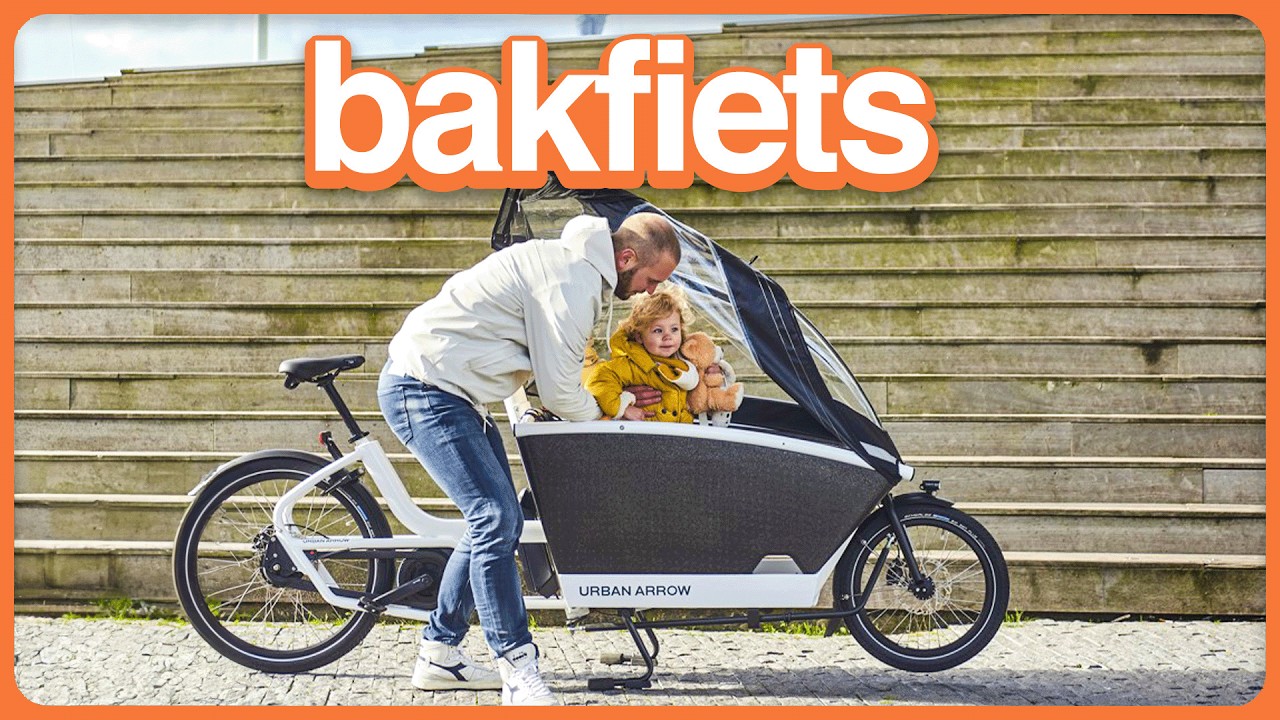
The Car-Replacement Bicycle (the bakfiets) — Not Just Bikes

Not Just Bikes

North American families are blocked from saving thousands of dollars by replacing cars with electric cargo bikes because cities fail to build safe, protected cycling infrastructure.

AI-assisted summary of The Car-Replacement Bicycle (the bakfiets) — original source. Check the original for full context.

Source published:

Key ideas

  • Electric cargo bicycles (bakfietsen) function as full car replacements for urban families, handling school drop-offs, bulk grocery runs, and winter commutes. (0:00)
  • An electric cargo bike yields massive financial savings compared to a North American car, which averages $7,000 to $10,000 annually in total ownership costs. (4:48)
  • Commercial delivery fleets and daycare providers in the Netherlands widely deploy cargo bikes to avoid gridlock, eliminate fuel costs, and park directly at destinations. (7:10)
  • The primary barrier preventing widespread cargo bike adoption in North America is the lack of safe, protected, and sufficiently wide bicycle infrastructure. (8:49)

Detailed notes

## Background Published on YouTube on August 8, 2022, by Jason Slaughter on the channel Not Just Bikes, this video details how an electric front-loading cargo bike transformed his family's mobility. As described in the video notes, when returning to Canada without the budget for a new vehicle, adopting an electric bakfiets not only fully substituted for a car but also saved them thousands of dollars in ongoing expenses.

## TL;DR Drawing from his personal experience living in both Toronto and Amsterdam, Slaughter makes the financial and practical case for the electric bakfiets as a true car-replacement vehicle. He examines the evolution of cargo bicycles, the developmental benefits for children riding upfront, and the massive cost savings compared to North American automobile ownership. Through practical demonstrations, he shows how e-cargo bikes effortlessly manage everything from pet visits and grocery hauls to commercial freight and Canadian winters. Finally, he asserts that the primary obstacle to widespread cargo bike adoption is not climate or interest, but the absence of safe, segregated municipal cycling infrastructure.

## Atmosphere & style The presentation blends candid, pragmatic advocacy with deadpan humor and sharp critiques of car-centric infrastructure. Slaughter's delivery is relatable and conversational, pairing personal home-video clips—such as shaky footage shot from a child's perspective and his cat riding to the vet—with hard financial comparisons. The viewing experience feels both revelatory and grounding, translating what many perceive as a quirky European novelty into an entirely practical, liberating solution for modern families.

## Bulletin - [00:00](https://www.youtube.com/watch?v=rQhzEnWCgHA&t=0s) Electric cargo bicycles (bakfietsen) function as full car replacements for urban families, handling school drop-offs, bulk grocery runs, and winter commutes. - [04:48](https://www.youtube.com/watch?v=rQhzEnWCgHA&t=288s) An electric cargo bike yields massive financial savings compared to a North American car, which averages $7,000 to $10,000 annually in total ownership costs. - [07:10](https://www.youtube.com/watch?v=rQhzEnWCgHA&t=430s) Commercial delivery fleets and daycare providers in the Netherlands widely deploy cargo bikes to avoid gridlock, eliminate fuel costs, and park directly at destinations. - [08:49](https://www.youtube.com/watch?v=rQhzEnWCgHA&t=529s) The primary barrier preventing widespread cargo bike adoption in North America is the lack of safe, protected, and sufficiently wide bicycle infrastructure.

## Key takeaways - [00:00](https://www.youtube.com/watch?v=rQhzEnWCgHA&t=0s) A Dutch bakfiets ('box bike') is a front-loading cargo bicycle capable of replacing a family car for urban transportation. - [01:24](https://www.youtube.com/watch?v=rQhzEnWCgHA&t=84s) Riding in a front box provides children with panoramic views and superior mental engagement, helping them build spatial awareness and internal mental maps of their city. - [02:11](https://www.youtube.com/watch?v=rQhzEnWCgHA&t=131s) While cargo bikes served as urban workhorses for over a century, the integration of electric assist transformed them into modern car replacements. - [02:55](https://www.youtube.com/watch?v=rQhzEnWCgHA&t=175s) Two-wheeled cargo bikes offer superior stability and cornering agility compared to three-wheeled models, which can be prone to tipping during turns at speed. - [04:13](https://www.youtube.com/watch?v=rQhzEnWCgHA&t=253s) In suburban and urban North America, an e-bakfiets presents an immediate, practical option to replace a household's second car. - [04:48](https://www.youtube.com/watch?v=rQhzEnWCgHA&t=288s) With typical North American car ownership costing $7,000 to $10,000 per year, an individual could buy a high-end e-cargo bike every year and still spend less than operating a car. - [06:07](https://www.youtube.com/watch?v=rQhzEnWCgHA&t=367s) The versatility of the front box accommodates non-standard payloads, including pets, secondhand air conditioners, furniture, recycling bins, and full-sized Christmas trees. - [07:10](https://www.youtube.com/watch?v=rQhzEnWCgHA&t=430s) In the Netherlands, commercial fleets utilize cargo bikes for mail, package, and grocery delivery because they bypass road congestion and avoid parking citations. - [07:44](https://www.youtube.com/watch?v=rQhzEnWCgHA&t=464s) Electric bakfietsen successfully handle year-round daily family trips even through harsh Canadian winters in cities like Toronto. - [08:49](https://www.youtube.com/watch?v=rQhzEnWCgHA&t=529s) The lack of safe, segregated bike networks prevents millions of parents from adopting cargo bikes due to traffic danger. - [09:05](https://www.youtube.com/watch?v=rQhzEnWCgHA&t=545s) Skeptics frequently mischaracterize cycling lanes as amenities solely for athletic hobbyists, ignoring working families and logistics users who utilize cargo bikes. - [09:20](https://www.youtube.com/watch?v=rQhzEnWCgHA&t=560s) To fully support the cargo bike revolution, municipal infrastructure must include interconnected networks, wider bike lanes, and dedicated cargo bike parking stalls.

## Detailed walkthrough ### [00:00](https://www.youtube.com/watch?v=rQhzEnWCgHA&t=0s) Returning to Canada and Discovering the Bakfiets

In 2014, after spending years living abroad across several countries with walkable urban design and high-quality public transit, Jason Slaughter returned to Canada. Knowing that Canadian cities are designed wrong and lack those conveniences, he was already researching what automobile his family would need to purchase before they even landed. He initially hoped to drive an electric vehicle, but after the expensive international move, buying one was out of financial reach, forcing the family to go without a car for a period. That temporary constraint led to discovering an alternative: a Dutch cargo bicycle known as a *bakfiets*—literally translating to “box bike” or “bin bike.” While broadly categorized under the umbrella term of cargo bikes in English, the term *bakfiets* specifically denotes front-loading box bicycles.

This single vehicle effectively replaced the family car during their time living in Toronto, handling everyday transportation needs. When the family relocated to Amsterdam in 2018, they shipped the bicycle overseas with them, making them quite likely some of the only people to ever re-import a Dutch bakfiets back into the Netherlands. In Dutch cities, these bicycles are ubiquitous, particularly clustered around schools and daycares during pickup and drop-off hours. As Slaughter points out regarding their transformative role in mobility, “I genuinely believe that bikes like these have the potential to be the most important vehicles of the 21st century.”

- **Vehicle type:** Front-loading cargo bicycle (*bakfiets*, Dutch for “box bike” or “bin bike”). - **Timeline:** Adopted as a primary vehicle in Toronto in 2015 after returning to Canada in 2014, then re-imported to Amsterdam in 2018.

---

[01:24](https://www.youtube.com/watch?v=rQhzEnWCgHA&t=84s) A Child's Perspective: The Front Box vs. The Car Backseat

An unexpected upside to adopting a bakfiets was observing how enthusiastically children take to riding inside the box, preferring it almost universally over being strapped into the backseat of a motor vehicle. The contrast in vantage points explains the preference immediately. From inside the box of a bakfiets, a young child enjoys an unobstructed, panoramic view of the world rolling past—evidenced by shaky, handheld camera footage recorded by a child on a literal Dutch angle. By contrast, a toddler seated low in a conventional car backseat is enclosed by high door panels, headrests, and glass sills, seeing little more than the vehicle’s upholstery, window frames, and passing clouds.

This panoramic visibility had a direct cognitive impact on early childhood development. By experiencing the journey out in the open air at street level, the children absorbed the spatial layout of their surroundings, recognizing landmarks, learning neighborhood street names, and constructing a coherent internal mental map of their city. Reflecting on this developmental difference, Slaughter notes, “This is so much more mentally engaging for a child, than riding in a car.”

---

[02:11](https://www.youtube.com/watch?v=rQhzEnWCgHA&t=131s) The Evolution from Workhorse to Modern E-Bakfiets

Cargo bicycles are far from a modern invention; they have served as utility workhorses in global cities for more than a century. In the 1947 children's book *Curious George Takes a Job*, an illustration depicts a delivery man navigating traffic on a cargo bike—presumably in New York City—a detail that today strikes contemporary readers as far more unusual than seeing a monkey riding on a municipal bus. Cargo bikes were similarly pervasive across the Netherlands until the 1960s and 1970s, when urban planners reconfigured Dutch streetscapes to accommodate cars and commercial trucks. The format underwent a major Dutch revival in the late 1990s, emerging as an eco-conscious, space-efficient tool for moving children through congested urban cores.

```mermaid flowchart TD accTitle: Evolution of Cargo Bikes accDescr: Timeline flowchart tracing cargo bikes from early commercial workhorses to modern electric-assist family vehicles. subgraph EarlyEra["Early to Mid-20th Century"] A["Commercial Delivery Workhorse<br/>(Global cities & 1947 Curious George)"] end

subgraph Decline["1960s–1970s Decline"] B["Widespread Car-Centric Urban Redesign<br/>(Streets widened for cars and trucks)"] end

subgraph Revival["Late 1990s to Present"] C["Dutch Urban Revival<br/>(Child transport & environmental movement)"] D["Modern Electric-Assist Innovation<br/>(Transforms novelty into true car replacement)"] end

A --> B B --> C C --> D ```

Contemporary bakfietsen differ significantly from historical models in their handling and agility, particularly two-wheeled designs (Long Johns) compared to cumbersome three-wheeled tricycles. Three-wheeled versions suffer from sluggishness and severe handling liabilities: while three wheels offer stationary balance at a stoplight, they become dangerously unstable and prone to tipping when cornering at speed. Two-wheeled models, conversely, handle like conventional bicycles through curves and rely on stable center kickstands when parked. Above all, the true catalyst behind their resurgence is the integration of electric-assist pedal systems. Slaughter explains the significance of this technological shift: “But the big innovation that’s really driving this comeback is electric assist, because that’s what really makes these go from being an interesting novelty, to being car-replacement bicycles.”

---

[03:40](https://www.youtube.com/watch?v=rQhzEnWCgHA&t=220s) Bakfietsmoeders and Replacing the Second Car

In Dutch neighborhoods with young families, cargo bikes are found parked on virtually every street corner. While North American car-dependent culture gave rise to the stereotype of the suburban "soccer mom" hauling kids in oversized SUVs, Dutch culture created the counterpart known as the *bakfietsmoeder* (cargo bike mother). Though some critics in the Netherlands employ the label with a degree of condescension, Slaughter finds the critique groundless: “Personally I am very grateful to live in a city full of bakfietsmoeders instead of suburban soccer moms in giant SUVs.”

While sprawling North American cities feature extensive, hostile asphalt environments that make completely car-free living difficult for many, a cargo bike presents an immediate, practical solution for downsizing a multi-car household. Rather than attempting to eliminate driving entirely, millions of suburban and urban households could seamlessly transition from owning two cars to maintaining one car paired with an electric bakfiets for local errands and school commutes. In 2015, purchasing an electric-assist bakfiets cost Slaughter approximately $4,500 Canadian dollars. In car-centric Canada, peers often expressed shock at spending that much on a bicycle, operating under the assumption that bicycles are merely recreational toys rather than legitimate transportation infrastructure. Whenever confronted by skeptical acquaintances who would never hesitate to spend that amount on a used motor vehicle, Slaughter would intentionally reframe the dynamic: “yeah, I know, right? It cost less than just the options on a new car!”

---

[04:48](https://www.youtube.com/watch?v=rQhzEnWCgHA&t=288s) The Financial Case: Bakfiets vs. Car Ownership

Beyond the initial purchase price, the ongoing operational expenses of an electric bakfiets are negligible compared to an automobile. Cargo bikes require no retail gasoline, incur no recurring auto insurance premiums, demand no municipal parking fees, and involve minimal mechanical maintenance. Even premium, high-end European electric models like the Urban Arrow—which retail around $7,000 USD due to low-volume container imports—undercut vehicular expenses in startling fashion. Automotive cost calculators, such as those from Kelley Blue Book or NerdWallet, establish that owning and running an average car in North America costs between $7,000 and $10,000 every single year when accounting for depreciation, financing interest, fuel, insurance, and maintenance.

| Cost Category | Typical North American Passenger Car | High-End Electric Bakfiets (e.g., Urban Arrow) | |:--- |:--- |:--- | | **Upfront Purchase** | Tens of thousands of dollars (new or late-model used) | ~$4,500 CAD (2015) to ~$7,000 USD (imported high-end) | | **Fuel / Energy** | Hundreds of dollars per month in volatile gasoline | Negligible home electrical charging costs | | **Mandatory Insurance** | Costly recurring monthly/annual premiums | $0 | | **Annual Total Cost of Ownership** | **$7,000 to $10,000+ per year** (depreciation, fuel, maintenance, insurance) | **Near-zero ongoing maintenance; entirely paid off upfront** |

This stark financial disparity reveals an astonishing mathematical reality about consumer spending on transit. Slaughter illustrates the economics vividly: “That means that you could literally buy an Urban Arrow, ride it for a year, and throw it in the garbage … and you could do that every single year, and you’d still come out better financially, than buying a car.” Over seven years of daily use starting in 2015, replacing a family vehicle with an electric cargo bike saved tens of thousands of dollars in household capital. Reflecting on the decision, Slaughter confirms, “I am not exaggerating when I say that this has literally been the best purchase that I have made in my entire life.”

---

[06:07](https://www.youtube.com/watch?v=rQhzEnWCgHA&t=367s) Hauling Everything: From Vet Visits to Urban Logistics

To demonstrate the everyday utility of a front-loader, Slaughter runs through an extensive roster of personal cargo hauls—interrupted by a humorous mock sponsor segment where viewers who fast-forwarded through a Nebula pitch missed video footage of the family cat traveling safely to the vet inside the carrier box. Aside from pet transport, the bike served as the primary packhorse for massive weekly grocery runs, daily school drop-offs before the kids were old enough to pedal their own bikes, and annual winter trips carrying full-sized Christmas trees home. Hauling trees on a bike proved far cleaner than using a car interior, as pine needles and sap could be hosed out of the cargo box in seconds. Other hauled items included: - Secondhand window air conditioners - Swivel office desk chairs - Flat-screen televisions - Long construction planks of lumber - Bulky household recycling and hazardous waste containers transported to municipal depots

In the Netherlands, public sharing and rental platforms expand cargo access even further. Cities provide heavy-duty traditional bakfietsen capable of moving heavy living room couches, while modern app-based rental services allow residents to unlock e-cargo bikes on demand for occasional oversized errands. Daycare centers routinely use extended multi-seat bakfietsen to shuttle groups of children across town. In commercial freight and logistics, major fleets rely on cargo bikes for last-mile delivery of mail, packages, groceries, and electronics. The operational rationale is straightforward: commercial cargo bikes do not generate fuel or parking ticket costs, do not get trapped in gridlock, and park directly on the delivery doorstep without blocking travel lanes. Slaughter highlights this commercial transition: “In the Netherlands, these have absolutely become truck-replacement bicycles in cities, and you can understand why: they're cheap to operate, they never get stuck in traffic, and they never have problems finding parking when making deliveries.”

---

[07:44](https://www.youtube.com/watch?v=rQhzEnWCgHA&t=464s) The Reality of Daily Utility and Winter Cycling in Toronto

Crowdsourcing cargo bike uses from Twitter followers produced an even wider inventory of real-world cargo solutions, demonstrating that front-loaders routinely handle cargo that the public assumes strictly mandates a multi-ton car or pickup truck. Followers submitted photos carrying everything from multiple children and full-grown adult passengers to nursery shrubs, logs, heating fuel, industrial-sized grocery runs, household trash runs, and moving furniture. Dog owners frequently utilize specialized dog-transport bakfietsen manufactured with fold-down front access doors so animals can walk directly into the box. While car advocates often attempt to concoct fringe scenarios that require automotive power, those edge cases are vanishingly rare in daily urban life, and for the few times an exceptionally massive payload arises, renting an enclosed cargo van remains a cheaper, superior solution.

Having lived car-free with young children through harsh Canadian winters, Slaughter underscores the capability of the format: “I cannot stress this enough: with an electric bakfiets, like this one, you can take almost all of the trips that a normal person, living in a city, would need to take, under normal circumstances.” If a family can successfully replace a car with an electric cargo bike year-round on the streets of Toronto, then hundreds of thousands—if not millions—of urban and suburban households across North America could realistically do the exact same thing.

---

[08:49](https://www.youtube.com/watch?v=rQhzEnWCgHA&t=529s) The Barrier of Unsafe Infrastructure and the Path Forward

The fundamental barrier preventing widespread adoption of cargo bikes in North America is not individual willingness, weather, or technology; it is the sheer absence of safe, protected infrastructure. Because North American municipal design has prioritized motor vehicles to the exclusion of all other modes, people are terrified of letting their children ride in mixed traffic alongside fast, heavy vehicles. As Slaughter argues: “Because millions of people are being robbed of the opportunity to adopt an efficient and practical mode of transportation that could literally save them thousands of dollars per year.”

Whenever urban planners advocate for protected bike infrastructure, opponents routinely dismiss bicycles as elitist hobbies, claiming that cycling paths fail working families and cannot accommodate freight or cargo. These opponents reveal their narrow mindset, operating under the assumption that bike lanes are only utilized by fit young men wearing athletic gear. When municipalities construct safe, segregated bike networks, families and tradespeople immediately fill them with cargo bikes, yielding benefits for the entire community. Achieving this shift requires expanding the scope of active transit planning: bike lanes must form comprehensive, connected networks, pathways must be engineered wide enough to accommodate passing cargo bikes, and cities must install wide, designated cargo bike parking stalls on street curbs—mirroring infrastructure already established in European capitals like Copenhagen and Paris. Slaughter closes with a definitive declaration of where urban transit is headed: “We need to design our cities for bakfietsen and other kinds of cargo bikes.”

[10:23](https://www.youtube.com/watch?v=rQhzEnWCgHA&t=623s) The Future of Cargo Bikes and Patreon Support

Reflecting on the ongoing rise of cargo bikes and the growing momentum among parents and everyday commuters choosing them over automobiles, Jason concludes with a forward-looking prediction on urban planning: “And the most successful cities will be the ones that are prepared for it.” As adoption spreads beyond bicycle-friendly nations, municipal readiness to build safe, protected infrastructure will separate thriving cities from those left behind.

Wrapping up the episode on a humorous note, Jason extends his gratitude to the viewers who support the channel financially. Gesturing to the footage on screen, he jokes, “I’d like to thank my supporters on Patreon, who pay me to film the cat … in a bakfiets.” He directs anyone interested in joining the roster of contributors and seeing their name featured in the credits to head over to patreon.com/notjustbikes.

- **City readiness:** Municipalities that proactively build wide, safe cycling infrastructure will reap the greatest benefits from the cargo bike revolution. - **Patreon support:** Viewers can support the channel directly and fund quirky projects—like filming a cat riding inside a bakfiets—via patreon.com/notjustbikes.

## Notable quotes > [08:49](https://www.youtube.com/watch?v=rQhzEnWCgHA&t=529s) We need to design our cities for bakfietsen and other kinds of cargo bikes. — Jason Slaughter

> [03:40](https://www.youtube.com/watch?v=rQhzEnWCgHA&t=220s) Personally I am very grateful to live in a city full of bakfietsmoeders instead of suburban soccer moms in giant SUVs. — Jason Slaughter

## Mentioned Jason Slaughter, Not Just Bikes, Nebula, Patreon, Modacity, Propel Bikes, nrbi, Curious George Takes a Job, Urban Arrow, Kelley Blue Book, NerdWallet, AutoShare, Twitter

## Video description Watch this video ad-free on Nebula: https://nebula.tv/videos/notjustbikes-the-carreplacement-bicycle-the-bakfiets

When we were moving back to Canada, we knew we'd need a car, but we couldn't afford one after the move. Thankfully, we found an electric bakfiets, and not only did it take the place of a car, it also saved us thousands of dollars in the process.

https://go.nebula.tv/notjustbikes to get a discounted subscription to Nebula (and support this channel, too)!

Thanks to Modacity for the photo used in the thumbnail: https://mobile.twitter.com/modacitylife

Thanks to @Propelbikes for providing some of the footage used in this video. If you'd like to purchase an electric bike or bakfiets in New York or LA, check them out: https://propelbikes.com/ https://www.youtube.com/c/PropelbikesUSA

Thanks also to nrbi who provided footage of a cargo bakfiets in action in Toronto: https://www.nrbi.co/

Patreon: https://patreon.com/notjustbikes Twitter: https://twitter.com/notjustbikes Reddit: https://reddit.com/r/notjustbikes

NJB Live (my bicycle livestream channel): https://www.youtube.com/channel/UC9v57F4xz46KaDsvWfCv8yw

--- References & further reading:

Short history of the cargo bike The cargo bike: Undervalued all-rounder with promising future https://cargobikefestival.com/news/short-history-of-the-cargo-bike/

Belading DC_2 per bakfiets. Vliegtuig PH_AKJ Jan van Gent, op Schiphol, onteigend door Duitsers mei 1940 https://archief.amsterdam/beeldbank/detail/6a3739b7-e3d3-5b2c-f371-4c5fa853be01

Een bakfiets van warenhuis Metz & Co., Keizersgracht 455, in een rijwielstalling. https://archief.amsterdam/beeldbank/detail/588fd902-ac8a-751f-7da7-a085c1680680

Bakfiets met kinderzitjes https://archief.amsterdam/beeldbank/detail/030f7d29-60d9-e479-aa2b-93f68c5a984b

Een bakfiets van A.P. de Zwart Czn., Stadhouderskade 61. https://archief.amsterdam/beeldbank/detail/c282f197-ead9-6985-2862-1f8f41a950c8

Met Floriadepark; Europaboulevard https://archief.amsterdam/beeldbank/detail/bb1d62c6-0ae7-7df8-6b10-6ee331d025d1

Linksvoor Nieuwe Achtergracht 29-31 en daarachter de voormalige brood- en meelfabriek Nieuwe Prinsengracht 55-57 https://archief.amsterdam/beeldbank/detail/446e4ba1-9948-fa11-2412-0a6e7e098f4c

Op de voorgrond de Nieuwe Prinsengracht, gezien vanaf het dak van gebouw Ceres. https://archief.amsterdam/beeldbank/detail/8fbdb1de-692b-5edd-3608-5e2770336eef

De toegang aan de zuidzijde van de Coentunnel. https://archief.amsterdam/beeldbank/detail/32f5399d-470d-8272-3d8c-cfb7cfb30ff9

Overzicht straat - Frederik Hendrikstraat https://archief.amsterdam/beeldbank/detail/06cfe161-3756-c315-dc8d-9febcae1baf9

Welcome to AutoShare https://www.youtube.com/watch?v=L3AeNVjHqBA

What is 5-Year Cost to Own? Kelley Blue Book https://www.kbb.com/new-cars/total-cost-of-ownership/

What Is the Total Cost of Owning a Car? https://www.nerdwallet.com/article/loans/auto-loans/total-cost-owning-car

Kinder- und Warentransport-Pedelec, von Urban Arrow, 2019 in Frankfurt am Main (modified) By Bigral - Own work, CC BY-SA 4.0, https://commons.wikimedia.org/w/index.php?curid=78965978

Waste receptacles or dumpsters bearing the “BFI Canada” logo (a division of IESI-BFC Ltd.) Photo taken at Calgary, Alberta, Canada (modified) By User:Seerig - Own work, CC BY-SA 3.0, https://commons.wikimedia.org/w/index.php?curid=11200442

-- Chapters 0:00 Intro 0:48 The Bakfiets 1:31 Mikey likes it! 2:18 The history of the cargo bike 2:55 The modern electric bakfiets 3:40 The bakfietsmoeder 4:13 Bakfiets as a second car 4:48 The money talk 6:14 Nebula ad 6:27 The stuff we hauled 7:10 Commercial bakfietsen 7:57 The twitters 8:49 But the streets aren't safe 10:00 Bakfietsmoeders of the world ... UNITE! 10:35 Patreon shout-out

#bakfiets #cargobikes #carryshitolympics

[Source](https://www.youtube.com/watch?v=rQhzEnWCgHA)

中文简报

电动货运自行车替代汽车大幅削减家庭出行成本 由于城市未能建设安全、受保护的骑行基础设施,北美家庭无法通过用电动货运自行车替代汽车来节省数千美元。 Slaughter结合自己在多伦多和阿姆斯特丹两地的生活经历,从经济和实用角度论证了电动货运自行车(bakfiets)完全可以作为汽车的替代工具。他探讨了货运自行车的发展演变、儿童坐在前方乘车对成长的益处,以及相比于北美汽车保有成本所能节省的巨额资金。通过实际演示,他展示了电动货运自行车如何轻松应对从带宠物看病、大宗采购到商业货运和加拿大寒冬的各种需求。最后,他断言阻碍货运自行车广泛普及的主要障碍并非气候或意愿,而是城市缺乏安全、隔离的骑行基础设施。 电动货运自行车(bakfietsen)可作为城市家庭汽车的完全替代品,能够胜任接送孩子上下学、大宗日常采购以及冬季通勤。 (0:00) 相比北美汽车每年平均7,000至10,000美元的总拥有成本,电动货运自行车能带来巨大的经济节省。 (4:48) 荷兰的商业配送车队和日托机构广泛使用货运自行车,以避开交通拥堵、免去燃油成本并实现目的地直接停泊。 (7:10) 阻碍北美广泛采用货运自行车的主要障碍,是缺乏安全、受保护且足够宽阔的自行车基础设施。 (8:49)

Reading summary

Jason Slaughter of Not Just Bikes argues that modern electric front-loading cargo bicycles, or bakfietsen, offer a practical, cost-saving replacement for family cars and urban delivery vehicles. However, widespread adoption depends not on individual willingness or climate, but on municipal investment in safe, protected cycling networks. The Technological Shift to Electric Assist (2:11) Cargo bicycles served as urban delivery workhorses throughout the early 20th century before declining during the 1960s and 1970s as cities widened roadways for cars. Following a Dutch revival in the late 1990s focused on child transport, Slaughter identifies electric pedal assist as the pivotal breakthrough that transformed the format from an interesting novelty into a viable car-replacement vehicle. Design choices also dictate usability. Two-wheeled models, historically known as Long Johns, handle curves much like traditional bicycles and remain stable at speed. In contrast, three-wheeled cargo tricycles offer stationary balance at traffic stops but become unstable and prone to tipping when cornering quickly. Financial Case and Downsizing Car Ownership (4:48) Slaughter highlights a stark economic disparity between motor vehicles and cargo bikes. Automotive benchmarks from Kelley Blue Book and NerdWallet indicate that owning and operating an average North American passenger car costs between $7,000 and $10,000 annually when factoring in depreciation, fuel, financing, insurance, and maintenance. By contrast, an electric bakfiets purchased for approximately $4,500 CAD in 2015—or premium imported models retailing around $7,000 USD—incurs near-zero ongoing operational costs, requiring no gasoline, regular insurance premiums, or municipal parking fees. Slaughter suggests that multi-car households in North American suburbs can immediately downsize by replacing a secondary vehicle with a cargo bike for local errands and school commutes, saving tens of thousands of dollars over several years. Everyday Hauling, Child Transit, and Logistics (6:07) Front-loading cargo bikes comfortably manage everyday utility tasks that the public frequently assumes require an automobile. Slaughter recounts using his bakfiets as a primary vehicle through harsh Toronto winters and later in Amsterdam, hauling large grocery runs, construction lumber, appliances, pets, and full-sized Christmas trees. In commercial sectors, Dutch delivery services and daycares deploy e-cargo bikes to bypass gridlock, avoid parking fines, and deliver goods directly to doorsteps. Slaughter also notes a developmental benefit for children transported in front-loading boxes. Unlike toddlers enclosed in car backseats with limited sightlines, children seated at street level enjoy panoramic views that encourage landmark recognition, route learning, and active spatial mapping of their neighborhoods. Infrastructure Deficits as the Primary Barrier (8:49) Slaughter argues that the primary impediment to cargo bike adoption in North America is neither weather nor physical capability, but hostile road environments and the lack of protected cycling infrastructure. He contends that critics who label cycling as an elitist or impractical pastime operate under the false assumption that bike lanes are only used by fit hobbyists. When cities build safe, physically separated cycling infrastructure, families and commercial couriers readily adopt cargo bikes. Realizing this potential requires urban planners to engineer comprehensive, connected networks with pathways wide enough for cargo bikes to pass each other, accompanied by dedicated on-street cargo bike parking stalls. Slaughter concludes that municipal readiness to build this infrastructure will ultimately separate thriving cities from those left behind. While rare edge cases involving exceptionally large payloads may still require renting a cargo van, Slaughter maintains that an electric bakfiets can fulfill nearly all routine urban trips; the main unresolved challenge is whether car-centric cities will reallocate street space to accommodate them.

精炼阅读摘要

城市规划评论频道 Not Just Bikes 主持人 Jason Slaughter 认为,前置式电助力货运自行车(Bakfiets)具备成为 21 世纪关键交通工具的潜力;它不仅在经济性与载物能力上足以替代城市家庭汽车,还能显著促进儿童的空间认知并提升城市生活质量。 商业劳力到家庭代步:电助力技术革新 (2:11) 货运自行车并非现代产物,早在 20 世纪中叶就曾广泛用于纽约等全球大都市的商业运输,但在 1960 至 1970 年代因以汽车为中心的城市改造而退居边缘。20 世纪 90 年代末,荷兰掀起了一场以儿童接送和环保为核心的复兴浪潮。Slaughter 强调,现代电助力踏板系统的融入是货运自行车实现“重返主流”的决定性创新,正是这项技术使其从单纯的新奇玩具蜕变为真正具备实用价值的“汽车替代品”。 现代两轮前置设计(Long John)在操控性能上显著优于传统三轮车型。三轮货运车虽然在红灯静止时具备自平衡优势,但在高速过弯时极易发生侧翻,存在严重的安全隐患;两轮车型则具备普通自行车的过弯灵活性与倾斜操控感,并在停驻时依靠稳固的中央双撑保持平衡。这一工程改良与电动动力的结合,为普通家庭实现日常无车化出行奠定了技术基础。 视野认知与家庭模式:颠覆汽车后座体验 (1:24) 对于育儿家庭而言,前置载货箱带来了传统机动车后座无法比拟的心理与认知收益。Slaughter 观察到,传统汽车后座内的低幼儿童视线受到高耸的车门面板、玻璃窗框和座椅头枕的严重阻隔,沿途通常只能看到车内装饰或天空;而在 Bakfiets 的开放式前置货箱中,孩子拥有不受遮挡的 360 度全景街景视野。这种身临其境的街头体验直接促进了早期空间认知发展,孩子们在日常穿行中自然辨识地标与街道名称,并在脑海中构建出清晰立体的城市心理地图。 在社会文化层面,相较于北美郊区开着巨型 SUV 接送孩子的“足球妈妈”(Soccer Mom)刻板印象,荷兰社会催生了骑行接送幼儿的“货运自行车母亲”(Bakfietsmoeder)。Slaughter 指出,尽管北美汽车依赖型城市缺乏无车生活的外部环境,但多车家庭完全无需一步到位地彻底告别机动车,而是可以通过添置一辆电助力货运自行车来取代“第二辆家庭用车”,高效覆盖买菜、上学及本地短途差事。 财务差距与全能载重:出行成本与装载能力 (4:48) 在长期持有成本上,电助力货运自行车与机动车形成了极端悬殊的经济对比。Slaughter 于 2015 年在多伦多花费约 4500 加元购入首辆电助力 Bakfiets;尽管北美同侪常将高价自行车视作昂贵玩具,但该支出甚至低于许多新车的可选配置费用。根据 Kelley Blue Book 和 NerdWallet 等机构的测算,在北美维持一辆普通乘用车的年均综合支出(含折旧、燃油、保险、贷款利息与保养)高达 7000 至 10000 美元以上;而即便购买售价约 7000 美元的高端进口货运自行车(如 Urban Arrow),日常也无需承担燃油开支、强制车险及市政停车费。Slaughter 形象地指出,消费者就算每年购买一辆顶级货运自行车骑满一年即丢弃,其财务状况依然优于养护一辆机动车。 在实际装载能力方面,该车型粉碎了只有多吨级汽车才能运载大件货物的偏见。除常规的一周家庭食品采购与带宠物就医外,其前箱成功运输过全尺寸圣诞树、二手窗式空调、旋转办公椅、平板电视以及长条建筑木料。此外,荷兰的商业物流、日托机构及市政租赁网络也广泛采用重型与多座货运自行车替代货车,实现了零违停罚单、规避早晚交通拥堵并直接停靠门前配送。结合在多伦多严冬中连续多年无车带娃的实际经验,Slaughter 强调其完全能够胜任普通城市居民 99% 的日常出行需求。 安全隔离设施:阻碍普及的唯一核心壁垒 (8:49) Slaughter 明确指出,阻碍北美等地广泛普及货运自行车的根本障碍并非个人意愿、气候寒冷或承载极限,而是城市严重匮乏安全且受物理保护的专用自行车道。由于长期以来的市政工程单一偏向机动车,家长在面对与高速重型车辆混行的道路环境时,出于对儿童人身安全的本能恐惧而不敢采用自行车出行。反对建设隔离非机动车道的声音常将骑行污名化为精英化休闲运动,误以为自行车道仅服务于身穿紧身运动服的年轻男性,完全忽视了宽阔安全的慢行系统能立刻激活家庭与货运群体的实际潜能。 为了承载货运自行车的出行革命,城市交通规划必须突破传统自行车的狭隘框架。城市需要构建网络化、连续贯通的受保护车道,确保道路横截面宽度足以容纳大型两轮或三轮货运自行车安全超车与错车,并须在路缘区域增设专属的宽体货运自行车停车位。Slaughter 认为,诸如哥本哈根与巴黎等欧洲城市在基础设施层面的提前布局,正为全球市政规划提供了明确样板。 Slaughter 总结认为,货运自行车不仅能为家庭每年节省数千美元开支,更是重塑健康、宜居街道的关键抓手;随着越来越多的家长与普通通勤者寻求摆脱汽车束缚,未来城市竞争力与宜居度的分水岭,将取决于市政决策者能否前瞻性地为货运自行车建设安全充沛的基础设施空间。

Detailed notes — zh

## Background 该视频由 YouTube 频道 Not Just Bikes 于 2022 年 8 月 8 日发布。根据视频简介,博主一家在搬回加拿大后面临购车刚需但预算不足,最终选择了一辆电助力载货自行车(bakfiets),这辆车不仅完美替代了家庭汽车,还在使用过程中为他们节省了数千美元。 ## TL;DR 视频深入探讨了荷兰式两轮载货自行车(bakfiets)如何成为现代城市家庭的终极“汽车替代品”。博主结合自身在多伦多和阿姆斯特丹的生活实测,从孩子开阔的乘车视野、电助力系统的技术革命,再到拉运圣诞树、家具乃至猫咪看兽医的超强载货力,全面印证了其日常实用性。从经济角度看,相较于北美每年高达数千至上万美元的养车成本,购置 bakfiets 是一笔极具性价比的投资。最后博主指出,阻碍载货自行车普及的核心在于以小汽车为中心的危险道路设计,并呼吁未来城市应通过拓宽受保护的自行车道与专用停车位,拥抱这场出行革命。 ## Atmosphere & style 整期视频洋溢着 Not Just Bikes 标志性的辛辣讽刺、幽默感与务实洞察。博主以亲历者的轻松口吻娓娓道来,巧妙穿插着猫咪乘车、邻居对车价目瞪口呆等生活趣事,同时又犀利抨击北美城市对汽车的盲目崇拜。观看体验既像是一场令人信服的硬核经济与城市规划科普,又带着一种充满温情的理想城市愿景,让人对更加以人为本、充满烟火气的街头生活心生向往。 ## Bulletin - [00:48](https://www.youtube.com/watch?v=rQhzEnWCgHA&t=48s) 现代电助力箱式载货自行车(bakfiets)正在成为汽车的高效替代品,足以承担接送儿童、买菜及拉货等绝大多数城市家庭日常出行需求。 - [04:48](https://www.youtube.com/watch?v=rQhzEnWCgHA&t=288s) 在北美拥有一辆机动车的年均总成本高达7,000至10,000美元,而购买一台顶级电助力载货自行车仅需约7,000美元,即便每年换新一台也比养车更划算。 - [08:49](https://www.youtube.com/watch?v=rQhzEnWCgHA&t=529s) 阻碍载货自行车在北美城市普及的核心障碍并非气候或地形,而是缺乏受物理隔离保护的安全骑行网络与宽车道基础设施。 - [07:10](https://www.youtube.com/watch?v=rQhzEnWCgHA&t=430s) 载货自行车不仅改变家庭出行,还在城市商业最后一公里物流中展现出巨大优势,具备低运营成本、不惧拥堵且无停车难题等特性。 ## Key takeaways - [00:48](https://www.youtube.com/watch?v=rQhzEnWCgHA&t=48s) 荷兰箱式自行车(bakfiets)凭借前置货斗设计与高实用性,具备成为21世纪城市最重要交通工具的潜力。 - [01:31](https://www.youtube.com/watch?v=rQhzEnWCgHA&t=91s) 相比困在汽车后座狭窄车窗前,儿童乘坐视野开阔的载货自行车更能建立对城市空间和社区街道的认知与归属感。 - [02:55](https://www.youtube.com/watch?v=rQhzEnWCgHA&t=175s) 载货自行车历史悠久,现代电助力系统(E-assist)与两轮稳定设计的结合,彻底将其从小众新奇工具升级为全天候汽车替代品。 - [02:18](https://www.youtube.com/watch?v=rQhzEnWCgHA&t=138s) 两轮载货自行车相比笨重且过弯易侧翻的三轮车更为轻快灵敏,配备坚固的双脚撑脚架后能完美兼顾静止装卸的稳定性。 - [03:40](https://www.youtube.com/watch?v=rQhzEnWCgHA&t=220s) 在荷兰,“货斗车妈妈”(bakfietsmoeder)已取代开大型SUV的郊区足球妈妈,成为城市健康带娃出行的主流形象。 - [04:13](https://www.youtube.com/watch?v=rQhzEnWCgHA&t=253s) 多车家庭完全可以通过“一辆汽车加一辆 bakfiets”的组合大幅削减开支,极端大件用车需求则可通过汽车共享或临时租车解决。 - [04:48](https://www.youtube.com/watch?v=rQhzEnWCgHA&t=288s) 从拥车总成本测算,一辆电助力 bakfiets 在免去油费、保险与昂贵保养后,数年内能为家庭省下数万加元或美元开销。 - [06:27](https://www.youtube.com/watch?v=rQhzEnWCgHA&t=387s) 生活实测证明载货自行车装载能力极强,可轻松胜任运送整棵圣诞树、家电、猫咪看诊及大件废弃物等多场景运输。 - [07:10](https://www.youtube.com/watch?v=rQhzEnWCgHA&t=430s) 商业物流领域正在广泛应用载货自行车配送包裹与杂货,有效解决了城市中心区机动轻卡拥堵及停车罚单痛点。 - [08:49](https://www.youtube.com/watch?v=rQhzEnWCgHA&t=529s) 反对修建骑行基础设施的政客常以“家庭需要运送老小货物”为由阻挠,但事实上一旦建成安全车道,载货自行车家庭会最先受益并走上街头。 - [10:00](https://www.youtube.com/watch?v=rQhzEnWCgHA&t=600s) 未来的城市规划必须将载货自行车纳入核心考量,包括建设更宽的隔离非机动车道以及直接划设路侧专用大号停车位。 - [10:23](https://www.youtube.com/watch?v=rQhzEnWCgHA&t=623s) 随着微出行与绿色货运的不可逆普及,那些提前为载货自行车做好基础设施准备的城市将在未来宜居性与效率竞争中胜出。 ## Detailed walkthrough ### [00:00](https://www.youtube.com/watch?v=rQhzEnWCgHA&t=0s) 归国后的出行抉择与 Bakfiets 的出现 2014年,博主在国外旅居多年后回到加拿大。此前他所生活的几个国家和城市都具备极佳的步行友好度与高品质公共交通,但回到加拿大后这些便利不复存在,因为“加拿大城市的规划设计完全是错的”。出于出行刚需,他在动身前就已经在研究该买什么车,并希望能买一辆电动汽车,但由于搬家带来的财务压力,他们暂时没有购车,过了一段没有汽车的生活。 随后,他们发现了一种远比汽车更好的交通工具——在荷兰被称为 **bakfiets**(字面意为“箱式自行车”或“货斗自行车”)的载货自行车(Cargo Bike)。英语中虽然统称为 cargo bike,但该词涵盖种类繁杂,因此博主更倾向于使用荷兰语专有名词 bakfiets。这辆车成为了他们在多伦多的“家庭轿车”,承担了所有的日常出行。更有趣的是,当他们在2018年迁居阿姆斯特丹时,把这辆车也一并运了过去,博主戏称自己大概是全世界极少数把荷兰产的 bakfiets 逆向重新进口回荷兰的人之一。在荷兰,尤其是在学校和日托中心周围,这种自行车随处可见,极其便利。正如博主所言:“我由衷地相信,这类自行车有潜力成为21世纪最重要的交通工具。”(“I genuinely believe that bikes like these have the potential to be the most important vehicles of the 21st century.”) 对于家庭而言,一个意想不到的收获是孩子们对乘坐 bakfiets 表现出极大的狂热,比起坐在汽车里,孩子们几乎毫无例外地更喜欢坐在货斗里。这种偏好很容易理解:坐在 bakfiets 里,视线毫无遮挡,能完整看到身边的城市景象;而坐在汽车后座上,小孩子能看见的只有前排椅背和小块车窗。乘坐 bakfiets 让孩子们以和成人相同的视角观察城市,他们在脑海中建立了清晰的社区地图,认清了身边的地标和每一条街道的名称。这种沉浸式的出行体验,对儿童心智的启发与参与感远非困在汽车后座所能比拟。 --- ### [02:11](https://www.youtube.com/watch?v=rQhzEnWCgHA&t=131s) 载货自行车的演进:从商业工具到现代电动潮车 载货自行车并非新鲜事物,它已存在了一个多世纪。在以往的全球各大城市中,它们曾是极其普遍的送货工具。例如在1947年出版的儿童绘本《好奇的乔治找工作》(*Curious George Takes a Job*)中,纽约街头就画着骑载货自行车送货的工人;博主调侃道,如果这本书放在今天出版,大部分读者看到骑车送货的人大概会比看到公交车上的猴子还要惊讶。在荷兰,载货自行车也曾随处可见,但随着阿姆斯特丹等城市在20世纪60至70年代向小汽车和卡车倾斜,它们逐渐淡出视野。直到90年代末,bakfiets 才以一种环保、高效的城市儿童接送工具重新崛起。 然而,现代复兴的 bakfiets 与其前身相比有着本质飞跃: - **两轮 vs 三轮设计**:现代 bakfiets(尤其是两轮版)轻巧灵敏得多。博主直言自己非常讨厌骑三轮载货自行车,因为三轮车极其缓慢笨重,而且转弯稍快就非常容易侧翻失稳;三轮车唯一比两轮车稳定的时刻只有静止停靠时,但两轮车配有极其稳固的双脚撑脚架,停放完全不是问题。 - **电助力(Electric Assist)的颠覆性革新**:电力辅助系统的加入,彻底改变了载货自行车的游戏规则,让它直接从一件“猎奇的新鲜玩意”跃升为真正的“汽车替代品”。 在荷兰,任何有幼儿的地方就能看到大量的 bakfiets。北美郊区有驾驶庞大 SUV 接送小孩的“足球妈妈”(Soccer Mom)刻板印象;而在荷兰,对应的则是 **bakfietsmoeder**(货斗车妈妈)。尽管这个词有时带有些许贬义调侃,但博主表示人类对任何事情都能挑刺,他由衷庆幸自己生活在一个满街都是 bakfietsmoeder 的城市,而不是一个充斥着开大型 SUV 的郊区足球妈妈的地方。 ```mermaid flowchart TD accTitle: 现代两轮电动载货自行车的技术演进 accDescr: 展示传统载货自行车向现代两轮电动Bakfiets的演化驱动力及成果 subgraph History ["历史形态"] A["20世纪初商业载货车"] --> B["60-70年代汽车扩张导致衰落"] B --> C["90年代末以育儿工具形态复兴"] end subgraph Evolution ["核心技术革新"] C --> D["两轮车身布局设计<br/>(比三轮更轻巧敏捷、转弯稳定)"] C --> E["配备坚固停车双脚架<br/>(解决静止装卸稳定性)"] C --> F["引入电助力系统 (E-assist)<br/>(解决载重爬坡与长途骑行)"] end subgraph Outcome ["终极定位转变"] D & E & F --> G["从'小众新奇玩具'<br/>蜕变为'全功能汽车替代品'"] end ``` --- ### [04:13](https://www.youtube.com/watch?v=rQhzEnWCgHA&t=253s) 降维打击的经济账:1辆汽车加1台 Bakfiets 虽然北美大多数城市充斥着小汽车并被无垠的柏油马路切割,但即使无法完全放弃汽车,许多家庭也完全可以从“拥有两辆汽车”转变为“一辆汽车加一辆 bakfiets”。对于必须用车的情形,博主一家在多伦多通过参加汽车共享(Carshare)项目解决极端需求。 从经济角度计算,这笔账具有压倒性的优势: - **购置成本**:博主在2015年购买这台电助力 bakfiets 花费了约4500加元。在许多习惯将自行车视为儿童玩具或休闲用具的加拿大人看来,花4500加元买自行车不可思议,但这些人花同样的钱买辆二手汽车却觉得理所当然。博主每次遇到震惊的邻居,都会故意假装对方是在惊叹它太便宜:“对啊,没错吧?这价格比买新车选配个加装包还便宜!”即便是像 Urban Arrow 这样的欧洲原装进口高端电助力 bakfiets,在美国售价约为7000美元左右。 - **养护与使用成本**:无需燃油费、无需强制车险,日常维护保养费用极低。 - **拥车总成本对比**:根据各类汽车拥有成本测算工具,在北美拥有一辆机动车每年的折旧、保险、油耗和保养费用在 **7,000 至 10,000 美元** 之间。博主算了一笔极端账:一个人完全可以每年买一台崭新的顶级 Urban Arrow,骑满一年后直接扔进垃圾桶,年复一年地这么干,在财务上依然比养一辆汽车划算。 博主直言:“这台 bakfiets 自2015年以来,实实在在地为我们全家省下了数万加元。我毫不夸张地说,这绝对是我这辈子买得最值的一样东西。” --- ### [06:20](https://www.youtube.com/watch?v=rQhzEnWCgHA&t=380s) 现实生活载物实测与城市商业货运 许多人怀疑自行车能否承担日常繁杂的运输任务,博主以亲身经历证明了其无所不包的装载能力。不仅能带猫咪去宠物医院(甚至在视频中插播了带猫看兽医的生动片段),日常大采购、送年幼孩子上学更是不在话下。每年圣诞节,他们都用 bakfiets 将整棵圣诞树拉回家,车斗极易清洗,比塞进轿车后备箱方便干净得多。博主还用它运载过二手空调、办公椅、大尺寸电视机、长木板,以及运送大件可回收物和有害废弃物去垃圾站。 在荷兰,若需要搬动沙发等特大物件,街头有传统大型人力车随时可租,也有极度便捷的手机 App 扫码租赁服务。同时,日托中心普遍配备大型 bakfiets 一次性带多名儿童集体外出。在商业物流领域,bakfiets 更是大展身手: - 配送包裹、杂货、信件以及各类电子数码产品。 - 成为名副其实的“轻卡替代品”:运营成本微乎其微、完全不受交通拥堵限制、在寸土寸金的市区派送时永远不存在找停车位的难题。 - 即使在多伦多,也涌现出了类似 Nrbi 这样使用载货自行车的专业物流配送平台。 博主此前在 Twitter 上向粉丝征集装载案例,网友反馈的成果令人大开眼界:从载成年人、载各种绿植苗木、拉原木柴火,到海量生活杂物应有尽有。甚至市面上还出现了专为运狗设计的 bakfiets,车斗前方带有独立开门方便宠物进出。博主指出,普通人偶尔会遇到载货自行车确实解决不了的极端运载场景,但这种场景在日常生活中的出现概率微乎其微;即使真遇到了,临时租一辆货运面包车(Cargo Van)也远比常年养一辆皮卡或 SUV 划算得多。 --- ### [08:49](https://www.youtube.com/watch?v=rQhzEnWCgHA&t=529s) 城市基建困境与 Bakfiets 革命 博主强调,只要拥有一台电助力 bakfiets,城市居民在正常情况下的绝大多数出行需求都能被完美解决。他们一家能在多伦多带着孩子、甚至顶着严寒冬雪将它当作主力代步工具,这意味着北美成千上万乃至数以百万计的家庭在客观上完全有能力效仿。 然而阻碍普及的唯一核心症结在于:**街道不够安全**。 “数以百万计的人被剥夺了采用一种高效且实用的交通方式的机会,而这种方式本可以每年为他们节省数千美元,仅仅是因为我们把城市设计得只适合开车。”(“Because millions of people are being robbed of the opportunity to adopt an efficient and practical mode of transportation that could literally save them thousands of dollars per year. Because we’ve designed our cities only for driving.”) 当下许多反对修建安全骑行基建的政客和批评者,往往拿“要照顾家庭”或“需要载运货物”作为借口,因为在他们的狭隘认知里,自行车道似乎只能服务二三十岁、身强力壮的男性健身骑行者。然而事实恰恰相反,一旦城市修建了受物理保护的安全隔离车道,骑着 bakfiets 接送孩子、买菜载物的普通家庭就会立刻涌入街头。 博主呼吁,未来的城市规划必须将载货自行车纳入核心考量: - 构建全域覆盖的自行车通勤网络,连接所有生活关键节点; - 必须将非机动车道设计得**更加宽阔**,以容纳体积较大的载货自行车双向会车与超车; - 配套适配宽体载货自行车的停放设施,参考哥本哈根与巴黎的做法,在机动车道路侧直接划设专用停泊车位。 这场深刻改变城市面貌与家庭生活方式的 bakfiets 革命,正在不可逆转地到来。 ### [10:23](https://www.youtube.com/watch?v=rQhzEnWCgHA&t=623s) 城市未来的准备与 Patreon 致谢 讲述者在探讨货运自行车(bakfiets)变革的收尾阶段指出,随着微出行和货运自行车在全球各大城市的普及,未来的城市格局将发生深刻变化。那些愿意提早调整道路规划、为自行车与货运骑行做好基础设施建设的城市,将在未来的宜居性与交通效率竞争中脱颖而出。对此,讲述者明确断言:“And the most successful cities will be the ones that are prepared for it.”(而最成功的城市,将是那些为此做好准备的城市。) 在视频的最后,讲述者以一贯诙谐轻松的语调向支持者表达感谢。镜头转向了坐在货运自行车前斗里的猫咪,他幽默地调侃正是赞助者的慷慨解囊,才让他有了拍摄这种画面的理由:“I’d like to thank my supporters on Patreon, who pay me to film the cat … in a bakfiets.”(我想感谢我在 Patreon 上的支持者们,是他们付钱让我去拍……坐在货运自行车里的猫。)最后,他向所有观众发出邀请:“If you’d like your name in this list of lovely supporters, visit patreon.com/notjustbikes.”(如果你也希望自己的名字出现在这份可爱的支持者名单中,请访问 patreon.com/notjustbikes。)以此号召更多人加入支持频道的创作。 ## Notable quotes > [08:49](https://www.youtube.com/watch?v=rQhzEnWCgHA&t=529s) Because millions of people are being robbed of the opportunity to adopt an efficient and practical mode of transportation that could literally save them thousands of dollars per year. Because we’ve designed our cities only for driving. — Not Just Bikes > [04:13](https://www.youtube.com/watch?v=rQhzEnWCgHA&t=253s) 这台 bakfiets 自2015年以来,实实在在地为我们全家省下了数万加元。我毫不夸张地说,这绝对是我这辈子买得最值的一样东西。 — Not Just Bikes ## Mentioned Not Just Bikes, Bakfiets, Urban Arrow, Curious George Takes a Job, Nrbi, Propel Bikes, Nebula, Patreon, 多伦多, 阿姆斯特丹, 哥本哈根, 巴黎 ## Video description Watch this video ad-free on Nebula: https://nebula.tv/videos/notjustbikes-the-carreplacement-bicycle-the-bakfiets When we were moving back to Canada, we knew we'd need a car, but we couldn't afford one after the move. Thankfully, we found an electric bakfiets, and not only did it take the place of a car, it also saved us thousands of dollars in the process. https://go.nebula.tv/notjustbikes to get a discounted subscription to Nebula (and support this channel, too)! Thanks to Modacity for the photo used in the thumbnail: https://mobile.twitter.com/modacitylife Thanks to @Propelbikes for providing some of the footage used in this video. If you'd like to purchase an electric bike or bakfiets in New York or LA, check them out: https://propelbikes.com/ https://www.youtube.com/c/PropelbikesUSA Thanks also to nrbi who provided footage of a cargo bakfiets in action in Toronto: https://www.nrbi.co/ Patreon: https://patreon.com/notjustbikes Twitter: https://twitter.com/notjustbikes Reddit: https://reddit.com/r/notjustbikes NJB Live (my bicycle livestream channel): https://www.youtube.com/channel/UC9v57F4xz46KaDsvWfCv8yw --- References & further reading: Short history of the cargo bike The cargo bike: Undervalued all-rounder with promising future https://cargobikefestival.com/news/short-history-of-the-cargo-bike/ Belading DC_2 per bakfiets. Vliegtuig PH_AKJ Jan van Gent, op Schiphol, onteigend door Duitsers mei 1940 https://archief.amsterdam/beeldbank/detail/6a3739b7-e3d3-5b2c-f371-4c5fa853be01 Een bakfiets van warenhuis Metz & Co., Keizersgracht 455, in een rijwielstalling. https://archief.amsterdam/beeldbank/detail/588fd902-ac8a-751f-7da7-a085c1680680 Bakfiets met kinderzitjes https://archief.amsterdam/beeldbank/detail/030f7d29-60d9-e479-aa2b-93f68c5a984b Een bakfiets van A.P. de Zwart Czn., Stadhouderskade 61. https://archief.amsterdam/beeldbank/detail/c282f197-ead9-6985-2862-1f8f41a950c8 Met Floriadepark; Europaboulevard https://archief.amsterdam/beeldbank/detail/bb1d62c6-0ae7-7df8-6b10-6ee331d025d1 Linksvoor Nieuwe Achtergracht 29-31 en daarachter de voormalige brood- en meelfabriek Nieuwe Prinsengracht 55-57 https://archief.amsterdam/beeldbank/detail/446e4ba1-9948-fa11-2412-0a6e7e098f4c Op de voorgrond de Nieuwe Prinsengracht, gezien vanaf het dak van gebouw Ceres. https://archief.amsterdam/beeldbank/detail/8fbdb1de-692b-5edd-3608-5e2770336eef De toegang aan de zuidzijde van de Coentunnel. https://archief.amsterdam/beeldbank/detail/32f5399d-470d-8272-3d8c-cfb7cfb30ff9 Overzicht straat - Frederik Hendrikstraat https://archief.amsterdam/beeldbank/detail/06cfe161-3756-c315-dc8d-9febcae1baf9 Welcome to AutoShare https://www.youtube.com/watch?v=L3AeNVjHqBA What is 5-Year Cost to Own? Kelley Blue Book https://www.kbb.com/new-cars/total-cost-of-ownership/ What Is the Total Cost of Owning a Car? https://www.nerdwallet.com/article/loans/auto-loans/total-cost-owning-car Kinder- und Warentransport-Pedelec, von Urban Arrow, 2019 in Frankfurt am Main (modified) By Bigral - Own work, CC BY-SA 4.0, https://commons.wikimedia.org/w/index.php?curid=78965978 Waste receptacles or dumpsters bearing the “BFI Canada” logo (a division of IESI-BFC Ltd.) Photo taken at Calgary, Alberta, Canada (modified) By User:Seerig - Own work, CC BY-SA 3.0, https://commons.wikimedia.org/w/index.php?curid=11200442 -- Chapters 0:00 Intro 0:48 The Bakfiets 1:31 Mikey likes it! 2:18 The history of the cargo bike 2:55 The modern electric bakfiets 3:40 The bakfietsmoeder 4:13 Bakfiets as a second car 4:48 The money talk 6:14 Nebula ad 6:27 The stuff we hauled 7:10 Commercial bakfietsen 7:57 The twitters 8:49 But the streets aren't safe 10:00 Bakfietsmoeders of the world ... UNITE! 10:35 Patreon shout-out #bakfiets #cargobikes #carryshitolympics [Source](https://www.youtube.com/watch?v=rQhzEnWCgHA)

Source quotes

[8:49] Not Just Bikes: Because millions of people are being robbed of the opportunity to adopt an efficient and practical mode of transportation that could literally save them thousands of dollars per year. Because we’ve designed our cities only for driving. [4:13] Not Just Bikes: 这台 bakfiets 自2015年以来,实实在在地为我们全家省下了数万加元。我毫不夸张地说,这绝对是我这辈子买得最值的一样东西。

Source quotes

[8:49] Jason Slaughter: We need to design our cities for bakfietsen and other kinds of cargo bikes. [3:40] Jason Slaughter: Personally I am very grateful to live in a city full of bakfietsmoeders instead of suburban soccer moms in giant SUVs.

Original transcript

[0:00] In 2014, we returned to Canada after many years of being abroad. [0:05] We had been living in several countries, and in cities that were walkable, [0:07] and had high-quality public transportation. [0:11] But we knew we wouldn't have those luxuries back in Canada, because Canadian cities are [0:15] designed wrong, so before we even got there, I was already [0:18] researching what car we would buy. [0:20] I was hoping we could at least drive electric, because I personally prefer not to give little [0:29] anyway, and so we went without one for a while. [0:32] But then we found something even better. [0:40] This is a type of bicycle, known in the Netherlands as a bakfiets. [0:43] Literally, a box bike, or bin bike. [0:47] In English these are usually just called “cargo bikes” [0:49] but that word can apply to many different types of bicycle, so I prefer to use the Dutch [0:54] word. [0:55] This bakfiets became our car in Toronto, and we used it for everything. [0:59] We even took it with us when we moved to Amsterdam in 2018, so we are probably some of the only [1:04] people in the world to re-import a Dutch bakfiets back into the Netherlands. [1:10] These are insanely practical bicycles, and you will see them everywhere here, especially [1:15] around schools and daycares. [1:16] I genuinely believe that bikes like these have the potential to be the most important [1:21] vehicles of the 21st century. [1:24] One of the unexpected benefits for us, was just how much kids LOVE riding in bakfietsen, [1:29] and prefer them almost universally to sitting in a car. [1:33] And this is really easy to understand. [1:35] Because this is what the view looks like for a young child sitting in a bakfiets. [1:40] You can tell this was filmed by a kid because it’s all shaky and on a Dutch angle. [1:45] And this is what a young child sees in the back of a car. [1:49] There is no question as to which one of these is better, from the point of view of a child. [1:55] Riding like this allowed our kids to see the city as we did, and they developed a mental [1:58] map of our neighbourhood as well They learned where everything was. [2:02] They learned every landmark, and every street name. [2:05] This is so much more mentally engaging for a child, than riding in a car. [2:11] Of course, cargo bikes are really nothing new. [2:13] They have been around for over a century, and they used to be a common sight in cities [2:17] all over the world, usually as delivery vehicles. [2:21] The book Curious George Takes a Job, published in 1947, shows this delivery man on a cargo [2:26] bike, presumably in New York City. [2:29] But if this book were published today, most people would be more surprised by the cargo [2:32] bike than the monkey on the bus. [2:36] Cargo bikes were also very common here in the Netherlands as well, [2:38] but they became much less common as Dutch cities, including Amsterdam, became more friendly [2:43] to cars and trucks in the 1960s and 70s. [2:46] However in the late 90s the bakfiets made a comeback as an environmentally friendly [2:51] and efficient way of transporting children in crowded cities. [2:54] But these new bakfietsen are not like their cargo bike predecessors. [2:58] First, they’re a lot more agile and efficient. [3:01] Especially the two wheeled versions. [3:03] I really do not enjoy riding a three-wheel cargo bike, because they’re very slow and [3:08] clunky, but also because they’re really unstable [3:10] if you turn too quickly. [3:12] The only time a three-wheel bakfiets is more stable than a two-wheel bakfiets is when it’s [3:16] stopped, but the two wheel versions have great kickstands [3:18] anyway, so it doesn't matter. [3:21] But the big innovation that’s really driving this comeback is electric assist, [3:25] because that’s what really makes these go from being an interesting novelty, to being [3:30] car-replacement bicycles. [3:32] It’s incredible just how popular these bikes have become in some parts of the Netherlands. [3:38] Any place where there are young children, you will find bakfietsen. [3:43] In North America there’s the stereotype of the suburban “soccer mom”. [3:47] In the Netherlands, it's the bakfietsmoeder. [3:50] Sometimes that term is used negatively, but that just proves that humans will complain [3:54] about literally anything. [3:56] Personally I am very grateful to live in a city full of bakfietsmoeders [4:01] instead of suburban soccer moms in giant SUVs. [4:03] Now, there are some nice spots in most Canadian and American cities where you could conceivably [4:09] ride a bakfiets, but the rest of these places are, let’s [4:13] be honest, completely car-infested sprawling seas of asphalt. [4:16] So, you do still need a car sometimes. [4:20] We managed these corner-cases by using a local carshare program, and I talked about that [4:24] in a previous video. [4:26] But even if your situation means you can’t go completely car free as we did, [4:31] there are a huge number of people who could go from 2 cars … [4:34] to 1 car and a bakfiets. [4:36] And there are a lot of benefits to doing that, especially financially. [4:41] This bakfiets, with electric assist, cost us about 4500 canadian dollars, in 2015. [4:47] This would seem like too much money to many people in Canada, because they consider bicycles [4:51] to be toys, or recreational vehicles, instead of being a serious way of getting around. [4:57] Yet they wouldn’t blink at somebody who spent that much money on a used car, for example. [5:01] So when people in Canada would ask about the cost of this bike, and they were shocked by [5:05] the amount, I would pretend they were shocked at how cheap it was and would respond with [5:09] “yeah, I know, right? [5:11] It cost less than just the options on a new car!” [5:15] And of course, a bakfiets has minimal operating costs, as well. [5:18] There’s no gas, no insurance, and maintenance is cheap. [5:22] Even a very high-end electric bakfiets, like the Urban Arrow, costs around $7000 in the [5:27] US, because they have to be imported from Europe in small quantities. [5:31] But regardless, any car ownership calculator will tell you that you’ll be spending anywhere [5:35] from $7000 to $10000 per year to own and operate a motor vehicle. [5:40] That means that you could literally buy an Urban Arrow, ride it for a year, and throw [5:44] it in the garbage … and you could do that every single year, and you’d still come [5:50] out better financially, than buying a car. [5:53] This bakfiets has literally saved our family tens of thousands of dollars since 2015. [5:59] I am not exaggerating when I say that this has literally been the best purchase that [6:03] I have made in my entire life. [6:07] Even better than the Curiosity Stream and Nebula bundle that you can sign up for by [6:10] going to curiositystream.com … All the people who skipped ahead just now, [6:14] because they thought this was a real ad, are going to miss this clip of my cat going to [6:18] the vet in a bakfiets. [6:20] Besides trips to the vet, we would also use this bike for large grocery trips, [6:24] and of course, taking our kids to school when they were too young to cycle by themselves. [6:29] We brought our Christmas tree home in the bakfiets every year. [6:32] Which was way better than using a car, because these bikes are so easy to clean. [6:37] We used it to take home a used air conditioner. [6:39] An office chair. [6:40] A TV. [6:41] Even planks of wood. [6:43] And I take our large recycling and hazardous waste to the depot in the bakfiets, too. [6:48] In the Netherlands, there are bakfietsen available to rent if you need to carry something large. [6:53] There are these old fashioned kinds, big enough to move a couch. [6:56] And there are newer app-based services, which make it trivially easy to rent one as necessary. [7:02] Here in the Netherlands bikes like these are also very popular with daycares for travelling [7:06] with large groups of children. [7:08] And I see bakfietsen being used every day as commercial vehicles. [7:12] Delivering packages, or groceries, [7:14] or mail, or electronics. [7:17] In the Netherlands, these have absolutely become truck-replacement bicycles in cities, [7:21] and you can understand why: they're cheap to operate, they never get stuck [7:25] in traffic, and they never have problems finding parking [7:27] when making deliveries. [7:29] Commercial ebikes are becoming hugely important for city logistics, [7:33] even Toronto has this bakfiets delivery service called Nirbi, [7:37] and there are all kinds of designs that are coming to market in the near future, [7:40] but that will have to be a topic for a future video. [7:44] Because yeah, bakfietsen can be used for so many trips that most people think would require [7:48] a car. [7:50] I asked for some examples from my followers on Twitter and even I was surprised by the [7:54] response. [7:55] People carried kids, but also adults. [7:58] Lots of plants. [8:00] And Christmas trees, too. [8:01] Some logs, And more modern fuels. [8:05] Lots and lots and lots of grocery trips. [8:08] There were a lot of dogs, and you can even buy bakfietsen specifically [8:11] meant for dogs, with a door at the front. [8:14] There were photos of bakfietsen being used to move furniture. [8:17] Or to take out the trash. [8:19] Or any number of other things. [8:21] I mean, look, if you try, you could dream up a scenario where you could use a car, yet [8:26] couldn’t do the same task with a cargo bike. [8:28] But in my experience, the number of those scenarios that are actually likely to happen [8:32] to most people on a regular basis are vanishingly small. [8:37] And in almost all of those scenarios, you’d be better off renting a cargo van anyway. [8:41] I cannot stress this enough: with an electric bakfiets, like this one, you can take almost [8:46] all of the trips that a normal person, living in a city, would need to take, under normal [8:51] circumstances. [8:53] And if we could use a bike like this, as a full car-replacement vehicle, while living [8:57] in Toronto, with kids, even through the winter, then there have to be hundreds of thousands, [9:02] if not millions of families in North America who could reasonably do the same thing. [9:07] That is, if the streets were safe enough that most people felt comfortable cycling with [9:12] their kids. [9:13] But most streets aren’t safe, and that’s the problem. [9:17] Because millions of people are being robbed of the opportunity to adopt an efficient and [9:21] practical mode of transportation that could literally save them thousands of dollars per [9:25] year. [9:27] Because we’ve designed our cities only for driving. [9:31] And when urban planners try to make the streets safer, their critics use excuses like families, [9:35] and hauling cargo as reasons not to build safe infrastructure. [9:39] Because those ignorant people can’t imagine a bicycle path being used by anyone except [9:43] physically fit men in their 20s or 30s. [9:46] But when you actually build safe infrastructure, you get stuff like this. [9:50] And everybody is better off for it. [9:53] We need to design our cities for bakfietsen and other kinds of cargo bikes. [9:57] They don’t need to be used by every person, for every trip, but they do need to be an [10:01] option. [10:02] For environmental reasons. [10:03] For financial reasons. [10:04] Or even just because they’re more efficient. [10:06] That means bike paths need to be built everywhere people need to go, and they need to be designed [10:11] wider. [10:12] And bike parking needs to be designed to fit these kinds of bicycles, too. [10:15] Including spots on the street, like here in Copenhagen. [10:18] Or here in Paris. [10:20] The bakfiets revolution is coming. [10:23] And the most successful cities will be the ones that are prepared for it. [10:27] I’d like to thank my supporters on Patreon, who pay me to film the cat … in a bakfiets. [10:32] If you’d like your name in this list of lovely supporters, visit patreon.com/notjustbikes.