Friedman Urges End to Doctor Licensure to Stop Socialized Medicine
Free To Choose Network
Abolishing state physician licensing and public subsidies is the only way to halt the shift toward socialized medicine because organized medicine's entry restrictions artificially suppress supply and inflate costs.
AI-assisted summary of Milton Friedman Speaks: The Economics of Medical Care (B1234) - Full Video — original source. Check the original for full context.
Source published:
Key ideas
- Government subsidization of healthcare inevitably triggers a regulatory chain reaction, progressing from price controls to clinical oversight, and ultimately terminating in fully socialized medicine. (0:36)
- Analysis of the British NHS reveals 'bureaucratic displacement' in action: between 1965 and 1973, administrative staff grew by 41% while daily occupied hospital beds fell by 11%. (11:54)
- Milton Friedman calls for the complete abolition of medical licensure, identifying it as the state-enforced mechanism that secures the AMA's monopoly over the supply of doctors. (26:07)
- To protect the uninsured, Friedman rejects targeted medical welfare in favor of a negative income tax, arguing that direct cash grants preserve consumer autonomy to buy private insurance. (43:56)
Detailed notes
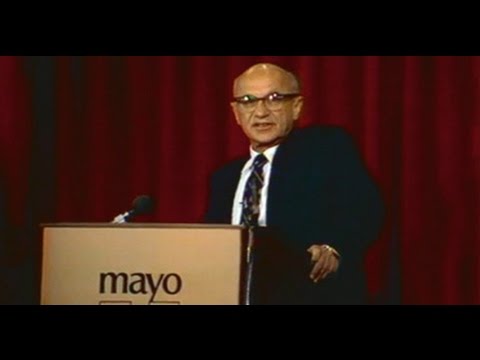
## Background Published on YouTube by the Free To Choose Network in 2016, this video presents a 1978 lecture by economist Milton Friedman at the Mayo Foundation. The page description outlines how expanding government involvement in healthcare drives up costs and leads toward fully socialized medicine, arguing that the state should instead limit its role to enforcing fraud laws and offering extreme disaster relief.
## TL;DR In this address, Milton Friedman argues that expanding government intervention in healthcare inevitably leads to the inefficiencies, administrative bloat, and resource starvation seen in socialized systems like the British NHS. He contends that the rising costs of American healthcare are driven by consumer demand for advanced care, but are severely distorted by the monopolistic practices of the American Medical Association, which uses state licensure to restrict the supply of doctors. To restore efficiency and freedom, Friedman proposes radical free-market reforms, including the abolition of medical licensure and the replacement of bureaucratic welfare programs with a negative income tax that empowers the poor to purchase private health insurance.
## Atmosphere & style The lecture carries an intellectually stimulating and politely provocative atmosphere, as Friedman directly challenges the professional assumptions of his audience of medical specialists. Delivering his arguments with dry humor, sharp economic logic, and historical anecdotes, he maintains an engaging and conversational tone that transforms complex policy analysis into an accessible debate. The session feels like a rigorous but friendly academic exchange, marked by respectful pushback during the Q&A and concluding with warm, appreciative agreement from the crowd.
## Bulletin - [00:36](https://www.youtube.com/watch?v=rWlk9HreE7U&t=36s) Government subsidization of healthcare inevitably triggers a regulatory chain reaction, progressing from price controls to clinical oversight, and ultimately terminating in fully socialized medicine. - [11:54](https://www.youtube.com/watch?v=rWlk9HreE7U&t=714s) Analysis of the British NHS reveals 'bureaucratic displacement' in action: between 1965 and 1973, administrative staff grew by 41% while daily occupied hospital beds fell by 11%. - [26:07](https://www.youtube.com/watch?v=rWlk9HreE7U&t=1567s) Milton Friedman calls for the complete abolition of medical licensure, identifying it as the state-enforced mechanism that secures the AMA's monopoly over the supply of doctors. - [43:56](https://www.youtube.com/watch?v=rWlk9HreE7U&t=2636s) To protect the uninsured, Friedman rejects targeted medical welfare in favor of a negative income tax, arguing that direct cash grants preserve consumer autonomy to buy private insurance.
## Key takeaways - [00:36](https://www.youtube.com/watch?v=rWlk9HreE7U&t=36s) Government spending on programs like Medicare and Medicaid inevitably forces the state to dictate provider fees and regulate clinical decisions to control public expenditures. - [02:45](https://www.youtube.com/watch?v=rWlk9HreE7U&t=165s) Producers and professional associations, including the AMA, frequently lobby for the very state regulations and licensing restrictions that ultimately lead to government takeover. - [05:39](https://www.youtube.com/watch?v=rWlk9HreE7U&t=339s) The AMA historically weaponized licensing and accreditation standards to suppress competitive, cost-effective group practices and prepaid healthcare models like the Mayo Clinic. - [08:58](https://www.youtube.com/watch?v=rWlk9HreE7U&t=538s) While public funding initially acts as a windfall for healthcare providers, nationalized industries are eventually starved of resources as politicians redirect capital to capture new sectors. - [11:54](https://www.youtube.com/watch?v=rWlk9HreE7U&t=714s) Dr. Max Gammon's study of the British NHS demonstrates that state-run medical monopolies suffer from declining output, severe waiting lists, and high rates of physician emigration. - [17:00](https://www.youtube.com/watch?v=rWlk9HreE7U&t=1020s) In Sweden, socialized medicine has expanded administrative bureaucracy and eroded the traditional doctor-patient relationship by asserting state ownership over clinical practice. - [19:36](https://www.youtube.com/watch?v=rWlk9HreE7U&t=1176s) Rising American hospital costs are primarily driven by consumer demand for higher-quality, technologically advanced care, rather than sudden shifts in provider greed or inefficiency. - [22:46](https://www.youtube.com/watch?v=rWlk9HreE7U&t=1366s) The legitimate role of government in medicine should be strictly limited to public health measures, enforcing laws against fraud, and providing catastrophic emergency relief. - [26:07](https://www.youtube.com/watch?v=rWlk9HreE7U&t=1567s) Healthcare is highly affordable for the average American family, with national medical spending dwarfed by voluntary consumer expenditures on housing, cars, alcohol, and tobacco. - [26:07](https://www.youtube.com/watch?v=rWlk9HreE7U&t=1567s) Abolishing medical licensure is necessary to eliminate the AMA's cartel control, lower healthcare costs, and allow the market to determine the optimal division of medical labor. - [33:22](https://www.youtube.com/watch?v=rWlk9HreE7U&t=2002s) The FDA acts as an unmitigated disaster by imposing suffocating regulatory hurdles that delay life-saving drugs, cost thousands of lives annually, and drive clinical research overseas. - [34:17](https://www.youtube.com/watch?v=rWlk9HreE7U&t=2057s) National health insurance is a political misnomer; it is not national, does not promote health, is not insurance, and is driven by special interests rather than genuine public demand. - [38:01](https://www.youtube.com/watch?v=rWlk9HreE7U&t=2281s) State licensing does not guarantee ongoing clinical competence; private institutional reputation and voluntary certification serve as far superior mechanisms for quality control. - [41:15](https://www.youtube.com/watch?v=rWlk9HreE7U&t=2475s) The AMA controls the supply of doctors by using state licensing laws to mandate graduation from medical schools accredited exclusively by its own Council on Medical Education. - [43:56](https://www.youtube.com/watch?v=rWlk9HreE7U&t=2636s) Poverty is a shortage of cash, not a shortage of medical care; a negative income tax is a superior, non-paternalistic alternative to fragmented, earmarked medical welfare programs.
## Detailed walkthrough ### [00:36](https://www.youtube.com/watch?v=rWlk9HreE7U&t=36s) The Inevitable Progression toward Socialized Medicine
Introduced by his friend Bill Keating at the Mayo Foundation, Milton Friedman opens his address on the economics of medical care by outlining a pervasive and compounding trend: the continuous expansion of state control over the healthcare system. He observes that public expenditure—fueled by programs such as Medicare and Medicaid, alongside burgeoning budgets within the Department of Health, Education, and Welfare (HEW)—has mushroomed from a negligible sliver of national healthcare spending into a commanding share. Friedman argues that financial subsidization does not occur in a vacuum; once the state disburses public revenue, fiscal responsibility inevitably compels it to dictate the fees charged by providers. From price controls, the state must logically proceed to regulating medical procedures and policing the clinical decisions of physicians and medical personnel. Unchecked, this cumulative process terminates in a single destination: full state control of the health sector.
Friedman warns the audience that this trajectory directly undermines the welfare of consumers and medical practitioners alike. Rather than protecting the public or fostering medical excellence, the compounding intervention produces distortions that harm patients, physicians, and auxiliary health personnel. He resolves to dissect the structural causes of this interventionist momentum, identify why it runs counter to the interests of the medical community, and evaluate what corrective measures might still be taken to reverse course.
```mermaid flowchart LR accTitle: Escalation of Government Control in Medical Care accDescr: Flowchart illustrating the chain reaction from initial government spending to full socialized medicine. subgraph Funding ["Fiscal Expansion"] A["Public Spending<br/>(Medicare, Medicaid, HEW)"] end subgraph Regulation ["Regulatory Intrusion"] B["Fee & Price Controls"] C["Clinical & Personnel Oversight"] end subgraph Outcome ["Final State"] D["Completely Socialized Medicine"] end A --> B B --> C C --> D ```
As Milton Friedman warned regarding the expanding role of the state: “And if this trend continues, it inevitably leads to completely socialized medicine.” He further emphasized: “I believe that this trend, including many of the steps that have already been taken, is very much against the interests of patients, of physicians, and of other health care personnel.”
[02:45](https://www.youtube.com/watch?v=rWlk9HreE7U&t=165s) The General Trend of Regulation and Producer Complicity
Friedman situates the encroachment of government into medicine within a much wider socio-political current: the systematic displacement of voluntary, free-market mechanisms by state coercion and administrative rulemaking across the American economy. Health care is not an anomaly in this regard, nor is it unique in the paradoxical behavior of its practitioners. Across numerous industries, the very business leaders and producers who vocally profess their fidelity to free enterprise frequently lobby for the state interventions, protective regulations, and regulatory agencies that ultimately ensnare them. He points to history to illustrate this recurring irony: in the nineteenth century, railroad executives actively helped bring about the creation of the Interstate Commerce Commission (ICC), and more recently, the domestic steel industry clamored loudly for tariffs and import quotas despite paying lip service to the free market.
This dynamic has operated with particular force within the medical establishment. Friedman contends that the primary momentum pushing the United States toward socialized medicine does not stem solely from outside agitators, but from decades of monopolistic policies pursued by the American Medical Association (AMA). While acknowledging that AMA leaders acted under the banner of raising medical standards and improving patient care, Friedman argues that the practical consequence of their efforts was the systematic curtailment of entry into the medical profession. By artificially limiting the number of doctors, the AMA suppressed the total supply and distribution of care, stifled organizational efficiency, and paradoxically created the very shortages and cost pressures that collectivist policymakers now exploit.
As Milton Friedman observed regarding producer behavior across industries: “In industry after industry, producers who protest most strongly their belief in free markets have fostered and helped produce government takeover, government regulation, government control.” Reflecting on the real origins of modern medical achievements, he added: “There has been great progress in the provision of medical care in the United States; it has been a great achievement, but it's been an achievement despite many of the best efforts of the American Medical Association, not because of it.”
[05:39](https://www.youtube.com/watch?v=rWlk9HreE7U&t=339s) Organized Medicine’s Suppression of Group Practice and the Mayo Model
Speaking directly to his audience in Rochester, Minnesota, Friedman presents the Mayo Clinic as a living testament to what American medicine could have looked like across the entire nation had organized medicine not blocked institutional innovation. The Mayo Clinic was established late in the nineteenth or early in the twentieth century, critically before the publication of the 1910 Flexner Report authored by Abraham Flexner. That landmark report consolidated the AMA's regulatory stranglehold over medical school accreditation, training standards, and licensing requirements. Throughout the 1920s and 1930s, organized medicine weaponized this expanded authority to obstruct and penalize integrated group practices, multidisciplinary hospital-physician collaborations, and prepaid healthcare delivery models that departed from traditional fee-for-service, sole-proprietor norms.
Friedman argues that had the Mayo brothers attempted to launch their collaborative, clinic-based model in the 1920s or 1930s rather than before 1910, organized medicine would have crushed the attempt in its infancy. Very few independent institutions survived the hostile regulatory climate. Among the rare exceptions was the Ross-Loos Medical Group, alongside the Group Health Association in Washington, D.C., which only preserved its right to operate by dragging the AMA into federal court in a landmark antitrust suit that the association lost. Friedman explains that organized medicine fought prepaid and clinic-based care because group arrangements undermined the traditional sliding-scale fee structure, an artifact of individual practice that has since vanished with modern medical insurance. Had competitive institutional experimentation been permitted to flourish unhindered, Friedman maintains that team-based physician-hospital clinics like Mayo would have become the standard nationwide, yielding substantially higher clinical quality at far lower cost to the public.
Evaluating the historical impact of medical professional monopolies, Milton Friedman concluded: “I venture to predict that if the brothers Mayo had tried to organize the clinic and its practice as they did in the 1920s or 30s, I doubt very much that anything comparable to the Mayo Clinic could ever have developed or been achieved.” Looking at alternative organizational paths, he asserted: “And I believe that that would have provided more adequate, more inexpensive, and higher quality medical care to the American people.”
- Key milestones and historical legal battles highlighted include: - The 1910 Flexner Report, which institutionalized AMA control over medical school accreditation and the licensing of practitioners. - The pioneering multidisciplinary group model established by the Mayo brothers prior to the 1910 regulatory shift. - The rare prepaid clinic models that survived organized resistance, notably the Ross-Loos Medical Group and the Group Health Association of Washington, D.C. - The landmark antitrust victory against the AMA, which prohibited the medical association from systematically boycotting physicians engaged in prepaid group practices.
[08:58](https://www.youtube.com/watch?v=rWlk9HreE7U&t=538s) The Illusion of Government Funding and Eventual Starvation
Friedman turns to the psychological and economic trap that ensnares providers: the allure of state subsidization. To healthcare purveyors, government involvement initially masquerades as a bottomless reservoir of new funding, providing a windfall that tempts practitioners into accepting state partnerships. This dynamic accounts for what Friedman characterizes as the AMA's deep schizophrenia. On one hand, organized medicine vocally decries socialized medicine; on the other, it convenes unbalanced bodies such as its recent commission on medical care costs, actively facilitating the mechanisms of state involvement.
However, Friedman warns that the flood of public money is merely a transitory political phase. While politicians initially shower targeted sectors with funds to secure political support, once an industry is fully subordinated to state control, the political calculus shifts entirely. With no additional votes left to capture from an industry that is already nationalized, politicians inevitably redirect public capital toward conquering fresh sectors of the economy. The previously captured sector is subsequently starved of budgetary allocations, leaving providers with fewer resources and tighter operational constraints than they had under a market regime. As empirical proof, Friedman points to Great Britain, which instituted the National Health Service roughly thirty years prior, immediately following World War II. Comprehensive economic studies analyzing the relationship between British national income and medical spending demonstrated that post-war socialized medicine resulted in substantially lower aggregate expenditures on health than would have occurred had Great Britain retained a private, voluntary market structure.
Critiquing the policy judgment of commercial and professional leadership, Milton Friedman stated: “I have been impressed again and again with how often businessmen, leaders in various areas—who are very farsighted when it comes to their own activities and concerns within their enterprises, are very shortsighted when it comes to the area of public policy and allow themselves to be led by small advantages to foster and favor policies which ultimately redound very much to their disadvantage.” Describing the political lifecycle of nationalized industries, he explained: “And the result of that is that those areas already taken over get starved.”
[11:54](https://www.youtube.com/watch?v=rWlk9HreE7U&t=714s) Dr. Max Gammon and the British National Health Service
Milton Friedman examines international spending comparisons, noting that when evaluating the fraction of income citizens spend on medical care in other countries, the data demonstrates that Britain would devote a substantially larger total sum of resources to healthcare today if it had never instituted a state-run medical monopoly. Instead, state control produces fewer resources, declining quantity, and deteriorating quality. To substantiate this, Friedman highlights a December 1976 study by British physician Dr. Max Gammon, who spent five years investigating the National Health Service (NHS). Gammon documented that the voluntary system developed over the preceding two centuries was eradicated in favor of centralized state financing, leading to stagnation. During the first thirteen years of the NHS, not a single new hospital was built in Britain, and by 1976, the country actually had fewer hospital beds than when the service was inaugurated in July 1948—with two-thirds of the remaining beds situated in facilities constructed before 1900 under private medicine.
Gammon formulated what he termed the “theory of bureaucratic displacement,” an extension of Parkinson’s Law positing that when a bureaucracy assumes control of an enterprise, inputs climb while output drops, and useless administrative tasks displace productive labor. Between 1965 and 1973, NHS hospital staff expanded by 28 percent, with administrative and clerical personnel surging by 41 percent. Yet the primary measure of output—the average number of beds occupied daily—declined by 11 percent. This reduction was not caused by a shortage of patients, as roughly 600,000 people were continuously stranded on NHS waiting lists. Friedman points to notorious British scandals regarding delays for elective or postponable procedures; patients regularly faced three-year waits for heart bypass surgery, with some dying before reaching the operating table.
Faced with these conditions, British medical professionals have steadily fled abroad. Annual physician emigration equals approximately one-third of the country's graduating medical school classes. Meanwhile, political pressures within Britain push to extinguish the remaining vestiges of private practice, even as ordinary citizens increasingly turn to voluntary private health insurance and nursing home schemes to compensate for the state’s deficiencies. Assessing these dynamics, Friedman remarks: “In addition to the fact that the ultimate result of a government takeover is less resources, you invariably get lower quality and a lower quantity of medical care.”
```mermaid flowchart TD accTitle: Gammon's Theory of Bureaucratic Displacement accDescr: Flowchart showing how state bureaucracy in the NHS increased inputs while decreasing healthcare output between 1965 and 1973.
subgraph Inputs["Inputs (1965–1973)"] A["Hospital Staff: +28%"] B["Clerical & Admin Staff: +41%"] end
subgraph Bureaucracy["Bureaucratic Process"] C["Bureaucratic Displacement<br/>(Useless work displaces useful work)"] end
subgraph Outputs["Outputs & Consequences"] D["Daily Occupied Beds: -11%"] E["600,000 Patients on Waiting Lists"] F["Physician Emigration:<br/>1/3 of annual graduates"] end
Inputs --> C C --> Outputs ```
- In the first thirteen years of the NHS, zero new hospitals were constructed in Great Britain. - By 1976, Britain possessed fewer hospital beds than it had in July 1948. - Two-thirds of all NHS hospital beds in 1976 were located in facilities built prior to 1900 by private enterprise. - From 1965 to 1973, total hospital staff grew by 28%, and administrative and clerical staff increased by 41%. - Over that same 1965–1973 window, the daily average of occupied hospital beds fell by 11%. - The British waiting list for hospital admissions stood at approximately 600,000 people, with delays for bypass surgery reaching three years. - Emigration of British-trained doctors annually equaled roughly one-third of the nation’s graduating medical classes.
---
[17:00](https://www.youtube.com/watch?v=rWlk9HreE7U&t=1020s) Dr. Gunnar Biörck on Swedish Socialized Medicine
Friedman turns to Sweden, drawing upon the testimony of Dr. Gunnar Biörck, professor of medicine at the Karolinska Institute, head of medicine at a major Stockholm hospital, and personal physician to the King of Sweden. Acknowledging his Rochester, Minnesota audience, Friedman quips that being in Minnesota ought to qualify him to pronounce a Swedish surname properly, though physical proximity alone clearly does not suffice. He quotes extensively from a paper Biörck delivered at the University of Chicago in 1976, titled *How to Be a Clinician in a Socialist Country*, which exposed the political and bureaucratic encroachment overtaking Scandinavian medicine.
Biörck explained that a parallel private sector poses an existential threat to state-administered medicine, because as long as patients retain the right to pay for a doctor of their choice, their confidence in individual practitioners exposes the shortcomings of the subsidized state apparatus. Swedish politicians consequently sought to suppress the private alternative entirely. Biörck described a staggering proliferation of administrators at every level of incompetence, noting that the Swedish Board of Health and Welfare had published a 60-page manual simply attempting to outline a formula for calculating physician staffing in clinical departments.
Most fundamentally, Biörck lamented the destruction of the traditional clinical ethos. For millennia, the patient was the direct client and employer of the healer; under state medicine, the government claims ownership of the employment relationship and dictates the terms of practice. Biörck warned that these state mandates would soon reach far beyond wages and shift hours to dictate certified drugs and invade the core doctor-patient relationship. Framing the stakes of this transformation, Biörck wrote: “The book is a fascinating monument over the total absurdity into which legislators, administrators and trade-union representatives have finally brought a previously simple and efficient machinery.”
- Dr. Gunnar Biörck held major leadership positions as professor at the Karolinska Institute, clinical department chief in Stockholm, and royal physician to the King of Sweden. - The Swedish Board of Health and Welfare issued a 60-page manual solely dedicated to computing the number of doctors needed to staff a single hospital clinical department. - Biörck argued that socialized healthcare inevitably moves from regulating hours, wages, and drugs to controlling the clinical choices within the patient-physician relationship.
---
[19:36](https://www.youtube.com/watch?v=rWlk9HreE7U&t=1176s) The American Scene and the Real Causes of Rising Hospital Costs
Bringing the focus home to the United States, Friedman addresses the domestic regulatory environment, pointing to the expansion of Medicare and Medicaid, the rise of PSROs (Professional Standards Review Organizations), HMOs, and proposals to impose legislative caps on hospital costs. He mentions that the morning’s newspaper reported President Jimmy Carter’s plan to submit a national health insurance bill to Congress. Friedman observes that political proposals for universal coverage endlessly herald incoming benefits while remaining silent on the bill. No magic pot of money exists; the American public must foot the entire bill, either paying directly or having their money siphoned through a bureaucratic apparatus that extracts a hefty administrative toll.
Friedman acknowledges that a portion of the rising cost of hospital care is artificial and wasteful—spurred directly by government funding through Medicare and Medicaid, which drove price inflation and fraud. However, he vigorously disputes the popular narrative that escalating costs are primarily due to administrative greed, medical price gouging, or newly discovered hospital inefficiencies. Hospitals, he notes with dry humor, have always been inefficient, and doctors have always been self-interested, just like the rest of the human race; they did not suddenly undergo a moral decline that caused costs to spike.
The dominant driver of higher hospital expenses, Friedman contends, is that the American public has actively chosen to purchase more and better medical care. Facilitated by the widespread adoption of voluntary private hospital and health insurance—a major American market innovation—patients demanded advanced medical procedures, sophisticated diagnostic equipment, and higher-quality interventions. He compares the post-war escalation of hospital expenditures to the massive increase in automobile spending during the 1920s and 1930s, when outlays jumped not because cars became arbitrarily overpriced, but because consumers wanted better vehicles and the market responded to their demands. As Friedman summarizes the true source of paying for healthcare: “There is only one source from which the costs can be paid, and that is the American people.”
- Public debate over national health insurance focuses on promised entitlements while concealing that the entire cost is ultimately extracted from the taxpayers. - Escalating per-day hospital charges stem largely from an increase in the number, variety, and technological complexity of medical procedures, diagnostic tests, and clinical services. - The expansion of private voluntary health insurance in the United States served as the market mechanism allowing consumers to express demand for higher-tier medical care. - Friedman rejects the premise that hospital cost increases are primarily caused by sudden shifts in doctor greed or institutional inefficiency, drawing a direct economic parallel to the growth of consumer spending on automobiles in the 1920s and 1930s.
[22:46](https://www.youtube.com/watch?v=rWlk9HreE7U&t=1366s) The Appropriate Limits of Government in Medical Care
Milton Friedman argues that the rising cost of healthcare is largely driven by public demand for expanded services and diverse treatment options. Even if consumers make choices that seem unwise or wasteful, Friedman insists that personal liberty must take precedence: “Now maybe customers have been silly. Maybe they've been foolish and wasting their money in various directions. But I think one of the freedoms we still ought to preserve in this country is the freedom for people to be foolish with their own money.” Turning to the central question of government intervention, he asserts that aside from traditional public health functions where distinct collective problems arise, there is no justification for a special governmental role in personal medical care. The state's general expansion into medicine merely mirrors its intrusion across the entire economy, noting wryly that citizens still have another ten days of work before they finish paying off government expenses and can begin earning for themselves.
In Friedman's view, the government's legitimate functions in medicine should mirror its functions in any other industry: enforcing laws against fraud and deception, and offering emergency relief to those facing catastrophic hardship. Just as the state might aid families devastated by floods, hurricanes, or sudden disability, it may appropriately assist individuals plunged into dire medical distress. Beyond catastrophic relief, however, he maintains there is no valid rationale for public financing. Ordinary healthcare costs remain well within reach of the average American household, and unpredictable expenses are already handled through private insurance arrangements—which at the time covered eighty percent of all hospital bills. Friedman acknowledges that private plans could be improved through mechanisms like expanded major medical coverage, higher deductibles, and co-insurance, but emphasizes that market innovation will continue to refine these tools.
- The rise in medical expenditures is primarily propelled by consumer appetite for varied, advanced services rather than an intrinsic failure of the market. - Government's legitimate domain is strictly limited to public health measures, fraud prevention, and emergency assistance for individuals experiencing catastrophic distress. - Third-party private insurance covers roughly 80 percent of hospital bills, providing an effective vehicle for families to budget against risk.
[26:07](https://www.youtube.com/watch?v=rWlk9HreE7U&t=1567s) Healthcare Affordability and the Abolition of Physician Licensure
To illustrate that medical expenses do not exceed the capacity of the average family, Friedman puts national healthcare spending into perspective alongside ordinary consumer goods. Total medical expenditures equal less than two-thirds of what Americans spend on housing and less than three-quarters of what they spend on automobiles. Furthermore, the nation spends roughly 40 percent as much on alcohol and tobacco—habits overwhelmingly proven to worsen health and inflate medical bills—as it does on healthcare in total. While defending the right of individuals to harm themselves at their own expense, Friedman stresses that these numbers prove healthcare is entirely affordable for the public. The genuine crisis in modern medicine, he contends, is not caused by a lack of government intervention, but by government involvement itself.
Consequently, Friedman puts forward a radical remedy: abolishing all government subsidies, eliminating regulations, and ending the licensure of physicians. He traces the monopoly power of the American Medical Association directly to state licensure laws, which restrict who may legally practice medicine. Recognizing that this proposal strikes most listeners as shocking, Friedman references the detailed analysis he published sixteen years earlier with his wife in *Capitalism and Freedom*. In that work, he reviewed occupational licensing across trades—from beauticians and morticians to professional wrestlers—and deliberately tested his thesis against medicine because it represents the strongest conceivable case for licensing:
```mermaid flowchart TD accTitle: The Licensure Monopoly Dilemma accDescr: Chart illustrating how medical licensure leads inevitably to monopoly power or socialized medicine.
subgraph StateControl["The Mechanism of Licensure"] A["State Grants Licensure Authority"] --> B["Organized Medicine / AMA Control"] B --> C["Restricted Entry & Monopoly Power"] end
subgraph Outcomes["The Physician's Dilemma"] C --> D["Oppose Monopolistic Restrictions?"] C --> E["Support Unlicensed Practice?"] D -.->|"Incompatible"| E C --> F["Result: Floodtide Toward Socialized Medicine"] end ```
He challenges the physicians in the audience to confront their own internal contradiction, stating: “They cannot believe both, because to believe both is to say that two and two make five.” If doctors simultaneously oppose AMA-style monopolistic abuses yet insist on banning unlicensed practice, they are ignoring the fact that licensure itself creates the monopoly. Friedman warns that maintaining licensure guarantees that either organized medicine or the federal government will wield monopolistic control, making complete socialized medicine inevitable.
- Medical spending is dwarfed by expenditures on housing and automobiles, and amounts to only two and a half times what Americans voluntarily spend on tobacco and alcohol. - The monopoly power of organized medicine rests upon state-enforced medical licensure restricting market entry. - The elimination of licensure is presented not as a thoughtless notion, but as the only viable mechanism to secure higher quality, lower costs, and broader access while averting socialized medicine.
[31:05](https://www.youtube.com/watch?v=rWlk9HreE7U&t=1865s) The Trend Toward Collectivism and the FDA Question
Friedman warns that piecemeal adjustments will not solve the structural defects of modern healthcare: “We are facing drastic problems. They will not lend themselves—I guess I have to use medical analogies—they will not lend themselves to Band-Aid solutions.” Instead, the medical dilemma must be seen as part of a forty-year drift toward a collectivist society. Nevertheless, he expresses optimism that public skepticism toward government competence is growing. Whenever advocates insist that government must manage healthcare, Friedman challenges them to point out a single major federal initiative that actually met its goals, citing the obvious failures of public housing, federal welfare programs, and urban renewal efforts to eliminate poverty, dependence, or urban decay.
Following enthusiastic applause at the conclusion of his lecture, the floor opens for questions. The first questioner humorously refers to Friedman's "non-controversial comments" regarding the absence of any role for government in private medicine, and asks for his perspective on the regulatory powers of the Food and Drug Administration (FDA) and the work it carries out. Friedman begins his answer by gesturing toward the medical specialists in attendance, noting that the heart specialists in the room know firsthand the practical consequences of FDA delays and restrictions.
[33:22](https://www.youtube.com/watch?v=rWlk9HreE7U&t=2002s) The Harmful Impact of FDA Drug Regulations
Milton Friedman concludes his assessment of the Food and Drug Administration by highlighting the tangible human cost of its regulatory delays. He points out that several highly effective beta blockers are readily available to patients across Great Britain, Canada, and the rest of the world, yet remain completely barred from the United States due to FDA roadblocks. Friedman notes that reputable physicians have estimated that making those drugs accessible in America would save roughly 10,000 lives every single year. While acknowledging that the agency undoubtedly keeps some harmful drugs off pharmacy shelves, he contends that this benefit is heavily outweighed by the agency's obstruction of life-saving therapeutics.
The regulatory apparatus, Friedman argues, has driven the costs of pharmaceutical research and development to astronomical heights, forcing valuable medical research out of the United States and into foreign jurisdictions. By demanding prolonged testing cycles and imposing suffocating hurdles, the agency has created a net negative for public health. Summarizing the agency’s historical record, Friedman delivers a scathing verdict: “So I think the FDA has been an unmitigated disaster over the past twenty years.”
- Reputable medical estimates indicated that approving overseas beta blockers could save approximately 10,000 American lives annually. - Stifling FDA requirements drastically escalated the costs of discovering and developing new drugs, pushing clinical research abroad.
[34:17](https://www.youtube.com/watch?v=rWlk9HreE7U&t=2057s) Budgetary Hurdles and the Fallacy of National Health Insurance
An audience member asks Friedman for a pragmatic assessment of whether national health insurance is likely to pass within the next two years. Friedman responds that the near-term chances are slim, though he laments that this resistance stems from fiscal constraints rather than sound economic philosophy. The federal government faces soaring expenditures, with a looming federal budget projected at $500 billion and an annual deficit exceeding $50 billion during the fourth year of an economic expansion. Given that competing proposals for national health insurance carry price tags ranging anywhere from $30 billion to $70 billion, the sheer budgetary strain makes immediate enactment politically prohibitive.
Friedman vigorously rejects the idea that a groundswell of grassroots public demand is pushing the country toward such legislation. In his view, the supposed public outcry is entirely synthetic, manufactured and packaged much like a Madison Avenue marketing blitz for a brand of toothpaste. While individuals might initially find the prospect of having someone else pay their medical bills appealing, citizens understand that taxes will ultimately fund the system. Instead, the real momentum originates from special interest groups, including segments of the medical community eager to tap into federal money.
Friedman strongly urges his audience to discard deceptive terminology, dismantling the phrase piece by piece: it is not national because it serves individuals; it does not foster health because socialized medicine worsens care; and it is not insurance because it represents an outright government subsidy. He issues a direct warning to physicians who believe they can safely accommodate socialized medicine for temporary financial advantage: “You may ride it for a time, but sooner or later, you are going to be on the bottom instead of on the top.”
- The federal budget was projected to hit $500 billion, running an annual deficit over $50 billion. - Proposed national health insurance schemes were estimated to add between $30 billion and $70 billion in new government expenditures. - Organized medicine was criticized for weakening its principled resistance in hopes of capturing federal payouts, ignoring the long-term threat of state control.
[38:01](https://www.youtube.com/watch?v=rWlk9HreE7U&t=2281s) Licensure as a False Guarantee of Medical Quality
A questioner in the audience presses Friedman on his controversial stance against occupational medical licensure, asking how the public could be protected from quackery and undertrained practitioners without government certification. Friedman pushes back by asking how many people actually choose their family doctor by opening the Yellow Pages and sticking a pin into the list of licensed names. The existence of a medical license, he argues, offers no meaningful assurance of current competence: “A man who was licensed thirty years ago may be thoroughly incompetent now.”
Friedman emphasizes that doing away with mandatory government licensing does not mean legalizing fraud or deception. A practitioner who falsely claims to be a graduate of Harvard Medical School would remain fully subject to civil suits and criminal prosecution for fraud and misrepresentation. Other complex professions, such as architecture in many states, flourish without mandatory state licensing because consumers and clients rely on rigorous institutional vetting.
Consumers routinely evaluate complex products through reputable intermediaries—whether buying a shirt from a trusted department store or purchasing a car from an established dealer. In the medical sphere, patients do not evaluate individual doctors in a vacuum; they trust institutions like the Mayo Clinic because the clinic has a powerful commercial and reputational incentive to hire and retain only top-tier medical talent. In a market unencumbered by licensure restrictions, hospital group practices would have multiplied, creating far superior private mechanisms for quality control and selection.
```mermaid flowchart TD accTitle: Quality Assurance Under Licensure vs Market Reputation accDescr: Diagram contrasting government licensure with institutional reputation and market vetting mechanisms.
subgraph StateLicensure["Government Licensure Model"] L1["State Medical Board License"] --> L2["One-Time Screening Exam"] L2 --> L3["No Guarantee of Ongoing Competence"] L3 --> L4["Barriers to Supply & Entry"] end
subgraph MarketReputation["Market & Institutional Model"] M1["Voluntary Certification & Training"] --> M2["Reputational Intermediary (e.g., Mayo Clinic)"] M2 --> M3["Ongoing Institutional Vetting"] M2 --> M4["Fraud & Misrepresentation Protections"] M3 --> M5["Accountable Quality & Greater Supply"] end ```
[41:15](https://www.youtube.com/watch?v=rWlk9HreE7U&t=2475s) Organized Medicine and Cartel Control Over Physician Supply
Continuing his critique of state licensing, Friedman exposes how occupational licensure functions as an engine of monopoly power for organized medicine. By controlling who enters the medical profession, the American Medical Association (AMA) long maintained the ability to suppress competition and insulate low-quality practice. For decades, the AMA actively discouraged medical malpractice suits, punishing physicians who dared to testify against negligent peers by stripping them of their hospital credentials.
Friedman points out that restricting entry cannot easily be accomplished at the final licensing examination; once a candidate has completed medical school and an internship, boards find it exceedingly difficult to deny them a license indefinitely. The true bottleneck is created far earlier, at the admissions gate of medical schools. Friedman highlights the deliberate policy enforced by organized medicine during the 1930s to sharply restrict the total output of doctors: “Licensure was the key to this because the licensure laws in almost every state, as result of the pressure of organized medicine, required that nobody may be licensed who is not a graduate of an approved medical school.”
Because every state licensing board accepts the approved list established by the AMA’s Council on Medical Education and Hospitals, the AMA effectively dictates the capacity of medical education nationwide, keeping doctor numbers artificially low and securing cartel-like control over the supply of health care.
- State licensing statutes uniformly mandate graduation from an accredited medical school. - Accreditation is dictated exclusively by the AMA Council on Medical Education and Hospitals, granting organized medicine gatekeeping authority over total physician supply. - The AMA historically retaliated against doctors who testified in malpractice lawsuits by revoking their hospital admitting credentials.
[43:05](https://www.youtube.com/watch?v=rWlk9HreE7U&t=2585s) Licensure and the Restrictive Definition of Medical Practice
Continuing his critique of government regulation in healthcare, Milton Friedman emphasizes that every time one examines the structural problems of the profession, occupational licensure emerges as the pivotal element. Licensure does not merely certify standard competency; it serves as a legal barrier designed to prohibit what the law designates as the unauthorized practice of medicine. Friedman contends that a substantial array of routine medical tasks could be handled just as competently by medical technicians who lack the exhaustive, expensive training required of full physicians. While the medical field has seen a slight increase in the deployment of technicians in recent years, Friedman argues that widespread adoption remains severely obstructed by statutory definitions that dictate what constitutes medical practice and criminalize unauthorized care.
Friedman concludes his thoughts on certification by acknowledging his own passion for the topic and drawing a distinction between genuine consumer protection and statutory monopolies. As he remarks to the audience: “You started me on a subject on which I could go a long time, but perhaps I've said enough to suggest that it isn't quite as simple as it may seem at the outset, that a label of good housekeeping is not the same thing.” By conflating government licensure with an objective, voluntary seal of quality, the public often overlooks how restrictive medical definitions artificially constrain the supply of care and distort the efficient division of labor between doctors and auxiliary staff.
- Medical licensure primarily acts as an enforcement mechanism to prevent the unauthorized practice of medicine. - Restrictive legal definitions of medical practice prevent the optimal, widespread utilization of medical technicians and physician time.
---
[43:56](https://www.youtube.com/watch?v=rWlk9HreE7U&t=2636s) Covering the Uninsured: Negative Income Tax vs. Earmarked Welfare
A woman in the audience poses a direct question regarding the uninsured population, observing that while Friedman cited an eighty percent coverage rate under private insurance, a significant minority remains vulnerable. She asks what specific proposal Friedman offers to protect those who fall below the poverty line, lack union representation, and work outside large corporate employers that offer group coverage. Friedman responds unequivocally that there should be no specialized medical program created for this group. Instead, he reiterates his longstanding proposal to dismantle the existing mosaic of welfare programs and replace them entirely with a comprehensive negative income tax. Under this mechanism, any household falling below an established income floor would receive a direct cash grant sufficient to maintain a baseline standard of living.
```mermaid flowchart TD accTitle: Welfare Approaches Comparison accDescr: Diagram contrasting targeted welfare benefits with Milton Friedman's negative income tax proposal.
subgraph Piecemeal["Current Fragmented Welfare System"] A["Government Bureaucracy"] -->|"Targeted Aid"| B1["Housing Subsidies"] A -->|"Targeted Aid"| B2["Food Stamps"] A -->|"Targeted Aid"| B3["Medical Care Entitlements"] A -->|"Targeted Aid"| B4["Clothing Allowances"] end
subgraph NIT["Friedman's Market Solution"] C["Negative Income Tax (Direct Cash Floor)"] --> D["Unrestricted Cash to Recipient"] D --> E["Individual Consumer Choice"] E --> F["Purchase Private Medical Insurance"] E --> G["Purchase Living Necessities"] end ```
Friedman argues that poverty is fundamentally a shortage of cash rather than a shortage of any specific good, and he rejects the paternalistic premise behind targeted in-kind welfare subsidies. In his view, providing fragmented, earmarked allotments for housing, food, clothing, and medical care restricts individual freedom and creates bureaucratic waste. If poor citizens are given sufficient basic income directly, they can purchase the exact same private health insurance available to everyone else in the market. As Friedman summarizes his core philosophy of poverty relief: “The problem of poverty is money, and we ought to have a program under which we assure a minimum level of income and then let people spend it the way they want.” The questioner and the room warmly affirm the response, bringing the session to a close with an appreciative audience member calling out, “Absolutely. Good answer. Thank you.”
- Approximately twenty percent of the population at the time lacked coverage due to poverty, lack of union membership, or absence of employer-provided group health plans. - Friedman advocates replacing piecemeal welfare arrangements with a negative income tax delivering unrestricted cash. - Recipients under a cash-floor model retain consumer autonomy, enabling them to purchase ordinary private insurance on the open market.
## Notable quotes > [22:46](https://www.youtube.com/watch?v=rWlk9HreE7U&t=1366s) I think one of the freedoms we still ought to preserve in this country is the freedom for people to be foolish with their own money. — Milton Friedman
> [43:56](https://www.youtube.com/watch?v=rWlk9HreE7U&t=2636s) The problem of poverty is money, and we ought to have a program under which we assure a minimum level of income and then let people spend it the way they want. — Milton Friedman
> [02:45](https://www.youtube.com/watch?v=rWlk9HreE7U&t=165s) In industry after industry, producers who protest most strongly their belief in free markets have fostered and helped produce government takeover, government regulation, government control. — Milton Friedman
> [11:54](https://www.youtube.com/watch?v=rWlk9HreE7U&t=714s) In addition to the fact that the ultimate result of a government takeover is less resources, you invariably get lower quality and a lower quantity of medical care. — Milton Friedman
> [33:22](https://www.youtube.com/watch?v=rWlk9HreE7U&t=2002s) I think the FDA has been an unmitigated disaster over the past twenty years. — Milton Friedman
> [38:01](https://www.youtube.com/watch?v=rWlk9HreE7U&t=2281s) A man who was licensed thirty years ago may be thoroughly incompetent now. — Milton Friedman
## Mentioned Milton Friedman, Bill Keating, Mayo Foundation, Mayo Clinic, Department of Health, Education, and Welfare (HEW), American Medical Association (AMA), Interstate Commerce Commission (ICC), Abraham Flexner, Flexner Report, Ross-Loos Medical Group, Group Health Association, National Health Service (NHS), Dr. Max Gammon, Parkinson's Law, Dr. Gunnar Biörck, Karolinska Institute, Swedish Board of Health and Welfare, Jimmy Carter, Professional Standards Review Organizations (PSROs), Health Maintenance Organizations (HMOs), Capitalism and Freedom, Food and Drug Administration (FDA), AMA Council on Medical Education and Hospitals
## Video description Increasing government involvement in medical care will take us toward fully socialized medicine. This trend is clearly against the interests of patients, physicians, and other health care personnel. There is, of course, no such thing as "free" health care--you either pay for it directly, or via the tax system, with bureaucrats taking their usual cut along the way. The reality of the situation is that government involvement in the economics of medical care leads directly to higher costs for that care. There is no special role for government in medical care. Government should do there only what it does in other fields: Enforce laws against fraud and deception, and offer some assistance (comparable to flood or tornado relief) to those in extreme medical distress. Recorded at Mayo Foundation, Rochester, MN ©1978 / 45:26.
Check out our Facebook page here: https://www.facebook.com/FreeToChooseNetwork
Visit our media website to find other programs here: http://freetochoosemedia.org/index.php
Connect with us on Twitter here: https://twitter.com/FreeToChooseNet
Learn more about our company here: http://freetochoosenetwork.org/
Shop for related products here: http://www.freetochoose.net/
Stream from FreeToChoose.TV here: http://freetochoose.tv/
[Source](https://www.youtube.com/watch?v=rWlk9HreE7U)