Matt Parker Maps Woolworths Stores to Debunk Prehistoric Ley Lines
London Mathematical Society
Large datasets inevitably generate seemingly impossible patterns purely by chance, allowing selective observers to manufacture proof for false claims whenever they ignore the vast volume of non-matching data.
Geometric patterns and perceived alignments, such as megalithic ley lines, naturally emerge from any sufficiently large dataset through Ramsey theory and selective data filtering. (5:43)
Human intuition drastically underestimates collision probabilities; in a room of just 23 people, the probability of at least two individuals sharing a birthday exceeds 50%, rising to approximately 70% with 30 people. (16:35)
In a standard 52-card shuffled deck, the probability of at least one king landing directly adjacent to a queen is approximately 48%, increasing to between 67% and 74% when allowing a one-card buffer. (29:09)
Sensory illusions like backmasking in music occur because psychological priming forces the brain's evolved, overactive pattern-recognition architecture to interpret random audio noise as intelligible speech. (41:36)
Arbitrary prophetic discoveries, such as the Bible Code or 9/11 Wingdings coincidences, arise inevitably from equidistant letter searches and massive sample spaces rather than genuine predictive design. (50:39)
Detailed notes
## Background
Published on YouTube by the London Mathematical Society on April 24, 2014, this video features Matt Parker delivering a talk for the 2010 LMS Popular Lectures series. The lecture explores how prehistoric British monument alignments, backwards audio cues, and coincidences like the birthday problem demonstrate that seemingly miraculous discoveries are often merely meaningless patterns arising from random data.
## TL;DR
Mathematician and comedian Matt Parker examines human pattern recognition and demonstrates how massive datasets inevitably produce spurious correlations through principles like Ramsey theory and the pigeonhole principle. Using examples ranging from the alignment of defunct Woolworths stores into 'ley lines' to playing cards, Disneyland childhood photos, and reverse audio in pop songs, he illustrates how counterintuitive probability fools human intuition. He walks through statistical significance, the null hypothesis, and the 'Bible code' to show how cherry-picking data creates illusions of intent or prophecy. Finally, Parker urges scientists and mathematicians to actively engage the public and debunk statistical pseudoscience before rational vacuums are filled by conspiracy.
## Atmosphere & style
The presentation crackles with energetic, self-deprecating stand-up humor anchored by Parker's former high-school teaching reflexes and dry Australian wit. He constantly breaks the fourth wall with playful audience interrogations—teasing drink-sippers, polling the room using set-theory jargon, and orchestrating participatory experiments like a live birthday paradox test and a split-room audio priming exercise. It feels less like an academic lecture and more like a lively, accessible comedy club routine that seamlessly smuggles in rigorous probability theory and a passionate defense of scientific skepticism.
## Bulletin
- [05:43](https://www.youtube.com/watch?v=sf5OrthVRPA&t=343s) Geometric patterns and perceived alignments, such as megalithic ley lines, naturally emerge from any sufficiently large dataset through Ramsey theory and selective data filtering.
- [16:35](https://www.youtube.com/watch?v=sf5OrthVRPA&t=995s) Human intuition drastically underestimates collision probabilities; in a room of just 23 people, the probability of at least two individuals sharing a birthday exceeds 50%, rising to approximately 70% with 30 people.
- [29:09](https://www.youtube.com/watch?v=sf5OrthVRPA&t=1749s) In a standard 52-card shuffled deck, the probability of at least one king landing directly adjacent to a queen is approximately 48%, increasing to between 67% and 74% when allowing a one-card buffer.
- [41:36](https://www.youtube.com/watch?v=sf5OrthVRPA&t=2496s) Sensory illusions like backmasking in music occur because psychological priming forces the brain's evolved, overactive pattern-recognition architecture to interpret random audio noise as intelligible speech.
- [50:39](https://www.youtube.com/watch?v=sf5OrthVRPA&t=3039s) Arbitrary prophetic discoveries, such as the Bible Code or 9/11 Wingdings coincidences, arise inevitably from equidistant letter searches and massive sample spaces rather than genuine predictive design.
## Key takeaways
- [00:07](https://www.youtube.com/watch?v=sf5OrthVRPA&t=7s) Matt Parker uses stand-up comedy and mathematical outreach to demonstrate that human brains naturally perceive meaning in purely random data.
- [05:43](https://www.youtube.com/watch?v=sf5OrthVRPA&t=343s) Megalithic ley line theories can be debunked by showing that defunct Woolworths store locations across the UK form identical equilateral and isosceles triangles within 1% accuracy.
- [10:37](https://www.youtube.com/watch?v=sf5OrthVRPA&t=637s) Selective data mining, humorously dubbed 'pick and mix data analysis,' reflects Ramsey theory, which states that complete disorder is mathematically impossible given a large enough dataset.
- [12:33](https://www.youtube.com/watch?v=sf5OrthVRPA&t=753s) Adding random points to a bounded area geometrically increases the density of potential target disks, making equilateral configurations inevitable.
- [14:08](https://www.youtube.com/watch?v=sf5OrthVRPA&t=848s) The pigeonhole principle dictates that 367 individuals guarantee a 100% chance of a shared birthday, but the probabilistic threshold for a 50% chance requires only 23 people.
- [20:38](https://www.youtube.com/watch?v=sf5OrthVRPA&t=1238s) A live demonstration with the audience confirmed a shared birthday on the 33rd person, aligning with calculated probabilities exceeding 70% by 30 people.
- [25:26](https://www.youtube.com/watch?v=sf5OrthVRPA&t=1526s) Favorable probability shifts allow profitable long-run wagering in groups of 30 or more, illustrating the mathematical foundation of casino house edges.
- [29:09](https://www.youtube.com/watch?v=sf5OrthVRPA&t=1749s) Shuffling three decks of cards reveals adjacent kings and queens in all three, demonstrating how large combinatorial pairing sets confound basic probability intuition.
- [32:12](https://www.youtube.com/watch?v=sf5OrthVRPA&t=1932s) Apparent real-life miracles, such as a engaged couple discovering they unknowingly appeared in the same childhood Disneyland photograph decades earlier, are inevitable given billions of cumulative lifetime encounters.
- [41:36](https://www.youtube.com/watch?v=sf5OrthVRPA&t=2496s) Auditory backmasking claims rely entirely on phonetic pareidolia reinforced by suggestion, as demonstrated by the contrasting perceptions between primed and unprimed audience halves listening to Queen in reverse.
- [45:06](https://www.youtube.com/watch?v=sf5OrthVRPA&t=2706s) Rigorous scientific investigation relies on the null hypothesis and significance thresholds (such as p < 0.05) to distinguish authentic effects from random noise.
- [48:06](https://www.youtube.com/watch?v=sf5OrthVRPA&t=2886s) Scientists and mathematicians must overcome the 'specialism fallacy' and actively speak out against public pseudoscience and sensationalized media reporting.
- [50:39](https://www.youtube.com/watch?v=sf5OrthVRPA&t=3039s) The 'Bible code' technique of equidistant letter sequences trivially yields topical modern references—including lecture dates and speaker names—due to the combinatorial size of religious texts.
- [56:25](https://www.youtube.com/watch?v=sf5OrthVRPA&t=3385s) Human cognitive overestimation of risk and hyperactive pattern detection evolved because the survival cost of a false positive is far lower than that of a false negative.
- [01:01:37](https://www.youtube.com/watch?v=sf5OrthVRPA&t=3697s) Optimal lottery strategy involves picking numbers above 31 and avoiding common sequences like 1-2-3-4-5-6, which minimizes the likelihood of having to split jackpots with other players.
Matt Parker takes the stage for the 2010 London Mathematical Society Popular Lecture, noting that while his title is “Clutching at Random Straws,” he wants to set expectations straight about the moniker “stand-up maths.” He gives out his Queen Mary University of London email address for questions or overly elaborate heckles, and warns that the branding comes with strictly limited guarantees. As Parker puts it: “Uh I should point out though, and this was mentioned uh before I came up, uh in the phrase stand-up maths, there's only two rule promises that I'm committing to. One, I will be standing up. Done. And maths, which believe me is about to occur.” Entertainment, he jokes, is optional, though he has penned a bespoke joke for the evening. He also cautions attendees against using their phones, warning that as a former teacher, he is fully qualified to confiscate and answer incoming calls, and jokes about behaving like a “teaching ninja” who hurls prime numbers instead of shurikens.
Parker traces his trajectory from Australia to London. Originally enrolling at the University of Western Australia in mechanical engineering, he realized there was an alarming risk of ending up employable, prompting a pivot into physics and ultimately pure mathematics. Wanting a career where he could simply talk about maths all day, he became a secondary school maths teacher. After teaching in Australia and London, he moved into university outreach, though a nostalgic itch eventually led him to spend two terms at a North London comprehensive school—an experience that promptly satisfied his desire for classroom teaching. He now balances work between Queen Mary’s mathematics department, occasional projects in physics, school talks, and media outreach. His self-professed teaching reflexes kick in live during the intro when an audience member cracks open a drink, triggering a brief interrogation of “Pepsi boy” alongside playful warnings directed at the “group theory lads” from the earlier lecture.
- Academic background: University of Western Australia (engineering to physics to mathematics).
- Professional roles: Former secondary teacher in Australia and London (including two terms at a North London comprehensive); currently public engagement fellow in the maths and physics departments at Queen Mary University of London.
- Strict policy on mobile disruptions: confiscated immediately and answered on stage.
---
[04:20](https://www.youtube.com/watch?v=sf5OrthVRPA&t=260s) Surveying the Complement and the Graph Paper Litmus Test
Before plunging into the mathematics of randomness, Parker pauses to take an informal demographic survey of the room. He asks the “math-friendly group”—defined strictly as mathematics teachers, professional mathematicians, or excessively passionate maths students—to make themselves known with a cheer, which yields an enthusiastic roar and an isolated single clap. He then turns to the remainder of the room, asking the “complement set” to cheer in turn, which prompts loud, defiant shouts primarily from the back rows.
```mermaid
flowchart TD
accTitle: Audience Demographic Survey
accDescr: Division of the audience into math friendly and the complement set.
subgraph TotalAudience["Total Audience"]
direction TB
MF["Math-Friendly Group<br/>(Teachers, Mathematicians, Passionate Students)"]
CS["Complement Set<br/>(General Public, Skeptics, Back Row)"]
end
```
Parker notes that when he cannot conduct an explicit survey, he relies on a foolproof visual litmus test to determine whether a maths gig will be successful. Scanning the front row, he spots an attendee sporting glasses, a neat beard, and a distinctively checkered button-down. Parker asks him to stand up so the room can applaud, declaring: “I know a gig will go well if someone's made their shirt out of graph paper.”
- The crowd is partitioned using set theory terminology: the math-friendly subset versus its complement set.
- Audience litmus test: spotting an attendee wearing a shirt patterned like grid/graph paper guarantees a responsive room.
---
[05:43](https://www.youtube.com/watch?v=sf5OrthVRPA&t=343s) Megalithic Ley Lines and the Ancient Woolworths Civilization
Parker explains what drew him into studying pseudo-random patterns: an article he encountered in the *Daily Mail* while commuting on the London Underground. The story reported on a retired Devon marketing executive who mapped the UK's ancient prehistoric and monolithic sites, connected them with straight lines, and discovered they formed remarkable equilateral and isosceles triangles. The author was convinced these geometric alignments could not have arisen by chance, proposing they served as an ancient navigational satnav network and refusing to rule out extraterrestrial intervention. Recounting the man's absolute certainty, Parker remarks: “He actually said, you cannot do that by chance.”
```mermaid
flowchart LR
accTitle: The Geometric Ley Line Illusion
accDescr: Flowchart showing how randomly distributed geographic sites can be selectively connected into precise shapes.
subgraph Data["Site Selection"]
A["Dense Scatter of UK Locations"]
end
subgraph PatternMatching["Geometric Filtering"]
B["Equilateral & Isosceles Pairings"]
C["Perpendicular Bisectors & Long Baselines"]
end
subgraph ErroneousConclusions["Divergent Interpretations"]
D["Prehistoric Sites:<br/>'Ancient Satnav' or Aliens"]
E["Woolworths Stores:<br/>Discount CDs & Ladybird Clothing"]
end
A --> B
B --> C
C --> D
C --> E
```
Rather than dismiss the claims outright, Parker tested whether the same methodology could yield identical results on an entirely mundane dataset. Mapping locations across the UK centered around Birmingham, he identified three points forming an equilateral triangle accurate to within 1%. Adding adjacent locations produced pairs of isosceles triangles matching within 0.5% accuracy. Extending the base with a perpendicular bisector created a giant cross spanning 173.8 miles from Conwy in North Wales to Luton, passing within 40 feet of the Conwy point and 30 feet of the Luton point. Parker then reveals the twist: the points were not ancient stone circles or megalithic cairns, but the recently shuttered high-street chain stores of Woolworths. Playing into the conceit of an “ancient Woolworths civilization,” he jokingly speculates that extraterrestrial visitors must have helped prehistoric Britons obtain cheap kitchenware, discount CDs, and low-cost Ladybird clothing. When he circulated the tongue-in-cheek findings via a mock press release, it was picked up by mainstream outlets and met with appreciative letters from archaeology journals celebrating the mathematical debunking.
- Claimed Devon discovery: Neolithic monuments form precise isosceles and equilateral triangles functioning as navigational routes or alien-assisted landmarks.
- Parker's Woolworths geometry:
- Birmingham equilateral triangle: accurate within 1%.
- Flanking isosceles triangles: side lengths equal within 0.5%.
- Transverse baseline: spans 173.8 miles between Conwy and Luton, accurate to within 40 feet at Conwy and 30 feet at Luton.
- Commercial artifacts cited: Woolworths' Ladybird clothing brand, discount compact discs, and budget kitchen goods.
[10:37](https://www.youtube.com/watch?v=sf5OrthVRPA&t=637s) "Pick and Mix" Data Analysis and Ramsey Theory
Reflecting on his discovery of precise geometric alignments among Woolworths stores across the UK, Matt Parker notes that finding equilateral triangles among random sites is far from supernatural—it is simply a matter of having an abundance of data. With hundreds of defunct Woolworths locations to choose from, he explains how low-tech his initial breakthrough actually was: he literally printed out a Google Map of the UK showing all the stores, laid a ruler across the paper, and shifted it around until convincing triangles appeared. Only after spotting candidate shapes did he plug the exact map coordinates into a computer to calculate the precise distances and verify their tight geometric tolerances. Because he possessed a massive pool of effectively random points, he could effortlessly cherry-pick the few locations that matched his preconceived pattern while entirely ignoring the rest.
Parker emphasizes that this demonstration gets straight to the heart of his lecture: with a sufficiently large dataset, meaningless patterns will inevitably arise. As Matt Parker explains, “They're only there because you've got enough data. But if you're prepared to ignore most of your data, you can pull one of these patterns out and prove pretty much anything you want.” Following his prank, a mathematics department—which he recalls was at the University of Liverpool—contacted him to share that their research group had adopted a brand-new term for selective data mining: “pick and mix data analysis,” a pun on Woolworths' famous sweet counters. In formal mathematics, this phenomenon falls under Ramsey theory, which demonstrates that given a large enough collection of random data, one is mathematically guaranteed to find any desired pattern to any arbitrary degree of accuracy.
- Matt Parker located the Woolworths alignments by hand using a printed Google Map and a physical ruler before running coordinate calculations on a computer.
- Ramsey theory mathematically establishes that complete disorder is impossible: given enough data points, order and specific configurations will appear purely by chance.
[12:33](https://www.youtube.com/watch?v=sf5OrthVRPA&t=753s) Inevitable Triangles in Random Space
```mermaid
flowchart TD
accTitle: Inevitable Equilateral Triangles Model
accDescr: Flowchart illustrating how adding random points rapidly multiplies target zones until an equilateral triangle is guaranteed.
subgraph Initial ["Initial Setup"]
P1["First Point Placed"]
P2["Second Point Placed"]
P1 --- P2
end
subgraph Growth ["Target Accumulation"]
T1["2 Target Disks Formed"]
P3["Miss: Third Point Placed"]
T2["Multiple New Target Disks Formed"]
P1 --> T1
P2 --> T1
T1 -->|"point lands outside"| P3
P3 --> T2
end
subgraph Outcome ["Inevitable Result"]
Dense["Plane Filled with Overlapping Disks"]
Tri["Equilateral Triangle Formed"]
T2 --> Dense
Dense --> Tri
end
```
To demonstrate how geometric patterns become inevitable without invoking thousands of real-world stores, Parker introduces a simplified visual model. He displays a slide featuring a rectangle representing an entire closed universe, slightly offset to the left on the screen. He begins placing points randomly onto the surface. The first dot creates no shapes; the second dot still creates none. However, as soon as two points exist, two circular target zones (disks) appear on the plane. If a third point falls inside either disk, an equilateral triangle is formed. The physical diameter of those disks represents the chosen tolerance or level of accuracy: tight, strict tolerances require tiny disks, whereas looser criteria allow larger disks.
When a third point is dropped onto the canvas and misses the initial target zones, the situation does not become less likely; instead, the pool of potential pairings explodes. The third point now pairs with both existing points, generating multiple new target disks across the canvas. As successive dots miss, the number of required target zones grows combinatorially until the canvas is densely populated with circular targets. Eventually, it becomes far more probable for a new point to land inside a target zone than to miss one entirely. As Matt Parker puts it, “So I the smaller I make these dots, I just put more and more points in until it's impossible to not have an equilateral triangle.”
- Each pair of points defines two potential third-vertex locations to form an equilateral triangle.
- The radius of each disk corresponds directly to the margin of error permitted for the alignment.
- Adding points exponentially increases the number of potential pairwise connections, making a match inevitable regardless of how small the target disks are.
[14:08](https://www.youtube.com/watch?v=sf5OrthVRPA&t=848s) From the Pigeonhole Principle to the Birthday Problem
Moving from geometric inevitability to discrete counting, Parker connects this clustering effect to the pigeonhole principle. He notes that roughly 350 tickets were distributed for that evening's lecture, meaning that with staff and extra attendees included, the room is hovering dangerously close to 365 people. He proposes a thought experiment: imagine all the lecture attendees waiting outside the hall while the organizers label every seat inside with a distinct calendar date corresponding to the days of the year. Attendees are instructed to enter and take the specific seat marked with their birthday.
As the first groups stream into the room, there is an immediate possibility that someone will arrive at their assigned birthday seat only to find an earlier attendee already sitting there. If 365 people enter (or 366 to account for leap years), it is theoretically possible—though astoundingly unlikely—that every single person occupies a unique seat without a collision. However, the instant person number 367 steps through the door, the pigeonhole principle dictates that they must double up on an occupied seat, guaranteeing at least one shared birthday. Sending in another 365 people would subsequently guarantee a three-way collision. While 367 represents the hard ceiling of mathematical certainty, Parker pivots to probability: at what threshold does a collision cross from being an improbable accident to being more likely than not? He challenges the audience to secretly guess how many randomly selected people are needed in a room for there to be a greater than 50% chance of a shared birthday, adding a secondary challenge for mathematically savvy listeners to guess the 70% threshold.
- The lecture hall held approximately 350 ticket holders, nearly matching the 365 days of a calendar year.
- By the pigeonhole principle, 367 people are required to guarantee a 100% certainty of at least one shared birthday when accounting for leap years.
- Matt Parker asks the audience to silently estimate the 50% threshold without shouting answers out, keeping the puzzle fresh for those familiar with the problem by asking for the 70% mark.
[16:35](https://www.youtube.com/watch?v=sf5OrthVRPA&t=995s) Calculating the Odds and Running the Live Test
To work out the solution to the birthday problem, Parker projects a slide of a party populated by stick figures. He jokes that he has forced all the partygoers outside into a queue so he can readmit them one by one, tracking the running probability of a birthday collision. Analyzing the math from the reverse perspective—calculating the complementary probability that everyone has a *different* birthday—simplifies the calculation substantially. Ignoring leap years, the first person enters with a 100% certainty of having a unique birthday. When the second guest walks in, their birthday can fall on any of the remaining 364 days out of 365 ($364/365$). When the third guest enters—an animated figure on screen that Parker quips “promptly has a seizure”—their birthday must avoid the dates of both prior guests, giving an independent probability of $363/365$. The cumulative probability of all three having distinct birthdays is the product of those fractions:
$$\frac{364}{365} \times \frac{363}{365}$$
Parker acknowledges the audience's muted reaction to his visual party jokes, remarking self-deprecatingly that the gag was dramatically funnier inside his head. Converting these cascading fractions into percentages and subtracting them from 100% reveals how rapidly collisions accumulate:
| Number of People | Probability of at Least One Shared Birthday |
|:--- |:--- |
| **5** | 2.7% |
| **10** | 11.7% |
| **20** | ~40% (approx. 41.1%) |
| **23** | **>50% (approx. 50.7%)** |
| **30** | **~70% (approx. 70.6%)** |
While intuition leads most people to guess that 100 to 200 people are needed to reach even odds, the mathematical reality is just 23 people. Because the lecture hall holds hundreds of people—far beyond the 30 required for a 70% probability—Parker decides to run an empirical test on the spot. As Matt Parker explains to the audience, “Our intuition, most people I ask what do they think the probability is, they guess between a 1 and 200 on average. But yet the actual number is 23. So we're going to check.” He organizes the live experiment systematically, instructing the front row to begin by stating their birth dates—day and month only, omitting the year—before snaking the count row by row through the audience until a match occurs.
[20:38](https://www.youtube.com/watch?v=sf5OrthVRPA&t=1238s) Demonstrating the Birthday Paradox Live
Matt Parker orchestrates a live demonstration of the famous birthday problem with the lecture audience, setting up strict and comedic ground rules before calling out dates. After noting his own birthday is the 22nd of December, he instructs the audience that if anyone hears their own birthday called, they must remain completely calm and not ruin the surprise until he actually points at them. When pointed at, compliance is mandatory: “Jump up and shout, 'My birthday is the 22nd of December.' or whatever my birthday is and say birthday here. Same as that guy. This is also compulsory and point at whoever it is whose birthday is the same.”
Parker begins moving through the front row, repeating each birthday out loud: 21st of April, 4th of August, 17th of July, 11th of December, 1st of January, 17th of August, 13th of February, 12th of August, 1st of April, and 12th of May. Pausing after 11 people with no match, he calculates a 14.1% probability that a match would have occurred by that point, remarking that because the odds of failure remain far higher, he is not nervous yet. Moving through the next batch—28th of December, 14th of August, 7th of September, 18th of June, 10th of October, and 23rd of March—he reaches 17 people, noting the cumulative probability is now 30%, meaning he is still comfortable.
To test the audio crew, Parker turns to the row behind. Dates come in rapid succession: 27th of March, 15th of April, 19th of June, 3rd of April, 30th of January, 23rd of July (which he asks the attendee to repeat, joking, “You're just trying to hack into my email, aren't you? And now, can we do the same game with mother's maiden names?”), 5th of November, and 25th of July. Reaching 25 people, Parker reveals the probability of a shared pair has risen to 57%, admitting he is now mildly nervous. Continuing through 22nd of January, 17th of September, 1st of December, 18th of December, 21st of June, 30th of October, and 19th of December, he finally points to the 33rd attendee, who offhandedly responds: “Uh 17th of July, which is the same as yours, isn't it?” Parker halts the entire room in mock outrage at the anticlimactic delivery: “Whoa, WHOA, WHOA, THAT'S PAUSE THE CAMERAS. CAN WE TRY TO DO IT AGAIN.” After a mock re-enactment and a round of applause, Parker asks the wider auditorium how many people heard their own birthday among those 33 called, and a substantial sea of hands goes up across the room.
- **Cumulative Match Probabilities Stated by Parker:**
- 11 people: 14.1% chance of a match
- 17 people: ~30% chance of a match
- 25 people: ~57% chance of a match
- 30 people: ~70% chance of a match
- 33 people: The threshold where the match finally occurred (matching the earlier 17th of July)
---
[25:26](https://www.youtube.com/watch?v=sf5OrthVRPA&t=1526s) Meaningless Patterns, Long-Run Odds, and the £10 Bet
Reflecting on the demonstration, Parker explains that the birthday problem is an quintessential case of counterintuitive probability. It highlights the psychological traps that cause people to jump to unfounded conclusions: first, humans fail to recognize how vast the sample space was and selectively fixate only on the pieces that match an expected narrative; second, humans vastly underestimate how likely coincidences actually are. While meeting an individual who shares your exact birthday is rare, looking across hundreds of acquaintances for *any* mutual pairing causes the odds to climb with astonishing speed.
```mermaid
flowchart LR
accTitle: Birthday Paradox Probability Curve
accDescr: Graph illustrating how match probability rises steeply from 23 to 60 people.
subgraph Thresholds ["Room Size vs. Shared Birthday Probability"]
A["23 People<br>~50%"] --> B["30 People<br>~70%"]
B --> C["60 People<br>>99%"]
C --> D["366+ People<br>100%"]
end
```
Parker illustrates this mathematically by describing a graph of room size versus the probability of a shared birthday: starting at zero, the curve climbs steeply before flattening out. At 30 people, the odds of a match sit at roughly 70%; by 60 people, the probability exceeds 99%, hovering just below 100% until reaching 365, 366, or 367 people. He points out a practical application: in any gathering of 30 or more people, you can wager someone a hypothetical £10 that two people share a birthday. Although Parker technically would have lost £10 that day because it took 33 people, the law of large numbers guarantees profitability over time. As Parker observes: “Even though you don't know if you will win or lose, you know what will happen in the long run.” He compares this directly to casino mathematics, where games are engineered with slight house edges so that the venue inevitably profits over thousands of plays regardless of short-term losing streaks. Parker then pauses to banter with audience members, checking in on someone wearing a grey cardigan over a graph-paper t-shirt, checking on someone drinking Pepsi, and asking if "group theory boy" has any comments yet.
- “And the first way that we jump to meaningless conclusions is when we don't appreciate just how much data there was, and we've just selectively picked out the bits that match what we want.” — Matt Parker
- In a room of 30 people, betting on a shared birthday yields an expected 70% win rate against a 30% loss rate.
- Casinos operate on this exact mathematical principle: variance creates individual winners, but the house edge guarantees profits across high volumes of play.
---
[29:09](https://www.youtube.com/watch?v=sf5OrthVRPA&t=1749s) The Card Trick: Kings, Queens, and Sneaky Probabilities
Transitioning to another demonstration of counterintuitive probability, Parker introduces three sealed decks of playing cards. He tosses them out to three volunteers across the room—one in the front, one "mildly interested" attendee on the side, and a third volunteer seated at the back. He instructs them to thoroughly shuffle the decks until they believe the cards are in completely random order, assuring the audience that the packs were already pre-shuffled and contain full decks.
Parker frames the scenario as a classic bar bet or mentalist trick: “I bet while you're shuffling these cards I can control them. I can control specifically the king and the queen. I will make the king end up next to the queen or at most one card apart.” He instructs the three volunteers to comb through their shuffled decks to see whether any king is positioned immediately adjacent to a queen, or separated by at most a single buffer card. As one volunteer slowly inspects cards one by one, Parker jokes about their newfound meticulousness: “You're just showing off now, aren't you? Now you decide to shine, not when I needed you.” All three volunteers confirm that in their decks, a king and queen are sitting immediately adjacent to each other—meaning they did not even require the "one card apart" leeway.
Parker unpacks the counterintuitive math behind the stunt. An ordinary person would assume that having a king land directly next to a queen in a 52-card shuffled deck is a rare fluke, yet it happened across all three volunteers simultaneously. In truth, the probability of at least one king and queen ending up adjacent in a standard randomized deck is already approximately 48%. If you expand the condition to include pairs separated by at most one card, the probability jumps to over 67.2%, with some mathematical derivations placing it around 74%. Parker notes that calculating the exact probability is deceptively tricky and encourages the audience to try working out the adjacent condition first before attempting the one-card-apart scenario.
- **King and Queen Deck Proximities:**
- Probability of a king directly adjacent to a queen: ~48%
- Probability of a king adjacent OR separated by at most one card: > 67.2% (with certain formulations arguing ~74%)
- The perceived impossibility of the card trick relies entirely on the audience intuitively assuming the odds apply to a single specific pair (e.g., the King of Hearts and Queen of Hearts) rather than any of the four kings meeting any of the four queens.
[032:12] Card Probabilities, Underestimating Opportunities, and the Disneyland Coincidence
Picking up on probability calculations involving card pairings, Matt Parker observes that the theoretical probability comes out to around 74%, while simulations run by others tend to yield about 67%. Both approaches, he stresses, are far trickier than people anticipate. Spotting an audience member taking notes, he jokes that they should avoid calculating it during the lecture—unless they are writing a message to their neighbor—and instead suggest throwing a "math party" tomorrow evening to work through the problem with friends, promising to introduce them afterwards to a fellow enthusiast, "group theory guy, Oliver." He emphasizes that while the math is tough, the outcome is “without a doubt, more likely than you expect.” Humans routinely anticipate far lower probabilities than reality delivers because they systematically underestimate how many chances an event has to materialize. Just as thirty people produce a surprising number of possible birthday pairings, a standard deck of cards contains an enormous number of internal pairings, turning seemingly rare events into regular occurrences.
```mermaid
flowchart TD
accTitle: How Unlikely Events Become Inevitable
accDescr: Diagram showing how a tiny individual probability combined with massive opportunity counts results in inevitable occurrences.
subgraph Perception ["Human Intuition"]
A["Focus on single low-probability event"]
B["Underestimate total opportunities"]
A --> B
B --> C["Assumption: Event is nearly impossible"]
end
subgraph Reality ["Mathematical Reality"]
D["Massive number of trials / pairings"]
E["Cumulative probability rises"]
D --> E
E --> F["Outcome: Event becomes inevitable"]
end
C -.->|"Contrasted with"| F
```
Parker transitions to his favorite real-world illustration of this phenomenon: a childhood photograph taken at Disneyland. Before showing it, he cannot resist a quick mathematical critique of the theme park's disregard for scale: "How can you have a giant version of a dwarf? No one part of that makes sense." The photo features a young girl named Donna. Decades later, Donna was browsing through her old childhood holiday albums alongside her fiancé, Alex. Looking closely at the background of one of Donna's Disneyland snapshots, Alex suddenly realized the man standing behind her looked exactly like his own father—and the child with him was Alex himself. Comparing the image against photographs from Alex's family trip confirmed that his father was wearing the exact same outfit. The couple had unknowingly crossed paths at Disneyland as children decades before they met and fell in love.
While the occurrence feels like a miracle to those involved, Parker argues that it is mathematically predictable when viewed globally:
- Every individual appears in an enormous number of casual photos across their lifetime, often surrounded by random strangers.
- Multiplied across the entire human population, the total pool of background encounters is colossal.
- Parker compares the incident to the lottery: “It's amazing if it happens to you, but it shouldn't be a surprise that it happens at all.”
- As a general statistical principle: “very unlikely events will still occur if they have enough opportunities. With enough opportunities, they become inevitable.”
- Parker notes that coincidences should not be treated with suspicion when they occur; rather, “we should be more freaked out if they never happened,” because an absence of coincidences would indicate that something unnatural was interfering with random chance.
[037:20] Evolving Pattern Recognition and the Art of Backmasking
Moving to his next major theme, Parker explores humanity's deep-seated compulsion to detect order: “As humans, we thrive on patterns.” From an evolutionary perspective, developing hyper-sensitive pattern recognition and an inclination to overestimate danger served as powerful survival tactics. Our brains naturally "round up to the nearest pattern," a tendency that Parker credits as the very foundation of mathematical inquiry. However, this same drive causes people to perceive meaningful structure in purely chaotic, random noise.
A classic cultural expression of this tendency is "backmasking"—the belief that rock musicians secretly record backward messages into their tracks to glorify Satan or brainwash listeners. Parker jokes about the bizarre mindset of conspiracists who spend their time listening to entire record collections in reverse. To demonstrate how this works in modern pop culture, he plays forward and reverse audio clips:
- **Lady Gaga's "Paparazzi"**: Parker first plays the track normally (joking that her husband, "Lord Gaga," does not appear on the slide) and then plays a reversed segment, asking the audience if they can make out any words.
- Audience members guess words like "Lucifer" and "Beelzebub." When Parker asks if anyone heard the phrase *"evil save us... the stars above, we model it on the arts of Lucifer,"* one attendee claims they heard that exact sentence, prompting Parker to banter about whether the listener is a teacher who "dabbles" and visits schools uninvited.
- Once Parker displays the supposed lyrics on the screen and plays the backward clip a second time, the auditory illusion locks in: “Watch this and you will hear this word for word.” Guided by the on-screen prompt, the room hears the phonetic gibberish snap instantly into the suggested words.
[041:36] Queen, Reverse Audio, and the Power of Priming
To prove that the backward words are entirely an artifact of psychological suggestion—rather than repeated exposure or subtle variations in the audio file—Parker designs a live controlled experiment. He switches to Queen's hit song "Another One Bites the Dust" (written by Freddie Mercury). After teasing the audience about whether they legally purchased their music on iTunes, he plays a backward loop of the chorus without displaying any text, warning everyone not to shout out what they think they hear.
```mermaid
flowchart LR
accTitle: The Backmasking Priming Experiment
accDescr: Split-room experiment demonstrating how visual suggestion forces the brain to hear phantom words in reversed audio.
subgraph Split ["Audience Split"]
G1["Left Side: Eyes Closed (Unprimed)"]
G2["Right Side: Shown Text Prompt (Primed)"]
end
subgraph Audio ["Reversed Queen Audio Played"]
A1["Phonetic gibberish loop"]
end
subgraph Result ["Perception"]
G1 -->|"Hear meaningless noise"| R1["No hands raised"]
G2 -->|"Hear suggested phrase clearly"| R2["Hands raised"]
end
Audio -.-> G1
Audio -.-> G2
```
To isolate the effect of priming, Parker divides the auditorium down the center aisle:
- One side of the room is instructed to close their eyes tight so they cannot see the screen.
- The other half keeps their eyes open and is shown the target phrase on the slide: *"It's fun to smoke marijuana."*
- Parker instructs the sighted half to keep quiet, tells the other half to open their eyes, and replays the backward loop for the entire auditorium.
When he asks for a show of hands from anyone who can clearly hear the phrase, the primed half of the room responds overwhelmingly, while the unprimed half remains largely baffled. By demonstrating this divide in real time, Parker underscores how completely prior expectation shapes perception: “that it is if you had that suggestion, you will hear that over and over again. If you haven't been primed, you won't.”
[45:06](https://www.youtube.com/watch?v=sf5OrthVRPA&t=2706s) The Fallacy of Patterns and the Power of the Null Hypothesis
Human psychology is fundamentally primed to find order where none exists. When someone is informed beforehand that a pattern is present, they actively hunt for it, and given a sufficiently large body of data, they will inevitably find something that fits. Lacking an intuitive grasp of how probable these coincidences actually are, observers perceive them as astonishing discoveries rather than mathematical certainties. This cognitive bias leads people to assert arguments bolstered by supposed patterns and evidence that utterly fall apart upon scrutiny. As Matt Parker emphasizes, “Maths doesn't care how our brains work.” Mathematics and the scientific method exist independently of human cognitive limitations, serving as objective tools that allow us to think beyond our flawed intuition and distinguish genuine underlying phenomena from meaningless statistical noise.
```mermaid
flowchart TD
accTitle: Testing for Statistical Significance
accDescr: The workflow from testing a null hypothesis to deciding whether an outcome is statistically significant.
subgraph Setup["Formulating the Baseline"]
A["Set Null Hypothesis (H₀)<br>Assume no effect / drinks identical"]
B["Collect Experimental Data<br>Taste test Cola A vs Cola B"]
end
subgraph Evaluation["Evaluating Probability"]
C{"P-value under H₀"}
D["p > 5%<br>Result likely random noise<br>Requires further study"]
E["p < 5%<br>Statistically significant finding<br>Reject null hypothesis"]
end
Setup --> Evaluation
A --> C
B --> C
C -->|"Likely chance outcome"| D
C -->|"Unlikely chance outcome"| E
```
To illustrate how mathematics establishes whether an observation is genuine, Parker walks through the logic of food preference surveys, such as a blind taste test between Cola A and Cola B. If one product truly tastes superior, it should naturally accumulate a higher proportion of preferences. However, even if the two drinks are chemically identical, participants forced to make a choice will still select one or the other. Asking two people in a row who both happen to pick Cola A might lead an untrained observer to conclude that Cola A is definitively better. In formal scientific inquiry, this is addressed via the null hypothesis—the baseline assumption that there is no difference, the medication has no effect, or the proposed exoplanet does not exist.
If two colas are identical and selections are made entirely by chance, the probability of two consecutive participants picking Cola A purely at random is $0.5 \times 0.5 = 0.25$, or 25%. This does not represent a 25% chance that the null hypothesis is true; rather, it signifies that if the null hypothesis holds, there is a 25% chance of observing that specific data skew by chance alone. In scientific disciplines, the consensus threshold for statistical significance typically requires bringing this probability below 5% ($p < 0.05$). Anything above 5% demands further testing and larger sample sizes, as the result could easily stem from pure randomness.
[48:06](https://www.youtube.com/watch?v=sf5OrthVRPA&t=2886s) A Call to Arms: Fighting Pseudoscience and the Specialism Fallacy
The danger of failing to apply rigorous standards becomes obvious when people pick arbitrary geographic locations across the UK, draw connecting lines to find geometric shapes like equilateral triangles, discard the non-fitting data points, and publish their findings in sensationalist, non-peer-reviewed outlets like the *Daily Mail*. Such dubious claims bypass scientific scrutiny and enter public awareness as established facts. Taking a moment for a self-deprecating aside, Parker asks for a camera close-up to launch into what he calls his “call to arms phase.” He jokes about having asked the event organizers at the University of Birmingham to place a grand piano on stage for his intended musical finale—complete with a crowd barrier in case eager fans rushed the stage—before admitting he does not have enough time to actually play it.
Turning back to his serious plea, Parker insists that mathematicians and scientists must actively combat bad science and flawed statistics in the public domain:
> “If mathematicians don't speak up and if scientists don't speak up for what is good science and what is good maths, then people will put out these crazy stories.”
The general public possesses a real appetite for scientific breakthroughs and fascinating mathematics. If qualified professionals refuse to step into the public eye to satisfy this curiosity, pseudoscientists and peddlers of nonsense will gladly fill the vacuum.
A major barrier preventing scientists from intervening is what Parker labels the "specialism fallacy." Academic culture conditions researchers to stay strictly within the confines of their hyper-specialized sub-fields. While this intellectual humility serves internal peer review well, it backfires in the public sphere: an academic who hesitates and wonders whether they are sufficiently qualified to debunk a fringe claim is, by virtue of that very scientific skepticism, the exact person who *should* be defending logic. Parker touches briefly on his well-known criticisms of homeopathic remedies—joking that his views are already a matter of public record and that he must tread carefully to avoid getting dragged into a libel suit like Simon Singh—reiterating that irrational beliefs flourish only when rational thinkers remain silent.
[50:39](https://www.youtube.com/watch?v=sf5OrthVRPA&t=3039s) The Bible Code: Forcing Meaning from Massive Datasets
To cap off the lecture's exploration of finding spurious signals in large datasets, Parker invites the audience to guess his final example. A member of the audience immediately calls out "the Bible," which Parker confirms is spot-on: the phenomenon of the "Bible code." Proponents of the code typically take a religious text (ideally in its original Hebrew or Greek), strip away all spacing and punctuation to generate a continuous block of letters, and search for equidistant letter sequences (ELS). By picking a starting letter and skipping a uniform interval across the grid, practitioners claim to uncover encrypted prophecies detailing modern tragedies, political assassinations, and historical events.
Parker demonstrates the trivial nature of this technique using the New International Version (NIV) translation of 1 Kings 4:13–23, treating it strictly as a grid of text with spaces removed. Rather than looking for ancient history, he shows how easy it is to find predictions about that very day's lecture on 29 September:
- The number `20` appears naturally as a single-letter sequence within the translation.
- The word `NINE` appears running vertically across fixed character intervals (`N`, skip, `I`, skip, `N`, skip, `E`), completing "29th."
- The letters `S-E-P-T` appear alongside it before Parker jokingly notes he "got bored" searching for the rest of September.
- The first name `MATT` aligns vertically with an exact spacing of 30 letters between each character (`M`, 30 letters, `A`, 30 letters, `T`, 30 letters, `T`).
- The surname `BUCK` appears nearby, referring to Dr. Dorothy Buck, the co-speaker at the London Mathematical Society event.
- The specific topics of their respective lectures are also embedded: the word `KNOT` (spelled by skipping single characters) represents Dorothy Buck's talk on knot theory and DNA, while the word `ODDS` appears backwards to denote Parker's talk on probability.
- The word `MATH` even appears at the top of the grid, though Parker humorously refuses to officially highlight it because, as an Australian in the UK, he refuses to accept the Americanized singular form without the "s" as an actual word.
The discovery of the date, both speakers' surnames, and their exact lecture topics inside an ancient biblical passage seems uncanny at first glance, but it is mathematically banal. Given thousands of characters and thousands of potential skip intervals in any direction, coincidental alignments are guaranteed to emerge. Parker notes that whenever he delivers this presentation, he can reliably discover a customized "prediction" of his own appearance simply by querying the text. When working with huge volumes of data, human observers actively want to see meaningful structure and routinely fail to recognize that encountering these coincidences is mathematically inevitable.
[55:07](https://www.youtube.com/watch?v=sf5OrthVRPA&t=3307s) Predictive Words and Finding the "END"
Wrapping up his presentation, Matt Parker addresses the audience members who are still scanning the grid of letters on the screen for hidden patterns. To spare them the effort and illustrate what he jokingly refers to as the "predictive power" of text searches, he looks for clues about what might happen during the rest of the evening. First, he points out the word "drink" hidden in the letters—quipping that this prediction is primarily intended for the event organizers and those in the room over the age of 18. When asking what one might drink, he highlights the word "ale" right at the top of the grid, expressing hope that such an outcome is inevitable.
To conclude the talk, Matt identifies an "E" and a "D", pointing out that positioned exactly between them is the letter "N", spelling out the word "END." He then reveals that this word occurs repeatedly across the letter grid in multiple orientations and locations. After highlighting several instances on the screen, he counts six of them and notes that there are actually ten occurrences in total, leaving the remaining four for audience members to search for if they get bored. With that final discovery, Matt thanks the audience for being fantastic, bringing his formal lecture to a close amid applause.
[56:25](https://www.youtube.com/watch?v=sf5OrthVRPA&t=3385s) Q&A: Evolutionary Risk vs. False Positives
Opening the floor to questions, an audience member challenges Matt's earlier point about pattern-seeking as an evolutionary advantage. The questioner asks why humans are so notoriously poor at calculating mathematical risks accurately when an accurate risk assessment would seemingly also provide a major evolutionary benefit. Matt acknowledges that while he is not an evolutionary biologist or behaviorist ("or anything else that begins with B"), his lay understanding rests on the asymmetrical cost of errors:
> “And so, we are hardwired to overestimate the odds of something happening because a false positive is dramatically safer than getting eaten by a mammoth.”
He playfully admits that his phrasing became somewhat less factually sound by the time he invoked prehistoric mammoths, inviting the audience to mentally substitute their own favorite extinct predator. Immediately following this exchange, an audience member asks if there is any chance Matt will actually play the grand piano sitting on the stage. Matt shuts down the idea without hesitation, asserting that the probability is not just small, but exactly zero.
[57:38](https://www.youtube.com/watch?v=sf5OrthVRPA&t=3458s) Q&A: Wingdings, 9/11, and the Search for Freaky Patterns
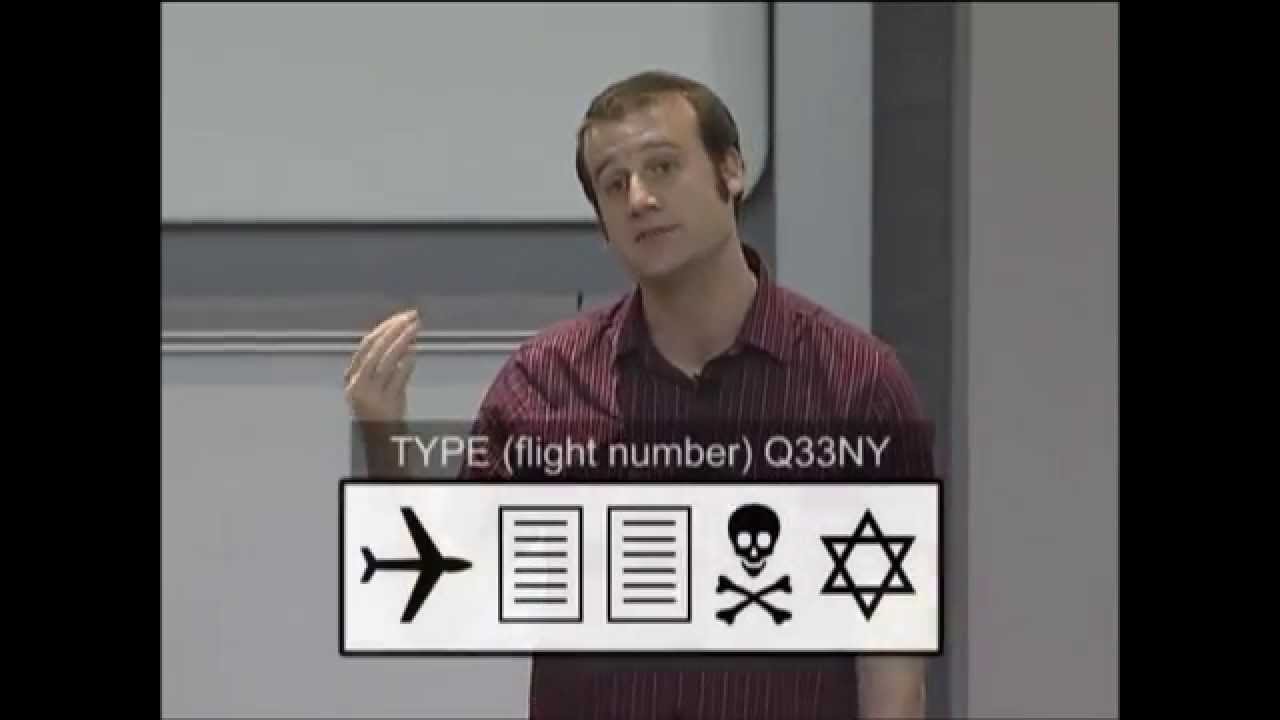
Another audience member brings up an infamous computer-era urban legend involving the font Wingdings, recalling that typing "9/11" alongside an airplane flight number produced symbols showing a plane colliding into two buildings. Matt first jokingly clarifies that Wingdings is technically a "typeface" rather than a font—appealing to the room's pedantic nature—and labels it the second most annoying typeface in existence, narrowly ranking behind Comic Sans ("possibly the best titled typeface ever"). He explains that Microsoft initially created Wingdings as a character-based typeface to serve as a primitive precursor to clip art.
```mermaid
flowchart TD
accTitle: Massive Cultural Shock and the Pareidolia Feedback Loop
accDescr: Diagram illustrating how major emotional events lead millions of people to search noise until a coincidental pattern is found and amplified.
subgraph Event ["Catalyst Event"]
A["Major Traumatic Event<br>(e.g., 9/11 Tragedy, Celebrity Death)"] --> B["Burnt into Public Consciousness"]
end
subgraph Searching ["Massive Unseen Search"]
B --> C["Millions of People Scouring Text, Video, and Audio"]
C --> D["Thousands of Failed/Arbitrary Searches<br>(Unseen Negative Trials)"]
end
subgraph Result ["The Coincidence Artifact"]
D --> E["Accidental Visual or Textual Alignment<br>(e.g., Wingdings symbols, shadow footage)"]
E --> F["Viral Spread via Email / Media<br>Seen as 'Freaky' or Prophetic"]
end
```
Matt then deconstructs why such coincidences emerge and capture public attention. When an event of massive cultural or emotional magnitude occurs, its visual imagery and themes become indelibly stamped into the public consciousness. As a result, if any random string or visual artifact looks remotely like the event, the sheer volume of people looking will guarantee that it is discovered:
> “It's because when something that big happens, people look everywhere for for a freaky part of it.”
He draws a parallel to the death of Michael Jackson, where fans endlessly filmed footage around the artist's estate until a clip showing a shadowy silhouette was breathlessly claimed to be Jackson's ghost. Matt notes that when people receive these viral email forwards, they are shocked by the apparent coincidence because they suffer from selection bias: they only see the shocking final hit, never the thousands of bored individuals sitting at home who have stopped playing vinyl records backwards and moved on to combing through other arbitrary data sets looking for patterns.
[01:00:01](https://www.youtube.com/watch?v=sf5OrthVRPA&t=3601s) Q&A: Supermarket Loyalty Cards and the Power of Big Data
A participant asks Matt for his perspective on supermarket data mining and consumer shopping habits. Matt begins with a humorous consumer complaint, admitting that he personally believes life is far too short to carry supermarket loyalty cards around, joking that the discount system represents a financial tax on people like him who simply cannot be bothered to carry them.
Shifting to the underlying mathematics, he stresses that large-scale data collection is remarkably powerful when executed properly. He points out that modern medical breakthroughs depend heavily on gathering large datasets and processing them cleanly to yield rigorous results. Tech giants and retail corporations apply identical principles to user behavior:
- Supermarkets, Google, and Amazon possess vast repositories of transactional information.
- Amazon's automated book recommendations manage to become "scary accurate" simply because they leverage large volumes of consumer patterns correctly.
- While acknowledging some theoretical civil-liberties concerns regarding surveillance and privacy, Matt views data science overall as having delivered vastly more benefit than harm.
He summarizes the double-edged nature of big data succinctly: “Data mining is a good thing, but can be used for evil. Much like the internet.”
[01:01:37](https://www.youtube.com/watch?v=sf5OrthVRPA&t=3697s) Q&A: Lottery Strategy and 1-2-3-4-5-6
With audience members needing to catch trains, a final question is raised: would Matt ever play the sequence `1, 2, 3, 4, 5, 6` on a lottery ticket? Matt admits that he does personally play the lottery, remarking dryly that a non-zero probability—no matter how microscopically tiny—means winning remains slightly more probable than him playing the auditorium's piano.
However, he explains why choosing consecutive numbers like `1, 2, 3, 4, 5, 6` is a poor strategy. The probability of that specific combination being drawn is identical to any other random set of six balls, but the expected financial payout is drastically lower because an extraordinarily high number of people pick that exact sequence. If that sequence ever wins, the jackpot would have to be split among an enormous pool of players.
To maximize individual payout should a ticket win, Matt outlines the optimal lottery strategy:
- Choose numbers strictly greater than 31, which avoids the calendar dates most commonly chosen by players picking birthdays.
- Spread selections out as randomly as possible across the entire number grid.
- By dodging common human selection habits, a player minimizes the chance of having to split the jackpot with someone else.
Revealing his own quirky habit, Matt jokes that he prefers to pick all prime numbers instead, holding out hope that "one day" it will pay off. He concludes the session by inviting anyone with lingering or overly personal math questions to come chat with him as he loiters near the stage.
## Notable quotes
> [56:25](https://www.youtube.com/watch?v=sf5OrthVRPA&t=3385s) we are hardwired to overestimate the odds of something happening because a false positive is dramatically safer than getting eaten by a mammoth. — Matt Parker
> [45:06](https://www.youtube.com/watch?v=sf5OrthVRPA&t=2706s) Maths doesn't care how our brains work. — Matt Parker
> [32:12](https://www.youtube.com/watch?v=sf5OrthVRPA&t=1932s) very unlikely events will still occur if they have enough opportunities. With enough opportunities, they become inevitable. — Matt Parker
> [48:06](https://www.youtube.com/watch?v=sf5OrthVRPA&t=2886s) If mathematicians don't speak up and if scientists don't speak up for what is good science and what is good maths, then people will put out these crazy stories. — Matt Parker
> [25:26](https://www.youtube.com/watch?v=sf5OrthVRPA&t=1526s) Even though you don't know if you will win or lose, you know what will happen in the long run. — Matt Parker
## Mentioned
London Mathematical Society, Matt Parker, Queen Mary University of London, University of Western Australia, Daily Mail, Woolworths, Ladybird, Frank P. Ramsey, University of Liverpool, Disneyland, Lady Gaga, Queen, Freddie Mercury, University of Birmingham, Simon Singh, Dorothy Buck, Wingdings, Comic Sans, Microsoft, Michael Jackson, Google, Amazon
## Video description
Did aliens help prehistoric Britons find the ancient Woolworths civilisation? And what does tying your shoelaces have to do with DNA? Matt Parker explores how seemingly incredible results can actually be meaningless random patterns.
==========
The London Mathematical Society has, since 1865, been the UK's learned society for the advancement, dissemination and promotion of mathematical knowledge. Our mission is to advance mathematics through our members and the broader scientific community worldwide.
For further information:
► Website: https://www.lms.ac.uk
► Events: https://www.lms.ac.uk/events
► Grants and Prizes: https://www.lms.ac.uk/grants-prizes
► Publications: https://www.lms.ac.uk/publications
► Membership: https://www.lms.ac.uk/membership
In his 2010 London Mathematical Society lecture, mathematician Matt Parker argues that human brains naturally seek order in randomness, leading people to perceive meaning in arbitrary data when large datasets make coincidences mathematically inevitable.
Large Datasets and Ramsey Theory (5:43)
Parker examines how seemingly supernatural patterns emerge spontaneously once a dataset reaches sufficient scale. Testing a media claim that prehistoric UK monuments form geometric alignments requiring ancient navigation systems or extraterrestrial aid, Parker applied the identical geometric criteria to shuttered Woolworths locations. By plotting store sites, he generated an equilateral triangle accurate to within 1%, flanking isosceles triangles matching within 0.5%, and a 173.8-mile perpendicular baseline from Conwy to Luton aligned to within 30 to 40 feet. In formal mathematics, this phenomenon is governed by Ramsey theory, which establishes that complete disorder is impossible in sufficiently large systems.
Termed "pick and mix data analysis" by researchers at the University of Liverpool, the technique works because an observer with enough data can selectively highlight matching coordinates while ignoring thousands of non-conforming points. Similarly, Bible code decoders strip spaces from religious texts and run equidistant letter sequences across large blocks of text. Using the NIV translation of 1 Kings 4:13–23, Parker located the date September 29th, the surnames of the evening's speakers, their respective lecture topics, and ten instances of the word "END" simply because large character grids mathematically guarantee coincidental intersections.
Underestimating Combinatorial Probability (14:08)
People consistently misjudge how quickly probabilities compound when calculating matches among multiple entities rather than a single target. While the pigeonhole principle requires 367 individuals to guarantee a 100% collision in birth dates including leap years, reaching a 50% probability requires only 23 people, rising to approximately 70% at 30 people and surpassing 99% with 60 people. During a live test in the lecture hall, Parker observed a match on the 33rd participant, matching an earlier July 17th date. Parker notes this principle underpins casino operations, where the house relies on the law of large numbers to ensure long-term profitability despite short-term fluctuations.
A parallel dynamic occurs in card shuffling stunts. When asking volunteers to shuffle 52-card decks, Parker demonstrates that having at least one king positioned directly next to a queen occurs with roughly 48% probability, climbing to over 67% (with some derivations placing it around 74%) if an intervening single card is permitted. Observers routinely view these configurations as extraordinary because they intuitively compute the probability of a specific pair rather than the combined opportunities across all four kings and four queens.
Psychological Priming and Evolutionary Bias
Parker suggests that human hyper-sensitivity to patterns evolved as a survival mechanism where false positives carry far lower evolutionary costs than failing to detect actual hazards. This evolutionary tendency causes individuals to impose meaningful structure on unstructured phonetic noise. To test auditory pareidolia and backmasking, Parker split the audience during a reversed playback of Queen's "Another One Bites the Dust." Attendees who kept their eyes shut heard unintelligible gibberish, whereas those primed with on-screen text overwhelmingly heard the suggested sentence, demonstrating that prior expectation dictates sensory interpretation.
This dynamic also drives post-tragedy urban legends, such as typing flight numbers in the Wingdings typeface to yield 9/11 imagery or spotting figures in footage of Michael Jackson's home. Traumatic events stamp specific motifs into the public consciousness, prompting millions of people to comb through random text and video until an accidental alignment occurs. Because the public only sees the eventual viral match, selection bias conceals the vast number of unsuccessful queries.
Statistical Rigor and the Null Hypothesis (45:06)
To counter cognitive biases and prevent spurious associations from masquerading as factual claims, Parker advocates for the rigorous application of the null hypothesis. In experimental evaluations, researchers establish a baseline assuming no effect—such as assuming two cola formulas are chemically identical. While two successive participants choosing the same brand by chance yields a 25% probability, standard scientific consensus requires outcomes to reach a p-value below 5% (p < 0.05) before rejecting the null hypothesis and claiming statistical significance.
Parker challenges scientists and mathematicians to abandon the "specialism fallacy"—the reluctance of academic specialists to critique flawed science outside their precise field. When qualified researchers remain silent, fringe assertions and pseudoscientific practices gain unwarranted credibility in the public sphere. When executed cleanly, large-scale data mining delivers substantial value in medical research and consumer modeling, but distinguishing genuine signals from random noise requires strict adherence to mathematical verification.
Parker concludes that rare coincidences are mathematically inevitable across large populations and that an absence of anomalies would actually signal an unnatural interference with randomness. While large-scale data analysis provides immense scientific utility, public perception remains prone to false patterns unless held to rigorous statistical standards.
精炼阅读摘要
在2010年伦敦数学学会(LMS)的科普讲座中,数学普及学者Matt Parker指出,在规模足够庞大的随机数据集中,任何特定的模式、几何对齐或巧合在数学上都是必然出现的。他强调,人类演化出的模式识别本能与对概率规模的直觉匮乏,极易导致人们将统计上的必然现象误判为神秘力量或阴谋论,科学界必须借助零假设等统计工具积极介入公共对话以驳斥伪科学。
几何幻觉、数据筛选与拉姆齐理论 (5:43)
Parker从《每日邮报》一篇报道切入:一名退休营销人员声称英国史前巨石遗迹构成了高度精确的等边与等腰三角形,坚称这绝非随机巧合,甚至推论其为外星导航系统。为检验该逻辑,Parker对已倒闭的英国连锁零售商Woolworths门店分布进行了相同的几何测量。仅通过打印地图与直尺,他便在伯明翰周边筛选出了精度在1%以内的等边三角形、误差在0.5%以内的等腰三角形,以及一条横跨北威尔士康威至卢顿长达173.8英里的巨型基准线(两端误差分别仅为40英尺和30英尺)。这一讽刺性实验被利物浦大学的研究人员戏称为“称斤选甜点式数据分析”(pick and mix data analysis)。
Parker指出,该现象在数学上属于拉姆齐理论(Ramsey theory)的研究范畴,即完全的混乱在数学上是不可能的。只要掌握足够多的随机数据并允许忽略大部分不吻合的数据,研究者就能够在任意精度下拼凑出预设的几何图形。通过二维平面随机落点的靶盘模型可以证明,随着点数量的增加,潜在的三点组合将呈组合级数激增,目标区域迅速覆盖整个平面,使得无论容差设定得多么严苛,生成目标三角形在数学上最终都会成为100%的必然结果。
反直觉的概率聚合与巧合的必然性 (14:08)
人类直觉往往会严重低估事件发生的潜在机会基数。Parker借助鸽巢原理与生日问题阐述了这一认知偏差:在考虑闰年时,虽然需要367人才能在数学上绝对保证(100%)至少有两人同天生日,但达到50%以上概率的阈值仅仅需要23人(约50.7%),达到70%概率仅需30人(约70.6%),而60人时该概率已超过99%。在现场针对33名听众的随机测试中,便成功出现了7月17日生日的配对。这种配对并非针对特定个体的预设日期,而是整个集合内任意两两组合累积带来的级联增长。
同样的机制也体现在扑克牌洗牌实验与生活巧合中。在标准52张扑克牌随机洗乱后,至少有一张K与一张Q紧密相邻的理论概率高达约48%,若放宽至相隔至多一张牌,概率则跃升至67.2%至74%之间。公众往往误以为特定两张牌相遇概率极低,却忽视了4张K与4张Q之间存在多达16种配对机会。Parker引用一对未婚夫妻(Donna与Alex)在童年迪士尼照片中意外同框的案例指出,全球庞大的人口与海量的抓拍创造了天文数字级别的机会基数;小概率事件在极大的机会总量下是不可避免的,若现实中从未发生巧合,反而意味着有非自然因素在干扰纯粹的随机性。
模式识别的演化适应与心理启动效应
人类大脑天生具有“向最近的模式靠拢”的倾向。Parker从演化角度分析,人类祖先为了生存倾向于高估潜在危险,过度敏感的模式识别虽然会产生“假阳性”,但付出这种认知代价远比将捕食者误判为安全杂音更为安全。然而,这种生存机制在现代认知中常导致人们在随机噪音中执着地寻找意义。流行文化中声称摇滚乐包含倒放崇拜信息的“反向遮蔽”(backmasking)假说便是典型表现:在播放Lady Gaga歌曲《Paparazzi》的倒放片段时,观众自发听出了各种离奇词汇。
为验证这种幻觉究竟源于音频本身还是心理暗示,Parker利用Queen乐队的歌曲《Another One Bites the Dust》设计了现场对照实验:他将全场观众分为两半,一组闭眼(未受文字暗示),另一组睁眼观看屏幕上投射的假定歌词文本。重新播放相同的倒放乱码音频后,受文本启动暗示的一侧观众绝大多数清晰“听出”了该句词组,而未受暗示的一侧则几乎无人听出。该测试证明认知倾向会彻底绑架感官输入,先验预期能将无意义的物理杂音重构为高度具体的虚构信息。
统计检验、圣经密码与公共科学倡议 (45:06)
面对直觉的缺陷,现代科学依赖以“零假设”(null hypothesis)为代表的统计学工具确立客观标准。在盲测可乐口味的实验中,零假设设定两种饮料没有区别,若仅两人测试且均选A,纯属巧合的概率高达25%,远未达到科学界公认的显著性阈值(通常为p < 0.05)。Parker警告,当媒体绕过同行评审直接报道草率结论时,伪科学便会滋生。针对著名的“圣经密码”(Bible code),Parker以《列王纪上》英译本(NIV 1 Kings 4:13–23)无空格文本网格为例,展示了通过等距跳字检索(ELS)轻而易举拼凑出讲座当天日期“20”、“NINE”、“SEPT”、演讲者名字“MATT”和“BUCK”,以及讲题“KNOT”和“ODDS”,证明文本密码同样是海量字符检索下的必然产物。
Parker向科学界发出倡议,批判了阻碍学者向公众澄清谬误的“专业化谬论”(specialism fallacy)——即科研人员常因自己不是某一特定边缘领域的专家而怯于发声,导致伪科学填补舆论真空。在问答环节中,他结合9/11事件与Wingdings字体的都市传说分析了重大创伤后的公众选择性偏差;肯定了超市与医疗领域规范的大数据挖掘价值;并提出彩票选号实用策略:虽然每组号码中奖概率均等,但应尽量选择大于31的数字并分散布局,以规避多数人基于生日选号的习惯,从而在极罕见的中奖情况下避免瓜分奖金。
Parker总结指出,数学客观规律独立于人类的大脑认知,是甄别随机噪音与真实信号的根本工具。科学素养的核心在于认识到海量机会下巧合的必然发生,警惕确认偏误与后验筛选;而专业研究者应当走出学术象牙塔,积极利用严谨的统计学逻辑参与公共科普,捍卫理性与科学事实。
Detailed notes — zh
## Background
本视频由伦敦数学学会(London Mathematical Society,LMS)于 2014 年 4 月 24 日发布在 YouTube 平台上。视频记录了数学科普专家马特·帕克(Matt Parker)在 2010 年 LMS 通俗讲座上的精彩演讲《抓住随机稻草》(Clutching at Random Straws),探讨了史前遗址与英国老牌超市的荒诞几何联系,并剖析人类如何将纯粹无意义的随机规律误判为惊人奇迹。
## TL;DR
马特·帕克以反讽德文郡退休主管将英国史前巨石遗址连成“外星导航三角形”开场,展示自己如何用老牌伍尔沃斯(Woolworths)超市旧址画出同样高精度的神秘几何十字架,借此引出拉姆齐理论(Ramsey theory)的核心——面对海量数据时,只要选择性忽略大部分样本,就能找到任何预设的模式。他通过现场实测生日问题、扑克牌洗牌组合与迪士尼巧合照片,揭示了人类直觉如何严重低估大数机会的发生几率。随后,帕克利用流行歌曲倒播实验和现场视听对照,剖析了大脑如何受先入为主偏见的操控而产生“听觉空想性错视”,并利用《圣经》文本的等距字母序列在现场拼出当天的讲座预言,最终呼吁科学家主动发声、警惕“专业化谬误”,用零假设与数学理性捍卫真实世界。
## Atmosphere & style
现场弥漫着典型的英式幽默与单口相声般的轻松惬意,主讲人控场敏锐、自嘲不断,随时能把台下拉开可乐罐、玩手机的观众乃至台上未被弹奏的钢琴巧妙编织进数学笑料中。整场讲座兼具剧场互动感与学术严谨性,从充满恶搞趣味的超市恶搞论文到发人深省的进化心理学反思,氛围在哄堂大笑与恍然大悟的顿悟感之间自如切换。听众仿佛置身于一场充满智慧火花的脱口秀沙龙,在感受反直觉概率冲击的同时,体会到了超越人类大脑缺陷的数学客观之美。
## Bulletin
- [07:49](https://www.youtube.com/watch?v=sf5OrthVRPA&t=469s) 在海量随机数据中寻找特定几何或文字模式是数学上的必然,Matt Parker 通过证明老牌超市 Woolworths 门店网点能连出与史前遗址同样精确的等边三角形与十字架,反驳了外星人导航等伪科学假说。
- [15:43](https://www.youtube.com/watch?v=sf5OrthVRPA&t=943s) 人类概率直觉极易出错:房间内只需 23 人即可让至少两人生日相同的概率突破 50%,而在 30 人时概率即达 70.6%,洗牌后国王与王后相邻的概率也高达 48%。
- [41:36](https://www.youtube.com/watch?v=sf5OrthVRPA&t=2496s) 听觉与视觉空想性错视往往源于先入为主的认知偏见,皇后乐队与 Lady Gaga 的倒播音频实验证实,只有在提前给出文字提示后大脑才会把随机噪音解读为特定语句。
- [01:01:37](https://www.youtube.com/watch?v=sf5OrthVRPA&t=3697s) 买彩票时应避免选“1 2 3 4 5 6”或小于 31 的生日数字,这类策略虽不能提高中奖概率,但能显著降低一旦中奖时与他人平分奖金的风险。
## Key takeaways
- [10:37](https://www.youtube.com/watch?v=sf5OrthVRPA&t=637s) “挑选糖果式数据分析”(Pick and mix data analysis)揭示了伪科学的生成机制:只要数据池足够庞大且忽略绝大部分不符合预期的数据,就能证明任何预设结论。
- [12:09](https://www.youtube.com/watch?v=sf5OrthVRPA&t=729s) 拉姆齐理论(Ramsey theory)表明在足够庞大的随机混乱体系中,必然会以任意要求的精度孕育出局部的几何秩序与特定规律。
- [13:53](https://www.youtube.com/watch?v=sf5OrthVRPA&t=833s) 鸽巢原理决定了 367 人置于同一房间时必定有两人同一天生日,而生日悖论则证明只需 23 人时匹配概率就已过半,彻底颠覆人类对概率累积速度的日常直觉。
- [29:11](https://www.youtube.com/watch?v=sf5OrthVRPA&t=1751s) 一副洗乱的 52 张扑克牌中,任意国王与王后紧密相邻的概率高达约 48%,若放宽至相隔一张牌,概率则跃升至约 67% 至 74%,看似神准的控牌魔术往往建立在被低估的自然概率之上。
- [32:12](https://www.youtube.com/watch?v=sf5OrthVRPA&t=1932s) “迪士尼乐园童年巧合”印证了彩票效应:发生在一个个体身上极为罕见的事件,在全局庞大的样本交互基数下,必然会在某处真实发生。
- [37:20](https://www.youtube.com/watch?v=sf5OrthVRPA&t=2240s) 人类大脑天生偏好在随机噪声中寻找规律,这是远古进化保留下来的生存机制,但同时也容易催生对倒播音频(Backmasking)中“潜意识信息”等假象的误信。
- [41:36](https://www.youtube.com/watch?v=sf5OrthVRPA&t=2496s) 双盲与对照试验证实听觉空想性错视极度依赖心理暗示(Priming),未经预先提示的受试者只能从倒播音轨中听到毫无意义的杂音。
- [45:06](https://www.youtube.com/watch?v=sf5OrthVRPA&t=2706s) 科学界利用“零假设”(Null Hypothesis)与 5% 显著性门槛(p < 0.05)来排除主观直觉偏差,以此判断现象究竟属于统计学显著发现还是纯粹随机噪音。
- [48:06](https://www.youtube.com/watch?v=sf5OrthVRPA&t=2886s) 学术界应警惕“专业化谬误”(Specialism Fallacy),严谨审慎的学者若因非本专业而放弃发声,留下的认知真空就会迅速被披着伪科学外衣的荒诞言论占据。
- [50:39](https://www.youtube.com/watch?v=sf5OrthVRPA&t=3039s) “圣经密码”本质上是基于庞大搜索空间与等距字母序列(ELS)的概率游戏,任何一部足够长的文本都能通过改变步长与方向拼凑出关于当下的“精准预言”。
- [56:25](https://www.youtube.com/watch?v=sf5OrthVRPA&t=3385s) 人类之所以在计算风险时极其拙劣,是因为进化上“假阳性”(高估危险导致虚惊一场)的生存代价远远低于“假阴性”(低估危险而被猛兽猎杀)。
- [57:38](https://www.youtube.com/watch?v=sf5OrthVRPA&t=3458s) 面对 Wingdings 符号或灾难巧合等阴谋论,公众往往陷入确认偏误与幸存者偏差,只惊叹最终被筛选出来的极少数个案,却忽视了成千上万次失败的随机尝试。
- [01:00:01](https://www.youtube.com/watch?v=sf5OrthVRPA&t=3601s) 数据挖掘(Data Mining)与大数据预测本身是一柄双刃剑,它能推动现代医学重大突破并实现精准推荐,但同时也伴随着潜在的公民隐私风险。
## Detailed walkthrough
### [00:07](https://www.youtube.com/watch?v=sf5OrthVRPA&t=7s) 开场介绍与互动:数学单口相声的“承诺”
Matt Parker 在伦敦数学学会(LMS)的通俗讲座上登台,讲座主题为《抓住随机稻草》(Clutching at Random Straws)。他首先介绍了自己的背景:他在东伦敦的伦敦玛丽女王大学(Queen Mary University of London)工作,并给出了自己的邮箱和 Twitter 账号(@ 后缀名),欢迎观众提问或发送精雕细琢的吐槽(heckles)。针对主办方对他的定位“单口数学”(stand-up maths),Parker 幽默地澄清说自己只做两项承诺:“第一,我会站着(stand up)——这已经完成了;第二,会有数学(maths),相信我,马上就来。”至于现场是否具备娱乐性则完全不予保证,不过他特意为今晚准备并会讲一个自己很期待的笑话。随后,他警示台下不要在听讲时玩手机,戏称一旦发现手机响铃,他完全有资格“先没收、再代接”。
在开场寒暄中,Parker 展现出了敏锐的控场能力。他抓到了观众席里窃窃私语的人,戏称自己有如“数学教学忍者”,如果不扔手里剑,就会向违规者扔质数。随后,台下一名观众突然拉开饮料罐拉环,发出清脆的响声,Parker 当场“抓包”互动:“这不是电视直播,我看得见你,我们现在是在对话了——虽然是非自愿的对话,但它正在发生。”得知对方喝的是百事可乐(Pepsi)后,他调侃道:“行,百事你可以留着;要是可口可乐(Coke)或者更好的牌子,你现在可就有麻烦了。”他还把开饮料的观众与前面讲座中讨论群论的听众串在一起开玩笑,告诫他们别轻举妄动。
- 承诺清单:整场讲座唯二保证兑现的事情是“站着”与“出现数学内容”。
- 讲座纪律:严禁在台下玩手机,违者将被没收手机并由讲者代为接听来电。
### [01:48](https://www.youtube.com/watch?v=sf5OrthVRPA&t=108s) 职业转折与现场“数学亲和度”调查
Parker 分享了自己曲折的职业道路。他最初在西澳大学(University of Western Australia)就读,起初选读机械工程专业,但后来猛然意识到毕业后“极有可能找得到工作”,为了避开这种“就业风险”,他毅然转到了物理系,随后又转到了纯数学系。出于对数学的热爱,他思索如何能一辈子只靠聊数学来谋生,于是成了一名数学老师。在澳大利亚教书一段时间后,他移居伦敦并在当地学校任教,之后转向大学和机构的科学普及工作。出于对讲台的怀念,他曾回到北伦敦一所综合中学(comprehensive school)代课两个学期(6个月),结果这段经历彻底治愈了他的怀旧病:“我当时就觉得,得,教书这事儿我算彻底受够了。”现在他在玛丽女王大学数学系任职,偶尔也涉足物理系,主要工作是帮助学者和师生向公众传播数学,进学校演讲并参与媒体写作。
为了摸清台下观众的背景构成,Parker 在现场做了一次即兴调查。他将数学老师、数学家以及充满热情的数学专业学生归为“数学友好组”(math friendly group),号召他们欢呼,得到了热烈的回响与零星掌声。随后,他又让属于补集(complement set)的其他观众欢呼,笑称坐在后排的普通观众也休想逃过他的眼睛。除此之外,Parker 还分享了一个判断数学脱口秀现场气氛的绝招——现场是否有人穿着“方格坐标纸”样式的衬衫。他当场邀请前排一位戴眼镜、蓄着漂亮胡子且身穿方格衬衫的先生起立,并号召全场为他鼓掌,断定这场讲座一定会极其成功。
```mermaid
flowchart TD
accTitle: Matt Parker's Career Trajectory
accDescr: 流程图展示了 Matt Parker 从工程学转向数学,再到全职数学普及工作的职业演变路径。
subgraph Study["求学阶段"]
A["西澳大学: 机械工程"] -->|"意识到容易就业的风险"| B["转入物理系"]
B -->|"发现真正热爱"| C["转入数学系"]
end
subgraph Teaching["教学经历"]
C --> D["澳大利亚任教"]
D --> E["伦敦学校教学"]
E --> F["北伦敦综合中学 (代课两学期)"]
end
subgraph Outreach["科普推广"]
F --> G["伦敦玛丽女王大学"]
G --> H["数学普及与媒体写作"]
end
```
### [05:43](https://www.youtube.com/watch?v=sf5OrthVRPA&t=343s) 史前巨石遗址的“完美三角形”与外星人假说
在正式引入主题前,Parker 讲述了激发他研究“随机性与无端联想”的契机。某天早上他乘坐伦敦地铁前往玛丽女王大学,翻看著名的《每日邮报》(Daily Mail)时读到了一篇极具冲击力的报道。报道的主角是一位住在德文郡(Devon)的退休营销主管。这位主管收集了全英国所有史前巨石(monolithic)遗址的地理坐标,把它们标注在地图上并用直线相互连接,随后得出了惊人的发现:这些巨石点位竟然构成了极其规则的三角形。
报道中展示了多组高精度的等边三角形和等腰三角形。这位退休主管兴奋地向各大出版物投稿,断言这些几何图形由于精准度极高,绝对不可能是巧合造成的。按照他的理论,这些三角形是某种史前版本的“卫星导航系统”(ancient satnav),远古不列颠人正是利用这些几何点位在不同地点之间辨别方向。更有甚者,该主管在言论中公开宣称:“这绝不可能是偶然造成的……我无法排除外星人协助的可能(cannot rule out extraterrestrial help)。”面对这种看似严谨实则令人啼笑皆非的推论,台下观众纷纷摇头表达怀疑,而 Parker 则决定用数学严谨性亲自验证这个所谓的“几何定位法”。
- 报道来源:英国《每日邮报》(Daily Mail)。
- 研究者身份:德文郡的一位退休营销主管。
- 核心论调:英国史前巨石遗址构成了极度精准的等腰和等边三角形,被推断为史前导航系统,甚至被认为有外星智慧介入。
### [07:49](https://www.youtube.com/watch?v=sf5OrthVRPA&t=469s) 伍尔沃斯连锁超市的史前文明与荒谬几何学
回到办公室后,Parker 决定验证这套方法是否能套用在任何地理数据上。他以伯明翰(Birmingham)为中心调出一张英国地图,选取了周边几个地点,轻松连出了一个误差在 1% 以内的极精准等边三角形。紧接着,他在两翼扩展,找到了另外两处地点,构成了误差在 0.5% 以内的等腰三角形;随后再引入两个地点,继续延伸出一个更大、腰长误差同样在 0.5% 以内的超大等腰三角形。最后,他延长了最初等边三角形的底边,作了一条垂直平分线,形成了一个以四个附加地点为核心的巨大十字架十字结构。
这条基准线贯穿等边三角形的底边,北至康威(Conway),南抵卢顿(Luton),整条线长达 173.8 英里。令人震撼的是,该线距离康威点位的误差只有 40 英尺(约 12 米),距离卢顿点位的误差甚至只有 30 英尺(约 9 米)。正当全场为这种“令人窒息的精密几何排列”感到震惊时,Parker 揭晓了荒谬的真相:“遗憾的是,我寻找的根本不是什么史前古迹,我找的是老牌伍尔沃斯(Woolworths)连锁超市的旧址。”他调侃道,如果按照德文郡那位主管的逻辑,我们同样可以说存在一个“古代伍尔沃斯文明”,且同样无法排除外星人插手的可能性:“否则他们怎么可能把瓢虫牌(Ladybird)童装卖到那么便宜的低价?”Parker 将这项恶搞成果写成了伪论文形式的新闻通稿(press release),随即引发媒体报道,甚至收到了许多严肃考古学杂志的来信称赞。
- 基线数据:北起康威、南至卢顿的直线全长 173.8 英里。
- 惊人精度:该直线对康威原址的偏差仅在 40 英尺之内,对卢顿原址的偏差在 30 英尺之内。
- 荒诞结论:通过在地图上随意连线,任何人都能在毫无关联的现代商业超市(Woolworths)网点中找到看似神迹的“超自然外星导航网络”。
> Matt Parker 引用德文郡退休主管的观点并调侃道:“He actually said, you cannot do that by chance. These triangles are so precise.”并由此反讽:“And at this point, to be honest, I can't rule out extraterrestrial help.”
### [10:37](https://www.youtube.com/watch?v=sf5OrthVRPA&t=637s) 随机数据中的“意义”幻觉与“挑肥拣瘦”数据分析
Matt Parker 接着回顾了他在英国地图上寻找 Woolworths 超市门店所构成的等边三角形。他幽默地提醒自己要谨言慎行:“要注意我在这里说的话”,因为这说明早前宣称远古遗址存在某种神秘对齐的观点其实极度荒谬。事实上,这类几何对齐完全可能纯属巧合,Woolworths 门店就是活生生的例子。由于当时全英国有成百上千家 Woolworths 门店,在海量数据点中找到几组等边三角形根本算不上难事。
当时,Matt 直接把标有所有门店位置的 Google 地图打印出来,拿出一把尺子在纸上不断比划搜寻。一旦肉眼发现疑似图形,他就把对应的地理坐标输入电脑,精确计算它们对齐的角度和精度,最终得出了那组惊人的“远古几何结构”。Matt 强调,这纯粹是因为他拥有充足的、本质上近似随机的数据。只要数据量足够庞大,你完全可以随心翻阅,挑出符合自己预设目标的少数几个点,并把其余绝大部分数据抛在脑后。
Matt 指出,这也正是他本场演讲的核心立意:“如果你有足够的数据,你就能找到毫无实际意义的规律。它们的存在仅仅是因为你拥有足够多的数据;但只要你愿意忽略绝大部分数据,你就能从中提取出这类规律,证明几乎任何你想证明的事情。”在分享这个发现后,他还收到了来自利物浦大学(University of Liverpool)数学系的一封邮件。对方告诉他,他们系里现在诞生了一个新词汇,专门用来形容这种选择性分析数据的行为——“挑选糖果式数据分析”(Pick and mix data analysis)。
```mermaid
flowchart LR
accTitle: 数据挑选偏差流程
accDescr: 展示从海量随机数据到得出虚假结论的挑选过程
A["全英海量门店位置<br/>(近似随机数据)"] --> B["人工尺规搜寻<br/>(挑选符合预期的点)"]
B --> C["电脑精确核验<br/>(无视绝大多数未对齐点)"]
C --> D["得出神秘等边三角形<br/>('证明'任何想证明的事)"]
```
### [12:09](https://www.youtube.com/watch?v=sf5OrthVRPA&t=729s) 拉姆齐理论与等边三角形的几何必然性
在数学上,研究这种“海量混乱中必然孕育特定秩序”的学科被称为**拉姆齐理论(Ramsey theory)**。该理论的核心思想是:只要你有足够多的数据,你不仅能找到任何想要的规律,而且面对足够庞大的随机数据时,你可以以**任意你想要的精确度**找出该规律,前提仅仅是一开始的数据规模足够庞大。
为了直观展示这一点,Matt 展示了一个简化的几何模型。假设一个长方形屏幕代表整个世界,我们在上面随机投掷数据点并寻找等边三角形:
1. 落下第一个点时,无法构成三角形。
2. 落下第二个点时,依然没有三角形。但在几何上,平面上能与这两点构成完美等边三角形的位置只有固定的两个对称点。如果我们允许一定的误差容限,就可以在这两个位置画两个容差圆盘。下一落点只要落入这两个圆盘中的任意一个,就能构成满足精度的等边三角形。容差圆盘的大小直接代表精度要求:圆盘越小,精度越高;圆盘越大,要求越宽松。
3. 如果第三个点偏离了圆盘,没有命中,那么这三个点之间彼此配对,会瞬间在平面上生成更多潜在的第三点容差区域。
4. 随着落入的散点越来越多,未命中的点会以组合爆炸的方式在整个平面上铺开密密麻麻的候选圆盘。在某个节点之后,“命中并产生等边三角形”的概率就会彻底反超“不命中”的概率。只要数据点源源不断增加,无论把容差圆盘缩得多么小,产生等边三角形最终都会变成不可避免的必然事件。
### [13:53](https://www.youtube.com/watch?v=sf5OrthVRPA&t=833s) 极端情况:鸽巢原理与生日碰撞的必然性
这一机制在极值状态下触及了数学中的**鸽巢原理(Pigeonhole principle)**:当容器(鸽巢)数量少于物体(鸽子)数量时,必然至少有一个容器装有两个或两个以上的物体。Matt 借用现场观众进行了解释。当晚的讲座总共发出了 350 张门票,加上现场工作人员等人,全场人数已极其逼近 365 人。
他做了一个思想实验:假设所有人先留在场外,主办方把场内的每张椅子都贴上一年的某一天作为标签,并让大家入场找到印有自己生日的椅子坐下:
- 最开始大家还能各就各位,但很快就会有人发现自己的座位上已经坐了人——这意味着两个人同一天生日。
- 在不考虑闰年的极端情况下,前 365 个人有可能恰好一人占据一天(尽管概率低到不可思议)。
- 算上闰年的 366 天,一旦第 367 个人走入房间,他就绝对不可能找到空位,必须和某个人挤在同一张椅子上。
- 如果再放进 365 个人,房间里就必定会出现三人共享同一个生日的情况。
### [15:43](https://www.youtube.com/watch?v=sf5OrthVRPA&t=943s) 生日问题:数学规律对直觉的冲击
鸽巢原理只揭示了 100% 必然发生的极端上限,但 Matt 抛出了一个更有趣的问题:概率从“不太可能重合”跃升至“极可能重合”的分水岭到底在哪里?也就是广为人知的**生日问题(The Birthday Problem)**。Matt 询问观众:“在一个房间里需要有多少人,才能使其中至少有两个人同一天生日的概率超过 50%?”为了照顾那些已经知道答案的观众,他还给出了进阶问题:概率达到 70% 的阈值又是多少人?
Matt 用一场幽默的“聚会入场”模型在投影上推导:
- 先把聚会里的所有人都请出门外排队,再逐一领回房间,并计算“没有任何两人生日相同”的余事件概率(暂时忽略闰年):
- 第 1 个人进门时,全场没有任何人能与他重合,无冲突概率为 $365/365 = 100\%$。
- 第 2 个人进门时,为了不与第一人撞车,他的生日只能落在其余 364 天里,无冲突概率为 $364/365$。
- 第 3 个人进门时(PPT 上的小人插画此时滑稽地倒下,被 Matt 调侃为“突发癫痫”),他必须避开前两人的日期,概率再乘上 $363/365$。
- 依此类推,每增加一人,就在前项连乘的基础上乘以 $(365 - n + 1)/365$。
- 将无冲突概率求出后,用 1 减去该数值,即可得出“至少有两个人同一天生日”的互补概率:
| 房间人数 | 生日全不相同的概率 | 至少两人同一天生日的概率 |
|:--- |:--- |:--- |
| 5 人 | 约 97.3% | 2.7% |
| 10 人 | 约 88.3% | 11.7% |
| 20 人 | 约 58.9% | 41.1% |
| **23 人** | 约 49.3% | **50.7%(超过半数)** |
| **30 人** | 约 29.4% | **70.6%(超过七成)** |
Matt 强调,人类的数学直觉在这里往往错得离谱。当被问及 50% 概率需要多少人时,大部分人的直觉猜测通常在 100 到 200 人之间。然而真实数字仅需 **23 人**,而 30 人时概率就已经冲破了 70%。
为了当场检验数学与直觉的背离,Matt 决定在容纳了数百名观众的讲堂里现场实测。他安排从第一排最左边的男士开始,按座位顺序由前向后逐一报出生日。他特别提醒大家不要报出生年份,只报月份和日期,并半开玩笑地叮嘱大家赶紧在脑海里确认好自己的生日,准备接受现场验证。
### [20:38](https://www.youtube.com/watch?v=sf5OrthVRPA&t=1238s) 生日悖论现场实验:在观众席中寻找相同生日
马特·帕克(Matt Parker)在现场发起了一场生日匹配实验。他向观众立下规矩:当他指向某个人时,那个人必须大声报出自己的生日(例如马特自己的生日是 12 月 22 日)。如果其他人听到有人报出了与自己相同的生日,绝对不能提前剧透,必须保持绝对冷静,等到马特一路指到自己时再彻底爆发——“跳起来大喊‘我的生日是某月某日,跟那个人一样!’”,并且指向之前那位观众。
```mermaid
flowchart LR
accTitle: 生日匹配实验流程
accDescr: 展示马特·帕克在现场逐步询问观众生日并记录累计概率的过程。
subgraph Round1["前 11 人"]
A["报出生日 (1-11人)"] --> B["匹配成功率: 14.1%"]
B --> C["无匹配(心态轻松)"]
end
subgraph Round2["第 12 至 25 人"]
C --> D["报出生日 (12-17人)"]
D --> E["匹配率达 30%"]
E --> F["报出生日 (18-25人)"]
F --> G["匹配率达 57%(开始微紧张)"]
end
subgraph Round3["第 26 至 33 人"]
G --> H["报出生日 (26-33人)"]
H --> I["第 33 人报出 7 月 17 日"]
I --> J["成功匹配第 3 人的 7 月 17 日!"]
end
```
马特开始依次点人询问生日,现场报出的日期包括:4 月 21 日、8 月 4 日、7 月 17 日、12 月 11 日、1 月 1 日、8 月 17 日、2 月 13 日、8 月 12 日、4 月 1 日、5 月 12 日等。数到第 11 个人时依然没有匹配,马特核对了一下数据表示,此时能成功的概率仅为 14.1%,失败的概率要大得多,因此他一点也不紧张。随后他继续往下问到了第 17 个人(包含 12 月 28 日、8 月 14 日、9 月 7 日、6 月 18 日、10 月 10 日、3 月 23 日),此时概率升至 30%。
接着马特挑战后排观众,陆续听到了 3 月 27 日、4 月 15 日、6 月 19 日、4 月 3 日、1 月 30 日以及 7 月 23 日。马特还开玩笑怀疑对方在编造日期,甚至调侃说:“你只是想黑进我的邮箱,对吧?那我们接下来能不能用母亲婚前姓氏玩同一个游戏?”随后又有 11 月 5 日和 7 月 25 日加入。数到第 25 人时,匹配成功的累计概率达到了 57%,马特承认自己开始有点微微紧张了。
当问到第 33 个人时,戏剧性的一幕发生了:这位观众报出“7 月 17 日”,并随口补充了一句“顺便说一句,这跟前面那位的一样,对吧?”这一句剧透彻底破坏了原本预设的“跳起来惊喜大喊”的舞台效果。马特当场崩溃大喊暂停摄像机,试图让时光倒流重新演一遍刚才那段,甚至无奈吐槽专业配合太难。不过现场依然爆发了热烈的掌声——第 33 位观众的生日确实与排在第 3 位的观众(7 月 17 日)完全重合。马特随后让全场听到自己生日被念过的人举手,台下大批观众举起了手,印证了概率随着样本量增加而呈指数级飙升的事实。
- 11 人样本匹配概率:约 14.1%
- 17 人样本匹配概率:约 30%
- 25 人样本匹配概率:约 57%
- 最终在第 33 人处成功匹配(两位均为 7 月 17 日)
### [25:26](https://www.youtube.com/watch?v=sf5OrthVRPA&t=1526s) 反直觉的概率:为什么人类总在无意义的模式中寻找宿命
马特指出,生日问题是反直觉概率(Counterintuitive Probability)的经典案例。在日常生活中,人们极容易根据一些看似不可思议的巧合和模式得出毫无根据的结论,而陷入这种思维陷阱的主要原因有两个:其一,人们没有意识到背后的数据池究竟有多庞大,往往只挑出符合自己预期的巧合片段;其二,人们严重低估了某些事情自然发生的概率。
当一个人在生活中遇到一个与自己同一天生日的人时,往往会感到无比神奇,甚至有人会将其上升到“命中注定”的神秘主义高度。马特分析道,虽然遇到一个“和你指定同一天生日”的人确实概率极低,但人一生中会遇到成百上千的人;而在本场实验中,大家寻找的并不是“和马特同一天生日的人”,而是“这群人中任意两人拥有相同生日”。一旦限定条件被放宽为任意匹配,概率的累积就会变得极其迅猛。
> “我们根据模式和证据仓促得出结论,而实际上这些模式和证据毫无意义。我们得出毫无意义的结论的第一种方式,就是没有意识到究竟存在多少数据,并且只选择性地挑出了符合我们预期的部分。” —— 马特·帕克
马特展示了生日悖论的概率曲线图:横坐标是房间内的人数,纵坐标是出现至少一对同生日者的概率。曲线从原点出发急剧飙升,随后逐渐平缓。在 30 人的节点,概率已经达到约 70%;到了 60 人时,概率直接跨过 99%;此后曲线一直紧贴着 100% 延伸,直到 365(或 366/367)人时在数学上达到绝对确定。
```
概率 (y轴)
100% | *-----------------
| *
70% | * (30人, ~70%)
| *
| *
| *
0% +--------------------------------------------------------
0 30 60 365+ 人数 (x轴)
```
马特调侃说,观众可以利用这个规律去和朋友打赌赢钱:下次只要置身于一个有 30 人以上的房间里,就可以和别人赌 10 英镑里面必有同生日的人。虽然有 30% 的概率会输(比如今天如果卡在 30 人就会输掉 10 镑),但概率的美妙之处就在于“即使你不知道单次会输还是会赢,你却确切知道长期的结果”。这种依靠大数定律盈利的模式正是赌场的生存逻辑——赌场聘请数学家精细微调每一项游戏的赔率,使其赢率略高于赌客,哪怕短期有人赢钱离场,长期来看赌场必定稳赚不赔。
- 30 人房间内存在相同生日的概率:约 70%
- 60 人房间内存在相同生日的概率:超过 99%
- 理论上达到 100% 所需人数:366 人(考虑闰年为 367 人)
### [29:11](https://www.youtube.com/watch?v=sf5OrthVRPA&t=1751s) 扑克牌洗牌戏法:相邻的国王与王后
在简短互动并确认观众席的状态后(询问喝百事可乐的观众、群论小哥以及前排观众是否保持冷静),马特拿出了三副扑克牌,扔给台下的三位志愿者(包括一位后排接牌的观众),让他们彻底洗乱扑克牌,使其处于完全随机的无序状态。
马特透露,这种现象常被魔术师包装成所谓的心灵感应或控牌魔术。魔术师会让观众随意洗牌,然后宣称:“我打赌当你在洗牌时,我能隔空控制这些牌,特别是控制国王(King)和王后(Queen)。我能让国王最终停留在王后旁边,或者它们之间最多只隔一张牌。”
马特让拿到牌的三位观众逐张翻看自己的牌堆,检查是否有任意一张国王与一张王后紧挨着,或者中间仅隔一张牌。结果三位观众检查后,全部举手确认牌堆中出现了国王与王后相邻的情况。
> “如果我说:‘洗一副扑克牌,国王刚好落在王后旁边的概率有多大?’ 你会觉得这应该是个极不可能发生的事件。但我们刚刚连续三次见证了它的发生。” —— 马特·帕克
马特指出,虽然连续三次出现相邻确实有运气成分,但这件事本身的发生几率远比常人想象的高得多。在一整副 52 张扑克牌中,包含 4 张国王和 4 张王后,它们互相搭配的机会非常多。根据概率计算:
- 洗牌后任意国王与任意王后“紧密相邻”(Next to each other)的概率约为 48%;
- 如果放宽到“相邻或中间至多隔一张牌”(Next to or one apart),概率则直接跃升至 67.2% 以上,甚至有学者推导的理论值在 74% 左右。
马特向观众建议,这道看似简单的排列组合题在计算上其实出人意料地繁琐复杂。若有人感到无聊,不妨亲自尝试用逻辑去推导计算这一概率:先尝试计算相邻的 48%,若能理清头绪,再去推导相隔一张牌的分布情况。这再次证明了人类的直觉在复杂的随机组合面前是多么脆弱。
### [032:12] 概率直觉与大数机会:迪士尼的惊人巧合
Matt Parker 继续探讨概率计算的实际情况。他提到,针对前述问题的概率,理论计算值约为 74%,而许多人进行计算机模拟得出的结果大约是 67%。无论采用哪种方法,其复杂程度都远超一般人的预期。他现场打趣了一位正拿起笔的观众,开玩笑问对方是不是在给邻座写纸条抱怨演讲内容,并幽默地建议大家回家后可以办一个“数学派对”(Math party),把懂群论(Group theory)的朋友 Oliver 介绍过来一起算。Parker 指出,人类的直觉往往会严重低估某些事件的发生概率,原因在于我们总是低估了“事件获得发生的机会总数”——比如一副扑克牌中存在大量的配对组合,就像生日问题中只要有 30 个人就会产生极多的两两配对一样,极其罕见的事情在大量机会面前会变得极可能发生。
为了说明这一点,Parker 展示了他最喜欢的一张老照片。那是妻子 Donna 幼年在迪士尼乐园(Disneyland)拍摄的照片(他还顺带吐槽迪士尼严重践踏了比例概念,比如“怎么可能会有一个巨大版的小矮人”)。多年后,Donna 与未婚夫 Alex 坐在一起翻看童年旧照,Alex 突然指着背景里的一个人惊呼那看起来像自己的父亲。经过核对 Alex 当年在迪士尼同一天的家庭旧照,确认背景里推着婴儿车的人正是 Alex 的父亲,而且身穿一模一样的衣服。两人在童年完全互不相识,数十年后才相遇相爱,却在同一天同一地点被同一台相机定格在一起。
```mermaid
flowchart TD
accTitle: 单一极小概率事件演变为必然的机制
accDescr: 展示为何微小的个体概率在庞大的总体机会下必然会发生巧合。
A["单个个体/照片匹配概率极低<br/>(如中彩票一般罕见)"] --> B["庞大的样本与交互基数<br/>(无数人、无数照片、海量路人)"]
B --> C["巨量机会叠加<br/>(Opportunities Accumulate)"]
C --> D["必然有人经历离奇巧合<br/>(巧合在全局上成为必然)"]
```
尽管这看似不可思议,但 Parker 强调从数学上看这完全在情理之中:
- **照片与路人的基数**:每个人一生中都会无意间出现在成千上万张陌生人的照片背景里,彼此交错的机会难以计数。
- **彩票效应**:正如 Parker 所总结的:“It's amazing if it happens to you, but it shouldn't be a surprise that it happens at all.”(如果这件事发生在你身上,确实很神奇;但如果它在世上发生,则一点也不该感到意外。)
- **大数必然性**:极罕见的事件只要拥有足够多的发生机会,就会变成必然发生的事情。如果没有人经历这种离奇巧合,那才真正说明世界的底层规律出了问题。
---
### [037:20] 人类的找规律本能与倒播音频(Backmasking)
进入演讲的第三个核心主题,Parker 指出人类大脑天生渴望寻找规律。从生物进化的角度来看,敏锐地识别模式、过度放大潜在风险,是非常优秀的生存策略;人类总是习惯于“向最近的规律四舍五入”(round up to the nearest pattern)。这种对规律的执着与热爱,正是人类发展出数学的根本原因。然而,这也导致人们极其擅长在根本毫无意义的随机噪声中脑补出模式,最经典的例子莫过于 1970 至 1980 年代风靡一时的“倒播潜意识讯息”(Backmasking)。当时大众普遍流行一种恐慌,认为摇滚乐队在录音时会把崇拜撒旦的邪恶信息倒放录进音轨里,试图对年轻人进行洗脑。
为了现场演示这种心理现象,Parker 放出了流行歌手 Lady Gaga 的知名单曲《Paparazzi》。在正常播放了一小段之后,他将音频倒放播放给全场听,并询问有没有人听出了什么。台下观众陆续猜了“Lucifer”(路西法)和“Beelzebub”(别西卜),一位观众甚至声称自己完整听出了整句倒放传闻。接着,Parker 在大屏幕上打出了传说中的隐藏倒放歌词:
> “Evil save us. The stars above above we model it on the arts of Lucifer.”(邪恶拯救我们。天上的群星,我们以路西法的艺术为榜样模拟它。)
当屏幕打出这行文字后,Parker 再次播放同一段倒放音频。原先听起来只是含混杂音的片段,在文字的视觉提示下,瞬间在所有听众耳朵里变成了清晰无比的字句。
---
### [041:36] 皇后乐队实验:心理暗示与听觉空想性错视
针对这种现象,很多人会怀疑是不是多听几遍自然就能听清,或者音轨本身被动了手脚。Parker 强调这完全是大脑预先受到偏见和暗示(Priming)的结果:“I want to show you it is solely the fact that you have like biased before you hear it. And if you're biased, you will spot the words. If you're not, you won't.”(我想向你们证明,这纯粹是因为你在听之前就带有了偏见;如果你受到了先入为主的暗示,你就会找寻出那些词,如果你没有,你就听不出来。)
为了彻底验证这个假设,Parker 选取了皇后乐队(Queen,主唱 Freddie Mercury)的经典名曲《Another One Bites the Dust》进行现场对照实验:
- **实验分组设置**:Parker 将整个演讲厅从正中间一分为二。他要求左半边的观众全部闭上双眼,不准偷看大屏幕;而右半边的观众则保持睁眼。
- **单向信息植入**:Parker 在屏幕上向右半边观众展示了传闻中该歌曲倒放时隐藏的句子(即把歌名倒过来听被脑补成的句子:“It's fun to smoke marijuana” / 抽大麻真好玩),并叮嘱他们不要出声念出来。
- **对照测试与反应**:右侧观众看清文字后,左侧观众重新睁开眼睛。Parker 开始循环播放那段倒放音轨,并请听出这句话的观众举手。结果正如预期,事先看过提示文字的右半边观众立刻心领神会、哄堂大笑并纷纷举手,而毫无提示的左半边观众依然只能听到一团混乱怪异的无意义音节。
这场对照实验直观地证明:只要事先给大脑植入了一个模式框架,人类的感官就会自动削足适履,在纯粹的随机噪音中不断“印证”那个根本不存在的信息。
### [45:06](https://www.youtube.com/watch?v=sf5OrthVRPA&t=2706s) 克服直觉的数学之美与零假设
一旦有人预先被告知“这里存在某种规律”,人类大脑就会本能地开启搜寻模式,并且在面对足够庞大的随机数据时,几乎必然能如愿找出某种规律。当人们无法意识到这种巧合的发生概率有多高时,往往会误以为自己发现了惊人的奇迹,但事实恰恰相反,这完全是不可避免的数学必然。日常生活中有太多人拿出各种貌似严谨的图样和证据来支持自己的论点,然而这些所谓的“证据”根本经不起推敲。
这正是科学与数学存在的意义——它们能帮助我们超越人类不可靠的主观直觉,直击问题的本质,辨别一个发现究竟是具有统计学显著性,还是仅仅属于无意义的随机噪音。正如 Matt Parker 所言:“数学独立于我们的大脑而存在。数学不在乎我们的大脑如何运作。它本身就是客观存在的,但我们可以利用它,学习以不同于大脑习惯的方式思考,从而克服这个问题。”(“Maths exists separate to our brains. Maths doesn't care how our brains work. It it it exists, but we can use it and we can learn how to think in ways our brains normally wouldn't and we can use it to overcome this problem.”)
在现实实验中,例如可乐盲测品尝调查(比较可乐 A 与可乐 B),科研人员常常面临如何判断结果是否具有统计显著性的问题。如果仅找两个人测试,碰巧两个人都选了可乐 A,人类直觉很容易轻率地下结论认为“可乐 A 味道更好”。但在统计学中,必须确立“零假设”(Null Hypothesis)——即假定两款饮料完全没有区别,或者假定新药根本无效、恒星周围没有行星存在。在假定没有任何实际效果的前提下,去计算纯靠随机猜测出现该结果的概率。如果纯随机选出该结果的概率有 25%,这绝不意味着有 25% 的几率证明结论成立,而是表明“若实际上没有差异,有 25% 的可能性纯凭运气得到当前数据”。在科学界,通常只有将这一概率压低至 5%(即 $p < 0.05$)以下时,才被公认为找到了真正有价值的显著发现;若高于 5%,则意味着必须做更多实验,或者说明本质上根本空无一物。
```mermaid
flowchart TD
accTitle: 零假设检验逻辑
accDescr: 展示从设立零假设到根据显著性水平做决策的标准统计流程
subgraph 假设设立
A["设立零假设 (Null Hypothesis)<br/>假定两款可乐完全无差异 / 药物无效"]
end
subgraph 概率评估
B["计算在零假设成立下<br/>产生当前观测结果的概率 (p 值)"]
end
subgraph 统计决策
C{"p 值是否小于 5%?"}
D["推翻零假设<br/>判定具有统计显著性"]
E["不能推翻零假设<br/>结果可能是随机噪音 / 需更多数据"]
end
A --> B
B --> C
C -->|"是 (p < 0.05)"| D
C -->|"否 (p >= 0.05)"| E
```
- **盲测中的概率陷阱**:在仅有 2 人盲测且每人二选一的情况下,连续两人选中同一种饮料的纯随机概率为 $0.5 \times 0.5 = 25\%$。
- **5% 显著性门槛**:学术界通常以 5%($p < 0.05$)作为区分“统计学上值得进一步关注的发现”与“随机噪声”的通用基准线。
---
### [48:06](https://www.youtube.com/watch?v=sf5OrthVRPA&t=2886s) 科学家的发声义务与“专业化谬误”
如果任由某些人在英国地图上随意挑选几个毫无关联的地名,连成等边三角形,挑出符合自己预设的几个例子,并堂而皇之地发表在那些未经同行评审的大众报刊(如《每日邮报》)上,这些荒诞的模式就会迅速侵占公众视野。Matt Parker 在台上特意示意导播切近景镜头,展开他的“战斗号角”(call to arms)。他顺带调侃了舞台上放着的一架钢琴——原本是他请伯明翰大学特意准备的压轴戏,甚至还半开玩笑地要求主办方在台前安装防撞护栏防止热情的观众冲上台,但遗憾由于时间不足,这次演讲注定是用不上了。
言归正传,Matt Parker 严肃呼吁,如果数学家和科学家不主动站出来捍卫什么是真正的科学、什么是严肃的数学,那些离奇的伪科学报道就会甚嚣尘上。由于伪科学往往披着“有数据、有图表、有证据”的伪装,公众极易受骗。唯有专业人士出面阐释科学的真正运作流程、揭示巧合概率与确认偏差,才能遏制这类伪科学的传播。他批评了学术界普遍存在的“专业化谬误”(specialism fallacy)——科学家往往因为习惯于深耕自己狭窄的研究领域,一旦涉及非本专业的问题就变得极度谨慎,生怕自己资历不足而不愿公开表态。
Matt Parker 对此坚定地表示:“但是,如果你正是那个心里琢磨着‘噢,我究竟有没有资格对此发声?这可不是我的专业领域’的人,那么你恰恰就是最该站出来的人。”(“But, if you're the person thinking, 'Oh, am I quite qualified to speak about this? It's not quite my area.' You're exactly the person. It's just that thought process alone means that you are someone who should be out there speaking up for logic.”)恰恰是这种严谨反思的态度,决定了他们最具资格代表理性与逻辑去澄清事实。公众渴望了解科学前沿和数学真谛,如果科学家主动放弃话语权留下真空,就必然会被伪科学与怪力乱神所填满。他甚至提到自己对顺势疗法有一整套公开的批判,并打趣道自己得小心用词,以免招致像科普作家 Simon Singh 当年那样的诽谤诉讼缠身。
- **科学传播真空理论**:大众对科学突破抱有天然的好奇心,严谨的学者若不发声,媒体平台就会被荒诞的虚假科学占领。
- **专业化谬误 (Specialism Fallacy)**:学者因过于敬畏知识边界而在公共议题上沉默,反而让毫无科学素养的伪科学鼓吹者肆无忌惮。
- **西蒙·辛格事件暗示**:英国著名科普作家 Simon Singh 曾因公开质疑伪科学医疗手段而卷入漫长的诽谤诉讼官司。
---
### [50:39](https://www.youtube.com/watch?v=sf5OrthVRPA&t=3039s) 圣经密码的数学骗局:在随机海量文本中寻找今日预言
为了给演讲收尾,Matt Parker 拿出了自己最热衷的反面教材——“圣经密码”(The Bible Code),以此展现只要数据量足够庞大,任何人在文本中都能翻出自己想要的任何东西。圣经密码的惯用套路是将文本去除所有标点与空格,排列成固定宽度的字母矩阵,然后使用“等距字母序列”(Equidistant Letter Sequences, ELS)在其中寻找特定词汇。密码支持者往往事后诸葛亮地声称,每隔若干个字母跳读就能拼出遇刺事件或历史灾难,从而证明古籍具有神圣预言能力。
为了现场打脸这种逻辑,Matt Parker 在演讲当天早上顺手用英文版《圣经·列王纪上》(1 Kings)第 4 章第 13 至 23 节的网格化文本做了一次实验,专门寻找有关当天这场讲座的“精准预言”:
- **日期预言**:他在文本中直接圈出了自然出现的单词“20”(步长为 1),但当天其实是 9 月 29 日。紧接着他在稍高几行找到了“NINE”(N-I-N-E),每个字母之间步长完全相同,并在同一区域找到了“SEPT”——这意味着“9 月 29 日”完美呈现在交叉区域。
- **演讲嘉宾名字**:当天讲座的两位主讲人是 Matt Parker 本人和 Dorothy Buck。他在文本中轻而易举地找出了每隔 30 个字母跳跃排列的“MATT”(M...A...T...T),并在下方抓出了垂直排列的“BUCK”。
- **演讲主题预言**:紧随其后,文本中赫然出现了 Dorothy Buck 的拓扑学演讲主题“KNOT”(步长为 1),以及 Matt 自己探讨的概率主题“ODDS”。
- **英式幽默插曲**:文本上方甚至还拼出了“MATH”,但作为坚守英式英语规范的数学家,Matt Parker 傲娇地表示如果拼出的是正统的“mathematics”或者带 s 的“maths”他才会高亮标注,至于美式拼写的“math”则根本入不了他的眼。
这些看似令人毛骨悚然的精确吻合,其实不过是极大规模搜索空间下的必然产物。一部经典文本包含成千上万个字符,从任意字母出发,可以尝试正向、反向以及无数种步长的组合,可生成的候选序列呈天文数字爆炸增长。Matt Parker 坦言,只要有足够多的数据,任何一次讲座都能在《圣经》里搜出一模一样的“神准预言”。这直指人们陷入伪科学规律认知的三大误区:只要数据池无限大、人类带有预设偏见且极度渴望寻找规律,再加上严重低估巧合的发生概率,便会产生发现奇迹的幻觉。
- **测试文本来源**:新国际版圣经(NIV translation),《列王纪上》第 4 章第 13-23 节。
- **找到的关联词组**:
- 日期:20、NINE、SEPT(组合为 9 月 29 日)。
- 主讲人:MATT(等距步长为 30 个字母)、BUCK。
- 演讲主题:KNOT(绳结理论,对应 Dorothy Buck 的演讲)、ODDS(几率/概率,对应 Matt Parker 的演讲)。
- 拼写调侃:忽略美式单数形式的“MATH”,坚持只认英式“MATHS”或全称“MATHEMATICS”。
### [55:07](https://www.youtube.com/watch?v=sf5OrthVRPA&t=3307s) 预测未来与讲座收尾
Matt Parker 注意到台下仍有不少观众在字母矩阵中搜寻词汇,于是决定以此展示该方法的“预测能力”,为大家省去寻找的辛苦。他开玩笑说今天的时间还没过完,谁也不知道接下来会发生什么。接着,他在方阵中圈出了“drink”(喝酒)这个词,并调侃这主要是针对活动主办方和现场年满 18 岁的成年观众;既然要喝,那喝什么呢?紧接着他在上方找出了“ale”(麦芽酒),笑称这一切看来都是不可避免的定数。
为了给演讲画上句号,Parker 在矩阵中选中一个字母“E”和一个字母“D”,而正中间恰好是一个“N”,拼成了“END”(结束)。随着他在屏幕上连续标出多个“END”,他指出整个矩阵中其实一共有 10 个这样的词,现场找出了 6 个,剩下的 4 个留给无聊的人去慢慢发掘。Parker 借此正式结束了演讲的正文部分,向全场观众致谢:“You guys have been fantastic. Thank you very much.”(你们太棒了,非常感谢大家。)
- 矩阵预测演示:圈出“drink”与“ale”,暗示讲座后去喝一杯。
- 结束彩蛋:在网格中找到了 6 处“END”(总共埋藏了 10 处)。
---
### [56:25](https://www.youtube.com/watch?v=sf5OrthVRPA&t=3385s) 问答环节:人类为何极度不擅长计算风险?
在随后的提问环节中,一位观众提出了一个深刻的进化论问题:既然识别模式(pattern spotting)具备进化优势,那么准确计算风险理应同样具有进化优势,为什么人类在计算风险时却表现得如此糟糕?
Parker 幽默地澄清自己并非进化生物学家、行为学家或任何以字母“B”开头的专家,但他用通俗的生存逻辑给出了直观解释:在远古生存环境中,将风险高估是极具生存优势的。如果面对风吹草动你选择逃跑,即便没有任何真正的危险,你也不会受到实质性伤害;但如果危险确实存在而你没有逃跑,就要付出生命的沉重代价。正如 Matt Parker 所言:“And so, we are hardwired to overestimate the odds of something happening because a false positive is dramatically safer than getting eaten by a mammoth.”(因此,我们的大脑被设定为去高估事情发生的几率,因为假阳性远比被猛犸象吃掉要安全得多。)说完他又笑着自嘲,承认这句话越说越脱离事实细节,让大家在脑海中自行替换成更贴切的史前猛兽。随后有人询问他是否会在现场弹奏边上的钢琴,Parker 斩钉截铁地回答:概率不仅极小,而且绝对为零。
```mermaid
flowchart TD
accTitle: 假阳性与假阴性的进化选择
accDescr: 对比高估风险与低估风险在远古环境下的生存代价
subgraph Decision["感知到潜在危险时的反应"]
FP["高估风险(逃跑)"]
FN["低估风险(不逃跑)"]
end
subgraph Outcome["实际结果与代价"]
Safe["假阳性(False Positive)<br/>代价:虚惊一场,毫发无损"]
Dead["假阴性(False Negative)<br/>代价:致命伤害,丧命于猛兽"]
end
FP --> Safe
FN --> Dead
```
---
### [57:38](https://www.youtube.com/watch?v=sf5OrthVRPA&t=3458s) 巧合的心理机制:从 Wingdings 字体到 9/11 与阴谋论
现场一位观众提到了微软早期的一款特殊符号字体 Wingdings,指出如果在该字体下输入与 9/11 相关的航班代码等文本,会转换成飞机撞向两座大楼以及骷髅等图案,询问 Parker 对此类巧合的看法。
Parker 先是纠正术语,调侃大家今晚都是吹毛求疵的讲究人,所以它严格来说是“字型”(typeface),并打趣 Wingdings 是仅次于 Comic Sans 的史上第二惹人厌的字体。他解释道,微软最初设计它只是为了提供类似早期的剪贴画(clip art)功能,用小图标替代常规字母。对于所谓的 9/11 惊人重合,Parker 指出了其背后的心理与统计机制:像 9/11 这样巨大的悲剧会深深烙印在公众的潜意识中,甚至在事件后出生的人也对相关视觉符号极度敏感。一旦社会经历如此大规模的事件,人们就会拿着放大镜在世界各个角落寻找怪异的关联。例如迈克尔·杰克逊(Michael Jackson)去世后,有人拍摄其住宅周围的录像,从中找出一段看似杰克逊鬼魂的阴影并引发轰动。
Parker 剖析道,大众在网上看到转发邮件时会感到毛骨悚然,但这种惊叹忽略了庞大的“沉默分母”:你只看到了最终被筛选出来的惊人结果,却从未看到成千上万闲极无聊的人在家里尝试了无数种无意义的文本组合,正是这种海量的随机尝试,使得看似离奇的巧合必然会出现。
- Wingdings:微软早期的符号字型,被戏称为仅次于 Comic Sans 的烦人字型。
- 确认偏误与幸存者偏差:大众只看到邮件转发中的巧合图形,看不见背后数千次失败的无意义尝试。
---
### [01:00:01](https://www.youtube.com/watch?v=sf5OrthVRPA&t=3601s) 超市数据挖掘与大数据的利与弊
另一位观众提问,如何看待超市在购物中进行的数据挖掘(data mining)行为。Parker 坦言自己觉得人生苦短,懒得去办各种超市会员积分卡;对他这种嫌麻烦不想随身带卡的人来说,这简直就是一种变相收税。
然而从数学与技术的角度来看,Parker 给予了数据挖掘极高的评价。他指出,只要收集到足够大量的数据并进行合理分析,就会产生令人难以置信的奇迹。现代医学领域的许多重大突破,正源于人类收集并高效处理海量有意义数据的能力。像谷歌(Google)、亚马逊(Amazon)以及大型连锁超市都非常精明,例如亚马逊能够极其精准地预测用户可能喜欢的书籍,这种甚至让人感到有些后背发凉的准确度,完全建立在正确处理数据的基础上。尽管 Parker 承认在公民自由和隐私层面(civil liberties)存在一定的顾虑,但他整体上依然保持客观乐观看法:“Data mining is a good thing, but can be used for evil. Much like the internet.”(数据挖掘是件好事,但它也可能被用于作恶,就像互联网一样。)
---
### [01:01:37](https://www.youtube.com/watch?v=sf5OrthVRPA&t=3697s) 彩票策略:你会选“1 2 3 4 5 6”吗?
由于时间较晚、部分观众需要赶火车,主持人示意进入最后一个快速提问:Parker 自己买彩票时,会不会买“1 2 3 4 5 6”这组号码?
Parker 坦承自己确实会买彩票,因为非零概率无论多么微小都有可能发生,中彩票的几率起码还是略微高于他上台弹钢琴的几率。但他强调,自己绝对不会选“1 2 3 4 5 6”。这并非因为这组号码中奖的概率比其他号码更低(在纯随机抽取中,所有组合的概率是完全均等的),而是因为有太多人喜欢选这组数字。彩票博弈的核心目标不仅是中奖,更是要“独享奖池而不与他人平分”。他建议挑选号码时遵循两个基本准则:
1. **尽量选择大于 31 的数字**:大部分人习惯用自己或亲友的生日选号,因此 1 到 31 之间的数字被选择的频率极高;
2. **在空间上随机分散开来**:虽然人类凭直觉很难写出真正的随机分布,但避开规则图形能大幅降低撞号几率。
谈到自己的偏好时,Parker 笑着透露了自己的独门秘诀:他经常选择全质数组合,寄希望于某一天能凭此独揽大奖。最后,他向全场示意自己会在结束后在台下逗留片刻,欢迎对数学有个人疑问或意犹未尽的观众前来交流。
- 彩票期望值策略:挑大于 31 的散落数字并不能提高中奖几率,但能显著降低一旦中奖时与他人平分奖金的概率。
- 个人选号癖好:Parker 自己买彩票喜欢买质数(prime numbers)。
## Notable quotes
> [10:37](https://www.youtube.com/watch?v=sf5OrthVRPA&t=637s) 如果你有足够的数据,你就能找到毫无实际意义的规律。它们的存在仅仅是因为你拥有足够多的数据;但只要你愿意忽略绝大部分数据,你就能从中提取出这类规律,证明几乎任何你想证明的事情。 — Matt Parker
> [56:25](https://www.youtube.com/watch?v=sf5OrthVRPA&t=3385s) And so, we are hardwired to overestimate the odds of something happening because a false positive is dramatically safer than getting eaten by a mammoth. — Matt Parker
## Mentioned
Matt Parker, London Mathematical Society, Queen Mary University of London, University of Western Australia, Daily Mail, Woolworths, Ladybird, University of Liverpool, Ramsey theory, Disneyland, Donna, Alex, Lady Gaga, Queen, Freddie Mercury, Simon Singh, The Bible Code, Dorothy Buck, Wingdings, Comic Sans, Michael Jackson, Google, Amazon
## Video description
Did aliens help prehistoric Britons find the ancient Woolworths civilisation? And what does tying your shoelaces have to do with DNA? Matt Parker explores how seemingly incredible results can actually be meaningless random patterns.
==========
The London Mathematical Society has, since 1865, been the UK's learned society for the advancement, dissemination and promotion of mathematical knowledge. Our mission is to advance mathematics through our members and the broader scientific community worldwide.
For further information:
► Website: https://www.lms.ac.uk
► Events: https://www.lms.ac.uk/events
► Grants and Prizes: https://www.lms.ac.uk/grants-prizes
► Publications: https://www.lms.ac.uk/publications
► Membership: https://www.lms.ac.uk/membership
Follow us:
► Twitter: https://twitter.com/LondMathSoc
► Facebook: https://www.facebook.com/londonmathematicalsociety
► LinkedIn: https://www.linkedin.com/company/the-london-mathematical-society/
► Youtube: @LondonMathematicalSociety
[Source](https://www.youtube.com/watch?v=sf5OrthVRPA)
Source quotes
[10:37] Matt Parker: 如果你有足够的数据,你就能找到毫无实际意义的规律。它们的存在仅仅是因为你拥有足够多的数据;但只要你愿意忽略绝大部分数据,你就能从中提取出这类规律,证明几乎任何你想证明的事情。
[56:25] Matt Parker: And so, we are hardwired to overestimate the odds of something happening because a false positive is dramatically safer than getting eaten by a mammoth.
Source quotes
[56:25] Matt Parker: we are hardwired to overestimate the odds of something happening because a false positive is dramatically safer than getting eaten by a mammoth.
[45:06] Matt Parker: Maths doesn't care how our brains work.
[32:12] Matt Parker: very unlikely events will still occur if they have enough opportunities. With enough opportunities, they become inevitable.
[48:06] Matt Parker: If mathematicians don't speak up and if scientists don't speak up for what is good science and what is good maths, then people will put out these crazy stories.
[25:26] Matt Parker: Even though you don't know if you will win or lose, you know what will happen in the long run.
Original transcript
[0:07] All right.
[0:08] Thank you very much for a very uh kind
[0:10] introduction. As you're aware, uh the
[0:12] title of my talk is clutching at random
[0:14] straws. Uh most of this information uh
[0:17] was just presented to you. My name is
[0:19] Matt Parker, uh as advertised. I'm based
[0:22] at Queen Mary uh University of London in
[0:24] East London. Uh and this is my email
[0:26] address, and I'll put this up again at
[0:28] the end. If you've got any questions or
[0:31] uh overly elaborate heckles and the
[0:33] like, you're welcome to email them to
[0:35] me. Uh I should point out though, and
[0:37] this was mentioned uh before I came up,
[0:40] uh in the phrase stand-up maths, there's
[0:43] only two rule promises that I'm
[0:45] committing to. One, I will be standing
[0:48] up.
[0:49] Done. And maths, which believe me is
[0:52] about to occur. Uh there is no guarantee
[0:54] of entertainment, although just for you
[0:56] tonight, I have written and will deliver
[0:59] a joke. And I'm quite I'm look it's
[1:01] quite the joke. Uh I'm looking forward
[1:03] to this. Uh and if you are uh on
[1:06] Twitter, if you include the @ symbol,
[1:08] that's me on Twitter, uh although don't
[1:10] attempt to do that during the lecture,
[1:12] or I will victimize anyone uh who I spot
[1:15] using a phone. Or if any of them ring,
[1:18] uh I am totally qualified to confiscate
[1:20] and answer, in that order, any calls. I
[1:23] will. Uh any calls that come in. Uh cuz
[1:26] I actually I used to work uh
[1:30] You guys having a little group
[1:31] discussion? See little poem? There. See,
[1:32] I can detect people talking. It's like a
[1:35] teaching ninja. I can just
[1:39] Wouldn't that be great? A maths ninja.
[1:41] Uh instead of shurikens, I'd throw prime
[1:43] numbers. Anyway,
[1:46] that's not the joke. It gets better. Uh
[1:48] I used to work as a maths teacher. I
[1:51] originally uh I went to the University
[1:53] of Western Australia, uh and I started
[1:55] off studying, of all things, mechanical
[1:57] engineering uh before I realized the
[2:00] very real risk of me being employable at
[2:02] the end of it. So, I switched into
[2:05] physics and and then into maths
[2:08] and absolutely loved maths. And that's
[2:11] when I thought,
[2:13] what can I do for a living where I just
[2:15] get to talk about maths? So, I became a
[2:16] maths teacher. I moved to London after
[2:19] having taught in Australia for a bit. I
[2:21] taught in London for a while and then I
[2:23] got into kind of support education. So,
[2:26] I I work with universities and other
[2:27] organizations to do talks about maths
[2:30] and how much I enjoy maths.
[2:32] And someone opened a can of drink.
[2:35] We've been through this, right? I have
[2:36] What is it?
[2:39] No, you did This is not television. I
[2:40] can see you. We're having a conversation
[2:42] now.
[2:45] It's a non-consensual conversation. I'll
[2:47] give you that much, but it's happening.
[2:49] What are you enjoying?
[2:52] Pepsi. All right, you can keep that, all
[2:53] right. Um
[2:56] Coke or better, you'd be in trouble
[2:57] right now. Uh
[2:59] Uh
[3:00] Okay, I'll I'll be nice to you guys from
[3:01] now on. That's what we're Yeah, apart
[3:03] from Pepsi boy. It's on.
[3:05] You and group theory lads, both of you.
[3:07] I'm watching.
[3:10] One false move from either of you.
[3:12] For those of you watching the DVD,
[3:13] that's a hilarious reference to the
[3:15] previous lecture. Um anyway, um
[3:18] I've only got a finite amount of time
[3:20] for this as well. Uh anyway, where was I
[3:22] up to? Oh, yeah, yeah. So, I worked with
[3:25] some universities for a while. Uh I
[3:26] started, as the teachers here will
[3:28] appreciate, I started to get a bit
[3:29] nostalgic for the classroom. So, just
[3:31] recently I went back for two terms. I
[3:33] thought, it's only going to be 6 months.
[3:35] I can survive a lot. So, I went
[3:38] uh to a uh a
[3:39] North London comprehensive school for
[3:41] two terms. And that just That cleared
[3:43] that right up. I was
[3:45] I was like, I'm good with teaching now.
[3:47] Uh so, uh now I'm based at Queen Mary
[3:49] University. I'm in the maths department.
[3:51] And because they asked very nicely a
[3:53] dabble in the physics department and
[3:55] it's my job to both work with the
[3:57] academics and the students and and post
[4:00] grads and whatnot to help them
[4:02] communicate their maths and what they do
[4:04] to other people and I go into schools
[4:06] and do talks and do talks like this and
[4:08] I have the joy of doing a bit of media
[4:10] work and writing about maths and
[4:12] generally anything I can do
[4:14] to get more people more excited about
[4:16] maths and just to see where the audience
[4:20] is at. I'm going to do a quick informal
[4:22] survey. If you Okay, I'll I'll I'll
[4:26] state my definition first. If you are a
[4:28] math teacher or a mathematician or an
[4:30] overly passionate math student, I'm
[4:32] going to classify you as in the math
[4:34] friendly group. All the math friendly
[4:36] people give me a cheer now.
[4:41] And one round of applause. Who is that?
[4:44] Well, well, there you go. Well, thank
[4:46] you very much.
[4:47] The trouble with applause as you will
[4:49] notice very much a group activity. But
[4:52] it was a good start. And everyone
[4:54] everyone who who is in the complement
[4:56] set, the other people, give me a cheer
[4:58] now.
[5:01] At the back, of course.
[5:04] Don't think I can't see you. We've
[5:05] established that.
[5:06] I'd like to I'd like to check the people
[5:08] I'm talking to. And if I'm not in a
[5:10] situation where I can do an informal
[5:11] survey, I have a very simple litmus
[5:14] test. If you will.
[5:16] It lets me know how any given math talk
[5:18] is going to go. And you guys have passed
[5:19] with flying colors. Cuz of this guy
[5:22] here, sir with the glasses and a very
[5:23] nice beard. Would you mind standing up
[5:24] for a second? Just yeah. I know a gig
[5:26] will go well if someone's made their
[5:28] shirt out of graph paper.
[5:32] Can you give him a round of applause?
[5:33] THAT'S
[5:34] FANTASTIC.
[5:40] THAT IS A GOOD SIGN. ANYWAY, my talk
[5:43] today
[5:44] uh
[5:45] I'll I'll explain more about what I'll
[5:47] be talking about but I thought before I
[5:49] even do that, you know you know it
[5:50] involves randomness and involves
[5:52] clutching at things. I thought I'd just
[5:54] start by showing you what got me into
[5:56] this area to start with. And it was on
[5:58] my way actually I was on the tube on the
[6:00] way to Queen Mary one morning and I was
[6:02] flicking through the fine scientific
[6:04] journal known as the Daily Mail and I
[6:07] came kind of a punchline of its own
[6:09] there, isn't it? And I came across this
[6:11] article here.
[6:13] And this is the picture that went with
[6:15] the article. There were words
[6:17] and it was a retired marketing executive
[6:21] who lives in Devon. And what he had done
[6:23] is gone through and taken all the
[6:24] ancient prehistoric kind of monolithic
[6:27] sites in the UK, put them on a map,
[6:31] joined them up with some lines and
[6:33] discovered that some of them, wait for
[6:35] it, formed triangles.
[6:39] And
[6:40] not just any triangles, there there were
[6:42] some equilateral triangles, there were
[6:44] some isosceles triangles. And he got
[6:46] very excited about these and he wrote to
[6:48] all sorts of various publications
[6:51] talking about these triangles and his
[6:52] theory was that these triangles were so
[6:55] precise they must have been done on
[6:58] purpose. He actually said, you cannot do
[7:01] that by chance. These triangles are so
[7:04] precise. The isosceles triangles are so
[7:06] precise. The equilateral ones are so
[7:08] spot on. And his theory was that there
[7:12] was some form of ancient satnav or that
[7:14] they were a way of navigating. So you
[7:16] would use these incredible triangles to
[7:18] navigate from one spot to the next and
[7:20] he figured that the ancients living in
[7:22] the UK had positioned these sites partly
[7:25] for that purpose.
[7:26] And he actually said I haven't put it up
[7:28] on the screen here. He said he couldn't
[7:30] rule out extraterrestrial help.
[7:33] So precise were these triangles. Now
[7:36] some of you are shaking your head in a
[7:37] skeptical fashion. I thought well maybe
[7:41] he's onto something.
[7:42] Maybe I mean these are I don't get me
[7:44] wrong, the triangles he found are
[7:46] incredibly precise. And so I got to
[7:49] work, went up to my office in the mass
[7:50] building
[7:51] and thought, I wonder if I could use
[7:53] this same technique. And so I did. Here
[7:56] is a a map of the UK centered around
[7:59] where we are right now in Birmingham.
[8:00] And I looked up where a whole set of
[8:03] ancient sites were and I found three of
[8:07] them that go right around Birmingham and
[8:09] form an incredibly precise equilateral
[8:12] triangle within a percent accuracy. And
[8:15] I thought, well, I got to step this up a
[8:17] notch to isosceles. And so I found two
[8:21] more sites on either side that give
[8:22] isosceles triangles within half a
[8:24] percent accuracy. And indeed another two
[8:26] sites which can extend a bigger
[8:29] isosceles within half a percent of the
[8:31] two sides that should be the same
[8:33] length. And then I took I extended the
[8:36] base of the equilateral triangle and I
[8:38] put the perpendicular bisector through
[8:40] it and formed this cross structure
[8:43] centered around four additional sites.
[8:46] And just to show you how accurate this
[8:48] is, that the baseline goes right through
[8:51] the base of my equilateral triangle. Up
[8:53] here is Conway, down here is Luton.
[8:56] This line is 173.8
[8:59] miles long. It is within 40 ft of the
[9:03] Conway site. It is within 30 ft of the
[9:07] Luton site. These are mind-numbingly
[9:09] precise geometric arrangements. And
[9:12] I'm just amazed
[9:15] at the unfortunate thing was I wasn't
[9:16] looking at prehistoric ancient sites.
[9:20] The ancient sites I was looking at are
[9:22] the old Woolworths stores.
[9:28] Please, they're there. If you want a
[9:29] copy of these, I will email them to you
[9:31] later. These are where Woolworths stores
[9:34] used to be and they do form these
[9:37] incredibly precise triangles. And so, I
[9:40] mean, but we don't know what they used
[9:41] them for. I mean, who knows how the
[9:44] ancient Woolworths civilization lived? I
[9:46] mean,
[9:47] how did they
[9:49] What? How did How did they buy discount
[9:51] CDs and cheap kitchen goods? We just
[9:53] don't know. But, we can investigate it
[9:55] with this. Uh
[9:57] And at this point, to be honest, I can't
[9:58] rule out extraterrestrial help. This
[10:02] How else could they offer the Ladybird
[10:03] clothing range at that low low prices?
[10:05] Uh
[10:06] Anyway, uh these are the real stores.
[10:08] They are that accurate. I wrote this up
[10:11] as a uh pseudo. I haven't published this
[10:13] as a real paper. Any mathematicians who
[10:16] wish to lend some of their time to me,
[10:17] I'm keen to do some more with this. But,
[10:20] I put out a press release, which is a
[10:22] lovely thing to do. And it was picked up
[10:23] by bits of media, and I got media
[10:25] coverage of of the ancient Woolworths
[10:28] civilization research that I was doing.
[10:31] And a lot of uh archaeological kind of
[10:33] magazines uh wrote to me and said,
[10:35] "Look, we we really appreciate
[10:37] um what you've done, because now we know
[10:39] this guy's a bit bit of a crackpot. Uh
[10:42] Be careful what I say here. Uh so, we
[10:44] know that these triangles could have
[10:45] happened by accident, cuz they have
[10:46] happened by accident with the Woolworths
[10:49] stores. Uh in fact, if you look at all
[10:52] the Woolworths stores in the UK, I had
[10:54] all of these to choose from. It's it's
[10:57] not hard to find triangles when you've
[10:59] got that many sites. I literally printed
[11:02] out the Google map of the UK with all
[11:04] the sites on it and got a ruler and just
[11:06] worked around until I found these. And
[11:08] then put the locations uh into the
[11:11] computer and crunched the actual numbers
[11:13] for the alignments and how accurate it
[11:14] was and then put it out. Uh and it's
[11:16] just a case of I had enough data,
[11:19] uh admittedly effectively random data. I
[11:22] had enough of it that I could just flick
[11:24] through, find the few sites that matched
[11:27] what I was after, and ignored the rest
[11:30] of them. And that is uh
[11:33] the whole point of the talk I want to do
[11:35] today is that if you've got enough data,
[11:38] you can find patterns that have no
[11:39] meaning to them. They're only there
[11:41] because you've got enough data. But if
[11:43] you're prepared to ignore most of your
[11:45] data, you can pull one of these patterns
[11:47] out and prove pretty much anything you
[11:49] want.
[11:50] Um one of the best things about doing
[11:51] this is I got an email uh from a math
[11:53] department which Oh, I shouldn't get
[11:55] this wrong. I think it was
[11:57] Liverpool. I think it was Liverpool
[11:58] University. Someone sent me an email and
[12:00] said in their group they've now got a
[12:02] new expression for when people are
[12:04] selectively analyzing data. It's called
[12:06] pick and mix data analysis.
[12:09] That's brilliant. Uh but the the the the
[12:12] whole area of math uh is called Ramsey
[12:14] theory if people want to look it up
[12:15] afterwards. And the idea is if you get
[12:17] enough data, you can find any pattern
[12:19] you want. But more than that, if you
[12:22] have a sufficient amount of random data,
[12:24] you can find any pattern you want to any
[12:27] level of accuracy that you want. You
[12:30] just need enough data to start with. Uh
[12:33] I thought I'd illustrate this with a
[12:34] simplified version of Woolworths. So
[12:37] imagine this rectangle
[12:39] uh which is ever so slightly off to the
[12:41] left uh is our entire world and we're
[12:43] looking for equilateral triangles when
[12:46] we get random points put on this
[12:49] surface. So let's say uh we've got one
[12:51] point there. No triangles yet. Uh we've
[12:54] got another point over here. Still no
[12:56] triangles. Now at this point, the next
[12:59] spot we put in, if it falls into either
[13:01] of these two zones, we will have an
[13:03] equilateral triangle.
[13:05] And the size of that disk is the level
[13:07] of accuracy I'm after. If I wanted more
[13:09] accurate triangles, I could have smaller
[13:11] disks. If I if I don't care so much, I
[13:13] can have bigger disks. Uh and so the
[13:15] next point comes along and let's say I
[13:16] miss. Let's say it's up there.
[13:18] Now all these spots have opened up as
[13:21] potential equilateral triangles. If the
[13:23] next dot doesn't fall in those, these
[13:25] spots would now give me an equilateral
[13:28] triangle. If I miss those, now these
[13:31] spots open up and after a while it
[13:33] becomes more likely that we will get an
[13:36] equilateral triangle than we won't. And
[13:39] with enough data it becomes inevitable
[13:42] given on your level of accuracy. So I
[13:45] the smaller I make these dots, I just
[13:47] put more and more points in until it's
[13:49] impossible to not
[13:51] have an equilateral triangle.
[13:53] Um it it it's bordering on something
[13:55] called the pigeonhole. Uh
[13:58] the pigeonhole a concept. We'll run with
[14:00] that. Uh where often you can tell that
[14:03] something has happened
[14:05] just because you've had enough data as
[14:07] such. And a great example
[14:10] uh is with the room here. I checked and
[14:13] there were 350
[14:15] uh tickets sent out for the talk
[14:17] tonight. And with other people in the
[14:19] room and whatnot, we're we're
[14:20] dangerously close to 365 people in this
[14:23] room. Uh but if you imagine it, if we
[14:27] uh all started outside the room and we
[14:29] started sending people in and we said,
[14:30] "Look, we've got this great idea for
[14:32] seating. We've marked all the seats with
[14:34] a day of the year. Find whichever seat
[14:37] has your birthday on it and sit there."
[14:40] And we start sending people in. Sooner
[14:42] or later there will be a chance that
[14:44] someone's going to walk up and find
[14:45] someone else is already in their seat.
[14:47] There's a chance that two people in here
[14:50] will have the same birthday.
[14:51] Uh and if we send in more and more
[14:53] people, it greatly becomes more and more
[14:55] likely that's going to have happened. Uh
[14:58] and at one some point, once you have
[15:00] sent in 360
[15:02] five people, conceivably
[15:05] everyone is sitting in a different seat.
[15:07] Or if we include leap years, if you send
[15:09] in 366 people,
[15:12] you'd know that
[15:14] there could could possibly one person
[15:16] could be in every single seat.
[15:17] Incredibly unlikely, but it could
[15:19] happen. The moment you send in the 367th
[15:22] person, they have to sit in a seat with
[15:25] someone else already there.
[15:27] Uh and if we then send in another 365
[15:29] people, eventually we'll be guaranteed
[15:31] that three people in here would share a
[15:33] birthday.
[15:34] Uh so there becomes a point we have
[15:36] enough people in the room, it's
[15:37] inevitable that there'll be a birthday
[15:39] in common. Uh
[15:41] now,
[15:43] that's in the extreme case. Now, what's
[15:46] interesting, this is a slightly
[15:47] different concept and I will elaborate
[15:49] on this afterwards. But, it's curious to
[15:52] think how many people would it take?
[15:54] Where's that crossing point between
[15:57] where it's unlikely two people are
[15:59] sharing a birthday to where it's likely.
[16:01] And a lot of people have heard this,
[16:03] it's called the birthday problem. And
[16:05] we're going to do it here today live in
[16:07] front of you.
[16:08] Um but I want you to don't call anything
[16:10] out, but just have a think.
[16:12] Uh how many people you think it would
[16:14] take in a room
[16:15] So just imagine you're in a room with
[16:17] loads of other people uh for there to be
[16:20] a greater than 50% chance of a birthday
[16:22] in common. People who have seen this
[16:23] before, uh I'm also curious where the
[16:25] 70% line is. So if you know how many
[16:29] people it takes 50%, see if you can have
[16:30] a guess at 70% just to keep the game uh
[16:33] fresh.
[16:35] Now, we can work this out. We can do
[16:37] this with maths. Uh and the best way to
[16:39] do it is to imagine you've got a party.
[16:41] So I've got a picture up here.
[16:43] Where's my There's my room. This is This
[16:45] is the party in progress.
[16:47] Uh
[16:47] There
[16:48] There with me here. Uh and what I've
[16:50] done with my party is I've made everyone
[16:51] leave the party, go outside, queue up,
[16:54] and I'm going to bring them back into
[16:55] the party one person at a time, and I'm
[16:57] going to keep track of what the
[16:59] probability is that there's a birthday
[17:01] in common. So the first guy comes back
[17:03] into the party.
[17:05] And he's very happy to be back.
[17:07] Um and at the moment he can't share a
[17:09] birthday with anyone.
[17:11] Uh and uh so now it's a 100% chance So,
[17:15] no birthdays in common. We bring in the
[17:17] second guy
[17:19] who's even happier to be back. Uh now,
[17:22] there's a chance their birthday is the
[17:24] same.
[17:25] There's a chance their birthday is
[17:26] different. Because the math's is
[17:27] slightly easier, I'm going to look at
[17:30] the probability their birthdays are
[17:31] different. And I'm going to ignore leap
[17:33] years for now. Cuz uh without leap
[17:36] years,
[17:37] when the second guy comes in, his
[17:38] birthday just has to be different to the
[17:40] first guy. And there are 364 possible
[17:43] days out of 365
[17:46] where his birthday is different. So,
[17:47] that's our probability that his birthday
[17:49] is different, quite high.
[17:51] We then bring in the next guy
[17:55] who promptly has a seizure.
[17:58] And there's now
[18:00] 363
[18:02] days that his birthday could be. So, we
[18:04] need the first guys to be different to
[18:06] the the second guy to be different from
[18:07] the first guy, and the third guy to be
[18:09] different from the second guy and the
[18:11] first guy. So, we multiply this by the
[18:13] 363 out of 365 chance the third guy is
[18:17] different to the first two. We bring in
[18:19] the next guy.
[18:21] Yeah, I got nothing for that. Um
[18:23] and we then multiply the running total
[18:25] by the 362 days his birthday. And we can
[18:28] carry all the way down.
[18:30] Um and so, you gradually uh fill the
[18:32] room with people, and you keep track of
[18:34] the fractions. Uh now, a few people uh
[18:37] very correctly are now thinking that
[18:39] this doesn't look much like a party. Um
[18:42] I'd like to say, if you're thinking
[18:44] that, you're completely wrong.
[18:48] This is the one joke. Enjoy it. This is
[18:50] it.
[18:52] Oh, forget it. Forget it. That was That
[18:53] was dramatically funnier on the inside
[18:55] of my head than they are. Anyway,
[18:58] uh you We'll do this as a table, right?
[18:59] So, over here we've got uh the number of
[19:01] people in the room. We've got the
[19:03] probability their birthday is different.
[19:05] And we can do this as our fractions,
[19:07] which we had to start with. We can then
[19:09] take those fractions, uh convert them
[19:11] into uh per- percentage.
[19:13] And then to get the probability of one
[19:16] or more birthdays in common, we just
[19:17] take the complementary probability.
[19:20] And we can run that all the way down
[19:21] here. And by five people, it's only 2.7%
[19:24] not dramatically high.
[19:26] And by the time you get down to 10
[19:27] people, it's only 11.7%. Now think of
[19:30] the number where you think the 50% line
[19:32] is. If you come all the way down,
[19:35] it's actually at 20 where at 40%.
[19:38] There it is there, 23 people. The moment
[19:41] you have 23 people in a room, there's a
[19:44] better than 50% chance there's a
[19:47] birthday in common. And for the people
[19:49] trying to get 70%, that's down here at
[19:51] 30.
[19:52] 30 people in a room, 70%. Now we have a
[19:55] dramatically
[19:56] where we got a much bigger group than
[19:58] 30. So we can test this
[20:01] because the maths does not agree with
[20:03] our intuition. Our intuition, most
[20:04] people I ask
[20:07] what do they think the probability is,
[20:08] they guess between a 1 and 200 on
[20:10] average.
[20:12] But yet the actual number is 23. So
[20:14] we're going to check.
[20:15] And we're going to do this quite
[20:17] systematically. And what we're going to
[20:19] do is I'm going to use the front row to
[20:22] start. I'm going to start with you, sir.
[20:23] I'm going to come across the front row
[20:25] and we're going to weave our way back.
[20:26] And the way this works is when I point
[20:29] at you,
[20:30] I'll go first and show you. When I point
[20:32] at you, call out your birthday, not the
[20:33] year, just the date. So everyone think.
[20:36] Make sure you know your birthday. It's
[20:38] It's really embarrassing if you don't.
[20:40] It's hilarious for me, embarrassing for
[20:42] you. When I point at you, shout it out.
[20:45] So for example,
[20:46] my birthday is the 22nd of December. And
[20:49] so as I go around, if you hear your
[20:52] birthday,
[20:54] call it out. Don't ruin the surprise. If
[20:57] you If you hear it, it's your job to
[21:00] remain completely calm.
[21:02] Wait until I get all the way along.
[21:05] Don't give it away.
[21:07] When I get to you,
[21:09] that's your moment to explode. When I
[21:11] point at you,
[21:13] can you jump up?
[21:15] This is compulsory.
[21:17] Jump up and shout, "My birthday is the
[21:19] 22nd of December." or whatever my
[21:21] birthday is and say birthday here. Same
[21:24] as that guy. This is also compulsory and
[21:27] point at whoever it is whose birthday is
[21:30] the same.
[21:31] Are you ready?
[21:32] Okay, here we go.
[21:38] Without talking,
[21:40] I do.
[21:41] Okay, here we go. Are you ready? Sir.
[21:43] 21st of April.
[21:44] 21st of April. 4th of August. 4th of
[21:46] August. 17th of July. 17th of July.
[21:50] 11th of December. 11th of December.
[21:53] December?
[21:54] 1st of January. 1st of January.
[21:57] 17th of August.
[21:58] 17th of August. Very confident, good.
[21:59] 13th of February. 13th of Feb. 12th of
[22:02] August.
[22:02] 12th of August. 1st of April.
[22:04] 1st of April. 12th of May. 12th of May.
[22:06] Hold it there. Wait. Okay. No no matches
[22:08] yet.
[22:09] Okay, 1 2 3 4 5 6 7 8 9 10 11. Okay,
[22:15] we've gone through 11. Where's 11?
[22:17] Uh Oh, wait. Sorry. Sorry. Okay. Uh
[22:20] 14.1%
[22:22] chance that will have worked so far. Uh
[22:25] a much greater chance it won't have
[22:26] worked. So, I'm not nervous
[22:28] just yet. Okay. Where are we up to?
[22:31] Miss. 28th of December. 28th of
[22:34] December.
[22:34] December.
[22:36] 14th of August. 14th of August.
[22:38] 7th of September. 7th of September.
[22:41] 18th of June. 18th of June. 10th of
[22:44] October. 10th of October. 23rd 23rd of
[22:47] March. Okay, hold that. 11 12 13 14 15
[22:50] 16 17. Still not nervous. 30%.
[22:54] Now, just as a challenge for the
[22:56] microphone people, next row back. What
[22:58] have we got?
[22:59] 27th of March.
[23:00] 27th of March. 15th of April
[23:03] 15th of April 19th of June
[23:05] 19th of June
[23:07] 3rd of April
[23:08] 3rd of April
[23:09] 30th of January 30th of January
[23:13] 23rd of July 23rd of July Would you do
[23:15] me a favor and just repeat that, please?
[23:16] Uh 23rd of July It hasn't changed. Yep.
[23:21] Maybe she's making it up.
[23:24] You're just trying to hack into my
[23:25] email, aren't you?
[23:26] And now, can we do the same game with
[23:28] mother's maiden names? No.
[23:31] It's up here? 5th of November What? 5th
[23:33] of November
[23:34] 5th of November
[23:35] 25th of July
[23:36] 25th of July Hold it there. Hold it
[23:37] there. Hold it there. Where were we up
[23:39] to? 11 12 13 14 15 16 17 18 19 20 21 22
[23:43] 23 24 25. So, at the moment
[23:47] uh 57%
[23:49] chance. So, now I start getting mildly
[23:53] nervous. Uh I won't get truly nervous
[23:56] until the end of the front row.
[23:58] 22nd of January 22nd of January
[24:00] 17th of September 17th of September 1st
[24:03] of December
[24:04] 1st of December December 18th
[24:06] 18th of December
[24:08] I'll mess with the format. 18th
[24:12] 21st of June 21st of June 30th of
[24:15] October
[24:16] 19th of December
[24:17] 19th of December Uh 17th of July, which
[24:20] is the same as yours, isn't it?
[24:21] Whoa, WHOA, WHOA, THAT'S
[24:26] PAUSE THE CAMERAS.
[24:29] CAN WE TRY TO DO IT AGAIN. CAN WE We'll
[24:30] go back one.
[24:33] Everyone else 19th of December
[24:38] 19th of December Yes. And you, sir? Uh
[24:41] 17th of July
[24:43] What
[24:45] Which is the same as yours.
[24:48] You try and work with professionals.
[24:52] Is it the same as the Yeah. Should we
[24:53] have a round of applause anyway? Yeah.
[24:55] LET'S DO IT.
[25:01] 25, 26, 27, 28, 29, 30, 33 people. Okay,
[25:07] and just as a quick test, we only called
[25:09] out 33 people's birthdays. If you had
[25:12] heard your birthday, put your hand up
[25:14] now. Who?
[25:16] Okay, so a substantial
[25:19] number. And that's just calling out
[25:20] these. It goes up exponentially the
[25:22] further along we go.
[25:25] Um
[25:26] I think this is phenomenal. This is a
[25:28] great example of counterintuitive
[25:31] probability. And I'm going to go through
[25:32] a series of things in this talk which
[25:35] are why we leap
[25:38] to the conclusion We leap to conclusions
[25:40] based on patterns and evidence which in
[25:42] fact are meaningless. And the first way
[25:45] that we jump to meaningless conclusions
[25:48] is when we don't appreciate just how
[25:51] much data there was, and we've just
[25:54] selectively picked out the bits that
[25:56] match what we want.
[25:58] Uh the next thing I'm talking about is
[26:00] that we often don't appreciate just how
[26:03] likely some things are. If you meet
[26:06] someone with the same birthday as you,
[26:07] you get amazed. Uh if you believed in
[26:10] fate-related things, you you you you
[26:11] could attach all sorts of meaning to
[26:13] that. And in fact, meeting someone with
[26:15] the same birthday as you is quite
[26:17] unlikely, but you do meet hundreds of
[26:19] people. And if you don't care who it is,
[26:22] so we didn't get to someone with the
[26:24] same birthday as me. We were just
[26:25] looking for any match. And that gets
[26:27] incredibly likely very quickly. Uh and
[26:30] you can actually use this to win
[26:33] hypothetical money off your friends if
[26:35] you're so inclined. Cuz if you look at
[26:37] the graph, and I do enjoy drawing
[26:40] graphs, and on the x-axis you have the
[26:42] number of people in the room, y-axis
[26:44] probability of there being a birthday in
[26:45] common, the graph starts zero and flies
[26:48] up very sharply and then flattens out.
[26:52] Um and our 30 people line is up there at
[26:55] about 70% probability. By the time you
[26:58] get to 60 people, that is over 99%.
[27:02] And it will sit just below 100% all the
[27:05] way along until you get 360
[27:09] Well, 360 five or six or seven,
[27:11] depending on how you're doing your
[27:12] calculations. But, once you get there,
[27:15] it's it's almost it's
[27:17] mind-numbingly likely.
[27:19] For me, though, 70% is pretty good cuz
[27:22] 70% of the time I do that, I get it
[27:25] within the first 30. The other 30% I
[27:28] don't. So, what you can do, right, is
[27:31] the next time you're in a room with 30
[27:33] people or more, you just bet someone 10
[27:36] quid there's a birthday in common.
[27:38] And seven hypothetically, and 70% of the
[27:42] time you will win.
[27:43] 30% of the time you will lose, and today
[27:45] I would have lost. I would have lost 10
[27:47] pounds on this. But, that's the great
[27:48] thing about probability. Uh, even though
[27:50] you don't know if you will win or lose,
[27:53] you know what will happen in the long
[27:54] run. And should you simulate your
[27:57] results and plot them on a graph, and I
[28:00] do enjoy drawing graphs. Uh,
[28:02] it will look a bit like this. Some of
[28:04] the times, uh, you will win and your
[28:06] takings will go up, and sometimes you'll
[28:07] lose and they'll go down. Number of bets
[28:09] on the x-axis, money on the y.
[28:11] And in fact, I mean, here there's a big
[28:13] losing streak, a couple in a row there.
[28:15] Uh, but you know, if you win more often
[28:17] than you lose, over time you have to go
[28:20] up. It's how casinos work. They they
[28:22] they hire mathematicians and experts to
[28:25] make sure every single game there's a
[28:27] slightly greater chance the casino will
[28:29] win than you will. So, even though some
[28:32] people win, some people lose, over time
[28:34] the casino always wins more than it
[28:36] loses. They can't help but make money in
[28:38] the long run. So, I hope you're not
[28:40] covering up your graph paper t-shirts
[28:42] with a Is it a great cardi? That is
[28:44] acceptable. Carry on.
[28:47] Um, and how's the Pepsi going? We good?
[28:51] Good good good. And group theory boy,
[28:52] any comments yet?
[28:54] No, marvelous. Just to check in with all
[28:57] the people we've met.
[28:59] There will be more.
[29:01] You're good. Good good. You two keeping
[29:03] everything under wraps, under control?
[29:05] Good good good, very good. I rely on you
[29:07] to keep calm.
[29:09] Anyway, I'd like to show you another
[29:11] example based on a very similar concept.
[29:14] I've got three packs of cards here and
[29:16] I'm going to give them to three
[29:17] volunteers, one of which has to be you.
[29:20] There you are, can you take those and
[29:21] can you start shuffling them? Someone
[29:24] over here who looks mildly interested.
[29:26] You.
[29:27] And then someone, there you are, someone
[29:29] at the back who can who can catch.
[29:34] You guys are way over optimistic.
[29:36] Ready? Ready?
[29:38] There you go.
[29:41] Now.
[29:43] If you've got a pack of cards, can you
[29:45] start shuffling them so that you think
[29:48] they're in a random order? And just that
[29:50] there's a full deck, they are they
[29:52] started in a random order. I gave them a
[29:54] pre-shuffle.
[29:55] And this has actually been done as a
[29:56] magic trick.
[29:58] A magician will get someone to shuffle
[29:59] cards.
[30:01] You could hypothetically bet
[30:02] hypothetical money on the outcome and
[30:05] you will say, "I bet while you're
[30:06] shuffling these cards I can control
[30:08] them. I can control specifically the
[30:11] king and the queen.
[30:13] I will make the king end up next to the
[30:16] queen or at most one card apart." Get
[30:20] them to shuffle for a while, then get
[30:22] them to check. If you've got the cards,
[30:23] can you flick through now, see if
[30:25] there's a king next to a queen or at
[30:27] most one card apart. So, a a king,
[30:29] something else then the queen. Can you
[30:31] have a flick through and You're just
[30:32] showing off now, aren't you? Just
[30:34] Now you decide to shine, not when I
[30:37] needed you. Okay, can you have a flick
[30:39] through and see if my Not one card at a
[30:42] time, just hand have a
[30:47] You think I would have learned my lesson
[30:48] last time, wouldn't you? That's Okay,
[30:50] can you have a look through?
[30:51] Let me know if you found them next to
[30:53] each other.
[30:54] Next to? Up the back?
[30:56] Next to? And then over here?
[30:58] Yeah.
[30:59] I'm going to go with yes. You've You
[31:01] don't Yeah, okay. Three next to each
[31:02] other. Give Give these guys a huge ROUND
[31:03] OF APPLAUSE.
[31:11] IF I SAID, "What are the chances if you
[31:14] shuffle a pack of cards that the king
[31:17] ends up next to the queen?"
[31:19] You would think that would be quite an
[31:21] unlikely event.
[31:23] Uh but we just had it occur three times
[31:25] in a row. And I have actually gotten off
[31:27] quite uh quite lucky, actually.
[31:29] Uh
[31:31] Next to each other comes out at about
[31:34] 48%
[31:35] probability. And I'm being vague for a
[31:38] reason I'll explain in a moment. Uh and
[31:40] next to all one apart
[31:43] is more than 67.2%.
[31:49] Uh and I've heard arguments it's about
[31:51] 74%.
[31:53] It It's not as easy to work out as you
[31:55] would think. If you're bored, have a go.
[31:57] It's a brilliant activity. Uh start with
[31:59] next to
[32:01] and you should get something about 48%
[32:03] if you try and work it out logically. Uh
[32:05] and then if you've got a handle on that,
[32:06] have a go at next to all one apart. I've
[32:08] seen
[32:09] uh I've seen people argue that it should
[32:12] be about 74% in theory and I've seen
[32:14] people simulate it and come out at about
[32:17] 67%, but it it both methods are trickier
[32:20] than they than you expect. So, please do
[32:22] have a go. Not Not now. Some people are
[32:26] No. Yes, you with the pen. I can see
[32:28] you. Marvelous.
[32:29] Good.
[32:29] Unless you're writing a note to the
[32:30] person next to you.
[32:32] You wouldn't believe what he's asking us
[32:33] to do now, is
[32:35] it? Yeah, but maybe tonight or night.
[32:38] You're busy tonight. Maybe tomorrow
[32:39] night. Invite some friends over, right?
[32:43] Have a math party. Yes.
[32:45] You've had a math party. They're great,
[32:46] aren't they? And so,
[32:48] you can
[32:50] We'll talk later. You can
[32:52] You can You get on really well with
[32:54] group theory guy, Oliver.
[32:56] I'll introduce you guys afterwards,
[32:58] seriously. This is Anyway, um
[33:01] whether or not at a math party, uh you
[33:03] can try and work it out. And it it's
[33:05] harder than you think, but it is,
[33:07] without a doubt, more likely than you
[33:10] expect. It's yet another case where our
[33:13] expectations is uh for a much lower
[33:15] probability than actually happens.
[33:21] Uh again, partly it's because you
[33:23] underestimate the number of
[33:24] opportunities it's had to happen. There
[33:26] are a lot of pairings in a pack of
[33:28] cards. And even though it is quite an
[33:30] unlikely event, there's a lot of
[33:32] opportunities for it to happen. Same
[33:33] with the birthday thing. There are a lot
[33:35] of pairings by the time we get to 30
[33:37] people, that even something quite
[33:39] unlikely becomes very likely.
[33:41] My all-time favorite example of this is
[33:44] this photograph here.
[33:46] Uh this is a photograph taken in uh
[33:48] Disneyland.
[33:50] And um
[33:51] uh
[33:52] Di- Disneyland th- they annoy me for
[33:54] several mathematical reasons. Uh but one
[33:57] of them is is there a just assault on
[33:59] the notion of scale. How can you have a
[34:01] giant version of a dwarf?
[34:06] No.
[34:07] No one part of that makes sense. And
[34:09] anyway, um
[34:11] the point The point in case here is this
[34:14] This character here with uh uh her
[34:16] arrow, not mine, uh is indicating uh
[34:18] Donna. This is a kid a photo from when
[34:20] she was a kid.
[34:21] She's now uh grown up. Uh and she uh was
[34:24] sitting down with her fiance, Alex, and
[34:27] they were flicking through photos of her
[34:29] childhood, cuz we all know that's an
[34:31] enthralling experience.
[34:33] Uh and and they were looking at the
[34:34] photos of her trip to Disneyland. And
[34:37] and Alex looked at it and went, "Wait a
[34:38] minute. That guy in the background, that
[34:40] looks like my dad."
[34:42] And that is Alex. They didn't meet until
[34:45] decades after this photo was taken, but
[34:48] in their childhood, they were
[34:49] accidentally photographed together just
[34:53] cuz they happened to be at Disneyland on
[34:55] the same day. And I think that is
[34:57] amazing. This ranks as one of my
[34:59] all-time favorite photos. This is I
[35:01] think this is absolutely phenomenal.
[35:04] Um and for the people involved, it's
[35:05] amazing. For these guys, I mean, what a
[35:08] thing to have. Uh and they checked. They
[35:10] got photos uh from Alex's trip and
[35:12] compared, and his dad was wearing
[35:14] exactly what he's wearing in the
[35:15] background of this photo. An incredibly
[35:18] unlikely event. But I would argue
[35:22] that
[35:23] despite being an amazing, unlikely
[35:25] event, it is still to be expected just
[35:29] due to the sheer number of photographs
[35:32] that we all appear in. If you think how
[35:35] many times across the course of your
[35:36] life, particularly now, uh you've been
[35:39] photographed
[35:40] with other random people in the
[35:42] background, and you try and work out how
[35:44] many random people you've been
[35:46] photographed with, it's it's not as
[35:48] alarmingly unlikely. It's still
[35:50] mind-numbingly unlikely, but not quite
[35:52] as mind-numbingly. And then if you think
[35:56] that that applies to every single one of
[35:58] us, there are so many opportunities for
[36:01] one of us to happen to have been
[36:02] photographed with someone that we then
[36:04] met later on in life. Uh so it's a bit
[36:06] like winning the lottery in my mind.
[36:08] It's amazing if it happens to you, but
[36:11] it shouldn't be a surprise that it
[36:12] happens at all.
[36:13] Uh uh very unlikely events will still
[36:16] occur if they have enough opportunities.
[36:18] Uh with enough opportunities, they
[36:20] become inevitable.
[36:21] Uh and this is uh
[36:24] kind of my my
[36:25] second-and-a-half point. There are
[36:28] things that we think are really
[36:30] unlikely, in fact, they're much more
[36:31] likely. And a lot of the times, we don't
[36:33] appreciate just how many opportunities
[36:35] something has had to happen. And I don't
[36:37] want to diminish amazing things when
[36:39] they happen. These these freaky
[36:41] coincidences are amazing, but we
[36:44] shouldn't be surprised when they happen.
[36:45] We should be more freaked out if they
[36:47] never happened. Because then we know
[36:49] something strange is up. But the fact
[36:50] that they do occur periodically, and if
[36:53] you never have anything freaky happen
[36:55] throughout your life, you'd be unlucky.
[36:57] If something amazing does happen, then
[36:59] that that's kind of your allotment, I
[37:01] guess you could say. And and enjoy it.
[37:04] It is phenomenal, but it doesn't mean
[37:06] it's unexpected.
[37:08] I think I've labored that point
[37:10] sufficiently.
[37:14] I'll labor it some more afterwards.
[37:15] Please come and see me if you require
[37:17] more laboring.
[37:19] Anyway,
[37:20] I did actually write down important
[37:22] points I wanted to get through. Okay,
[37:24] here we go. Oh, this this is kind of
[37:25] fun. Moving into my third
[37:27] point, we we want to see patterns. As
[37:32] humans, we thrive on patterns. And I
[37:34] think that's great.
[37:35] Originally, I mean, I'm
[37:37] not very good with our biology and the
[37:39] like, but you can see why evolving the
[37:43] ability to search out patterns and to be
[37:46] hyper-sensitive to rounding up risk are
[37:49] very good survival tactics. And the
[37:51] notion of we we spot patterns
[37:54] we round up to the nearest pattern, is
[37:56] what I'm trying to say here. And that's
[37:58] a great thing to have. And it's the
[38:00] reason we do maths. It's because we love
[38:02] spotting and working with patterns.
[38:04] That's why mathematics exists.
[38:06] Partly. People can come and argue with
[38:08] me afterwards.
[38:09] But I I will labor you. Um
[38:12] And I think that that's great, but
[38:14] we forget just how tuned we are to
[38:18] wanting to see patterns where there
[38:20] there not be any.
[38:21] And one of my all-time favorite examples
[38:23] of this
[38:24] is what's called backmasking. Which is
[38:26] where a band is recording an album and
[38:29] they're they're laying down the songs
[38:31] and they think, "Guys, guys,
[38:33] you know how Satan is our unholy master?
[38:36] We should record some messages about him
[38:38] backwards and hide them in the song."
[38:42] And this was all the rage in the '70s
[38:44] and '80s. And and people used to
[38:48] I don't I don't I don't want to I don't
[38:49] want to uh speculate who sits at home
[38:52] listening to album after album backwards
[38:55] in the hope they will find someone
[38:56] trying to brainwash the youth of
[38:59] uh well, now yesterday.
[39:01] Um
[39:02] but they're still going. So, here's an
[39:04] example. This uh for those of you who
[39:06] are unfamiliar is uh uh Lady Gaga.
[39:10] Uh her husband, Lord Gaga, is not
[39:12] featured in this photo. Um
[39:14] and
[39:16] you you should all be ashamed for
[39:17] laughing at that. I should make that
[39:18] very clear. Hey. Uh uh she had a hit or
[39:21] has several hits. Uh and one of them was
[39:23] uh "Paparazzi." And if you're unfamiliar
[39:25] with it, it goes uh not unlike
[39:46] Okay.
[39:47] That's the song forwards.
[39:49] I'm now going to play part of it
[39:50] backwards. See if you can spot what
[39:54] people think this says. Here we go.
[40:09] Any guesses? Anyone want to hazard a
[40:11] guess, even a word they think might be
[40:13] in there?
[40:14] Lucifer. Very good guess.
[40:17] Beelzebub? Nice.
[40:20] You just You're trying to top top
[40:21] Trump's number of syllables, aren't you?
[40:26] So, you're saying maybe Lucifer, maybe
[40:27] Beelzebub. No one heard evil save us.
[40:31] The stars above above we model it on the
[40:34] arts of Lucifer. Two points to you.
[40:37] Uh what? I heard exactly that. You heard
[40:39] exactly that. Well, put it
[40:43] It might be best for you to leave by a
[40:45] different exit.
[40:48] Are you a teacher? A little bit of
[40:50] everything. A little bit?
[40:52] I dabble.
[40:54] I'm not invited to the school, but I go.
[40:58] I'm liking you more and more.
[41:01] Anyway,
[41:02] I'll play it again. Watch this and you
[41:04] will hear this word for word. Are you
[41:06] ready?
[41:18] It's there.
[41:22] You look unconvinced. No, but you can't.
[41:23] The second time through
[41:25] I'll bring it up again.
[41:27] You hear it over and
[41:36] Now, people often aren't convinced just
[41:39] how important the suggestion is.
[41:43] People think maybe you hear it a few
[41:45] times you'll start to you'll start to
[41:46] spot it or uh it's a slightly different
[41:49] recording each time. And I want to clear
[41:52] all those notions out. I want to show
[41:54] you it is solely the fact that you have
[41:57] been like biased before you hear it. And
[42:01] if you're biased, you will spot the
[42:02] words. If you're not, you won't. And to
[42:04] do that, I'm going to use a different
[42:06] song. This is uh Freddy
[42:08] um from Queen, who was gay. who knew? Um
[42:13] Uh
[42:18] Cuz you'd be more ashamed of that than
[42:20] getting the lady go.
[42:21] Anyway,
[42:22] quite a nice song, another one
[42:25] inevitably will write.
[42:28] It's going to BE LIKE THIS.
[42:38] IF
[42:41] YOU WHEN YOU GO HOME, YOU CAN DOWNLOAD
[42:43] it having paid for it legally on iTunes
[42:45] if you want. Um
[42:47] put a laugh at that.
[42:49] This guy is here going, "I'm going to DO
[42:50] IT ILLEGALLY."
[42:54] I'M GOING TO PLAY IT BACKWARDS. If you
[42:56] think you hear what this is, don't call
[42:58] it out. Just see if you can work it out.
[42:59] And I'm going to loop the same bit over
[43:01] and over. Here we go.
[43:16] Right.
[43:18] Some people think they might have it.
[43:20] Here's what we're going to do. And this
[43:22] relies on you playing along correctly.
[43:25] I'm going to split the room in half.
[43:27] So, down here, right down the middle
[43:29] there, this whole half here, I want you
[43:32] to When I say go, not now, you're going
[43:34] to close your eyes. And this half, I'm
[43:37] going to show you
[43:38] what he's saying. So, this half will
[43:40] know, this half will not.
[43:43] I You guys are actually the lucky side.
[43:45] It'll be more amazing for you. Okay,
[43:47] ready? Everyone on this side, close your
[43:48] eyes now.
[43:50] Everyone on this side, don't call it
[43:52] out. That
[43:54] That
[43:55] is what he's saying.
[43:57] Okay, this side, open your eyes again.
[44:00] I'm going to play it again.
[44:02] If you can hear this, put your hand up.
[44:06] HERE WE GO.
[44:53] I THINK THAT
[44:55] UH IS ABSOLUTELY AMAZING. Uh that it is
[44:58] if you had that suggestion, you will
[45:00] hear that over and over again. If you
[45:02] haven't been primed, you won't.
[45:05] Uh and this
[45:06] uh comes up time and time again. Uh if
[45:09] if you're told there is a pattern, you
[45:12] will spot it. Uh and now all of this
[45:14] stuff starts to come together.
[45:16] So, if you get enough random data, and
[45:19] first of all you're told there's going
[45:21] to be a pattern, you'll be searching for
[45:23] it. If you have enough data, you will
[45:26] find it.
[45:27] And if you're unaware of just how likely
[45:30] it becomes, you will think it's amazing,
[45:32] when in fact it's unavoidable. And it
[45:34] means that we are constantly coming
[45:37] across people who will back up their
[45:39] argument uh
[45:41] with with patterns and with evidence
[45:43] that simply does not stand up. But,
[45:46] that's why we have science. That's why
[45:48] we have maths. It's so we can overcome
[45:50] our human intuition and actually get to
[45:53] the cause of the problem, and actually
[45:55] see is this a significant finding, or is
[45:58] it just random noise? That is the beauty
[46:01] of maths. Maths exists separate to our
[46:04] brains. Maths doesn't care how our
[46:06] brains work. It it it exists, but we can
[46:09] use it and we can learn how to think in
[46:12] ways our brains normally wouldn't and we
[46:14] can use it to overcome this problem.
[46:16] And
[46:17] uh
[46:17] so for example uh just very quickly,
[46:19] I've got a little bit of spare time. Uh
[46:21] there's a problem when you do surveys,
[46:23] like food testing surveys, that you
[46:25] don't know if the results you're getting
[46:27] are significant or not. So if you wanted
[46:29] to decide between uh cola A and cola B,
[46:34] you say drinking cola B,
[46:37] um and so you ask a bunch of people,
[46:39] "Here, drink cola A, drink cola B, tell
[46:41] us which one you prefer." If one of them
[46:42] does genuinely taste better or whatever
[46:44] you're trying to find out, you should
[46:46] get more results that say cola A over
[46:48] cola B or whatever your investigation
[46:50] is.
[46:51] If however, they are actually identical,
[46:55] people are still going to pick one or
[46:56] the other. So you ask one person, "Cola
[46:59] A, cola B?" They say cola A, you go,
[47:00] "Very nice." You ask someone else, "Cola
[47:02] A, cola B?" They pick cola A, you go,
[47:04] "Well, it must be cola A tastes better."
[47:08] Or
[47:09] this is what's called the null
[47:10] hypothesis. Assuming that there is
[47:13] absolutely nothing to Assume both the
[47:15] drinks are the same. Assume the
[47:17] medication doesn't work. Assume that
[47:19] there isn't another planet around that
[47:22] star. Whatever the zero case option is,
[47:24] assume that and see how likely the
[47:27] outcome is now. And if both colas are
[47:29] identical, uh you can say, "Well, if
[47:31] they're picking perfectly at random,
[47:32] there's a 25% chance I would have got
[47:34] this result."
[47:36] And now that's not it's a 25% chance
[47:39] that there is nothing to find. It's
[47:42] saying if there is nothing to find,
[47:44] there's a 25% chance you'll get these
[47:46] results. Uh uh
[47:47] it's subtle, but that's the power of
[47:49] maths. We can pin this right down. Uh
[47:51] and it's generally agreed if you get
[47:53] that probability down to under 5%,
[47:56] you've found something worthwhile.
[47:57] Bigger than 5% you need to put a bit
[47:59] more work or do more studies or maybe
[48:01] there is nothing. And we can do these
[48:04] things properly.
[48:06] Um,
[48:06] if people just pluck out random
[48:09] locations in the UK and and make
[48:11] triangles and pick the ones that fit and
[48:13] then and then publish it in the
[48:15] potentially not peer-reviewed Daily
[48:17] Mail,
[48:19] then these things go straight into the
[48:21] public eye. And this this is where I'm
[48:23] going to go into my call to arms phase,
[48:26] which is why I asked for the close-up
[48:27] shot.
[48:29] You notice also I asked very nicely if
[48:31] they could organize for me to have a
[48:33] piano on stage, which they did. Which is
[48:35] it was going to be for my closing
[48:36] number, but I don't think I'm going to
[48:38] have enough time
[48:39] to fit it in. But they that was very
[48:41] good of them to And I said, "Look, don't
[48:42] just put it there. Make sure you put a
[48:44] crash barrier in in case the crowd
[48:46] rushes forward." So, thank you
[48:48] University of Birmingham, but I'm not
[48:50] going to be using it.
[48:51] Um, where was I? Oh, yeah, call to arms.
[48:53] Bear with me here.
[48:54] Um,
[48:55] if
[48:56] mathematicians don't speak up and if
[48:58] scientists don't speak up for what is
[49:00] good science and what is good maths,
[49:03] then people will put out these crazy
[49:05] stories. And it will look like it's good
[49:07] because they will have evidence. They'll
[49:08] have data. Unless people come out and
[49:10] say, "Well, actually this is how science
[49:12] works. This is how we do the maths. You
[49:14] can find these patterns or it's more
[49:16] likely than you think or that's because
[49:17] you were looking for it."
[49:19] then
[49:21] the the the the pseudo science stuff
[49:22] will continue. And I'm adamant that we
[49:25] need more people, mathematicians,
[49:26] prepared to step out into the media
[49:28] domain and do this.
[49:30] And so if I can get one passionate plea,
[49:32] it it's if if we don't
[49:34] Peop- people want to hear about
[49:36] scientific breakthroughs. They want to
[49:38] hear about good maths. And if we don't
[49:40] fill that void, crazy people will. And
[49:43] so we need to get out there and do it.
[49:44] And if the crazy people speak up,
[49:46] we should say something. And And there's
[49:48] this kind of I call it the uh specialism
[49:50] fallacy in in science. Where scientists
[49:53] are so used to having their specialism
[49:54] and they won't speak outside that, which
[49:56] works wonders in science.
[49:58] But, if you're the person thinking, "Oh,
[50:00] am I quite qualified to speak about
[50:02] this? It's not quite my area." You're
[50:03] exactly the person
[50:05] It's just that thought process alone
[50:07] means that you are someone who should be
[50:08] out there speaking up for logic.
[50:11] Um and I've got a whole rant about
[50:13] homeopathic remedies that I'm not going
[50:15] to do now. Um
[50:17] but these these things continue uh if
[50:19] people aren't prepared to say, "This is
[50:21] how we do science. This is how we know
[50:23] what works. That is a pattern that has
[50:25] no meaning behind it." And um that's I'm
[50:27] done for my rant. That's it. Uh my my
[50:30] opinions on homeopathic remedies are a
[50:32] matter of public record. Um
[50:35] I'm being careful. I don't want this to
[50:36] all go all Simon Singh on me, if you
[50:38] will. Um
[50:39] Anyway, I thought I would end uh with
[50:42] one of my all-time favorite examples of
[50:44] if you have enough data, you can find
[50:47] whatever you want. Actually, any
[50:49] guesses? Does anyone want to hazard a
[50:51] guess
[50:52] what I haven't covered? What was that?
[50:56] The what? The Bible. The Bible?
[50:59] If you write enough books No, NO, NO,
[51:00] ACTUALLY, YOU'RE SPOT ON.
[51:02] NO, he's right. It's the Bible code. I
[51:04] would like to end to talk briefly about
[51:07] the Bible code. And the Bible code goes
[51:08] like this. You get part of the Bible and
[51:11] you should do this in the original
[51:12] Hebrew or or um
[51:14] uh
[51:15] not ancient Greek, New Testament Greek
[51:17] or whatever it was originally written
[51:18] in. You write it out, you take the
[51:20] spaces out. And I'm going to do it for
[51:21] the purposes of this uh in English. This
[51:24] is the NIV translation. This is uh
[51:28] First Kings chapter 4 verses 13 to 23,
[51:32] in case you're playing along at home.
[51:34] Um and I'm not saying anything about the
[51:36] Bible as as a religious text. I'm just
[51:39] saying if you take any book and you take
[51:41] out the spaces, you end up with a grid
[51:42] of words.
[51:44] Now, the way the Bible code works is
[51:45] they look at all these letters, and they
[51:47] ignore the original surface reading, the
[51:50] original text, and you try and find
[51:52] hidden words by starting with one
[51:55] letter, skipping a set amount to another
[51:58] letter, skipping a set amount to the
[52:00] next letter, and you spell out hidden
[52:02] words.
[52:04] So, I thought I would check the Bible
[52:07] for any predictions about today.
[52:09] Cuz what people do is they go back and
[52:11] they say, "Ah, if you jump every 17th
[52:13] letter, this spells out one word, and if
[52:17] you then this way another word, and it
[52:18] it was a prediction of the assassination
[52:21] of someone or a particular tragedy or
[52:23] whatever." And they can so all these
[52:25] words crossed and predicted this was
[52:27] going to happen. So, I checked this
[52:29] morning before I started if there's
[52:31] anything for today. And some of you may
[52:32] have spotted the word 20
[52:35] is here. And that's just in the text as
[52:38] such, the word 20, and that is allowed.
[52:40] That's just a jump of one letter each
[52:41] time. Uh but it's not the 20th today,
[52:44] it's the 29th. And so, the word nine
[52:47] appears up there.
[52:49] N jump, I jump, N jump, E equal distance
[52:53] each time. And because of the way I've
[52:54] wrapped the text, it means they line up
[52:56] cuz they I've got the same number of
[52:58] letters per line.
[52:59] So, the 29 of September, here we are.
[53:04] Sept
[53:05] I got bored. Um
[53:07] So, 29 September all crossed in this
[53:09] part of the Bible in in 1 Kings chapter
[53:12] 4. And so, this must be the bit about
[53:14] today. And and what's happening today?
[53:16] Well, I'm here giving a talk to you as
[53:18] was Dorothy Buck. And so, here is Matt.
[53:22] M It's 30 letters. M 30 letters, A 30
[53:26] letters, T 30 letters, the next T. Matt,
[53:28] bang on. And some of you will have
[53:30] spotted down here Buck. There we go.
[53:34] So, Matt and Buck will be giving a talk
[53:38] Well, about what? You would want to
[53:39] know. So, I had a closer look and uh
[53:42] Dorothy was talking about Here it comes.
[53:45] Where is it? Let me see if I can spot
[53:46] it.
[53:47] Uh there it is there. K jump one N jump
[53:50] one O jump one T.
[53:53] Talking about a knot. There you go. And
[53:55] I'm talking about odds. There we are.
[53:58] Odds that way.
[54:00] Um getting a bit creepy now.
[54:02] Uh
[54:03] The more The more OCD of you will have
[54:06] spotted and I'm not even going to point
[54:08] this out, but up the top here, where is
[54:09] it? Where is it? Uh there it is. Uh
[54:12] math.
[54:13] Look at that. Math.
[54:14] But I'm not going to highlight that. If
[54:16] it had been mathematics or maths or any
[54:19] other actual word, I would have
[54:22] highlighted it.
[54:23] Not good enough. Um and this is freaky,
[54:26] but it's exactly the same thing. I could
[54:29] find today's date with both of the
[54:31] speakers' names and both of the topics
[54:32] we're talking about.
[54:34] Because there's just so many letters to
[54:37] You think of how many letters in the
[54:39] Bible. And for each of those, how many
[54:41] different jumps you can do from it. That
[54:44] it just becomes inevitable. I've done
[54:46] this talk a few times and I can always
[54:48] find a prediction for me doing the talk
[54:50] every single time.
[54:52] And it is just because of the sheer
[54:53] amount of data. So, I want to end on
[54:56] on the
[54:57] the three ways that you end up thinking
[54:59] you spotted a pattern. If you've got
[55:00] enough data, you can find anything you
[55:02] want. We want to find these patterns and
[55:05] we don't appreciate just how likely some
[55:07] of them are. Uh and I thought just to
[55:10] show you, just as a finishing point, um
[55:13] the predictive power of this. Cuz some
[55:15] Some of you are still looking for words,
[55:17] I can tell.
[55:18] Uh and and I'll save some of you the
[55:20] pain to predict what's going to happen
[55:22] in the future, cuz there's still some of
[55:23] today left. Who knows what could happen
[55:26] today? We should check. Uh well, the
[55:28] word drink appears
[55:31] there.
[55:32] This is more aimed at the organizers and
[55:34] those of you above 18, but bear with me.
[55:36] But drink what? You're thinking. Of
[55:38] course, ale appears up the top there.
[55:41] So, I hope that's inevitable.
[55:43] Uh
[55:44] I'm going to finish by taking that E,
[55:47] taking that D. In between it exactly is
[55:49] an N. So, we got the word end there, and
[55:53] it's there, and it's there, and there,
[55:57] and there.
[55:58] And there, and one of it Oh, no, that's
[56:00] all of them.
[56:02] There are actually 10 of them.
[56:04] Where are we? So, I should be there. Uh
[56:06] there
[56:07] There's six. There are another four to
[56:08] find
[56:09] um if you get bored. But I am going to
[56:11] end on that. Uh you guys have been
[56:13] fantastic. Thank you very much.
[56:25] We are mentioning an evolutionary
[56:26] advantage being able to spot patterns,
[56:28] but surely there's also an evolutionary
[56:30] advantage to being able to calculate
[56:31] risks accurately. Why are we so bad at
[56:34] it?
[56:34] Uh the question was I mentioned an
[56:36] evolutionary benefit uh to spotting
[56:38] patterns, but wouldn't there be an
[56:40] advantage to be able to calculate risks?
[56:42] And I'm not an evolutionary biologist or
[56:45] or behaviorist or or any
[56:47] thing else that begins with B. Uh but
[56:50] uh to my my lay understanding of this,
[56:53] you want to overestimate your risk
[56:57] because there's no harm in running away
[57:00] if there wasn't a danger, but there's a
[57:02] big price to pay if you don't run away
[57:05] and there is danger. And so, we are
[57:07] hardwired to overestimate the odds of
[57:10] something happening because a false
[57:12] positive is dramatically safer than
[57:14] getting eaten by a mammoth.
[57:18] That sentence got less factually correct
[57:20] as it went on, I'll be honest.
[57:22] Fill in your own hilarious prehistoric
[57:24] animal. Good. Um is there any chance of
[57:26] you actually playing the piano?
[57:31] No. No.
[57:34] Not only is is it small, it's zero.
[57:37] That's
[57:38] Um I was wondering whether you've heard
[57:40] of uh kind of a pattern that was spotted
[57:42] in like this text on font on the
[57:44] computer called Wingdings. Where you
[57:45] typed it You've heard of it, haven't
[57:47] you? The font, yes.
[57:48] Yeah.
[57:49] Technically typeface, and seeing how
[57:51] we're all pedants here tonight.
[57:53] Yeah, and uh you typed in 9/11 and then
[57:56] the airplane number that crashed into
[57:58] the thing.
[57:58] Ah, okay. This was if you get the Win-
[58:01] Wingdings font
[58:03] {slash} typeface.
[58:04] Uh and you bring it up, and what
[58:07] Microsoft thought was it'd be a good way
[58:09] to have lots It was like a precursor to
[58:11] clip art. So, it it was a a typeface
[58:13] that was just characters instead of
[58:15] letters. Uh it it it comes in as the
[58:17] second most annoying
[58:19] typeface ever, slightly behind Comic
[58:22] Sans.
[58:25] Possibly the best titled typeface ever.
[58:28] Uh and if you put in 9/11, it it shows a
[58:31] plane flying into two rectangles.
[58:33] Uh huh.
[58:35] Some would say not in good taste. Uh but
[58:38] the problem with that is after 9/11,
[58:41] after a tragedy of that magnitude,
[58:44] it it's burnt into the public conscious.
[58:47] Even people who are born since then are
[58:48] aware of it and all the uh visual
[58:52] aspects and and and the the notion of it
[58:54] and all the everything that goes with
[58:56] it. And so, if there's anything out
[58:58] there that accidentally looks like that
[59:01] or looks like a coincidence, it will be
[59:03] found. Same thing happened when Michael
[59:05] Jackson died. Uh cuz people started
[59:08] filming everything around his house, and
[59:11] sure enough a bit of footage showed up
[59:13] with a shadow that looks like the ghost
[59:14] of Michael Jackson. It's because when
[59:16] something that big happens, people look
[59:19] everywhere for for a freaky part of it.
[59:23] And I would be amazed if there's ever
[59:25] something of that scale and then you
[59:27] don't get something like that popping
[59:28] up. The trouble is, when you see that,
[59:30] cuz it was an email forward a couple
[59:32] years back went around.
[59:33] You You see that, and you're freaked
[59:35] out, but you you never see the thousands
[59:38] of people who who are at home that have
[59:40] gotten tired of listening to records
[59:42] backwards. And so they
[59:45] they decide to search for other
[59:46] meaningless patterns. And you don't see
[59:48] that, you just see the amazing result.
[59:50] A longer answer than was required, but I
[59:52] enjoyed it.
[59:55] There's that guy who looks a bit too
[59:57] learned for my liking.
[60:01] Do you have anything to say about data
[60:03] mining in the supermarket and your
[60:04] shopping?
[60:07] Do I have anything to say about data
[60:08] mining
[60:09] and the supermarkets and shopping? And
[60:11] personally, I I my I don't I think
[60:14] life's too short for loyalty cards, to
[60:16] be entirely honest.
[60:17] And I think it's a bit of a false
[60:18] economy anyway. No, it's not. It's a tax
[60:20] on people like me who can't be bothered
[60:22] to carry one around.
[60:24] Um
[60:24] But if you collect enough data and you
[60:26] process it well, incredible things
[60:29] happen. A lot of our modern medical
[60:31] breakthroughs are because of our ability
[60:34] to collect lots of meaningful data and
[60:36] process it in a meaningful manner and
[60:39] get proper results out. And supermarkets
[60:42] aren't stupid. Amazon isn't stupid.
[60:44] Google isn't stupid. They have huge
[60:47] amounts of data, and it's incredible
[60:48] things you can do with it. Really,
[60:50] really freaky things.
[60:52] Um so Amazon's book where it predicts a
[60:55] book you might like. It gets scary
[60:58] accurate.
[61:00] Uh and it's because they're using data
[61:02] correctly. Um
[61:03] personally, I
[61:06] I have some hypothetical
[61:08] uh
[61:08] liberties issues
[61:11] with quite how it's done, but I like the
[61:13] concept. Uh and I think it's more
[61:16] benefit than harm, to be entirely
[61:17] honest. But that's
[61:20] Yeah.
[61:21] Data mining is a good thing, but can be
[61:24] used for evil.
[61:26] Much like the internet.
[61:37] I just Are we People do need to leave
[61:39] for trains. I've heard some of you have
[61:41] homes to go to. Uh so,
[61:43] we may have to wrap this up fairly
[61:44] quick. Just a very quick simple one
[61:46] then. Would you play a lottery ticket
[61:48] with 1 2 3 4 5 6 on it? Ah, would I play
[61:50] a lottery ticket with 1 2 3 4 5 6?
[61:53] Uh
[61:54] I do play the lottery
[61:56] uh because a non-zero probability,
[61:58] however small, can still happen. The
[62:01] winning a lottery is still slightly more
[62:03] likely than me playing that piano. Um
[62:06] But, the trouble with 1 2 3 4 5 is is I
[62:08] forget how many people play play that
[62:10] same number. If you want to win the
[62:12] lottery and not share it with anyone
[62:15] else, you want to pick numbers which are
[62:17] bigger than 31 cuz people like to pick
[62:19] birthdays, and you want them to be
[62:21] randomly spread out. And and it's it's
[62:23] harder than you think to do that. Uh
[62:26] but, if you do win, then you've got less
[62:28] chance of sharing it with someone else.
[62:29] So, I would not play uh
[62:31] one or any other I often play prime
[62:33] numbers, to be honest. If you want to
[62:35] know my secret, that's
[62:37] all primes.
[62:39] One day.
[62:45] I will loiter afterwards if people have
[62:48] overly personal mass questions or
[62:51] anything we didn't get to, come and see
[62:52] me.