Graham Admits CodeCombat to YC on Stage as Flexport Targets Customs
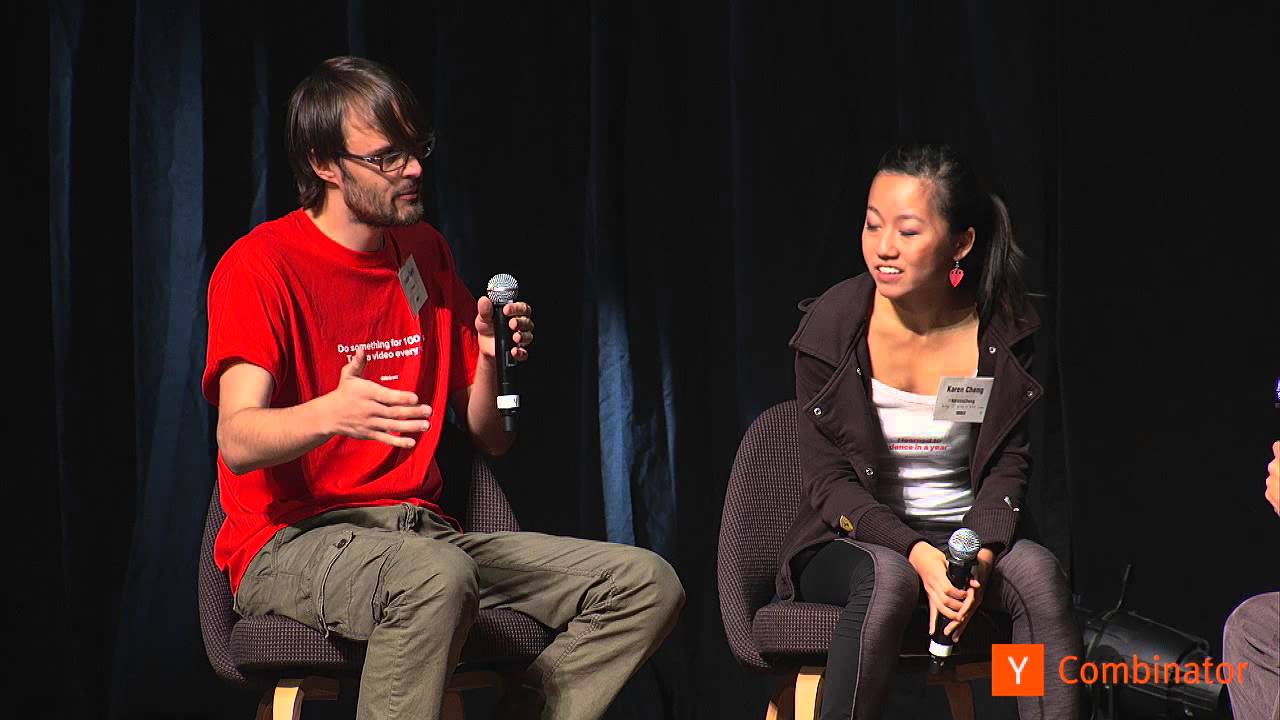
Office Hours at Startup School 2013 with Paul Graham and Sam Altman — Y Combinator

Y Combinator

Early-stage startups must avoid pitching multi-trillion-dollar markets to win investor trust, relying instead on unglamorous regulatory wedges to capture proprietary customer supply chain data.

AI-assisted summary of Office Hours at Startup School 2013 with Paul Graham and Sam Altman — original source. Check the original for full context.

Source published:

Key ideas

  • CodeCombat launched its beta to accidental Reddit virality, logging 15,000 visitors and immediate server crashes, which culminated in an on-the-spot acceptance into Y Combinator from Paul Graham during their office hours session. (0:06)
  • GiveIt100 tests a 100-day micro-video progress platform capped at 10 seconds per clip, generating 1,000 daily views from a 50-user private beta backed by a 4,300-person waitlist. (10:00)
  • Flexport outlines plans to disrupt the $3B–$5B U.S. customs brokerage sector with modern software, using a $100 flat clearance fee as a wedge to access supply chain data and cross-sell high-margin freight and logistics services. (19:25)
  • Flexport founder Ryan Petersen reveals an unfair acquisition advantage via a proprietary database of 300 million public shipping manifests indexing every active importer across the United States. (22:06)

Detailed notes

## Background Published on YouTube by Y Combinator on October 26, 2013, this video features a live office hours session at Startup School 2013 hosted by Paul Graham and Sam Altman. The description notes that the partners provide live startup critiques to three founding teams: CodeCombat (George Saines and Nick Winter), 100 (Karen Cheng and Finbarr Taylor), and Flexport (Ryan Petersen).

## TL;DR Paul Graham and Sam Altman mentor three early-stage startups through rapid-fire public critiques. CodeCombat breaks down its gamified programming curriculum and Reddit launch server crash, culminating in a surprise on-the-spot acceptance into Y Combinator from Graham. Karen Cheng and Finbarr Taylor explore user retention, private betas, and high-engagement categories like childhood milestones for their 100-day video-tracking platform GiveIt100. Finally, Ryan Petersen details Flexport's strategy to disrupt legacy customs brokerage through automated web software and proprietary shipping manifest data, using customs clearance as an entry wedge into global freight logistics.

## Atmosphere & style The session carries the fast-paced, unvarnished energy of authentic Silicon Valley office hours, blending Socratic interrogation with sharp, practical founder feedback. Paul Graham guides the discussions with dry humor, blunt skepticism, and sudden flashes of intuition, while Sam Altman chimes in with grounded questions on metrics and investor psychology. The mood shifts effortlessly from the electrifying, spontaneous celebration of CodeCombat's impromptu batch acceptance to thoughtful, analytical dives into consumer emotional hooks and complex international trade regulations.

## Bulletin - [00:06](https://www.youtube.com/watch?v=syoqjYLDs48&t=6s) CodeCombat launched its beta to accidental Reddit virality, logging 15,000 visitors and immediate server crashes, which culminated in an on-the-spot acceptance into Y Combinator from Paul Graham during their office hours session. - [10:00](https://www.youtube.com/watch?v=syoqjYLDs48&t=600s) GiveIt100 tests a 100-day micro-video progress platform capped at 10 seconds per clip, generating 1,000 daily views from a 50-user private beta backed by a 4,300-person waitlist. - [19:25](https://www.youtube.com/watch?v=syoqjYLDs48&t=1165s) Flexport outlines plans to disrupt the $3B–$5B U.S. customs brokerage sector with modern software, using a $100 flat clearance fee as a wedge to access supply chain data and cross-sell high-margin freight and logistics services. - [22:06](https://www.youtube.com/watch?v=syoqjYLDs48&t=1326s) Flexport founder Ryan Petersen reveals an unfair acquisition advantage via a proprietary database of 300 million public shipping manifests indexing every active importer across the United States.

## Key takeaways - [00:06](https://www.youtube.com/watch?v=syoqjYLDs48&t=6s) Gamifying programming through visceral feedback—like writing code to kill an enemy instead of checking string lengths—creates far stronger retention and engagement for beginners. - [02:29](https://www.youtube.com/watch?v=syoqjYLDs48&t=149s) Introducing formal syntax too early alienates novices; level progression must enforce concepts like recursion and anonymous functions gradually through hard constraints rather than dry theory. - [04:36](https://www.youtube.com/watch?v=syoqjYLDs48&t=276s) Advisors urged CodeCombat to adopt a robot theme to better match programming concepts, but the founders retained their fantasy wizard theme to protect existing creative investments and maintain worldbuilding freedom. - [07:28](https://www.youtube.com/watch?v=syoqjYLDs48&t=448s) Paul Graham emphasizes that long tenure at large corporate firms is viewed negatively at Y Combinator, validating founders driven primarily by a desire to avoid conventional corporate employment. - [08:19](https://www.youtube.com/watch?v=syoqjYLDs48&t=499s) Monetizing coding platforms through technical recruitment is a viable path, supported by peer YC startups placing dozens of engineers straight from challenge candidate sheets. - [08:50](https://www.youtube.com/watch?v=syoqjYLDs48&t=530s) Paul Graham accepts CodeCombat into Y Combinator directly from the stage, bypassing the traditional formal interview room process. - [10:00](https://www.youtube.com/watch?v=syoqjYLDs48&t=600s) GiveIt100 stems from founder Karen Cheng's viral year-long dance progression video, demonstrating audience hunger for relatable beginner struggles rather than polished virtuosity. - [12:45](https://www.youtube.com/watch?v=syoqjYLDs48&t=765s) Restricting video uploads to 10 seconds per day creates an interactive, hover-to-play timeline that captures raw daily effort while respecting short viewer attention spans. - [15:09](https://www.youtube.com/watch?v=syoqjYLDs48&t=909s) Childhood developmental milestones represent an organic killer category for video archiving, solving the parental problem where present memories overwrite rapid past growth. - [17:11](https://www.youtube.com/watch?v=syoqjYLDs48&t=1031s) Paul Graham warns early-stage founders against narrowing product focus prematurely, urging them to remain empirical and let organic user behavior dictate the ultimate use case. - [19:25](https://www.youtube.com/watch?v=syoqjYLDs48&t=1165s) Customs clearance remains heavily paper-driven and reliant on incumbent fax machines, handling up to 120 forms per entry across 30 million annual U.S. shipments. - [22:06](https://www.youtube.com/watch?v=syoqjYLDs48&t=1326s) The 2007 Remote Location Filing regulatory shift eliminated the requirement for physical port offices, enabling centralized web-based clearance across all U.S. ports. - [25:53](https://www.youtube.com/watch?v=syoqjYLDs48&t=1553s) Flexport leverages low-cost $100 flat-rate customs brokerage as a strategic wedge; becoming the broker of record grants full supply chain visibility to cross-sell freight, warehousing, and trucking. - [27:48](https://www.youtube.com/watch?v=syoqjYLDs48&t=1668s) Paul Graham and Sam Altman warn founders against leading investor pitches with multitrillion-dollar macroeconomic market sizes, advising that bottom-up addressable estimates build credibility. - [28:35](https://www.youtube.com/watch?v=syoqjYLDs48&t=1715s) Systematic outbound sales forces remain one of the most reliable growth engines in B2B markets, even when founders find managing them operationally grueling.

## Detailed walkthrough ### [00:06](https://www.youtube.com/watch?v=syoqjYLDs48&t=6s) Introducing CodeCombat and the Accidental Reddit Launch

The session opens with Paul Graham making a quick quip about the stage seating arrangements, joking that they have to sit up straight in lower seats and that Admiral Rickover would never stand for it. Turning to the founders of CodeCombat, George Saines and Nick Winter, he asks what they are building. Winter explains that they are creating a multiplayer programming game designed to teach people how to code—describing it as like Codecademy, but actually structured as a playable game. Instead of passive tutorials, players win by beating successive levels to become better developers. Graham asks whether the mechanic is competitive learning where one writes code to kill an enemy, which Winter confirms: from the very first level, a player writes code to move a character and kill an opponent right away. Graham appreciates the visceral motivation of that hook compared to standard coding lessons, contrasting it with exercises like asking for the length of a name string: “Okay, that's cool. But like no, I kill that ogre.”

When asked whether the product is live, the founders reveal that they launched their beta just the day before. Graham asks if they rushed the launch specifically because of their scheduled office hours, but Winter clarifies that the timing was purely coincidental and somewhat unfortunate because it left them no time to prepare. The launch immediately blew up, swamping their infrastructure. The prior night, after dinner, they hopped onto a Google Hangout with their third co-founder, who was stuck at the terminal rapidly hitting `Ctrl+C` and restarting the server under overwhelming traffic. That server instability had already persisted for 24 hours straight because they were able to serve only a fraction of the incoming traffic.

```mermaid flowchart TD accTitle: CodeCombat Genesis and Launch Sequence accDescr: Flow diagram showing how user feedback from a Chinese learning tool led to CodeCombat and its Reddit beta launch.

subgraph Ideation ["Origins & Genesis"] A["Prior Startup: Chinese character learning tool"] -->|"Users call it a game"| B["Founders realize power of accidental gamification"] C["George Saines struggles with Codecademy"] -->|"Needs engagement"| D["Co-founders build code-learning game"] end

subgraph Execution ["Launch & Overload"] B & D --> E["CodeCombat Beta"] E -->|"Posted to r/learnprogramming"| F["Reddit 'Hug of Death'"] F --> G["15,000 Visitors / 200 Concurrent"] G --> H["Server crashes & 404 errors"] end ```

- CodeCombat launched its public beta just one day prior to the office hours session. - The servers were under intense load for over 24 hours, forcing the third founder to manually reboot the service from the terminal. - Saines had tried traditional platforms like Codecademy to learn programming during his first startup but could not stay engaged, prompting his co-founders to build a combat-oriented game around coding. - The concept was also inspired by their first startup, an app for learning Chinese characters, whose users repeatedly praised it for feeling like an engaging game despite not being designed as one.

---

[02:29](https://www.youtube.com/watch?v=syoqjYLDs48&t=149s) Pedagogy, Game Mechanics, and the Problem of Formal Notation

Graham pushes on the educational depth of a coding game, questioning how far one can actually take a learner. Reflecting on his own high school programming, Graham remembers writing low-quality code without genuinely understanding computer science principles, and wonders how CodeCombat can force players past simple library lookups into mastering advanced concepts. Winter explains that while professional software engineering practices can be layered on later, the current focus is on core programming fundamentals. To force progression, the game design restricts available mechanics and imposes constraints: certain levels demand recursion, specific execution speed thresholds, or passing anonymous functions to succeed. By making levels sufficiently difficult and attaching clear in-game rewards, players push themselves through harder computational concepts.

When Graham asks what went wrong during beta testing, Saines admits that their earliest iterations set the difficulty bar far too high. Because Saines had worked in a semi-technical capacity, the team falsely assumed baseline programming knowledge that true beginners lacked. They initially presented learners with `for` loops, only to find that novices did not understand how to complete a single line of code or parse syntax. Graham agrees, observing that “formal notation is the single biggest obstacle.” On the high end of their current curriculum, Winter describes development levels where players must calculate artillery targeting strategies—aiming shots at the center of enemy clusters while programming friendly infantry to steer clear of their own artillery firing arcs.

- Level constraints (e.g., speed requirements, method restrictions, recursion, and anonymous functions) serve as the primary mechanism to compel players to learn advanced programming techniques. - Beta testing revealed that starting with `for` loops alienated absolute beginners who had not yet grasped basic line completion or syntax conventions. - High-level challenges include algorithmic tactical problems, such as automated ballistic targeting coordinated with troop collision avoidance.

---

[04:36](https://www.youtube.com/watch?v=syoqjYLDs48&t=276s) Fantasy Theme vs. Robots, Server Scalability, and Open Source

Graham asks about the combat setting, wondering if it features modern military hardware like Apache helicopters. Winter explains that the aesthetic is pure fantasy: players play as wizards casting programmatic spells in JavaScript to command units, soldiers, and heroes. While many people have urged them to switch to a sci-fi robot theme, Winter and Saines point out that a fantasy setting offers broader creative freedom.

```mermaid flowchart LR accTitle: Theme Trade-off in Game Design accDescr: Diagram comparing the cognitive friction of a fantasy theme versus a robot theme for programming mechanics.

subgraph FantasyTheme ["Fantasy Theme (Current)"] A["Theme: Wizard casting spells via JS"] B["Pro: Creative freedom, open worldbuilding"] C["Con: Cognitive leap to explain coding as magic"] A --- B A --- C end

subgraph RobotTheme ["Robot Theme (Adviser Recommendation)"] D["Theme: Programming robots / cyborgs"] E["Pro: Intuitive mental model for writing code"] F["Con: Heavy art rework required to pivot"] D --- E D --- F end ```

The discussion turns back to their launch metrics. Saines shares that they maxed out their single server after logging 15,000 visitors and hit roughly 200 concurrent active players, though the true demand was impossible to measure because a large share of visitors received HTTP 404 errors and server timeouts. When Graham asks why they did not simply spin up more server instances, Winter admits that their architecture was not designed to scale horizontally because they never anticipated such massive interest from a single post on the `r/learnprogramming` subreddit. The thread was filled with comments lamenting the “hug of death” as the service buckled.

The launch also brought two distinct audiences: absolute beginners eager for more content after finishing the available levels, and roughly 20 experienced developers asking for a GitHub repository so they could clone the code and contribute. Consequently, the founders plan to open-source the platform within a few months to harness developer contributions. Graham cautions them to study standard practices in the gaming industry before making major distribution choices:

> “Because there's probably certain best practices in the gaming business and probably whatever they do would be the first would be the starting point.”

Saines notes that they recognized their lack of game design expertise early on and assembled a core advisory group of veteran game designers who regularly critique their work. Interestingly, those advisors also urged them to adopt a robot theme instead of fantasy, arguing that controlling robots via code feels natural, whereas framing code as wizard spells adds confusing cognitive overhead for new players. However, because replacing all game art would be prohibitively difficult, the team decided to stick with the fantasy assets.

- The launch generated 15,000 unique visitors and 200 concurrent users before crashing under the Reddit “hug of death.” - CodeCombat is built in JavaScript, running in the browser with players executing code to control on-screen units. - Game design advisors recommended pivoting to robots to make the programming metaphor intuitive, but the founders kept the fantasy theme to avoid throwing away existing visual assets. - To produce content faster, the founders developed a visual live-coding drag-and-drop level editor, aiming to output three new levels per week instead of manually hardcoding positional coordinates.

---

[07:28](https://www.youtube.com/watch?v=syoqjYLDs48&t=448s) Team History and the Startup Mindset

Graham asks about the team composition. The founders explain that CodeCombat is run by three people: Winter and Saines, who are on stage, and their co-founder Scott, who is back home keeping the servers alive. The three have worked together for six years across two startups, having originally met as college roommates and dorm-mates. Winter and Scott both majored in computer science, while Saines studied economics and film.

Upon graduation, their primary motivation to launch a company was a shared aversion to conventional employment: “Oh, let's not get jobs. That's going to suck.” Although their first business venture encountered severe difficulties after three months, they stayed together as a team. Graham wholeheartedly validates their mindset, underscoring that avoiding traditional corporate employment is one of the most common and legitimate driving forces behind great founders:

> “No, seriously, if we are looking at someone's application and they worked for a long time for a large company, that's actually bad.”

- The founding team comprises Nick Winter (CS), Scott (CS), and George Saines (Economics and Film). - The three founders were college roommates and had already worked together for six years across multiple ventures prior to CodeCombat. - Graham reinforces that entrepreneurial motivation often stems from a refusal to work conventional corporate jobs, noting that extended tenure at large corporations is viewed skeptically when Y Combinator evaluates startup applications.

[08:19](https://www.youtube.com/watch?v=syoqjYLDs48&t=499s) CodeCombat's Recruiting Model and a Surprise YC Acceptance

Discussing how CodeCombat plans to monetize, the founders outline a technical recruitment pipeline. By running coding challenges inside the game, they can generate and qualify candidate leads before ever reaching out to prospective employers. Paul Graham pushes back on whether a coding game can genuinely train candidates to the point of becoming valuable hires. The founders respond that recruiters have expressed intense interest in their user base, prompting Graham to warn dryly, “Recruiters famously say all sorts of crazy stuff.” The founders concede that the premise remains to be validated, though other coding challenge platforms and dev bootcamps operate on identical dynamics; one Y Combinator founder they spoke with reported securing 50 engineering placements in six months simply by circulating candidate spreadsheets to recruiter networks.

As the timer sounds and the founders thank the partners, Graham suddenly stops them from walking offstage. Catching the entire auditorium and the founders completely off guard, Graham calls them back: “You didn't realize that, but that was your Y Combinator interview.” He informs them on the spot that they have been accepted into the upcoming winter batch, asking casually if they had submitted their paperwork. The impromptu decision draws massive cheers from the crowd as Graham confesses with a grin, “We just sort of decided to do that on the fly.”

- **Monetization premise**: Pre-qualifying engineering talent through gameplay challenges and placing them with hiring companies. - **Precedent cited**: A YC company achieved 50 technical placements in 6 months using spreadsheet-based candidate delivery. - **On-the-spot offer**: Nick Winter and George Saines are accepted into Y Combinator directly from the stage without having completed a formal 10-minute interview room session.

---

[10:00](https://www.youtube.com/watch?v=syoqjYLDs48&t=600s) Pitching GiveIt100: Progress Videos and the 50-User Beta

Karen Cheng and Finbarr Taylor step up to present GiveIt100 (`giveit100.com`), a social video platform where users commit to mastering a skill by recording and sharing short daily progress updates over 100 days. Asked what the typical use case looks like, Cheng explains that dance—specifically robot dancing—is currently the most common pursuit. The platform grew directly out of a personal project: Cheng documented herself learning how to dance over the course of an entire year and posted the compilation to YouTube. The video went viral, amassing millions of views and flooding her inbox with hundreds of messages from people inspired by seeing a real beginner stumble and steadily improve rather than watching an intimidating virtuoso.

```mermaid flowchart TD accTitle: GiveIt100 Progress and Distribution Loop accDescr: Flowchart illustrating how GiveIt100 users record daily clips, assemble galleries, and drive external viral marketing.

subgraph PlatformLoop ["GiveIt100 Daily Loop"] A["User commits to 100-day goal"] --> B["Record daily 10-second video"] B --> C["Host in chronological gallery grid"] C --> D["Hover-to-play timeline"] end

subgraph ViralityLoop ["Distribution Engine"] C --> E["Curate compelling milestones"] E --> F["Compile into viral video on YouTube"] F --> G["'Made with 100' watermarking"] G --> H["Drive new users to waitlist"] end ```

The founders reveal that GiveIt100 is currently locked in an invite-only private beta with just 50 participants, despite having a waitlist of roughly 4,300 people. Current users are documenting diverse challenges, ranging from learning to code or design, to unicycling, touch typing, learning a foreign language, a nine-month-old learning to walk, and an adult with multiple sclerosis relearning to walk following an exacerbation. Graham immediately challenges their decision to bottleneck growth: if their engagement numbers are as strong as they claim, there is no good reason to keep the other 4,300 applicants waiting outside while attempting to polish the interface. Taylor defends the gating by explaining that they lack built-in social sharing loops; opening the floodgates prematurely could burn through high-intent users before the platform has the viral hooks needed to turn each new user into multiple invites.

- **Waitlist ratio**: 50 active private beta users versus 4,300+ people waiting for access. - **Origin proof point**: Karen Cheng's year-long dance transformation video accumulated over 3 million YouTube views. - **Diverse beta use cases**: Robot dancing, unicycling, language acquisition, coding, typing, infant development, and multiple sclerosis physical rehabilitation.

---

[12:45](https://www.youtube.com/watch?v=syoqjYLDs48&t=765s) The 10-Second Format, Video Gallery, and YouTube Distribution

Cheng and Taylor clarify that while the product began as a hybrid photo and video service, they discarded photos completely because video proved far more emotionally resonant. Even for non-visual disciplines like computer programming, participants record themselves talking into the camera about their daily struggles, show off code snippets, or demo whatever working software they managed to build. Across their tiny cohort of 50 users, GiveIt100 generates approximately 1,000 video views daily, with 20 to 30 unique visitors returning each day to browse updates or batch-upload several days' worth of clips at once.

```mermaid flowchart LR accTitle: GiveIt100 Engagement and User Funnel accDescr: Diagram tracking user interaction and viewing habits within GiveIt100's private beta.

subgraph Metrics ["Beta Engagement Metrics"] direction TB M1["50 Total beta users"] M2["20-30 Daily unique visitors"] M3["~1,000 Views per day"] end

subgraph Constraints ["Product Constraints"] direction TB C1["Strict 10-second video cap"] C2["Internal native hosting"] C3["Hover-to-play gallery UI"] end

Metrics -.-> Constraints ```

Sam Altman and Paul Graham question the platform's hosting and distribution model. The videos are hosted natively on GiveIt100 rather than embedded from YouTube, which Altman thinks misses an obvious validation step: why wasn't YouTube sharing tested during the beta to see if individual updates actually attract outside viewers? The founders argue that their native interface is the core magic: a chronological gallery where visitors see an entire journey laid out in an interactive grid. Each entry is capped strictly at ten seconds, and videos play automatically upon hover. As Cheng puts it, “We cap it at 10 seconds because I have a short attention span and I'm building this for myself.” Rather than publishing raw ten-second clips to YouTube, their marketing strategy relies on stitching completed 100-day journeys into polished, emotional transformation videos stamped with “Made with 100” to capture massive external audiences.

- **Video length**: Hard limit of 10 seconds per daily post. - **Daily retention**: 20 to 30 of the 50 beta users visit daily (~40–60% daily active rate). - **Viewing density**: ~1,000 daily video plays across a 50-person pool.

---

[15:09](https://www.youtube.com/watch?v=syoqjYLDs48&t=909s) Spectator Demand and Killer Categories: From Startup Agony to Baby Steps

Graham steers the discussion from what people like to *record* to what third parties will actually want to *watch*. When he asks what genres will drive broad spectator appeal, Cheng answers that audiences crave dramatic narrative tension and raw vulnerability against steep odds. She points to Evernote's founder as an aspirational archetype: she would love to watch a midnight recording of someone like Phil Libin at his lowest point saying he was out of money right before landing an investment, rather than merely hearing the story retold years later. Graham laughs off the comparison, pointing out that founders fighting for corporate survival are not going to log their desperate moments on a public progress tracker:

> “I don't think he would have used your system.”

Turning to more practical consumer categories, Graham and the founders agree that childhood milestones could be an enormous killer category. Parents have a deep, instinctive drive to record their children's progress, and Graham explains the emotional pain point from his own experience raising young kids: “If you don't have kids, one of the big problems about being a parent is the memories of the current kid overwrite the memories of the more recent the sort of recent past.” He laments that he can barely recall what his four-year-old son was like at three because the vivid reality of the present four-year-old jumping on the bed overwrites earlier memories. Taylor agrees that childhood progress—seeing a baby transition from crawling and grabbing door handles to taking assisted first steps—forms an inherently magnetic, emotional feed that captivates creators and outside spectators alike.

- **Audience appeal debate**: The tension between high-drama vulnerability (e.g., struggling startup founders) versus organic personal growth. - **The parenting pain point**: Human memory inherently overwrites earlier developmental stages, creating high demand for chronological micro-video archives. - **Killer category potential**: Early childhood development identified as a prime driver for viral viewing and passionate creator retention.

[17:11](https://www.youtube.com/watch?v=syoqjYLDs48&t=1031s) 100: User Retention and Organic Evolution

Paul Graham asks about user retention on 100, questioning how well people actually stick with the challenge of recording a video every single day for 100 days. Finbarr Taylor and Karen Cheng explain that among their active users, the average is roughly 18 video uploads per person. Some users from their earliest MVP—which relied simply on users submitting daily clips through Dropbox—have reached into the 80s. Finbarr highlights an example of a user learning how to beatbox: starting on day one with very little confidence or skill, by day 85 his improvement is remarkable, which captures the exact transformation the platform is trying to showcase.

Sam Altman asks whether community encouragement is central to keeping people accountable. Finbarr confirms that social feedback is critical; the platform features commenting and "props" so users can cheer one another on. In their most commented and liked thread, a woman learning to ride a unicycle posted a video of a painful fall, prompting an outpouring of encouragement telling her to keep going.

Paul also asks if users can make their sequences semi-private, particularly for sensitive projects like tracking a child's growth. Karen explains that full privacy settings already exist because many users feel uncomfortable sharing their clumsy early stages until they become proficient, though she agrees that sharing privately with select friends or family would be a valuable feature to build. Paul cautions them against narrowing their focus prematurely:

> “Don't like, like, overoptimize too early. Like let it grow into whatever it's going to grow into. Maybe it'll end up being kids or the big thing or maybe not. Who knows? But be empirical about it and don't don't like wire in some outcome too early.”

- Average uploads per user: ~18 videos. - Peak user streaks: Reaching the mid-80s (e.g., an 85-day beatboxing progression). - Community dynamics: High engagement around vulnerability and setbacks (e.g., a unicycling fall receiving broad encouragement).

---

[19:25](https://www.youtube.com/watch?v=syoqjYLDs48&t=1165s) Flexport: Software Eating Customs Brokerage

Ryan Petersen joins Paul Graham and Sam Altman on stage. Paul immediately remarks on the eerie resemblance Ryan shares with his brother, whom Y Combinator had funded previously:

> “You don't know how odd this is for us. This is the brother of someone we funded in the past. And except for having a beard, he seems identical. It's very disconcerting.”

Ryan introduces his startup, Flexport, describing it as the first licensed U.S. customs brokerage built around a modern web application. He explains that any business importing goods into the United States must clear customs, which requires organizing vast quantities of paperwork, paying appropriate duties and taxes, and submitting forms to confirm that the imported goods are fully legal. When Paul asks whether the profession exists because dealing with the government is so awful that specialized intermediaries are required, Ryan explains that customs brokerages are heavily regulated entities that require FBI background checks and years of work to obtain an individual license. Because the government trusts brokers not to lie, clearance is effectively streamlined through them.

Depending on the imported product, clearing customs can require navigating up to 120 different forms. Flexport takes details about the shipment, determines the correct filings, fills them out, and submits them electronically. When Paul suggests that Flexport is an instance of "software eating the world" by replacing traditional brokers, Ryan points out that incumbent brokers still rely on fax machines. Flexport instead offers an online dashboard that organizes documentation, identifies what is missing, and proactively collects the required forms rather than forcing importers to assemble everything themselves. When Sam asks if this is like Uber for customs, Ryan responds:

> “It's kind of like teleporter for products instead of for people.”

```mermaid flowchart TD accTitle: Flexport Customs Clearance Process accDescr: Flowchart showing how customer data is processed through Flexport's platform and licensed brokers to clear US customs.

subgraph Client ["Importer Experience"] A["Importer logs into Flexport dashboard"] --> B["Inputs product & shipment details"] end

subgraph Platform ["Flexport Software & Operations"] B --> C["Engine determines required forms (up to 120 types)"] C --> D["Automated document collection & assembly"] D --> E["In-house licensed customs brokers review"] end

subgraph Government ["Regulatory Filing"] E --> F["Electronic submission to U.S. Customs"] F --> G["Shipment cleared for U.S. entry"] end ```

---

[22:06](https://www.youtube.com/watch?v=syoqjYLDs48&t=1326s) Market Size, Regulatory History, and Unfair Advantage

Addressing the economics of customs clearance, Ryan Petersen explains that customs brokers typically charge a flat fee of $100 to $300 per shipment, regardless of whether the cargo is worth $10,000 or $1,000,000. Across the industry, 30 million shipments enter the United States each year that require a formal customs entry. While massive enterprises like Apple employ in-house brokers, Ryan aims to make Flexport's software so effortless that companies will no longer need to maintain dedicated internal departments.

Flexport currently has three active importing customers and a waiting list of roughly 300 companies. Ryan jokes that the largest oil company in the world signed up, but Flexport asked them to hold off briefly out of fear of causing an accidental energy crisis—though a supertanker is currently approaching the Port of San Francisco. Ryan himself brings 12 years of industry experience and has personally cleared about 1,000 shipping containers over the course of his career, including work at his brother's company. Although Ryan does not hold an individual license himself, Flexport operates as a licensed corporate customs brokerage with licensed customs brokers on staff.

When Paul asks why no tech startup has tackled this before, Ryan points to major industry and regulatory barriers: 1. **Demographics of incumbent brokers:** At industry conventions, most attendees are roughly 40 years older than typical tech founders. 2. **Heavy regulation:** The licensing process is rigorous, slow, and requires extensive background checks. 3. **Remote Location Filing rules:** Until 2007, regulations prohibited clearing cargo anywhere other than the local port of entry unless a brokerage maintained physical offices at every single port.

Paul asks how Flexport plans to convince importers to abandon long-standing brokerage relationships. Ryan reveals a massive unfair acquisition advantage: every import into the United States is public record, and his previous company aggregates those records. Having collected 300 million shipping manifests to sell market-intelligence subscriptions, Ryan possesses a database containing every single active importer in the United States. While the MVP web application is operational and handling clearance, Ryan is intentionally restricting access to new sign-ups until the user experience is completely refined.

- Market volume: 30 million shipments requiring customs entry filed in the U.S. annually. - Unit pricing: $100 to $300 per shipment filing. - Growth pipeline: 3 active customers, ~300 on the waitlist. - Regulatory milestone: Remote Location Filing modernization in 2007 unlocked centralized electronic filing across all U.S. ports. - Proprietary customer database: Access to 300 million historical U.S. shipping manifests mapping every active importer in the nation.

[25:53](https://www.youtube.com/watch?v=syoqjYLDs48&t=1553s) Government Shutdown Delays and the Brokerage Entry Wedge

When asked whether Flexport has already processed inbound shipments, Ryan Petersen explains that their first customs clearance is scheduled for November. Customers are lined up and ready, but their launch was stalled three weeks prior by the United States federal government shutdown. Customs and Border Protection would not onboard any new customs brokers because the specific official tasked with their onboarding had been furloughed. That official has since returned to work, and Petersen submitted the required paperwork on Monday. He laments that he had hoped to have cleared their first shipment in time to announce it on the Y Combinator application. Paul Graham seizes on the regulatory roadblock to mock Washington dysfunction to applause from the audience: “See you idiots in the government, you are actually slowing down innovation.”

Turning to unit economics, Petersen anticipates healthy gross margins of approximately 75% per clearance, noting that the processing does not require intensive manual hours. Flexport plans to charge a flat fee of $100 per shipment regardless of cargo size, though supplemental fees will apply for shipments requiring specialized regulatory filings, such as clearance through the Food and Drug Administration (FDA). Sam Altman and Paul Graham question whether a flat fee leaves money on the table, pointing out that an importer moving a Boeing 777 loaded with iPhones would gladly pay far more than someone shipping a modest container. Petersen counters that while high-value cargo yields much larger duties and taxes for the government, the administrative paperwork for the customs broker remains essentially the same single form.

Petersen reveals that traditional brokers typically charge variable, higher rates, but Flexport views customs brokerage as an aggressive entry wedge rather than the ultimate destination. As Petersen argues: “The brokerage is just the way that we enter the much larger logistics space because once I'm your customs broker, I know everything about your supply chain.” By acting as the customs broker of record, Flexport gains total visibility into an importer's operations, unlocking high-margin opportunities to sell downstream services including ocean and air freight, warehousing, cargo inspections, and drayage trucking. While competitors do offer post-clearance services, they do not treat customs clearance as an aggressive on-ramp or a loss leader. Petersen notes that he does not intend to treat it as an outright loss leader either, emphasizing that he dislikes high burn rates.

```mermaid flowchart TD accTitle: Flexport Wedge and Expansion Strategy accDescr: Flowchart illustrating Flexport using low-cost customs brokerage to gain supply chain visibility and cross-sell logistics services.

subgraph Wedge ["Entry Wedge: Customs Brokerage"] A["$100 Flat-Rate Customs Clearance"] --> B["75% Gross Margin Filing"] B --> C["Full Visibility into Importer Supply Chain"] end

subgraph Expansion ["High-Value Downstream Services"] C --> D["Ocean & Air Freight Forwarding"] C --> E["Warehousing & Storage"] C --> F["Cargo Inspection"] C --> G["Trucking & Inland Delivery"] end ```

- Flexport charges a baseline $100 flat clearance fee with anticipated 75% gross margins, with additional fees applied for extra documentation such as FDA clearances. - The federal government shutdown delayed broker onboarding by three weeks due to regulatory personnel furloughs. - Securing the customs brokerage role provides comprehensive transaction data across the client's supply chain, enabling cross-selling of freight, warehousing, inspection, and trucking.

---

[27:48](https://www.youtube.com/watch?v=syoqjYLDs48&t=1668s) Market Sizing, Investor Psychology, and Sales Strategy

Paul Graham asks Petersen how much revenue Flexport can realistically generate once operational. Petersen opens with a sweeping statistic, noting that global logistics is a $2.3 trillion industry. Graham cuts in to clarify that he is asking strictly about the customs brokerage portion, prompting Petersen to joke, “I just like to say the word trillion.” Graham quickly cautions against flaunting massive top-down macroeconomic numbers, warning: “You know, really big markets are bad for startups, not good.” Sam Altman concurs with the hazard of pitch hyperbole, observing: “If you say a too big number, the investors just they just don't believe it, right?”

Grounding the projection, Petersen models the business from the bottom up. The entire United States customs clearance industry represents roughly $3 billion to $5 billion annually, based on total import clearance volume and standard fee structures. Each individual customer represents roughly $2,000 to $3,000 in brokerage fees each year. If Flexport captures just 1% of the domestic market, it would yield about $30 million in annual profit from customs clearance alone, even before counting cross-sold freight and logistics services.

``` +------------------------------------+--------------------------+ | Metric | Estimated Value | +------------------------------------+--------------------------+ | Global Logistics Market | $2.3 Trillion | | US Customs Clearance Market | $3 Billion – $5 Billion | | Annual Brokerage Value / Customer | $2,000 – $3,000 | | Annual Profit at 1% Market Share | ~$30 Million | +------------------------------------+--------------------------+ ```

Graham asks whether the acquisition plan entails hiring “an army of sales guys” to systematically work through the public list of importers. Petersen admits that is a viable option, though he reflects on his experience doing exactly that at his previous venture (ImportGenius), admitting that managing a massive outbound sales team was not particularly enjoyable. Graham pushes back on avoiding the grind, stating: “Things that aren't fun are still sometimes working sometimes.” Petersen concedes that outbound sales forces are frequently the most effective way to maximize revenue, resolving that if he builds another sales army, he will design and execute the operation better so it is more enjoyable to run. Graham and Altman conclude the office hours, thanking Petersen and reflecting on how interesting the logistics space is as the session wraps up.

## Notable quotes > [27:48](https://www.youtube.com/watch?v=syoqjYLDs48&t=1668s) You know, really big markets are bad for startups, not good. — Paul Graham

> [07:28](https://www.youtube.com/watch?v=syoqjYLDs48&t=448s) No, seriously, if we are looking at someone's application and they worked for a long time for a large company, that's actually bad. — Paul Graham

> [25:53](https://www.youtube.com/watch?v=syoqjYLDs48&t=1553s) The brokerage is just the way that we enter the much larger logistics space because once I'm your customs broker, I know everything about your supply chain. — Ryan Petersen

## Mentioned Paul Graham, Sam Altman, George Saines, Nick Winter, Karen Cheng, Finbarr Taylor, Ryan Petersen, Phil Libin, Scott, CodeCombat, GiveIt100, Flexport, ImportGenius, Y Combinator, Codecademy, YouTube, Dropbox, Evernote, Apple, Reddit, GitHub, U.S. Customs and Border Protection, U.S. Food and Drug Administration

## Video description Office Hours at Startup School 2013 with Paul Graham and Sam Altman

CodeCombat: George Saines, Nick Winter

100: Karen Cheng and Finbarr Taylor

Flexport: Ryan Petersen

[Source](https://www.youtube.com/watch?v=syoqjYLDs48)

中文简报

Graham现场录取CodeCombat加入YC,Flexport瞄准报关业务 初创公司早期必须避免向投资者推介数万亿美元的市场规模以赢取信任,而应依靠看似不起眼的监管切入点来获取专有的客户供应链数据。 Paul Graham与Sam Altman通过快节奏的公开点评辅导了三家早期初创公司。CodeCombat拆解了其游戏化编程课程以及因Reddit发布引发的服务器宕机事件,并最终出人意料地获得了Graham现场给出的Y Combinator录取资格。Karen Cheng与Finbarr Taylor探讨了其百天视频追踪平台GiveIt100的用户留存、封闭公测以及像儿童成长里程碑这类高参与度品类。最后,Ryan Petersen详述了Flexport通过自动化网络软件和专有舱单数据颠覆传统报关代理业务的战略,将报关作为切入全球货运物流的敲门砖。 CodeCombat推出测试版时意外在Reddit走红,引来1.5万名访客并导致服务器当即崩溃,这最终促成Paul Graham在答疑点评现场直接录取其加入Y Combinator。 (0:06) GiveIt100测试了一款百天微视频记录平台,每条片段上限为10秒;依托4,300人的候补名单,该平台在仅50人的封闭公测中实现了每日1,000次观看。 (10:00) Flexport概述了利用现代软件颠覆规模达30亿至50亿美元的美国报关代理行业的计划,以100美元的固定清关费为切入点获取供应链数据,进而交叉销售高利润的货运与物流服务。 (19:25) Flexport创始人Ryan Petersen透露了一项不对称的获客优势:一个收录了全美所有活跃进口商、包含3亿份公开海运舱单的专有数据库。 (22:06)

Reading summary

During public office hours at Startup School 2013, Y Combinator partners Paul Graham and Sam Altman evaluated CodeCombat, GiveIt100, and Flexport, highlighting how early-stage ventures must balance pedagogical game mechanics, organic retention loops, and wedge strategies in regulated markets. CodeCombat: Gamified Programming and Surprise Acceptance (0:06) Founders Nick Winter and George Saines launched CodeCombat's beta on Reddit's r/learnprogramming the day before office hours, instantly hitting 15,000 visitors and 200 concurrent users while overwhelming their single-server architecture. The browser-based JavaScript game teaches coding through fantasy combat, compelling players to grasp advanced computational concepts—such as recursion and anonymous functions—by imposing strict level constraints. While game design advisors recommended a robot theme to make the coding metaphor intuitive, the founders retained fantasy wizards to preserve visual assets. Graham cautioned that formal notation remains the primary obstacle for novices, validating the team's shift away from early tests that overwhelmed beginners with syntax and `for` loops. The founders proposed monetizing through a technical recruiting pipeline that qualifies candidates via in-game coding tasks. After Winter and Saines outlined their six-year history of working together across prior startups, Graham called them back at the end of their slot to extend an impromptu admission offer into the upcoming Y Combinator batch. GiveIt100: Micro-Video Habits and Retention Dilemmas (10:00) Karen Cheng and Finbarr Taylor presented GiveIt100, a platform where users track mastery of a skill by posting daily 10-second videos across a 100-day timeline. Built after Cheng's year-long dance compilation gained over 3 million YouTube views, the product maintained a tight invite-only private beta of 50 users generating roughly 1,000 daily video plays and drawing 20 to 30 daily unique visitors, while holding 4,300 prospective users on a waitlist. Users document challenges ranging from beatboxing and coding to infant milestones and multiple sclerosis rehabilitation, averaging approximately 18 video uploads per person. Graham challenged the founders' decision to hold back thousands of waitlist applicants while attempting to polish the interface, though Taylor defended the gating as necessary until virality and social referral loops were built into the software. Altman questioned why updates were not embedded or shared to YouTube to validate outside spectator demand. While Cheng anticipated high spectator appeal for dramatic personal narratives and founder struggles, Graham identified early childhood development as a more realistic killer consumer category, explaining that human memory naturally overwrites early parenting stages. Flexport: Customs Brokerage as a Logistics Wedge (19:25) Ryan Petersen presented Flexport as a modern, web-based licensed customs brokerage designed to replace incumbent providers that still rely on fax machines. U.S. customs entry encompasses 30 million shipments annually, with traditional brokers charging $100 to $300 per filing to navigate up to 120 forms. Flexport charges a flat fee of $100 per shipment, generating an anticipated 75% gross margin. While Altman and Graham questioned whether a flat rate leaves money on the table for massive high-value shipments, Petersen explained that filing administrative paperwork requires nearly identical effort regardless of cargo valuation. Petersen positions customs brokerage not as the core profit engine, but as an entry wedge into the broader global freight market. Acting as the broker of record gives Flexport end-to-end visibility across an importer's supply chain, enabling high-margin cross-selling of air and ocean freight, warehousing, cargo inspections, and trucking. Backed by 12 years of industry experience and a database of 300 million public shipping manifests from his prior venture, Petersen possessed the contact details of every active U.S. importer, though initial commercial operations were temporarily stalled by furloughs during a federal government shutdown. Navigating Pitch Psychology and Execution Risks (27:48) When Petersen opened his market sizing by citing the $2.3 trillion global logistics industry, Graham and Altman pushed back immediately, warning that excessively large top-down macroeconomic numbers trigger investor skepticism and signal a poor fit for early-stage startups. Reframing the projection from the bottom up, Petersen estimated the domestic customs clearance market at $3 billion to $5 billion, noting that securing 1% market share would produce approximately $30 million in annual profit before accounting for downstream logistics revenue. Graham and Petersen also debated customer acquisition logistics. When Graham asked if scaling required deploying a large outbound sales force to call through the manifest database, Petersen admitted that managing sales teams at his previous venture was exhausting. Graham insisted that unglamorous, difficult tasks are often essential to startup execution, leading Petersen to concede that outbound sales remains one of the most effective paths to revenue expansion. The session underscored that early product traction relies on matching distribution mechanics to market reality: CodeCombat leveraged technical constraints to engage developers, GiveIt100 wrestled with user bottlenecks and community retention, and Flexport utilized a low-margin regulatory service to unlock downstream enterprise logistics.

精炼阅读摘要

在Startup School 2013活动现场,Paul Graham与Sam Altman为三支处于早期阶段的创业团队进行了公开答辩问诊,重点探讨了在教育游戏化、微视频技能打卡以及传统报关物流等赛道中,产品机制设定、市场切入点与商业化路径的权衡。 CodeCombat的游戏化教学与意外突围 (0:06) CodeCombat创始人Nick Winter与George Saines展示了一款多人编程学习游戏。与传统被动式教程不同,该产品让玩家从第一关开始便通过JavaScript编写代码击杀怪物,将语法与函数学习转化为直接的游戏驱动力。为了引导用户掌握高阶计算机科学概念,团队在关卡中加入了速度限制、递归以及匿名函数等硬性约束。内测经验表明,过早引入for循环等抽象语法容易劝退零基础新手,而如何克服形式化符号障碍是编程教学的最大难点。顾问曾建议将奇幻魔法主题改为机器人题材以降低认知门槛,但团队因美术资产重置成本过高而选择保留现有方案。 技术招聘变现逻辑与现场破格录取 (8:19) 在公测上线Reddit技术论坛首日,CodeCombat单一服务器承受了1.5万名访客和约200名并发用户,随即遭遇宕机瘫痪。针对商业化规划,创始团队提出通过游戏内编程挑战筛选高水平程序员,向招聘企业推送合格人选,并援引同类YC项目通过向招聘网络分发候选人名单在半年内完成50个技术岗位交付的案例。尽管Paul Graham对猎头行业口头承诺的可靠性提出质疑,但他和Sam Altman高度认可该团队长期合作经验及拒绝传统大公司职场的创业精神,并在台上当场宣布破格录取CodeCombat进入下一期YC冬季孵化营,免去了常规的闭门面试环节。 GiveIt100的视频打卡机制与增长瓶颈 (10:00) GiveIt100是一个让用户记录100天技能精进过程的社交视频平台,其起源于联合创始人Karen Cheng记录自身一年学跳舞的爆款YouTube视频。该平台严格限制每日上传时长为10秒,采用自主托管的网格时间轴界面。尽管候补名单超过4300人,团队却将内测规模严格限制在50人,这引发了Paul Graham与Sam Altman关于是否过早限制增长的质询。创始人解释称,在缺乏完善的病毒式自传播机制前过早放开会导致高意向用户流失。双方探讨了平台的核心受众动力,一致认为除了滑板、口技等高难度技能外,幼儿成长记录等人性化刚需可能成为极具粘性的破局品类,但Graham告诫创始人不要过早定型,应保持经验主义心态观察用户自发演进。 Flexport以现代软件重构报关代理 (19:25) Ryan Petersen展示了Flexport的核心业务——打造第一家依托现代Web应用的美国持牌报关行。针对传统报关行依然依赖传真机、流程涉及多达120种政府表格的落后现状,Flexport开发了在线操作面板,自动归集文件并向海关进行电子申报。美国每年有3000万单进口货物需要正式报关,每单行业标准代理费在100至300美元之间。尽管近期美国联邦政府停摆导致海关人员休假而推迟了首单上线,但Petersen此前创办公司积累了3亿条海运提单数据,手握全美所有活跃进口商名单,构成了极强的获客壁垒。 切入点定位与自下而上的市场测算 (25:53) 针对商业扩展战略,Flexport计划以每单100美元的固定费率切入,并保持约75%的健康毛利率。Petersen指出,报关行并非最终终点,而是获取客户全链条供应链数据的特洛伊木马,借此能够向货运代理、仓储、货检验收及卡车内陆运输等高附加值物流服务渗透。当Petersen提及全球2.3万亿美元的宏观物流规模时,Paul Graham与Sam Altman警告称过大的宏观数字往往令投资人产生警惕与不信任。随后Petersen将测算收缩至30亿至50亿美元的美国本土报关市场:单客年报关费约为2000至3000美元,Flexport仅需拿下1%的市场份额即可实现每年约3000万美元利润,这印证了自下而上商业模型的说服力。 本场问诊展现了YC在筛选早期项目时的核心准则:相较于宏大的叙事与空泛的市场规模,投资人更加注重创始团队的执行韧性、通过独特切入点撬动复杂行业的策略,以及在产品早期验证阶段对核心用户留存与传播机制的清醒把控。

Detailed notes — zh

## Background 本视频由 Y Combinator 于 2013 年 10 月 26 日在 YouTube 频道发布,内容记录了在 Startup School 2013 现场由保罗·格雷厄姆(Paul Graham)和萨姆·阿尔特曼(Sam Altman)共同主持的公开 Office Hours 创业答疑辅导环节。页面说明显示,本期登台接受面对面诊断的三个初创项目分别为 CodeCombat(创始人 George Saines 与 Nick Winter)、100(创始人 Karen Cheng 与 Finbarr Taylor)以及 Flexport(创始人 Ryan Petersen)。 ## TL;DR 在本次现场诊断中,Paul Graham 与 Sam Altman 针对三家不同阶段的初创企业进行了深度拷问与建议。首先登场的编程游戏平台 CodeCombat 凭借将代码学习与即时战斗玩法结合的产品设计,以及上线首日被 Reddit 流量挤爆的强劲表现,让 Paul Graham 当场拍板直接发出了 YC 下一期的录取 Offer。随后,记录百天技能蜕变的视频平台 Give it 100 团队探讨了早期内测指标与以“婴儿学步”为代表的情感类杀手级品类,Paul 告诫其切勿过早过度优化垂直场景。最后,拥有丰富外贸经验的 Ryan Petersen 介绍了用现代软件颠覆传统报关行业的 Flexport,深入剖析了如何将报关作为掌握全链条供应链数据的“特洛伊木马”,进而撬动千亿级货运物流市场的宏大蓝图。 ## Atmosphere & style 整场 Office Hours 节奏明快、充满硅谷经典的极客幽默与犀利洞察。Paul Graham 的提问直击本质甚至带有一丝刻薄的趣味,与 Sam Altman 沉稳敏锐的切入相得益彰,台上既有创始人面对刁钻质疑时的坦诚拆招,也有全场掌声雷动的惊喜高潮——尤其是 Paul 当场宣布录取 CodeCombat 时那份戏剧性的狂喜。观看体验既像是一场毫不留情的高压创业实战答辩,又洋溢着早期创业时代生机勃勃的理想主义与务实探索气息。 ## Bulletin - [08:19](https://www.youtube.com/watch?v=syoqjYLDs48&t=499s) CodeCombat 在公开 Office Hours 现场向 Paul Graham 与 Sam Altman 演示后,被 Paul Graham 当场打破常规直接录取进入下一期 Y Combinator。 - [05:04](https://www.youtube.com/watch?v=syoqjYLDs48&t=304s) CodeCombat 凭借通过编写代码击杀怪物的即时反馈机制,在上线首日引爆 Reddit 社区,吸引逾 15,000 名独立访客并导致单机服务器持续崩溃。 - [27:13](https://www.youtube.com/watch?v=syoqjYLDs48&t=1633s) Flexport 创始人 Ryan Petersen 计划以美国报关业务(全美年申报量达 3000 万批次、市场规模 30-50 亿美元)为“特洛伊木马”,获取供应链全貌后横向扩张至货运与仓储生态。 - [17:11](https://www.youtube.com/watch?v=syoqjYLDs48&t=1031s) Paul Graham 告诫打卡视频平台 Give it 100 团队切忌过早过度优化(overoptimize),应保持客观经验主义,让产品自发生长而非过早预设垂直场景。 ## Key takeaways - [00:06](https://www.youtube.com/watch?v=syoqjYLDs48&t=6s) CodeCombat 通过游戏化即时战斗反馈(如直接写代码击杀食人魔)替代传统填空式练习与抽象徽章,显著提升了初学者的学习动力。 - [02:29](https://www.youtube.com/watch?v=syoqjYLDs48&t=149s) 初学者学编程最大的单一阻碍并非复杂的逻辑,而是对代码的“形式化符号表示法(formal notation)”缺乏基本认知。 - [08:19](https://www.youtube.com/watch?v=syoqjYLDs48&t=499s) CodeCombat 探索基于技能筛选的招聘变现路径,通过硬核算法与编程关卡提前筛选并向企业推荐合格技术候选人。 - [05:04](https://www.youtube.com/watch?v=syoqjYLDs48&t=304s) Paul Graham 认为优秀的初创企业创始人通常无法忍受大型官僚机构的打工环境,在大型公司任职过久在 YC 申请中往往是负面信号。 - [10:00](https://www.youtube.com/watch?v=syoqjYLDs48&t=600s) Give it 100 依托创始人自身零基础学习机械舞爆火的经验,打造以 100 天每日 10 秒短视频记录成长历程的激励社区。 - [11:24](https://www.youtube.com/watch?v=syoqjYLDs48&t=684s) 面对积压 4,300 人的等待名单,Paul Graham 批评团队过度追求消灭产品瑕疵而推迟公测,强调如果核心指标已足够吸引人就应果断放开。 - [13:42](https://www.youtube.com/watch?v=syoqjYLDs48&t=822s) 父母对子女成长的记忆极易被当下状态覆盖,使得类似“婴儿学步”的连续成长记录在消费者端展现出极高情感共鸣与杀手级品类潜力。 - [17:11](https://www.youtube.com/watch?v=syoqjYLDs48&t=1031s) 针对早期产品演进,Paul Graham 提出创业者切勿过早锁定某种用户形态进行过度优化,必须保持经验主义(empirical approach)。 - [19:25](https://www.youtube.com/watch?v=syoqjYLDs48&t=1165s) Flexport 抓住 2007 年后美国海关推行全国电子清关的政策契机,打造现代 Web 仪表板替代传真机与人工报关代理人。 - [22:06](https://www.youtube.com/watch?v=syoqjYLDs48&t=1326s) 海关报关行需经联邦牌照认证及 FBI 背景审查,强监管与从业者严重老龄化为数字化创业公司构建了天然护城河。 - [22:06](https://www.youtube.com/watch?v=syoqjYLDs48&t=1326s) Ryan Petersen 凭借上一家创业公司沉淀的 3 亿条海运提单数据,在 Flexport 启动之初便掌握了全美所有进口商名单。 - [25:53](https://www.youtube.com/watch?v=syoqjYLDs48&t=1553s) 单笔清关业务具备高达 75% 的毛利率,Flexport 采用 100 美元基础单价,并以此作为切入大型国际货运物流的“特洛伊木马”。 - [27:13](https://www.youtube.com/watch?v=syoqjYLDs48&t=1633s) Paul Graham 告诫创始人不要向投资人强调万亿美元级的宽泛大市场,巨额数字往往脱离实际,反而对初创公司不利。 ## Detailed walkthrough ### [00:06](https://www.youtube.com/watch?v=syoqjYLDs48&t=6s) 通过“写代码杀怪”学编程:CodeCombat 的诞生与爆款上线 YC 合伙人保罗·格雷厄姆(Paul Graham,简称 PG)在开场时拿低矮的座椅开起了玩笑,调侃道大家得坐直身子,“海曼·里科弗海军上将(Admiral Rickover)可不会容忍这种坐相”。随后,他转向台上的两位创业者——CodeCombat 的联合创始人乔治·塞恩斯(George Saines)与尼克·温特(Nick Winter),询问他们正在做的项目。乔治介绍道,他们正在打造一款多人编程游戏,旨在教大众写代码,“就像 Codecademy,但它是一款真正的游戏”。不同于传统在线编程课程中枯燥的填空题(例如输入一段代码计算你的姓名字符串长度是多少、赚取虚无缥缈的学习徽章),在 CodeCombat 的第一关,玩家屏幕上就有一个角色,玩家需要编写代码来操控他移动并当场击杀敌人。创始人直言,这种即时反馈能带来强烈的成就感:“不是去求名字长度,而是‘不,我把那个食人魔干掉了’。” 当被问及产品是否已经上线时,他们透露测试版实际上昨天才刚发布。萨姆·阿尔特曼(Sam Altman)笑着问是不是因为得知要参加创业学校(Startup School)的 Office Hours 才仓促上线,创始人解释这纯属巧合,但这场巧合十分狼狈——由于昨天刚在 Reddit 上发了个帖子,流量瞬间失控,他们根本没有时间做准备。昨晚聚餐结束后,团队合伙人整夜都在终端界面通过 Ctrl+C 不断重启服务器,试图在暴增的流量负荷中挣扎求生,上线 24 小时以来服务器一直处于只能勉强承载一小部分流量的状态。 谈及创办 CodeCombat 的契机,乔治表示自己大约一两年前想学编程,此前在第一家创业公司担任半技术向的联合创始人。他曾尝试过 Codecademy 等市面上的各种工具,但完全无法坚持下去,因为它们不够引人入胜。他的两位技术合伙人便提出:“为什么我们不干脆做个游戏呢?”于是不擅长编程的乔治成了最初的“小白鼠”。此外,他们在上一家教人学汉字(Chinese characters)的创业公司中,经常听到用户反馈说“我们一直在用你们的产品,因为它像个游戏”,尽管团队当时根本没刻意往游戏方向设计。这让他们意识到:既然无心插柳都能带来如此高的粘性,如果真正全力以赴做一款纯正的编程游戏,效果将不可限量。 ```mermaid flowchart TD accTitle: CodeCombat 诞生与玩法驱动逻辑 accDescr: 描述 CodeCombat 如何从上一家产品的游戏化反馈演变为以代码杀敌为核心的沉浸式编程学习平台。 subgraph Origin["灵感起源"] A["前创业项目:汉字学习平台\n(意外获得极高游戏化黏性)"] --> B["合伙人自学编程受挫\n(Codecademy 缺乏沉浸驱动力)"] B --> C["立项:开发纯正多人编程游戏"] end subgraph CoreLoop["核心玩法驱动循环"] D["玩家编写实际代码\n(JavaScript 语法/函数)"] --> E["驱动游戏角色实时作战\n(移动、施法、击杀食人魔)"] E --> F["获得即时视听与胜利反馈\n(而非枯燥徽章/字符串测试)"] F --> D end Origin --> CoreLoop ``` - **产品定位**:面向零基础与进阶学习者的多人编程学习游戏,首发通过 JavaScript 代码控制游戏内角色行为。 - **上线现状**:Beta 版在 Reddit 发帖后遭遇流量洪峰,服务器持续 24 小时满载崩溃。 - **团队前序经验**:团队曾共同创办汉字学习产品,已共同磨合长达六年。 --- ### [02:29](https://www.youtube.com/watch?v=syoqjYLDs48&t=149s) 教学边界与关卡设计:奇幻魔法对抗还是编写机器人? 保罗·格雷厄姆提出了一个深度质疑:一个人仅凭玩游戏究竟能学到多么高深的编程技能?他回忆起自己高中时写的那些糟糕代码,当时根本不理解程序运行的底层逻辑。在 Hacker Rank 或 TopCoder 这类平台上,很多时候程序员只需要调用现成库函数;那么在游戏中,如何迫使玩家学习真正的高级编程概念,而不仅仅是把同一套粗浅的逻辑反复写上许多遍?格雷厄姆形象地发问:“你能把高级概念转化成高级武器吗?” 尼克·温特回应称,真正的软件工程架构思维可以后续再补充,当前的核心是攻克核心编程语法与算法逻辑,只要激发了动力,玩家自然会想去开发真正的 App。为了迫使玩家进阶,游戏通过机制硬性设限:例如某一关限制代码运行时间以考查算法效率,某一关限定只能使用递归(recursion),或者必须使用匿名函数传参(passing anonymous functions)才能通关。只要把关卡设计得足够硬核,在强烈的胜负欲驱使下,玩家就会主动挑战更高阶的编程技巧。然而在实际 Beta 测试中,他们也踩了严重的方向性错误——因为乔治此前有一定技术认知,团队预设了过高的门槛,第一关直接让新手写 `for` 循环,结果完全零基础的玩家连如何完整书写一行代码都不懂,甚至连分号或闭合括号的概念都没有。保罗·格雷厄姆对此深表认同并总结道: > “The concept of formal notation is the single biggest obstacle.”(形式化符号表示法是初学者面临的最大单一障碍。) 在游戏题材与沉浸感上,双方展开了一段有趣的探讨。尼克介绍目前较为高级的关卡涉及火炮打击算法:玩家需要编写算法计算敌群的中心点作为炮击目标,同时要编写友军士兵的移动逻辑,确保步兵在掩护火炮的同时不会自己误入炮火射程。当格雷厄姆好奇追问这是什么时代背景的战斗、有没有阿帕奇直升机时,乔治解释这是奇幻(Fantasy)世界观,玩家扮演的是法师,通过编写代码念咒来操控英雄与士兵。团队咨询过的专业游戏设计师曾极力建议他们改成“控制机器人”,因为在玩家常识里,用写代码给机器人下指令非常自然;一旦设定成法师施法,反而给玩家多加了一层理解认知负担。但乔治苦笑着表示,由于美术资产已经全部画好,现阶段根本没法轻易推翻换皮。 - **硬核机制与知识点绑定**: - **运行效率考核**:限制运行超时,淘汰低效暴力解法。 - **强制特定技术**:必须在代码中使用递归或高阶匿名函数才能解锁通关机关。 - **算法战术应用**:编写几何与群集算法,计算火炮中心弹着点并避免友军误伤。 - **教学难点反馈**:初学者最大的痛点不是高难度逻辑,而是对形式化语法符号(Formal Notation)的完全陌生。 --- ### [05:04](https://www.youtube.com/watch?v=syoqjYLDs48&t=304s) 遭遇 Reddit“死亡之抱”,以及“不想打工”的创业动力 谈及前一天的服务器瘫痪事故,尼克和乔治透露,仅在 Reddit 的子版块发了一个普通贴子,服务器访问量就迅速冲破了 15,000 人,同时在线人数达到 200 人。由于系统最初并非针对这种大规模并发设计的,整台机器彻底过载,大量用户只能看到 404 错误。Reddit 讨论区里被满屏的“死亡之抱”(hug of death,指 Reddit 带来的海量点击导致小网站崩溃)彻底刷屏。 面对突如其来的流量,用户群体的分化也非常明显:已经掌握编程的专业开发者兴奋地在论坛追问何时开源、什么时候能把代码推到 GitHub 上去给他们提 Pull Request,光是当天就有 20 多人主动表示想克隆代码参与贡献;而 r/learnprogramming 版块上的纯新手则热情高涨,在通关了仅有的几个关卡后不断催促制作组更新更多内容。为了提高关卡生产效率,团队刚刚做好了可视化关卡编辑器(Level Editor),告别了以前在代码里手动硬编码坐标并测试的痛苦阶段,预期未来能达到每周产出三个关卡的速度。 团队目前共有三名成员:除了来到现场的乔治和尼克外,第三位联合创始人斯科特(Scott)此时此刻正守在电脑前拼命维护服务器。这三个人是大学室友,彼此已经在一起共事了六年。尼克与斯科特毕业于计算机科学专业,而乔治则是学经济和电影出身。当被问及毕业后的选择时,乔治直言不讳地说:“我们毕业时就想:‘哦,可别去上班找工作,那太恶心了。’”虽然第一次创业三个月就宣告破产,但他们依然坚持走创业这条路。保罗·格雷厄姆对此深有感触,并道出了 YC 选人时的一条反直觉准则: > “A lot of the reason people [do] startups is because they don't want jobs. Honestly, seriously, if we are looking at someone's application and they worked for a long time for a large company, that's actually bad.”(很多人做初创公司的很大一部分原因,就是他们不想打工上班。说句大实话,如果我们审阅某人的申请书时,发现他在大公司里待了很长时间,那其实是个负面信号。) - **流量数据**:上线首日吸引超过 15,000 名独立访客,200 人高并发挤爆非分布式架构服务器,引爆 Reddit 社区讨论。 - **产品计划**:团队计划在未来几个月内将游戏开源,以吸收核心程序员社区的协同开发力量。 - **团队构成**: - **尼克·温特(Nick Winter)**:计算机专业背景,核心开发者。 - **斯科特(Scott)**:计算机专业背景,负责后端与服务器运维(现场远程维护中)。 - **乔治·塞恩斯(George Saines)**:经济与电影专业背景,负责产品、设计与半技术协调。 ### [08:19](https://www.youtube.com/watch?v=syoqjYLDs48&t=499s) CodeCombat 的招聘变现模式与意外的 YC 现场面试 在探讨初创团队的特质时,Paul Graham 提到了自己在 IBM 工作的经历,坦言最好的初创企业创始人往往无法忍受那种传统大企业环境:“最好的初创团队创始人大概无法忍受那种环境,我在大二时在 IBM 呆了三个月就受够了,心想‘绝不再来’。”(“The best startup founders probably could not stand that; three months at IBM did me in like sophomore year like, 'Oh, no more.'”)随后他询问团队如何通过这一产品赚钱。CodeCombat 团队(George Saines 与 Nick Winter)解释称,他们计划采用招聘盈利模式:通过网站上的编程挑战产生候选人线索,在将他们对接给潜在用人单位之前,团队就已经对他们的技能完成了资格筛选。 Paul Graham 质疑平台是否真的能够把这些人培训到足以胜任高价值雇员的水准。团队表示,与他们交流过的招聘人员对此反应非常积极,招聘人员明确表示对网站上的开发者很感兴趣,并让他们一有合格人选就立刻通知。Paul Graham 随口调侃道:“众所周知,招聘人员什么疯话都说得出来。”(“Recruiters famously say all sorts of crazy stuff.”)不过团队补充道,行业内做编程挑战、人才推荐以及编程训练营(boot camps)的其他同行也验证了这种模式。团队还联系过一家 YC 校友企业,询问对方的招聘成效;对方透露仅凭向一组合格招聘人员发送一份电子表格,就在六个月内完成了 50 次岗位录用(50 placements)。 正当交流进行到此,现场计时员提醒时间已到。就在两位创始人道谢准备离开舞台时,Paul Graham 突然叫住他们:“等一下,你们回来看一下。你们可能没意识到,但这其实就是你们的 Y Combinator 面试。你们进入下一期(batch)了。你们正在申请对吧?”(“You didn't realize that, but that was your Y Combinator interview. Um, you're in the next batch. You are applying, right?”)在现场观众的掌声与欢呼中,团队当场拿到了 YC 的录取资格。Paul Graham 笑着补充说,他们完全是临时起意决定这么做的,这也是他第一次同这组创始人交谈。 - 招聘线索获取:利用在线编程挑战筛选合格开发者,先核实技能再对接企业。 - 同行佐证:某 YC 校友公司仅凭分发电子表格,6 个月内促成 50 名技术人才入职。 - 突发现场发 Offer:原本公开的模拟 Office Hours 被 Paul Graham 现场转变为正式的 YC 面试,并直接宣布录取 CodeCombat 进入下一期。 ### [10:00](https://www.youtube.com/watch?v=syoqjYLDs48&t=600s) Give it 100:从机械舞走红到百天进步视频平台 紧接着登台的是 Karen Cheng 和 Finbarr Taylor,他们正在打造名为 Give it 100(give00.com)的产品。Karen Cheng 介绍,这是一个视频平台,用户注册后选择一项自己渴望提升的技能,然后每天上传一段视频展示自己的练习进度。该平台当时处于内测阶段(private beta)。当 Paul Graham 询问目前最典型的使用场景是什么时,Karen 表示当前最常见的是跳舞。这一模式源自她的亲身经历:她曾记录自己用一年时间从零开始学习机械舞(robot dancing)的过程,并将视频发布到网上,引发了极大的网络轰动。 这引发了 Paul Graham 关于“机器人”的打趣,随后 Karen 解释,那段视频之所以爆火,并不是因为她展现了惊艳绝伦的舞技,而是向大家展示了一个完全不会跳舞的普通人如何一步步变好。视频发布到 YouTube 后,她收到了数百封观众来信,称受到了巨大的激励,这也正是促使他们创办该项目的原动力。Paul Graham 归纳并确认道,她的逻辑正是通过自身经历推测出:如果其他人也用这种形式记录,同样能激励更多人行动。 ```mermaid flowchart LR accTitle: Give it 100 产品核心循环机制 accDescr: 展示用户从选择挑战、每日上传短视频、生成可视化时间线到社群分享的完整流程。 subgraph UserAction ["用户行为"] A["设定 100 天目标<br>(如跳舞、编程、学步)"] --> B["每日拍摄 10 秒短视频<br>(记录进步与挣扎)"] end subgraph PlatformExperience ["平台体验"] B --> C["网站画廊网格<br>(时间线连续悬停播放)"] C --> D["高光合辑输出<br>(剪辑成长视频)"] end subgraph ViralLoop ["分发与传播"] D --> E["YouTube / 社交网络<br>('Made with 100')"] E --> A end ``` ### [11:24](https://www.youtube.com/watch?v=syoqjYLDs48&t=684s) 封闭内测、等待名单与视频展示形式 Paul Graham 追问内测的用户规模及具体的学习门类。团队透露,当前仅开放了 50 人的邀请制内测,但等候名单(waiting list)上已经积压了大约 4,300 人。内测中的挑战项目五花八门:有 9 个月大的婴儿在学习走路、有多发性硬化症(multiple sclerosis)康复期患者重新学习走路,还有人练习骑独轮车、学外语、学编程和学设计。Paul Graham 敏锐地质疑他们为何不向等候名单上的更多人开放,Finbarr Taylor 解释称他们希望先消除产品瑕疵,将参与度提升到极致;但当被追问现在的参与度如何时,Finbarr 又表示现有数据其实非常惊人。Paul Graham 针锋相对地指出:“如果它现在已经足够吸引人,那你们就已经排除了足够的瑕疵。”(“Well, if it's engaging enough now, you've ironed out enough kinks.”) Finbarr 进一步说明,他们暂未开放的原因是希望先做完社交分享功能,避免大量涌入的用户因无法向外传播而造成流量浪费。不过在 Paul Graham 的追问下,Karen 承认目前完全是私密闭门测试,外部无法查看内容,他们主要在做试验并收集首批用户反馈,预计会在两周内正式发布。关于内容形式,团队提到最初支持照片和视频,但后来彻底砍掉了照片,因为视频的信息量和感染力远高得多。对于“学编程如何拍视频”的疑问,Karen 解释有的用户是展示盲打速度,有的则是面对镜头倾诉当天遇到的挑战与挣扎,或是直接录下屏幕展示代码和最终跑起来的程序。 - 内测规模:50 名测试用户,等待名单约 4,300 人。 - 活跃与黏性:50 人中每天有 20 至 30 位独立访客回访,单日总视频浏览量达到约 1,000 次;用户往往积攒几天的视频后批量上传。 - 视频限制:每个片段硬性限制在 10 秒以内,以适配短注意力周期。 ### [13:42](https://www.youtube.com/watch?v=syoqjYLDs48&t=822s) YouTube 渠道测试与观众视角的杀手级品类 针对视频托管策略,团队说明视频直接存放在自己的网站上,但计划把 YouTube 作为营销获客渠道,把平台上抓人眼球的 100 天挑战剪辑成爆款视频并打上“Made with 100”的标签分发。Sam Altman 提出异议,认为团队在内测期最应该测试的核心假设正是“人们到底会不会把这些内容分享到 YouTube 上,以及会不会有人看”。Karen 辩护称自己此前突破 300 万次播放的舞蹈视频就是最好的证明,而且网站将 10 秒视频排布为连续画廊、鼠标悬停即可按时间线播放的形态,其沉浸感是单一视频平台无法比拟的。 随后 Paul Graham 将讨论转向内容消费端,要求他们跳出创作者视角,思考到底什么样的内容能吸引第三方纯观众前来观看。Karen 回答称观众想看的是逆境反击的故事,就像人们想亲眼看到 Phil Libin(Evernote 创始人)在凌晨三点快要破产、绝望中收到投资邮件的真实录像,而不是事后听他口述。Paul Graham 随即指出创业者绝不可能把那种私密挣扎发到这类公开平台上,但他极为看好“婴儿学步”这一特定品类。Paul Graham 动情地分享了作为人父的感受:“如果你还没有孩子,当父母的一个大痛点就是:孩子当下的记忆会彻底抹去关于他不久前的记忆。我感到很难过,我几乎想不起我 4 岁的儿子在 3 岁时是什么模样了。”(“One of the big problems about being a parent is the memories of the current kid overwrite the memories of the more recent past... I can't really remember what my four-year-old son was like when he was three.”)Finbarr 也表示认同,看到孩子从爬行、尝试开门到父母搀扶着迈出第一步的连续记录,确实展现出了成为杀手级品类的巨大情感感染力。 - 交互设计:主页采用网格画廊展示,用户悬停即可顺次快速播放 10 秒短视频,完整感知几十天内的质变历程。 - 情感共鸣与记忆留存:婴儿成长的关键节点极易被父母遗忘,连续的短视频记录在家庭记录与情感归档领域具备极强粘性。 ### [17:11](https://www.youtube.com/watch?v=syoqjYLDs48&t=1031s) 100:用户留存、社区互助与避免过早过度优化 关于打卡类应用 100,Paul Graham 提出疑问:用户是否真的能坚持完成连续 100 天每天录制一段视频?联合创始人解释道,当时每位用户的平均上传量大约为 18 支视频。产品的最早雏形极其简陋,只是让用户每天通过 Dropbox 给他们发送视频文件;但即使如此,已经有部分早期用户坚持到了 80 多天,其中有一位学习 Beatbox(口技)的用户从第 1 天一直录到了第 85 天,从最初的不自信、水平生涩,到后来展现出惊人的技艺蜕变,这正是产品想要捕捉的核心价值。 Sam Altman 紧接着询问用户之间是否存在相互鼓励的机制,社区氛围是否是促使用户坚持下来的关键。创始人确认了这一点,并指出应用内置了评论与点赞鼓励功能。社区里互动最热烈的一条视频来自一名学习骑独轮车的女孩,她在视频里摔得很惨,评论区全都是“看起来摔得真疼,但千万别放弃,继续加油,你快学会了”之类的打气留言。 对于 Paul Graham 提出的视频能否设为“半公开/私密”的问题,创始人表示目前支持将全部视频设为私密,因为很多人在刚起步时不愿公开自己的笨拙模样,只想等练好后再展示,或者只想让亲友圈看到(比如记录婴儿学步)。针对将应用引向“记录婴儿学步”等垂直场景的想法,Paul Graham 提出了关键建议: > “Don't be don't like like um overoptimize too early. Like let it grow into whatever it's going to grow into. Maybe it'll end up being kids or the big thing or maybe not. Who knows? But be empirical about it and don't don't like wire in some out outcome too early.”(Paul Graham 语) - 用户平均上传视频数约为 18 支。 - 极早期 MVP 方案:通过 Dropbox 每天向团队提交视频。 - 坚持最久的用户范例:一名练习 Beatbox 的用户连续打卡至第 85 天。 - 核心建议:尊重客观数据与真实使用场景,切勿过早锁定某种特定用户形态而过度优化。 --- ### [19:25](https://www.youtube.com/watch?v=syoqjYLDs48&t=1165s) Flexport:把现代软件引入古老的报关行业 在观众掌声送走 100 团队后,Ryan Petersen 登台参加 Office Hours。Paul Graham 与 Sam Altman 认出 Ryan Petersen 是他们此前投资过的一位创业者的大哥,两人除了 Ryan 留着胡子外几乎长得一模一样,令 Paul 连呼“这太诡异了”,现场充满幽默的调侃氛围。 Ryan 介绍了自己的项目 Flexport:一家围绕现代 Web 应用程序构建的持牌美国报关行(US customs brokerage)。他向 Paul 和 Sam 普及了报关行的运作逻辑:每当有人从国外进口商品,货物就必须通过海关清关,而报关行的职责是收集整理海量报关文件并提交给美国海关,以证明货物合法并合规缴纳关税。因为与政府打交道极其繁琐恶劣,美国海关要求从业者必须持有严格的牌照(甚至需要经过 FBI 背景调查),政府因信任这些持牌报关行而予以文件盖印放行。 Paul Graham 敏锐地指出,这正是经典的“软件正在吞噬世界(software eating the world)”逻辑——用软件去颠覆传统的报关代理人。Ryan 解释道,传统报关行依然充斥着传真机,而 Flexport 打造了一个在线仪表板(Dashboard),能自动根据商品种类识别出所需的报关表格(有时单类产品涉及高达 120 份不同文件),并代替客户收集材料并向海关进行电子申报。Sam 询问这是否像将人与报关员对接的“Uber”,Ryan 则反驳并给出了自己的比喻: > “It's kind of like teleporter for products instead of for people.”(Ryan Petersen 语) ```mermaid flowchart LR accTitle: Flexport 清关业务流 accDescr: 展示客户提交商品信息后,Flexport 通过在线仪表板自动整理文件并由持牌报关员向美国海关电子报关的流程。 subgraph User["客户端"] A["进口商输入货物信息"] end subgraph Flexport["Flexport 平台与系统"] B["在线仪表板识别表单需求<br/>(多达120种表单)"] C["系统自动收集整理文件"] D["内部持牌报关员审核"] end subgraph Customs["监管机构"] E["美国海关电子申报清关"] end A --> B B --> C C --> D D --> E ``` - 行业痛点:传统清关流程需要填写极为繁重琐碎的表单,行业高度依赖传真机与人工处理。 - 监管壁垒:报关行需取得联邦严格牌照并经 FBI 背景审查,受政府高度信任。 - 业务模式:Flexport 并非轻资产中介,本身即为持牌报关行,在内部雇佣专业持牌报关员协助系统完成法律电子申报。 --- ### [22:06](https://www.youtube.com/watch?v=syoqjYLDs48&t=1326s) 庞大的清关市场、行业壁垒与冷启动客户资源 在谈到商业规模时,Ryan 透露,进口货物报关并不按货物总价值按比例抽成,而是按集装箱/批次收费,每单运费清关报关费通常在 100 至 300 美元之间。仅美国每年就有高达 3000 万个进口批次需要提交报关申报(customs entry),而且绝大多数都必须依赖报关行,这还仅仅是整个国际物流市场的冰山一角。 当被问及为何此前没有现代软件创业公司进入该领域时,Ryan 解释了双重壁垒: 1. **行业老龄化严重**:传统报关行业墨守成规,“如果你去参加报关员大会,现场平均年龄大概比我大 40 岁”。 2. **监管与地理限制的历史变更**:清关行业受到高度牌照监管,更关键的是,直到 2007 年之前,法规要求必须在当地口岸设有实体办事处才能为该港口清关(例如没有奥克兰办公室就无法为奥克兰港清关)。近年来法规放开、推行全国电子清关后,纯软件全国统一清关才在法律上成为可能。 在获客与行业经验方面,Ryan 展现了极强的行业壁垒与客户掌控力。他已在国际贸易和清关行业打拼了 12 年,本人曾亲手操作过约 1000 个集装箱的清关全流程。Flexport 已经上线了 Web 端 MVP,拥有 3 家付费客户,且候补名单(waiting list)上排了约 300 家企业;甚至全球最大的石油公司之一也注册了 Flexport 的服务,但由于担心初创系统出纰漏引发“能源危机”,团队暂时让其延后接入,而眼下正有一艘超级油轮正驶向旧金山港。 更让 Paul Graham 惊叹的是获客数据来源:进口到美国的每一单货物都会生成海关提单等公开记录,而 Ryan 的上一家创业公司正是做该类数据的聚合商(已收集了 3 亿份海运提单并对外出售数据订阅)。Ryan 笑着说: > “Yeah, we have every importer in America in a database.”(Ryan Petersen 语) Paul 听罢不禁赞叹这太便利了。目前 Flexport 的核心任务是继续打磨打通核心功能体验,然后再向候补名单中的海量客户全面放开。 - 美国年申报量:每年约 3000 万批次进口货物向海关报关。 - 单笔服务单价:每批次约 100 美元至 300 美元报关服务费。 - 创始人行业经验:12 年进出口物流经验,亲历清关逾 1000 个集装箱。 - 启动数据壁垒:依托前一家公司积累的 3 亿条海运提单数据,Flexport 数据库中已经掌握了全美所有进口商名单。 - 业务现状:MVP 已上线运转,已有 3 家早期客户,候补名单达 300 家,包括跨国能源巨头。 ### [25:53](https://www.youtube.com/watch?v=syoqjYLDs48&t=1553s) 政府停摆延误首单清关与定价模型 在被问及已经完成了多少笔入境货运时,Ryan Petersen 坦承他们的第一批清关将在 11 月进行。客户已经排队就绪,但首单清关却遇到了不可抗力:三周前的美国联邦政府停摆导致海关无法接收新的报关行,负责为他们办理准入手续的工作人员被强制休假(furloughed)。直到那名官员重返岗位,Ryan Petersen 才在周一正式递交了文件。他本来极度希望能够提前搞定,从而在填写 YC 申请表时自豪地写上“已经清关了第一笔货物”。Paul Graham 对此调侃并吐槽道:“See you idiots in the government, you are actually slowing down innovation.” 这一发言引来了全场的热烈掌声。 ```mermaid flowchart LR accTitle: Flexport 清关业务与延展服务流程 accDescr: 展示从基础的报关切入,获取供应链数据,进而拓展到货运、仓储等大型物流服务的商业路径。 subgraph Core["切入点:报关服务"] A["提交清关表单"] --> B["收取基准费 $100<br/>(毛利率约 75%)"] end subgraph Data["数据沉淀"] B --> C["掌握客户完整供应链信息"] end subgraph Expansion["高附加值物流生态"] C --> D["国际货运 Freight"] C --> E["仓储服务 Warehousing"] C --> F["货物检验与陆运对接"] end ``` 谈及收入和单位经济模型时,Ryan Petersen 解释称,每一笔报关业务的毛利率大约在 75% 左右。整个流程并不耗费太多时间,因此不必依赖极其庞大的人工团队。Flexport 计划对每笔清关收取 100 美元的固定费用,而且基本不受出货规模的影响;只有在涉及需要额外处理文书的特殊监管物品(例如需要 FDA 审批的商品)时,才会加收附加费。Paul Graham 提出疑问:装满一架波音 777 的 iPhone 和一小件散货相比,货主显然愿意支付高得多的费用,目前的报关行是否会不论货量大小都收统一费率。Ryan Petersen 确认现有报关行确实会加价收费,但 Flexport 采取了截然不同的战略思维。 - 首笔清关计划于 11 月展开,前期因美国政府关门导致海关对接人员休假而停滞。 - 单笔清关基础定价为 100 美元,预计毛利率约为 75%。 - FDA 检验等特殊品类需要提交额外表格,会加收额外处理费。 - 对于大额货物,货主向政府缴纳的税款会大幅增加,但对报关行而言其申报工作依然只是一套表单。 ### [27:13](https://www.youtube.com/watch?v=syoqjYLDs48&t=1633s) 报关作为特洛伊木马与市场规模之辩 Ryan Petersen 透露,报关业务对 Flexport 来说仅仅是切入庞大物流产业的“特洛伊木马”。他指出:“brokerage is just the way that we enter the much larger logistics space because once I'm your customs broker, I know everything about your supply chain.” 一旦成为客户的报关行,就能全面掌握对方的整条供应链信息,未来便可顺理成章地向其交叉销售国际货运(freight)、仓储(warehousing)、货物检验以及内陆卡车运输对接等全套服务。现有的传统报关行虽然也涉足部分入境后续服务,但从未将其视为主要盈利来源,更不敢把报关当作引流的“赔本赚钱项目”(loss leader)。不过 Ryan Petersen 也澄清自己厌恶烧钱率(burn rates),并不打算赔钱做清关。 在讨论市场总额时,Ryan Petersen 提到全球物流市场规模高达 2.3 万亿美元,但他随即打趣道:“I just like to say the word trillion.” Paul Graham 严肃地告诫他,向投资人报出天文数字往往适得其反:“You know, really big markets are bad for startups, not good.” 因为数字太大容易让投资人觉得不切实际。聚焦到具体的报关业务,Ryan Petersen 估计整个美国清关市场的规模大约在 30 亿到 50 亿美元之间。若按照保守测算,单个客户每年的价值约在 2,000 到 3,000 美元;Flexport 只要拿下 1% 的市场份额,仅凭报关业务每年就能实现约 3,000 万美元的利润。 至于未来的获客手段,被问及是否会雇佣大批销售团队去扫单时,Ryan Petersen 表示完全有可能。他在上一家创业公司就曾组建过庞大的销售团队,虽然管理起来非常折磨人,但他深刻认识到:“things that aren't fun are still sometimes working sometimes. It's the way to make the most money.” 这一轮他会吸取以往的教训,争取把销售团队运作得更轻松高效。随着讨论告一段落,Paul Graham 和 Sam Altman 肯定了该项目的趣味性与巨大潜力,全场 Office Hours 辅导环节在掌声中正式落下帷幕。 - 长期业务蓝图包括货运、仓储、质检和卡车运输,全赖报关环节获取的供应链数据作为支撑。 - 全球物流市场规模达 2.3 万亿美元,而全美海关报关市场约为 30 亿至 50 亿美元。 - 单个活跃客户年均贡献收入约为 2,000 至 3,000 美元。 - 拿下报关市场 1% 的份额即可带来大约 3,000 万美元的年利润。 - 针对规模化销售,创始人表示即便管理“地推式”销售大军很痛苦,但只要能高效变现,就会优化方式坚持推行。 ## Notable quotes > [05:04](https://www.youtube.com/watch?v=syoqjYLDs48&t=304s) A lot of the reason people [do] startups is because they don't want jobs. Honestly, seriously, if we are looking at someone's application and they worked for a long time for a large company, that's actually bad. — Paul Graham > [27:13](https://www.youtube.com/watch?v=syoqjYLDs48&t=1633s) You know, really big markets are bad for startups, not good. — Paul Graham > [13:42](https://www.youtube.com/watch?v=syoqjYLDs48&t=822s) One of the big problems about being a parent is the memories of the current kid overwrite the memories of the more recent past... I can't really remember what my four-year-old son was like when he was three. — Paul Graham ## Mentioned Paul Graham, Sam Altman, George Saines, Nick Winter, Karen Cheng, Finbarr Taylor, Ryan Petersen, CodeCombat, Codecademy, 100, Flexport, Y Combinator, Reddit, GitHub, Hacker Rank, TopCoder, IBM, Evernote, Phil Libin, Dropbox, YouTube, FDA ## Video description Office Hours at Startup School 2013 with Paul Graham and Sam Altman CodeCombat: George Saines, Nick Winter 100: Karen Cheng and Finbarr Taylor Flexport: Ryan Petersen [Source](https://www.youtube.com/watch?v=syoqjYLDs48)

Source quotes

[5:04] Paul Graham: A lot of the reason people [do] startups is because they don't want jobs. Honestly, seriously, if we are looking at someone's application and they worked for a long time for a large company, that's actually bad. [27:13] Paul Graham: You know, really big markets are bad for startups, not good. [13:42] Paul Graham: One of the big problems about being a parent is the memories of the current kid overwrite the memories of the more recent past... I can't really remember what my four-year-old son was like when he was three.

Source quotes

[27:48] Paul Graham: You know, really big markets are bad for startups, not good. [7:28] Paul Graham: No, seriously, if we are looking at someone's application and they worked for a long time for a large company, that's actually bad. [25:53] Ryan Petersen: The brokerage is just the way that we enter the much larger logistics space because once I'm your customs broker, I know everything about your supply chain.

Original transcript

[0:06] We have to sit up straight. We have [0:07] lower seats. This is not [0:09] right. Admiral Rickover would not stand [0:12] for this. Um, okay. Uh, George Nick. Um, [0:17] what are you working on? So, we are [0:19] building a multiplayer programming game [0:21] for teaching people how to code. So, [0:22] like Code Academy, but actually a game. [0:25] A game. So, how do you how do you win [0:26] the game? So you just beat more and more [0:29] levels until you're an awesome [0:30] developer. So you sort of get points [0:32] somehow for it. It's like it's [0:33] competitive learning. Like you learn a [0:35] program, you get more points or [0:37] competitive. So there's multiplayer. Is [0:39] it like write code to kill a bad guy? [0:41] Yeah. So the first level you got your [0:42] guy, you write code to move him around [0:44] and then you kill another guy. So it's [0:46] like right in the middle of you're [0:46] killing dudes. All right. So you're [0:48] motivated. Yeah. Instead of you know [0:51] what is your name? What's the length of [0:53] your name as a string? Yeah. Okay, [0:54] that's cool. But like no, I kill that [0:56] ogre. Yeah. What you do right away? It's [0:58] not just badges. Not badges. Um, is it [1:02] launched yet? It is actually. We [1:03] launched it yesterday. Oh, well the beta [1:07] things move fast around here. Check it [1:08] out. [1:11] Did you launch because we told you you [1:12] were going to be in office hours? [1:14] Actually, no. We just a coincidence. It [1:16] is somewhat unfortunate because we [1:18] didn't have time to prepare. The launch [1:19] went crazy. Yeah. But they were I got [1:22] home uh from the from the dinner last [1:24] night and I get on a a hangout with [1:26] these guys and they're just um at the [1:28] server terminal control seeing and [1:30] restarting the server because it's under [1:31] so much load. Uh so how's it doing now? [1:34] Not much better unfortunately. We can we [1:36] can only serve a certain fraction of the [1:38] traffic that we're getting and that's [1:39] been going on for 24 hours. How did you [1:41] start working on this? Um I wanted to [1:43] learn to code about a year or two ago. I [1:46] had been a semi-technical co-founder at [1:47] my first startup and I tried Code [1:49] Academy. I tried a whole bunch of these [1:50] and I just couldn't stay stick with it. [1:53] It wasn't engaging enough for me. And so [1:55] these guys, my two co-founders were [1:56] like, "Hey, why don't why don't we [1:58] actually make a game?" So you were the [1:59] original guinea pig. I was. They thought [2:01] you can't keep motivated using existing [2:04] stuff. We'll make a game where you can [2:06] kill people. Well, you know, it was it [2:09] wasn't just that. Our our first startup, [2:11] the customers kept coming to us and [2:12] saying, "We keep using your your your [2:14] company your um product because it's [2:16] like a game." And we hadn't intended [2:17] that at all. And what was it? It's a a [2:20] company to teach people Chinese [2:21] characters. I see. And so we thought, [2:23] well, if we can do that inadvertently, [2:25] what would happen if we actually made a [2:27] game? [2:29] So how far can you learn how to program [2:32] by like how much can you teach people, [2:34] right? Because I can remember the kind [2:36] of crappy programming I did when I was [2:38] in high school where I didn't really [2:41] understand what I was doing. Um, so if [2:43] you look at the stuff that's on, you [2:44] know, top coder or hacker, how can you [2:46] force people to learn advanced concepts [2:48] when all they really need is like to [2:52] have the right library calls, right? Can [2:54] you make advanced concepts produce [2:56] advanced weaponry? So the uh the [2:58] software engineering part of learning to [3:00] be a developer, that's something we can [3:02] add later. Focusing on core programming [3:04] for now because once you get motivated [3:06] enough, it's like, okay, now I want to [3:07] build this app. But you have to get [3:08] through different levels, right? [3:09] Presumably, you get more and more [3:11] sophisticated. But you could get more [3:13] sophisticated just by writing more and [3:14] more [3:20] access force to learn more about [3:22] programming in order to make more [3:24] powerful weapons. Uh so you can have [3:26] things like okay your code needs to run [3:28] this fast in this one you need to learn [3:29] how to use recursion. This is the only [3:30] methods available to you in this one. [3:32] You need to figure out how to do like an [3:33] anonymous function passing method here. [3:36] And generally, if you make the levels [3:39] hard enough, which you're able to do [3:40] when they have a reason to complete it, [3:42] they try really hard, then you can get [3:43] them to do harder and harder stuff is [3:44] natural progression of the game. Have [3:46] you run beta users through this yet? Uh, [3:48] quite a few actually. What did you learn [3:50] from it? Like what went wrong? Well, the [3:52] first thing that went wrong was that we [3:53] we started at too high a bar because I [3:55] had worked in a kind of a semi-technical [3:57] role in my first startup. We assumed a [3:59] whole bunch of prior knowledge that was [4:01] totally untrue for our beta users. Um so [4:04] you know we started out like you know [4:05] writing for loops which were like oh [4:06] well that's that's simple and then we [4:08] got people with no programming [4:09] background and they didn't even know how [4:11] to complete a line like they didn't know [4:12] the concept of formal notation is the [4:14] single biggest obstacle. Correct. Right. [4:16] What's the most advanced concept you're [4:18] teaching now? So so far we had some dev [4:21] levels where it was like okay you're [4:23] going to need to figure out the [4:24] targeting strategy for your artillery. [4:25] So you're going to fire into the center [4:26] of a group of dudes and your your [4:28] soldiers backed up by the artillery have [4:31] to avoid your shots. So you have to make [4:33] sure that they don't chase into your [4:34] like line of shooting. What era of [4:36] technology is this? Wait, so it's a web [4:38] game and you're doing everything in [4:40] JavaScript. No, no, no. What? What era [4:42] of like combat? Fantasy. So you're a [4:44] wizard and you're casting spells to [4:47] control your soldiers and your and your [4:49] heroes and that sort of thing. I see. [4:51] How many users did you guys? There's no [4:52] Apache helicopters or anything like [4:54] that. No, unfortunately we don't have [4:56] the pre-industrial plus magic. Yeah. [4:58] People keep saying do robots. We could [5:00] do robots. It's one fantasy. You can [5:02] make up anything. Yeah. Right. How many [5:04] users did you guys get yesterday? So, we [5:06] we maxed out the server at 15,000 [5:08] people. We had 200 concurrent, but we [5:10] really don't know because we were [5:12] actually people were just getting 404s. [5:14] Why not just spin up a bunch more [5:15] servers? We weren't architected that [5:17] way. We We didn't think we get nearly [5:18] this much traffic. We just posted it to [5:19] Reddit. That's it. Yeah, we we posted it [5:22] to Reddit and we got swamped. Not even [5:24] the main Reddit. We actually people on [5:26] the Reddit threads were just like there [5:27] were repeated things that were saying, [5:28] you know, like, "Oh, the hug of death. [5:30] Hug of death. Hug of death." and you [5:31] know 404 not working. So that's they [5:34] were scrambling all last night to do [5:35] that. Do you know if it's people that [5:37] didn't know how to program before that [5:38] are mostly doing this or if it's just [5:40] people that want to play a fun game. So [5:41] the the people that know how to program [5:43] already, they're like, "Okay, when's it [5:44] on GitHub? When can we this is awesome. [5:46] Let's get on here." We had like 20 [5:48] people yesterday being like, "Oh man, I [5:51] want to help out and when can we pull [5:52] when can we clone?" Yeah. So we're [5:53] thinking open sourcing in the next [5:55] couple months to really capitalize on [5:56] the interest. But most of the people, [5:57] yeah, they're on the learn programming [6:00] subreddit. They're like, I don't know [6:01] any programming. This is great. And they [6:02] they beat all our levels and we're like, [6:04] crap, we need more levels. We're just [6:05] trying to focus. Do you guys know [6:06] anything about the gaming business? [6:08] Like, do you know how to make games? [6:10] We're learning is this quick is the [6:11] quick answer there. Okay. Because [6:12] there's probably certain best practices [6:15] in the gaming business and probably [6:17] whatever they do would be the first [6:19] would be the starting point. Yeah. So, [6:21] if you're just wondering how much to [6:22] open source, I don't know how much they [6:23] open source things in their world, but [6:25] whatever they do is probably the the [6:27] default thing to start with. Yeah. We [6:29] actually that was the first thing we did [6:30] when we started the company was we [6:31] realized wow none of us are professional [6:33] game de design designers. Let's find and [6:35] talk to game designers and so we had uh [6:37] we've got this kind of core group of [6:38] people that are advising us mostly just [6:40] telling us when what we've built sucks [6:42] but um it's been very helpful thus far. [6:46] Is there anything they told you that [6:48] changed what you were doing? They said [6:50] make robots and said people understand [6:51] robots. Yeah. They said make robots [6:54] because when you have like controlling [6:56] your units via code, people think, [6:57] "Okay, that's natural if you're a [6:58] robots." When you say, "Oh, it's a [6:59] spell. You're a wizard." You're adding [7:01] to the fantasy. And it's like, "Oh, it's [7:02] a little bit hard to understand." See? [7:05] Okay. So, is it robots now? No. Oh, so [7:08] that's hard to change the art, right? [7:10] The art is Yeah. All right. H and are [7:13] you guys now just going to create as [7:14] much content as you can while people are [7:16] Yeah, we just finished the level editor. [7:17] So now the hope is we can finally turn [7:19] out three levels a week using our [7:20] awesome live coding drag and drop thing [7:22] as opposed to like hard coding all the [7:24] coordinates and be like ah does it work [7:25] now? Yeah. So growth first. How many [7:28] people do you have? Is it just you two? [7:30] No, we have one one guy that's manning [7:31] the servers right now. He's keeping it [7:33] keeping it alive. Hopefully keeping it [7:35] Scott keep it alive. This is the same [7:36] team from the first startups. We've been [7:38] working together for six years now. [7:40] Yeah. How did you originally meet? So I [7:42] was his roommate and I lived down the [7:44] hall from my co-founder. [7:47] college roommate. [7:49] Did you guys study? Were you guys [7:51] programmers? Yeah. So, Scott and I did [7:54] CS and George is the econ film guy. And [7:57] then we graduated like, "Oh, let's not [7:59] get jobs. That's going to suck." What [8:01] are you talking about? And then and then [8:02] we did the startup and then three months [8:04] later it crashed and like a lot of the [8:06] reason people startups is because they [8:09] don't want jobs. Yeah. Right. No. Ser [8:11] honestly seriously if if we've if we are [8:14] looking at some someone's application [8:15] and they worked for a long time for a [8:17] large company that's that's actually bad [8:19] to us because like the the best startup [8:22] founders probably could not stand that [8:24] three months at IBM did me in like [8:26] sophomore year like oh no more how are [8:29] you guys going to make money with this [8:30] so it's a recruitment model basically [8:33] the the people that the leads that we [8:35] generate through the coding challenges [8:37] um provide us with the opportunity to [8:39] qualify people before before we even get [8:41] in touch with a potential uh company and [8:44] can you possibly train these people good [8:45] enough to make them valuable employees? [8:47] The the recruiters we talked to said yes [8:49] absolutely companies are interested in [8:50] the developers on your site and we're [8:52] interested and so let us know when you [8:54] have something. Recruiters famously say [8:55] all sorts of crazy stuff. Yeah, they do. [8:57] So that's yet to be validated. Yes, [9:00] indeed. The other people in the space [9:02] that we talked to also say the same [9:03] things. People running coding challenges [9:05] and doing placements and the boot dev [9:06] boot camps and that sort of thing. Yeah, [9:07] we splooked actually one Y cominator [9:09] company and he we asked him how he had [9:10] done his recruiting. He said we sent uh [9:13] a group of qualified recruiters a [9:14] spreadsheet. I said, "How how did that [9:16] turn out?" He said, "Oh, we had 50 [9:17] placements in six months." So I said, [9:19] "Okay, [9:23] is it is it time?" You're out of time. [9:25] All right. Nice meeting you, guys. Thank [9:27] you. [9:30] Thanks. [9:35] Yeah. Okay. Okay, guys. You guys wait [9:38] come back back for a second. Uh you [9:39] didn't realize that but that was your Y [9:41] cominator interview. Um you're in the [9:43] next batch. Uh you are applying right. [9:46] Nice. Awesome job. [9:51] No pressure I guess. Nice show. We just [9:54] sort of decided to do that on the fly. I [9:56] mean that was the that was the first [9:58] time I talked to them. Um Awesome. Hi [10:00] Karen. Hey I'm Finnb Bar. We are making [10:03] give00.com. [10:05] What what is it? Give it 100. No, you [10:07] can look at me. Okay. [10:10] We're making a video site where you sign [10:13] up, you choose something that you want [10:15] to get better at, and then you share a [10:17] video of your progress every day. So, [10:19] what would be a typical example? Like [10:21] what's the most is is it launched now? [10:23] It's in private beta right now. Okay. [10:25] So, what do you anticipate being the [10:27] typical use case? Like what sort of [10:29] thing would people get better at? The [10:30] most common one right now is dancing. [10:32] The reason for that, The reason for that [10:34] is because I made a video of myself [10:36] learning to dance in a year and I put it [10:39] online. It ended up going You mean you [10:41] spent a year learning to dance? I did [10:42] spend a year learning to dance. What [10:44] kind of dancing? Uh, robot dancing. [10:47] Okay. It's all robots today. Um, Ron [10:52] Code, you hear this? This is the new [10:54] trend, robots. [10:57] So, I ended up getting several hundred [10:59] emails from people who said, "Hey, [11:01] because I saw this video." It wasn't a [11:03] video of an incredible dancer, but it [11:06] was someone who started off not knowing [11:07] how to do it and getting better. So, was [11:09] this a video you put on YouTube and a [11:10] lot of people looked at it? Yeah. So, [11:12] was this what led to the startup? Yeah. [11:14] Okay. So, you made this video of [11:16] yourself learning to dance and then you [11:18] thought if other people did something [11:20] like this, it would encourage them to [11:21] dance, too. Yes. Ah, [11:24] what what sorts of things are people [11:26] mostly showing themselves besides dance [11:28] learning? Um, they How many beta users [11:30] are there, by the way? We have a invite [11:32] only beta 50 people and then we have [11:34] Yeah, there's like 4,300 or so on a [11:37] waiting list. Yeah. Um, they are um [11:40] there's a nine-month-old learning how to [11:41] walk. There's a woman who's recovering [11:44] from a multiple sclerosis exacerbation. [11:46] She's relearning how to walk. There's [11:48] people who are learning how to ride a [11:49] unicycle. Um, learning a new language. [11:52] uh learning how to code, learning [11:54] design. Why haven't you accepted the [11:55] rest of the weight list? Um well, we're [11:58] kind of just like ironing out some kinks [12:00] in the product and getting it to the [12:02] stage where we think it's going to be [12:03] really engaging. Is it not engaging [12:05] enough now? Well, it is. We actually [12:06] have some really awesome engagement [12:08] stats. Well, if it's engaging enough [12:09] now, you've ironed off out ironed out [12:12] enough kinks. Sure, we have. I think [12:14] really the major things that I'd like to [12:16] see personally are the kind of social [12:17] sharing features because when we kind of [12:19] open the floodgate and have lots and [12:20] lots of people come onto the platform. [12:22] We want to kind of maximize on that and [12:24] you know if a lot of them come on and [12:25] share it and then leave like they could [12:27] have got a lot more people to come in by [12:29] that point. So so they're not sharing it [12:31] enough now. Well, there's no way for [12:33] them to share it right now because it's [12:34] totally a private closed beta. Like [12:36] nobody else can see it, right? We really [12:38] just are we're kind of just [12:40] experimenting on our first batch of [12:41] people getting their feedback. Um, and [12:43] then we're going to launch in the next [12:44] couple weeks. Do they always make videos [12:46] of their progress? Yes, it's video. [12:48] That's how it works. We started off as a [12:50] photo and video site, but then we cut [12:51] out videos. We cut out photos because [12:53] the videos were more interesting. So, [12:55] how do people make videos of themselves [12:57] learning to code? Look how much faster I [12:59] can type. You know, there actually there [13:01] is someone who's learning how to touch [13:03] type. Um, but they they sometimes talk [13:07] into the camera. They talk about what's [13:09] challenging, what they're struggling [13:10] with. um they'll show actual code, [13:13] they'll show what they actually built. [13:15] How many views does an average video get [13:16] out of like a potential 50? Um so the [13:19] view counts, we're seeing about a [13:20] thousand views a day. Uh and we have [13:23] roughly between 20 and 30 of our kind of [13:26] small group of users are coming back to [13:27] website every day. Um 20 and 30 out of [13:30] 50 come back to the website every day. [13:32] So unique kind of unique visitors. It's [13:34] not like the same 20 to 30 every day. [13:36] It's like people will kind of wait a few [13:37] days and then upload a batch of videos [13:39] at once. So, so the videos are hosted on [13:42] your site, not YouTube. That's right. [13:43] Yeah. But we want to use YouTube, we [13:45] want to piggyback off of YouTube as a [13:47] marketing channel the same way we did [13:48] with my video. So, we'll take really [13:50] compelling um 100 day challenges and we [13:54] will turn it into a viral video. We'll [13:55] put it up on YouTube and say made with [13:57] 100. It seems like that would have been [13:58] really important to test during the beta [14:00] is will people share these on YouTube [14:01] and do they get watched? Well, I guess [14:03] our our test for it is my video which [14:05] has um 3 million views and was shared [14:08] widely. But you don't put it on YouTube. [14:10] Well, the video clips themselves are on [14:13] our site, and that's something that you [14:15] can go on every day and see the same [14:17] people every day, see their clips. No, [14:19] Sam was saying you should have tested [14:20] putting it on YouTube specifically. Oh, [14:22] the clips, the 10 the 10-second clips [14:23] themselves. Yeah. I mean, I think like [14:25] the kind of format that we have on the [14:27] website where you kind of have this [14:28] gallery of 10-second clips and you can [14:30] just kind of see them all and consume [14:31] them all kind of in context and in a [14:33] sequence is like really powerful. So you [14:35] have a view with a page with a whole [14:37] bunch of little videos on it and you can [14:40] see from the beginning to end person's [14:42] progress story that's the most [14:43] compelling part about it. If you [14:44] envision like Paul Graham I'm Paul [14:46] Graham I am learning to like pick which [14:50] startups I'm learning to [14:51] pick I'm learning to pick which startups [14:54] for Y cominator for 100 days. Then you [14:56] see day one, day two, day three and then [14:58] as you hover over each video it just [15:00] starts playing. So you can you can watch [15:02] it for a second or for 10 seconds. We [15:04] cap it at 10 seconds because I have a [15:06] short attention span and I'm building [15:08] this for myself. What do you think will [15:10] be the most popular things? I don't mean [15:12] the most popular things by number of [15:14] people who do them. I mean what will be [15:16] the most popular things for third [15:17] parties to come and watch? That's a [15:20] really good question. Like people who [15:22] are not the people who are practicing [15:24] like what do what you've said you built [15:26] this yourself. What what do you want to [15:27] watch? Like what are you excited about [15:28] watching other people learn? I want to [15:30] see a good story. I want to see someone [15:33] who is struggling and and is against all [15:35] odds, like doesn't think they want to do [15:36] it. I want to see like Phil Libbon at [15:39] his 3:00 am hour saying, "I'm out of [15:42] money and I just got an email from this [15:44] investor and I want to see video of that [15:45] rather than just hearing him talk about [15:47] it." I think like today we I don't think [15:50] he would have used your system. No, [15:52] seriously. Not for like starting a [15:54] startup. Maybe someone in this room [15:55] will. More for learning how to how to [15:57] dance or something like that, right? Um, [16:00] but what do you think will be not I I [16:04] mean what specific type what genre of [16:06] stuff will it be people learning how to [16:07] dance? Do you think that will be the [16:08] most popular stuff or will it be babies [16:11] learning to walk? I think there's some [16:13] we're seeing some because the babies [16:14] learning to walk part actually sounds [16:16] pretty exciting. Like parents would love [16:18] to be able to document their kids' [16:20] progress. I'll tell you the thing. If [16:22] you don't have kids, um, one of the big [16:25] problems about being a parent is the [16:27] memories of the current kid overwrite [16:29] the memories of the more recent the sort [16:32] of recent past. No, like I it's I'm so [16:35] sad. I can't really remember what my [16:36] four-year-old son was like when he was [16:38] three. I see three-year-olds and I [16:39] think, "Oh, yeah. I remember when he was [16:41] like that, but only vaguely because my [16:43] god, I got this four-year-old like [16:44] jumping up and down in the on bed in on [16:47] the bed in my mind, right?" Um, they're [16:50] very if you wait till you have kids. [16:54] I mean, I think there's going to be like [16:55] a number of real kind of killer [16:57] categories which would be very [16:58] interesting. The children one is [16:59] certainly very very compelling when you [17:01] see this kid like crawling learning to [17:02] kind of open a door and then like his [17:04] parents hold his hands and he's kind of [17:06] taking baby steps. And you do you have [17:08] videos that implicitly have these the [17:11] structure of like sequences, right? But [17:14] they're not organized that way. They're [17:16] just like on your iPhone, right? In [17:19] chronological order, you know? They're [17:21] not like the series of the kid trying to [17:23] say some phrase or something like that. [17:28] How good are the users at sticking with [17:29] the whole 100 days of making a video [17:31] every day? So, good question. Um, so out [17:33] of the users that we have, there's an [17:35] average of uh around 18 videos uploaded [17:38] per user. Um, so I guess we have some [17:41] people who actually our kind of earliest [17:43] implementation of the product was send [17:45] us videos via Dropbox every day. Uh, so [17:48] we have some people now who are actually [17:49] up to kind of in the 80s. Yeah. So was a [17:52] guy beatboxing who we've got him from [17:54] day one through to day like 85 I think [17:56] and he's pretty awesome. But he's like [17:58] beatboxing. Beatboxing. Yeah. So [18:01] yeah, exactly on day one. Yeah. Exactly [18:03] like that. So he he like starts off and [18:05] he's like not very confident, not very [18:07] good, but you really see like over time [18:08] the amazing improvement in him and [18:10] that's like what we're trying to get at. [18:12] Are people like encouraging each other [18:13] to stick with it? Is the is the point of [18:15] this that the community will make you be [18:16] more likely to Sure. Sure. Absolutely. [18:18] So that's definitely part of it as well. [18:19] So we have these kind of commenting and [18:21] kind of propping features where people [18:23] say, "Oh, this was a really awesome [18:24] day." Uh actually I think like our most [18:26] commented on and most kind of liked [18:28] video we've got somebody learned to [18:29] unicycle and one day she uploaded a [18:31] video where she had kind of a bad fall [18:33] and kind of fell over and everybody was [18:34] like oh that looks really sore but you [18:35] know keep at it keep going you're [18:37] getting there. You really can you can [18:38] people make their stuff semi-private? [18:41] Yeah, there's a feature to make your all [18:43] your videos private because a lot of [18:44] people they don't want to share when [18:45] they're going through it but maybe once [18:47] they're good they're or they want a [18:48] group of their friends to be able to see [18:50] it like it's their kid. Yeah, that [18:52] that'd be an interesting thing for us to [18:53] implement. You know, the kid thing, the [18:55] kid walking is very different from [18:56] someone teaching themselves how to [18:58] unicycle. Don't be don't like like um [19:02] overoptimize too early. Like let it grow [19:04] into whatever it's going to grow into. [19:05] Maybe it'll end up being kids or the big [19:07] thing or maybe not. Who knows? But be [19:09] empirical about it and don't don't like [19:11] wire in some out outcome too early. [19:15] All right. Is it time? Thank you. All [19:17] right, you guys. Thanks. [19:19] [Applause] [19:25] Sounds pretty good, too. [19:29] Hey, Ryan. Hey, Paul. Hey, Ryan. Hi, [19:31] Sam. [19:33] You don't know how odd this is for us. [19:34] This is the brother of someone we funded [19:36] in the past. And except for having a [19:37] beard, he seems identical. It's very [19:39] disconcerting. Um hopefully that's a [19:42] good thing. [19:44] Yeah. Um he meant Yeah. [19:48] All right. What are you working on? It [19:50] says, "Oh, that's your username." What's [19:51] the startup? Uh, it's called Flexport. [19:53] We're the first licensed US customs [19:55] brokerage built around a modern web [19:56] application. A customs brokerage. Yeah. [19:58] Whenever you import a product from [20:00] another country, you have to clear it [20:01] through customs. What does a customs [20:03] brokerage do? Collect tons of documents [20:05] and organize them and file uh forms with [20:08] US customs to clear your goods to show [20:09] that this is a legal product and you pay [20:11] the right taxes, etc. Is it is it one of [20:13] these things where dealing with the [20:14] government is so awful that you need [20:16] like a specialized group of people whose [20:18] whole job which is also a field of [20:20] licensed uh Oh, they're they have to be [20:22] licensed. Oh, yeah. Heavily licensed. It [20:24] takes years to get the license. So, the [20:25] government trusts them. Yes. They're not [20:27] going to lie. Correct. Right. So, the [20:30] government kind of rubber stamp the [20:31] paperwork. You go through an FBI [20:33] background check as well to get the [20:35] license. I see. And what do you actually [20:36] do? You like file forms for this import? [20:38] Yeah. So you anytime you there's based [20:40] on what the product is, there could be [20:41] like 120 different forms you have to [20:42] file. So we have to take the what the [20:44] product is, determine which forms are [20:46] needed, fill those out for the uh [20:47] customer, file them electronically with [20:49] the government. So there are existing [20:51] customs brokers, right? And you are [20:53] going to somehow you're going to take [20:55] you're going to be an instance of [20:56] software eating the world. Yeah, like [20:58] you're going to eat customs brokers. Uh [20:59] yeah. Um so what do you do like is it is [21:03] it somehow scalable if you write [21:05] software? Like what what do you do [21:06] differently than an existing customer? [21:07] Um, well, first of all, we don't use a [21:09] fax machine. Well, unless the customer [21:10] really wants to. All right. Um, so yeah, [21:14] it's it's an online dashboard to allow [21:16] you to organize all these documents and [21:17] help you understand which documents are [21:19] needed. And then we actually collect [21:20] those documents for you instead of [21:22] asking you to go get it. Um, and then [21:24] we'll file it. So I I can just come to a [21:26] website, type in what I'm importing, and [21:28] have it come in the US, and you'll take [21:30] care of everything else. Yeah. Will the [21:32] Will the experience for users be as [21:35] simple as a customs broker? Or are they [21:38] going to have to do a little bit more [21:39] work? No. No. Way less work. It's less [21:41] work. Oh, absolutely. I mean, we do the [21:42] work for you. But doesn't a human's [21:44] customs broker like sort of interview [21:46] out of people what they're importing? [21:47] Like the person says they're importing. [21:49] We're not removing the human element. [21:50] So, we're pairing you with a licensed [21:52] customs worker. We have customs brokers [21:53] on staff and it's more of aations tool [21:55] to like enable it. It's sort of like [21:57] Uber. Uh, yeah. I haven't used that [21:59] analogy. It's kind of like teleporter [22:01] for products instead of for people. [22:03] Okay. If Yeah. Yeah. How much does [22:06] someone pay a broker to import like a [22:07] million dollars of goods? Uh, it's [22:09] usually it's not dependent on the value [22:11] of the goods, but it's like between $100 [22:12] and $300 per shipment. And there's 30 [22:14] million shipments that enter the US [22:16] every year and are filed with a customs [22:18] customs entry. 30 million. Yeah. And [22:20] then that's just tip of the iceberg. So [22:21] really, I mean, the logistics, how many [22:23] of them use customs brokers? Yeah. Yeah. [22:25] Use a customs broker. I mean, you can [22:27] have a if a big company will have a [22:28] customs broker in staff. Yeah, I would [22:30] think like Apple scale. You got Yeah. [22:32] You hire customs workers. We'd like to [22:34] make it so you don't have to hire a [22:35] customs broker because our software is [22:36] easier to use than than maintaining that [22:39] division of your company. Do you have [22:40] customers now? Yeah, we have three [22:42] customers right now. Um that are [22:44] importing stuff. Yeah, we actually have [22:46] a waiting list of like 300. The biggest [22:48] oil company in the world signed up. Uh [22:49] we were a little scared of like creating [22:51] an energy crisis, so we told him to hold [22:53] off for a bit, but we have a super [22:56] tanker approaching the port of San [22:58] Francisco right now. Um how did you get [23:01] those customers? Um I so I was in the um [23:04] industry for like 12 years and I know a [23:06] lot of uh importers. Um are you [23:08] currently a customs broker? Uh I have a [23:11] I'm not a personally I do not have a [23:12] customs worker license. I have a customs [23:14] worker that works for me and they're [23:16] kind of teaching me everything. So you [23:18] guys have you already been doing the [23:20] manual version of this? So uh over the [23:23] years I've probably imported about a [23:25] thousand containers and cleared them [23:26] through customs. Okay. my companies that [23:28] I've worked with uh worked for my [23:30] brother's company is uh one of them I [23:31] used to work for my brother um so yeah [23:34] so you do know how to do this yourself [23:37] yeah sure why has no one done this [23:40] before um well why the existing [23:43] companies haven't done it before is kind [23:45] of obvious there if you go to a customs [23:46] broker convention you wor by 40 years [23:49] probably um the uh why no startups have [23:52] done it well first of all I mentioned [23:53] it's highly regulated it's hard to get [23:55] the license um and actually Until [23:57] recently, it wasn't possible to clear a [23:59] shipment except at your local port. So, [24:01] if you built a software startup to do [24:03] this, you could only help people [24:04] importing into the port of Oakland, [24:06] unless you had an office in every port. [24:07] Really? Uh, in 2007. If you're not doing [24:10] the clearing, though, aren't you just [24:11] matching them up with a customs broker? [24:13] No, no, we are a licensed customs [24:14] brokerage. We actually do the clearance [24:16] and file it electronically with customs. [24:18] Okay. So, you guys are kind of the [24:20] customs broker of record. Yes, we are [24:22] the So, it's not quite like Uber. Yeah. [24:25] Yeah. I didn't quite get that analogy to [24:27] be honest. [24:34] You have the same mortant sense of humor [24:36] as your brother [24:37] too. Office hours with him always a [24:40] little bit prickly. [24:43] Um. All right. Uh, so how are you going [24:46] to get all of the customs, all the [24:48] importers to switch to this? Um, well, [24:51] presumably they have these like [24:52] long-standing relations with their [24:53] custom brokers. Yeah. and and the kind [24:55] of importers to a large degree have this [24:57] figured out to by definition, right? [24:58] They've been doing it. They know how to [24:59] import goods. Um so, but every every [25:02] time you import a product into the US, [25:04] it's public record that product. And my [25:06] last company actually sells that data. [25:07] We we aggregate every time you import [25:09] something. Yeah. We've collected 300 [25:11] million of those shipping manifests and [25:12] sell subscriptions to access it. So, we [25:15] know every single America. So, you have [25:18] the customer list. Yeah, we have every [25:20] importer in America in a database. So we [25:22] can Wow, that's very convenient. That [25:24] helps. Wow. Um, so how far along are [25:29] you? Have you got sort of this like a [25:31] sort of beta version that um the MVP [25:35] product, it's a web app. You can sign up [25:37] for it. Um, we're not taking new users [25:38] right now. Um, but uh that's just a [25:41] matter of me wanting to feel like [25:43] everything's super tight and nice user [25:45] experience, but it has the it has the [25:47] fun the functionality initial version is [25:49] going to have to have. How how many [25:50] shipments have you done with your first [25:51] three customers? How much what how many [25:53] inbound shipments have you done? No, so [25:55] the first clearance is happening in [25:56] November. So we've got these guys lined [25:57] up ready to go. We've got the uh but the [25:58] first shipment actually the government [26:00] shut down 3 weeks ago stopped us from [26:02] they won't take a new broker. The guy [26:03] whose like job it is to onboard us was [26:05] furoughed but he's back in his office [26:07] and I filed the forms on Monday. [26:11] That whole I was hoping to have that [26:12] done and be able to come up on YC app [26:14] and say hey uh cleared our first [26:16] shipment already. See you idiots in the [26:18] government, you are actually slowing [26:19] down innovation. [26:26] [Applause] [26:28] How how much do you make? Uh do you have [26:30] a sense of like on average how much [26:31] you'll make per customer? Yeah. So, [26:33] well, for each clearance, the gross [26:34] margin should be about 75%. Uh it [26:36] doesn't take a lot of time to It's kind [26:38] of So, you can be like really hands-on [26:39] and hire a lot of people to help through [26:41] the process. It depends. How much do [26:42] people pay for one clearance? We're [26:44] going to charge $100 to to do it. Um, no [26:45] matter the size of the shipment. Yeah, [26:47] pretty much. It's actually not about the [26:49] size, but like there's some things you [26:50] might charge extra for like clear [26:52] certain if you want to do an F something [26:54] that has to clear with FDA, there's [26:55] extra paperwork. We might charge extra. [26:57] It seems that people would pay a lot [26:58] more for like a 777 full of iPhones [27:00] than, you know, like one little shipping [27:02] for the Well, now they're going to pay [27:04] more in taxes to the government, right? [27:06] But as far as the broker, it's still [27:07] just one form or whatever. Do current [27:09] brokers charge flat rates no matter what [27:12] the shipment is? No, they charge more. [27:13] And you know, I'm kind of looking at a [27:15] little differently where the uh [27:16] brokerage is just the way that we enter [27:18] the much larger logistics space because [27:19] once I'm your customs broker, I know [27:21] everything about your supply chain. So [27:23] you sell you freight, uh warehousing, [27:26] inspection, you hook them up with trucks [27:28] or something like that. I someday I [27:30] would like to be doing all those things, [27:31] but are other brokers doing that sort of [27:33] these services after you get it into the [27:35] country? Um yeah, but I don't know that [27:37] they look at it as like their their [27:39] primary way that they're going to make [27:40] money. They would never go into it as a [27:42] loss leader, for example. And I don't [27:43] know if I'll do that either. I like I [27:44] don't like burn rates, but H. So, how [27:48] much do you think you'll be able to make [27:50] like in, you know, once the thing [27:51] launches? Yeah. Well, the um logistics [27:54] globally is a $2.3 trillion industry. [27:56] No, no, I just mean when you do, the [27:58] customs broker. I just like to say the [27:59] word trillion. [28:01] Yeah. You know, really big markets are [28:03] bad for startups, not good. Yeah. If you [28:05] say a too big number, the investors just [28:07] they just don't believe it, right? [28:09] You know, it's it's really hard to say. [28:11] I mean, I I I've kind of modeled out and [28:12] say like, okay, we can make about $30 [28:14] million a year in profit just being a [28:16] customs brokerage if you get say 1%. I [28:18] don't like to do that kind of compound [28:20] analysis, but you know, each customer is [28:21] probably worth um maybe $200 or $3,000 a [28:24] year and I think we can get as many [28:26] customers, but the whole business is [28:28] three billion a year. Yeah. 30 million [28:30] is 1%. Yeah, exactly. The customs [28:32] clearance business, it's about five [28:34] billion a year, right? Based on the [28:35] number you said earlier, the whole US [28:36] customs about three. Yeah. Um, now I [28:39] don't have exact figures for that, but [28:41] based on the number of shipments that [28:42] are cleared and what people charge for [28:43] those shipments, are you going to hire [28:44] just an army of sales guys and go down [28:45] that list? Um, possibly. My last company [28:49] had an army of sales guys and it wasn't [28:50] that fun to manage, but um, things that [28:52] aren't fun are still sometimes working [28:54] sometimes. It's the way to make the most [28:55] money. So, I'm not, you know, I have to [28:56] do it better than I did the last time. [28:57] So, it's more fun. We got We got to end. [29:00] All right. Boy, that was an interesting. [29:02] Yeah. All right. Thank you for coming. [29:03] Thanks, guys.