Hanauer Rejects Neoliberal Model, Says Higher Wages Power Growth
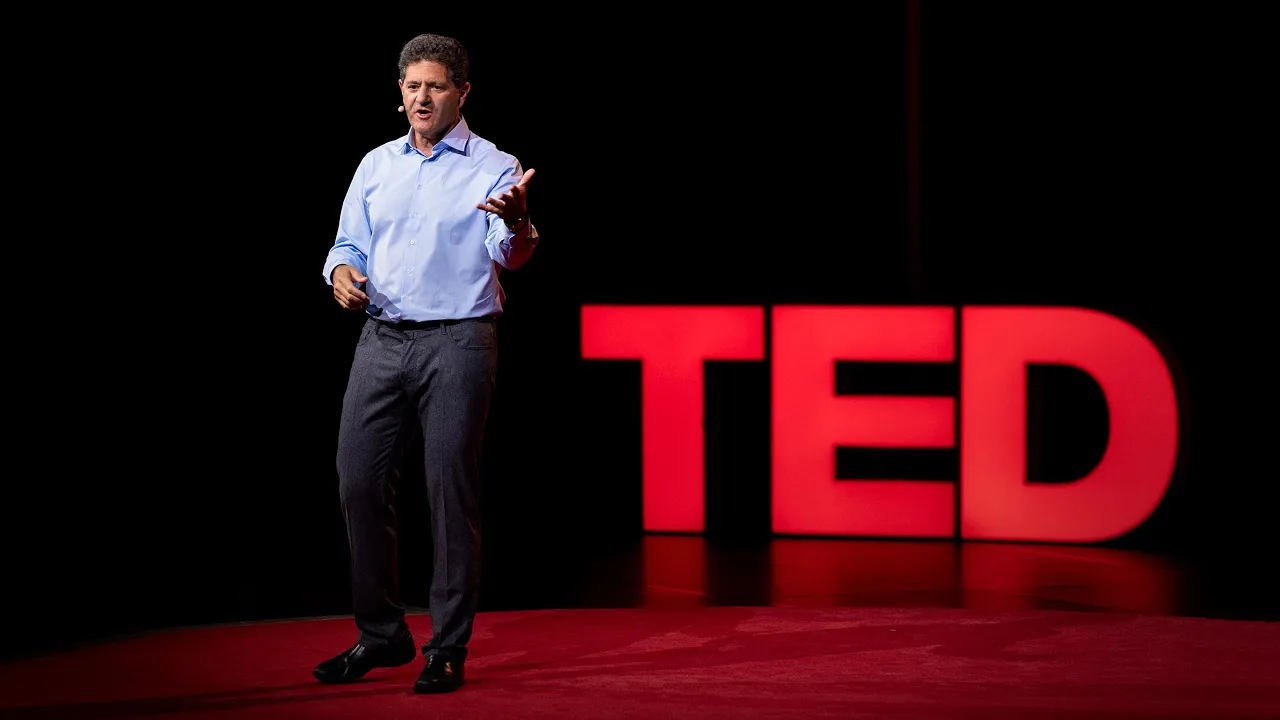
TED
Economic growth is driven by worker inclusion and reciprocity rather than capital accumulation, invalidating the neoliberal dogma that greed creates prosperity.
AI-assisted summary of The dirty secret of capitalism -- and a new way forward | Nick Hanauer — original source. Check the original for full context.
Source published:
Key ideas
- Over the past 30 years in the US, the top 1% gained $21 trillion while the bottom 50% lost $900 billion, driven by neoliberal economic orthodoxies that justify wage suppression and inequality. (0:13)
- Empirical evidence from Seattle's $15 minimum wage contradicted neoliberal equilibrium models: restaurant employment boomed because higher disposable wages fueled local demand. (4:33)
- A new multidisciplinary economic paradigm posits that economies are evolutionary ecosystems where reciprocity and broad inclusion—not capital and selfish competition—drive sustainable growth. (10:21)
- Nick Hanauer argues that systemic legislative change yields far greater leverage than individual charity, noting the $15 minimum wage movement impacted roughly 30 million workers. (16:03)
Detailed notes
## Background This talk was delivered by entrepreneur Nick Hanauer, published on YouTube by the official TED channel on October 18, 2019. According to the page description, Hanauer dismantles the morally corrosive and scientifically flawed dogma that 'greed is good,' arguing that rising inequality and political instability stem from decades of bad economic theory and presenting an alternative model centered on reciprocity and cooperation.
## TL;DR Speaking as an unapologetic ultra-capitalist from the top 0.01 percent, Nick Hanauer argues that neoliberal economics is fundamentally backwards because human prosperity is driven by cooperation, reciprocity, and inclusion rather than capital, competition, and selfishness. He systematically dismantles core neoliberal orthodoxies—such as the assumptions that markets are self-balancing equilibrium systems, that compensation equals economic value, and that humans are selfish utility-maximizers. Instead, Hanauer outlines a new framework where economies are treated as tended gardens rather than wild jungles, corporate purpose serves all stakeholders rather than merely enriching shareholders, and economic rules are recognized as deliberate human choices. In a brief concluding Q&A, Hanauer explains that systemic legislative change yields far greater leverage than private philanthropy alone, citing the fight for a $15 minimum wage that impacted millions of workers.
## Atmosphere & style The presentation is punchy, candid, and intellectually invigorating, driven by Hanauer's provocative self-awareness as an elite insider turning on the very doctrines that enriched him. Balancing sharp wit with moral urgency, the delivery moves seamlessly between dismantling academic orthodoxies and championing an optimistic, human-centered vision of society. The brief post-talk exchange adds a pragmatic, grounded edge as Hanauer humorously and decisively defends policy leverage over mere personal philanthropy.
## Bulletin - [00:13](https://www.youtube.com/watch?v=th3KE_H27bs&t=13s) Over the past 30 years in the US, the top 1% gained $21 trillion while the bottom 50% lost $900 billion, driven by neoliberal economic orthodoxies that justify wage suppression and inequality. - [04:33](https://www.youtube.com/watch?v=th3KE_H27bs&t=273s) Empirical evidence from Seattle's $15 minimum wage contradicted neoliberal equilibrium models: restaurant employment boomed because higher disposable wages fueled local demand. - [10:21](https://www.youtube.com/watch?v=th3KE_H27bs&t=621s) A new multidisciplinary economic paradigm posits that economies are evolutionary ecosystems where reciprocity and broad inclusion—not capital and selfish competition—drive sustainable growth. - [16:03](https://www.youtube.com/watch?v=th3KE_H27bs&t=963s) Nick Hanauer argues that systemic legislative change yields far greater leverage than individual charity, noting the $15 minimum wage movement impacted roughly 30 million workers.
## Key takeaways - [00:13](https://www.youtube.com/watch?v=th3KE_H27bs&t=13s) Neoliberal economic prescriptions claiming higher taxes and wages destroy jobs have served the interests of billionaires rather than the public good. - [00:13](https://www.youtube.com/watch?v=th3KE_H27bs&t=13s) Three decades of neoliberal policy resulted in the top 1% becoming $21 trillion richer while the bottom 50% became $900 billion poorer and middle-class wages stagnated. - [02:51](https://www.youtube.com/watch?v=th3KE_H27bs&t=171s) Neoliberal economics is fundamentally backwards: economic growth is driven by people, the public good by reciprocity, and prosperity by cooperation. - [04:33](https://www.youtube.com/watch?v=th3KE_H27bs&t=273s) The assumption that market economies are efficient equilibrium systems where higher wages automatically destroy jobs is empirically disproven. - [04:33](https://www.youtube.com/watch?v=th3KE_H27bs&t=273s) Workers are not paid according to their intrinsic economic worth, but according to their bargaining power relative to employers. - [07:13](https://www.youtube.com/watch?v=th3KE_H27bs&t=433s) The behavioral model of Homo economicus incorrectly treats humans as purely selfish and utility-maximizing, ignoring humanity's evolutionary superpower of reciprocity. - [07:13](https://www.youtube.com/watch?v=th3KE_H27bs&t=433s) The claim that 'greed is good' is scientifically false; being rapacious does not make someone a capitalist, but rather a sociopath. - [10:21](https://www.youtube.com/watch?v=th3KE_H27bs&t=621s) Market capitalism operates as an evolutionary positive feedback loop where innovation solves human problems and consumer demand acts as the selection mechanism. - [10:21](https://www.youtube.com/watch?v=th3KE_H27bs&t=621s) Market competition occurs primarily between highly cooperative groups and teams, making internal collaboration essential to business success. - [12:40](https://www.youtube.com/watch?v=th3KE_H27bs&t=760s) Economies are gardens rather than jungles: markets are powerful problem-solving technologies, but they require social norms and democratic regulation to prevent systemic crises. - [13:33](https://www.youtube.com/watch?v=th3KE_H27bs&t=813s) Economic inclusion is not a charitable luxury; actively including more people in more ways is the direct cause of growth in market economies. - [13:33](https://www.youtube.com/watch?v=th3KE_H27bs&t=813s) Shareholder primacy is an economic grift; corporations must be structured to serve the collective welfare of workers, customers, communities, and shareholders. - [13:33](https://www.youtube.com/watch?v=th3KE_H27bs&t=813s) Economic laws are constructed social choices and narratives rather than unchangeable laws of physics. - [16:03](https://www.youtube.com/watch?v=th3KE_H27bs&t=963s) Philanthropy and individual voluntary sacrifices cannot substitute for systemic legislative change that compels all wealthy actors to pay fair taxes and wages.
## Detailed walkthrough ### [00:13](https://www.youtube.com/watch?v=th3KE_H27bs&t=13s) The Dirty Secret of Modern Economics
Nick Hanauer introduces himself not merely as an ordinary participant in the market, but as an unapologetic ultra-capitalist. Having spent 30 years in business across three dozen companies and helping generate tens of billions of dollars in market value, he sits firmly in the top 0.01 percent of earners. He jokes about why wealthy capitalists like him have never had it better, asking if the rich are simply smarter, working harder, taller, or better looking than they were three decades ago. The reality, he explains, comes down to how the economics profession has shifted: while economists once served the broader public interest, in the neoliberal era they have functionally worked on behalf of billionaires and massive corporations.
Whenever society considers standard public remedies—such as taxing the rich, regulating corporate giants, or bumping up workers' wages—neoliberal orthodox economists issue dire warnings. They insist that raising taxes inevitably strangles growth, regulation breeds inefficiency, and raising wages kills off jobs. Hanauer observes that following these prescriptions has skewed the economy into extreme inequality:
> “Well, as a consequence of that thinking, over the last 30 years, in the USA alone, the top one percent has grown 21 trillion dollars richer while the bottom 50 percent have grown 900 billion dollars poorer, a pattern of widening inequality that has largely repeated itself across the world.”
Even as middle-class workers endure roughly 40 years of stagnant wages, economists continue to insist that the cure for the dislocations of austerity and globalization is simply deeper austerity and more globalization.
- **Hanauer’s credentials**: 30-year career, founded or funded ~36 companies, generated tens of billions in market value, member of the top 0.01%. - **Wealth shift in the US over 30 years**: Top 1% gained $21 trillion; bottom 50% lost $900 billion. - **Wage stagnation**: Middle-class wages have remained essentially flat for about 40 years.
---
[02:51](https://www.youtube.com/watch?v=th3KE_H27bs&t=171s) Why Neoliberal Theory Is Backwards
Hanauer argues that economics rightfully earned its title as the "dismal science"—not because it is cold, but because despite its intricate mathematical modeling, it is not actually a science at all. A growing cadre of academics and practitioners has realized that neoliberal theory is not just mistaken, but dangerously backwards, directly fueling modern inequality and political unrest. The core mechanics of human society have been completely inverted by the dominant paradigm:
> “What we now know is that the economics that made me so rich isn't just wrong, it's backwards, because it turns out it isn't capital that creates economic growth, it's people; and it isn't self-interest that promotes the public good, it's reciprocity; and it isn't competition that produces our prosperity, it's cooperation.”
A socioeconomic framework that fails to be just or inclusive cannot sustain the broad social cooperation necessary for a modern society to function. To correct course, Hanauer insists we must examine and dismantle the objectively false assumptions underlying neoliberalism.
---
[04:33](https://www.youtube.com/watch?v=th3KE_H27bs&t=273s) False Assumptions: Equilibrium and Value
Hanauer breaks down the first two flawed dogmas of neoliberal doctrine:
1. **The Market as an Efficient Equilibrium System**: Neoliberal theory assumes that the economy operates like a balanced scale, meaning if one variable like wages goes up, another like employment must fall. Hanauer points to his home city of Seattle, which in 2014 passed the first $15 minimum wage in the nation. Neoliberals raised an alarm, claiming restaurants would shutter and thousands of low-wage workers would be laid off. Instead, unemployment dropped significantly and the city's restaurant industry boomed. Raising wages did not kill jobs; it gave low-wage restaurant workers enough disposable income to dine out at restaurants themselves.
2. **Price Always Equals Value**: This assumption claims that whatever someone is paid matches the economic value they produce—implying that an executive earning $50 million a year creates 1,000 times the value of a worker earning $50,000. Hanauer calls this out as convenient executive self-justification:
> “People are not paid what they are worth. They are paid what they have the power to negotiate, and wages' falling share of GDP is not because workers have become less productive but because employers have become more powerful.”
By ignoring the profound power asymmetry between labor and capital, neoliberal economics acts not as objective science, but as a protection racket for the wealthy.
---
[07:13](https://www.youtube.com/watch?v=th3KE_H27bs&t=433s) The Pernicious Myth of *Homo Economicus*
The third and most damaging premise is the behavioral model of *Homo economicus*—the assumption that human beings are perfectly rational, thoroughly selfish, utility-maximizing actors. Hanauer asks whether anyone honestly believes that every kind gesture across their lifetime was an attempt to maximize personal utility, or that a soldier diving on a grenade to save comrades is merely serving narrow self-interest. Empirical science demonstrates that humans are fundamentally cooperative and reciprocal.
Yet, neoliberalism used the assumption of universal selfishness to build its central moral narrative: if humans are purely selfish, and society is prosperous, then greed must be what creates prosperity. This logic produced the doctrine that greed is good, widening inequality is efficient, and corporate directors should care solely about maximizing shareholder value.
```mermaid flowchart TD accTitle: The Neoliberal Logic of Selfishness vs Reality accDescr: Flowchart contrasting the flawed neoliberal deduction of greed with the empirical reality of cooperation and reciprocity.
subgraph Neoliberal ["The Neoliberal Fallacy"] A["Flawed Premise:<br/>Humans are purely selfish & rational"] --> B["Observed Prosperity in the World"] B --> C["False Conclusion:<br/>Selfishness creates prosperity ('Greed is Good')"] C --> D["Corporate Purpose:<br/>Enrich shareholders above all else"] end
subgraph Reality ["Empirical Science & New Economics"] E["Empirical Fact:<br/>Humans are cooperative, reciprocal, moral"] --> F["True Driver:<br/>Reciprocity is humanity's superpower"] F --> G["Sustainable Prosperity:<br/>Built on inclusion and teamwork"] end ```
Hanauer highlights how changing the premise flips the entire conclusion:
> “So at the heart of this new economics is a story about ourselves that grants us permission to be our best selves, and, unlike the old economics, this is a story that is virtuous and also has the virtue of being true.”
---
[10:21](https://www.youtube.com/watch?v=th3KE_H27bs&t=621s) How Prosperity Actually Evolves
Hanauer makes clear that this new economic model is not his own personal invention. Rather, it is being constructed by researchers across evolutionary biology, complexity theory, anthropology, psychology, and economics. In this emerging paradigm, market capitalism functions as an evolutionary, positive feedback system:
1. **Innovation** provides the solutions to human problems. 2. **Consumer Demand** acts as the selection mechanism determining which innovations are useful. 3. Solving problems generates prosperity, which in turn leads to more complex problems and solutions. 4. Managing that technical complexity requires deeper levels of social and economic cooperation to create specialized products.
While competition plays a clear role, Hanauer notes that market competition occurs between *cooperative groups*—teams within firms, networks of suppliers, and entire nations. In business, assembling a collaborative team that harnesses everyone's talents beats relying on "a bunch of selfish jerks."
---
[12:40](https://www.youtube.com/watch?v=th3KE_H27bs&t=760s) New Rules of Thumb: Gardens and Inclusion
To transition away from neoliberal orthodoxy and build an equitable, durable society, the new economics provides foundational rules of thumb:
1. **Economies are gardens, not jungles**: While markets are the most powerful social engine ever created for solving problems, they cannot self-regulate toward the common good. Left untended by social norms and democratic governance, they run wild and generate systemic crises—with the 2008 financial crash and accelerating climate change serving as clear proofs. 2. **Inclusion creates economic growth**: Rather than viewing inclusion as a social luxury or an inefficient handout, the new framework recognizes that broad participation directly fuels economic vitality.
Hanauer underscores that markets require active stewardship:
> “First is that successful economies are not jungles, they're gardens, which is to say that markets, like gardens, must be tended, that the market is the greatest social technology ever invented for solving human problems, but unconstrained by social norms or democratic regulation, markets inevitably create more problems than they solve.”
[13:33](https://www.youtube.com/watch?v=th3KE_H27bs&t=813s) Rethinking the Corporation, Greed, and Economic Law
Continuing his breakdown of foundational economic ideas, Nick Hanauer rejects the common notion that shared prosperity is merely an expensive luxury to be afforded only after economic growth has already occurred. Instead, he insists that human participation is the primary engine of prosperity. As Hanauer puts it: “Including more people in more ways is what causes economic growth in market economies.”
```mermaid flowchart TD accTitle: Neoliberalism versus New Economics accDescr: A comparison showing the shift from neoliberal shareholder primacy and greed to a stakeholder-driven cooperative economy.
subgraph Neoliberal["Neoliberal Model"] N1["Assumption: Greed is good"] --> N2["Shareholder Primacy:<br>Enrich executives & investors"] N2 --> N3["Treated as unchangeable natural law"] end
subgraph NewEcon["New Economics Model"] E1["Principle: Cooperation & reciprocity"] --> E2["Stakeholder Welfare:<br>Workers, customers, community, shareholders"] E2 --> E3["Understood as social norms & political choices"] end ```
Moving to his third principle, Hanauer targets the corporate boardroom, calling shareholder primacy “the greatest grift in contemporary economic life.” He argues that the orthodox claim that an executive's sole responsibility is maximizing shareholder value and padding executive compensation is hollow. Rather, a credible economic model must demand that business institutions serve the collective welfare of every group invested in their success—including workers, consumers, local communities, and shareholders alike.
His fourth rule directly repudiates the iconic Wall Street dogma that greed is inherently good. To Hanauer, unchecked avarice is a destructive pathology rather than an engine of progress: “Being rapacious doesn't make you a capitalist, it makes you a sociopath.” He emphasizes that because modern economies rely overwhelmingly on large-scale human cooperation, sociopathic behavior harms business performance just as severely as it fractures civil society.
Finally, Hanauer addresses the perceived permanence of economic systems. Unlike the immutable laws of physics, the rules governing an economy are human choices rather than mathematical inevitabilities. Neoliberalism has disguised itself as natural law, yet it rests on constructed social narratives and pseudoscience. Hanauer concludes his talk by reminding the audience of their agency: “And here's the good news: if we want a new economics, all we have to do is choose to have it.”
- **Principle 3:** The primary purpose of a corporation must be elevating the welfare of all stakeholders—workers, customers, communities, and shareholders—rather than purely extracting value for shareholders. - **Principle 4:** High-performing market economies depend fundamentally on trust and cooperation at scale, making rapacious greed a liability. - **Principle 5:** Economic laws are social constructs and moral choices, not immutable physical constants.
---
[16:03](https://www.youtube.com/watch?v=th3KE_H27bs&t=963s) Q&A: Why Giving Away Wealth Isn't Enough
Following the talk, the moderator poses a familiar challenge to Hanauer: if he finds the contemporary economic structure so objectionable, why doesn't he simply give away his vast personal fortune and join the 99 percent? Hanauer acknowledges the frequent critique, noting that critics regularly demand to know why he does not voluntarily pay higher personal tax rates or unilaterally raise pay across his companies.
Hanauer explains that purely individual philanthropy or unilateral action fails to solve systemic problems because it lacks leverage. Instead, he found an approach that achieves systemic impact: “The problem is, it doesn't make that much difference, and I have discovered a strategy that works literally a hundred thousand times better—which is to use my money to build narratives and to pass laws that will require all the other rich people to pay taxes and pay their workers better.”
As concrete evidence of this systemic approach, Hanauer points to the national campaign for a $15 minimum wage, an initiative he helped seed and champion. While one wealthy individual raising wages at a handful of enterprises changes only a few hundred or thousand lives, the legislative campaign altered standard wage floors across cities and states, ultimately impacting 30 million workers. The moderator closes the session with a joke, offering that if Hanauer ever changes his mind about giving away his fortune directly, they can readily find people willing to take it off his hands.
- **Scale of legislative reform:** The $15 minimum wage policy initiative Hanauer backed has reached and benefited approximately 30 million American workers. - **Systemic leverage vs. individual charity:** Hanauer emphasizes using private capital to reshape public narratives and enact binding public policy rather than relying on piecemeal philanthropic gestures.
## Notable quotes > [13:33](https://www.youtube.com/watch?v=th3KE_H27bs&t=813s) Being rapacious doesn't make you a capitalist, it makes you a sociopath. — Nick Hanauer
> [04:33](https://www.youtube.com/watch?v=th3KE_H27bs&t=273s) People are not paid what they are worth. They are paid what they have the power to negotiate, and wages' falling share of GDP is not because workers have become less productive but because employers have become more powerful. — Nick Hanauer
> [13:33](https://www.youtube.com/watch?v=th3KE_H27bs&t=813s) Including more people in more ways is what causes economic growth in market economies. — Nick Hanauer
## Mentioned Nick Hanauer, Seattle, TED, Wall Street
## Video description Visit http://TED.com to get our entire library of TED Talks, subtitles, translations, personalized Talk recommendations and more.
Rising inequality and growing political instability are the direct result of decades of bad economic theory, says entrepreneur Nick Hanauer. In a visionary talk, he dismantles the mantra that "greed is good" -- an idea he describes as not only morally corrosive, but also scientifically wrong -- and lays out a new theory of economics powered by reciprocity and cooperation.
The TED Talks channel features the best talks and performances from the TED Conference, where the world's leading thinkers and doers give the talk of their lives in 18 minutes (or less). Look for talks on Technology, Entertainment and Design -- plus science, business, global issues, the arts and more. You're welcome to link to or embed these videos, forward them to others and share these ideas with people you know. For more information on using TED for commercial purposes (e.g. employee learning, in a film or online course), please submit a Media Request here: https://media-requests.ted.com/
Follow TED on Twitter: http://www.twitter.com/TEDTalks Like TED on Facebook: https://www.facebook.com/TED
Subscribe to our channel: https://www.youtube.com/TED
[Source](https://www.youtube.com/watch?v=th3KE_H27bs)