UN Vetoes and Taiwan Standoff Bar Exact Global Country Count
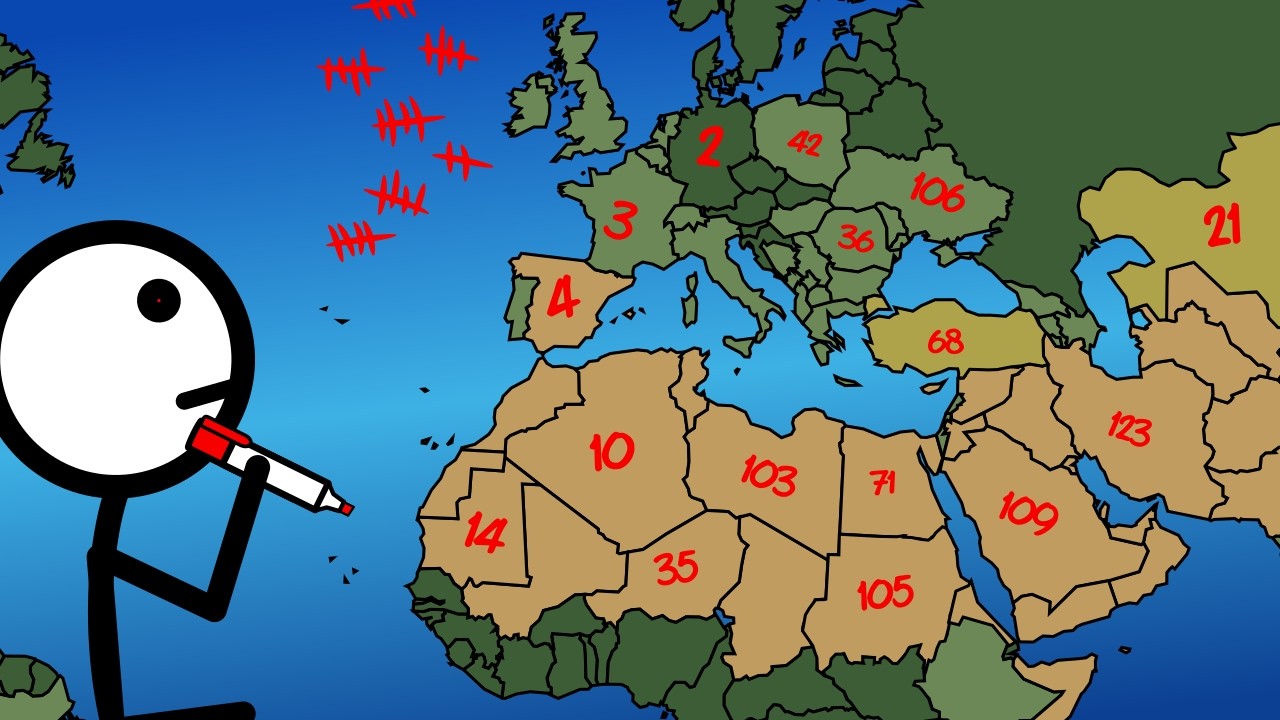
Some Countries Exist Only on Paper — CGP Grey

CGP Grey

An objective tally of world nations remains impossible because sovereign statehood depends strictly on foreign diplomatic recognition rather than standardized borders or governance.

AI-assisted summary of Some Countries Exist Only on Paper — original source. Check the original for full context.

Source published:

Key ideas

  • The United Nations officially lists 193 member states, but membership functions as an exclusive club requiring unanimous approval from the five permanent Security Council members rather than a comprehensive census of all nations. (0:00)
  • Breakaway regions such as Transnistria, Nagorno-Karabakh, Abkhazia, and South Ossetia exist in geopolitical limbo, mutually recognizing one another despite holding minimal to zero formal recognition from UN member states. (1:05)
  • The International Olympic Committee counts 204 participating countries by including non-sovereign dependencies like Puerto Rico, Bermuda, and Aruba, while omitting fully recognized sovereign states like Vatican City. (3:36)
  • Formulating a rigid, objective definition of statehood fails because any functional criteria must simultaneously encompass anomalous nations like Vatican City while excluding self-governing non-countries like Hong Kong. (3:36)

Detailed notes

## Background Published by CGP Grey on YouTube on October 23, 2013, the video investigates the surprisingly slippery question of how many countries actually exist in the world. The video description provides a link to the creator's website, credits musician David Rees, and includes an extensive list of special thanks to project supporters.

## TL;DR Determining the total number of countries on Earth is impossible through a simple map count, as borders and statehood depend entirely on diplomatic recognition. While the United Nations lists 193 member states, it excludes recognized sovereign states like Vatican City and blocks disputed entities like Kosovo, while territories like Taiwan force the world into elaborate geopolitical charades to avoid conflict. Meanwhile, organizations like the International Olympic Committee count 204 members by including non-sovereign dependencies such as Puerto Rico and Bermuda. Because any formal checklist must paradoxically accommodate micro-nations like Vatican City while excluding autonomous territories like Hong Kong, the only sensible answer is simply 'around 200.'

## Atmosphere & style The presentation features CGP Grey's signature brisk, dryly humorous, and intellectually skeptical delivery. Complex diplomatic deadlocks and existential geopolitical flashpoints are broken down into absurd, relatable analogies—from rebellious 18th-century upstarts to makeshift micronations printing inkjet currency on abandoned oil rigs. The pacing is crisp and playful, leaving viewers with an entertaining sense of revelation about how much of international law is essentially an agreed-upon fiction.

## Bulletin - [00:00](https://www.youtube.com/watch?v=4AivEQmfPpk&t=0s) The United Nations officially lists 193 member states, but membership functions as an exclusive club requiring unanimous approval from the five permanent Security Council members rather than a comprehensive census of all nations. - [01:05](https://www.youtube.com/watch?v=4AivEQmfPpk&t=65s) Breakaway regions such as Transnistria, Nagorno-Karabakh, Abkhazia, and South Ossetia exist in geopolitical limbo, mutually recognizing one another despite holding minimal to zero formal recognition from UN member states. - [03:36](https://www.youtube.com/watch?v=4AivEQmfPpk&t=216s) The International Olympic Committee counts 204 participating countries by including non-sovereign dependencies like Puerto Rico, Bermuda, and Aruba, while omitting fully recognized sovereign states like Vatican City. - [03:36](https://www.youtube.com/watch?v=4AivEQmfPpk&t=216s) Formulating a rigid, objective definition of statehood fails because any functional criteria must simultaneously encompass anomalous nations like Vatican City while excluding self-governing non-countries like Hong Kong.

## Key takeaways - [00:00](https://www.youtube.com/watch?v=4AivEQmfPpk&t=0s) Counting the world's countries via maps is impossible because borders and recognition vary entirely depending on who draws them. - [00:00](https://www.youtube.com/watch?v=4AivEQmfPpk&t=0s) The United Nations' roster of 193 members excludes sovereign nations like Vatican City and disputed entities like Kosovo. - [00:00](https://www.youtube.com/watch?v=4AivEQmfPpk&t=0s) Kosovo's UN membership is blocked by Russian and Chinese vetoes on the Security Council, even though over half of all UN members recognize it independently. - [01:05](https://www.youtube.com/watch?v=4AivEQmfPpk&t=65s) Geopolitical breakaway entities like Transnistria, Abkhazia, South Ossetia, and Nagorno-Karabakh form diplomatic networks among themselves despite lack of broader UN recognition. - [01:05](https://www.youtube.com/watch?v=4AivEQmfPpk&t=65s) Unrecognized breakaway states follow a historical pattern of post-conflict rebellion, mirroring the successful diplomacy of the 1776 American Revolution versus the collapsed 1860s Confederacy. - [02:38](https://www.youtube.com/watch?v=4AivEQmfPpk&t=158s) Disputed territories force all sovereign nations to take diplomatic stances, as neutrality or inaction still dictates embassy placement and diplomatic recognition. - [02:38](https://www.youtube.com/watch?v=4AivEQmfPpk&t=158s) Taiwan functions as an independent country in practice, but Chinese economic power compels the world to engage in diplomatic ambiguity under designations like 'Chinese Taipei.' - [03:36](https://www.youtube.com/watch?v=4AivEQmfPpk&t=216s) The International Olympic Committee inflates its list of countries to 204 by welcoming non-independent territories such as Puerto Rico, Bermuda, and Aruba. - [03:36](https://www.youtube.com/watch?v=4AivEQmfPpk&t=216s) A standard definition of statehood is caught between the extremes of Vatican City, the least typical recognized country, and Hong Kong, the most country-like entity that is not an independent state. - [03:36](https://www.youtube.com/watch?v=4AivEQmfPpk&t=216s) Because statehood ultimately hinges on whether other nations acknowledge it, the most accurate answer to how many countries exist is simply 'around 200.'

## Detailed walkthrough ### [00:00](https://www.youtube.com/watch?v=4AivEQmfPpk&t=0s) Counting Countries: The UN Roster and the Diplomatic Blackball

The seemingly innocent question, "How many countries are there?", appears easy at first glance: grab a map and count them. However, maps do not agree, because borders always depend on whose map you are looking at. Turning to an official committee sounds like the logical solution, and checking the United Nations headquarters—counting the name tags on the desks where nations sit—yields an official tally of 193 member states. Yet the UN list is far from a complete world census; as CGP Grey puts it, “The United Nations list is less a complete class roster than a club membership that doesn't include everyone.”

```mermaid flowchart TD accTitle: UN Membership Process for Disputed Territories accDescr: Flowchart showing how Kosovo's application to the United Nations is blocked by Permanent Security Council vetoes despite widespread recognition. subgraph Applicant["Applicant State"] K["Kosovo"] end subgraph UNSC["UN Security Council Veto Gate"] US["USA, UK, France<br/>(Recognize as Country)"] RU["Russia & China<br/>(View as Rebellious Serbia)"] end subgraph Result["Outcome"] Veto["Membership Vetoed"] Global["100+ UN Members Recognize Separately<br/>(Thank-you website)"] end

K --> US K --> RU RU --> Veto US -.-> Global ```

Vatican City, for instance, is indisputably an independent country, but it remains "too cool for school" when it comes to joining the UN club. Other non-members occupy far more legally ambiguous territory. Kosovo actively wants to join the UN, but admission requires zero vetoes from the five permanent members of the Security Council. While the United States, the United Kingdom, and France recognize Kosovo as a sovereign nation, Russia and China consider her merely a rebellious province of Serbia and veto her application. Despite the roadblock, just over half of all UN member nations individually recognize Kosovo, prompting the country to maintain an adorable website thanking each supporting nation in its native language.

- The United Nations has 193 member states. - UN membership requires unanimous approval from the five permanent Security Council members (US, UK, France, Russia, China). - Russia and China veto Kosovo's bid, backing Serbia's sovereignty claim. - Kosovo is recognized by just over half of the UN's members and maintains a website to thank each one in their native tongue.

---

[01:05](https://www.youtube.com/watch?v=4AivEQmfPpk&t=65s) The Fuzzy "Maybe-Countries" and the Ghost of 1776

Beyond Kosovo, there is a whole category of disputed territories striving for recognition. Transnistria, the Nagorno-Karabakh Republic, Abkhazia, and South Ossetia exist in geopolitical limbo—variously claimed as parts of Moldova, Azerbaijan, or Georgia depending on who is asked. Two of these four have zero recognition from UN members, while the other two have only five backers; nevertheless, all four recognize one another. Other disputed entities include the Sahrawi Arab Democratic Republic and Northern Cyprus. Travelers visiting these places will find that they are partially autonomous, have governments, and issue passports (even if those documents have limited utility), yet they may lack full territorial control or marked borders.

These places are fuzzy because they are almost always born out of recent armed conflict. CGP Grey explains that this is normal historically: in 1776, the United States was not an established country, but “just an idea in minds of rebel scum.” Without tireless diplomatic efforts abroad, young America would not have survived, whereas the Confederacy attempted the same rebellion a century later, failed at diplomacy, and collapsed. Today's breakaway territories might be future American success stories or future failed Confederacies, but such conflicts often take decades to resolve.

- **Breakaway entities in the Caucasus/Eastern Europe:** Transnistria (Moldova), Nagorno-Karabakh (Azerbaijan), Abkhazia (Georgia), and South Ossetia (Georgia). - **Mutual recognition:** The four breakaway territories recognize each other despite having between zero and five UN member endorsements. - **Other disputed states:** Sahrawi Arab Democratic Republic (Western Sahara) and Northern Cyprus. - **Historical parallel:** The 1776 American revolutionaries succeeded through foreign diplomacy, while the 1860s Confederacy failed to win international backing.

---

[02:38](https://www.youtube.com/watch?v=4AivEQmfPpk&t=158s) The Taiwan Dilemma and the Threat of World War III

Unrecognized or semi-recognized states force every nation on Earth into uncomfortable diplomatic corners. Even an isolated island nation with no interest in foreign affairs must decide whether to send ambassadors or open an embassy. Inaction itself forces a government to choose a side in territorial disputes.

The ultimate example of this tension is Taiwan. By every standard practical measure, Taiwan functions as a separate, self-governing country. However, the People's Republic of China refuses to tolerate independence, insisting the territory be referred to as "Chinese Taipei" and using its immense economic leverage—as the manufacturer of the world's clothes, utensils, televisions, phones, and computers—to force compliance. The entire globe participates in an elaborate charade. CGP Grey notes the sheer absurdity of global superpowers walking this tightrope: “So almost all countries -- including the mighty United States -- plays along even though they unofficially acknowledge Taiwan's independence and do things that wouldn't make any senses otherwise -- like sending aircraft carriers to protect one part of China from another part of China.” In this way, asking a simple question about the total number of countries leads directly to a metaphorical "World War III: Press Here to Start" panic button.

---

[03:36](https://www.youtube.com/watch?v=4AivEQmfPpk&t=216s) The Olympic Inflation and the Vatican–Hong Kong Paradox

Seeking an escape from high-stakes geopolitical posturing leads naturally to the Olympic Games, which ostensibly view world athletics from an impartial, godlike perch. Yet asking the International Olympic Committee yields an answer of 204 countries. The Olympics inflates its roster by defining non-sovereign territories as separate nations—including Puerto Rico (unambiguously part of the United States), Bermuda (a British Overseas Territory), and Aruba (part of the Kingdom of the Netherlands). These territories have no claims to sovereign statehood, but the IOC welcomes them, likely to boast marketing slogans like "more than 200 countries compete!" Ironically, this inflated list excludes Vatican City, where an elderly population means "divine intervention would be required to take home a gold."

```mermaid flowchart LR accTitle: The Spectrum of Statehood Definition accDescr: Diagram illustrating the paradox between Vatican City and Hong Kong on the spectrum of country-likeness and legal recognition. subgraph Recognized["Legally a Country"] VC["Vatican City<br/>Least country-like entity<br/>(Tiny, unique demography,<br/>full sovereignty)"] end subgraph Unrecognized["Not an Independent Country"] HK["Hong Kong<br/>Most country-like non-country<br/>(Own border, currency, laws,<br/>part of China)"] end VC <--->|"Contradictory Definitions"| HK ```

This contrast demonstrates why formulating a single, objective checklist for country status is impossible: any working definition must stretch wide enough to include Vatican City (the least country-like entity that is genuinely a country) while simultaneously excluding Hong Kong (the most country-like entity that is not). Beyond that, the world is filled with self-governing dependencies, as well as eccentric individuals who plant flags on abandoned sea forts or oil rigs, print homemade bank notes on inkjets, and declare "Deludtopia" to the world.

Because of this inescapable ambiguity, attempting to give a precise number is counterproductive. As CGP Grey summarizes, “The best answer to the question 'how many countries' for the forceable future is probably to say 'around 200' and leave it at that. An answer with more significant figures implies more agreement than there really is -- because ultimately, what makes a country a country is if other countries think that country is a country.”

- The International Olympic Committee lists 204 competing countries. - Olympic "countries" include territories with no claim to independence: Puerto Rico (US), Bermuda (UK), and Aruba (Netherlands). - Vatican City is absent from the Olympics. - A functional definition of a country must simultaneously include Vatican City and exclude Hong Kong. - The safest working answer to the question is simply "around 200."

## Notable quotes > [03:36](https://www.youtube.com/watch?v=4AivEQmfPpk&t=216s) An answer with more significant figures implies more agreement than there really is -- because ultimately, what makes a country a country is if other countries think that country is a country. — CGP Grey

> [00:00](https://www.youtube.com/watch?v=4AivEQmfPpk&t=0s) The United Nations list is less a complete class roster than a club membership that doesn't include everyone. — CGP Grey

> [03:36](https://www.youtube.com/watch?v=4AivEQmfPpk&t=216s) The best answer to the question 'how many countries' for the forceable future is probably to say 'around 200' and leave it at that. — CGP Grey

## Mentioned CGP Grey, United Nations, United Nations Security Council, International Olympic Committee, Kosovo, Vatican City, Serbia, United States, United Kingdom, France, Russia, China, Transnistria, Moldova, Nagorno-Karabakh Republic, Azerbaijan, Abkhazia, South Ossetia, Georgia, Sahrawi Arab Democratic Republic, Northern Cyprus, Taiwan, Puerto Rico, Bermuda, Aruba, Kingdom of the Netherlands, Hong Kong, David Rees

## Video description http://www.cgpgrey.com

Special thanks to:

OilyRaven Chris Hokanson Will, the Rith King Kyle Whitehouse Bjoern Schumacher c/o bscon Daniel O'Connell Caleb Hiddleson Americanwolf10 dimitry @CNG Hamish Mackinnon :) (with one leg) Bernadette Sisk Steve Dutfield (@SteveDuts) His Royal Highness King Samy II Son of Hamed I of the Original Greek City of Philadelphia. @awesomenerdMD Patrick W. Gilmore Tsyren Balzhanov John Levin @TelliLace EratosthenesdeCyrene (Miguel Rothe) Jesse L Hunter Greg Leask Ivan Garcia Ivan Garcia Conan Kudo (ニール・ゴンパ) Jokteur Greg Carlson David Buchanan Kira E. Lanier Liana Marinescu Kellie Curtis Malone

Music by: http://www.davidreesmusic.com

[Source](https://www.youtube.com/watch?v=4AivEQmfPpk)

中文简报

联合国否决权与台湾僵局致使全球国家精确数量难有定论 由于主权国家地位完全取决于外部外交承认,而非标准化的边界或治理体系,因此无法对世界各国进行客观统计。 仅凭数地图无法确定地球上的国家总数,因为边界和国家地位完全取决于外交承认。尽管联合国列出了193个会员国,但它排除了梵蒂冈这样公认的主权国家,并阻拦了科索沃等存在争议的实体;与此同时,台湾等地区迫使国际社会采取复杂的地缘政治策略以避免冲突。此外,国际奥委会等组织将波多黎各和百慕大等非主权属地计入在内,统计出204个成员。由于任何正式标准都必须自相矛盾地既容纳梵蒂冈等微型国家,又排除香港等自治地区,因此唯一合理的答案只能是“大约200个”。 联合国官方列出了193个会员国,但其成员资格相当于一个排他性俱乐部,需要安全理事会五个常任理事国一致同意,而非对所有国家的全面普查。 (0:00) 德涅斯特河沿岸、纳戈尔诺-卡拉巴赫、阿布哈兹和南奥塞梯等分离地区处于地缘政治未定状态,它们彼此相互承认,却极少或完全没有获得联合国会员国的正式承认。 (1:05) 国际奥委会将波多黎各、百慕大和阿鲁巴等非主权属地包括在内,共计204个参赛国家/地区,同时却遗漏了梵蒂冈这样获得充分承认的主权国家。 (3:36) 制定严格、客观的国家地位定义难以行得通,因为任何实用的标准都必须既涵盖像梵蒂冈这样的特殊国家,又排除像香港这样实行自治的非国家地区。 (3:36)

Reading summary

Determining an exact count of the world's countries is practically impossible because statehood depends entirely on diplomatic consensus and political recognition rather than objective geography, according to CGP Grey. The United Nations Roster and Diplomatic Vetoes (0:00) A seemingly simple way to count countries is to look at official bodies like the United Nations, which counts 193 member states. However, CGP Grey notes that this roster functions more like an exclusive club than an exhaustive global census. Full admission requires unanimous consent from the five permanent members of the UN Security Council: the United States, the United Kingdom, France, Russia, and China. Breakaway Territories and Geopolitical Limbo (0:00) Admission roadblocks leave multiple self-governing territories in diplomatic limbo. Kosovo seeks UN membership and receives recognition from just over half of UN members—including the US, the UK, and France—yet Russia and China veto its admission in support of Serbia's claim. Meanwhile, Vatican City is indisputably sovereign but chooses not to join the UN. Post-Conflict Entities and Historical Precedents (1:05) Geopolitical ambiguity also surrounds post-conflict entities like Transnistria (claimed by Moldova), Nagorno-Karabakh (Azerbaijan), Abkhazia, and South Ossetia (both Georgia). These four territories recognize each other despite having between zero and five UN member endorsements. Other disputed entities include Northern Cyprus and the Sahrawi Arab Democratic Republic. The Taiwan Paradox and Diplomatic Theater (2:38) Territorial disputes force all outside nations to take sides, as seen most acutely with Taiwan. While Taiwan operates as an independent, self-governing entity in practice, China's economic power forces global powers to participate in diplomatic double-speak. Countries like the United States unofficially acknowledge Taiwan's autonomy and offer military protection while officially adhering to Beijing's "Chinese Taipei" naming convention to avoid escalating international conflict. Olympic Inflation and Conflicting Definitions (3:36) Turning to non-political rosters introduces opposite discrepancies. The International Olympic Committee lists 204 participating countries, inflating its tally by including non-sovereign territories with no independence claims, such as Puerto Rico, Bermuda, and Aruba, while lacking Vatican City entirely. Formulating an objective checklist fails because a workable definition must reconcile entities as contradictory as Vatican City (a recognized sovereign nation with few typical state attributes) and Hong Kong (which possesses borders, laws, and currency, but lacks sovereignty). Because statehood ultimately hinges on whether other established nations choose to recognize an entity, CGP Grey concludes that attempting to provide a precise figure falsely implies universal agreement. The most accurate estimate for the foreseeable future is simply "around 200."

精炼阅读摘要

CGP Grey指出,“世界上有多少个国家”这一看似简单的问题并不存在客观标准答案;联合国的193个会员国席位或国际奥委会的204个参赛代表团均无法准确反映现实,一个实体能否被定性为国家,本质上取决于国际社会的主观承认与复杂的地缘政治博弈。 联合国名册的局限与大国否决门槛 (0:00) 如果依据联合国总部各席位上的铭牌来统计国家,会得出193个成员国的法定数据。然而,CGP Grey认为该名单更像是一个排他性的俱乐部名册,而非完整的世界普查。例如,梵蒂冈城拥有无可争议的独立主权,却从未谋求加入联合国;而许多积极争取会员资格的实体则受制于安理会大国的外交博弈。 以科索沃为例,加入联合国需要获得安全理事会五大常任理事国的一致首肯且不得被一票否决。尽管美国、英国和法国承认其主权地位,但俄罗斯与中国将其定性为塞尔维亚的叛乱省份并动用否决权予以封杀。即便如此,科索沃仍获得了超过半数联合国会员国的单独双边承认,甚至专门开设网站使用各承认国的母语表达谢意。 冲突诞生的模糊政权与历史博弈 (1:05) 除了科索沃外,国际体系中还存在大量处于法律模糊地带的自称国家,例如德涅斯特河沿岸(Transnistria)、纳戈尔诺-卡拉巴赫(Nagorno-Karabakh Republic)、阿布哈兹(Abkhazia)与南奥塞梯(South Ossetia)。这些政权根据各方立场分别被视作摩尔多瓦、阿塞拜疆或格鲁吉亚的领土。这四个实体在联合国会员国中仅获得零至五个国家的外交背书,但它们彼此之间实现了相互承认。其他处于类似争议状态的还包括阿拉伯撒哈拉民主共和国(Sahrawi Arab Democratic Republic)与北塞浦路斯(Northern Cyprus)。 此类实体往往脱胎于近期的武装冲突,它们大多具备部分自治权、常设行政机构并签发护照,却缺乏稳固的领土控制与明确边界。CGP Grey指出,这种状态在历史进程中极为普遍:1776年的美利坚合众国在起步阶段仅是反叛者的构想,全凭积极的外交争取才得以存活;而1860年代的美利坚联盟国(Confederacy)则因外交受挫而彻底覆灭。当前的割据实体究竟会成为未来的成功国家还是溃败典型,往往需要耗费数十年时间才能定论。 台湾困境与全球外交的平衡假象 (2:38) 未获完全承认的政体迫使世界各国在外交实践中陷入尴尬境地。即使是远离国际纷争的孤立岛国,也必须在是否互设使馆等问题上作出抉择,因为任何不作为在客观上都是在领土争端中表明立场。 台湾是这一张力最极端的例证。从各项现实运行指标来看,台湾均具备独立自治国家的全部特征;然而,中华人民共和国坚决反对其独立,并要求国际社会统一采用“中华台北”(Chinese Taipei)的称谓,同时凭借其作为全球衣物、餐具、电视、手机和电脑核心制造国的巨大经济影响力迫使各方顺从。这种格局导致全球大国不得不维持一种荒谬的默契:包括美国在内的诸多国家表面上遵循这一规则,私下却非正式地承认台湾的独立运作,甚至派遣航空母舰保护其防务。CGP Grey认为,在这种核心争议面前探究国家数量的精确界限,几乎等同于触碰触发第三次世界大战的警报按钮。 奥运名册膨胀与梵蒂冈-香港悖论 (3:36) 若转向试图保持政治中立的国际奥委会(IOC),则会得到204个参赛国家的统计。然而,奥委会通过将诸多不具备主权诉求的海外领地与属地单列为国家,大幅膨胀了这一名单,其中包括波多黎各(属于美国)、百慕大(英国海外领地)以及阿鲁巴(属于荷兰王国)。这类操作很大程度上服务于商业宣传,但这份膨胀的名册却因人口结构偏向老龄化而未包含梵蒂冈城。 这一反差揭示了制定国家技术标准的根本困境:任何通用定义必须在逻辑上足够宽泛,以涵盖最不像传统国家的真正主权国梵蒂冈城;同时又必须足够严密,以排除在边境、货币与法律制度上极像国家却不具备主权的香港。此外,国际社会中还散落着形形色色的自设微型政权,令客观归类更加困难。 CGP Grey总结强调,在可预见的未来,面对“世界上有多少个国家”的提问,最严谨的回应应当是“大约200个”。给出更精确的有效数字只会误导性地夸大国际共识,因为归根结底,一个实体能否成为国家,唯一决定性的标准在于其他主权国家是否在主观政治上认定它是国家。

Detailed notes — zh

## Background 该视频由知名知识科普频道 CGP Grey 于 2013 年 10 月 23 日发布在 YouTube 平台上。视频简介主要包含了作者网站链接、背景音乐出处以及长串赞助支持者的鸣谢名单。 ## TL;DR 探讨“世界上究竟有多少个国家”看似只是数地图的简单算术,实际上却受困于极其复杂且充满矛盾的地缘政治现实。联合国官方拥有 193 个成员国,但这不仅排除了梵蒂冈这样毫无争议的独立主权实体,也因大国否决权将科索沃等事实政权挡在门外;同时,德涅斯特河沿岸等未获广泛承认的政权甚至形成了抱团互认的闭环。台湾的独立运转与大国的外交周旋进一步凸显了现实与名义的割裂,而国际奥委会给出的 204 个成员名单则又掺杂了波多黎各等不谋求主权的属地。由于任何严密的衡量标准都无法同时调和“最不像国家的真国家(梵蒂冈)”与“最像国家的非国家(香港)”,最终的科学答案只能是模糊的“大约 200 个”,因为一个实体的国家属性归根结底取决于其他国家的承认。 ## Atmosphere & style 全片充盈着 CGP Grey 标志性的快节奏语速与英式黑色幽默,将沉重肃穆的国际公法与领土纷争解构得既荒诞又引人入胜。叙事风格辛辣而一针见血,借由“叛乱分子脑海中的想法”以及“按下一触即发的第三次世界大战按钮”等绝妙比喻,让观众在会心一笑的同时深刻体会到地缘政治灰色地带的现实残酷与无奈。整体观感干脆利落、逻辑层层剥离,观者仿佛经历了一场从天真数数到直面国际外交本质的虚无与清醒之旅。 ## Bulletin - [00:00](https://www.youtube.com/watch?v=4AivEQmfPpk&t=0s) 联合国成员国数量虽然常被视为主权国家的官方基准(视频制作时为 193 个),但其实质更接近排他性俱乐部,且安理会常任理事国的一票否决权直接阻碍了科索沃等争议政权的加入。 - [00:45](https://www.youtube.com/watch?v=4AivEQmfPpk&t=45s) 存在大量仅获得部分承认或仅在彼此之间相互承认的灰色政权(如德涅斯特河沿岸、阿布哈兹等),其最终能否被世界接受往往需要数十年甚至世纪级别的历史检验。 - [02:38](https://www.youtube.com/watch?v=4AivEQmfPpk&t=158s) 国际奥委会列出的 204 个成员包含了波多黎各、百慕大等不谋求独立的海外属地,暴露出体育组织的计算口径存在政治之外的膨胀与水分。 - [04:16](https://www.youtube.com/watch?v=4AivEQmfPpk&t=256s) “国家”不存在普适的客观检验清单,其本质完全取决于其他国家的主观承认,因此目前最诚实的统计答案只能是“大约 200 个”。 ## Key takeaways - [00:00](https://www.youtube.com/watch?v=4AivEQmfPpk&t=0s) 不同来源的世界地图国界划分并不一致,普通人无法仅通过数地图来获知确切的国家数量。 - [00:25](https://www.youtube.com/watch?v=4AivEQmfPpk&t=25s) 联合国的 193 个正式成员国并不能完全等同于全球所有国家,例如梵蒂冈便未加入联合国。 - [00:45](https://www.youtube.com/watch?v=4AivEQmfPpk&t=45s) 联合国安理会五大常任理事国拥有一票否决权,使得科索沃等即使获过半数国家承认的政权也无法入会。 - [01:12](https://www.youtube.com/watch?v=4AivEQmfPpk&t=72s) 德涅斯特河沿岸、纳戈尔诺-卡拉巴赫、阿布哈兹与南奥塞梯形成了互相承认国家地位的特殊政治圈层。 - [01:45](https://www.youtube.com/watch?v=4AivEQmfPpk&t=105s) 争议政权大都在近期武装冲突中诞生,拥有自治权并发行护照,但其领土控制力与边界十分模糊。 - [02:08](https://www.youtube.com/watch?v=4AivEQmfPpk&t=128s) 建国过程充满漫长的不确定性,外交承认的成败决定了一个新政权是走向合众国还是沦为败亡的邦联。 - [02:38](https://www.youtube.com/watch?v=4AivEQmfPpk&t=158s) 即使远离冲突的微型岛国,也必须在是否派驻外交官等站队问题上被迫表态。 - [02:58](https://www.youtube.com/watch?v=4AivEQmfPpk&t=178s) 台湾具备完整的国家运作体系,但在国际上多以“中华台北”指代,各强国常在非官方默许与外交表态之间自相矛盾。 - [03:35](https://www.youtube.com/watch?v=4AivEQmfPpk&t=215s) 国际奥委会拥有 204 个成员,将波多黎各、百慕大、阿鲁巴等从不寻求独立的海外属地均算作参赛国。 - [04:02](https://www.youtube.com/watch?v=4AivEQmfPpk&t=242s) 由于高龄神职人员为主的人口结构,梵蒂冈未被列入奥运会的国家与地区名单中。 - [04:16](https://www.youtube.com/watch?v=4AivEQmfPpk&t=256s) 梵蒂冈(最不像国家的真国家)与香港(最像国家的非国家实体)构成了判定标准的双重极端难题。 - [04:45](https://www.youtube.com/watch?v=4AivEQmfPpk&t=285s) 一个实体是否算作国家,根本上取决于其他国家是否在主观上承认其为国家,精确数字只会造成虚假的共识幻象。 ## Detailed walkthrough ### [00:00](https://www.youtube.com/watch?v=4AivEQmfPpk&t=0s) 地图与联合国的标准:193 个还是俱乐部会员? 想要回答“世界上有多少个国家”这个问题,表面上看似乎很简单:拿出一张世界地图开始数就行了。然而,并非所有地图生来平等,你所拿到的地图来自何方,上面的国界线就会有所不同。既然个人之间无法达成共识,那么交由国际委员会或许能解决问题——直接前往联合国(United Nations),走进各国代表就坐的会议大厅,数一数桌上的国家名牌,就能得到一个官方数字。在本视频制作时,联合国的正式成员国数量是 193 个。 但这绝不是故事的终点。联合国名录与其说是完整的“班级花名册”,不如说是一个排他的“高端俱乐部”。比如梵蒂冈(Vatican City),它毫无疑问是一个主权国家,但面对联合国会员资格时却摆出一副不屑一顾的态度(“too cool for school”)。梵蒂冈虽然情况复杂,但和其他非联合国国家或地区相比,已经算极为明了的案例了。 ```mermaid flowchart TD accTitle: 判定国家数量的不同机构与标准 accDescr: 流程图展示了从联合国到奥运会,再到非公认政权在国家定义上的巨大分歧。 subgraph UN["联合国标准 (UN)"] U1["联合国正式会员国: 193 个"] U2["非会员观察员: 梵蒂冈"] U3["受常任理事国否决: 科索沃"] end subgraph Contested["存疑与未公认地区"] C1["仅彼此承认: 德涅斯特河沿岸、阿布哈兹等"] C2["实力独立但外交受阻: 台湾 (中华台北)"] end subgraph Sports["体育与特殊定义"] S1["国际奥委会: 204 个成员"] S2["属地参赛: 波多黎各、百慕大、阿鲁巴"] end U1 -->|"排他俱乐部机制"| Contested U2 -->|"定义矛盾两极"| S1 ``` - 联合国大会席位记录的成员国总数在视频制作时为 193 个。 - 梵蒂冈作为公认的主权实体,未加入联合国。 - 联合国安理会五大常任理事国拥有“一票否决权”,直接阻碍了部分事实独立政权的入会申请。 --- ### [00:45](https://www.youtube.com/watch?v=4AivEQmfPpk&t=45s) 地缘政治的灰色地带与“可能算国家”的争议政权 以科索沃(Kosovo)为例,它极度渴望加入联合国俱乐部,但入会的前提是安理会五大常任理事国中没有任何一个国家投下反对票。美国、英国和法国承认科索沃是独立国家,但俄罗斯和中国则视其为塞尔维亚的叛乱省份,因而行使否决权将其挡在门外。在世界其他国家中,仅有略多于半数的国家承认科索沃独立;科索沃甚至设立了一个网站,用每一个承认国的母语向它们表达谢意。 像科索沃这样渴望成为“真正国家”的地区不在少数。例如德涅斯特河沿岸(Transnistria)、纳戈尔诺-卡拉巴赫共和国(Nagorno-Karabakh Republic,阿尔察赫)、阿布哈兹(Abkhazia)以及南奥塞梯(South Ossetia)。取决于你询问的对象是谁,它们可能被视为摩尔多瓦、阿塞拜疆或格鲁吉亚的一部分。在这四个地区中,有两个没有任何联合国成员国承认,另外两个也仅获得了五个国家的支持,不过这四个实体倒是抱团取暖,全部相互承认彼此的国家地位。此外,还有拥有各自支持阵营的阿拉伯撒哈拉民主共和国(撒拉威阿拉伯民主共和国)以及北塞浦路斯。 如果一个旅行者买机票飞往这些地区度假,它们看起来会像一个国家吗?答案是“也许”。这些政权在某种程度上都拥有自治权,有自己的政府并发行护照(尽管这些护照在国际上的有效范围极度受限)。不同地区对其声称拥有的领土实际控制力参差不齐,边境线也往往模糊不清,因为它们通常诞生于近期的武装冲突中。CGP Grey 解释这种现状与建国阵痛时打了个比方:“虽然美国现在显然是一个国家,但在 1776 年时可没那么明确。那时她不过是叛乱分子脑海中的一个想法。”(“while The United States is clearly a country now, in 1776, not so much. Then she was just an idea in minds of rebel scum.”)年轻的美国倘若没有通过外交斡旋争取到国际承认,绝不可能独木成林;而一个世纪后的美利坚联盟国(美利坚邦联)遭遇了叛乱,却在外交上惨遭滑铁卢。今天的争议地区究竟会成为未来的美利坚合众国,还是沦为未来的邦联败局,往往需要数十年才能见分晓。 - 科索沃获得全球刚过半数国家的承认,但被中俄否决加入联合国。 - 德涅斯特河沿岸、纳戈尔诺-卡拉巴赫、阿布哈兹、南奥塞梯构成了一个相互承认的特殊政治圈层。 - 撒哈拉阿拉伯民主共和国与北塞浦路斯同样处于有限承认的割裂状态。 --- ### [02:38](https://www.youtube.com/watch?v=4AivEQmfPpk&t=158s) 台湾问题的外交尴尬与奥运会给出的膨胀名单 这些处于灰色地带的“疑似国家”让全球各国外交部门极为头疼。哪怕是一个远在大洋深处的微型岛国,即便完全不想卷入远方大陆的纷争,也必须在“是否派驻外交官”这件事上做出抉择。不采取任何行动本身就等于被迫在全世界每一场领土争端中站队。 最尴尬的典型案例当属台湾——或者在外交辞令中被称为“中华台北”。从任何合理的现实标准来看,台湾多年来都是一个拥有完整独立运作体系的国家;但由于中国坚持其领土主权并凭借庞大的制造业影响力(掌控全球衣物、餐具、电视、手机和电脑的生产)施加压力,绝大多数国家(包括强大的美国)表面上都在配合演戏。各国在非官方层面默认台湾的独立事实,并在行动上做出自相矛盾的举措——例如派遣航空母舰保护“中国的一部分”免遭“中国的另一部分”攻击。CGP Grey 感叹,探讨“世界上有多少个国家”这样一个看似天真的问题,竟然会直接撞上一枚标有“第三次世界大战:点击启动”的巨大按钮。 为了逃避沉重的政治泥潭,转向看似崇高独立的国际体育组织——奥运会(国际奥林匹克委员会)。奥运会给出的参赛代表团数字是 204 个。然而,奥运会的标准颇为奇特:它将属于美国不可分割领土的波多黎各单列为一个“国家”,还将隶属于英国和荷兰的百慕大及阿鲁巴等海外属地也算作参赛国。这些地区乐于以国家名义参加奥运会,但本身从未谋求完全独立。奥运会显然乐意借此吹嘘“超过 200 个国家同台竞技”。更讽刺的是,即便是这份水分很大的名单,也没有把梵蒂冈包含在内——毕竟以梵蒂冈的人口结构(高龄神职人员为主),想要在奥运会上拿下一块金牌,非得依赖上帝的神迹不可。 - 台湾在事实上高度自治,但在国际官方场合多以“中华台北”代称。 - 国际奥委会认可 204 个国家和地区奥委会,包括波多黎各、百慕大、阿鲁巴等不具备独立主权的属地。 - 梵蒂冈因其独特的人口与公民构成,并未组团参加奥运会。 --- ### [04:16](https://www.youtube.com/watch?v=4AivEQmfPpk&t=256s) 定义国家的终极困境:“大约 200 个” 梵蒂冈的存在直接揭示了界定国家的核心死结:建立一套放之四海而皆准的“国家”检验清单是根本不可能的。你的入选标准必须既能将“最不像国家却名正言顺是国家的梵蒂冈”纳入门槛,又得把“反面梵蒂冈”——也就是“各方面最像独立国家却不是国家的香港”排除在外。更不用说世界上还有大批运转方式与独立主权国无异的海外领地,以及那些在荒岛或废弃海上钻井平台上插面国旗、用喷墨打印机印制钞票便自封狂人国的微型国家(Micronations)。 ```mermaid flowchart LR accTitle: 定义国家的两极困境 accDescr: 对比梵蒂冈与香港在国家特征上的两极分化。 subgraph Threshold["国家定义的门槛悖论"] V["梵蒂冈 (Vatican City)<br/>最不像国家的真国家<br/>国土微小、人口特殊"] HK["香港 (Hong Kong)<br/>最像国家的非国家实体<br/>体系完备但无主权"] end Criteria["判定准则清单"] -.->|"必须包容"| V Criteria -.->|"必须剔除"| HK ``` 在缺乏统一客观标准的情况下,“世界上有多少个国家”在可预见的未来里最稳妥的答案就是含糊地说“大概 200 个左右”(“around 200”)。CGP Grey 明确警告,任何试图给出更精确有效数字的答案,都只是在制造一种虚假的共识幻象,正如他为国家本质所下的定论:“归根结底,决定一个实体是不是国家的关键,在于其他国家是否认为它是一个国家。”(“because ultimately, what makes a country a country is if other countries think that country is a country.”) - 梵蒂冈与香港构成了主权与治理形态判定上的极端对照两极。 - 所谓国家资格不取决于自封政权或客观指标列表,纯粹取决于国际社会的主观相互承认。 - “约 200 个”是目前面对该问题最诚实、最符合地缘政治现实的表达方式。 ## Notable quotes > [04:16](https://www.youtube.com/watch?v=4AivEQmfPpk&t=256s) because ultimately, what makes a country a country is if other countries think that country is a country. — CGP Grey ## Mentioned CGP Grey, 联合国 (United Nations), 梵蒂冈 (Vatican City), 科索沃 (Kosovo), 德涅斯特河沿岸 (Transnistria), 纳戈尔诺-卡拉巴赫共和国 (Nagorno-Karabakh Republic), 阿布哈兹 (Abkhazia), 南奥塞梯 (South Ossetia), 阿拉伯撒哈拉民主共和国 (Sahrawi Arab Democratic Republic), 北塞浦路斯 (Northern Cyprus), 美利坚联盟国 (Confederate States of America), 台湾 (中华台北), 国际奥林匹克委员会 (IOC), 波多黎各 (Puerto Rico), 百慕大 (Bermuda), 阿鲁巴 (Aruba), 香港 (Hong Kong) ## Video description http://www.cgpgrey.com Special thanks to: OilyRaven Chris Hokanson Will, the Rith King Kyle Whitehouse Bjoern Schumacher c/o bscon Daniel O'Connell Caleb Hiddleson Americanwolf10 dimitry @CNG Hamish Mackinnon :) (with one leg) Bernadette Sisk Steve Dutfield (@SteveDuts) His Royal Highness King Samy II Son of Hamed I of the Original Greek City of Philadelphia. @awesomenerdMD Patrick W. Gilmore Tsyren Balzhanov John Levin @TelliLace EratosthenesdeCyrene (Miguel Rothe) Jesse L Hunter Greg Leask Ivan Garcia Ivan Garcia Conan Kudo (ニール・ゴンパ) Jokteur Greg Carlson David Buchanan Kira E. Lanier Liana Marinescu Kellie Curtis Malone Music by: http://www.davidreesmusic.com [Source](https://www.youtube.com/watch?v=4AivEQmfPpk)

Source quotes

[4:16] CGP Grey: because ultimately, what makes a country a country is if other countries think that country is a country.

Source quotes

[3:36] CGP Grey: An answer with more significant figures implies more agreement than there really is -- because ultimately, what makes a country a country is if other countries think that country is a country. [0:00] CGP Grey: The United Nations list is less a complete class roster than a club membership that doesn't include everyone. [3:36] CGP Grey: The best answer to the question 'how many countries' for the forceable future is probably to say 'around 200' and leave it at that.

Original transcript

[0:00] # How Many Countries are There? [0:01] How many countries are there? [0:02] Easy: just grab a map and start counting, yes? [0:04] No. [0:05] Not all maps are created equal -- borders will differ depending on who you got the map [0:08] from. [0:09] So if individuals disagree, then surely a committee will save the day. [0:12] Go to the United Nations, find the room where countries sit -- each with a little name tag [0:15] -- start counting and get an answer. [0:17] Now of course, countries come and countries go, but at the time this video was made the [0:21] answer is 193. [0:23] Fastest video ever, right? [0:24] Except: you know this isn't over. [0:26] The United Nations list is less a complete class roster than a club membership that doesn't [0:29] include everyone. [0:30] Take, Vatican City who is a country but is too cool for school when it comes to being [0:34] a member of the United Nations. [0:35] And while Vatican City's exact situation is… complicated he's straightforward compared [0:39] to other non-United Nations countries… or places -- the terminology is going to have [0:43] a be a bit, unclear here. [0:45] Take Kosovo, who want's to join the UN club, but membership requires none of these five [0:49] countries to reject you. [0:50] And while the United States, The United Kingdom and France think Kosovo is a country, Russia [0:54] and China think she's just a rebellious part of Serbia and so veto her membership. [0:58] As for everyone else, just over half recognize Kosovo as independent and Kosovo, adorably, [1:02] has a website where she thanks each one in their own language. [1:05] But Kosovo, is not there only other… [1:07] place that wants to be considered a real country. [1:09] There's Transnistria, Nagorno-Karabakh Republic, Abkhazia, and South Ossetia. [1:13] Which might, or might not, be part of Moldova, Azerbaijan or Georgia depending on who you [1:17] ask. [1:18] Two of these… [1:19] countries, no UN members recognize as countries, and other two have only five supporters. [1:23] Though all four of these... [1:25] places recognize each other as countries. [1:27] There's also The Sahrawi Arab Democratic Republic and Northern Cyprus each with their own supporters. [1:32] At this point you might be thinking 'OK, srsly, what's the deal? [1:35] I don't care who these guys think are countries, are these places countries or not?' [1:39] If I fly to one for a Holliday, will it *look* like a country when I get there? [1:43] The answer is, 'maybe'. [1:45] These... [1:46] countries are all autonomous, to some extent, with governments that issue passports though [1:49] these may be of rather limited use and depending on which ones you're visiting they may have [1:53] more or less control of the territory they claim as theirs. [1:57] You won't always find a clear border. [1:59] What makes many of these places... fuzzy is they're *usually* born of conflict in the [2:03] recent-ish past. [2:04] That answer is probably less helpful than you want so think of it like this: while The [2:08] United States is clearly a country now, in 1776, not so much. [2:12] Then she was just an idea in minds of rebel scum. [2:14] She wasn't recognized as a country instantly and without diplomatic effort to change that [2:18] Young America would never have made it on her own. [2:21] Much like what happened a century later when she got her own rebel who, unlike elder sister, [2:25] failed in the diplomacy department so… yeah. [2:28] And so it goes today with many of the maybe countries in the world. [2:31] Maybe they're future United States and maybe they're future Confederacies -- but in the [2:34] moment it's hard to say -- because these things can take decades to settle. [2:38] By the way, these maybe-countries are super awkward for countries to deal with. [2:42] While your tiny island nation might not want to get involved in the affairs of distant [2:45] lands you still have to decide to send a diplomat, or not -- meaning even inaction forces you [2:49] to pick a side in *every territorial skirmish in the world*. [2:52] A notably awkward case being: Taiwan… [2:54] errr, sorry, Chinese Taipei which is *totally* part of China and no one would ever think [3:00] otherwise… [3:01] Is China gone? [3:02] OK: by any reasonable definition, Taiwan is a separate country and has been for years, [3:07] but China won't let go and insists you call her Chinese Taipei and don't forget who makes [3:11] all your clothing and utensils and TVs and phones and computers and everything. [3:14] So almost all countries -- including the mighty United States -- plays along even though they [3:18] unofficially acknowledge Taiwan's independence and do things that wouldn't make any senses [3:22] otherwise -- like sending aircraft carriers to protect one part of China from another [3:25] part of China. [3:27] Thus the innocent question 'how many countries?' [3:28] has led us straight to a big 'World War III: Press Here to Start' button which is getting [3:32] depressing so lets move on to... [3:34] Ohhhh, right. [3:35] ::sigh:: [3:36] No more politics: on to higher ideas: The Olympics. [3:41] Surely from their perch among the gods they have a disinterested view of the countries [3:45] below. [3:46] "How many are there, Olympics?" [3:47] Two hundred and four? [3:48] Huh. [3:49] So Olympics is a bit… [3:50] special. [3:51] She defines Puerto Rico as a 'country' even though it's unambiguously part of the United [3:54] States as well as Bermuda and Aruba which are connected to the UK and The Netherlands [3:58] along with a bunch of other places that are happy to play in her Olympic Games as Nations [4:02] but make no claims to independence. [4:04] Presumably, Olympics includes these to bump up the number so she can say 'more than 200 [4:08] countries compete!' [4:09] Though even her inflated list doesn't include Vatican City -- because, given his demographics, [4:13] divine intervention would be required to take home a gold. [4:16] And Vatican City brings us right back to the core of the difficulty with this question: [4:19] a consistent definition of 'country' is impossible because your checklist needs to both include [4:24] Vatican City the least country-like country that's still a country -- and that also exclude [4:28] the Anti-Vatican City: Hong Kong: -- the most country-like country that isn't. [4:33] Also don't forget from previous episodes the seemingly endless territories which look and [4:37] act like independent countries, but just sort of aren't. [4:40] And this isn't even brining up the various Nutters who plant a flag on an Island, or [4:43] an oil rig, start printing currency on their fancy inkjet and declare Deludtopia a new [4:48] nation. [4:49] So with no checklist to follow where does that leave us? [4:51] The best answer to the question 'how many countries' for the forceable future is probably [4:54] to say 'around 200' and leave it at that. [4:57] An answer with more significant figures implies more agreement than there really is -- because [5:02] ultimately, what makes a country a country is if other countries think that country is [5:07] a country.