Chomsky Accuses Postwar US Presidents of Indictable War Crimes
Chomsky's Philosophy
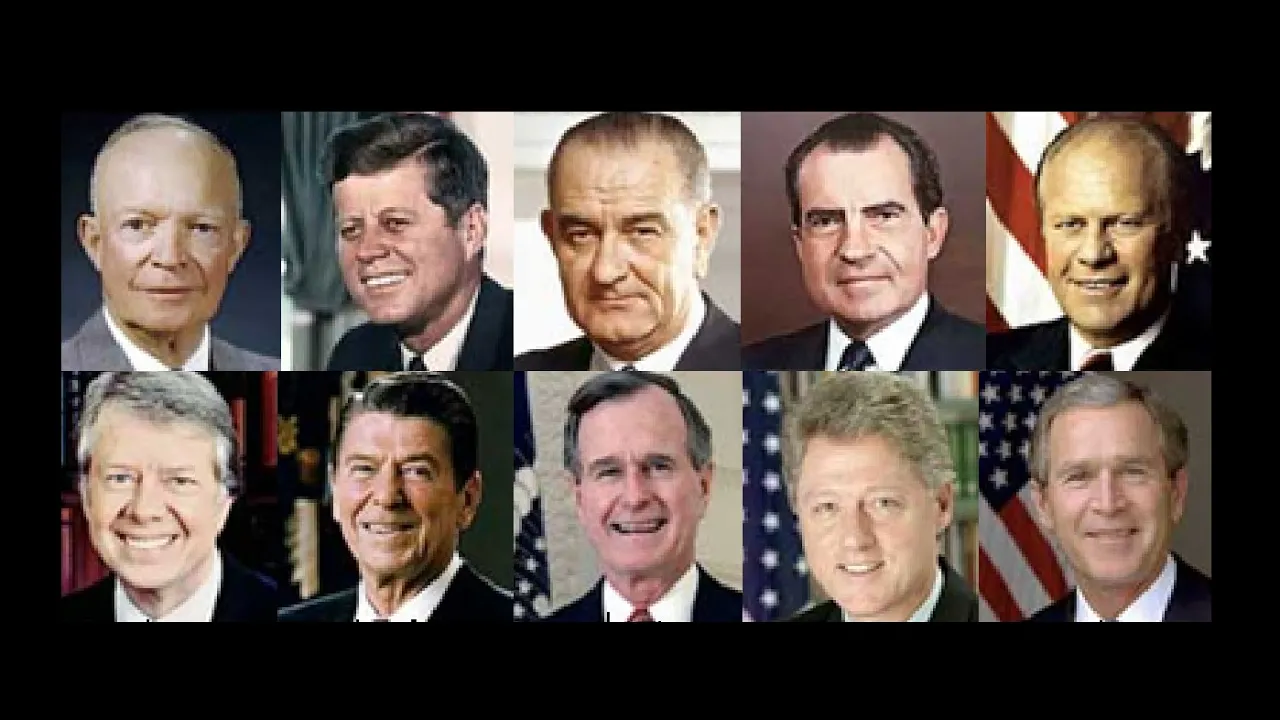
Applying Nuremberg legal standards strictly would convict every post-World War II American commander-in-chief for state terrorism, unlawful invasions, and complicity in mass atrocities.
AI-assisted summary of Noam Chomsky - The Crimes of U.S. Presidents — original source. Check the original for full context.
Source published:
Key ideas
- Applying the Nuremberg principles strictly would result in every single post–World War II U.S. president being indicted as a war criminal across administrations from Eisenhower to Clinton. (0:00)
- Presidential foreign policy actions frequently breached international law through direct military invasions, orchestrated coups, and proxy warfare that cost millions of lives across Latin America, Southeast Asia, and the Middle East. (1:33)
- Bipartisan administrations systematically subverted international bodies, from Daniel Patrick Moynihan neutralizing the UN over East Timor to Ronald Reagan vetoing UN resolutions endorsing the World Court's condemnation of the Contra war. (3:29)
- Post-war diplomacy and economic maneuvers frequently obscured severe human tolls, including the deliberate destruction of civilian infrastructure in Iraq and the fatal bombing of Sudan's Al-Shifa pharmaceutical facility. (7:18)
Detailed notes
## Background Published on YouTube by the channel Chomsky's Philosophy on October 7, 2014, this 2003 interview clip features Noam Chomsky examining the foreign policy crimes of post-World War II American presidents. As summarized in the description, Chomsky reviews the historical record to evaluate whether each post-war administration engaged in indictable offenses.
## TL;DR Evaluating post–World War II American foreign policy under the legal standards established at Nuremberg, Noam Chomsky argues that every modern U.S. president is guilty of indictable war crimes. Running through the roster chronologically, he surveys Eisenhower's coups in Iran and Guatemala alongside covert terror in Indonesia, Kennedy's direct aggression in South Vietnam, Johnson's Indochina escalation, and the active complicity of Ford and Carter in the East Timor atrocities. He continues through Reagan's World Court-condemned Contra war, George H.W. Bush's deliberate targeting of civilian infrastructure in Iraq, and Clinton's lethal missile strike on Sudan's Al-Shifa pharmaceutical factory paired with record expansion of illegal West Bank settlements. In doing so, Chomsky presents a systematic indictment demonstrating that major state terrorism and violations of international law were bipartisan constants across decades.
## Atmosphere & style The discussion carries an austere, clinical intensity, driven by Chomsky's trademark low-key, dispassionate cadence and encyclopedic recall of historical episodes. In response to the interviewer's quick prompts, Chomsky dismantles conventional presidential legacies in a cool, matter-of-fact monotone, avoiding heated rhetoric in favor of precise legal definitions, casualties, and state records. Watching the exchange feels like sitting through an unrelenting, rapid-fire prosecutorial debrief, where the calm delivery contrasts sharply with the staggering scale of violence and geopolitical devastation being recounted.
## Bulletin - [00:00](https://www.youtube.com/watch?v=5BXtgq0Nhsc&t=0s) Applying the Nuremberg principles strictly would result in every single post–World War II U.S. president being indicted as a war criminal across administrations from Eisenhower to Clinton. - [01:33](https://www.youtube.com/watch?v=5BXtgq0Nhsc&t=93s) Presidential foreign policy actions frequently breached international law through direct military invasions, orchestrated coups, and proxy warfare that cost millions of lives across Latin America, Southeast Asia, and the Middle East. - [03:29](https://www.youtube.com/watch?v=5BXtgq0Nhsc&t=209s) Bipartisan administrations systematically subverted international bodies, from Daniel Patrick Moynihan neutralizing the UN over East Timor to Ronald Reagan vetoing UN resolutions endorsing the World Court's condemnation of the Contra war. - [07:18](https://www.youtube.com/watch?v=5BXtgq0Nhsc&t=438s) Post-war diplomacy and economic maneuvers frequently obscured severe human tolls, including the deliberate destruction of civilian infrastructure in Iraq and the fatal bombing of Sudan's Al-Shifa pharmaceutical facility.
## Key takeaways - [00:00](https://www.youtube.com/watch?v=5BXtgq0Nhsc&t=0s) Under Nuremberg legal standards, every U.S. president since World War II committed clearly indictable war crimes. - [00:00](https://www.youtube.com/watch?v=5BXtgq0Nhsc&t=0s) Dwight D. Eisenhower directed illegal coups in Iran and Guatemala, ending democratic governance and installing decades of violent dictatorship. - [00:00](https://www.youtube.com/watch?v=5BXtgq0Nhsc&t=0s) Eisenhower instigated an armed covert terror campaign in Indonesia's outer islands to break up the country and cripple its democratic system. - [01:33](https://www.youtube.com/watch?v=5BXtgq0Nhsc&t=93s) John F. Kennedy launched a direct invasion of South Vietnam in 1962, deploying disguised U.S. air strikes, napalm, chemical crop destruction, and strategic hamlets. - [01:33](https://www.youtube.com/watch?v=5BXtgq0Nhsc&t=93s) Kennedy mounted a massive campaign of international terrorism against Cuba that directly contributed to the 1962 missile crisis. - [01:33](https://www.youtube.com/watch?v=5BXtgq0Nhsc&t=93s) Lyndon B. Johnson escalated the Indochina war to a death toll of 3 to 4 million while invading the Dominican Republic to halt a democratic revolution. - [03:29](https://www.youtube.com/watch?v=5BXtgq0Nhsc&t=209s) Gerald Ford authorized the Indonesian invasion of East Timor, supplying counterinsurgency weapons while Daniel Patrick Moynihan neutralized UN intervention. - [03:29](https://www.youtube.com/watch?v=5BXtgq0Nhsc&t=209s) Jimmy Carter circumvented congressional human rights bans by arranging Israeli transfers of U.S. Skyhawk attack jets to Indonesia as atrocities peaked. - [03:29](https://www.youtube.com/watch?v=5BXtgq0Nhsc&t=209s) The Camp David Accords directed over half of all U.S. foreign aid to Israel without Palestinian protections, precipitating the 1978 and 1982 invasions of Lebanon. - [07:18](https://www.youtube.com/watch?v=5BXtgq0Nhsc&t=438s) Ronald Reagan's administration was officially convicted by the International Court of Justice for unlawful use of force in Nicaragua and subsequently vetoed UN resolutions upholding the ruling. - [07:18](https://www.youtube.com/watch?v=5BXtgq0Nhsc&t=438s) George H.W. Bush invaded Panama to capture former CIA asset Manuel Noriega, leaving an estimated 3,000 Panamanian civilian casualties. - [07:18](https://www.youtube.com/watch?v=5BXtgq0Nhsc&t=438s) U.S. forces in the 1991 Gulf War intentionally destroyed civilian water, sanitation, and electrical infrastructure, functioning as a form of biological warfare. - [09:44](https://www.youtube.com/watch?v=5BXtgq0Nhsc&t=584s) Bill Clinton authorized the 1998 cruise missile strike on Sudan's Al-Shifa pharmaceutical plant, resulting in tens of thousands of indirect civilian deaths. - [09:44](https://www.youtube.com/watch?v=5BXtgq0Nhsc&t=584s) Under Clinton, the State Department dismissed UN resolutions on Palestinian rights as obsolete while Israeli settlement expansion reached a record post-1992 high.
## Detailed walkthrough ### [00:00](https://www.youtube.com/watch?v=5BXtgq0Nhsc&t=0s) Eisenhower: Coups in Iran and Guatemala, and Covert War in Indonesia
The discussion opens with an interviewer reminding Noam Chomsky of his famous thesis: if the Nuremberg principles were applied strictly, every single post–World War II American president would be indictable as a war criminal. Chomsky agrees, noting that the premise is accurate, prompting the interviewer to challenge him to quickly run down the post-war roster starting with Dwight D. Eisenhower. Chomsky immediately points to Eisenhower’s role in orchestrating military coups against sovereign governments. In 1953, the Eisenhower administration overthrew the conservative nationalist government of Iran, installing a brutal dictatorship that lasted twenty-five years until the 1979 revolution. The following year, Eisenhower directed the military coup and invasion of Guatemala, destroying the nation’s first and last democratic government and unleashing massive, sustained atrocities that continue nearly half a century later.
Beyond Latin America and the Middle East, Chomsky brings up a lesser-known clandestine operation in Southeast Asia: Eisenhower’s major covert terror operation aimed at fracturing Indonesia. Viewing Indonesian democracy as a fundamental threat because it was too open and permitted an increasingly popular political party of the poor to participate, the administration sought to dismember the country. Eisenhower supported and instigated an armed military rebellion across the outer islands in an effort to strip away Indonesia's primary natural resources and sabotage its democratic framework. Summing up this opening record, Chomsky says, “These are all indictable offenses.”
- Overthrew Iran’s nationalist government via military coup, yielding 25 years of dictatorship. - Invaded and overthrew Guatemala's democratic government, initiating decades of mass atrocities. - Launched major post-war covert terror operations to break up Indonesia and exploit its resource-rich outer islands.
```mermaid flowchart TD accTitle: Post-War Presidencies and Major Indictable Offenses accDescr: A structural summary of the key foreign policy crimes and interventions charged by Chomsky across post-WWII administrations.
subgraph ColdWarEarly["Early Cold War Interventions"] IKE["Eisenhower"] -->|"Coups & Terror"| IKE_CRIMES["Iran (1953), Guatemala (1954),<br/>Indonesia destabilization"] JFK["Kennedy"] -->|"Direct Aggression"| JFK_CRIMES["South Vietnam invasion (1962),<br/>Operation Mongoose / Cuba terror"] LBJ["Johnson"] -->|"Escalation"| LBJ_CRIMES["3–4M dead in Indochina,<br/>Dominican Republic invasion"] end
subgraph ProxyAtrocities["Proxy Wars & Covert Backing"] FORD["Ford"] -->|"Diplomatic Cover"| FORD_CRIMES["East Timor invasion clearance,<br/>Moynihan UN obstruction"] CARTER["Carter"] -->|"Bypassing Bans"| CARTER_CRIMES["Skyhawks to Indonesia,<br/>Camp David militarization"] REAGAN["Reagan"] -->|"Unlawful Force"| REAGAN_CRIMES["Nicaragua Contra war<br/>(ICJ condemnation)"] end
subgraph GulfAndBeyond["Gulf War Era to 1990s"] GHWB["George H.W. Bush"] -->|"Invasions & Warfare"| GHWB_CRIMES["Panama invasion (Noriega kidnapping),<br/>Iraq infrastructure bombing"] WJC["Clinton"] -->|"Strikes & Settlements"| WJC_CRIMES["Al-Shifa pharmaceutical bombing,<br/>Record West Bank expansion"] end ```
---
[01:33](https://www.youtube.com/watch?v=5BXtgq0Nhsc&t=93s) Kennedy and Johnson: Escalation in Indochina and Regional Aggression
When asked about John F. Kennedy, Chomsky rejects the romanticized legacy of Camelot, stating plainly: “Kennedy was one of the worst.” He explains that Kennedy launched an outright invasion of South Vietnam. The groundwork had been laid under Eisenhower, who blocked the scheduled 1954 political settlement and helped install a Latin American–style terror state that slaughtered an estimated 60,000 to 70,000 people. When the resulting popular domestic resistance grew beyond the internal control of the client regime, Kennedy deployed direct military force. By 1962, approximately one-third of all bombing sorties in South Vietnam were flown by the U.S. Air Force using planes painted with South Vietnamese insignia but operated by American pilots. Kennedy authorized the use of napalm, initiated chemical warfare to destroy food crops, and forced millions of rural peasants into strategic hamlets that functioned effectively as concentration camps. Chomsky points out that Kennedy also directed a massive campaign of international terrorism against Cuba that pushed the world to the brink of nuclear destruction during the Cuban Missile Crisis.
Turning to Lyndon B. Johnson, Chomsky highlights the catastrophic escalation of the war across Indochina, which ultimately left three to four million people dead. Outside Southeast Asia, Johnson deployed military forces into the Dominican Republic in 1965 to crush an emerging democratic revolution, and he actively supported the expansion of the Israeli occupation in its earliest phases after the 1967 war.
- **Kennedy's 1962 escalation**: Direct air strikes by disguised U.S. aircraft, introduction of napalm, chemical crop destruction, and forced population relocation. - **Cuba**: Comprehensive campaign of covert sabotage and terrorism culminating in the 1962 missile crisis. - **Johnson’s toll**: Expansion of the Indochina war causing 3–4 million deaths, invasion of the Dominican Republic, and backing the 1967 Israeli military occupation.
---
[03:29](https://www.youtube.com/watch?v=5BXtgq0Nhsc&t=209s) Ford and Carter: Complicity in East Timor and Middle East Realignment
When the interviewer moves chronologically past Richard Nixon, Chomsky quips that Nixon's criminality is so obvious that “we don't even have to talk about” it, moving directly to Gerald Ford. Though Ford spent only a short time in the Oval Office, Chomsky emphasizes that it was long enough to give the green light to the Indonesian invasion of East Timor, an assault that escalated into one of the closest approximations of genocide in the modern era. While public posture feigned opposition, the U.S. covertly accelerated weapons shipments, specifically sending counterinsurgency equipment so Indonesian forces could consummate the conquest. Chomsky cites U.S. Ambassador to the United Nations Daniel Patrick Moynihan, who candidly boasted in his memoirs that his explicit White House instructions were to render the UN completely toothless in halting the invasion. Moynihan proudly recorded that he succeeded, noting immediately afterward that roughly 60,000 Timorese were killed in the opening months alone. Chomsky summarizes the brief presidency: “That's just a short period in office but that's indictable, seriously, in fact.”
Jimmy Carter continued and expanded this backing. As Indonesian atrocities in East Timor reached their absolute peak in 1978, Carter dramatically increased military hardware deliveries. When an emergent human rights coalition in the U.S. Congress imposed legal embargoes to block advanced arms transfers to Jakarta, Carter worked through Vice President Walter Mondale to coordinate an end-run, arranging for Israel to transfer U.S.-supplied Skyhawk attack jets to the Indonesian military. This weaponry enabled Indonesia to complete a campaign that wiped out roughly a quarter of East Timor’s population.
Chomsky also dismantles Carter's celebrated diplomatic legacy, arguing that the Camp David Accords were not a peaceful breakthrough but a geopolitical disaster. At Camp David, the U.S. and Israel finally agreed to terms Egypt had originally offered in 1971—terms Washington had dismissed at the time—except the delayed agreement now excluded provisions for the Palestinians. To secure Israeli acquiescence, Carter escalated foreign assistance until military and financial aid to Israel accounted for more than half of all U.S. foreign aid worldwide. Israel immediately capitalized on this blank check and security buffer, launching invasions of Lebanon in 1978 and 1982 while aggressively integrating the occupied Palestinian territories.
- Daniel Patrick Moynihan acknowledged executing orders to ensure UN inaction as tens of thousands were slaughtered in East Timor. - Carter administration circumvented congressional weapon bans by using Israeli Skyhawk transfers to sustain Indonesian assaults. - Camp David Accords shifted over 50% of total U.S. foreign aid to Israel, precipitating the 1978 and 1982 invasions of Lebanon.
---
[07:18](https://www.youtube.com/watch?v=5BXtgq0Nhsc&t=438s) Reagan and George H.W. Bush: State Terrorism, Panama, and the Gulf War
Chomsky dismisses Ronald Reagan's record just as curtly as Nixon's, pointing out that Reagan holds the unique distinction of heading an administration officially convicted by the International Court of Justice. The World Court ruled against the United States for the “unlawful use of force”—the international legal term for state-sponsored terrorism—regarding the covert Contra war against Nicaragua. When the United Nations Security Council voted on two separate resolutions endorsing the World Court's judgment, the Reagan administration vetoed both.
Turning to George H.W. Bush, Chomsky begins with Operation Just Cause, the December 1989 invasion of Panama: “The invasion of Panama, which according to the Panamanians killed about 3,000 people.” Chomsky underscores the absurdity of invading an entire country to capture Manuel Noriega, a client strongman who had performed his worst crimes while on the CIA payroll, only to be hauled to Florida for trial after falling out of favor.
In the Persian Gulf War, the elder Bush systematically dismissed viable diplomatic options for a negotiated Iraqi withdrawal from Kuwait. Chomsky laments that the American press completely buried these diplomatic possibilities, with the sole exception of the Long Island newspaper *Newsday*, which reported the diplomatic maneuvers accurately. When the air war commenced, coalition forces deliberately struck civilian infrastructure, obliterating power generation, water purification, and sewage systems. Chomsky contends that wiping out a modern city's electrical and sanitation grids operates as a de facto form of biological warfare under international law. This military destruction was then paired with a sweeping sanctions regime that began under Bush, devastating ordinary Iraqi society while leaving Saddam Hussein firmly in power.
- Reagan's administration was formally condemned by the International Court of Justice for international terrorism in Nicaragua. - Panama was invaded to abduct a long-time CIA asset, leaving an uninvestigated death toll estimated by locals at 3,000. - Long Island *Newsday* was the only domestic newspaper to report the diplomatic settlement offers rejected prior to the 1991 Gulf War. - Intentional targeting of civilian water, sewage, and power infrastructure in Iraq amounted to functional biological warfare.
---
[09:44](https://www.youtube.com/watch?v=5BXtgq0Nhsc&t=584s) Clinton: The Al-Shifa Missile Strike and West Bank Cantonization
Chomsky moves on to Bill Clinton, demonstrating that the human cost of his presidency is often obscured by sanitized domestic accounts. He highlights what mainstream observers often minimize as a minor incident: the August 1998 cruise missile strike on the Al-Shifa pharmaceutical facility in Sudan. Chomsky stresses that this was not an intelligence error; the administration knew precisely what facility they were striking. Based on on-the-ground assessments from the German ambassador to Sudan and the regional director of the Near East Foundation, the resulting loss of vital medicines caused several tens of thousands of Sudanese civilian deaths. As Chomsky observes: “If somebody did that to us, we’d regard it as bad news, and again we can continue.”
Chomsky similarly scrutinizes Clinton's handling of the Israeli-Palestinian conflict. The Clinton administration began by dismissing foundational UN Security Council resolutions on the occupied territories as “obsolete and anachronistic,” effectively discarding established international legal frameworks. Under the cover of the prolonged Oslo peace process, illegal Israeli settlements expanded continuously with direct American taxpayer subsidies, diplomatic cover, and military aid. Rather than slowing construction, settlement growth peaked during Clinton's final year in office, reaching its highest rate since 1992. The Palestinian territories were systematically carved up, segmented into isolated enclaves, and hemmed in by bypass roads and infrastructure projects. Chomsky concludes that this ongoing military occupation and dispossession constitutes an unambiguous crime that would never be tolerated if committed by an official adversary.
- Single missile strike on Sudan’s primary pharmaceutical plant yielded estimates of tens of thousands of indirect deaths. - State Department declared prior UN resolutions on Palestinian rights "obsolete and anachronistic." - Israeli settlement expansion funded by U.S. aid hit a post-1992 high in 2000, formalizing the cantonization of the West Bank.
## Mentioned Noam Chomsky, Dwight D. Eisenhower, John F. Kennedy, Lyndon B. Johnson, Richard Nixon, Gerald Ford, Daniel Patrick Moynihan, Jimmy Carter, Walter Mondale, Ronald Reagan, International Court of Justice, United Nations Security Council, George H.W. Bush, Manuel Noriega, Central Intelligence Agency, Newsday, Saddam Hussein, Bill Clinton, Al-Shifa pharmaceutical facility, Near East Foundation
## Video description Chomsky goes through some of the crimes of the post-war presidents. From 2003.
[Source](https://www.youtube.com/watch?v=5BXtgq0Nhsc)