Max Miller Bypasses Two-Month Rot to Make Ancient Roman Fish Sauce
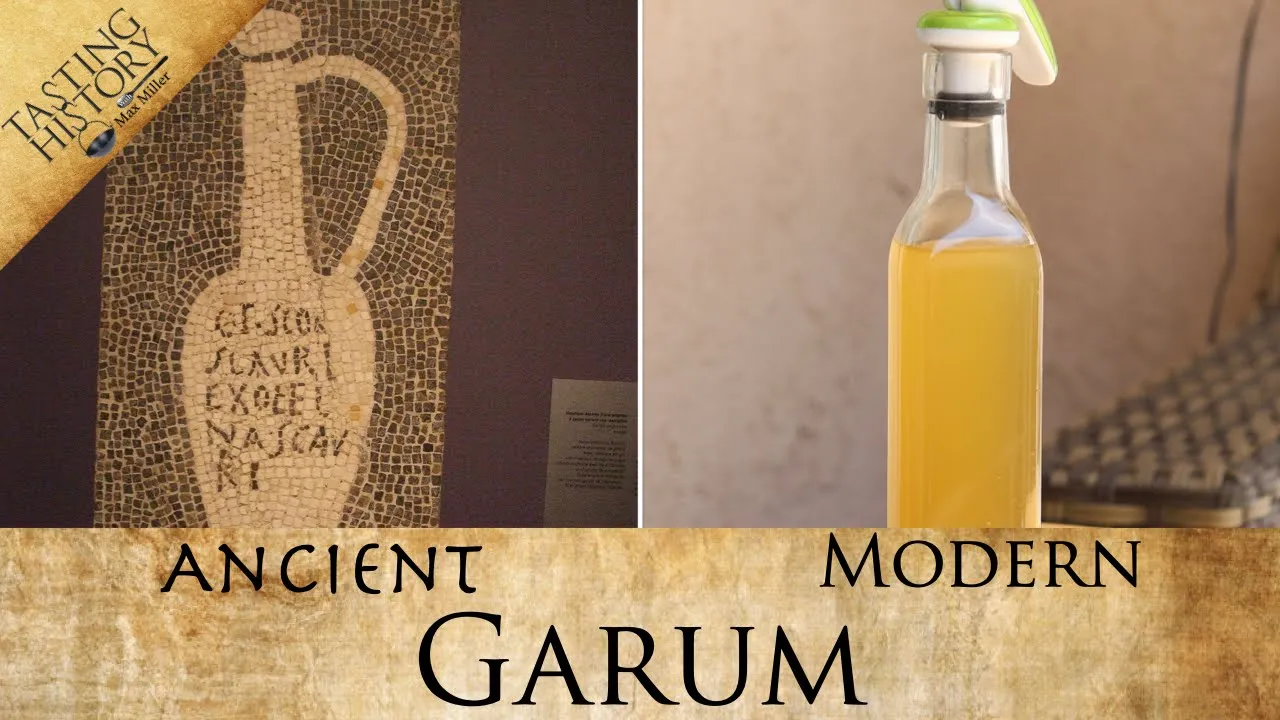
Tasting History with Max Miller
Heavy salt saturation halts bacterial decay, yielding a clean ocean-flavored seasoning rather than the putrid rot condemned by Roman critics.
AI-assisted summary of I finally made GARUM | Ancient Rome's favorite condiment — original source. Check the original for full context.
Source published:
Key ideas
- Max Miller demonstrates a rapid, same-day Roman garum recipe from the 10th-century Byzantine agricultural text Geoponica, bypassing the traditional two-month sun-fermentation process by boiling oily fish in heavy brine. (2:38)
- The brine salinity in the historical recipe is calibrated using a raw egg as an ancient hydrometer, adding salt until the egg floats freely. (4:45)
- Beyond seasoning everyday dishes and desserts, garum was prescribed by Roman physicians like Galen and Pliny the Elder as a humoral cure for dysentery, ulcers, and dog bites. (7:11)
- Due to the overwhelming stench of commercial production, Byzantine zoning codes in the Hexabiblos mandated that garum facilities be constructed at least three stades (roughly three-eighths of a mile) away from towns. (11:03)
Detailed notes
## Background Published on YouTube on June 9, 2020, by Tasting History with Max Miller, this video tackles ancient Rome's most ubiquitous condiment: garum, or liquamen. While traditional fermented fish sauce takes up to two months to cure, Miller follows an ancient same-day boiled recipe from the Byzantine agricultural text Geoponica, using the rapid cooking method as an opportunity to explore the condiment's history, culinary prominence, and cultural impact.
## TL;DR To bypass the pungent, two-month sun-fermentation process of classical garum, Max Miller prepares a rapid same-day recipe using an ancient technique from the Geoponica, testing brine salinity with a floating egg before boiling and mashing small whole oily fish with oregano. As the mixture reduces, he explores how garum served as Rome's primary source of salt and umami, tracing its empire-wide industry, bizarre humoral medical uses under Galen, and the fierce backlash against its stench from writers like Seneca. After straining the sauce through multiple filters and bottling it, Miller dilutes a sample in water per Pliny the Elder's advice, braving a taste test that surprisingly delivers a clean, intensely savory flavor reminiscent of pure ocean brine.
## Atmosphere & style The presentation is scholarly yet self-deprecating and lively, blending domestic culinary experimentation with playful pop-culture references ranging from Star Wars to Duolingo. Miller maintains an engaging, conversational rhythm, narrating historical horrors and ancient medical absurdities with dry wit and genuine curiosity. The mood builds with comical trepidation as the pungent fish breaks down in the kitchen, culminating in an apprehensive, suspenseful sip that quickly gives way to relief and culinary fascination.
## Bulletin - [02:38](https://www.youtube.com/watch?v=5S7Bb0Qg-oE&t=158s) Max Miller demonstrates a rapid, same-day Roman garum recipe from the 10th-century Byzantine agricultural text Geoponica, bypassing the traditional two-month sun-fermentation process by boiling oily fish in heavy brine. - [04:45](https://www.youtube.com/watch?v=5S7Bb0Qg-oE&t=285s) The brine salinity in the historical recipe is calibrated using a raw egg as an ancient hydrometer, adding salt until the egg floats freely. - [07:11](https://www.youtube.com/watch?v=5S7Bb0Qg-oE&t=431s) Beyond seasoning everyday dishes and desserts, garum was prescribed by Roman physicians like Galen and Pliny the Elder as a humoral cure for dysentery, ulcers, and dog bites. - [11:03](https://www.youtube.com/watch?v=5S7Bb0Qg-oE&t=663s) Due to the overwhelming stench of commercial production, Byzantine zoning codes in the Hexabiblos mandated that garum facilities be constructed at least three stades (roughly three-eighths of a mile) away from towns.
## Key takeaways - [00:00](https://www.youtube.com/watch?v=5S7Bb0Qg-oE&t=0s) Garum was an empire-wide commercial staple in ancient Rome, serving as both an essential flavor enhancer and the primary salt delivery method at the dinner table. - [00:35](https://www.youtube.com/watch?v=5S7Bb0Qg-oE&t=35s) Modern global equivalents like Worcestershire sauce, Asian fish sauces, and Italian colatura di alici demonstrate that fermented fish condiments remain widely embraced today. - [01:15](https://www.youtube.com/watch?v=5S7Bb0Qg-oE&t=75s) Traditional garum production relied on layering whole oily fish, herbs, and heavy salt in barrels exposed to direct Mediterranean sunlight for two months. - [02:38](https://www.youtube.com/watch?v=5S7Bb0Qg-oE&t=158s) The 10th-century compilation Geoponica records multiple garum formulations, including the luxury haimation made from tunny blood and viscera, as well as an emergency same-day boiled recipe. - [03:15](https://www.youtube.com/watch?v=5S7Bb0Qg-oE&t=195s) The ancient same-day garum method uses a raw egg float test to verify sufficient brine saturation before boiling fish with oregano and optional grape must syrup (defrutum). - [05:31](https://www.youtube.com/watch?v=5S7Bb0Qg-oE&t=331s) During a 30 to 40 minute boil, whole oily fish must be periodically mashed with a spoon to break down the flesh and viscera into the reducing brine. - [07:11](https://www.youtube.com/watch?v=5S7Bb0Qg-oE&t=431s) Pliny the Elder documented garum as an extraordinarily expensive luxury, rating elite Spanish mackerel blends second in cost only to fine perfumes. - [08:02](https://www.youtube.com/watch?v=5S7Bb0Qg-oE&t=482s) Roman physicians applied humoral theory to garum, categorizing it as hot and dry while prescribing it for ailments ranging from sciatica and ulcers to diarrhea and constipation. - [11:03](https://www.youtube.com/watch?v=5S7Bb0Qg-oE&t=663s) The industrial stench of garum manufacture sparked severe urban zoning laws in antiquity, requiring factories to be located at least three stades outside town borders. - [11:43](https://www.youtube.com/watch?v=5S7Bb0Qg-oE&t=703s) Roman moralists like Seneca the Younger vehemently condemned garum as expensive, putrefying rot that corroded digestion and debased bodily health. - [12:45](https://www.youtube.com/watch?v=5S7Bb0Qg-oE&t=765s) Biochemically, authentic garum does not rot; heavy salinity prevents bacterial putrefaction, enabling autolysis via the fish's own digestive enzymes. - [13:04](https://www.youtube.com/watch?v=5S7Bb0Qg-oE&t=784s) Properly straining boiled garum requires multiple passes through dense materials like paper towels or tea towels, rather than loose cheesecloth, to remove fine sediment. - [13:39](https://www.youtube.com/watch?v=5S7Bb0Qg-oE&t=819s) Due to its saturated salt content, homemade garum resists spoilage and has an indefinite shelf life when sealed in sterilized bottles. - [14:08](https://www.youtube.com/watch?v=5S7Bb0Qg-oE&t=848s) Diluting pure garum with water—a historical method recorded by Pliny—yields a broth that tastes clean and intensely reminiscent of ocean seawater rather than rotten fish.
## Detailed walkthrough ### [00:00](https://www.youtube.com/watch?v=5S7Bb0Qg-oE&t=0s) Fermented Fish Sauce and the Quest for Garum
Leaving a barrel of dead fish in the scorching Mediterranean sun for two months yields nothing more than a putrid, rotten mess. However, adding a generous amount of salt to that very same barrel transforms it into one of the ancient Roman world’s most prized and ubiquitous culinary staples: garum. Host Max Miller sets out to teach viewers how to recreate this legendary condiment at home without waiting two full months and without alienating the neighborhood. Urging the audience to “smash that like button the way Caesar smashed Pompey's army at the Battle of Pharsalus,” he introduces garum—also frequently known as liquamen—as a fermented fish sauce that modern palates should not dismiss as merely ancient Roman weirdness.
Fermented fish sauces remain widely consumed across the globe today. Western Worcestershire sauce relies on fermented anchovies, while East Asian kitchens depend on staples such as Thai nam pla, Vietnamese nước mắm, and Korean aekjeot. Closer to the Roman heartland, the small fishing village of Cetara in Campania, Italy, still produces *colatura di alici* (“anchovy drippings”), widely regarded as garum’s direct living descendant and an ideal commercial substitute for historical recipes. Max initially intended to reproduce Roman garum via the ancient sun-fermentation method by layering whole fish, aromatics, and two-finger-thick strata of salt in a sealed container for two months. That plan came to an abrupt halt after a friend shared a cautionary tale from Laos about the overpowering stench of industrial fish sauce factories. Max realized that brewing rotting fish on an apartment balcony would be disastrous, noting: “They would probably call the cops thinking that there was a dead body over here.”
- **Modern Equivalents:** Worcestershire sauce (anchovy-based), nam pla (Thailand), nước mắm (Vietnam), aekjeot (Korea), and *colatura di alici* (Cetara, Italy). - **Traditional Layering Technique:** Repeating layers of whole oily fish, fresh herbs, and salt measuring roughly two fingers thick, sealed and exposed to direct sun for up to two months with occasional plunging and aeration.
[02:38](https://www.youtube.com/watch?v=5S7Bb0Qg-oE&t=158s) Ancient Recipes from the Geoponica
Refusing to abandon the project, Max turned to ancient culinary texts and struck gold in the *Geoponica*, a 10th-century Byzantine agricultural treatise derived from a 6th-century Latin work. The compilation preserves five distinct methods for producing garum, employing different fish, seasonings, and wine reductions. The most luxurious variation recorded is *haimation*, which translates to the blood sauce. The text instructs: “The best garum, called 'haimation', is made as follows: take the entrails of tunny fish and its gills, juice, and blood, and sufficient salt sprinkled on.” After letting it sit in a vessel for at most two months, the bottom of the container was pierced, allowing the clear amber liquid to drain from a spigot—a mechanic Max humorously compares to a modern cold-brew dispenser.
The real breakthrough, however, was an alternative emergency recipe for cooks unable or unwilling to wait two months. The *Geoponica* explicitly provides instructions for a boiled, same-day fish sauce: “If you wish to use the garum at once - i.e not expose it to the sun, but boil it - make it in the following manner: take brine and test its strength by throwing an egg into it to see if it floats; if it sinks it does not contain enough salt.” The technique calls for boiling the fish with oregano and the tested brine until the volume reduces, optionally enriched with *defrutum*—a thick syrup created by reducing grape must (the freshly crushed grape juice containing seeds, skins, and stems). Lacking fresh grape must and eager to let the pure flavor of the fish lead the dish, Max bypasses the defrutum entirely, cheerfully declaring that while some ancient cooks added grape syrup, “I ain't some people!”
```mermaid flowchart TD accTitle: Methods of Garum Production from the Geoponica accDescr: Flowchart comparing the two-month sun fermentation process for haimation against the rapid boiling method for same-day garum.
subgraph SUN["Traditional Fermentation (Haimation)"] A["Tunny entrails, gills, blood & heavy salt"] --> B["Layer in vessel & seal for up to 2 months"] B --> C["Pierce bottom of vessel; strain running garum"] end
subgraph BOIL["Quick Same-Day Garum"] D["Prepare water & salt brine"] --> E{"Float Test with Raw Egg"} E -- "Egg Sinks" --> D E -- "Egg Floats" --> F["Add oily fish, oregano & optional defrutum"] F --> G["Boil & mash for 30-40 min until reduced"] G --> H["Strain multiple times until clear liquid remains"] end ```
[04:45](https://www.youtube.com/watch?v=5S7Bb0Qg-oE&t=285s) Cooking the Same-Day Garum
The ingredient list for rapid garum remains remarkably approachable: approximately 2 quarts of water, close to 1 pound (around 400 grams) of coarse sea salt, 2 heaping teaspoons of dried oregano, and 2 pounds of small, whole oily fish. Suitable species include mackerel, sardines, anchovies, or herring. While ancient Romans also processed tuna, their immense physical size makes smaller coastal species far more practical for domestic cooking. Honey or defrutum can optionally be introduced if sweetness is desired. A raw egg is used not as an edible component, but as a flotation hydrometer to gauge brine salinity.
To prepare the base, Max adds roughly 400 grams of sea salt to water, dissolving it gradually. Because a wide stockpot leaves the liquid too shallow to evaluate the egg accurately, he tests the solution in a smaller, deeper pot; once the egg bobs on the surface, the brine has achieved adequate saturation. Any excess salt that fails to dissolve simply settles harmlessly to the floor of the vessel. The brine is transferred to a large stainless steel stockpot to substitute for the original recipe's unglazed earthenware vessel. The whole fish and dried oregano are dropped in, and the mixture is set over high heat to boil for 30 to 40 minutes. Max explains the essential physical manipulation required during reduction: “You're going to boil it for between 30 and 40 minutes and every 10 minutes go ahead and kind of give that fish a mashing with your spoon just to break it up.” Within ten minutes, the fish flesh and entrails break apart completely, releasing an unmistakable aroma throughout the kitchen that his cat found utterly delightful.
- **Liquid Base:** 2 quarts (1900 ml) water. - **Salt Ratio:** Roughly 1 lb (around 400+ grams) of sea salt, adjusted until an unbroken raw egg floats freely. - **Fish Selection:** 2 lbs (900 grams) whole oily fish (herring, mackerel, sardines, or anchovies). - **Flavoring:** 2 heaping teaspoons dried oregano (with optional honey or grape must reduction). - **Cook Time:** 30–40 minutes at a rolling boil, mashing the decomposing fish every 10 minutes until reduced by roughly half.
[07:11](https://www.youtube.com/watch?v=5S7Bb0Qg-oE&t=431s) The Roman Obsession: Culinary Uses and Medicinal Madness
Once bubbling away, garum represented far more than a simple pantry item—it was an empire-wide commercial juggernaut and cultural obsession lauded as “the taste of the sea.” Pliny the Elder celebrated it as a “choice liquor,” holding a Spanish mackerel blend called *garum sociorum* (“garum of comrades”) in the highest esteem. Marveling at its premium cost and status, Pliny wrote that “Scarcely any other liquid except perfume has become more highly valued.” The condiment had migrated into Roman life from the Greek sauce *garos* (likely derived from a specific fish of the same name). Because Romans rarely added mineral salt directly to their food at the table, garum served as their primary sodium delivery vehicle, infusing dishes with rich, savory glutamates. It saturates the foundational Roman cookbook *De re coquinaria*, where it frequently appears under the name *liquamen*. Far from being restricted to meat and seafood dishes, garum appeared in vegetable preparations, salads, fruit purees, and even ancient desserts known as *dulcia*.
Beyond the kitchen, Roman physicians treated garum as a potent panacea governed by the humoral theory championed by Galen. Galen categorized garum as excessively hot and dry, recommending it for treating putrefying skin ulcers, sciatica, and dysentery. Max stops the historical overview to issue a firm disclaimer to modern viewers: “Now if you take anything away from this video, it should be that, despite what Galen says, you should never ever inject anyone with fermented fish sauce... EVER!” Galen's medical reasoning proved contradictory elsewhere, listing garum as an effective treatment for diarrhea in one text and a cure for constipation in another. Pliny similarly promoted fish sauce for treating dog bites and ear infections, even prescribing that patients afflicted with stomach pain consume an odd number of African snails marinated in garum.
- **Socioeconomic Influence:** Garum processing centers clustered on shorelines across the Mediterranean to guarantee cheap salt access and immediate processing of fresh catches; Judean facilities supplied certified kosher variants to Jewish consumers, while Pompeii flourished through luxury brands like *gari flos scombri* ("Flower of Garum"). - **Divergent Medical Views:** While advocates viewed garum as a sovereign remedy, detractors argued that habitual consumption brought about melancholy, triggered severe gout attacks, and corroded the teeth. - **Freshness Standards:** High-end garum demanded pristine raw material, celebrated by the epigrammatist Martial: “Accept this exquisite garum, a precious gift made with the first blood spilled from a living mackerel.”
[11:03](https://www.youtube.com/watch?v=5S7Bb0Qg-oE&t=663s) Ancient Backlash: Stench, Seneca's Tirade, and the Science of Fermentation
As the Roman Empire developed an insatiable appetite for garum, coastal populations began pushing back against the overpowering stench produced by its industrial manufacture. Local towns were forced to intervene, establishing zoning restrictions to keep the smell at bay. A Byzantine regulation preserved in the *Hexabiblos* mandated that any newly constructed garum factory had to be situated at least three stades away from any town or village—a distance of roughly three-eighths of a mile, though Max Miller expresses skepticism that even that buffer would suffice.
Beyond complaints about civic zoning, garum drew sharp moral and dietary condemnation from prominent Roman intellectuals. In an Epicurean tirade attacking the excesses of high living, Seneca the Younger delivered a scathing review:
> “What? Do you not think that the so-called 'sauce from the provinces', the costly extract of poisonous fish, burns up the stomach with its salted putrefaction? What? Do you not judge that the corrupted dishes which a man swallows almost burning from the kitchen fire, are quenched in the digestive system without doing harm? How repulsive then, and how unhealthy are their belchings, and how disgusted men are with themselves when they breathe forth the fumes of yesterday's debauch! You may be sure that their food is not being digested, but is rotting.”
Writers like Martial and Pliny the Elder held deeply conflicted views on the condiment. Martial mocked its breath-fouling properties by commending a young man's bravery for attempting romantic advances toward a woman who had consumed six helpings of garum in a single evening. Pliny the Elder, who elsewhere praised it as a proud sauce and an exquisite liquor, candidly described garum as "the guts of fish and other parts that would otherwise be considered refuse, so that garum is really the secretion of putrefying matter." Miller notes that while Pliny is functionally correct about the ingredients, he is technically wrong about the chemistry: garum is fermented rather than putrefied. The heavy salt content halts bacterial decay, allowing natural enzymes present in the fish's digestive tract to break the flesh down over several months until it essentially digests itself—a process Miller jokingly likens to the digestion inside *Star Wars*' Sarlaac pit.
- **Hexabiblos mandate**: Garum factories were required to be built at least 3 stades (~3/8 mile) outside inhabited settlements. - **Biochemical mechanism**: High salinity inhibits rot, enabling autolysis via the fish's own digestive enzymes over months of curing.
---
[13:04](https://www.youtube.com/watch?v=5S7Bb0Qg-oE&t=784s) Straining, Bottling, and the Duolingo Dilemma
Returning to the kitchen's quick-method version, the boiled fish mixture is taken off the heat and left to cool once it has simmered for 30 to 40 minutes. The ancient source text advises straining the mixture two or three times, but Miller found that cheesecloth was inadequate and created a massive mess. To obtain a clear, pale yellow liquid free of sediment, he had to filter it roughly seven times, ultimately getting the best results by pouring the liquid through a paper towel followed by a standard tea towel.
```mermaid flowchart LR accTitle: Garum Straining and Bottling Process accDescr: Steps to separate boiled fish solids from liquid garum and safely store the final product. subgraph S1["Straining Process"] A["Boiled Fish Mixture (Cooled)"] --> B["Coarse Colander"] B --> C["Fine Filter (Paper & Tea Towels)"] end subgraph S2["Storage"] C --> D["Sterilized (Boiled) Bottles"] D --> E["Pale Yellow Garum (Long Shelf Life)"] end ```
Because of the exceptionally high salt content, garum will keep almost indefinitely, but Miller emphasizes that the storage bottles must still be properly sterilized in boiling water before bottling. Turning to the final evaluation, Miller addresses the culinary custom of Tasting History: normally, he would simply take a hearty swig of whatever he made. However, anyone who has touched the Duolingo Latin course knows one of its earliest and most memorable rules of survival: *"Garum non bibis"* ("You do not drink garum").
- **Simmer duration**: 30 to 40 minutes over medium-high heat until reduced by roughly half. - **Filtering advice**: Skip cheesecloth in favor of paper towels and tea towels to remove fine particulate matter. - **Preservation**: High salt levels preserve the sauce indefinitely, provided bottles are pre-boiled and sterilized.
---
[14:08](https://www.youtube.com/watch?v=5S7Bb0Qg-oE&t=848s) The Taste Test: Ocean Water and Apicius Preview
Miller is determined to sample the garum in its pure liquid state before cooking with it in future recipes. He turns to Pliny the Elder for a historical loophole: Pliny recorded that garum could indeed be consumed as a beverage if it was properly diluted with water until it matched the color of honey wine. Preparing a diluted glass alongside his neat sample, Miller pauses to take a sniff of the undiluted sauce, reporting with wide eyes that it smells aggressively fishy.
Steeling his nerves for the tasting, he likens his dread to the classic *Friends* scene where Ross Geller contemplates drinking a glass of pure fat, psyching himself up by pretending it is merely a vanilla milkshake. When he finally takes a sip of the diluted brew, the sensory experience turns out to be far less horrific than anticipated:
> “So whoever said that it was the taste of the sea... is right.”
Rather than an overwhelming punch of rotten fish, Miller finds that the concoction tastes intensely like clean ocean saltwater. While he recognizes its immense culinary potential as a savory seasoning agent, he admits he has no intention of finishing the glass or pouring it over a salad. Closing out the episode, Miller announces that the following week will see the condiment put to its proper culinary use, preparing *mitulis* (mussels) from Apicius's cookbook *De re coquinaria*, and reminds viewers to subscribe and ring the notification bell.
## Notable quotes > [11:03](https://www.youtube.com/watch?v=5S7Bb0Qg-oE&t=663s) Do you not think that the so-called 'sauce from the provinces', the costly extract of poisonous fish, burns up the stomach with its salted putrefaction? — Seneca the Younger
## Mentioned Max Miller, Tasting History with Max Miller, Julius Caesar, Pompey, Battle of Pharsalus, Geoponica, Pliny the Elder, Galen, Martial, Seneca the Younger, Hexabiblos, Apicius, De re coquinaria, Duolingo, Friends, Ross Geller, Star Wars, Cetara, Campania, Pompeii
## Video description In nearly every recipe we have from Ancient Rome, a key ingredient is Garum or Liquamen; fermented fish sauce. While it usually takes two months to make, I use an ancient recipe for same day garum which gave me plenty of time to look at the history of Ancient Rome's favorite condiment.
Help Support the Channel with Patreon: https://www.patreon.com/tastinghistory
Tasting History's Amazon Wish List: https://www.amazon.com/hz/wishlist/ls/157VLHH7EYU2I?ref_=wl_share
Follow Tasting History with Max Miller here: Instagram: https://www.instagram.com/tastinghistorywithmaxmiller/ Twitter: https://twitter.com/TastingHistory1
LINK TO COLATURA DI ALICI: https://amzn.to/30o2Dmg
LINKS TO SOURCES** The Roman Cookery Book by Elizabeth Rosenbaum: https://amzn.to/2zg73QV
Tasting Rome by Katie Parla and Kristina Gill: https://amzn.to/2Affi01
Ferment by Holly Davis: https://amzn.to/37bDtIK
https://coquinaria.nl/en/roman-fish-sauce/
The rise and reorganization of the Pompeian salted fish industry - Steven Ellis: https://www.academia.edu/678386/The_rise_and_reorganization_of_the_Pompeian_salted_fish_industry
**Amazon offers a small commission on products sold through their affiliate links, so each purchase made from this link, whether this product or another, will help to support this channel with no additional cost to you.
LINK TO Making A Cure for the Black Plague | Galen and the Four Humors: https://www.youtube.com/watch?v=jtCKA_NeEQ0&t=211s
GARUM ORIGINAL RECIPE From The Geoponica If you wish to use the garum at once - i.e. not expose it to the sun, but boil it - make it in the following manner: Take brine and test its strength by throwing an egg into it to see if it floats; if it sinks it does not contain enough salt. Put the fish into the brine in a new earthenware pot, add oregano, put it on a good fire until it boils - i.e., until it begins to reduce. Some people also add defrutum. Let it cool and strain it two or three times, until the liquid is clear. Seal and store it away.
MODERN RECIPE INGREDIENTS (Amounts are approximate) - 2 Quarts (1900ml) Water - 1lb (450g) Sea Salt - 2 Teaspoons Dried Oregano - Defrutum or Honey - 2lbs (900g) Whole Fish (oily)
METHOD 1. Add salt to the water and stir to dissolve. You may not need the full amount, so start with about 3/4s. Place an egg in the water and if the egg floats, stop adding salt. 2. Add the whole fish and the oregano (and defrutum if you are using any) to the water and place over medium-high heat and boil for 30 - 40 minutes. Every ten minutes, mash with a spoon to break up the fish. 3. Once the water has reduced to about half the amount, remove the pot from the heat and allow to cool. 4. First, pass through a colander and then strain through a kitchen cloth or paper towel until the garum is free of particles. Then bottle in a sterile bottle and refrigerate.
Send mail to: Tasting History 22647 Ventura Blvd, Suite 323 Los Angeles, CA 91364
Music Credit Gigue From 3rd Cello Suite Exzel Music Publishing (freemusicpublicdomain.com) Licensed under Creative Commons: By Attribution 3.0 http://creativecommons.org/licenses/by/3.0/
Photo Credits chef PNG Designed By CHENXIN from https://pngtree.com/ Garum Mosaic - Claus Ableiter / CC BY-SA (https://creativecommons.org/licenses/by-sa/3.0) Adana Mosaic - Dosseman / CC BY-SA (https://creativecommons.org/licenses/by-sa/4.0) Galen - Wellcome Collection / CC BY (https://creativecommons.org/licenses/by/4.0) Snails Mosaic - Carole Raddato from FRANKFURT, Germany / CC BY-SA (https://creativecommons.org/licenses/by-sa/2.0) Seneca & Nero - By Eduardo Barrón - Own work, CC BY-SA 3.0, https://commons.wikimedia.org/w/index.php?curid=17141593
#tastinghistory #garum #ancientrome #foodhistory
[Source](https://www.youtube.com/watch?v=5S7Bb0Qg-oE)