4-Tesla MRI Scanner Traps Furniture With 1,700 Pounds of Pull
practiCal fMRI
Steep magnetic field gradients at the scanner bore cause attractive forces to surge past 1,700 pounds, pinning ferromagnetic objects beyond any manual restraint.
AI-assisted summary of How dangerous are magnetic items near an MRI magnet? — original source. Check the original for full context.
Source published:
Key ideas
- Prior to decommissioning a 4 Tesla MRI scanner, researchers conducted live force measurements showing how ferromagnetic objects experience extreme mechanical attraction near the magnet bore. (0:12)
- Initial pull measurements on test objects registered between 280 and 300 pounds of force, escalating rapidly to 500 pounds within inches of movement toward the magnet opening. (0:12)
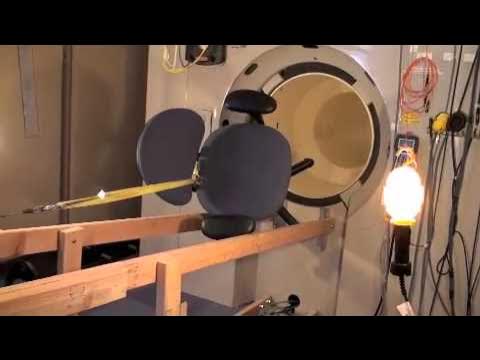
- As larger items such as an office chair were brought near the bore, measured attraction surged through 700 and 1,300 pounds, ultimately peaking around 1,700 pounds of force. (1:48)
- The steep field gradients at the magnet face cause rapid acceleration and oscillation of loose magnetic objects, creating pinning forces that far exceed human physical resistance. (1:48)
Detailed notes
## Background Published on YouTube by practiCal fMRI on November 13, 2010, this video documents experiments conducted on a 4 Tesla (T) research MRI magnet scheduled for decommissioning. The video description explains the safety implications of ferromagnetic objects near an MRI scanner, noting how peak magnetic field gradients at either end of the bore cause objects to rapidly accelerate and oscillate.
## TL;DR The video demonstrates the hazardous forces exerted by a powerful 4 Tesla MRI scanner on ferromagnetic items brought near its bore. Using a force-measuring setup, the experimenters track how magnetic pull increases from around 280 to 300 pounds at the outer perimeter up to 500 pounds closer to the entrance. When testing larger items such as an office chair, the attractive forces rapidly climb past 700 and 1,300 pounds. Ultimately, the items become pinned against the scanner face under roughly 1,700 pounds of force, illustrating the extreme dangers of bringing magnetic objects into an active MRI environment.
## Atmosphere & style The presentation carries an informal, hands-on experimental vibe where casual curiosity meets jaw-dropping physical force. The speakers monitor the gauge in real time with an unvarnished, observational tone that gradually shifts into mild disbelief as the force numbers climb well past manual human resistance. Watching the demonstration feels raw and cautionary, effectively capturing the invisible, unrelenting power of high-field magnetic resonance equipment.
## Bulletin - [00:12](https://www.youtube.com/watch?v=6BBx8BwLhqg&t=12s) Prior to decommissioning a 4 Tesla MRI scanner, researchers conducted live force measurements showing how ferromagnetic objects experience extreme mechanical attraction near the magnet bore. - [00:12](https://www.youtube.com/watch?v=6BBx8BwLhqg&t=12s) Initial pull measurements on test objects registered between 280 and 300 pounds of force, escalating rapidly to 500 pounds within inches of movement toward the magnet opening. - [01:48](https://www.youtube.com/watch?v=6BBx8BwLhqg&t=108s) As larger items such as an office chair were brought near the bore, measured attraction surged through 700 and 1,300 pounds, ultimately peaking around 1,700 pounds of force. - [01:48](https://www.youtube.com/watch?v=6BBx8BwLhqg&t=108s) The steep field gradients at the magnet face cause rapid acceleration and oscillation of loose magnetic objects, creating pinning forces that far exceed human physical resistance.
## Key takeaways - [00:12](https://www.youtube.com/watch?v=6BBx8BwLhqg&t=12s) Testing was performed using a high-field 4 Tesla research MRI scanner scheduled for decommissioning. - [00:12](https://www.youtube.com/watch?v=6BBx8BwLhqg&t=12s) A load-measuring gauge tracked real-time physical pull exerted by the MRI's fringe field. - [00:12](https://www.youtube.com/watch?v=6BBx8BwLhqg&t=12s) Magnetic attraction registered at 280 to 300 pounds of force at the outer perimeter of the magnet face. - [00:12](https://www.youtube.com/watch?v=6BBx8BwLhqg&t=12s) Moving an object just inches closer along the magnetic gradient increased tension to 500 pounds. - [00:12](https://www.youtube.com/watch?v=6BBx8BwLhqg&t=12s) Peak magnetic field gradients occur near the magnet faces at either end of the bore. - [00:12](https://www.youtube.com/watch?v=6BBx8BwLhqg&t=12s) Unrestrained magnetic objects tend to oscillate along the scanner bore due to entry acceleration and progressively damped directional changes. - [01:48](https://www.youtube.com/watch?v=6BBx8BwLhqg&t=108s) Force measurements quickly passed 700 pounds when testing larger ferromagnetic equipment. - [01:48](https://www.youtube.com/watch?v=6BBx8BwLhqg&t=108s) Restraining tension jumped past 1,300 pounds as magnetic coupling intensified. - [01:48](https://www.youtube.com/watch?v=6BBx8BwLhqg&t=108s) Peak forces reached approximately 1,700 pounds, demonstrating attraction nearing a full ton of force. - [01:48](https://www.youtube.com/watch?v=6BBx8BwLhqg&t=108s) An office chair and adjoining materials became completely immobilized against the bore structure under the field's pull. - [01:48](https://www.youtube.com/watch?v=6BBx8BwLhqg&t=108s) The scale of attraction generated by a 4T scanner far exceeds any possibility of manual human intervention or resistance.
## Detailed walkthrough ### [00:12](https://www.youtube.com/watch?v=6BBx8BwLhqg&t=12s) Measuring Initial Magnetic Pull Near the Bore
The demonstration begins by tracking the immense mechanical forces exerted on ferromagnetic objects as they approach the opening of a 4 Tesla research MRI scanner scheduled for decommissioning. Positioned near the fringe field at the outer face of the scanner bore, a load-measuring setup monitors the pull on a test object. A speaker observes the initial tension building rapidly as the object approaches the scanner entrance, noting: “So the force we're reading on that guy right now just at that part of the magnet is close to 300 to 80.”
As the object moves closer and begins to interact more directly with the steep magnetic field gradient at the bore opening, the attractive force scales dramatically within just a few inches of movement. The force gauge climbs steadily through intermediate thresholds until the speaker verifies the severe physical resistance holding the item, announcing: “It is giving us a reading of five hundred-pound.”
- Measured magnetic attraction begins between 280 and 300 pounds of force at the outer perimeter of the magnet face. - The tension quickly escalates to 500 pounds as the object draws closer to the bore aperture.
[01:48](https://www.youtube.com/watch?v=6BBx8BwLhqg&t=108s) Escalating Attraction and Massive Restraining Forces
As testing continues with larger items—including an office chair caught by the scanner's powerful field—the measured force escalates well beyond what any individual or team could manually resist. The team monitors the readouts in real time as the numbers rapidly climb past fifty-five hundred, sixty, and into the seven hundreds, with one speaker confirming: “Seven hundred pounds and we have jumped 1300s.”
The magnetic pull continues surging well into four digits as items get pinned firmly against the magnet, with additional equipment trapped alongside them. Observing the gauge as an office chair remains immobilized against the bore structure, the speaker notes the staggering final threshold reached during the test, pointing out: “Stuff is still on top of the chair so we're just about 1700s which is far more than this yeah.”
- Force measurements spike progressively through 700 pounds, jump past 1,300 pounds, and peak around 1,700 pounds. - Ferromagnetic office furniture and attached items become entirely pinned against the scanner face under nearly a ton of magnetic force.
## Mentioned practiCal fMRI, practiCalfMRI.blogspot.com, MRI magnet quench: the movie
## Video description UPDATE: Questions about why we were doing what we were doing? Please see the FAQ under "MRI magnet quench: the movie." That video is also entertaining, btw.
Fun, games and safety implications with a 4 tesla (T) MRI magnet that was about to be decommissioned. Note how magnetic objects let loose tend to oscillate along the magnet bore. That's because the peak magnetic field gradients are at either end (near the magnet face), causing peak acceleration as the object enters, followed by progressively damped changes of direction. See practiCalfMRI.blogspot.com for more information.
[Source](https://www.youtube.com/watch?v=6BBx8BwLhqg)