Knuth Urges Young Researchers to Shun Trends for Long-Term Prestige
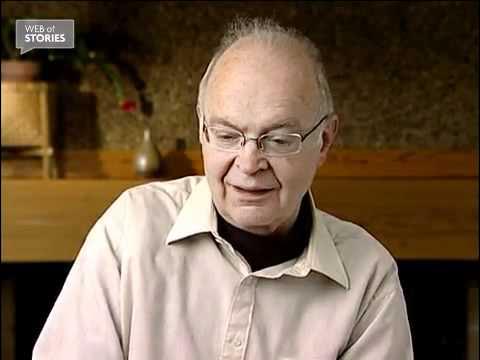
Web of Stories - Life Stories of Remarkable People
Scientists gain more prestige and benefit the world more by pursuing uncrowded problems through deep fundamentals rather than chasing fashionable topics to satisfy academic peers, Knuth says.
AI-assisted summary of Donald Knuth - My advice to young people (93/97) — original source. Check the original for full context.
Source published:
Key ideas
- Donald Knuth advises young researchers against pursuing trends or seeking prestige through popular topics, arguing that doing genuine science yields greater long-term benefit and recognition. (0:00)
- Knuth rejects top-down summaries, recalling Peter Wegner's 1960s advice to publish a 'Reader's Digest' version of 'The Art of Computer Programming' before tackling the full treatise. (1:38)
- Emphasizing bottom-up mastery, Knuth advocates learning 'everything about something' to create 'firm pegs' for subsequent knowledge, noting he often reads extensive material just to write a single sentence with confidence. (2:08)
Detailed notes
## Background Published on YouTube by Web of Stories - Life Stories of Remarkable People on May 2, 2012, this clip features American computing pioneer Donald Knuth during a 2006 interview recorded by Dikran Karagueuzian. According to the page description, the series highlights Knuth's life and influential career, spanning his multi-volume masterpiece The Art of Computer Programming, TeX, METAFONT, and his distinctive, quirky humor.
## TL;DR Donald Knuth advises young researchers to resist following academic fads and warns against pursuing subjects solely for external prestige, arguing that genuine curiosity and good science produce far greater long-term benefits. Reflecting on his own intellectual temperament, he explains why he rejected colleague Peter Wegner's advice to write a high-level summary of The Art of Computer Programming first, noting that he cannot write comfortably without total bottom-up mastery of the details. Citing his deep-dive study of select biblical verses as an example, Knuth illustrates how establishing exhaustive knowledge in a focused area creates "firm pegs" that support lifelong understanding and instill authoritative confidence in one's writing.
## Atmosphere & style Knuth's delivery is warm, intimate, and delightfully self-effacing, punctuated by wry chuckles as he pokes fun at his own contrarian impulse to distrust anything that becomes too popular. The narrative unfolds at an unhurried, reflective pace, feeling less like an academic lecture and more like a candid, behind-the-scenes conversation about intellectual honesty and working habits. There is a deep, quiet earnestness to his reflections, conveying the immense patience and rigorous solitary effort required to build genuine confidence in one's craft.
## Bulletin - [00:00](https://www.youtube.com/watch?v=75Ju0eM5T2c&t=0s) Donald Knuth advises young researchers against pursuing trends or seeking prestige through popular topics, arguing that doing genuine science yields greater long-term benefit and recognition. - [01:38](https://www.youtube.com/watch?v=75Ju0eM5T2c&t=98s) Knuth rejects top-down summaries, recalling Peter Wegner's 1960s advice to publish a 'Reader's Digest' version of 'The Art of Computer Programming' before tackling the full treatise. - [02:08](https://www.youtube.com/watch?v=75Ju0eM5T2c&t=128s) Emphasizing bottom-up mastery, Knuth advocates learning 'everything about something' to create 'firm pegs' for subsequent knowledge, noting he often reads extensive material just to write a single sentence with confidence.
## Key takeaways - [00:00](https://www.youtube.com/watch?v=75Ju0eM5T2c&t=0s) Young researchers frequently suppress their gut instincts to conform to community expectations and seek prestige. - [00:00](https://www.youtube.com/watch?v=75Ju0eM5T2c&t=0s) Believing an idea is good simply because it is fashionable is a dangerous trap in academic and scientific pursuits. - [00:45](https://www.youtube.com/watch?v=75Ju0eM5T2c&t=45s) More prestige and lasting value come from doing good science than from pursuing popular, trendy science. - [00:53](https://www.youtube.com/watch?v=75Ju0eM5T2c&t=53s) Work motivated by genuine personal conviction has a significantly higher chance of being important in the long run. - [01:08](https://www.youtube.com/watch?v=75Ju0eM5T2c&t=68s) Knuth authors books solely when he perceives a distinct, unfulfilled need, rather than responding to commissions or market trends. - [01:30](https://www.youtube.com/watch?v=75Ju0eM5T2c&t=90s) Following individual instinct is far more reliable and productive than following the herd. - [01:38](https://www.youtube.com/watch?v=75Ju0eM5T2c&t=98s) In the 1960s, Peter Wegner suggested writing an abridged overview of 'The Art of Computer Programming' before writing the multi-volume work. - [01:55](https://www.youtube.com/watch?v=75Ju0eM5T2c&t=115s) Knuth works strictly from the bottom up, refusing to write about high-level concepts without completely mastering the foundational low-level details. - [02:18](https://www.youtube.com/watch?v=75Ju0eM5T2c&t=138s) Gaining exhaustive mastery over a small topic, such as a few biblical verses, establishes 'firm pegs' on which to hang further knowledge. - [02:36](https://www.youtube.com/watch?v=75Ju0eM5T2c&t=156s) Lacking deep knowledge in a subject leaves intellectual understanding feeling flimsy and personally unsatisfying. - [02:44](https://www.youtube.com/watch?v=75Ju0eM5T2c&t=164s) Knuth embraces the liberal education ideal of learning 'something about everything and everything about something.' - [03:02](https://www.youtube.com/watch?v=75Ju0eM5T2c&t=182s) Writing authoritatively often demands reading through extensive background material simply to construct a single convincing sentence.
## Detailed walkthrough ### [00:00](https://www.youtube.com/watch?v=75Ju0eM5T2c&t=0s) Resisting Trends and Following Gut Instincts in Science
When asked what guidance he would offer to a young person—noting that people always tend to ask that "funny kind of a question"—Donald Knuth points immediately to the danger of chasing trends. He cautions against assuming that an idea is inherently worthwhile merely because it is fashionable. Acknowledging his own contrarian nature with self-deprecating humor, Knuth admits that he often tilts toward the opposite extreme: if he notices too many people adopting a specific concept, his immediate impulse is to suspect it might be wrong, and if his own work were ever to become excessively popular, he would feel an urge to change direction.
While he openly dismisses that personal reflex as "ridiculous," he sees the inverse problem occurring far too frequently in academic and scientific communities. Young researchers often suppress their genuine gut instincts simply because they believe the wider community expects them to conform. As a consequence, researchers frequently devote themselves to topics they do not find interesting in the hopes of earning prestige. Knuth rejects this calculation, arguing that lasting reputation stems from pursuing substantive truth rather than jumping onto bandwagons: “I think you get more prestige by doing good science than by doing popular science, because if you go with what you really think is important, then it's a higher chance that it really is important in the long run.” In his view, it is ultimately the long-term impact that provides the greatest benefit to the world.
This personal philosophy directly governs Knuth’s approach to writing and publishing. When he sets out to write a book, he does so only because he perceives an unfulfilled need for it, rather than responding to publishers requesting a title or following existing publishing patterns. For Knuth, trusting one's own instincts invariably produces more enduring and meaningful work than simply following the herd.
- Knuth observes that researchers frequently choose subjects they care little about purely in pursuit of external prestige and community approval. - He emphasizes that following genuine intellectual curiosity yields a far higher probability of uncovering work that remains valuable in the long run. - His book projects are initiated solely when he identifies a distinct void that needs filling, rather than by external commission or trend-following.
---
[01:38](https://www.youtube.com/watch?v=75Ju0eM5T2c&t=98s) Deep Mastery, Firm Pegs, and Writing with Total Confidence
Reflecting on how distinct temperaments require different working styles, Knuth recalls advice given to him in the 1960s by his friend, computer scientist Peter Wegner. Regarding the monumental multi-volume project *The Art of Computer Programming*, Wegner advised Knuth not to write the entire comprehensive series from scratch, but rather to write an introductory, "Reader's Digest" overview first and subsequently expand into the details. While Knuth acknowledges that a top-down summary might have suited Wegner's strengths, it is entirely incompatible with his own intellectual process. Knuth explains that he cannot comfortably write about high-level abstractions until he has completely mastered the underlying details: “I have to see something to the point where I've surrounded it and sort of totally understood it before I can write about it with any confidence.”
To illustrate this bottom-up approach outside computer science, Knuth cites his book exploring selected verses of the Bible. Rather than attempting a shallow, sweeping overview, he immersed himself in library research until he completely understood that specific subset of texts. Achieving comprehensive mastery over a narrow domain provided him with "firm pegs" upon which subsequent knowledge could securely hang. Operating without deep, solid knowledge makes an entire subject feel flimsy and intellectually unsatisfying.
Invoking the traditional maxim, Knuth observes: “The classic phrase is that liberal education is to learn something about everything and everything about something and I like this idea about learning everything about an area before you feel... if you don't know something real solid, then you never have enough confidence.” This demand for rock-solid understanding directly shapes his prose. Knuth often reads through vast amounts of background material solely to construct a single sentence. In his experience, writing from a foundation of genuine mastery naturally informs word choice and tone, whereas superficial knowledge inevitably reveals itself between the lines.
- **Peter Wegner's 1960s proposal:** Suggested publishing an abridged, high-level summary of *The Art of Computer Programming* before writing the full, comprehensive treatise. - **The "firm pegs" philosophy:** Demonstrated through his deep-dive study of specific biblical verses, where exhaustive research into a focused subject established secure mental hooks for all subsequent learning. - **Micro-level precision in writing:** Knuth frequently wades through entire volumes of research to author a single sentence, ensuring that subtle nuance and authoritative confidence are embedded implicitly in the prose.
## Notable quotes > [00:00](https://www.youtube.com/watch?v=75Ju0eM5T2c&t=0s) I think you get more prestige by doing good science than by doing popular science, because if you go with what you really think is important, then it's a higher chance that it really is important in the long run. — Donald Knuth
> [01:38](https://www.youtube.com/watch?v=75Ju0eM5T2c&t=98s) I have to see something to the point where I've surrounded it and sort of totally understood it before I can write about it with any confidence. — Donald Knuth
## Mentioned Donald Knuth, Peter Wegner, The Art of Computer Programming, Bible, Surreal Numbers, TeX, METAFONT, Dikran Karagueuzian
## Video description To listen to more of Donald Knuth’s stories, go to the playlist: https://www.youtube.com/playlist?list=PLVV0r6CmEsFzeNLngr1JqyQki3wdoGrCn
Donald Knuth (b. 1938), American computing pioneer, is known for his greatly influential multi-volume work, 'The Art of Computer Programming', his novel 'Surreal Numbers', his invention of TeX and METAFONT electronic publishing tools and his quirky sense of humour. [Listener: Dikran Karagueuzian; date recorded: 2006]
TRANSCRIPT: If somebody said what advice would I give to a... a young person - they always ask that funny kind of a question. And... and I think one of the things that... is... that I would... that would sort of come first to me is this idea of, don't just believe that because something is trendy, that it's good. I'd probably go the other extreme where if... if something... if I find too many people adopting a certain idea I'd probably think it's wrong or if, you know, if... if my work had become too popular I probably would think I had to change. This is, of course, ridiculous but... but I see the... I see the... the other side of it too... too often where people will... will do something against their own gut instincts because they think the community wants them to do it that way, so people will... will work on a certain... a certain subject even though they aren't terribly interested in it because they think that they'll get more prestige by working on it. I think you get more prestige by doing good science than by doing popular science because... because if... if you go with... with what you really think is... is important then it's a higher chance that it really is important in the long run and it's the long run which... which has the most benefit to the world. So... so usually when I'm... when I'm writing a book or... or publishing a book it's... it's different from books that have been done before because I feel there's a need for such a book, not because that... there was somebody saying please write such a book, you know, or... or that other people have... have already done that... that kind of thing. So follow your own instincts it seems to me is better than follow the... the herd. I... my friend Peter Wegner told me in the '60s that I should, for Art of Computer Programming, I shouldn't write the... I shouldn't write the whole series first, I should... I should first write a... a reader's digest of... of it and then expand on the parts afterwards. That would probably work for him better than... much better... but I... I work in a completely different way. I have to see... I have to see something to the point where I've surrounded it and... and, sort of, totally understood it before I'm comf... before I can write about it with any confidence and so that's the... that's the way I work, I don't... I don't want to write about a high level thing unless I've fully understood a low level thing. Other people have completely different strengths I... I know but... but for me, I... you know, I wrote a book about the... a few verses of the Bible, once I had... once I understood those verses and... and sort of everything I could find in the library about a small part of the Bible, all of a sudden I had firm pegs on which I could hang other knowledge about it. But if... but if I went through my whole life only under... without any... any in depth knowledge of any part then it all seems to be flimsy and... and to me doesn't... doesn't give me some satisfaction. Well the... the classic phrase is that liberal education is to learn something about everything and everything about something and... and I like this idea about learning everything about... about an area before you feel... if you don't know something real solid then... then you never have... have enough confidence. A lot of times I'll have to read through a lot of material just in order to write one sentence somehow because... because my sentence will then have... have... I'll choose words that... that make it more convincing than if I... than if I'm... than if I really don't have the knowledge it'll somehow come out implicitly in... in my writing. These are little sort-of-vague thoughts that I have when reflecting over... over some of the directions that distinguish what I've done from what... what I've seen other people doing.
[Source](https://www.youtube.com/watch?v=75Ju0eM5T2c)