Antonopoulos Says Crypto Bypasses Bank Controls as Workers Opt Out
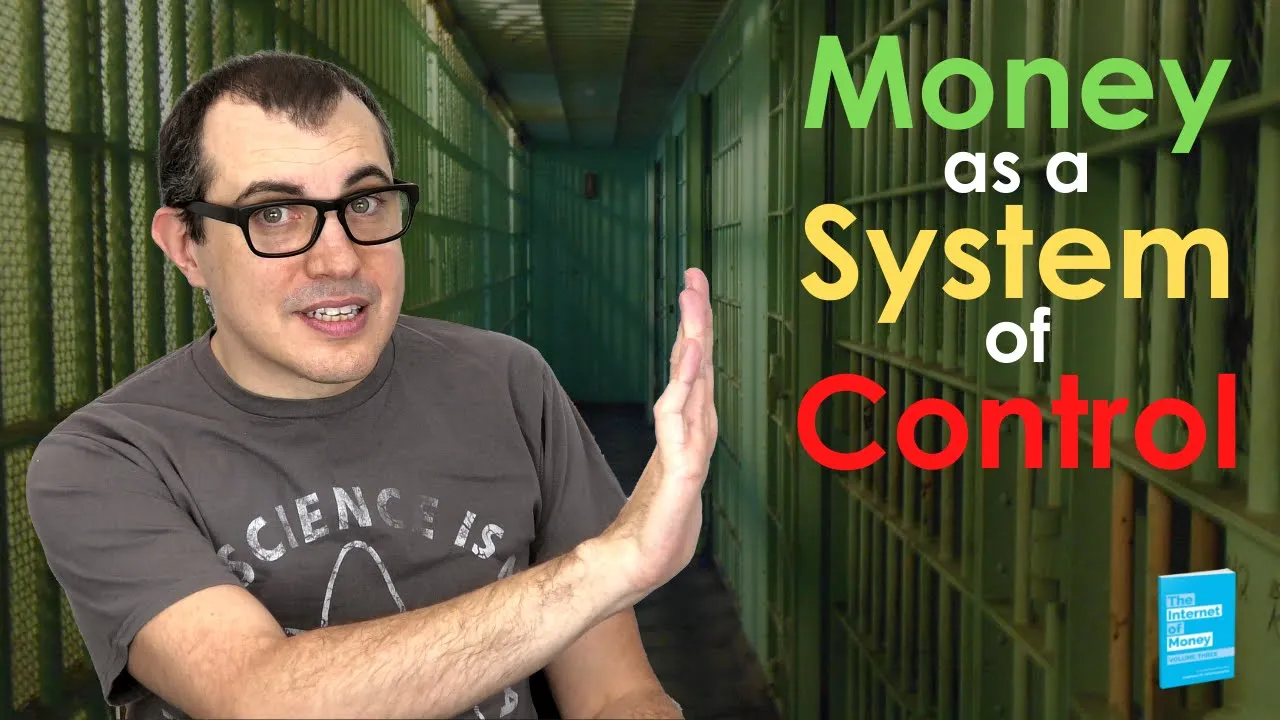
aantonop
State attempts to police cryptocurrencies via fiat exchange choke points will fail because disenfranchised workers can trade labor directly for digital cash and exit legacy banking entirely.
AI-assisted summary of Cryptocurrency Explained: Money as a System-of-Control — original source. Check the original for full context.
Source published:
Key ideas
- The 1970 Bank Secrecy Act introduced money as a 'system of control,' subordinating traditional functions like medium of exchange and store of value to state surveillance. (0:00)
- Traditional finance deliberately excludes approximately 6.5 billion people from full banking access, reserving complete privileges for a tiny Western elite. (3:13)
- Depository accounts are legally unsecured loans to banks, leaving depositors vulnerable to sudden haircuts and account freezes without judicial process. (7:51)
- Open blockchains provide a friction-free 'virtual exit' for younger generations and unbanked populations who can trade labor directly for cryptocurrency without centralized on-ramps. (12:36)
Detailed notes
## Background Published on YouTube by Andreas M. Antonopoulos (aantonop) on September 30, 2017, this presentation from the Advanced Digital Innovation Summit in Vancouver explores how modern money has evolved beyond its traditional economic definitions. The description highlights that while money historically served as a store of value, medium of exchange, and unit of account, a fourth use case has emerged that subordinates all others: money as a system of control.
## TL;DR Antonopoulos traces how post-1970 regulations, beginning with the US Bank Secrecy Act, transformed the global banking system into an instrument of political surveillance and extraterritorial law enforcement. This dynamic locks privileged users into an exclusionary, fragile 'gilded cage' where account balances are merely unsecured loans subject to state seizure, while billions of people globally remain underbanked or unbanked. Rather than attempting to reform an unaccountable banking sector that grants immunity to corporate fraud, Antonopoulos argues that open blockchains like Bitcoin provide a borderless, neutral alternative. By enabling direct peer-to-peer exchange for labor and goods, cryptocurrency offers a virtual exit that renders legacy fiat rails and regulatory gatekeepers obsolete.
## Atmosphere & style The presentation carries an urgent, incisive, and rallying tone, opening with structured Socratic questioning before escalating into a sharp critique of institutional impunity. Antonopoulos speaks with dynamic, commanding cadence, contrasting dry legal realities with biting humor and candid vernacular to voice the frustrations of disenfranchised younger generations. The narrative arc builds from analytical diagnostic to a defiant, electrifying crescendo, making the audience feel the exhilarating promise of staging an ideological and economic walkout from legacy finance.
## Bulletin - [00:00](https://www.youtube.com/watch?v=FyK4P7ZdOK8&t=0s) The 1970 Bank Secrecy Act introduced money as a 'system of control,' subordinating traditional functions like medium of exchange and store of value to state surveillance. - [03:13](https://www.youtube.com/watch?v=FyK4P7ZdOK8&t=193s) Traditional finance deliberately excludes approximately 6.5 billion people from full banking access, reserving complete privileges for a tiny Western elite. - [07:51](https://www.youtube.com/watch?v=FyK4P7ZdOK8&t=471s) Depository accounts are legally unsecured loans to banks, leaving depositors vulnerable to sudden haircuts and account freezes without judicial process. - [12:36](https://www.youtube.com/watch?v=FyK4P7ZdOK8&t=756s) Open blockchains provide a friction-free 'virtual exit' for younger generations and unbanked populations who can trade labor directly for cryptocurrency without centralized on-ramps.
## Key takeaways - [00:00](https://www.youtube.com/watch?v=FyK4P7ZdOK8&t=0s) Money traditionally serves three functions—store of value, medium of exchange, and unit of account—with fungibility acting as a key property. - [00:00](https://www.youtube.com/watch?v=FyK4P7ZdOK8&t=0s) The Bank Secrecy Act of 1970 in the US introduced a fourth function: money as an extraterritorial system of control and surveillance. - [00:00](https://www.youtube.com/watch?v=FyK4P7ZdOK8&t=0s) Financial institutions have been effectively deputized as global law enforcement agents capable of freezing accounts without judicial warrants. - [03:13](https://www.youtube.com/watch?v=FyK4P7ZdOK8&t=193s) When money is turned into a system of control, its fundamental economic utilities as an open medium of exchange and reliable store of value degrade. - [03:13](https://www.youtube.com/watch?v=FyK4P7ZdOK8&t=193s) While the internet reached 2.5 billion people in 25 years, legacy banking leaves roughly 2.5 billion completely unbanked and 4 billion underbanked. - [03:13](https://www.youtube.com/watch?v=FyK4P7ZdOK8&t=193s) Banking executives enjoy virtual legal immunity for massive frauds, such as Libor rigging or creating millions of unauthorized accounts, because they serve as state enforcement deputies. - [03:13](https://www.youtube.com/watch?v=FyK4P7ZdOK8&t=193s) The international banking system leverages networks like SWIFT to project extraterritorial legal authority and enforce compliance across sovereign nations. - [07:51](https://www.youtube.com/watch?v=FyK4P7ZdOK8&t=471s) Banks operate inside a 'gilded cage,' protected from startup competition by severe regulatory compliance while losing their own capacity to innovate. - [07:51](https://www.youtube.com/watch?v=FyK4P7ZdOK8&t=471s) Deposit insurance offers the illusion of safety but fails during severe systemic crises, as demonstrated by depositor haircuts in Greece and Cyprus. - [07:51](https://www.youtube.com/watch?v=FyK4P7ZdOK8&t=471s) Bank deposits legally constitute unsecured loans from customers to banks rather than true segregated custody of funds. - [07:51](https://www.youtube.com/watch?v=FyK4P7ZdOK8&t=471s) Governments across 194 countries weaponize access to banking services to suppress political opposition, activism, and dissident organizations. - [12:36](https://www.youtube.com/watch?v=FyK4P7ZdOK8&t=756s) Bitcoin and open blockchains are explicitly designed with neutrality, borderlessness, and censorship resistance to prevent money from being used as a system of control. - [12:36](https://www.youtube.com/watch?v=FyK4P7ZdOK8&t=756s) Cryptocurrency offers an unprecedented mechanism for 'virtual exit,' enabling individuals to leave oppressive financial regimes without physically crossing borders. - [12:36](https://www.youtube.com/watch?v=FyK4P7ZdOK8&t=756s) Regulatory attempts to block fiat on-ramps and off-ramps fail against younger demographics who have little fiat wealth and can instead exchange their labor and skills directly for cryptocurrency. - [16:17](https://www.youtube.com/watch?v=FyK4P7ZdOK8&t=977s) Operating end-to-end within a parallel digital economy renders legacy financial gates and the traditional banking 'gilded cage' entirely obsolete.
## Detailed walkthrough ### [00:00](https://www.youtube.com/watch?v=FyK4P7ZdOK8&t=0s) The Four Properties of Money and the 1970 Shift
Andreas opens his talk, titled "Inside Out: Money as a System of Control," by engaging the audience to identify the core functions of money. Attendees call out traditional economic functions like medium of exchange, store of value, and unit of account, while someone incorrectly proposes fungibility, which Andreas notes is a property rather than a primary use case. Andreas then introduces a fourth, pervasive property: money as a system of control (SoC). While humanity has used money for tens of thousands of years to communicate value, the nature of money changed drastically over the last fifty years, subordinating its historical functions to regulatory and political oversight.
```mermaid flowchart TD accTitle: The Evolution and Subordination of Money's Functions accDescr: Diagram showing historical functions of money being subordinated by the introduction of the Bank Secrecy Act in 1970.
subgraph Historical["Historical Millennium-Old Functions"] MoE["Medium of Exchange"] SoV["Store of Value"] UoA["Unit of Account"] end
BSA["1970 Bank Secrecy Act<br/>(Nixon)"] --> SoC["System of Control (SoC)"] SoC -->|"Subordinates & Corrupts"| Historical ```
Andreas points directly to the pivotal moment in 1970 when Richard Nixon signed the Bank Secrecy Act into law in the United States, arguing that it fundamentally converted money into a political instrument. This legislation effectively deputized the global financial services industry into an extraterritorial branch of law enforcement that bypasses standard democratic recourse, national borders, and due process. As Andreas explains:
> “A cop can confiscate your money. A judge can sign a warrant to freeze your accounts. A bank can do both without authorisation from anyone and there is nothing you can do about it.”
- **Historical functions of money:** Medium of exchange (MoE), store of value (SoV), unit of account (UoA). - **The fourth function:** System of control (SoC). - **Catalyst:** The Bank Secrecy Act of 1970 signed by Richard Nixon. - **Ultimate goal:** Complete, totalitarian financial surveillance of all global transactions.
---
[03:13](https://www.youtube.com/watch?v=FyK4P7ZdOK8&t=193s) The Gilded Cage and Economic Exclusion
When money is turned into an enforcement tool, its underlying economic utilities degrade. It ceases to function effectively as a neutral medium of exchange or a reliable store of value because transactions can be blocked or reversed arbitrarily. Andreas contrasts the rapid global adoption of the internet—which reached over 2.5 billion people in 25 years through simple mobile devices—with traditional finance, which lags decades behind. The global financial architecture deliberately excludes the vast majority of humanity, leaving billions unbanked or underbanked while offering full access only to a tiny elite in Western democracies.
```mermaid flowchart TD accTitle: Global Financial Access Stratification accDescr: Hierarchy of global financial access showing accredited investors at the top and the completely unbanked at the bottom.
subgraph Stratification["Global Population Financial Tiers"] AI["Accredited Investors<br/>(Top 0.001% - Special Access/Immunity)"] Full["Elite Full Banking Access<br/>(1.5 Billion People)"] Under["Underbanked<br/>(4.0 Billion People)"] Unbanked["Completely Unbanked<br/>(2.5 Billion People)"] end
AI --- Full Full --- Under Under --- Unbanked ```
Within those privileged banking tiers, legal immunity protects bad actors from accountability. Financial institutions that engage in massive fraud—such as Libor manipulation, gold market fixing, robo-foreclosures displacing millions, Wells Fargo opening 3.5 million unauthorized accounts, or the Equifax breach compromising 143 million records—face no criminal jail time for their executives. The only exception was Bernie Madoff, who went to prison specifically because he stole from wealthy clients rather than the poor. Andreas notes:
> “Because when money becomes a system of control, financial services companies become deputies in this system of enforcement and control. As deputies, they get some perks. One of the perks is: they never go to jail.”
- **Global banking tiers:** ~1.5 billion people hold privileged banking access, ~4 billion are underbanked, and ~2.5 billion remain completely unbanked. - **Accredited investors:** Represent the top tenth of the tenth of the tenth percentile of global wealth. - **Systemic corporate scandals with zero executive prison time:** Wells Fargo's 3.5 million fake accounts, Equifax's 143 million compromised consumer records, Libor benchmark rigging, and robo-foreclosures affecting 10 million people. - **Geopolitical weaponization:** Disconnection of non-compliant nations from the SWIFT wire network, forcing sovereign jurisdictions (such as Switzerland) to submit to universal US court authority.
---
[07:51](https://www.youtube.com/watch?v=FyK4P7ZdOK8&t=471s) The Illusion of Banking Security
Banks are trapped in a regulatory "gilded cage": protected from outside market disruption by strict compliance barriers, yet unable to innovate or operate freely. Andreas dismantles the illusion of safety peddled to the middle class through state-backed protections like deposit insurance. Drawing on the Greek financial crisis, he reminds the audience that account holders faced sudden, severe 20% haircuts despite government-backed insurance schemes, proving that deposit insurance exists to bail out banks during routine tremors rather than protect depositors during systemic collapse.
Furthermore, Andreas challenges the legal status of customer bank deposits. In common legal reality under the law of bailment, an individual does not own the money sitting in their checking account. Depositing funds constitutes extending an unsecured loan to the bank, which grants the customer a revocable claim that can be suspended if an individual attends a protest, associates with dissidents, or crosses a regime. Andreas observes:
> “You have a legal construct that possibly, maybe entitles you to withdraw at the pace they set, unless you cross the wrong person, go to the wrong protest, associate with the wrong organisation, or vote for the wrong party.”
- **The Gilded Cage:** Regulatory thickets designed to cement control rather than protect consumers, stifling banking innovation. - **Failure of deposit insurance:** Total inadequacy during major banking collapses (e.g., Cyprus and Greece's 20% depositor haircuts). - **The reality of bank accounts:** Legally structured as unsecured loans from the depositor to the bank rather than direct custody of cash. - **Political weaponization:** Financial disenfranchisement adopted across 194 countries to suppress political dissent without judicial oversight.
---
[12:36](https://www.youtube.com/watch?v=FyK4P7ZdOK8&t=756s) Open Blockchains and the Power of Virtual Exit
Faced with a coercive architecture that snuffs out opposition at the teller window, an alternative paradigm has emerged: open, public blockchains. Andreas emphasizes that Bitcoin was created with explicit design principles centered on neutrality, borderless participation, and absolute censorship resistance, steadfastly refusing to act as a system of control. While establishment gatekeepers dismiss cryptocurrencies as irrelevant, roughly 6 billion people remain systematically excluded from the legacy banking infrastructure.
Drawing on political theory, Andreas identifies the dual mechanisms of public agency: voice (political engagement and reform) and exit (leaving an oppressive paradigm). While historical borders and physical migration barriers restrict exit in the real world, cryptocurrency provides a frictionless virtual exit. Faced with a stagnated, debt-ridden legacy financial system, younger generations are opting out entirely. When regulators attempt to block the fiat on-ramps and off-ramps by threatening to keep people from moving their fiat wealth into digital assets, they fundamentally misunderstand the younger demographic. As Andreas captures the generational sentiment:
> “What do Millennials say to that? ‘Dude... I don't have any fucking money!’ All I have is my creative potential, my spirit, my productivity.”
- **Core cryptocurrency design principles:** Borderlessness, openness, absolute neutrality, and censorship resistance. - **Human agency models:** Voice (advocating for policy change) vs. Exit (opting out of corrupt institutions). - **Virtual exit:** The ability to detach from the legacy banking framework without physical emigration (e.g., capital outflows and adoption across China). - **Regulatory pressure points:** State crackdowns on cryptocurrency exchange interfaces and fiat on-ramps/off-ramps, which fail against participants who bring human capital rather than legacy fiat balances into the crypto economy.
[16:17](https://www.youtube.com/watch?v=FyK4P7ZdOK8&t=977s) Exiting the Gilded Cage
Andreas Antonopoulos concludes his address by personifying the perspective of an individual completely opting out of the traditional banking apparatus. Speaking from the standpoint of someone who can exchange their labor, goods, or services directly for cryptocurrency, he explains that such an economy eliminates the need for centralized intermediaries. When people can transact peer-to-peer, they bypass traditional financial gates entirely: “I can sell that directly for bitcoin without an exchange, an on-ramp or an off-ramp.”
Addressing the custodians of the legacy financial world, he underscores that participants in the digital economy have no desire or requirement to re-engage with conventional banking infrastructure. Because vast swaths of the global population were excluded from the incumbent financial architecture in the first place, forcing digital currency users back into traditional fiat networks is a futile control strategy. When spending becomes necessary, direct digital currency transactions make returning to legacy rails obsolete: “When I need to buy something, I will use my digital currency directly without re-entering your system—to which I was never invited.”
Antonopoulos issues a defiant challenge to regulatory and institutional threats aimed at cutting off access between fiat currencies and open blockchains. Threatening to sever access points like centralized exchanges fails to stifle cryptocurrency because users can simply operate end-to-end within the parallel digital sphere. Delivering his final, decisive rejection of legacy monetary control, he declares: “Shut down the on-ramps, shut down the off-ramps. I will stay on board. I will stay digital. I won't touch your gilded cage anymore, because I don't need you. I exit.”
## Notable quotes > [00:00](https://www.youtube.com/watch?v=FyK4P7ZdOK8&t=0s) A cop can confiscate your money. A judge can sign a warrant to freeze your accounts. A bank can do both without authorisation from anyone and there is nothing you can do about it. — Andreas Antonopoulos
## Mentioned Richard Nixon, Bank Secrecy Act of 1970, Wells Fargo, Equifax, Bernie Madoff, SWIFT, Bitcoin, Libor, Andreas Antonopoulos
## Video description We know that money serves as: - A Store of Value (SoV) - A Medium of Exchange (MoE) and - A Unit of Account (UoA)
But what happens when a fourth use of money is introduced, one which subordinates all the other characteristics: money as a system of control.
This talk is featured in The Internet of Money volume 3, which can be purchased in multiple languages in paperback, ebook, or audiobook: https://aantonop.io/tiomv3ebooks/
Chapters 0:00 4 properties of money 0:51 History of money 3:16 Money as a system-of-control supercedes all other functions of money 3:52 Money does not flow freely 9:16 A system of money that refuses to become a system-of-control 9:52 Banks as a system-of-control 12:31 Banks vs cryptocurrencies 13:21 Voice or exit
This talk took place at the Advanced Digital Innovation Summit on September 12th 2017 in Vancouver, Canada: https://antonopoulos.com/event/adisummit-vancouver-canada/
QUESTION & ANSWER: Biggest threat to cryptocurrencies - https://youtu.be/MNXSDaD97x0 ICOs, disruption, and self-regulation - https://youtu.be/yfjgcI8xX3A
RELATED: The Stories We Tell About Money - https://youtu.be/ONvg9SbauMg Bitcoin: Where the Laws of Mathematics Prevail - https://youtu.be/HaJ1hvon0E0 The Digital Currency Commons - https://youtu.be/nYBKWrqR4I8 Open Blockchains for Cashless Developed Economies - https://youtu.be/eo-0BgrKxiI Hardware, Software, Trustware - https://youtu.be/Etyjc1JdmFU Fake News, Fake Money - https://youtu.be/i_wOEL6dprg Blockchain vs. Bullshit: Thoughts on the Future of Money - https://youtu.be/SMEOKDVXlUo Separation of money and state - https://youtu.be/jGmtRA9S7_Y Could governments take over exchanges? - https://youtu.be/9PrJQeKl9w4 Is Bitcoin a democracy? - https://youtu.be/TC3Hq76UT5g Unstoppable code - https://youtu.be/AQx3E3F8Kz4 Irreversibility and consumer protection - https://youtu.be/R107YWu5XzU Scaling, trust, and trade-offs - https://youtu.be/vCxmHwqyJWU The Switzerland of currencies - https://youtu.be/pV83Qmy578c How is fungibility tied to privacy? - https://youtu.be/VuI-8EwqIS8 Fungibility, privacy, anonymity - https://youtu.be/y3s8c7YDtXU
COMMENT below and let us know what you think of the video. Post your follow-up questions there too!
SUBSCRIBE to this YouTube channel and select the bell 🔔 for notifications: https://www.youtube.com/channel/UCJWCJCWOxBYSi5DhCieLOLQ?sub_confirmation=1
JOIN this YouTube channel about Bitcoin and open blockchains to become a YouTube Community Member and access custom emoji and other perks: https://www.youtube.com/channel/UCJWCJCWOxBYSi5DhCieLOLQ/join
BECOME a Community Builder: https://patreon.com/aantonop
LEARN from Andreas in one of his popular Workshops which will teach you practical crypto skills. There’s even a FREE Intro to Bitcoin & Open Blockchains to get you started. https://aantonop.io/takeaworkshop
You can also learn from one of aantonop's many books about bitcoin, ethereum, and open blockchains. Andreas has written three technical books for developers about blockchain technology, Mastering Bitcoin, Mastering Ethereum, and Mastering the Lightning Network published by O’Reilly Media. He’s also written The Internet of Money Series books, which explain why bitcoin, ethereum, and open blockchains matter.
About aantonop: Andreas isn't promoting a company or an organization; he's paid by the community (people who support this work on Patreon and YouTube) and provides an unbiased look at open blockchain technologies, what they can do for our societies, and how to get involved (if you decide you want to). Learn more at https://aantonop.com
From Andreas: You may already know that my mission is to educate as many people as possible about #Bitcoin and open blockchain technologies. Watching these videos and sharing them with others is a big part of that. Thank you for being part of this mission.
***Learn More From Andreas** Amazon & Kindle: http://www.amazon.com/-/e/B00MVAG8Z8 Audible: https://www.audible.com/author/Andreas-M-Antonopoulos/B00MVAG8Z8 E-books & Merch: https://aantonop.io/shop Patreon: https://patreon.com/aantonop Website: https://aantonop.com Workshops: https://aantonop.com/workshops
***Connect with Andreas on Socials*** Facebook: https://www.facebook.com/AndreasMAntonopoulos Instagram: https://www.instagram.com/amantonop/ LinkedIn: https://www.linkedin.com/company/aantonop/ Twitter: https://twitter.com/aantonop
Thanks for watching, sharing, and subscribing!
Music: "Unbounded" by Orfan (https://www.facebook.com/Orfan/) Outro Graphics: Phneep (http://www.phneep.com/) Outro Art: Rock Barcellos (http://www.rockincomics.com.br/) Join the aantonop Channel: https://aantonop.io/joinaantonopyt
#Cryptocurrency #CryptocurrencyEducation #Bitcoin
[Source](https://www.youtube.com/watch?v=FyK4P7ZdOK8)