Musk Ties Every SpaceX Move to Mars Colony Timeline, Reisman Says
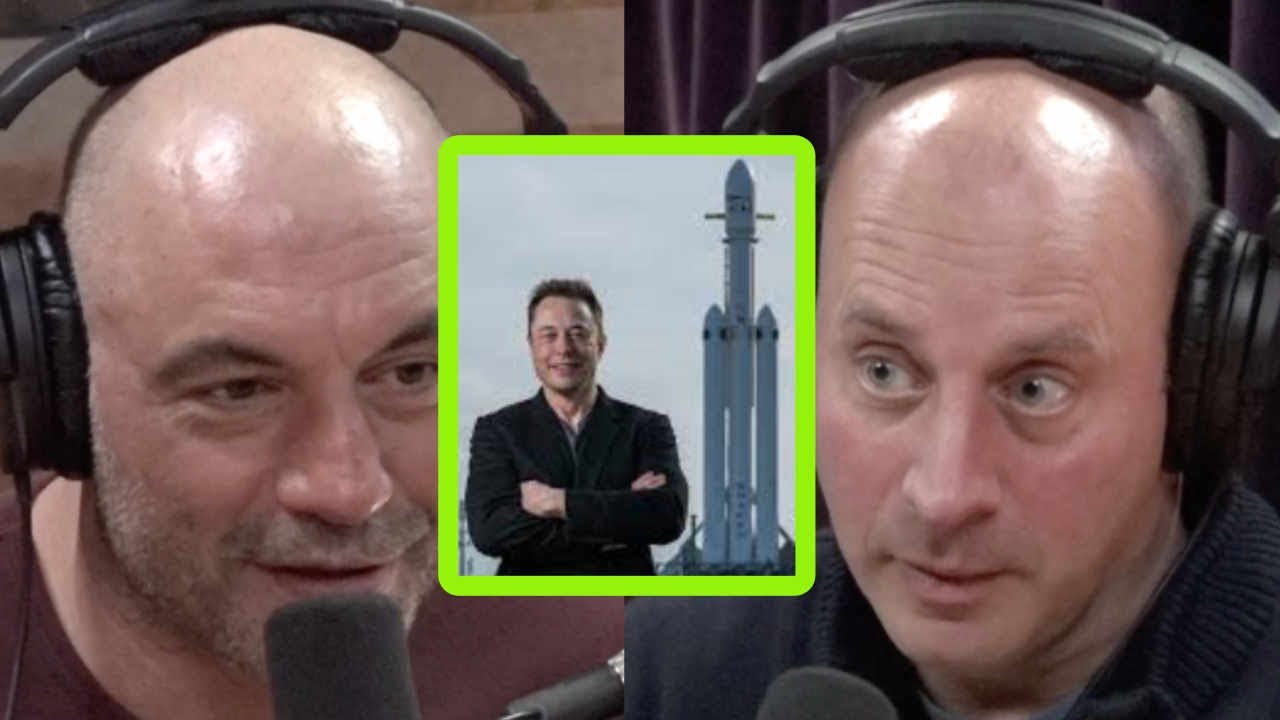
What is it Like to Work for Elon Musk? — JRE Clips

JRE Clips

Former astronaut Garrett Reisman says Elon Musk screens every strategic choice through whether it accelerates a self-sustaining Mars base, running SpaceX and Tesla as planetary extinction contingencies.

AI-assisted summary of What is it Like to Work for Elon Musk? — original source. Check the original for full context.

Source published:

Key ideas

  • Garrett Reisman reveals that Elon Musk filters every major SpaceX strategic choice through whether it accelerates establishing a self-sustaining human colony on Mars. (0:00)
  • Musk rejected a comparison to aviation pioneer Howard Hughes because Hughes's one-off inventions, like the Spruce Goose, failed to permanently transform daily human life. (2:41)
  • Musk's broader corporate framework operates as a dual strategy: Tesla serves as 'Plan A' to protect Earth, while SpaceX functions as 'Plan B' to secure a planetary backup. (9:31)
  • Musk manages multiple multi-billion-dollar ventures simultaneously by strictly compartmentalizing technical meetings and eliminating casual or cross-venture discussion. (9:31)

Detailed notes

## Background Published on YouTube by JRE Clips on February 7, 2020, this video is an excerpt from The Joe Rogan Experience episode #1425 featuring former astronaut and SpaceX director Garrett Reisman discussing his firsthand experiences working directly under Elon Musk.

## TL;DR Garrett Reisman breaks down Elon Musk's singular operational prism, explaining that every major strategic decision at SpaceX is measured by whether it accelerates establishing a self-sustaining civilization on Mars. He recounts comparing Musk to Howard Hughes on 60 Minutes—a comparison Musk rejected not out of offense at Hughes's madness, but because Hughes failed to permanently transform daily human life like Steve Jobs. The discussion explores Musk's rare intellectual agility across disparate engineering fields, frames Tesla as 'Plan A' and SpaceX as 'Plan B' for human survival, and touches on Reisman's visceral dread regarding Neuralink and the societal divide it could create.

## Atmosphere & style The conversation carries an engaging, candid backstage tone, blending Rogan's fascination with Musk's sheer cognitive output and Reisman's grounded, occasionally humorous insider reality. There is a sharp contrast between Reisman's lighthearted self-deprecation—such as panicking over inadvertently comparing his boss on national television to a recluse who hoarded urine—and serious reflections on species extinction risks and the exhausting grind of seven years at Musk's blistering pace. It feels like an authentic, reflective debrief that demystifies modern Silicon Valley ambition without diminishing its staggering scope.

## Bulletin - [00:00](https://www.youtube.com/watch?v=GNG6ZzDh9C8&t=0s) Garrett Reisman reveals that Elon Musk filters every major SpaceX strategic choice through whether it accelerates establishing a self-sustaining human colony on Mars. - [02:41](https://www.youtube.com/watch?v=GNG6ZzDh9C8&t=161s) Musk rejected a comparison to aviation pioneer Howard Hughes because Hughes's one-off inventions, like the Spruce Goose, failed to permanently transform daily human life. - [09:31](https://www.youtube.com/watch?v=GNG6ZzDh9C8&t=571s) Musk's broader corporate framework operates as a dual strategy: Tesla serves as 'Plan A' to protect Earth, while SpaceX functions as 'Plan B' to secure a planetary backup. - [09:31](https://www.youtube.com/watch?v=GNG6ZzDh9C8&t=571s) Musk manages multiple multi-billion-dollar ventures simultaneously by strictly compartmentalizing technical meetings and eliminating casual or cross-venture discussion.

## Key takeaways - [00:00](https://www.youtube.com/watch?v=GNG6ZzDh9C8&t=0s) SpaceX evaluates every strategic and engineering decision by whether it advances the timeline for a self-sustaining Mars colony. - [00:00](https://www.youtube.com/watch?v=GNG6ZzDh9C8&t=0s) Musk sets notoriously aggressive internal deadlines that SpaceX engineers routinely miss due to the sheer complexity of aerospace engineering. - [01:24](https://www.youtube.com/watch?v=GNG6ZzDh9C8&t=84s) Reisman initially feared career fallout after comparing Musk to Howard Hughes on '60 Minutes', remembering Hughes's descent into severe mental illness and reclusive behavior. - [02:41](https://www.youtube.com/watch?v=GNG6ZzDh9C8&t=161s) When confronted with the Hughes comparison, Musk took issue only with Hughes's failure to leave a lasting, foundational impact on human civilization. - [02:41](https://www.youtube.com/watch?v=GNG6ZzDh9C8&t=161s) Musk aspires to a legacy comparable to Steve Jobs, focusing on technological shifts that fundamentally alter daily human existence rather than isolated novelties. - [04:55](https://www.youtube.com/watch?v=GNG6ZzDh9C8&t=295s) Musk demonstrates extraordinary technical versatility, transitioning effortlessly between esoteric software coding and specialized manufacturing metallurgy. - [04:55](https://www.youtube.com/watch?v=GNG6ZzDh9C8&t=295s) Working under Musk's relentless 16-hour daily pace over seven years pushed Reisman to his personal endurance limits. - [07:52](https://www.youtube.com/watch?v=GNG6ZzDh9C8&t=472s) Establishing a secondary planetary base on Mars is framed as a crucial short-term priority to protect humanity from single-planet extinction threats like supervolcanoes, asteroid impacts, and ecological collapse. - [09:31](https://www.youtube.com/watch?v=GNG6ZzDh9C8&t=571s) Tesla represents 'Plan A' aimed at fixing Earth's environmental challenges, while SpaceX operates as the civilizational backup 'Plan B'. - [09:31](https://www.youtube.com/watch?v=GNG6ZzDh9C8&t=571s) Musk maintains extreme productivity across distinct companies by strictly walling off conversations, never discussing unrelated ventures like Neuralink or abstract topics like simulation theory during SpaceX meetings. - [10:34](https://www.youtube.com/watch?v=GNG6ZzDh9C8&t=634s) Reisman expressed immediate visceral reluctance toward receiving a Neuralink brain implant, citing severe concerns over hardware vulnerabilities and cybersecurity. - [10:34](https://www.youtube.com/watch?v=GNG6ZzDh9C8&t=634s) Widespread adoption of high-bandwidth cognitive implants risks creating an extreme socioeconomic and cognitive divide that far exceeds today's digital divide.

## Detailed walkthrough ### [00:00](https://www.youtube.com/watch?v=GNG6ZzDh9C8&t=0s) Elon Musk's Decision-Making Prism and Timelines

Joe Rogan begins by asking about SpaceX's project timelines—specifically whether Elon Musk operates on a multi-stage progression spanning Crew Dragon, Starhopper, and future initiatives. Garrett Reisman explains that Musk views all strategic planning through a singular, hyper-focused objective. Every major company decision is evaluated solely by whether it accelerates the arrival of a self-sustaining human civilization on Mars.

Because of this ambition, Musk imposes notoriously aggressive deadlines on his staff. Reisman notes that while SpaceX engineers work tirelessly to hit these targets, the underlying engineering is so extraordinarily complex that they frequently fall slightly behind schedule. Rogan observes that Musk’s public predictions on his technological ventures are almost always delayed. Reisman agrees, yet emphasizes that despite the missed dates, Musk remains the most driven individual he has ever encountered.

- “In fact, he measures pretty much every major decision by whether or not it brings the day when we have a self-sustainable colony on Mars sooner or later.” — Garrett Reisman

---

[01:24](https://www.youtube.com/watch?v=GNG6ZzDh9C8&t=84s) The Howard Hughes Comparison on *60 Minutes*

To illustrate Musk’s character and mindset, Reisman recounts an anecdote from shortly after he joined SpaceX. During an appearance on *60 Minutes*, correspondent Scott Pelley pressed Reisman on why he had abandoned what seemed like the ultimate job at NASA—flying to space on rockets—to join a commercial startup. Reisman replied that passing up SpaceX would be like an engineer in the 1930s turning down the chance to work alongside aviation pioneer Howard Hughes on the ground floor.

Almost immediately after giving the interview, Reisman panicked. Hughes famously descended into severe mental illness, obsessive-compulsive germaphobia, extreme isolation, and neglect, spending his final years peeing into glass jars with overgrown fingernails. Terrified that he had committed a massive career blunder by comparing his new boss to a tragic historical figure, Reisman looked for a chance to clear the air.

```mermaid flowchart TD accTitle: The Howard Hughes Comparison Incident accDescr: Flowchart tracing Reisman comparing Musk to Hughes on 60 Minutes to Musk's philosophical reaction.

subgraph TV_Interview ["Media Incident"] A["60 Minutes interview with Scott Pelley"] --> B["Reisman compares joining SpaceX to working for Howard Hughes"] B --> C["Immediate regret: Hughes went mad & hoarded urine in jars"] end

subgraph Clarification ["Rental Car Conversation in Florida"] C --> D["Months later: Reisman clarifies he meant the young, dashing Hughes"] D --> E["Musk enters deep trance-like focus to process the claim"] end

subgraph Musk_Verdict ["Musk's Core Philosophy"] E --> F["Rejection of comparison: Hughes's designs did not permanently alter daily human life"] F --> G["Spruce Goose and H-1 Racer were brilliant one-offs, not foundational systems"] G --> H["Core drive: Leave a Steve Jobs-level legacy that moves humanity forward"] end ```

- Reisman's internal fear: comparing his employer on national television to a recluse who ended up peeing in jars. - The clarification took months to happen until the two were traveling together without handlers.

---

[02:41](https://www.youtube.com/watch?v=GNG6ZzDh9C8&t=161s) Musk's True Objection: Lasting Impact on Humanity

The opportunity to resolve the issue arose months later while Reisman and Musk were driving a rental car across Florida, heading from a NASA meeting back to Musk's private jet. Reisman brought up the televised remark, joking that he had meant the dashing, starlet-dating version of Hughes, not the reclusive later version. Musk fell completely silent. Reisman watched as Musk stared blankly into space, slipping into a deep intellectual trance while considering the premise.

When Musk finally broke the silence, his counterargument caught Reisman off guard. Musk was not offended by Hughes's eccentricities or madness; rather, he rejected the comparison because Hughes failed to permanently alter human existence. Musk pointed out that the massive wooden H-4 Hercules (*Spruce Goose*) and the H-1 Racer, while engineering marvels, were isolated experiments that never revolutionized how civilization transports goods or lives daily life. Musk's driving motivation is to match the legacy of pioneers like Steve Jobs, fundamentally moving humanity forward.

- “None of Howard's designs, as brilliant as they were, ended up really changing the way we live our lives.” — Elon Musk (as recounted by Garrett Reisman) - “He wants—it's very important to him to have the legacy of drastically impacting the way all of us live our lives.” — Garrett Reisman

---

[04:55](https://www.youtube.com/watch?v=GNG6ZzDh9C8&t=295s) Juggling Multiple Empires and Technical Breadth

Rogan notes that Musk's scope is nearly unprecedented in modern history, drawing comparisons only to inventors like Nikola Tesla. He highlights Musk’s simultaneous oversight of The Boring Company, Tesla's automotive and solar divisions, and SpaceX. Reisman admits that even after seeing Musk operate up close for seven years, he still cannot comprehend how he avoids total exhaustion. While private jets, staff, and extreme wealth streamline Musk’s logistics between Hawthorne and Palo Alto, they do not explain his endurance or cognitive output.

Reisman is most awed by Musk's rare intellectual range. While many brilliant thinkers excel in a single specialized domain, Musk seamlessly shifts from discussing arcane software code with top programmers to debating specialized welding metallurgy and exotic alloys with manufacturing engineers. Rogan calls Musk an evolutionary leap forward, while noting his relentless 16-hour daily work schedule across decades. Reisman admits that maintaining such a pace for seven years pushed him to his personal limits, forcing him to step back.

- “He's able to have conversations with our top engineers about the software and the most arcane aspects of that, and then he'll turn to our manufacturing engineers and have discussions about some really esoteric welding process for some crazy alloy.” — Garrett Reisman - “At that pace, seven years was about as much as I could take.” — Garrett Reisman

---

[07:52](https://www.youtube.com/watch?v=GNG6ZzDh9C8&t=472s) Humanity's Survival and Planetary Backups

Rogan turns to Musk’s long-term cosmic vision: beginning with a Mars base, expanding across the solar system, and eventually sending human missions into deep space to reach other star systems. Reisman agrees with the long-range necessity, quipping to his kids listening at home that our Sun won’t die for billions of years, so there is no immediate danger.

However, Reisman underscores that in the near term, species survival requires a planetary backup. Relying on a single planet leaves human civilization vulnerable to extinction-level catastrophes, whether from natural disasters like asteroid impacts and supervolcanoes, or human-induced environmental collapse. Rogan and Reisman conclude that having a figure like Musk actively focusing on actionable technical solutions is critical to securing humanity’s future.

- “In the short term, the important thing is at least getting out so we're not in just one place in the solar system, because something bad could happen to this planet and we got no backup.” — Garrett Reisman - Identified extinction risks: asteroid strikes, supervolcano eruptions, and self-inflicted environmental ruin.

[09:31](https://www.youtube.com/watch?v=GNG6ZzDh9C8&t=571s) Tesla as Plan A, SpaceX as Plan B, and Elon Musk’s Focused Time Management

Addressing the environmental crisis humans have created on Earth, Garrett Reisman reflects on the foundational philosophy driving Elon Musk’s twin ventures: Tesla operates as "Plan A" to save our current planet, while SpaceX represents "Plan B" to ensure humanity's survival beyond it. Joe Rogan remarks on how surreal it is to have an individual like Musk walking among ordinary people, a sentiment Reisman wholeheartedly reinforces by noting how much stranger it is to have him as a direct boss. When Rogan asks whether Reisman ever discussed high-concept topics like simulation theory with him, Reisman explains that their conversations never wandered into abstract territory. Musk’s operational style demands that every interaction remain strictly locked on the immediate technical objective at hand.

Reisman points out that this hyper-targeted focus is the core secret behind Musk’s extraordinary time management across disparate companies. Rather than shooting the breeze or bringing up unrelated ventures during a SpaceX meeting, Musk compartmentalizes his intellect entirely. As Reisman explains, “That's one of the ways he is able to do all these things is like he doesn't sit around and and and and BS with you about like what's going on with the What's the Neuralink the company where he's making the chips that go in your head?” Musk keeps his focus narrow and functional: he discusses rocket architecture solely with spaceflight personnel, reserving conversations about neural interfaces strictly for the specialists engineering brain implants.

[10:34](https://www.youtube.com/watch?v=GNG6ZzDh9C8&t=634s) Hesitations About Neuralink and the Threat of a Cognitive Divide

When Rogan asks Reisman if he would ever volunteer to sign up for a Neuralink brain implant, Reisman's immediate, visceral reaction is a flat, horrified refusal. Rogan bursts into laughter at the sheer terror written across Reisman’s face as he declines. Elaborating on his skepticism, Reisman jokes about his low tolerance for technological vulnerabilities, noting, “My my website got hacked and it freaked me out.” The prospect of having physical threads surgically threaded into his skull leaves him thoroughly unsettled. Rogan concedes that while being an early adopter sounds frightening, the technology may ultimately become inevitable if it successfully increases the bandwidth through which human minds interface with data, fundamentally altering how our species accesses information.

Reisman acknowledges the transformative potential of such high-bandwidth interfaces, but warns of the severe social fractures they could trigger. Drawing an analogy to the modern digital divide, he highlights how drastically people are disadvantaged today if they lack basic internet connectivity, arguing that cognitive implants could supercharge that disparity into an entirely new dimension. Reflecting on this potential inequality, Reisman warns, “I mean, I could see it being kind of a an extreme have and have not situation.” While Rogan shares his concern over this technological gulf, Reisman grounds the conversation with a touch of domestic humor, admitting that hypothetical brain implants do not keep him awake at night because he is already preoccupied with the real-world challenge of managing his energetic nine-year-old at home.

- **Plan A vs. Plan B:** Tesla was conceived to remedy environmental issues on Earth, whereas SpaceX serves as a backup contingency plan for civilization. - **Musk's Disciplinary Boundary:** Meetings with Musk are rigorously confined to the project at hand; he does not cross-pollinate discussions of Neuralink or philosophical concepts like simulation theory into SpaceX engineering sessions. - **The Bandwidth Divide:** If brain-computer interfaces drastically accelerate data intake, the resulting socioeconomic gap between enhanced and unenhanced individuals could eclipse the modern digital divide seen with basic internet access.

## Notable quotes > [07:52](https://www.youtube.com/watch?v=GNG6ZzDh9C8&t=472s) In the short term, the important thing is at least getting out so we're not in just one place in the solar system, because something bad could happen to this planet and we got no backup. — Garrett Reisman

## Mentioned Elon Musk, Garrett Reisman, Joe Rogan, SpaceX, Tesla, Neuralink, The Boring Company, NASA, Crew Dragon, Starhopper, Howard Hughes, 60 Minutes, Scott Pelley, Steve Jobs, Nikola Tesla, H-4 Hercules (Spruce Goose), H-1 Racer

## Video description Taken from JRE #1425 w/Garrett Reisman: https://youtu.be/3RG5pXTpLBI

[Source](https://www.youtube.com/watch?v=GNG6ZzDh9C8)

中文简报

雷斯曼:马斯克将SpaceX的每一步行动都与火星殖民时间表挂钩 前宇航员加勒特·雷斯曼表示,埃隆·马斯克会以是否能加速建立自给自足的火星基地来审视每一项战略选择,并将SpaceX和特斯拉作为应对行星灭绝风险的应急举措来运营。 加勒特·雷斯曼深入剖析了埃隆·马斯克独特的运营视角,解释称SpaceX的每一项重大战略决策,都是以其能否加速在火星上建立自给自足的文明来衡量的。他回忆起曾在《60分钟》节目中将马斯克比作霍华德·休斯——马斯克拒绝了这一比较,并非因为被休斯的疯狂所冒犯,而是因为休斯未能像史蒂夫·乔布斯那样永久改变人类的日常生活。讨论探讨了马斯克跨越不同工程领域罕见的敏捷思维,将特斯拉定位为人类生存的“Plan A”,SpaceX定位为“Plan B”,并提及了雷斯曼对Neuralink及其可能引发的社会分裂所产生的由衷恐惧。 加勒特·雷斯曼透露,埃隆·马斯克在做SpaceX的每项重大战略选择时,都会以其是否能加速在火星上建立自给自足的人类殖民地作为衡量标准。 (0:00) 马斯克拒绝了与航空先驱霍华德·休斯的比较,因为休斯的“云杉鹅”等一次性发明未能永久改变人类的日常生活。 (2:41) 马斯克更广泛的企业架构遵循双重战略:特斯拉作为保护地球的“Plan A”,而SpaceX则作为确保行星级备份的“Plan B”。 (9:31) 马斯克通过严格划分技术会议并杜绝闲聊或跨业务讨论,同时管理着数家数十亿美元规模的企业。 (9:31)

Reading summary

Former SpaceX engineer Garrett Reisman explains that Elon Musk evaluates corporate decisions through the singular objective of advancing human survival, enforcing an intense operational tempo grounded in lasting civilizational impact. Singular Mission and the Howard Hughes Distinction (0:00) According to Garrett Reisman, every major strategic decision Elon Musk makes at SpaceX is weighed by whether it accelerates the establishment of a self-sustaining human civilization on Mars. This relentless priority results in aggressive project schedules that engineers frequently struggle to meet due to extreme technical complexity. Despite frequent public delays across his ventures, Reisman characterizes Musk's personal drive as unmatched. To illustrate Musk's governing philosophy, Reisman recounted comparing him on '60 Minutes' to aviation pioneer Howard Hughes. While Reisman initially panicked that Musk would take offense at Hughes’s later descent into severe mental isolation, Musk dismissed the comparison for an entirely different reason: Hughes’s designs, such as the H-4 Hercules (Spruce Goose) and the H-1 Racer, were brilliant one-off experiments that failed to permanently change daily human existence. Reisman noted that Musk is instead motivated by leaving a systemic, Steve Jobs-level legacy that fundamentally moves human society forward. Technical Range and Disciplined Meeting Compartmentalization (4:55) Observing Musk's operations across SpaceX, Tesla, and The Boring Company, Reisman noted an unusual cognitive span that allows Musk to debate arcane software code with programmers before shifting immediately to esoteric metallurgy and welding processes with manufacturing engineers. Maintaining this pace over seven years ultimately pushed Reisman to his own limits, prompting him to step away from SpaceX. Reisman identified strict cognitive compartmentalization as the core mechanism behind Musk's ability to direct multiple complex companies simultaneously. Musk keeps interactions strictly confined to the immediate technical problem at hand. SpaceX meetings do not include casual banter, philosophical tangents like simulation theory, or discussions about unrelated enterprises such as Neuralink, ensuring his technical focus remains concentrated on the specific domain of the specialists in the room. Planetary Redundancy: Tesla and SpaceX Strategies (7:52) Reisman framed Musk's complementary corporate portfolio as a dual existential hedge for humanity: Tesla functions as 'Plan A' to mitigate environmental collapse on Earth, while SpaceX serves as 'Plan B' to secure a planetary backup beyond it. While long-term deep space exploration remains an eventual goal, Reisman emphasized that near-term species survival demands establishing multi-planetary redundancy. Operating from only a single planet leaves civilization uniquely exposed to total extinction from asteroid strikes, supervolcano eruptions, or self-inflicted environmental degradation. Neural Interfaces and the Deepening Cognitive Divide (10:34) Turning to Neuralink, Reisman expressed profound personal hesitation toward brain-computer interfaces, citing concerns over invasive surgical threads and software vulnerabilities. Host Joe Rogan observed that if neural interfaces successfully multiply the bandwidth of human-to-data communication, adopting the technology may eventually become inevitable for individuals seeking to remain competitive. Reisman cautioned that high-bandwidth interfaces could trigger severe social instability. Drawing a comparison to modern inequalities surrounding basic internet access, he warned that disparity in access to cognitive enhancement could produce an extreme divide between augmented and unaugmented humans that far surpasses the current digital divide. Musk’s operational philosophy pairs high-stakes technical breadth with a strict civilizational focus, but the compounding velocity of these technologies introduces unresolved societal risks, particularly regarding whether future biological and cognitive enhancements will exacerbate structural inequality.

精炼阅读摘要

前NASA宇航员兼SpaceX前高管Garrett Reisman在与Joe Rogan的对话中透露,Elon Musk将所有重大战略决策均置于加速人类成为多行星物种的棱镜下考量,并通过模块化专注与跨领域技术广度统领多家企业;与追求孤立工程壮举的历史先驱不同,Musk的核心驱动力在于留下深刻改变人类生存形态的持久遗产。 行星备份构想与火星导向的决策棱镜 (0:00) Reisman指出,Musk评估几乎所有重大商业与工程决策的唯一标准,在于该举措能否缩短人类在火星建立自给自足殖民地所需的时间。在这一长远规划中,Tesla被定位为解决地球环境危机的“Plan A”,而SpaceX则是文明延续的“Plan B”。根据Reisman的说明,人类若仅仅依赖单一星球,将面临小行星撞击、超级火山爆发或自毁性环境灾难等灭绝级风险,因此建立行星级的数据与生存备份具有现实紧迫性。 为了达成这一目标,Musk对团队施加了极度激进的交付期限。虽然工程团队全力以赴,但航天底层技术的极端复杂性导致项目频繁略微滞后于既定时间表。Rogan亦提及Musk公开宣称的技术进度几乎总是遭遇延期,但Reisman强调,即便公开发布的时间节点屡有拖延,Musk在推动实质性技术突破方面的专注力与意志力依然罕见。 拒绝休斯对比:重构颠覆文明的持久遗产 (1:24) Reisman回顾了自己在加入SpaceX初期接受《60 Minutes》采访的往事。当时面对为何离开NASA这一理想职位的追问,他将加入SpaceX比作在1930年代与航空先驱Howard Hughes并肩创业。但采访结束后,Reisman随即对这一类比感到恐慌,因为休斯晚年深陷强迫症、洁癖与严重精神疾病,在极度孤立中度日并用玻璃罐收集尿液。数月后两人在佛罗里达同乘一辆车时,Reisman主动澄清自己指的是早年意气风发的休斯,Musk随即陷入了长时间的沉思。 Musk打破沉默后的反驳出乎Reisman的预料:Musk并没有因休斯晚年的疯癫或怪癖而感到不悦,而是从根本上拒绝这种对比在历史价值上的有效性。Musk认为,休斯制造的H-4大力神木制水上飞机(“云杉鹅”)与H-1竞速机虽是卓越的技术结晶,但均属于孤立的实验产物,从未真正重塑人类社会的运输网络或日常生活方式。Reisman指出,Musk内心深处渴望比肩Steve Jobs,留下能够根本性推进人类文明进程、深远改变大众生活机制的制度性遗产。 跨领域技术广度与模块化的高效管理 (4:55) 在执掌SpaceX、Tesla的汽车与太阳能业务以及The Boring Company等多家企业的同时,Musk保持着长达数十年、每日约16小时的高强度工作运转。Reisman表示,私人飞机与庞大的后勤团队固然优化了往返于Hawthorne与Palo Alto之间的差旅效率,但这完全无法解释Musk惊人的认知耐力。Reisman坦言,自己在紧随这一节奏工作七年之后便达到了个人身心极限,最终不得不选择退一步以调整节奏。 更令工程团队震撼的是Musk在专业知识上的跨度与即时切换能力。Musk既能与核心程序员深入探讨最晦涩的底层软件逻辑,也能在片刻之后转向制造工程师,就特殊合金材料及高难度焊接工艺展开专业博弈。与此同时,Musk通过严格的注意力区隔实现高效时间管理:他在SpaceX会议中绝不闲聊,从不引入诸如Neuralink的脑机技术或“模拟理论”等抽象哲学假说,而是强迫所有沟通严格锁定在眼前的工程难题上。 脑机接口隐忧与认知层面的超级鸿沟 (10:34) 当讨论延伸至Musk旗下的脑机接口公司Neuralink时,Reisman表现出极为本能的拒斥态度。他自嘲称自己的个人网站被黑客攻击都会引发焦虑,因而对将物理电极丝通过外科手术植入头颅的潜在脆弱性充满恐惧。尽管Rogan认为如果该技术能大幅拓宽人脑与外部数据交互的吞吐带宽,其普及可能具有历史必然性,但Reisman进一步提出了技术可能带来的结构性社会隐患。 Reisman将高带宽脑机接口的潜在影响与当下的数字鸿沟进行了对比。他指出,在现代社会中,缺乏基础互联网连接的人群已经处于极大的竞争劣势;而一旦神经植入物赋予部分群体指数级提升的信息处理优势,社会将面临远超当下的极端阶层分裂,催生出“超级拥有者”与“绝对匮乏者”之间的认知鸿沟。不过Reisman随后幽默地补充道,这类长远假想尚未困扰他的睡眠,因为照顾家中精力充沛的九岁孩子已占据了他全部的现实精力。 Garrett Reisman的证言勾勒出Musk作为工程操盘手的双重特质:一方面以人类存续的终极目标为导向,在微观执行上保持高度专注与严苛标准;另一方面,其对技术极限的激进推进不仅给内部员工带来了巨大的承载压力,也引发了关于脑机接口等前沿科技是否会加剧社会认知断裂的现实忧虑。

Detailed notes — zh

## Background 该视频由 YouTube 频道“JRE Clips”于 2020 年 2 月 7 日发布,内容节选自播客节目《The Joe Rogan Experience》(JRE)第 1425 期对前宇航员兼 SpaceX 高管加勒特·雷斯曼(Garrett Reisman)的访谈。视频围绕在埃隆·马斯克手下工作的真实体验展开,探讨了这位科技企业家的决策逻辑、工作负荷与宏大愿景。 ## TL;DR 加勒特·雷斯曼揭秘了马斯克以“加速火星自给自足殖民”为核心衡量标准的决策棱镜,并阐述了其激进时间表背后的推动力。通过纠正将马斯克比作霍华德·休斯的轶事,雷斯曼展现了马斯克对留下改变全人类生活方式之技术遗产的渴望,以及他在火箭制造、特种合金与高阶软件之间无缝切换的惊人知识广度。两人将特斯拉与 SpaceX 视作人类文明永续的“A/B计划”,剖析了马斯克拒绝无效闲聊的时间管理哲学,并审视了 Neuralink 脑机接口可能加剧社会阶层撕裂与数字鸿沟的技术隐忧。 ## Atmosphere & style 访谈氛围轻松幽默却极富思维火花,罗根好奇而敏锐的引导与雷斯曼坦率、接地气的内幕爆料相得益彰。雷斯曼在生动复盘车内尴尬沉默和日常高压连轴转时流露出的敬畏与自嘲,打破了外界对马斯克的神话滤镜,呈现出极具现场感的真实职场张力。整场对谈在畅想逃离单一行星毁灭风险的宏大叙事与调侃现实生活育儿琐事的烟火气之间自如穿梭,既发人深省又妙趣横生。 ## Bulletin - [00:00](https://www.youtube.com/watch?v=GNG6ZzDh9C8&t=0s) 前宇航员 Garrett Reisman 透露,马斯克衡量所有重大决策的唯一判据,是该项行动能否加速人类在火星建立自给自足殖民地的进程。 - [09:31](https://www.youtube.com/watch?v=GNG6ZzDh9C8&t=571s) 马斯克将旗下商业版图视作人类生存的双轨保障:特斯拉作为拯救地球生态的“A计划”,SpaceX 则是实现多行星生存备份的“B计划”。 - [01:24](https://www.youtube.com/watch?v=GNG6ZzDh9C8&t=84s) 马斯克介意被比作霍华德·休斯,因其追求像史蒂夫·乔布斯那样创造真正能规模化、永久改变人类生活方式的技术遗产。 - [09:31](https://www.youtube.com/watch?v=GNG6ZzDh9C8&t=571s) 通过拒绝与跨界员工闲聊无关话题、仅向对口领域专家深挖硬核细节,马斯克实现了多企业并行的极致时间管理与跨学科深度控制。 ## Key takeaways - [00:00](https://www.youtube.com/watch?v=GNG6ZzDh9C8&t=0s) 马斯克以火星自给自足殖民地为终极决策棱镜,并借此设定极其激进的项目研发时间表以逼出团队极限产出。 - [00:00](https://www.youtube.com/watch?v=GNG6ZzDh9C8&t=0s) 面对复杂航天工程,马斯克的时间预测虽然经常延误,但他依然是推动行业前进专注度最高、驱动力最强的领导者。 - [01:24](https://www.youtube.com/watch?v=GNG6ZzDh9C8&t=84s) 马斯克拒绝被类比为霍华德·休斯,认为休斯的“云杉鹅”等孤品设计未曾真正改变人类大众的日常生活方式。 - [01:24](https://www.youtube.com/watch?v=GNG6ZzDh9C8&t=84s) 马斯克的底层野心在于留下类似乔布斯级别的持久技术遗产,从根本上推进整个人类文明的发展进程。 - [05:07](https://www.youtube.com/watch?v=GNG6ZzDh9C8&t=307s) 马斯克展现了罕见的跨学科深度掌控力,能在尖端软件架构与材料焊接工艺等截然不同的技术门类间无缝切换。 - [05:07](https://www.youtube.com/watch?v=GNG6ZzDh9C8&t=307s) 极高强度的工作节奏和无休止的多任务并发对管理层消耗极大,Reisman 在任职 7 年后便达到身心负荷极限。 - [07:54](https://www.youtube.com/watch?v=GNG6ZzDh9C8&t=474s) 长远来看太阳系具有寿命极限,人类文明若要永久繁衍最终必须掌握离开太阳系的深空航行能力。 - [07:54](https://www.youtube.com/watch?v=GNG6ZzDh9C8&t=474s) 短期内单一行星生存存在超级火山、小行星撞击及人造生态危机等单点故障风险,迫使人类必须在火星建立备份。 - [09:31](https://www.youtube.com/watch?v=GNG6ZzDh9C8&t=571s) 特斯拉与 SpaceX 构成了马斯克应对文明危机的一揽子规划:前者着眼于修复地球,后者负责开辟火星备份基地。 - [09:31](https://www.youtube.com/watch?v=GNG6ZzDh9C8&t=571s) 马斯克实行高度聚焦的时间管理哲学,绝不把时间浪费在与非对口员工探讨哲学假说或跨项目闲聊上。 - [10:34](https://www.youtube.com/watch?v=GNG6ZzDh9C8&t=634s) Neuralink 等脑机接口技术若投入商用,将可能造成远超当下互联网接入差异的新型认知与阶级技术鸿沟。 ## Detailed walkthrough ### [00:00](https://www.youtube.com/watch?v=GNG6ZzDh9C8&t=0s) 火星棱镜与马斯克激进的推进节奏 Joe Rogan 询问 SpaceX 是否有一套分阶段的时间表,比如载人龙飞船(Crew Dragon)的整合节点、星虫(Starhopper)的试飞测试,以及对未来项目的整体规划。前宇航员、SpaceX 高管 Garrett Reisman 证实了这一点,并指出埃隆·马斯克衡量每一项重大决定的唯一标准,就是该决定是否能让人类在火星建立自给自足殖民地的那一天更早到来。Garrett Reisman 强调:“That's the prism by which he makes every like every single decision he makes he makes it through that prism.” ```mermaid flowchart TD accTitle: 马斯克的决策棱镜 accDescr: 展示所有重大决定如何通过火星殖民时间表进行评估与驱动执行。 A["重大决策与技术选型"] --> B{"是否加速火星自给自足殖民地建成?"} B -->|"是"| C["设定激进时间表推进研发"] B -->|"否"| D["调整方向或搁置"] C --> E["团队全力赶工(复杂工程偶有延误)"] ``` 马斯克在公司内部始终设定极其激进的时间节点。尽管面对极其复杂的尖端工程,团队往往很难准确预测所需耗时,导致项目偶尔会有些许延后,但团队始终在拼尽全力追赶这些目标。Joe Rogan 调侃道,马斯克这种近乎狂热的预测几乎每次都不太准,但 Reisman 随即辩护,认为马斯克是他所见过的最专注、驱动力最强的人。 - 马斯克评估每项决策的核心判据:能否加速在火星建立自给自足的人类殖民地。 - 复杂工程项目极难精准预测周期,但高压激进的时间表迫使团队保持极限产出。 --- ### [01:24](https://www.youtube.com/watch?v=GNG6ZzDh9C8&t=84s) 错误的类比:从霍华德·休斯到人类遗产 为了说明马斯克的独特驱动力,Reisman 分享了一段早年经历。刚加入 SpaceX 时,他与马斯克一同接受了 CBS《60 Minutes》主持人 Scott Pelley 的专访。当被问及为何放弃 NASA 宇航员的光鲜职业跳槽到民营航天公司时,Reisman 顺口回答:这就像年轻工程师有机会重回霍华德·休斯(Howard Hughes)的时代,在底层与他一起开拓那些疯狂的项目一样令人心动。然而话一出口,Reisman 就意识到自己犯了严重的战略性失误——休斯晚年精神失常、严重洁癖、将尿液装进罐子并不剪指甲。 几个月后,两人在佛罗里达州结束 NASA 会议,由 Reisman 开着租来的汽车送马斯克去机场搭机返回洛杉矶。在车里,Reisman 试图挽回局势,澄清自己当时指的是年轻帅气、结交女明星时期的休斯,而非晚年那个落魄疯癫的怪人。说完后车内陷入了死寂。马斯克进入了他标志性的“发呆沉思”状态,把全部智力聚焦在这个问题上,随后转过头对 Reisman 说: > “Garrett, I don't think it's an apt comparison... none of Howard's designs, as brilliant as they were, ended up really changing the way we live our lives.” 马斯克进一步举例解释:休斯当年研制的“云 spruce Goose”(H-4大力神)虽然是全木质巨型飞机的技术奇迹,但战后人类并没有用巨型木制飞机跨洋运输货物;著名的 H-1 竞速机同样也是绝版杰作,未能催生出改变世人生活方式的规模化工业设计。马斯克介意的根本不是 Reisman 把他比作怪人,而是休斯没能留下彻底改变人类生活方式的技术遗产。马斯克内心深处渴望像史蒂夫·乔布斯那样,真正为整个人类文明推进球门、改变生存面貌。 - 休斯代表作的反思:木质运输机 Spruce Goose 与 H-1 Racer 虽具工程突破,却未改变人类日常生活。 - 马斯克的真正动力:追求对人类生活方式产生根本性、持久性改变的技术遗产(Legacy)。 --- ### [05:07](https://www.youtube.com/watch?v=GNG6ZzDh9C8&t=307s) 超常的多线程运作与令人费解的知识广度 Joe Rogan 指出,在当代几乎找不到能与马斯克类比的人物,或许只有尼古拉·特斯拉(Nikola Tesla)能相提并论。马斯克同时掌舵 SpaceX、Tesla、The Boring Company 以及特斯拉太阳能业务(Solar Roof 瓦片与光伏电池板),这种跨行业的并行动作令常人难以企及。Reisman 坦言,哪怕自己亲眼目睹马斯克每天的工作状态,依然无法理解他是如何做到的。 ```mermaid flowchart LR accTitle: 马斯克日常跨领域高效运作 accDescr: 展现马斯克如何利用私人飞机穿梭各园区,并无缝切入软件与材料等专业对话。 subgraph Logistics ["后勤与穿梭"] M1["SpaceX 霍桑总部会议"] --> M2["霍桑机场乘机飞往帕洛阿尔托"] M2 --> M3["次日清晨抵达特斯拉工厂"] end subgraph DeepTech ["无缝技术切换"] T1["高阶底层软件架构探讨"] T2["特种合金与深奥焊接工艺"] T1 <--> T2 end ``` Reisman 透露,财富带来的便利确实发挥了作用——马斯克在 SpaceX 开完一整天会议后,可以直接步行穿过马路到达霍桑机场(Hawthorne Airport),登上私人飞机,几个小时内抵达帕洛阿尔托(Palo Alto),次日清晨立刻投入特斯拉的工作。然而私人飞机和庞大的幕僚团队只能解释后勤效率,根本无法解释其技术穿透力。 真正令 Reisman 震撼的是马斯克极其罕见的知识广度与深度。通常高智商人才仅在单一窄门领域精通,而马斯克前一分钟还在与软件工程师就最晦涩难懂的代码细节深入交锋,下一分钟就能转过头与制造工程师就某种疯狂新型合金的深奥焊接工艺展开硬核技术讨论。这种在火箭与汽车所有相关技术门类之间的无缝切换能力,完全超越了普通专家的认知。 - 日常工作负荷:几十年如一日保持每天近 16 小时的高强度工作,未曾出现倦怠。 - 跨学科深度:对尖端软件架构与材料焊接工程学等不同领域均有深入微观细节的技术把控力。 - 团队消耗:Reisman 坦言在 SpaceX 那种高压节奏下工作了整整 7 年,便已达到身心极限不得不寻求调整。 --- ### [07:54](https://www.youtube.com/watch?v=GNG6ZzDh9C8&t=474s) 逃离单一行星生存风险与深空探索展望 谈到长远愿景,Joe Rogan 提到马斯克的终极目标不仅是在火星建立基地,而且深信未来航天技术会继续演进,使人类有朝一日能够离开太阳系,跨入其他恒星系统开展真正的深空旅行。 Reisman 赞同从超长远眼光来看,人类要想永久延续,最终必须离开太阳系,因为太阳系本身也是有寿命期限的。Reisman 幽默地补充道,如果家里两岁的孩子在收听节目千万不要惊慌,“我们还有好几十亿年的充裕时间”,这并非当代人要面临的即刻危机。 但在短中期尺度内,建立多行星生存能力迫在眉睫。地球目前是人类唯一的家园,一旦遭遇超级火山喷发、大型小行星撞击等不可抗力自然灾难,缺乏备份的文明将瞬间毁灭。Reisman 与 Rogan 还一致认为,即便没有外来天体撞击,人类自身对生态系统的破坏也正在让这颗星球逐渐变得不宜居。正因如此,马斯克这种专注于工程解决方案、勇于承担多项超高难度挑战的实践者,对人类文明的存续显得尤为关键。 - 长期视角:太阳系寿命有限,物种若想永久繁衍终究需要跨星系深空迁移。 - 短期视角:地球面临超级火山爆发、小行星撞击及人居环境恶化等多重无备份生存危机(Single point of failure)。 ### [09:31](https://www.youtube.com/watch?v=GNG6ZzDh9C8&t=571s) 埃隆·马斯克的“A/B计划”与极致的时间管理 乔·罗根与前宇航员加勒特·雷斯曼探讨了埃隆·马斯克旗下企业的宏大叙事。谈到人类亲手造成的地球环境危机时,雷斯曼指出,这正是特斯拉诞生的初衷。如果从宏观视角来看,特斯拉相当于拯救我们这颗星球的“A计划”,而 SpaceX 则是人类走向多行星生存的“B计划”。罗根感叹,在当今世界上生活着这样一个人,实在令人感到奇特;而雷斯曼则幽默地回应,尤其是当你让他做你的顶头上司时,这种感觉更是尤为怪异。 当罗根好奇地询问雷斯曼是否曾与马斯克聊过模拟假说(simulation theory)这类哲学猜想时,雷斯曼给出了坚决的否定回答,并由此揭示了马斯克惊人的时间管理策略。雷斯曼表示,马斯克每次与他沟通,都会极度专注于他们当下正在解决的具体技术问题上。他从不浪费时间与员工闲聊一些不相干的项目,比如他不会跑来问雷斯曼对脑机接口公司 Neuralink 植入脑部芯片有什么看法。马斯克只会找那些真正懂得芯片与脑植入物技术的专家去探讨 Neuralink。这种将谈话严格限制在具体任务与对应专家的做法,正是他能够跨界同时运作多家庞大企业的高效秘诀。 “So, he just That's one of the ways he does his time management. That's one of the ways he is able to do all these things is like he doesn't sit around and and and and BS with you about like what's going on with the What's the Neuralink the company where he's making the chips that go in your head?”——加勒特·雷斯曼 ```mermaid flowchart TD accTitle: 埃隆·马斯克的宏观布局与工作专注模式 accDescr: 展示特斯拉与SpaceX作为人类生存的AB计划,以及马斯克高效的时间管理和沟通方式。 subgraph MacroPlan ["人类生存双轨计划"] A["特斯拉 (Plan A)"] -->|"解决环境危机,拯救现有星球"| Earth["保护地球"] B["SpaceX (Plan B)"] -->|"跨星球生存备份"| Mars["殖民火星"] end subgraph TimeManagement ["马斯克的时间管理逻辑"] Focus["极致专注当下任务"] --> NoChat["从不闲聊不相干技术"] NoChat --> DomainExperts["仅与对应领域的顶尖专家深度探讨"] end ``` ### [10:34](https://www.youtube.com/watch?v=GNG6ZzDh9C8&t=634s) Neuralink脑机接口的隐忧与技术鸿沟 在提到马斯克正在通过 Neuralink 改变人类与数据交互方式时,罗根询问雷斯曼是否会愿意报名植入这种脑部芯片。雷斯曼连连摇头拒绝,脸上的抗拒表情引得罗根大笑。雷斯曼坦言,自己的网站曾遭遇过黑客攻击,光是那次经历就让他心惊肉跳,想到有人要把实体线缆直接植入大脑,他根本无法接受。罗根则感叹这项技术的发展或许是不可避免的;尽管他自己也不想做第一批尝试的小白鼠(early adopter),但一旦脑机接口技术成熟,能极大提升人脑读取和处理数据的带宽,它将彻底重塑人类获取思想与信息的方式。 雷斯曼随即指出了这项技术可能带来的深层社会问题:它极有可能演变成一种极端的“贫富分化”与“技术拥有者与匮乏者(haves and have-nots)”的割裂鸿沟。在当今社会,一个人如果无法接入互联网,就已经是极其严重的被抛弃和落后状态;而脑部直连技术将把这种落差推向一个全新的极端层级。罗根对此深表担忧,雷斯曼则打趣地表示自己当下还有更现实的烦恼要操心,比如家里那个让他夜不能寐的 9 岁捣蛋鬼,罗根笑着附和这才是“真正的现实世界难题”。 “Like you think about how how far behind you are today, how left behind you are if you have no internet access. And and this will be kind of this could be like an another level of that.”——加勒特·雷斯曼 - **数字接入鸿沟的升级**:雷斯曼认为脑机接口带来的不平等将远超当下的无网状态,形成全新维度的知识与认知阶层断层。 - **个人现实顾虑**:雷斯曼以个人网站曾被黑客入侵的心有余悸为例,拒绝成为脑机接口植入的早期试验者,更关注眼前的现实家庭生活。 ## Notable quotes > [01:24](https://www.youtube.com/watch?v=GNG6ZzDh9C8&t=84s) Garrett, I don't think it's an apt comparison... none of Howard's designs, as brilliant as they were, ended up really changing the way we live our lives. — Elon Musk ## Mentioned Elon Musk, SpaceX, Crew Dragon, Starhopper, Garrett Reisman, Joe Rogan, Howard Hughes, Scott Pelley, CBS, 60 Minutes, NASA, Spruce Goose, H-1 Racer, Steve Jobs, Nikola Tesla, Tesla, The Boring Company, Solar Roof, Neuralink ## Video description Taken from JRE #1425 w/Garrett Reisman: https://youtu.be/3RG5pXTpLBI [Source](https://www.youtube.com/watch?v=GNG6ZzDh9C8)

Source quotes

[1:24] Elon Musk: Garrett, I don't think it's an apt comparison... none of Howard's designs, as brilliant as they were, ended up really changing the way we live our lives.

Source quotes

[7:52] Garrett Reisman: In the short term, the important thing is at least getting out so we're not in just one place in the solar system, because something bad could happen to this planet and we got no backup.

Original transcript

[0:00] The Joe Rogan experience. [0:02] Now, what is the timeline in terms of [0:05] like does SpaceX have multiple stage [0:09] timeline like a timeline for [0:11] incorporating the Dragon crew and then a [0:13] timeline for the Starhopper and then a [0:16] timeline for additional projects in the [0:18] future like as as he thinking along [0:21] these lines of like [0:24] like charted out progress? [0:26] Oh, yeah. Yeah, he's [0:27] uh in fact he he measures pretty much [0:29] every major decision by whether or not [0:32] it brings the day [0:33] when we have a self-sustainable colony [0:35] on Mars sooner or later. That's the [0:39] prism by which he makes every like every [0:41] single decision he makes he makes it [0:42] through that prism. [0:43] Jesus. [0:44] Yeah. [0:45] So, he's got an idea and he'll keep [0:47] pushing and and [0:48] you know, he gives us aggressive [0:49] timelines that we have to work to and we [0:51] work really hard to try to try to meet [0:53] him. It's hard when you're doing stuff [0:55] that this that this complicated to [0:56] predict exactly how long it's going to [0:58] take. So, you know, we end up often [1:01] falling a little bit behind but we do [1:02] our best. [1:03] That's the case though with everything [1:05] that's that crazy, right? I mean no I [1:07] mean especially Elon, he's never right [1:09] in his predictions. All his wacky [1:10] inventions, they're always a little off, [1:13] you know? [1:14] But what do you [1:14] But but he's so driven, you know, and [1:16] he's such a smart guy and um [1:19] and he's he's he's the most he's really [1:22] the most driven person I think I've ever [1:23] met. [1:24] Uh I'll give you a story that that kind [1:26] of illustrate it. [1:28] Once um [1:30] when I first got hired by SpaceX, we did [1:32] a interview with 60 Minutes. [1:34] And they interviewed Elon and and [1:35] myself. [1:37] Uh and Scott Pelley was the [1:39] interview anchor. He talked to us and he [1:41] said to me [1:43] "Why did you leave NASA and come work [1:46] for SpaceX? You had like the best gig in [1:47] the world, you know, going up on rockets [1:49] and stuff. Why would you do that?" [1:51] And um [1:52] I said, "Well, if you can go back in [1:53] time and you're a young engineer and you [1:55] had the opportunity to like get in on [1:57] the ground floor and work with Howard [1:58] Hughes [2:00] when he was like doing all the crazy [2:01] stuff he was doing in in his day. [2:03] Wouldn't you want to be a part of that? [2:05] Is got probably looked at me like with a [2:07] deer in the headlights look cuz I don't [2:08] think he knew what I was talking about. [2:11] But I was like that's but then I [2:12] realized as soon as I said that like oh [2:13] my god [2:15] I just made a terrible strategic error. [2:17] I compared my boss [2:19] to Howard Hughes and you know things [2:21] didn't end up that well for Howard, you [2:22] know. [2:23] He went crazy, right? He went kind of [2:25] crazy. He became like [2:26] hands too much and [2:27] germaphobe he was peeing in jars and [2:29] like his fingernails grew out like [2:31] Mhm. Yeah. [2:33] And I was like oh no I I really kind of [2:35] stepped in it, right? [2:38] You don't want to say that about the [2:39] boss. [2:40] Right. [2:41] So um it took a while it was like months [2:43] later we were driving in in a rental car [2:46] just the two of us in Florida. We were [2:48] had a meeting at NASA and we're driving [2:49] back to the airport to get on his [2:51] airplane to come back to LA. [2:53] And I'm driving the car he's sitting in [2:55] the passenger seat and I said hey boss [2:56] uh [2:58] remember that time we're on TV and I [2:59] compared you to that [3:01] Howard Hughes, you know. I just want you [3:03] to know I was [3:05] comparing you to the young dashing [3:07] starlet dating Howard Hughes not the old [3:10] decrepit peeing in jars fingernail guy. [3:14] It's all about the timeline. [3:15] Yeah. [3:16] And I I was [3:18] and and all I got back was silence. [3:22] And now I'm really scared, right? [3:24] And I'm sitting there like waiting for [3:26] him to say something and Elon will do [3:27] this and and I he did this on your show, [3:29] right? He he kind of like if you if you [3:31] pose to him a serious question he'll [3:33] consider it. And he'll kind of go into [3:35] this almost like a trance he'll stare [3:36] off into space as and you can see the [3:38] wheels turning he's like focusing all of [3:41] his intellect which is considerable on [3:43] this one question. [3:44] And that's what was happening. [3:46] So I waited. [3:48] And then he turned back to me he said [3:50] you know Garrett uh [3:52] I don't think it's an apt comparison. [3:55] I said, "Oh, okay. Uh good good. Uh [3:58] why? But I'm curious, why do you think [4:00] that?" And he said, "Well, [4:02] none of Howard none of Howard's designs, [4:04] as brilliant as they were, ended up [4:07] really changing the way we live our [4:08] lives. [4:09] So, we don't send like he made the the [4:11] Spruce Goose, which is an incredible [4:13] airplane. It was all wood, you know, [4:15] trying to solve uh the problem during [4:17] the war of rationing. [4:20] So, we don't send our our our goods [4:21] across the oceans in giant wooden [4:23] airplanes. We don't do that. Um the H-1 [4:26] racer was a beautiful airplane, but it [4:27] was a one-off. It never really led to a [4:29] large certain designs that changed the [4:31] way people live their lives. [4:34] So, that was his objection was not that [4:35] like I was comparing him to some creep. [4:38] But that [4:40] he wants it's very important to him to [4:42] have the legacy [4:44] of drastically impacting the way all of [4:47] us live our lives. The kind of the way [4:48] Steve Jobs did or or others that that [4:51] really move the ball down field for [4:53] humanity. That's what's driving him. [4:55] He's such an unusual human. I mean, [4:57] there's very [4:58] very few people that you could make any [5:01] kind of rational comparison to other [5:03] than maybe Nikola Tesla. [5:05] When you really stop and think what he's [5:06] done. [5:07] Yeah. [5:08] And the fact that he does them all [5:09] simultaneously, that he's involved in [5:10] the boring project, he's involved in [5:12] Tesla, and SpaceX all simultaneously. [5:15] And [5:16] Tesla home solar, all the the solar [5:20] panels, and the the making solar tiles [5:22] for roofs, and he's doing so many [5:24] different things at the same time. It [5:26] It's It's almost [5:28] impossible. Like it I don't understand [5:30] how he does it. [5:31] Yeah, I I seen him do it, and I still [5:33] don't understand it. You know, it's like [5:35] I I I kind of burn myself out just [5:37] trying to do one of those things. He [5:39] does all of them. And and um [5:41] I mean, he does [5:42] have all the advantages of wealth, which [5:44] helps, you know. So, like he'll [5:46] have meetings with us, and he'll walk [5:48] out of his last meeting and he'll walk [5:49] across the street to Hawthorne Airport, [5:51] hop on his jet, and he's at Palo Alto in [5:53] a couple hours, and he can be first [5:55] thing in the morning at Tesla. [5:57] And he's got a staff that helps him, [5:59] and, you know, he's got those [6:00] advantages. Um [6:02] but he he [6:04] that isn't in any way [6:07] describe what he or or [6:10] that doesn't explain why he's able to do [6:11] what he does. I don't know how he does [6:13] it, to be honest. [6:13] Well, he's the next stage of humanity. [6:16] Yeah. [6:17] If if people are evolving, he's he's [6:19] like looking at us from the next spot. [6:21] He's like, "Hey, guys. Uh I've got some [6:23] ideas." [6:24] Yeah, I mean [6:25] he's just an idea factory and and um [6:28] he his uh [6:30] uh [6:30] what what's really remarkable to me is [6:32] is is the breadth of his knowledge. I [6:34] mean, I've met a lot of super super [6:35] smart people, but they're usually super [6:37] super smart on one thing. [6:39] And he's able to have conversations with [6:41] our top engineers about the software and [6:45] the no, the most arcane aspects of that. [6:47] And then he'll turn to our manufacturing [6:49] engineers and and have discussions about [6:51] some really esoteric [6:53] welding process for some crazy alloy, [6:56] and and he'll just go back and forth, [6:58] and his ability to do that across all [7:00] the different technologies that go into [7:03] rockets and cars and everything else he [7:06] does, that's what really impresses me. [7:08] Well, also the lack of burnout, cuz he's [7:09] been doing it at this incredible rate, [7:12] 16 hours a day, for how long? [7:14] His whole life, I think. [7:15] That's nuts. [7:16] And he's still hungry for it. And he and [7:18] he's still taking on these new projects [7:20] and new ideas and [7:22] Yeah, you know, at that pace, seven [7:23] seven years was about as like as much as [7:25] I could take. [7:27] I was like, "I need to do something [7:29] else." [7:29] Yeah, I just don't I you know, I mean, [7:31] I'm very happy he exists, you know? [7:34] Yeah. [7:34] But he he's very confusing to me. I just [7:37] feel so stupid when I'm around him. [7:40] You know? [7:42] Like the conversations I've had with him [7:43] like god damn I'm dumb. [7:45] No, no. [7:46] You got to do what you got to do with [7:47] what you got. [7:50] I won't go that far. [7:52] So his uh [7:54] his ultimate goal is to uh create some [7:57] sort of a colony on Mars, but he [7:59] believes that this technology will [8:01] continue to expand to the point where we [8:04] will be leaving our solar system. We [8:06] will be making human trips into other [8:10] solar systems, into actual deep space. [8:13] Yeah, I mean certainly hopefully that's [8:15] you know at some point if we're going to [8:18] survive you take the really long view. [8:20] You know, the solar system's not going [8:21] to last forever. [8:22] Right. [8:22] It's going to last plenty long. And if [8:24] my kids are listening at home, don't [8:26] worry. [8:26] They're freaking out right now. [8:27] Especially the two-year-old. [8:28] Oh, no daddy said we're going to die. [8:30] No, we got plenty of time. [8:32] Couple billion years kids, relax. It's [8:34] not in our lifetime. [8:35] They're so funny that [8:37] but uh but eventually uh we're going to [8:39] have to find a new home if we're going [8:40] to last forever. [8:41] Mhm. [8:42] And we all hope that we last forever as [8:43] a species, right? So [8:45] um or at least most of us do. So uh [8:48] yeah, eventually we got to get there, [8:49] but we got plenty of time. In the in the [8:51] in the short term the important thing is [8:53] at least getting out so we're not in [8:55] just one place in the solar system. [8:57] Because this you know, something bad [8:59] could happen to this planet [9:01] Sure. [9:01] and we got no backup. [9:02] Right. And particularly if there is a [9:04] natural situation, super volcano [9:07] Super volcano [9:07] asteroid impact. [9:08] Or you know, we're doing a pretty good [9:10] job of trashing this place all on our [9:12] own. [9:12] Yes. [9:13] Yeah. [9:13] We don't really need an asteroid to hit [9:14] us. We're we're kind of going down the [9:17] road of of making this place un- [9:18] uninhabitable. [9:19] Well, what we need is someone like Elon [9:21] who concentrates on the solutions. I [9:23] mean, he's always obviously got a full [9:25] plate. [9:26] Yeah. [9:26] Many full plates, but someone like him [9:29] to concentrate on solutions to some of [9:31] the environmental problems that we've [9:33] created for ourselves here. [9:34] Well, that's really that's that was the [9:35] thought behind Tesla. I mean, so so [9:37] Tesla's kind of like plan A, save this [9:39] planet, and SpaceX is kind of plan B, [9:42] uh if you look at it that way. [9:44] It's just so weird to have a guy like [9:46] that amongst us. [9:47] Yeah, especially uh having him as your [9:49] boss. [9:51] It's really weird. Do have you talked to [9:52] him at all about simulation theory? [9:54] We never The thing is when every time I [9:56] talk to him, we focused on, and this is [9:58] what he does, you know, he he focuses on [10:00] the thing that we are working on. [10:02] Mhm. [10:03] So, he just That's one of the ways he [10:05] does his time management. That's one of [10:07] the ways he is able to do all these [10:08] things is like he doesn't sit around and [10:10] and and and and BS with you about like [10:14] what's going on with the [10:16] What's the Neuralink the company where [10:17] he's making the chips that go in your [10:18] head? [10:18] Oh, that's right. I forgot about that. [10:19] That's the other thing he does. [10:20] That one. [10:21] He's changing the way humans interface [10:22] with data. [10:23] He never said to me like, "Garrett, what [10:24] do you think about having a chip in your [10:25] head?" That like they never [10:27] He doesn't do that. He talks to the [10:28] people who really know about chips and [10:30] people and putting chips in people's [10:31] head. He talks to them about it. [10:33] So, [10:34] to sign up for that? [10:35] No. [10:39] Your face. [10:43] The expression you made. You're like, [10:45] "No." [10:46] My my website got hacked and it freaked [10:48] me out. I I don't I [10:51] Well, they they're going to put wires in [10:53] your head, right? That's the idea behind [10:56] it. [10:56] idea. [10:57] Christ. [10:59] It's probably going to be inevitable. It [11:01] once it happens, I mean, I don't want to [11:03] be an early adopter, but once it does [11:06] happen and it really does remarkably [11:09] increase your your ability to interface [11:12] with data, cuz that's the idea, right? [11:14] So, that ramps up the bandwidth in which [11:16] people can access ideas and information, [11:18] it's going to change the way we [11:20] interface. [11:21] Yeah, I mean, I could see it being kind [11:23] of a an extreme have and have not [11:25] situation. Like you think about how how [11:27] far behind you are today, how left [11:29] behind you are if you have no internet [11:31] access. [11:31] Right. [11:32] And and this will be kind of this could [11:33] be like an another level of that. [11:35] Yeah, I'm worried. I'm worried about [11:37] that. [11:38] Yeah, I got other things that keep me up [11:39] at night. I got [11:41] Yeah, I mean, what is it going [11:42] crazy 9-year-old in there. [11:45] Real real world problems.