BBC How They Dug the Victoria Line
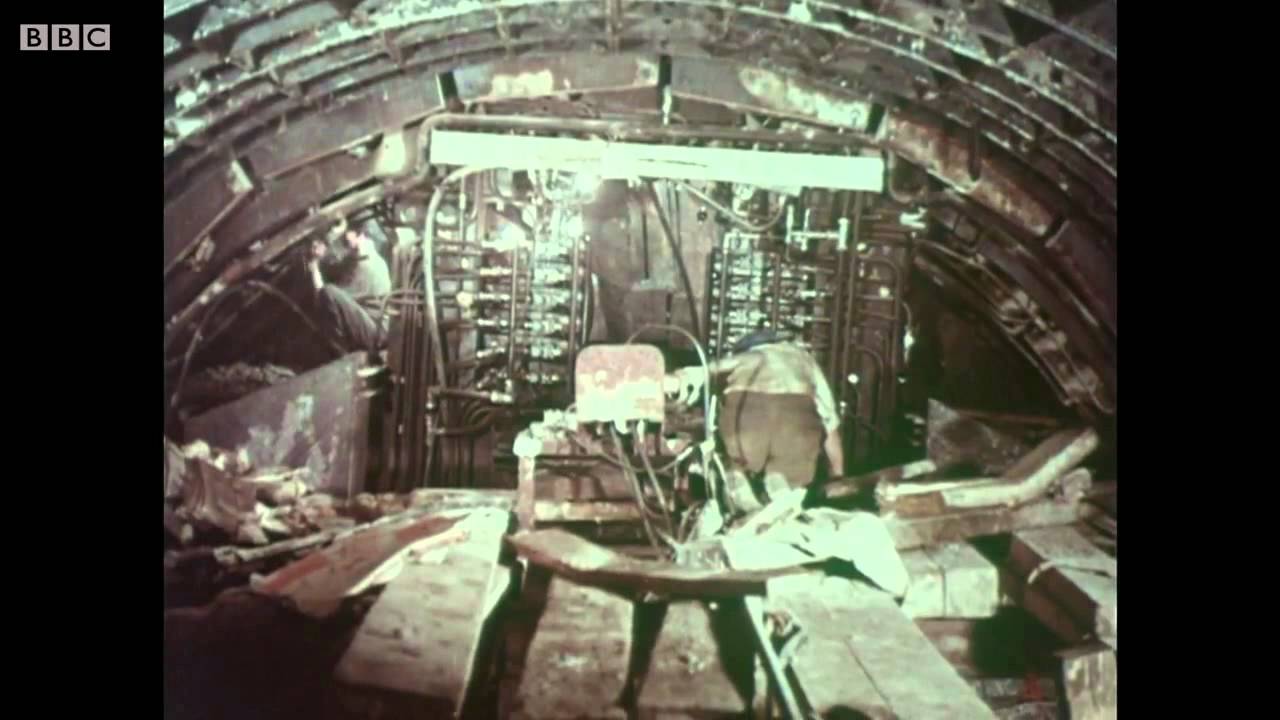
BBC How They Dug the Victoria Line — Graham W

Graham W

AI-assisted summary of BBC How They Dug the Victoria Line — original source. Check the original for full context.

Source published:

Key ideas

  • Conceived 18 years prior and authorized in 1962, the Victoria Line was constructed across 10.5 miles of twin running tunnels to relieve severe postwar congestion on London's Victorian-era transport network. (0:02)
  • At Oxford Circus, engineers avoided shutting down surface traffic by assembling a 245-unit prefabricated steel overpass deck in a 65-hour holiday window, finishing 18 hours ahead of schedule. (7:17)
  • Rotary drum digger shields bored through London clay at 2 inches per minute while erecting unbolted, self-supporting concrete rings every 15 minutes within a 1.5-inch navigational tolerance. (11:00)
  • The line introduced end-to-end automation, utilizing trackside Automatic Train Operation (ATO), punched-tape programme machines, magnetic ticket gates, and a centralized control desk manned by just two operators. (27:26)

Detailed notes

## Background Published on YouTube by Graham W on August 17, 2014, this BBC documentary was produced in association with British Transport Films (BTF). Drawing on historical footage adapted from earlier BTF films, it documents the monumental engineering effort required to plan, excavate, and open London's Victoria Line.

## TL;DR Faced with crushing postwar congestion on the London Underground, engineers and miners cut a 10.5-mile subterranean artery from Victoria to Walthamstow across active transit lines and fragile geology. The documentary chronicles logistical triumphs such as assembling the temporary steel 'umbrella' bridge over Oxford Circus in 65 hours, advancing running tunnels with rotary drum diggers and concrete wedge rings, and carefully underpinning landmarks like the Peter Robinson department store. It culminates in the testing and live switch-on of the permanent way, showcasing the world's most advanced automated train operations, magnetically coded ticketing, and centralized electronic control.

## Atmosphere & style The presentation carries the classic mid-century British documentary tone—erudite, dryly witty, and deeply reverent toward both cutting-edge civil engineering and working-class physical labor. The narrative arc builds tension around high-stakes deadlines like weekend rail possessions and Oxford Circus street closures before shifting into philosophical awe at the dawn of the automated machine age. Watching the footage evokes the visceral contrast between the muddy, claustrophobic subterranean world of pickaxes and hydraulic shields and the sterile, futuristic calm of the centralized control room.

## Bulletin - [00:02](https://www.youtube.com/watch?v=GwRRSJ_wtIg&t=2s) Conceived 18 years prior and authorized in 1962, the Victoria Line was constructed across 10.5 miles of twin running tunnels to relieve severe postwar congestion on London's Victorian-era transport network. - [07:17](https://www.youtube.com/watch?v=GwRRSJ_wtIg&t=437s) At Oxford Circus, engineers avoided shutting down surface traffic by assembling a 245-unit prefabricated steel overpass deck in a 65-hour holiday window, finishing 18 hours ahead of schedule. - [11:00](https://www.youtube.com/watch?v=GwRRSJ_wtIg&t=660s) Rotary drum digger shields bored through London clay at 2 inches per minute while erecting unbolted, self-supporting concrete rings every 15 minutes within a 1.5-inch navigational tolerance. - [27:26](https://www.youtube.com/watch?v=GwRRSJ_wtIg&t=1646s) The line introduced end-to-end automation, utilizing trackside Automatic Train Operation (ATO), punched-tape programme machines, magnetic ticket gates, and a centralized control desk manned by just two operators.

## Key takeaways - [00:02](https://www.youtube.com/watch?v=GwRRSJ_wtIg&t=2s) The 10.5-mile route from Victoria to Walthamstow was designed to connect four major mainline rail termini and intersect every existing tube line to relieve systemic urban congestion. - [05:00](https://www.youtube.com/watch?v=GwRRSJ_wtIg&t=300s) To keep Oxford Circus operational during deep excavation, engineers erected a bolt-free temporary steel 'umbrella' supported by 25 deep boreholes sunk directly through uncharted utilities. - [11:00](https://www.youtube.com/watch?v=GwRRSJ_wtIg&t=660s) Miners working with mechanized rotary drum shields excavated running tunnels 70 feet underground, advancing at 2 inches per minute and locking self-supporting concrete rings directly against the clay. - [16:01](https://www.youtube.com/watch?v=GwRRSJ_wtIg&t=961s) Unlike the standardized running tunnels, large station caverns and escalator shafts demanded manual excavation using pneumatic clay spades and heavy bolted cast-iron rings. - [18:15](https://www.youtube.com/watch?v=GwRRSJ_wtIg&t=1095s) Active rail infrastructure was reconfigured through high-precision operations, including an overnight 15-hour track diversion at Finsbury Park to establish cross-platform interchanges. - [20:23](https://www.youtube.com/watch?v=GwRRSJ_wtIg&t=1223s) Severe subterranean water hazards required innovative engineering countermeasures, ranging from pressurized compressed-air workings at Euston to freezing 500 cubic yards of sodden ground with liquid nitrogen at Tottenham. - [22:42](https://www.youtube.com/watch?v=GwRRSJ_wtIg&t=1362s) Navigating the complex 'menagerie' of overlapping tunnels at King's Cross required reinforced shields with extra hydraulic rams and solid steel lining rings to divert load into virgin ground. - [23:47](https://www.youtube.com/watch?v=GwRRSJ_wtIg&t=1427s) At Oxford Circus, miners drove station tunnels beneath Peter Robinson department store without disturbing shoppers above by underpinning the foundation with a reinforced concrete raft. - [27:26](https://www.youtube.com/watch?v=GwRRSJ_wtIg&t=1646s) Victoria Line trains were engineered for full Automatic Train Operation (ATO), leaving onboard operators to manage door controls and twin push-button starts while trackside systems controlled running speeds. - [29:04](https://www.youtube.com/watch?v=GwRRSJ_wtIg&t=1744s) Testing protocols made use of 280-pound solid iron dummy ballast blocks to simulate rush-hour passenger loads during brake dynamic and electrical trials. - [30:13](https://www.youtube.com/watch?v=GwRRSJ_wtIg&t=1813s) Continuous flexible steel rails measuring 300 feet were extruded directly onto tunnel beds by reversing battery trains and secured within a strict 1/16-inch operating tolerance. - [36:45](https://www.youtube.com/watch?v=GwRRSJ_wtIg&t=2205s) Line-wide operations, signals, and routing were automated through pianola-like punched-strip programme machines monitored by only two operators at the centralized Cobourg Street control center.

## Detailed walkthrough ### [00:02](https://www.youtube.com/watch?v=GwRRSJ_wtIg&t=2s) The 18-Year Wait and London's Congestion Crisis

More than six years after initial preparations began in 1962—and fully eighteen years after the scheme was first drawn up on drafting boards—London embarked on an enormous engineering endeavor to slash across its subterranean network. Back in 1863, London had pioneered underground urban railways to the awe of the world, but by the late 1960s, the Victorian legacy was buckling under the sheer volume of daily commuters. As the narrator bluntly observes, “No strap hanger and none of the rush-hour crowds pressing wearily over the pavements above needs telling that today the tube is bursting at its seams.” The crisis mirrored London’s drainage history: in the Victorian era, Sir Joseph Bazalgette had enclosed the Thames behind the Victoria Embankment and designed a massive sewer network intended for 4.5 million people, yet that same infrastructure was now forced to carry a population of 10 million.

To cure this urban indigestion, transport planners designed a brand-new tube artery running from Victoria in the southwest to Walthamstow in the northeast. The project required driving twin running tunnels across 10.5 miles of subterranean ground, threading directly into four major mainline railway termini—Victoria, Euston, King's Cross, and St Pancras—while slicing across every existing tube line to open up direct underground connections to previously underserved districts in northeast London. Modern civil engineers possessed heavy drilling rigs, rotary shields, and mechanical conveyors rather than the mere pickaxes, shovels, and anvils of their Victorian forebears, yet burrowing beneath London remained a massive gamble against uncharted subterranean hazards.

- **Conception to breaking ground**: Conceived roughly 18 years before real construction accelerated; work was authorized in 1962 and geared up into full swing by August 1963. - **Route parameters**: 10.5 miles of twin running tunnels connecting Victoria to Walthamstow. - **Interchange connections**: Linked four principal mainline termini (Victoria, Euston, King’s Cross, and St Pancras) and intersected existing London Underground lines.

---

[05:00](https://www.youtube.com/watch?v=GwRRSJ_wtIg&t=300s) Oxford Circus and the Steel Umbrella

Mining beneath Oxford Circus—described as one of the central "belly buttons of London"—presented a logistical nightmare: the intersection accommodated immense streams of traffic arriving from four directions that could not simply be shut down for years. Before any station excavation, ticket halls, or escalator shafts could be sunk, engineers had to design and install a temporary steel bridge overpass, popularly known as the "umbrella," to carry surface traffic while miners dug directly beneath it. Venturing beneath the road was fraught with uncertainty because no one had excavated deep beneath Oxford Circus for six decades, and utility records were notoriously incomplete. The narrator underscores the inherent uncertainty facing the teams: “Engineers playing with the stuff of the Earth have to be gamblers—gamblers with a system, but keeping their fingers crossed every time they go down for an inspection.”

To support this massive temporary road deck, construction crews first had to sink 25 foundation pile holes around the junction within an aggressive 18-day schedule. Each borehole measured 3 feet in diameter and went down up to 50 feet deep to secure a firm footing within the stiff London clay. Working amidst the roaring vortex of West End traffic, surveyors and their assistants operated with the calm, surgical precision of an operating theater. Because the prefabricated bridge components had to drop together like a giant jigsaw puzzle without nuts, bolts, or rivets, individual steel deck sections were fabricated to tolerances measured in tiny fractions of an inch; any misalignment would reduce the intricate assembly to a game of spillikins.

- **Foundation piling**: 25 structural boreholes, each 3 feet in diameter and up to 50 feet deep, drilled and concreted in 18 days. - **Precision design**: Entire steel deck pre-engineered to interlock cleanly without mechanical fasteners (no rivets, nuts, or bolts). - **Subsurface mystery**: Decades of uncharted gas pipes, sewers, water mains, and high-voltage power conduits sat unrecorded directly under the pavement.

---

[07:17](https://www.youtube.com/watch?v=GwRRSJ_wtIg&t=437s) The 65-Hour Bank Holiday Blitz

Over the August bank holiday weekend in 1963, authorities finally closed Oxford Circus to through-traffic and pedestrians on Saturday afternoon, launching a high-stakes 65-hour construction blitz. The target was non-negotiable: the temporary bridge had to carry full Monday-morning commuter traffic by 6:30 a.m. on Tuesday. Every steel component arrived pre-numbered and color-coded. The first heavy steel girder swung into place at 3:20 p.m. on Saturday, and by late afternoon, the central structural rib was nearly complete. At 7:00 p.m., the first deck panel dropped into place, and floodlit night shifts maintained the relentless momentum. By 11:00 a.m. on Sunday morning, precisely half of the umbrella was erected with 43 hours remaining on the clock.

As the operation passed midnight on Sunday into Monday morning, only 40 deck sections remained to be placed within a 30-hour window. The team completed the assembly of 245 separate steel units at a brisk average pace of just 11 minutes per unit, sliding the final piece cleanly into position without a hitch. By just after midday on Monday—a full 18 hours ahead of the Tuesday-morning deadline—the umbrella was structural reality, leaving ample time to surface and paint the deck. When engineers began trenching beneath the newly erected steel canopy while buses and taxis rolled overhead, they uncovered the reality of the subterranean space: just 2 feet 6 inches beneath the asphalt lay an impossibly dense tangle of water pipes, power cables, gas lines, and brick drains, described vividly as looking like London had "spilled over like a plate of spaghetti."

- **Total construction window**: 65 hours allocated (Saturday afternoon to 6:30 a.m. Tuesday); main deck assembly finished roughly 18 hours early on Monday afternoon. - **Installation speed**: 245 prefabricated steel deck units placed at an average rate of 11 minutes per section. - **Utility depth**: Vital services and pipework were encountered just 30 inches (2 ft 6 in) below the street surface.

---

[11:00](https://www.youtube.com/watch?v=GwRRSJ_wtIg&t=660s) Rotary Diggers, London Clay, and the Miners' Craft

With the umbrella protecting the street above, vertical working shafts were sunk down to tunnel depth—roughly 70 feet below street level—where miners worked in hot, sweaty shifts within self-contained underground worlds. Tunneling through London clay had come a long way since 1825, when Marc Isambard Brunel’s original Thames Tunnel shield utilized 12 heavy iron frames divided into 36 cells where individual miners hacked at the face. On the Victoria Line, modern rotary drum digger shields mechanized the excavation, operated by teams of six men who could drive a running tunnel forward at a rate of 2 inches per minute while holding navigational tolerances within 1.5 inches of true line and level.

```mermaid flowchart TD accTitle: Victoria Line Rotary Tunneling Cycle accDescr: Step-by-step sequence of mechanical shield tunneling and concrete ring assembly in London clay.

subgraph Excavation["1. Mechanical Excavation"] A["Rotary Digger Shield cuts London clay"] --> B["Progresses 2 inches per minute"] B --> C["Advance of 2 feet completed"] end

subgraph Muck_Removal["2. Spoil Handling"] A -.-> D["Spoil drops onto shield sled"] D --> E["Belt conveyor to skip trains"] E --> F["Shaft hoist to surface disposal"] end

subgraph Ring_Assembly["3. Lining Erection (Every 15 Mins)"] C --> G["Miners assemble precast concrete segments"] G --> H["Wedge segments expanded under hydraulic pressure"] H --> I["Self-supporting ring locked without bolts"] end

I --> A ```

Because unlined London clay begins to creep and collapse soon after being exposed, miners had to build tunnel lining rings immediately behind the shield’s tail. Every 2-foot advance—achieved roughly every 15 minutes—the gang assembled a self-supporting ring composed of precast concrete segments. These segments were jacked into place under heavy hydraulic power and expanded directly against the excavated clay circumference, securing the tunnel without requiring any nuts or bolts. Spoil ("muck") dropped onto long trailing sleds behind the shield, loaded onto high-speed belt conveyors, and filled skip trains that rattled back toward the shafts to be hoisted up and hauled away to disused gravel pits, clay quarries, or brickworks. The work attracted an elite cadre of specialist tunnelers who endured brutal physical demands for top pay, often doubling up shifts back-to-back so they only needed to wash down once. Reflecting on their toil, the narrator reminds travelers: “They earned a lot of money and they sweated their skill for every penny of it.”

- **Tunneling rate**: Rotary drum diggers advanced through London clay at 2 inches per minute. - **Steering precision**: Shield guidance held alignment to within a 1.5-inch tolerance. - **Lining speed**: One complete self-supporting concrete ring erected every 2 feet of travel, cycling once every 15 minutes without bolts or grouting. - **Working environment**: Gangs of six men working 8-hour (and occasional double 16-hour) shifts roughly 70 feet underground.

---

[16:01](https://www.youtube.com/watch?v=GwRRSJ_wtIg&t=961s) Station Caverns, Irish Navvies, and the Finsbury Park Changeover

While uniform running tunnels were carved efficiently by continuous rotary shields, large-diameter station caverns, junctions, and escalator shafts demanded an entirely different approach. Because station tunnels required much wider diameters lined with heavy bolted cast-iron rings, mechanical shields were economically impractical; these vast chambers had to be mined out by hand. Beneath Oxford Circus in 1965, crews of exceptionally strong laborers excavated the massive station complex with hand pneumatic spades, shovels, and brute force. Describing this grueling return to raw physical labor, the narrator remarks, “It was a return in some respects to the methods of the Victorian engineers—muscles to match the iron determination to face the task.”

These subterranean gangs drew heavily from the historic tradition of Irish navvies—the same hardy breed whose ancestors had dug Britain’s canals and laid its mainline railway tracks in the 18th and 19th centuries. Armed with compressed-air clay spades, these men brought immense endurance, hearty appetites, and legendary thirsts to the task. Meanwhile, the project involved complex railway surgery on active lines: in October 1965, engineers undertook a critical track diversion at Finsbury Park to configure seamless cross-platform interchanges for future Victoria Line passengers. Transport authorities granted the engineering teams an exceptionally narrow window—just 15 continuous hours without train service overnight—to cut the old lines and re-lay the tracks into their new alignment before the morning commuter rush.

- **Hand-dug caverns**: Station platform tunnels and crossovers utilized segmented cast-iron rings assembled by hand rather than mechanized rotary concrete-lining rigs. - **Labor force**: Largely comprised of Irish tunneling crews working with pneumatic clay spades and handheld equipment. - **Finsbury Park blockade**: Engineers were granted a strict 15-hour overnight rail possession to execute track changeovers without disrupting daily passenger services.

[18:15](https://www.youtube.com/watch?v=GwRRSJ_wtIg&t=1095s) The 15-Hour Miracle Diversion

Passengers aboard passing trains caught only fleeting glimpses through the gloom of the massive operation underway. An army of men descended onto the trackway to rip up the rails and sleepers, levering away old infrastructure in a controlled burst where all hell broke loose. To handle the awkward, heavy loads, engineers erected a specially built temporary craneway that hoisted discarded track directly onto wagons, which hauled the debris away down the old tunnel. Every single man involved in the shift had been briefed on his precise role, knowing that millions of London commuters returning on Monday morning would demand answers if anything went awry.

```mermaid flowchart LR accTitle: Weekend Line Diversion Process accDescr: Sequence of operations used to divert the underground line in fifteen hours. subgraph Removal ["Deconstruction"] A["Rip up old rails & sleepers"] --> B["Craneway hoists debris to wagons"] end subgraph Installation ["Reconstruction"] C["Install new track in readiness"] --> D["Wire new signalling systems"] end subgraph Handover ["Completion"] E["First train runs through on schedule"] end B --> C D --> E ```

Because the changeover took place early on a Sunday morning while the traveling public remained safely at home, the work progressed according to an exacting, minute-by-minute timetable. Track was removed, new rails brought into readiness, and new signaling equipment installed on the fly. The narrator reflects on the feat with pride: “What they did that night reminds me of the miracle of improvisation which was achieved on D-Day in the war.” He notes that while the British often blame themselves for what they fail to accomplish, this operation was a remarkably neat triumph. In just 15 hours, an active underground railway had been fully diverted from its old route onto the new alignment, allowing the first train to pass through exactly as scheduled on Sunday afternoon.

[20:23](https://www.youtube.com/watch?v=GwRRSJ_wtIg&t=1223s) Taming Water, Clay, and Ground Freezing

The work was far from predictable. Although London clay is typically an ideal medium for tunneling, the narrator observes that “the blue carpet underneath has holes in it.” One of these trouble spots lay at Euston, where the line dropped into soil layers as waterlogged as a soaked sponge. To prevent this pressurized water from squeezing through the walls and flooding the workings, the entire tunnel section had to be sealed off and pressurized with high-volume compressed air until miners could complete their tasks—a bizarre, pressurized scene evoking an episode of *Doctor Who*.

While engineers had prepared for compressed-air workings, unexpected geological traps still caught them out. In September 1964 beneath Green Park, a tunneling shield cutting through the clay unexpectedly sliced into an uncharted pocket of water-bearing gravel, forcing miners to manually dig out the buried rig. The narrator marvels that in an engineering venture costing £57 million up to that point, this incident proved to be the absolute worst mishap encountered.

Other areas required equally extreme scientific remedies: - During the summer heatwave of 1966 at Tottenham, miners encountered ground so wet that it had to be artificially stabilized. - Engineers introduced liquid nitrogen at 350 degrees below zero Fahrenheit (-350°F) to freeze 500 cubic yards of sodden ground solid. - Freezing the soil allowed crews to safely excavate and line an entire escalator shaft through otherwise unworkable ground.

[22:42](https://www.youtube.com/watch?v=GwRRSJ_wtIg&t=1362s) Threading the Needle at the King's Cross Menagerie

At King's Cross, the project faced a dense concentration of overlapping subterranean infrastructure that railwaymen traditionally dubbed “the menagerie.” Multiple transportation networks converged here in a chaotic vertical stack: - Surface main lines running from the Midlands and the East Coast. - Cut-and-cover underground railways, including the Metropolitan Line, the Circle Line, the Hotel Curve, and the Widened Lines. - Deep-level tube lines carrying both the Northern and Piccadilly services.

```mermaid flowchart TD accTitle: Tunneling Challenges at King's Cross accDescr: Structural defenses employed while threading the Victoria line through existing infrastructure. subgraph SurroundingLines ["The Menagerie: Existing Lines"] M["Main Lines: Midlands & East Coast"] C["Cut-and-Cover: Met, Circle, Hotel Curve, Widened"] T["Deep Tubes: Northern & Piccadilly"] end subgraph Engineering ["Structural Adaptations"] S["Specially reinforced shields with extra rams"] R["Solid steel lining rings replacing cast iron"] D["Stresses directed into virgin ground"] end SurroundingLines -.->|"Surrounds"| S S --> R R --> D ```

To drive the newcomer Victoria Line through this maze, engineers had to thread it literally through the eye of a needle—an under-and-over threading act carried out without permitting adjacent tunnels to settle or running tracks to distort. To hold back the exposed clay face under high loads, miners utilized exceptionally strong tunneling shields equipped with far more hydraulic rams than standard rigs. In place of conventional cast iron, the new station tunnel was lined with solid steel rings, engineered so that structural stresses bypassed neighboring railway tunnels and dispersed cleanly into virgin ground. Summarizing the delicate execution, the narrator notes dryly: “Result of it all, well, King's Cross still stands where it did.”

[23:47](https://www.youtube.com/watch?v=GwRRSJ_wtIg&t=1427s) Oxford Circus and Underpinning Peter Robinson

At Oxford Circus, continuous construction generated intense street-level irritation. Daily crowds of commuters changing between the Bakerloo and Central lines grew weary of the endless hoardings, dust, and detour signs, often wishing the disruption to the devil. Most passengers remained entirely oblivious to the fact that miners were carrying out an audacious engineering smuggling operation immediately beneath their shoes, hauling down heavy materials under cover of night and securing them within mere feet of passing pedestrians.

The most precarious challenge along this central stretch occurred when the southbound station tunnel had to be driven directly beneath the foundations of the Peter Robinson department store. The multistory retail establishment, with its three sprawling basements, exerted immense downward pressure: - Miners had to safely support the full structural weight of the store, including its displays of hats, dresses, tights, and assorted merchandise. - Working inside tight holes beneath the lower basements, engineers inserted a massive reinforced concrete raft under the building's footings while shoppers browsed above. - In November 1965, the heading shields driving south finally reached this concrete raft, skimming smoothly and safely beneath it without causing a single crack overhead. - Remarking on the psychological divide between the street and the tunnels, the narrator points out: “Two worlds: up above where everybody feels as safe as houses; down below where they carry buildings on their shoulders.”

In September 1966, this phase reached its milestone when the tunneling shield completed the final breakthrough beneath King's Cross. It was an unceremonious moment of historic achievement devoid of formal celebrations—a quiet triumph echoing the great Victorian feats of the Forth Railway Bridge or Isambard Kingdom Brunel throwing down his hat to locate Swindon on the Great Western Railway.

[27:26](https://www.youtube.com/watch?v=GwRRSJ_wtIg&t=1646s) Automated Trains and a Truly National Achievement

While tunneling proceeded, engineers turned their attention to rolling stock and automation. The Victoria Line was designed from the outset around fully automated train operation (ATO). An onboard train operator was relieved of nearly all physical driving responsibilities: - After opening and closing the doors at each platform stop, the driver merely pressed twin starting buttons simultaneously. - Automatic trackside controls handled everything else—accelerating, coasting, speed regulating, and precision stopping at the next platform. - Full automation meant physical drivers were technically redundant, but authorities retained an operator aboard solely to reassure travelers uncomfortable with driverless vehicles and to maintain manual overcontrol during disruptions. - The movements of all trains along the entire line were supervised and regulated by just two men working out of a centralized operations control room at Euston, who intervened only in the event of an abnormal technical fault. - As the narrator quips: “The driver is in telephone communication with them, he has a public address system to talk to passengers, but well, all he really has to do on the Victoria Line, I could do myself.”

The project pulled industrial capabilities from across the entire United Kingdom: - Electrical propulsion and control systems manufactured in Manchester. - Specialized rolling stock constructed in Birmingham. - Concrete tunnel segments cast in Essex. - Cast-iron tunnel and station lining rings poured in Nottinghamshire, Teesside, and Glasgow.

[29:04](https://www.youtube.com/watch?v=GwRRSJ_wtIg&t=1744s) Mobile Laboratories and Iron Passengers

Before accepting the new fleet into passenger service, technicians subjected the trains to rigorous physical testing. To simulate the crushing weight of peak rush-hour loads without subjecting people to experimental trials, engineers installed iron passengers: uncomplaining, solid ballast blocks weighing 20 stone (280 pounds) apiece, bolted onto the carriage seating and floors.

Each experimental test train was transformed into a mobile laboratory fitted with recording equipment, slide rules, graphs, and measuring tapes. Boffins evaluated acceleration rates, emergency braking distances, and electrical efficiency under both automatic control and manual override. They even carried out specialized friction tests to observe train braking dynamics when rails were deliberately soaked with water—a precaution the narrator pokes fun at, wondering why underground trains running deep in shielded tunnels needed rainproofing, before conceding that scientific boffins must satisfy every conceivable variable before declaring the trains fit for public use.

[30:13](https://www.youtube.com/watch?v=GwRRSJ_wtIg&t=1813s) Track Laying, 300-Foot Rails, and Escalator Safety

Installing the permanent way required immense precision. Because clearance between train carriages and tunnel walls measured only a few inches, the tracks had to be laid within a strict operational tolerance of one-sixteenth of an inch (1/16"). Sneaking large equipment down deep shafts presented a constant logistical puzzle: - Massive volumes of concrete for the track beds had to be mixed directly underground; mixing plants were dismantled, humped piecemeal down vertical access shafts, and reassembled in subterranean voids. - Millions of tons of wet concrete were transported load by load through the labyrinth of new tunnels. - Steel rails were fabricated into flexible 300-foot continuous lengths and transported into position on custom battery-electric flatbed trains. - To lay them, the forward ends of the long rails were chained securely to the existing trackbed while the supply train reversed slowly away, squeezing out the flexible steel bars onto the tunnel floor “like so much toothpaste.” - Track workers then nudged the flexible steel rails inch by inch directly into their holding chairs and bolted them down.

```mermaid flowchart LR accTitle: Continuous Rail Installation Method accDescr: Step-by-step process of extruding and fixing 300-foot flexible rails. A["300-ft continuous rail lengths brought on battery trains"] --> B["Forward ends chained firmly to trackbed"] B --> C["Train reverses slowly, extruding rails like toothpaste"] C --> D["Workers lever bars inch-by-inch into chairs and secure them"] ```

Passenger circulation inside the stations called for the installation of 42 high-capacity escalators. Recalling the installation of London's first escalator at Earl's Court in 1911—when an amputee with a wooden leg nicknamed "Bumper Harris" was paid to ride up and down all day to persuade frightened citizens that moving stairs were safe—the narrator explains that the modern public no longer required convincing.

Engineers, however, demanded rigorous proof: - Each escalator was tested under an assumed crowd density of 1.6 passengers per step, representing a crushing moving load of 5 tons distributed across 50 steps. - Under full operating load, the safety brakes were required to bring the speeding staircase to a dead halt within an average emergency stopping distance of just 4 feet 2 inches. - The machinery passed the test, prompting the narrator to sign off with the customary Tube reminder to keep dogs carried and pushchairs folded.

By Easter 1968, after nearly six years of surface construction, the massive steel deck umbrella that had carried vehicle traffic over Oxford Circus was finally disassembled ahead of schedule. Road traffic resumed across the paved surface, concealing the cavernous underground junction beneath. When the initial completed sectors prepared to welcome their first trains, engineers transmitted the historic signal directly to Lots Road Power Station to energize the third and fourth rails, commencing the final transition into live service.

[34:08](https://www.youtube.com/watch?v=GwRRSJ_wtIg&t=2048s) The Dawn of Automated Transport

As electrical power is brought online along sections of the line not yet extending to Victoria, the project reaches a critical, tense milestone for the electrical engineers. Although the engineering teams have thoroughly prepared and done their calculations, the human reality of switching the system on brings a moment of suspended breath. When the signals are tested and checked, the engineers can do nothing but stand and stare at the equipment to ensure the circuits hold and function as planned.

Following years of underground excavation and fit-out, the overarching design of a fully modern, automated transit network begins to materialize before their eyes. The narrator frames this transition not merely as a local transit upgrade, but as an inevitable civilizational shift toward the emerging decade: “This is the road to the world of the 70s regret the past if you like like horse Strawn traffic but this is where we're all going no hands.”

- The switch-on represents the culmination of years of underground civil engineering and electrical installation. - Automation is treated as an inevitable progression away from historical, manually operated transit modes.

[35:30](https://www.youtube.com/watch?v=GwRRSJ_wtIg&t=2130s) Surveillance, Centralized Control, and the Machine Age

On the newly opened platforms, ordinary passengers go about their routines completely unaware of the degree to which modern surveillance technology monitors their movements. Television cameras feed real-time pictures directly into centralized master control rooms, creating an environment where an unsuspecting commuter adjusting her hair before a glass panel is actually standing before a two-way observation window.

The commentary strikes a philosophical, mildly chilling note regarding the psychological and cultural implications of ubiquitous automation. Invoking classic dystopian literature, the narrator muses that while the setup is not quite George Orwell’s *1984* or Aldous Huxley’s *Brave New World*, the broader direction of society is unmistakable: “Not quite Orwell's 1984 alers huxley's Brave New well but here it comes inexorably unavoidably inevitably the machine is is beginning its rule.” Across the entire Victoria Line, an interlocking network of electronic instruments and automated machines relays operational data instantaneously at the speed of light.

```mermaid flowchart TD accTitle: Victoria Line Automated Control Architecture accDescr: Diagram illustrating passenger stations monitored by CCTV and sensors, feeding data to the central control room which manages train operations.

subgraph PassengerStations["Station Environment"] CCTV["CCTV & Platform Cameras"] Barriers["Magnetic Ticket Barriers"] end

subgraph CentralControl["Central Control (Cobourg Street)"] TapeProg["Programme Machines (Punched Tape)"] Controllers["Two Master Operators"] Monitors["Video Monitors & Telephony"] end

subgraph TrainOperations["Track & Fleet Operations"] Signals["Interlocking Signal Network"] Trains["Automated Victoria Line Trains"] end

CCTV --> Monitors Barriers --> Monitors TapeProg --> Signals Controllers --> Monitors Controllers --> Signals Signals --> Trains ```

[36:45](https://www.youtube.com/watch?v=GwRRSJ_wtIg&t=2205s) The Cobourg Street Control Room and the Modern Frontier

The daily operational schedule of the railway relies on mechanical programme machines that function on the same basic principle as a player piano. Perforated plastic and paper rolls—comparable to the punched rolls of a pianola—encode and dictate line-wide train routing, dispatching, and timing intervals. Banked memory units, automatic signaling relays, spindles, and rotating mechanical levers step through the timetable, with an entire week's operational schedule contained on a single master roll that automatically indexes forward from one operating day to the next.

Inside the quiet, rotund central control room, the vast complexity of London's subterranean traffic is distilled down so that just two operators can supervise the entire system. From their desks, equipped with banks of closed-circuit monitors displaying station concourses and platforms, alongside direct telephone links to every train operator, these two controllers track the movement of every passenger and train on the line. Automatic barrier gates reading magnetically encoded tickets handle passenger admissions, establishing the line as the most technologically advanced underground railway on earth. Embracing this technological shift as an absolute necessity for modern urban survival, the narrator concludes: “We are for the future and if we can't live with it we are for the past.”

- **Programme machines:** Use punched strips (resembling pianola rolls) carrying a full week of pre-programmed timetable commands to govern switches and signals automatically. - **Central oversight:** Just two controllers monitor all train movements and station crowd flows from a unified control room via television screens and direct cab communications. - **Ticketing automation:** Introduces passenger turnstiles actuated by magnetically encoded tickets, replacing manual ticket inspection.

## Notable quotes > [05:00](https://www.youtube.com/watch?v=GwRRSJ_wtIg&t=300s) Engineers playing with the stuff of the Earth have to be gamblers—gamblers with a system, but keeping their fingers crossed every time they go down for an inspection. — narrator

> [36:45](https://www.youtube.com/watch?v=GwRRSJ_wtIg&t=2205s) We are for the future and if we can't live with it we are for the past. — narrator

## Mentioned 1984, Aldous Huxley, Bakerloo Line, BBC, Brave New World, British Transport Films (BTF), Bumper Harris, Central Line, Circle Line, Cobourg Street Control Room, Doctor Who, Euston Station, Finsbury Park Station, Forth Railway Bridge, George Orwell, Great Western Railway, Green Park, Isambard Kingdom Brunel, King's Cross Station, London Underground, Lots Road Power Station, Marc Isambard Brunel, Metropolitan Line, Northern Line, Oxford Circus Station, Peter Robinson, Piccadilly Line, Sir Joseph Bazalgette, St Pancras Station, Tottenham, Victoria Line, Victoria Station, Walthamstow

## Video description BBC documentary in association with BTF using footage adapted from the earlier BTF documentaries about the construction of the Victoria Line

[Source](https://www.youtube.com/watch?v=GwRRSJ_wtIg)

中文简报

BBC记录维多利亚线开凿历程 面对战后伦敦地铁严重的交通拥堵,工程师和矿工在活跃的轨道交通线路与脆弱地质之下,开凿了一条从维多利亚到沃尔瑟姆斯托、全长10.5英里的地下干线。该纪录片记录了多项后勤工程的壮举,例如在65小时内于牛津街广场搭建起临时的“伞状”钢桥、利用转鼓式掘进机和混凝土楔形管片推进区间隧道,以及为彼得·罗宾逊百货商店等地标建筑进行精细的地基托换。影片的高潮展现了永久线路的测试与通电运行,展示了当时全球最先进的列车自动运行系统、磁编码车票以及中央电子控制系统。 维多利亚线在构想提出18年后于1962年获批开工,共修建了全长10.5英里的双孔区间隧道,以缓解伦敦维多利亚时代交通网络在战后承受的严重拥堵。 (0:02) 在牛津街广场,工程师在65小时的节假日窗口期内组装了由245个单元组成的预制钢高架桥面,避免了中断地面交通,并提前18小时完工。 (7:17) 转鼓式掘进机盾构以每分钟2英寸的速度在伦敦黏土层中掘进,在1.5英寸的导向公差内,每15分钟拼装一环无螺栓自承式混凝土管片。 (11:00) 该线路引入了全流程自动化,应用了轨旁列车自动运行系统(ATO)、穿孔纸带程序机、磁性检票闸机,以及仅需两名调度员值守的中央控制台。 (27:26)

Reading summary

Faced with an overburdened Victorian transit network, London engineered the 10.5-mile Victoria Line to slice across existing subterranean routes and mainline railway termini. The project merged cutting-edge mechanical tunneling and structural underpinning with the dawn of automated train operation and centralized electronic oversight. Surface Safeguards and Underpinning Urban Landmarks (5:00) Mining beneath major traffic nodes like Oxford Circus required engineers to avoid shutting down street traffic for extended periods. To keep surface vehicles moving while workers excavated stations beneath, crews sank 25 deep foundation piles and erected a prefabricated steel bridge—known as the "umbrella"—during an intensive 65-hour bank holiday closure in August 1963. Fabricated to minute tolerances without nuts, bolts, or rivets, the 245 deck units were assembled roughly 18 hours ahead of schedule, permitting excavation directly below while road vehicles rolled over an intricate maze of uncharted utilities lying just 30 inches deep. Subsurface works also had to support heavy above-ground structures. Beneath the Peter Robinson department store, miners excavated through tight basements to insert a reinforced concrete raft under the foundations, allowing tunneling shields to pass below without damaging the retail premises overhead. At King's Cross, where cut-and-cover lines, deep tubes, and mainline railways converged in an area nicknamed "the menagerie," engineers deployed reinforced shields with additional hydraulic rams and solid steel lining rings to safely disperse loads into virgin ground without settling adjacent tracks. Mechanical Shield Tunneling and Geological Hazards (11:00) Running tunnels through London clay relied on modern rotary drum digger shields operated by six-man gangs, cutting forward at 2 inches per minute while holding navigational tolerances within 1.5 inches. Because unsupported clay creeps quickly, miners assembled precast concrete segments every 2-foot advance—roughly every 15 minutes—wedging them under hydraulic pressure into self-supporting, boltless rings. However, station caverns and escalator shafts could not accommodate rotary shields; they were dug out manually with pneumatic spades by teams of Irish navvies before being lined with segmented cast-iron rings. Although clay generally offered favorable tunneling, unpredictable pockets of water presented severe hazards. Tunneling beneath Euston required high-pressure compressed air to keep waterlogged ground from flooding the works. At Tottenham in 1966, engineers injected liquid nitrogen at -350°F to freeze 500 cubic yards of sodden ground solid for an escalator shaft. Under Green Park in 1964, a shield hit an uncharted pocket of water-bearing gravel—cited as the £57 million project's worst mishap—forcing miners to dig out the submerged rig by hand. Rapid Track Conversions and Precision Fit-Out (18:15) Integrating the new route into operational networks required rapid railway surgery during tightly restricted possessions. At Finsbury Park in October 1965, engineers were granted an overnight possession of just 15 hours to rip out active track, hoist old materials onto wagons via a temporary craneway, lay new track, and install fresh signaling, allowing scheduled Sunday afternoon passenger trains to run uninterrupted. Track installation demanded exceptional accuracy, adhering to an operational tolerance of 1/16 of an inch. Concrete batching plants were dismantled, carried down vertical shafts, and reassembled in subterranean chambers to mix bed material on site. Steel rails fabricated into flexible 300-foot lengths were hauled underground on battery-electric flat cars, reversed into position, extruded onto the floor like toothpaste, and bolted down. Station fit-outs included 42 escalators, each validated by safety tests where emergency brakes arrested 5-ton moving passenger loads within an average distance of 4 feet 2 inches. Automated Operations and Centralized Surveillance (27:26) The Victoria Line pioneered automated train operation (ATO), relieving drivers of manual throttle and brake management. Operators closed train doors and pressed twin start buttons, after which trackside signals governed acceleration, coasting, speed enforcement, and station stops. Before entering service, rolling stock was tested under simulated peak loads using 280-pound "iron passengers" to evaluate friction, braking distances, and electrical efficiency. Line operations were centralized at the Cobourg Street control center in Euston, where two operators supervised the entire system. Timetables were driven by mechanical programme machines that read perforated paper and plastic rolls resembling pianola rolls to direct switching and signaling. Closed-circuit television monitors tracked station concourses while magnetic ticket turnstiles automated entry, prompting the narrator to observe that the line marked an inevitable cultural and technical transition into the machine age. The Victoria Line demonstrated how modern soil mechanics, ground-freezing science, and rigorous construction blitzes could thread a brand-new subway through congested historic ground without paralyzing London. Simultaneously, its debut established a template for modern rapid transit, shifting operational reliance from manual drivers and ticket collectors to centralized automated surveillance and programmed electronic control.

精炼阅读摘要

BBC纪录片《How They Dug the Victoria Line》记述了20世纪60年代伦敦维多利亚线的建设历程,展现了该工程如何通过高精度机械化盾构、极端地质处理与开创性的全自动列车控制系统,化解这座大都市面临的严重交通瘫痪危机。 化解交通瘫痪与精密地面过渡 (0:02) 到20世纪60年代末,伦敦1863年开创的维多利亚时代地下铁网在巨大通勤客流冲击下已不堪重负,正如约瑟夫·巴扎尔杰特爵士原为450万人设计的排污网络被迫承受千万人口一样。为解决这一拥堵危机,交通规划人员设计了一条从西南部的Victoria至东北部Walthamstow的全新地下动脉,全长10.5英里,贯通包括Victoria、Euston、King's Cross和St Pancras在内的四座干线铁路终点站,并与现有各条地铁线换乘交汇。工程自18年前立项起草,历经波折于1962年获批,1963年8月全面展开。 在车流密集的Oxford Circus枢纽地下施工成了巨大挑战,该交叉路口绝不能长期封闭。为此,工程团队在18天内钻探并浇筑了25个直径3英尺、深达50英尺的基础桩孔,随后在1963年8月银行假日利用65小时的高压施工窗口架设起被称为“钢伞”(umbrella)的临时钢桥。整座钢架桥由245个高精度预制构件组成,完全不使用螺栓、螺母或铆钉拼装,平均每11分钟安装一块,最终提前18小时完工。工人在桥下开挖时发现,路面下方仅30英寸(2英尺6英寸)处就纵横交错着如同“意大利面”般的供水管、高压电缆、瓦斯管道和砖砌下水道,施工全凭精准测绘与冒险精神在狭缝中推进。 机械盾构与人工暗挖的双轨作业 (11:00) 在街面钢伞的保护下,施工竖井垂直下挖至约70英尺的隧道深度。在均质的London clay(伦敦黏土)层中,现代化的旋转滚筒式盾构机大显身手:6人作业小组以每分钟2英寸的速度向前推进,轴线与水平误差控制在1.5英寸之内。由于暴露的黏土会迅速蠕动塌陷,盾构每掘进2英尺(约15分钟),工人们便立刻利用液压千斤顶拼装一环自承重预制混凝土衬砌,免去了螺栓固定和注浆工序;产生的渣土则通过输送带与矿车迅速运出并回填至废弃矿坑。专业掘进工人以严苛体力换取高昂薪酬,甚至连续轮班16小时。 然而,在大直径车站洞室、联络线及自动扶梯竖井处,大型机械盾构并不经济,工程不得不重回类似维多利亚时代的纯体力暗挖模式。来自爱尔兰的大批重体力劳工手持风镐和铁锹,在地下生生凿出庞大的站台空间,并手工安装重型铸铁管片。在需要与运营线路接轨的枢纽,工程更是实施了近乎外科手术般的改造:例如1965年10月在Finsbury Park,工程团队仅利用夜间停运的15小时封锁窗口,便完成了轨道拆除、起重运渣、新轨铺设和信号接通,如期兑现清晨通车承诺,旁白甚至将其与诺曼底登陆的应急组织能力相提并论。 复杂地层治水与密集管网穿越 (20:23) 尽管黏土层适宜掘进,但地层深处暗藏凶险。在Euston,隧道遭遇了如湿海绵般的高压富水土层,施工人员不得不将整个作业面封闭并注入高压压缩空气,以此平衡水压以防涌水。1964年9月在Green Park地下,盾构机意外切入未探明的含水砂砾层导致设备被埋,成为当时耗资5700万英镑工程中最严重的事故。而在1966年盛夏的Tottenham,面对极度松软潮湿的土层,工程师引入零下350华氏度(-350°F)的液氮冷冻技术,强行将500立方码的湿软地层冻成坚冰,确保了自动扶梯竖井的开挖与衬砌安全。 在多条轨道密集的King's Cross“地下动物园”节点,维多利亚线必须在多层既有干线、浅埋明挖线(如Metropolitan、Circle线)及深层管线之间“穿针引线”。工程特制了加装超额液压千斤顶的高强盾构机,并用坚固的厚钢环替代普通铸铁管片,将地层受力导向周围未受扰动的原生土体,确保邻近隧道既不下沉也不变形。在Oxford Circus,南行隧道直接从Peter Robinson百货大楼的基础下方穿过;工程师在大楼三层地下室底部精准顶进钢筋混凝土托换筏板,在上方顾客正常购物的情况下,盾构机于1965年11月从筏板下平稳滑移穿过,百货楼体未出现一道裂缝。至1966年9月,King's Cross地下成功实现最终贯通。 毫米级铺轨与严苛安全测试 (30:13) 完成土建后,轨道工程进入了毫米级的高精度安装阶段。由于车厢外壁与圆形隧道壁之间仅留有数英寸间隙,铁轨铺设误差被严格限制在十六分之一英寸(1/16英寸)之内。混凝土搅拌站被拆散运下竖井在地下重新组装,就地拌制数百万吨湿混凝土以浇筑道床。300英尺长的连续柔性钢轨由定制的蓄电池电力平板车运入隧道,车身一边缓缓倒车,被锚固在道床端部的钢轨一边像“挤牙膏”一样平稳吐出,工人们再用撬杠将其逐寸卡入铁垫板并螺栓紧固。 为了验证全线42部大运量自动扶梯的可靠性,工程团队以每级踏步1.6名乘客的标准加载了5吨重物(模拟50级踏步满载),测试显示安全制动装置能在4英尺2英寸的平均距离内将满载梯级平稳制停。在列车上线前,技术人员将单块重达20英石(280磅)的“铁乘客”配重块固定在座椅与车厢地板上模拟早晚高峰负荷,并在湿滑铁轨上进行了紧急制动、提速及能耗等多项极端工况试验,将每组列车打造成名副其实的移动实验室。1968年复活节前夕,服务 Oxford Circus 交通近六年的临时钢伞提前拆除,地面交通完全恢复,Lots Road电厂随即将电力注入接触轨。 自动驾驶列车与中枢机器时代 (34:08) 维多利亚线自立项起便确立了全自动列车运行(ATO)设计。在车站停车后,随车司机仅需同时按下两个启动按钮,后续的加速、惰行巡航、速度调节及对准站台平稳制动全由沿线轨道控制设备接管;车上保留司机主要为了安抚乘客心理并在突发故障时提供人工介入,旁白调侃司机的简单职责连自己都能胜任。整条线路的设备汇集了全英工业力量,包括曼彻斯特的牵引系统、伯明翰的客车车辆、埃塞克斯的预制管片,以及诺丁汉郡、提赛德和格拉斯哥铸造的隧道铁环。 在位于Cobourg Street的中央控制室内,整条铁路线的运行图由类似自动钢琴打孔纸带的程序机(programme machines)自动编排与触发,穿孔纸卷储存有一整周的列车调度指令并能自动翻转工作日程序。站台闭路电视与磁性车票自动闸机将庞大人流数据实时汇集于中控台,仅仅两名主控操作员便能依托屏幕与直通电话监控全线所有列车和车站客流。这一高度集成的电子化调度网络引发了旁白关于技术统治的哲学感慨:这虽不完全等同于乔治·奥威尔的《1984》或赫胥黎的《美丽新世界》,但机器主导的时代正不可避免地到来,现代都市人必须学会与这种全新范式共存。 维多利亚线的开通不仅成功缓解了伦敦跨区域的出行瓶颈,还树立了20世纪城市重载交通与早期自动化控制深度融合的标杆。尽管大规模监控与集中化调度引发了关于“机器时代”人文异化的隐忧,但正如节目所述,对于人口极度膨胀的现代大都市而言,这种全面拥抱自动化技术的激进革新已成为生存与维系运转的必经之路。

Detailed notes — zh

## Background 该视频由 YouTube 频道 Graham W 于 2014 年 8 月 17 日发布。内容源自 BBC 与英国交通影片局(BTF)联合制作的档案纪录片,由西蒙·詹金斯(Simon Jenkins)导读,详细记录了伦敦地铁维多利亚线(Victoria Line)的建设历程与技术奇迹。 ## TL;DR 为了缓解伦敦维多利亚时代遗留的严重地下交通“肠梗阻”,英国于 20 世纪 60 年代正式动工修建全长 10.5 英里的维多利亚线。工程历经了在牛津圆环仅用 65 小时搭建临时“钢伞”桥以保障地面交通、15 小时极限轨道改道、托特纳姆液氮冷冻地层,以及紧贴百货公司地下室精准掘进等重重险阻。同时,该线深度应用了旋转式硬质合金盾构机、无螺栓楔紧衬砌、全自动列车控制系统、穿孔纸带调度程序及磁编码闸机,使维多利亚线成为当时全球最先进的自动化地下铁道系统。 ## Atmosphere & style 全片洋溢着 20 世纪中期英国工业鼎盛时期的自豪感与沉稳史诗感。解说词沉着雄浑且富有英式幽默与诗意哲思,将地表百货公司里衣香鬓影的繁华与地下几十英尺处泥泞、高压、满身汗水的矿工劳作形成了强烈的戏剧反差。整部片子兼具精密工程纪录的紧迫感与面对自动化时代降临时的哲学沉思,观感庄严、厚重且激荡人心。 ## Bulletin - [02:02](https://www.youtube.com/watch?v=GwRRSJ_wtIg&t=122s) 维多利亚线作为一项横跨数十年的宏大构想,最终在1963年正式启动,通过深层隧道联通伦敦各大核心枢纽,成功缓解了城市严重的地面交通“肠梗阻”。 - [05:01](https://www.youtube.com/watch?v=GwRRSJ_wtIg&t=301s) 工程团队采用了多项先锋技术,包括牛津圆环的“雨伞”临时高架桥、低温液氮冷冻施工以及精密的自动化行车调度系统,奠定了现代地铁运营的基础。 - [07:19](https://www.youtube.com/watch?v=GwRRSJ_wtIg&t=439s) 该项目在施工期间实现了惊人的工程效率,例如牛津圆环钢结构桥梁在65小时极限时间内完成拼装,以及全线改道作业在15小时内精准切换。 - [35:53](https://www.youtube.com/watch?v=GwRRSJ_wtIg&t=2153s) 维多利亚线开启了地铁自动化新纪元,不仅实现了全自动列车控制,还通过磁编码车票与中央监控系统,极大地提升了客流调度与管理效率。 ## Key takeaways - [00:02](https://www.youtube.com/watch?v=GwRRSJ_wtIg&t=2s) 伦敦地铁系统在1960年代面临严重的容量瓶颈,维多利亚线是应对结构性交通压力的关键战略工程。 - [05:01](https://www.youtube.com/watch?v=GwRRSJ_wtIg&t=301s) 牛津圆环的“雨伞”施工不仅解决了地面交通压力,还证明了在复杂城市地下环境进行精密无螺栓构件拼装的可行性。 - [11:00](https://www.youtube.com/watch?v=GwRRSJ_wtIg&t=660s) 机械化旋转掘进技术与人工盾构衬砌作业的结合,确保了在伦敦粘土层中高效且高精度地完成隧道掘进。 - [14:30](https://www.youtube.com/watch?v=GwRRSJ_wtIg&t=870s) 工人的劳工血统源于19世纪的“大工”传统,他们以过硬的身体素质和技艺保障了高难度隧道施工的完成。 - [18:15](https://www.youtube.com/watch?v=GwRRSJ_wtIg&t=1095s) 在芬斯伯里公园实现的15小时极限轨道改线,展现了战时级别的应急动员与协调水平。 - [20:23](https://www.youtube.com/watch?v=GwRRSJ_wtIg&t=1223s) 尤斯顿站高压施工与格林公园的流沙应对,体现了复杂地质环境下工程决策的严谨性。 - [22:15](https://www.youtube.com/watch?v=GwRRSJ_wtIg&t=1335s) 托特纳姆站通过液氮冷冻技术解决了含水地层开挖难题,体现了超低温技术在地下工程的应用。 - [22:15](https://www.youtube.com/watch?v=GwRRSJ_wtIg&t=1335s) 国王十字站采用特制钢环衬砌,通过将应力导向原始土层,成功规避了对原有复杂地下网的扰动。 - [23:47](https://www.youtube.com/watch?v=GwRRSJ_wtIg&t=1427s) 南行隧道在彼得·罗宾逊百货公司地基下方的毫米级穿越,凸显了工程对复杂城市建筑荷载的精准控制。 - [27:03](https://www.youtube.com/watch?v=GwRRSJ_wtIg&t=1623s) 维多利亚线引入了当时全球领先的全自动列车控制系统,虽然具备全自动功能,但仍保留司机以维持公众心理安全。 - [28:26](https://www.youtube.com/watch?v=GwRRSJ_wtIg&t=1706s) 工程设备与材料采购实现了全英国范围的工业协作,涵盖了曼彻斯特、伯明翰及格拉斯哥等多地的制造实力。 - [30:16](https://www.youtube.com/watch?v=GwRRSJ_wtIg&t=1816s) 铺轨精度被严控在1/16英寸以内,体现了深层地铁在狭窄隧道空间下对施工质量的苛刻要求。 - [32:36](https://www.youtube.com/watch?v=GwRRSJ_wtIg&t=1956s) 站内自动扶梯的重载紧急制动测试(5吨荷载下控制在约1.27米内)保证了超大规模客流的安全性。 - [36:45](https://www.youtube.com/watch?v=GwRRSJ_wtIg&t=2205s) 基于穿孔纸带的自动化调度系统展现了那个时代将机械工程与计算机逻辑融合的初步构想。 ## Detailed walkthrough ### [00:02](https://www.youtube.com/watch?v=GwRRSJ_wtIg&t=2s) 重启伦敦地下的雄心与历史遗产 在 BBC4 档案节目精选系列中,西蒙·詹金斯(Simon Jenkins)挑选了这部展现伦敦市民与城市风貌的经典纪录片。伦敦地铁向来是整座城市的骄傲与象征。早在 1863 年伦敦率先开创地下铁道时,这项工程曾被世界公认为奇迹与赞叹的焦点;然而到了 1969 年,如果不是系统内部“消化不良”,它本应依旧辉煌。如今车厢里挤得无处下手的通勤族,以及街道上方迈着疲惫步伐的人流,无须任何人提醒就能切身体会到:整座地下铁道系统正在被撑破缝隙。 伦敦在这座过度拥挤的大都市中继承了如同维多利亚时代排污管网一般的结构性顽疾。当年伟大的工程师约瑟夫·巴泽尔杰特爵士(Sir Joseph Bazalgette)将泰晤士河束缚在堤岸之内,并修建了足以支撑 450 万人口的主排污干道;而今天,几乎是同一套系统却要承受上千万人的负荷。从 18 世纪开辟内河运河、19 世纪以“铁马”火车引领世界,英国人始终有着迎难而上的传统。面对城市交通的全面“肠梗阻”,一项在图纸上搁置了整整 18 年的宏大构想终于破土动工:修建一条连接维多利亚(Victoria)与沃尔瑟姆斯托(Walthamstow)的新地下铁路线——维多利亚线(Victoria Line)。 - **工程宏观蓝图**:修建全长 10.5 英里的双孔隧道,横切伦敦现有的地下轨道网,直接连通维多利亚(Victoria)、尤斯顿(Euston)、国王十字(King's Cross)与圣潘克拉斯(St Pancras)四大干线火车站,并为伦敦东北部开辟全新的地铁服务区。 - **开工时间节点**:项目构想酝酿数十年,于 1962 年正式立项启动,并在 1963 年 8 月的法定银行假日(Bank Holiday)全面铺开一线会战。 --- ### [05:01](https://www.youtube.com/watch?v=GwRRSJ_wtIg&t=301s) 伦敦的肚脐:牛津圆环的“雨伞”奇迹 在 1962 年秋季,第一批现代重型钻机开进了被戏称为“伦敦肚脐眼”的牛津圆环(Oxford Circus)。在此之前,已有长达 60 年——相当于维多利亚女王在位的时间——几乎没有人敢如此深地探入伦敦市中心的内脏深处。这片地下埋藏着无数未被测绘的盲区,甚至根本没人能确切说出所有动力电缆、煤气主管道和下水道的具体位置。正如解说员所指出的那样:“工程师在与大地打交道时必须成为赌徒——遵循某种章法的赌徒,但每次下井视察时心里依然在默默祈祷。” 为了在不阻断牛津圆环上方四个方向汹涌车流的前提下开展地下挖掘,工程团队必须先在路面上搭建一座被称为“雨伞”(The Umbrella)的巨型钢制高架桥。在地面施工的第一阶段,工人们必须在 18 天内精准钻出并灌注 25 个深达 50 英尺、直径 3 英尺的桩孔,以使高架桥稳稳扎根于深层的伦敦粘土(London clay)之中。在喧嚣嘈杂的西区车流包围下,测量员与助手宛如置身于精密的外科手术室中工作。所有的预制钢甲板构件必须像拼图板一样严丝合缝地拼接在一起,完全不用螺栓、螺母或铆钉固定;一旦发生微小错位,整座结构就会像抽积木游戏(Spillikins)般溃散。 ```mermaid flowchart TD accTitle: 牛津圆环地面交通临时翻转流程 accDescr: 展示牛津圆环在有限停工窗口内搭建钢桥雨伞并转移地表交通的步骤 subgraph Phase1["基础准备阶段"] A["18天内钻探并灌注25个基桩孔<br/>(直径3英尺,深达50英尺)"] B["钻孔封闭,编号构件预制就绪"] A --> B end subgraph Phase2["65小时极限吊装(银行假日)"] C["周六15:20:安放首根钢梁"] D["周六19:00:安装第一块甲板"] E["周日24:00:攻克最后关键构件"] F["周一正午:245块构件全部就位"] C --> D --> E --> F end subgraph Phase3["交通恢复与地下转场"] G["铺设路面细节,周二06:30前准时通车"] H["在'雨伞'遮蔽下向下挖掘售票厅与通道"] F --> G --> H end ``` --- ### [07:19](https://www.youtube.com/watch?v=GwRRSJ_wtIg&t=439s) 65小时极限会战:搭起钢铁天桥 1963 年 8 月的银行假日周末,整个伦敦几乎万人空巷,牛津圆环周边的人流与车辆被彻底分流。工程的目标极为严酷:必须在周二清晨 6 点 30 分恢复早高峰通车,留给工人的全部时间只有短短的 65 个小时。周六下午 3 点 20 分,第一根钢梁准确入位;当天傍晚,中心主梁骨架基本合拢;晚间 7 点整,第一块钢制甲板平稳落下。 夜班队伍随即接替入场,拼装流水作业在夜色中持续推进。到了周日上午 11 点整,工期还剩 43 小时,整个天桥的拼装进度刚好过半。直至周日午夜,施工队还剩最后 40 个构件,时间仅剩 30 小时。午夜刚过,最令人神经紧绷的时刻到来——那块最容易发生公差冲突的收尾甲板被缓缓吊入基座。“最容易严丝合缝对不上的必须是这一块,这是最后一块,而它完美嵌合了!”最终,整座高架桥共计 245 个单元构件全部拼装完毕,平均每个构件仅耗时 11 分钟。在周一正午刚过,队伍便留出了 18 个小时的从容时间清理现场、收尾铺装,并在周二拂晓按时交还道路。 - **施工总耗时**:从周六下午开工到周一正午完成主体,仅耗时 40 余小时,全部 65 小时倒计时内完满收官。 - **构件装配效率**:全桥 245 块特制钢构件,均按颜色和编号分类,在无螺栓连接下以平均 11 分钟一块的速度装配成型。 - **地底真实面貌**:在“雨伞”桥面下方仅 2 英尺 6 英寸(约 76 厘米)深处,工程人员掀开路面,赫然发现管道、线缆套管、动力线路与排水暗渠交织缠绕,“伦敦在地表之下犹如一盘乱糟糟的意大利面”。 --- ### [11:00](https://www.youtube.com/watch?v=GwRRSJ_wtIg&t=660s) 地下70英尺的隐秘世界:机械掘进与伦敦粘土 当牛津圆环地面上如火如荼地构筑新售票大厅、自动扶梯竖井与换乘通道时,沿线各工区的竖井也已深挖至隧道标高。工人们分成若干个小作业班组,下沉到地表以下 70 英尺深处那个潮湿、汗水交织且与世隔绝的隐秘世界。从石器时代萨福克郡布兰登(Brandon)的先民用鹿角刮取白垩土中的燧石开始,人类挖掘泥土的本能从未改变,变化的只是工具与工装。自 1825 年布鲁内尔(Marc Isambard Brunel)开创由 12 个框架、36 个独立作业小室构成的首座掘进盾构以来,盾构掘进已走过了一个多世纪的技术飞跃。 如今,一台由 6 人机组操作的现代旋转式硬质合金掘进机(Rotary Digger),在粘土层中推进主线隧道的速度可达每分钟 2 英寸。这些在竖井下组装的庞然大物,能将隧道的掘进偏差精准控制在 1.5 英寸以内,完美切削出列车通行所需的标准净空。虽然著名的“伦敦粘土”自 1890 年代起就是开挖地铁隧道的绝佳介质,但它暴露在空气中后自稳时间极短。因此,盾构机每向前挺进 2 英尺,矿工们就必须紧随其后在 15 分钟内拼装完成一整圈混凝土自承重管片衬砌。整个环片拼装完全弃用螺栓螺母,纯靠液压千斤顶的高压顶推将楔形管片楔紧成环。 > “他们坚守岗位,一个班次长达 8 个小时,有时甚至连续上两个班,这样他们就能只洗一次澡却挣双份工资。”解说员感叹道,“他们挣了大钱,但每一分钱都是靠汗水和技艺换来的;当你舒舒服服地坐在新地铁列车里穿过这条笔直平整的隧道时,请多想想他们。” --- ### [14:30](https://www.youtube.com/watch?v=GwRRSJ_wtIg&t=870s) 泥浆血脉、隧道贯通与铁臂劳工的回归 盾构刀盘切削下来的粘土在行话里被称为“淤泥”(Muck)。在盾构机后方,由长滑车、皮带输送机和小翻斗车组成的清运系统不分昼夜地高速运转,将数以万吨计的粘土输送至地表。这些来自深渊的泥土被拉运至废弃的砂石坑、粘土采石场填埋,甚至被直接制成了伦敦建筑用的砖块。在地下矿工们如同巨兽般爪刨粘土层的日夜奋战下,两条深埋在地底的隧道迎来了激动人心的会师贯通时刻。面对贯通的精确对接,向来沉着冷静的总工程师们露出了满意的神色,工地上到处洋溢着欢欣鼓舞的喜悦。 然而,隧道工程并不能全靠机械盾构包办。机械化旋转掘进机适合开挖长距离的列车区间隧道,但对于车站内部大断面、需要铸铁管片支撑的复合结构,采用传统人工挖掘在经济和技术上反而更为合理。1965 年在牛津圆环地下综合体施工的正是这样一群铁汉: - **工人体格要求**:需要手臂与臀部如生铁般结实、具备极高耐力的壮汉,依靠铁锹而非机器与粘土肉搏。 - **劳工传统传承**:这些工人绝大多数是爱尔兰人的后裔,继承了 19 世纪修运河、筑铁路的初代“大工”(Navvies)血统——当年那批震撼欧洲的先辈甚至能用铁锹在篝火上烤牛排吃;如今他们手握风镐重返伦敦地底,虽然待遇优厚,但依然拥有着旺盛的食欲和豪饮的作风。 到了 1965 年 10 月的一个周末,当整座伦敦沉睡之时,工程迎来了一场极其惊险的技术改道会战:为了让未来维多利亚线的乘客在芬斯伯里公园(Finsbury Park)实现顺畅的跨站台换乘,铁路运行部门做出了巨大的妥协退让,破例给工程师批出了仅有 15 个小时的绝对“无列车运行”停运窗口。随着当晚末班车驶离站台,一场分秒必争的轨道改线大换血随即在黑夜中打响。 ### [18:15](https://www.youtube.com/watch?v=GwRRSJ_wtIg&t=1095s) 15小时极限改道:地下铁道的大调线 在列车呼啸穿过的短暂停顿中,乘客们只能透过车窗隐约瞥见正在筹备中的庞大工程。随后,现场仿佛炸开了锅,一支庞大的工人大军立刻扑向轨道,撬棍与机械轰鸣,旧铁轨和枕木被迅速撬开移走。为了应对沉重而笨拙的废料,工程团队专门搭建了一条临时起重机吊轨轨道,将拆除的重物吊运上工程平板车,再经由老旧隧道运离现场。每一个参与作业的人员都经过了极其精确的分工简报,因为数以百万计的通勤族绝不会接受周一早高峰出现任何差错;而当时正值周日清晨,伦敦市民还在家中熟睡。 整场行动宛如精密运转的钟表,旧轨道拆除、新轨道就位、新信号系统同步安装,一切都在争分夺秒中完成。解说员感慨道,这番通宵达旦的拼搏让人不禁联想到战时诺曼底登陆(D-Day)那令人叹为观止的应变奇迹,英国人骨子里那股强大的实干劲头从未丢失,只是平时太习惯苛责自己的不足。在短短15小时之内,整条地下铁道成功由旧线切换至新线,周日下午第一趟列车完全按照既定时刻表顺利驶过。 - **工程用时**:整场线路改道与调试在15小时内极限完成。 - **解说原话**:“To divert an underground railway from an old line to a new one in 15 hours, the first train came through as scheduled on Sunday afternoon.” --- ### [20:23](https://www.youtube.com/watch?v=GwRRSJ_wtIg&t=1223s) 地质险情:尤斯顿高压作业与格林公园流沙陷阱 伦敦地底下的施工绝非一路坦途。虽然著名的“伦敦黏土层”(London Clay)相对适合盾构作业,但地底深处如同布满漏洞的蓝色地毯。在尤斯顿(Euston),线路必须向下穿越如同吸饱水的湿海绵一般的饱和含水层。为了防止地下水喷涌倒灌入隧道,整个作业面必须完全密闭隔绝,工人们必须在超常的高气压环境下工作,依靠强大的气压生生将水顶回去,直至衬砌工程完成——现场压抑而怪诞的施工景象被戏称为简直就像在拍科幻剧《神秘博士》(Doctor Who)。 如果说尤斯顿的高压施工作业还在工程师的预料之中,那么1964年9月在格林公园(Green Park)地底发生的意外则是纯粹的突发危机。当时一台正在黏土层中掘进的盾构机猝不及防地钻进了一个未探明的含水砂砾层囊袋,地下水混合泥沙导致机械受困,工人们不得不冒着极大危险人工将整台盾构机一点点挖出来。然而令人欣慰的是,在这项当时已累计投资达5700万英镑的超级宏大工程中,这居然已是发生过的最严重险情;如此宏大的规模,却仅仅付出了极小的人为失误与安全代价。 - **投资体量**:截至当时,工程投资已达到5700万英镑(£57 million)。 - **解说原话**:“The wonder is that in a vast engineering undertaking, an investment of 57 million pounds so far, that was the worst that happened.” --- ### [22:15](https://www.youtube.com/watch?v=GwRRSJ_wtIg&t=1335s) 极寒与极繁:托特纳姆液氮冻土与国王十字“走兽园” 1966年盛夏,伦敦遭遇极端热浪,而在托特纳姆(Tottenham)地下,工程师们却面临着另一场恶仗。那里的地层含水量极高,施工人员只得采用人工冻结法:利用零下350华氏度(约零下212摄氏度)的液氮将整整500立方码的湿软泥土深冷冻结成坚硬冰块,以便开挖并安装自动扶梯井道。 与此同时,国王十字站(King's Cross)则被称为地下工程界“必须背负的十字架”,铁路人私下里更将其戏称为“走兽园”(the menagerie)。这里是全伦敦交通线网最复杂的死结:地面上是通往英格兰中部与东海岸的主干铁路线,浅层是采用明挖回填法(Cut-and-cover)修建的大都会线、环线、酒店曲线(Hotel Curve)及加宽线(Widened Lines),深层还盘踞着北线和皮卡迪利线的深层盾构管片。维多利亚线作为后来者,必须像“穿针引线”一样在密密麻麻的立体铁道网之间上下穿行。为了防止老旧隧道坍塌或沉降形变,工程定制了配备超常规数量液压推进顶铁的特强盾构机以支撑掌子面黏土;新车站隧道抛弃了传统的铸铁管片,改用特制钢环衬砌,将应力精确导向周围未扰动的原始土层,最终确保百年老站完好无损。 ```mermaid flowchart TD accTitle: King's Cross Underground Infrastructure Convergence accDescr: Diagram showing the complex convergence of surface and subterranean rail lines around King's Cross station and how the Victoria Line threads through them. subgraph Surface["地面与浅层铁路"] A["干线铁路 (Main Lines)<br/>中部与东海岸方向"] B["浅层明挖线 (Cut-and-cover)<br/>Metropolitan / Circle / Widened Lines"] end subgraph ExistingDeep["既有深层隧道"] C["北线 (Northern Line)"] D["皮卡迪利线 (Piccadilly Line)"] end subgraph VictoriaTech["维多利亚线穿针引线技术"] E["特制超强盾构机<br/>配备超额液压顶铁"] F["高强度特制钢环衬砌<br/>代替传统铸铁"] G["应力导向原始未扰动土层<br/>避免既有隧道沉陷"] end Surface --> VictoriaTech ExistingDeep --> VictoriaTech ``` - **超低温冷冻**:使用零下350华氏度(约-212°C)的液氮冻结了500立方码的饱和地层。 - **解说原话**:“The Victoria line, the newcomer, has been threaded through the eye of a needle to get it through an under-and-over job without old tunnels collapsing or lines distorting.” --- ### [23:47](https://www.youtube.com/watch?v=GwRRSJ_wtIg&t=1427s) 牛津广场暗战:头顶彼得·罗宾逊百货公司的混凝土筏基 在牛津街地下,牛津广场地铁站(Oxford Circus)由于施工被挤得水泄不通,市民面对拥挤的导流通道和冰冷的“禁止入内”指示牌抱怨连天。贝克卢线与中央线的通勤族灰头土脸地赶路,完全不知道自己脚下正经历着怎样的工程奇迹。由于地面是繁忙繁华的商业核心区,所有重型材料与构件只能趁着夜幕像“走私冒险”一样悄悄吊运入井,在熟睡的伦敦市民脚底几英尺处暗中拼装。 最惊心动魄的挑战发生在南行车站隧道施工中:隧道正上方压着著名的彼得·罗宾逊(Peter Robinson)高级百货公司。这家商场地下有三层地下室,建筑结构重量巨大,还堆满了各类帽子、华服、裤袜与女士用品。当楼上的顾客们在镜前挑选衣物时,地底的隧道矿工们正用肩膀扛着整栋大楼的重量,在逼仄幽闭的土仓里极其小心地为大楼地基浇筑打入混凝土筏基。1965年11月,向南掘进的盾构机以毫米级的精准度擦着这层混凝土保护筏底部安全穿过,楼上的人甚至毫无察觉。 - **建筑荷载**:百货公司拥有三层地下室,地面上堆积着庞大的商业载重与客流。 - **节点时间**:1965年11月,南行盾构机精准掠过混凝土筏底。 - **解说原话**:“Two worlds: up above where everybody feels as safe as houses; down below where they carry buildings on their shoulders.” --- ### [26:50](https://www.youtube.com/watch?v=GwRRSJ_wtIg&t=1610s) 国王十字终贯通与自动化驾驶技术的诞生 1966年9月,维多利亚线在国王十字站迎来了具有历史意义的最终隧道贯通。没有隆重的庆功宴,这一刻在低调中被载入史册,宛如当年福斯铁路桥的诞生,或是布鲁内尔(Brunel)随手掷下帽子选址斯温顿大西部铁路机厂的传奇再现。 隧洞挖通的同时,全自动列车控制系统正在紧锣密鼓地接受测试。维多利亚线列车完全实现了自动化运行:司机唯一要做的工作除了在到站时控制车门开闭,就只有在发车时同时按下双启动按钮。随后列车便能自行完成滑行、加速、定点制动停车等全套动作。事实上,技术上早已完全可以取消司机,但运营方认为,如果车厢里见不到一位拥有手动紧急接管权限的工作人员,公众心理上会感到不安。整条维多利亚线的运行调度实质上仅由尤斯顿运营调度室里的两名操作员全盘监控,除非出现技术故障,否则系统无需人工干预。 - **控制室配置**:全线仅需尤斯顿中央控制室内的两名调度员掌控全局。 - **解说原话**:“All the driver has to do, apart from opening and closing the doors at stations, is to press twin buttons to start; the machines do the rest.” --- ### [28:26](https://www.youtube.com/watch?v=GwRRSJ_wtIg&t=1706s) 全国大协作与“铁乘客”极限测试 维多利亚线不仅是伦敦的工程,更是凝聚全英国工业力量的结晶:列车的整套电气设备产自曼彻斯特,车辆走行部与车厢车体产自伯明翰,隧道预制混凝土衬砌产自埃塞克斯郡,车站与区间隧道所用的庞大铸铁构件则来自诺丁汉郡、蒂赛德以及格拉斯哥。 为了验证全自动列车的极限加减速与制动工况,科研人员(被昵称为“Boffins”)制造了一批沉默不语、不知疲倦的“铁乘客”——每块重达20英石(约127公斤)的铸铁砝码,整齐码放在车厢座椅上模拟早晚高峰极度拥挤的满载极限。测试列车化身为奔跑的移动实验室,科研人员手持计算尺、坐标图纸和皮尺,反复测算不同制动工况。他们甚至煞有介事地在大雨中测试列车制动性能,解说员幽默地调侃道,虽然在深埋地底的隧道里防雨制动测试显得有些滑稽,但这正是严谨刻板的科研极客们非要满足的执念。 | 设备/构件名称 | 制造/供应产地 | |:--- |:--- | | 电气控制设备 (Electrical equipment) | 曼彻斯特 (Manchester) | | 列车车辆/车体 (Rolling Stock) | 伯明翰 (Birmingham) | | 隧道混凝土衬砌管片 (Concrete lining segments) | 埃塞克斯郡 (Essex) | | 车站与隧道铸铁管片 (Cast iron segments) | 诺丁汉郡、蒂赛德与格拉斯哥 | - **模拟负重指标**:每具模拟铁乘客重达20英石(20 stone,约127公斤/280磅)。 - **解说原话**:“The boffins studied performance, satisfying themselves the way boffins do with graphs, slide rules and tape measures.” --- ### [30:13](https://www.youtube.com/watch?v=GwRRSJ_wtIg&t=1813s) 毫米级铺轨与300英尺长钢轨“挤牙膏” 铺设深层地铁轨道的苛刻程度远超人们拼装玩具火车。由于列车外壁与深层圆形盾构隧道内壁之间只有区区几英寸的间隙,运行轨道的铺设误差必须死死卡在十六分之一英寸(约1.6毫米)的公差以内。所有的铁轨、轨枕与重型设备都必须经过狭窄的垂直施工竖井一件件下放。 混凝土底座的铺筑也是一项苦工:数以百万吨计的特制混凝土浆料必须在运抵竖井底部的搅拌站中现场混配,然后一车车分流转运至复杂的地下新隧道。更令人惊叹的是长轨铺设工艺:特制蓄电池工程列车将长达300英尺的无缝钢轨一次性运入作业面。施工时,长轨的最前端被链条牢牢锁死在已就位的基座上,随后工程列车以极慢速度向后倒退,柔韧的钢轨便如同被挤牙膏一般被缓缓顺滑地“挤”出来落入粗定位槽,紧接着工人将柔性轨条一寸寸准确推入承轨底座(Chairs)锁紧固定。 - **铺轨精度公差**:必须精准控制在 1/16 英寸(约1.59毫米)以内。 - **单根长钢轨长度**:采用300英尺(约91.4米)长的高柔韧性整体钢轨。 - **解说原话**:“Because there are only inches to spare for the trains and the running tunnels, the track has to be laid within an accuracy of a 16th of an inch.” --- ### [32:36](https://www.youtube.com/watch?v=GwRRSJ_wtIg&t=1956s) 扶梯刹车试验与牛津广场“折伞”通车 除了运行列车的轨道,维多利亚线还为站内乘客换乘量身定制了42部全新的大容量重载自动扶梯。解说员风趣地回忆起1911年伦敦伯爵宫站(Earl's Court)启用英国首部自动扶梯时的历史:当时地铁官方专门雇佣了一位装有木质义肢、绰号叫“保险杠哈里斯”(Bumper Harris)的人整天在扶梯上上下下,以此向战战兢兢的伦敦市民证明这玩意儿既安全又平稳。而今时代变了,市民早已不需要安抚,倒是工程师们必须通过极为苛刻的载荷安全测试:按每级台阶站立1.6人测算,50级梯级需承受高达5吨的净荷载,在突发紧急制动时,整部飞速运转的重载扶梯必须在平均4英尺2英寸(约1.27米)的滑行距离内稳稳刹停。 历经近六年的艰苦奋战,时间来到了1968年复活节。当全伦敦市民再次享受假期时,工程团队终于迎来了拆除牛津广场上方那座著名钢结构临时便桥——“钢伞”(Umbrella)的历史时刻。工人们以惊人的极速拆卸清场,施工进度甚至远远超越了原定工期时刻表。地面上的车水马龙重新恢复畅通,但路面之下已然脱胎换骨,一座宏伟的全新地下交通仙境已告落成。开通信号传向洛茨路电厂(Lots Road Power Station),强大的高压电流被瞬间接通,维多利亚线的第一期区段正式迈入点亮运营的历史时刻。 - **扶梯总数**:维多利亚线全线共安装42部新型自动扶梯。 - **扶梯制动测试标准**:50级台阶承受5吨荷载(1.6人/级),紧急制动平均滑行距离必须控制在4英尺2英寸(约1.27米)以内。 - **关键时间节点**:1968年复活节,牛津广场上方的“临时钢伞”被正式拆除收回。 - **解说原话**:“When London's first moving staircase began to run at Earl's Court in 1911, a man with a wooden leg, he was nicknamed Bumper Harris, was employed to ride up and down all day to show Londoners how safe and easy it was.” ### [34:08](https://www.youtube.com/watch?v=GwRRSJ_wtIg&t=2048s) 电气测试与自动化交通时代的黎明 对于电气工程师而言,这是一个令人屏息凝神的决定性时刻。尽管他们早已做足了功课与演算,但当信号灯跳动接受检验的瞬间,如果他们不曾驻足屏息凝视,那他们便算不上是血肉之躯的凡人。伴随着供电系统的成功接入,在尚未延伸至维多利亚站(Victoria Station)的线路区段上,动力电源已全面激活。历经数载艰苦卓绝的土木建设与设备安装,全自动化公共交通的新秩序终于初露峥嵘。 旁白感慨地指出,眼前展现的正是通往20世纪70年代新世界的大道。人们大可以像留恋昔日马车穿梭的旧时光那样去惋惜过去,然而历史的车轮不可阻挡,这正是全人类未来的走向——一个彻底解放双手的全自动化时代。 - 信号系统通电测试顺利完成,维多利亚线各先期区段的电力全面贯通。 - 经过多年的工程沉淀,维多利亚线正式宣告自动化轨道交通模式的成型。 --- ### [35:30](https://www.youtube.com/watch?v=GwRRSJ_wtIg&t=2130s) 全方位监控网络与“美丽新世界”的技术隐喻 在站台上候车的大多数乘客并不知道,总控室的电视监控屏幕正以怎样精密入微的视角注视着他们的一举一动。一位在站台整理头发的年轻女子完全没有意识到,眼前的反射镜面在另一侧其实是一览无余的双向透视窗。旁白评价道:“这虽不完全是奥威尔笔下的《1984》,也不是阿道司·赫胥黎的《美丽新世界》,但它确实正在到来,势不可挡、无法回避、不可逆转地,机器开始确立它的统治。” 在整条维多利亚线下,一个由相互联锁的机器设备组成的精密网络,正以光速传递着控制指令与运行数据,为现代化轨道调度提供瞬时反应能力。 ```mermaid flowchart TD accTitle: 维多利亚线自动化与监控网络架构 accDescr: 展现从车站感知层到中枢控制系统的自动化流程 subgraph StationLevel ["车站现场感知层"] A["站台闭路监控摄像头"] B["轨道传感器与自动信号系统"] C["磁编码自动检票闸机"] end subgraph ControlCenter ["中央控制中枢"] D["光速互联联锁系统"] E["穿孔程序带自动控制机构"] F["圆形主控室双人监控台"] end A --> D B --> D C --> D D --> E E --> F ``` --- ### [36:45](https://www.youtube.com/watch?v=GwRRSJ_wtIg&t=2205s) 打孔纸带程序控制与圆形中央控制室 为了实现全线日复一日精准无误的行车调度,系统采用了一种类似于旧式自动演奏钢琴(pianola)的打孔滚筒纸带装置。这种专为不会弹琴的人设计的打孔纸卷原理,在此被创造性地用于编制维多利亚线全线每日的行车作业程序。存储单元、自动交通信号机构、转轴与杠杆协同运作,指引着列车的前行方向。整整一周的行车调度程序都被紧凑地容纳在一排打孔机构上,伴随着清脆的齿轮咬合声,系统自动由一天顺畅切换至下一天。 在为整条线路特设的圆形中央控制室内,仅凭区区两名调度员,就能全方位监控每一列列车的实时运行轨线以及每一批旅客的流动走向。他们面前摆放着俯瞰全线车站客流的监控屏幕,手边备有可直通每位列车司机的调度电话。旁白赞叹道,这是当时全世界最先进的地下铁道系统,是工程师和承包商为解决伦敦严峻交通拥堵问题所做出的杰出贡献;面对现代化世界的飞速演进,当时的伦敦交出了一份无可匹敌的答卷。 - 调度系统使用类似自动钢琴穿孔纸带的物理程序介质,单组滚轴即可存储并自动切换一周的行车时刻程序。 - 圆形控制室仅需两名操作人员即可掌握全线列车动态及车站监控闭路画面,并配备直达列车驾驶员的即时语音通信系统。 --- ### [37:51](https://www.youtube.com/watch?v=GwRRSJ_wtIg&t=2271s) 磁编码车票与告别旧时代的沉思 自动化时代的象征也迅速渗透到了车站的每一个角落,配备磁编码车票的自动检票闸机成为了引领潮流的全新事物。面对这场翻天覆地的技术变革,纪录片在结尾处留下了耐人寻味的时代哲学反思。旁白强调,去为那个笨拙、忙乱但充满人情味的旧世界感伤叹息,纯粹是白费光阴;面对滚滚向前的时代浪潮,旁白断言:“我们是属于未来的,如果我们无法与未来共存,那我们便只能属于过去。”伴随着庄严而热烈的配乐与掌声,这一凝聚着无数工程心血的地下奇迹全面投入运转,开启了伦敦地铁自动化的新纪元。 - 全线引入磁编码车票与自动感应闸机系统,标志着地铁客运售检票系统步入电子自动化阶段。 - 影片以对人机关系、自动化未来及旧时代落幕的深沉思辨走向尾声。 ## Notable quotes > [05:01](https://www.youtube.com/watch?v=GwRRSJ_wtIg&t=301s) 工程师在与大地打交道时必须成为赌徒——遵循某种章法的赌徒,但每次下井视察时心里依然在默默祈祷。 — 解说员 > [37:51](https://www.youtube.com/watch?v=GwRRSJ_wtIg&t=2271s) 我们是属于未来的,如果我们无法与未来共存,那我们便只能属于过去。 — 解说员 > [35:30](https://www.youtube.com/watch?v=GwRRSJ_wtIg&t=2130s) 这虽不完全是奥威尔笔下的《1984》,也不是阿道司·赫胥黎的《美丽新世界》,但它确实正在到来,势不可挡、无法回避、不可逆转地,机器开始确立它的统治。 — 解说员 > [23:47](https://www.youtube.com/watch?v=GwRRSJ_wtIg&t=1427s) Two worlds: up above where everybody feels as safe as houses; down below where they carry buildings on their shoulders. — 解说员 > [26:50](https://www.youtube.com/watch?v=GwRRSJ_wtIg&t=1610s) All the driver has to do, apart from opening and closing the doors at stations, is to press twin buttons to start; the machines do the rest. — 解说员 ## Mentioned 维多利亚线 (Victoria Line), 伦敦地铁 (London Underground), BBC4, 西蒙·詹金斯 (Simon Jenkins), 约瑟夫·巴泽尔杰特 (Sir Joseph Bazalgette), 泰晤士河 (River Thames), 牛津圆环 (Oxford Circus), 马克·伊赞巴德·布鲁内尔 (Marc Isambard Brunel), 尤斯顿 (Euston), 国王十字 (King's Cross), 圣潘克拉斯 (St Pancras), 沃尔瑟姆斯托 (Walthamstow), 格林公园 (Green Park), 芬斯伯里公园 (Finsbury Park), 托特纳姆 (Tottenham), 彼得·罗宾逊百货公司 (Peter Robinson), 伯爵宫站 (Earl's Court), 保险杠哈里斯 (Bumper Harris), 洛茨路电厂 (Lots Road Power Station), 乔治·奥威尔 (George Orwell), 《1984》, 阿道司·赫胥黎 (Aldous Huxley), 《美丽新世界》, 《神秘博士》 (Doctor Who) ## Video description BBC documentary in association with BTF using footage adapted from the earlier BTF documentaries about the construction of the Victoria Line [Source](https://www.youtube.com/watch?v=GwRRSJ_wtIg)

Source quotes

[5:01] 解说员: 工程师在与大地打交道时必须成为赌徒——遵循某种章法的赌徒,但每次下井视察时心里依然在默默祈祷。 [37:51] 解说员: 我们是属于未来的,如果我们无法与未来共存,那我们便只能属于过去。 [35:30] 解说员: 这虽不完全是奥威尔笔下的《1984》,也不是阿道司·赫胥黎的《美丽新世界》,但它确实正在到来,势不可挡、无法回避、不可逆转地,机器开始确立它的统治。 [23:47] 解说员: Two worlds: up above where everybody feels as safe as houses; down below where they carry buildings on their shoulders. [26:50] 解说员: All the driver has to do, apart from opening and closing the doors at stations, is to press twin buttons to start; the machines do the rest.

Source quotes

[5:00] narrator: Engineers playing with the stuff of the Earth have to be gamblers—gamblers with a system, but keeping their fingers crossed every time they go down for an inspection. [36:45] narrator: We are for the future and if we can't live with it we are for the past.

Original transcript

[0:02] bbc4 collections archive programs chosen [0:05] by [0:06] experts for this collection Simon [0:08] Jenkins has selected programs [0:10] celebrating the people and places of [0:13] London more programs on this theme and [0:15] other bbc4 collections are available on [0:17] BBC [0:21] [Music] [0:28] player for [0:32] [Music] [1:03] [Music] [1:17] once [1:19] again they with capital T are sorry that [1:23] we've been troubled but for once can the [1:26] inconvenience have been [1:28] worthwhile it all started rather more [1:31] than six years ago in [1:34] 1962 but they really got weaving in [1:38] 1963 August bank holiday time to be [1:41] precise when over a single weekend they [1:44] turned London's Oxford Circus base over [1:55] AP with the first bite of the pneumatic [1:57] drills the TV cameras were rolling but [2:01] that night in Oxford Circus only a small [2:04] crowd looked in it was the weekend most [2:08] people were out of [2:10] town and the models who saw it all in [2:13] the Fashions of 6 years ago couldn't [2:16] talk so an operation began which had [2:19] been on the drawing board for 18 years [2:22] it was of course raining this was dday [2:26] [Music] [2:41] the tube is a bit of London's Pride [2:44] that's been handed down to us back in [2:47] 1863 when London pioneered underground [2:50] Railways it was properly the Wonder and [2:53] admiration of the world still might be [2:56] in [2:58] 1969 if the went so medum too many [3:02] people for the system to [3:04] digest no strap hanger and none of the [3:08] Russia crowds pressing wearily over the [3:11] Pavements above needs telling that today [3:14] the tube is bursting at its [3:19] seats it's the same problem which London [3:22] paradoxically has inherited in the drain [3:25] pipe system but in this overcrowded [3:27] Metropolis we have a national tradition [3:29] but venturing against difficulties in [3:32] Victorian times the great engineer sir [3:34] Joseph baselet enclosed the temps inside [3:37] the embankment and built the main sewers [3:39] to support 4 and a half million people [3:42] essentially the same system trying to [3:44] cope with 10 Millions today in the 18th [3:48] century we established the canals [3:49] Waterway roads in the 19th we led the [3:52] world with iron horses in the 20th the [3:55] technological age it may be that the [3:57] descendants of the Industrial Revolution [4:00] Are Not So Unworthy after all look at [4:02] this London here's the plan conceived [4:06] decades ago to relieve the indigestion [4:08] of London's traffic by tunneling a new [4:11] tube line from Victoria to walam Twin [4:14] Tunnels of 10 half miles to link four [4:17] Mainline termin Victoria Houston King's [4:20] cross and S pankas to slash right across [4:24] the existing system and bring the [4:25] underground to a new region in the [4:27] Northeast by any standard it was a hell [4:30] of an undertaking no one knows all the [4:33] secrets which lie under London's [4:39] streets the advantage the new Pioneers [4:42] had in place of the picks and shovels [4:44] Hammers and anvils of their forebears [4:46] were the machines of modern technology [4:49] but when the first great drilling rig [4:51] arrived for the start of the work in [4:53] Oxford Circus one of the belly buttons [4:55] of London it was still the beginning of [4:58] another Brave Adventure [5:00] in the Autumn of 1962 the first phase [5:03] was something of a small [5:16] [Music] [5:21] miracle before they could begin mining [5:23] underneath they had to erect an umbrella [5:26] a steel overpass for the traffic [5:29] streaming overhead from the Four Points [5:31] of Oxford Circus for 60 years a period [5:34] as long as Queen Victoria reigned rarely [5:37] had anyone probe deep into the guts of [5:39] Central London no one was even [5:42] absolutely sure where all the power [5:44] cables gas Mains and sewers were cited [5:47] some Wen even mapped but Engineers [5:50] playing with the stuff of the Earth have [5:52] to be gamblers gamblers with a system [5:55] but keeping their fingers crossed every [5:57] time they go down for an inspection [6:01] 25 holes had to be drilled and filled in [6:04] 18 days 3 ft in diameter up to 50 ft [6:09] deep to get a footing in the London [6:20] Clair as they were completed of the B [6:23] holes were sealed Oxford Circus was [6:26] almost ready for the opening of its [6:28] steel um [6:30] to The Outsider looking in it all seemed [6:33] chaos civil engineering usually does but [6:36] in fact brute force and the muck of it [6:39] is combined with a picity and almost an [6:42] embroiderers [6:43] Precision isolated in an island of Noise [6:47] encompassed by the swirling West End [6:49] traffic the surveyor and his assistant [6:52] worked with the calm concentration of an [6:54] operating theater they had to the steel [6:57] deck sections had to fit together [7:00] without nuts bolts or rivets like a [7:03] jigsaw otherwise it would be a [7:05] spillikins they got it right to [7:08] fractions of an [7:10] [Music] [7:17] inch came that August bank holiday of [7:20] 1963 when traffic and pedestrians were [7:23] diverted on the Saturday the steel Paths [7:26] of the new umbrella colorcoded and [7:28] numbered were ready the target was that [7:30] Oxford Circus had to be open for traffic [7:33] by 6:30 a.m. on the Tuesday here's the [7:37] story of a mere 65 [7:46] hours the first gerder went into [7:48] position at 3:20 p.m. on the Saturday [8:03] [Music] [8:11] later that afternoon the center Rib was [8:14] nearly [8:18] complete 7:00 the first deck section [8:22] went in [8:28] [Music] [8:39] the night shift took over and the [8:41] sections continued to [8:43] [Music] [8:53] fit on Sunday morning 11:00 a.m. exactly [8:57] half the umbrella was complete 43 hours [9:00] to go [9:03] [Music] [9:39] Sunday night 30 hours and 40 sections to [9:43] go from [9:46] Midnight the one that doesn't fit has [9:49] got to be this one it's the last and it [9:52] does [9:53] 245 units in position in an average time [9:57] of 11 minutes each [9:59] just after midday on the Monday with 18 [10:02] hours to finish off the details it was [10:04] all over by the [10:06] [Music] [10:16] [Music] [10:20] congratulations under the umbrella with [10:22] the traffic swarming overhead this is [10:25] what they found a maze of pipes and cond [10:29] power lines and drains just 2T 6 in [10:34] under the road surface London spilled [10:36] over like a plate of [10:44] spaghetti from London on top to London [10:48] underneath [10:50] [Music] [11:00] while they got to work at Oxford Circus [11:02] constructing the new ticket Hall [11:04] escalator shafts stations and Subways [11:07] all along the line men and gear were [11:10] lowered down working shafts dug to [11:12] Tunnel [11:19] dep they did their shifts in small gangs [11:23] 70 ft below the surface in a secret [11:26] sweaty world of their own like molds [11:28] they t towards the next gang along the [11:31] line nothing new with man's instinct to [11:33] Tunnel mucking out mud shifting soil to [11:36] the surface it's been going on since the [11:38] Stone Age it's just that the methods [11:40] have changed somewhat the costume the [11:43] Stone Age tunnelers at Brandon in suff [11:45] used the tines of deer's antlers to [11:47] scratch flints for their arrowheads out [11:49] of the chalk tunneling through London [11:52] clay with some sort of digging Shield [11:54] has been practical since [11:56] 1825 the first one had 12 frames side by [11:59] side with 36 cells in each of which a [12:03] minor worked of the face we've Advanced [12:06] since [12:08] then a gang of six men working a modern [12:12] rotary Digger can clear a running tunnel [12:14] through the clay at the rate of 2 in a [12:17] minute the machines lowered down the [12:19] shaft to be assembled on the working [12:21] site can steer their tunnel accurately [12:24] within a tolerance of an inch and a half [12:26] they cut exactly to the diameter [12:28] required for the passage of the trains [12:31] London clay famous in tunneling history [12:33] since the 1890s is the ideal medium in [12:37] which to build a new tube Railway but it [12:39] isn't self-supporting for very long so [12:42] the tunnel lining ring must go in [12:45] quickly behind the digging Shield one [12:47] lining ring every 2T Advance once every [12:50] 15 minutes the miners assemble a [12:53] self-supporting ring of concrete behind [12:55] the Digger no nuts or bolts they just [12:58] pack the seg under power and pressure [13:01] into [13:02] [Music] [13:22] [Music] [13:25] place the miners are Specialists working [13:29] as a team in demand the world over where [13:31] there's a tunnel to be duck they stick [13:34] at it for 8 hours a shift sometimes [13:36] working two ships in succession so that [13:39] they only have to have one bath for [13:41] double money they earned a lot of money [13:44] and they sweated their skill for every [13:46] penny of it think of them when you [13:49] yourself are riding in Comfort through [13:51] the shotgun tunnel of the new two [14:04] [Music] [14:25] J [14:30] behind the shields cutting the tunnels [14:33] there are long sleds and belt conveyors [14:35] to get rid of the spoil if you dig a [14:38] tunnel as any rabbit knows you must get [14:41] rid of what you kick out of it Muk [14:44] that's what they call the Clay comes out [14:46] fast skip trains haul it away from the [14:49] diggers and a belt conveyor to the [14:53] surface where does it all go to it's [14:56] being dumped in worked out gravel pits [14:59] in clay quaries and even used to make [15:03] bricks it's probably true that what [15:06] makes the land of Britain has been [15:09] pushed about by industrious humans more [15:11] than any other country in the [15:21] world and there why we're doing it again [15:26] underneath and the miners are clawing at [15:28] the tunnel face to make a new artery for [15:30] London the first breakthrough at the [15:33] meeting of two tunnels is coming [15:52] about the engineers those cool men are [15:57] satisfied somebody else seems rather [15:59] pleased with the [16:01] result running tunnels are best cut with [16:04] mechanical diggers big diameter tunnels [16:06] with cast iron Linings are dug more [16:08] economically by hand stations have big [16:12] diameter tunnels londoners had little [16:15] notion what was going on under their [16:17] feet as the laborers laid into the [16:19] Oxford Circus underground complex in [16:23] 1965 it was work for big strong and [16:27] enduring men for men men with iron in [16:29] their arms and buttocks for the shovel [16:32] rather than the machine it was a return [16:34] in some respects to the methods of the [16:36] Victorian Engineers muscles to match the [16:40] iron determination to face the [16:55] task where did they come from where have [16:58] they come from so often in the story of [17:00] these islands sons of Ireland almost old [17:04] them descendants of the formidable [17:06] navies who dug the canals and laid the [17:08] railways The Men Who astonish Europe [17:10] when the canals were gut in the 19th [17:12] century by cooking steaks in their [17:14] Spades over their bonfires back again [17:17] better paid with pneumatic drills to [17:20] help to mine the new Victoria line men [17:22] with big appetites Mighty thirst [17:25] [Music] [17:55] it wasn't all plain sfe while London [17:57] slept at a week in October 1965 a [18:01] diversion was necessary at Finsbury Park [18:03] to make life easier for future Victoria [18:06] line passengers as a tremendous [18:08] concession the engineers were given 15 [18:11] hours without trains to affect the [18:13] changer the last train of the night went [18:15] through and the passengers caught a [18:17] fleeting glimpse of what was in [18:19] preparation [18:21] [Music] [18:34] an army of men ripped up the rails and [18:37] sleepers old track was levered away all [18:41] hell broke loose [18:45] [Music] [19:01] [Music] [19:13] temperary craneway built specially for [19:15] the job lifted the awkward loads onto [19:17] wagons which carried them away down the [19:19] old tunnel every man on the operation [19:22] was briefed exactly what he had to do [19:25] millions of commuters would have asked [19:27] the reason why if anything had gone [19:31] [Music] [19:33] wrong but early that Sunday morning the [19:35] commuters were at [19:38] home every move was meticulously tight [19:42] old track remov new track in Readiness [19:44] new signals in the process of [19:46] installation what they did that night [19:48] reminds me of the miracle of [19:50] improvisation which was achieved on dday [19:52] in the war apparently we haven't lost [19:55] something of the drive at any rate that [19:57] we had there today as always we're much [20:00] too inclined to blame ourselves for what [20:02] we failed to do but this was a neat bit [20:05] of work even if it was only a little bit [20:09] to divert an underground railway from an [20:11] old line to a new one in 15 hours the [20:14] first train came through as scheduled on [20:17] Sunday [20:23] afternoon have I made the undertaking [20:25] sound too predictable it wasn't although [20:29] London clay works well enough the blue [20:31] carpet underneath has holes in it one of [20:34] them is at Houston where the line goes [20:36] down to Beds which are as water logged [20:38] as a wet sponge to prevent the water [20:41] squeezing through into the tunnels the [20:43] workings had to be sealed off high air [20:46] pressure kept back the water until the [20:48] work was done [20:52] [Music] [21:00] it was like an episode in Doctor [21:04] [Music] [21:24] Who but the engineers had anticipated [21:27] all this what they didn't expect [21:30] happened in September [21:31] 1964 under Green Park a tunneling Shield [21:35] working in the clay ran into an unknown [21:37] pocket of water bearing gravel they had [21:40] to dig the rig out the Wonder is that in [21:44] a vast engineering undertaking an [21:46] investment of7 million so far that was [21:50] the worst that [21:57] happened there there have been few [21:59] comparable engineering achievements so [22:02] bold and at such a small price in human [22:15] era during the hottest summer weeks of [22:18] 1966 the engineers knew exactly what [22:21] they were up against at Tottenham the [22:23] ground was so wet that even in a [22:26] heatwave they had to freeze 500 cubic [22:29] yards of it so that they could excavate [22:32] and line an escalator shaft if you have [22:34] a scientific bent liquid nitrogen 350 [22:38] below freezing point [22:42] fahren King's cross was another cross to [22:45] bear uh rail women know it as the [22:48] managerie the reason why is that so many [22:50] systems above and below each other [22:53] converge here through main lines from [22:55] the Midlands and the East Coast cut and [22:57] cover under underground Railways the met [23:00] and the circle the hotel curve and the [23:02] widen lines deep tubes too to the [23:05] northern and the Picadilly King's cross [23:07] is riddled with Railways the Victoria [23:10] line the newcomer has been threaded [23:13] through the eye of a needle to get it [23:16] through an Under and Over job without [23:18] old tunnels collapsing or lines [23:20] distorting specially strong tunneling [23:23] Shields with more than the usual number [23:24] of rams were used to support the clay at [23:27] the face the new Tube Station was lined [23:30] with steel rings instead of cast iron [23:32] and the stresses arranged so that they [23:34] reached not into other tunnels but into [23:37] virgin ground result of it all well [23:39] King's cross still stands where it [23:47] did the crowds Milling around Oxford [23:50] Circus tube station while the work was [23:52] going on had caused to wish the place to [23:54] the devil too many people too many no [23:57] entries for Comfort passengers on the [24:00] bakero and Central lines on their way to [24:03] work or thankfully traveling back home [24:05] again occasionally had a glimpse of what [24:07] was going on they themselves could [24:09] scarcely have been expected at that [24:11] Dusty time to raise a cheer but they [24:14] might have done if they'd known more of [24:16] what was being tackled it was a [24:19] smuggling Adventure getting stuff down [24:21] in the night time when people weren't [24:24] looking putting it into place within a [24:26] few feet of the feet of londoners [24:29] [Music] [24:38] overhead just how difficult an adventure [24:41] was the challenge which faced the miners [24:43] of the Victoria line when they got to [24:45] the point where there was a store [24:47] sitting on top of them the southbound [24:49] station tunnel had to support the weight [24:52] of Peter Robinson's hats dresses tights [24:55] nandes and all the store has three [24:58] basements while the women were admiring [25:01] themselves on top the miners put a [25:03] concrete raft under their legs [25:06] underneath bread and butter work for [25:08] engineers working in tight holes [25:10] underground [25:16] [Music] [25:30] Two Worlds up above where everybody [25:33] feels as safe as houses down below where [25:37] they carry buildings on their [25:44] shoulders in November 1965 the diggers [25:47] on their way South reached the concrete [25:50] raft and skimmed safely underneath it [26:04] she couldn't care [26:16] less a major engineering undertaking was [26:20] developing under Oxford Circus unbeknown [26:23] to most of us on top in the isolated [26:25] underground World a new bit of London [26:28] was in creation London which has never [26:31] stood still was advancing [26:34] [Music] [26:41] [Applause] [26:45] [Music] [26:50] again in September 1966 a moment of [26:54] tunneling history [26:58] the final breakthrough under King's [27:00] Cross of the new Victoria line there [27:03] were no [27:05] [Applause] [27:16] celebrations shades of the fourth rail [27:19] Bridge Brunell throwing down his hat to [27:21] Mark where Swindon would be on the Great [27:24] Western [27:26] Railway while the line was building are [27:28] they tested automatic trains all the [27:31] driver has to do apart from opening and [27:34] closing the doors at stations is to [27:36] press twin buttons to start the machines [27:39] do the rest coasting accelerating and [27:41] stopping the train looks after itself in [27:44] fact the drivers could have been [27:46] dispensed with but it was thought that [27:49] the public would be unhappy without the [27:51] sight of an official with manual [27:53] overcontrol on board in truth Victoria [27:57] line all its trains along its whole [27:59] length is ordered by a couple of men in [28:01] an operations room by hou and even they [28:05] don't have to interfere unless there's a [28:07] technical hitch the driver is in [28:09] telephone communication with them he has [28:11] a public address system to talk to [28:13] passengers but well all he really has to [28:16] do on the Victoria line I could do [28:18] myself and [28:24] [Music] [28:26] have obviously l London can't take all [28:29] the credit for the new line the [28:31] achievement is truly a national one the [28:35] electrical equipment was made in [28:37] Manchester the Rolling Stock in [28:39] Birmingham the concrete lining segments [28:41] of the tunnels in Essex the cast iron [28:44] for the stations and tunnels in [28:45] Nottinghamshire teaside and Glasgow this [28:49] isn't just London's it's [28:53] ours ever thought what you're sitting on [28:56] when you travel in the tube [29:04] in the experimental phase they didn't [29:06] forget the passengers iron ones patient [29:10] uncomplaining and heavy 20 stone each [29:13] are provided a simulated Rush Hour load [29:16] for breaking and acceleration checks [29:19] each experimental train became a mobile [29:21] labolatory driven manually and under [29:24] automatic control boffins studied [29:28] performance satisfying themselves the [29:31] way buffings do with graphs slide rules [29:34] and tape [29:39] [Music] [29:51] measures they checked how trains would [29:54] break in the rain a precautionary [29:56] provision in our climate but hardly [29:59] necessary I should have thought in an [30:01] underground still you know what boffins [30:03] are enough that they passed us trains [30:06] and iron passengers fit for [30:13] service trains can't work without rails [30:17] anyone who has stuck the rails of a toy [30:18] one together knows how easy it is for [30:21] the whole kabush to turn over I wonder [30:23] how the experts get on with their [30:24] children's toy trains at home at work [30:27] it's [30:28] [Music] [30:30] different The Wonder of this operation [30:33] is that they have to sneak all the heavy [30:35] gear they need the rails and the [30:36] sleepers down deep working shafts [30:40] because there are only inches to spare [30:42] for the trains and the running tunnels [30:44] the track has to be laid within an [30:46] accuracy of a 16th of an inch next time [30:49] you're in a tube um if you're a Londoner [30:51] probably tomorrow morning notice what a [30:54] tight fit in the tunnel uh the train is [30:58] [Music] [31:15] [Applause] [31:18] nothing new about a cement mixer what [31:21] was new is that it becomes a little more [31:23] difficult to install and operate when [31:25] the stuff for the pudding has to be [31:27] lowered into a Netherland and mixed in a [31:29] plant which in its turn has been humped [31:32] to the bottom of a working shaft [31:35] millions of tons of concrete were needed [31:36] for the bed of the new line all to be [31:39] shifted load by load through the complex [31:41] of new [31:51] tunnels just laying the rails called for [31:54] novel methods in 300t lengths they were [31:58] brought to the working sites in special [32:00] battery driven trains they are highly [32:03] flexible and quick to [32:08] lay at the forward ends a chained to the [32:11] track and the train moving slowly [32:13] backwards squeezes them out like so much [32:16] toothpaste into rough position then it [32:19] shoves the flexible bars inch by inch [32:21] into their chairs as the engineers [32:23] termit and they are secured you've got [32:26] to give full marks to work like this [32:30] what an ingenious animal man [32:36] is rails for trains escalators for [32:40] people the Victoria line has called for [32:42] 42 new escalators when London's first [32:46] moving staircase began to run at Earl's [32:48] Court in [32:49] 1911 a man with a wooden leg he was [32:52] nicknamed bumper Harris was employed to [32:55] ride up and down all day to show [32:58] londoners how safe and easy it was [33:01] londoners don't need reassuring anymore [33:03] but the engineers do working on full [33:06] load 1.6 passengers per step 5 tons on [33:11] 50 steps the escalator must stop in an [33:14] emergency in 4T 2 in [33:20] average it does but carry dogs and fold [33:23] your push chairs [33:28] after nearly 6 years came Easter [33:31] 1968 while the rest of us were on [33:34] holiday again it was time at last to [33:36] fold the umbrella over Oxford Circus [33:39] they folded it so fast that time [33:42] schedules went for [33:46] nothing the traffic rolled again but not [33:49] over the old Oxford Circus a new [33:52] Wonderland had come into being [33:56] underneath you can call the this [33:58] lighting up time when the hour came last [34:01] year to open up the first sections of [34:03] the new line the signal went to lot's [34:05] road to switch on power an exciting [34:08] moment for the electrical engineers they [34:11] done their homework but they wouldn't [34:13] have been human if when the signal went [34:15] to check they didn't stand and stare [34:32] [Music] [34:50] along sections of the line not yet to [34:52] Victoria other power was on the pattern [34:56] of automated transport after years of [34:58] work was emerging this is the road to [35:01] the world of the 70s regret the past if [35:04] you like like horse Strawn traffic but [35:06] this is where we're all going no hands [35:13] [Music] [35:19] [Music] [35:30] most people on the platforms don't know [35:32] yet how closely they're being watched on [35:34] television screens in master control [35:37] offices the girl doing her hair doesn't [35:40] know yet that it's a two-way mirror with [35:42] a view from the other [35:44] side not quite Orwell's [35:48] 1984 alers huxley's Brave New well but [35:51] here it comes inexorably unavoidably [35:55] inevitably the machine is is beginning [35:58] its rule a network of interlocking [36:00] machines throughout the Victoria line [36:02] gives communication at the speed of [36:04] light [36:13] [Music] [36:35] [Music] [36:45] what we used to call a pianola a [36:48] punctured strip playing the piano for [36:50] people who can't play the piano programs [36:53] the traffic operations day by day of the [36:55] whole line memory Banks automatic [36:59] traffic signals spindles and levers show [37:02] the way a complete week's programming is [37:05] on one row and it clicks forward from [37:08] one day to the next [37:11] one in the rotund control room for the [37:14] whole of the line two men effectively [37:17] watch how every train moves how every [37:19] passenger moves with their monitor [37:22] screens to watch station traffic [37:24] telephones to talk to every driver this [37:26] is the most Advanced underground system [37:29] in the world a marvelous contribution to [37:32] London's traffic problems a marvelous [37:35] achievement by the engineers and [37:37] contractors to keep up with the modern [37:39] world London couldn't have produced [37:42] anything better than [37:48] this but [37:51] think this is the way we are all going [37:54] in the automated age the automatic [37:56] barrier with magnetically encoded [37:59] tickets is the new thing regret for the [38:02] bumbling old world of the past a waste [38:05] of time we are for the future and if we [38:09] can't live with it we are for the past [38:19] [Music] [38:20] [Applause] [38:29] n [38:33] [Music] [38:36] [Applause] [38:38] [Music] [38:44] [Applause] [38:57] aahah [39:07] [Music] [39:12] [Applause] [39:14] [Music]