Wikia's Bergman Urges SSD Adoption to Eliminate Database Sharding
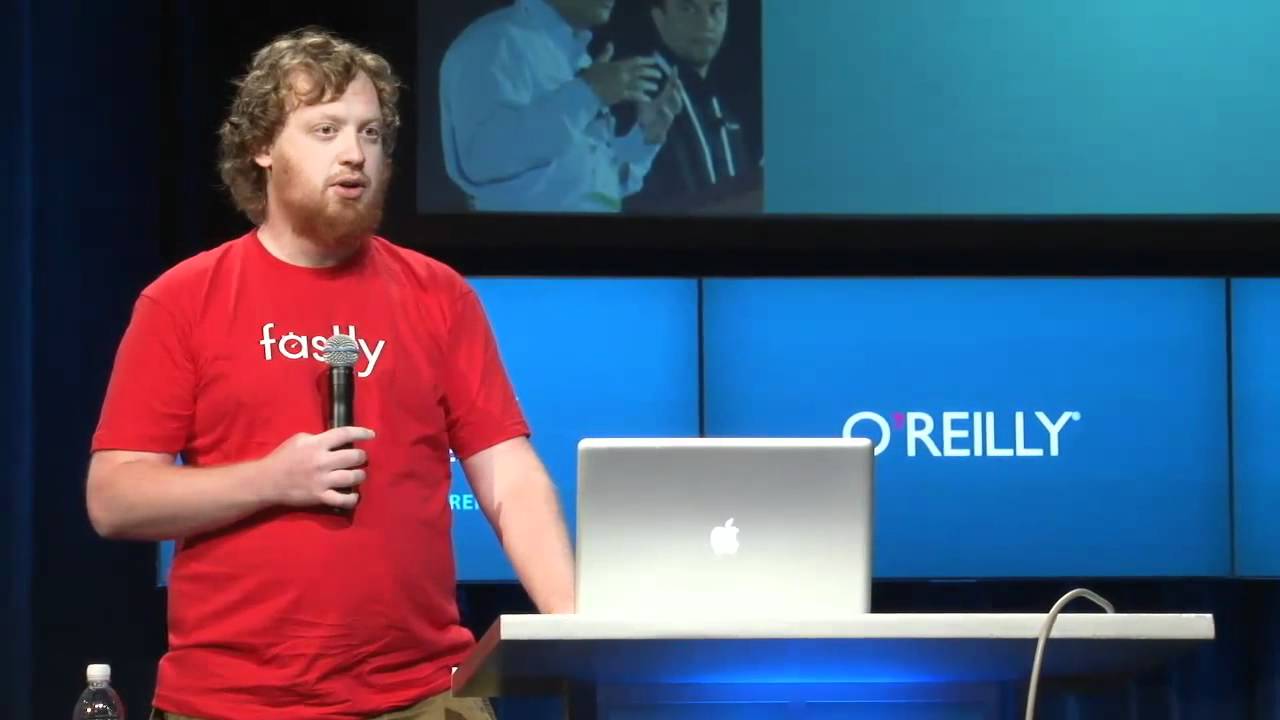
O'Reilly
Flash storage removes the random I/O bottlenecks that slow down relational joins, allowing engineering teams with under 50 terabytes of data to bypass complex sharding architectures entirely with an $80,000 server.
AI-assisted summary of Velocity 2011: Artur Bergman, "Artur on SSD's" — original source. Check the original for full context.
Source published:
Key ideas
- Artur Bergman argues that mechanical hard drives cause massive productivity loss, noting a boot time of 12 seconds on SSD versus 60 seconds on spinning disks. (0:02)
- When measured by gigabytes per IOPS rather than raw storage capacity, solid-state drives are significantly cheaper than traditional spinning disks. (1:16)
- A single server equipped with 50 terabytes of SSD capacity for around $80,000 can eliminate the architectural complexity of database sharding for most workloads. (1:16)
- SSDs cut drive-level power consumption from roughly 15 watts down to 1 watt while delivering 44,000 IOPS compared to just 180 IOPS on a mechanical drive. (1:16)
Detailed notes
## Background Published by O'Reilly on YouTube on June 20, 2011, this Velocity 2011 lightning talk features Artur Bergman, then VP of Engineering and Operations at Wikia and founder of Fastly. The video description highlights Bergman's extensive infrastructure background—ranging from high-volume trading architectures and LiveJournal engineering to federated systems—as he delivers a fast-paced case for solid-state drive adoption.
## TL;DR Bergman challenges the tech industry's hesitance to adopt SSDs, arguing that failing to equip developer laptops and data centers with flash storage wastes immense human and financial capital. He demonstrates that boot-time productivity gains alone justify laptop upgrades, while server-grade SSDs completely outclass mechanical hard drives on cost per IOPS, throughput, and power consumption. By deploying high-density commodity flash storage, engineering teams can achieve gigabytes-per-second random write performance and eliminate the architectural headache of database sharding for datasets up to 50 terabytes.
## Atmosphere & style The talk carries the irreverent, high-octane energy of a classic tech conference lightning pitch, driven by Bergman's blunt, unfiltered delivery and charismatic frustration. He commands the room with deadpan provocation—bluntly telling attendees they are wasting their lives on spinning disks—while backing his exasperation with rapid-fire back-of-the-napkin math and hardware benchmarks. The vibe is punchy, practical, and entertaining, ending on a humorous high note as the host jokingly dubs him the Kanye West of storage tech.
## Bulletin - [00:02](https://www.youtube.com/watch?v=H7PJ1oeEyGg&t=2s) Artur Bergman argues that mechanical hard drives cause massive productivity loss, noting a boot time of 12 seconds on SSD versus 60 seconds on spinning disks. - [01:16](https://www.youtube.com/watch?v=H7PJ1oeEyGg&t=76s) When measured by gigabytes per IOPS rather than raw storage capacity, solid-state drives are significantly cheaper than traditional spinning disks. - [01:16](https://www.youtube.com/watch?v=H7PJ1oeEyGg&t=76s) A single server equipped with 50 terabytes of SSD capacity for around $80,000 can eliminate the architectural complexity of database sharding for most workloads. - [01:16](https://www.youtube.com/watch?v=H7PJ1oeEyGg&t=76s) SSDs cut drive-level power consumption from roughly 15 watts down to 1 watt while delivering 44,000 IOPS compared to just 180 IOPS on a mechanical drive.
## Key takeaways - [00:02](https://www.youtube.com/watch?v=H7PJ1oeEyGg&t=2s) Very few engineering organizations in 2011 were running their entire data center storage infrastructure on solid-state drives. - [00:02](https://www.youtube.com/watch?v=H7PJ1oeEyGg&t=2s) Mechanical laptop drives waste substantial developer hours during reboot cycles, easily justifying an estimated $500 SSD upgrade cost. - [00:02](https://www.youtube.com/watch?v=H7PJ1oeEyGg&t=2s) Across a 1,700-person conference crowd, standard one-minute reboot times waste an entire cumulative day of human productivity per reboot. - [01:16](https://www.youtube.com/watch?v=H7PJ1oeEyGg&t=76s) Engineering teams mistakenly avoid SSDs due to perceived upfront drive costs without evaluating the real cost metric: gigabytes per IOPS. - [01:16](https://www.youtube.com/watch?v=H7PJ1oeEyGg&t=76s) Database joins are not inherently bad; poor relational query performance is typically caused by slow random disk I/O on mechanical drives. - [01:16](https://www.youtube.com/watch?v=H7PJ1oeEyGg&t=76s) Wikia's SSD-based file server achieved traversal of 8 million files on NFS in 9 minutes and a full backup in 12 minutes. - [01:16](https://www.youtube.com/watch?v=H7PJ1oeEyGg&t=76s) Wikia's storage setup demonstrated sustained throughput of 2.2 gigabytes per second of pure random writes. - [01:16](https://www.youtube.com/watch?v=H7PJ1oeEyGg&t=76s) A single standard SSD delivers roughly 44,000 IOPS compared to 180 IOPS from a mechanical disk, effectively replacing around 50 spinning drives. - [01:16](https://www.youtube.com/watch?v=H7PJ1oeEyGg&t=76s) Flash storage drives consume approximately 1 watt compared to 15 watts for mechanical spinning disks. - [01:16](https://www.youtube.com/watch?v=H7PJ1oeEyGg&t=76s) Most companies with under 50 terabytes of data can avoid complex database sharding entirely by consolidating onto a single dense SSD server for about $80,000. - [01:16](https://www.youtube.com/watch?v=H7PJ1oeEyGg&t=76s) Organizations should adopt mainstream commodity SSDs, such as the Intel 320 series, rather than overspending on ultra-expensive niche enterprise cards. - [01:16](https://www.youtube.com/watch?v=H7PJ1oeEyGg&t=76s) Wikia and Fastly adopted laptops equipped with SSDs as standard signing gifts for onboarding new engineering hires.
## Detailed walkthrough ### [00:02](https://www.youtube.com/watch?v=H7PJ1oeEyGg&t=2s) Stop Wasting Your Life: Put SSDs in Laptops
Artur Bergman starts his lightning talk by taking a quick show of hands across the audience to gauge SSD adoption. While several attendees use solid-state drives in their personal laptops, fewer raise their hands for using them in data centers. When he asks how many people are running their data centers completely on SSDs—excluding backups and near-line storage—only a single hand goes up. Artur points out that he personally built that particular deployment. Looking out at the audience, he delivers a blunt assessment: “you're basically wasting your life like everyone who doesn't have an SSD in your laptop you're wasting your life”.
To prove his point, Artur showcases his Mac's boot screen, which takes only 12 seconds to start up. He does quick math on the conference crowd: with roughly 1,700 people attending Velocity, standard mechanical hard drives taking about a full minute to boot mean that every time the room reboots their computers, an entire day's worth of collective human time is thrown away. He urges anyone running engineering organizations to simply spend the $500 to equip developers' laptops with SSDs immediately, emphasizing that the productivity gains pay for themselves right away.
- Mac boot time with SSD: 12 seconds versus ~60 seconds on a standard mechanical hard drive. - Scale calculation: Across 1,700 attendees, a single standard reboot cycle burns an entire day of wasted productivity. - Estimated upgrade cost: Approximately $500 per laptop to immediately recoup lost developer time.
[01:16](https://www.youtube.com/watch?v=H7PJ1oeEyGg&t=76s) The Real Math: IOPS, Database Performance, and Eliminating Sharding
Artur vents his frustration that despite preaching the benefits of SSDs for two and a half years, engineers repeatedly give him the excuse that flash storage is too expensive. In reality, he argues, solid-state drives are significantly cheaper than spinning disks when evaluated on the metric that actually matters: gigabytes per IOPS. Traditional disk arrays fail because of disk I/O bottlenecks during random access patterns, not because relational database operations like joins are inherently flawed. He laments the circular reasoning common in database architecture: people claim joins are bad because they are slow, so they resort to sharding to avoid them, when the actual villain is slow disk I/O.
To demonstrate the real-world power of flash storage, Artur details Wikia’s new file server setup. The machine can traverse 8 million files on NFS in 9 minutes, perform a full backup in 12 minutes, and push 2.2 gigabytes per second of random writes. Because a single modern server can be packed with 50 terabytes of SSD capacity for roughly $80,000, Artur argues that most teams can bypass complex sharding schemes entirely: “you can get 50 terabytes of ssds in one machine for like $80,000 and you can fucking skip sharding unless you have more than 50 terabytes which is actually more most of you you know like just not needed”.
```mermaid flowchart TD accTitle: Database Scaling Decision Path accDescr: A comparison showing how SSD performance removes the necessity of architectural sharding for datasets under 50 terabytes.
subgraph Problem["The Traditional Bottleneck"] A["Relational Joins"] -->|"Requires"| B["High Random I/O"] B -->|"Bottlenecked by Mechanical Disks (180 IOPS)"| C["Slow Queries"] C -->|"Historical Workaround"| D["Complex Database Sharding"] end
subgraph Solution["The SSD Architecture"] E["Single Commodity SSD (44,000 IOPS)"] -->|"Delivers 2.2 GB/s Random Writes"| F["Fast Joins at Scale"] F -->|"Supports up to 50 TB Storage for ~$80k"| G["Skip Sharding Entirely"] end ```
Beyond eliminating software complexity, Artur highlights drastic efficiency and power savings: - Wikia file server performance: Handles 8 million files on NFS in 9 minutes and completes a full backup in 12 minutes. - Throughput: Sustains 2.2 GB/s of pure random write throughput. - Performance disparity: A single mechanical hard drive provides roughly 180 IOPS, whereas a single standard SSD can output around 44,000 IOPS, effectively replacing 50 spinning drives. - Power consumption: Flash storage drops power down to roughly 1 watt per drive unit compared to 15 watts for spinning disks. - Deployment advice: Start simple with mainstream commodity drives like the Intel 320 series (around $1,000 for 600 GB) instead of spending tens of thousands on niche SLC enterprise cards. As Artur quips, there is no need to jump straight to an unattainable Formula 1 race car when you are currently riding a bicycle—a "Ferrari" like a basic Intel SSD is more than enough.
Artur concludes by mentioning that SSDs serve as the default signing bonus gift for new hires joining Wikia (and Fastly). The session host wraps up by jokingly introducing him as "Artur Kanye West Bergman" with the closing riff: “I'mma let you finish but SSDs are the coolest disks of all time.”
## Notable quotes > [01:16](https://www.youtube.com/watch?v=H7PJ1oeEyGg&t=76s) you can get 50 terabytes of ssds in one machine for like $80,000 and you can fucking skip sharding unless you have more than 50 terabytes — Artur Bergman
> [00:02](https://www.youtube.com/watch?v=H7PJ1oeEyGg&t=2s) you're basically wasting your life like everyone who doesn't have an SSD in your laptop you're wasting your life — Artur Bergman
## Mentioned Artur Bergman, Wikia, Fastly, Velocity, O'Reilly, Intel 320 series, Mac, Kanye West, OpenID Foundation, LiveJournal, Six Apart, Perl 5, djabberd
## Video description Artur Bergman (Wikia/Fastly), Artur Bergman, hacker and technologist at-large, is the VP of Engineering and Operations at Wikia. He provides the technical backbone necessary for Wikia's mission to compile and index the world's knowledge. He is also an enthusiastic apologist for federated identity and a board member of the OpenID Foundation. In past lives, he's built high volume financial trading systems, re-implemented Perl 5's threading system, wrote djabberd, managed LiveJournal's engineering team, and served as operations architect at Six Apart. His current interests extend to encompass semantic search, large scale infrastructure, open source development, federated instant messaging, neurotransmitters, and the future of cyborgs.
[Source](https://www.youtube.com/watch?v=H7PJ1oeEyGg)