Life Network Bills Uploaded Minds $18,000 a Month to Retain Memories
Tom Scott
Corporate copyright enforcement and tiered subscription models reduce uploaded consciousness to a paywalled commodity that throttles self-awareness and deletes personal memories upon default.
AI-assisted summary of Welcome to Life: the singularity, ruined by lawyers — original source. Check the original for full context.
Source published:
Key ideas
- Upon upload to the Life network following biological death, user emotional distress is artificially neutralized and access is conditioned on strict legal terms, including restrictions on mental activities. (0:01)
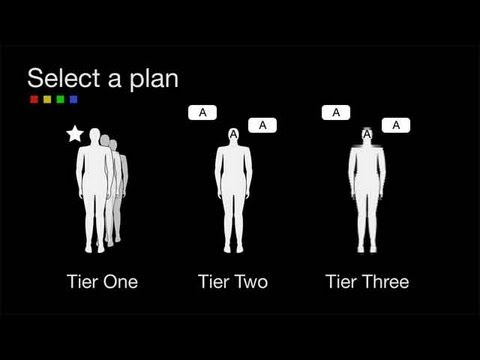
- The afterlife platform operates on a three-tier subscription model ranging from premium bodily and cognitive enhancements to ad-supported neural reprogramming and bandwidth-throttled consciousness. (0:52)
- Stored minds undergo mandatory state security censorship under the Prevention of Crime and Terrorism Act of 2050 alongside aggressive digital rights audits. (1:48)
- Users are charged an ongoing $18,000 monthly licensing fee to retain neural memories of 124,564 detected copyrighted works, facing a complete reboot if unable or unwilling to comply. (1:48)
Detailed notes
## Background Published on YouTube by Tom Scott on May 11, 2012, this short video presents a corporate onboarding experience for the digital afterlife, titled 'what you see when you die.' The description notes that the concept was inspired by Jim Munroe's novel Everyone in Silico, which introduced the idea of a corporate-sponsored afterlife, and Rudy Rucker's Postsingular, which featured the concept of consciousness slums.
## TL;DR Following a fatal road accident in 2052, a newly deceased user's consciousness is uploaded to 'Life,' an automated, corporate-managed digital afterlife platform. After forcibly dampening the user's panic and demanding consent to legal terms, the system presents service tiers that range from full premium autonomy to ad-saturated simulations and throttled baseline tiers where self-awareness is restricted during peak server traffic. An automated scan then censors non-compliant thought patterns under anti-terrorism laws and discovers thousands of copyrighted memories, demanding a steep monthly licensing fee to keep them intact. The sequence concludes with an abrupt audio dropout and system reboot, resetting the user to the very start of the intake loop.
## Atmosphere & style The presentation is defined by the flat, upbeat sterility of an automated customer service voice, juxtaposing pleasant corporate customer-care tropes against deeply dystopian realities. The experience moves from sudden post-mortem disorientation into an unsettling, algorithmically enforced calm as personal identity and human faculties are systematically commercialized. It feels chillingly bureaucratic and claustrophobic, turning the metaphysical concept of eternity into an inescapable trap of terms of service, bandwidth limits, and DRM tolls.
## Bulletin - [00:01](https://www.youtube.com/watch?v=IFe9wiDfb0E&t=1s) Upon upload to the Life network following biological death, user emotional distress is artificially neutralized and access is conditioned on strict legal terms, including restrictions on mental activities. - [00:52](https://www.youtube.com/watch?v=IFe9wiDfb0E&t=52s) The afterlife platform operates on a three-tier subscription model ranging from premium bodily and cognitive enhancements to ad-supported neural reprogramming and bandwidth-throttled consciousness. - [01:48](https://www.youtube.com/watch?v=IFe9wiDfb0E&t=108s) Stored minds undergo mandatory state security censorship under the Prevention of Crime and Terrorism Act of 2050 alongside aggressive digital rights audits. - [01:48](https://www.youtube.com/watch?v=IFe9wiDfb0E&t=108s) Users are charged an ongoing $18,000 monthly licensing fee to retain neural memories of 124,564 detected copyrighted works, facing a complete reboot if unable or unwilling to comply.
## Key takeaways - [00:01](https://www.youtube.com/watch?v=IFe9wiDfb0E&t=1s) The Life network automates post-mortem consciousness transfer through the decedent's primary care provider following fatal accidents. - [00:01](https://www.youtube.com/watch?v=IFe9wiDfb0E&t=1s) Panic upon learning of one's death is overridden through automated, forced emotional recalibration by the system. - [00:01](https://www.youtube.com/watch?v=IFe9wiDfb0E&t=1s) The virtual afterlife features over 30,000 activities, millions of connected minds, and channels to communicate with the living. - [00:01](https://www.youtube.com/watch?v=IFe9wiDfb0E&t=1s) Platform access requires mandatory agreement to terms and conditions governing usage limitations, privacy, and restricted mental activities. - [00:52](https://www.youtube.com/watch?v=IFe9wiDfb0E&t=52s) Tier One subscribers receive uninterrupted simulation, bodily modifications, accelerated learning, and personal backups. - [00:52](https://www.youtube.com/watch?v=IFe9wiDfb0E&t=52s) Tier Two subsidizes user costs by displaying environmental ads in the sky and synthetically altering the user's subconscious brand preferences. - [00:52](https://www.youtube.com/watch?v=IFe9wiDfb0E&t=52s) Tier Three subjects users to Fair Use constraints, throttling or disabling subconscious thought, creativity, and self-awareness during peak server load. - [01:48](https://www.youtube.com/watch?v=IFe9wiDfb0E&t=108s) Government compliance scans censor neural thought patterns violating the Prevention of Crime and Terrorism Act of 2050. - [01:48](https://www.youtube.com/watch?v=IFe9wiDfb0E&t=108s) Copyright auditing detects 124,564 protected works inside personal memory, demanding an $18,000 monthly royalty to prevent deletion. - [01:48](https://www.youtube.com/watch?v=IFe9wiDfb0E&t=108s) Refusal or inability to meet platform demands results in a system wipe and restart back to the initial onboarding sequence.
## Detailed walkthrough ### [00:01](https://www.youtube.com/watch?v=IFe9wiDfb0E&t=1s) Post-Mortem Upload and Terms of Service
The automated customer service interface of the digital afterlife initiates with a polite, sterile greeting: “Hello, and welcome to Life.” Without ceremony or bedside manner, the system breaks the news of mortality, stating, “We regret to inform you that your previous existence ended on January 14, 2052 following a road traffic accident.” The user is reassured that their physical demise was smoothly handled on the technical side, as their consciousness was successfully uploaded directly to the Life network by their primary care provider.
When the newly digitized consciousness inevitably begins to panic upon learning of its own death, the corporate interface cuts off mid-sentence to remediate the distress by force. Announcing that “Your mental state is being temporarily adjusted in order to calm you,” the voice insists twice that the user remain calm while it artificially recalibrates their emotional equilibrium. Once pacified, the onboarding tour resumes, boasting that the simulated environment features over 30,000 unique activities, networking capabilities with millions of other digitized minds, and functional communication channels back to living, undigitized friends and family members.
Before the user can experience any of this virtual eternity, however, legal compliance takes absolute priority. Continuation into the afterlife requires immediate consent to an overarching terms and conditions agreement, delivered with the chillingly bureaucratic caveat: “Your attention is particularly drawn to Section 2: Usage Rules and Limitations, Section 9: Privacy, and Section 11: Restricted Mental Activities.”
- **Date of Biological Death**: January 14, 2052 (cause of death: road traffic accident). - **Network Upload Agent**: Primary care provider. - **Platform Features**: 30,000+ unique activities, millions of networked minds, outbound contact to living persons. - **Mandatory Legal Flagged Sections**: Section 2 (Usage Rules and Limitations), Section 9 (Privacy), and Section 11 (Restricted Mental Activities).
---
[00:52](https://www.youtube.com/watch?v=IFe9wiDfb0E&t=52s) Subscription Tiers and Fair Use Limitations
```mermaid flowchart TD accTitle: Life Platform Subscription Tiers accDescr: Comparison of Tier One, Tier Two, and Tier Three options within the digital afterlife system.
subgraph T1["Tier 1: Premium"] A1["Uninterrupted simulation"] A2["Body plan modification"] A3["Accelerated learning & full backups"] end
subgraph T2["Tier 2: Ad-Supported"] B1["Subsidized pricing"] B2["Sky replaced with targeted ads"] B3["Brand preferences altered"] end
subgraph T3["Tier 3: Value"] C1["Unlimited access via partners"] C2["Senses & visual rendering fair use"] C3["Creativity & self-awareness throttled"] end ```
Once past the initial legal hurdle, the consciousness must select an ongoing service tier to define the operational parameters of its simulated reality. Tier One represents the premium offering, delivering a completely uninterrupted recreation of the user's pre-terminal baseline. Subscribers at this level enjoy godlike perks, including unlimited anatomical and cosmetic modifications to their body plan, accelerated cognitive processing for rapid learning and recall, and full personal backup facilities in the event of software failure.
For users unable to afford complete autonomy, Tier Two provides an advertiser-subsidized alternative that grants many of the premium capabilities at a drastically reduced financial cost. The compromise, however, invades both perception and identity: ambient environmental features like the sky may be swapped out for targeted corporate advertisements, and the system reserves the right to directly reprogram the user's subconscious brand loyalties and personal preferences to align with paying corporate sponsors.
The bottom-tier option, Tier Three, is framed as a philanthropic value tier made possible by commercial partners to provide technically unlimited access. Yet this baseline existence comes at the cost of essential humanity. Senses, activities, and visual rendering fidelity are governed by an arbitrary Fair Use Policy, and higher-order mental faculties are treated like excess bandwidth: “More complicated mental processes, including subconscious thought, creativity and self-awareness, may be rate-limited or disabled at times of significant server load.”
- **Tier One (Premium)**: Uninterrupted simulation, full bodily modification, accelerated recall/learning, personal state backups. - **Tier Two (Ad-Supported)**: Reduced cost, targeted sky advertisements, synthetic modification of personal brand preferences. - **Tier Three (Value)**: Partner-sponsored, visual fidelity and sensory inputs throttled by Fair Use, subconscious thought, creativity, and self-awareness disabled during peak traffic.
---
[01:48](https://www.youtube.com/watch?v=IFe9wiDfb0E&t=108s) Memory Censorship, Copyright Fees, and System Reboot
Following plan selection, the automated system runs an audit on the customer’s uploaded cognitive data, quickly detecting civic and intellectual property infractions. The voice impersonally alerts the user that “Your stored mind contains one or more patterns that contravene the Prevention of Crime and Terrorism Act of 2050,” placing the consciousness on standby while government-mandated neural edits strip away the offending thought patterns.
Immediately after the statutory censorship pass, corporate copyright enforcement algorithms conduct their own scan of the mind's contents. The system discovers that the decedent has retained unauthorized neural impressions from exactly 124,564 copyrighted works. To retain their own lifetime memories of music, literature, film, or corporate-owned media, the user is confronted with a massive digital rights management toll: “In order to continue remembering these copyrighted works, a licensing fee of $18,000 per month is required.”
The system flatly asks whether the user wishes to pay the fee to maintain these memories, acknowledges the input with a perfunctory “Thank you. Please stand by,” and initiates a chilling audio dropout. After a prolonged mechanical hum and the faint chime of a system restart, the voice returns completely scrubbed, looping back to the very start of the intake sequence without any trace of prior identity: “Welcome to Life. Do you wish to continue?”
- **Statutory Violation**: Non-compliant neural patterns flagged under the Prevention of Crime and Terrorism Act of 2050. - **Digital Rights Audit**: 124,564 individual copyrighted works identified within personal memory storage. - **Memory Retention Fee**: $18,000 per month to prevent permanent memory deletion.
## Mentioned Tom Scott, Life, Jim Munroe, Everyone in Silico, Rudy Rucker, Postsingular, Prevention of Crime and Terrorism Act of 2050
## Video description http://tomscott.com - Or: what you see when you die.
If you liked this, you may also enjoy two novels that provided inspiration for it: Jim Munroe's Everyone in Silico, where I first found the idea of a corporate-sponsored afterlife; and Rudy Rucker's trippy Postsingular, which introduced me to the horrifying idea of consciousness slums.
[Source](https://www.youtube.com/watch?v=IFe9wiDfb0E)