Torvalds Defends Linux Mailing List Insults, Demands Earned Respect
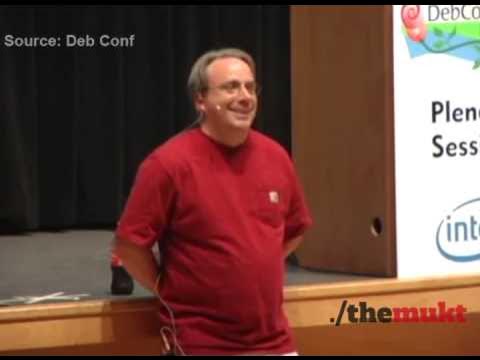
TFiR
Torvalds argues that open-source projects must prioritize technology over politeness, telling offended contributors to submit code elsewhere because respect must be earned rather than granted by default.
AI-assisted summary of Linus Torvalds on his insults: respect should be earned. — original source. Check the original for full context.
Source published:
Key ideas
- Linus Torvalds defended his abrasive communication style on public mailing lists, arguing that prioritizing political correctness can derail projects from focusing on technology. (0:00)
- Torvalds highlighted open source flexibility over corporate settings, noting contributors can choose other maintainers since he personally works directly with only about 20 to 50 people among roughly 1,000 contributors per release. (1:06)
- Torvalds asserted that respect must be earned rather than granted by default, accepting that some developers will choose not to work with him as a result. (3:15)
Detailed notes
## Background This video was published on YouTube by the channel TFiR on September 4, 2014. The page description highlights Linus Torvalds's belief that respect is not an automatic entitlement, but something that must be earned before he will grant it to anyone.
## TL;DR When confronted by an audience member about using extreme insults toward kernel contributors on public mailing lists, Linus Torvalds defends his conduct by affirming that technology matters far more to him than political correctness. Acknowledging that he is naturally abrasive due to his cultural background and family upbringing, Torvalds refuses to soften his honesty or reduce his standards. He notes that open source allows developers to route around people they dislike, emphasizing that out of roughly a thousand contributors per release, he personally interacts with only a small circle. Ultimately, Torvalds asserts that respect is never given by default and must be earned, making him unapologetic about alienating those who disagree with his style.
## Atmosphere & style The exchange carries a tense, candid energy as an audience member directly confronts Torvalds with quoted examples of his harshest rhetoric. Rather than deflecting or apologizing, Torvalds reacts with unflinching, conversational bluntness, occasionally leaning into dark humor while maintaining total conviction in his stance. The room feels charged and slightly divided, punctuated by scattered applause from attendees seeking baseline human courtesy, juxtaposed against Torvalds's calm, pragmatic refusal to compromise his standards.
## Bulletin - [00:00](https://www.youtube.com/watch?v=JZ017D_JOPY&t=0s) Linus Torvalds defended his abrasive communication style on public mailing lists, arguing that prioritizing political correctness can derail projects from focusing on technology. - [01:06](https://www.youtube.com/watch?v=JZ017D_JOPY&t=66s) Torvalds highlighted open source flexibility over corporate settings, noting contributors can choose other maintainers since he personally works directly with only about 20 to 50 people among roughly 1,000 contributors per release. - [03:15](https://www.youtube.com/watch?v=JZ017D_JOPY&t=195s) Torvalds asserted that respect must be earned rather than granted by default, accepting that some developers will choose not to work with him as a result.
## Key takeaways - [00:00](https://www.youtube.com/watch?v=JZ017D_JOPY&t=0s) An audience member raised concerns over Torvalds' harsh rhetoric toward patch contributors on public mailing lists. - [00:20](https://www.youtube.com/watch?v=JZ017D_JOPY&t=20s) Torvalds stated that his core priority is technology, warning that excessive concern with political correctness harms technical projects. - [00:50](https://www.youtube.com/watch?v=JZ017D_JOPY&t=50s) Torvalds welcomed open discussion of his communication style rather than avoiding the sensitive topic. - [01:06](https://www.youtube.com/watch?v=JZ017D_JOPY&t=66s) Torvalds attributes his abrasive nature to his cultural background and growing up in a dysfunctional family. - [01:25](https://www.youtube.com/watch?v=JZ017D_JOPY&t=85s) Coexistence in open source should not mean lowering standards to a common denominator to appease everyone. - [01:38](https://www.youtube.com/watch?v=JZ017D_JOPY&t=98s) Unlike traditional corporate environments with assigned bosses, open source allows contributors to choose who they collaborate with. - [01:55](https://www.youtube.com/watch?v=JZ017D_JOPY&t=115s) Across roughly 1,000 contributors per kernel release, Torvalds interacts directly with only about 20 to 50 developers. - [02:18](https://www.youtube.com/watch?v=JZ017D_JOPY&t=138s) Torvalds refuses to compromise his honesty to soften his abrasive personality. - [02:35](https://www.youtube.com/watch?v=JZ017D_JOPY&t=155s) Torvalds characterizes his extreme remarks and insults on mailing lists as dark humor and hyperbole rather than literal hostility. - [03:15](https://www.youtube.com/watch?v=JZ017D_JOPY&t=195s) In response to audience calls for baseline human respect, Torvalds argued that respect must be earned rather than given freely. - [03:38](https://www.youtube.com/watch?v=JZ017D_JOPY&t=218s) Torvalds accepts that people may disagree with his philosophy and choose not to associate with him. - [03:50](https://www.youtube.com/watch?v=JZ017D_JOPY&t=230s) The choice of collaboration goes both ways: just as contributors can avoid Torvalds, he also chooses not to work with certain individuals.
## Detailed walkthrough ### [00:00](https://www.youtube.com/watch?v=JZ017D_JOPY&t=0s) Public Mailing List Insults and Prioritizing Technology
An audience member opens the question by apologizing slightly, acknowledging that it is a sensitive but important topic: how does it affect a project’s community and culture when its leader tells patch contributors on public mailing lists that they should have been “retroactively aborted,” or expresses disbelief that they managed to survive childhood without starving to death because they were too stupid to find a teat to suck on? Linus Torvalds listens and immediately concedes that people might be put off by such rhetoric, but quickly clarifies his core priority: “I care about technology and I've actually seen projects that took the whole political correctness so far that the the project no longer is about the technology.”
Torvalds notes that in the end, he does not care about catering to polite sensibilities if it distracts from the work. As he notices a growing queue of incoming audience questions and jokes that they might need to start moderating them, he welcomes the discussion directly, assuring the audience that he has no problem addressing his communication style head-on.
[01:06](https://www.youtube.com/watch?v=JZ017D_JOPY&t=66s) Cultural Upbringing, Honesty, and Picking Collaborators in Open Source
Torvalds reflects on the origins of his temperament, describing himself openly as abrasive. He explains that he was raised in a culture that was far less concerned with political correctness than modern American culture, alongside growing up in a largely dysfunctional family. Because people naturally vary—some take offense easily while others cause it—he argues that coexistence cannot be achieved by reducing standards down to the lowest common denominator. Instead, he points out that unlike biological families, open source offers the distinct advantage of allowing individuals to choose their collaborators. Whereas employees in a corporate setting are stuck with their assigned bosses, open source developers have the freedom to navigate around personalities they dislike.
Torvalds notes that while roughly a thousand people contribute to each kernel release, he personally works directly with only about twenty people closely, and roughly fifty people more or less. He encourages anyone bothered by his personality to find another maintainer to submit code to, stating bluntly: “I'm not willing to be less honest because I know I'm abrasive.” He also addresses his extreme remarks—such as wondering aloud how someone survived to adulthood when they seem too stupid to feed themselves—framing them as obvious hyperbole and dark humor rather than literal hostility.
- **Direct working group**: Linus works closely with approximately 20 core people and interacts regularly with around 50 others. - **Scale of contributors**: Around 1,000 developers are involved in every Linux kernel release. - **Open source vs. commercial dynamic**: Open source permits contributors to choose their peers and route around leadership they dislike, unlike traditional corporate structures where workers are tied to a specific boss.
[03:15](https://www.youtube.com/watch?v=JZ017D_JOPY&t=195s) Respect Must Be Earned, Not Given
As audience members begin to press the point about basic human respect regardless of technical aptitude, the room reacts with scattered applause. Torvalds cuts through the reaction to lay out his personal philosophy on interpersonal dynamics, explaining that he refuses to treat people with baseline deference simply by default: “There are people who think that respect is something that should be given, and I happen to be one of the people who is perfectly happy saying no respect should be earned.”
He insists that if someone has not earned his respect, they simply will not receive it, calling the rule “really that simple.” Torvalds acknowledges that not everyone shares this worldview, and he is entirely comfortable with people disagreeing or choosing not to associate with him. Just as contributors can walk away from him, he points out that the dynamic cuts both ways: there are certain individuals he refuses to work with as well.
## Notable quotes > [01:06](https://www.youtube.com/watch?v=JZ017D_JOPY&t=66s) I'm not willing to be less honest because I know I'm abrasive. — Linus Torvalds
> [00:00](https://www.youtube.com/watch?v=JZ017D_JOPY&t=0s) I care about technology and I've actually seen projects that took the whole political correctness so far that the the project no longer is about the technology. — Linus Torvalds
## Mentioned Linus Torvalds, Linux
## Video description Subscribe to our weekly newsletter: https://www.tfir.io/dnl Become a patron of this channel: https://www.patreon.com/TFIR Follow us on Twitter: https://twitter.com/tfir_io Like us on Facebook: https://www.facebook.com/TFiRMedia/
Linus Torvalds: “I don't respect people unless I think they deserve the respect. There are people who think that respect is something that should be given, and I happen to be one of the people who is perfectly happy saying no respect should be earned. And without being earned, you don't get it. It's really that simple.”
[Source](https://www.youtube.com/watch?v=JZ017D_JOPY)