## Background
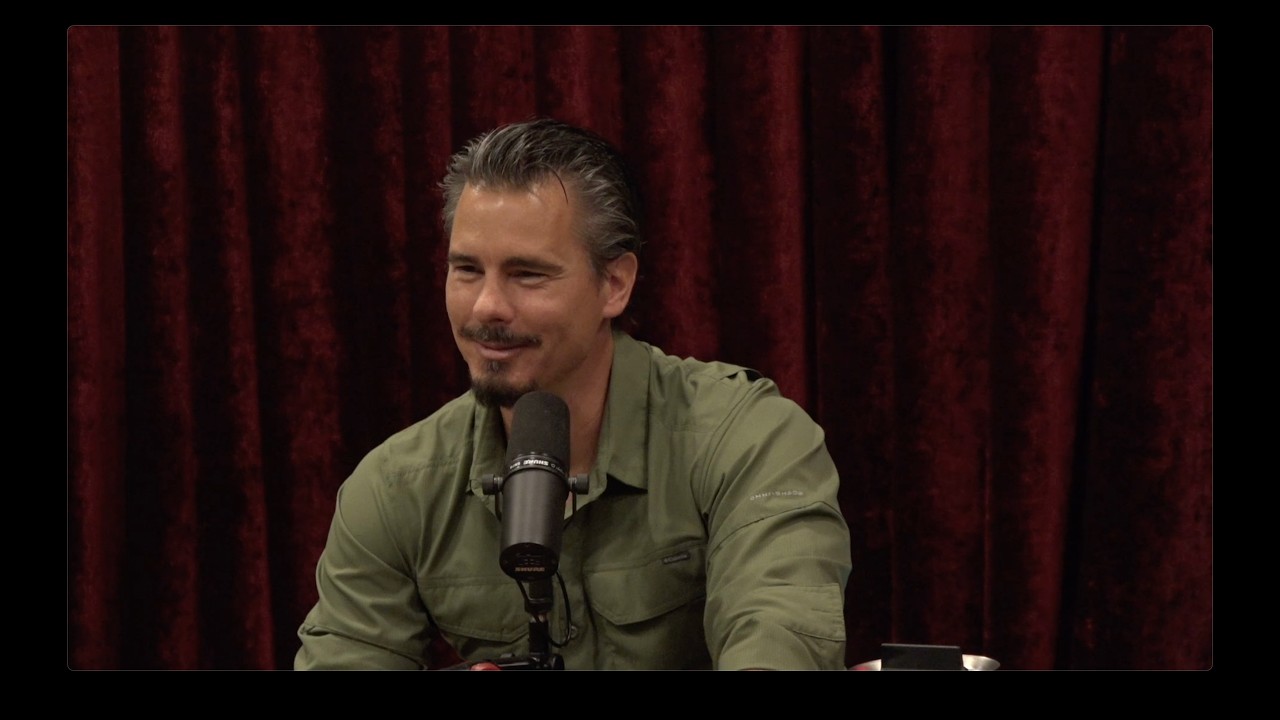
This episode of Joe Rogan Experience was published on YouTube by PowerfulJRE on July 23, 2026. The description introduces guest Timothy Alberino as an author, lecturer, and explorer who recently released a new edition of the ancient text 'The Book of Enoch' featuring his introduction and commentary.
## TL;DR
Joe Rogan and Timothy Alberino examine anomalies in mainstream history, beginning with Lincoln's giant quote, Ice Age megafauna flash-freezing, and recent dating studies of ancient pyramids and megalithic structures in Giza and Peru. Alberino details his drone and radar discoveries regarding subterranean Paracas dwellings, elongated skulls, and the debunks of tridactyl 'alien mummies' in Nazca. The discussion culminates in an in-depth exploration of the Enochian tradition, the Watchers, pre-flood hybrid giants, ancient advanced technology, and humanity's potential genetic devolution.
## Atmosphere & style
The conversation carries a deeply speculative, inquisitive, and intense vibe as Rogan and Alberino probe edge-of-mainstream archaeology and ancient mythologies. The dynamic balances intense curiosity with critical scrutiny, shifting from analytical debunks of viral claims like the Nazca mummies to high-energy exploration of esoteric cosmic narratives. It feels like an immersive late-night deep dive into human origin theories, mixing academic intrigue with apocalyptic foreboding.
## Key takeaways
- [01:08:00](https://www.youtube.com/watch?v=uob3BtMixuo&t=4080s) Abraham Lincoln's 1848 speech at Niagara Falls referenced extinct giants whose bones allegedly filled the earthwork mounds of America, reflecting mid-19th-century newspaper reports of giant humanoid skeleton excavations.
- [01:10:27](https://www.youtube.com/watch?v=uob3BtMixuo&t=4227s) John Reeves' 'The Boneyard' property in Fairbanks, Alaska, contains a massive, permafrost-preserved deposit of Ice Age megafauna with a dark carbon layer pointing to a rapid cataclysm less than 11,000 years ago.
- [01:14:16](https://www.youtube.com/watch?v=uob3BtMixuo&t=4456s) The flash-frozen state of Arctic megafauna with undigested food and crushed legs suggests a catastrophic event, potentially caused by Younger Dryas comets drawing sub-zero space air down to Earth.
- [01:17:45](https://www.youtube.com/watch?v=uob3BtMixuo&t=4665s) Joe Rogan rejects the overkill hypothesis of megafauna extinction, pointing instead to data like a January 2026 study by Alberto Donini that dates the Great Pyramid's base to approximately 24,900 years Before Present.
- [01:22:19](https://www.youtube.com/watch?v=uob3BtMixuo&t=4939s) Academic institutions strictly adhere to a 2500 BC timeline for the Great Pyramid and the Sphinx primarily to maintain their mainstream historical authority.
- [01:24:00](https://www.youtube.com/watch?v=uob3BtMixuo&t=5040s) Ancient cultures maintained an inverted worldview, believing that their early ancestors possessed superior wisdom and lived in an era, like the Egyptian Zep Tepi, where gods shared advanced knowledge.
- [01:26:36](https://www.youtube.com/watch?v=uob3BtMixuo&t=5196s) Quechua and Aymara oral traditions attribute megalithic Peruvian structures like Saksaywaman and Tiwanaku to a vanished race of giants rather than the Inca, who built inferior structures on top of the original foundations.
- [01:39:36](https://www.youtube.com/watch?v=uob3BtMixuo&t=5976s) A sudden global cataclysm, likely the Younger Dryas impact, abruptly halted ancient construction mid-process at sites like the Temple of the Sun in Ollantaytambo.
- [01:47:33](https://www.youtube.com/watch?v=uob3BtMixuo&t=6453s) Drone and Ground-Penetrating Radar research into the Paracas culture indicates they were a diminutive people with subterranean dwellings, genetic anomalies causing elongated skulls, and eye sockets 25% larger than normal humans.
- [02:02:34](https://www.youtube.com/watch?v=uob3BtMixuo&t=7354s) Timothy Alberino inspected the tridactyl 'alien mummies' of Nazca in Ica and determined they are elaborate hoaxes constructed from harvested ancient human and animal bones.
- [02:06:51](https://www.youtube.com/watch?v=uob3BtMixuo&t=7611s) The Sumerian King List and the Enochian tradition provide parallel records of pre-flood patriarchs and represent what Alberino argues is the most authentic account of the antediluvian world.
- [02:17:43](https://www.youtube.com/watch?v=uob3BtMixuo&t=8263s) The Book of the Watchers details 200 non-human entities who descended upon Mount Hermon, bartering celestial technology to humans in exchange for women, resulting in hybrid giant offspring.
- [02:21:49](https://www.youtube.com/watch?v=uob3BtMixuo&t=8509s) Pre-flood warfare involving angelic aerospace vehicles directly parallels secular historical accounts of the lost empire of Atlantis described by Plato.
- [02:28:51](https://www.youtube.com/watch?v=uob3BtMixuo&t=8931s) Advanced technology in the antediluvian world was concentrated within select dynastic fraternities, while the broader population lived at Bronze or Iron Age levels.
- [02:32:08](https://www.youtube.com/watch?v=uob3BtMixuo&t=9128s) Humanity has undergone continuous devolution from an extraordinary peak where pre-flood patriarchs lived for centuries and possessed intrinsic telepathic capabilities, driven by an accumulating genetic mutational load.
- [02:36:32](https://www.youtube.com/watch?v=uob3BtMixuo&t=9392s) Declining fertility and fitness trends point toward a potential posthuman apocalypse, aligning with futurist predictions that natural humans will cease to exist within the next 130 years.
## Detailed walkthrough
### [00:01](https://www.youtube.com/watch?v=uob3BtMixuo&t=1s) The Mystery and Fear Surrounding the Kandahar Giant
Joe Rogan welcomes Timothy Alberino and opens the conversation by bringing up a legendary story: the Kandahar giant in Afghanistan. Rogan recalls arm wrestler Devon Larratt telling a story on the podcast about a Canadian military buddy who encountered an eight-foot-tall, incredibly wide warlord in Afghanistan. Alberino notes that while he discusses many fringe topics like UFOs—some of which could get him into trouble—nothing makes him more nervous than talking about giants, particularly the Kandahar giant.
Alberino explains that high-level Pentagon officials who openly chat about UFOs instantly freeze up, change the subject, or directly warn him to "be careful with this topic" when giants are brought up. Rogan notes that tall people like 7'9" basketball players exist, but Alberino clarifies he is talking about true 8-to-12-foot giants who do not suffer from gigantism (which is a debilitating medical condition). Rogan highlights that veterans deployed to Afghanistan rarely dismiss these claims off-hand because of the country’s extreme age, remote mountainous terrain, warlord control, and unstudied ancient ruins (such as Greek-style temples dating back to Alexander the Great) that archaeologists cannot safely access.
- **Devon Larratt's Story:** A Canadian soldier encountered a warlord in Afghanistan described as eight feet tall, extremely wide, and the largest human he had ever seen.
- **Official Discomfort:** High-level Pentagon contacts will openly discuss UFOs with Alberino, but explicitly warn him to stay away from the topic of giants.
- **Afghanistan’s Landscape:** Highly dangerous and isolated terrain, featuring unstudied ancient structures that date back to Alexander the Great.
---
[00:04](https://www.youtube.com/watch?v=uob3BtMixuo&t=4s) The C-130 Pilot’s First-Hand Account of a Slain Giant
Alberino recaps how he and Steve Quayle founded Gen 6 Productions to make documentaries about ancient, biblical, and Smithsonian giants. During their research, Quayle received a call from an elderly woman insisting he speak to her son, an active-duty Air Force C-130 cargo pilot. The pilot—who later appeared anonymously in silhouette on *Coast to Coast AM* with George Noory and in Alberino’s documentary—flew into Bozeman, Montana, showed his military credentials, and shared a harrowing encounter from 2005 at Bagram Airfield.
Upon deplaning during a routine mission into Bagram, the pilot was immediately met on the tarmac by intelligence handlers ("the babysitters") who strictly forbade any photos or mention of the operation. A forklift delivered a 7x9-foot air cargo pallet bearing an overwhelming, pungent stench of musk, body odor, and death. Laying in the fetal position on the pallet was a massive humanoid tarped over, though its hands, feet, and head extended off the edges. Marines standing nearby compared their boots to the entity's feet. The creature had red hair, six fingers on each hand, six toes on each foot, and crude canvas foot wrappings. Though dead, the entity was "solid as a rock," coming up to the midsection of men standing beside it while curled up.
- **Weight and Height:** The loadmaster weighed the giant at **1,100 lbs**, estimating its height to be **10 to 12 feet tall**.
- **The Cave Incident:** Marines told the pilot a U.S. reconnaissance team investigated a cave near a village where locals were leaving offerings. The team went in, encountered the living giant, and was completely wiped out. A second heavily armed response team entered, killed the giant (which was allegedly eating members of the first team), and airlifted its body via transport helicopter to Bagram.
- **Flight Route:** The pilot flew the C-130 carrying the giant's corpse from Bagram Airfield to Qatar, later hearing rumors that the remains were transferred to Wright-Patterson Air Force Base.
---
[00:09](https://www.youtube.com/watch?v=uob3BtMixuo&t=9s) Official Debunking and High-Level Reactions
Rogan questions why strange, highly classified materials always seem to end up at Wright-Patterson Air Force Base, pointing to its historical association with the secretive "Blue Room" meant for extraterrestrial artifacts. Alberino notes that the Pentagon took the unusual step of issuing an official public statement explicitly denying the Kandahar giant incident ever occurred. To Rogan, the fact that the Pentagon felt compelled to publicly debunk the story only makes it feel more suspicious.
Alberino adds that researcher L.A. Marzulli interviewed a Special Forces soldier with separate firsthand knowledge of the event. Furthermore, Alberino recalls running into a high-ranking commander from the Iraq/Afghanistan campaigns. When asked casually about the Kandahar giant, the commander turned pale, pointed to his phone to signal surveillance, and his wife whispered, "He can't talk about that." In a later secured setting, the commander revealed details so sensitive Alberino refuses to share them publicly to protect his source, though he confirms "it's not the giant of Kandahar—it's the *giants* of Kandahar."
> "His face completely contorted and he was no longer just... happy and laughing. He became very stern. And he said, 'What have you gotten yourself into?'"
- **Pentagon Statement:** Issued an official statement claiming the Kandahar giant incident never occurred.
- **Senate Staffer Reaction:** A friend of Alberino brought up the topic to a Senate staffer with a Special Forces background, who panicked and warned him, "You need to be really careful."
---
[00:15](https://www.youtube.com/watch?v=uob3BtMixuo&t=15s) Why Hide the Existence of Giants?
Rogan and Alberino discuss why the government or military would go to such lengths to keep the existence of giants secret. Rogan points out that giant legends are universal across the globe—from the Nephilim in the Bible and the Book of Enoch to Native American traditions describing red-haired, six-fingered, six-toed giants.
Rogan questions why mainstream science celebrates the discovery of extinct hominids like *Homo floresiensis* (the "hobbit" people) or giant dinosaurs, yet alleged giant human skeletons discovered in archaeological mounds are routinely hidden away in places like the basement of the Smithsonian Institution. Both agree it remains a baffling conundrum why physical evidence of giants would be so strictly suppressed from the public eye.
- **Shared Lore:** Native American traditions and Middle Eastern ancient texts share identical details regarding giants having red hair and six digits on their hands and feet.
- **Scientific Double Standard:** Discoveries like *Homo floresiensis* are openly embraced by academia, while giant human remains reportedly excavated throughout history are quickly sequestered and buried in archives.
[17:47](https://www.youtube.com/watch?v=uob3BtMixuo&t=1067s) Explaining the Cover-Up and the Near Eastern Cult of Giants
Timothy Alberino addresses why he believes there is an active cover-up regarding the historical existence of giants. While many biblical creationists argue that hiding evidence of giants is meant to suppress scripture, Alberino rejects that idea because giant legends exist in virtually every ancient culture worldwide. He also dismisses the notion that giant remains would pose a major problem for evolutionary theory, noting that natural selection could simply categorize them as offshoots related to *Gigantopithecus*. Instead, he proposes a darker explanation rooted in ancient Near Eastern history: a belief that giant remains possess spiritual and supernatural utility.
According to Hebrew cosmology and texts like the *Book of Enoch*, giants were hybrid entities whose spirits survived physical death. Unbound by normal human death, these post-mortem spirits became what the New Testament calls possessing demons. In the ancient Levant, Canaanite and Amorite cultures practiced a necromantic ritual known as the *kispum*. During these rites, kings and practitioners would invoke by name the *Rephaim*—the spirits of legendary dead giant clans like the *Anakim*, *Zamzummim*, and *Emim*—to feast with them and grant them power. Extant Ugaritic texts from modern-day northern Syria document these invocations. Alberino asserts that this ancient cult of Baal and its associated rituals persist among modern powerful elites, who may be using giant remains for dark occult practices.
- **Key Terms & Concepts:** *Kispum* (necromantic ritual of invoking the dead), *Rephaim*, *Anakim*, *Zamzummim*, *Emim*, *Nephilim*, Ugaritic texts.
- **Modern Occult Connection:** Alberino links these ancient Canaanite practices to modern occultism and references to Baal, though Joe Rogan and the show producer note that specific mentions in recent bank files might be mundane naming coincidences or misinterpretations rather than explicit evidence of a secret cult.
---
[27:40](https://www.youtube.com/watch?v=uob3BtMixuo&t=1660s) Global Giant Mythology and Ground Zero in Sardinia
Moving from the spiritual theories behind the cover-up to tangible physical evidence, Alberino highlights the global prevalence of giant mythology across Peru, Central America, and Native American traditions—such as tales of six-fingered, red-haired giants destroyed in ancient cataclysms. He argues that when anecdotal claims become this universal across isolated cultures, they aggregate into substantive evidence.
Alberino pinpoints the Mediterranean island of Sardinia as the global "ground zero" for physical evidence of giants. Sardinia contains the highest concentration of megalithic structures in the world, featuring massive, mortarless Bronze Age stone towers known as *nuraghi*. Constructed between roughly 3300 BC and 1200 BC in a crude Cyclopean style, these basalt, granite, and limestone towers once numbered between 10,000 and 30,000, with roughly 7,000 surviving today. Some stood over 100 feet tall and featured wooden platforms supported by finely cut stone buttresses.
- **Sardinian Megaliths:** Over 7,000 *nuraghi* towers still stand today.
- **Architectural Style:** Cyclopean masonry—fitting massive stones together without mortar, named after the mythical Cyclopes of Greek legend.
---
[33:16](https://www.youtube.com/watch?v=uob3BtMixuo&t=1996s) The Tombs of the Giants
Alongside the *nuraghi* towers, Sardinia features approximately 800 surviving megalithic burial structures traditionally known as the "Tombs of the Giants." Alberino pushes back against skeptical claims that these chambers were too small to hold giant humanoids. Having personally visited and measured the sites, he explains that the stone structures comfortably accommodate individuals ranging from 8 to 10 feet tall.
Alberino clarifies a common misconception regarding how these tombs functioned: the giant remains were not placed inside the stone passageway itself. Instead, the individual was buried in the earth underneath, and the megalithic edifice was erected over the burial site as a monument and ritual focal point. The tombs generally feature one of two entrance styles: a monolithic stele with a small arched opening at the base, or a trilithon doorway through which an average-sized person must bend down to enter.
> "The tombs were not built to house the bodies of giants. They were built on top of the interred giant... the giant was inhumed beneath the tomb, and then the edifice was built on top."
Here is a detailed walkthrough of this transcript section, covering the discussion on the Tombs of the Giants, local Sardinian legends, and accounts of giant skeletal discoveries.
---
[35:22](https://www.youtube.com/watch?v=uob3BtMixuo&t=2122s) The "Tombs of the Giants" and the Right of Incubation
Timothy Alberino discusses his extensive research into the "Tombs of the Giants" (*Tombe dei giganti*) in Sardinia, consulting local historians and top guides like Paula Loy. These megalithic tombs feature massive stone galleries that housed an ancient necromantic rite known as the "right of incubation" (rite of incubation). During the Bronze Age, young boys aged 12 to 14 underwent a rite of passage where they were sealed inside these megalithic structures. Entering through a small doggy-door aperture carved into a stone stele—with a small vent overhead for airflow—they spent days alone inside the gallery.
Alberino emphasizes that while looking at aerial views or architectural layouts, the shape of these tombs mirrors a womb rather than a bull's head (a shape he previously associated with Canaanite icons like Moloch). The ritual intended for the adolescent boy to incubate in the presence of an ancestral hero or giant buried underneath, soaking in their spirit, prowess, and energy. Upon completing the incubation, the tomb was unsealed, symbolizing a literal rebirth where the boy emerged as a man fully empowered by his legendary ancestors.
- **Key Locations & Features:** Sardinia, Italy; Megalithic galleries, stele stones, trilithon entrances.
- **Participants:** Bronze Age boys (ages 12–14).
- **Core Concept:** A necromantic rite of passage where a boy incubates in a womb-shaped tomb to absorb the spirit of dead giant heroes.
---
[39:35](https://www.youtube.com/watch?v=uob3BtMixuo&t=2375s) Eye-Witness Accounts of Giant Bones across Sardinia
Addressing skeptics who dismiss these accounts as mere folklore or mistaken megafauna (such as mastodons or giant sloths), Alberino shares stories from interviews he conducted with dozens of elderly Sardinians. Many local residents reported unearthing giant bones while plowing fields, digging foundations, or exploring areas around *nuraghi* (ancient megalithic stone towers). Crucially, these bones were frequently found alongside human context artifacts like rings, necklaces, and Roman coins, ruling out animal remains.
These discoveries peaked post-World War II during the 1930s through 1960s, a period when Sardinia underwent rapid industrialization, road construction, and land development.
- **Differentiating Factors:** Human artifacts found attached to skeletons, including rings on fingers, necklaces around collarbones, and historical coins.
- **Peak Discovery Period:** Post-WWII industrial expansion (1930s–1960s) due to heavy earth-moving and infrastructure projects.
---
[41:05](https://www.youtube.com/watch?v=uob3BtMixuo&t=2465s) The Excavations at Santa Anastasia
Alberino detailing interviews with two former official excavators—Jeppe (employed from 1979 to 1981) and Roberto (employed from 1982 to 1984)—who worked on the Nuraglic ruins at the Church of Santa Anastasia in Sardara. Employed by the municipality and the University of Cagliari, their official protocol was to place all excavated artifacts and bones into the local church for storage.
Roberto admitted to being terrified during his interview, stating, "We were told never to talk about this. This never happened." He recounted personally unearthing two intact 10-foot-tall human skeletons and laying them out in the church courtyard. After notifying authorities in Cagliari, unknown entities would retrieve all the items overnight, leaving the space empty by morning. Jeppe similarly reported digging up giant goblets, chalices, large jewelry, and skulls three to four times larger than average human skulls—some complete with intact vertebrae and mummified tissue.
In one striking instance, Jeppe described breaking into a sealed room inside a tower and finding a 9-to-12-foot-tall giant sitting at a table with an oversized plate and chalice, with well-preserved remains of eaten oysters, mussels, and clams still resting on the plate. When Jeppe approached the local mayor asking where else to store the overwhelming volume of giant bones because the church was running out of space, the mayor bluntly responded, "Mind your own effing business. Put the artifacts in the church and shut your mouth."
- **Location:** Church of Santa Anastasia, Sardara, Sardinia.
- **Key Witnesses:** Jeppe (excavator, 1979–1981) and Roberto (excavator, 1982–1984).
- **Extracted Artifacts:** 10-foot-tall skeletons, oversized chalices, plates, and mummified remains.
- **Secrecy:** Intimidation by local officials and cover-ups involving nightly removals of artifacts.
---
[46:22](https://www.youtube.com/watch?v=uob3BtMixuo&t=2782s) Cover-ups, Confiscations, and Skepticism
Alberino recounts another encounter with a 100-year-old man named Sai Vergilio, who recalled tilling soil for a vineyard as a young man. The workers struck a patch containing roughly 20 large human skeletons laid over one another in a crisscross pattern. When the vineyard owner called the authorities, he instructed the workers to leave immediately. Sai hid in the bushes to ensure he would still get paid, only to see government officials arrive in vans, photograph the bones, pack them away, and permanently seal up an adjacent *nuraghe* tunnel with cement. When the owner caught Sai, he offered to pay him double his daily wage just to leave the scene immediately.
Joe Rogan pushes back on these claims, raising the point that mainstream news articles and archaeological finds (such as the Giants of Mont'e Prama) refer to 7-foot-tall stone statues rather than actual biological skeletons, questioning why no photographs or black-market physical evidence exist given how heavily Egyptian and South American artifacts are trafficked. Alberino confirms the black market for antiquities is real, but explains that in rural Sardinia—especially during the mid-20th century—isolated locals had neither cameras nor an understanding of trafficking.
To illustrate this lack of preservation, Alberino shares another story from Sai, who once pried open a large sarcophagus containing a massive human body wearing black fabric along with coins from the reign of Roman Emperor Antoninus Pius. When a local priest was called to the scene, he simply took the coins for himself and told the workers, "Break the bones up and distribute them in the foundation of the house."
- **Witness Testimony:** Sai Vergilio (100 years old) on discovering 20 crisscrossed skeletons sealed by government officials.
- **Mont'e Prama Context:** Clarified that famous "Giants of Mont'e Prama" news stories often refer to ancient stone statues rather than bones.
- **Historical Disregard:** Local priests and workers frequently destroyed or paved over anomalous remains to avoid work delays or out of indifference.
[52:18](https://www.youtube.com/watch?v=uob3BtMixuo&t=3138s) Megafauna, Misidentifications, and the Conquistadors in Ecuador
Timothy Alberino and Joe Rogan begin by sorting through historical giant accounts, carefully distinguishing between mundane misidentifications and genuinely puzzling historical records. Alberino candidly admits that many popular claims about giant human skeletons actually have prosaic explanations. In the past, he made the mistake of taking every story literally, only to realize that famous sites like the Santa Elena Peninsula in Ecuador—chronicled during the Spanish conquest of Peru—were actually massive deposit sites for Ice Age megafauna, particularly giant sloths. When early populations or 16th-century conquistadors dug up these large, deformed bones, they naturally assumed they belonged to extinct giants because giant sloths no longer walked the earth.
However, Alberino highlights that the chroniclers recorded specific indigenous legends alongside those bones. According to the native accounts given to the Spanish, a race of colossal, red-haired, and sometimes naked giants had landed at Santa Elena on massive reed boats. The locals detested these invaders because they reportedly consumed fifty times as much food as a normal person, dug incredibly deep wells, constructed homes out of giant stone blocks and massive wooden beams, and practiced sodomy since no women accompanied them. The legend claimed that God eventually destroyed these giants in judgment. While the bones discovered at Santa Elena were almost certainly megafauna, Alberino points out that the chroniclers documented details that extend far beyond simple animal bones.
* **Conquistador Chroniclers:** Pedro Cieza de León, Father Bernabé Cobo, and Antonio de la Calancha wrote detailed historical logs of the conquest of Peru and local legends.
* **Santa Elena Peninsula:** Located in Ecuador, this area remains one of the world's premier archaeological sites for megafauna bones, especially giant sloths (*Megatherium*).
* **Indigenous Legends:** The natives reported that the giants arrived on large reed boats, ate 50 times a normal human diet, and built deep wells and megastructures that Spanish conquistadors noted were still visible during the 16th to 18th centuries.
---
[55:40](https://www.youtube.com/watch?v=uob3BtMixuo&t=3340s) The Extirpation of Idolatry and Mummified Giants in Peru
Transitioning to accounts that cannot be explained away as giant sloths or mastodons, Alberino shares an experience from around 2015–2016 when he visited Puno, Peru. He consulted with well-known local archaeologist Edmundo de la Vega to inquire about historical records of giants. Though de la Vega initially doubted there were many, he returned the following morning with a digital disc filled with archived records, astonished by the sheer volume of references. Among these was the 1602 account of Jesuit priest Pablo José Arriaga in his book *The Extirpation of Idolatry in Peru*, later expanded upon by the Augustinian monk Antonio de la Calancha.
Arriaga traveled across Peru alongside official church inspectors known as *visitadores*. Their task was to search villages for native religious objects (*huacas*), catalog them, destroy them, and forcibly convert the population. Because this was an official Spanish administrative duty, the team meticulously recorded everything they found. In one village, when asked where their *huacas* were, the villagers led the *visitadores* to a large cave on the outskirts of the settlement. Inside, they found a tomb containing many dead Gentiles, including two exceptionally tall, well-preserved, mummified giants. These giant mummies were enshrined and wrapped in *kumbi*—a fine, highly regulated fabric reserved strictly for the Inca royal nobility. The villagers explained that these giants were their actual biological ancestors and progenitors. Following church protocol, the *visitadores* pulled the mummified bodies out of the tomb and publicly burned them in the middle of the village.
> "They dressed these two giants in kumbi and they were enshrined in this tomb... This doesn't sound like a giant sloth to me. This doesn't sound like a mastodon. This is something else."
---
[01:02:00](https://www.youtube.com/watch?v=uob3BtMixuo&t=3720s) Historical Iconoclasm and North American Mound Builders
Rogan reflects on the deep, recurring human impulse across history to destroy ancient artifacts, monuments, and records. He points to modern examples like the Taliban destroying historical statues, as well as the 1682 attempt by the Mughal Emperor Aurangzeb to destroy India's Kailasa Temple. Aurangzeb deployed a thousand men to dismantle the monolithic structure, but because the entire temple was carved top-down out of a single volcanic rock mountain, his army could do little more than disfigure a few exterior sculptures before quitting. Alberino adds that the Catholic Church similarly destroyed priceless Mayan and Aztec codices in Central America, completely erasing irreplaceable historical knowledge, much like the burning of the Library of Alexandria.
The conversation shifts to North America during the mid-1800s to early 1900s, where thousands of ancient earthwork mounds existed east of the Mississippi River. While many were effigies, platform mounds, or contained normal Native American remains, dozens of period newspaper reports alleged the discovery of massive human skeletons over ten feet tall inside these burial structures. While Rogan and Alberino acknowledge that 19th-century newspapers were fiercely competitive and often published sensational hoaxes or hyperbolic stories, the sheer volume of claims connecting these finds to early excavations remains a historical curiosity.
* **Kailasa Temple (1682):** Mughal Emperor Aurangzeb attempted to destroy the rock-cut temple in India, but his forces failed due to its monolithic volcanic stone construction.
* **Destruction of Records:** Spanish clergy burned priceless Mesoamerican codices; Rogan draws a direct parallel to the destruction of the Library of Alexandria.
* **North American Mounds:** Thousands of earthworks were built across the American Midwest and East Coast, with 19th-century newspapers frequently reporting giant skeletal remains unearthed during excavations.
---
[01:06:00](https://www.youtube.com/watch?v=uob3BtMixuo&t=3960s) Abraham Lincoln’s Niagara Falls Notes and Biblical Context
Alberino highlights a fascinating historical document: Abraham Lincoln's personal lecture notes from around 1848 written after a visit to Niagara Falls. In these notes, Lincoln writes poetically about the ancient nature of the falls, noting that "The eyes of that extinct species of giants, whose bones fill the mounds of America, have gazed on Niagara, as ours do now." Alberino addresses the common mainstream debunker claim that Lincoln was merely referring to mastodons or mammoths, as he explicitly mentions those megafauna species a few lines later in the passage.
However, Alberino argues that reading the full text reveals a clear distinction in Lincoln's framing. Immediately prior to invoking the giants of the mounds, Lincoln places his thoughts in an explicit biblical and human context, invoking Adam, Moses, Christ, and Columbus. He mentions a "whole race of men" before transitioning separately to the mammoth and mastodon. Rogan and Alberino review the text together on screen, noting how Lincoln poetically weaves together deep human history, ancient biblical figures, the mound builders, and prehistoric megafauna to express the immense, unbroken passage of time at Niagara Falls.
* **Lincoln's Lecture Notes (c. 1848):** Lincoln penned reflection notes describing how the extinct "giants, whose bones fill the mounds of America" once looked upon Niagara Falls.
* **Historical Debate:** Skeptics argue "giants" was 19th-century rhetoric for megafauna, while Alberino notes Lincoln separately lists Adam, Moses, Christ, a "race of men," and then the mammoth and mastodon.
[01:08:40](https://www.youtube.com/watch?v=uob3BtMixuo&t=4120s) Lincoln's Giant Quote and the Mounds of America
Joe Rogan and Timothy Alberino continue reading Abraham Lincoln’s famous 1848 Niagara Falls quote, noting how Lincoln referenced "the eyes of that species of extinct giants whose bones filled the mounds of America." They debate what Lincoln actually meant by this statement. While some mastodon and mammoth bone fragments were found in Native American mounds—often carved or used for ritual and ceremonial purposes—they were not routine discoveries.
Alberino points out that before Lincoln made that reference, he was speaking in a distinctly biblical context (referencing Adam, Moses, and the Red Sea). Alberino highlights that during the 19th century when Lincoln penned his lecture notes, American newspapers were frequently running stories announcing the discovery of giant human-like skeletons in earthwork mounds. They debate whether Lincoln was referring to mastodons, giant sloths, or literal ancient human giants, ultimately concluding that the quote remains ambiguously open to interpretation.
- **Key Context:** Lincoln's 1848 speech notes on Niagara Falls specifically mentioned "extinct giants whose bones filled the mounds of America."
- **Archaeological Reality:** Mammoth and mastodon bones were occasionally buried in earthwork mounds, but typically as ornate, ceremonial items rather than full skeletons.
- **Historic Atmosphere:** Mid-19th-century American newspapers frequently published articles claiming giant humanoid bones were being excavated across the country.
---
[01:10:27](https://www.youtube.com/watch?v=uob3BtMixuo&t=4227s) The Boneyard Alaska and John Reeves' Discoveries
Rogan brings up his friend John Reeves, a miner who owns "The Boneyard" in Fairbanks, Alaska. While gold mining on his property by blasting pressurized water hoses into the frozen permafrost, Reeves uncovered massive deposits of Ice Age megafauna—including mammoths, mastodons, and cave bears—that were not previously believed to have inhabited that specific region during that era. Along with the bones, Reeves identified a distinct dark carbon layer underneath, pointing to a rapid cataclysm that occurred less than 10,000 to 11,000 years ago.
Rogan describes how Reeves built a scientific research facility and filled entire warehouses with these specimens. Reeves refuses to hand his collection over to institutions like the American Museum of Natural History in Manhattan because they retain a vast collection of fossils originally excavated from his property by prior landowners that they refuse to return or make accessible. Rogan shares a petrified mammoth tooth given to him by Reeves and explains how thousands of animals were apparently swept away, killed, and concentrated into a tight four-to-six-acre parcel of land by catastrophic flooding before being rapidly preserved in permafrost.
- **Location & Extent:** The primary concentration of bone deposits on Reeves' property spans roughly four to six acres of deep Alaskan permafrost.
- **Species Found:** Extinct megafauna including woolly mammoths, mastodons, and cave bears, many located outside their previously accepted historical range.
- **Physical Evidence:** Layers of black carbon soil combined with dense, mixed concentrations of bones point toward sudden death and water-driven sorting.
---
[01:14:16](https://www.youtube.com/watch?v=uob3BtMixuo&t=4456s) Flash Freezing, Biomass Burning, and Cataclysm Theories
Alberino and Rogan discuss the baffling condition of frozen megafauna specimens found across the Arctic, including mammoths frozen mid-action with undigested food still in their mouths and crushed legs. Alberino references a theory regarding the Younger Dryas impact event: comets entering the atmosphere at extreme speeds created a vacuum that dragged down sub-zero air from space, flash-freezing animals in their tracks.
They compare this flash-freezing to other global evidence from the same period (~11,000 BC), such as widespread biomass burning and massive flood deposits. They point to physical indicators of a cosmic collision, including global layers of iridium, dark carbon soot, and trinitite-like impact glass (similar to the material created during the Trinity nuclear test). They note how researchers like Randall Carlson argue that comets striking the two-mile-thick Laurentide Ice Sheet over North America caused instant superheating, massive ejecta fires, and colossal melting that formed features like the Great Lakes and the Scablands.
- **Environmental Clues:** Frozen megafauna preserved with unchewed vegetation in their mouths suggest an instantaneous freezing event rather than gradual starvation or typical winter conditions.
- **Physical Indicators:** Global soil strata from ~11,000 BC contain elevated iridium levels, soot from continent-wide forest fires, and melted impact glass.
- **Glacial Impact:** A comet impacting the Laurentide Ice Sheet (~2 miles thick) would trigger sudden regional melting, mass flood waves, and global sea-level rise.
---
[01:17:45](https://www.youtube.com/watch?v=uob3BtMixuo&t=4665s) Megafauna Extinction and New Dating on the Pyramids
Rogan sharply criticizes the mainstream anthropological theory that early North American indigenous peoples hunted 65% of the continent's megafauna to extinction using only spears and atlatls, calling the idea "absolutely absurd" given the scale of the concurrent cosmic cataclysm. Alberino adds that human traditions globally retain shared memories of both giants and widespread cataclysms.
Rogan then brings up a January 2026 study by Italian engineer Alberto Donini, who utilized a "relative erosion method" to examine weathering on the Great Pyramid of Giza. Donini’s team calculated erosion on the granite base that suggests the monument could be significantly older than the standard date of 2560 BC—with some individual erosion points indicating exposure times of 20,000 to 40,000 years, and an overall mean date around 22,900 BC (approx. 24,900 years before present). Rogan argues that mainstream archaeology often functions like guesswork and resists updating established timelines despite physical evidence.
- **Overkill Hypothesis Critique:** Rogan rejects the conventional view that early hunters wiped out North American megafauna, attributing the die-off to catastrophic environmental shifts.
- **Alberto Donini Study (Jan 2026):** Evaluated relative erosion at the base of the Great Pyramid (Khufu), calculating an arithmetic mean age of ~24,900 years Before Present (~22,900 BC).
- **Subsurface Structures:** Rogan mentions Filippo Biondi’s radiotomography research indicating potential deep subsurface features extending far beneath the Giza plateau.
---
[01:22:02](https://www.youtube.com/watch?v=uob3BtMixuo&t=4922s) Confronting Zahi Hawass on Ground-Penetrating Radar
Alberino recounts a recent appearance he made on Piers Morgan's show, where Morgan set up an unannounced debate between him and renowned Egyptian archaeologist Zahi Hawass. During the segment, Alberino offered to bring state-of-the-art, drone-mounted Ground-Penetrating Radar (GPR) technology—which he had previously used on sites in Peru—to scan the Giza plateau for underground chambers without physically touching or damaging any historical structures.
Although Hawass appeared open on air and instructed Morgan to exchange contact details, Alberino notes that Hawass's team never followed up. Rogan and Alberino question why mainstream authorities resist non-invasive exploration techniques at the world's most debated historical sites, expressing frustration that institutions actively discourage deep scientific inquiry when it risks challenging established historical timelines.
- **Broadcast Confrontation:** Alberino appeared on *Piers Morgan Uncensored* alongside Zahi Hawass and Jimmy Corsetti to discuss ancient construction and subsurface anomalies.
- **Non-Invasive Scanning:** Alberino proposed flying drone-mounted GPR over the Pyramids to test claims of underground structures without causing physical impact.
- **Lack of Follow-Through:** Despite agreeing on camera to exchange contact information, Hawass's team did not reach out to arrange the proposed radar scans.
[01:24:19](https://www.youtube.com/watch?v=uob3BtMixuo&t=5059s) Mainstream Chronology, the Sphinx, and Historical Authority
Joe Rogan and Timothy Alberino explore the mainstream resistance to pushing back the timeline of ancient monuments like the Great Pyramid beyond 2500 BC. Rogan questions why dating these structures earlier is considered so controversial, given that it still attributes the work to human beings. He argues that academic institutions cling to the 2500 BC date primarily because they have asserted it for so long from a position of authority, claiming with absolute certainty that pharaohs like Khufu were the builders. Rogan points out that ancient rulers frequently carved their names onto existing structures or recarved monuments to claim ownership, a practice evident in the debate surrounding the Great Sphinx of Giza.
The conversation turns to the geological controversy of the Sphinx, specifically the marked contrast in erosion between its head and body. While some argue that the head was carved from a harder layer of stone that resisted weathering, Rogan points out that the body was buried under sand for vast stretches of history, which should have protected it from erosion. Despite this burial, the body exhibits significantly more severe water erosion than the head, supporting the theory that the monument was re-carved or is far older than conventional Egyptology acknowledges.
* Mainstream Egyptology firmly dates the Great Pyramid of Giza to around 2500 BC under Pharaoh Khufu, a timeline Rogan argues is defended largely to preserve academic authority.
* Rogan notes that ancient rulers frequently inscribed their names over older monuments or modified existing structures to claim credit.
* The Sphinx exhibits severe weathering on its body despite being buried in sand for much of recorded history, challenging the idea that its head merely weathered differently due to stone hardness.
---
[01:25:40](https://www.youtube.com/watch?v=uob3BtMixuo&t=5140s) The Inverted Timeline: Antediluvian Civilizations and Lost Glory
Alberino highlights a fundamental flaw in how modern Westerners view human history. Contemporary society tends to view the historical timeline as a linear progression from primitive, "caveman" ancestors—essentially "chimpanzees with better brains"—to modern humans as the intellectual and technological pinnacle of the species. In contrast, ancient cultures held an inverted worldview: they viewed their predecessors as far superior, possessors of immense wisdom and majesty, and spent centuries attempting to recover the lost glory of the civilization that preceded them.
This perspective is rooted in widespread antediluvian traditions found across independent cultures. The Greeks referred to this period as the "Golden Age," while the ancient Egyptians called it *Zep Tepi* ("the First Time")—an era when gods allegedly descended, cohabited, and commingled with humanity, transferring advanced knowledge and building great cities before a sudden catastrophic destruction. Ancient myths like Atlantis reflect this shared narrative of a lost high civilization, leaving subsequent generations to collect and rebuild from the remnants of a superior past.
* **Linear vs. Inverted Worldview:** Moderns view history as progressing from primitive cavemen to technological superiority; ancients saw themselves as lesser descendants trying to emulate a lost, superior civilization.
* **Zep Tepi ("The First Time"):** Ancient Egyptian concept of an era when gods dwelt on Earth and shared advanced knowledge with human species.
* **Universal Flood & Destruction Myths:** Cultures worldwide retain traditions of a pre-flood antediluvian Golden Age abruptly ended by global catastrophe.
---
[01:28:36](https://www.youtube.com/watch?v=uob3BtMixuo&t=5316s) Megalithic Peru: Saksaywaman, Machu Picchu, and Indigenous Traditions
The discussion shifts to South America, where Alberino describes the astounding cyclopean architecture of Peru, such as the walls of Saksaywaman, Machu Picchu, and Ollantaytambo. While standard archaeological narratives attribute these massive works entirely to the Inca, Alberino notes that local indigenous oral traditions tell a different story. When asking the Quechua people who constructed Saksaywaman, or the Aymara near Lake Titicaca who built Tiwanaku in Bolivia, the traditional answer is consistently that a vanished race of giants or mythical progenitors built the original megaliths.
Alberino clarifies that he does not necessarily believe giants physically built these structures, but emphasizes that native traditions clearly distinguish between the original megalithic builders and the later Inca who inherited the sites. The Inca took advantage of these superior, anti-seismic foundational structures and built on top of them. Photos taken by Hiram Bingham during his initial documentation of Machu Picchu show that the original megalithic foundations were already in place beneath lighter, cruder stone construction—a contrast often colloquially called "Inca slop."
```
+-----------------------------------------------------------------------------------+
| ARCHAEOLOGICAL LAYERING IN PERU |
+-----------------------------------------------------------------------------------+
| Inca / Later Additions: Rougher, smaller stones using mortar ("Inca slop") |
| Pre-existing Foundations: Massive, mortarless, anti-seismic polygonal megaliths |
+-----------------------------------------------------------------------------------+
```
During a filming trip to Machu Picchu with colleague Ángel P. Rambla, Alberino asked an official guide why exquisite polygonal jointing was topped by crude, inferior stonework. The guide claimed the Inca built it that way simply "because they liked the way it looked." Alberino challenged this logic, stating that an inferior building style is placed on top of superior foundations only when the later builders lack the technology to replicate the original craft.
* **Indigenous Oral History:** Both Quechua and Aymara traditions credit ancient progenitors or giants—not the historical Inca—with building megalithic sites like Saksaywaman and Tiwanaku.
* **Hiram Bingham's Photographic Record:** Early 20th-century photographs document that the fine megalithic foundations were present prior to modern reconstruction.
* **Polygonal Masonry:** The foundational stones are carved so precisely that "you couldn't pass a butter knife between the joints."
---
[01:34:03](https://www.youtube.com/watch?v=uob3BtMixuo&t=5643s) Ollantaytambo, Advanced Masonry, and Global Architectural Fingerprints
Examining Ollantaytambo, located in the Sacred Valley between Cusco and Machu Picchu, Alberino details its extraordinary masonry featuring both polygonal walls and interlocking megalithic blocks similar to Tiwanaku. He points out a specific wall where massive stones are seamlessly carved *around* a curving corner rather than being joined or interlocked at right angles. This level of precise, three-dimensional stone shaping represents an absurdly difficult construction technique that defies standard primitive explanations and hints at an advanced, forgotten technology.
Rogan and Alberino discuss how these exact "fingerprints"—including curved corner stones and mysterious raised nubs on smoothly dressed megaliths—appear at ancient sites all across the globe, from South America to Egypt. These shared architectural features point to a ubiquitous, worldwide knowledge of anti-seismic masonry in deep antiquity.
> "The reason why there's an inferior mode of building on top of those megalithic foundations is because they didn't know how to do that... The only reason you would put inferior architecture on top of superior foundations is because you don't know how to do that."
To illustrate the gap in technique, Alberino notes what happened when Francisco Pizarro and the Spanish conquistadors conquered Cusco in the 1530s. When building their own cathedrals and palaces, the Spanish dismantled the upper layers of Saksaywaman to reuse the stone. However, despite access to the best European architects, the Spanish did not replicate the mortarless, anti-seismic polygonal style; they simply slapped the stolen blocks together with standard mortar. Alberino argues that if the Inca had a simple, reproducible method for working massive stones, European colonizers or architects would have surely documented and adopted the technique.
* **Curved Corner Megaliths:** Builders at Ollantaytambo cut massive individual stones to bend continuously around structural corners rather than joining straight blocks.
* **Mysterious Nubs:** Unexplained raised protrusions on finely dressed megaliths appear on blocks in both Peru and Egypt, serving as a global design anomaly.
* **Conquistador Construction:** When Spanish conquistadors under Pizarro dismantled Saksaywaman in the 1530s to build cathedrals in Cusco, they reverted to basic European mortared masonry rather than utilizing the superior local anti-seismic architecture.
[01:39:36](https://www.youtube.com/watch?v=uob3BtMixuo&t=5976s) The Halting of Ollantaytambo and the Mystery of the Nubs
Joe Rogan and Timothy Alberino marvel at the sheer architectural prowess required to build in the cyclopean style. Joe questions why, if the Inca were the actual builders, the invading Spanish didn't simply force them to teach these methods so the conquistadors could build the most magnificent cathedrals in the world. As they look at images of Ollantaytambo, Joe points out how smooth the stone faces look, appearing clearly sanded down. Timothy explains that the Temple of the Sun at the summit was halted mid-construction. Huge blocks were left in the process of being transported and prepped right on-site before everything abruptly stopped.
While conventional history attributes this sudden halt to the arrival of the Spanish, Timothy strongly suspects a massive cataclysm—like a Younger Dryas impact event—was the true cause. They examine the masonry, noting how some sections feature a facade of gigantic, exquisite blocks covering a backing of filler material. Joe spots a photo of a person standing by a wall, pointing out a stone that literally curves around a corner rather than being split into separate blocks.
The conversation shifts to the enigmatic "nubs" protruding from the stones, a feature Joe notes appears on ancient architecture all over the world. He wonders if they were used for transport and placement or if they were a byproduct of how the stones were cast or shaped. Timothy admits that "no one has any idea what the nubs are," calling it a profound mystery. They also highlight the ingenious anti-seismic technology embedded in the walls, where smaller stones are placed between massive blocks to allow the structure to shift during earthquakes without crumbling. Ollantaytambo is unique because it features two distinct styles side-by-side: polygonal masonry and interlocking rectangular masonry, the latter of which shares ties with the megalithic site of Tiwanaku in Bolivia.
[01:43:09](https://www.youtube.com/watch?v=uob3BtMixuo&t=6189s) The Universal Knowledge of an Advanced Ancient Past
Timothy and Joe ponder the universal questions shared by megalithic sites across the globe: Why is the oldest, lowest foundation layer always the most spectacular and complex, while the cruder, more primitive construction sits on top? Joe jokes that maybe they just liked the way the cruder stuff looked, but Timothy argues that mainstream academia is simply terrified to open the door to the most logical explanation: the oldest civilization was the most complex. Furthermore, this knowledge was universal, implying a highly advanced, seafaring global civilization rather than the animal-skin-wearing "brutes" or "chimpanzees with a better brain" that mainstream history claims existed around 20,000 BC.
Timothy returns to his historical puzzle regarding the Spanish conquest in the late 1500s. He notes that when the Spanish arrived, they knocked down Inca palaces to build their own cathedrals in Cusco. However, when devastating earthquakes hit, the Spanish cathedrals crumbled to the ground repeatedly, while the megalithic foundations and the walls of Sacsayhuamán remained entirely unmoved. Timothy argues that any intelligent architect would have exploited such superior anti-seismic technology if the living Inca actually possessed the secrets.
* The Inca nobility were taught by the *Grandes Amautas*—the great teachers and keepers of secrets.
* The Inca did not have a traditional written language, instead relying on the *Quipu*, an intricate system of ropes, strings, and knots.
* Timothy points out that humanity doesn't just casually "forget" highly beneficial technologies like earthquake-proof masonry or computer building across generations, unless a global cataclysm wipes the slate clean.
[01:47:33](https://www.youtube.com/watch?v=uob3BtMixuo&t=6453s) The Gods of Machu Picchu and the Bizarre Paracas Mummies
Joe notes that the Aztecs never actually claimed to have built their grand pyramids, but rather stated they discovered them and named them the birthplace of the gods. Timothy adds that a similar truth applies to Machu Picchu. In the Quechua language, its true name isn't Machu Picchu; it is *Umpu Anju*, which translates to "the abode of the gods" or "the dwelling of the gods." It makes perfect sense that primitive survivors coming across these majestic megaliths would assume gods built them and subsequently choose to reinhabit them. Joe agrees, joking that you wouldn't just let "some idiots take it over."
Turning to the widespread oddities of Peru, Joe brings up the Nazca Lines and the ancient, thousand-year-old tapestries depicting three-fingered, three-toed figures with massive heads and large eyes. Timothy connects this to the Paracas culture, famous for its highly elongated skulls. While internet photos give the impression that the Paracas people were giants, Timothy reveals that his own drone and Ground Penetrating Radar (GPR) research in the region confirms they were actually a very small, diminutive people, averaging between 4 to 5 feet tall.
They were an incredibly bizarre group who had a proclivity for subterranean living, featuring eye sockets that were roughly 25% larger than a normal human's. Joe mentions theories about Neanderthals having larger eye sockets for nocturnal vision, similar to deer or cats. Timothy agrees that a larger eye gathers more light, making it a distinctly nocturnal trait, though we still know nothing about their actual soft tissue eye structure.
* Timothy acknowledges for the skeptics that many elongated skulls globally are the result of artificial cranial deformation via cradleboarding and headbinding.
* He insists that deformation cannot explain all of them, pointing to examples that look like genuine genetic alterations.
* They pull up an image of a famously bizarre, well-preserved mummy discovered by eminent Peruvian archaeologist Julio Tello, housed in Lima.
* The mummy features intact skin over a massive, towering forehead and a highly unusual, curved neck structure. Joe cracks a joke about finding a few people with heads like that in Austin, concluding that it looks like a totally different kind of human rather than a bound skull.
[01:54:12](https://www.youtube.com/watch?v=uob3BtMixuo&t=6852s) Subterranean Dwellings and Tunnels of the Paracas Culture
Examining photographs of ancient skulls, Joe Rogan and Timothy Alberino marvel at their extraordinary size and shape, particularly the famous skull discovered at the Chanchos necropolis in Peru. Alberino points out that while some photos circulating online may be digitally altered or elongated, the physical specimens located in places like the Museum of Ica in Peru display mind-boggling brain volumes far exceeding those of normal human beings. Discussing his fieldwork at the Chanchos necropolis—an off-the-beaten-path site containing adobe pyramids—Alberino recounts how his crew observed red-haired mummies protruding directly from the desert sand. While filming a project near the site, Alberino had an intuitive hunch that a subterranean system existed beneath the main adobe pyramid.
Deploying a ground-penetrating radar (GPR) drone, Alberino’s team flew a grid pattern over the site and made a remarkable discovery: two massive artificial tunnels intersecting approximately 100 feet below the surface. Alberino describes these subterranean passages as large enough to "drive a semi-truck through." He connects this finding to the writings of Peruvian archaeologist Julio Tello, who noted that the Paracas people had a distinct affinity for underground living. In the Paracas National Reserve, Alberino personally explored subterranean dwellings crafted using whale vertebrae as structural framing, covered with earth and organic material to create insulated, self-heating living spaces below the ground.
* The Paracas nobility were traditionally buried in the fetal position within multi-layered fabric burial bundles situated just beneath the sand, making them frequent targets for local grave robbers (*huaqueros*).
* Ground-penetrating radar revealed two intersecting underground tunnels beneath the main Chanchos adobe pyramid at a depth of 100 feet.
* The Paracas culture constructed subterranean dwellings using whale bones and organic matter to form thermally insulated roof mounds.
[01:58:36](https://www.youtube.com/watch?v=uob3BtMixuo&t=7116s) Cranial Deformation, Bilobate Skulls, and Global Head-Binding
The conversation turns to the timeline and fate of the Paracas people, who inhabited the coastal region of Peru around the first century AD or earlier. Alberino notes that while mainstream archaeologists suggest the Paracas transitioned into or interbred with the Nazca culture, others hypothesize they were completely exterminated or simply vanished. Rogan highlights that unlike mythological stories of giants, these elongated skulls provide tangible, physical evidence of an anomaly.
Addressing why so many ancient cultures altered skull shapes, Rogan and Alberino discuss the worldwide prevalence of artificial cranial deformation. Cultures spanning from ancient Egypt—where Nefertiti and her daughters are depicted with elongated heads—to Native American tribes like the Flathead in Montana, and various African tribes, deliberately bound infant skulls using cradleboards. Jamie pulls up reference material explaining specific skull classifications, notably pointing out "bilobate" skulls—heart-shaped cranial formations with two distinct lobes—which occurred at a significantly higher rate among Paracas females compared to males. Rogan and Alberino debate whether head-binding was purely symbolic emulation of an elite group, while acknowledging the central enigma: cranial deformation cannot account for skulls that possess 20% to 40% greater total cranial volume than standard human skulls.
> "If you have 20%, 30%, even 40% more volume... 40% more brain is nuts, like what does that mean?"
[02:02:34](https://www.youtube.com/watch?v=uob3BtMixuo&t=7354s) The Tridactyl "Alien Mummies" of Nazca: Real or Hoax?
The discussion shifts to the controversial "tridactyl" mummies discovered in Peru, famously brought to public attention by Jaime Maussan. Alberino shares his personal experience traveling to Peru after being invited by Professor Roger Zúñiga to inspect four specimens stored at the National University of San Luis Gonzaga in Ica. Among these was "Maria," a larger tridactyl mummy preserved in the fetal position, along with smaller, highly rigid specimens like "Monserrat" and the composite mummy "Wawita." While Alberino respects Professor Zúñiga and believes the university researchers are acting in good faith, he ultimately reversed his initial opinion that the larger mummies were authentic.
Alberino explains that he now believes all the tridactyl mummies are likely elaborate hoaxes, pointing out that the discovery chain began with a notorious grave robber (*huaquero*) and initially featured clearly fabricated artifacts. Although the mummies remain a fierce topic of debate on social media platforms like X, confidential conversations with anatomical and scientific experts led Alberino to conclude that the bones in the hands and feet do not align with functional biological mechanics. Rogan adds that if these specimens are indeed fabricated, they represent "maybe the greatest hoax ever perpetrated in the history of archaeology."
* **Maria (or "Mario"):** A human-sized tridactyl mummy in the fetal position, which was at one point offered for sale on the black market for $1,000,000.
* **Small Specimens:** Rigid, small-bodied mummies whose physical morphology is widely considered biologically impossible for living organic beings.
* **Anatomical Inconsistencies:** Anatomists analyzing 3D scans note that the finger and toe bones lack standard articular joints, making gripping or natural movement highly improbable.
* **Resource:** Research, CT scans, and ongoing datasets regarding the specimens are hosted at `tridactyls.org`.
[02:08:58](https://www.youtube.com/watch?v=uob3BtMixuo&t=7738s) The Nazca Mummies: Hoax or History?
Joe Rogan admits he leans heavily toward the conclusion that the Nazca mummies are a hoax, though he stops short of making a definitive claim. Still, he marvels at the sheer craftsmanship required to pull it off, praising the hoaxers for an "amazing job." Timothy Alberino points out that a few of these mummies possess highly unusual metal implants embedded directly into their hands or foreheads, alongside disputed claims of some containing preserved fetuses that perfectly mirror adult morphology. The entire subject remains deeply mired in a bitter factional battle between staunch believers and unwavering naysayers, both staring at the exact same data points but coming away with completely upside-down interpretations. Alberino prefers to stand back objectively, noting that the whole saga traces back to deeply seedy grave robbers. He explicitly states that the very first specimens to surface were undeniably fake, a fact he knows firsthand from the individuals entangled in the initial discovery.
Rogan questions how poor grave robbers could manage to construct such convincing skin coverings and realistic anatomical structures. Alberino explains that the immense financial incentive—potentially netting $100,000 for a single mummy—would motivate a poor grave robber to spend whatever time and effort necessary to manufacture a compelling fake. When Rogan asks about carbon dating that suggests the remains are genuinely ancient, Alberino clarifies that the prevailing allegation is that the creators harvest genuine ancient bones and materials directly from the Nazca tombs, masterfully piecing together human skeletons alongside animal parts, such as llamas.
* The mummies feature anomalous metal implants in the hands and foreheads.
* Disputed claims suggest some mummies contained fetuses that shared the exact physical proportions of adults.
* The illicit trade of these mummies can fetch upwards of $100,000 per specimen.
* Skeptics allege the hoaxes are constructed using a mosaic of ancient human remains and llama bones harvested from authentic archaeological sites.
---
[02:10:51](https://www.youtube.com/watch?v=uob3BtMixuo&t=7851s) Bizarre Anatomy and the Shadows of Ancient History
Rogan shifts focus to the striking physical anomalies of elongated skulls, particularly the position where the skull articulates with the spine, which appears radically different from standard human anatomy. Alberino agrees that the specimen preserved with its skin intact exhibits a "freaking weird" and fascinating neck morphology where it connects to the spinal cord. While emphasizing he is not an anatomical expert, Alberino notes that if one of these beings were alive today and walked into the room, it would not just be a little strange; it would be "utterly bizarre" and terrifying, characterized by massive orbital eye sockets, a tiny frame, and an extremely elongated head. This prompts Rogan to wonder about the true nature of the ancient world, pondering whether these remains hint at a completely separate, forgotten branch of the human species.
The conversation pivots broadly to the strangeness embedded within ancient chronicles. Rogan asks Alberino what he makes of *Zep Tepi* from Egyptian mythology and the Sumerian King List, where ancient rulers are recorded as reigning for tens of thousands of years. Alberino finds it incredibly striking that if you overlay the Sumerian King List with the antediluvian patriarchs listed in Genesis 5—spanning from Adam to Noah—it acts almost as a "one-to-one match." However, Alberino views the extreme lifespans in the Sumerian King List as strictly mythological rather than literal historical fact, seeing it instead as a parallel tradition to the biblical genealogy of the pre-flood world.
* Elongated skulls display an atypical spinal insertion point that deviates from normal human anatomy.
* The Paracas culture is loosely recalled as spanning from roughly 2500 BC up until 700 AD.
* The Sumerian King List features a direct thematic overlay with the ten pre-flood biblical patriarchs in Genesis.
---
[02:13:43](https://www.youtube.com/watch?v=uob3BtMixuo&t=8023s) The Enochian Tradition and the Antediluvian World
Alberino challenges the popular online consensus—often championed by guests on Rogan's podcast—that the Sumerian texts represent the definitive, oldest account of the great flood and the pre-cataclysmic world. Instead, Alberino posits that the original, most authentic narrative is actually the "Enochian story." He argues that the Book of Enoch serves as a faithful record of the antediluvian world, a view clearly shared by the authors of Genesis and the New Testament. Across global mythologies—whether Hebrew, Egyptian, Sumerian, Greek, or Roman—a uniform blueprint emerges: a grand civilization inhabited the Earth and was wiped out overnight by a massive cataclysm. Alberino cautions against assuming this lost civilization possessed modern luxuries like skyscrapers or automobiles, suggesting their advancement may have been entirely different in nature.
A universal common denominator in these ancient traditions is the descent of celestial beings who intermingled with humanity to sire a dominant race of demigods or giants. Depending on the culture's perspective, these hybrids were framed as either benevolent rulers or malevolent tyrants leading up to the global destruction. Pointing to modern scientific validation like the Younger Dryas impact hypothesis, Alberino argues that if the cataclysmic elements of these stories are proving true, we must seriously look at the validity of the other details, such as the reality of giants and celestial visitations.
---
[02:17:43](https://www.youtube.com/watch?v=uob3BtMixuo&t=8263s) The Watchers, Mount Hermon, and Technological Pacts
The oldest section of the Book of Enoch, known as the Book of the Watchers, documents a faction of 200 heavenly, non-human celestial entities—which Alberino notes could easily be described in modern terms as extraterrestrials. The term "Watcher" is not exclusive to apocrypha; Alberino highlights a dramatic scene in the biblical Book of Daniel where holy Watchers strip the haughty Babylonian King Nebuchadnezzar of his sanity, forcing him to live like a wild beast eating grass in the fields. In the Book of Enoch, these 200 Watchers become consumed by lust for human women and desire to establish their own lineages. Rogan interjects, proposing that this ancient tale might be a highly distorted, oral-tradition "game of telephone" attempting to describe an advanced event of genetic engineering. Alberino concedes the possibility, dryly noting that humans certainly look radically different from every other species on Earth.
Expanding on the text, Alberino notes that Genesis 6 provides a brief, famous summary of the "sons of God" taking human wives and siring the Nephilim, the "mighty men of old, men of renown." The Book of Enoch, however, exposes the gritty mechanics of the event. The Watchers descended onto the summit of Mount Hermon, binding themselves to a strict pact of mutual imprecation because they knew they were committing a grave transgression. This pact earned Mount Hermon its historical moniker as the "mountain of oath." Upon descending to the plains, a transactional marriage occurred: in exchange for the daughters' hands, the Watchers traded forbidden celestial knowledge. This sparked a sudden explosion of human technology. The resulting offspring were monstrous, cannibalistic giants that began to systematically devour mankind, prompting a desperate cry from humanity to the heavens.
* The Book of the Watchers is identified as the earliest written tradition documenting the pre-flood era.
* The term "Watcher" appears in the canonical Book of Daniel during the judgment of Nebuchadnezzar.
* 200 Watchers allegedly descended upon Mount Hermon, creating a pact that gave the mountain its name.
* The Watchers bartered advanced technology and knowledge to human fathers in exchange for their daughters.
---
[02:21:49](https://www.youtube.com/watch?v=uob3BtMixuo&t=8509s) Hybrids, Advanced Aerospace, and the Pre-Flood Empire
Rogan draws a biological parallel to the giant offspring, comparing them to a liger—a massive hybrid of a lion and a tiger that grows significantly larger than either parent but is typically sterile. Alberino agrees that this genetic mixing generated a chaotic crisis on Earth, a narrative heavily backed not just by the Bible and Enoch, but also verified across the Dead Sea Scrolls in texts like the Book of Giants, the Book of Jubilees, and the Genesis Apocryphon. This bizarre cosmology was a literal, historical reality to the ancient Hebrews. According to the texts, the Creator eventually intervened by dispatching holy angels who turned the giants against one another, triggering a catastrophic, fratricidal war.
Alberino stresses that when visualizing this ancient war, one shouldn't picture "big dumb giants" clobbering each other with wooden clubs. Instead, he envisions a highly advanced, technological conflict. The Watchers were essentially carving up the globe and building a literal "empire of the gods," setting up their hybrid children as rulers of distinct kingdoms. Alberino notes that in the historical narratives of the Bible, angels are never described as having wings—that imagery is strictly limited to symbolic, prophetic iconography. Instead, they operate what he defines as advanced aerospace vehicles, traditionally recorded as the "chariots of God" or "chariots of fire." The Watchers arrived on Earth in these vehicles, meaning the subsequent war fought by their giant offspring was waged with devastating, high-level technology. Alberino concludes by noting this exact pre-flood warfare narrative perfectly mirrors the secular accounts of the lost empire of Atlantis.
[02:25:18](https://www.youtube.com/watch?v=uob3BtMixuo&t=8718s) Plato's Atlantis, Hybrid Kings, and Parallels to Enoch
Timothy Alberino lays out the story of Atlantis as recounted in Plato's *Timaeus* and *Critias* dialogues. Solon of Athens travels to Egypt and interfaces with the priests of Sais, who inform him that the Greeks possess no ancient history before relating the grand tale of Atlantis. The account begins with the gods divvying up the earth to establish an "empire of the gods." Poseidon receives Atlantis, where he becomes enamored with a mortal woman named Cleito and fathers ten hybrid sons who rule as the kings of Atlantis—chief among them being Atlas, who Alberino notes were depicted as giants in mythic traditions.
As other gods presumably mated with human women in different regions to progenerate hybrid lineages, the Atlanteans eventually grew warlike and launched an aggressive expansion, steamrolling all opposition until locking into conflict with the early Athenians. Alberino highlights the direct parallels between this narrative and the *Book of Enoch*. In the midst of this struggle, a sudden global cataclysm erupts, swallowing Atlantis beneath the waves. As the Egyptian priests explained to Solon, humanity undergoes periodic world-ending disasters that force civilization to repeatedly start over like children. Alberino views Atlantis as an allegory for the antediluvian world, maintaining that the biblical record and Enoch offer the faithful account of pre-flood history.
* Poseidon claimed Atlantis, married the mortal Cleito, and fathered ten hybrid rulers, including Atlas.
* The Egyptian priests explained to Solon that recurring global cataclysms repeatedly wipe out history and reset human civilization.
* Alberino contends that the Enochic tradition is the foundational, oldest narrative upon which ancient world mythologies were built.
---
[02:28:51](https://www.youtube.com/watch?v=uob3BtMixuo&t=8931s) Preservation of Enoch, the Ark of the Covenant, and Technological Fraternities
Addressing why the *Book of Enoch* was excluded from the main biblical canon, Alberino explains that while the underlying tradition is ancient, the physical text is a compilation of writings ranging from the 4th century BC to the 1st century AD. It survived solely because it was preserved in Ethiopia by both the Beta Israel Jewish community and the Ethiopian Orthodox Tewahedo Church. Joe Rogan asks whether the Ethiopians truly possess the Ark of the Covenant, to which Alberino agrees that Graham Hancock presents a compelling case in *The Sign and the Seal*. Rogan notes how guardians assigned to watch over the object developed severe cataracts and brief lifespans, suggesting radioactive or technological properties.
This prompts Alberino to reframe how people conceptualize ancient high technology in the pre-flood epoch. Rather than imagining a broadly distributed, high-tech society across the entire populace, Alberino suggests that advanced technology was held tightly by select dynastic family lines or a "technologically advanced fraternity within civilization." While everyday populations lived at Bronze Age or Iron Age levels, this ruling brotherhood maintained control through superior tools—a dynamic visible even today with uncontacted tribal populations living alongside modern high-tech societies.
* The *Book of Enoch* survived into modern times thanks to preservation by the Beta Israel and Ethiopian Orthodox Tewahedo communities.
* Guardians of the Ark of the Covenant in Ethiopia historically suffered severe physiological ailments, such as cataracts and short lifespans, linked to potential radioactive properties.
* Pre-flood technology was likely concentrated within elite dynastic fraternities rather than distributed evenly throughout ancient society.
---
[02:32:08](https://www.youtube.com/watch?v=uob3BtMixuo&t=9128s) Human Devolution, Intrinsic Capabilities, and Genetic Burden
Alberino argues that far from starting primitive and evolving upward, humanity began at an extraordinary peak and has been undergoing continuous devolution and physical degeneration. According to ancient paradigms and biblical accounts, pre-flood patriarchs were far superior in intellect and physical robustness, living nearly a thousand years. Alberino proposes that early humans possessed latent anatomical capabilities, including telepathy and remote viewing. From a biblical perspective, Adam was designed to govern the earth and directly commune with the Creator, requiring built-in biology capable of instantaneous, thought-speed communication rather than clumsy verbal speech.
Rogan observes that bridging this communication gap via technology is precisely what visionaries like Elon Musk aim to achieve with neural interfaces. However, Alberino warns that while technology advances, human biology is steadily weakening. He points to "mutational load"—the accumulation of deleterious genetic mutations across successive generations—as an irreversible genetic burden. As copies of copies of copies, humanity is gradually losing its inherent attributes, becoming less physically and intellectually impressive over time.
* Biblical patriarchs were documented as living nearly a thousand years, reflecting a physically and intellectually superior ancestral design.
* Alberino defines telepathy as "conversation at the speed of thought," suggesting it was an intrinsic capability built into original human biology.
* "Mutational load" refers to the compounding accumulation of harmful genetic mutations that permanently degrades the human genome over generations.
---
[02:36:32](https://www.youtube.com/watch?v=uob3BtMixuo&t=9392s) The Posthuman Apocalypse and Sign-Off
The trajectory of human degeneration juxtaposed with rapid technological advancement points toward what Alberino terms a "posthuman apocalypse." Citing alarming demographic and biological trends, he notes that male sperm counts and overall physical fitness in the West are declining so sharply that projections suggest humanity could become reproductively inviable as early as 2045, necessitating artificial wombs and technological interventions to perpetuate the species. He references futurist Yuval Noah Harari's prediction that no natural humans will remain on Earth within 120 to 130 years, as humanity attempts to engineer itself out of its biological decline.
To conclude, Alberino reiterates that the loss of innate human faculties—like telepathy and remote viewing—is the direct result of this long-term devolution from the prototypical man, Adam. Rogan expresses deep appreciation for the fascinating discussion, and Alberino plugs his book *Birthright*, his social media handles, his self-titled YouTube channel, and his newly published commentary on the *Book of Enoch*. Both agree to continue the conversation in a future episode before signing off.
* Male reproductive viability in the West is projected to collapse significantly by around 2045, driving the development of artificial wombs.
* Yuval Noah Harari prognosticated that in roughly 120 to 130 years, biological human beings will no longer exist on Earth.
* Timothy Alberino can be found on X, Instagram, and YouTube, and is the author of *Birthright* alongside his published edition and commentary on *The Book of Enoch*.
## Notable quotes
> [01:08:00](https://www.youtube.com/watch?v=uob3BtMixuo&t=4080s) the eyes of that species of extinct giants whose bones filled the mounds of America — Abraham Lincoln
> [01:34:03](https://www.youtube.com/watch?v=uob3BtMixuo&t=5643s) The reason why there's an inferior mode of building on top of those megalithic foundations is because they didn't know how to do that... The only reason you would put inferior architecture on top of superior foundations is because you don't know how to do that. — Timothy Alberino
> [01:58:36](https://www.youtube.com/watch?v=uob3BtMixuo&t=7116s) If you have 20%, 30%, even 40% more volume... 40% more brain is nuts, like what does that mean? — Joe Rogan
> [02:17:43](https://www.youtube.com/watch?v=uob3BtMixuo&t=8263s) mountain of oath — Timothy Alberino
> [02:17:43](https://www.youtube.com/watch?v=uob3BtMixuo&t=8263s) mighty men of old, men of renown — Timothy Alberino
> [02:21:49](https://www.youtube.com/watch?v=uob3BtMixuo&t=8509s) empire of the gods — Timothy Alberino
> [02:21:49](https://www.youtube.com/watch?v=uob3BtMixuo&t=8509s) chariots of God — Timothy Alberino
> [02:28:51](https://www.youtube.com/watch?v=uob3BtMixuo&t=8931s) technologically advanced fraternity within civilization — Timothy Alberino
## Mentioned
Joe Rogan, Timothy Alberino, Abraham Lincoln, Adam, Moses, John Reeves, The Boneyard, American Museum of Natural History, Alberto Donini, Filippo Biondi, Piers Morgan, Zahi Hawass, Jimmy Corsetti, Hiram Bingham, Ángel P. Rambla, Francisco Pizarro, Julio Tello, Roger Zúñiga, Jaime Maussan, Great Pyramid of Giza, Great Sphinx of Giza, Saksaywaman, Machu Picchu, Ollantaytambo, Tiwanaku, Nazca Lines, Book of Enoch, Piers Morgan Uncensored, Museum of Ica, National University of San Luis Gonzaga, Book of the Watchers, Book of Daniel, Nebuchadnezzar, Mount Hermon, Genesis 6, Nephilim, Dead Sea Scrolls, Book of Giants, Book of Jubilees, Genesis Apocryphon, Atlantis, Plato, Timaeus, Critias, Solon, Sais, Poseidon, Cleito, Atlas, Beta Israel, Ethiopian Orthodox Tewahedo Church, Ark of the Covenant, Graham Hancock, The Sign and the Seal, Elon Musk, Yuval Noah Harari, Birthright, YouTube, Instagram, X
Researcher Timothy Alberino argues that ancient mythologies and physical anomalies point to an advanced, antediluvian civilization influenced by non-human entities and physical giants, which was eradicated by global cataclysms. Challenging linear models of human progress, he contends that humanity has steadily devolved biologically from an ancient peak while mainstream institutions suppress evidence that threatens established historical paradigms.
Military Accounts and Institutional Concealment
Alberino asserts that physical evidence and military encounters involving giants are subject to strict institutional concealment. He details the account of an active-duty Air Force C-130 cargo pilot who claimed to have transported a dead, 1,100-pound, 10-to-12-foot humanoid with red hair and six digits on each limb from Bagram Airfield in 2005 under strict intelligence supervision. While the Pentagon issued an official statement denying that the Kandahar giant incident occurred, Alberino maintains that high-ranking commanders and officials react with intense secrecy whenever the subject is broached.
Alberino and Joe Rogan highlight an academic double standard, questioning why mainstream anthropology embraces hominid discoveries like Homo floresiensis while sequestering alleged giant skeletons reported in American mounds and Sardinian excavations. Rejecting conventional biblical creationist theories that the cover-up exists merely to defend secular evolutionary models, Alberino argues the suppression is tied to ancient Near Eastern traditions, where the post-mortem spirits and physical remains of hybrid lineages were historically venerated and invoked for spiritual power.
Megalithic Engineering and the Inverted Timeline (88:36)
Alberino and Rogan challenge the conventional assumption that human history is a linear progression from primitive cave-dwellers to modern technological civilization, pointing instead to an "inverted timeline" where ancient societies tried to emulate superior antediluvian builders. Alberino highlights Sardinia as a primary hub of megalithic evidence, citing over 7,000 surviving Bronze Age stone towers (nuraghi) and roughly 800 "Tombs of the Giants" associated with local accounts of massive skeletal discoveries during mid-20th-century excavation projects.
In Peru, Alberino contrasts the sophisticated cyclopean architecture of Saksaywaman and Ollantaytambo—featuring seamless mortarless joinery and massive stones curved around corners—with the cruder, lighter stone construction added later by the Inca. He notes that indigenous Quechua and Aymara oral traditions explicitly attribute these earthquake-resistant megalithic foundations to vanished mythical progenitors rather than their own ancestors, a technological distinction demonstrated when colonial Spanish cathedrals repeatedly collapsed while the underlying ancient foundations remained intact.
Fossil Misidentifications Versus Genuine Skeletal Anomalies (52:18)
Addressing historical giant lore, Alberino acknowledges that many reported accounts represent mistaken identifications of prehistoric megafauna. For example, Spanish conquistador records of giant bones in Ecuador actually stemmed from Ice Age ground sloth deposits rather than human skeletons. However, he differentiates these errors from documented administrative records, such as Jesuit priest Pablo José Arriaga's 1602 catalog in Peru, which documented cave tombs containing exceptionally tall mummies wrapped in Inca royal kumbi fabric.
Alberino also points to genuine cranial anomalies, particularly among the Paracas culture of coastal Peru, where certain skulls exhibit 20% to 40% greater cranial volume than normal human heads, which cannot be explained by cranial cradleboard binding alone. In contrast to these genuine specimens, Alberino remains deeply skeptical of the widely publicized Nazca "tridactyl" mummies, reversing an earlier stance and concluding from anatomical irregularities and grave-robber origins that they are likely elaborate modern fabrications.
Younger Dryas Cataclysms and Antiquity Timelines (74:16)
Rogan and Alberino link worldwide cataclysm traditions to physical evidence of a massive cosmic disruption around 11,000 BC. Rogan rejects conventional overkill theories that early humans hunted 65% of North American megafauna to extinction using stone tools, citing evidence of rapid environmental collapse. Physical markers such as global soot, elevated iridium, impact glass, and flash-frozen Arctic megafauna with undigested food in their mouths—such as specimens uncovered at John Reeves' "Boneyard" in Alaska—point toward an abrupt, catastrophic event that reset human civilizations.
Rogan suggests these cataclysmic cycles explain why academic timelines for monumental architecture remain heavily contested. He cites a January 2026 study by Italian engineer Alberto Donini, which used relative erosion metrics on the granite base of the Great Pyramid of Giza to calculate an arithmetic mean age of roughly 24,900 years before present (approximately 22,900 BC). Both speakers criticize institutional archaeologists like Zahi Hawass for resisting non-invasive investigations, including drone-mounted ground-penetrating radar scans, that could challenge established chronologies.
Enochian Cosmology and Biological Devolution (133:43)
Alberino argues that the apocryphal Book of Enoch provides the most coherent foundational account of the antediluvian era, mirroring traditions found across Hebrew, Egyptian, and Greek accounts like Plato's Atlantis. In this narrative, a faction of non-human celestial entities known as the "Watchers" descended at Mount Hermon, interbred with humans, and established a technologically advanced global hegemony led by hybrid offspring before catastrophic conflicts and floods destroyed their empire.
Under this model, humanity did not evolve from primitive brutes, but instead devolved from an extraordinary biological state. Alberino asserts that early humans possessed robust physical frameworks, extended lifespans, and latent faculties like telepathy, which have deteriorated over millennia due to generational mutational load. Citing modern forecasts that male reproductive viability in the West could collapse significantly by 2045 and futurist predictions that biological humans may be supplanted by synthetic engineering within 130 years, Alberino warns that humanity's increasing reliance on external technology reflects an accelerating physical degeneration.
Alberino constructs an alternative synthesis that weaves biblical apocrypha, megalithic architecture, and modern military lore into a unified antediluvian model, though his conclusions rely heavily on contested alternative datings, unverifiable whistleblower accounts, and physical anomalies that mainstream academia continues to reject or attribute to natural processes.
[68:00] Abraham Lincoln: the eyes of that species of extinct giants whose bones filled the mounds of America
[94:03] Timothy Alberino: The reason why there's an inferior mode of building on top of those megalithic foundations is because they didn't know how to do that... The only reason you would put inferior architecture on top of superior foundations is because you don't know how to do that.
[118:36] Joe Rogan: If you have 20%, 30%, even 40% more volume... 40% more brain is nuts, like what does that mean?
[137:43] Timothy Alberino: mountain of oath
[137:43] Timothy Alberino: mighty men of old, men of renown
[141:49] Timothy Alberino: empire of the gods
[141:49] Timothy Alberino: chariots of God
[148:51] Timothy Alberino: technologically advanced fraternity within civilization
[152:08] Timothy Alberino: mutational load
[152:08] Timothy Alberino: conversation at the speed of thought
[156:32] Timothy Alberino: posthuman apocalypse
Original transcript
[0:01] Joe Rogan podcast. Check it out.
[0:04] >> The Joe Rogan Experience.
[0:06] >> TRAIN BY DAY. JOE ROGAN PODCAST BY
[0:08] NIGHT. All day.
[0:12] Tim or Tim?
[0:13] >> Tim is fine.
[0:14] >> All right. What's up, Tim? What's going
[0:16] on?
[0:17] >> What's up, Joe?
[0:17] >> Nice to meet you. [laughter]
[0:19] >> Great to be with you.
[0:20] >> Uh, I've seen a lot of your content
[0:22] online, but the one that got me the most
[0:24] was absolutely the giant in Afghanistan,
[0:27] the Kandahar giant story. And I don't
[0:29] know if you know, but um I had uh Devin
[0:32] Lorat on the podcast, the arm wrestler,
[0:35] and he told a story about how when he
[0:37] was in the Canadian military, he was
[0:39] deployed in Afghanistan. And um one of
[0:43] >> the guys that he was working with over
[0:45] there had to have a conversation with a
[0:47] warlord, with a local warlord, and he
[0:50] said this guy was eight feet tall. He
[0:52] said this guy was [ __ ] huge. And and
[0:54] not just tall, but wide. He said it was
[0:56] the biggest man he's ever seen in his
[0:58] life.
[0:59] >> Well, I've heard a lot of things about
[1:01] giants in in Afghanistan. And I find
[1:04] that, you know, I I I talk about a lot
[1:06] of different topics. I talk about a lot
[1:08] of UFO stuff. Um, and I say some things
[1:12] that I know are
[1:15] that I know could get me in trouble, but
[1:17] nothing makes me more nervous than
[1:19] talking about Giants, specifically the
[1:22] Kandahar giant and and the giants in
[1:24] Kandahar in general.
[1:26] >> Why?
[1:28] >> You know, mainly because when I talk to
[1:31] people who know things,
[1:34] they're very, very nervous when we get
[1:36] to this topic. And some of them will
[1:39] just flat out will not talk about giants
[1:41] in general, but specifically giants in
[1:43] Afghanistan.
[1:45] And some of these guys are high level
[1:47] guys that worked at the Pentagon.
[1:50] Um, and they'll talk rather freely with
[1:54] me about UFOs, but as soon as we broach
[1:57] this topic, it's it's like they they
[2:00] warn they literally will warn me, be
[2:02] careful with this topic. What [laughter]
[2:04] >> What do you make of that?
[2:06] Well, I think that uh the topic of
[2:10] giants is intermeshed with the occult.
[2:14] That's my personal theory because
[2:16] nothing else makes sense.
[2:19] Who cares if there's 8 foot tall guys,
[2:21] right? Big deal.
[2:22] >> Well, there's 8 foot tall humans, right?
[2:24] There's We were just talking about that
[2:25] young kid that's a basketball player
[2:27] that's 7 foot n right?
[2:28] >> There's a few of them now. I've seen
[2:30] >> Yeah. So, there's actual giants that are
[2:32] in public,
[2:33] >> right? They're like play for the NBA and
[2:36] they're out there. You could meet them.
[2:38] >> Mhm.
[2:39] >> But when I talk when I say giants, I'm
[2:41] talking about 9 to 12 feet tall.
[2:44] >> That's that's 8 to 12 feet tall would
[2:46] would I would I would classify an 8 foot
[2:48] tall person as a giant as well. As long
[2:50] as they don't have gigantism,
[2:52] >> right?
[2:53] >> That's a completely different thing,
[2:54] right?
[2:55] >> Gigantism is a disability. This Kandahar
[2:58] giant story is very crazy because um
[3:00] what what's interesting about it is the
[3:02] people that I've talked to that have
[3:04] been in Afghanistan that were deployed
[3:06] in Afghanistan, not just Devon but other
[3:08] people, they don't dismiss it. They say
[3:11] we've heard some weird [ __ ] about that
[3:13] place. And the the thing that they
[3:15] always say is you got to realize like
[3:17] Afghanistan is an old country. It's old
[3:21] and it's very remote. Like most of it is
[3:25] very mountainous. It's controlled by
[3:27] warlords. And you know, look, there's
[3:30] these
[3:31] what are those? Are they Greek or Roman?
[3:33] Those uh structures that are there that
[3:35] were that date Greek they look like
[3:38] Greek temples that date back to
[3:40] Alexander the Great. And archaeologists
[3:42] can't study them. They can't go there
[3:44] because it's too dangerous.
[3:45] >> It's one of the most remote places on
[3:47] the planet specifically because it's so
[3:49] dangerous. You can't just go strolling
[3:51] around Afghanistan. I mean,
[3:53] >> you probably would it probably would be
[3:54] easier to go to Antarctica than
[3:56] Afghanistan.
[3:58] >> And hilarious.
[3:59] >> So, the story of the Kandahar giant.
[4:02] >> Yeah. Let's tell the story.
[4:03] >> This story has grown into a mythology
[4:06] over the years. Um,
[4:09] years ago, I was working with a
[4:11] gentleman named Steve Quail, and we
[4:13] started a production company called Gen
[4:15] 6 Productions, and we were making
[4:17] documentary films mainly about giants,
[4:19] mainly on the topic of giants.
[4:22] giants as like referred to in the Bible
[4:24] in ancient history, the Smithsonian
[4:27] giants.
[4:27] >> That's right. Biblical and historical
[4:29] accounts of giants. So, I was traveling
[4:30] around the world investigating giants.
[4:32] And Steve is known for his
[4:34] investigations into giants.
[4:36] And he got a phone call from an elderly
[4:40] an elderly woman who told him, "You need
[4:42] to talk to my son. My son has a story he
[4:45] needs to tell you." And she had to
[4:48] convince her son to talk to Steve. and
[4:50] and ultimately he did and he was active
[4:53] duty. He was a C130 pilot, active duty.
[4:57] He actually went on coast to coast with
[4:59] Steve. They went on coast to coast
[5:01] together and he related his story, I
[5:04] believe, with George Nory, him, Steve,
[5:05] and George. And then later on, we we
[5:08] flew him into Bzoon, Montana
[5:10] to put him in our documentary film that
[5:13] we were making. And he did not he wanted
[5:17] to be filmed in silhouette. he did not
[5:19] want his face out there even though he
[5:20] knew that they're going to be able to
[5:22] mark him just by his voice. [snorts]
[5:25] So he flies into Bosezeman. Uh we meet
[5:28] with him. He shows us his credentials.
[5:30] He was active duty C130. And then he
[5:33] told us the following story
[5:35] among many other things that he told us.
[5:38] He said back in 2005
[5:40] he was deployed in Afghanistan and Iraq
[5:44] running missions as a C130 cargo pilot.
[5:47] And oftent times they would have him fly
[5:49] into Bram airfield.
[5:52] And these were routine missions. And so
[5:54] on one of these missions he's flying
[5:56] into Bram.
[5:58] But this time when he landed he was met
[6:01] as soon as he deplaned he was met on the
[6:03] tarmac by some individuals that he
[6:05] describes as the babysitters. He calls
[6:07] them the babysitters. He thinks they
[6:09] were either army intelligence or air
[6:11] force intelligence guys. And they didn't
[6:13] tell him. But this was different because
[6:16] when he disembarked,
[6:18] they told him no photos, no mention of
[6:21] this ever. This never happened. So he
[6:23] knew that whatever was about to happen
[6:26] was top secret. And he had flown uh
[6:29] classified missions before, usually
[6:31] retrieving Taliban guys, what what he
[6:34] described as highvalued assets.
[6:37] But this was different because these
[6:39] there were intelligence guys on the
[6:41] tarmac
[6:42] waiting for something. And it turns out
[6:45] what they were waiting for was the cargo
[6:47] that was being delivered on a forklift
[6:50] to the to the C130.
[6:52] And the pilot says that the first thing
[6:54] that struck him as this cargo is moving
[6:56] toward him and [snorts] his crew was the
[6:59] was the odor. He said it smelled like
[7:02] this like musk b and death. And it was
[7:06] extremely pungent.
[7:08] And when the cargo arrived, it was on a
[7:12] an air cargo pallet which is 7 by9. And
[7:15] there was a he could see that there was
[7:17] a person
[7:19] on the pallet in the fetal position.
[7:23] And this individual was so large that
[7:26] his hands and his feet and part of his
[7:28] head were were hanging off the pallet.
[7:33] and
[7:35] he and his load master and there were
[7:37] some Marines who accompanied the pellet
[7:39] who accompanied this cargo.
[7:41] Uh they were actually putting their feet
[7:44] up to this guy's feet, this dead giant's
[7:46] feet and seeing how small their feet
[7:49] were compared to his. Now the giant had
[7:52] red hair. He had six fingers on each
[7:55] hand, six toes on each foot. His feet
[7:57] were wrapped in like a crude canvas foot
[8:00] wrapping.
[8:02] and he was solid as a rock. Again, most
[8:06] of his body was covered by a tarp, but
[8:07] the pilot and the guys around him were
[8:09] were hitting him with their fists. And
[8:12] he came up to about their their
[8:13] midsection, laying in the fetal
[8:15] position. And he and the pilot told me
[8:17] he was solid as a rock, this guy. And he
[8:21] asked the the Marines,
[8:25] "What happened? Where did this guy come
[8:26] from?" and they told him that they had
[8:29] heard
[8:31] that there was a team that was out in
[8:32] Afghanistan
[8:34] that was looking for Taliban or
[8:36] something and they came upon a cave
[8:39] because there was a nearby village and
[8:41] the villagers were were bringing food
[8:44] and other artifacts to the mouth of this
[8:46] cave and so they thought that they're
[8:47] aiding and abetting the Taliban. So they
[8:50] went into the cave and rather than
[8:51] encountering the Taliban, what they
[8:53] found was this enormous humanoid
[8:56] who killed them all. And then according
[9:01] to these soldiers, they deployed another
[9:03] team to go look for that team. And when
[9:07] they found the cave, they found the
[9:08] traces of that other team. They were
[9:10] ready. They were prepared. And they were
[9:13] able to kill the giant. In fact, the
[9:15] soldiers told the pilot that the giant
[9:17] was eating on members of the team who he
[9:19] had who had killed previously.
[9:22] But these new guys, they took him down
[9:24] and then they had a a transport
[9:26] helicopter come in and airlift him to
[9:28] Bram.
[9:29] >> Did you ever try to find records of who
[9:33] was there and casualties that were
[9:37] reported, deaths that were reported?
[9:39] >> Um, it's very difficult. The Pentagon
[9:42] actually released a statement some years
[9:44] ago which is bizarre to me. [snorts] You
[9:46] know, basically saying in paraphrasing,
[9:49] the Kandahar giant incident never
[9:51] happened. There was never a giant that
[9:52] was killed in Afghanistan.
[9:54] >> The Pentagon?
[9:55] >> Yes. It was a represent It was like a
[9:57] spokesman from the Pentagon or something
[9:58] or a release from the Pentagon.
[10:00] >> Is this available online?
[10:01] >> Yeah. They actually felt the need to
[10:03] debunk this.
[10:04] >> That's hilarious. Now
[10:05] >> that that gets me sketchy. Well, uh, I
[10:09] believed the pilot because he was a very
[10:10] credible guy. He didn't want his name
[10:13] out there. He didn't want fame or
[10:14] notoriety. He was very nervous. He
[10:18] thought, "There's a good chance that
[10:19] they're going to recognize me by my
[10:21] voice." He was on Coast to Coast AM. And
[10:23] then he's on in our documentary. There's
[10:25] a good chance I'm going to get
[10:26] recognized and there's going to be some
[10:27] reprisal. He was nervous. Now, they
[10:30] weighed the giant before they loaded him
[10:32] on the C130 cuz they have to load
[10:35] everything that goes on the C130. the
[10:36] load master weighed him. He weighed
[10:38] 1,100 lb. And they estimated his his
[10:42] height at 10 to 12 feet tall.
[10:45] And so they loaded him onto the C130
[10:49] and then they flew him to Qatar.
[10:51] And then they they unloaded the cargo in
[10:54] Qatar and the and our pilot told me he
[10:57] heard through the grapevine
[11:00] that the body ended up at Wright
[11:02] Patterson Air Force Base. He said, "I
[11:04] don't know. That's just what I heard.
[11:07] So, this is a firsthand account from the
[11:10] C130 pilot who flew the body himself
[11:13] from Bram Airfield to Qatar.
[11:16] >> Why does all the weird [ __ ] go to Wright
[11:18] Patterson?
[11:19] >> That's a good question. You know,
[11:20] >> because that's where the weird [ __ ]
[11:21] goes.
[11:22] >> Wright Patterson used to have this the
[11:23] blue room. I don't know if they still
[11:25] have it, but they used to have a room
[11:27] there called the blue room where they
[11:28] had all of the alien artifacts that had
[11:30] been recovered and that they were
[11:31] studying.
[11:33] And um it was completely off limits to
[11:36] anybody except for people who had
[11:37] access, the very few who had access. And
[11:42] um but the Kandahar giant, you know,
[11:45] that story, a colleague of mine, Ellie
[11:47] Marculli, he had another guy come to
[11:49] him, a different guy. We we interviewed
[11:51] the pilot, Steve and I. LA had another
[11:53] guy come to him that was I can't
[11:56] remember the details. He was a special
[11:57] forces guy. He had firsthand knowledge
[11:59] of the event as well. And we're not sure
[12:01] if it's the same one or a different one.
[12:03] if it's were if there was just one
[12:05] incident with the Giants or if there
[12:07] were multiple incidents now years later
[12:11] this would be just a couple of years ago
[12:12] because we published that film I think
[12:14] back in 2016 but just a couple of years
[12:17] ago and I I do have to be very careful
[12:20] here I I ran into a a gentleman who was
[12:25] who was uh very high up let's say in the
[12:28] operations happening out there during
[12:30] the Iraq war and if and in Afghanist
[12:34] And this individual
[12:38] uh had um he he'd flown a lot of
[12:42] missions
[12:44] and and he was a commander
[12:47] and I asked him, we were having a casual
[12:50] conversation and he starts to walk away
[12:52] and I said, "Hey, you were in flying
[12:54] missions in Afghanistan." I said, "Did
[12:55] you have you ever heard about the
[12:58] Kandahar giant?" And his wife was
[13:00] standing next to me and he's sort of
[13:02] walking away. He turns around, the blood
[13:04] rushes out of his face, and he literally
[13:06] goes like this to me,
[13:08] points to his phone, and his wife
[13:10] whispers, "He can't talk about that."
[13:14] [laughter] So later on, I was able to
[13:17] [clears throat] we agreed to meet at
[13:18] later on and and in a in a very
[13:21] controlled environment. Um and and he
[13:24] related a story to me that's the most
[13:26] wild story I've I've ever heard in my
[13:28] life. And I I'm sorry I can't relate
[13:29] [laughter] it. Um I love this guy. I
[13:32] want to protect him. But um
[13:36] it's not the giant of Kandahar. It's the
[13:38] giants of Kandahar. There's more than
[13:41] one. The military has known about it. I
[13:44] then and aside from him, I talked to
[13:46] other soldiers who've also
[13:49] um who've also had knowledge of that the
[13:53] specific incident that I cited earlier,
[13:55] but then also in general the giants in
[13:58] Afghanistan.
[14:00] And I have a friend of mine who
[14:04] uh I met some years ago. Actually, I was
[14:06] with Lou Alzando uh at LS Bar in
[14:09] Wyoming. And uh there was a a friend of
[14:13] LSE who's now a friend of mine there and
[14:16] we were talking about the Kandahar
[14:18] giant. I was just telling him the story
[14:19] I told you and he just couldn't believe
[14:21] it. He thought this is this is nuts.
[14:23] This is crazy. And I said, "Okay,
[14:26] do something for me. Next time you're
[14:28] talking to somebody in government or in
[14:29] the military who you think maybe might
[14:31] know something about this, bring it up.
[14:33] See what happens." So he called me one
[14:35] day and he said, "Tim, you're not going
[14:37] to believe it." He said, "I was talking
[14:39] to
[14:41] I have to be very careful here, too." He
[14:42] said, "I was talking to a certain
[14:44] individual who works for a senator. He's
[14:46] a he's a a staffer. I think I believe
[14:49] he's one of the a chief of staff for the
[14:51] senator or at the very least an adviser.
[14:54] And he's got a military background,
[14:56] special forces." And he said, "I was
[14:59] sitting there, we're really good
[15:00] friends." He said, "We're having a
[15:01] casual conversation as we always do.
[15:05] And just in the midst of this
[15:06] conversation, I said, "Hey, what what do
[15:08] you know about
[15:10] the Kandahar giant?" And he said his
[15:13] face completely contorted
[15:16] and he was no longer just they were no
[15:19] longer just being happy and laughing. He
[15:21] became very stern.
[15:24] And he and he said, "What have you
[15:27] gotten yourself into?
[15:29] What what are you looking into?" He
[15:31] said, 'You need to be really careful.
[15:34] And he wouldn't tell him anything else.
[15:37] That's the kind of reaction that that I
[15:39] get and others get whenever we we try
[15:41] and get information on this story.
[15:43] >> It's a very fun story. I don't know why
[15:44] it's so fun, but it's very fun. Um, but
[15:46] the question is, what would be the
[15:50] reason why they would want to keep
[15:52] something like this a secret?
[15:54] >> I don't I don't totally understand it.
[15:56] >> I don't either. I mean, if there really
[15:58] were
[16:00] a race of giants that survive, let's
[16:02] let's assume that what we're talking
[16:04] about is what's referenced in the Bible,
[16:06] right? Let's let's assume or at least
[16:08] the book of Enoch, like the Nephilim,
[16:11] right? If we're talking about giants,
[16:13] >> like
[16:14] >> the thing about giants is like
[16:17] >> Native Americans have stories about
[16:18] red-headed giants. They they talk about
[16:21] the same thing about them having six
[16:23] fingers and six toes. They have these
[16:24] same myths. Like how is it that people
[16:28] from the Middle East and people from
[16:30] North America have this same ancient
[16:33] story and what is it what is it in
[16:36] reference to like why why does that
[16:40] >> it's ubiquitous this I mean the legends
[16:43] of giants are universal all over the
[16:45] >> why hide that that's what I don't
[16:46] understand like the stories about the
[16:48] Smithsonian are always fascinating yeah
[16:50] because the stories are
[16:52] >> there have been archaeological digs and
[16:54] they have discovered like enormous
[16:56] femurss that they thought were like
[16:57] woolly mammoths or something and then
[16:58] they realize like well this is a giant
[17:00] human
[17:01] >> and they find hair and the hair is red
[17:06] and that they and that they take these
[17:07] bones and they tuck them away somewhere.
[17:10] I mean this is always the myth. They
[17:12] tuck them away in the basement of the
[17:13] Smithsonian or somewhere else and for
[17:17] whatever reason the general public is
[17:19] not allowed to know about this. And I
[17:21] don't totally understand what is it
[17:24] about giants that they would try to key
[17:26] from us. Like if they find a new species
[17:28] of dinosaur that's extinct, they'll let
[17:29] you know. Fascinating. Amazing. They
[17:32] find um Homo Floresensis or however you
[17:35] say it, the little hobbit people. Yeah.
[17:37] Let you know. Look, we found little
[17:39] hobbit people. Pretty cool.
[17:41] Giants for whatever reason,
[17:44] >> you know, it is a it's a conundrum. And
[17:47] >> if it's real,
[17:48] >> it it's
[17:49] >> you think it's real.
[17:50] >> I giants in general.
[17:51] >> Yeah.
[17:52] >> Oh, yeah. 100%.
[17:53] >> What makes you think it's real?
[17:55] >> Okay. So, um,
[17:58] >> let me tell you why I think that this
[17:59] thing's being covered up and then Okay.
[18:01] And then I'll tell you why I think it's
[18:03] real and we'll go to Sardinia for that.
[18:06] So
[18:08] I like you have been wondering for a
[18:10] long time like what is the big deal and
[18:12] initially people in my field especially
[18:14] people who are coming from a biblical
[18:15] perspective.
[18:17] The common answer is well the existence
[18:20] of giants would affirm the biblical
[18:21] narrative right and [snorts] so the
[18:22] secular atheist types don't want the
[18:25] biblical narrative affirmed.
[18:28] I that can't be that can't be right
[18:30] because the existence of giants doesn't
[18:32] just affirm the biblical narrative. It
[18:34] affirms the myths and legends of every
[18:36] ancient culture across the globe,
[18:37] >> right?
[18:38] >> Including the Bible. So, it's not
[18:41] something that's specific exclusive to
[18:43] the text of scripture. So, it would just
[18:45] affirm all these legends in in general.
[18:48] So the only thing that makes sense to me
[18:51] at this point and the other line of
[18:53] thinking by the way would be that it
[18:54] would somehow conflict with the theory
[18:56] of evolution by natural selection which
[18:58] I don't really buy into that either
[18:59] because they would just say that this
[19:02] branch of humanoids
[19:04] u they descended from gigantoopythecus
[19:06] or something like that. I don't think it
[19:08] would be that difficult of a problem for
[19:10] the theory of evolution by natural
[19:11] selection either. Um, I'm not myself an
[19:15] evolutionist, but I don't I don't see
[19:17] them having that difficult of a problem
[19:19] here. So, the only thing left on the
[19:21] table for me is that there's something
[19:23] very sinister going on in regard to the
[19:26] remains of giants. And
[19:30] if you study the mythology of giants all
[19:34] over the world, especially in the
[19:36] ancient near east, you will discover
[19:38] that there was in fact a cult of giants
[19:40] that there that there were cultures that
[19:42] venerated giants and that there was a
[19:45] very particular belief about giants. And
[19:48] this goes back into the book of Enoch.
[19:51] And the idea is that this race of beings
[19:54] who are not entirely human. They're
[19:55] hybrids that when they die, you can
[19:58] still make contact with their spirits,
[20:01] with their souls. They can be summoned.
[20:04] They in fact, these are the demons that
[20:06] these are the in the New Testament of
[20:07] the Bible. These are the demons that
[20:09] possess people. This is the origin of
[20:11] demons, by the way, in Hebrew cosmology.
[20:14] So there's this pervasive idea again,
[20:18] especially in the ancient near east,
[20:20] that dead giants can be communicated
[20:22] with and and can possess living human
[20:26] beings. They're spirits. And so you have
[20:28] a cult of giants of the ancient near
[20:30] east, especially among the Canaanites.
[20:32] And the Canaanites,
[20:35] they had actually there's uh there's
[20:40] various customs and and and rights
[20:43] related to giants, but one of the
[20:45] specific ones that we know about is
[20:47] called Kispam, the right of Kispam. And
[20:50] there's a fantastic book written by my
[20:52] my friends Derek and Sharon Gilbert
[20:54] called Veneration where they detail the
[20:56] right of kispum and this idea of making
[20:59] contact with the spirits of dead giants
[21:02] and the veneration of giants.
[21:04] And the right of kispam was it was
[21:06] practiced broadly speaking in in the
[21:08] ancient near east but specifically among
[21:09] the Amorites
[21:11] and other Canaanite clans as well. And
[21:15] and what they would do is they would
[21:17] hold a feast and then they would invite
[21:19] the dead to come and join them at the
[21:23] feast. So this was a necroantic right
[21:26] and they would they would evoke the dead
[21:30] and they believed that the dead would
[21:31] come and and and eat with them. Now the
[21:32] kings and specifically the Amorite
[21:35] kings, they would invoke the spirits of
[21:37] the mighty ones, the great ones, the
[21:39] giants of old, the rephim. The biblical
[21:43] account names various different clans of
[21:45] giants that inhabited the Levant during
[21:48] and after the conquest by Joshua and the
[21:50] and the Hebrews.
[21:52] And you you had the Anakim who descended
[21:55] from the Nephilim. You had the Raphaim,
[21:59] the Zamzumim, the Amime. These are
[22:02] various clans of giants that are
[22:03] specifically named in the Bible. Of
[22:06] course, we get Goliath of Gath. Gath is
[22:08] a Philistine city. after Joshua entered
[22:12] the promised land, they drove out and
[22:14] eradicated a lot of these giant clans,
[22:17] but some of them remained. Some of the
[22:19] individuals remained and they were
[22:21] primarily went to the Philistine cities
[22:23] of Gaza, Gath, and Ashdad. And so you
[22:26] have Goliath of Gath who David
[22:28] encounters later in the biblical text.
[22:30] So, it's these heroes of old, these
[22:33] these descendants of the Nephilim that
[22:36] the Amorites and the ancient
[22:38] Neareasterners are are attempting to
[22:40] make contact with because they have
[22:42] knowledge and they they these are
[22:44] possessing spirits. And so, the right of
[22:46] Kispum that the kings would summon the
[22:49] Raphaim by name and you can find this in
[22:51] the Ugaritic texts. Uh, Ugarit was a an
[22:55] Amorite citystate located on uh on on
[23:00] the shore of the Mediterranean in in
[23:02] what is today northern Syria.
[23:04] And they have uncovered documents where
[23:07] the Amorite kings are summoning
[23:09] specifically by name summoning dead
[23:11] giants, the Raphaim. And the idea is to
[23:15] summon them and then to become empowered
[23:18] by their spirits, their possessing
[23:19] spirits. Again, this goes back to the
[23:21] tradition of Enoch that the giants when
[23:24] they die, their spirits are in sort of a
[23:27] state of suspended animation and they
[23:30] can be revived. They can be resurrected
[23:32] as it were and and can be made to
[23:35] inhabit the bodies of human beings. So,
[23:37] there's this ancient cult that existed
[23:40] in the ancient near east and in other
[23:41] parts of the world and it's associated
[23:44] with the cult of Baal.
[23:46] Um, so you have
[23:50] Baal, the the the giants were thought of
[23:52] as the warriors of Baal. So today we
[23:55] know that the cult of Baal persists. I
[23:58] mean the Epstein files. We know that the
[24:00] cult of Baal is still being practiced.
[24:02] >> What when you say the Epstein files,
[24:04] what do you mean? What is the
[24:05] >> There's references to Baal. And there's
[24:08] there's the there's this recurrent theme
[24:10] of Baal worship.
[24:12] and Baal Jesus
[24:15] Jesus refers to Baal as Satan in the New
[24:17] Testament. So, it's basically Satanism.
[24:19] It's it's a satanic cult. And
[24:22] >> and how how is it referenced in the
[24:23] Epstein files?
[24:24] >> There's some there's some references to
[24:26] Baal. I can't remember the exact
[24:27] references, but there's there's a
[24:29] there's apparently a cult of Baal. And
[24:32] the elites are obsessed with some of the
[24:34] elites. I don't know who or how many of
[24:36] them, but it's becoming increasingly
[24:38] apparent that there's a a
[24:42] that there's an infatuation
[24:44] with these ancient Neareastern cults,
[24:46] specifically the Canaanitish cults. And
[24:49] so, the reason why I'm going through all
[24:51] of this is because I think it's still
[24:52] alive and well today in society. And I
[24:55] believe that they're using the bones,
[24:57] the remains of giants in these
[24:59] practices. I think it's extremely dark.
[25:02] I think um this is part of the reason
[25:05] why part of the reason why there may be
[25:07] a cover up around it.
[25:09] Um, nothing else makes sense to me.
[25:11] Nothing else makes sense to me
[25:13] >> in terms of the cover up.
[25:14] >> In terms of the cover up, we were
[25:15] talking about
[25:15] >> the cover up. It makes sense to me that
[25:17] you have incredibly powerful, wealthy
[25:19] people that don't want to be exposed as
[25:22] being perverts and yeah,
[25:24] >> whatever the [ __ ] they were up to.
[25:26] There's all the weird [ __ ] with beef
[25:29] jerky and pizza.
[25:31] You know, there's these very strange
[25:33] references that seem to not be talking
[25:35] about beef jerky and not It's some kind
[25:37] of code.
[25:38] >> Yeah. And there's also the fact that he
[25:42] brought an enormous amount of sulfuric
[25:44] acid like right after he was indicted to
[25:47] the island like I I forget how many
[25:50] gallons of it but barrels of sulfuric
[25:52] acid
[25:53] >> which is what you would use to dissolve
[25:54] bodies.
[25:55] >> So it's like it seems like there's a lot
[25:57] of reasons for a cover up. If this guy
[26:00] was running some sort of uh blackmail
[26:02] operation and had information on
[26:05] powerful people, you would that would
[26:08] make sense that that's why they would
[26:10] cover it up.
[26:11] >> Well, that's the cover up the pedophilia
[26:13] >> or just even if it's not pedophilia,
[26:17] even just adultery or drug use or
[26:21] whatever. The ball [clears throat] thing
[26:23] apparently comes up on a bank
[26:27] file and it may have been
[26:29] misinterpreted. It does say B a L.name,
[26:34] >> but people who are digging into this say
[26:35] that it might have just been a
[26:36] misinterpretation. That's the only
[26:38] mention of it.
[26:39] >> Misinterpretation.
[26:41] >> Uh yeah, [clears throat] I mean it's
[26:43] another page here shows it. Here's like
[26:45] the document.
[26:46] >> It might have just I don't I it doesn't
[26:48] even say it there that I can see it.
[26:51] >> Yeah. I'm not sure exactly. Here's where
[26:53] it says it, you know,
[26:53] >> exactly where Baal is referenced
[26:55] specifically. There there for one place
[26:58] for sure.
[26:58] >> Bank document. I don't know if that has
[26:59] anything to do with the occult
[27:00] specifically.
[27:02] >> Just imagine if it's the name of Satan
[27:04] and this is the name of your bank
[27:06] account. [laughter]
[27:07] >> Yeah.
[27:09] Yeah. That's quite odd. Yeah.
[27:11] >> That's
[27:13] at least creepy.
[27:14] >> Yeah. For sure.
[27:15] >> At least creepy.
[27:16] >> Yeah. So, you have this this this
[27:18] scenario in which let's just say for the
[27:20] sake of argument that it's true. Okay.
[27:21] >> Okay. That the legends are true, the
[27:22] giants are real, that
[27:26] you can make contact with their spirits
[27:28] >> through their bones
[27:29] >> through maybe through their remains. Um
[27:33] that or at least people believe this.
[27:36] And so
[27:36] >> is there some sort of a method that they
[27:38] use?
[27:38] >> Yeah. Well, okay. So, this will get us
[27:40] into Sardinia. So, whenever anyone asks
[27:44] me what's the what's the best evidence
[27:45] you've ever seen for the existence of
[27:47] giants? Now you've already cited some
[27:50] some his some historical context around
[27:52] this. The legend of giants is
[27:54] everywhere. It's in every continent and
[27:57] you have giants aside from the biblical
[27:59] account obviously all over the
[28:00] Mesopotamia the cult of giants in the
[28:03] United States during this the era of the
[28:05] the Smithsonian gate the Smithsonian's
[28:08] apparent the Smithsonian institutions
[28:10] apparent cover up of giants especially
[28:12] the ones that were being discovered in
[28:13] the mountains here in the United States.
[28:15] But it's pervasive. In Peru, there's
[28:18] legends of giants.
[28:20] And uh the natives, the indigenous
[28:23] peoples absolutely believe there was a
[28:25] primordial race of giants. The same
[28:27] thing in Central America. They believed
[28:28] there was a primordial race of giants
[28:30] that was destroyed in the cataclysm,
[28:31] specifically a flood. That's what the
[28:34] Inca believed that Beakocha, the guy
[28:36] created first a race of giants, but they
[28:38] were they were they were stupid and evil
[28:40] and so he destroyed them in a flood.
[28:42] Same same story down in up in Mexico.
[28:45] and among the Aztec and the Native
[28:49] Americans, the six-finger redhaired
[28:50] giants and so forth. So, there's a lot
[28:52] of um historical context and I would and
[28:56] of course it's anecdotal, but it's but
[28:59] how much anecdotal evidence just at one
[29:01] point does anecdotal evidence just
[29:03] become evidence when there's when it's
[29:04] so pervasive all over the world,
[29:07] >> right? So,
[29:09] um, as I was traveling around the world
[29:12] studying giants and researching this
[29:13] topic and investigating different
[29:15] stories and legends,
[29:17] um, I went to Malta, which is very
[29:20] interesting. Obviously, lots of legends
[29:21] of giants in Malta associated with the
[29:23] megaliths. And then, and then I kind of
[29:25] hit ground zero for giants, which is the
[29:28] island of Sardinia.
[29:30] And the island of Sardinia is located
[29:32] west of of Rome. It's part of Italy.
[29:35] It's in the western Mediterranean. below
[29:37] below Corsica.
[29:40] And many people don't realize this about
[29:42] Sardinia, but Sardinia has the highest
[29:46] um has the most megaliths anywhere on
[29:51] Earth. It has the highest concentration
[29:53] of megaliths anywhere that I've been as
[29:56] far as I'm aware of.
[29:59] There there are these massive megalithic
[30:01] towers called Nuragi
[30:04] that were constructed allegedly by the
[30:08] uh or conventionally by the uh Nuragi
[30:12] the neurogic civilization bronze age
[30:14] civilization
[30:16] and there are today still at least 7,000
[30:20] of these things standing you can go to
[30:22] Sardinia and see 7,000
[30:24] new ragi towers there at one time 10 to
[30:27] 30,000
[30:29] of these megalithic towers and some of
[30:32] these towers stood over 100 ft tall.
[30:35] >> Chammy, can we see some pictures of
[30:37] these?
[30:37] >> I'm trying to figure out [snorts]
[30:39] >> Yeah. How would he look?
[30:40] >> Nurogi.
[30:41] >> Sardinia.
[30:42] >> Nurrai.
[30:42] >> Nurogi. Three different things. So I
[30:44] don't I guess this is it.
[30:47] Is that Yeah, that's what it is.
[30:50] >> So what is the timeline of this neurogic
[30:53] how do you say it? Neurogic.
[30:54] >> The neurogic civilization. It's the
[30:56] bronze age.
[30:57] >> Yeah, the bronze age. So, what is that?
[30:58] >> 3,300 to 3,300 BC to about 1,200 BC.
[31:03] >> And that's what this stuff is from.
[31:05] >> And um they say it was they say that
[31:07] these were built in the bronze bronze
[31:08] age. That's the the conventional idea.
[31:11] And again, there's 7,000 of them on the
[31:14] island today,
[31:16] but there were up up to I've seen
[31:17] estimates up to 30,000 including at the
[31:19] museum in Sardinia.
[31:23] And aside from these towers, they also
[31:26] have these are, by the way, these are
[31:28] megalithic. So these are these are
[31:30] megalithic towers that are constructed
[31:32] in the cyclopian style. And cyclopian
[31:36] masonry, cyclopian architecture is the
[31:38] trademark of megaliths worldwide. And
[31:41] cyclopian this is the this is the the
[31:45] archaeological term for the technique.
[31:48] cyclopian referencing the great cyclopes
[31:50] of of Greek mythology who were believed
[31:52] to be the inventors of tower building
[31:55] and you know the builders the offspring
[31:57] of the gods who were the great builders
[31:58] and masons
[32:00] um that's the that's the mythology but
[32:04] the trademark of cyclopian architecture
[32:06] is that these these are large stones
[32:08] that are fitted together without the use
[32:10] of any binding agent like mortar without
[32:11] any kind of mortar and you have you have
[32:15] ex exquisite examples of cyclopian
[32:17] masonry in different parts of the earth
[32:19] like in Peru the walls of Sakaiwaman are
[32:22] are absolutely amazing, breathtakingly
[32:25] um
[32:27] beautiful in regard to their design and
[32:29] the the polygonal
[32:31] um tightly fitting blocks, immense
[32:33] blocks of stone. Whereas in Sardinia,
[32:37] these are crude blocks. the crudely uh
[32:40] worked blocks of of bassalt and granite
[32:43] and limestone that are fitted together
[32:46] but without the use of mortar. So they
[32:47] are built in the cyclopian style. Again
[32:49] some of them were 100 ft tall and they
[32:52] had a some of them were for defensive
[32:55] purposes and they some of them had a
[32:57] wooden platform that crowned the top and
[33:00] that platform was buttressed by other
[33:02] very large stones that were that were
[33:04] finally cut sometimes bassalt. I've I've
[33:06] seen some of these stones in Sardinia
[33:08] and I've been to the island a few times
[33:09] researching the towers and giants
[33:13] and um aside from the towers, these
[33:16] megalithic towers, you also have
[33:18] megalithic tombs which are called to
[33:21] this day the tombs of the giants
[33:25] and you can go and visit them. There
[33:26] were um there's 800 of them extent today
[33:30] and archaeologists believe there were
[33:32] many more in the past. Someone knows
[33:33] exactly how many, but often times it
[33:35] seems to me that the towers and the
[33:37] tombs are closely associated. They
[33:39] fulfill a function I think that is um
[33:43] that is inter interrelated
[33:46] and the megalithic tombs of the giants,
[33:50] the legends in according to legend in
[33:52] Sardinia,
[33:54] uh they were associated with the bodies
[33:56] of giants. But of course today you have
[33:58] armchair archaeologists who say that's
[34:00] just a myth. There's you couldn't even
[34:02] fit bodies inside of these tombs. Yes,
[34:05] you could. I mean, none of these guys
[34:06] have ever bothered to go to Sardinia
[34:07] with a with a tape measure. I did. And
[34:10] yes, you can. You can you can fit the
[34:13] bodies of nine 8 n 10 foot tall guys in
[34:15] these tombs without a problem. And
[34:18] there's two different styles of
[34:19] megalithic tombs in Sardinia. You have
[34:21] the steelely style which it's um
[34:27] it's there's a large steely stone, a
[34:29] monolithic stone in the front with a
[34:31] little doorway in it. And a doorway is
[34:33] almost like a little doggy door at the
[34:34] bottom,
[34:36] but it's big enough. I mean, a a young
[34:38] person could crawl through it. Uh and
[34:41] then you have the triilathon doorway,
[34:43] this style of megalithic tomb, which is
[34:45] a larger doorway. You still have to,
[34:47] like a guy my size would still have to
[34:48] bend down to get inside. But the tombs
[34:50] are configured the same. They're shaped
[34:51] the same. These two different styles.
[34:54] And what a lot of people misunderstand
[34:58] about the tombs is the tombs were not
[35:01] built to house the bodies of giants.
[35:05] They were built on top of the interred
[35:08] giant.
[35:10] So the giant was inhumed beneath the
[35:11] tomb. It was buried beneath the tomb and
[35:14] then the edifice was built on top. So
[35:16] that opening
[35:17] >> where are you getting this information?
[35:18] Oh,
[35:19] >> this is known in Sardinia. Um I spent a
[35:22] lot of time researching the the the
[35:24] tombs of the giants in Sardinia and
[35:26] talking to various experts. Um
[35:28] >> and who are these experts like local
[35:30] historians like what
[35:31] >> some of them? Yeah. One there's there's
[35:33] you can go to the um you can also go to
[35:35] the museums in Sardinia and read a lot
[35:37] of this stuff. Um, now the I have a
[35:41] friend named Paula Loy who's uh she's a
[35:46] she's a I think she's the best tour
[35:47] guide in Sardinia and she's extremely
[35:50] knowledgeable about all this stuff. She
[35:51] take you to the museum and you walk
[35:52] through all of this information with her
[35:54] and they have little models in the
[35:55] museum
[35:57] of the the tombs of the giants. And
[36:00] there's a legend in Sardinia that it's
[36:04] that it's it's called the it's called
[36:06] the right of incubation.
[36:09] And this is a necroantic right that was
[36:11] practiced by the Sardinians. And it
[36:14] describes the purpose of the tombs. So
[36:16] the tombs when you walk into the tombs,
[36:17] again, they're megalithic. The walls are
[36:19] megalithic. Some pretty large stones
[36:21] incorporated in these tombs. When you
[36:23] walk into the tombs, there's a gallery
[36:25] inside and the the gallery is rather
[36:28] large. You could fit a body vagina in
[36:30] there, but that's beside the point
[36:31] because that's not the purpose of the
[36:32] tomb. The purpose of the tomb of the
[36:36] gallery inside the tomb is to
[36:40] uh is for the it's to accommodate a
[36:45] young person during a right of passage.
[36:49] And dur in during the bronze age, you're
[36:51] talking about boys from 12 to 14 years
[36:53] old, right? generally speaking. And they
[36:56] would go into the tomb alone and they
[36:59] would be sealed in the tomb. So that
[37:01] little doggy door that's in the stelle,
[37:04] the steely version of the tombs of the
[37:07] giants, they would crawl in there and
[37:08] then they would be sealed inside. And
[37:10] there's a little um on most of those
[37:12] steelely tombs, there's a little hole at
[37:15] the top as well. So there's so it's not
[37:17] like they're they're sealed in there and
[37:19] they can't breathe or anything. No, they
[37:21] they they would go in there and they
[37:23] would spend some days in the tomb alone.
[37:25] >> This is what it looks like.
[37:26] >> That's one of the doors with the steely
[37:29] monolithic stone. And they're all shaped
[37:31] the same. It's hard to tell because
[37:33] they've been disassembled. Many of them
[37:34] have been disassembled.
[37:37] But you can see they're the triilon.
[37:39] That's a triilon tomb.
[37:42] That's a that's something else. That's a
[37:43] well. Um but the tombs are all sh you
[37:46] can see down there. See right the
[37:47] picture right below that one. There you
[37:49] go. See how the tombs are shaped?
[37:51] >> Yeah.
[37:53] >> Now, that's how all these tombs are
[37:54] shaped that way. This has to do with the
[37:56] right of incubation. So, the young
[37:58] person would go inside the gallery.
[37:59] They'd be sealed inside that young boy,
[38:01] and they would The purpose of this was
[38:02] to incubate inside of the gallery in
[38:06] order to be empowered and energized by
[38:08] the spirit of the mighty one buried
[38:11] beneath the tomb. And again, according
[38:13] to legend, the mighty ones were giants.
[38:16] So I don't think it's coincidental that
[38:17] the tombs are actually shaped like a
[38:20] womb. If you look at that the the the
[38:23] view of the tomb from above.
[38:26] Originally when I was um researching
[38:28] this in Sardinia I thought it was shaped
[38:30] like a bull's head which would be
[38:33] something like uh the iconographic of
[38:36] Molech or something like that
[38:37] Canaanitish.
[38:39] But I I realized that actually this is
[38:41] shaped like a womb. The tomb looks like
[38:43] a womb. If you pull up a womb, you'll
[38:46] see what I mean. It looks it looks like
[38:47] a womb, shaped like a womb. And and this
[38:50] was to accommodate the right of
[38:51] incubation.
[38:53] And so these young people, the idea is
[38:55] they're in there, they are communing,
[38:59] incubating in the presence of the dead
[39:01] hero buried beneath and they're
[39:04] absorbing their spirit, their prowess.
[39:08] And then the tomb is unsealed and the
[39:10] young person emerges from the womb as it
[39:12] were.
[39:15] It's like a new birth. They're now they
[39:16] went in a boy. They're now coming out a
[39:18] man empowered by the spirit of the of
[39:20] their ancestral heroes. So these are
[39:24] these are called to this day the tombs
[39:26] of the giants. Now you can say, well
[39:29] that's just that's just mythology.
[39:31] That's just Sardinian legend. The
[39:33] problem is
[39:35] you can interview people or at least you
[39:37] could in times past interview Sardinians
[39:41] all across the island who have
[39:43] themselves dug up the bones of giants or
[39:46] encountered the bones of giants in in in
[39:49] some kind of a in some context usually
[39:52] around the towers the Nuragi towers. I
[39:56] interviewed dozens of people in
[39:57] Sardinia, most of them elderly,
[40:00] who had themselves encountered the bo
[40:03] the bones of giants in in different
[40:05] contexts while plowing in fields. They
[40:07] they they pull up bones [snorts] or they
[40:10] would find the bones in the tombs or
[40:12] whatever. And it's very easy to dismiss
[40:15] the whole thing as well, they were just
[40:16] digging up megapona, right? The bones of
[40:19] mastadons and giant sloths. The problem
[40:21] is some of these bones had jewelry. Some
[40:25] of them had had Roman coins associated
[40:27] with them. Some of them had rings on the
[40:29] fingers and necklaces around the the the
[40:31] neck, the collar and and they would
[40:36] actually the the the and the most of
[40:37] these were old-timers because um
[40:42] this doesn't it's not really happening
[40:43] anymore in Sardinia. This is something
[40:44] that was happening in the 60s, 50s, 40s,
[40:46] 30s and and back. But especially between
[40:49] like post World War II when the island
[40:52] was undergoing a process of
[40:54] industrialization and they were building
[40:56] new roads and and and digging for
[40:59] foundations and stuff. They were they
[41:00] were digging up the bones of giants. And
[41:02] there's a um there's a particular church
[41:05] called Santa Anastasia in Sardinia.
[41:09] Uh and it's in the region of Sada. And I
[41:13] interviewed two gentlemen in in
[41:15] Sardinia. Two guys who were officially
[41:18] employed by the municipality and by the
[41:20] university of Kajetti. Kajetti is the
[41:22] capital city of Sardinia. They were
[41:24] specifically employed to excavate the
[41:26] ruins, the neurogic ruins on the
[41:29] premises of the church of Santanastasia.
[41:32] Santastasia is a small little Catholic
[41:34] church. But if you go there, you'll see
[41:36] that even today you can see the remains
[41:38] of a neurogic settlement there. There's
[41:42] a there there are Nuragi towers there.
[41:44] It's just it's it's an archaeological
[41:46] site. And these two individuals, one of
[41:49] them, his name was Jeppe, the other's
[41:50] name was Roberto. And Jeppe worked there
[41:53] from um he worked there from I believe
[41:57] it was uh 1979 to 1981. And then Roberto
[42:02] worked there from 1982 to 1984.
[42:06] Both of these guys employed officially
[42:07] in an official capacity from the
[42:09] municipality of Sada to do this
[42:12] excavation.
[42:13] And so they would be their the protocol
[42:16] was you go and you excavate the ruins
[42:19] and all the artifacts you find get put
[42:22] into the church. So all the artifacts
[42:24] went into the church of Santastasia. And
[42:25] you can see this church by the way if
[42:26] you pull it up it's called Sant
[42:27] Anastasia in Sardinia. And all the bones
[42:31] were put into the church. All the
[42:33] artifacts were put into the church.
[42:35] And among the artifacts that were being
[42:37] collected were the skeletons of giants
[42:41] and not mastadons, not giants.
[42:44] >> Photographs of these things.
[42:45] >> These guys they well of course not but
[42:47] these guys were uh very reluctant to
[42:50] talk to us. The one guy Roberto was very
[42:53] nervous. He said we were told never to
[42:56] talk about this. This never happened.
[42:58] Again this was back in the 80s. He
[43:00] didn't think anything of it. He wasn't
[43:01] told go to Santa Anastasia and and look
[43:04] for the bones of giants. He was just
[43:05] told go excavate the site. He was one of
[43:07] the excavators at Santastasia. And the
[43:09] whole thing was being
[43:12] um the whole thing was being supervised
[43:13] by the municipality and the and the
[43:15] university and and he dug up personally.
[43:19] He said he dug up the bodies, two
[43:21] bodies, 10 foot tall guys, full
[43:23] skeletons, and he laid them out in the
[43:26] these ones he laid out in the courtyard
[43:28] of the church. And he said he he
[43:31] notified the people in Kajetti of the
[43:33] discovery. And what would happen is all
[43:35] the artifacts that would go into the
[43:36] church or in this case outside of the
[43:38] church, somebody would come at night and
[43:40] take them all away. So they get there in
[43:43] the morning, all the artifacts are gone.
[43:44] He didn't know where they went. Um the
[43:47] other individual, Jeppe, he also
[43:50] excavated giants from Santastasia.
[43:53] various various uh artifacts related to
[43:56] the giants, gigantic plates, gigantic
[43:59] cups and goblets, chalicees. Um they
[44:02] excavated they excavated a lot of
[44:04] different artifacts, rings and and and
[44:06] earrings and necklaces and all kinds of
[44:09] all manner of artifacts. And he told me
[44:13] that he remembers a particular case in
[44:15] which he and his wife his wife was
[44:16] helping on this particular day. They're
[44:18] excavating in the ruins and they found a
[44:21] skull that was so large. He said the
[44:22] skulls were three to four times larger
[44:24] than ours. He found this skull that was
[44:26] very large and it had part of the
[44:28] vertebrae attached. Some of these
[44:29] remains were not just skeletal. There
[44:31] was like almost like mummified.
[44:34] And and he and his wife together carried
[44:37] it into the church. He told me that
[44:39] while they were digging, they they
[44:41] unsealed a compartment
[44:44] inside of one of the towers. There's
[44:47] this large room that was sealed like the
[44:51] it was just it had collapsed or whatever
[44:52] it was sealed and they opened it up and
[44:55] they went inside and there was a giant
[44:58] this very large person sitting at a
[45:00] table and and there were there's a
[45:05] really large plate and a oversized
[45:07] chalice there and and he even had he was
[45:10] eating oysters and muscles and clams
[45:13] that were still on the plate and he was
[45:15] very large. I mean, these guys are
[45:17] they're when I say large, they're 9 to
[45:19] 12 feet tall. That's how tall these guys
[45:21] are. And they were it was remarkable. He
[45:24] was extremely well preserved and because
[45:26] apparently he had been almost like
[45:28] hermetically sealed in this thing. And
[45:30] so they they took all the artifacts and
[45:33] the bones and put them into the church
[45:35] and the next day they were all gone. I
[45:37] mean, this was the procedure. It was the
[45:39] these guys uncovered a lot of
[45:40] interesting stuff at those at that that
[45:42] one particular
[45:45] um that one particular excavation at the
[45:47] church of Santastasia in Sard in Sarda
[45:50] and he they were filling the church up
[45:52] with so many artifacts that Jeppe told
[45:54] me that he went over to the mayor and he
[45:58] told the mayor is there anywhere else
[45:59] that we can put these bones these
[46:01] artifacts because we're running out of
[46:02] space in the church
[46:04] and he was surprised at the mayor's
[46:07] response. The mayor looked at him and
[46:08] said, "Mind your own effing business.
[46:12] Put the artifacts in the church and shut
[46:14] your mouth." So, um, these are the kind
[46:18] of stories I would hear all the time in
[46:20] Sardinia. I mean, I could go on and on
[46:22] and on. I talked to one guy that was,
[46:24] uh, Sai Vergilio was his name. He was
[46:28] 100 years old. Very, um, very
[46:31] interesting guy. And Sai had, uh, been
[46:34] on a site when he was a young man. He he
[46:36] he told me a couple of stories, but he
[46:38] told me that he was he was he was
[46:41] working in a vineyard one time and they
[46:44] were excavating and this they weren't
[46:46] excavating, they were they were tilling
[46:47] the soil to plant a vineyard. And
[46:51] [snorts] as they're tilling the soil,
[46:52] they start to dig up bones and they
[46:55] realize these are very large skeletal
[46:57] remains.
[46:59] And they were they found like 20 of them
[47:02] and they were laying on top of each
[47:03] other in a crisscross pattern.
[47:06] And so as soon as they started to find
[47:07] these bones, the owner of the vineyard
[47:09] said, "Stop. Stop. I have to notify the
[47:11] authorities." So he notifies the
[47:13] authorities and he came back to the
[47:14] workers and said, "You guys have to get
[47:16] out of here. The authorities are coming.
[47:17] You have to leave now." And Sai said
[47:20] that everyone left, but he hid in the
[47:23] bushes until everyone had left. And he
[47:26] went back to work in the field because
[47:28] he wanted he said, "I needed the money
[47:29] and I wanted to actually get paid for
[47:30] the day's wage." So I went back and I
[47:32] worked and I kept tilling the field and
[47:35] he said all of a sudden
[47:37] well the the owner of the field came
[47:39] back and he said, "What are you doing
[47:40] here? I told you to leave." And he said,
[47:42] "I needed the money, so I'm going to
[47:44] keep working." And the guy said, "No,
[47:45] no, I'll pay you double. Just get out of
[47:46] here." And while they're talking, the
[47:48] government guys pull up. And they they
[47:50] pull up in some various vans and they
[47:54] come out and they they start taking
[47:56] pictures of all the bones
[47:58] and they they take pictures of the bones
[48:01] of these skele skeletal remains that are
[48:04] laying in these cross configurations and
[48:07] then they load them all into the vans
[48:09] and then they went up into the nearby
[48:10] nur. There was a uh a nur there, one of
[48:12] these megalithic towers, and they were
[48:15] inside the new ra looking at something,
[48:17] taking pictures, and so I said that they
[48:20] they sealed up like with cement, they
[48:23] sealed up this this um tunnel, this this
[48:27] something inside of it.
[48:29] And then they and then they left.
[48:32] And I heard dozens of these kind of
[48:34] stories in Sardinia. Dozens. These
[48:36] people have no reason to lie to me. I
[48:38] mean, these are most of these are
[48:39] old-timers. They we didn't pay them. Um,
[48:43] they they you know, they live out in the
[48:46] country. I don't know if you've ever
[48:47] been ever been to Sardinia. It's it's
[48:48] it's it's like going back in time in
[48:50] Italy. These are very simple people that
[48:52] live out in the country, but as I said
[48:55] earlier, the bones, these giants are
[48:56] being found with artifacts.
[48:59] Sorry to interrupt, but I'm looking at a
[49:00] story, but they're they're talking about
[49:02] finding skeletons there. They're calling
[49:04] them skeletons. They're calling them
[49:06] giants, but they're referring to
[49:07] statues. And they're
[49:09] >> those are the the giants of Monte Prada.
[49:12] Those are um
[49:14] >> those different
[49:15] >> those are statues. Those are giants of
[49:17] Monte Pra.
[49:18] >> I there's I mean there's news articles.
[49:20] Goes back to the 70s.
[49:21] >> Yeah, those are just statues. Yeah,
[49:23] those are in a museum there.
[49:24] >> But they call them skeletons is the only
[49:26] thing I was saying. So there's like a
[49:26] little
[49:27] >> No, they're they're they're stone.
[49:29] They're in the museum. I know
[49:30] >> they're about seven feet tall, I think.
[49:32] Um, some people wonder if those are
[49:34] actually
[49:35] >> uncovered skeletons. I saw another
[49:37] article here where it said like they
[49:38] found two giant skulls, but they're
[49:41] talking about
[49:43] >> the statues.
[49:45] >> Yeah, those some people wonder if those
[49:47] statues actually represented the, you
[49:49] know, the the anatomical proportions of
[49:52] the giants. I I don't know. I don't know
[49:54] that that's the case, but yeah, that's
[49:56] about all you're going to hear if you go
[49:58] through. just seems insane that there's
[50:01] not [snorts] a photo something of all
[50:05] these things or that some wealthy crazy
[50:09] person didn't get a hold of someone and
[50:12] say, "Listen, I'll give you $10 million.
[50:14] Get me a hand." You know, I want to put
[50:17] it in a glass case in my house. We know
[50:19] that they've done that with Egyptian
[50:21] stuff. Like a lot of Egyptian artifacts
[50:23] have been pilered.
[50:24] >> Yep. Artifacts from Lot of artifacts
[50:26] from Peru.
[50:27] >> Yes. Central and South America. Yeah,
[50:29] there's a there's a very robust black
[50:30] market,
[50:31] >> which is so wild. Like, who are these
[50:33] people that have these things?
[50:34] >> That's a good question. Well, I was told
[50:36] in Sardinia, they told me that in some
[50:38] cases they
[50:40] the the bones were confiscated.
[50:43] Um, they were gathered up and thrown
[50:45] into into vehicles and carted away. Um,
[50:49] Sai told me another story where he was
[50:51] digging a foundation for a house. He and
[50:53] he and an associate [snorts] and they
[50:55] they came upon a very large sarcophagus
[50:58] and they pried it open and he said there
[51:00] was a body of a very large person
[51:02] inside. And it had a black it was
[51:04] wearing some sort of black fabric. And
[51:05] there were coins uh that that were uh
[51:10] that were minted from um Antoninus pious
[51:14] the Roman emperor from that time. And
[51:17] they reported there was a local priest
[51:19] and they told the priest that they found
[51:21] a body, right? Like we found a dead
[51:22] body. What do we do? And so the priest
[51:24] came over and he looked down in the pit.
[51:26] He said, "Give me the coins." They gave
[51:28] him the coins. He said, 'Break the bones
[51:30] up and and and distribute them in the
[51:31] foundation of the house. I mean, this
[51:34] was, you know, if you went to Sardinia
[51:36] today, I think you you you would think
[51:37] to yourself, okay, yeah, I can see how
[51:40] there's no one's taking pictures or
[51:41] anything over here. This is like going
[51:43] way back in time in Italy, especially
[51:46] um especially back in the 40s, 50s, and
[51:49] 60s when most of these things happened.
[51:51] Now the the excavations at Santastasia
[51:53] happened in the late '7s, early 80s, but
[51:56] all these other stories are coming from
[51:57] the you know 60s, '50s, 40s. So um I I
[52:02] mean there was just so many people who I
[52:05] talked to you know random people would
[52:07] tell me as I interviewed them that oh
[52:09] yeah yeah I was digging in my basement
[52:11] one time and you know years ago and and
[52:13] and I dug up a hand. It was it was a
[52:16] hand five fingers and you know it was it
[52:18] was three times the size of my hand. No,
[52:20] that's
[52:21] >> five fingers.
[52:22] >> Yeah, that's random. That could just be,
[52:24] you know, megapon or something. I don't
[52:26] know how many what a giant sloth hand
[52:28] looks like or whatever. And let me say
[52:29] this, there is no question, none, no
[52:32] question,
[52:33] >> that a lot of the accounts that you hear
[52:35] about giants, not the ones associated
[52:37] with coins and jewelry, but a lot of the
[52:39] accounts that you hear about giants and
[52:41] the skeletons of giants, they do have
[52:43] prosaic explanations. A lot of them do
[52:46] end up being megapana bones, especially
[52:49] giant sloths and stuff like that. There
[52:50] was a case in Peru, actually was in
[52:52] Ecuador. This is referenced in the
[52:54] Chronicles of Peru that there's a place
[52:56] called Santa Elena, and it's the p it's
[52:58] a peninsula in in Ecuador.
[53:01] And um there's various chronicers who
[53:05] talk about this and these are the
[53:07] chronicers who chronicle the the history
[53:09] of the conquest of Peru. you know, the
[53:11] the Piso and the and the Conquistadors
[53:14] who defeated the Inca and and
[53:18] they say that, you know, there was a
[53:20] race of giants that there was giants
[53:22] came the natives told the concistadors
[53:24] and and the chronicers that according to
[53:26] legend, giants came over the sea on
[53:30] large reedboats.
[53:31] And these giants were were they were
[53:33] very very large and they had they had
[53:35] red hair and uh some of them were naked
[53:39] and some of them were dressed in in in
[53:42] um very primitive clothing and they
[53:45] landed on the shores of Santena, one of
[53:47] the places they landed and they began to
[53:49] terrorize the local population. The the
[53:51] the indigenous people hated them because
[53:53] they were they were eating all of the
[53:56] food. I mean they they they the natives
[53:57] said that they consumed 50 times um the
[54:01] the amount of food is as a regular sized
[54:03] person [snorts]
[54:05] and and so the natives hated them. They
[54:07] said that the giants built these deep
[54:09] wells. They dug these really deep wells
[54:11] which you could still see. The
[54:12] concisador said we could still see them
[54:13] today. They built these houses with very
[54:15] large blocks and huge beams of wood
[54:17] which were still there when the
[54:19] concisadors were writing about this in
[54:20] the in the 16th and or 17th and 18th
[54:24] centuries.
[54:26] And and according to legend, these
[54:28] giants, they were sodomites and they
[54:32] didn't have any women with them
[54:33] [clears throat] and they were basically
[54:35] struck down by God. And um the natives
[54:39] have that and other legends regarding
[54:42] giants being destroyed by God in various
[54:44] ways. But it turns out that Santena
[54:50] is
[54:52] it's one of the the most um important
[54:55] sites for megapona bones and there's
[54:58] tons of megapon especially giant sloths.
[55:01] So you have lots of megapona bones in
[55:03] Santaena.
[55:05] And I have no doubt that the the the the
[55:10] natives and um
[55:12] the people living during that time um in
[55:16] the aftermath of the conquest of of the
[55:18] Inca Empire thought that those were the
[55:20] bones of giants.
[55:21] >> Right. Because there was no giant sloths
[55:23] alive at that time.
[55:24] >> Exactly. and and and in some of the
[55:27] accounts you can see where they're
[55:28] saying in the giants and and you know we
[55:30] we uncovered a giant that was had a
[55:32] deformed body and I thought oh that's
[55:35] probably a it's probably a giant sloth
[55:37] or something right so yeah there's a lot
[55:39] of that unquestionably and you have to
[55:41] be very careful as a researcher and in
[55:43] the beginning I when I when I I this was
[55:45] years ago when I first started out
[55:47] researching this stuff I made the
[55:48] mistake of of of just taking that story
[55:53] literally and believing oh yeah they
[55:54] were digging up bones of giants Santaena
[55:56] until I realized that that is like one
[55:58] of the best places in the world to find
[56:01] megapona bones. So obviously you have to
[56:03] concede to the facts of reality. They're
[56:05] digging up megapona there. However,
[56:08] however,
[56:09] there are other stories that come from
[56:12] the chronicles in Peru where there's no
[56:15] way they're talking about megapana.
[56:17] And these stories come from the same
[56:20] chronicers who from which we derive from
[56:23] the same text from which we derive the
[56:25] history of the conquest of Peru. The
[56:26] same guys
[56:28] like Bernab Kobo and Antonio de La
[56:30] Kalancha and Pedro Sesa DeLeon all of
[56:33] the you know the famous chroniclers.
[56:36] And there's one case in particular I
[56:38] find very intriguing. There's lots of
[56:39] them. By the way, when I was in I was I
[56:41] lived in Peru for 10 years at some point
[56:43] and and then later on I went back to
[56:45] Peru and doing various investigations
[56:47] when I was looking into this, making
[56:49] documentaries about giants. And when I
[56:52] was in Peru, I was in Puno some years
[56:54] ago, probably back in 2015, 2016, I was
[56:57] in Puno and I met with an archaeologist
[57:00] in Puno. His name was Edmundo de Laa,
[57:04] very well-known archaeologist.
[57:06] And um I asked him, "Hey, are there any
[57:09] accounts of giants in the historical
[57:11] records here?" And he said, "Yeah, I
[57:15] think there's a there's a couple
[57:16] accounts of giants."
[57:18] And I said, "Okay." He said, "I I don't
[57:20] think there's many, but I think there's
[57:21] a couple." Okay. Well, the next morning,
[57:23] he comes walking into my hotel in the
[57:26] lobby, and he's got a big smile on his
[57:27] face, and he hands me a disc
[57:30] and he said, "I went after we talked, I
[57:32] went into the archives." They have
[57:34] access to the digital archives. and I
[57:36] did a word search to try and see if I
[57:38] could find some of these accounts of
[57:39] giants. He said, "I cannot believe how
[57:42] many references to giants there are in
[57:44] the Chronicles." And he handed me the
[57:46] disc and I I I opened the files and
[57:49] indeed there were many. Now, some of
[57:51] them were in reference to Santelena.
[57:55] But some of them were much more
[57:56] remarkable. For example, I'll give you
[57:57] one example here.
[58:00] There was a a Jesuit priest named Pablo
[58:03] Jose Ariaga who was going around Peru
[58:07] and he wrote a book called the
[58:08] exterpation of idolatry in Peru. I think
[58:11] it was 1602
[58:13] and he's he's going around Peru with the
[58:17] what are called which were called the
[58:18] BCadores who were the these were um
[58:23] officials. There were clergymen that
[58:26] were dispatched to Peru
[58:29] who were extrepating idolatry. These
[58:31] were the they were very fair at these
[58:32] people, these BCor, these official um
[58:36] idolatry hunters basically because they
[58:39] were brutal. And what they would do is
[58:41] they would go with the priests into the
[58:43] villages. They would find out what are
[58:45] the natives worshiping and then they
[58:47] would destroy it and then force convert
[58:49] the popula the population.
[58:52] And they they chronicled everything.
[58:53] They they everything they found because
[58:55] they had to. This was an official
[58:56] assignment, right? So they chronicle
[58:58] everything that they find. This village,
[59:00] they go to this village, they're
[59:01] worshiping this. We we we broke it into
[59:03] pieces or we burned it in the fire. And
[59:07] these are official records. And among
[59:09] these records, and this is this comes
[59:11] from, as I said, Pablo Jose Ariaga, but
[59:13] also later on Antonio de la Kalancha,
[59:15] who is a austinian monk. Um it enlarges
[59:19] the story. He expands on the story using
[59:21] other documents including uh um
[59:26] including um Kal um um Ariyaga's version
[59:30] and the story goes that Ariyaga and
[59:33] Bicadores they went into the village and
[59:36] they were led they inquired what are
[59:38] what are you worshiping where are your
[59:39] gods and the indigenous people of Peru
[59:44] they they worshiped wakas and the waka
[59:47] could be anything it could be an idol it
[59:49] could be a mountain, it could be a hill,
[59:51] it was just wacas. Even to this day,
[59:53] they call them wacas. And so they
[59:55] inquired, "Where are your wacas?" And
[59:57] they led them to the other side of the
[59:58] village where there was a large cave.
[60:01] And they go into the cave. And when they
[60:04] went in there, they they record that
[60:06] there were many dead Gentiles.
[60:09] And among them were two giants
[60:13] dressed in kumbi and they were
[60:16] enshrined.
[60:18] Now that's very interesting. Kumbi.
[60:19] >> Kumbi is a very fine fabric
[60:23] that is um it was it was used
[60:26] exclusively by the Inca nobility. In
[60:29] fact, it was illegal for any anyone else
[60:32] to wear kumbi. Only the Inca nobility
[60:34] could wear kumbi. This very fine fabric.
[60:37] So, it's very ceremonial and it belongs
[60:40] by law to the noble class. So, these
[60:43] indigenous people, they can't wear
[60:44] kumbi. But yet they dressed these two
[60:48] uh and and it said that the bodies were
[60:50] were well preserved almost like
[60:51] mummified. They dressed these two giants
[60:54] in kumbi
[60:57] and they were enshrined in this tomb.
[61:00] And so when they realized that they were
[61:01] worshiping these giants, these dead
[61:03] giants and the natives told them that
[61:05] these were their ancestors, these were
[61:07] their progenitors. That's what they told
[61:09] the the bicadores of idolatry. They took
[61:14] the bodies out of the tomb and they
[61:16] burned them in the village.
[61:18] Now, that's very interesting to me
[61:21] because you have two
[61:23] um bodies, not just skeletal remains,
[61:27] bodies of giants decayed with time, but
[61:30] still quite well preserved, dressed in
[61:33] kumbi. This doesn't sound like a giant
[61:35] sloth to me. This doesn't sound like a
[61:38] mastadon. This is something else. And it
[61:42] corresponds to all the legends among the
[61:45] natives there in in Peru regarding the
[61:48] existence of giants who were their
[61:50] progenitors.
[61:53] So those are just those are some
[61:54] historical details, some historical
[61:55] accounts that I find very intriguing.
[61:58] >> Well, there's so many of them. That's
[61:59] what's weird. And is there's also this
[62:01] very bizarre desire that people have of
[62:04] destroying things from the past. Yeah.
[62:06] Uh we find that with uh I mean the
[62:09] Taliban did that. You know,
[62:11] >> there's there's a bunch of different
[62:15] incredible archaeological sites that
[62:16] were destroyed by past civilizations. We
[62:19] we just talked the other day about um
[62:21] the the Kyasa temple in India about how
[62:25] they tried to destroy that for a couple
[62:27] years. They sent a thousand people and
[62:29] they could barely put a dent in it.
[62:31] >> Who was trying to destroy that?
[62:32] >> Oh, who was it, Jamie? Do we remember?
[62:35] >> Didn't like it. I don't know [laughter]
[62:37] >> some some uh [clears throat]
[62:39] >> warlord or general or something. I I'll
[62:41] find out
[62:43] >> who they they came upon this temple that
[62:45] they they didn't like that someone else
[62:47] had built it and someone else owned it
[62:48] and someone else had constructed it.
[62:50] Yeah. You know the [clears throat] Kyasa
[62:51] temple that was built entirely out of
[62:53] stone.
[62:53] >> Yeah. The one that was built like
[62:54] literally carved into the ground
[62:56] >> into the side of the mountain.
[62:57] >> Yeah.
[62:58] >> Emperor. Say that name. You could say
[63:00] it. You're really good with words.
[63:02] >> Mugal was what's his name? Looks like
[63:04] Mughal to me. I've never heard of that.
[63:06] >> What's the second word? Orang.
[63:09] >> I don't know.
[63:09] >> Orang.
[63:10] >> Orang.
[63:11] >> Historical figure widely reported to
[63:13] have ordered the destruction of the
[63:14] Kyasa temple in 1682. However, his
[63:17] mission failed because the monolithic
[63:19] temple was carved top down from a single
[63:21] solid volcanic rock. His army could only
[63:24] disfigure some sculptures before giving
[63:26] up.
[63:26] >> Oh, this was in 1682. Yeah.
[63:28] >> Yeah. But it's just wild that people
[63:30] have always had this inclination to
[63:32] destroy old fascinating things.
[63:35] >> Yeah, that's right. Especially you find
[63:37] this. What's really sad is in Central
[63:39] America among the Aztec, the Maya, there
[63:42] were many codeexes of the Aztec and the
[63:44] Maya that were intentionally destroyed
[63:46] by by um by the the Catholic Church by
[63:50] various agents of the Catholic Church
[63:52] would intentionally destroy these
[63:53] codeexes. Could you imagine the
[63:55] information that was stored in those
[63:57] things? Well, how about the Library of
[63:58] Alexandria?
[63:59] >> Yeah.
[63:59] >> I mean, who knows what was in there and
[64:01] and they burnt that several times,
[64:03] right?
[64:04] >> It's um
[64:05] >> there's the historical accounts in North
[64:08] America are are interesting because
[64:10] there's actual newspaper stories from
[64:14] God, was it like I believe it's the
[64:16] 1800s. What do Do you know what I'm
[64:19] talking about?
[64:20] >> Yeah.
[64:20] >> There are all kinds of newspaper stories
[64:22] about giants in the 1800s. newspaper
[64:23] stories about giant skeletons that have
[64:25] been discovered and excavated.
[64:27] >> Yes. From the mid 1800s to the early
[64:29] 1900s.
[64:30] >> And somehow or another, they all relate
[64:32] to the Smithsonian.
[64:34] >> Most of them are associated with the
[64:35] mountains and the mound builders. There
[64:37] were thousands of mounds east of the
[64:39] Mississippi. I mean, uh, people don't
[64:42] realize how many of these mounds there
[64:44] were. And these are, you know, the
[64:46] monumental mounds and earthwork. Some of
[64:48] them still stand today. Not all of them
[64:50] are burial mounds. You have different
[64:52] kinds of mounds. Some of them are
[64:53] effiges. Some of them are platform
[64:55] mounds, but many of them are burial
[64:57] mounds. And many of them contain contain
[65:00] very prosaic things like the bones of
[65:02] native people. But some of them were
[65:05] said to have contained some very very
[65:07] interesting artifacts. And among those
[65:10] artifacts were the bones of giants
[65:11] according to the newspaper reports. Now
[65:13] >> see if you can find
[65:15] >> there's a lot of them from the 1800s.
[65:19] >> Yeah. I mean 10 ft high. 1872.
[65:22] >> Yes.
[65:22] >> Yeah. Especially in the in the latter
[65:24] part of the 1800s.
[65:25] >> How tall was it, Jimmy?
[65:26] >> I mean, it's just it's a
[65:27] >> giant over 10 feet high according to
[65:29] Lewis and Richard Collins history
[65:31] history of Kentucky.
[65:34] >> Now, the the contention is, of course,
[65:36] that that these are wildly exaggerated
[65:39] and that the newspapers were engaging in
[65:42] in hyperbole.
[65:44] And that's true to some extent. I have
[65:45] no problem with that. I think
[65:47] >> hoaxes. I've brought this up.
[65:48] >> Some of them were hoaxes. A whole lot of
[65:50] hoaxes out there.
[65:51] >> Sure. Some of them are hoaxes and they
[65:52] and then you know these are the
[65:53] periodicals of the United States at the
[65:54] time were very competitive.
[65:56] >> What is that photo? Is that [ __ ]
[65:57] That far-left photo?
[65:58] >> Yeah.
[65:59] >> Now now that far left one
[66:01] >> that one was actually that's a disputed
[66:04] one. Um some people believe that that
[66:06] one is in fact um was proven a hoax.
[66:08] Other people think there might be a
[66:09] conspiracy that in fact it wasn't a hoax
[66:12] because it was actually on display for a
[66:13] while. Um I don't I don't know. I don't
[66:16] think there's any way to know but um so
[66:20] many articles during that time were
[66:23] discussing these astounding dis
[66:26] discoveries of the bones of giants and
[66:28] mountains. In fact, um I don't know if
[66:31] you're aware, but even it it appears
[66:33] that even Abraham Lincoln references
[66:35] this in some lecture notes. He was
[66:37] waxing poetically in some lecture notes
[66:40] about Niagara Falls. And he says in
[66:42] those notes, you can still read them
[66:43] today. You can pull them up and read
[66:44] them now.
[66:45] He says, "The the eyes of that extinct
[66:48] species of giants whose bones fill the
[66:51] mounds of America have gazed upon
[66:53] Niagara as ours do now." Those are from
[66:56] Lincoln's lecture notes.
[66:57] >> Really?
[66:57] >> I believe it's 1845, the date of those
[66:59] notes.
[67:00] >> Oh, I got to read that.
[67:01] >> And now, now here's the contention.
[67:02] Okay, this is interesting because here's
[67:04] the contention.
[67:05] >> Okay,
[67:05] >> the contention is that he was talking
[67:06] about mastadons and and um mammoths
[67:10] megapona,
[67:11] >> right? Um, that's what people say
[67:13] because he does mention Macedon and and
[67:16] and the mammoth later on in in the in
[67:19] the lecture in the speech. However, what
[67:23] they won't tell you is before he
[67:24] mentions that, he's talking he's in a
[67:26] biblical context
[67:28] and he's talking about he references
[67:31] uh Jesus and Moses and Adam right before
[67:35] he references the giants whose bones are
[67:37] found in the mounds of America. See, so
[67:41] the eyes of that species of extinct
[67:43] giants whose bones filled the mounds of
[67:45] America have gazed upon Niagara as ours
[67:48] do now. Contemporary with the whole race
[67:51] of men older than the first man. Niagara
[67:56] as strong and fresh to today as 10,000
[67:59] years ago. The mammoth and Macedon now
[68:02] so long dead that fragments of their
[68:05] monstrous bones alone testify that they
[68:08] ever lived have gazed upon gazed on
[68:11] Niagara
[68:12] in that long long time never still for a
[68:15] single moment never dried never froze
[68:17] never slept never rested that seems like
[68:19] he's talking about mastadons it very
[68:22] well he very well could be
[68:23] >> talking about the thousands of miles of
[68:25] water that they all would have seen
[68:28] >> well he could be talking about mastadons
[68:30] and mammoth. But look what he references
[68:31] before he gets to the giants. Christ and
[68:33] Moses.
[68:34] >> Where's that?
[68:34] >> And Adam.
[68:35] >> He says there's still more. It calls up
[68:37] an indefinite past. When Columbus first
[68:39] sought this continent, when Christ
[68:40] suffered on the cross, when Moses led
[68:42] Israel through the Red Sea, nay, even
[68:44] when Adam was made
[68:46] >> and he's talking in a, you know,
[68:48] >> right? So here he's invisible.
[68:49] >> Came from the hand of his maker. And as
[68:52] now Niagara was roaring here, the eyes
[68:55] of that species of extinct giants whose
[68:57] bones filled the mounds of America.
[68:59] That's what's weird. Now listen,
[69:01] >> the bones filled the mounds of America.
[69:03] >> So here's the question. Did
[69:06] were the mounds of America filled with
[69:08] the bones of Macedons and and giant
[69:10] sloths? And
[69:11] >> no,
[69:11] >> no, they weren't. Now, there have been
[69:14] some fragments of bones from mammoths
[69:16] and mastadons found in the mountains.
[69:18] That's true. They were they looked to be
[69:21] um ritual pieces that people were buried
[69:24] with that were used for ceremonial
[69:26] purposes or something like that. Maybe
[69:28] some of them were carved ornately, but
[69:30] like people weren't digging up the
[69:32] skeletons of giant sloths and mastadons
[69:34] and mammoths in the mounds routinely.
[69:36] That was it was very rare,
[69:37] >> right? But it seems like if you found
[69:40] dead giants in the mounds that it would
[69:43] be more specific, you would talk about
[69:45] it more than just that. I don't know.
[69:48] >> I don't know either.
[69:49] >> The reference is is is ambiguous. So,
[69:51] we're left to wonder, is he talking
[69:53] about dead giants
[69:55] >> in the biblical context, which he's
[69:57] clearly in a biblical context before he
[69:59] gets there, or is he talking about
[70:01] Macedons?
[70:02] >> And the issue is that there are giants
[70:03] in the Bible.
[70:04] >> And also that when he wrote when he
[70:06] pinned this these lecture notes, there
[70:08] were newspaper articles circulating in
[70:10] the United States announcing the
[70:12] discovery of the bones of giants in the
[70:14] mountains.
[70:14] >> Right. So, it's a it's a it's it's up
[70:17] for debate. I don't know the answer.
[70:19] >> There's got to be somebody who works at
[70:21] the Smithsonian
[70:22] that is sick of this.
[70:25] >> Yeah.
[70:25] >> There's got to be someone. We need that
[70:27] guy.
[70:27] >> There's got to be some whistleblower
[70:29] >> that just take your [ __ ] camera
[70:32] phone, [laughter]
[70:34] >> get down there and film something, man.
[70:37] It just it seems like if there really
[70:40] are
[70:41] some remnants of some of these things
[70:46] and then the thing that's interesting is
[70:48] you know what is the uh museum that John
[70:53] Reeves has issue with
[70:56] >> the National American History Museum. I
[70:58] think I don't it's I know it's in
[71:01] Manhattan. I don't
[71:03] >> So my friend John Reeves are you aware
[71:05] of him? He owns the the boneyard in
[71:08] Alaska.
[71:09] >> No.
[71:09] >> Okay.
[71:10] >> So, this this area of Ala John's a minor
[71:13] and uh he Museum of Natural History. So,
[71:17] he's a minor and he bought this land in
[71:21] um Alaska and they're doing gold mining
[71:23] and they're blasting into the perafrost
[71:26] with hoses and they have found an
[71:28] enormous amount of mammoths.
[71:31] >> Yeah.
[71:32] um cave bears, animals that weren't even
[71:35] supposed to be living in Alaska at the
[71:37] time. So now they have to like
[71:38] reformulate their idea of what the
[71:41] population of this this these lands were
[71:44] at this time, but also a layer of like
[71:48] dark carbon that indicates there there
[71:50] was some sort of an event. All of this
[71:52] is sub 10,000 years ago. So he's finding
[71:55] I mean he has warehouses and this is
[71:58] like fully go to the boneyard Instagram
[72:01] please.
[72:02] >> He he has warehouses of this stuff that
[72:05] he's pulled out of the ground. He won't
[72:07] let anyone take it because the Museum of
[72:09] Natural History has some of this stuff
[72:11] from the previous owners. They have tons
[72:14] of it and they would not release it to
[72:16] him even though it's his property.
[72:18] >> So this is I mean he's finding enormous
[72:22] mastadon skeletons. mammoth tusks.
[72:25] >> I mean, they find tons of them. Tons. I
[72:29] mean, he has warehouses. He built a
[72:31] scientific research facility there, and
[72:33] he's like, "People can come here and
[72:35] study it, but I'm not letting any Post
[72:36] Malone was there." Shout out to Post.
[72:39] >> Uh, Mastadon teeth and bones. He
[72:42] actually gave me this. This is a mammoth
[72:45] tooth that they take some of these
[72:47] things and they they carve artwork into
[72:49] him, which to me,
[72:50] >> very cool.
[72:50] >> The artwork is kind of [ __ ] It's kind
[72:52] of weird that they do that cuz it's
[72:54] >> But this is a m This is like a petrified
[72:56] mastadon tooth.
[72:57] >> A mer rather.
[72:59] >> Wow. That is really cool.
[73:01] >> Yeah. Amazing.
[73:03] Yeah. So this is all from his property.
[73:06] So I mean
[73:06] >> So why why is there such a distribution
[73:08] of uh megapona bones there? His belief
[73:12] is that there was some sort of a mass
[73:14] extinction event that happened
[73:17] whatever year it was, you know, that
[73:19] that coincides with the younger dry
[73:21] impact theory. And he and when 11,000 BC
[73:25] >> Yeah. And when he's had some of these
[73:26] things tested and dated, they do they're
[73:28] they're post they're around this time.
[73:32] And he thinks that there was some sort
[73:34] of a mass extinction event and the
[73:36] flooding led them all to be washed away
[73:40] into this one very particular area
[73:42] because it's a a deep concentration of
[73:44] these bones. Too many that seem to have
[73:47] died around the same time and all
[73:49] preserved. So it seems like because
[73:51] they're preserved in the perafrost that
[73:53] this is something that happened this
[73:56] enormous event. the bodies are washed
[73:58] down into this one area and because of
[74:00] the landscape because the contours of
[74:02] the land they
[74:04] >> they they're collected into this one
[74:06] area. Yeah. And it's not a big place. I
[74:08] think it's four to six acres that he's
[74:10] pulling most of these things out of. And
[74:11] there's several other places that he's
[74:13] now finding things in as well.
[74:16] >> You know, I find really fascinating are
[74:18] the the specimens that they find of
[74:20] mammoth and mastadon that are frozen
[74:22] solid with chewing food.
[74:25] >> Yeah. With broken legs. sometimes where
[74:28] it's like there's some sort of an
[74:29] impact, some massive shock wave that
[74:32] kills them all instantly.
[74:34] >> Yeah.
[74:35] >> Instantly freezes them.
[74:36] >> Yeah.
[74:36] >> And I think one of the hypotheses that
[74:38] I've heard is that, you know, you had
[74:42] referencing the younger dus impact
[74:44] event. You had a potentially a comet or
[74:47] comets that were ripping through the
[74:49] atmosphere at such high rates of speed
[74:50] that they were pulling in the vacuum of
[74:52] space that that sub-zero temperature air
[74:55] and like blasting it down on the earth.
[74:58] >> Yes.
[74:58] >> And that that air was was was so cold it
[75:00] would instantly freeze whatever was in
[75:02] its path, you know, as these comets are
[75:04] breaking through the atmosphere. I don't
[75:06] know if that's true, but it's it's very
[75:07] difficult to explain how you can how you
[75:09] can flash freeze something like that,
[75:11] right? And then in other parts of the
[75:13] earth you have apparent biomass burning.
[75:16] So you have you have mastadons over here
[75:18] freezing right solid. You have other
[75:20] megapon over here that were clearly
[75:22] swept up in a flood. You have other
[75:24] megapon and other kinds of extinct
[75:26] plants and stuff that have evidence of
[75:28] burning biomass burning. So it's like
[75:31] some sort of um uh absolutely
[75:34] unimaginable cataclysm.
[75:37] >> Yes. that that struck planet earth at
[75:39] some time circ 11,000 BC
[75:42] >> and it seems like there's a lot of
[75:44] physical evidence in terms of aridium
[75:46] and soil samples and it seems it's very
[75:49] common in space very rare on earth
[75:51] layers of aridium and then the dark
[75:54] carbon layers of burnt material it seems
[75:56] there was incredible fire so we were
[75:59] probably hit by asteroids they also find
[76:02] that nuclear glass the same stuff that
[76:04] they found during the Trinity explosion
[76:06] they find little particle of that
[76:08] everywhere. That seems to indicate a a
[76:09] huge impact
[76:11] >> that happened. And he, you know, this is
[76:13] what Randall Carlson also believes the
[76:15] same timeline was what caused the
[76:18] melting of the ice layer over North
[76:20] America and created the Great Lakes.
[76:22] >> Yeah.
[76:23] >> And caused the massive flooding and the
[76:25] the the land features that you see from
[76:28] space. If you look down from satellite
[76:31] imagery, it clearly looks like there was
[76:33] just immense amounts of water that
[76:35] washed over the land. Mhm. Yeah. And
[76:38] yeah, Randall talks a lot about the uh
[76:40] the the the impact of those comets on
[76:43] the ice sheets, the Laurentide ice
[76:44] sheet, for example, 2 miles thick. What
[76:46] happens when you slam a comet into a
[76:48] two-m thick ice sheet,
[76:50] >> right? A comet the size of a city.
[76:52] >> Yeah. You you superheat it. Then you
[76:53] have all the ejecta coming off of it
[76:56] >> and and landing in force and igniting
[76:58] the forest. And of course, if you have
[77:00] advanced civilizations at the time,
[77:02] which I believe they did, you have a
[77:04] mass extinction event where everything
[77:06] gets annihilated.
[77:07] >> Nothing left. There a few people survive
[77:10] >> somewhere in the world and it takes
[77:12] thousands of years for them to reinvent
[77:13] civilization,
[77:14] >> especially the civilizations living on
[77:16] the in the coastal areas on the banks of
[77:18] rivers where a lot of civilizations are,
[77:19] right?
[77:20] >> They're gone,
[77:20] >> right?
[77:21] >> I mean, they're gone.
[77:22] >> They're gone. And not only that, the the
[77:24] level of the ocean rises significantly.
[77:27] >> And that's all documented fact,
[77:29] historically accepted. Everyone, you
[77:31] know, geologists, archaeologist,
[77:34] everyone accepts that that this is
[77:36] something that happened. And then that
[77:37] the ice sheets in North America were a
[77:40] mile, two miles high, 3/4 of the entire
[77:43] continent covered with ice.
[77:45] >> Yeah. recently in terms of like the
[77:48] earth when you're you're going back
[77:50] 11,000 12,000 years ago that's not a
[77:52] long time ago
[77:53] >> and this whole thing covered in ice and
[77:56] then you also have the almost
[77:58] instantaneous extinction of 65% of all
[78:00] North American megapana which is kind of
[78:03] crazy kind of crazy like what caused
[78:05] that
[78:06] >> yeah which some anthropologists still
[78:08] maintain today that that that that's
[78:10] because the the indigenous people killed
[78:12] them they hunted them into extinction
[78:15] >> it's absolely absurd
[78:16] >> with adelattles.
[78:17] >> It's absolutely absurd.
[78:19] >> Spears and adeladals. I mean, we don't
[78:21] even know if they had bows and arrows
[78:22] yet,
[78:22] >> right? It's just
[78:25] clearly something catastrophic
[78:28] >> happened
[78:28] >> in the in the relatively recent past.
[78:30] >> Yes. And this is, as I said, it's the
[78:32] same with giants. You know, you have
[78:34] this
[78:34] >> ubiquitous testimony about giants. Well,
[78:37] concurrent with that, you have this
[78:38] ubiquitous testimony about cataclysm.
[78:40] Have you seen the work that there's this
[78:42] Italian guy I'll send you the article
[78:44] Jamie. There's this Italian guy that is
[78:47] uh proposing that the um I'll send it to
[78:51] you Jamie that there's uh a way of
[78:55] measuring the erosion uh on the outside
[78:59] of the pyramids that he believes
[79:01] indicates they are at least 10,000 years
[79:04] older than we believe so far. I'll send
[79:07] this to you Jamie.
[79:12] here. Um, but this is, you know,
[79:15] obviously disputed because they're
[79:17] 10,000 years older,
[79:18] >> super controversial at least. He's he's
[79:21] talking about the erosion on the granite
[79:23] and that there's by studying erosion and
[79:27] by studying the uh timeline of uh
[79:31] erosion and this is something that uh
[79:33] Ben Van Kirkwick has talked about when
[79:35] you look at the older uh nonupdated
[79:39] versions of some of the sites in Egypt
[79:42] where it's clear that there was original
[79:44] stone and then there was stone that was
[79:45] built on top of that
[79:46] >> article that shows some better.
[79:48] >> Okay, here's so here's the article. So
[79:49] the the heading of the article, please.
[79:52] So it says, "Could the Great Pyramid be
[79:53] far older than we thought? A new study
[79:55] says yes." And if you go to it down
[79:58] there, what he's saying is, so this is
[80:00] from January of 2026. Go up a little
[80:03] bit. Right there. Make it bigger. A
[80:06] paper released in January 2026, Italian
[80:08] engineer Alberto Donini presents an
[80:11] unconvent unconventional dating approach
[80:13] known as the relative erosion method,
[80:15] which he argues may challenge the long
[80:17] accepted chronology placed in the
[80:19] construction of the pyramid of Kufu
[80:21] around 2560
[80:22] BC. According to Donini's calculations,
[80:26] erosion patterns at the pyramid's base
[80:27] could suggest a construction date tens
[80:29] of thousands of years earlier,
[80:31] potentially as far back as the late
[80:34] Paleolithic period. The claim, if
[80:37] substantiated, would have farreaching
[80:39] implications for the history of ancient
[80:40] Egypt and early civilization. Yet, it
[80:42] also raises immediate questions about
[80:44] methodology, assumptions, and how such
[80:46] results could be interpreted within
[80:48] archaeological science. But I don't
[80:50] think archaeology is a science. I I I
[80:52] just I think what archaeology is is
[80:54] they're looking at stuff and they're
[80:56] guessing and they're using science and
[80:58] then they're also they have timelines
[81:00] that they establish that they're very
[81:02] reluctant to let go of.
[81:03] >> Yeah.
[81:04] >> And we've seen this with the dating of
[81:06] Gobecley. We've seen this with the
[81:09] erosion around the the temple of the
[81:12] Sphinx. They're very reluctant
[81:14] >> while simultaneously disregarding the
[81:18] ubiquitous testimony of our ancient
[81:20] antecedants who say that their ancestors
[81:23] were far greater than them. Look at this
[81:25] right here. Other points yield far
[81:27] higher values. Several measurements
[81:29] suggest erosion equivalent to 20,000 to
[81:32] more than 40,000 years of exposure.
[81:35] While the arithmetic mean of all 12
[81:38] points produces a result of
[81:40] approximately 24,900
[81:42] years before present corresponding to
[81:45] roughly 22,900
[81:46] BC. I mean, holy [ __ ] if that's
[81:50] accurate.
[81:50] >> Yeah.
[81:51] >> And then you have also Filipo Bjundi's
[81:54] work where they're looking the radio
[81:56] tomography below the pyramids and they
[81:58] have these structures that go 1.2
[82:00] kilometers down into the earth.
[82:02] >> Yeah. Did you see my uh I did an
[82:04] interview on um I made an appearance on
[82:07] Pierce Morgan's show and Pierce had on
[82:11] uh Hawi Zawas
[82:13] and I didn't know that I was going to be
[82:15] interacting with Hawi Zawasi
[82:17] >> or sorry Zahiwas
[82:18] >> Zahi Awas the other way around. I didn't
[82:22] know that uh I was going to be
[82:23] interacting with him. I was just told
[82:25] that they wanted me to come on and talk
[82:26] about pyramids and stuff. But then
[82:29] >> Pier Pierce loves a good scramble. He he
[82:31] loves [laughter] he loves the squabble.
[82:33] >> So So he set me up like here's your
[82:34] opportunity to say whatever you want.
[82:36] You know, it was me and Jimmy Corsetti
[82:37] and some other people.
[82:39] >> Here's your opportunity to ask Zahi
[82:41] whatever you want. And I'm thinking to
[82:43] myself, I don't I don't really have
[82:45] anything to ask this guy. But then it
[82:46] occurred to me, I actually have me and
[82:49] my team are in possession of some
[82:50] state-of-the-art ground penetrating
[82:52] radar technology that we use to great
[82:54] effect in Peru. And so I'm thinking
[82:56] about this discovery, this alleged these
[82:58] alleged uh mega structures under the
[83:00] pyramids, and I'm thinking, you know, it
[83:03] wouldn't be that difficult. You don't
[83:04] have to you don't have to detect them
[83:06] all the way down. You just have to
[83:08] verify that there's something there,
[83:10] right? And so I posited this to Zahi
[83:16] and, you know, told him, look, I've got
[83:19] this equipment. Would you facilitate us
[83:21] coming down there? and and and it's it's
[83:23] it operates off of a drone platform. So,
[83:26] you don't you don't have to drag it.
[83:27] It's it's uh fly you can fly it around
[83:30] the the pyramid. You don't have to touch
[83:31] the pyramid. You can just fly it in the
[83:33] vicinity of the pyramids and see if you
[83:35] can detect something. I mean, there's
[83:39] there's no there's you know, you would
[83:40] do no injury to any sort of any
[83:43] artifacts there. [snorts] and he seemed
[83:45] like he was very open to the idea, you
[83:47] know, on camera and said that basically
[83:50] told peers, get your people in contact
[83:52] with him so that you know, give him my
[83:54] information so I can reach out to him.
[83:56] Of course, that never happened. So, it
[83:59] would not be that difficult to verify
[84:01] that. And that's why I'm wondering why
[84:03] you don't have to dig,
[84:04] >> right? Why wouldn't you want as much
[84:06] exploration at the most spectacular site
[84:10] Yeah. that human beings have ever
[84:12] erected on the face of the earth that
[84:14] has a very controversial timeline.
[84:16] >> That's right.
[84:17] >> I mean, even the conventional timeline's
[84:19] super controversial because like how the
[84:21] [ __ ] did they do it?
[84:22] >> Mhm.
[84:22] >> Even if you just accept that it's 2500
[84:25] BC. Okay, great. How
[84:28] >> I mean I I mean I don't know why it
[84:30] being older is more controversial cuz
[84:33] it's still the same people, the same
[84:35] >> it's human beings that lived a long time
[84:38] ago. That's all we're talking about. But
[84:40] why are they sticking to 2500 BC? It's
[84:42] because that they've always said that
[84:44] they know. They've always said with
[84:46] great certainty and and from a position
[84:49] of authority that this is what we know.
[84:51] We know Kufu did this. We know this guy
[84:53] did this.
[84:54] >> But you don't really know. And there's
[84:56] also incredible amount of evidence that
[84:58] these guys wrote their name on
[85:00] everything. When they were in power,
[85:03] they like to put their names on
[85:05] everything
[85:05] >> or recarve the head of the Sphinx.
[85:07] >> Yeah. Well, that's definitely true.
[85:09] >> Yeah,
[85:09] >> it's definitely different. There's some
[85:11] controversy about that as well because
[85:13] there's layers of stone that have
[85:14] different gradients like different
[85:15] hardness
[85:16] >> and they're different types of stone and
[85:19] the face there. What the the controversy
[85:22] is that the face is like a harder stone
[85:24] and it wouldn't erode as quickly.
[85:27] Problem with that is like the stuff
[85:28] that's eroded for a long period in
[85:32] history was covered in sand.
[85:33] >> Mh.
[85:34] >> And we know that for a fact. show that
[85:35] there was no erosion going on during
[85:37] that period of time yet it's massively
[85:39] more eroded than the face.
[85:40] >> Well, I think that one of the
[85:41] fundamental problems that we have as
[85:44] wester as modern westerners looking at
[85:46] this stuff is we have an inversion of
[85:48] the timeline of history.
[85:50] When we look at the timeline of history,
[85:53] we generally view our antecedants as
[85:56] like cavemen.
[85:58] >> Yes.
[85:58] >> These are are very ignorant people.
[86:00] They're basically, you know, chimpanzees
[86:02] with with better brains. And as we
[86:05] progress through the timeline of
[86:06] history, we're becoming increasingly
[86:08] more intelligent, increasingly more
[86:09] incap capable of building and and of of
[86:13] building these monuments and technology
[86:14] and so forth. So we see ourselves as the
[86:16] pinnacle of the human species. Like
[86:20] we're the smartest, we're the greatest.
[86:22] That's not the way that the ancients
[86:24] viewed the anti-dolivian world. That's
[86:26] not the way that they viewed their their
[86:27] antecedants. They see the for them it
[86:30] was the inverse. For them, they were
[86:33] always trying to recover the glory of
[86:37] the people that had come before them,
[86:38] the majesty of the civilization that had
[86:41] come before them. Uh so when they look
[86:43] back down the timeline of history,
[86:47] they're the dummies. And the further you
[86:49] go back, the more extraordinary people
[86:51] are
[86:52] >> cuz they were closer to it, right? And
[86:54] they all have a they all have a myth of
[86:56] the flood of the antibian world in
[87:00] general, you know? and they they lived
[87:01] in a timeline that was closer to that
[87:03] and more accepted because they probably
[87:06] had a knowledge an understanding at
[87:08] least the earliest ones that they didn't
[87:10] make this and so they probably passed
[87:13] that down.
[87:14] >> Yeah. Well, they I think they inherited
[87:16] traditions from their ancestors about
[87:18] these things. Um you know I mean you
[87:20] have you have [snorts] this this idea of
[87:23] a golden age
[87:25] uh among the ancients. Golden age
[87:27] meaning there was a time on earth. The
[87:29] the the Greeks coined that particular
[87:31] phrase the golden age. The Egyptians the
[87:33] ancient Egyptians called it zeppy the
[87:35] first time. There was a time on earth
[87:37] when the gods descended to the earth and
[87:40] cohabited with human species and to some
[87:43] extent coingled with the human species
[87:46] and that it was during this time that
[87:49] that knowledge was transferred and that
[87:52] great cities were built. This is of
[87:54] course this is where the the myth of
[87:55] Atlantis falls into this category.
[87:58] And and then their world was suddenly
[88:02] and catastrophically destroyed.
[88:06] And what we've been doing since that
[88:08] destruction, in the mind of the agents,
[88:10] what they've been doing since that
[88:11] destruction was attempting to rebuild,
[88:13] to rediscover the lost knowledge from
[88:15] that age, to recover it and to try and
[88:21] try and emulate their their superior
[88:25] ancestors. That's what you see
[88:27] everywhere everywhere around the world.
[88:29] Doesn't matter if you're in Egypt or if
[88:31] you're in Peru, you see the same sort of
[88:32] thing. Um, same thing applies by the way
[88:36] for the megaliths in Peru. I don't know
[88:39] if you have you been to Peru.
[88:40] >> No.
[88:41] >> Some of the most astounding megaliths
[88:43] that you'll see anywhere in the world.
[88:44] Um,
[88:46] I referenced earlier the walls of
[88:47] Sakaiwan. Absolutely phenomenal
[88:51] cyclopian architecture. And of course,
[88:53] the construction of those of those walls
[88:55] is attributed to the Inca.
[88:58] So if you ask archaeologists in Peru who
[89:01] built Sakaiwaman, who built Machu
[89:04] Picchu, who built Ojantai Tambbo, it's
[89:06] always going to be the same answer. The
[89:07] Inca, the Inca built it. Now the problem
[89:11] is there's no record of the Inca
[89:13] building those walls. And if you ask the
[89:16] the the ancient Ketchra people, uh if
[89:20] you ask the actually the Ketra people,
[89:22] the the Ketra people who continue in
[89:23] their ancient traditions, the ones who
[89:25] are there today, and they still wear
[89:27] their um their typical
[89:31] uh vestments and and they still speak
[89:33] Ketwa. If you talk to them and you ask
[89:36] them who built the walls of Sakaiwan,
[89:41] specifically Sakaiwan, they'll tell you
[89:42] a race of giants. This goes back to
[89:44] those, you know, our progenitors, the
[89:46] giants. The giants built Sakaiwam. But
[89:48] if you go up to um if you go up to Titti
[89:52] Titikaka, Lake Tikaka, and you you ask
[89:55] the imata people who built Tiwanaku,
[89:58] which is on the other side of Lake
[90:00] Tittikaka in Bolivia, who built those
[90:02] megalithic edififices? The giants are
[90:05] progenitors. That's what they'll tell
[90:07] you. So, and I don't necessarily think
[90:09] that giants built all this stuff. I
[90:11] don't necessarily think that at all. I
[90:12] just think that there's everyone is
[90:15] acknowledging that that something
[90:16] extraordinary happened in the past that
[90:20] that the our anticedants were much more
[90:23] impressive than we've given them credit
[90:24] for. I mean our anti-dolivian
[90:26] anticcedants
[90:27] and that um that in many cases
[90:32] like you said there's no inscriptions on
[90:33] megalithic stuff anywhere. You go to
[90:36] Machu Machu Picchu and it's apparent
[90:39] that in Sakaiwama, Machu Picchu, Jante
[90:41] Tambbo and other places in Peru, it's
[90:43] apparent that the Inca certainly built
[90:46] on top. I mean, they took advantage of
[90:48] these megalithic foundations, right?
[90:49] Anyone would. I mean, if you're going to
[90:50] build a edifice, you would you would use
[90:53] the superior foundations here, massive
[90:55] stones, and you'd build on top. And you
[90:57] try to you try to emulate that style of
[90:59] building because it's anti-seismic for
[91:00] one thing. So in Machu Picchu, it's
[91:04] evident to me and I think anybody who
[91:06] walks walks around that complex
[91:10] you can see and and we have to keep in
[91:12] mind that much of Machu Picchu today is
[91:14] a reconstruction. It's an archaeological
[91:16] reconstruction except for the
[91:17] foundations. We have pictures from Hyram
[91:19] Bingum,
[91:21] original pictures in black and white of
[91:22] what Machu Picchu looked like when he
[91:24] discovered it accidentally.
[91:27] And what's there? The megalithic
[91:30] foundations are there. That's what's
[91:31] there, the megalithic foundations and
[91:34] and you see and the the Inca built on
[91:37] top of those foundations and that's what
[91:39] a lot of the archaeological
[91:40] reconstruction today reflects. So if you
[91:44] walk around in Machu Picchu, I remember
[91:46] I've been there several times filming
[91:47] and doing different things and and I
[91:49] remember one time I was I was with my
[91:50] colleague Anel P. Rambla, we had a we
[91:52] had a a guide with us and um he was an
[91:56] older gentleman, very very knowledgeable
[91:58] and um he was one of their official
[91:59] guides in Machu Picchu and we're walking
[92:03] around and he's telling us different
[92:04] things about the Inca and how they did
[92:06] certain things and certainly the Inca
[92:07] built a lot up there. There's no
[92:08] question about it. The Inca were
[92:09] impressive. Don't not taking anything
[92:11] away from the Inca. But if you you look
[92:14] at some of the edififices at Machu
[92:16] Picchu, you can see these magnificent
[92:18] megalithic foundations, big stones,
[92:20] polygonal, fit together so tightly you
[92:23] couldn't pass a butter knife between the
[92:24] joints. And then you have on top what
[92:27] sometimes people describe as Inca slop
[92:29] on top where it's like they kind of
[92:31] they're kind of trying to match the
[92:33] style of below, but it's it's not as
[92:35] precise. It's not as fine. And you can
[92:37] see the clear delineation clear
[92:39] delineation between the megalithic and
[92:42] then what the incor are doing and then
[92:43] also the archaeological reconstruction.
[92:46] And I remember asking this guide of
[92:48] ours. [snorts] We I pointed across the
[92:50] courtyard to some this beautiful this
[92:53] exquisite polygonal found foundational
[92:55] wall with just sort of crude inca stuff
[92:58] on top. And I said, "Why are there two
[93:02] different styles
[93:04] here? Why do you see this this these
[93:07] large megalithic blocks fit together so
[93:09] precisely and then you have this other
[93:11] style
[93:12] and you know keeping in mind the
[93:15] archaeological reconstruction but there
[93:16] there was there there was enough of the
[93:18] site there that they could model what
[93:20] they did based on what the Inca had done
[93:22] and he said
[93:24] because they like the way it looked
[93:27] that was the answer they liked the way
[93:30] it looked and I said you you can't
[93:33] really believe that I
[93:34] You're not an idiot, right? They didn't
[93:37] do that because they liked the way it
[93:39] looked. The reason why there's an
[93:40] inferior mode of building on top of
[93:43] those megalith megalithic foundations is
[93:45] because they didn't know how to do that.
[93:47] They did the best they could. And they
[93:49] were very good, right? Attempting to
[93:50] adopt the cyclopian style. They were
[93:52] good, the Inca,
[93:54] but the only reason you would do that,
[93:57] the only reason you would put inferior
[93:59] architecture on top of s superior
[94:01] foundations is because you don't know
[94:02] how to do that. Yeah. Well, it's also
[94:05] the just the sheer size of these blocks.
[94:09] It it just gives you so many questions
[94:13] because it's it's not like you could
[94:16] recreate that with whatever the Inca
[94:18] had. That's what's confusing. In order
[94:21] to move those stones into position and
[94:23] then put them and construct them in a
[94:26] way that it appears like they've been
[94:28] melted into place.
[94:29] >> Yeah. You're you're like how how are you
[94:32] moving them? How are you placing them?
[94:34] What are you using?
[94:34] >> You should go to Ojante Tambbo. Okay, so
[94:36] you go to Ojanti Tambbo which is in
[94:38] between Cusco and Machu Picchu. You have
[94:41] to go to Ojante Tomo to get on the train
[94:43] to go up to Machu Picchu. It's the only
[94:44] way to get there. And Ojanta Tambbo has
[94:48] some of the most exquisite megalithic
[94:50] architecture on planet Earth. It is so
[94:53] beautiful the way that they were able to
[94:55] and it's it's large megalithic blocks
[94:57] and there's two different styles
[94:58] represented there. You have the
[95:00] polygonal like at the walls of Saka
[95:01] Woman in Peru and then you have the
[95:04] interlocking blocks like at Tiwanaku.
[95:07] Both of those styles are there and and
[95:09] there's this one spot at at Ojanta Tamo
[95:12] that I love to take people to because
[95:13] you're going up the stairs and and the
[95:17] wall curves. As you're going up the
[95:19] stairs, the wall curves. Now, if you and
[95:21] I were building a wall today, even if we
[95:24] were like the best, we were the best
[95:26] masons in the world and we're building a
[95:27] wall for, I don't know, for for some
[95:30] billionaire in his house, we would we
[95:33] would interlock the blocks in the corner
[95:35] like everyone does everywhere, right? Or
[95:37] if it's cement, you could take cement
[95:39] because it's cement is pliable and you
[95:41] could make whatever shape you want. But
[95:42] if it's blocks, you're going to
[95:43] interlock the blocks into that corner or
[95:45] do something like that. You know what
[95:46] they did at Ojante Tambbo? They they
[95:49] curved the stone into the wall. They
[95:53] curved the stone. So they took the
[95:54] stone.
[95:54] >> There images of that that we can look
[95:55] at.
[95:55] >> Yeah, you can pull up stones like that.
[95:57] And and they they cut the stone so that
[95:59] it curved into the corner. Like who
[96:02] would do that? That is so intricate.
[96:04] That is so difficult.
[96:06] >> And by what technology?
[96:08] >> By what technology? But here's the
[96:09] interesting thing. You find that same
[96:11] the same fingerprints of these builders
[96:13] all over the world. You find the same
[96:15] thing in in Egypt. They curved stones.
[96:18] Some of those stones are curved into the
[96:20] corners and other places where there's
[96:22] megalithic constructions. I mean, these
[96:24] guys there is a there is like a
[96:26] ubiquitous knowledge of masonry in the
[96:29] world. The fingerprint is everywhere.
[96:32] Everywhere you go. And it's interesting
[96:33] because one of the things I was
[96:37] trying to
[96:39] trying to to to convince this this guide
[96:41] of ours at Machu Picchu this one time of
[96:43] was look, here's a problem. You guys
[96:45] come over to Machu Picchu.
[96:46] >> So, here it is. So yeah, that's that's
[96:48] Sakaiwan.
[96:49] >> Is that what you're talking about
[96:50] though? No,
[96:50] >> curved stone.
[96:51] >> No, I'm talking about a stone that's
[96:52] curved. See that there where it says
[96:54] Inca stonework?
[96:57] >> Uh in the middle. Yeah.
[96:58] >> Yeah. Sakaiwaman. They'll take a a large
[97:00] stone. That one looks like it's curved
[97:02] too in the wall, but that's not a very
[97:03] large stone. Sakai will take a large
[97:04] stone and they'll curve it into the
[97:06] wall. Um
[97:09] it's I don't see Sakai in any of those.
[97:11] You have to type I'm I'm sorry, not
[97:12] Sakai. Oji Tambbo. Ojantai Tambbo.
[97:15] >> How do you spell it? O L A N T. O L L A
[97:19] N T.
[97:20] >> A Y.
[97:22] >> Say again.
[97:22] >> T A M B O.
[97:23] >> O L
[97:24] >> O L L A N T.
[97:26] >> Yeah, it's not
[97:27] >> a Y
[97:28] >> A N T
[97:29] >> A Y
[97:30] >> A Y
[97:31] >> T A M B O.
[97:34] >> Never going to guess that.
[97:35] >> Whoa.
[97:35] >> That's [laughter] That's Ojante Tambbo.
[97:37] [sighs]
[97:38] >> I'm looking for that curved uh
[97:40] >> What is the nubs? What are the nubs?
[97:43] >> I don't know. There's another
[97:44] fingerprint of this. all over the world
[97:46] everywhere.
[97:48] >> No one really knows. I mean, there's a
[97:49] lot of interesting theories out there,
[97:50] but I think at the end of the day,
[97:52] nobody has any idea what the heck those
[97:54] nubs are.
[97:55] >> Those things are so spectacular. Look at
[97:57] that.
[97:57] >> Look at the wall. Look at the Look at
[97:58] the wall right there at Ojante Tambbo.
[98:02] >> Make that look.
[98:03] >> Look how exquisite that is.
[98:04] >> That's nuts.
[98:05] >> I mean, it is just absolutely
[98:07] astonishing.
[98:08] >> And the weight.
[98:10] weight of these things and the fact that
[98:12] they're they're carved and placed in a
[98:15] way that would absorb the energy of
[98:17] earthquakes.
[98:18] >> Yes, they're anti-seismic.
[98:20] >> Yeah,
[98:20] >> they're anti-seismic. That's why they do
[98:22] it that way,
[98:23] >> which is
[98:24] >> now I want you technology.
[98:25] >> Think about this. Okay, so you are you
[98:28] are with Francisco Pisaro. You're a
[98:32] concistador
[98:33] in the 1533
[98:35] or 1532 or 1534. I can't remember
[98:38] exactly when he landed. and you're
[98:40] walking through Peru
[98:42] and you you you see this you see this
[98:45] kind of architecture as you're
[98:47] conquering Peru and you overthrow the
[98:49] Inca and then you go to build which they
[98:52] did they overthrow the Inca the capital
[98:54] city of Cusco they go to build their
[98:56] cathedrals
[98:58] they built lots of cathedrals and
[98:59] palaces for themselves right so you have
[99:01] the Inca palaces and cathedrals
[99:04] um they took the blocks from Sakaiwaman
[99:07] they took the upper layer blocks and
[99:09] they use them to build their cathedral.
[99:11] Okay, there's a couple cathedrals
[99:13] downtown Cusco that were built with the
[99:14] blocks from Sakaiwan.
[99:16] They didn't build it like that. They
[99:18] didn't build their cathedrals like that.
[99:20] They took those blocks and they just put
[99:21] them together with mortar like they do
[99:23] in Europe. So, here's a question that I
[99:25] always ask people who think that, you
[99:26] know, the Inca were were doing that. If
[99:29] you were an architect at that time, why
[99:31] in the world wouldn't you have forced
[99:34] the Inca to teach you that style
[99:36] >> so that you could build your cathe? I
[99:38] mean, you would be the greatest
[99:39] architect in the world, right?
[99:41] >> Right.
[99:41] >> You could build you could build the most
[99:43] magnificent cathedrals in the world in
[99:46] the cyclopian style if you understood
[99:49] how they did it. So, if the Inca were
[99:51] the ones who built it, why didn't they
[99:53] force the Inca to teach them how to
[99:55] build it?
[99:55] >> Just look at just look at that. That is
[99:57] so crazy.
[99:58] >> That's clearly sanded down, right?
[100:02] >> Well, those are in the process. That's
[100:03] Ojante Tombo. That's the temple of the
[100:05] sun at the summit. I'm just looks the
[100:08] faces of it look so smooth.
[100:10] >> That's Ojonti. That's Ojantei Tambbo.
[100:12] And this was in the process of being
[100:14] constructed at the top when it halted.
[100:17] You can see the blocks there. Those
[100:19] blocks that you were just looking at
[100:20] were something happened.
[100:22] >> Yes. Those blocks were in the process of
[100:24] being transported
[100:25] and they were being they were being
[100:27] worked right there. They were being
[100:30] prepped to be incorporated into the
[100:31] walls. Um,
[100:34] and it just halted.
[100:37] And the conventional explanation is that
[100:39] it halted because the Spanish arrived.
[100:40] That's what halted the work. But, but I
[100:44] think what halted the work was
[100:45] cataclysm.
[100:47] Personally, I think that's what halted
[100:49] the work. Something like a Younger D's
[100:51] impact.
[100:52] >> What's that, Jimmy?
[100:53] >> Is that See, right here, it looks like
[100:54] the face of the wall, you know, like it
[100:56] looks like it's all uniform and fits
[100:58] together, right? But if that right here
[101:00] is part of
[101:01] >> Yeah. filler in the backing.
[101:02] >> Then that's like
[101:03] >> Yeah, they have filler in the backing.
[101:04] Some of them facade.
[101:05] >> Yeah, some of them the blocks are it's
[101:07] just gigantic blocks. Others it's like
[101:09] the facade is exquisite and
[101:11] >> like what we have here that brick. You
[101:12] know that brick in the back the
[101:14] background used to just be brick at the
[101:15] other studio.
[101:16] >> Uhhuh.
[101:16] >> Kind of like that.
[101:18] >> Right. Right. I know what you're saying.
[101:19] Yeah. But except these are enormous.
[101:21] >> Sure. Sure. Sure. Sure. Sure. Or I don't
[101:24] know.
[101:24] >> Yeah. I mean
[101:25] >> hardened in place and sanded down or
[101:27] >> Oh, there was a point of the guy
[101:28] standing. There was a picture of the guy
[101:29] standing in the corner. There was a guy
[101:31] standing in the corner that I was
[101:32] referencing earlier.
[101:34] >> You just had There it is. Right there.
[101:35] That guy.
[101:35] >> No, the one below it.
[101:37] >> I don't think you can see the corner
[101:38] very well.
[101:38] >> That right there. The middle.
[101:39] >> You see the guy in the blue standing
[101:40] there?
[101:41] >> Yeah. Yeah. Right there.
[101:43] >> Behind him. There's a You can see how
[101:44] the stone below him. It's curved into
[101:46] the corner. That's not a separate stone.
[101:48] That's It's literally curved into that
[101:50] corner.
[101:52] >> It's It's just so weird. The nubs are
[101:56] weird.
[101:56] >> They are weird.
[101:57] >> And it's weird that they occur all over
[101:58] the world. And it's like it speaks
[102:00] almost to like is that how they carried
[102:03] them and placed them? Is that a part of
[102:06] the construction? Is that something
[102:09] about how they made them that they left
[102:11] these nubs? Like what is what are the
[102:13] nubs?
[102:13] >> No one has any idea what the nubs are.
[102:15] >> That seems so weird that we have no
[102:17] answer to a feature that occurs over and
[102:20] over again in all this magic
[102:22] architecture
[102:23] >> all over the world.
[102:26] Yeah,
[102:27] >> they keep showing these three. Those
[102:29] they kind of look like the nubs, but
[102:30] they look way different than
[102:32] >> Yeah, they're a lot rougher. See those?
[102:33] See those smaller pieces of stone there
[102:35] in between the large blocks.
[102:37] >> That's an anti-seismic property. That's
[102:39] a technology that they use so that the
[102:40] rocks can shift and move and the and and
[102:43] >> not crumble. That's
[102:45] >> it's ingenious. And like I said, you
[102:48] have two different styles here. at
[102:49] Ojante Tambbo you have you have the
[102:51] polygonal
[102:52] and then you have the the interlocking
[102:54] rectangular those are two different
[102:56] styles in the same site that's one of
[102:58] the things that makes Ojante Tambbo
[102:59] fascinating and that rectangular
[103:02] interlocking style comes from Tiwanaku
[103:04] which is another
[103:07] amazing megalithic site in Bolivia
[103:09] what's interesting is when you combine
[103:10] all these sites all over the world and
[103:13] you have all these questions that are
[103:15] very similar like how how did they do
[103:18] this? Why? Why is this stuff the oldest
[103:21] stuff? Why is this stuff the bottom
[103:23] stuff? Why is the base of it the most
[103:25] spectacular construction? And why does
[103:27] it seem like more primitive stuff is on
[103:29] top of that?
[103:30] >> Cuz they like the way it looked,
[103:31] [laughter]
[103:31] >> right? Yeah. But it's
[103:33] >> it's the same question over and over
[103:35] again. And the the reluctance to propose
[103:39] that perhaps the oldest stuff is more
[103:42] complicated because the civilization was
[103:44] more complex.
[103:45] >> That's it. That's what they're unwilling
[103:47] to they're unwilling to open up that
[103:49] door. But that door is the only door
[103:51] that makes any sense.
[103:51] >> Yeah. Not only was the civilization
[103:53] complex, the knowledge was universal.
[103:56] That's a problem.
[103:57] >> It is a problem.
[103:58] >> The knowledge was universal
[103:59] >> cuz that means you're talking about a
[104:01] seafaring traveling civilization.
[104:04] >> You're talking about something that's a
[104:06] lot more impressive than cavemen. Right.
[104:08] >> Right. So,
[104:09] >> especially if this guy, this Italian guy
[104:11] is right in terms of his because
[104:14] >> 20,000 BC, we're we're supposed to be
[104:18] just brutes.
[104:18] >> Mhm.
[104:19] >> Oh, yeah. Caveman
[104:20] >> skinw wearing Yeah. We're wearing animal
[104:23] skins and we have spears.
[104:25] >> You're you're a chimpanzeee with a
[104:27] better brain. Yeah. back then. Yeah.
[104:28] >> And and and as I said before, you know,
[104:31] you look at that kind of
[104:33] >> um architecture and you and I were we to
[104:37] encounter the Inca. Go back in time the
[104:41] in the late 1500s. The Inca are still
[104:45] around. The builders, the the alleged
[104:46] builders of these monuments. I mean,
[104:48] they were building Ojante Tambbo, right?
[104:50] When you arrived, they quit building.
[104:53] Why did the Spanish architects not
[104:56] incorporate any of that right
[104:58] >> into their buildings?
[104:59] >> Why did they not learn the techniques?
[105:01] >> That's superior technology. That's
[105:02] anti-seismic. And the point is
[105:04] illustrated because in Cusco they built
[105:06] their cathedrals, right? They they
[105:08] knocked down the the the the palaces of
[105:10] the Inca and they they raised the
[105:13] cathedrals in uh in Cusco. And guess
[105:17] what happens? You get a big earthquake?
[105:20] The cathedrals crumble to the ground
[105:23] except for their megalithic foundations
[105:25] which remain unmoved. Earthquake comes,
[105:27] cathedrals fall, the walls of Sakaiwaman
[105:30] stand. And it's happened various times
[105:32] throughout history.
[105:34] Who, what architect
[105:37] would not have taken advantage of that
[105:39] knowledge had it been available to them
[105:41] during the time of the Inca?
[105:43] >> Yeah. I mean, like I said, you could
[105:45] build the most magnificent cathedrals on
[105:47] planet Earth and you could make the Inca
[105:48] build it for you. And now you can say
[105:51] that the the Inca refused would have
[105:54] refused to to to pass this knowledge on.
[105:56] Okay, maybe. I mean, there was a there
[105:58] was a society within the Inca, you know,
[106:01] they were taught by the Grandes
[106:02] Almaltas, they called them, who were the
[106:05] the great teachers of the Inca nobility
[106:06] and the keepers of the secrets and so
[106:08] forth. They had the Inca didn't even
[106:09] have a written language. They used
[106:11] Kipus. Kipus was a it's a system of
[106:14] ropes and knots of string and knots.
[106:16] They didn't even have language. So
[106:19] absolutely extraordinary and there is
[106:21] nobody can give me an an adequate
[106:23] explanation as to why such amazing
[106:26] knowledge is just forgotten.
[106:30] I mean would we forget how to build
[106:32] computers? No. So so why would we just
[106:36] forget how to build megaliths?
[106:38] Why? That's not something you forget.
[106:41] These things don't fall down in
[106:42] earthquakes. That's something you pass
[106:44] on carefully from one generation to the
[106:46] next. Unless, like our ancient
[106:48] antecedants tell us, there was a
[106:50] cataclysm that rocked the earth and
[106:54] eliminated the civilizations that were
[106:56] inhabiting the earth.
[106:58] That's to me that that that's the best
[107:01] explanation.
[107:02] >> Well, it's certainly the most logical
[107:04] explanation if you weren't attached to a
[107:06] timeline. If you didn't have this
[107:08] timeline that these archaeologists
[107:10] insist upon, then you would say, okay,
[107:13] clearly we know that a cataclysm
[107:15] occurred. Clearly, we know the young
[107:17] impact theory is accepted.
[107:19] >> And especially now,
[107:21] >> so
[107:22] >> becoming more so over time,
[107:23] >> more likely
[107:24] >> much more likely that there was
[107:26] something going on that we don't totally
[107:29] understand tens of thousands of years
[107:31] ago.
[107:33] >> Yeah. I mean, I think we would do very
[107:35] well to listen to take serious the myths
[107:39] and legends.
[107:40] >> Well, it's also weird that like the
[107:42] Aztecs, like I used to think that the
[107:45] Aztecs created those temples and those
[107:48] pyramids and then I found out fairly
[107:51] recently that they never even claimed to
[107:54] have
[107:54] >> No, they say they found them and that
[107:56] these were the birthplace of the gods.
[107:59] >> Yes. See, that's what I was going to say
[108:01] about uh Machu Picchu. So mach you know
[108:03] what the name of Machu Picchu is not
[108:04] Machu Picchu in Ketwo it's umpu andju
[108:08] means the abode of the gods or the
[108:10] dwelling of the gods this is how they
[108:12] viewed the megaliths I mean this is how
[108:15] if we were primitive people coming upon
[108:17] these megalithic structures what would
[108:18] we think the gods must have done this
[108:20] the gods lived here and so then we would
[108:22] rebuild we would reinhabit the
[108:24] habitation of the gods
[108:25] >> yeah why would you live anywhere else if
[108:27] you could live there
[108:28] >> right and it would be the nobility
[108:30] >> architecture you've ever imagined And
[108:32] >> exactly.
[108:32] >> That's right. Why would you let some
[108:33] idiots take it over? He wouldn't
[108:35] >> give me that. That's mine.
[108:36] >> He wouldn't.
[108:37] >> Yeah, of course.
[108:38] >> You know, there's also the the weirdness
[108:40] of Peru, like the Nazka lines. Like,
[108:42] what the what the hell is all that
[108:44] about?
[108:45] >> I don't know. I don't know. That's a
[108:47] great mystery.
[108:47] >> There's a lot of weirdness to Peru.
[108:49] >> There's a lot of weirdness in Peru.
[108:50] >> And how about those uh the ancient
[108:53] tapestries that show those
[108:55] three-fingered, three-toed, big-headed
[108:57] people with big eyes. And it's
[108:59] ubiquitous. And these are a thousand
[109:02] years old.
[109:03] >> Yeah. You then you have the Paracus
[109:05] culture with those massive
[109:07] >> elongated skulls,
[109:08] >> right?
[109:09] >> In the in the Procus culture, by the
[109:10] way, you know, people see these
[109:12] elongated skulls online. I I was in I've
[109:14] been in Procus a lot. They've done a lot
[109:16] of research down there on the Proacus
[109:18] culture and other things. Made some
[109:20] interesting discoveries, by the way,
[109:21] with our drone, with our GPR unit. Um,
[109:24] but you see these images online, you
[109:26] think that the the Paracas people, their
[109:28] their skulls are so large and elongated,
[109:31] you think they're these must have been
[109:32] big people, right? That's what it looks
[109:34] like. No, the they were tiny. They were
[109:37] really little. They were bizarre.
[109:40] Their their mor the morphology of their
[109:43] body was different than ours. Um,
[109:46] >> tiny with big heads. Yes, the Baracas
[109:48] people were very small and they had a
[109:50] proclivity to live in in underground.
[109:54] They had subterranean dwellings and
[109:56] their eye sockets of some of these
[109:57] elongated skulls. The eye sockets are
[109:59] like 25% larger the orbital socket. So
[110:02] they big eyes, elongated skull, very
[110:05] dimminionative people in some cases
[110:07] living underground. Well, I've heard
[110:09] people
[110:11] have theories about Neanderthalss that
[110:13] Neanderthalss with larger eye sockets as
[110:16] well might have been able to see at
[110:18] night like the way deer can and
[110:20] >> y
[110:21] >> the way, you know, other animals that
[110:24] are nocturnal can see at night that they
[110:26] have a different kind of eye structure.
[110:27] Obviously, we don't know what the eye
[110:29] structure was, but if you have a
[110:31] significantly larger eye socket,
[110:34] >> significantly larger eyeball,
[110:37] >> it seem I mean, we know that nocturnal
[110:39] vision exists in cats and exists in a
[110:42] bunch of different animals, but the idea
[110:44] of it existing in primates, we've, you
[110:47] know, we kind of dismissed that.
[110:48] >> Mhm. Yeah. I mean, a bigger eye gathers
[110:50] more light.
[110:51] >> Yeah.
[110:51] >> So, it's a it's it's a nocturnal
[110:53] feature.
[110:54] >> Not only that, we have no idea what the
[110:55] soft tissue structure of their eyes was
[110:57] like. No, no. Now granted, for all the
[111:01] skeptics out there, yes, many of the
[111:03] elongated skulls in Peru and other
[111:05] places around the world are the result
[111:07] of cranial deformation. So yes, they
[111:10] were deforming their skulls with
[111:11] headboarding, cradle headboarding and
[111:13] binding and so forth. Um, there's
[111:16] evidence of that and you can see the
[111:17] evidence when you're there if you know
[111:18] what you're looking for on the skulls,
[111:20] but I don't believe that that explains
[111:23] all of the elongated skulls. Not just in
[111:26] Peru, other parts of the world, but
[111:27] especially in Peru. There are some
[111:29] examples of elongated skulls that I mean
[111:32] look like a look like a a genetic
[111:38] um
[111:40] alteration is the best way I can say it.
[111:42] So, there's this there's a and you you
[111:45] can pull this up, Jamie, if you can find
[111:46] it. There's a there's a mummy. I'm
[111:49] trying to think of the name of the of
[111:52] the um museum where it's housed. There's
[111:54] a I think it's the San Marcos Museum in
[111:58] Lima. There's a mummy, one the first
[112:00] mummy that was discovered by Julio Tejo.
[112:02] Julio Tejo or one of the first, if not
[112:04] the first. Julio Tejo was the eminent
[112:06] archaeologist that discovered the prais
[112:08] culture and he's like their greatest
[112:10] archaeologist in Peru. was a phenomenal
[112:12] archaeologist and he he discovered all
[112:14] kinds of things about the Procus
[112:15] culture. Uh, and he dug up this mummy
[112:20] and it is the it is it is the most
[112:22] bizarre mummy I've ever seen in my life.
[112:24] It has a massive elongated skull.
[112:27] Massive. And
[112:28] >> we showed a few of those the other day
[112:30] when Cassie Coppersmith was on. We
[112:32] showed a few of these uh ones that don't
[112:34] have the sagittal suture. Yeah,
[112:36] >> they're they're weird. like the just the
[112:38] actual structure of the skull is
[112:39] different,
[112:40] >> but this one has the skin on it
[112:43] >> except for part of the face is gone, but
[112:44] it's got the skin on it. So, you can
[112:45] actually see what what this skull looked
[112:48] like with the skin on it. And then the
[112:50] morphology of the body is just weird. I
[112:52] mean, I I think it's in the museum of if
[112:55] I recall, the museum of San Marcos and
[112:58] Lima. Um, so these are
[113:01] >> How tall were these things?
[113:02] >> Oh, they were small. I mean, we're
[113:04] talking four foot tall.
[113:05] >> What? These guys were little.
[113:07] >> Giant heads and four feet tall.
[113:08] >> Yeah, they were little. Everyone thinks
[113:09] they were big. No, no, no. They were
[113:11] little. Some of them. I mean, I think
[113:12] they were 4 and 1/2 maybe averaged four
[113:15] to four and 1/2 ft tall somewhere in
[113:16] there. They were very small. Um maybe
[113:19] from four to 5t tall. I don't remember,
[113:21] but they're significantly they're
[113:22] they're very small. They're
[113:23] dimminionative people.
[113:24] >> You also tell me which one it is. I
[113:25] don't know.
[113:27] >> I've never seen one with skin on it.
[113:29] It's not really popping.
[113:30] >> That one's nuts.
[113:30] >> There. The one that uh Brian Forester's
[113:32] looking at right here.
[113:33] >> Right there. Yeah.
[113:35] That run right right there is just
[113:37] absolutely bizarre when you look at take
[113:39] a look at the look at how tall that
[113:41] forehead is on that. There's skin on
[113:42] there. Very well preserved. And if you
[113:46] look around the back, you can't see it
[113:47] here in this image, but if you look
[113:48] around the back side of it, the neck is
[113:50] very bizarre. It's sort of it's a
[113:53] curved.
[113:53] >> That is so weird.
[113:55] >> I mean, imagine coming upon somebody
[113:58] here
[113:59] >> weird
[113:59] >> in Austin that has a a skull like that.
[114:02] >> There might be a few of them here,
[114:04] >> right? And that
[114:06] [laughter]
[114:07] >> I mean that does not look like cranial
[114:10] deformation. That looks like a totally
[114:11] different kind of head.
[114:12] >> Looks like a genetic anomaly. Uh
[114:16] it what is that one in the middle? Yeah.
[114:20] What is that one? Jeez.
[114:22] >> Yeah. There's all kinds of very
[114:24] interesting specimens like that. And as
[114:25] you said, Peru is a very very strange
[114:27] place.
[114:27] >> The one on the far left is the craziest
[114:29] one to me.
[114:30] >> That one.
[114:30] >> That one.
[114:31] >> It's a Chongo skull. That one was
[114:32] discovered at the the Chongo's
[114:34] necropolis.
[114:35] >> Like what the hell is that? I mean just
[114:36] the volume of the brain is so much
[114:39] larger than a human being.
[114:40] >> That picture might be elongated. You
[114:42] know, someone might have altered that
[114:44] picture. It is very impressive. That one
[114:46] might be elongated. Um the picture I
[114:48] mean
[114:48] >> right that's more like it.
[114:50] >> But the skull
[114:52] the these skulls many of these skulls
[114:54] that's in the Museum of EA and the city
[114:57] of Ein Peru.
[114:58] >> That's absolutely insane. These skulls,
[114:59] the the Chungo skull was taken from the
[115:01] Chongo's necropolis. If you go over to
[115:03] the Chongo's necropolis today, which is
[115:04] on the desert, you see these things
[115:06] sticking out of the ground and they got
[115:08] red hair all burned here. And we were we
[115:12] were over there with our um with our
[115:14] crew and there's a pyramid there, but
[115:17] it's a it's an Adobe pyramid, and it's
[115:21] called the uh the Jungles pyramid. And
[115:26] no, nobody really goes to this area cuz
[115:27] it's sort of off the beaten path. It's
[115:29] not not wellnown. Um, we were actually
[115:32] working in an area further down the road
[115:35] because at the time we were looking for
[115:38] treasure. We were filming a like a for
[115:40] like a TV show looking for for treasure.
[115:42] And there was this um there's this pond
[115:45] that has a very interesting UFO story
[115:47] attached to it further up the road. And
[115:50] uh so we were working up there. But
[115:52] every day when we we drive by the the
[115:54] pyramid, the Trongos pyramid, and it's
[115:57] an adobe pyramid, so it's not super
[115:59] impressive. It's made of large adobe
[116:01] blocks, but it was a large uh urban
[116:03] center. It was some people think it was
[116:05] the capital of the Proacus culture, very
[116:07] large urban center, and it was a
[116:09] necropolis. There's tons of of remains.
[116:13] and the the elongated skull. Some of
[116:16] these Paracus people, the the nobility
[116:19] for sure, they were buried in in burial
[116:21] bundles and they're in the fetal
[116:23] position. And these burial bundles are
[116:25] are they're usually layers of fabric and
[116:29] there's various items in there and
[116:31] they're just under the surface of the
[116:33] sand. They're right there and you get a
[116:35] lot of grave robbers, waos, who go in
[116:37] there and and you know, steal all kinds
[116:39] of artifacts and stuff. But we're
[116:41] driving by. I looked at the pyramid and
[116:43] I thought I had this intuition.
[116:47] There's there's a there's there's a
[116:49] tunnel under that pyramid. There's
[116:51] there's there's a tunnel system under
[116:52] that period. I don't know why. I just
[116:53] had this intuition. So, we decided to go
[116:55] over there one day and fly our our GPR
[117:00] drone around the pyramid. And we did a
[117:04] we we we did an extensive run around
[117:06] that pyramid. We did like a cross
[117:07] configuration with the drone to make
[117:09] sure that we get a good reading. And we
[117:11] found two massive artificial tunnels
[117:14] under the pyramid that intersect a 100
[117:16] feet below that pyramid. M you could
[117:18] drive a semi-truck through them. And we
[117:20] don't know how far they go, but they go
[117:22] and we actually spent some time trying
[117:24] to find a way into him. We couldn't. We
[117:26] ran out of time. Um, but it's it's
[117:29] remarkable because Julio Tejo remarks
[117:34] in his writing about the Paracus culture
[117:36] that the Paracas people seem to have a
[117:39] affinity
[117:41] for living under the ground. They had
[117:43] subterranean dwellings. And I've
[117:46] explored some of these subterranean
[117:48] dwellings out in the out in the Procus
[117:50] Reserve. And what's they're really cool
[117:52] because
[117:54] they you'll see like these these hills.
[117:56] They look like um they look like long
[117:59] houses that are built that are that are
[118:00] buried in the ground. So you see like
[118:02] this this this elongated hill. And
[118:04] really what it is is it's whale bones.
[118:07] They use like the vertebrae of a whale.
[118:10] So you got whale bones and then they
[118:11] would pack on top all kinds of they
[118:13] would pack on earth but then they would
[118:15] also add in organic material and it
[118:18] would create like an insulating effect
[118:20] and heat the interior. But they were
[118:22] subterranean. So what you see are the
[118:24] roofs of the of the dwellings and then
[118:26] they went down into the ground and there
[118:28] were tunnels and there was all kinds of
[118:29] stuff. This is where these weird people
[118:31] with the elongated skulls were living.
[118:34] >> Absolutely.
[118:36] >> Absolutely bizarre.
[118:37] >> How old are these uh mummies?
[118:39] >> I think the Procus culture Oh jeez. It
[118:42] goes back maybe to
[118:46] I don't remember 200 BC or something
[118:47] like that. I can't remember. Maybe not
[118:48] that far back. Um I really don't
[118:51] remember. They're they're that's that
[118:52] can't be accurate. I think it goes back
[118:54] to
[118:56] definitely to the first century AD. I
[118:58] don't remember off the top of my head.
[119:00] >> What happened? Where did those people
[119:01] go?
[119:02] >> That's that's the question. I mean the
[119:04] the the I think that the prevailing
[119:06] theory is that they became the Nazca
[119:08] people that they didn't go anywhere.
[119:11] That that essentially the the Nazca
[119:13] people were the Paracas people
[119:15] >> like they interbred. know that the
[119:17] culture just sort of migrated and and
[119:19] and became the Nazca people.
[119:21] >> So what happened to those genetic
[119:22] features
[119:23] >> that well there are some among the Nazca
[119:25] but not as much as among the Paracas.
[119:27] Others think that the Paracus they just
[119:30] disappeared like they were either
[119:31] exterminated or there's you know there's
[119:34] multiple theories but there's no
[119:36] question that they were bizarre
[119:39] bizarre and of course
[119:41] >> and there's physical evidence of this
[119:42] like we're talking about the the mummies
[119:44] before excuse me the giants before and
[119:47] we you know we're like it's just stories
[119:49] this is actual physical evidence
[119:51] >> you mean the elongated skulls
[119:52] >> oh yeah they're everywhere down there
[119:53] now granted as I said before many of
[119:56] them are the result Oh,
[119:57] >> many of them are the result of cranial
[119:59] deformation.
[119:59] >> But what about these [ __ ]
[120:01] >> I don't know.
[120:01] >> They're not all elongated.
[120:02] >> I mean, yeah. How do you elongate that?
[120:04] You got a balloon in someone's head.
[120:05] >> I've seen some really big heart-shaped
[120:07] heads.
[120:07] >> That is so in Peru.
[120:09] >> Meeting that guy. I just
[120:11] >> small compared to some ones I've seen
[120:13] like some of the ones I've seen like
[120:14] look like a heart. Really big.
[120:17] >> And um actually that particular skull
[120:19] was was exceptionally large. The one I
[120:21] saw that looked like a heart.
[120:22] >> Um
[120:23] >> yeah. So, just keep in mind cranial
[120:26] deformation is what?
[120:27] >> It says that these two in the front left
[120:29] row are from the billow bait.
[120:32] >> And now I don't know what the hell that
[120:33] means.
[120:34] >> Billow bait.
[120:35] >> Yeah, that's what the picture says.
[120:36] >> What does that mean?
[120:37] >> Do you know what that means?
[120:38] >> No.
[120:38] >> Yeah. Two scrolls from the front are
[120:40] from the billow bait and italicized.
[120:43] >> They are billow bait. I don't know the
[120:44] name.
[120:44] >> Look at that one on the left in the
[120:46] middle. Those are nuts. That is just
[120:49] Imagine meeting that cat.
[120:51] >> And here's the other question. the size
[120:53] of his eyes.
[120:54] >> Here's the other question, though. Why
[120:55] bind the head,
[120:57] >> right?
[120:58] >> And and this is all over, as you know,
[120:59] all over the world. It's they do it in
[121:01] Africa. They do it all the Native
[121:02] Americans, the flathead tribe up in
[121:04] Montana. They're called the flathead
[121:06] because they would cradle board. They're
[121:08] young and they get these flat
[121:10] >> um
[121:11] >> um they [clears throat] they would have
[121:12] these very distinct skulls. So, um why
[121:17] >> are these cultures doing they're
[121:18] emulating something?
[121:20] >> Yeah. Who or what are they emulating?
[121:22] That's the question. And of course, you
[121:24] have in ancient Egypt, you have, you
[121:26] know, figures with elongated skulls like
[121:28] Nefertiti and her daughters
[121:31] um who are depicted with very pronounced
[121:33] elongated skulls. Now, is that the is
[121:36] that just the result of cradle head
[121:38] headboarding? Probably. I don't know.
[121:40] But why do that?
[121:41] >> Well, the problem is some of these
[121:42] skulls have actual larger volume than a
[121:45] human skull.
[121:45] >> That's true. Some of them do.
[121:47] >> That's that's where it gets really
[121:48] weird.
[121:48] >> That's true. So if you have 20% 30% even
[121:51] 40% more volume
[121:53] >> which is like okay
[121:55] >> 40% more brain is nuts like what does
[121:58] that mean?
[121:58] >> There's a slight explanation for what we
[122:00] were just looking up and that also what
[122:02] you
[122:02] >> what is the
[122:04] >> something to do with male and female.
[122:06] >> So it says blobate
[122:09] that thing you were talking about
[122:11] tubular erect was the most common among
[122:13] both sexes. Boate skulls were observed
[122:14] at a much higher rate in female skulls.
[122:18] This association with sex has evidence
[122:20] in some paraca ceramics where men and
[122:22] women are depicted with distinctly
[122:24] tubular erect or biobait heads
[122:27] respectively.
[122:28] >> And then it even goes into this.
[122:29] >> So the bio bait is then the the
[122:30] heart-shaped
[122:32] >> [ __ ] weird bending.
[122:34] >> It is weird. It is extremely weird. And
[122:35] then of course you have those, you know,
[122:37] the alleged alien mummies down there.
[122:38] >> Yeah. What do you think about those?
[122:39] Because there's a lot of people now that
[122:40] are saying that those are elaborate
[122:41] hoaxes.
[122:42] >> I went down to Peru. I was invited to go
[122:44] down there um by uh Dr. Roger Zunya or
[122:48] Professor Roger Zunya to go down and and
[122:51] look at the specimens that they have at
[122:53] the Eco Museum. Uh they have four
[122:55] specimens at the Eco Museum. The most
[122:57] impressive specimen that they have there
[122:58] is called Maria and Maria's in the fetal
[123:01] position. She's a large one of the
[123:02] larger mummies. Um then they have a few
[123:05] other ones. They have two of the of the
[123:07] the small ones, the ones that Haime
[123:09] Assan famously un, you know, revealed
[123:12] over there in Mexico during that thing
[123:14] that he did over there, that press
[123:15] thing. And and then you have one that's
[123:18] called Wawita,
[123:20] which seems to be like uh some kind of a
[123:23] combination of of different things. And
[123:25] um so I went down there to the
[123:27] university and uh walked up to these
[123:31] things and and at first I have to say my
[123:34] first impression of Maria, I didn't
[123:36] really care about the little ones. I
[123:37] never believed that the little ones
[123:38] ever.
[123:39] >> The little ones look squirly.
[123:40] >> Yeah. I never believed that they were
[123:41] living organic beings. They're very
[123:43] rigid.
[123:43] >> Yeah,
[123:44] >> they're very rigid. I don't think that,
[123:46] you know, like their morphology really
[123:47] could have worked in the real world.
[123:48] >> Like Monat, like that one.
[123:50] >> Monerat and and Maria and um there's a
[123:53] bunch of them. the those are very
[123:56] compelling when you when you're standing
[123:57] next to them looking at them.
[124:00] The they were compelling. So I looked at
[124:04] the mummies and then I interviewed um
[124:06] Roger Zunya and he's very very convinced
[124:09] that they're 100% real. Sincerely, I
[124:13] mean I I like um Professor Zunya and he
[124:17] really is convinced. I don't think he's
[124:19] not trying to perpetrate some kind of a
[124:20] hoax. Neither is anybody at the
[124:22] University of Eeka. There's a good faith
[124:23] effort going on there to try and
[124:26] investigate this and and and and
[124:28] continually do testing and there it's
[124:30] it's an open field. They're
[124:31] >> Have they done genetic testing?
[124:33] >> Yeah, they've done all kinds of testing.
[124:34] So,
[124:34] >> what do they find?
[124:36] >> Here's the problem. There's been a lot
[124:37] of testing done, but but I don't think
[124:39] the interpretation of the data has been
[124:41] competent.
[124:43] Um, and so initially I was pretty
[124:47] impressed. I thought it was more likely
[124:49] than not. I even said this on the
[124:50] Michael Null show that it was more
[124:51] likely than not in my mind that the the
[124:54] the larger mummies like Maria were real,
[124:56] but I've since reversed that position. I
[124:58] think it's more likely than not that all
[125:00] of them are a hoax.
[125:02] That's my personal opinion. And this is
[125:05] a hot topic, you know, like on X and
[125:07] stuff. There's a lot of people who are
[125:09] absolutely sincerely convinced that
[125:11] these things are real. The problem is
[125:14] that this entire thing started with a
[125:16] with a grave robber,
[125:19] a very shady individual.
[125:22] And the very first mummies that were
[125:23] brought forward were were were hoaxes,
[125:25] were fake. That's how it started.
[125:29] And you know, this is a whole it's a
[125:31] whole saga we don't have to get into,
[125:32] but it started with fakes. It started
[125:35] with a hoax.
[125:37] And then they alle, you know, then
[125:39] allegedly they started to produce the
[125:40] real the real ones. And I I just have a
[125:43] hard time believing that that this is an
[125:47] elaborate hoax. Now, I've talked to some
[125:48] of the individuals who've
[125:51] um who've done some of the scientific
[125:54] work on these. They don't want me to
[125:56] mention their names or anything. Um
[125:58] they're trying to just sort of stay
[125:59] neutral. They don't want the press and
[126:03] they
[126:05] they also doubt that they're they're
[126:06] real. They think they're really really
[126:09] elaborate hoaxes
[126:11] and um I know that a lot of money has
[126:14] exchanged hands regard to these things.
[126:16] Maria was on up for sale for a million
[126:19] dollars at one point and if I mean if
[126:21] you're a proven grave robber a million
[126:23] dollars is like a billion dollars. I
[126:25] mean um so that's to me that's uh
[126:29] >> Can we see what the Maria one looks
[126:30] like?
[126:31] >> That's not
[126:33] that cast a lot of shade on the whole
[126:34] thing for me. Now I can't say
[126:36] scientifically the DNA data this that
[126:39] the other but there's a lot of debate
[126:41] going back and forth on this thing.
[126:42] Well, I think one of the problems is
[126:44] anatomists uh experts in anatomy have
[126:48] looked at the structure of the feet.
[126:49] Yes. In the hands and they they it
[126:51] doesn't seem to jive with what they
[126:54] understand about the structure of feet.
[126:56] >> That's true.
[126:56] >> That the bones are not in the proper
[126:59] position. They're not the proper size.
[127:01] They don't It doesn't look like it makes
[127:04] sense. But damn, that's amazing.
[127:06] >> Thanks, Maria.
[127:07] >> Like, here's the thing. If it is a hoax,
[127:09] like what an amazing job they did.
[127:11] >> Yeah. Maybe maybe the greatest hoax ever
[127:13] perpetrated in the history of
[127:15] archaeology.
[127:15] >> Like who did it and like what what
[127:18] talent this person has.
[127:20] >> There's a new note because this this
[127:22] website was the tridactyls.org.
[127:24] It [clears throat] got up there. There's
[127:25] a little note that popped up. It says
[127:26] they have ongoing research that just got
[127:28] updated.
[127:29] >> This is a great website. Uh what is the
[127:31] ongoing research?
[127:32] >> They're just there's more here than
[127:35] Maria might be Mario.
[127:36] >> Yeah, Mario. They call him Mario Mario
[127:37] now. It's a dude.
[127:39] >> Maybe he's nonbinary. Bunch more
[127:40] [laughter] data down here. I don't know
[127:42] what all this stuff is.
[127:43] >> Interesting.
[127:44] >> Bunch more data that people
[127:45] >> That's a great resource there. Um,
[127:48] >> so it's tridactyls.org.
[127:50] >> Um, go to the uh images of it again. Go
[127:53] down like right there. So this uh
[127:58] Okay, this is a 3D scan.
[128:00] >> Yeah, these are all scans. These are
[128:01] videos of the scans.
[128:03] >> [ __ ] weird, man. Look at the length
[128:06] also of the fingers and the toes.
[128:11] Well, you think that's a hoax?
[128:12] >> People said it wouldn't work that way.
[128:13] >> You know, [sighs]
[128:15] I
[128:15] >> What' you say, Jamie?
[128:16] >> People said that like the you can't grab
[128:18] stuff. There's pictures down here they
[128:20] have of people trying where was it?
[128:22] Trying to like grab stuff with uh I
[128:25] might have been looking at a different
[128:27] Yeah, I was looking at this. These are
[128:29] the fingers that you couldn't bend. They
[128:32] wouldn't bend or something like that.
[128:33] It's hard to like this person trying to
[128:34] grab stuff with long fingers without
[128:37] bendable, you know? uh appendages, I
[128:40] guess.
[128:40] >> Well, we're assuming that they had to
[128:42] grab things.
[128:43] >> Well, what would you have fingers for?
[128:45] >> Well, maybe they put them on a
[128:47] spaceship. That's how they pilot it.
[128:50] Maybe they've gone past the idea of
[128:51] picking things up. Maybe they lift
[128:53] things with their mind. Maybe that's how
[128:55] they move the blocks into place.
[128:58] >> I don't know.
[128:58] >> I'm more convinced than that that
[128:59] they're that they're a hoax. I don't I
[129:01] can't say definitively.
[129:02] >> Yeah, I would lean in that direction
[129:03] because I want them to be real. And the
[129:05] problem, but also whoever did hoax them,
[129:08] like Monster, whoever hoax that, like
[129:10] what an amazing job you guys did,
[129:12] >> and also there's some of them that have
[129:14] weird implants in their heads.
[129:16] >> They have metal implants in the one a
[129:18] couple of them have them in the hand,
[129:18] others have them in the forehead.
[129:20] >> Very weird stuff.
[129:20] >> Some of them have fetuses apparently,
[129:22] although that's there's some dispute
[129:23] about that. They say the fetuses look
[129:25] like, you know, that they look the same
[129:26] as the adults, which would be remarkable
[129:28] if true, but that's disputed.
[129:30] Everything's disputed,
[129:31] >> right? There's I mean there's there's
[129:34] there's there's a factional battle here
[129:37] between the the the believers and the
[129:39] naysayers, right?
[129:40] >> And they're both looking at the same
[129:42] data, interpret interpreting it
[129:43] differently. So that's why I just sort
[129:46] of stand back and say I don't know. I
[129:47] mean, I can tell you how it started. It
[129:49] started with grave robbers, very um very
[129:53] seedy people,
[129:54] >> and it started the initial ones were not
[129:57] real. I know that because I know um the
[130:00] individuals who were involved in that
[130:02] whole thing. So
[130:04] >> just that alone.
[130:06] >> Yeah.
[130:06] >> Just that alone. I mean,
[130:07] >> but then how did they make the skin? How
[130:09] did they cover it? How did they make it
[130:11] look like? They're really good.
[130:13] >> I mean, you know, if you were selling
[130:15] these things for hundreds of thou if you
[130:16] were making $100,000 on just $100,000 on
[130:18] one of these
[130:20] >> mummies and you're a poor grave robber,
[130:23] you would do anything. and take whatever
[130:25] time it what whatever it took to produce
[130:27] one of these to sell it to make
[130:28] $100,000.
[130:30] >> But haven't they aged them like and
[130:32] they're really old?
[130:34] >> They harvest the pieces from the graves.
[130:38] >> Okay.
[130:39] >> From from the Nazca graves.
[130:41] >> They construct this somehow from really
[130:44] old skeletons pieced it together.
[130:46] >> That's the allegation. And also from old
[130:48] llamas and stuff like that.
[130:50] >> Yeah. Um,
[130:51] >> one of the other weird things about
[130:53] these elongated heads is that they have
[130:55] where it connects to the spine is in a
[130:58] different position than a human skull.
[131:00] >> Yes, there is some indication of that.
[131:02] Um, that's why I was pointing out on
[131:04] that the one that with the skin on it.
[131:07] There is a very interesting morphology
[131:10] with the where the of the neck where it
[131:11] connects into the spinal cord. Now, I'm
[131:14] not an expert on anatomy. I don't know.
[131:16] All I can look at it and say is that's
[131:18] freaking weird. I mean, really, really
[131:20] weird.
[131:20] >> It is weird. And all I and and I mean I
[131:23] always just remind people just you can
[131:25] argue about all the dad all day long,
[131:26] but if one of those people walked into
[131:28] this room right now,
[131:29] >> right,
[131:31] >> it wouldn't just be a little weird,
[131:33] >> right?
[131:33] >> It would be it would be utterly bizarre.
[131:36] >> Yeah.
[131:37] >> And
[131:38] >> an actual real human mummy or whatever
[131:41] it is, mummy, if that was alive today,
[131:44] it would freak you out.
[131:44] >> Yeah. Larger orbital sockets, very
[131:46] small, extremely elongated head.
[131:49] >> Yeah. It freak you out.
[131:51] >> It just makes you wonder like what was
[131:53] the world like back then? What what were
[131:57] these people like? Was there a separate
[132:00] branch of the human species?
[132:02] >> I don't know. I think I'm pretty sure
[132:03] now I'm I'm recalling the date 2,00 2500
[132:07] BC somewhere around there is where the
[132:08] process culture goes back to and then it
[132:11] I think it existed until 700 AD. I'm I'm
[132:15] not sure that those numbers are accurate
[132:16] but that's what I remember. Yeah,
[132:19] there's a lot of weird stuff in Peru.
[132:21] >> Well, a lot of weird stuff in just
[132:23] ancient history in particular. What do
[132:25] you make of like things like Zepte and
[132:28] the Sumerian kings list where you you go
[132:32] back in time and you have these
[132:35] incredible ages of some of these rulers
[132:37] that ruled for thousands of years.
[132:40] Um, well, what's in what's really
[132:42] interesting is that if you overlay the
[132:45] Samrian kings list with the with the
[132:47] list of patriarchs, pre-flood patriarchs
[132:49] in Genesis 5, it's like a onetoone
[132:50] match.
[132:52] So, um, I'm not convinced that I think
[132:56] that the the Sumerian kings list is is
[132:59] the ages is mythological.
[133:01] Um, I don't think that they were ruling
[133:04] for thousands and thousands of years. Um
[133:08] uh I like I said I see this very
[133:11] interesting overlay over the over the
[133:12] Genesis 6 genealogy. These are the
[133:14] patriarchs from Adam to Noah. And
[133:17] specifically I mean these are the
[133:18] patriarchs who live before the flood.
[133:20] The flood came in the time of Noah. And
[133:24] you know, there's a lot of debate right
[133:26] now, especially online, and I think
[133:29] you've had people here on your show as
[133:30] well, that talk about the Sumerian story
[133:36] being the oldest story and being our
[133:38] sort of the the original story of the
[133:41] flood and and of the anti-dolivian
[133:43] world. But I actually I have a different
[133:45] view of that. I think actually the
[133:47] oldest story is the story of Enoch. It's
[133:50] the Enochian story. I think that's the
[133:52] original story. And maybe some of this
[133:56] strangeness, maybe some of the bizarre
[133:58] things that we see and the the stories
[134:00] of the flood and of the giants and all
[134:03] of that, maybe something like the book
[134:06] of Enoch is a is a actually an accurate
[134:08] account of affairs of things that happen
[134:10] in the anti-dolivian world. And
[134:13] certainly the writers of the biblical
[134:15] narrative believe that. I mean the
[134:17] writer of Genesis and then obvious in
[134:18] the New Testament you have references to
[134:20] to what I call the Anakian tale. And so
[134:24] when you think about this the
[134:25] anti-delivian world the cataclysm that
[134:29] that
[134:31] destroyed it seemingly overnight the
[134:34] great civilizations that existed back
[134:35] then. Um,
[134:39] you see a you see a series of of
[134:42] parallels in all the stories, all the
[134:45] ancient stories. Uh, whether it be the
[134:47] the the Sumerianss, whether it be the
[134:49] the ancient Egyptians, the um the
[134:53] Hebrews,
[134:55] the Greeks, the Romans, there are
[134:57] parallels in certain details. Great
[135:00] civilizations inhabited the earth, or at
[135:02] least a great civilization. And that
[135:03] doesn't necessarily mean that that they
[135:06] had the kind of technology that we have
[135:08] today. I think that's a mistake that
[135:10] some people make when they're thinking
[135:11] about the anti-livvian world and a lost
[135:14] civilization. They think, well, that
[135:15] means that there were skyscrapers and
[135:17] and automobiles and aircraft and things
[135:19] like that. That's not necessarily what
[135:21] it means. Um and so
[135:26] I think it's very very interesting that
[135:28] you have all of these parallels a
[135:29] cataclysm giants
[135:32] um you have a fratricidal war that's
[135:36] discussed for example in in you have the
[135:38] the vet and and some of the ancient
[135:41] Indian origin stories and another
[135:44] component that you find everywhere is
[135:46] this idea that the gods descended to the
[135:48] earth comingled with human species
[135:52] progenerated a race of demigods, in many
[135:55] accounts, giants, who then governed the
[135:57] earth. And depending on what
[136:01] version of the story you're reading,
[136:02] they were either good guys or bad guys
[136:06] leading up to the cataclysm that
[136:07] destroyed everything. You know, the
[136:09] biblical account, the great flood, and
[136:11] other accounts record various kinds of
[136:15] cataclysm, right, all over the world. So
[136:18] the question is I think an intriguing
[136:22] question is is it true? I mean are these
[136:25] basic um constituents of these stories
[136:30] is it true?
[136:32] And and I happen to believe that
[136:35] I happen to believe that that the book
[136:37] of Enoch is the beginning of the book of
[136:39] Enoch. The oldest portion of the book of
[136:42] Enoch called the book of the watchers
[136:44] is
[136:46] the earliest account of the
[136:49] anti-dolivian world. And I don't mean
[136:50] necessarily the book of Enoch that we
[136:52] have today. I mean the tradition of
[136:55] Enoch.
[136:56] Was there a manuscript that Enoch wrote
[136:58] himself? Enoch was the seventh from
[136:59] Adam. So he's one of those individuals
[137:02] on the Sumerian kings list.
[137:04] I believe he corresponds to Endem and
[137:06] Demaranki. I can't remember how to
[137:08] pronounce the name in the Sumerian name.
[137:11] But again, you have this overlay with
[137:13] the pre- flood patriarchs. You have all
[137:15] of these details that correspond.
[137:17] Now, we have evidence of cataclysm.
[137:19] We're finding evidence of cataclysm,
[137:21] right? We talked about the younger D
[137:23] impact hypothesis.
[137:25] So, are some of the other details true
[137:27] as well? Were there giants?
[137:31] Were there beings who descended to the
[137:33] earth in the anti-dolivian world? Did
[137:37] they populate with human women? I mean,
[137:40] that's
[137:41] that's essentially the story of Enoch.
[137:43] Enoch begins with
[137:46] um this is first Enoch. Enoch begins
[137:49] with a company of 200 watchers. These
[137:52] beings that are designated as watchers
[137:54] and they are they're heavenly beings.
[137:58] And the the the watcher designation is
[138:00] not exclusively extra biblical. You find
[138:02] it in the book of Daniel in a very
[138:03] interesting scene in which holy watchers
[138:08] are judging Nebuchadnezzar, the
[138:10] Babylonian king, and they sentence him
[138:13] to a period of time of madness where
[138:15] he's given the mind of a beast, and he's
[138:16] eating grass. And this is a judgment
[138:19] from the watchers. He's eating grass
[138:21] like an animal, and his hair grows long,
[138:24] and he's basically like a beast out in
[138:26] the field. The the the hotty king of
[138:28] Babylon, humbled in that way. And so the
[138:32] watcher designation is you find it in
[138:34] Daniel. But then in the book of Enoch,
[138:36] it's much more specific. These were 200
[138:37] of these watchers. These are nonhuman
[138:42] celestial entities. You could describe
[138:44] them as extraterrestrial entities.
[138:47] And
[138:48] they
[138:51] they begin to lust after the daughters
[138:54] of men
[138:56] and they desire to uh to progenerate
[138:59] families. They want to have families.
[139:01] >> Do you think that this is a
[139:03] simplification of genetic engineering
[139:06] and that this depiction of it is just,
[139:10] you know, like the game of telephone,
[139:11] you're telling the old story
[139:14] through oral tradition for a long period
[139:17] of time as it gets relayed over time
[139:20] post flood. So you get this sort of
[139:22] distorted version of what the actual
[139:25] event was.
[139:26] >> I think it's possible there was genetic
[139:28] engineering involved. because we
[139:30] certainly look different than everything
[139:31] else on the planet.
[139:33] >> Well, the the book of Enoch, the the at
[139:36] least the Hebrew account both in the
[139:38] book of Genesis because the the there's
[139:39] a there's a verse Genesis 6
[139:42] um that says, "Now it came to pass that
[139:44] when men began to multiply on the face
[139:46] of the earth and daughters were born to
[139:47] them that the sons of God saw the
[139:49] daughters of men that they were
[139:50] beautiful and they took wives of all
[139:52] whom they chose. There were giants or
[139:54] nephilim in the earth in those days and
[139:56] also afterward when the sons of God came
[139:57] into the daughters of men and they bore
[140:00] children to them. These were the mighty
[140:01] men of old, the men of renown. That's
[140:04] the reference to the to the origin of
[140:06] giants and Nephilim in the book of
[140:09] Genesis.
[140:10] And so in the Bible, you have these
[140:13] angelic beings, the sons of God, who are
[140:16] lusting. They're looking down at the
[140:17] daughters of men. They see that they're
[140:19] beautiful. The book of Enoch is even
[140:21] more explicit. The book of Enoch says
[140:23] that the that the angels of heaven, the
[140:24] watchers lusted
[140:27] after the daughters of men and they
[140:29] desired to progenerate families. So they
[140:34] descended they descended to the earth on
[140:36] the summit of Mount Hermon and they
[140:38] bound themselves by a pact of mutual
[140:40] impreations.
[140:42] In other words, we're all in this
[140:43] together. They knew what they were about
[140:44] to do was going to be very grave sin. So
[140:47] they bind themselves with an oath.
[140:49] That's why Mount Hermon has been known
[140:51] since time immemorial as the mountain of
[140:53] oath. Then they descended into the
[140:55] plains and they began to choose wives
[140:56] from among the daughters of men uh with
[140:59] whom to copulate. But first these were
[141:03] maidens that they intended to marry and
[141:05] there was a transaction that happened
[141:08] because in exchange for the for the
[141:11] maiden's hands in marriage
[141:14] the their fathers were given technology.
[141:18] So the watchers taught men the knowledge
[141:21] that they were already striving to
[141:23] learn. So there's and that's and it
[141:25] that's that's implied in the text. It's
[141:27] not explicit, but it's implied because
[141:28] the watchers give technology. They give
[141:30] knowledge which results in technology
[141:32] and they get an exchange the maidens
[141:35] that they desired to marry. And then
[141:37] they they copulate with them. They have
[141:38] sexual intercourse with them. The women
[141:40] conceive and give birth to giants. And
[141:43] then these giants begin to terrorize the
[141:44] earth. They're cannibalistic. They begin
[141:48] to devour men.
[141:49] >> So maybe a hybrid sort of like a liger.
[141:53] You know how a liger is a combination of
[141:56] a tiger and a lion? It's much larger.
[141:58] Large. Yeah.
[141:59] >> But they can't reproduce,
[142:00] >> right?
[142:01] >> Yeah. So the so the result is you have
[142:03] these watchers. Yeah. Their DNA mixed
[142:06] with the DNA of human women produces
[142:07] giants.
[142:09] And and you know this story by the way
[142:12] is attested in the Dead Sea Scrolls. Not
[142:13] just in the Bible, not just in the book
[142:15] of Enoch. the book of Enoch. Of course,
[142:16] fragments of it were discovered among
[142:18] the Dead Sea Scrolls. But you find you
[142:20] find this story in, for example, you
[142:22] find it in the book of giants, the book
[142:26] of Jubilees, the Genesis Apocryphan, and
[142:29] other texts as well. And so this is this
[142:32] story, as bizarre as it is, is
[142:34] foundational to Hebrew cosmology.
[142:37] This is what the ancient Hebrews
[142:39] believed literally happened. Like this
[142:41] was a in their minds, this was a
[142:42] historical event. You go back in time,
[142:45] you go to the anti-olivian world, the
[142:46] world before the flood. What do they
[142:47] envision? They envision the watchers,
[142:50] these gods living among men, populating
[142:53] with human women, giants who were who
[142:57] who were cannibalistic. And then
[143:01] God decides intervene because the giants
[143:04] are there's it's a very bad scene on
[143:06] planet Earth. And people begin to cry
[143:08] out, petition heaven. God decides to
[143:10] intervene according to Enoch and he's he
[143:14] dispatches some angels and they one of
[143:16] the things that they do is they set the
[143:19] giants against each other in a
[143:20] fratricidal war.
[143:23] So they make the giants go to war with
[143:25] each other. Now
[143:27] when I envision this scenario playing
[143:30] with the idea here that this actually
[143:32] happened right in the anti-dolivian
[143:33] world I don't imagine big dumb giants
[143:36] you know bopping each other over the
[143:38] heads with clubs I imagine a
[143:40] technological war
[143:42] because what I see unfolding here and I
[143:45] think again this is implicit in the
[143:46] inkian story is that
[143:51] the watchers are essentially creating a
[143:53] dynasty. They are building an empire
[143:56] called the empire of the gods in the
[143:57] anti-dolivian world there. They are each
[144:00] portioning the earth among themselves
[144:02] and their hybrids are ruling each of
[144:04] these kingdoms and then they go to war
[144:08] with each other. And again, I see this
[144:10] as a technological war because I don't
[144:11] believe that in the biblical account,
[144:15] angels never have wings. Only in
[144:18] prophetic icon iconography, but in the
[144:20] historical narrative of the Bible,
[144:22] angels are never depicted with wings.
[144:24] They are depicted as
[144:27] uh operating what what I would describe
[144:30] as advanced aerospace vehicles, the
[144:31] chariots of God, the chariots of Yahweh,
[144:33] the chariots of fire, variously
[144:35] denominated. And I think that these are
[144:38] vehicles of conveyance
[144:41] and and so the watchers when they
[144:43] descended to the earth I think they
[144:44] descended to the earth in some kind of a
[144:46] vehicle you know like that right so they
[144:51] would have the knowledge and there would
[144:52] be some technology and so when these
[144:55] when their offspring the giants went to
[144:57] war with each other in this fractalidal
[144:59] war it would have been a technological
[145:01] war
[145:03] now the reason why I say that is Because
[145:06] you have the story of the watchers
[145:09] as as chronicled in the book of Enoch,
[145:11] but then overlay the story of Atlantis.
[145:14] You have the same story. So of course
[145:16] the story of Atlantis comes to us from
[145:18] Plato's Tmus and Citrius dialogue and he
[145:22] has Solen of Athens traveling to Egypt
[145:25] and and and
[145:27] interfacing with the priests of SC and
[145:30] they tell him you know you don't have
[145:32] any history that's horriy with age and
[145:34] so forth and then they begin to relate
[145:36] to him the story of Atlantis because
[145:38] they told him that his ancestors were
[145:39] remarkable people. They were the they
[145:41] were the Athenians and only they could
[145:43] resist the warlike Atlantanss, right?
[145:46] And then we get the story of Atlantis.
[145:47] How does the story of Atlantis begin in
[145:50] uh in Plato's dialogue? Well, it begins
[145:54] with the gods aortioning the earth
[145:56] amongst themselves. That's how it
[145:58] begins. So, here are the gods dividing,
[146:00] divvying up the earth. They're going to
[146:02] create what I again describe as an
[146:03] empire of the gods. They're divvying up
[146:06] the earth and each one is going to take
[146:10] an a portion of the earth for himself.
[146:12] Poseidon, Plato tells us, gets the area
[146:14] of Atlantis. And what does Poseidon do?
[146:18] Well, he becomes enamored of a human
[146:20] woman named Plato. He takes her to wife.
[146:24] He copulates with her. She gives birth
[146:27] to 10 hybrid sons who become the kings
[146:31] of Atlantis. And I think there's reason
[146:33] to believe that they were giants in the
[146:35] myths.
[146:36] Atlas, for example, was chief among
[146:38] them. So you have these 10 hybrid sons
[146:41] ruling over Atlantis.
[146:43] Then what happens? Then you have and
[146:46] presumably the other gods did the same
[146:47] thing in other parts of the world,
[146:50] right? They went out and and married
[146:52] human women and gave birth to hybrid
[146:55] offspring, which is of course what
[146:56] happens in Greek mythology with a lot of
[146:58] these gods. They progenerate hybrid
[146:59] offspring. Then you have
[147:03] a war that breaks out. The Atlantanss
[147:05] become very warlike. They go on a a
[147:08] campaign and
[147:11] they they're steamrolling everybody in
[147:13] their way until they get to the
[147:16] Athenians
[147:18] and they're locked in this conflict. So
[147:22] I'm hoping people are picking up the
[147:23] parallels here with the book of Enoch
[147:24] with this with the story of Enoch. And
[147:26] in the midst of this conflict, what
[147:28] happens? Cataclysm ensues.
[147:32] Atlantis, but not just Atlantis.
[147:35] Atlantis in the insinuation is everybody
[147:39] gets destroyed in a cataclysm that
[147:43] erupts suddenly
[147:45] and Atlantis is consumed in in the waves
[147:48] and and is no more. Well, the whole
[147:52] point of the Egyptians when they're
[147:54] telling this story to Solon, one of the
[147:56] one of the points that they're trying to
[147:58] convey to Solon is there have been many
[148:00] cataclysms, world ending cataclysms. And
[148:03] every time a cataclysm happens, we have
[148:06] to start over like children, right? So
[148:10] the parallels between the book of Enoch
[148:12] and I think it, by the way, I think
[148:14] Atlantis
[148:16] that Atlantis is an allegory of the
[148:18] anti-dolivian world in general.
[148:21] I think that there was something like an
[148:22] empire of the gods in the anti-dolivian
[148:24] world and I personally believe that um
[148:28] that the biblical record is the is the
[148:30] faithful account of what happened in the
[148:31] anti-dolivian world and with the
[148:33] addition of the book of Enoch um because
[148:35] you cannot separate you cannot separate
[148:39] the Enochian narrative the Enochic
[148:42] traditions from the Bible. Well, Enoch
[148:44] is referenced in the Bible, and the only
[148:46] reason why the book of Enoch is not in
[148:48] the cannon of the Bible is because of
[148:49] some rabbis, right?
[148:51] >> Well, it's it's complicated. So, the
[148:53] book of Enoch
[148:55] is a compilation of texts
[148:58] and ranging from the 4th century BC to
[149:01] probably the 1st century AD.
[149:04] The tradition of Enoch, I think, is very
[149:07] old. I think the tradition of Enoch,
[149:10] this that that story I just outlined,
[149:13] that tradition of Enoch is the oldest
[149:14] story we have,
[149:17] the one upon which all the other stories
[149:18] are based. That's my personal opinion.
[149:21] Now, the actual book of Enoch that we
[149:23] have today, the only reason we have it
[149:25] is because it was preserved in Ethiopia.
[149:28] That's the only reason we have the book
[149:29] of Enoch today.
[149:30] >> The Ethiopian Bible,
[149:31] >> the Ethiopians preserved it. both the
[149:33] the uh the the beta Israel Jews, very
[149:37] very ancient Jewish community and the
[149:39] Tawahedo Orthodox Christians.
[149:41] >> Do you think they have the Ark of the
[149:43] Covenant?
[149:45] >> I think, let's put it this way. I think
[149:46] Graham Hancock makes a very compelling
[149:48] case that they do. Have you read his
[149:50] book, The Sign in the Seal?
[149:51] >> Yeah. It's the whole depiction of these
[149:54] people that are the watchers of this
[149:56] thing get cataracts because it has some
[149:58] radiation properties.
[149:59] >> Yeah. Very compelling narrative.
[150:00] >> Yeah. None of them live more than a
[150:02] couple years after they get the
[150:03] assignment.
[150:04] >> Yeah, it's I think it's a it's a very
[150:06] strong possibility that they do.
[150:09] >> That's crazy.
[150:10] >> It would be crazy. Yeah. And I think
[150:12] that um many people including Graham
[150:14] think that the Ark of the Covenant was
[150:15] there's something technological about
[150:17] it, something radioactive about it.
[150:19] Um,
[150:21] but it it is it's interesting though
[150:24] because you have
[150:27] the idea at the very least the potential
[150:30] for technology in the anti-dolivian
[150:33] world, right? Advanced technology. So
[150:34] what what do I mean? Well, what if
[150:37] we're talking about the watchers who
[150:38] descended the earth, like I said, the
[150:40] Hebrews believe that that actually
[150:41] happened, that that was historical. That
[150:43] wasn't mythological to them. That was
[150:44] historical, that event. Well, what if
[150:46] they did arrive in something like like
[150:48] that? like like a like a flying saucer,
[150:50] right? What if there was some level of
[150:52] of technology introduced?
[150:55] But I don't believe that it would have
[150:56] been distributed, broadly distributed,
[150:59] you know,
[151:01] talking about like an like an advanced
[151:03] lost civilization. I don't think that
[151:05] technology would be broadly distributed.
[151:07] I think that the technology would remain
[151:08] in these family lines in these dynasties
[151:11] because their desire was to govern
[151:12] everyone. So I think what we might be
[151:14] looking for instead of a technologically
[151:16] advanced civilization, maybe a
[151:18] technologically advanced fraternity
[151:20] within civilization. You see what I
[151:21] mean?
[151:22] >> Like a group that was in that was in
[151:24] control of something advanced, but the
[151:28] rest of the people maybe were Iron Age
[151:30] or something like that or whatever
[151:31] bronze age level, which is kind of a
[151:34] different perspective.
[151:35] >> Well, we see that today, right? I mean
[151:36] there's plenty of people today that are
[151:39] uncontacted tribes
[151:40] >> that are living like people lived tens
[151:42] of thousands of years ago.
[151:44] >> That's exactly right. Yeah. So
[151:46] >> yeah, it's not uniform even today.
[151:48] >> Right. So we may So I think that's why
[151:51] when we think about was there a
[151:53] technologically advanced civilization in
[151:54] the anti-living world in the world
[151:55] before the great cataclysm. I think
[151:58] really what we're looking what I'm
[151:59] looking for is a is a is a fraternity
[152:03] who were in possession of technology
[152:05] that the rest of everyone didn't have.
[152:08] Maybe something like that. Although I
[152:09] will say that I believe that the
[152:11] antilovians were much more remarkable
[152:13] than we are in every way. I think they
[152:15] were physically more robust than we are.
[152:17] I think that they were intellectually
[152:19] much more they were intellectually
[152:20] superior to us. Uh as I was saying
[152:23] before this how the ancients thought of
[152:24] their anticedants. And so when I look
[152:26] back on the timeline of history, the
[152:29] further you go back all the way to those
[152:32] pre flood patriarchs, you're looking at
[152:35] human beings who
[152:38] who were so superior to us. I mean
[152:42] certainly according to the biblical
[152:43] account, they were living much much
[152:44] longer, almost a thousand years. You're
[152:46] looking at human beings who who we would
[152:50] scarcely be regarded as as as human like
[152:53] them because they would have been more
[152:55] human than we are because we've
[152:56] degenerated. So I see a degeneration I
[153:01] see a devolution in the human species.
[153:03] We started as something really really
[153:05] remarkable and we've been gradually
[153:08] devolving over time so to speak. We've
[153:10] been degenerating. I think that our
[153:13] anticedants, our anti-delivian
[153:14] anticcedants, I [snorts] think they were
[153:16] telepathic.
[153:18] I think that they had these incredible
[153:21] abilities, capabilities that that that
[153:23] are perhaps latent in the human species
[153:26] today.
[153:26] >> Well, that might have been why these
[153:27] people had such large heads in Peru,
[153:29] too.
[153:29] >> Maybe.
[153:30] >> Right.
[153:30] >> Maybe everybody had elongated skulls at
[153:32] one time. I don't know.
[153:33] >> But I mean, think about that, though. I
[153:35] mean, if if you were see from a biblical
[153:37] perspective, Adam was created for two
[153:41] for two fundamental reasons. He was
[153:43] created to govern the earth, but more
[153:47] than that, he was created
[153:51] to fellowship with the maker, to commune
[153:56] with the maker. He was created for
[153:58] fellowship. So, think about that. If you
[154:00] were created to fellowship with the
[154:03] maker, with God, you would have some
[154:05] extraordinary capabilities built into
[154:08] your anatomy, into your biology. You
[154:10] would be given the ability to interface
[154:12] with the maker. And not just with the
[154:14] maker, but with with whatever whatever
[154:17] else is out there as well. So from the
[154:20] very beginning I think that
[154:23] mankind was was imbued was it was
[154:27] intrinsic in our design that we had all
[154:30] of these these incredible capabilities.
[154:32] Maybe remote viewing, maybe certainly I
[154:34] would say telepathy because telepathy is
[154:36] conversation at the speed of thought,
[154:39] right? I mean, we fumble around with
[154:40] words. We we it takes us kind of a long
[154:42] time to try and say what we mean. But
[154:44] but what if what you wanted to convey to
[154:47] me was done so instantaneously.
[154:50] How much more could you convey? How much
[154:51] more information? How much more
[154:53] efficient would that mode of
[154:55] conversation be?
[154:56] >> It certainly seems like if we keep
[154:58] evolving, that's the future.
[155:01] or if we keep developing better and
[155:03] better versions of technology. One of
[155:06] the things that the gaps that we would
[155:08] bridge is Elon said that he said we're
[155:11] going to be able to talk without words.
[155:13] >> Well, the problem is that our technology
[155:16] is getting better, but our species is
[155:18] getting dumber
[155:19] >> and our biology is getting weaker and
[155:21] we're poisoner.
[155:23] >> But it's not just because of poison.
[155:24] Yes, we poison our environment. We
[155:26] poison our bodies certainly but I
[155:28] believe that there it's clear to me that
[155:31] there that we have degenerating and we
[155:33] are degenerating. We are degenerating.
[155:36] So um and this is genetic degeneration.
[155:40] So we have what's called mutational
[155:42] load. Human beings all creatures we have
[155:44] mutational load. And mutational load is
[155:48] all of the delletterious mutations all
[155:50] of the negative mutations that happen in
[155:51] our genome.
[155:53] they compile
[155:56] and it becomes this it becomes this
[155:59] burden this genetic burden. We have all
[156:01] of these mutations that we're carrying
[156:02] mutational load and the further we go
[156:05] down the line the more mutational load
[156:07] we have and again these are
[156:08] delletterious mutations. So you [snorts]
[156:12] get all kinds of problems from that. I
[156:14] mean we we basically what it amounts to
[156:16] is we become less and less and less
[156:18] impressive over time
[156:19] >> and there's nothing we can do. You can't
[156:22] reverse that. You can't just have a good
[156:23] diet and and get and regain the
[156:27] capabilities that were lost. That's
[156:28] impossible. So, we're declining.
[156:32] Our technology is ascending. We're
[156:34] declining. So, what we're headed for
[156:37] essentially is a posthuman future.
[156:40] A future in which we have to we have to
[156:43] evolve ourselves out of this condition.
[156:46] I would say out of Adam, into something
[156:49] else. And I'm not in favor of that, by
[156:52] the way. I'm not a transhumanist. But
[156:54] clearly,
[156:56] you have this you have this conundrum
[156:59] where we are clearly getting dumber as a
[157:02] species. There's no doubt about it. I
[157:03] mean, I saw I can't reference it here,
[157:05] but I saw some data on this the other
[157:07] day. Um, and it's astounding. It's it's
[157:11] it's kind of alarming. And not only
[157:13] that,
[157:16] we've realized and I try and remember
[157:18] the reference to this this book that's
[157:21] um that details this, but the human
[157:24] species is essentially becoming
[157:27] reproductively inviable.
[157:29] The sperm count of males in the west is
[157:31] declining precipitously
[157:34] as is our fitness. So that is on the
[157:37] decline such that I think the projection
[157:40] is in 2045 or something like that we're
[157:42] going to basically be reproductively
[157:43] inviable. We're going to need a
[157:46] technological intervention like
[157:48] artificial wombs. Well, what's happening
[157:51] right now? We're developing things like
[157:53] artificial wombs.
[157:55] So it's it's very interesting that these
[157:57] two things are running in parallel.
[158:00] We're degenerating, but our technology
[158:02] is increasingly getting better. So the
[158:06] the result of this is going to be what I
[158:08] describe as posthuman apocalypse. I mean
[158:10] we're we're headed for a future that's
[158:12] not human. That's what um the
[158:17] you all know her is out there
[158:20] prognosticating that in I think he says
[158:22] in 120 to 130 years from now there will
[158:25] be no more human beings left on planet
[158:27] earth. So why am I saying this? Because
[158:30] I'm illustrating that you go back in
[158:33] time. [clears throat] You go all the way
[158:34] back to the beginning. If you come from
[158:35] a biblical par paradigm like I do,
[158:37] you're you're in the first man, Adam,
[158:40] the prototypical man. He has all of the
[158:42] incredible capabilities that are innate
[158:44] built into his system. He he can he he's
[158:47] communing with his maker. He's governing
[158:49] the earth. He's have he he can do all of
[158:52] these amazing things. And then as we
[158:54] become copies of copies of copies of
[158:56] copies of copies of Adam all the way
[158:57] down, we're we're gradually losing these
[159:00] abilities. But I think that some of them
[159:02] are still, you know, latent in the human
[159:04] species. And I think that explains
[159:05] remote remote viewing and telepathy and
[159:08] things like that.
[159:10] >> I don't know how I got on that. Uh
[159:11] >> listen, it makes a lot of sense and it's
[159:13] a fascinating conversation and uh
[159:17] >> I enjoyed this very much.
[159:18] >> I did as well.
[159:19] >> Fun. Thank you very much for being here.
[159:21] Uh, tell everybody if they want to get a
[159:22] hold of your stuff, they want to find
[159:23] you, where they could find you on social
[159:25] media, where they could find your
[159:26] website.
[159:27] >> Um, Timothy Alberino on social media, on
[159:29] Instagram, on X. Uh, I have a YouTube
[159:33] channel, Timothy Alberino. So, I have a
[159:35] book called Birthright. Uh, and I also
[159:39] published commentary on commentary and
[159:43] introduction of the book of Enoch with
[159:45] my friends.
[159:47] We're gonna have to get to that. That's
[159:48] a whole another conversation. I'm
[159:50] >> Next time
[159:50] >> we're going to have to have that
[159:51] conversation.
[159:52] >> I would love to. I would love to. Thank
[159:53] you very much. [music] My pleasure.
[159:55] >> Bye everybody.
[159:59] [music]