Imperial Sugar Ignores Dust Hazards Before Explosion Kills 14
USCSB
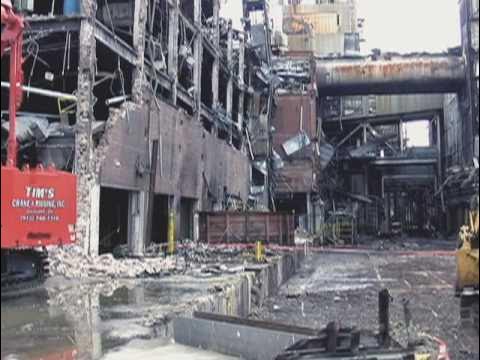
Imperial Sugar's failure to install dust collection on a newly enclosed conveyor trapped explosive airborne particles, triggering a catastrophic chain reaction of secondary explosions fueled by decades of accumulated spills.
AI-assisted summary of Inferno: Dust Explosion at Imperial Sugar — original source. Check the original for full context.
Source published:
Key ideas
- On February 7, 2008, a catastrophic series of sugar dust explosions at the Imperial Sugar refinery near Savannah, Georgia, killed 14 workers, injured dozens, and destroyed the facility's packaging buildings. (0:08)
- A 2007 stainless steel enclosure installed over an underground silo conveyor belt trapped sugar dust at explosive concentrations, which ignited from an overheated bearing and triggered violent secondary explosions throughout the complex. (3:20)
- Despite internal records dating back to the late 1950s documenting dust explosion risks, Imperial Sugar failed to rectify widespread sugar spillage and inadequate dust collection systems prior to the disaster. (5:38)
- The disaster reinforced the U.S. Chemical Safety Board's push for mandatory federal combustible dust standards based on NFPA codes, leading OSHA to announce rulemaking in April 2009. (7:57)
Detailed notes
## Background Published by the USCSB (U.S. Chemical Safety and Hazard Investigation Board) on YouTube on October 5, 2009, this safety video examines the February 7, 2008, disaster at the Imperial Sugar refinery near Savannah, Georgia. The video explains how a catastrophic series of sugar dust explosions occurred, resulting in the fatal burning of fourteen workers.
## TL;DR The video breaks down the catastrophic February 2008 industrial disaster at the Imperial Sugar refinery in Port Wentworth, Georgia, which claimed 14 lives and destroyed the facility. Investigators explain how a 2007 modification enclosing a conveyor belt without dust collection allowed sugar dust to reach explosive concentrations, igniting via an overheated bearing. The primary blast dislodged tons of accumulated sugar and overhead dust throughout the packaging complex, triggering devastating secondary explosions that buckled concrete and trapped workers in darkness. The CSB highlights decades of internal awareness and unheeded warnings, concluding with recommendations for plant redesign and an urgent call for OSHA to establish a mandatory federal combustible dust standard.
## Atmosphere & style The presentation carries the grim, authoritative gravity characteristic of CSB investigative documentaries, blending calm technical breakdowns with harrowing computer animations of the explosion and structural collapse. Statements from CSB Chairman John Bresland and Lead Investigator John Vorderbrueggen lend an air of sober clinical accountability, systematically exposing systemic organizational complacency. The contrast between mundane industrial operations—spilled sugar and routine conveyor clogs—and the sheer violence of the secondary fireballs creates a tense, chilling viewing experience that emphasizes the avoidable human cost of regulatory neglect.
## Bulletin - [00:08](https://www.youtube.com/watch?v=Jg7mLSG-Yws&t=8s) On February 7, 2008, a catastrophic series of sugar dust explosions at the Imperial Sugar refinery near Savannah, Georgia, killed 14 workers, injured dozens, and destroyed the facility's packaging buildings. - [03:20](https://www.youtube.com/watch?v=Jg7mLSG-Yws&t=200s) A 2007 stainless steel enclosure installed over an underground silo conveyor belt trapped sugar dust at explosive concentrations, which ignited from an overheated bearing and triggered violent secondary explosions throughout the complex. - [05:38](https://www.youtube.com/watch?v=Jg7mLSG-Yws&t=338s) Despite internal records dating back to the late 1950s documenting dust explosion risks, Imperial Sugar failed to rectify widespread sugar spillage and inadequate dust collection systems prior to the disaster. - [07:57](https://www.youtube.com/watch?v=Jg7mLSG-Yws&t=477s) The disaster reinforced the U.S. Chemical Safety Board's push for mandatory federal combustible dust standards based on NFPA codes, leading OSHA to announce rulemaking in April 2009.
## Key takeaways - [00:08](https://www.youtube.com/watch?v=Jg7mLSG-Yws&t=8s) The Imperial Sugar refinery explosion in Port Wentworth, Georgia, was the deadliest industrial dust explosion in the United States in decades, resulting in 14 deaths and dozens of severe injuries. - [00:08](https://www.youtube.com/watch?v=Jg7mLSG-Yws&t=8s) The disaster's scale was driven by secondary dust explosions that lofted decades of settled overhead dust and spilled sugar into an advancing firestorm across multiple buildings. - [01:32](https://www.youtube.com/watch?v=Jg7mLSG-Yws&t=92s) Spilled granulated sugar routinely accumulated inches deep across processing areas, while milling machines operated with undersized, poorly maintained dust collectors lacking ductwork to conveyors. - [01:32](https://www.youtube.com/watch?v=Jg7mLSG-Yws&t=92s) Standard plant housekeeping compounded hazards by using compressed air to blow sugar off packaging machinery, dispersing fine particles onto elevated beams, ductwork, and light fixtures. - [03:20](https://www.youtube.com/watch?v=Jg7mLSG-Yws&t=200s) A 2007 equipment modification enclosing the silo conveyor belt in stainless steel panels to prevent food contamination inadvertently trapped airborne dust in an unventilated space, allowing it to reach explosive concentrations. - [03:20](https://www.youtube.com/watch?v=Jg7mLSG-Yws&t=200s) A chute clog caused rapid sugar accumulation inside the sealed enclosure, where airborne dust encountered an ignition source likely caused by an overheated conveyor bearing. - [03:20](https://www.youtube.com/watch?v=Jg7mLSG-Yws&t=200s) Worker evacuation was severely compromised because the facility had never held emergency drills, and the primary explosion severed lighting circuits, leaving workers trapped in dark, smoke-filled stairwells. - [05:38](https://www.youtube.com/watch?v=Jg7mLSG-Yws&t=338s) Imperial Sugar management had documented awareness of combustible dust hazards dating back to the 1950s, including a 1961 explosion that caused structural damage to the powdered sugar mill room. - [05:38](https://www.youtube.com/watch?v=Jg7mLSG-Yws&t=338s) Decades of minor localized fires fostered management complacency, obscuring the catastrophic risk of a propagating, facility-wide explosion. - [05:38](https://www.youtube.com/watch?v=Jg7mLSG-Yws&t=338s) Plant leadership learned of OSHA's Combustible Dust National Emphasis Program four months before the disaster, but an internal audit weeks before the blast confirmed tons of sugar remained spilled on floors. - [05:38](https://www.youtube.com/watch?v=Jg7mLSG-Yws&t=338s) The CSB issued formal recommendations directing Imperial Sugar to rebuild the refinery to NFPA standards, implement strict dust management protocols, and establish regular evacuation drills. - [07:57](https://www.youtube.com/watch?v=Jg7mLSG-Yws&t=477s) Following repeated CSB recommendations and the Port Wentworth tragedy, OSHA announced formal rulemaking in April 2009 to develop a comprehensive general industry combustible dust standard.
## Detailed walkthrough ### [00:08](https://www.youtube.com/watch?v=Jg7mLSG-Yws&t=8s) The Disaster at Port Wentworth
On the evening of February 7, 2008, at 7:15 p.m., a violent series of sugar dust explosions tore through the Imperial Sugar Refinery in Port Wentworth, Georgia, situated just outside Savannah. Fueled by heavy accumulations of combustible sugar dust and sugar that had spilled from packaging and processing machinery, fireballs ripped through the complex. The structural forces were immense: thick concrete floors heaved upward and structural brick walls collapsed directly into stairwells and personnel work areas.
```mermaid flowchart TD accTitle: Imperial Sugar Explosion Progression accDescr: Sequence of events leading from chute blockage in the conveyor enclosure to devastating secondary explosions across the facility. subgraph Primary["Primary Event (Silo Tunnel)"] A["Sugar Clump Blocks Chute"] --> B["Sugar Spills & Dust Trapped in Stainless Steel Enclosure"] B --> C["Overheated Bearing Ignites Airborne Dust"] C --> D["Primary Explosion Rips Enclosure Apart"] end subgraph Secondary["Secondary Explosions (Packing Buildings)"] D --> E["Vents into Packing Buildings"] E --> F["Lofts Decades of Spilled Sugar & Settled Dust"] F --> G["Chain Reaction of Secondary Explosions"] G --> H["Concrete Buckles & Traps Workers in Darkened Inferno"] end ```
The collapsing walls and structural debris severely compromised escape pathways, leaving workers trapped as fires spread swiftly through the shattered complex. Eight plant employees were killed immediately on site, and six more succumbed later to extensive burns while being treated at a regional burn center. Dozens of additional employees suffered serious injuries, and the massive packing buildings of the historic facility were completely destroyed.
CSB Chairman John Bresland underscored the historic and deadly magnitude of the disaster: “The accident at Imperial Sugar was the deadliest industrial dust explosion in the United States in decades.” He emphasized that the incident starkly illustrates the severe hazards posed by combustible industrial dusts. CSB Lead Investigator John Vorderbrueggen echoed this assessment regarding the operational state of the refinery, stating, “There were significant accumulations of sugar dust and spilled granulated sugar on surfaces throughout this facility. Conditions were set for a catastrophic accident.”
- Eight workers perished at the facility during the initial blast and collapse. - Six workers died from their wounds later at a regional burn center. - Dozens of workers sustained injuries; the sprawling sugar packing buildings were declared a total loss.
---
[01:32](https://www.youtube.com/watch?v=Jg7mLSG-Yws&t=92s) Plant Operations and Uncontrolled Dust Accumulation
First opened in 1917, the sprawling Port Wentworth facility expanded over nearly a century into one of the largest sugar refining and packaging operations in the United States. Granulated sugar produced in the refinery was stored in three 100-foot-tall silos before being transferred to the packing buildings for retail and commercial distribution. The plant also milled granulated sugar into specialty varieties, including brown sugar and powdered sugar, routing product across the site via an intricate transportation network of bucket elevators, screw conveyors, and conveyor belts.
Throughout these transport and packaging processes, product constantly spilled from the equipment onto the workroom floors. In several locations, the piles of loose sugar sat many inches deep. This spilled material contained fine particles that drifted into the air. When crushing machines such as hammer mills pulverized granulated sugar into fine powdered sugar, even greater volumes of dust were generated. Although these machines were fitted to a dust collection system, the system was severely undersized, poorly maintained, and lacked any duct connections to the bucket elevators and transfer conveyors. Consequently, vast clouds of sugar dust escaped unchecked into the operational workspace.
Plant housekeeping procedures only aggravated the problem. Packaging workers routinely relied on compressed air to blow accumulated sugar off their packaging equipment, dispersing fine dust particles into the air. Over years of operation, dense dust settled onto elevated, inaccessible overhead structural surfaces, including air ducts, building beams, and lighting fixtures. Facility cleaning schedules were far too infrequent to keep the accumulated dust layers below recognized hazardous thresholds.
---
[03:20](https://www.youtube.com/watch?v=Jg7mLSG-Yws&t=200s) The Enclosure Modification and the Fatal Chain Reaction
Below the massive sugar silos ran an underground tunnel where granulated sugar poured from silo discharge chutes onto an expansive steel conveyor belt. Clumps of hardened sugar frequently plugged the discharge chutes, obstructing the continuous flow, spilling material onto the tunnel floor, and dispersing dust into the atmosphere. Because the tunnel was vast and well ventilated, this liberated airborne dust historically stayed dispersed below the minimum explosive concentration.
In 2007, Imperial Sugar enclosed the long conveyor belt inside stainless steel panels to guard against foreign matter contaminating the food product. However, the company failed to install a dust collection or exhaust system on the new enclosure. As a result, any sugar dust freed from the belt or chutes remained entirely trapped within the tight steel housing. On February 7, 2008, lumps of sugar clogged one of the chute discharge points, causing sugar from the adjacent silo to tumble off the moving conveyor belt and accumulate rapidly. Within the sealed space, suspended dust reached an explosive concentration.
At approximately 7:15 p.m., the concentrated sugar dust encountered an ignition source—likely an overheated conveyor bearing—and ignited. The initial blast blew the stainless steel housing apart and vented pressure straight into the packaging structures above. This primary blast lofted tons of spilled granulated sugar and settled overhead dust into dense airborne clouds. Advancing fireballs ignited the airborne fuel, triggering a violent chain reaction of secondary explosions that ripped across multiple floors. The force buckled thick concrete slabs, dumping further tons of bulk granulated and powdered sugar directly into the expanding firestorm. Emergency evacuation drills had never been carried out, and the initial explosions severed the main electrical lines powering the interior lights, plunging workers into pitch-black, smoke-filled mazes of ruined stairwells and blocked corridors.
---
[05:38](https://www.youtube.com/watch?v=Jg7mLSG-Yws&t=338s) Historical Precedent, Warning Signs, and Industry Standards
Subsequent CSB investigations revealed that Port Wentworth plant management had been aware of sugar dust explosion risks for decades. Corporate internal records and correspondence dating back to the late 1950s explicitly discussed dust accumulation hazards and explosive properties; a 1961 facility memorandum described a dust explosion that had caused heavy structural damage to the powdered sugar mill room. Commenting on the plant's history of inaction, Vorderbrueggen remarked, “Despite the longstanding awareness of the explosive nature of sugar dust, not enough was done to manage the hazard.”
In 2006, two years prior to the disaster, the CSB had issued a nationwide combustible dust safety study urging the Occupational Safety and Health Administration (OSHA) to establish a comprehensive federal combustible dust standard modeled on National Fire Protection Association (NFPA) consensus codes. In October 2007, OSHA instituted a National Emphasis Program to elevate enforcement of existing rules. Vorderbrueggen observed: “Imperial Sugar learned of the OSHA Combustible Dust National Emphasis Program four months before the devastating explosion at Port Wentworth. But management did not act effectively to control the serious dust problem in the packing buildings.” Less than two months before the Port Wentworth explosion, an internal facility audit confirmed that multiple tons of sugar were still routinely spilling across the floors.
Because decades of small localized fires fed by dust and spilled sugar had never produced a propagating, facility-wide explosion, plant management was lulled into complacency. Following its investigation, the CSB delivered explicit safety recommendations to the Imperial Sugar Company: - Design, rebuild, and operate the replacement Port Wentworth facility in strict compliance with NFPA standards. - Formulate and put into practice comprehensive combustible dust management programs, housekeeping protocols, and worker training. - Revise, modernize, and regularly drill emergency evacuation policies and procedures.
---
[07:57](https://www.youtube.com/watch?v=Jg7mLSG-Yws&t=477s) National Regulatory Reforms
Beyond the site-specific findings, the disaster renewed urgent calls for mandatory regulatory action across all manufacturing sectors. CSB Chairman Bresland pointed out that facility owners already have access to the necessary safety guidance: “Companies can go a long way to control combustible dust within their own facilities by following the existing recommendations of the National Fire Protection Association. But it is also time for a comprehensive federal standard on combustible dust.”
In April 2009, OSHA formally announced its intent to initiate rulemaking on a general industry combustible dust standard. In its comprehensive final investigation report, the CSB urged OSHA to proceed through the rulemaking process expeditiously to establish permanent federal safeguards. Emphasizing the continuous danger facing industrial workforces across the nation, Bresland concluded: “Without regulation, enforcement and education, workers will continue to be at risk from catastrophic dust explosions.”
## Notable quotes > [07:57](https://www.youtube.com/watch?v=Jg7mLSG-Yws&t=477s) Without regulation, enforcement and education, workers will continue to be at risk from catastrophic dust explosions. — John Bresland
> [07:57](https://www.youtube.com/watch?v=Jg7mLSG-Yws&t=477s) Companies can go a long way to control combustible dust within their own facilities by following the existing recommendations of the National Fire Protection Association. But it is also time for a comprehensive federal standard on combustible dust. — John Bresland
> [05:38](https://www.youtube.com/watch?v=Jg7mLSG-Yws&t=338s) Despite the longstanding awareness of the explosive nature of sugar dust, not enough was done to manage the hazard. — John Vorderbrueggen
## Mentioned Imperial Sugar Refinery, Imperial Sugar Company, U.S. Chemical Safety Board (CSB), Occupational Safety and Health Administration (OSHA), National Fire Protection Association (NFPA), John Bresland, John Vorderbrueggen, Port Wentworth, Georgia, Savannah, Georgia
## Video description On February 7, 2008, fourteen workers were fatally burned in a series of sugar dust explosions at the Imperial Sugar plant near Savannah, Georgia. This CSB safety video explains how the accident occurred.
[Source](https://www.youtube.com/watch?v=Jg7mLSG-Yws)