Amiga 1200 Outruns Apple Mac in Native System 7 Benchmark Tests
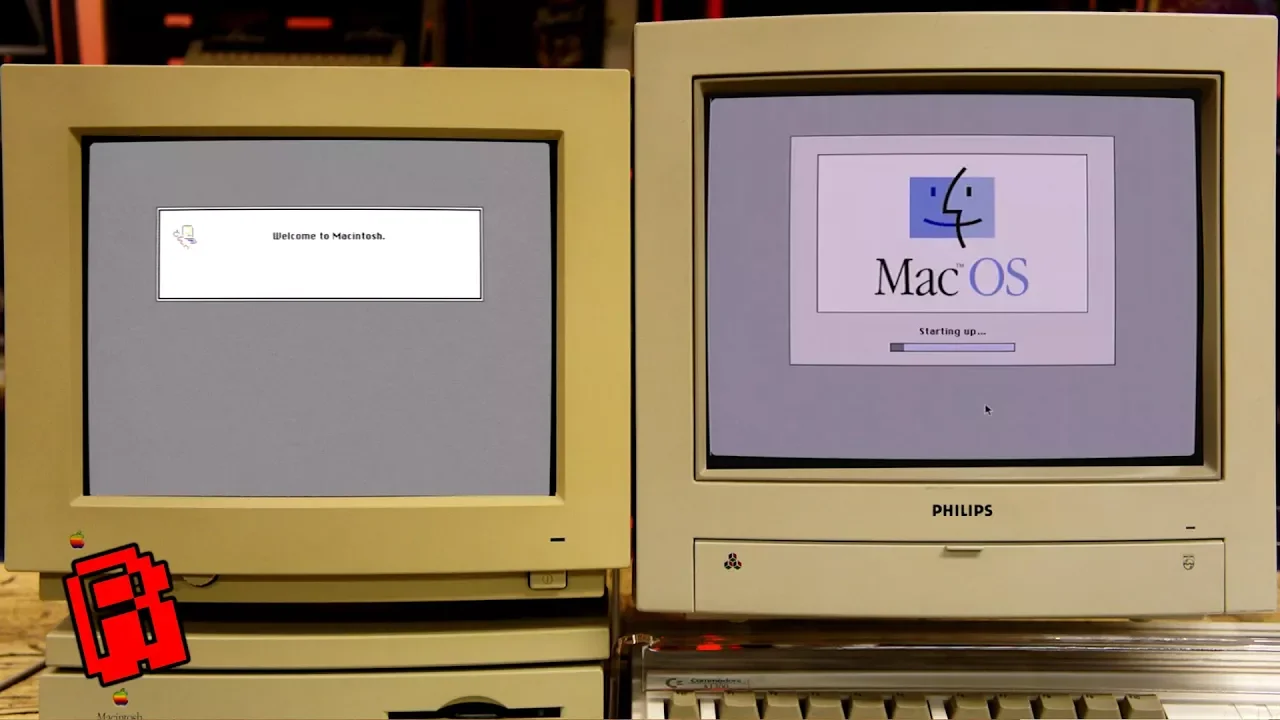
The Fastest Apple Mac is an Amiga - Fact or Fiction? — The Retro Collective

The Retro Collective

Commodore's Amiga 1200 beats Apple's Macintosh LC III across System 7 applications because shared Motorola 68000 architecture enables native virtualization without emulation overhead, though higher-tier Macs disprove claims of absolute speed supremacy.

AI-assisted summary of The Fastest Apple Mac is an Amiga - Fact or Fiction? — original source. Check the original for full context.

Source published:

Key ideas

  • Neil investigates the 1990s claim 'the fastest Apple Mac is an Amiga' by benchmarking an Amiga 1200 equipped with a 50 MHz Blizzard 1230 MK IV accelerator against a 20 MHz Macintosh LC III. (0:00)
  • Because both systems utilize Motorola 68000-family processors, ShapeShifter runs Mac System 7.5 natively as virtualization rather than software emulation, bypassing instruction translation overhead. (2:44)
  • The accelerated Amiga significantly outperformed the Macintosh LC III in synthetic Speedometer benchmarks and Adobe Illustrator vector rendering, completing two zooms before the Mac rendered an image once. (8:50)
  • Neil concludes the myth contains truth when comparing similarly priced hardware, though calling an Amiga universally 'the fastest Mac' overlooks higher-end contemporary Macs. (11:43)

Detailed notes

## Background Published on March 8, 2018, by The Retro Collective on YouTube, this video features host Neil testing a famous early-1990s computing claim inside "The Cave." According to the video description, the episode aims to perform some classic myth-busting to discover whether there was any truth behind the adage that "the fastest Apple Mac is an Amiga."

## TL;DR Host Neil pits an original Macintosh LC III against a Commodore Amiga 1200 upgraded with a 50 MHz Blizzard 1230 MK IV accelerator board to test whether an emulated Mac environment can outperform real Apple hardware. Running System 7.5 via the ShapeShifter virtualization package, the accelerated Amiga executes Motorola 68000 instructions natively, allowing it to boot faster, outpace the LC III in archive decompression, and dramatically beat it in vector rendering in Adobe Illustrator. While gaming performance in titles like Prince of Persia, SimCity 2000, and Microsoft Flight Simulator proved largely comparable, the Amiga offered the added benefit of preemptive multitasking to run background audio and productivity tasks. Neil concludes that while calling it universally the fastest Mac is hyperbolic given the higher-end Macs of the era, a comparably priced accelerated Amiga genuinely outclassed mid-range contemporary Macs at their own game.

## Atmosphere & style The presentation is warm, playful, and genuinely curious, capturing the cozy, tinkering vibe of Neil's retro computing "Cave." Styled lightly as a friendly boxing showdown between vintage rivals, the delivery balances humorous self-deprecation about poor piloting and gaming skills with genuine technical appreciation for 1990s hardware architecture. Watching it feels like hanging out with an enthusiastic hobbyist conducting hands-on empirical tests, building up to an affectionate sense of retro nostalgia as the Amiga triumphs over unexpected tasks.

## Bulletin - [00:00](https://www.youtube.com/watch?v=Jph0gxzL3UI&t=0s) Neil investigates the 1990s claim 'the fastest Apple Mac is an Amiga' by benchmarking an Amiga 1200 equipped with a 50 MHz Blizzard 1230 MK IV accelerator against a 20 MHz Macintosh LC III. - [02:44](https://www.youtube.com/watch?v=Jph0gxzL3UI&t=164s) Because both systems utilize Motorola 68000-family processors, ShapeShifter runs Mac System 7.5 natively as virtualization rather than software emulation, bypassing instruction translation overhead. - [08:50](https://www.youtube.com/watch?v=Jph0gxzL3UI&t=530s) The accelerated Amiga significantly outperformed the Macintosh LC III in synthetic Speedometer benchmarks and Adobe Illustrator vector rendering, completing two zooms before the Mac rendered an image once. - [11:43](https://www.youtube.com/watch?v=Jph0gxzL3UI&t=703s) Neil concludes the myth contains truth when comparing similarly priced hardware, though calling an Amiga universally 'the fastest Mac' overlooks higher-end contemporary Macs.

## Key takeaways - [00:00](https://www.youtube.com/watch?v=Jph0gxzL3UI&t=0s) Neil sets out to empirically test the 1990s adage 'the fastest Apple Mac is an Amiga' using period-accurate hardware. - [00:48](https://www.youtube.com/watch?v=Jph0gxzL3UI&t=48s) The test compares a 1993 Macintosh LC III (20 MHz 68030, no FPU, 32 MB RAM) against a 1992 Amiga 1200 upgraded with a 50 MHz Blizzard 1230 MK IV card and 68882 FPU. - [00:48](https://www.youtube.com/watch?v=Jph0gxzL3UI&t=48s) Factoring in the Amiga 1200's lower base price and the Blizzard accelerator card, both hardware configurations represent a comparable financial investment from the mid-1990s. - [02:44](https://www.youtube.com/watch?v=Jph0gxzL3UI&t=164s) ShapeShifter on the Amiga operates as virtualization rather than traditional emulation because both machines share Motorola 68000 instruction set architecture. - [02:44](https://www.youtube.com/watch?v=Jph0gxzL3UI&t=164s) The virtualized Mac environment on the Amiga boots faster into System 7.5 and decompresses StuffIt archives more quickly than the native Macintosh LC III. - [05:13](https://www.youtube.com/watch?v=Jph0gxzL3UI&t=313s) Classic games like Prince of Persia and SimCity 2000 perform virtually identically on both systems, matching native fluidity and audio fidelity. - [07:35](https://www.youtube.com/watch?v=Jph0gxzL3UI&t=455s) In Speedometer benchmarks, the Amiga posts an overall score of 6.5 times a baseline Quadra 605, compared to just 0.479 for the native Macintosh LC III. - [08:50](https://www.youtube.com/watch?v=Jph0gxzL3UI&t=530s) In Adobe Illustrator vector rendering, the Amiga's 50 MHz clock speed and FPU allow two consecutive zoom redraws before the LC III finishes a single pass. - [10:02](https://www.youtube.com/watch?v=Jph0gxzL3UI&t=602s) Microsoft Flight Simulator runs smoothly on both setups without crashing, serving as a demanding benchmark for hardware compatibility. - [10:02](https://www.youtube.com/watch?v=Jph0gxzL3UI&t=602s) The Amiga must expend CPU cycles performing chunky-to-planar pixel conversion in software to adapt the Mac's display format to native Amiga bitplanes. - [10:02](https://www.youtube.com/watch?v=Jph0gxzL3UI&t=602s) AmigaOS preemptive multitasking lets users instantly switch between the Mac environment and Workbench or play native audio tracks like Speedball 2 behind Mac games. - [11:43](https://www.youtube.com/watch?v=Jph0gxzL3UI&t=703s) While an accelerated Amiga could easily outperform standard baseline Macs, declaring it universally the fastest Mac remains historical hyperbole given high-end 68040 Macs.

## Detailed walkthrough ### [00:00](https://www.youtube.com/watch?v=Jph0gxzL3UI&t=0s) The Old Adage: "The Fastest Apple Mac is an Amiga"

Neil welcomes viewers to the Cave—or rather, the ring—for an impending showdown between two classic machines: an Apple Macintosh and a Commodore Amiga. They are sparring over a famous, seemingly absurd claim from the early 1990s: “the fastest Apple Mac is an Amiga.” Neil notes how silly and dated the assertion sounds on the surface, but he wants to subject it to real empirical testing in the Cave. He asks whether it is truly possible for a Commodore Amiga to defeat an Apple Macintosh at its own game, going up against a genuine contemporary Mac released during the exact same period rather than an older baseline model.

[00:48](https://www.youtube.com/watch?v=Jph0gxzL3UI&t=48s) Hardware Tale of the Tape: Macintosh LC III vs. Amiga 1200

Neil introduces the retail Apple combatant: a Macintosh LC III, commercially available from 1993 to 1994. The system is driven by a Motorola 68030 CPU clocked at 20 MHz. While the LC III offered an optional math coprocessor (FPU), this specific unit lacks one. It supports up to 36 MB of RAM and is nearly maxed out with 32 MB installed, alongside its original internal IBM 80 MB SCSI hard drive. At release, it commanded a retail price of $1,350, excluding the monitor and the extra RAM fitted to it.

The challenger in the other corner is a Commodore Amiga 1200, released in 1992. In stock trim, the Amiga is an outright minnow next to the Mac, housing a budget Motorola 68EC020 CPU running at 14 MHz—with the "EC" designation indicating a low-cost variant restricted to a 24-bit address bus—and just 2 MB of onboard RAM. It contains a period-accurate (or slightly later) 2.5-inch Conner IDE hard drive with 350 MB capacity. While the machine also houses a modern CompactFlash storage card, Neil elects to run all comparative benchmarks off the spinning Conner drive to ensure a level playing field.

The stock Amiga 1200 retailed at $600 (or £400 in the UK), leaving substantial budget room when compared to the LC III. Neil explains that back in 1995, an enthusiast would have spent the price difference on an accelerator: specifically, a Blizzard 1230 MK IV expansion board. Fortuitously, Neil happens to have that exact board in the Cave, courtesy of a donation from a viewer named Jason. The Blizzard card features a full 68030 CPU clocked at 50 MHz, an accompanying 68882 floating-point unit (FPU) also clocked at 50 MHz, and 32 MB of onboard RAM. Adding the accelerator card and additional RAM would bring the Amiga's total investment roughly in line with the retail cost of the Macintosh LC III, making the financial matchup remarkably even.

| Machine | Apple Macintosh LC III | Commodore Amiga 1200 (Upgraded) | |:--- |:--- |:--- | | **Release Period** | 1993–1994 | 1992 (Base machine) / ~1995 (Accelerator) | | **Original Price** | $1,350 (base, without monitor/RAM) | ~$600 base (£400) + Blizzard accelerator | | **CPU** | Motorola 68030 @ 20 MHz | Motorola 68030 @ 50 MHz (Blizzard 1230 MK IV) | | **FPU** | None (empty socket/unpopulated) | Motorola 68882 @ 50 MHz | | **Total RAM** | 32 MB (Max 36 MB) | 32 MB on Blizzard + 2 MB Chip RAM | | **Internal Storage** | 80 MB IBM SCSI Hard Disk | 350 MB Conner 2.5" IDE Hard Disk |

```mermaid flowchart TD accTitle: Hardware Architecture Comparison accDescr: Diagram comparing the stock Macintosh LC III hardware with the upgraded Amiga 1200 setup. subgraph AppleMac["Apple Macintosh LC III"] M_CPU["Motorola 68030 @ 20 MHz"] M_FPU["No FPU fitted"] M_RAM["32 MB RAM"] M_HDD["80 MB IBM SCSI HDD"] M_CPU --- M_RAM M_CPU --- M_HDD end

subgraph AmigaSetup["Commodore Amiga 1200 + Blizzard"] A_CPU["Motorola 68030 @ 50 MHz"] A_FPU["Motorola 68882 FPU @ 50 MHz"] A_RAM["32 MB Fast RAM on Blizzard + 2 MB Chip"] A_HDD["350 MB Conner 2.5'' IDE HDD"] A_CPU --- A_FPU A_CPU --- A_RAM A_CPU --- A_HDD end ```

[02:44](https://www.youtube.com/watch?v=Jph0gxzL3UI&t=164s) Boot-Up, Desktop Apps, and Unstuffing Archives

The Amiga runs the popular Macintosh virtualization software ShapeShifter. To accommodate AmigaOS overhead, Neil allocates 24 MB of Fast RAM directly to the virtual Macintosh environment, giving the native 32 MB Mac LC III a slight on-paper memory lead. Both systems are configured with clean installations of System 7.5, stripped of extraneous third-party system extensions to maintain parity.

From the first side-by-side boot test, the Amiga produces a startling result: the emulated Mac completes its boot cycle significantly faster than the actual hardware. Neil clarifies that visual screen artifacting on the Amiga side stems purely from his video capture setup rather than the machine's actual display output, quipping: “Welcome to the party, Mac.”

Basic productivity and utility accessories—such as the Calculator and the Jigsaw puzzle (which Neil characterizes as the Mac's equivalent to *Minesweeper*)—run identically on both platforms without taxing either CPU. To put the processors under real stress, Neil turns to decompressing an archive file via StuffIt. Decompressing heavily packed data relies purely on CPU calculation speeds. The Amiga outpaces the native Mac noticeably, proving that ShapeShifter fully harnesses the 50 MHz clock speed of the Blizzard board despite host operating system overheads.

Neil explains that “emulation” is technically a misnomer in this context. Because both the Mac LC III and the accelerated Amiga utilize Motorola 68000-family CPUs sharing identical instruction sets, no dynamic translation or instruction interpretation is required. The code executes natively on the Blizzard's 68030 processor: “It's more virtualized than emulated long before VMware, Hyper-V, VirtualBox, and all those other modern-day virtualization technologies.”

[05:13](https://www.youtube.com/watch?v=Jph0gxzL3UI&t=313s) Gaming Showdowns: Prince of Persia and SimCity 2000

The file decompressed in the archive test is the classic cinematic platformer *Prince of Persia*. When launched on both setups, the game runs smoothly with identical pacing, fluid character animations, and crisp, unstuttering audio. Neil finds himself unable to separate the two machines in real-world gameplay feel. While matching native performance inside a virtualized environment is an impressive architectural achievement, Neil notes it represents a tie rather than an outright win for the Amiga. On the comedic side, Neil observes that his lackluster gaming skills led to equally clumsy deaths across both systems, joking that the death animation on the LC III appeared slightly more painful.

Raising the computational difficulty, Neil loads Maxis's *SimCity 2000*. The title runs acceptably on both machines, though it exhibits sluggishness on both when scrolling across the landscape, giving the Amiga a slight edge in raw navigation speed. Neil tests small custom-built towns as well as an established metropolis named "Happy Guy." To challenge the hardware further, he triggers an alien monster disaster that tramples across Happy Guy. The alien ravages the city at a universally low framerate across both machines, proving again that complex simulation calculations feel functionally identical on both platforms.

[07:35](https://www.youtube.com/watch?v=Jph0gxzL3UI&t=455s) Speedometer Synthetic Benchmarks

To obtain hard numerical data, Neil fires up the classic Macintosh benchmarking utility Speedometer, which tests subsystem throughput against a standardized baseline machine: a Macintosh Quadra 605 (a 68LC040 system produced from 1993 to 1996).

On the Amiga running ShapeShifter, the software fails to complete the video subsystem tests because the emulation environment is locked into a fixed 256-color resolution unless reconfigured prior to booting. Despite skipping the graphic tests, the Amiga posts an overall score of 6.5—meaning it ran calculations 6.5 times faster than the reference Quadra 605, provided the virtualized environment did not skew the timing routines.

The physical Macintosh LC III, in stark contrast, posts an overall score of just 0.479. Neil checks Speedometer's internal database for saved historical scores of an LC III with an optional FPU fitted: even against an FPU-equipped LC III, the Blizzard-accelerated Amiga delivers substantial performance leads, proving that raw CPU clock speed and an onboard FPU heavily tilt synthetic number-crunching in the Amiga's favor.

- **Speedometer Overall Benchmark Score:** - **Amiga 1200 (Blizzard 1230 @ 50 MHz):** 6.5× Quadra 605 speed (video test skipped) - **Macintosh LC III (Stock 68030 @ 20 MHz, No FPU):** 0.479× Quadra 605 speed

[08:50](https://www.youtube.com/watch?v=Jph0gxzL3UI&t=530s) Real-World Number Crunching: Adobe Illustrator

Seeking a rigorous professional workflow test, Neil turns to Adobe Illustrator. Unlike bitmapped paint applications, vector drawing programs store graphics as coordinate points and rely heavily on continuous mathematical calculations to scale lines and curves without degradation.

Simple vector objects load with minimal variance between the two machines. However, when loading a complex illustration of an electric power drill, the Amiga's 50 MHz clock speed and 68882 math coprocessor completely outclass the Mac. The Amiga renders the intricate drill vector far ahead of the LC III. Neil is able to zoom in twice consecutively—requiring two complete mathematical screen refreshes on the Amiga—before the native Macintosh LC III finishes rendering the drill graphic a single time. Neil reflects on the triumph: “I never expected to see Illustrator on an Amiga, let alone see it beat the competition at running it.”

[10:02](https://www.youtube.com/watch?v=Jph0gxzL3UI&t=602s) Flight Simulator, Screen Architectures, and Amiga Multitasking

Neil pushes the systems with what he considers the ultimate compatibility litmus test: Microsoft Flight Simulator. He draws a historical parallel to the early days of IBM PC clones, when proving absolute hardware compatibility required running Microsoft Flight Simulator due to its demanding, low-level reliance on system hardware and processor cycles. Both the real Mac and the emulated setup run the simulation smoothly without crashing, though both suffer from mediocre framerates—compounded, Neil laughs, by his mediocre piloting skills, resulting in a rough touchdown on the Amiga and a catastrophic crash landing on the Mac.

Neil dives into an important architectural handicap the Amiga must overcome during these tests. Macintosh systems output their visual displays using a "chunky" pixel memory model, whereas native Amiga graphics hardware operates on a "planar" (bitplane) architecture. Because of this fundamental difference, a portion of the Blizzard accelerator's 50 MHz processing power must be burned purely on software-based chunky-to-planar pixel conversion so the Amiga can draw Mac screens. Neil notes that Commodore's CD32 console solved this exact problem in silicon using the custom Akiko chip, and he wonders how much faster the Amiga would run if dedicated chunky-to-planar hardware were present to offload the CPU.

Finally, Neil highlights the structural design advantage of AmigaOS: its native, preemptive multitasking core. Because the Mac OS of this era used cooperative multitasking, the physical LC III is trapped within whatever foreground task it runs. On the Amiga, ShapeShifter is simply one task among many. With a single keypress, Neil instantly toggles away from the running Macintosh environment back to the Amiga Workbench desktop to draft a document, then toggles straight back into the Mac simulation without missing a beat. He closes the comparison by showing how users can bypass a game's native soundtrack entirely—demonstrating Prince of Persia running inside the Mac environment while AmigaOS plays the iconic music of *Speedball 2* seamlessly in the background.

[11:43](https://www.youtube.com/watch?v=Jph0gxzL3UI&t=703s) Multitasking Audio and the Final Myth-Busting Verdict

Taking advantage of the Amiga's multitasking capabilities, the experience is capped off with a clever workaround for the Mac's audio shortcomings: firing up a track on the Amiga desktop and dropping right back into the Mac emulation environment. Running the classic *Speedball 2* soundtrack natively on the Amiga side while playing immediately elevates the Mac game, prompting the host to question whether this seamless multitasking trick represents the ultimate knockout blow delivered by the machine.

Reflecting on the benchmark and gaming tests, the host admits that he never expected an Amiga to run at parity with an authentic Apple Macintosh of the era, assuming that the inherent overhead of emulation would inevitably handicap the Commodore hardware. Instead, the testing revealed a remarkably different reality. Because both platforms shared the Motorola 68000 family architecture, ShapeShifter avoided instruction-level CPU emulation, allowing the Amiga to execute code natively. As the host summarizes: “A story that proved that with the similarities in the architecture, the Amiga could not only match, but outperform the Apple Mac.”

When it comes to the legendary claim that gave the video its title, however, the verdict requires some perspective. The host acknowledges the hyperbole of the original myth, noting: “The fastest Mac was an Amiga — well, that's pushing it; there were faster Macs, and there were faster Amigas around at the time.” Exactly which platform took the crown at any given tier is open to debate, prompting the host to invite viewers to share their own historical experiences—specifically with period-correct upgrades like Blizzard accelerator cards or an Amiga 4000 rather than modern FPGA solutions like the Vampire. Concluding his look at his DIY "Amiga Hackintosh," he encourages others to try the setup using the links provided in the video notes, thanking his patrons and welcoming new viewers to become official Cave Dwellers.

- **Multitasking Advantage**: The Amiga could run its own native software—such as a tracker module player outputting Paula sound—simultaneously in the background behind the active Mac emulation screen. - **Architectural Parity**: Rather than interpreting or recompiling code, the shared Motorola 680x0 instruction set allowed the Amiga to run Mac system software with near-native efficiency. - **Verdict on the Myth**: While an accelerated Amiga could easily outrun standard baseline Macs of the same generation, calling it universally "the fastest Mac" stretches the truth given the wide range of high-end Mac and Amiga hardware available in the mid-1990s. - **Community Call to Action**: The host specifically seeks insights from users who ran ShapeShifter as a daily driver back in the day on high-end period hardware rather than modern FPGA accelerators.

## Notable quotes > [11:43](https://www.youtube.com/watch?v=Jph0gxzL3UI&t=703s) The fastest Mac was an Amiga — well, that's pushing it; there were faster Macs, and there were faster Amigas around at the time. — Neil

## Mentioned Neil, Jason, Cammy, Geoff Driver, Apple, Macintosh LC III, Macintosh Quadra 605, System 7.5, Commodore, Amiga 1200, Amiga 4000, Amiga CD32, AmigaOS, Workbench, Akiko chip, Paula, Motorola 68030, Motorola 68EC020, Motorola 68882, Motorola 68LC040, Blizzard 1230 MK IV, ShapeShifter, MuEVD, MuFastZero, StuffIt, Speedometer, Adobe Illustrator, Prince of Persia, SimCity 2000, Microsoft Flight Simulator, Speedball 2, Vampire, IBM, Conner, VMware, Hyper-V, VirtualBox

## Video description ● Support RMC on Patreon: https://www.patreon.com/RMCRetro ● Treat me to a Coffee with Ko-Fi: https://ko-fi.com/rmcretro

● MonsterJoysticks: https://monsterjoysticks.com/RMC ● 1ClickPrint: https://www.1clickprint.com#RMC

Support the Cave by becoming an Official Cave Dweller at Patreon ● Patreon: https://www.patreon.com/RMCRetro

● Links ShapeShifter http://aminet.net/package/misc/emu/ShapeShifter MuEVD http://aminet.net/package/misc/emu/MuEVD

MuFastZero http://aminet.net/package/util/boot/MuFastZero

Mac Starter Hard Disk File http://www.retrothing.com/2008/06/mini-vmac-vinta.html

Further Assistance from Cammy at Amiga.Org http://www.amiga.org/forums/showpost.php?p=609490&postcount=5

● Description "The fastest Apple Mac is an Amiga". Really? It's time for some myth busting in the cave to see if there was any truth in this claim.

● Music Geoff Driver - https://soundcloud.com/geoffdriver With Kind Permission Speedball 2 - Amiga Game Music

[Source](https://www.youtube.com/watch?v=Jph0gxzL3UI)

中文简报

Amiga 1200在原生System 7基准测试中跑赢苹果Mac 准系统Commodore Amiga 1200在System 7应用中击败了苹果Macintosh LC III,因为共享的摩托罗拉68000架构实现了无需模拟开销的原生虚拟化,尽管更高规格的Mac推翻了其绝对速度至上的说法。 主持人Neil将一台原装Macintosh LC III与一台升级了50 MHz Blizzard 1230 MK IV加速卡的Commodore Amiga 1200进行对比,以测试虚拟Mac环境是否能超越真正的苹果硬件。通过ShapeShifter虚拟化软件包运行System 7.5,这台加速后的Amiga可以原生执行摩托罗拉68000指令,从而使其启动更快,在归档解压方面超越LC III,并在Adobe Illustrator的矢量渲染中大幅领先。尽管在《波斯王子》、《模拟城市2000》和《微软模拟飞行》等游戏中的性能基本相当,但Amiga还具备抢占式多任务处理的额外优势,可运行后台音频和生产力任务。Neil总结道,考虑到当时的高端Mac,称其普遍为最快的Mac有些夸大其词,但在同等价格下,加速版Amiga确实在其专属领域全面超越了同期的中端Mac。 Neil对20世纪90年代“最快的苹果Mac是Amiga”这一说法展开调查,通过基准测试对比了配备50 MHz Blizzard 1230 MK IV加速卡的Amiga 1200与20 MHz的Macintosh LC III。 (0:00) 由于两个系统均采用摩托罗拉68000系列处理器,ShapeShifter以虚拟化而非软件模拟的形式原生运行Mac System 7.5,省去了指令转换的开销。 (2:44) 加速版Amiga在Speedometer综合基准测试和Adobe Illustrator矢量渲染中显著超越了Macintosh LC III,在Mac仅渲染完一次图像的时间里完成了两次缩放。 (8:50) Neil总结道,在对比价格相近的硬件时该传言确有事实依据,但若笼统地称Amiga为“最快的Mac”,则忽视了同时代的高端Mac机型。 (11:43)

Detailed notes — zh

## Background 该内容由 YouTube 频道 The Retro Collective 于 2018 年 3 月 8 日发布。视频简介指出,本期节目旨在针对 20 世纪 90 年代流传的“最快的苹果 Mac 是一台 Amiga”这一传闻,在工作室“洞穴”(The Cave)中展开一场流言终结式的实机对比评测。 ## TL;DR 节目搭建了同价位级别的硬件测试台,将 1993 年搭载 20MHz 68030 处理器的 Apple Macintosh LC III 与加装了 50MHz 68030 Blizzard 加速卡的 Commodore Amiga 1200 进行正面对决。Amiga 利用 ShapeShifter 软件虚拟运行 System 7.5 系统,由于双方同属 Motorola 68000 架构而无需耗费算力进行指令翻译,Amiga 在开机启动、文件解压缩以及 Adobe Illustrator 复杂矢量渲染等基准与生产力测试中大幅领先,并在多任务切换和音频播放上展现出独特优势。最终主持人客观指出,虽然“最快 Mac 是 Amiga”的说法因两边当年都有更顶级的硬件而略有夸大,但测试充分打破了虚拟化性能必然孱弱的刻板印象,证明其确实能在特定场景下实现性能反超。 ## Atmosphere & style 整个视频充满着硬核复古科技爱好者的探索乐趣与极客幽默,主持人把工作室比作拳击擂台,解说亲切自然且妙趣横生。从目睹 Amiga 启动速度秒杀实机时的惊喜,到两台机器运行游戏操作失误时的自我调侃,再到 Illustrator 渲染碾压对手时的由衷惊叹,情绪层层递进。观众不仅能感受到对 90 年代经典计算架构的怀旧敬意,还能体会到亲自动手折腾“Amiga Hackintosh”并见证奇迹的纯粹兴奋感。 ## Bulletin - [00:00](https://www.youtube.com/watch?v=Jph0gxzL3UI&t=0s) 通过加装 Blizzard 1230-IV 加速卡(50MHz 68030 及 FPU),Commodore Amiga 1200 在总成本相当的情况下,在 ShapeShifter 环境下运行 Mac 系统的速度显著超越同期的 Apple Macintosh LC III。 - [02:44](https://www.youtube.com/watch?v=Jph0gxzL3UI&t=164s) ShapeShifter 模拟器的高性能归功于硬件级虚拟化原理:两台机器共享 Motorola 68030 指令集架构,CPU 指令无需额外翻译即可原生执行。 - [07:35](https://www.youtube.com/watch?v=Jph0gxzL3UI&t=455s) 在经典基准测试 Speedometer 中,搭配加速卡的 Amiga 1200 获得了 6.5 的高分,大幅领先正统实机 Macintosh LC III 的 0.479 分。 - [07:35](https://www.youtube.com/watch?v=Jph0gxzL3UI&t=455s) 在生产力测试中,得益于 50MHz FPU 浮点算力,Amiga 在 Adobe Illustrator 复杂矢量图的渲染和缩放速度上对 LC III 形成了压倒性优势。 - [10:02](https://www.youtube.com/watch?v=Jph0gxzL3UI&t=602s) Amiga 独有的抢占式多任务系统允许用户在全屏 Mac 虚拟机与原生 Workbench 桌面之间瞬间无缝切换,甚至可实现后台音频播放,远超经典的 Mac System 7。 ## Key takeaways - [00:00](https://www.youtube.com/watch?v=Jph0gxzL3UI&t=0s) 本次实测旨在验证 20 世纪 90 年代初的知名传言——“最快的苹果 Mac 是一台 Amiga”。 - [00:00](https://www.youtube.com/watch?v=Jph0gxzL3UI&t=0s) 测试对照组选用了 1993 年发布、配备 20MHz 68030 处理器且未装配 FPU 的 Apple Macintosh LC III。 - [00:00](https://www.youtube.com/watch?v=Jph0gxzL3UI&t=0s) 实验组为加装了 Blizzard 1230-IV 加速卡(50MHz 68030、50MHz 68882 FPU、32MB RAM)的 Amiga 1200,整机预算与当年的 LC III 大体相当。 - [02:44](https://www.youtube.com/watch?v=Jph0gxzL3UI&t=164s) ShapeShifter 之所以运行迅捷,是因为两端均采用 Motorola 68k 处理器,其机制接近现代虚拟化,免去了传统指令集转译的巨大开销。 - [04:19](https://www.youtube.com/watch?v=Jph0gxzL3UI&t=259s) 在 StuffIt 压缩包解密和解包等密集数学运算场景下,Amiga 凭借 50MHz 的主频优势呈现出显著更快的处理速度。 - [04:19](https://www.youtube.com/watch?v=Jph0gxzL3UI&t=259s) 在运行《波斯王子》和《模拟城市 2000》等经典游戏时,两台设备均能保持极佳流畅度,Amiga 能够完全无损还原原生 Mac 游戏体验。 - [07:35](https://www.youtube.com/watch?v=Jph0gxzL3UI&t=455s) 在 Speedometer 综合跑分中,Amiga 跑出 6.5 分,相比参考机 Quadra 605(1.0 分)以及 LC III(0.479 分)呈现出断层式领先。 - [07:35](https://www.youtube.com/watch?v=Jph0gxzL3UI&t=455s) 面对 Adobe Illustrator 中高复杂度的电钻矢量图,Amiga 凭借 50MHz FPU 的算力瞬间完成渲染与多次局部重绘,而 LC III 尚未加载完初次全图。 - [10:02](https://www.youtube.com/watch?v=Jph0gxzL3UI&t=602s) 微软模拟飞行测试暴露了底层显存机制的差异:Amiga 采用位平面(Bitplanes)设计,必须占用相当一部分 CPU 算力进行实时像素阵列转换(Chunky-to-Planar)。 - [10:02](https://www.youtube.com/watch?v=Jph0gxzL3UI&t=602s) Amiga 凭借成熟的抢占式多任务系统,支持一键在虚拟 Mac 与原生系统之间切换,并可在后台调用 Amiga 芯片播放音乐,提供了显著优于 System 7 的系统体验。 - [11:43](https://www.youtube.com/watch?v=Jph0gxzL3UI&t=703s) 测试证实“最快 Mac 是一台 Amiga”的说法并非空穴来风,但在极限硬件领域两家均有更高阶机型,绝对称霸的定论略有夸大,但确实彻底粉碎了“模拟必然孱弱”的刻板印象。 - [12:33](https://www.youtube.com/watch?v=Jph0gxzL3UI&t=753s) 该评测结论严格基于 90 年代同期的真实复古硬件环境(如 Blizzard 加速卡),排除了现代 FPGA 等第三方外挂方案的干扰。 ## Detailed walkthrough ### [00:00](https://www.youtube.com/watch?v=Jph0gxzL3UI&t=0s) 洞穴对决:最快的苹果电脑是 Amiga? 主持人欢迎大家来到洞穴(The Cave),并笑称这里变成了拳击台,因为两台复古设备即将展开一场正面对决:一侧是 Apple Macintosh,另一侧是 Commodore Amiga。它们争夺的焦点是一句在 20 世纪 90 年代初流传甚广的老话:“最快的苹果 Mac 是一台 Amiga”(The fastest Apple Mac is an Amiga)。 主持人承认,这个说法听起来有些荒谬且早已过时,但他想亲手验证:一台 Commodore Amiga 真的有可能在 Apple 自己的主场上击败一台正统 Mac 吗?而且对比的对象并非远古老机,而是与其同时代发布的当代 Mac。为了揭开真相,主持人在工作室中搭起了测试台。 ```mermaid flowchart LR accTitle: 硬件配置对比流程 accDescr: 对比 Apple Macintosh LC III 与 Commodore Amiga 1200 在硬件规格及扩展上的异同 subgraph MacSide["Apple Macintosh LC III (1993)"] M1["CPU: 68030 @ 20MHz"] M2["FPU: 无"] M3["RAM: 32MB"] M4["存储: 80MB SCSI HDD"] end subgraph AmigaSide["Amiga 1200 + Blizzard 1230 IV"] A1["CPU: 68030 @ 50MHz"] A2["FPU: 68882 @ 50MHz"] A3["RAM: 32MB (24MB 分配给 Mac)"] A4["存储: 350MB IDE HDD"] end MacSide <-->|"模拟对比测试"| AmigaSide ``` - **Apple Macintosh LC III**:1993 至 1994 年销售,搭载主频 20MHz 的 Motorola 68030 处理器,未选配数学协处理器(FPU)。内存上限 36MB,本台机器配备了接近封顶的 32MB 内存,存储采用原装 80MB IBM SCSI 硬盘。当时售价 1,350 美元(不含显示器与追加内存)。 - **Commodore Amiga 1200**:1992 年发售,原装配备 14MHz 的 68EC020(24位地址总线的低成本版本)和 2MB 内存,官方售价 600 美元(英国为 400 英镑)。机身虽有 CompactFlash 硬盘,但为确保公平测试,换装了一块时代相仿的 350MB Conner 2.5 英寸 IDE 机械硬盘。 - **加速卡配置**:Amiga 加装了由观众 Jason 上月赞助的 Blizzard 1230-IV 加速卡,板载主频 50MHz 的 68030 CPU、50MHz 的 68882 浮点运算单元(FPU)以及 32MB 内存。算上加速卡与内存的费用后,整机成本与当年的 LC III 相当,Amiga 并没有明显的预算占优。 --- ### [02:44](https://www.youtube.com/watch?v=Jph0gxzL3UI&t=164s) ShapeShifter 虚拟化开机与系统级体验 Amiga 运行名为 ShapeShifter 的软件来运行 Macintosh 系统。扣除 AmigaOS 本身开销后,主持人为虚拟 Mac 分配了 24MB 内存,这意味着实体 Mac 在内存容量上保有一定优势。两者均运行 System 7.5 操作系统,并拔除了所有可能拖慢速度的系统扩展(Extensions)。 第一项测试是开机启动速度。让主持人震惊的是,通过 ShapeShifter 启动的虚拟 Mac 展现出压倒性优势,加载速度远快于实体 LC III。主持人打趣地对缓缓进入桌面的 LC III 说:“欢迎加入派对,Mac”(Welcome to the party, Mac)。 在桌面工具对比中,无论是简单的 Calculator(计算器)还是 Mac 当年的标志性小游戏 Jigsaw(拼图,地位堪比 Windows 的扫雷),两者的响应均极其顺畅。在解释为什么模拟器能如此飞快时,主持人指出关键在于底层架构: > “模拟这个词在这里可能会让人产生误解;我们确实在模拟另一套系统,但模拟中负荷最重的一环——CPU,根本不需要翻译指令。也就是说,两台机器的心脏都是 Motorola 68030 CPU,指令集完全相同,因此模拟 CPU 的处理过程对比真实硬件几乎没有任何延迟。在现代的 VMware、Hyper-V、VirtualBox 等虚拟化技术出现之前很久,它其实更接近于虚拟化,而不是传统意义上的模拟。” —— 主持人 --- ### [04:19](https://www.youtube.com/watch?v=Jph0gxzL3UI&t=259s) 压力初测:解压缩、波斯王子与模拟城市 2000 为了让 CPU 承受实质负荷,第二项测试是解包一个 StuffIt 压缩归档文件(类似解压 ZIP)。解压需要密集的数学运算,结果 Amiga 再次展现了惊人的处理速度,充分吃透了 Blizzard 50MHz 处理器的性能优势。 解开的文件正是经典游戏《波斯王子》(Prince of Persia)。在实际游玩中,两款设备的画面动画与音频都非常流畅,没有出现卡顿或掉帧。主持人坦言在游戏表现上两台机器平分秋色,无法彻底拉开差距;虽然没有夺得压倒性胜利,但 Amiga 作为一个非原生平台能够完美复刻体验,已经相当令人惊叹。主持人甚至调侃起自己糟糕的游戏操作,角色在两台机器上双双惨死,不过在 LC III 上死得“更加干脆而痛苦”。 难度随后提升至《模拟城市 2000》(SimCity 2000): - **操作响应**:在地图上平移缩放时两台设备都略有粘滞感,但 Amiga 稍占上风。 - **运行表现**:从小村庄到加载庞大繁华的示范城市“Happy Guy”,两端均能顺畅游玩。 - **极限负荷测试**:主持人召唤了一场外星人入侵,看着巨型外星怪兽缓步踏平“Happy Guy”,两台机器都在较低帧率下艰难抗压,破坏效果与运行速率基本持平。 --- ### [07:35](https://www.youtube.com/watch?v=Jph0gxzL3UI&t=455s) 基准测试与专业生产力:Illustrator 的碾压性优势 为了用量化数据说话,主持人运行了当年经典的综合跑分软件 Speedometer(以 1993 年发布的 Macintosh Quadra 605 作为基准 1.0): | 测试平台 / 机型 | Speedometer 跑分 | 硬件说明 | |:--- |:--- |:--- | | **Macintosh Quadra 605** | 1.0(参考标准) | 68LC040 @ 25MHz | | **Amiga 1200 + Blizzard 1230-IV** | 6.5 | 68030 @ 50MHz + FPU(图形测试因 256 色模式锁定而未跑) | | **实机 Macintosh LC III** | 0.479 | 68030 @ 20MHz(无 FPU) | | **官方记录带 FPU 的 LC III** | 显著提升 | 跑分依然落后于配备 50MHz FPU 的 Amiga | 接下来是专业矢量设计软件 Adobe Illustrator 的生产力实测。矢量图不同于位图,需要大量数学计算来实时运算路径与锚点缩放: - **简单矢量图形**:基础界面的操作两者体验接近。 - **高复杂度工件(电钻插画)**:包含密集的点线结构,Amiga 的 50MHz 处理器和 68882 FPU 优势瞬间爆发。Amiga 在极短时间内就渲染完成了图像,主持人甚至在 Amiga 上连续完成了两次局部放大和重绘刷新,而那台正统的 Macintosh LC III 此时连第一遍原始图像都还没有加载出来。 主持人对这一幕深感震撼,感叹自己此前从未奢望过能在 Amiga 上使用 Adobe Illustrator,更不用说看到它在运行速度上直接秒杀对手了。 --- ### [10:02](https://www.youtube.com/watch?v=Jph0gxzL3UI&t=602s) 终极硬核检验与抢占式多任务的降维打击 视频上半部分的最后一项压轴测试是微软模拟飞行(Microsoft Flight Simulator)。主持人回忆道,过去组装兼容机要想获得“IBM PC Compatible”认证,能够运行该软件就是硬性门槛之一,因为模拟飞行对 CPU 和全系统软硬件协同有着极高的负荷。 虽然两台机器运行时的帧率都不高,驾驶员技术同样惨不忍睹(Amiga 颠簸硬着陆,Mac 直接机毁人亡),但这场测试引出了两家硬件底层的一大差异: - **绘图原理的差异**:Amiga 采用位平面(Bitplanes)显存机制,而 Mac 采用连续像素阵列(Chunky)机制。 - **算力损耗**:Blizzard 加速卡那充沛的 50MHz 算力中,有相当一部分被用来实时进行位图模式转换。主持人指出,Amiga CD32 游戏机内置的 Akiko 芯片正是专门负责这种硬件级“Chunky-to-Planar”转换的,若这台 Amiga 具备类似硬件协处理器,图形表现还会更强。 最后,主持人展现了 Amiga 平台最无可替代的王牌——**抢占式多任务(Pre-emptive Multitasking)**: - 用户只需按下一个组合快捷键,就能瞬间从全屏模拟的 Mac 虚拟机中秒退回 Amiga Workbench 桌面,随手打字写信。 - 再按一次热键,又可无缝切回 Macintosh 继续进行游戏。 - 甚至如果你厌倦了 Mac 版《波斯王子》的原声音乐,你完全可以在 Amiga 后台打开音乐播放器,伴随着经典 Amiga 游戏《Speedball 2》的激昂旋律在 Mac 虚拟机里畅玩。这种多任务处理能力是当时 Mac 运行的经典 System 7 系统望尘莫及的。 ### [11:43](https://www.youtube.com/watch?v=Jph0gxzL3UI&t=703s) 声音加持与性能神话的终极评判 在展示多任务处理时,主持人演示了如何利用 Amiga 自身的音频优势:直接在 Amiga 桌面端启动音乐播放,随后切回模拟的 Mac 环境,伴随着激昂的《Speedball 2》游戏原声,画面的沉浸感瞬间得到了质的飞跃。面对这一表现,主持人向观众发问这是否算得上是 Amiga 的“致命一击”。他坦言,在动手测试之前,自己压根没指望过一台 Amiga 能以同时代真正 Mac 的速度运行;按照常理推测,哪怕仅仅考虑模拟器带来的额外系统开销(overhead),Amiga 的表现理应稍慢一些。然而,实际测试呈现的却是一个截然不同的结果,直接证明了两机凭借高度同源的摩托罗拉 68000 架构,Amiga 不仅能与苹果 Mac 分庭抗礼,甚至在特定场景下能反超其实际性能表现。 对于坊间盛传的“最快的苹果 Mac 其实是一台 Amiga”这一说法,主持人给出了客观理性的终极评价。在他看来,将此结论绝对化确实有些言过其实,因为在那个年代,市场上既有速度更快的原厂 Macintosh,也有配备顶尖硬件的更高速 Amiga,究竟谁能在真实极限较量中拔得头筹无人能完全断定。正如主持人锐评道:“The fastest Mac was an Amiga well that's pushing it there were faster Mac's and there were faster amigas around at the time which was truly the fastest at this game is anyone's guess.” - **同架构优势**:借助原生 68k 处理器的架构相似性,ShapeShifter 等模拟程序无需进行耗费资源的指令集重编译,从而消除了大部分传统模拟的性能惩罚。 - **神话定性**:所谓“最快 Mac 是一台 Amiga”并非无可辩驳的绝对真理,但在同级配置横向对比中,Amiga 的表现确实打破了“模拟必然孱弱”的刻板印象。 --- ### [12:33](https://www.youtube.com/watch?v=Jph0gxzL3UI&t=753s) 时代硬件探讨与尾声致谢 主持人在尾声中将话题抛给了复古计算爱好者社区。他特别强调,自己所探讨的高性能 Amiga 指的是那个黄金时代的原生硬件,例如测试中用到的 Blizzard 加速卡或是顶级的 Amiga 4000 主机,而非近年来由现代 FPGA 驱动的 Vampire 加速卡等现代产物。他十分好奇是否有老玩家在当年就曾凭借当期的高端硬件进行过类似的尝试,甚至将这套模拟方案作为当年的日常主力机(daily driver)来使用,并真诚地希望大家在评论区分享当年的使用心得与具体场景。 回顾整个搭建与测试过程,主持人表示打造属于自己的“Amiga Hackintosh”带来了无数乐趣。为了方便观众亲自动手复现,他在视频简介中整理并附上了 ShapeShifter、MuEVD、MuFastZero 以及 Mac 硬盘启动镜像等核心工具的链接。在节目最后,伴随着致谢与道别,屏幕上滚动展示了支持频道的 Patreon 赞助名单,主持人特别感谢了所有“洞穴居民”(Cave Dwellers)的慷慨支持,正是由于他们的赞助,Retro Man Cave 才能持续带来这些充满情怀与考据深度的硬核复古实验。 - **复古硬件界限**:探讨范围严格限定于 90 年代当期硬件(如搭载 68040/68060 的 Blizzard 扩展卡、Amiga 4000 等),不包含现代第三方 FPGA 解决方案。 - **资源支持**:简介区提供了系统启动文件、图形及内存优化扩展模块等完整的搭建指引。 - **社区致谢**:频道依托 Patreon 平台支持者的资助运转,向所有协助维持复古工作坊运作的“洞穴居民”致以敬意。 ## Mentioned Apple Macintosh, Commodore Amiga, Apple Macintosh LC III, Commodore Amiga 1200, Motorola 68030, Motorola 68EC020, Motorola 68882, Blizzard 1230-IV, ShapeShifter, System 7.5, Calculator, Jigsaw, VMware, Hyper-V, VirtualBox, StuffIt, 波斯王子 (Prince of Persia), 模拟城市 2000 (SimCity 2000), Speedometer, Macintosh Quadra 605, Adobe Illustrator, 微软模拟飞行 (Microsoft Flight Simulator), Amiga CD32, Akiko 芯片, Speedball 2, Amiga 4000, Vampire 加速卡, MuEVD, MuFastZero, Patreon, The Cave / Retro Man Cave, Jason, Cammy ## Video description ● Support RMC on Patreon: https://www.patreon.com/RMCRetro ● Treat me to a Coffee with Ko-Fi: https://ko-fi.com/rmcretro ● MonsterJoysticks: https://monsterjoysticks.com/RMC ● 1ClickPrint: https://www.1clickprint.com#RMC Support the Cave by becoming an Official Cave Dweller at Patreon ● Patreon: https://www.patreon.com/RMCRetro ● Links ShapeShifter http://aminet.net/package/misc/emu/ShapeShifter MuEVD http://aminet.net/package/misc/emu/MuEVD MuFastZero http://aminet.net/package/util/boot/MuFastZero Mac Starter Hard Disk File http://www.retrothing.com/2008/06/mini-vmac-vinta.html Further Assistance from Cammy at Amiga.Org http://www.amiga.org/forums/showpost.php?p=609490&postcount=5 ● Description "The fastest Apple Mac is an Amiga". Really? It's time for some myth busting in the cave to see if there was any truth in this claim. ● Music Geoff Driver - https://soundcloud.com/geoffdriver With Kind Permission Speedball 2 - Amiga Game Music [Source](https://www.youtube.com/watch?v=Jph0gxzL3UI)

Source quotes

[11:43] Neil: The fastest Mac was an Amiga — well, that's pushing it; there were faster Macs, and there were faster Amigas around at the time.

Original transcript

[0:00] hello cave-dwellers and welcome to the [0:01] cave once again in fact welcome to the [0:03] wane because we put a fight on our hands [0:05] between these two machines and Apple [0:08] Macintosh over here and a Commodore [0:10] Amiga and what they're fighting over is [0:12] an old saying you may have heard he goes [0:14] like this the fastest Apple Mac is in a [0:17] media hmm the fastest Apple Mac isn't of [0:20] me here it sounds kind of silly and of [0:22] course is very outdated we're talking [0:24] about the early 90s here but I'd like to [0:27] put it to the test is it really possible [0:29] that a Commodore Amiga could beat an [0:31] Apple Mac at its own game and not just [0:33] any Mac a current Mac a Mac that was out [0:36] exactly the same time well there's only [0:38] one way to find out let's put it to the [0:41] test here in the cave today and see what [0:43] happens [0:48] so here then is our Apple it's the lc3 [0:50] available from 1993 to 1994 [0:54] it featured a motorola 68030 cpu clocked [0:58] at 20 megahertz an optional math [1:00] coprocessor or FPU which isn't present [1:02] here up to 36 Meg's of RAM so this [1:05] system is nearly maxed out with its 32 [1:07] Meg and it houses the original IBM 80 [1:10] megabyte hard disk that's a scuzzy disc [1:13] the retail price was 1350 US dollars [1:17] plus the monitor and the additional RAM [1:19] that's fitted here [1:20] our challenger then is a Commodore Amiga [1:22] 1200 released in 1992 a minnow in [1:26] comparison with its 68e co 20 cpu at 14 [1:30] megahertz he sees signifying that is the [1:32] low-cost variant with an address bus [1:34] reduced to 24 bits we have two megabytes [1:37] of RAM and an of the period or perhaps a [1:39] little later Conner two and a half inch [1:42] ID hard disk with 350 Meg's of capacity [1:45] the 1200 also houses a compact flash [1:48] hard disk but our tests will be [1:49] performed on the old Conner drive to [1:51] make it a fair fight [1:53] priced at six hundred US dollars or four [1:55] hundred pounds in the UK it does leave [1:57] us with some budget over the Apple if we [1:59] were in 1995 I would have spent this on [2:02] a blizzard 1213 mark for an accelerator [2:05] card with a 68 o30 cpu running at 50 [2:09] megahertz and a 68 882 floating-point [2:12] unit also at 50 megahertz with a [2:14] whopping 32 Meg of RAM on board [2:17] why would I've spent it on that well [2:19] it's because it appeared in last month's [2:21] donations video courtesy of Jason so I [2:23] have one here in the cave to put in the [2:25] system how convenient the cost of the [2:28] accelerator and the extra ram would have [2:29] taken us up to around the price of the [2:32] lc3 it's hard to find the exact figures [2:34] but there certainly wouldn't be a [2:36] significant saving on the Amiga once [2:38] it's kitted out so those are the [2:40] fighters let's see what they can do [2:44] our Amiga van is running some software [2:46] called shapeshifter to emulate the Mac [2:48] allowing for the amigas own overheads [2:50] I'm sparing 24 Meg's of RAM for the [2:53] emulated Mac given the real Mac an [2:55] immediate memory advantage over our [2:56] virtual Mac and the emulated hard-disk [2:58] is stored on our old spinning drive to [3:01] keep it fair our first test then is a [3:04] simple boot up and they're both hosting [3:06] the system 7.5 operating system here [3:10] they are side by side and you'll see in [3:12] captured footage from both machines and [3:15] this is where I got my first surprise [3:16] the Amiga with his emulated Mac has [3:19] loaded more quickly and not by a small [3:21] margin both systems have all additional [3:24] operating system extensions disabled to [3:26] keep it fair and there's a clear winner [3:34] first impressions really are good on the [3:36] Amiga I should point out at this point [3:39] that any artifacting is as a result of [3:41] my capture system and not present on the [3:44] actual screen welcome to the party Mac [3:51] so a couple of basic programs then the [3:53] calculator here that works absolutely [3:55] fine as does jigsaw which was basically [3:58] the minesweeper of its day on the Mac [4:00] both working as you'd expect and hardly [4:03] tax in the system but most importantly [4:05] there's no real difference between the [4:07] emulated and the real system so the [4:09] Amiga continues to impress me but let's [4:11] try something a little more taxing and [4:13] see what happens for our next test we're [4:19] going to unstuff an archive a compressed [4:21] file just like unzip in a zip file the [4:24] archive is heavily compressed and [4:25] depends on CPU speed to work through the [4:28] maths and I'm compress it it's not quick [4:30] on either system but once again I was [4:32] surprised to see the amigas speed the [4:35] emulator then clearly making full use of [4:37] the Blizzard card despite any overheads [4:39] from the Amiga itself emulation might be [4:42] a misleading term here yes we are [4:44] emulating another system but the most [4:46] intensive part of that emulation the CPU [4:49] requires no translation of instructions [4:51] that is to say both systems have a [4:53] motorola 6800 30 CPU at their heart [4:56] with the same instruction set therefore [4:59] there's little to no delay in our [5:00] emulated CPU processing compared to the [5:03] real hardware it's more virtualized than [5:06] emulated long before VMware hyper-v [5:09] VirtualBox and all those other [5:10] modern-day virtualization technologies [5:13] our compressed file was in fact a game [5:16] it's Prince of Persia so let's see how [5:19] that plays on both systems and make a [5:21] comparison [5:23] [Music] [5:28] impressively yes I continue to be [5:31] impressed there's very little in it [5:32] again ignore any artifact in from the [5:35] amigas capture process the game was [5:37] completely playable on both systems and [5:39] very enjoyable it was too with smooth [5:42] animation and no stuttering in gameplay [5:44] or audio on the Amiga I couldn't really [5:47] separate the two in this example which [5:49] is an impressive feat but not really a [5:51] victory for our Amiga [6:00] [Music] [6:03] less impressive of course for my [6:05] gameplay abilities [6:08] resulting in very similar deaths on both [6:10] systems although I'd say the macro looks [6:13] a little bit more painful if quicker [6:23] [Music] [6:32] [Music] [6:38] let's take the difficulty up again them [6:40] for the machines with this it's SimCity [6:42] 2000 I found the game to be playable on [6:45] both systems if a little sluggish [6:47] especially when navigating around the [6:49] map that gives the Amiga a small edge in [6:51] speed but both were playable enough for [6:53] me to create a small town like these [6:55] very poorly conceived and located [6:58] examples and it was also playable with [7:00] large cities loaded like this one happy [7:02] guy as the city is named and it's easy [7:05] to see why who wouldn't want to live [7:07] here I went on to upset their happy [7:10] little lives with an alien attack which [7:12] slowly stomped its way across happy guy [7:14] causing devastation at a relatively low [7:17] framerate but it was the same for both [7:19] systems so again no real clear winner [7:22] especially not the residents [7:24] sorry happy guy [7:27] [Music] [7:35] to try and put a little more meat on the [7:38] bones of our testing I ran a benchmark [7:40] using the software speedometer this [7:42] tests all parts of the system and gives [7:44] us a score on the amiga it fails to run [7:47] the video tests as we're stuck in a [7:49] single resolution with 256 colors this [7:52] can be changed but only in shapeshifter [7:54] before launch in the emulation and not [7:57] urine nevertheless it gave us a score of [7:59] 6.5 that's six point five times the [8:02] speed of the benchmark Quadra 6:05 model [8:06] apparently it's another system released [8:08] in 1993 which ran through 296 not bad if [8:12] it's to be believed and the figures [8:13] haven't somehow been is skewed by the [8:15] emulation environment our real mac on [8:17] the other hand gives us a rather [8:19] unfortunate nor point 479 which compared [8:23] to its higher priced benchmark Quadra [8:25] system well that sounds about right [8:27] there are saved results for an lc3 here [8:29] with a math coprocessor which remember [8:32] we're missing so if we compare the amiga [8:34] to the FPU inclusive model we still see [8:37] some impressive performance gains on the [8:39] amiga not the 13-time performance game [8:42] the original benchmark told us but it's [8:44] impressive to see nonetheless and how [8:50] then about this for a real-world test [8:52] this is Adobe Illustrator a vector-based [8:55] drawing tool which stores images as a [8:57] series of points so that they might be [8:59] scaled indefinitely without loss of [9:01] quality he uses mathematical routines to [9:04] adjust the points and achieve this quite [9:06] different to bitmapped images and [9:07] extremely useful the basic experience is [9:10] similar on both machines as you can see [9:12] but when we load something a little more [9:15] complicated like this illustration of a [9:18] power drill the Amiga and is FPU laid an [9:20] accelerator card kick into action [9:23] presenting us with the image a lot [9:25] quicker than the Mac I even managed to [9:27] zoom in two more times refreshing the [9:30] screen each time on the Amiga before the [9:32] Mac even managed to display the image [9:34] once this then is an example of our [9:36] amiga really blowing the Mac away with [9:38] raw performance I never expected to see [9:41] illustrator on an Amiga [9:42] let alone see it beat the competition at [9:45] running it [10:02] and another program I never expected to [10:06] see on an Amiga was this it's a [10:08] Microsoft Flight Simulator like [10:10] everything else I threw at it this ran [10:11] just fine and it was the ultimate test [10:14] for me like when clone pcs were called [10:16] IBM compatibles part of the test to [10:18] achieve compatible status was for the PC [10:21] to be able to run Microsoft Flight [10:22] Simulator such was the demand the [10:24] program puts on all parts of the system [10:26] including the CPU now the framerate [10:29] isn't great here on either system let's [10:31] be honest nor too is the pilot it's [10:36] worth pointing out here that because of [10:38] the different ways that the machines [10:39] draw their screens the Amiga using bit [10:42] planes and the Mac using a chunky method [10:44] part of that additional 50 megahertz in [10:46] the amigas accelerator card is dedicated [10:49] to the graphics conversion to display [10:51] the screen if you watched our CD 32 [10:53] series you will have seen that it has an [10:55] akiko chip in it a chip dedicated to [10:58] exactly this conversion so I can't help [11:00] but wonder what this experience would be [11:02] like with the addition of the akiko chip [11:05] there's a rather rough touchdown taking [11:08] place on a Amiga and an absolute [11:10] disaster on air Mac which airline would [11:13] you rather fly with finally let's not [11:17] forget the Amiga is and always has been [11:19] a pre-emptive multitasking system which [11:22] means with a key press I can drop back [11:25] to my Amiga desktop and say I don't know [11:27] write a letter like this and then in [11:30] another key press I can be back at my [11:32] Mac again play in the game or perhaps [11:34] you're not so keen on the music in [11:36] Prince of Persia and instead prefer the [11:38] tones of speedball to [11:40] [Music] [11:43] so why not fire that up on your amiga [11:46] desktop drop back into the Mac and the [11:49] game is instantly improved with our [11:51] speedball 2 soundtrack [11:54] [Music] [11:57] is that the knockout blow by our Amiga [12:00] I'll let you decide I didn't expect for [12:05] one minute to see an Amiga running at [12:07] the same speed as a current Mac sure [12:09] slightly slower allowing for the [12:11] overhead of emulation but we saw a very [12:13] different story a story that proved that [12:16] with the similarities in the [12:18] architecture the Amiga could not only [12:20] match but outperform the Apple Mac the [12:23] fastest Mac was an Amiga well that's [12:25] pushing it there were faster Mac's and [12:27] there were faster amigas around at the [12:29] time which was truly the fastest at this [12:31] game is anyone's guess but if you've [12:33] tried this out with faster hardware of [12:35] the period and I'm not talking about [12:37] vampire cards things like the Blizzard [12:39] card that we had here or an Amiga 4000 [12:41] then I'd love to hear about your [12:43] experiences and how you got on maybe you [12:45] actually used it as a daily driver back [12:47] in the day and I'd love to hear what you [12:49] did with it I've had a lot of fun [12:50] playing with my Amiga hackintosh and if [12:52] you'd like to do the same I've included [12:54] some links in the descriptions that will [12:56] help you to get there as always thank [12:58] you for watching and take care [13:00] [Music] [13:05] retro mancave exists because of the [13:07] wonderful patrons you see on your screen [13:09] now if you'd like to become an official [13:11] cave dweller and support the channel [13:13] then follow the patron link in the [13:14] description [13:15] [Music]