Theo Jansen Uses Beach Wind to Power Autonomous Strandbeest Herds
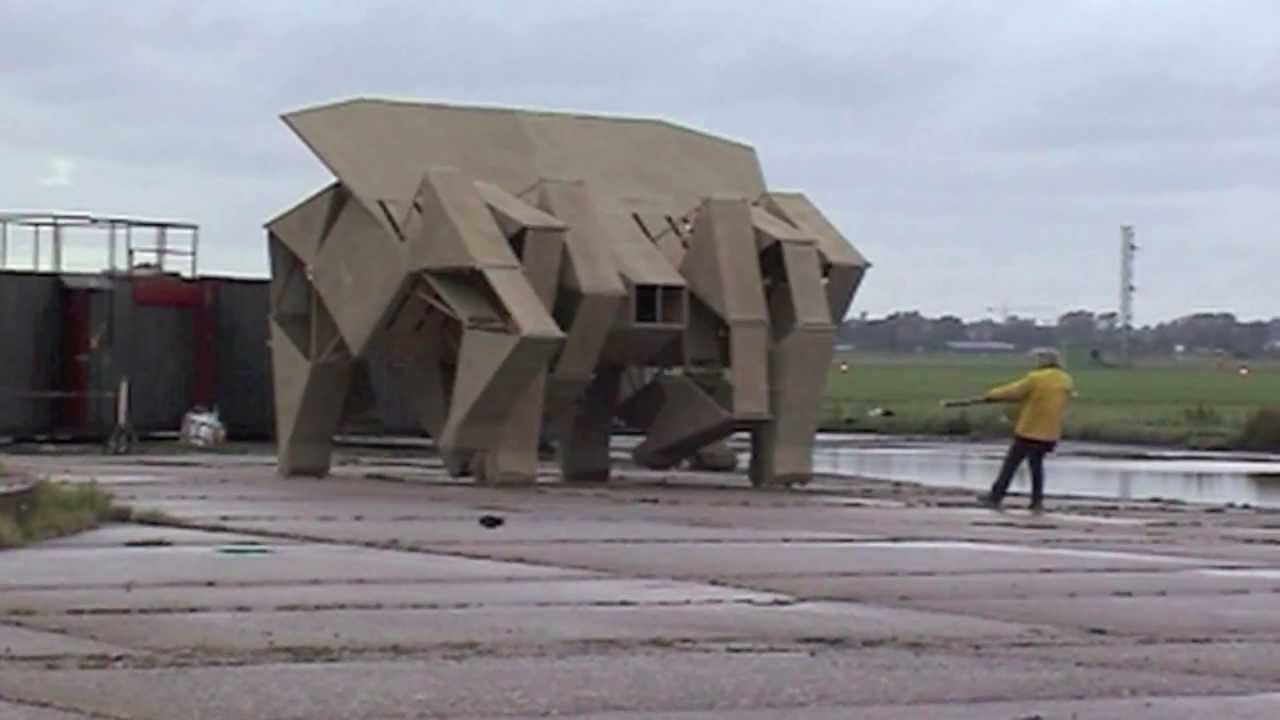
theo jansen
Engineering kinetic sculptures to harvest propulsion solely from coastal wind eliminates the need for sustenance, enabling the release of self-sustaining herds along shorelines.
AI-assisted summary of strandbeest evolution — original source. Check the original for full context.
Source published:
Key ideas
- Theo Jansen presents an archival retrospective tracing the evolutionary lineage of his kinetic Strandbeest sculptures developed since 1990. (0:00)
- The kinetic creatures are engineered to harness wind energy along beaches, allowing autonomous movement without conventional fuel or nourishment. (0:00)
- Jansen aims to eventually release these artificial organisms into self-sustaining coastal herds. (0:00)
- The video is scored to Aram Khachaturian's Spartacus, relying on kinetic visual motion and ambient audio rather than formal narration. (0:00)
Detailed notes
## Background Published by theo jansen on YouTube on June 4, 2013, this video presents an archival showcase of his kinetic Strandbeest creations developed since 1990. According to the description, the project highlights Jansen's ongoing effort to engineer wind-powered life forms capable of surviving autonomously on beaches without needing to eat, with the ultimate ambition of establishing self-sustaining herds.
## TL;DR The video offers a retrospective visual chronicle of Theo Jansen's evolving Strandbeest specimens and mechanical fossils. Designed to roam coastlines using wind propulsion rather than conventional sustenance, the kinetic sculptures are presented in motion along the shore. The presentation relies on visual movement rather than dialogue, featuring no structured spoken narration beyond faint, incidental background utterances and brief spoken reactions. Aram Khachaturian's dramatic score from Spartacus guides the progression of the showcase through to its closing frames.
## Atmosphere & style The presentation carries a majestic, poetic, and hypnotic mood, largely propelled by the grand sweep of Aram Khachaturian’s orchestral score paired with the fluid, organic mechanics of the sculptures. Devoid of formal host dialogue or analytical commentary, the viewing experience feels purely visual and contemplative as each wind-driven beast moves across the landscape. Rare, muffled background remarks and polite vocal fragments punctuate the audio, lending a raw, candid backdrop to an otherwise sweeping artistic display.
## Bulletin - [00:00](https://www.youtube.com/watch?v=MYGJ9jrbpvg&t=0s) Theo Jansen presents an archival retrospective tracing the evolutionary lineage of his kinetic Strandbeest sculptures developed since 1990. - [00:00](https://www.youtube.com/watch?v=MYGJ9jrbpvg&t=0s) The kinetic creatures are engineered to harness wind energy along beaches, allowing autonomous movement without conventional fuel or nourishment. - [00:00](https://www.youtube.com/watch?v=MYGJ9jrbpvg&t=0s) Jansen aims to eventually release these artificial organisms into self-sustaining coastal herds. - [00:00](https://www.youtube.com/watch?v=MYGJ9jrbpvg&t=0s) The video is scored to Aram Khachaturian's Spartacus, relying on kinetic visual motion and ambient audio rather than formal narration.
## Key takeaways - [00:00](https://www.youtube.com/watch?v=MYGJ9jrbpvg&t=0s) Theo Jansen has been developing kinetic artificial organisms known as Strandbeests since 1990. - [00:00](https://www.youtube.com/watch?v=MYGJ9jrbpvg&t=0s) The presentation opens historical archives displaying various fossil specimens and evolutionary stages of the creatures. - [00:00](https://www.youtube.com/watch?v=MYGJ9jrbpvg&t=0s) Strandbeests are specifically engineered to survive and move across beach and coastal landscapes. - [00:00](https://www.youtube.com/watch?v=MYGJ9jrbpvg&t=0s) The kinetic sculptures capture energy directly from coastal wind currents, bypassing the need for eating or traditional fuel sources. - [00:00](https://www.youtube.com/watch?v=MYGJ9jrbpvg&t=0s) A central future ambition of the project is to release the Strandbeests into living, self-sustaining herds. - [00:00](https://www.youtube.com/watch?v=MYGJ9jrbpvg&t=0s) The showcase is scored to the orchestral music of Aram Khachaturian's Spartacus. - [00:00](https://www.youtube.com/watch?v=MYGJ9jrbpvg&t=0s) The presentation contains no explanatory voiceover, allowing the mechanical motion and musical score to guide the viewer. - [00:00](https://www.youtube.com/watch?v=MYGJ9jrbpvg&t=0s) Ambient conversational snippets and spontaneous spectator reactions appear faintly throughout the audio track.
## Detailed walkthrough ### [00:00](https://www.youtube.com/watch?v=MYGJ9jrbpvg&t=0s) Visual Showcase of Strandbeest Evolution
The presentation serves as a retrospective journey through Theo Jansen’s Strandbeest evolution, showcasing various kinetic fossil specimens set against the orchestral score of Aram Khachaturian's *Spartacus*. Spanning the progression of Jansen's beach creatures created since 1990, the work highlights these wind-driven forms designed to survive autonomously along shorelines without needing food. Because the visual presentation is driven primarily by the music and the motion of the sculptures, the spoken track contains no structured dialogue or explanatory monologue. Instead, the audio transcription reflects the musical backdrop alongside faint, fragmented vocalizations and ambient utterances.
Throughout the performance, sparse conversational snippets and background reactions emerge intermittently alongside the score. Amid multiple polite acknowledgments and brief vocal interjections, incidental remarks register in the audio such as “I'm going to go” and “Oh, my God.” As the demonstration advances toward its conclusion, further brief utterances include “I'm not sure what you're doing” and “I'm sorry,” interspersed with repeated expressions of gratitude and parting words that eventually culminate in the closing title markers.
- Theo Jansen's kinetic art project documents the lineage of Strandbeest specimens and fossil archives developed from 1990 onward. - The organisms are engineered to harvest propulsion solely from beach wind currents, eliminating any requirement for conventional sustenance, with long-term aspirations of releasing them into self-sustaining coastal herds. - The accompanying soundtrack features Aram Khachaturian’s *Spartacus*, accompanying the visual documentation from beginning through to “The End.”
## Mentioned Theo Jansen, Strandbeest, Aram Khachaturian, Spartacus
## Video description Numerous specimen of the Strandbeest evolution on music of Khachaturian's Spartacus. It open the archives of fossils. Theo Jansen's work since 1990. He tries to make new forms of live on beaches. His animals get their energy from the wind so they don't have to eat. In the future he wants to put out in herds.
[Source](https://www.youtube.com/watch?v=MYGJ9jrbpvg)