Japan Rebounds From World War Defeat to Lead Global Tech Market
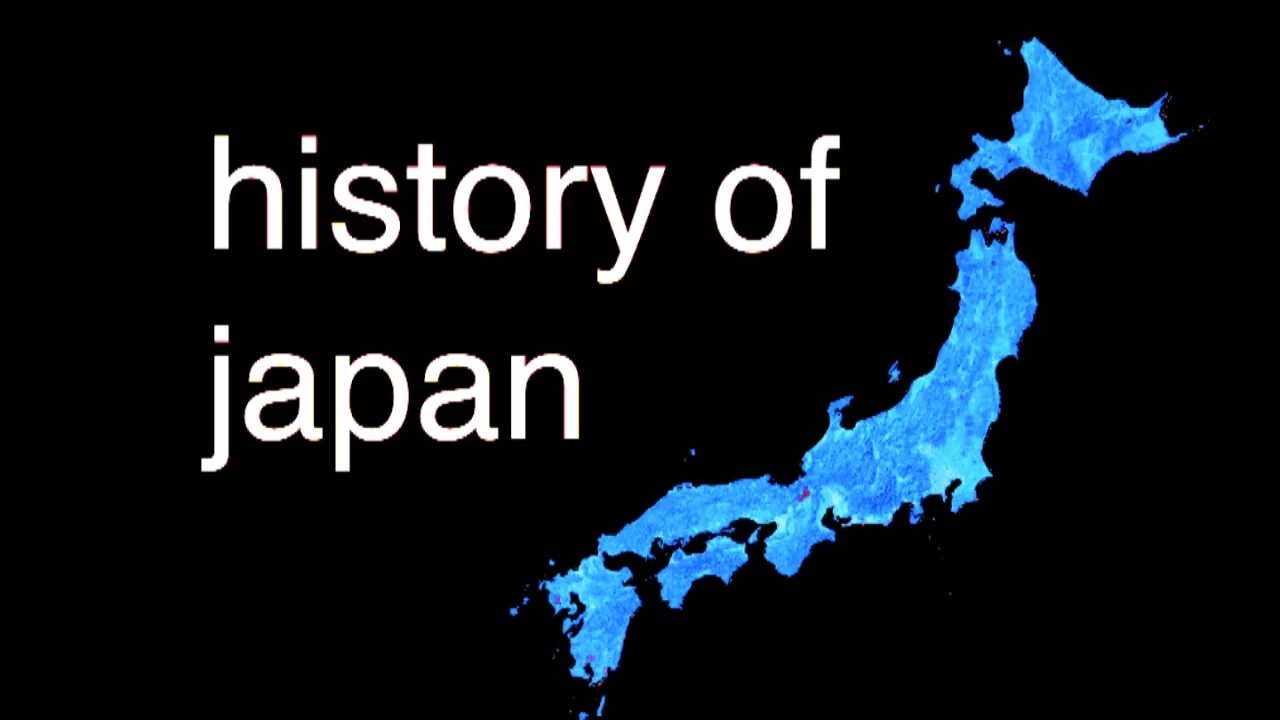
bill wurtz
Japan's history of rapid foreign technology adoption repeatedly transformed the isolated archipelago into a global military and economic powerhouse.
AI-assisted summary of history of japan — original source. Check the original for full context.
Source published:
Key ideas
- Japan transformed from an isolated archipelago into an empire by selectively adopting continental systems, from wet-field rice cultivation and Tang governance to Western industrialization and naval doctrine. (0:00)
- For over six centuries, genuine political and military authority resided with military shogunates, while the emperor was preserved as a ceremonial and ritual figurehead. (1:45)
- The Tokugawa shogunate maintained over two centuries of strict isolation under the Sakoku policy until Commodore Perry's gunboat diplomacy forced the country to open in 1853. (3:40)
- Rapid modernization during the Meiji Restoration propelled Japan to imperial power status, culminating in aggressive expansion across Asia, catastrophic defeat in World War II, and a subsequent high-tech postwar economic miracle. (5:00)
Detailed notes
## Background The video "history of japan" was published on YouTube by musician and animator bill wurtz on February 2, 2016. Its description provides direct links to the creator's official website, social media handles, streaming platforms, and donation channels.
## TL;DR The video outlines the entire trajectory of Japanese history from prehistoric migrations across ancient land bridges to the contemporary era. It documents the rise of wet-rice farming, the formation of the imperial court, the adoption of Buddhism, and the political dominance of the samurai caste across successive shogunates. Following the chaotic Sengoku period and the strict isolation of the Tokugawa era, Western gunboat diplomacy triggers the Meiji Restoration and aggressive imperial expansion. After devastating defeat in World War II, the nation rebuilds under American occupation and transforms into an economic and technological powerhouse.
## Atmosphere & style The piece unfolds at a breakneck, hyperactive tempo defined by deadpan vocal delivery, punchy musical jingles, and dry, irreverent comedic phrasing. Monumental civil wars, religious shifts, and imperial clashes are compressed into casual, witty observations that contrast sweeping geopolitical violence with playful absurdity. The resulting tone feels both informative and delightfully unhinged, transforming dense historical eras into an entertaining, rapid-fire pop-culture montage.
## Bulletin - [00:00](https://www.youtube.com/watch?v=Mh5LY4Mz15o&t=0s) Japan transformed from an isolated archipelago into an empire by selectively adopting continental systems, from wet-field rice cultivation and Tang governance to Western industrialization and naval doctrine. - [01:45](https://www.youtube.com/watch?v=Mh5LY4Mz15o&t=105s) For over six centuries, genuine political and military authority resided with military shogunates, while the emperor was preserved as a ceremonial and ritual figurehead. - [03:40](https://www.youtube.com/watch?v=Mh5LY4Mz15o&t=220s) The Tokugawa shogunate maintained over two centuries of strict isolation under the Sakoku policy until Commodore Perry's gunboat diplomacy forced the country to open in 1853. - [05:00](https://www.youtube.com/watch?v=Mh5LY4Mz15o&t=300s) Rapid modernization during the Meiji Restoration propelled Japan to imperial power status, culminating in aggressive expansion across Asia, catastrophic defeat in World War II, and a subsequent high-tech postwar economic miracle.
## Key takeaways - [00:00](https://www.youtube.com/watch?v=Mh5LY4Mz15o&t=0s) Early human migration across prehistoric land bridges preceded rising sea levels that created the isolated Japanese archipelago by around 40,000 BCE. - [00:35](https://www.youtube.com/watch?v=Mh5LY4Mz15o&t=35s) The introduction of wet-field rice agriculture revolutionized the social hierarchy, enabling grain-controlling elites to establish competing regional kingdoms that culminated in the Yamato imperial dynasty. - [01:00](https://www.youtube.com/watch?v=Mh5LY4Mz15o&t=60s) Continental cultural transfer via Baekje and Tang China brought Buddhism, written Chinese characters, and centralized bureaucratic reforms that established permanent capitals at Nara and Kyoto. - [01:30](https://www.youtube.com/watch?v=Mh5LY4Mz15o&t=90s) Imperial court neglect of provincial governance led regional landowners to assemble private warrior bands, fostering the rise of the samurai caste. - [01:45](https://www.youtube.com/watch?v=Mh5LY4Mz15o&t=105s) Minamoto no Yoritomo's establishment of the Kamakura shogunate institutionalized a dual-power system where military shoguns held genuine executive power over a figurehead emperor. - [02:05](https://www.youtube.com/watch?v=Mh5LY4Mz15o&t=125s) Catastrophic typhoons, hailed by defenders as 'divine winds' (kamikaze), shattered two massive Mongol invasion armadas launched by Kublai Khan in the late 13th century. - [02:30](https://www.youtube.com/watch?v=Mh5LY4Mz15o&t=150s) A shogunal succession crisis ignited the devastating Ōnin War in Kyoto, collapsing central authority and initiating over a century of unrelenting civil war known as the Sengoku Jidai. - [03:00](https://www.youtube.com/watch?v=Mh5LY4Mz15o&t=180s) European contact introduced matchlock firearms, transforming Japanese warfare and expediting the unification campaigns of Oda Nobunaga and Toyotomi Hideyoshi. - [03:40](https://www.youtube.com/watch?v=Mh5LY4Mz15o&t=220s) Tokugawa Ieyasu unified Japan at the Battle of Sekigahara in 1600, establishing the Edo bakufu and enforcing the Sakoku policy of national isolation, restricting European trade exclusively to the Dutch at Dejima. - [04:40](https://www.youtube.com/watch?v=Mh5LY4Mz15o&t=280s) Commodore Matthew Perry's armed naval squadron ended more than two centuries of self-imposed isolation in 1853, forcing the shogunate to sign unequal commercial treaties. - [05:00](https://www.youtube.com/watch?v=Mh5LY4Mz15o&t=300s) The Boshin War overthrew the Tokugawa shogunate, prompting the Meiji Restoration, the relocation of the capital to Tokyo, and an aggressive, state-directed Westernization campaign. - [05:40](https://www.youtube.com/watch?v=Mh5LY4Mz15o&t=340s) Victories in the First Sino-Japanese War and Russo-Japanese War validated Japan's modernized military, ending Russian expansion in Manchuria and making Japan the first Asian power to defeat a European empire in modern history. - [06:20](https://www.youtube.com/watch?v=Mh5LY4Mz15o&t=380s) World War I allowed Japan to opportunistically seize German colonial concessions in Shandong and Micronesia, securing a permanent seat on the League of Nations council. - [06:54](https://www.youtube.com/watch?v=Mh5LY4Mz15o&t=414s) The 1931 Manchurian invasion prompted Japan's defiant exit from the League of Nations, setting the stage for total war with China and an alliance with Axis powers Nazi Germany and Fascist Italy. - [07:30](https://www.youtube.com/watch?v=Mh5LY4Mz15o&t=450s) Japan's surprise raid on Pearl Harbor brought the United States into World War II, culminating in the atomic bombings of Hiroshima and Nagasaki and Japan's unconditional surrender in 1945. - [08:10](https://www.youtube.com/watch?v=Mh5LY4Mz15o&t=490s) Postwar American occupation reforms and demilitarization cleared the path for an economic boom centered on consumer electronics and automobiles, making Japan the world's second-largest economy.
## Detailed walkthrough ### [00:00](https://www.youtube.com/watch?v=Mh5LY4Mz15o&t=0s) Prehistory, Rice Farming, and the Imperial Court
In the distant past—around the year negative a billion—Japan might not have existed at all, but by negative 40,000 it was firmly in place as a land connected to the mainland that early humans simply walked across. As the climate warmed and ancient icebergs melted, rising ocean waters transformed the terrain into a lush, tree-filled archipelago flanked by volcanoes and the sea. The earliest inhabitants clustered between rugged mountains, subsisting on nuts gathered from trees and using the pinnacle of contemporary hunter-gatherer technology: basic stone tools and carved bowls. This isolation ended abruptly when the outside world arrived bearing game-changing innovations from the continent, most notably sophisticated metallurgy and wet-field rice cultivation. Rice farming revolutionized the social order almost overnight: owning irrigated paddies meant controlling the food supply that everyone required to survive, and accumulating that surplus made farm owners into kings. Rice kingdoms quickly multiplied across the islands, giving rise to numerous competing regional chieftains until the Yamato polity emerged as the preeminent power, reigned over by a paramount ruler known grandly as a heavenly superperson, or emperor for short.
```mermaid flowchart TD accTitle: Early Japanese Political Evolution accDescr: Progression from early hunter-gatherers to centralized imperial rule, Chinese cultural adoption, and the rise of the samurai. subgraph EarlyEra["Prehistory to Imperial State"] A["Hunter-gatherers (Stones & bowls)"] --> B["Rice farming & metallurgy arrive"] B --> C["Regional rice kingdoms emerge"] C --> D["Yamato centralizes under the Emperor"] end subgraph ChineseInfluence["Adoption of Continental Systems"] D --> E["Buddhism introduced from Baekje"] E --> F["Taika Reforms: Centralized Chinese-style bureaucracy"] F --> G["Capital fixed at Nara, then Heian-kyo"] end subgraph SamuraiRise["Shift to Military Rule"] G --> H["Court elite focuses on art & neglects governance"] H --> I["Landowners hire samurai for protection"] I --> J["Samurai form Kamakura Shogunate"] end ```
Continental culture soon flooded into the emerging court, beginning with spiritual diplomacy. The ruler of Baekje sent envoys encouraging the Japanese court to embrace a hot new continental faith, sparking immediate domestic friction over whether to abandon ancestral ways. When Prince Shōtoku pressed the court nobles, “Please try this religion, he said.” After initial widespread resistance, Buddhism and its extensive suite of administrative codes and rituals were officially adopted. Soon after, a rival faction seized the reins of state and initiated sweeping administrative overhauls modeled directly after the Tang dynasty, aiming to create a strong, centralized government that governed far more vigorously. When reaching out across the sea to China, the court took issue with subservient diplomatic phrasing; when China greeted them derisively, Japan requested a polite title and christened itself the Land of the Sunrise. The court adapted Chinese characters into its own writing system, producing imperial chronicles like the *Kojiki* and *Nihon Shoki*, along with extensive poetry anthologies. Abandoning the ritual custom of moving the capital upon each monarch's death, the court established a permanent administrative seat at Nara and dispatched military expeditions to subdue the native Emishi peoples of the north.
Cultural life flourished further when the monk Kūkai, disillusioned with orthodox continental scholasticism, journeyed to Tang China to master esoteric Buddhism. Returning with Shingon teachings, he also popularized the phonetic *kana* syllabaries, unleashing an explosion of indigenous courtly literature. As the imperial palace in Kyoto drifted into an insulated aesthetic utopia dedicated to poetry contests and artistic refinement, aristocrats grew utterly indifferent to the practical realities of provincial governance. With banditry and unrest spreading unchecked across the countryside, landowners faced a dire security vacuum, prompting a straightforward solution: hiring private, professional warriors known as samurai. What began as private security guards rapidly evolved into a formidable, nationwide military caste that completely eclipsed the effete imperial court in real power.
- Negative 40,000: Humans walk across prehistoric land bridges to reach Japan before melting ice creates an isolated archipelago. - Yayoi innovation: Wet-field rice cultivation establishes agricultural surpluses, creating social stratification and localized kingdoms. - Continental diplomacy: Japan requests equal footing with China, adopting the name "Sunrise Land" (*Nihon*) and repurposing Chinese characters for native literature. - Heian escapism: The Kyoto court's complete neglect of provincial administration leads directly to the rise of regional private warrior retinues.
---
[01:45](https://www.youtube.com/watch?v=Mh5LY4Mz15o&t=105s) The Rise of the Samurai, Shogunates, and Chaos
Once warrior bands organized across the provinces, they rapidly grew more powerful than the civilian administration they were hired to protect. In the late twelfth century, the Minamoto clan consolidated military supremacy and established their own military headquarters in Kamakura, inaugurating the shogunate system. While the emperor was permitted to retain his ceremonial robes, titles, and ritual prestige, the shogun wielded genuine administrative and military control over the realm. This new military order soon faced an unprecedented external existential crisis when the Mongol Empire, fresh from subduing Song China, sent demanding diplomatic missives insisting that Japan submit to Mongol suzerainty or face imminent annihilation. Japan refused to yield, and Kublai Khan launched massive invasion fleets across the Tsushima Strait. Both invasion attempts ended in catastrophic disaster for the invaders: while Mongol troops fought fiercely with unfamiliar gunpowder bombs and tactical formations, their fleets were pulverized by sudden, massive typhoons that the grateful defenders hailed as divine winds.
```mermaid flowchart TD accTitle: Medieval Shogunates and the Warring States accDescr: Transitions from Kamakura shogunate through the Onin War to the Sengoku period and eventual unifiers. subgraph MedievalShogunates["Shogunate Era"] A["Kamakura Shogunate"] -->|"Defends against"| B["Mongol Invasions (Destroyed by typhoons)"] B --> C["Kenmu Restoration & Ashikaga Shogunate (Kyoto)"] end subgraph SengokuBreakdown["Sengoku Period"] C --> D["Ōnin War: Succession dispute burns Kyoto"] D --> E["Sengoku Jidai: Country fractures into civil war"] E --> F["Portuguese arrive: Firearms & trade"] end subgraph Unification["Three Unifiers"] F --> G["Oda Nobunaga seizes Kyoto"] G --> H["Toyotomi Hideyoshi unifies realm & invades Korea"] H --> I["Tokugawa Ieyasu wins Sekigahara"] end ```
Internal stability did not outlast foreign danger for long. In the fourteenth century, Emperor Go-Daigo attempted to overthrow the Kamakura shogunate, only for his warrior ally Ashikaga Takauji to turn against him, drive him from Kyoto, and erect the Ashikaga shogunate in the Muromachi district. Under the Ashikaga, Japanese high culture flowered through minimalist ink-wash painting, collaborative renga poetry, Noh theater, monkey acrobatics, elaborate tea ceremonies, refined landscape gardening, and flower arranging. However, this artistic renaissance masked structural dynastic weakness. When the eighth shogun, Ashikaga Yoshimasa, lacked an heir, he persuaded his brother to leave the Buddhist priesthood to succeed him; shortly afterward, Yoshimasa’s wife gave birth to a biological son. The ensuing dynastic standoff exploded into the devastating Ōnin War. As rival factions clashed, the imperial capital of Kyoto was burned to ash while the shogun retreated into aesthetic seclusion to write verse. Central authority collapsed entirely, splintering Japan into dozens of autonomous, warring domains led by regional warlords during the bloody Sengoku Jidai.
Amid this brutal free-for-all, Portuguese traders arrived in southern Japan, introducing European mechanical clocks and matchlock firearms. The introduction of the gun fundamentally altered battlefield tactics, intensifying the race among rival daimyos to march on Kyoto and claim hegemony over the figurehead imperial throne. The underdog Oda Nobunaga achieved a stunning tactical upset over the larger Imagawa army, seized the imperial capital, and systematically conquered roughly half the country through disciplined firearms tactics before being ambushed and forced into suicide by a turncoat general at Honnō-ji. Nobunaga's trusted general, Toyotomi Hideyoshi, promptly avenged his master's death, crushed remaining rivals, and completed the political reunification of Japan. Hideyoshi disarmed the peasant population through nationwide sword hunts to prevent popular rebellions and instituted rigid social stratifications. Emboldened by absolute domestic supremacy, he launched disastrous, megalomaniacal invasions of Joseon Korea with the ultimate ambition of conquering Ming China, an enterprise that foundered against fierce naval and guerrilla resistance and collapsed upon Hideyoshi's death.
- Shogunal dynamic: The emperor serves as a symbolic sovereign while the military shogun exercises real administrative and martial power. - Mongol invasions: Two massive invasion armadas sent by Kublai Khan in 1274 and 1281 are shattered by catastrophic typhoons. - Muromachi culture: Flourishing of Zen aesthetics, tea ceremony, rock gardens, and Noh theater under Ashikaga patronage. - The Sengoku free-for-all: Triggered by a shogunal succession crisis in Kyoto, initiating over a century of unrelenting civil war transformed by European arquebuses. - Toyotomi Hideyoshi: Completes national pacification, enforces the sword hunt, and launches catastrophic invasions of the Asian mainland.
---
[03:40](https://www.youtube.com/watch?v=Mh5LY4Mz15o&t=220s) The Tokugawa Shogunate and Sakoku Isolation
On his deathbed, Toyotomi Hideyoshi appointed a Council of Five Elders to protect and administer the realm until his young son, Toyotomi Hideyori, reached maturity. The regents immediately maneuvered against one another, with the wealthiest and most militarily formidable member, Tokugawa Ieyasu, positioning himself to seize total authority. Political factions split between Ieyasu’s eastern coalition and western loyalists backing the young heir. At the titanic Battle of Sekigahara in 1600, Ieyasu vanquished his adversaries, wiped out the remaining opposition, and established a new shogunate based in the eastern fishing village of Edo. While the Kyoto emperor was still permitted to dress in traditional robes and indulge in luxurious palace appointments, absolute state authority resided exclusively within the rigid administrative apparatus of the Tokugawa bakufu.
Determined to prevent domestic insurrection and eliminate subversive foreign influences, the Tokugawa regime enforced the draconian policy of *Sakoku*, sealing the borders to the outside world. Japanese subjects were strictly forbidden from traveling abroad under penalty of death, and foreign merchants were expelled—with one solitary exception. The Protestant Dutch, who demonstrated no interest in Catholic proselytization and cared only for commerce, were permitted to operate a tightly monitored trading outpost confined to the artificial island of Dejima in Nagasaki harbor. This prolonged national peace, lasting over two centuries without domestic civil war, sparked a domestic commercial and cultural renaissance. Urban populations surged, interstate road networks linked castle towns, merchant-funded schools spread mass literacy, and the merchant class developed a vibrant popular culture featuring kabuki drama, puppet theater, woodblock prints, and licentious entertainment districts. Scholars engaged in *Rangaku* (Dutch Studies), translating European treatises on human anatomy, Newtonian physics, astronomy, and electrical experiments.
```mermaid flowchart LR accTitle: Tokugawa Isolation and Western Reopening accDescr: Sequence of events from Tokugawa isolation to Perry's arrival and the Meiji Restoration. subgraph SakokuEra["Tokugawa Peace & Isolation"] A["Tokugawa Ieyasu wins Sekigahara"] --> B["Borders closed (Sakoku)"] B --> C["Only Dutch trade at Dejima"] C --> D["Long peace: Urbanization, culture & Rangaku"] end subgraph Reopening["Forced Opening & Restoration"] D --> E["US Commodore Perry arrives with gunboats"] E --> F["Bakufu signs unequal treaties"] F --> G["Satsuma & Choshu rebel"] G --> H["Tokugawa overthrown & Meiji Restoration"] end ```
By the early nineteenth century, this commercial dynamism had begun to stagnate under systemic financial strain, rigid caste restrictions, and recurring famines. The shogunate's self-imposed isolation was shattered in 1853 when Commodore Matthew Perry steamed into Edo Bay commanding an intimidating flotilla of heavily armed, black-hulled United States Navy steam warships. Backed by overwhelming naval artillery, the American mission delivered an uncompromising ultimatum. Issuing an explicit imperialist mandate, “Open the country. Stop having it be closed, said the United States.” Recognizing that their outdated shore batteries and coastal defenses were hopelessly outmatched, the Tokugawa bakufu capitulated, signing the Treaty of Kanagawa and subsequent unequal commercial pacts that opened Japanese treaty ports to unrestrained visits by the United States, Great Britain, and imperial Russia.
- Establishment of Edo: Tokugawa Ieyasu assumes the shogunate in 1603 following the decisive victory at Sekigahara. - *Sakoku* policy: Complete prohibition of foreign travel and expulsion of foreigners, restricting European trade exclusively to the Dutch factory at Dejima. - Cultural and economic golden age: Spread of nationwide literacy, commercial trade networks, kabuki, and *Rangaku* (Dutch scientific studies). - Gunboat diplomacy: Commodore Matthew Perry's steam-powered naval squadron ends two centuries of Japanese isolation by forcing open treaty ports under threat of bombardment.
---
[05:00](https://www.youtube.com/watch?v=Mh5LY4Mz15o&t=300s) The Meiji Restoration, Imperial Expansion, and World War I
The Tokugawa shogunate’s capitulation to Western gunboat diplomacy ignited furious outrage across the outer domains, especially within the fiercely proud southern fiefdoms of Chōshū and Satsuma. Viewing the bakufu’s concessions as unpardonable national humiliation, regional leaders vented their disgust: “Choshu and Satsuma hated this. 'That sucks,' they said. 'This sucks!'” Marshalling modernized domain armies equipped with British weaponry, Satsuma and Chōshū formed a covert alliance and launched the Boshin War. With remarkably little foreign intervention, they overthrew the centuries-old shogunate, stripped the Tokugawa clan of their lands, and restored genuine supreme authority to the young Meiji Emperor. The imperial court was permanently relocated from ancient Kyoto to Edo, which was rechristened Tokyo, the Eastern Capital. The new Meiji regime enacted an astonishingly swift modernization campaign, discarding feudal restrictions, drafting a Western-style constitution with a bicameral parliament, and constructing a state-of-the-art army and navy patterned after Prussian and British doctrine.
Determined to safeguard national sovereignty against Western imperialism, Japan adopted the prevailing imperialist mindset that a nation had to colonize or risk being colonized. Directing its ambitions toward the Asian mainland, Japan launched the First Sino-Japanese War against Qing China, decisively wrenching Joseon Korea from Chinese tributary influence and annexing Taiwan and the Liaodong Peninsula. This aggressive thrust alarmed the Russian Empire, which sought an ice-free warm-water port on the Pacific and was actively constructing the Trans-Siberian Railway through Manchuria. Russia intervened diplomatically alongside France and Germany to force Japan to return Liaodong, then moved an enormous garrison of imperial troops into the region to protect its railway concessions. Rattled by Russian expansionism, Japan found common cause with Great Britain, which was engaged in the Great Game against the Tsar's empire. The two nations concluded the landmark Anglo-Japanese Alliance of 1902. Backed by British diplomatic and financial support, Japan launched a surprise preemptive strike on the Russian naval squadron at Port Arthur, initiating the Russo-Japanese War. After shocking the world by annihilating the Russian Baltic Fleet at Tsushima and exhausting both empires' treasuries, the exhausted combatants negotiated a peace that recognized Japan's exclusive dominance over Korea and southern Manchuria.
```mermaid flowchart TD accTitle: Modern Japanese Imperial Expansion accDescr: Progression through Meiji reforms, regional wars, and the geopolitical alliances leading into World War I. subgraph MeijiModernization["Meiji State Building"] A["Boshin War overthrows Shogunate"] --> B["Meiji Restoration & capital moves to Tokyo"] B --> C["Western-style constitution, army & navy"] end subgraph ContinentalExpansion["Imperial Expansion"] C --> D["First Sino-Japanese War (Korea taken)"] D --> E["Russian friction over Manchuria & warm-water ports"] E --> F["Anglo-Japanese Alliance formed (1902)"] F --> G["Russo-Japanese War (Japan defeats Russia)"] end subgraph GreatWar["World War I"] G --> H["World War I breaks out across European alliances"] H --> I["Japan seizes German Pacific islands & Qingdao"] I --> J["Japan joins League of Nations as a major power"] end ```
A decade later, the industrialized powers slid into World War I. Across Europe, empires bristling with devastating new military technology sought an excuse to deploy their arsenals against one another. The assassination of Archduke Franz Ferdinand by a Serbian nationalist triggered an automatic chain reaction of mutual defense pacts: Austria moved against Serbia, Russia mobilized against Austria, Germany invaded neutral Belgium to assault France, and Great Britain declared war on Germany. Observing this European conflagration from afar, Japan recognized an extraordinary opportunity to expand its Pacific empire at negligible cost. Citing its alliance with Great Britain, the Japanese government notified London and declared war on Germany. Japanese forces systematically captured German colonial concessions across China's Shandong Peninsula—including the fortress of Qingdao—and occupied scattered German island chains throughout Micronesia, while providing naval escorts for Allied shipping in the Mediterranean. When the war concluded, Japan sat at the Paris Peace Conference as one of the victorious "Big Five" powers, securing international recognition of its seized German holdings and joining the League of Nations as a founding permanent council member.
- Meiji Restoration: Satsuma-Chōshū coalition overthrows the bakufu, abolishes the samurai caste, and establishes an industrialized Westernized state. - First Sino-Japanese War (1894–1895): Japan defeats the Qing Dynasty, expelling Chinese influence from Korea and acquiring Taiwan. - Russo-Japanese War (1904–1905): Bolstered by the 1902 Anglo-Japanese Alliance, Japan halts Russian expansion in Manchuria, marking the first modern victory of an Asian state over a European empire. - World War I opportunistic expansion: Japan joins the Allies, seizes German imperial territories in Shandong and Micronesia, and attains major-power status in the League of Nations.
---
[06:54](https://www.youtube.com/watch?v=Mh5LY4Mz15o&t=414s) Imperial Aggression, World War II, and the Post-War Miracle
The global catastrophe of the Great Depression battered Japan’s export-dependent economy, triggering widespread agrarian distress and social radicalization. While the civilian parliament floundered, the imperial military operated with increasing autonomy. In 1931, the Kwantung Army staged a false-flag bombing on the South Manchuria Railway and invaded Manchuria, establishing the puppet state of Manchukuo. When the League of Nations issued an official rebuke censuring the aggression and demanding a withdrawal, Japan rejected the international order entirely. The Japanese delegation famously walked out, demonstrating the League's complete inability to prevent armed conquest: “And Japan said, 'How about I do, anyway?'” Unchecked by international treaties, the military launched a full-scale invasion of China in 1937, capturing coastal metropolises and harboring ambitions of dominating the entire Asian-Pacific sphere. Seeking diplomatic cover, Japan entered into the Tripartite Pact with Fascist Italy and Adolf Hitler's Nazi Germany, forming the Axis alliance based on mutual anti-communist goals and shared expansionist designs.
As World War II raged across Europe, Nazi Germany conquered its neighbors, overrun France, and pounded Great Britain with airstrikes. The United States provided vital Lend-Lease aid to Britain while tightening severe trade embargos on aviation fuel and scrap metal against Japan to choke its war machine in China. Japanese strategists realized that seizing the oil-rich European colonies of Southeast Asia would inevitably bring war with America. Seeking to preemptively paralyze the US Pacific Fleet, Japan executed a surprise air raid on Pearl Harbor, Hawaii, dragging a previously reluctant American public directly into the conflict. Simultaneously, Adolf Hitler declared war on the United States in solidarity with Japan. Mobilizing its colossal industrial capacity, the United States fought a multi-front war, collaborating with the Allies to drive German armies back into Berlin while conducting an island-hopping naval campaign that steadily pushed imperial forces back toward the Japanese home islands. Determined to force an unconditional surrender without a bloody amphibious invasion, the United States deployed its top-secret Manhattan Project superweapon, dropping atomic bombs on the cities of Hiroshima and Nagasaki, which forced Japan's immediate capitulation.
```mermaid flowchart TD accTitle: World War II and the Postwar Economic Miracle accDescr: Sequence of events from the Manchurian invasion through World War II to the postwar economic boom. subgraph PathToWar["Militarism & World War II"] A["Kwantung Army invades Manchuria"] --> B["Japan exits League of Nations"] B --> C["Full-scale invasion of China & Axis Pact"] C --> D["Surprise attack on Pearl Harbor"] D --> E["Pacific War: US island-hopping campaign"] end subgraph DefeatAndRebirth["Defeat & Reconstruction"] E --> F["Atomic bombs dropped on Hiroshima & Nagasaki"] F --> G["US military occupation & democratic constitution"] G --> H["Post-war Economic Miracle: Consumer electronics & autos"] H --> I["Economic bubble bursts, stabilizing into modern Japan"] end ```
Following the surrender, General Douglas MacArthur and the Supreme Commander for the Allied Powers instituted a comprehensive military occupation, disarming the military, establishing a democratic constitution, and anchoring the country within the Western geopolitical orbit. These reforms laid the institutional foundation for an astonishing postwar economic miracle. Channeling national energies into high-efficiency manufacturing and cutting-edge consumer technology, Japanese corporations began mass-producing televisions, videocassette recorders, fuel-efficient automobiles, and handheld camcorders at breakneck speed, frequently outperforming and out-innovating their foreign rivals. Japan amassed immense commercial wealth as its economy skyrocketed into the second largest in the world. Although the asset price bubble eventually burst in the early 1990s and brought the miracle growth era to a halt, the nation settled into a peaceful, highly advanced modern society.
- 1931 Mukden Incident: Japanese military officers manufacture a pretext to seize Manchuria, prompting Japan's defiant withdrawal from the League of Nations. - Axis Pact: Imperial Japan joins Nazi Germany and Fascist Italy in the Tripartite Alliance. - Pacific War: The surprise attack on Pearl Harbor in December 1941 brings the United States into the global conflict, culminating in the atomic bombings of August 1945. - Post-war economic miracle: American occupation reforms, democratic restructuring, and industrial innovation propel Japan to global leadership in automobiles and consumer electronics.
## Mentioned Adolf Hitler, Ashikaga Takauji, Ashikaga Yoshimasa, Douglas MacArthur, Emperor Go-Daigo, Franz Ferdinand, Kojiki, Kublai Khan, Kūkai, League of Nations, Matthew Perry, Meiji Emperor, Nihon Shoki, Oda Nobunaga, Prince Shōtoku, Supreme Commander for the Allied Powers, Tokugawa Ieyasu, Toyotomi Hideyori, Toyotomi Hideyoshi
## Video description http://billwurtz.com
patreon: http://patreon.com/billwurtz spotify: https://play.spotify.com/artist/78cT0dM5Ivm722EP2sgfDh itunes: http://itunes.apple.com/us/artist/bill-wurtz/id1019208137 twitter: http://twitter.com/billwurtz instagram: http://instagram.com/notbillwurtz vine: http://vine.co/billwurtz donate: http://paypal.com/cgi-bin/webscr?cmd=_s-xclick&hosted_button_id=VXTWA8CDYP4RJ
[Source](https://www.youtube.com/watch?v=Mh5LY4Mz15o)