## Background
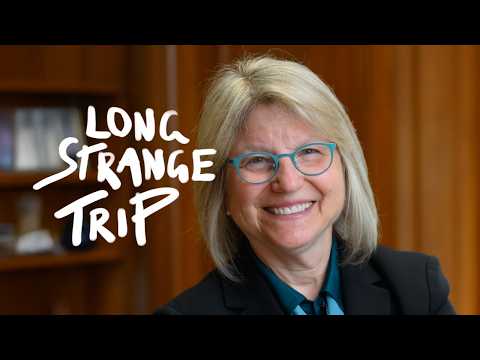
Published on YouTube by Sequoia Capital on April 16, 2026, this video features MIT President Sally Kornbluth. The page description highlights her exceptional crisis leadership during a high-profile congressional hearing and explores her insights on sustaining meritocracy, managing boards, and leading with excellence.
## TL;DR
In this episode, MIT President Sally Kornbluth shares leadership lessons on maintaining elite standards, navigating high-stakes crises, and managing complex organizations. She discusses the importance of guarding meritocracy, rejecting compromises on excellence, and the critical role of a supportive board during public controversies. Additionally, Kornbluth explores the future of higher education in the age of AI, emphasizing that writing is thinking and that human creativity remains irreplaceable. The host concludes with key leadership takeaways on crisis management, hiring "spiky" people, and maintaining a calm exterior.
## Atmosphere & style
The conversation is intellectually rigorous yet remarkably candid, blending high-stakes crisis reflection with warm, humorous academic insights. Kornbluth projects an ebullient, resilient energy, contrasting her measured, scientific approach to leadership with the host's self-described bold and overbearing style. It feels like an intimate, behind-the-scenes masterclass in institutional governance, where the heavy toll of public scrutiny is balanced by a shared passion for scientific discovery and excellence.
## Key takeaways
- [00:00](https://www.youtube.com/watch?v=e_2opghuq88&t=0s) The "lollipop of mediocrity" warning: accepting minor drops in standards leads to permanent organizational decline.
- [02:43](https://www.youtube.com/watch?v=e_2opghuq88&t=163s) Guarding meritocracy requires absolute consistency across all entry points, rejecting backdoors or special favors.
- [02:43](https://www.youtube.com/watch?v=e_2opghuq88&t=163s) Reinstating standardized testing (SAT/ACT) at MIT to preserve objective, needs-blind meritocratic admissions.
- [06:29](https://www.youtube.com/watch?v=e_2opghuq88&t=389s) Scaling standards past the 150-employee threshold requires building a trusted network of lieutenants rather than micromanaging.
- [08:23](https://www.youtube.com/watch?v=e_2opghuq88&t=503s) Addressing poor performance immediately and frankly prevents personal relationships from clouding professional decisions.
- [08:23](https://www.youtube.com/watch?v=e_2opghuq88&t=503s) Utilizing a 5:1 praise-to-correction ratio to motivate teams, provided the appreciation is genuine.
- [10:40](https://www.youtube.com/watch?v=e_2opghuq88&t=640s) Adapting to constant organizational crises through "receptor downregulation" to avoid emotional burnout.
- [15:59](https://www.youtube.com/watch?v=e_2opghuq88&t=959s) Reflecting on the "political theater" of congressional hearings and the challenge of maintaining a factual tone during gotcha moments.
- [19:51](https://www.youtube.com/watch?v=e_2opghuq88&t=1191s) The critical role of a supportive board of directors in surviving public crises and actively defending leadership.
- [22:01](https://www.youtube.com/watch?v=e_2opghuq88&t=1321s) Rejecting the federal compact on academic excellence to protect the core principle of scientific merit.
- [25:21](https://www.youtube.com/watch?v=e_2opghuq88&t=1521s) Managing brilliant, high-performing "primadonnas" by engaging them directly with clear, logical rationales.
- [31:22](https://www.youtube.com/watch?v=e_2opghuq88&t=1882s) Preserving the value of writing and foundational coding in the AI era, asserting that "writing is thinking."
- [34:06](https://www.youtube.com/watch?v=e_2opghuq88&t=2046s) Advising young people to pursue fields they are passionate about and to focus on creative thinking over purely technical tasks.
- [36:32](https://www.youtube.com/watch?v=e_2opghuq88&t=2192s) Fostering local technology and biotech ecosystems to maintain a continuous dialogue between academia and the real world.
- [39:37](https://www.youtube.com/watch?v=e_2opghuq88&t=2377s) Embracing "spiky" hires who possess extraordinary strengths in specific areas rather than well-rounded candidates with no weaknesses.
## Detailed walkthrough
### [00:00](https://www.youtube.com/watch?v=e_2opghuq88&t=0s) Introduction and the "Lollipop of Mediocrity"
The episode kicks off with a memorable piece of advice on maintaining high standards. Sally Cornbluth, the president of MIT, shares a quote from a former colleague of hers at Duke University who kept a sign in his office that read: "If you take a lick of the lollipop of mediocrity, you will suck forever." The host introduces Cornbluth as a "real gem" who has navigated an incredibly intense first year as president of MIT. Within twelve months of taking the job, she was summoned to Congress to testify alongside the presidents of Harvard and UPenn regarding campus antisemitism. While the other two presidents did not survive the fallout of that high-profile hearing, Cornbluth not only survived but thrived, demonstrating exceptional leadership in a crisis.
The host previews the core themes of their conversation, which center on "sustaining meritocracy" and scaling excellence in a massive, 150-year-old institution that is globally synonymous with high standards. They also discuss the practical "blocking and tackling" of being a CEO, how to manage a board of directors, and how to avoid the natural organizational regression to the mean.
- **The Duke Colleague's Sign:** "If you take a lick of the lollipop of mediocrity, you will suck forever."
- **Institutional Longevity:** MIT has sustained its reputation for excellence and meritocracy for over 150 years.
- **Congressional Hearing:** Cornbluth was one of three university presidents summoned to testify before Congress, and the only one of the three to remain in her role afterward.
### [02:43](https://www.youtube.com/watch?v=e_2opghuq88&t=163s) Guarding the Gates of Meritocracy at MIT
The host shares a personal anecdote about his nephew, Jack, who is applying to business schools. Despite the host's deep ties to the MIT Sloan School of Management—where he went to school, teaches, and tried "the front door... the back door... the basement in the attic" to influence the admissions process—he was repeatedly told that his influence meant absolutely nothing. Cornbluth laughs and admits she had the exact same experience when she first arrived as president. When asked by an acquaintance to help get a child into MIT, she was firmly told by her staff, "We do not do that at MIT. We just don't."
Cornbluth explains that scaling meritocracy is fundamentally about scaling excellence. When starting a company or a new team, there is often a temptation to hire "just people" to fill seats, but she argues it is actually better to have nobody than to hire someone mediocre. To maintain a true meritocracy, every single hire—faculty, staff, and students—must be a consistent focus of excellence. This consistency across all "doors" of the institution prevents the system from breaking down; if even one backdoor were left open, people would flood through it.
- **Admissions Integrity:** MIT remains strictly "needs-blind" and was the first elite institution to bring back standardized testing (SAT/ACT) requirements after the COVID-19 pandemic.
- **Defining Merit:** Cornbluth defines merit not just through quantifiable metrics like grades and test scores, but by identifying people who will both benefit from and contribute to MIT's unique environment.
### [06:29](https://www.youtube.com/watch?v=e_2opghuq88&t=389s) How to Stop the Slide of Standards
The host poses a common dilemma faced by scaling companies: around 150 employees, a founder can no longer personally interview everyone, the hiring bar drops, and they wake up at 500 employees wondering what happened to their company culture. Cornbluth advises that it is far easier to stop a slide in standards than to recover from one. The key is building a strong structure of trusted "lieutenants" early on. While a leader might practice "trust but verify" initially, micromanagement is ultimately toxic, and leaders must let their people run.
However, communicating these standards down through a hierarchy is notoriously difficult. Cornbluth shares a humorous example from her previous institution during the COVID-19 pandemic. When everyone was clamoring to know when the campus would reopen, the administration sent out a detailed email. The email had a mere 30% open rate. "They cared, but they still didn't want to read leadership emails," she laughs. This taught her that a "high-touch series of people who can fan out and carry your message personally" is far more effective than top-down digital broadcasts.
- **The 150-Employee Threshold:** The critical point where founders typically stop interviewing every candidate, risking a drop in standards.
- **Communication Reality Check:** A critical reopening email sent during COVID-19 achieved only a 30% open rate, highlighting the limits of mass email communication.
### [08:23](https://www.youtube.com/watch?v=e_2opghuq88&t=503s) Trust, Direct Feedback, and the 5:1 Praise Ratio
Addressing the host's admission of having "trust issues"—a trait he shares with many startup CEOs—Cornbluth says she does not share this struggle because she assesses people thoroughly upfront. When she makes a hiring decision, she relies on a strong gut feeling and then fully backs her team. However, if someone violates that trust or performs poorly, she believes in addressing it immediately and frankly. Waiting makes it harder because "you know their kids, you know their family, you know their dogs," making a tough conversation much more painful later on.
Conversely, Cornbluth emphasizes the importance of telling people when they are doing well. She fully buys into the classic CEO trope of giving five pieces of praise for every one correction. "It doesn't cost you anything" to show gratitude, she notes. However, she warns against false praise used just to keep the peace, as employees cannot be blamed for thinking they are doing a great job if you are falsely telling them so.
- **Feedback Philosophy:** Address poor performance immediately and frankly; do not let time make the relationship too personal to manage.
- **The Praise Ratio:** Cornbluth strongly advocates for a 5:1 ratio of praise to correction, provided the praise is genuine.
### [10:40](https://www.youtube.com/watch?v=e_2opghuq88&t=640s) Boldness, Motivation, and Finding Humor in the "Incoming"
The host notes that people who work for Cornbluth describe her as "bold but not overbearing," contrasting this with his own self-described "bold and overbearing" style as a CEO. Cornbluth credits her leadership style to her background as a scientist training graduate students. She recalls how graduate school can feel like "the dark tea time of the soul" when experiments fail, requiring constant motivation. Because a lab head does not run the experiments themselves, they must learn what makes each individual tick. "What can you give them that they need so that you get what you need from it?" she asks, emphasizing the need to cater to individual motivations.
When asked how she maintains her "inexplicably ebullient" attitude in a job where the inbox is mostly bad news, Cornbluth points to the jaw-dropping scientific discoveries she witnesses daily at MIT. She also relies on humor and a biological concept called "receptor downregulation." Just as a biological receptor stops responding if it is constantly overstimulated, the relentless "incoming" crises of the last few years have forced her to adapt. Rather than living in misery, she chooses to rise above the noise, though she admits she still gets "pissed off every day about something."
- **The Dark Tea Time of the Soul:** A phrase used by one of Cornbluth's students to describe the grueling, slow periods of scientific research.
- **Receptor Downregulation:** A biological phenomenon Cornbluth uses as a metaphor for how she copes with constant crises without becoming overwhelmed.
### [14:24](https://www.youtube.com/watch?v=e_2opghuq88&t=864s) Navigating the Congressional Summons
Cornbluth admits she does get down when attacks become deeply personal. Following her congressional testimony on campus antisemitism, she received a wave of highly personal, offensive emails. As a Jewish woman, being repeatedly called an antisemite was incredibly painful. She copes with these transient low points by talking incessantly to her inner circle to get it out of her system.
Recalling the moment she was summoned to Congress, Cornbluth notes she did not see it coming and had no choice but to attend, as a refusal would have resulted in a subpoena. Upon receiving the summons, the very first thing she did was assemble her team to prepare for the high-stakes hearing.
- **Personal Toll:** Cornbluth found the accusations of antisemitism particularly painful and inappropriate given her Jewish heritage.
- **The Summons:** Attending the congressional hearing was not optional; refusal would have triggered a formal congressional subpoena.
[15:59](https://www.youtube.com/watch?v=e_2opghuq88&t=959s) The "Theater" of the Congressional Hearing
Reflecting on her high-profile testimony before Congress, the speaker admits she was naive going into the experience. Despite consulting with her VP for communications, Ironside, and numerous friends in academia, she was deeply disappointed to find that the proceedings were not a genuine intellectual exchange, but rather "political theater." As a former college political science major who focused on American political institutions, she had expected a higher quality of dialogue and questioning.
While she felt well-prepared and notes that the vast majority of the four-to-five-hour testimony went fine, it was ultimately derailed by a "gotcha moment" at the very end. In hindsight, she compares her factual, measured response to Michael Dukakis's famously cold answer when asked about his wife being attacked during a presidential debate. She wishes she had broken character to express genuine outrage, saying, "Oh my god, nobody would say that on our campus," rather than maintaining a strictly factual tone. However, she has no desire for a literal "do-over" because she never wants to go through the experience again.
- **Key Figure:** Ironside (VP for Communications).
- **Historical Comparison:** The Michael Dukakis debate moment regarding his wife.
- **The Turning Point:** The speaker was asked the critical "gotcha" question first, breaking the established pattern where the presidents of Harvard and UPenn had been questioned first.
[17:47](https://www.youtube.com/watch?v=e_2opghuq88&t=1067s) Navigating the Viral Fallout and Crisis Management
The speaker did not immediately realize she had messed up, nor did she anticipate that the moment would go viral. Initially, colleagues and friends texted her saying she had done well. The gravity of the situation only set in when she read the newspapers and received a sudden deluge of ten consecutive texts from old friends at Duke asking how she was doing—a surefire sign of a major crisis.
To survive the fallout, she focused on remaining calm and measured on the outside, even though she privately felt the public reaction was deeply unfair. She explains that one of her personal "Achilles' heels" is a deep-seated aversion to being falsely accused of something she did not do—to the point where she cannot even stand watching crime shows about falsely accused individuals. She felt the public was unfairly extrapolating false views from her testimony, but she knew she had to move past it to focus on her work.
- **Crisis Indicator:** Receiving 10 texts in a row from old Duke associates.
- **Survival Strategy:** Remaining calm and measured externally, clarifying remarks quickly, and avoiding creating another news cycle by staying quiet and off TV talk shows.
[19:51](https://www.youtube.com/watch?v=e_2opghuq88&t=1191s) The Pivotal Support of the MIT Board
The critical factor in the speaker's survival at MIT was the immediate, public backing of the MIT Board. When the presidents of Harvard and UPenn stepped down shortly after the hearing, the MIT Board stood firm, essentially saying, "We just hired her. It was fine. Go away." This unwavering support created a safe environment where she did not have to constantly look over her shoulder fearing termination.
Crucially, board members did not just offer vocal support; they actively defended her by reading the full transcript and distributing it to critics. When people asked why she hadn't been fired, board members would counter by asking, "Did you listen to the whole thing?" and propagating the correct context.
- **Key Ally:** Mark Orberg (Chair of the Corporation).
- **Board Dynamics:** A large board of 75 people, with a core Executive Committee. Many members are current or former CEOs who understand how to stay calm in high-stakes situations.
[22:01](https://www.youtube.com/watch?v=e_2opghuq88&t=1321s) Rejecting the Federal Compact on Academic Excellence
When the federal government sent a "compact for academic excellence in higher ed" to 11 elite institutions, MIT was the first to respond—well ahead of the deadline—with a polite but firm refusal. The speaker immediately called Mark Orberg to state she would not sign it, receiving his instant backing, followed by unanimous support from the Executive Committee and the full board.
The decision to reject the compact was rooted in protecting the principle of scientific merit. The compact proposed tying funding to specific behaviors or commitments rather than merit. The speaker felt MIT had an incredibly strong story to tell regarding merit, making the refusal easy to justify without having to couch the language.
- **MIT's Merit Credentials:** No legacy admissions, no development admissions, free tuition for families with incomes under $200k, and being among the first to reinstate the SAT.
- **The Drafting Process:** The refusal letter was drafted by writer Martha Edison and iterated on around the clock by a core team of four or five people.
- **The Final Touch:** MIT Executive Vice President Glenn Shore (a finance specialist) came up with the final phrasing that resolved a multi-day debate over the letter's exact wording.
[25:21](https://www.youtube.com/watch?v=e_2opghuq88&t=1521s) Board Governance and Managing "Primadonnas"
The speaker emphasizes that a great board should focus on governance rather than management, allowing the leader to do their job. She advises that board members must be smart, possess integrity, and remain open to arguments rather than holding rigid, unyielding views.
When asked how she manages the "primadonnas" or "brilliant assholes" common in highly decentralized, elite institutions like MIT, she notes that at least the high performers at MIT "have the goods"—often holding Nobel Prizes or running world-class programs. While this makes it difficult to take resources away from them, she finds that most people will accept a "no" if they are engaged directly with a clear, well-thought-out rationale.
- **Organizational Reality:** A significant portion of the MIT workforce is tenured, making corporate-style mass layoffs (such as Jack Dorsey's 40% staff reduction) impossible.
- **Centralization vs. Decentralization:** Centralization is incredibly difficult because faculty view their research programs as their "personal babies." Centralization is only pursued when absolutely necessary for financial survival or clear operational efficiency.
[30:34](https://www.youtube.com/watch?v=e_2opghuq88&t=1834s) The Future of Higher Education in the Age of AI
Addressing the growing cultural skepticism of higher education—fueled by initiatives like the Thiel Fellowship, Palantir Fellowship, and tech figures advising students to skip college—the speaker argues that the university experience is far more than a transactional acquisition of specific skills. While AI is changing the landscape, she asserts that the true value of an MIT education lies in the holistic, transformative environment of the campus community rather than any single class or syllabus.
[31:22](https://www.youtube.com/watch?v=e_2opghuq88&t=1882s) AI as an Augmentation Tool and the Future of Education
The conversation shifts to how higher education must adapt to the rise of artificial intelligence. While the host notes that the pedigree, learning, and network of an institution like the MIT Sloan School of Management are invaluable, he points out that factual material can now be learned anywhere. Sally Kornbluth agrees, emphasizing that no matter what AI does, "fundamentally we're still training human beings." The goal is for MIT graduates to use AI as a tool to augment their performance, which requires learning how to live and work in an AI-driven environment.
Kornbluth raises a philosophical question about education in this new era: "how much you need to have in your head to think creatively versus how much you have to offload." She points out that if you ask an AI agent a question three different ways, you get three completely different answers. Students must possess enough foundational knowledge to recognize when an AI is hallucinating or simply wrong. This has sparked debates among the MIT faculty regarding whether students still need to learn basic coding. Kornbluth firmly believes they do, explaining that students must have a conceptual framework in their minds to ask the right questions and evaluate the output. She views writing in the same light, stating that "writing is thinking" and cannot be entirely outsourced to AI without losing the intellectual process of drafting and working through a problem.
Looking to the future of the physical classroom, Kornbluth doubts that traditional didactic lectures will survive in the long term given the abundance of alternative ways to consume factual material. However, she does not believe classrooms will disappear entirely. Instead, she envisions an "Oxbridge style tutorial system" where students work in groups with an AI tutor and then come to class to engage in discussions, critiques, and human interaction with faculty and peers.
- **Physical AI:** Kornbluth notes that while digital AI is forging ahead, physical AI is not quite there yet, recalling videos of robots attempting to carry a can of Coke across a room, turning it upside down, and trailing liquid everywhere.
- **The MIT Philosophy:** The institute remains committed to its "mind and hand" (*mens et manus*) philosophy, where physically building things is central to the educational experience.
---
[34:06](https://www.youtube.com/watch?v=e_2opghuq88&t=2046s) Advice for a 17-Year-Old: Passion, Discovery, and Career Pivots
When asked what she would advise a 17-year-old to study today, Kornbluth draws on her perspective as a biologist and a parent. She mentions her 30-year-old daughter, who is a surgeon—a career path she still highly recommends, even though parts of surgery are being automated or assisted by robotics. If she herself were 17 today, Kornbluth would choose neuroscience to explore the mysteries of the brain, or immunology, which she believes will impact all areas of human health.
Her core advice to young people is to choose fields where they have a genuine passion and a desire to be creative thinkers rather than mere technicians. She recalls her own time in graduate school, when a student could earn a PhD simply by sequencing a single gene—technical work that was not particularly intellectually engaging. Today, science discovery companies allow great students to have "the equivalent of lots of hands at their disposal" through automation and AI, leaving the human to focus on creative thinking. "If you were just going to be the person who were the hands, don't do a PhD," she warns, because those technical tasks will change rapidly.
The host notes that while Google outsourced information retrieval, AI systems are now "outsourcing cognition." Kornbluth acknowledges this shift, pointing out how AI is rapidly changing fields like medicine. She questions whether one would choose to become a radiologist or a pathologist today, given how AI is transforming image analysis and cancer detection, though she notes that human judgment extends far beyond these binary classifications. Ultimately, she wants students to remain curious and learn to think critically, reassuring them that a 17-year-old does not need to pick a career that will last their entire life because "people pivot constantly now."
---
[36:32](https://www.youtube.com/watch?v=e_2opghuq88&t=2192s) Career Paths, Excellence, and the Local Tech Ecosystem
The host asks whether MIT cares about the vocational paths of its graduates, noting that many computer science students head to quantitative trading shops, startups, or PhD programs. Kornbluth explains that this tension is not new; even when she ran her biology lab, about half of her students went to industry and half to academia, which was controversial among faculty who believed they should only train future academics.
Kornbluth asserts that she has never particularly cared where graduates go, provided they are prepared to a level of excellence. MIT does not tailor its education to specific career goals, but rather aims to provide a robust knowledge base that enables students to do anything. "You can't cut corners just because someone's going to do something that you don't think requires the full suite of educational opportunities," she says.
She also expresses a strong commitment to fostering the local technology ecosystem around Boston and Cambridge, pointing to the success of the local biotech sector. She admits that seeing so much AI activity move to the West Coast "drives me crazy." To counter this, MIT wants to help students and faculty bring their discoveries to the world as quickly as possible and populate the local region. Proximity is key to maintaining a continuous dialogue between academia and the real world, and MIT is currently exploring opportunities for students to participate in more co-ops with local companies. Kornbluth emphasizes that the vitality of Massachusetts has always relied on the education and cutting-edge tech economies, and she is determined to protect that legacy.
---
[39:37](https://www.youtube.com/watch?v=e_2opghuq88&t=2377s) Host's Takeaways: Crisis Leadership, Meritocracy, and Hiring "Spiky" People
The interview wraps up with the host expressing his admiration for Kornbluth's leadership, admitting that while his Net Promoter Score (NPS) of her was initially low after her highly publicized congressional hearing, he was deeply impressed by how she handled subsequent crises, including hecklers at a graduation ceremony.
Following the interview, the host shares several leadership takeaways from his own experience as the former CEO of HubSpot, drawing parallels between Kornbluth's experiences and other guests who have navigated major organizational crises:
* **Maintaining a Calm Exterior:** Even when you are boiling up inside during a "tornado" of a crisis, a leader must project a calm exterior to the organization.
* **Admitting Mistakes Quickly:** Referencing an old colleague's advice—"when you explain, you lose"—the host emphasizes that if a leader makes a mistake, they should admit it, clarify their remarks quickly, and avoid spinning the narrative.
* **The Power of Strong Writing:** Having an excellent writer on the team is invaluable. At HubSpot, well-written internal and external posts were "gold" during critical moments.
* **Board Alignment:** Having a supportive board that is fully aligned with the CEO is an underrated asset during turbulent times.
* **Veto Rights in Hiring:** Founders should interview and hold veto rights on all hires up to about 100 employees to establish a strong cultural foundation.
* **Hiring "Spiky" People:** The host cautions against the common trap of hiring the candidate with the fewest weaknesses whom everyone moderately likes. Instead, he advocates for hiring "spiky" people—individuals who may have notable weaknesses or draw mixed reviews, but who possess extraordinary, spike-like strengths in specific areas. He credits this hiring philosophy, championed by current HubSpot CEO Yamini Rangan, with driving massive payoffs for the company.
## Notable quotes
> [00:00](https://www.youtube.com/watch?v=e_2opghuq88&t=0s) If you take a lick of the lollipop of mediocrity, you will suck forever. — Sally Kornbluth's former Duke colleague
> [02:43](https://www.youtube.com/watch?v=e_2opghuq88&t=163s) We do not do that at MIT. We just don't. — MIT Admissions Staff
> [06:29](https://www.youtube.com/watch?v=e_2opghuq88&t=389s) They cared, but they still didn't want to read leadership emails. — Sally Kornbluth
> [08:23](https://www.youtube.com/watch?v=e_2opghuq88&t=503s) It doesn't cost you anything — Sally Kornbluth
> [10:40](https://www.youtube.com/watch?v=e_2opghuq88&t=640s) What can you give them that they need so that you get what you need from it? — Sally Kornbluth
> [15:59](https://www.youtube.com/watch?v=e_2opghuq88&t=959s) Oh my god, nobody would say that on our campus — Sally Kornbluth
> [19:51](https://www.youtube.com/watch?v=e_2opghuq88&t=1191s) We just hired her. It was fine. Go away. — MIT Board
> [19:51](https://www.youtube.com/watch?v=e_2opghuq88&t=1191s) Did you listen to the whole thing? — MIT Board members
> [31:22](https://www.youtube.com/watch?v=e_2opghuq88&t=1882s) writing is thinking — Sally Kornbluth
> [34:06](https://www.youtube.com/watch?v=e_2opghuq88&t=2046s) If you were just going to be the person who were the hands, don't do a PhD — Sally Kornbluth
> [36:32](https://www.youtube.com/watch?v=e_2opghuq88&t=2192s) You can't cut corners just because someone's going to do something that you don't think requires the full suite of educational opportunities — Sally Kornbluth
> [39:37](https://www.youtube.com/watch?v=e_2opghuq88&t=2377s) when you explain, you lose — Host's old colleague
## Mentioned
Sally Kornbluth, MIT, Sequoia Capital, Harvard, UPenn, Duke University, MIT Sloan School of Management, Jack, Ironside, Michael Dukakis, Mark Orberg, Martha Edison, Glenn Shore, Jack Dorsey, Thiel Fellowship, Palantir Fellowship, HubSpot, Yamini Rangan
MIT President Sally Kornbluth argues that institutions preserve enduring excellence by enforcing unyielding standards of merit, maintaining high-touch communication and direct feedback, and securing aligned governance to navigate public crises and technological disruption.
Guarding Meritocracy Against Organizational Dilution (2:43)
Kornbluth insists that maintaining institutional excellence requires an uncompromising commitment across every entrance point, asserting that organizations are better off leaving a role vacant than hiring someone mediocre. At MIT, this principle manifests in strictly needs-blind admissions, the early post-pandemic reinstatement of standardized testing (SAT/ACT), and the refusal of legacy or development-based admissions. When scaling past thresholds like 150 employees—where leaders can no longer personally vet every candidate—she notes it is far easier to halt an initial drop in standards than to recover from cultural decay.
This commitment to objective excellence led MIT to become the first institution to reject a federal 'compact for academic excellence in higher ed.' Backed unanimously by the MIT Corporation's Executive Committee, Kornbluth refused the agreement because it sought to tie research funding to specific behaviors rather than pure scientific merit.
Leadership Communication and Feedback Discipline (6:29)
Transmitting organizational values through a growing hierarchy requires trusted human networks rather than broadcast announcements. Kornbluth cites an institutional reopening update during the COVID-19 pandemic that achieved only a 30% open rate, demonstrating that digital memos fail to engage audiences. Instead, she advocates developing empowered lieutenants who can fan out and deliver expectations personally without descending into micromanagement.
In managing personnel, Kornbluth emphasizes upfront vetting followed by immediate, frank intervention when performance issues emerge. Delaying difficult conversations only increases personal friction as professional relationships deepen. To keep teams motivated, she endorses a genuine 5:1 ratio of praise to correction, warning that dishonest or unearned praise misleads employees into believing substandard work meets organizational expectations.
Navigating High-Stakes Crises and Board Support (19:51)
Reflecting on her congressional testimony regarding campus antisemitism, Kornbluth acknowledges she entered the hearing naively, expecting an academic debate rather than what proved to be political theater. Derailing at the end due to a factual, measured response rather than an immediate expression of moral outrage, she faced intense public fallout and personal attacks. She weathered the storm by staying calm externally, avoiding television circuits, and relying on biological 'receptor downregulation' to stay focused despite relentless incoming crises.
Her institutional survival depended on the immediate, vocal defense mounted by MIT Board Chair Mark Orberg and the 75-member Corporation. Rather than panicking, board members reviewed the complete testimony transcript and actively distributed context to critics. Kornbluth stresses that an effective board governs without micromanaging, providing the structural safety necessary for leadership to function in high-pressure environments.
Reimagining Education and Careers Alongside AI (31:22)
As artificial intelligence automates routine information retrieval and data processing, Kornbluth argues higher education must focus on cultivating human judgment and creative thought. Because AI models can deliver contradictory or hallucinatory outputs, she maintains that students must retain foundational competencies—including basic coding and writing, which she equates to disciplined thinking—to evaluate machine results critically.
Looking ahead, Kornbluth predicts traditional didactic lectures will be replaced by Oxbridge-style tutorial models where students work alongside AI tutors and gather in person for faculty-led debates and critique. She advises students to pursue genuine intellectual passions in discovery fields rather than acting as replaceable technical 'hands,' while emphasizing the necessity of keeping research tied to local industry clusters like the Massachusetts biotechnology corridor.
While Kornbluth provides an operational framework for sustaining high standards, elite universities face continuing tensions in disciplining autonomous tenured faculty who resist centralization, alongside unresolved questions about which technical skills can be safely offloaded to AI without weakening independent critical reasoning.
[0:00] Sally Kornbluth's former Duke colleague: If you take a lick of the lollipop of mediocrity, you will suck forever.
[2:43] MIT Admissions Staff: We do not do that at MIT. We just don't.
[6:29] Sally Kornbluth: They cared, but they still didn't want to read leadership emails.
[8:23] Sally Kornbluth: It doesn't cost you anything
[10:40] Sally Kornbluth: What can you give them that they need so that you get what you need from it?
[15:59] Sally Kornbluth: Oh my god, nobody would say that on our campus
[19:51] MIT Board: We just hired her. It was fine. Go away.
[19:51] MIT Board members: Did you listen to the whole thing?
[31:22] Sally Kornbluth: writing is thinking
[34:06] Sally Kornbluth: If you were just going to be the person who were the hands, don't do a PhD
[36:32] Sally Kornbluth: You can't cut corners just because someone's going to do something that you don't think requires the full suite of educational opportunities
[39:37] Host's old colleague: when you explain, you lose
Original transcript
[0:00] The way you maintain meritocracy and
[0:02] excellence is to make sure that each
[0:04] person you bring in, and for us this
[0:05] means all of our faculty, all of our
[0:07] staff, all of our students, we have to
[0:09] consistently focus on excellence. Um,
[0:12] there was a colleague of mine at Duke
[0:13] who had a sign in his office that said,
[0:15] "If you have a take a lick of the uh
[0:18] lollipop of mediocrity, you will suck
[0:20] forever."
[0:21] >> Uh, that's pretty good.
[0:22] >> And I I always liked that.
[0:34] >> [music]
[0:41] >> Hey everybody, we have Sally Cornbluth
[0:44] on the pod today. She's president of MIT
[0:46] and a real gem. She's had a really
[0:48] interesting journey. Within a year of
[0:50] being hired as president of MIT, uh she
[0:54] was summoned to Congress and spoke
[0:56] alongside the president of Harvard and
[0:58] UPEN about all manner of things. And you
[1:01] probably all remember Elise Stefanic
[1:03] really asking her some tough questions
[1:05] and all three presidents not really
[1:08] nailing that. So we get into that and
[1:10] her response to it and I think her
[1:12] response was excellent. uh neither the
[1:15] Harvard uh president nor the uh UPEN
[1:19] president made it through uh that
[1:21] crisis. She not only survived but she
[1:23] thrived in it. She also had is having
[1:27] more recent run-ins with the compact for
[1:29] excellence in higher education that the
[1:31] federal government gave her which was
[1:33] pretty interesting and her reaction to
[1:35] that I thought was really interesting
[1:37] and showed terrific leadership. It was
[1:39] only 11 or 12 institutions that got it
[1:41] and I thought MIT shined on that.
[1:43] She is good in a crisis and talks a
[1:46] bunch about that. Sally and I talked a
[1:48] lot about what I refer to as sustaining
[1:51] meritocracy. She's got a giant
[1:54] organization and over 150 years, you
[1:57] know, they are synonymous with
[1:59] excellence and synonymous with
[2:00] meritocracy. And the natural state of
[2:02] things is you kind of regress to the
[2:04] mean and most companies do that. So we
[2:06] talk about how they keep the standards
[2:08] high and how they sustain it over long
[2:10] periods of time. I think it's super
[2:11] applicical to scaling CEOs. She's got a
[2:14] great quote in there. Um, the suck in my
[2:17] head. If you take a lick of the lollipop
[2:20] of mediocrity, you suck forever. I think
[2:24] she hits the nail on the head in that
[2:25] one. And then she gets into just some
[2:26] blocking and tackling of how to be a CEO
[2:30] of a large organization. Some things
[2:32] that I needed a reminder on and
[2:34] hopefully they're useful to you. And
[2:36] lastly, we talked a bunch about how to
[2:38] manage how to hire a board and how to
[2:39] manage a board and how to get the most
[2:41] out of a board. I hope you like it.
[2:43] She's a gym. My nephew Jack is applying
[2:46] to business schools. He's a wonderful
[2:48] kid and I really want him to go to
[2:49] Sloan. I went to Sloan. I teach at
[2:51] Sloan. And I've worked hard to influence
[2:54] the process. I went through the front
[2:55] door. I went through the back door. I
[2:57] went through the basement in the attic.
[2:59] Every door I go to, they're like, "We
[3:02] don't care who you are. You're not going
[3:03] to influence the process." 100%.
[3:06] >> I love that. I love that we were the
[3:08] first place to bring back SAT and and
[3:11] ACTs after COVID. I love that we're
[3:14] needs blind. Can you talk about that and
[3:17] it's like it's easy for companies to be
[3:20] meritocracies like we are. It's hard to
[3:22] scale it like how do we how do you scale
[3:24] that? Well, you know, first of all, I
[3:26] should say I had the same experience
[3:27] when I got here because [laughter]
[3:29] I was someone said, "Oh, can you, you
[3:31] know, speak to someone about getting my
[3:33] kid into MIT and I was like, well, you
[3:36] know, I could just tell them to take a
[3:37] closer look." No, no,
[3:39] >> I cannot. I was new here. They were
[3:41] like, "We do not do that at MIT. We just
[3:45] don't." So, it is it is pure merit.
[3:48] >> Um, you know, it's interesting. And I
[3:50] think the way to scale meritocracy, if
[3:54] you want to extrapolate, is how do you
[3:55] scale excellence?
[3:57] >> And the thing is that when you start a
[4:00] company or when you start a new team, a
[4:02] new job, um you're probably the best
[4:04] person out there at it, right? And
[4:06] there's a temptation to just hire
[4:08] people. And honestly, bringing in
[4:12] >> just people, it's better to have nobody.
[4:15] The way you maintain meritocracy and
[4:17] excellence is to make sure that each
[4:19] person you bring in, and for us this
[4:21] means all of our faculty, all of our
[4:22] staff, all of our students, we have to
[4:25] consistently focus on excellence. Um,
[4:27] there was a colleague of mine at Duke
[4:29] who had a sign in his office that said,
[4:31] "If you have a take a lick of the uh
[4:34] lollipop of mediocrity, you will suck
[4:36] forever."
[4:36] >> Uh, that's pretty good.
[4:38] >> And I I always liked that. And you know,
[4:41] so we really pay attention that each
[4:45] hire is excellent so that when people
[4:48] collaborate across MIT, they know it's
[4:50] not just them that are that are going to
[4:52] do do good work. They know that the
[4:54] people next door are also going to do
[4:56] good work or the people down the hall.
[4:58] So I think that is a very big part of it
[5:00] is just having a mindset that
[5:03] consistency
[5:05] is really important. And to your point
[5:07] about going from one door to another
[5:09] door to another door, it has to be a
[5:11] consistent message across the whole
[5:13] institution because if one of those
[5:15] doors had been open,
[5:16] >> then you could bet people would have
[5:18] flooded through that door.
[5:19] >> Would have gotten through if there was a
[5:20] door open. [laughter]
[5:20] >> Exactly. Exactly.
[5:22] >> He did get in. Obviously, I feel bad for
[5:25] him because everyone assumes I got him
[5:27] in. I had nothing to do with it.
[5:29] >> Well, you know, the other thing is that
[5:31] um merit can be defined in a number of
[5:33] different ways. is I mean I think people
[5:35] think that sure you got to get high
[5:37] grades to get into MIT you got to get
[5:39] have great test scores to get into MIT
[5:42] but there's so many dimensions and I
[5:44] would define it in this way we want to
[5:46] bring in people who can benefit from the
[5:48] fantastic environment we have and who
[5:50] will contribute to that fantastic
[5:52] environment and there can be a lot of
[5:54] dimensions on which this is true they're
[5:56] not all completely quantifiable a lot of
[5:59] them comes come through in the
[6:02] >> tangible is cultural or is it written
[6:05] down?
[6:06] >> It's not exactly written down because
[6:08] it's a little bit like the if you know
[6:10] it you see it and that that obviously
[6:12] could be uh subject to a lot of
[6:14] objectivity. So I don't mean that it's
[6:17] not written down in the sense that we
[6:18] don't have certain criteria in mind. I
[6:21] just mean there's some flexibility to it
[6:23] to take into account a wide variety of
[6:26] what you or I might call excellent
[6:28] fantastic people.
[6:29] >> Got it. Okay. I I coach all these CEOs.
[6:33] They're terrific. And like something
[6:36] happens around 150 employees where the
[6:38] the founder no longer interviews
[6:40] everyone,
[6:41] >> right?
[6:41] >> And the bar drops a little bit, right?
[6:45] >> And they wake up at 500 employees and
[6:47] you're like, "What the hell happened to
[6:48] my company?" You're that CEO. You drop
[6:50] the bar and then you're trying to pick
[6:53] it up at 500. What would you do?
[6:55] >> What advice would you give that CEO?
[6:57] >> Well, I would say this. First of all,
[6:59] again coming to the fact that in your
[7:01] head or in reality, you may be the best
[7:03] person. You've held up that standard. It
[7:06] is a lot easier to stop that slide than
[7:08] to recover from it as you say. So the
[7:10] most important thing when someone's
[7:12] starting is to build a strong team to
[7:14] whom they can delegate and who they can
[7:17] trust. In other words, there's a little
[7:19] bit sometimes of trust but verify at the
[7:21] beginning. you want to see if someone's
[7:23] really good, but after that
[7:24] micromanagement is really problematic
[7:27] and uh it's easy to criticize, but you
[7:30] really have to let people run a little
[7:32] bit. And I think to your point, you have
[7:34] to build a strong structure of
[7:36] lieutenants along the way when you're
[7:38] getting to 150 to 500, etc. And if you
[7:41] can't convey that message down through
[7:44] the troops,
[7:46] >> yeah,
[7:46] >> you're never going to be able to get
[7:48] control of it. I have to say even at a
[7:50] place like MIT we do have trouble though
[7:52] sometimes communicating those messages
[7:54] even if we have a hierarchy. My best
[7:55] example of this was actually from my
[7:58] previous institution. Okay. Everyone was
[7:59] bugging us when are we going to reopen?
[8:01] This was after co when are we going to
[8:02] reopen? When are we going to reopen and
[8:05] you know we sent out an email to
[8:06] everybody about when we were going to
[8:07] reopen. It had a 30% opening rate. Okay.
[8:10] >> So no one really cared THAT MUCH.
[8:12] >> THEY CARED BUT THEY STILL DIDN'T WANT TO
[8:14] read leadership emails. I really think
[8:16] that hight touch series of people who
[8:19] can fan out and carry your message
[8:21] personally becomes really important.
[8:23] >> Sally, I have trust issues and I found
[8:26] almost all the CEOs I work with have
[8:28] trust issues and it's a very very small
[8:31] amount of employees. They deeply trust
[8:33] to hire and do things crossfunctionally.
[8:37] Do you have trust issues?
[8:39] >> Um I would say no. Okay. in the sense
[8:42] that I try to I try to sort of nip that
[8:44] in the butt up front, which is again,
[8:47] you know, people criticized me a little
[8:49] bit at first when I came in. Well, why
[8:50] aren't you turning over these positions?
[8:52] Why aren't I think I needed time to
[8:54] assess the capabilities of every person
[8:56] >> and so when I make a decision, I really
[9:00] feel good about it and have a have a gut
[9:02] feeling. Now that said, if someone does
[9:05] violate the trust or if someone is
[9:07] really doing a bad job, I think it's it
[9:10] behooves you to tell them in a very
[9:12] straightforward, clear way right away
[9:15] >> because once don't wait because once
[9:17] time has gone on, it becomes harder and
[9:19] harder and harder. You know their kids,
[9:21] you know their family, you know their
[9:22] dogs, you know, sorry, you're doing a
[9:24] really bad job. See you. You can't do
[9:25] that. Yeah. And so, um, I find that
[9:29] really just being very frank when
[9:31] someone's doing less than I want to be
[9:34] very clear about what it is, but also
[9:36] the flip side is to tell people when
[9:38] they're doing well. Okay?
[9:39] >> And I think that is sometimes hard to
[9:41] remember. You know, it's very easy to
[9:43] kind of think, "Oh, they're doing a
[9:44] great job and I'm doing such a great
[9:46] job. Of course, I'm leading such a great
[9:47] team." I think people really, really
[9:49] like to hear it when they're doing well.
[9:51] And if you can do that, then you can
[9:53] tell people when things aren't going
[9:55] well. There's an old CEO trope that you
[9:57] should give praise five times. You
[10:00] should give praise to everyone sort of a
[10:02] correction. Do you buy into that ratio
[10:04] or is it a bunch of BS?
[10:06] >> Oh, I totally buy into that ratio. I
[10:08] think that's absolutely right. And you
[10:09] know what?
[10:10] >> I struggle with that.
[10:11] >> It doesn't cost you anything.
[10:12] >> No, it doesn't.
[10:13] >> You know, if you're showing gratitudes
[10:15] toward gratitude at the people who are
[10:16] doing things, it doesn't cost you
[10:17] anything. Now, if you tell people
[10:20] they're good when they're not really
[10:22] that good, um, just to kind of
[10:24] temporize, that's where you really run
[10:26] into trouble because you can't blame
[10:28] them for thinking they're doing a great
[10:29] job when you're just kind of saying that
[10:31] to keep them happy and keep things
[10:33] moving along. So, I think that ratio is
[10:35] good if you really believe it,
[10:37] >> but if you don't believe it, don't
[10:38] propagate that message.
[10:40] >> Okay. I spoke with a bunch of people who
[10:42] work for you to prepare. Um, did my home
[10:45] >> none of it's true. [laughter]
[10:46] I they said wonderful things. Okay,
[10:48] maybe
[10:48] >> somebody said something that was echoed
[10:50] a bunch that you're bold but not
[10:52] overbearing. And when I was a CEO, I was
[10:55] bold and overbearing. [laughter]
[10:59] What advice would you give to someone
[11:00] like me? I'm a I'm like most CEOs like
[11:03] how
[11:05] >> well you know I I have to say that the
[11:07] training of a scientist who was training
[11:10] graduate students taught me a lot.
[11:12] >> Okay.
[11:13] >> So being a graduate student can be
[11:14] fabulous. you're doing wonderful things.
[11:16] It's so exciting. It's so interesting.
[11:18] >> It can also be one of my students called
[11:19] it the dark tea time of the soul, you
[11:22] know, you're slogging away. It's like
[11:24] horrible. And but you have to keep
[11:26] pushing. Uh that's mostly when your
[11:28] experiments aren't working. When things
[11:30] are working, it's like super exciting
[11:32] and super fun.
[11:33] >> And so,
[11:34] >> by the way, same for CEOs and founders.
[11:35] Exactly the same. So, but what I learned
[11:38] was that you want things from the people
[11:41] who are working, particularly when
[11:42] you're starting a lab, their experiments
[11:44] have to work because you're not doing
[11:45] the experiments every day. And so, you
[11:47] have to think about ways to motivate
[11:49] them. And sometimes it feels a little
[11:51] bit mchavelian. Y
[11:52] >> you know, but what it really is about is
[11:54] thinking what did they need?
[11:56] >> What can you give them that they need so
[11:58] that you get what you need from it? And
[12:01] I learned a lot about individually
[12:04] catering to people's motivations, trying
[12:07] to figure out what makes them tick and
[12:08] makes them really productive and what
[12:10] makes them happy. Now, that doesn't
[12:12] scale infinitely, but for your your
[12:14] immediate team,
[12:16] >> there really is a huge amount of
[12:19] individuality in terms of what what
[12:20] makes people do good work.
[12:22] >> And I think really getting to know the
[12:24] people individually becomes extremely
[12:26] important in terms of motivating them.
[12:29] And sometimes you're like, why do they
[12:31] think that's fun or interesting? But you
[12:33] have to indulge that,
[12:34] >> especially here. [laughter]
[12:37] >> Okay, that's very helpful. There's a
[12:39] columnist named George Will.
[12:41] >> Yes.
[12:42] >> Um he described it, I think accurately,
[12:44] as inexplicably
[12:46] like
[12:46] >> like why?
[12:47] >> Yes. Ebullant.
[12:49] >> And I just again I'd ask from my own
[12:51] perspective like my day is like having
[12:53] meetings and reading my inbox.
[12:56] It's mostly bad news, you know.
[12:59] >> I get really, really, really annoyed
[13:01] >> and you get down. I would get down and
[13:03] all CEOs get down.
[13:05] >> Why are you so bulliant in the face of
[13:07] I'm sure there's this [ __ ] show going on
[13:09] [laughter] behind you.
[13:11] >> So, yeah. Well, you know, in part, I
[13:13] think I'm explicably a brilliant, which
[13:15] is, you know, there's some unbelievable
[13:17] things going on here. Every day I hear a
[13:18] discovery that makes my jaw drop. So for
[13:21] me to be able to enable the discoveries
[13:23] of the people around me, I'm, you know,
[13:25] essentially helping science move forward
[13:27] that's way better than the science I did
[13:29] myself. Yeah.
[13:29] >> So that's pretty fun.
[13:31] >> Yeah.
[13:31] >> The other thing is you two things about
[13:33] it. One is you got to find humor in some
[13:36] of this. Like you really can't make some
[13:37] of this stuff up. Yeah. So that kind of
[13:39] keeps me, you know, a little bit up. The
[13:41] other thing is this um phenomenon in
[13:43] biology called receptor downregulation.
[13:46] What that means is if you have a
[13:48] receptor for a drug or for any molecule,
[13:51] if you keep stimulating it over and over
[13:53] again, eventually it kind of like goes
[13:55] away and downregulates. So the last few
[13:57] years have been just like a constant
[14:00] incoming. And so eventually you're like,
[14:03] okay, well, I could live miserable all
[14:05] the time, okay? Or,
[14:07] >> you know, I can rise above it and find,
[14:09] you know, pleasure in all the cool
[14:11] things we're doing. It doesn't mean I
[14:12] don't get pissed off every day about
[14:13] something because I do. But you can do
[14:16] that without like becoming depressed
[14:18] about it if you ignore the fact that a
[14:21] lot of it is a lot of it is pretty
[14:23] annoying.
[14:24] >> Okay. You've been through some stuff.
[14:25] You get down.
[14:26] >> I get down when it's personal. Okay.
[14:29] >> So, one thing about the last few years,
[14:31] some of the attacks, so for instance,
[14:32] after I testified in Congress on
[14:34] anti-semitism, I got a lot of incoming
[14:36] that was very personal. And I'm Jewish.
[14:39] To be called an anti-semite over and
[14:40] over again, I did not find
[14:42] >> um appropriate. And so when it's
[14:45] personal, when people say negative
[14:47] things about me, some of the emails
[14:49] people people sent to me, I was sort of
[14:51] like, does wash your mouth out, folks.
[14:53] >> But would you get down?
[14:56] >> Transiently.
[14:56] >> Okay.
[14:57] >> My my I would get a little bit. Now, I
[15:00] don't get down about all the other junk
[15:02] that's coming into everybody in our
[15:03] sector. But yes, I would get transiently
[15:05] down. But the way I deal with it is to
[15:08] um just like, you know, talk to people
[15:10] incessantly. Like I'm a little bit of a
[15:12] you know, wear it on my sleeve, get it
[15:14] out of my system. It may wear down the
[15:16] other people a little bit, but
[15:18] >> that's definitely how I operate.
[15:20] >> Okay. You brought that up. Um you just
[15:23] started. You barely know your way around
[15:25] the infinite quarter and you got
[15:27] summoned to Congress.
[15:28] >> Yes.
[15:29] >> Uh what was your You did not see that
[15:32] coming, I assume. I did not see that
[15:34] coming.
[15:34] >> The summons, what was going on inside of
[15:37] your head? Who did you call?
[15:39] >> Well, first of all, it wasn't a choice.
[15:42] People ask me, why did you go?
[15:46] >> And I went because it said if you don't
[15:48] go, it's a summon and you will be
[15:50] subpoenaed if you don't come. Okay,
[15:52] that's the first thing. Um,
[15:54] >> look, you know, the first people I
[15:56] obviously talked to are the team,
[15:57] including people like Alfred Iron
[15:59] Ironside, you know, our VP for
[16:01] communications. We talked to I talked to
[16:03] a lot of other uh friends in
[16:06] universities. I did not I was naive. I
[16:10] think the biggest disappointment to me
[16:12] of that whole thing was not that it was
[16:14] hard to deal with personally. It was
[16:16] that it was theater.
[16:18] >> It was
[16:19] >> and you know I was a political science
[16:20] major in college focusing on American
[16:22] political institutions and I was so
[16:25] disappointed in the quality of the
[16:28] dialogue and the questioning. I I know
[16:30] that sounds really naive, but I thought
[16:33] we were really having an interchange,
[16:35] but it wasn't. It was political theater.
[16:37] Yes. And I was ill well, not that I was
[16:39] ill equipped. I actually think I was
[16:41] prepared pretty well. And if you listen
[16:43] to to the full
[16:45] >> testimony, the full four hours or five
[16:47] hours or whatever it is or read the
[16:49] transcript,
[16:50] >> it was basically fine until sort of the
[16:52] gotcha moment at the end. But it
[16:53] reminded me a lot. You know, I should
[16:55] have done I it reminded me of the
[16:57] remember the Michael Dukakus moment uh
[16:59] when Yeah. Well, no. Uh when they were
[17:02] asking about his wife being attacked and
[17:03] it was very factual.
[17:05] >> I wish. And so I sort of did that. I
[17:08] maintained a very factual. What I should
[17:10] have said was, "Oh my god, nobody would
[17:12] say that on our campus." But you know,
[17:15] hindsight is 2020.
[17:16] >> Okay. So you wish you had a doover.
[17:18] >> I not really because I don't want to do
[17:20] it again. But but I would have handled
[17:22] it differently.
[17:23] >> Okay. So I assume you were prepped by
[17:26] your lawyers and everybody for that and
[17:27] you're sitting there listening to the
[17:29] president of Harvard and the president
[17:30] of UPEN. You're watching the whole thing
[17:32] and then you answer the question kind of
[17:34] similarly to them a little bit better.
[17:36] >> No, I was first on that question. That
[17:38] was the problem.
[17:38] >> Oh, interesting. They'd been impressed.
[17:40] Harvard was first.
[17:41] >> Yeah. They'd been going Harvard, Penn
[17:44] for every question until that last
[17:46] question.
[17:47] >> Did you know you had messed up that
[17:49] second?
[17:50] >> No, I didn't. When did you find out that
[17:53] your 15 minutes [laughter]
[17:55] was right now?
[17:56] >> Well, well before I saw it on Saturday
[17:57] Night Live, but I I uh you know, I was
[18:01] >> Did you look at your phone or you have
[18:02] to go?
[18:03] >> No, because most people who talk to me
[18:05] were like, "Yeah, you did pretty well."
[18:07] They didn't realize that that moment
[18:08] would become viral. You know, as soon as
[18:10] I read the newspaper, I saw it. And you
[18:13] know, then I started whenever I start
[18:15] getting a lot of texts from friends from
[18:18] my old days at Duke. How you doing? I
[18:20] know there's something really bad out
[18:22] there. When I get like 10 texts in a
[18:24] row, it's like, "Oh my god."
[18:25] >> But, you know,
[18:26] >> so many of these I talked to and I've
[18:28] interviewed go through major crisis.
[18:30] This is a whopper.
[18:31] >> Um, what was it like?
[18:34] >> So, first of all, I think
[18:37] >> you people want their leaders to be
[18:39] calm. Yes.
[18:40] >> And measured. And so, first of all, I
[18:43] think no matter what for me, no matter
[18:44] what I was thinking inside and a lot of
[18:46] it was like, you know,
[18:48] >> fine. I'm happy to hear that cuz you
[18:49] were calm and measured,
[18:50] >> but I you have to be calm and measured
[18:52] on the outside. I mean, you have a human
[18:54] reaction.
[18:55] >> Um, but I just I felt it was so unfair.
[19:00] >> And it's interesting because one of my
[19:01] biggest it's sort of almost a joke in my
[19:04] family. One of my biggest sort of
[19:05] Achilles heel heels is the notion that I
[19:08] don't want to be accused of something I
[19:10] didn't do. And you know, I even watch
[19:12] lots of crime shows etc. And the ones
[19:15] that really like I can barely watch are
[19:17] the people who like are falsely accused
[19:19] of crimes. So I felt during that whole
[19:22] incident that I was being accused of
[19:26] having certain views or thinking certain
[19:28] things and people extrapolated from that
[19:30] and that to me was the crux of it. I
[19:33] felt it was unfair. But you know we have
[19:35] a lot to do around here. So I had to
[19:38] move past it. I thought you handled the
[19:40] aftermath what and I think this is a
[19:42] lesson for every CEO through crisis like
[19:45] you clarified your remarks and you got
[19:47] to focus back on
[19:48] >> you just got to focus back now I was
[19:50] >> that was one good thing happened the
[19:51] second good thing happened is the board
[19:53] publicly came out to you and the other
[19:55] two
[19:56] >> y
[19:56] >> stepped down shortly after those remarks
[19:58] that's right
[19:59] >> so talk about both those things let's
[20:01] start with the remarks the clarification
[20:03] who did you call how did you think about
[20:05] that it was very quick like that was
[20:08] excellent Excellent. That was excellent
[20:09] leadership.
[20:10] >> You know, I tried I tried to not create
[20:14] another news cycle
[20:16] >> and I think one thing we did for quite a
[20:18] long time was
[20:20] >> to be very quiet about it. I mean, you
[20:23] know, I wasn't about to start like
[20:25] showing up on TV shows and I was just
[20:27] very clear with our community. I think
[20:29] that's the first thing.
[20:30] >> Okay. But the other thing in terms of
[20:32] our um our board or corporation being
[20:35] supportive that that is actually the
[20:39] pivotal moment in terms of me surviving
[20:41] at MIT. Yep.
[20:43] >> Because they were like we just hired
[20:44] her. It was fine. Go away.
[20:46] >> Yeah.
[20:47] >> And that really created an environment
[20:50] that I felt I had a lot of support. I
[20:53] could keep moving on with what we were
[20:54] doing at MIT. And you know, to this day
[20:56] when I do something, I don't look over
[20:59] my shoulder and think, "Oh my god, are
[21:00] they going to fire me over this?"
[21:01] Because, you know, we have a great
[21:03] relationship. We talk. Now, that doesn't
[21:05] mean they won't fire me for something
[21:06] someday, but at the moment, I will say I
[21:08] I feel like
[21:11] transparency, great interchange, and I
[21:13] knew right away they were supportive.
[21:15] The other thing is many many people on
[21:18] our board did listen to the whole thing,
[21:20] did read the whole transcript and when
[21:22] people would come to them and say, "Oh
[21:24] my god, how could you not fire her?"
[21:25] They would say, "Did you listen to the
[21:28] whole thing?" And then they would
[21:30] distribute it or talk to people about
[21:32] it. And so it wasn't only that we're
[21:34] being supportive in in voice, they
[21:37] actually were propagating the correct
[21:39] message. So I think that made a huge
[21:42] difference. My takeaways were you were
[21:44] calm, you were in a crisis, you were
[21:46] calm,
[21:48] you had a good board that backed you,
[21:49] which is invaluable, and you clarified
[21:52] your statements in a thoughtful way. And
[21:55] I think that's I think that's a best
[21:57] practice right there that all CEOs can
[21:59] kind of learn from. Okay. There's been
[22:01] some similar I wouldn't say crisis like
[22:04] actually crisis averted. Um the federal
[22:07] government sent you the compact for
[22:08] academic excellence in higher ed. They
[22:10] sent it to 11 institutions including us.
[22:14] You were the first to respond which was
[22:16] interesting way before the deadline and
[22:19] you basically very politely said no. And
[22:22] here's why. Why were you first?
[22:25] >> Well, so a couple of reasons. First of
[22:27] all, when I received the compact, I
[22:30] looked at it. I said, "There's no way
[22:31] I'm signing this thing."
[22:32] >> Okay. Right away.
[22:34] >> Right away.
[22:34] >> And I called uh Mark Orberg, the chair
[22:37] of the corporation. I said,
[22:38] >> "Mark, I'm not signing this thing."
[22:40] thing and he goes, "Who's going to make
[22:41] you sign this thing?" Yeah. So, right
[22:42] away I knew I had the chair's support
[22:45] and we went to the executive committee.
[22:46] Everyone was supportive and then
[22:47] eventually the whole board. So, that was
[22:49] the first thing.
[22:50] >> Okay.
[22:50] >> Part of the reason I think we came out
[22:52] quickly was rather than collectively is
[22:55] because this has been true throughout
[22:57] all these crises, every school has a
[22:59] little bit of a different story to tell.
[23:01] Yeah.
[23:01] >> And the crux of this coming back to your
[23:04] first question was about merit. You
[23:06] know, I didn't care what the particulars
[23:08] of the letter were. They talked about
[23:10] giving preferential funding based on
[23:12] behaviors or commitments, not on
[23:15] scientific merit. And to me, the bedrock
[23:18] of scientific excellence in this country
[23:20] is scientific merit. Now, MIT has a
[23:23] great story to tell in terms of merit.
[23:26] You know,
[23:26] >> awesome story,
[23:27] >> awesome story to tell. No legacy
[23:29] admissions, no development admissions,
[23:31] under 200k uh family income, free
[23:34] tuition. We reinstated the SATs before
[23:38] other schools, etc. We had such a great
[23:40] story to tell that in terms of merit. I
[23:43] didn't really have any hesitancy. We
[23:45] didn't have to think, well, how can we
[23:46] couch this? The story sort of told
[23:48] itself.
[23:49] >> So, I wasn't trying to, you know, you
[23:53] know, make a huge statement or speak for
[23:55] anyone else. I just felt like we had a
[23:58] good story to tell and we're going to
[23:59] tell it. The other thing is I didn't
[24:01] want to poke anyone in the eye. I
[24:02] thought the tone that we were striving
[24:04] for was thanks but no thanks. Like we'll
[24:07] compete with other people.
[24:08] >> The letter was extremely well written.
[24:10] Who wrote that?
[24:11] >> Okay. So, we have a fantastic writer,
[24:15] Martha Edison.
[24:15] >> Okay. She has a PR team. Sure. All CEOs
[24:18] have one of these.
[24:18] >> Well, someone should have a great writer
[24:20] to help them. I'll tell you that. But
[24:22] what Martha did was generate a long
[24:24] draft on all these points and then four
[24:27] or five of us iterated for multiple days
[24:30] around the clock. Okay? you know, so I
[24:32] would not have written everything she
[24:34] wrote by scratch, but there are uh
[24:36] pieces of that that I did write myself.
[24:38] There are pieces of that that various
[24:40] members of the team wrote and actually
[24:42] we came down to a very few words at the
[24:44] end that actually took us a couple extra
[24:46] days and we were sitting with the
[24:48] executive committee of our board
[24:49] discussing the letter and we wanted to
[24:51] get some of the words exactly right.
[24:54] Yep.
[24:54] >> And so we were arguing about different
[24:56] things and I remember our EVP Glenn
[24:58] Shore who is a financial person finally
[25:01] like came up with a phrase and everyone
[25:02] was like okay we're done here. So there
[25:05] was a lot of group think thinking about
[25:08] this um and I think we came to a common
[25:11] message because we hang together well as
[25:13] a team and we were able to be blunt. You
[25:15] know Martha writes something I'm like
[25:17] that is not what we want to say.
[25:18] >> Okay.
[25:19] >> You know she's like okay tell me what
[25:20] you want to say. brought up the board a
[25:21] bunch, more than I thought you would.
[25:23] Uh, and I all my CEOs have to build
[25:27] boards before they go public.
[25:28] >> Yes.
[25:29] >> Advice on building a board in managing a
[25:32] board.
[25:32] >> Yeah. So, I obviously didn't build this
[25:34] board, but I do have input via our
[25:37] governance committee. Now, in terms of
[25:39] who joins the board, you know, first of
[25:41] all, we have a very large board, 75
[25:43] people. So, that is not like most uh,
[25:46] you know, most companies.
[25:47] >> But you must have a core group.
[25:48] >> We do the executive committee. Yeah,
[25:51] >> look, you want a range of expertise,
[25:53] >> but fundamentally you want people who
[25:55] are smart, with integrity, and open to
[25:58] arguments,
[25:58] >> okay?
[25:59] >> You know, if people come in with very
[26:00] strong views and they're unwilling to
[26:02] think about other viewpoints, it's going
[26:04] to be incredibly frustrating. Part of
[26:06] the reason I brought it up, honestly, is
[26:08] because it's unusual
[26:10] to have a board that you sync with so
[26:13] easily. I have friends all over the
[26:15] country and some of them have great
[26:16] boards, some of them don't and have to
[26:18] always kind of be maneuvering. What I
[26:21] really like is their governance but not
[26:23] management
[26:24] >> and so they let me sort of do my job and
[26:28] so I've been, you know, I've been pretty
[26:29] lucky that way. That doesn't mean we
[26:31] agree on everything. In fact, some of
[26:32] the things in the compact letter I had a
[26:35] lot of phone calls
[26:36] >> I see
[26:36] >> with people and said no, I'm not going
[26:38] to do that or no, I'm not going to say
[26:39] that. But it's kind of an open exchange.
[26:42] I don't really feel like I have to parse
[26:44] my words and I don't think they do
[26:45] either. That's what I think is critical.
[26:47] People that you can be honest with
[26:49] that'll be honest with you and it's not
[26:50] existential
[26:52] like if someone is real feeling like
[26:54] >> that's like they were all also calm in a
[26:55] crisis in boards all deal with crisis.
[26:58] >> They were calm and many of them are CE
[27:01] have been CEOs or are CEOs. It's not
[27:04] like you want to fill your whole board
[27:06] with CEOs but you want people who have
[27:09] navigated crises been on other boards.
[27:11] Yeah,
[27:12] >> been in high stakes situations and
[27:14] understand that
[27:17] staying calm is a huge piece of managing
[27:19] to navigate the crisis.
[27:21] >> Okay, just kind of bringing it back to
[27:23] MIT,
[27:24] it's a pretty decentralized place, like
[27:27] really decentralized. How do you decide
[27:30] when it's like, no, that thing that's on
[27:32] the edge, I'm going to bring that in the
[27:33] center and we're going to centralize
[27:35] that. Uh, and then how do you decide
[27:38] like you've got some big initiatives
[27:39] you're pushing out there. How do you
[27:40] decide? Yeah. So the the the
[27:42] centralization thing is a lot thornier
[27:44] than the what initiatives you're going
[27:45] to do. Everybody wants one of their own
[27:48] everything. Yeah. And when you're in a
[27:50] budget crisis or you really have to it's
[27:52] getting rid of duplication is incredibly
[27:54] difficult. Everyone views their own
[27:56] research program their own you know team
[27:59] as like you know their personal babies
[28:01] right you and so it's hard. So we try to
[28:04] do it when it's absolutely necessary
[28:07] either for efficiency or financial
[28:09] reasons or because the function will
[28:11] just work way better and then you kind
[28:13] of navigate the noise until people
[28:15] realize like yeah actually this is kind
[28:17] of better in terms of the initiatives at
[28:19] a place like MIT a lot of it is from the
[28:21] bottom up in that we look around we see
[28:24] what great work is going on and we try
[28:26] to capture it.
[28:27] >> I see. So what I wanted to do with these
[28:29] initiatives, we have a you know a suite
[28:31] of presidential initiatives. Now I
[28:33] wanted to encourage interdisciplinarity
[28:35] and that comes back to everybody being
[28:37] at a high level. So whoever you
[28:38] collaborate with, you're going to get
[28:40] good partners. Um
[28:41] >> can I interrupt you on that?
[28:42] >> Yes.
[28:43] >> Every CEO I talk to asks me, "What do I
[28:46] do with the primadana? The brilliant
[28:48] asshole." Sorry,
[28:50] >> every place has them.
[28:51] >> I We have a lot of primadas at MIT.
[28:55] >> How do you deal with the primadanas? So
[28:57] you know most I've look I've encountered
[28:59] primadanas in my career. Most of the
[29:01] primadonas that I've seen at MIT and
[29:04] there's not that many compared to some
[29:06] places at least they have the goods.
[29:09] >> Okay.
[29:09] >> The worst thing is like someone who
[29:11] thinks they're great when they're not.
[29:13] Like if someone wants to come to me and
[29:15] say my program is really important, this
[29:18] is really, you know, critical and
[29:20] fantastic and like you know they've just
[29:22] won a Nobel Prize. I'm not going to
[29:24] argue with them. I mean, the stuff here
[29:26] is really amazing. I really haven't had
[29:28] someone come to defend something that I
[29:30] thought was really like low quality.
[29:32] >> Okay.
[29:33] >> But that does make it harder to take
[29:35] things away.
[29:36] >> How do you take things away? Like CEOs
[29:38] all the time, they're like, "We're
[29:39] decentralized. Decentralized." And it's
[29:40] like, "No, no, no. We're going to
[29:41] start." Particularly now there's a thing
[29:43] called founder mode. You heard of it.
[29:45] Yeah.
[29:46] >> And like you look at Jack Dorsey for
[29:47] example, he just laid off 40% of
[29:49] employees. Lots of people bring
[29:50] centralized
[29:52] >> micromanagement's in style.
[29:54] Uh
[29:55] >> well what's your take on all that? First
[29:57] of all remember that a big part of our
[29:59] workforce is tenured.
[30:01] >> So [laughter]
[30:01] so that's a very different you know
[30:03] environment to navigate in. Um you know
[30:06] what I found all along these roles like
[30:08] you want to say yes a bunch of times but
[30:10] you have to say no a huge amount of your
[30:13] time. And I found if you engage someone
[30:16] and really give them a good rationale
[30:18] you've really thought through it. It's
[30:19] not just like I don't like you or I
[30:20] don't want to do this. Most people will
[30:23] ultimately accept it. Not all people.
[30:24] I'm sure there are people out there that
[30:26] hate me because I said no or took
[30:27] something away. But in general, I think
[30:30] people understand that you have to make
[30:33] these decisions.
[30:34] >> Yeah. Okay. Education's at a funny
[30:37] point. It's an interesting time to
[30:38] interview you. My world, there's a lot
[30:41] of criticism of higher ed between the
[30:43] Teal Fellowships and Mark Andre saying
[30:46] to not go to college and Alex Karp has
[30:48] the Palunteer Fellowship for people. So,
[30:51] all that's going on, which is
[30:52] interesting,
[30:53] >> and now we have AI.
[30:55] >> What the hell does education look like
[30:57] in five years?
[30:58] >> That's a great question. We're talking a
[31:00] lot about that. First of all, the
[31:02] college experience is so much more than
[31:04] some specific set of skills. Yeah. So,
[31:08] people talk to me, alums talk to me
[31:10] about how MIT changed their lives. It's
[31:12] not because of some particular class or
[31:13] some particular skill they acquired.
[31:15] It's the whole environment.
[31:16] >> My class actually, it was my class.
[31:18] >> It was your class. [laughter] they they
[31:19] say that by name you know and so that's
[31:22] you know the whole college experience is
[31:24] in part is important but I think
[31:27] >> I agree with that like I say Sloan it's
[31:29] like I got some pedigree from it I
[31:31] learned a bunch and I got a great
[31:32] network you can learn this stuff
[31:34] anywhere now
[31:35] >> that's right and the other thing is
[31:37] fundamentally we're still training human
[31:39] beings you know no matter what AI does
[31:42] we want people who graduate from MIT to
[31:44] be used you to use AI as a tool that can
[31:46] augment their performance And so they
[31:50] have to learn to live in this
[31:51] environment. So I don't know how you
[31:53] think about this, but for me like I
[31:55] still am not sure how much you need to
[31:57] have in your head to think creatively
[31:59] versus how much you have to offload.
[32:01] Yeah. Um when we think about what we
[32:03] need to train our students to do, if you
[32:05] ask an AI agent a question three
[32:06] different ways, you get three completely
[32:08] different answers. And so how do we
[32:10] teach our students to think about that?
[32:12] Um how much do you have to know to know
[32:14] if AI is hallucinating or just plain
[32:17] wrong? So there's a discussion going on
[32:19] among some of our folks about, you know,
[32:21] do our students really need to know
[32:22] basic coding and like yes they do
[32:25] because they have to know if what
[32:27] they're looking at is correct and they
[32:29] have to sort of have a concept in their
[32:31] heads to ask the right questions
[32:33] regarding coding. Same with writing.
[32:35] Writing is thinking. So to just ask, you
[32:39] know, AI to write something for you,
[32:41] it's not the same as thinking through a
[32:44] draft, thinking through a problem. Yes,
[32:46] you can have AI help you and iterate.
[32:48] So, I think what we're going to see is
[32:51] first of all at a place like MIT really
[32:53] thinking about how you use these tools
[32:54] most effectively. Second thing, MIT's
[32:56] always been this you know uh you know
[32:59] hand in hand in mind kind of place where
[33:01] building things is really important and
[33:03] in one in one way AI is forging ahead
[33:06] but I think physical AI uh is not really
[33:09] quite there yet. You know, I I've seen
[33:11] like, you know, videos of, you know, a
[33:14] robot trying to like, you know, uh,
[33:17] bring a a can of Coke across the room
[33:19] and, you know, they turn the Coke upside
[33:21] down and are trailing the Coke the Coke.
[33:23] There's a lot we need to do.
[33:25] >> Classrooms go away.
[33:26] >> It's a good question. I don't know. I
[33:28] think you could imagine a kind of
[33:30] Oxbridge style tutorial system coming
[33:33] out where
[33:34] >> you know students work in groups with an
[33:36] AI tutor that then go to class and have
[33:39] a discussion with faculty. I don't know
[33:41] if we're going to see the traditional
[33:43] dididactic lecture
[33:45] >> survive over many years when there's so
[33:47] many different ways to take in that
[33:48] factual material. But the human
[33:50] interaction, the discussions, the
[33:52] critiques from faculty, from fellow
[33:54] students, that really is what produces
[33:57] the, you know, college experience and
[33:59] the education that you come out of a
[34:01] place like MIT with. So, do I think
[34:04] that's going away? I don't think so.
[34:06] >> Okay. If you had a 17-year-old daughter,
[34:10] >> if I did,
[34:11] >> uh, what would you want her to study?
[34:14] >> Oh, that's interesting. Well, I have a
[34:16] 30-year-old daughter who is a surgeon.
[34:19] And I think that's a pretty good thing.
[34:21] I think that's a pretty good thing to
[34:22] have done.
[34:23] >> Parts of surgery have actually already
[34:24] gone away, but I don't think the
[34:25] >> whole Yeah. Yeah. So,
[34:26] >> as someone who's had a lot of surgery, I
[34:28] don't think
[34:28] >> that seems to be a pretty good thing.
[34:29] Even if, you know, she's very interested
[34:31] in robotics.
[34:32] >> If you were 17, you're 17, you're going
[34:34] to school. What do you study?
[34:36] >> Yeah. That's very interesting. Um, I
[34:38] think there are a lot of areas of
[34:40] science that are still, you know, if I
[34:42] were picking an area of biology, for
[34:43] instance, now I'm I'm a biologist. Yes.
[34:45] >> I would pick neuroscience. I think the
[34:47] mysteries of the brain
[34:48] >> or immunology which I think is just
[34:51] >> going to impact all areas of our health.
[34:53] >> So
[34:54] >> so nent
[34:55] >> yeah there are areas that I think have
[34:57] many many years of discovery ahead of us
[35:00] >> but I would say only pick areas where
[35:03] you really have a passion and you really
[35:05] want to be a thinker. So when I was in
[35:07] graduate school, you could get a PhD
[35:09] sequencing a gene, a single gene, and it
[35:12] was technical work, but it wasn't
[35:14] actually super intellectually engaging.
[35:16] I think now about companies that are,
[35:19] you know, for instance, science
[35:20] discovery companies where the really
[35:23] great student will now have this the
[35:25] equivalent of lots of hands at their
[35:27] their disposal, but they still got to be
[35:29] the creative one and do the thinking. If
[35:31] you were just going to be the person who
[35:32] were the hands, don't do a PhD
[35:35] because that that
[35:37] >> that could change five years from now.
[35:39] Like Google outsource information. These
[35:41] AI systems are kind of outsourcing
[35:43] cognition. It's I don't know. I I think
[35:46] it's going to change a lot. I don't
[35:46] know. Like I'm thinking about my course
[35:48] and like what do I do next year? I'm
[35:49] trying to think about how I
[35:51] >> I mean even if you're thinking about
[35:53] being a physician, think about how much
[35:54] AI is changing image analysis. Would you
[35:57] be a radiologist now? Maybe, maybe not.
[36:00] you know, uh would you be a pathologist
[36:02] now? Maybe, maybe not. I don't know
[36:04] because we still don't know how much
[36:07] human judgment we know in in terms of
[36:10] like is this cancer, is this not cancer,
[36:12] but that's not the only judgment folks
[36:14] are making. So, I I think we don't know
[36:16] enough yet.
[36:17] >> Okay.
[36:17] >> And I want students to be what we really
[36:20] want is students to be curious and teach
[36:22] them to think critically. A 17-year-old
[36:24] doesn't have to pick their career, nor
[36:26] do they have to pick a career that's
[36:28] going to last the rest of their lives.
[36:29] Yeah,
[36:30] >> because people pivot constantly now.
[36:32] >> Um, do you care where like what the
[36:37] vocational path of graduates do? Like
[36:39] computer science students like a lot of
[36:41] them go to quant shops. A lot of them go
[36:43] and do their PhD. Some do startups. I
[36:47] wish more would do startups. Uh, does
[36:49] MIT care?
[36:50] >> Uh, you know, that's interesting. So,
[36:53] I've this this is not a new question to
[36:55] me because even when I had a biology
[36:57] lab, Yeah. About half my students went
[36:59] to industry and half went to academia.
[37:02] And at that time even that was
[37:03] controversial among a lot of faculty who
[37:06] really thought we should only be
[37:07] spending our time and effort training
[37:09] PhDs and we're going to go into
[37:10] academia.
[37:12] >> I have never particularly cared where
[37:14] people go. Okay.
[37:16] >> Except that wherever they're going to
[37:18] go, they have to be prepared to a level
[37:21] of excellence. So if you tell me you're
[37:23] going to industry and you tell me you're
[37:25] going to academia, I don't care because
[37:27] you while you're here,
[37:29] >> you have to advance the same level of
[37:31] excellence in your preparation. And so
[37:34] >> I think that that it's not like we
[37:36] tailor our education to someone's
[37:40] specific future career goal. Okay.
[37:43] >> We want them to have the kind of
[37:44] knowledge base and ability to navigate
[37:48] the world that will enable them to do
[37:49] anything they want to do. But that means
[37:51] you can't cut corners just because
[37:54] someone's going to do something that you
[37:56] don't think requires the full suite of
[37:58] educational opportunities.
[38:00] >> And you talk about related to this, the
[38:02] Kate initiative you have, which I love.
[38:04] Why are you doing it? And
[38:07] >> do you care what happens in the city
[38:09] around you? Does that industry matter to
[38:11] you?
[38:11] >> It really does. Okay. Um, first of all,
[38:15] we've all seen the impact of biotech on
[38:17] the surrounding area
[38:19] >> and you know as well as I do that, you
[38:21] know, we've seen a lot of the AI action
[38:23] go to the West Coast driving me crazy.
[38:25] >> Yeah. And [laughter] so, look,
[38:27] >> I think first of all, I want our
[38:29] students and our faculty to be able to
[38:32] bring to the world as rapidly as
[38:36] possible their great discoveries. So,
[38:38] that's one thing.
[38:39] >> Yeah. But I also do want to see the
[38:42] people who are here populate our local
[38:44] ecosystem.
[38:45] >> Okay. You do care about that.
[38:46] >> I do. I do because first for a number of
[38:49] reasons. One is just for you know base
[38:50] economic reasons. I think it's important
[38:52] for the country for the region rather.
[38:54] But another region reason is that MIT is
[38:58] part of this rich ecosystem and you know
[39:01] students are going back and forth
[39:03] faculty are going back and forth. I want
[39:05] there to be a d a continuing dialogue
[39:07] between what's going on at a place like
[39:09] MIT and what's happening in the in the
[39:12] real world kind of thing. And so
[39:14] proximity is really important. We want
[39:16] to for instance we're thinking about
[39:18] whether our students should be doing
[39:19] more co-ops and have more opportunities
[39:22] in these companies. Things have to be
[39:23] proximal for you to be able to do that.
[39:25] So there's a lot of reasons to want that
[39:27] to happen. And the vitality of
[39:29] Massachusetts has always been about sort
[39:31] of the education economy and cutting
[39:33] edge tech economy. And I don't want to
[39:36] see that go down the drain.
[39:37] >> I don't either. Sally, uh, my first
[39:40] exposure to you was a congressional
[39:42] hearing.
[39:42] >> Oh, [laughter] great.
[39:44] >> You said I want to talk to her.
[39:45] >> No. And as as an alum, I was like I was
[39:48] I was my NPS was low on you. Like that
[39:52] was my exposure. I was like, who is she?
[39:53] I didn't know anything about her. Like
[39:54] ah. And then how you handled that
[39:57] crisis. How you handled the hecklers at
[40:00] last year's graduation.
[40:01] >> All right. I almost forgot about that.
[40:03] [laughter]
[40:04] >> You're you're an outstanding leader and
[40:06] I'm really proud to be associate at MIT.
[40:08] Thank you so much.
[40:10] >> Thank you.
[40:10] >> Thanks very much.
[40:11] >> Hey
[40:11] >> everybody, I hope you like that
[40:13] interview with Sally. I think she's a
[40:14] real gem. A couple of my takeaways, some
[40:18] things I learned or maybe forgot from
[40:21] when I was a CEO. She's handled a couple
[40:23] whopper crises really well and several
[40:26] of the other podcast guests have. Like
[40:29] Vlad from Robin Hood's been through a
[40:31] couple whoppers and some of this stuff
[40:33] rhymes and almost all of you will
[40:34] probably go through some major crisis.
[40:37] Um some of my takeaways are even though
[40:40] you're in an absolute tornado in size
[40:44] you're kind of boiling up, you're losing
[40:46] it somehow magically you have to show a
[40:50] calm exterior. It is not easy. It's
[40:52] unnatural. But in a crisis, the CEO
[40:54] needs to do that. If you have made a
[40:57] mistake, like she made a mistake in
[40:59] front of Congress.
[41:01] There's an expression old colleague of
[41:02] mine used to use. When you explain, you
[41:04] lose. You like you're spinning it,
[41:06] you're explaining it, you're explaining
[41:06] it, and people just tune out. Made a
[41:08] mistake, just admit it. Clarify your
[41:11] remarks if you need to clarify them. And
[41:13] do it quickly. Don't sit on it. Another
[41:15] hack she has that we had at HubSpot,
[41:17] have an excellent writer on board
[41:19] because you have to verbally communicate
[41:21] stuff, but so much is done in writing.
[41:23] And in her case, in HubSpot's case, many
[41:25] times a very very well-written post
[41:29] internally and externally is gold. And
[41:32] we had a couple of couple of moments
[41:34] where that really mattered. And I took a
[41:35] lot of writing classes. My co-founder
[41:37] was a good writer and we leaned on that
[41:39] heavily. So if you're not a great
[41:40] writer, it doesn't even have to be your
[41:42] conserson. somebody on your team should
[41:44] be an excellent writer. And the last
[41:45] piece is just she has a very good board
[41:48] and her board's on board with her.
[41:50] That's underrated. You want your board
[41:51] to be behind you. We talked about
[41:53] meritocracy and sustaining excellence.
[41:55] My co-founder and I and Huba graduated
[41:57] from MIT and we tried to keep sort of
[41:59] the culture of MIT into HubSpot. And the
[42:03] way I would like to describe this is my
[42:05] mother, my every time I visit my mother,
[42:09] uh all her friends kids seem like
[42:10] they're always looking for jobs. So, I
[42:12] get a stack of three or four resumes
[42:14] every time I visit her and of course
[42:16] they refer them back to HubSpot. HubSpot
[42:18] didn't care that I referred them. In
[42:20] fact, it might have even been a black
[42:21] mark that I referred them. And so, much
[42:24] more often than not, they didn't get the
[42:26] job. That really irritated my mother,
[42:28] but I think was good for HubSpot. Um,
[42:30] another thing about this I think she
[42:33] didn't talk about this but I think is
[42:34] like a lot of founders ask me like who
[42:37] should I be be interviewing and when at
[42:39] what scale should I stop interviewing?
[42:41] I'll give you my two rules of thumb. You
[42:43] should all obviously interview the
[42:45] people who are directly reporting to you
[42:47] in the circle in that next level out.
[42:50] Um, I also think like as you're scaling
[42:53] fast, you can interview everybody up to
[42:55] 100 employees. Not the first interview
[42:57] but the final interview. And a couple of
[42:59] my CEOs are doing that around 100
[43:01] employees. It starts to really break
[43:03] down there like they have 10minute
[43:05] interviews on their calendar, but I
[43:07] think you should have veto rights up
[43:08] until about that point on everyone
[43:10] because you're kind of setting a
[43:11] foundation. Two other hacks that we had
[43:14] at HubSpot that really worked on the
[43:15] meritocracy side. Um, one is, you know,
[43:19] she talked about this, but like they
[43:20] didn't necessarily write down this idea
[43:23] of of sort of excellence in meritocracy.
[43:25] It was cultural. We had something
[43:27] similar. We had our five values and in
[43:30] the form you would fill out after you
[43:31] interviewed someone all five values
[43:34] would be on there and you'd scale you
[43:36] rank them on a scale of 1 to four. That
[43:38] kind of built the values into the system
[43:41] and we go back later and compare how are
[43:42] we doing on those values and then for
[43:45] every person we interview would score
[43:46] them. And my only advice on interviewing
[43:49] particularly execs is it's very tempting
[43:51] and we did this a lot to hire the person
[43:54] with [music] the least amount of
[43:55] weaknesses that everyone liked as
[43:58] opposed to hiring the person who maybe
[43:59] has some weaknesses and some people were
[44:02] negative on but some people really
[44:04] thought were great. You know, we when we
[44:06] started hiring spiky people, in fact,
[44:08] Yamin, the current CEO of HubSpot,
[44:09] started doing [music] this, it really
[44:11] paid off for us. Anyway, those are some
[44:13] of my takeaways. I hope you like the
[44:14] pod. I think she's incredible. I'm a
[44:17] proud uh graduate and uh I'll see you on
[44:20] the next pod.