Super Mario Bros. 3 Crushes 16-Bit Rivals, Lifts Nintendo Past Toyota
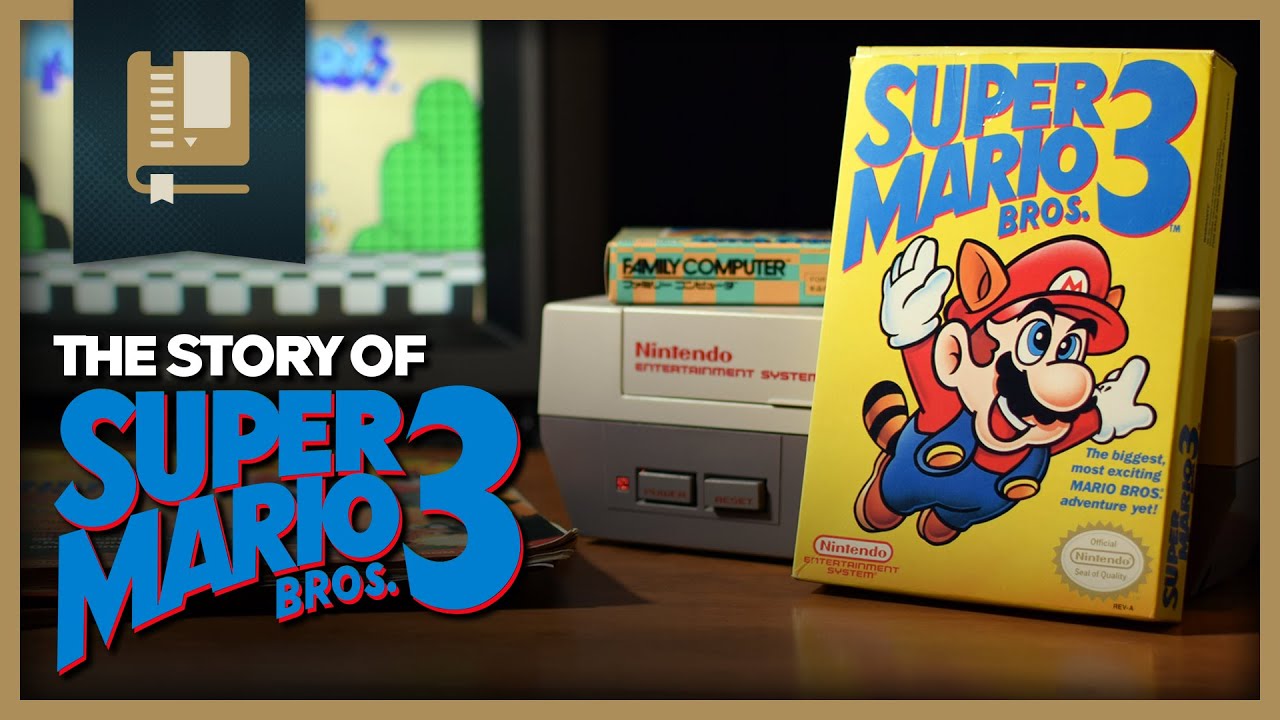
Gaming Historian
Technical reinvention and a calculated promotional delay turned an aging eight-bit cartridge into a global commercial juggernaut, proving video games were a permanent industry rather than a temporary toy fad.
AI-assisted summary of The Story of Super Mario Bros. 3 — original source. Check the original for full context.
Source published:
Key ideas
- Super Mario Bros. 3 sold over 17 million original NES/Famicom cartridges globally and generated over $400 million in North American revenue by 1991, defying predictions that home console gaming was a temporary fad. (40:32)
- The custom MMC3 mapper chip enabled major technological leaps on 8-bit hardware, including expanded memory, smooth diagonal scrolling, and split-screen status bars, extending the NES lifecycle against early 16-bit rivals. (7:25)
- A global semiconductor crisis in 1988 drove chip prices from $2 up to $12, forcing Nintendo to cancel roughly a dozen titles and delay the North American launch of Super Mario Bros. 3 to early 1990. (27:28)
- Universal Pictures' 1989 film The Wizard served as an unprecedented nationwide promotional vehicle, giving millions of American players their first look at the game ahead of its official retail release. (34:01)
Detailed notes
## Background Published on YouTube by Gaming Historian on December 18, 2019, this documentary chronicles the creation of Super Mario Bros. 3, the unprecedented hype preceding its North American debut, and its lasting legacy as one of the greatest video games ever made.
## TL;DR The documentary details the exhaustive development of Super Mario Bros. 3 by Nintendo's R&D4 team, which utilized the advanced MMC3 chip, a theatrical stage aesthetic, and inventive power-ups to redefine the platforming genre. It tracks how a global semiconductor shortage and strategic business decisions delayed the North American launch, fueling massive anticipation through enthusiast magazines, PlayChoice-10 arcade cabinets, and the feature film The Wizard. Following its blockbuster 1990 Western release, the game dominated retail shelves, outperformed newer 16-bit competitors, and cemented Nintendo and Shigeru Miyamoto as enduring global cultural forces.
## Atmosphere & style The documentary carries an authoritative, nostalgic, and reverent tone, unfolding with the measured pacing of a prestige historical retrospective. It balances behind-the-scenes corporate drama—such as silicon shortages, hardware wars, and high-stakes marketing gambits—with the whimsical, infectious creative triumphs of Nintendo's design staff. The resulting experience feels like an immersive journey back to late-1980s playground culture and corporate boardrooms, capturing both the artistic exhaustion of the developers and the sheer fever pitch of the era's gaming mania.
## Bulletin - [40:32](https://www.youtube.com/watch?v=MxT6IwUtLSU&t=2432s) Super Mario Bros. 3 sold over 17 million original NES/Famicom cartridges globally and generated over $400 million in North American revenue by 1991, defying predictions that home console gaming was a temporary fad. - [07:25](https://www.youtube.com/watch?v=MxT6IwUtLSU&t=445s) The custom MMC3 mapper chip enabled major technological leaps on 8-bit hardware, including expanded memory, smooth diagonal scrolling, and split-screen status bars, extending the NES lifecycle against early 16-bit rivals. - [27:28](https://www.youtube.com/watch?v=MxT6IwUtLSU&t=1648s) A global semiconductor crisis in 1988 drove chip prices from $2 up to $12, forcing Nintendo to cancel roughly a dozen titles and delay the North American launch of Super Mario Bros. 3 to early 1990. - [34:01](https://www.youtube.com/watch?v=MxT6IwUtLSU&t=2041s) Universal Pictures' 1989 film The Wizard served as an unprecedented nationwide promotional vehicle, giving millions of American players their first look at the game ahead of its official retail release.
## Key takeaways - [01:32](https://www.youtube.com/watch?v=MxT6IwUtLSU&t=92s) The massive commercial and cultural success of the original Super Mario Bros. in Japan helped overturn media and political skepticism toward video games. - [26:01](https://www.youtube.com/watch?v=MxT6IwUtLSU&t=1561s) The brutal difficulty of the Japanese Super Mario Bros. 2 prompted Nintendo of America to reject it, leading to Yume Kōjō: Doki Doki Panic being rebranded as Super Mario Bros. 2 for Western audiences. - [07:25](https://www.youtube.com/watch?v=MxT6IwUtLSU&t=445s) Director Takashi Tezuka briefly tested an isometric overhead perspective, but Shigeru Miyamoto abandoned it because players could not accurately gauge jump distances to the ground. - [09:02](https://www.youtube.com/watch?v=MxT6IwUtLSU&t=542s) Super Mario Bros. 3 adopted a cohesive theatrical motif, complete with rising stage curtains, bolted stage props, suspended platforms, and winged exits. - [12:03](https://www.youtube.com/watch?v=MxT6IwUtLSU&t=723s) The non-linear board-game overworld structure, featuring branching paths and themed worlds, drew inspiration from an R&D4 research trip to Walt Disney World. - [13:05](https://www.youtube.com/watch?v=MxT6IwUtLSU&t=785s) Transformative animal suits such as the Tanooki Suit and Frog Suit were implemented as creative technical solutions after hardware limits prevented Mario from riding a dinosaur. - [15:16](https://www.youtube.com/watch?v=MxT6IwUtLSU&t=916s) Enemy designs drew heavily from real-life inspirations: Chain Chomps reflected Miyamoto's childhood encounter with a chained dog, and Boos were based on Tezuka's wife. - [17:53](https://www.youtube.com/watch?v=MxT6IwUtLSU&t=1073s) Koji Kondo modernized the musical score by incorporating genre diversity, utilizing reggae rhythms and heavy percussion rather than simple situational sound effects. - [28:41](https://www.youtube.com/watch?v=MxT6IwUtLSU&t=1721s) The North American localization introduced musical-celebrity names for the Koopalings and altered damage mechanics to make powered-up Mario revert to Super Mario rather than Small Mario. - [32:50](https://www.youtube.com/watch?v=MxT6IwUtLSU&t=1970s) PlayChoice-10 arcade cabinets provided North American players their first hands-on access to the game in July 1989, tripling arcade operator revenues overnight. - [40:32](https://www.youtube.com/watch?v=MxT6IwUtLSU&t=2432s) Future id Software founders built an advanced smooth-scrolling PC demo of Super Mario Bros. 3 to pitch Nintendo; after Nintendo declined the port, the team formed their own legendary studio. - [42:36](https://www.youtube.com/watch?v=MxT6IwUtLSU&t=2556s) Rapid expansion pushed Nintendo past Toyota as Japan's most profitable company in 1991, while triggering an FTC price-fixing investigation resolved through consumer rebate coupons. - [44:04](https://www.youtube.com/watch?v=MxT6IwUtLSU&t=2644s) Mario's monumental cultural influence drove Sega to create Sonic the Hedgehog specifically as a flagship mascot competitor, igniting the 16-bit console wars.
## Detailed walkthrough ### [00:00](https://www.youtube.com/watch?v=MxT6IwUtLSU&t=0s) The 1990 Release and Unprecedented Pre-Internet Hype
In February 1990, Nintendo of America stood on the verge of releasing one of the biggest video games in history: *Super Mario Bros. 3*. Although the title had launched in Japan a full year and a half earlier, North American players were already thoroughly captivated by it. In an era long before high-speed home internet and digital trailers, word of mouth and print media fueled massive anticipation. Throughout 1989, gaming magazines published constant previews and teasers, a high-profile Hollywood movie (*The Wizard*) showcased extended gameplay, and select retail shops went as far as stocking grey-market Japanese imports and bootleg cartridges.
Beyond simply continuing an established franchise, *Super Mario Bros. 3* served as a cultural litmus test for the industry. It arrived at a pivotal moment to prove that Nintendo’s dominance and the Mario franchise were permanent fixtures rather than a passing fad, solidifying Nintendo as the undisputed king of video games even as rival manufacturers attempted to mount fresh competition.
[01:32](https://www.youtube.com/watch?v=MxT6IwUtLSU&t=92s) Mario Fever and the Famicom Boom in Japan
The phenomenon had begun four years earlier. By the summer of 1986, "Mario fever" was sweeping Japan following the monumental launch of *Super Mario Bros.* on the Family Computer (Famicom). The game sold over three million copies, and its cultural footprint expanded into virtually every facet of Japanese life. The country’s number-one bestselling book was *Super Mario Bros.: The Complete Strategy Guide*, packed with secrets and techniques for conquering every stage. The title theme composed by Koji Kondo was given lyrics and released commercially as the pop single "Go Go Mario."
Crucially, the runaway hit completely reshaped the mainstream Japanese perception of home video games, which had previously faced intense moral and political scrutiny. Describing this cultural turning point, Nintendo's Hiroshi Imanishi stated:
> “Before Super Mario Bros. came out, even the parliament had taken up the issue of the influence of video games on children, and newspaper articles were mostly negative. But Mario's bright atmosphere cleared away that prejudice against the Famicom.”
This cultural validation triggered an unprecedented sales run for the console. By June 1986, Nintendo had moved over 6.5 million Famicom units, reaching a saturation point where one out of every five households in Japan owned the system.
[03:15](https://www.youtube.com/watch?v=MxT6IwUtLSU&t=195s) The Disk System and the "For Super Players" Sequel
With the original game’s overwhelming success, a sequel was inevitable. Nintendo released *Super Mario Bros. 2* on June 3, 1986—less than a full year after the original. Rather than arriving on a standard cartridge, it was launched on the Famicom Disk System, a newly introduced add-on peripheral utilizing proprietary rewritable disks. These floppy disks offered greater data storage while costing significantly less to manufacture than ROM cartridges. Nintendo intended to anchor its primary release lineup around the Disk System, relying on its premier mascot to drive peripheral sales.
While *Super Mario Bros. 2* went on to become the bestselling game on the Disk System with over two million copies sold, the reception revealed player fatigue. The release functioned more like an punishing expansion pack than a genuine technological or creative evolution: - Visually, the sequel was practically indistinguishable from the 1985 original, reusing identical graphics, sprites, and environmental tile sets. - The gameplay was tuned to an extreme level of difficulty that alienated novice players, prompting Nintendo to openly brand the packaging with a "For Super Players" advisory label. - Both the gaming public and Nintendo's internal team realized that simply dialing up the challenge was not enough to satisfy expectations for a true sequel.
[04:42](https://www.youtube.com/watch?v=MxT6IwUtLSU&t=282s) Assembling the R&D4 Dream Team
Eager to deliver a definitive follow-up, Nintendo tasked its internal Research & Development 4 (R&D4) division—the creative engine behind the first two entries—with building what was envisioned as the ultimate Mario game. To achieve this, a core team of over ten people was organized under the guidance of Mario's creator, Shigeru Miyamoto. While Miyamoto had stepped back during the production of *Super Mario Bros. 2* due to new fatherhood and an overextended slate of responsibilities, he returned to direct and oversee virtually every facet of *Super Mario Bros. 3*.
Takashi Tezuka was appointed as game director. After joining Nintendo at age 24 in 1984, Tezuka had played an essential role in co-designing *Super Mario Bros.* and *The Legend of Zelda*, subsequently directing *Super Mario Bros. 2*. His ability to steer projects under strict deadlines made him Miyamoto’s primary creative collaborator. The core engineering was entrusted to main programmer Toshihiko Nakago, a veteran who had worked at Nintendo since 1983 porting arcade software to the Famicom before programming *Super Mario Bros.* and *The Legend of Zelda*. Music and audio were handled single-handedly by Koji Kondo, who had joined Nintendo in 1984 as one of its first dedicated in-house audio composers, breaking the industry norm of programmers producing crude audio effects.
Alongside these senior leads, R&D4 brought together an ambitious group of younger designers and engineers: - **Kensuke Tanabe:** A new recruit who balanced stage design duties on *Super Mario Bros. 3* while simultaneously directing *Yume Kōjō: Doki Doki Panic*. - **Kazuaki Morita:** A programming talent who had contributed code to the original *Super Mario Bros.* when he was just 19 years old. - **Katsuya Eguchi:** A young graphic artist whose expressive visual talent caught Miyamoto’s attention, earning him a role as level designer. - **Hideki Konno:** An eager designer whose lifelong goal had been working at Nintendo since first playing games on the Famicom.
[07:25](https://www.youtube.com/watch?v=MxT6IwUtLSU&t=445s) The MMC3 Chip and Scrapping the Isometric View
Although the previous sequel had targeted the Disk System, rapid technological advancements in ROM cartridge manufacturing quickly made the disk format obsolete. Chip prices plummeted while silicon capacity expanded dramatically. Nintendo developed proprietary Multi-Memory Controller (MMC) mapper chips to circumvent the Famicom’s stock hardware constraints. Miyamoto later identified these custom MMC chips as the primary reason the Famicom maintained commercial dominance and technical longevity for so many years.
*Super Mario Bros. 3* utilized the advanced MMC3 chip, unlocking capabilities previously impossible on the hardware: - Enhanced background graphics and expanded memory capacity. - Hardware-assisted screen splitting, allowing fixed status bars alongside scrolling playfields. - Smooth diagonal scrolling.
Equipped with this expanded power, director Takashi Tezuka sought a radical break from the past, remarking:
> “We made Super Mario Bros. 2 by changing the original game's difficulty and stage design, but we couldn't do that again, so I wanted to change everything.”
Tezuka’s first radical experiment was to abandon the traditional side-scrolling perspective in favor of an overhead, isometric view. However, early prototypes ran into fundamental gameplay issues. Shigeru Miyamoto rejected the concept, explaining:
> “With a diagonal view from slightly overhead, you lost your sense of distance to the ground. So I told him that development would be difficult.”
Accepting that jumping precision would suffer in an isometric plane, the team abandoned the experiment and reverted to the traditional side view, choosing instead to reinvent how Mario interacted with a 2D space.
```mermaid flowchart TD accTitle: R and D 4 Technical and Perspective Evaluation accDescr: Flowchart illustrating the decision from hardware upgrades to camera perspective testing. subgraph Hardware["Hardware Advancements"] A["Famicom Disk System Obsolete"] --> B["Nintendo Develops MMC3 Chip"] B --> C["Enables Diagonal Scrolling, Split-Screen & Expanded ROM"] end subgraph Perspective["Perspective Iteration"] C --> D["Tezuka Experiments with Isometric 3D View"] D --> E{"Miyamoto Evaluates Gameplay"} E -->|"Fails: Loss of ground distance perception"| F["Scrap Isometric View"] E -->|"Returns to side view"| G["Refine Core 2D Platforming"] end ```
[09:02](https://www.youtube.com/watch?v=MxT6IwUtLSU&t=542s) "Athletic" Gameplay and the Visual Makeover
Internally, Nintendo classified the Mario series as "athletic games"—titles prioritizing fluid movement, running speed, and jumping precision. Summarizing this core philosophy, Shigeru Miyamoto remarked:
> “It's a type of game that is easily approachable for younger, inexperienced players, but can also be played by experienced hardcores without getting tired of it.”
To push the athletic concept further, R&D4 integrated a host of dynamic new mechanics: Mario could slide down slopes to defeat enemies, pick up and kick shells or blocks, and sprint until a power meter filled to take flight through the air.
Determined not to repeat the visual monotony of *Super Mario Bros. 2*, the artists gave the entire aesthetic a comprehensive overhaul. Not a single graphic asset from the previous titles was recycled; every sprite, obstacle, power-up, and background tile was created anew. Under Tezuka's art direction, the visual language adopted a cheerful, whimsical tone. Highlighting this signature style, designer Katsuya Eguchi noted:
> “He wanted to add eyes to just about everything.”
Anthropomorphic elements were added everywhere: clouds, hills, and blocks featured expressive little eyes, while trees and bushes swayed rhythmically in the background. Furthermore, the team adopted a deliberate theatrical motif. The game opened with a stage curtain pulling upward, platforms hung suspended from visible ceiling ropes, structural blocks appeared bolted directly to the backdrop like stage props, and Mario completed levels by running behind the stage wings.
The quest was divided across eight distinct worlds, each featuring custom environments and mechanics: 1. **Grass Land** 2. **Desert Hills** 3. **Ocean Side** 4. **Big Island** 5. **The Sky** 6. **Iced Land** 7. **Pipe Maze** 8. **The Castle of Koopa**
[10:43](https://www.youtube.com/watch?v=MxT6IwUtLSU&t=643s) The Map Room and the Overworld System
Building this vast adventure required an intensive, manual production pipeline. Level designers lacked modern digital stage-building software and had to draw each stage by hand. Describing the grind, designer Hideki Konno recalled:
> “We laid tracing paper over graph paper and painstakingly drew levels every day.”
Completed level sheets were carried down to the "Map Room," a long, narrow office where programmers manually converted the hand-drawn grids into code. This workflow suffered from significant latency: designers had to wait an entire day just to see a single drafted section appear on an actual monitor, only to spend days chasing down bugs and performance errors.
To bind these varied stages together, R&D4 implemented a revolutionary overworld map screen. Rather than progressing through an unyielding, linear sequence of levels, players navigated a board-game-style map. This allowed them to pick divergent paths, bypass certain difficult stages, tackle mini-games, and strategically manage inventory items on their way to the world fortress.
```mermaid flowchart LR accTitle: Level Design Production Pipeline accDescr: Pipeline of stage creation from graph paper drafting to the in-game overworld. A["Designers Draft Stages\n(Tracing & Graph Paper)"] --> B["Delivered to 'Map Room'"] B --> C["Programmers Translate Sheets into Map Data"] C --> D["24-Hour Wait for Screen Rendering"] D --> E["Bug Testing & Level Revisions"] E --> F["Integration into Non-Linear Overworld Map"] ```
[12:03](https://www.youtube.com/watch?v=MxT6IwUtLSU&t=723s) The 1987 American Inspiration Trip
The thematic cohesion of these varied worlds drew inspiration from real-world travels. In 1987, searching for creative ideas, Shigeru Miyamoto and key members of the R&D4 team embarked on a research excursion across the United States. Their itinerary included New York City, San Francisco, and Walt Disney World in Orlando, Florida.
The layout of Disney's Magic Kingdom left an indelible mark on the team's approach to game structure. The theme park was organized into unique, stylized sub-lands unified around Cinderella Castle at its center. This architectural structure mirrored the vision for *Super Mario Bros. 3*: eight varied worlds linked together by central castles that marked a player's milestone achievements and opened the passage into the next realm.
[13:05](https://www.youtube.com/watch?v=MxT6IwUtLSU&t=785s) Animal Suits and Power-Up Design
While graphics and level layouts were receiving drastic overhauls, Nintendo’s Research & Development 4 (R&D4) also rethought how Mario interacted with the world through power-ups. Shigeru Miyamoto had harbored a desire since the original *Super Mario Bros.* to have Mario ride atop a dinosaur companion, but the Famicom's strict hardware limitations made that impossible at the time. Seeking an alternative, director Takashi Tezuka proposed that Mario could transform into animals himself instead of riding them. This sparked the concept of specialized suits that granted distinct physical abilities.
The breakthrough addition was the Super Leaf, which gave Mario a raccoon tail to whip enemies and the ability to take flight completely over entire stages. However, infinite or unrestricted flight initially threatened to ruin the design of the game. Head programmer Toshihiko Nakago voiced his concerns early on: “If we had gone with that, all of the obstacles and the objects on the ground that we managed to create would have been wasted.” Tezuka refused to scrap the mechanic, insisting they find a way to balance it. The programming team compromised by requiring Mario to build up momentum along a flat runway to charge a meter before taking off, and even then, his flight time remained strictly temporary.
Other animal suits offered specialized tradeoffs. The Frog Suit granted superior swimming agility and higher vertical jumps, though it severely compromised Mario's mobility on dry land. The Hammer Suit enabled him to hurl lethal hammer projectiles at adversaries while providing a fireproof shell to duck into for cover. There was also the Tanooki Suit, based on the mythical Japanese *bake-danuki*. While sharing the raccoon form's base mechanics, it allowed Mario to transform into an invulnerable stone statue. Miyamoto remained especially fond of the suit, noting: “Even though I knew it wouldn't make sense to non-Japanese players, I was so excited about it that I left it in.” Other whimsical proposals were less fortunate; an early pitch to transform Mario into a mythical centaur was quickly rejected.
```mermaid flowchart TD accTitle: Power-Up Evolution and Tradeoffs accDescr: Flowchart illustrating the design evolution from original concepts to animal suits and their operational constraints.
subgraph Concept["Initial Concept & Pivot"] A["Miyamoto Concept: Mario rides dinosaur"] -->|"Technical limitations"| B["Tezuka Pitch: Mario transforms into animals"] end
subgraph Suits["Implemented Animal Suits"] B --> C["Super Leaf (Raccoon)"] B --> D["Frog Suit"] B --> E["Hammer Suit"] B --> F["Tanooki Suit"] end
subgraph Mechanics["Balancing & Mechanics"] C --> G["Requires runway sprint; flight is strictly temporary"] D --> H["Fast swimming and high jumps, but sluggish on land"] E --> I["Throws hammers; fireproof shell protection"] F --> J["Includes flight plus temporary statue invulnerability"] end ```
---
[15:16](https://www.youtube.com/watch?v=MxT6IwUtLSU&t=916s) New Enemies and Personal Inspirations
A broader roster of antagonists accompanied Mario’s new arsenal. While iconic staples like Goombas, Koopa Troopas, and Hammer Bros. returned, they were joined by a host of fresh adversaries, including Boom Booms guarding mini-fortresses, projectile-spitting Spikes, and the gargantuan underwater predator Big Bertha.
Several of the game's most memorable new foes were plucked directly from the personal lives and domestic experiences of the development staff: - **Chain Chomps:** Inspired by a traumatic childhood memory of Miyamoto’s, where a neighbor’s menacing dog lunged at him, held back only by a taut metal chain. - **Boos:** Supposedly modeled on Takashi Tezuka’s wife, who was normally very shy and quiet, but would erupt in anger whenever he came home late from long development shifts. - **The Koopalings:** The seven distinct boss children of Bowser were designed as playful caricatures of the young design staff working in R&D4, functioning as Miyamoto's personal tribute to reward their unrelenting efforts.
---
[16:06](https://www.youtube.com/watch?v=MxT6IwUtLSU&t=966s) Items, Accessibility, and Two-Player Mechanics
To assist players who lacked platforming mastery, R&D4 designed an inventory system of consumable map items that could be saved and deployed before entering a stage. These items let players bypass chokepoints or circumvent difficult obstacles: - **Music Box:** Soothed wandering Hammer Bros. on the overworld map to sleep, permitting Mario to slip safely past their encounters. - **Warp Whistle:** Sourced directly from *The Legend of Zelda*, playing the identical tune and whisking Mario off to distant worlds—serving also as a crucial convenience to compensate for the cartridge’s lack of a battery-backed save feature. - **Hammer:** Smashed rocky obstacles across the map screen to unlock hidden shortcuts and secret paths. - **Jugem's Cloud (Lakitu's Cloud):** Allowed a player to fly straight past an intimidating level entirely without completing it. - **P-Wing:** Provided infinite flight stamina throughout an entire stage, serving as a preserved artifact of the original, unrestricted raccoon suit prototype.
Beyond items, Miyamoto was determined to satisfy two core design pillars. The first was accessibility across all player skill levels. Early worlds were generously stocked with extra lives, coins, and power-ups, while overworld Toad Houses and Spade mini-games offered additional chances to build a massive surplus of reserves before the difficulty spiked in later worlds. The second pillar was a vastly improved two-player experience. Unlike the first game, where the second player sat idle until Player 1 died, *Super Mario Bros. 3* traded turns after every single cleared stage. Players could either cooperate to advance the map together or compete aggressively for points, bolstered by an integrated battle mode pulled directly from the classic 1983 *Mario Bros.* arcade title.
---
[17:53](https://www.youtube.com/watch?v=MxT6IwUtLSU&t=1073s) Development Crunch and Koji Kondo's Musical Evolution
Executing this unprecedented scope of moves, graphics, world maps, power-ups, and interactive items pushed R&D4 into intense fatigue. Miyamoto routinely worked through the night, obsessing over fine details and refusing to let flaws slide even if it guaranteed production delays. Designer Katsuya Eguchi witnessed this relentless drive firsthand: “If it'll make the game even a little bit better, Miyamoto-san's always been unhesitant about making changes.” Director Takashi Tezuka similarly remembered the agony of the project’s midsection, noting that: “It wouldn't come together well and dragged on.”
No one felt this pressure more acutely than the team’s sole composer, Koji Kondo. Having created one of the most celebrated and instantly recognizable melodies in entertainment history with the original 1985 theme, he struggled with how to follow his own masterpiece. As Kondo confessed: “I couldn't figure out how to change it from the original Super Mario Bros.”
Whereas his original work simply mirrored the on-screen physical actions of the sprites, Kondo decided to approach the sequel through the lens of distinct musical genres. He incorporated heavier percussion and laid-back rhythms, leaning heavily into a buoyant reggae feel for the main overworld theme. Kondo produced a wide variety of candidate tracks, having Miyamoto and Tezuka listen in and help him select the arrangements that best captured the kinetic spirit of the game. By the spring of 1988, after months of grueling refinement, the disparate pieces of the project finally began coalescing.
---
[19:58](https://www.youtube.com/watch?v=MxT6IwUtLSU&t=1198s) The Ultimate Mario and the 16-Bit Hardware Threat
Miyamoto’s ambition to construct the definitive Mario title resulted in a technical and logistical monster. The game incorporated modern features that would soon become permanent franchise conventions, including dynamic auto-scrolling stages, nonlinear world map screens, and a massive density of buried secrets. Bringing this vision to life demanded over two full years of work from R&D4 and cost an estimated $800,000—making it the most expensive, memory-intensive, and labor-heavy Famicom production Nintendo had ever attempted. The final cartridge weighed in at three megabits, nearly ten times the size of the 320-kilobit original from 1985.
Yet by the time development drew toward a close in the autumn of 1988, Nintendo found the competitive ground shifting beneath its feet. NEC had launched the PC Engine in Japan the previous year; equipped with richer color palettes and advanced graphical capability, it had begun outselling Nintendo's aging 8-bit Famicom. Simultaneously, Sega was preparing to introduce its next-generation 16-bit Mega Drive. Nintendo was suddenly forced into a defensive posture, scrambling to design its own 16-bit successor. Under these heightened stakes, *Super Mario Bros. 3* was no longer just an ambitious sequel—it was charged with buying Nintendo the vital runway it needed to develop new hardware while proving that their 8-bit software mastery could still hold off next-generation rivals.
---
[22:01](https://www.youtube.com/watch?v=MxT6IwUtLSU&t=1321s) Japanese Launch, Critical Acclaim, and Mario Mania
Following promotional video previews in September 1988, *Super Mario Bros. 3* launched across Japan on October 23, 1988. Inside the packaging, Nintendo included an intimate note in the instruction booklet written directly to the players:
> “To Super Mario players, thank you for purchasing Super Mario Bros. 3. In response to the requests of so many Mario fans, Super Mario Bros. 3 is the newest game in the series that we've created to be so much more fun than anything before it. There are many puzzles and traps along your way through this journey. What sorts of wonders are waiting for Mario and Luigi? Enjoy finding out the answer. Yours faithfully, the Mario Staff.”
The game ignited immediate critical and commercial frenzy. *Famitsu* magazine awarded it a stellar score of 35 out of 40, praising its inventive execution, while *Micom BASIC Magazine* heralded the release as “the culmination of the genre.”
```mermaid flowchart LR accTitle: Japanese Reception and Cultural Impact accDescr: Diagram tracing the commercial success and multimedia expansion following the Japanese release of Super Mario Bros. 3.
A["Release: Oct 23, 1988"] --> B["Critical Acclaim<br/>(Famitsu: 35/40)"] A --> C["Commercial Dominance<br/>(#1 Famicom game for 5 months)"] C --> D["Severe Retail Shortages"] C --> E["Merchandising Boom"] E --> F["Arranged Soundtrack CD/Cassette"] E --> G["Amada Anime Series OVA"] ```
Supply shortages hit Japanese retailers before the close of 1988, and the title clung stubbornly to the number-one sales slot among Famicom games for five consecutive months. A massive wave of merchandising flooded Japanese storefronts, from official soundtrack cassette and CD releases featuring rearranged versions of Koji Kondo’s scores, to the *Amada Anime Series: Super Mario Bros.*, an original video animation trilogy retelling traditional folk tales with the newly introduced *Super Mario Bros. 3* cast. Yet as Japanese fans reveled in the craze, an agonizing wait began for international audiences: North America would wait more than a full year to receive the game, and European players would wait nearly three.
---
[24:21](https://www.youtube.com/watch?v=MxT6IwUtLSU&t=1461s) American Domination and the Sequel Dilemma
While Japan was celebrating Mario's newest adventure, Nintendo was enjoying total commercial supremacy across the Atlantic. By 1988, Nintendo of America generated $1.7 billion in annual revenue and controlled an astounding 80% share of the domestic video game market, leaving legacy competitors like Atari and Sega far behind. In just over two years following the nationwide rollout of the Nintendo Entertainment System, more than 10 million consoles had entered American homes. The societal phenomenon was captured vividly by Rick Anguilla of *Toy and Business World*:
> “It's a mania. The kids of America are saying, this is great. We've got to have one. For boys in this country between the ages of eight and 15, not having a Nintendo is like not having a baseball bat.”
The engine driving this unprecedented boom was the original *Super Mario Bros.*, which Nintendo of America packed directly into its flagship Control Deck set, turning Mario into a household icon. Demand for further adventures was insatiable. In October 1988—the exact month *Super Mario Bros. 3* launched to fanfare in Japan—Nintendo of America finally published *Super Mario Bros. 2*. However, Western players received an entirely different creation than the punishing Japanese sequel, an adaptation overseen by Nintendo of America's product analysis manager, Howard Phillips, who had evaluated the Japanese games to determine what would best suit the American market.
[26:01](https://www.youtube.com/watch?v=MxT6IwUtLSU&t=1561s) The Rejection of the Japanese Sequel and the Birth of Western Mario 2
Nintendo of America famously rejected the original Japanese version of *Super Mario Bros. 2*. While the title ran on the same engine and looked visually identical to the original *Super Mario Bros.*, it suffered from a punishing difficulty curve that American leadership believed would alienate players. Evaluating the Japanese release, product analysis manager Howard Phillips recalled his immediate disbelief upon playing: “I put down my controller, astonished that Mr. Miyamoto had chosen to design such a painful game,” he said. Realizing that releasing such a brutal cartridge in North America would be a disastrous marketing move, Nintendo searched for a viable alternative.
Rather than giving up on a sequel, Nintendo repurposed an entirely different title developed by Research & Development 4: *Yume Kōjō: Doki Doki Panic*, which had released on the Famicom Disk System in 1987. Shigeru Miyamoto had contributed to the game, and *Super Mario Bros. 3* level designer Kensuke Tanabe served as its director. Featuring sharper graphics than the original *Super Mario Bros.* and mechanics built around athletic running and jumping, the title was an ideal candidate for an overhaul. Nintendo swapped out the original protagonists with Mario, Luigi, Toad, and Princess Toadstool, rebranding the adventure as *Super Mario Bros. 2* for North America and Europe. Western players had no inkling of the swap, turning the game into one of the biggest retail sensations of the 1988 holiday season. Yet even as the game vanished from store shelves, consumer popularity was only part of the reason it proved nearly impossible to buy.
[27:28](https://www.youtube.com/watch?v=MxT6IwUtLSU&t=1648s) The 1988 Semiconductor Chip Shortage
Beneath the retail frenzy of late 1988 lay an industry-wide crisis: a catastrophic global semiconductor shortage. As manufacturers transitioned toward next-generation chip technology, semiconductor fabrication plants had to split their production capacity between older components and newer silicon. Simultaneously, consumer electronics were booming; consumer demand skyrocketed as gadgets like camcorders and early mobile phones flew off the shelves. Silicon ROM and RAM chips that had cost Nintendo just $2 apiece in 1987 suddenly surged to between $10 and $12 each.
```mermaid flowchart TD accTitle: The 1988 Silicon Shortage Impact accDescr: Diagram illustrating how split fabrication and gadget demand led to cartridge rationing and price inflation.
subgraph Causes["Industry Pressures"] A["New Chip Architectures<br/>Split Fab Capacity"] B["Consumer Tech Boom<br/>(Camcorders & Mobile Phones)"] end
subgraph Shortage["Silicon Crisis"] C["ROM/RAM Chip Prices<br/>Surge from $2 to $10–$12"] D["15% Supply Deficit<br/>Below Market Demand"] end
subgraph Impact["Nintendo Operations"] E["Discontinued 12 NES Games<br/>to Reclaim Silicon"] F["Licensee Cartridge Orders<br/>Rationed & Scaled Back"] G["Retail Price Gouging<br/>(Up to $70 per Game)"] end
A --> C B --> C C --> D D --> E D --> F D --> G ```
Nintendo bore the brunt of this supply shock. To conserve chips for top-tier releases, the company discontinued roughly a dozen titles. Because Nintendo strictly controlled all cartridge manufacturing—including physical production runs for third-party licensees—the scarcity ignited severe friction with publishing partners, who were notified that they would receive only a fraction of their original cartridge orders. Speculative retailers capitalized on the crunch by gouging customers, marking games up to as much as $70 each. Market analysts estimated that supply lagged up to 15% behind overall consumer demand. When an inquiring reporter asked Peter Main, Nintendo of America's Vice President of Marketing, what measures the company was taking to resolve the shortage, he quipped, “You mean, besides hoping and praying?”
[28:41](https://www.youtube.com/watch?v=MxT6IwUtLSU&t=1721s) Evaluating and Localizing Super Mario Bros. 3
Amid the manufacturing headaches, Nintendo of America received an import cartridge of *Super Mario Bros. 3* from Japan for evaluation. Internally, team members understood almost immediately that the game was destined to be a massive phenomenon. Product analysis manager Howard Phillips was stunned by its ambition: “For me, when I saw it, I thought this is not just another game, and it's not just a fun and challenging game. It was truly a quintessential video game,” Howard Phillips.
Even so, several adaptations were required before the game could debut in the West. Although nowhere near as unforgiving as the rejected Japanese *Super Mario Bros. 2*, the Japanese release of *Super Mario Bros. 3* was still demanding: taking a hit while powered up reverted Mario all the way back to Small Mario. To soften the blow for Western audiences, Nintendo adjusted the damage mechanics so that a hit Mario simply lost his suit or fire power, reverting to Super Mario instead.
Localization also required giving names to Bowser's seven children, the Koopalings. The task fell to Dayv Brooks, an avid music buff working as a localizer at Nintendo of America, who looked to music icons for inspiration: - **Ludwig von Koopa**: Named after Ludwig van Beethoven due to his wild, swept-back hair. - **Wendy O. Koopa**: Named after Wendy O. Williams, the lead singer of punk band the Plasmatics. - **Iggy Koopa**: Named after punk icon Iggy Pop. - **Roy Koopa**: Named after rock legend Roy Orbison, matching his dark sunglasses. - **Lemmy Koopa**: Named after Lemmy Kilmister, frontman of Motörhead. - **Morton Koopa Jr.**: Named after talk-show host and pioneer of "trash TV" Morton Downey Jr., because the character's open-mouthed expression reminded Brooks of a loud-mouthed talker. - **Larry Koopa**: Received his name simply because Brooks felt the moniker suited him.
[30:37](https://www.youtube.com/watch?v=MxT6IwUtLSU&t=1837s) Strategic Delay and the Tease Campaign
With *Super Mario Bros. 3* dominating Japanese sales charts, American industry observers grew impatient to know when the sequel would land across the Pacific. However, Nintendo of America found itself navigating several conflicting priorities. The ongoing semiconductor shortage prevented the company from manufacturing enough inventory to meet existing orders, even though analysts anticipated the crisis would resolve by 1989. Furthermore, the localized *Super Mario Bros. 2* was still flying off shelves, meaning an immediate sequel risked cannibalizing its predecessor's sales. Additionally, Nintendo was preparing for the launch of its revolutionary Game Boy handheld in the summer of 1989, and an NES release of *Super Mario Bros. 3* had the potential to pull the spotlight away from the new hardware.
Rather than treating the delay as a handicap, Nintendo leveraged the timing to orchestrate a massive, year-long hype cycle. Company leadership scheduled the North American launch for the first quarter of 1990—a calendar window with historically robust software sales—and backed it with a staggering $25 million marketing campaign. In January 1989, 700,000 subscribers to *Nintendo Power* received their earliest glimpse of the title via a single sentence hidden in Issue 4, where a promotional advertisement for the PlayChoice-10 arcade cabinet stated that *Super Mario Bros. 3* was on its way. The magazine dropped another hint in Issue 5 while outlining a sweepstakes for a trip to the Summer Consumer Electronics Show in Chicago.
Curiosity among players quickly reached a fever pitch. In Issue 6 of *Nintendo Power*, an editor responded to an inquisitive reader by confirming the arcade conversion while cautioning that “there are no immediate plans to release it for use with the NES.” Yet right in the back of that very issue, the magazine's "Pak Watch" section conspicuously listed the title among future releases. By the summer of 1989, enthusiast publications such as *Electronic Gaming Monthly* and *GamePro* imported Japanese cartridges, publishing lush pictorial previews complete with full-color screenshots that gave eager American kids their first real look at Mario’s new suits and map screens.
[32:50](https://www.youtube.com/watch?v=MxT6IwUtLSU&t=1970s) The PlayChoice-10 Arcade Rollout
North American players finally got their hands on *Super Mario Bros. 3* on July 15, 1989, when Nintendo officially distributed the title to PlayChoice-10 arcade cabinets across the country. One executive from Nintendo of America went so far as to label the game “the best we've ever produced for the system.”
Even though PlayChoice-10 cabinets were far scarcer than home NES units, the preview sparked immense word-of-mouth momentum. The timer-based arcade units challenged players to see how much of the epic world they could uncover in exchange for quarters. Arcade operators reported an immediate surge in foot traffic, noting that revenue generated by PlayChoice-10 machines containing *Super Mario Bros. 3* tripled practically overnight.
[34:01](https://www.youtube.com/watch?v=MxT6IwUtLSU&t=2041s) Universal Pictures and *The Wizard*
Across film studios in California and Nevada, an unexpected partnership took shape that cemented *Super Mario Bros. 3* as the most anticipated video game in history. Universal Pictures had run into a major scheduling crisis: its planned animated holiday release, *Jetsons: The Movie*, could not be finished in time for Christmas 1989. In a scramble to produce a family-friendly substitute, Universal Studios President Tom Pollock noticed the sweeping cultural dominance of the NES and concluded that a feature-length film centered around gaming would draw crowds. Pollock pitched Nintendo marketing executives Peter Main and Bill White on a narrative inspired by the 1975 rock opera *Tommy*, envisioning a road-trip story about an emotionally troubled boy with an extraordinary talent for video games.
```mermaid flowchart LR accTitle: Genesis of The Wizard accDescr: Sequence of events leading from Universal's scheduling gap to the marketing impact of The Wizard.
subgraph Production["Universal's Pivot"] A["Jetsons Film Delayed<br/>for Holiday 1989"] --> B["Tom Pollock Pitches<br/>Nintendo Video Game Film"] B --> C["Contract: Licensing Fees,<br/>Script & Footage Oversight"] end
subgraph Execution["The Production"] C --> D["Bill White Supervises<br/>Spectacular Gameplay"] D --> E["The Wizard Opens<br/>(Dec 15, 1989)"] end
subgraph Impact["Cultural Impact"] E --> F["Video Armageddon Climax<br/>Premieres SMB3 Gameplay"] F --> G["Nationwide Nintendo Mania<br/>Reaches Boiling Point"] end ```
The resulting arrangement was an extraordinary corporate alignment. In exchange for licensing its intellectual property, Nintendo collected licensing fees while retaining strict script approval and creative oversight over all in-game footage. Bill White traveled directly to the film set to police the production, later explaining their core objective: “All we were worried about was just making sure that the game footage was spectacular,” he said.
The resulting film, titled *The Wizard*, told the story of Jimmy Woods, an emotionally traumatized boy obsessed with traveling to California. His older half-brother Corey breaks him out of an institution, and with the help of a savvy runaway named Haley, they discover Jimmy possesses exceptional video-game skills. The trio hitchhikes toward Los Angeles to compete in the "Video Armageddon" championship at Universal Studios, aiming for its $50,000 cash prize while evading a rival family and a private investigator. The entire runtime was packed with Nintendo hardware and software, from gameplay sequences and the Nintendo Power Line hint service to a legendary showcase of the Power Glove accessory.
When *The Wizard* opened in theaters on December 15, 1989, film critics shredded it; Roger Ebert famously dismissed the project as “a thinly disguised commercial for Nintendo video games and the Universal studio tour.” But for young audiences, the critical panning was completely irrelevant. The climax of the film staged the Video Armageddon finals around a locked, curtained booth containing *Super Mario Bros. 3*. For most American children in the audience, watching Jimmy navigate the blistering landscapes of the unseen game on the silver screen was their very first exposure to the sequel in motion, turning the unreleased cartridge into an absolute cultural obsession.
[36:42](https://www.youtube.com/watch?v=MxT6IwUtLSU&t=2202s) Late 1989 Nintendo Mania and the Frenzied Launch
By the conclusion of 1989, Nintendo's commercial empire had rewritten American retail records, exhibiting unprecedented pop-culture dominance: - **Total Retail Revenue**: Nintendo generated $2.7 billion in retail sales in 1989 alone. - **NES Hardware Penetration**: The console was named the number-one toy in America for the third consecutive year, sitting in 22% of all US households with over 20 million units sold. - **Handheld Success**: The Game Boy, introduced that summer, was routinely selling out nationwide. - **Merchandising Footprint**: Over 200 officially licensed *Super Mario* consumer products filled retail shelves. - **World of Nintendo**: Dedicated boutique sections sprouted inside department stores across the nation. - **Print & Phone Network**: *Nintendo Power* subscriptions climbed to 1.8 million readers, while the Nintendo Power Line tip center fielded 140,000 phone calls every single week.
Unaware of when the sequel would actually hit retail shelves, children throughout the country begged for *Super Mario Bros. 3* for Christmas in 1989. The wait was brief. In January 1990, *Nintendo Power* delivered a detailed cover feature providing an extensive gameplay preview alongside a behind-the-scenes look at the development team in Japan. Longtime readers understood that a full feature in the magazine signaled an imminent commercial release.
In February 1990, *Super Mario Bros. 3* hit North American store shelves with a retail price of $49.95. The demand triggered a retail stampede: within 48 hours of shipment, 250,000 cartridges vanished from inventory, leaving store shelves bare nationwide.
[39:12](https://www.youtube.com/watch?v=MxT6IwUtLSU&t=2352s) Release Frenzy and the $25 Million Marketing Blitz
When *Super Mario Bros. 3* finally landed on store shelves in North America, demand instantly outstripped supply. Retailers found themselves besieged by frantic parents and eager children, and stores routinely sold out their entire stock within a single day. The frenzy overwhelmed store employees, with one Chicago Toys "R" Us worker remarking, “Every other call we get is about Nintendo and Super Mario Bros. 3. We never know when we'll get it, but we'll sell out as soon as it gets here.” For those lucky enough to secure a copy, the critical reception matched the immense anticipation. Mainstream media showered the title with accolades; Paul Franklin of *The Courier-News* famously praised its artistic and entertainment value, declaring, “If Super Mario Bros. 3 was a movie instead of a computer game, it would be up for an Oscar.”
```mermaid flowchart TD accTitle: Super Mario Bros. 3 Media and Merchandising Blitz accDescr: Diagram illustrating the components of the multi-million dollar promotional campaign surrounding the release of Super Mario Bros. 3.
subgraph Campaign["$25 Million Advertising Push"] TV["TV Commercials"] Cartoons["NBC Saturday Cartoon:<br/>The Adventures of Super Mario Bros. 3"] end
subgraph CrossPromo["Brand Partnerships"] Food["Cross-Promotions:<br/>Nabisco & Popsicle"] FastFood["McDonald's Happy Meal Toys"] end
SMB3["Super Mario Bros. 3 Launch"] --> Campaign SMB3 --> CrossPromo ```
By March 1990, the game had already moved 700,000 units, yet Nintendo of America was only just getting started. The company launched a massive $25 million multimedia promotional campaign to turn the release into an inescapable cultural event. Television commercials saturated the airwaves, while major corporate partnerships brought the plumber into everyday life through branded promotions with companies like Nabisco and Popsicle. On Saturday mornings, kids tuned into NBC to watch *The Adventures of Super Mario Bros. 3*, and trips to McDonald's yielded a set of themed Happy Meal toys. The marketing blitz ensured that Mario occupied every corner of American youth culture.
- Store shipments sold out within twenty-four hours of arrival across North America. - More than 700,000 copies were purchased in the United States by March 1990 alone. - Nintendo allocated $25 million to its cross-platform advertising and promotional push. - The marketing campaign included tie-ins with Nabisco, Popsicle, McDonald's Happy Meals, and an animated television series on NBC.
---
[40:32](https://www.youtube.com/watch?v=MxT6IwUtLSU&t=2432s) Playground Lore, the id Software Port, and Commercial Records
Newer hardware was entering the market at the exact same moment. Sega had recently introduced North America to 16-bit gaming with the Sega Genesis, while NEC followed up the Japanese success of the PC Engine by releasing the TurboGrafx-16. Despite their superior visual horsepower, these next-generation consoles could not break the spell of *Super Mario Bros. 3*. The 8-bit title dominated schoolyards, where players traded stories about how far they had progressed, swapping rumors and instructions on how to track down secret warp whistles or use new power-ups. Because the game was so expansive, Nintendo grew concerned that some players might find its vastness overwhelming. To address this, in July 1990, *Nintendo Power* published its very first full-length strategy guide dedicated entirely to *Super Mario Bros. 3*, complete with comprehensive maps of every stage, enemy breakdowns, item guides, and solutions to every hidden secret.
The game also inspired technical breakthroughs among adult computer programmers. A team consisting of John Carmack, John Romero, Tom Hall, and Adrian Carmack was so enraptured by the game that they coded a PC port capable of smooth horizontal scrolling—a feat long considered virtually impossible on standard PC hardware—and submitted the demo to Nintendo in hopes of securing an official licensing agreement. Although Nintendo was deeply impressed by the technical demonstration, the company turned down the pitch because it had no intention of releasing its flagship franchise on non-Nintendo hardware. Unfazed, the four programmers realized the extraordinary value of the engine they had created; the following year, they founded id Software and went on to revolutionize the industry with *Wolfenstein 3D* and *Doom*.
By 1991, *Super Mario Bros. 3* had sold over eight million copies in North America, grossing upwards of $400 million. To put that financial scale into perspective, had the single title operated as an independent business, it would have comfortably ranked among the top ten American toy manufacturers in 1990. At the time, it reigned supreme as the bestselling standalone video game ever released.
- Sega Genesis and NEC's TurboGrafx-16 both launched into the market alongside the title but failed to siphon away its cultural momentum. - In July 1990, *Nintendo Power* published its first standalone strategy guide to document every secret, map, and power-up in the game. - The unauthorized PC port by John Carmack, John Romero, Tom Hall, and Adrian Carmack served as the launchpad for the founding of id Software. - The game generated more than $400 million in North America on over eight million cartridges sold by 1991.
---
[42:36](https://www.youtube.com/watch?v=MxT6IwUtLSU&t=2556s) Silencing the Skeptics, Financial Dominance, and FTC Scrutiny
Before the unprecedented success of *Super Mario Bros. 3*, industry skeptics routinely questioned the staying power of the home console market, wondering whether Nintendo was merely a passing fad. Most notably, Electronic Arts founder and president Trip Hawkins had publicly downplayed the platform's future by comparing the Nintendo Entertainment System to short-lived novelty crazes, asserting, “This is a toy and that means it's a fad.” The release and endurance of the third *Mario* installment permanently silenced that narrative. Nintendo reaped astronomical rewards: the company reported an estimated revenue of $3.4 billion for 1990, commanding a staggering 88 percent share of the video game market. By 1991, Nintendo eclipsed automotive titan Toyota to become the most profitable corporation in Japan, generating an astonishing $1.5 million in profit for every employee on its payroll.
This unbridled dominance soon attracted aggressive regulatory pushback. The United States Federal Trade Commission launched an investigation into Nintendo over allegations of anticompetitive behavior, including price-fixing arrangements intended to stifle hardware and software rivals. Nintendo maintained its innocence and denied any wrongdoing, but the company settled the dispute by agreeing to issue up to $25 million in consumer restitution. The remedy arrived in the form of $5 mail-in rebate coupons—which, in a stroke of corporate irony, consumers could only redeem toward the purchase of additional Nintendo-approved games. On a global scale, the original cartridge edition sold more than 17 million units; when factoring in its subsequent re-releases and compilations across future platforms, that lifetime figure climbs beyond 30 million copies.
- Electronic Arts president Trip Hawkins had dismissed the NES as a temporary toy fad prior to the game's release. - Nintendo captured an 88 percent market share with an estimated $3.4 billion in revenue for 1990. - Nintendo surpassed Toyota in 1991 as Japan's top-earning enterprise, averaging $1.5 million per employee. - An FTC price-fixing investigation forced Nintendo to distribute up to $25 million in $5 coupons usable only on more NES titles. - The game moved over 17 million copies in its original run and topped 30 million lifetime copies across all re-releases.
---
[44:04](https://www.youtube.com/watch?v=MxT6IwUtLSU&t=2644s) Industry Impact, the Console Wars, and an Enduring Legacy
Beyond its commercial dominance, *Super Mario Bros. 3* permanently transformed the cultural perception of video games, proving that home consoles could deliver vast, intricately crafted adventures that surpassed the spectacle of arcade machines. The game elevated director Shigeru Miyamoto to the status of an international celebrity. Cultural icons including Paul McCartney and Steven Spielberg sought out audiences with him, traveling all the way to Japan to meet the visionary designer. The monumental triumph cemented Miyamoto's creative autonomy within Nintendo, guaranteeing that he would either direct or produce every flagship title moving forward. His next project, *Super Mario World*, served as the centerpiece launch game for Nintendo's 16-bit Super Famicom (the Super NES), where the more advanced hardware finally allowed him to fulfill a long-standing desire: giving Mario a dinosaur companion to ride into battle.
```mermaid flowchart TD accTitle: Industry Consequences of Super Mario Bros. 3 accDescr: Flowchart detailing how the game shaped Nintendo's next generation and drove rival Sega to create Sonic the Hedgehog.
SMB3["Super Mario Bros. 3<br/>Reshapes the Industry"]
subgraph NintendoPath["Nintendo's Next Generation"] Miyamoto["Shigeru Miyamoto Attains Superstar Status"] SMW["Super Mario World on Super NES<br/>(Yoshi Introduced)"] end
subgraph SegaPath["Sega's Mascot Strategy"] Genesis["Sega Focuses on Flagship IP"] Sonic["Sonic the Hedgehog (1991)<br/>Ignites 16-Bit Console Wars"] end
SMB3 --> Miyamoto Miyamoto --> SMW SMB3 --> Genesis Genesis --> Sonic ```
The game's success prompted a direct tactical shift across the competitive landscape. Observing how a signature character could drive hardware sales, Sega set out to forge its own counterweight, creating *Sonic the Hedgehog*. Sonic's blistering 1991 debut on the Genesis ignited the fierce console wars of the 1990s. Even as the industry transitioned into the 16-bit era, players remained enchanted by *Super Mario Bros. 3*; it held a permanent spot on *Nintendo Power*’s top-twenty NES games list straight until the hardware was officially discontinued in 1995. Decades later, it remains the definitive touchstone of the 8-bit generation—a work that delivered on historic hype by feeling simultaneously revolutionary and timeless.
- Prominent figures such as Steven Spielberg and Paul McCartney traveled to Japan specifically to meet Shigeru Miyamoto. - The technical capabilities of the Super Famicom hardware allowed Miyamoto to introduce Yoshi in *Super Mario World*. - Sega created *Sonic the Hedgehog* in direct response to Mario's dominance, sparking the 1990s console wars. - *Super Mario Bros. 3* remained on *Nintendo Power*'s top-twenty NES chart until the console was discontinued in 1995. - The project concluded with an acknowledgment of the Patreon community that supports *Gaming Historian*.
## Notable quotes > [39:12](https://www.youtube.com/watch?v=MxT6IwUtLSU&t=2352s) If Super Mario Bros. 3 was a movie instead of a computer game, it would be up for an Oscar. — Paul Franklin
> [09:02](https://www.youtube.com/watch?v=MxT6IwUtLSU&t=542s) It's a type of game that is easily approachable for younger, inexperienced players, but can also be played by experienced hardcores without getting tired of it. — Shigeru Miyamoto
> [01:32](https://www.youtube.com/watch?v=MxT6IwUtLSU&t=92s) Before Super Mario Bros. came out, even the parliament had taken up the issue of the influence of video games on children, and newspaper articles were mostly negative. But Mario's bright atmosphere cleared away that prejudice against the Famicom. — Hiroshi Imanishi
> [28:41](https://www.youtube.com/watch?v=MxT6IwUtLSU&t=1721s) For me, when I saw it, I thought this is not just another game, and it's not just a fun and challenging game. It was truly a quintessential video game, — Howard Phillips
> [07:25](https://www.youtube.com/watch?v=MxT6IwUtLSU&t=445s) We made Super Mario Bros. 2 by changing the original game's difficulty and stage design, but we couldn't do that again, so I wanted to change everything. — Takashi Tezuka
> [17:53](https://www.youtube.com/watch?v=MxT6IwUtLSU&t=1073s) If it'll make the game even a little bit better, Miyamoto-san's always been unhesitant about making changes. — Katsuya Eguchi
> [24:21](https://www.youtube.com/watch?v=MxT6IwUtLSU&t=1461s) It's a mania. The kids of America are saying, this is great. We've got to have one. For boys in this country between the ages of eight and 15, not having a Nintendo is like not having a baseball bat. — Rick Anguilla
> [07:25](https://www.youtube.com/watch?v=MxT6IwUtLSU&t=445s) With a diagonal view from slightly overhead, you lost your sense of distance to the ground. So I told him that development would be difficult. — Shigeru Miyamoto
## Mentioned Adrian Carmack, Amada Anime Series: Super Mario Bros., Atari, Bill White, Bowser, Dayv Brooks, Doom, Electronic Arts, Electronic Gaming Monthly, Family Computer (Famicom), Famicom Disk System, Federal Trade Commission, Game Boy, GamePro, Go Go Mario, Hideki Konno, Hiroshi Imanishi, Howard Phillips, id Software, Iggy Koopa, Jetsons: The Movie, John Carmack, John Romero, Katsuya Eguchi, Kazuaki Morita, Kensuke Tanabe, Koji Kondo, Koopalings, Larry Koopa, Lemmy Koopa, Ludwig von Koopa, Magic Kingdom, Mario Bros., McDonald's, Morton Koopa Jr., Multi-Memory Controller (MMC), Nabisco, NBC, NEC, Nintendo Entertainment System, Nintendo of America, Nintendo Power, Paul Franklin, Paul McCartney, PC Engine, Peter Main, PlayChoice-10, Popsicle, Rick Anguilla, Roy Koopa, Sega, Sega Genesis, Shigeru Miyamoto, Sonic the Hedgehog, Steven Spielberg, Super Famicom, Super Mario Bros., Super Mario Bros. 2, Super Mario Bros. 3, Super Mario World, Takashi Tezuka, The Adventures of Super Mario Bros. 3, The Legend of Zelda, The Wizard, Tom Hall, Tom Pollock, Toshihiko Nakago, Toyota, Toys "R" Us, Trip Hawkins, TurboGrafx-16, Universal Pictures, Walt Disney World, Wendy O. Koopa, Wolfenstein 3D, Yoshi, Yume Kōjō: Doki Doki Panic
## Video description A documentary about the creation of Super Mario Bros. 3, the unparalleled hype surrounding its release, and why it's considered one of the greatest games of all time.
CHAPTERS 00:00 - Intro 01:19 - Part 1: The Ultimate Mario 24:21 - Part 2: The Hype 38:13 - Part 3: The Greatest 45:59 - End Credits
▶️ Subscribe | https://www.youtube.com/gaminghistorian?sub_confirmation=1
Follow Gaming Historian: 🐦 Twitter | https://www.twitter.com/gaminghistorian 💻 Facebook | https://www.facebook.com/gaminghistorian 🕹️ Twitch | https://www.twitch.tv/gaminghistorian 📷 Instagram | https://www.instagram.com/gaminghistorian
For a list of sources, visit https://www.thegaminghistorian.com
#SuperMarioBros3 #Nintendo #GamingHistorian
[Source](https://www.youtube.com/watch?v=MxT6IwUtLSU)