Thomas More Rebuffs Roper, Shields Devil Under Law for Safety
CrassHeretic
Human statutes must protect even the Devil, because tearing down legal safeguards to eradicate evil leaves every citizen defenseless when the wind turns.
AI-assisted summary of A Man For All Seasons - Giving the Devil the Benefit of Law — original source. Check the original for full context.
Source published:
Key ideas
- Sir Thomas More rejects calls from his family to arrest a suspected spy, arguing that neither being dangerous nor being morally bad constitutes a violation of the law. (0:00)
- When William Roper appeals to God's law to justify detention, More delineates civil jurisdiction from divine authority, asserting that God can execute divine law while earthly authorities must adhere to statutory bounds. (0:00)
- Roper declares he would cut down every law in England to pursue evil, prompting More to warn that flattening human legal protections leaves everyone defenceless when evil turns back against them. (0:00)
- More concludes that giving even the Devil the benefit of the law is necessary for self-preservation, as earthly laws create the sole shelter protecting ordinary individuals from unchecked force. (0:00)
Detailed notes
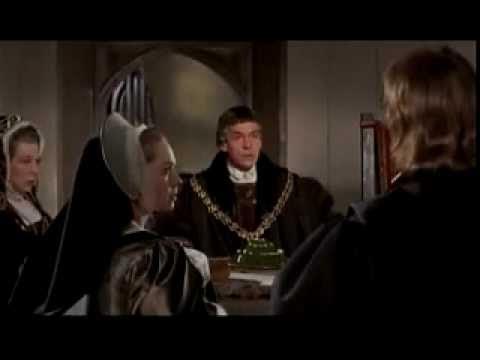
## Background Published on YouTube by CrassHeretic on August 8, 2012, this video presents a celebrated scene from Fred Zinnemann's 1966 film adaptation of Robert Bolt's play 'A Man for All Seasons.' The clip highlights Paul Scofield's performance as English lawyer, philosopher, and humanist Sir Thomas More as he spars with his household over morality, justice, and the rule of law.
## TL;DR When Alice and Margaret More demand the immediate arrest of a dangerous man and suspected spy, Sir Thomas More refuses on the grounds that the man has not violated any civil statute. William Roper passionately insists that God's law justifies detention and proclaims he would cut down every law in England to pursue the Devil. More forcefully rejects this zealotry, warning Roper that razing the country's legal architecture leaves everyone defenseless when evil turns back upon them. Consequently, More insists he would grant even the Devil the benefit of law to ensure the shelter and safety of all human beings.
## Atmosphere & style The scene is taut, dramatic, and charged with intellectual urgency, quickly transforming a domestic dispute into a high-stakes debate on civil liberties and absolute power. Paul Scofield's calm, measured gravity starkly contrasts with the frantic, righteous zeal of his family, lending his defense of legal restraint an authoritative, chilling resonance. Watching the confrontation evokes a profound sense of tension and vulnerability as More vividly paints the perilous winds that would blow if society strips away the fragile shelter of human law.
## Bulletin - [00:00](https://www.youtube.com/watch?v=NUqytjlHNIM&t=0s) Sir Thomas More rejects calls from his family to arrest a suspected spy, arguing that neither being dangerous nor being morally bad constitutes a violation of the law. - [00:00](https://www.youtube.com/watch?v=NUqytjlHNIM&t=0s) When William Roper appeals to God's law to justify detention, More delineates civil jurisdiction from divine authority, asserting that God can execute divine law while earthly authorities must adhere to statutory bounds. - [00:00](https://www.youtube.com/watch?v=NUqytjlHNIM&t=0s) Roper declares he would cut down every law in England to pursue evil, prompting More to warn that flattening human legal protections leaves everyone defenceless when evil turns back against them. - [00:00](https://www.youtube.com/watch?v=NUqytjlHNIM&t=0s) More concludes that giving even the Devil the benefit of the law is necessary for self-preservation, as earthly laws create the sole shelter protecting ordinary individuals from unchecked force.
## Key takeaways - [00:00](https://www.youtube.com/watch?v=NUqytjlHNIM&t=0s) Alice and Margaret More demand the arrest of a departed man based strictly on his malice and dangerous character as a spy. - [00:00](https://www.youtube.com/watch?v=NUqytjlHNIM&t=0s) Sir Thomas More establishes that personal moral judgment or inherent malice does not provide legal justification for state arrest. - [00:00](https://www.youtube.com/watch?v=NUqytjlHNIM&t=0s) More maintains a strict separation between earthly statutory law and divine law, countering Roper's religious appeal with 'Then God can arrest him.' - [00:00](https://www.youtube.com/watch?v=NUqytjlHNIM&t=0s) More asserts that due process and civil freedom must extend even to the Devil himself until a concrete law is violated. - [00:00](https://www.youtube.com/watch?v=NUqytjlHNIM&t=0s) Roper represents an ends-justify-the-means mindset, claiming he would willingly destroy every law in England to capture evil. - [00:00](https://www.youtube.com/watch?v=NUqytjlHNIM&t=0s) More warns that razing the legal landscape removes all shelter, leaving no refuge once the pursuer faces evil directly. - [00:00](https://www.youtube.com/watch?v=NUqytjlHNIM&t=0s) The legal canopy of England is explicitly identified as 'man's laws, not God's,' functioning as a human shield against worldly forces. - [00:00](https://www.youtube.com/watch?v=NUqytjlHNIM&t=0s) Affording the benefit of law to the worst actors is framed not as sympathy for evil, but as essential for universal safety and survival.
## Detailed walkthrough ### [00:00](https://www.youtube.com/watch?v=NUqytjlHNIM&t=0s) The Rule of Law and Giving the Devil Benefit of Law
A sharp confrontation erupts within the household of Sir Thomas More over how to handle a dangerous man who has just departed. Alice More demands immediate, ruthless action, insisting, “Arrest him.” When Sir Thomas calmly questions her grounds by asking, “For what?”, Alice points to the man's inherent threat, calling him dangerous and accusing him of being a spy. Margaret joins her mother's plea to stop him, crying out, “Father, that man's bad.” Sir Thomas immediately rebuffs the notion that personal morality or mere malice warrants state intervention, stating flatly, “There's no law against that.” William Roper intervenes with a zealous appeal to a higher authority, declaring, “There is: God's law!” Unmoved, Sir Thomas counters with strict jurisdictional boundaries between the earthly legal system and the divine: “Then God can arrest him.”
As Alice laments that their target has escaped while they waste time debating, Sir Thomas defends the man's right to depart freely, insisting that due process protects anyone who has not actually violated the legal code: “And go he should, if he were the Devil himself, until he broke the law!” Roper is appalled by what he sees as legalistic hair-splitting in the face of evil, asking indignantly, “So, now you'd give the Devil the benefit of law!” Sir Thomas does not flinch and challenges Roper on the terrifying implications of his righteous ends-justify-the-means mindset: “Yes! What would you do? Cut a great road through the law to get after the Devil?” Roper readily embraces that destructive zeal, shouting back, “Yes! I'd cut down every law in England to do that!”
Sir Thomas turns Roper’s righteous fanaticism directly against him, painting a harrowing picture of what happens when the fragile shelter of legal restraint is obliterated in the pursuit of absolute justice. Confronting his son-in-law, More asks what protection anyone would have left once the legal architecture that shields all citizens is razed to the ground: “Oh? And when the last law was down, and the Devil turned 'round on you, where would you hide, Roper, the laws all being flat?” He reminds Roper that the nation's protective canopy consists of earthly statutes rather than divine interventions: “This country is planted thick with laws, from coast to coast -- man's laws, not God's! And if you cut them down, and you're just the man to do it, do you really think you could stand upright in the winds that would blow then?” Ultimately, More grounds his defense of legal protections not in affection for evil, but in universal self-preservation, concluding: “Yes, I'd give the Devil benefit of law, for my own safety's sake.”
```mermaid flowchart TD accTitle: The Rule of Law Versus Zealotry accDescr: Diagram illustrating Roper's proposal to destroy laws to pursue evil versus More's defense of the law as essential shelter.
subgraph Zealotry["Roper's Impulsive Zeal"] A["Identify Evil / The Devil"] --> B["Abolish all laws to pursue it"] B --> C["Landscape flattened: No legal protections remain"] end
subgraph LegalDefense["More's Rule of Law"] D["Devil turns back on the pursuer"] C --> D D --> E["Vulnerable to the winds: Nowhere left to hide"] F["Preserve man's laws from coast to coast"] --> G["Grant even the Devil the benefit of law"] G --> H["Universal shelter and safety for everyone"] end ```
- **Alice More's demand:** Insists the man must be seized immediately purely because he is dangerous and functioning as a spy. - **Margaret More's argument:** Asserts that the man is inherently bad and should therefore be stopped. - **William Roper's stance:** Believes that divine law supersedes human statutes and that every civil law in England should be cut down to eradicate evil. - **Sir Thomas More's philosophy:** Human laws—not divine decrees—are the only barrier shielding mortals from tyranny, requiring that the law protect even the Devil to ensure the safety of all citizens.
## Notable quotes > [00:00](https://www.youtube.com/watch?v=NUqytjlHNIM&t=0s) I'd give the Devil benefit of law, for my own safety's sake. — Sir Thomas More
## Mentioned A Man for All Seasons, Robert Bolt, Fred Zinnemann, Paul Scofield, Sir Thomas More, Alice More, Margaret More, William Roper, England
## Video description From Robert Bolt's classic "A Man for All Seasons" (1966), directed by Fred Zinnemann, starring Paul Scofield as Thomas More, the famous English lawyer, philosopher, and Renaissance humanist.
Alice More: "Arrest him!" Sir Thomas More: "For what?" Alice More: "He's dangerous!" Margaret More: "Father, that man's bad!" Sir Thomas More: "There's no law against that." William Roper: "There is: God's law!" Sir Thomas More: "Then God can arrest him." Alice More: "While you talk, he's gone." Sir Thomas More: "And go he should, if he were the Devil himself, until he broke the law!" William Roper: "So, now you'd give the Devil the benefit of law!" Sir Thomas More: "Yes! What would you do? Cut a great road through the law to get after the Devil?" William Roper: "Yes! I'd cut down every law in England to do that!" Sir Thomas More: "Oh? And when the last law was down, and the Devil turned 'round on you, where would you hide, Roper, the laws all being flat? This country is planted thick with laws, from coast to coast -- man's laws, not God's! And if you cut them down, and you're just the man to do it, do you really think you could stand upright in the winds that would blow then? Yes, I'd give the Devil benefit of law, for my own safety's sake."
[Source](https://www.youtube.com/watch?v=NUqytjlHNIM)