Musk Projects Battery Costs Can Plunge to $80 Raw Material Limit
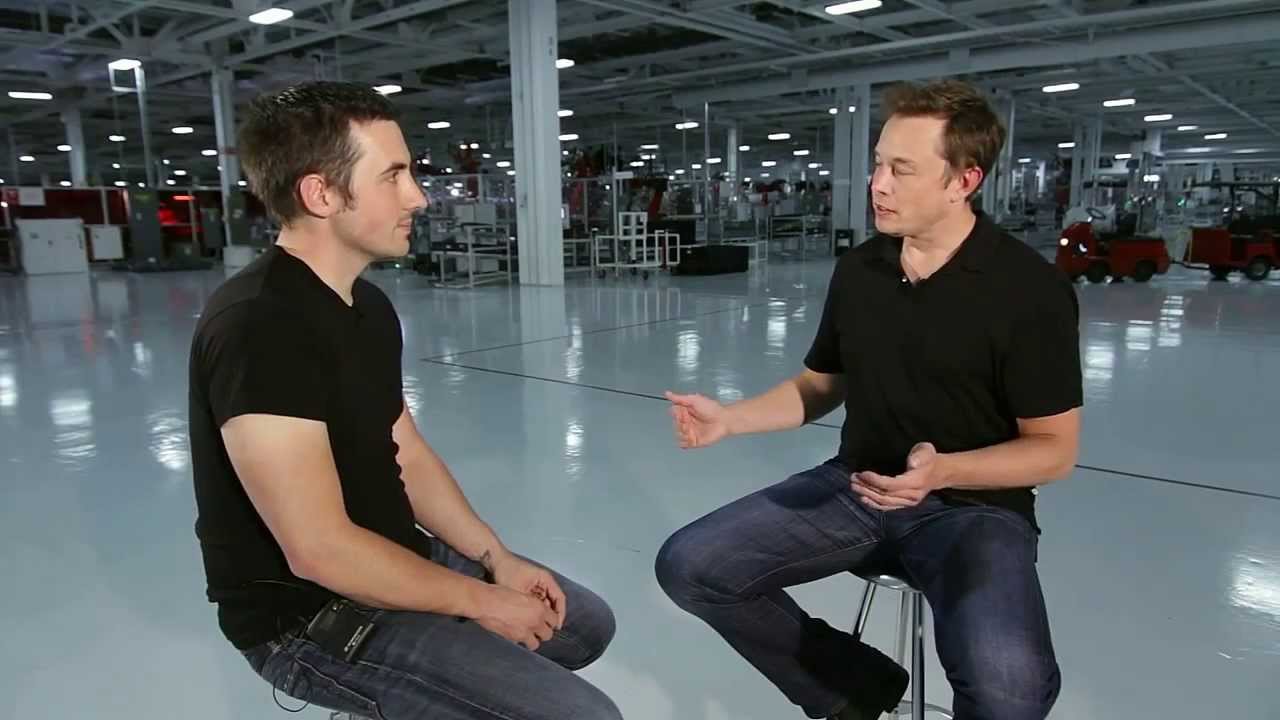
Innomind
Evaluating battery cells by their raw constituent commodities proves pack prices can drop far below historical $600 benchmarks once manufacturers solve assembly and processing efficiencies.
AI-assisted summary of The First Principles Method Explained by Elon Musk — original source. Check the original for full context.
Source published:
Key ideas
- Elon Musk contrasts first principles thinking with reasoning by analogy, noting that while analogy saves cognitive effort, it restricts innovation to minor variations and copycat ideas. (0:00)
- First principles thinking requires boiling a problem down to its most fundamental, undeniable truths and reasoning upward, a process rooted in physics that demands significantly more mental energy. (0:25)
- Musk disproved the industry assumption that battery packs must cost $600 per kilowatt-hour by calculating that the constituent raw materials on the London Metal Exchange cost only about $80 per kilowatt-hour. (0:55)
- By reframing cost barriers around the spot value of physical commodities, manufacturing hurdles transform from insurmountable economic limits into solvable engineering challenges. (2:00)
Detailed notes
## Background Published on YouTube by the channel Innomind on December 4, 2013, this video features an interview conducted by Kevin Rose with Elon Musk. The video description explains the power of "first principles" thinking for making innovative leaps rather than small iterations on existing ideas, while noting Musk's caution that the method demands significant mental energy.
## TL;DR Elon Musk contrasts conventional reasoning by analogy with first principles thinking, describing the latter as a physics-based framework where problems are stripped down to their most fundamental, verifiable truths. While analogical thinking is cognitively easier and leads to incremental, "me-too" variations, first principles allow innovators to bypass flawed industry assumptions. Musk illustrates this through electric vehicle battery economics: rather than accepting historical prices of roughly $600 per kilowatt-hour, he calculated the spot market value of a cell's raw chemical constituents on the London Metal Exchange at just $80 per kilowatt-hour. This material breakdown demonstrated that achieving radically cheaper batteries was simply a matter of designing smarter refining and assembly processes.
## Atmosphere & style The exchange carries a calm, intellectually focused atmosphere characteristic of an intimate tech-insider dialogue between Kevin Rose and Elon Musk. Musk speaks with methodical, deliberate candor, breaking down abstract cognitive models and commodity pricing with unpretentious clarity. The conversation feels pragmatic and eye-opening, conveying the quiet, rational confidence of an engineer systematically dismantling entrenched corporate assumptions using basic physical reality.
## Bulletin - [00:00](https://www.youtube.com/watch?v=NV3sBlRgzTI&t=0s) Elon Musk contrasts first principles thinking with reasoning by analogy, noting that while analogy saves cognitive effort, it restricts innovation to minor variations and copycat ideas. - [00:25](https://www.youtube.com/watch?v=NV3sBlRgzTI&t=25s) First principles thinking requires boiling a problem down to its most fundamental, undeniable truths and reasoning upward, a process rooted in physics that demands significantly more mental energy. - [00:55](https://www.youtube.com/watch?v=NV3sBlRgzTI&t=55s) Musk disproved the industry assumption that battery packs must cost $600 per kilowatt-hour by calculating that the constituent raw materials on the London Metal Exchange cost only about $80 per kilowatt-hour. - [02:00](https://www.youtube.com/watch?v=NV3sBlRgzTI&t=120s) By reframing cost barriers around the spot value of physical commodities, manufacturing hurdles transform from insurmountable economic limits into solvable engineering challenges.
## Key takeaways - [00:00](https://www.youtube.com/watch?v=NV3sBlRgzTI&t=0s) Most human decision-making relies on reasoning by analogy as a mental shortcut, copying others rather than evaluating foundational truths. - [00:15](https://www.youtube.com/watch?v=NV3sBlRgzTI&t=15s) Reasoning by analogy produces 'me-too' ideas and slight iterations on existing themes rather than breakthrough innovation. - [00:20](https://www.youtube.com/watch?v=NV3sBlRgzTI&t=20s) People default to analogical reasoning primarily because it requires far less cognitive effort than constructing arguments from scratch. - [00:25](https://www.youtube.com/watch?v=NV3sBlRgzTI&t=25s) First principles is a physics-based framework that involves reducing problems to their most fundamental, verifiable truths. - [00:45](https://www.youtube.com/watch?v=NV3sBlRgzTI&t=45s) The primary drawback of first principles thinking is that it demands substantially more mental energy to execute. - [00:55](https://www.youtube.com/watch?v=NV3sBlRgzTI&t=55s) Conventional industry consensus historically accepted that battery packs would always remain expensive at roughly $600 per kilowatt-hour. - [01:10](https://www.youtube.com/watch?v=NV3sBlRgzTI&t=70s) Relying on backward-looking precedent stifles technological leaps, similar to early skepticism toward automobiles in favor of horses. - [01:30](https://www.youtube.com/watch?v=NV3sBlRgzTI&t=90s) Deconstructing a battery to its raw constituents—cobalt, nickel, aluminum, carbon, polymers, and steel—reveals its true baseline cost. - [01:45](https://www.youtube.com/watch?v=NV3sBlRgzTI&t=105s) Purchased on the London Metal Exchange, the raw materials for a battery pack amount to roughly $80 per kilowatt-hour rather than $600. - [02:00](https://www.youtube.com/watch?v=NV3sBlRgzTI&t=120s) Cost reductions become achievable once the problem shifts from an immutable economic law to clever engineering and material assembly.
## Detailed walkthrough ### [00:00](https://www.youtube.com/watch?v=NV3sBlRgzTI&t=0s) Reasoning by Analogy vs. First Principles
Elon Musk explains that people habitually guide their decisions and thoughts through analogy rather than breaking problems down to their foundational truths. In everyday life, reasoning by analogy serves as a mental shortcut: people look at what already exists or copy what others around them are doing, resulting in copycat concepts and minor variations on pre-existing themes. Kevin Rose points out that this leads directly to “me-too type ideas,” which Musk affirms as “slight iterations on a theme.” Musk notes that people default to this approach simply because it demands far less cognitive effort than constructing an argument from scratch.
In contrast, Musk advocates for first principles thinking, describing it as a physics-based framework for understanding reality. Instead of accepting conventional wisdom or historical benchmarks, this method requires stripping a problem down to its barest, undeniable bedrock facts and building a conclusion upward from there. As Elon Musk emphasizes: “By first principles is kind of a physics way of looking at the world, and what that really means is you kind of boil things down to the most fundamental truths and say, 'Okay, what are we sure is true, or as sure as possible is true?' and then reason up from there.” The fundamental trade-off of this mindset, Musk warns, is that “it takes a lot more mental energy.”
[00:55](https://www.youtube.com/watch?v=NV3sBlRgzTI&t=55s) Applying First Principles to Battery Costs and Innovation
When Kevin Rose asks for a concrete example of this framework in practice, Musk points to the widespread skepticism surrounding battery pack economics. Historically, industry consensus dictated that battery packs were inherently expensive and would inevitably stay that way simply because past precedent had set their price around $600 per kilowatt-hour. Musk rejects that backward-looking logic, arguing that if society applied that brand of reasoning to every emerging technology, breakthroughs would never happen. He draws an analogy to early skepticism of the automobile: skeptics argued that no one would buy cars because horses were already familiar, could graze on ubiquitous grass, and lacked the fueling infrastructure that gasoline required.
```mermaid flowchart TD accTitle: First Principles Battery Cost Breakdown accDescr: Chart contrasting historical battery pack pricing with first principles raw material valuation.
subgraph Analogy["Reasoning by Analogy"] A["Historical Battery Cost<br/>~$600 / kWh"] --> B["Assumption:<br/>Batteries will always be expensive"] end
subgraph FirstPrinciples["First Principles Breakdown"] C["Raw Constituents:<br/>Cobalt, Nickel, Aluminum,<br/>Carbon, Polymers, Steel Can"] D["London Metal Exchange<br/>Spot Market Value:<br/>~$80 / kWh"] E["Clever Processing & Assembly<br/>into Battery Cell Shape"] C --> D D --> E E --> F["Dramatically Cheaper<br/>Battery Packs"] end ```
To challenge the assumption that battery packs must remain prohibitively expensive, Musk applied first principles by disassembling the product down to its constituent raw materials: cobalt, nickel, aluminum, carbon, polymers for separation, and a steel can. He then evaluated what those individual commodities would cost if purchased on the London Metal Exchange. Rather than $600 per kilowatt-hour, the spot market value of the raw elements amounted to only roughly $80 per kilowatt-hour. From that baseline, the challenge ceased to be an insurmountable economic law and instead became an engineering problem: discovering efficient, clever ways to refine and assemble those basic materials into a finished battery cell. As Elon Musk concludes: “Clearly you just need to think of clever ways to take those materials and combine them into the shape of a battery cell, and you can have batteries that are much, much cheaper than anyone realizes.”
- **Historical battery pack benchmark:** ~$600 per kilowatt-hour (kWh). - **Material constituents of the cell:** Cobalt, nickel, aluminum, carbon, separating polymers, and a steel casing. - **London Metal Exchange raw material cost:** ~$80 per kilowatt-hour (kWh). - **Core takeaway:** Grounding cost estimates in fundamental material limits reveals that battery prices can drop dramatically through superior manufacturing and chemical assembly.
## Mentioned Elon Musk, Kevin Rose, London Metal Exchange
## Video description Interview by Kevin Rose
The benefit of "first principles" thinking? It allows you to innovate in clear leaps, rather than building small improvements onto something that already exists. Musk gives an example of the first automobile. While everyone else was trying to improve horse-drawn carriages, someone looked at the fundamentals of transportation and the combustion engine in order to create a car.
Naturally Musk does give one warning about using first principles for innovating however, "it takes a lot more mental energy."
[Source](https://www.youtube.com/watch?v=NV3sBlRgzTI)