Palihapitiya Rejects VC Model as Ad Spend Fuels Artificial Markups
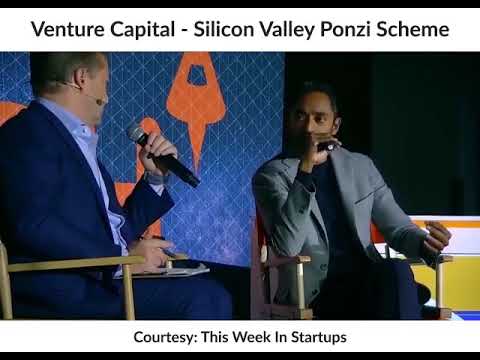
Venture Capital - Silicon Valley Ponzi Scheme - Chamath Palihapitiya — MAK - Mudassir Akber Khan

MAK - Mudassir Akber Khan

Venture capital firms push startups to burn cash on digital ad giants to manufacture synthetic growth metrics, prioritizing guaranteed management fees on successor funds over genuine enterprise value.

AI-assisted summary of Venture Capital - Silicon Valley Ponzi Scheme - Chamath Palihapitiya — original source. Check the original for full context.

Source published:

Key ideas

  • Chamath Palihapitiya warns that roughly 40 cents of every venture capital dollar flows directly to Google, Facebook, and Amazon for paid customer acquisition rather than technological innovation. (0:00)
  • Venture economics have largely shifted from carry to asset-gathering, where a standard 2% management fee on a $500 million fund provides partners with guaranteed multi-million-dollar compensation independent of exit distributions. (2:40)
  • Series B and C rounds are frequently syndicated at 4-5x valuation markups to generate inflated paper IRRs, which general partners leverage to market and raise larger follow-on funds. (2:40)
  • Founders are urged to prioritize capital-light business models over capital-heavy, obvious trends like micromobility, as brute-force paid growth routinely deteriorates unit economics into gross-margin negative territory. (8:39)

Detailed notes

## Background Published on YouTube by MAK - Mudassir Akber Khan on November 12, 2019, this video features an excerpt from an interview originally courtesy of This Week In Startups. The segment, titled "Venture Capital - Silicon Valley Ponzi Scheme - Chamath Palihapitiya," captures Chamath deconstructing how modern venture capital structures trap founders in an artificial growth treadmill.

## TL;DR Chamath Palihapitiya lays bare the inner workings of modern venture capital, explaining how approximately 40% of raised venture dollars are funneled straight into ad platforms like Google, Facebook, and Amazon to generate superficial customer traction. This manufactured growth allows venture firms to orchestrate reciprocal Series B and C valuation markups, enabling general partners to market inflated paper returns to institutional investors and raise larger follow-on vehicles. Consequently, fund managers become heavily incentivized to harvest predictable 2% management fees rather than prioritize founder success or backend carry distributions. To avoid being crushed by these misaligned incentives, Chamath urges founders to maintain capital discipline, build within capital-light sectors, and pursue sustainable 20% to 25% annual compounding instead of chasing exponential decay.

## Atmosphere & style The conversation is blunt, cynical, and intellectually combative, carrying the palpable weight of an insider breaking rank to expose Sand Hill Road's unspoken secrets. The rapport between Chamath and host Jason Calacanis blends sharp structural critique with moments of biting, satirical banter about San Francisco's declining street conditions and absurd tech hype cycles. Listening to the exchange feels like sitting in on a sobering reality check, shifting from pragmatic fund-math breakdowns to an urgent, impassioned warning that founders must stop lying to themselves about venture capital alignment.

## Bulletin - [00:00](https://www.youtube.com/watch?v=NVVsdlHslfI&t=0s) Chamath Palihapitiya warns that roughly 40 cents of every venture capital dollar flows directly to Google, Facebook, and Amazon for paid customer acquisition rather than technological innovation. - [02:40](https://www.youtube.com/watch?v=NVVsdlHslfI&t=160s) Venture economics have largely shifted from carry to asset-gathering, where a standard 2% management fee on a $500 million fund provides partners with guaranteed multi-million-dollar compensation independent of exit distributions. - [02:40](https://www.youtube.com/watch?v=NVVsdlHslfI&t=160s) Series B and C rounds are frequently syndicated at 4-5x valuation markups to generate inflated paper IRRs, which general partners leverage to market and raise larger follow-on funds. - [08:39](https://www.youtube.com/watch?v=NVVsdlHslfI&t=519s) Founders are urged to prioritize capital-light business models over capital-heavy, obvious trends like micromobility, as brute-force paid growth routinely deteriorates unit economics into gross-margin negative territory.

## Key takeaways - [00:00](https://www.youtube.com/watch?v=NVVsdlHslfI&t=0s) Venture capitalists manage third-party capital rather than investing off personal balance sheets, creating a fundamental incentive disconnect between fund managers and startup founders. - [00:00](https://www.youtube.com/watch?v=NVVsdlHslfI&t=0s) Approximately 40% of early-stage venture capital is funneled directly into the advertising oligopoly of Google, Facebook, and Amazon to manufacture artificial growth. - [00:00](https://www.youtube.com/watch?v=NVVsdlHslfI&t=0s) Board directives push founders to achieve rapid top-line growth at the expense of genuine product-market fit to justify follow-on valuation step-ups. - [02:40](https://www.youtube.com/watch?v=NVVsdlHslfI&t=160s) Sand Hill Road networks syndicate Series B and Series C rounds at 4x to 5x markups, inflating unrealized paper returns across mutual portfolios. - [02:40](https://www.youtube.com/watch?v=NVVsdlHslfI&t=160s) The venture industry has transitioned toward prioritizing predictable 2% management fees over backend carry, decoupling partner compensation from actual startup success. - [02:40](https://www.youtube.com/watch?v=NVVsdlHslfI&t=160s) A standard $500 million fund generates $10 million in annual gross management fees, securing roughly $10 million in cash per general partner over a 10-year lifespan without requiring a single profitable exit. - [06:21](https://www.youtube.com/watch?v=NVVsdlHslfI&t=381s) Heavy reliance on paid acquisition drives customer acquisition costs up and lifetime values down, eventually flipping venture-backed startups into gross-margin negative businesses. - [06:21](https://www.youtube.com/watch?v=NVVsdlHslfI&t=381s) Chamath Palihapitiya stepped away from traditional multi-LP fund structures to manage his own balance sheet after concluding the venture markup machine was structurally broken. - [08:39](https://www.youtube.com/watch?v=NVVsdlHslfI&t=519s) Venture funds demand 400% annual growth knowing it will decay to 12%, because the early spike provides sufficient paper traction to raise subsequent funds before the business stalls. - [08:39](https://www.youtube.com/watch?v=NVVsdlHslfI&t=519s) Sustainable businesses that compound steadily at 20% to 25% annually over 15 years are fundamentally incompatible with venture capital fund dynamics. - [08:39](https://www.youtube.com/watch?v=NVVsdlHslfI&t=519s) Venture capital disproportionately burns money on obvious, capital-heavy concepts—such as the rapid escalation from fractional jets down to dockless electric scooters. - [11:23](https://www.youtube.com/watch?v=NVVsdlHslfI&t=683s) Pursuing non-obvious, highly capital-intensive businesses like SpaceX or Tesla works only for rare operators like Elon Musk, whereas ordinary founders face near-certain failure attempting that strategy. - [11:23](https://www.youtube.com/watch?v=NVVsdlHslfI&t=683s) Founders cannot easily determine whether an idea is truly non-obvious beforehand, but capital intensity is an explicit variable within their direct control. - [11:23](https://www.youtube.com/watch?v=NVVsdlHslfI&t=683s) Sustainable company building favors disciplined, iterative capital deployments—such as validating with $50,000 before committing $200,000—over burning capital to buy vanity metrics.

## Detailed walkthrough ### [00:00](https://www.youtube.com/watch?v=NVVsdlHslfI&t=0s) The Venture Capital Ponzi Scheme and the Ad Spend Funnel

When asked what the end game is for the tech ecosystem, Chamath Palihapitiya pulls no punches, telling the audience of founders that they are trapped in a system built on false premises. Unlike fund managers investing off their personal balance sheets, venture capitalists are managing third-party capital. In exchange for this service, VCs receive an obvious annual management fee, alongside the less obvious incentive of carry (a percentage of the backend capital gains should the fund's investments succeed). To court founders, VCs shower them with praise, hand out branded fleece vests, and highlight the famous logos in their portfolios before cutting an initial check—say, an arbitrary one million dollars.

Once the check clears, the tone immediately shifts inside the first board meeting. The primary directive from the VC is relentless, accelerated top-line expansion. Yet as Chamath points out, roughly 40 cents of every venture dollar deployed does not go toward genuine technological innovation; it is funneled directly into Google, Facebook, and Amazon to acquire customer traffic. This paid acquisition creates the illusion of traction without actually improving product-market fit. The investor then turns around to their peers across Sand Hill Road, presents the rapid user acquisition, and encourages their network to syndicate the Series B round at a steep four- to five-fold valuation markup. On paper, the initial fund's internal rate of return looks brilliant, despite being entirely unrealized.

As Chamath Palihapitiya puts it: “Well, it would probably shock you to know that almost 40 cents of every venture dollar right now goes right back into the hands of Google, Facebook, and Amazon.” He stresses the disconnect between manufactured growth and underlying value: “Just because the entrepreneur or the VC gives you a million dollars and tells you to grow faster, do you have better product market fit in that moment? No. You're doing what you're told to do, which is to take their money and make the company grow. Superficially grow.”

```mermaid flowchart TD accTitle: The Venture Capital Markup Cycle accDescr: Flowchart illustrating how venture capital flows into ad giants to inflate metrics and enable consecutive fund raises.

subgraph GrowthEngine["Superficial Growth Engine"] VC["VC Fund Invests Capital"] Ads["40% of Dollars to Google, Facebook & Amazon"] Metrics["Superficial User & Revenue Growth"] VC --> Ads Ads --> Metrics end

subgraph ValuationMarkup["The Markup Mechanism"] NextRound["Series B / C at 4-5x Step-Up"] PaperIRR["Fund Posts Inflated Paper Returns"] Metrics --> NextRound NextRound --> PaperIRR end

subgraph FundRaising["Fund Extraction"] NewFund["VC Raises Larger Fund II / Fund III"] ManagementFees["Guaranteed 2% Annual Management Fees"] PaperIRR --> NewFund NewFund --> ManagementFees end ```

[02:40](https://www.youtube.com/watch?v=NVVsdlHslfI&t=160s) Syndicated Markups and the Shift from Carry to Management Fees

The playbook repeats itself as each new investor enters the capitalization table. The incoming Series B firm demands even faster growth, requiring the startup to shovel another 40% of the newly raised round back into the advertising oligopoly. Customer acquisition costs (CAC) soar, lifetime customer value (LTV) deteriorates, and unit economics collapse, yet the burning of cash is rationalized because the startup is simply obeying its mandate to expand at all costs. When cash reserves inevitably deplete, the Series B lead rings up another friend to lead the Series C, creating another markup that flatters the paper returns of both Fund A and Fund B.

This perpetual markup machine serves an ulterior motive: between the Series B and Series C rounds, the general partners of Fund A market their unrealized paper IRR to institutional limited partners (LPs) to raise an even larger Fund II. Shortly thereafter, the Series B managers follow the exact same blueprint, raising larger funds to write bigger checks and teaming up once again to mark up each other's investments. Chamath explains that this dynamic explains why tech news feeds are flooded with dozens of copycat startups securing massive rounds from unfamiliar venture firms. Top-tier funds are forced to raise unwieldy mega-funds, diluting their ownership and depressing net returns, while the rest of the industry engages in a game of hot potato. In the process, the venture ecosystem ceases to prioritize the founder's long-term enterprise value, because partners have learned they can get rich on recurring 2% management fees rather than relying on carry from liquidity events.

Chamath Palihapitiya summarizes this structural betrayal of founders: “And then the biggest thing happens, which is you all be this that whole industry that services you guys, theoretically services you guys, are no longer about your success, because your success is about their carry, and they couldn't give a [shit]... They care about fees.”

- **The LP Fee Arbitrage**: With a standard 2% management fee, a firm managing even a modest $500 million collects $10 million in gross fees annually. - **Partner Economics**: Split among four or five general partners, each partner takes home roughly $1 million per year in predictable cash compensation. - **Decoupled Incentives**: Over a standard 10-year fund lifespan, a partner pockets $10 million in fees alone, rendering actual fund performance and exit distributions secondary to simply keeping assets under management (AUM) high.

[06:21](https://www.youtube.com/watch?v=NVVsdlHslfI&t=381s) Stepping Away from the Charade: Broken Unit Economics

Jason Calacanis interjects, noting that once a firm accumulates multiple $500 million vehicles to reach several billion dollars in assets under management, the fee pool becomes astronomical. Chamath counters that a firm does not even need billions under management to disincentivize carry-driven investing. When accounting for fund expenses and the complex math required to return capital net of carry hurdles, banking guaranteed millions in annual management fees is vastly easier and safer for the GP than building enduring, cash-generative companies. Recognizing this distortion, Chamath decided to exit the traditional venture fund structure, take his chips off the table, and manage his own balance sheet so he could wait on the sidelines with substantial dry powder until the speculative bubble deflates and the charade unravels.

Chamath warns founders that the “growth at all costs” doctrine is a dangerous dead end. As acquisition costs rise across search and social channels, companies inevitably transition from gross-margin positive to gross-margin negative, rendering their core business model broken. This model only survives as long as external capital markets remain liquid and investors continue to pass the bag via synthetic markups. At no point in these board-level discussions does anyone pause to evaluate whether the business possesses true, sustainable product-market fit.

Chamath Palihapitiya emphasizes his refusal to participate in the cycle: “These are fundamentally broken business concepts. They don't work. They only work if the money never stops. But the money never stops until as much time as people can raise new funds. And that's predicated on people marking up old deals.” He adds: “I looked at our portfolio. We have some incredible businesses. We have things that are really meaningful in the world. We have both. And I'm like, it's time to take my chips off the table. Sorry. Ciao.”

[08:39](https://www.youtube.com/watch?v=NVVsdlHslfI&t=519s) Sustainable Compounding vs. Obvious Capital-Heavy Plays

Chamath argues for a return to financial sobriety, expressing an appetite for businesses that can steadily compound at 20% to 25% annually over a 15-year horizon. However, that profile is fundamentally incompatible with the venture capital playbook. Venture funds require startups to blast off at 400% annual growth, knowing full well that such exponential rates rapidly decay into 12% growth over time. Fund managers accept this decay because by the time the company decelerates, the GPs have already used the early growth spikes to mark up their portfolio, collect fees, and raise two successive funds.

For founders navigating this environment, Chamath strongly advises building within the “capital light” quadrant, regardless of whether the core idea is obvious or non-obvious. Venture capital has a tendency to pour billions into businesses that sit at the intersection of obvious concepts and heavy capital requirements, with the boom in dockless electric scooter startups serving as a prime example. Looking back across the historical evolution of charter transportation, the progression was plain to see: NetJets introduced fractional plane ownership decades ago, followed sequentially by regional air charter, chartered buses, limousines, black cars, budget ride-hailing, pooled ride-shares, and dockless bicycles. Extending that breadcrumb trail down to an electric scooter—a vehicle smaller than a bicycle but faster than walking—did not require proprietary insight, yet it attracted immense sums of venture capital into a deeply capital-intensive, commoditized market.

Reflecting on the misaligned expectations imposed on startups, Chamath Palihapitiya points out: “That violates all the mechanics and all the gymnastics within a venture fund. It's like grow at 400 because we know 400 eventually decays to 12% a year. But they don't care by the time you're growing at 12% a year because by the time 400 became 200 became 100 became 50, they've raised two more funds, they've marked up the rest of their deals, they've made their fees. Ciao.” Concluding his advice on business models, he underscores: “Wherever you are, you want to be whether you're obvious or non-obvious, you want to be in that capital light column.”

[10:20](https://www.youtube.com/watch?v=NVVsdlHslfI&t=620s) The Micromobility Craze and the Capital-Heavy Charade

Jason Calacanis and Chamath Palihapitiya joke about the absurdity of recent tech trends, imagining shared rollerblades scattered haphazardly across the sidewalks of San Francisco where people could just slip their feet in and see what happens. The banter quickly turns to dark humor about the state of the city's streets, with Chamath warning that inside those communal rollerblades, you could find anything from hypodermic needles to human or dog feces. Chamath quips that if Jason runs for mayor and fixes the city, he will actually commit to moving back to San Francisco, prompting Jason to plug `mayorjason.com`.

```mermaid flowchart TD accTitle: The Venture Capital Subsidy Cycle accDescr: A flowchart depicting how VC money is used to buy ad growth to trigger quick follow-on markups. subgraph FundingLoop ["The Growth-Buying Loop"] A["Inject Huge Capital into Obvious Category"] --> B["Spend Heavily on Ads to Buy Users"] B --> C["Manufacture Rapid Top-Line Growth"] C --> D["Attract Next VC Investor"] D -->|"Re-inject Larger Check"| A end ```

Shifting from the joke to serious market analysis, Chamath challenges the audience to look at how much capital poured into micromobility categories over a mere 18 to 24 months. While Jason estimates billions, Chamath puts it in the hundreds of millions for specific subsets, emphasizing that these businesses fall squarely into the "obvious and capital-heavy" bucket. In Chamath’s view, this setup exists primarily to fuel a venture capital growth treadmill rather than enduring value. Chamath explains that investors pour money in just to buy online ads, manufacture rapid growth metrics, and flip the momentum to another investor for the next round. Disillusioned with this approach, Chamath questions the entire premise: “Jesus Christ. I mean, like is that Is that how great businesses get built? In my opinion, probably not.”

[11:23](https://www.youtube.com/watch?v=NVVsdlHslfI&t=683s) Disciplined Building vs. the VC Fee Machine

Chamath contrasts mainstream tech trends with the rare exceptions like Elon Musk, who tackles businesses that are both non-obvious and exceptionally capital-heavy, such as rockets, electric cars, and Powerwalls. Chamath points out that pursuing that model is disastrous for almost everyone else: “And basically, unless you're as smart as he is, it's the dumbest thing to do.” For regular founders and investors, knowing whether an idea is truly obvious or non-obvious beforehand is nearly impossible, but capital intensity is an explicit choice within a founder's control. Chamath favors a much more disciplined, iterative approach to company building: seeding an idea with $50,000, testing if it shows signs of life, and gradually adding $200,000 rather than lighting billions of dollars on fire just to acquire customers through brute force.

Chamath warns founders that if they do not adopt capital discipline, they will inevitably be trapped and whipsawed by fund dynamics, LP pressures, and the personal financial motivations of general partners (GPs). He pulls back the curtain on how partner compensation drives bad venture behavior, detailing how GPs chase fast-growing deals simply to generate paper markups, market their next fund, and collect 2% management fees to pay for luxury cars or multi-million dollar homes in Atherton. Pulling no punches about the reality of Silicon Valley incentives, Chamath concludes: “I'm sorry, guys. But like if you think that that's not what's happening, you're lying to yourself. You are lying to yourself.”

- **The Elon Musk exception**: Tackling non-obvious, capital-heavy ventures like SpaceX rockets or Tesla electric vehicles and Powerwalls only works if a founder possesses Musk-level intellect and execution; for everyone else, it is a recipe for failure. - **Controllable factors**: Founders cannot definitively determine whether a concept is obvious or non-obvious *a priori*, but they can strictly control whether their company operates with a capital-heavy or capital-light structure. - **The GP incentive chain**: A startup's rapid, ad-subsidized growth leads to an upstream VC markup, which lets the fund manager raise a larger follow-on fund, increasing their 2% management fee and financing personal lifestyle expenses.

## Notable quotes > [00:00](https://www.youtube.com/watch?v=NVVsdlHslfI&t=0s) Well, it would probably shock you to know that almost 40 cents of every venture dollar right now goes right back into the hands of Google, Facebook, and Amazon. — Chamath Palihapitiya

> [00:00](https://www.youtube.com/watch?v=NVVsdlHslfI&t=0s) Just because the entrepreneur or the VC gives you a million dollars and tells you to grow faster, do you have better product market fit in that moment? No. — Chamath Palihapitiya

## Mentioned Chamath Palihapitiya, Jason Calacanis, Mudassir Akber Khan, This Week In Startups, Google, Facebook, Amazon, Sand Hill Road, NetJets, Elon Musk, Tesla, SpaceX, San Francisco, Atherton

## Video description Courtesy: This Week In Startups

[Source](https://www.youtube.com/watch?v=NVVsdlHslfI)

中文简报

帕利哈皮蒂亚抨击风投模式:广告支出推高虚假估值 风投机构促使初创企业向数字广告巨头大举烧钱以制造虚假的增长指标,相较于真正的企业价值,其更看重后续基金有保障的管理费收益。 查马斯·帕利哈皮蒂亚揭露了现代风险投资的内部运作机制,指出所筹集风投资金中约有40%直接流入Google、Facebook和Amazon等广告平台,仅仅用于制造表面的获客势头。这种人为制造的增长使风投机构得以通过互惠合作推高B轮和C轮估值,便于普通合伙人向机构投资者兜售虚高的账面回报,并借此募集规模更大的后续基金。因此,基金管理人获得了极大的动力去赚取稳定可期的2%管理费,而非优先考虑创始人的成功或后期的业绩提成收益。为了避免被这种利益错配所拖垮,查马斯敦促创始人保持资本纪律,在轻资本领域深耕,追求每年20%至25%的可持续复合增长,而非追逐极易崩盘的爆发式增长。 查马斯·帕利哈皮蒂亚警告称,每1美元风投资金中约有40美分直接流向Google、Facebook和Amazon进行付费获客,而非用于技术创新。 (0:00) 风投行业的盈利模式已基本从业绩提成转向资产规模扩张,一只5亿美元的基金仅凭2%的常规管理费,即可为合伙人提供数百万美元的有保障报酬,与退出分配收益完全脱钩。 (2:40) B轮和C轮融资经常以4至5倍的估值溢价进行联合投资,以制造虚高的账面内部收益率(IRR),普通合伙人借此开展推介并募集规模更大的后续基金。 (2:40) 建议创始人优先考虑轻资产商业模式,远离微出行等显而易见的重资本风口,因为简单粗暴的买量增长往往会导致单位经济效益恶化至负毛利区间。 (8:39)

Reading summary

Chamath Palihapitiya contends that the venture capital ecosystem functions like a Ponzi scheme, where general partners prioritize guaranteed management fees over backend carry by manufacturing artificial growth and valuation markups. Ad Spend and Manufactured Portfolio Markups (0:00) Chamath asserts that roughly 40 cents of every venture capital dollar deployed is funneled directly to advertising platforms like Google, Facebook, and Amazon rather than technological innovation. This paid acquisition creates superficial revenue and user traction without establishing genuine product-market fit. Venture capitalists then use these inflated early metrics to syndicate follow-on Series B rounds with peer firms at four- to five-fold valuation markups, generating impressive, unrealized paper returns. Fee Arbitrage Decouples Partner and Founder Incentives (2:40) According to Chamath, general partners (GPs) leverage unrealized paper internal rates of return between funding rounds to market larger follow-on funds to institutional limited partners. This shift allows GPs to build personal wealth through predictable 2% annual management fees rather than relying on carry from liquidity events. On a standard $500 million fund, four or five partners split $10 million in annual gross fees, taking home roughly $1 million each year over a ten-year fund horizon. As a consequence, Chamath argues that the industry ceases to care about founders' long-term enterprise value, focusing instead on growing assets under management. Broken Unit Economics in Capital-Heavy Sectors (8:39) The venture model often forces startups to target 400% annual growth, a trajectory that Chamath notes inevitably decays to 12% as customer acquisition costs climb and margins turn negative. Fund managers tolerate this decay because early growth spikes provide enough cover to collect fees and raise successor funds before unit economics unravel. Chamath points to the rapid influx of hundreds of millions of dollars into commoditized, obvious, and capital-heavy categories—such as dockless electric scooters—as evidence of an investment treadmill designed to generate fast markups rather than durable businesses. Capital Discipline and Sustainable Compounding (11:23) To resist venture capital pressures, Chamath advises founders to operate strictly within capital-light structures and adopt phased capital deployment—such as testing an idea with $50,000 and incrementally adding $200,000 based on organic traction. While acknowledging rare exceptions like Elon Musk executing non-obvious, capital-heavy ventures in rocketry and automotive manufacturing, Chamath considers that playbook disastrous for typical founders. Rejecting traditional institutional fund incentives, Chamath exited managing third-party venture capital to invest off his personal balance sheet, targeting businesses capable of compounding at 20% to 25% annually over a 15-year horizon. Chamath concludes that the prevailing venture capital model survives only as long as cheap liquidity permits investors to pass along synthetic markups. He anticipates the system will unravel once the cycle slows, though it remains an open question how institutional limited partners will respond when unrealized returns fail to convert into cash distributions.

精炼阅读摘要

风险投资家 Chamath Palihapitiya 认为,硅谷风投生态已异化为依赖账面估值抬升的“庞氏”机制:基金通过驱使初创企业向广告巨头烧钱制造增长假象,以此抬高估值并募集规模更大的后续基金来赚取稳定的管理费,严重背离了创造长期真实企业价值的初衷。 广告支出漏斗与虚假增长闭环 (0:00) Chamath Palihapitiya 指出,投入初创企业的风投资金中,约有40%并未用于实质的技术创新,而是直接流入了 Google、Facebook 和 Amazon 等科技巨头的获客广告渠道。风投资本在开出支票后,往往在首次董事会会议上就施压创始人追求极致的营收规模扩张。然而,这种依靠高额买量换取的用户增长只制造了业务具备吸引力的表象,并未改善产品与市场的契合度(Product-Market Fit)。 投资机构随后利用这些被人为推高的获客与收入指标,向沙丘路(Sand Hill Road)的同行推销,推动以4到5倍的估值溢价完成 B 轮辛迪加融资。这使得早期进入的基金在账面上录得极具吸引力但完全未套现的内部收益率(IRR),将初创企业推入表面繁荣的增长陷阱。 估值接力与管理费套利机制 (2:40) 随着新一轮投资方进入股东名册,该模式便开始循环往复:新进机构继续要求更迅猛的扩张,迫使企业将新轮次资金的40%再次输送给广告寡头,导致客户获取成本(CAC)剧增、客户终身价值(LTV)恶化,单位经济效益趋向瓦解。然而,烧钱行为被持续合理化,其核心目的在于促成下一轮估值溢价以粉饰各家基金的账面回报。 Chamath 分析称,普通合伙人(GP)的深层动机在于利用虚高的账面业绩向机构有限合伙人(LP)募资,设立体量更大的后续基金。按照行业标准的2%年管理费计算,一家管理规模为5亿美元的基金每年仅管理费收入就达1000万美元;分摊给4至5位合伙人后,每人每年可获得约100万美元的稳定现金补偿,在标准的十年基金周期内即可累计赚取上千万美元。管理费的丰厚收益使得追求实际退出回报(Carry)退居次要地位,彻底割裂了风投机构与创始人长期利益的协同。 商业模式破裂与退出传统基金 (6:21) 随着线上获客成本不可逆地攀升,依赖补贴扩张的公司往往从毛利为正滑向毛利为负,其核心商业模式本质上已经失效。Chamath 警告,这种模式能够存续的唯一条件是外部资本市场持续保持充沛流动性,且投资人不断通过人为制造的账面估值来击鼓传花,董事会内部几乎无人评估业务是否具备可持续的真实需求。 Chamath 指出,在扣除基金运营费用和门槛收益后,依靠企业实际分红或退出产生净回报不仅计算复杂而且难度极高,相比之下,锁定千万级保底管理费对 GP 而言更加轻松稳妥。基于对这一结构性扭曲的清醒判断,Chamath 选择退出传统的第三方管理基金架构,收回筹码并转为管理自有资金,保留充足的流动性退居场外,静待投机泡沫破裂与整场闹剧落幕。 警惕重资产陷阱与恪守轻资本纪律 (8:39) Chamath 主张回归审慎的商业常识,青睐能够在15年周期内保持年化20%至25%稳健复合增长的企业。然而,这种模式被传统风投机制排斥,因为风投追求的是400%的爆发式增长,即便其明知这一增速最终必然衰减至12%,因为在企业减速前,GP 早已完成估值抬升、落袋管理费并募集了新基金。他以无桩电动滑板车等微出行项目为例,批评资本向“显而易见且资本密集”的赛道倾注数亿美元,这类项目缺乏专有洞察,仅靠资本补贴制造短期势头,再转手甩给下一级投资者。 他进一步提醒,除了极少数像 Elon Musk 那样能够驾驭火箭、电动汽车等“非显而易见且资本密集”的商业天才外,普通创始人盲目涉足重资产模式往往招致失败。鉴于商业想法是否具有前瞻性在事前极难断定,创始人唯一完全可控的变量是资本密集度。他强烈建议创始人坚守轻资本(Capital-Light)模式,以数万美元进行渐进式验证,而非通过盲目烧钱去充当风投合伙人赚取管理费的工具。 Chamath Palihapitiya 的论述深刻揭示了硅谷风投生态中管理费膨胀所引发的代理人问题与增长泡沫,警示创业者切勿以摧毁单位经济效益为代价去配合资本的账面估值游戏;然而,其倡导的“撤回筹码并利用自有资本独立投资”策略主要适用于已积累巨额财富的资深投资人,对于高度依赖外部融资获取启动资源的普通早期创业团队而言,如何在资本诉求与自我造血之间维持生存平衡,仍是尚未解决的现实挑战。

Detailed notes — zh

## Background 该视频由 YouTube 频道 MAK - Mudassir Akber Khan 于 2019 年 11 月 12 日发布。视频内容选自播客节目《This Week In Startups》,记录了风险投资人查马斯·帕里哈皮蒂亚(Chamath Palihapitiya)对硅谷风投生态的深度剖析与辛辣批判。 ## TL;DR 查马斯·帕里哈皮蒂亚直言当前的硅谷风投生态已沦为一场巨大的“多变量庞氏骗局”,创业公司融到的大量资金有近 40% 直接回流给 Google、Facebook 和 Amazon 用于买量以制造虚假繁荣。风投机构(GP)根本不在乎企业是否实现真实的 PMF 或最终退出提成(Carry),而是通过同行合谋抬高账面估值(mark-up),以此向 LP 募集更大规模的二期、三期基金,稳稳套取每年 2% 的固定管理费中饱私囊。查马斯痛斥共享滑板车等“显而易见且极度重资本”的烧钱赛道,警告创始人警惕资本绑架,倡导保持财务纪律并选择自主可控的“轻资本”渐进式发展路径。 ## Atmosphere & style 对谈现场气氛极其尖锐而赤裸,查马斯毫无保留地卸下风投圈光鲜亮丽的伪装,言辞犀利、毫不留情,甚至带着几分功成身退后的戏谑与冷酷。他与主持人 Jason Calacanis 频频借旧金山街头乱象打趣调侃,但话锋一转便切入极为严肃残酷的商业本质。整场对话既充满小学算术式的直白解构,又充斥着对行业自欺欺人现状的愤慨与警醒,给听众带来振聋发聩、打破幻想的强烈冲击感。 ## Bulletin - [00:00](https://www.youtube.com/watch?v=NVVsdlHslfI&t=0s) 查马斯·帕里哈皮蒂亚直言当前的硅谷风投生态本质是一场多变量庞氏骗局,风投资金中近40%直接回流至Google、Facebook和Amazon等大厂用于买量。 - [02:18](https://www.youtube.com/watch?v=NVVsdlHslfI&t=138s) 投资机构的利益激励已严重脱节,GP的核心诉求从依赖退出回报的超额提成(Carry)转向做大资金规模直接套取每年2%的固定管理费。 - [06:21](https://www.youtube.com/watch?v=NVVsdlHslfI&t=381s) 以一只5亿美元的基金为例,每年2%的管理费进账达1000万美元,4-5位合伙人即便项目全军覆没也能在十年期内各自落袋上千万美元薪酬。 - [07:42](https://www.youtube.com/watch?v=NVVsdlHslfI&t=462s) 查马斯告诫创业者远离共享滑板车等“显而易见且极度重资本”的烧钱赛道,转而追求可自主掌控的轻资本模式与稳健的复合增长。 ## Key takeaways - [00:00](https://www.youtube.com/watch?v=NVVsdlHslfI&t=0s) 硅谷风投运作呈现庞氏结构,投资人拿LP的钱逼迫创业者不计代价追求表面高增长,以此为下一轮融资造势。 - [00:00](https://www.youtube.com/watch?v=NVVsdlHslfI&t=0s) 风投资金中有近40%通过激进买量流向Google、Facebook和Amazon,掩盖了产品缺乏真实PMF的核心缺陷。 - [02:18](https://www.youtube.com/watch?v=NVVsdlHslfI&t=138s) 行业盛行同行好友相互抬轿的击鼓传花机制,通过B轮、C轮翻倍估值制造亮眼的纸面IRR。 - [02:18](https://www.youtube.com/watch?v=NVVsdlHslfI&t=138s) 风投合伙人利用被抬高的账面IRR快速向LP募集二期、三期基金,将资金盘子做大以稳固收益。 - [02:18](https://www.youtube.com/watch?v=NVVsdlHslfI&t=138s) 投资人生态早已不再以被投企业的真正成功为重心,因为成功对应的Carry周期漫长且风险高,而管理费则是旱涝保收。 - [06:21](https://www.youtube.com/watch?v=NVVsdlHslfI&t=381s) 5亿美元规模的基金每年可带来1000万美元固定管理费,足以为合伙人提供高达年薪百万美元且持续十年的零风险收入。 - [06:21](https://www.youtube.com/watch?v=NVVsdlHslfI&t=381s) 面对行业有史以来最扭曲的激励机制,查马斯选择出售Social Capital的组合份额套现离场,手握现金等待市场去杠杆。 - [07:42](https://www.youtube.com/watch?v=NVVsdlHslfI&t=462s) 买量红利枯竭会导致获客成本暴增并击穿单位经济模型,使企业从前几年400%的虚假暴增断崖式跌落至无法盈利的深渊。 - [07:42](https://www.youtube.com/watch?v=NVVsdlHslfI&t=462s) 相比短期爆发后归于平庸的模式,健康企业的长青路径应是在未来15年持续维持20%至25%的稳健复合增长。 - [10:20](https://www.youtube.com/watch?v=NVVsdlHslfI&t=620s) 共享滑板车等微出行项目属于“显而易见且极度重资本”的陷阱,数十亿美元涌入仅为维持估值抬轿与广告投放的虚假繁荣。 - [11:23](https://www.youtube.com/watch?v=NVVsdlHslfI&t=683s) “非显而易见且重资本”的路径(如Elon Musk的SpaceX与Tesla)极难复制,除非具备顶尖天才,否则普通团队盲目跟风是极其愚蠢的。 - [11:23](https://www.youtube.com/watch?v=NVVsdlHslfI&t=683s) 创业者无法预先断定想法是否足够独特,但必须自主掌控资本的轻重,通过5万至20万美元的渐进式种子资金保持严格的财务纪律。 - [12:30](https://www.youtube.com/watch?v=NVVsdlHslfI&t=750s) GP投资决策往往受制于个人奢靡生活开销(如阿瑟顿豪宅与豪车租金),为了赚取2%管理费而迫切需要短期高增长案子抬轿。 - [12:30](https://www.youtube.com/watch?v=NVVsdlHslfI&t=750s) 创业者若缺乏对资本节奏的清醒定力,终将沦为VC募集新基金、抽取管理费这场闭环骗局中的垫脚石与牺牲品。 ## Detailed walkthrough ### [00:00](https://www.youtube.com/watch?v=NVVsdlHslfI&t=0s) 硅谷的多变量庞氏骗局与买来的表面增长 谈话伊始,主持人抛出问题,询问眼下这种失控局面的终局究竟会是什么。查马斯·帕里哈皮蒂亚(Chamath Palihapitiya)毫不避讳地直言,在座的创业者正身处一场巨大的结构性危机之中:“毫无疑问,我们正处于——好吧,你们正处于,我已经套现退出了——但你们大家正处在一场巨大的、多变量的庞氏骗局之中(Well, we're in we're we are, make no mistake, uh well, you are, I'm out, cuz I sold like but you guys are in, the middle of an enormous uh multivariate kind of Ponzi scheme.)。”他向台下的创业者拆解了风险投资的真实运作模式:投资人向创业公司开出支票,拿的并不是他们自己资产负债表里的自有资金,而是在拿着别人的钱替人打工。作为管理人,他们获得两块收益:一个是显而易见的每年固定管理费,另一个则是日后项目成功时才能拿到的超额业绩提成(Carry)。 为了拿到案子,投资机构会竭力向创业者献殷勤,送印着自家 Logo 的羊毛背心,吹嘘自己曾投过哪些明星企业,承诺能提供各种资源与帮助。可一旦创业者签下协议拿到第一笔钱(比如假定的一百万美元),噩梦往往就从第一次董事会开始了。投资人不会深究公司的底层价值,只会反复逼问:“你们增长有多快?”接着下达唯一指令:“必须长得更快。”查马斯指出,当前风险投资生态中存在一个惊人的扭曲现象:“如果告诉你们现在风投投出的每一块钱里,有将近 40 美分直接回流到了 Google、Facebook 和 Amazon 的口袋里,你们大概会大吃一惊(It would probably shock you to know that almost 40 cents of every venture dollar right now goes right back into the hands of Google, Facebook, and Amazon.)。” 这种由巨额广告投放堆砌出来的增长纯属自欺欺人,根本不是健康的盈利性增长,也没有真正改善产品与市场的契合度(PMF)。创始人只是在机械地执行投资人的指令,用烧钱的方式制造增长繁荣的假象。而投资人要的也恰恰是这种数字泡沫,好让他们能够拿着这份漂亮的增长曲线,去向风投圈的好友们推销下一轮融资。 ```mermaid flowchart TD accTitle: 硅谷风投资本循环机制 accDescr: 展示风投资金如何流向大科技巨头购买虚假增长,并通过抬高估值募集新基金收取管理费的循环。 subgraph CapitalFlow["资本与支出流向"] A["LP 资金注入风投基金"] --> B["基金 A 向创业公司投资"] B --> C["创业公司烧钱投放广告"] C --> D["40% 资金流向 Google / Facebook / Amazon"] end subgraph ValuationHype["估值与击鼓传花"] D --> E["换取无利润的虚假表面增长"] E --> F["同行好友接盘 B 轮 / C 轮(账面估值暴涨 4-5 倍)"] end subgraph ManagerIncentive["基金管理人的真实收益"] F --> G["基金 A 录得靓丽纸面 IRR"] G --> H["募资规模更大的二期 / 三期基金"] H --> I["锁定巨额 2% 固定管理费(落袋为安)"] I -.->|"周而复始"| A end ``` - 风投机构主要依靠“每年固定的管理费”与“后期的利润提成(Carry)”两套机制运作。 - 当前风投资本中有近 40% 最终以获客和买量成本的形式流向了 Google、Facebook 和 Amazon 三大科技巨头。 - 资本催生的激进买量掩盖了真实的 PMF 缺陷,打造的纯粹是不可持续的表面增长。 --- ### [02:18](https://www.youtube.com/watch?v=NVVsdlHslfI&t=138s) 击鼓传花式的轮次抬轿与管理费套现 当公司被催熟出漂亮的增长数字后,A 轮投资人便会心照不宣地找来同行好友:“看看这家公司长得多快,你们该来领投 B 轮了。”随后好友所在的 B 机构入场,将估值翻上 4 到 5 倍。此时,A 轮机构在账面上立刻显得英明神武,纸面内部收益率(IRR)异常亮眼。紧接着,新进场的 B 轮投资人坐进董事会,重复着完全相同的套路,继续要求创业者加速扩张,逼迫公司将更多资本塞给 Google、Facebook 和 Amazon。 在这个阶段,客户终身价值(LTV)与获客成本(CAC)的比例是否合理已经无人问津。由于钱都被迅速挥霍在无效的流量争夺上,资金很快见底,B 轮投资人便顺理成章地引荐 C 轮好友入场,将账面价值再翻一倍。查马斯犀利地拆解了投资人背后的算盘:在 B 轮和 C 轮之间,A 轮基金的合伙人就会拿着极其华丽的账面 IRR 去找 LP 募第二期基金,声称自己眼光独到;尝到甜头的 LP 迅速奉上更多资金。而在 C 轮和 D 轮之间,B 轮合伙人也依样画葫芦,募集更大规模的二期基金,甚至回过头来再投资 A 轮机构旗下的新项目,彼此合谋抬轿。 这种模式解释了为何如今科技媒体每天都充斥着铺天盖地的融资新闻,任何一个细分赛道都能塞进几十家获得巨资的公司,名不见经传的新投资人层出不穷。查马斯直指这个体系的核心虚伪之处:“服务你们的这整个行业——理论上是为你们服务的行业——早已不再关心你们的成功,因为你们的成功对应的是他们的业绩提成,而他们根本不在乎;他们在乎的是管理费(That whole industry that services you guys, theoretically services you guys, are no longer about your success, because your success is about their carry, and they couldn't give a [__] — they care about fees.)。” - 轮次抬轿机制:A 轮催熟指标 $\rightarrow$ 熟人机构入局 B 轮并给出 4-5 倍账面加价 $\rightarrow$ 引入 C 轮接盘并推高基数。 - 募资闭环:GP 凭借被抬高的纸面回报(Paper IRR)快速募集二期、三期基金,将资金盘子越滚越大。 - 利益脱节:GP 的核心利益已从依赖项目退出回报的 Carry,彻底转向通过做大资金规模直接套取每年的管理费。 --- ### [06:21](https://www.youtube.com/watch?v=NVVsdlHslfI&t=381s) 扭曲的激励机制与查马斯的退出抉择 查马斯用极其直白的小学算术揭开了管理费背后的暴利逻辑。主持人提到如果一个投资人做成五六个 5 亿美元的基金,就能管理二三十亿美元;查马斯随即打断指出,根本用不着这么大的规模:哪怕旗下只有 5 亿美元的管理规模,按照每年 2% 的管理费计算,一年进账就是 1000 万美元。如果一家机构只有四到五个合伙人,每人每年光是旱涝保收的薪酬就高达 100 万美元;十年基金期算下来,哪怕项目全军覆没,个人也能稳稳落袋 1000 万美元。 相比之下,要想通过项目退出拿到 Carry,基金必须扣除各项开支并先还清 LP 的本金,其中的复杂数学和退出门槛极高。两相比较,追求规模以赚取固定管理费成了合伙人最理性的算计,这也解释了为什么他们只关心创业者能不能快速把钱花出去买量。查马斯严肃总结道:“我的观点是,这个行业的激励机制已经达到了有史以来最扭曲的程度,这完全是一场骗局(So, my point is the incentives in this industry are the most out of whack they've ever been. It's a bit of a charade.)。” 面对这样扭曲的大环境,查马斯做出了自己的选择。他审视了 Social Capital 的投资组合,确认旗下既有极具商业价值的优秀资产,也有对世界具有深远意义的伟大事业,随后毅然决定卖掉份额、套现离场。他表示自己绝不会再参与这场肮脏的把戏,宁可手握巨额现金静静观望,等待估值泡沫破裂、市场彻底去杠杆的那一刻,再去寻找那些真正需要资本且货真价实的好公司。 | 收益来源 | 兑现条件与周期 | 风险程度 | GP 激励倾向 | |:--- |:--- |:--- |:--- | | **管理费(Management Fee)** | 每年按基金规模固定收取 2%,持续 10 年 | 零下行风险,旱涝保收(5 亿基金每年可收 1000 万美元) | **极高**:通过激进抬轿快速募集更大规模基金,靠收管理费直接实现财富自由 | | **超额提成(Carry)** | 必须在基金完全返还 LP 本金及各项开支后,从净利润中分成 | 极高风险,极度依赖公开市场 IPO 或大型并购退出 | **被边缘化**:周期漫长且充满不确定性,投资人宁愿舍弃 Carry 也要优先做大管理规模 | --- ### [07:42](https://www.youtube.com/watch?v=NVVsdlHslfI&t=462s) 不可持续的增长假象与资本密集型陷阱 查马斯进一步剖析了这场把戏对创始人的毁灭性危害。这种“不惜一切代价冲增长”的模式注定会耗尽动力:在大平台买量的边际效益会迅速衰减,获客成本不断攀升,最终彻底击穿 LTV 模型的合理性;毛利由正转负,更别提实现净利润。这类商业模式本质上是千疮百孔的,只有在后续接盘资金源源不断的假设下才能勉强维系。然而,只要没有人在董事会上认真探讨公司的真实 PMF,创业者最终只会被推向深渊。 查马斯指出,当前风投资金的周期律令扭曲了正常商业的发展规律。机构要求企业前几年保持 400% 的火箭式暴增,哪怕心知肚明这种增长最终会断崖式衰减到每年 12%;因为当增长放缓时,投资人早就靠着早期的虚假数据融到了新基金,赚足了管理费抽身离去。反之,查马斯给出了自己截然不同的投资哲学:“天哪,我宁愿去寻找并支持一家能够在未来 15 年里,每年踏踏实实增长 20% 到 25% 的企业(My gosh, I would love to grow and find a business that can be there growing 20 to 25% a year for the next 15 years.)。” 最后,查马斯警告创业者务必警惕资本密集型业务,努力走向“轻资本(Capital Light)”模式。他以共享滑板车行业为例,揭露了风投生态如何扎堆涌入那些“显而易见却极度重资本(Obvious meets capital heavy)”的深坑。从 25 年前 NetJets 的公务机包机,到后来的小型包机、包租巴士、豪华轿车出租、普通网约车、拼车服务,再到共享单车——任何人都能顺着这条线索看出,比自行车更小但比步行更快的交通工具必然是滑板车。这种生意毫无壁垒且重度消耗资产,风投资本的大举涌入不过是在重复制造无谓的泡沫。 - 虚假繁荣的终局:不可持续的买量终将耗尽红利,导致单位经济模型崩塌,毛利与净利双双转负。 - 增长周期的反思:风投追求“从 400% 骤降至 12%”的短期暴冲,而真正健康的长青企业追求的是“持续 15 年稳定保持 20%-25% 的复合增长”。 - 商业模式警示:创业者应尽量选择轻资产模式,远离风投最偏爱却极度危险的“显而易见且资本密集型”烧钱赛道。 ### [10:20](https://www.youtube.com/watch?v=NVVsdlHslfI&t=620s) 旧金山乱象与微出行领域的资本闹剧 两人借着对当时旧金山共享滑板车泛滥的吐槽展开调侃,甚至脑洞大开地设想接下来会不会有人在旧金山街头扔满共享轮滑鞋(Rollerblades),任由路人把脚套进去。他们随即戏谑道,那些鞋子里天晓得会有什么脏东西,可能塞满了皮下注射针头、甚至人或狗的排泄物。Chamath Palihapitiya 借机打趣 Jason Calacanis:“You know, by the way, when you become mayor and fix this town, I'm going to move back here. That's my commitment to you.”(顺便说一句,等你当上市长把这座城市治理好了,我就搬回来,这是我对你的承诺。)Jason 顺势回应表示自己的竞选网站 mayorjason.com 对此十分赞同。 玩笑过后,Chamath 将话题切回严肃的商业本质:在短短 18 到 24 个月的时间里,数以亿计甚至数十亿美元的资本疯狂涌入这类型微出行与共享经济赛道。在他看来,这种模式属于典型的“显而易见但极度重资本(obvious and capital heavy)”的产物,其底层逻辑完全是为了维持一场虚假的资本狂欢:把钱一把火砸进去,大肆购买线上广告,强行催肥出惊人的增长速度;接着找下一个接盘侠以更高估值注入更多资金,继续投广告买增长。Chamath 对此感到匪夷所思并提出尖锐质疑:“Jesus Christ. I mean, like is that Is that how great businesses get built? In my opinion, probably not.”(我的天啊,伟大的企业真是这样打造出来的吗?在我看来,绝非如此。) - 资本在短短 18 至 24 个月内向微出行这类同质化赛道倾注了数亿美元。 - 运作机制完全沦为套路:巨额融资 $\rightarrow$ 购买广告 $\rightarrow$ 虚假高增长 $\rightarrow$ 后续基金接盘 mark-up $\rightarrow$ 循环往复。 ### [11:23](https://www.youtube.com/watch?v=NVVsdlHslfI&t=683s) 商业模式象限与资本轻重选择 谈及商业模式的分类,Chamath 指出世界上还有另一种极端,那就是“非显而易见且极度重资本(capital heavy and non-obvious)”,其代表人物正是 Elon Musk。Elon 选择去造火箭(SpaceX)、造电动车(Tesla)和储能电池(Powerwall),这类项目门槛极高且极度烧钱,Chamath 直言:“Well, I'm going to do the other thing which is like capital heavy non-obvious. And basically, unless you're as smart as he is, it's the dumbest thing to do.”(如果你不像 Elon 那样绝顶聪明,去做这种重资本且非显而易见的事就是世界上最蠢的举动。) 对于广大普通创业者和投资人来说,Chamath 认为一个商业点子究竟是“显而易见”还是“非显而易见”,在事前(a priori)往往是无法断定的;但唯独有一点是创业者完全能够自主掌控的,那就是“重资产(capital heavy)”还是“轻资产(capital light)”:“But capital heavy, capital light, you can control.”(但究竟是重资本还是轻资本,这是你可以控制的。)他痛斥某些荒唐的烧钱模式——比如某款产品上线需要耗费 20 亿美元,只为了获取区区两万名客户,折合每名客户的获客成本极其离谱。与其如此盲目挥霍,Chamath 倡导一种高度克制的渐进式投资哲学:先给 5 万美元种子资金验证可行性,若有效果再追加 20 万美元,用极其严谨的财务纪律逐步打磨业务,而不是靠盲目堆砌资本去掩盖问题。 ```mermaid flowchart TD accTitle: 商业模式象限图 accDescr: 展示以资本轻重与点子显见程度构成的四个象限及其代表路径 subgraph Quadrants ["商业模式分类"] Q1["非显而易见 + 重资本<br/>(如 Elon Musk:火箭、电动车)<br/>*极度聪明者才可能成功*"] Q2["显而易见 + 重资本<br/>(如 共享滑板车、广告堆砌型模式)<br/>*资本驱动的虚假繁荣*"] Q3["轻资本路径(推荐)<br/>从 5 万到 20 万美元小步快跑<br/>*创业者可自主掌控资本纪律*"] end ``` ### [12:30](https://www.youtube.com/watch?v=NVVsdlHslfI&t=750s) 风险投资的庞氏循环与合伙人利益冲突 Chamath 进一步剖析了为何大部分创业者会被卷入这种资本狂潮中——如果不保持极高的定力,创业者就会不可避免地被风险投资基金的内在博弈机制彻底绑架。这种机制充斥着有限合伙人(LP)对普通合伙人(GP)的业绩施压,以及 GP 自身对于个人薪酬和财富的私心杂念。 Chamath 毫不留情地揭露了硅谷风投圈心照不宣的利益链条:合伙人们在阿瑟顿(Atherton,硅谷顶豪区)建大豪宅、租赁昂贵豪车,为了维持奢靡的生活开销,他们必须做决策。投资人决定投你的项目,根本不是因为商业模式本身多稳健,而是赌它短期内跑得足够快,能吸引下家以更高的估值来抬高账面价值(mark-up);有了账面回报,GP 就能去募集下一期规模更大的基金,从而稳稳拿走 2% 的管理费(management fee),用这笔管理费提升个人收入去支付豪宅与豪车的账单。 Chamath 一针见血地还原了 GP 的真实内心独白:“Yeah, I'll do your deal because I think it's growing fast enough or somebody else will mark up my deal that will allow me to raise a new fund which will allow me to get the 2% which will allow me to increase my compensation which will pay for my car.”(行,我投你这个案子,因为我觉得它涨得够快,或者别人会拉高我的账面估值;这样我就可以融一只新基金,拿到那 2% 的管理费,涨自己的薪水来供我的豪车。)在节目的最后,Chamath 对那些仍然对硅谷风投抱有幻想的人发出了振聋发聩的警告:“I'm sorry, guys. But like if you think that that's not what's happening, you're lying to yourself. You are lying to yourself.”(对不起,各位,如果你觉得风投行业不是这么运转的,你就是在自欺欺人。你完全是在自欺欺人。) - GP 的个人财务激励(豪车、阿瑟顿豪宅)与创业项目的长期健康严重脱节。 - 资本游戏的核心驱动力是:账面估值攀升(mark-up) $\rightarrow$ 募集更大规模的新基金 $\rightarrow$ 抽取 2% 管理费中饱私囊。 - 若创始人缺乏对资本节奏的把控,终将沦为 VC 赚取管理费这场“庞氏循环”中的垫脚石。 ## Notable quotes > [00:00](https://www.youtube.com/watch?v=NVVsdlHslfI&t=0s) It would probably shock you to know that almost 40 cents of every venture dollar right now goes right back into the hands of Google, Facebook, and Amazon. — Chamath Palihapitiya > [07:42](https://www.youtube.com/watch?v=NVVsdlHslfI&t=462s) My gosh, I would love to grow and find a business that can be there growing 20 to 25% a year for the next 15 years. — Chamath Palihapitiya ## Mentioned Chamath Palihapitiya, Jason Calacanis, Elon Musk, Social Capital, Google, Facebook, Amazon, Tesla, SpaceX, NetJets, This Week In Startups, Silicon Valley, San Francisco, Atherton ## Video description Courtesy: This Week In Startups [Source](https://www.youtube.com/watch?v=NVVsdlHslfI)

Source quotes

[0:00] Chamath Palihapitiya: It would probably shock you to know that almost 40 cents of every venture dollar right now goes right back into the hands of Google, Facebook, and Amazon. [7:42] Chamath Palihapitiya: My gosh, I would love to grow and find a business that can be there growing 20 to 25% a year for the next 15 years.

Source quotes

[0:00] Chamath Palihapitiya: Well, it would probably shock you to know that almost 40 cents of every venture dollar right now goes right back into the hands of Google, Facebook, and Amazon. [0:00] Chamath Palihapitiya: Just because the entrepreneur or the VC gives you a million dollars and tells you to grow faster, do you have better product market fit in that moment? No.

Original transcript

[0:00] Out of control. [0:01] What what do you think the end is? What [0:02] what is the end game here? [0:03] Well, we're in we're we are, make no [0:05] mistake, [0:07] uh well, you are, I'm out, cuz I sold [0:09] like but you guys are in, the middle of [0:12] an enormous [0:13] uh [0:14] multivariate kind of Ponzi scheme. [0:17] And so, [0:18] let me explain that to you cuz it's [0:20] important for you to understand. [0:23] You get courted by investors. [0:25] Okay? [0:26] These are not people writing checks out [0:28] of their own balance sheet. They're [0:29] doing a job with other people's money. [0:32] And for that, [0:34] they get one thing that's obvious, which [0:36] is a yearly fee. [0:40] And then something that's non-obvious, [0:42] which is a part of the gains if what you [0:45] do works. [0:47] Okay? Right? Everybody understands that. [0:48] That's how a fund that invests in you [0:51] works. That fund is getting paid fees [0:54] every year and then carry at the back [0:56] end if it works. Okay? [0:59] They come to you. [1:01] They're like, "We want to partner with [1:02] you. You're the best. We're going to [1:03] help. You're so awesome." [1:06] Have a fleece vest. [1:10] It has our logo on it. [1:12] You know, "We backed blah blah blah [1:14] company, you know, what right?" That's [1:16] the whole that's the basic that's the [1:17] pitch. [1:19] Um [1:20] so you say yes. [1:23] And then they give you I'm just going to [1:24] make up a number, a million bucks. And [1:27] you go to your first board meeting. [1:29] How fast are you growing? How many of [1:31] you have had these discussions? How fast [1:33] are you growing? [1:34] Okay, grow faster. How many of you have [1:36] had that discussion? Grow faster. Okay, [1:39] most of you that have that raised your [1:40] hand. [1:41] Well, it would it would probably shock [1:43] you to know that almost 40 cents of [1:45] every venture dollar right now goes [1:47] right back into the hands of Google, [1:48] Facebook, and Amazon. [1:51] What do you think is happening there? [1:53] Do you think that's all profitable [1:54] growth? [1:55] No. [1:57] That's there to fund [1:59] your superficial growth. [2:03] Just because the entrepreneur or the VC [2:04] gives you a million dollars and tells [2:05] you to grow faster, do you have better [2:07] product market fit in that moment? [2:10] No. [2:12] You're doing what you're told to do, [2:13] which is to take their money and make [2:15] the company grow. Superficially grow. [2:18] Then what do they do? They turn around [2:20] to their buddies and say, "Look at this [2:21] thing, it's growing. You should do the [2:23] B." [2:25] And then they come into a board meeting, [2:26] they're like, "Guys, I think we should [2:27] raise a B." [2:28] So then they, you know, they're like, [2:30] "Hey, you should raise a B." [2:32] Um and some different firm, well of [2:34] which they're all buddies, [2:36] do the B, mark it up 4 5 X. Now what's [2:40] happened? [2:41] Fund A, [2:43] their returns look genius. Now it's all [2:45] on paper, [2:46] but it looks amazing. [2:48] Right? [2:50] Fund B comes into the board meeting now. [2:52] Hey, how fast are you growing? [2:55] Mhm, you got to grow faster. [2:58] Okay, now 40 cents of every dollar there [3:00] goes into Facebook and Google and [3:02] Amazon. [3:03] Right? [3:05] And you're buying even more unprofitable [3:06] growth. [3:08] It's not even clear that those LTVs and [3:09] those CACs make any sense. Doesn't [3:11] matter. [3:12] You've been told to grow. [3:14] So you're growing. You're doing your [3:15] job. [3:17] Did your product market fit actually [3:18] change in that moment? Probably not. [3:22] But you continue to pump money into [3:24] those things. [3:26] And then the Series B investor says, [3:28] "Hmm, [3:29] we should raise a Series C. We're [3:30] running out of money." Well, of course [3:32] you are cuz 40 cents of every dollar [3:33] just went back into the hands of [3:34] Facebook, Google, and Amazon. [3:37] They introduce it to another buddy. [3:39] That buddy is like, "Yeah, this looks [3:41] great." Boom, fire the money in. [3:43] Now A has an even better mark up. B has [3:47] a mark up. C has a basis and is like, [3:50] "Hey, [3:51] how fast are you growing? [3:53] Maybe you should grow faster. Okay?" [3:56] Now, meanwhile, [3:58] somewhere between the B and the C round, [4:00] the guy who runs Fund A is like, "I [4:02] should raise a second fund. I'm pretty [4:04] good at this." [4:07] And goes to a bunch of investors and [4:09] says, "Look at my IRR. They're amazing. [4:12] Isn't this amazing?" And the investor's [4:13] like, "Yeah, this is amazing. Here. [4:16] Here's more money." [4:18] And then now he or she goes and finds [4:20] another batch and starts the process [4:22] again. [4:23] And then somewhere between the C and the [4:25] D, the B guys are like, [4:28] "I am I'm pretty good at this. This is [4:30] This is easier than I I should raise a [4:32] second fund. [4:34] Maybe I'll make it a slightly bigger [4:35] fund. I should be doing bigger checks." [4:37] Raises a B, right? Raises fund two. [4:40] Finds Fund A's batch of second companies [4:43] and says, "Hey, let's work together [4:45] again. We are good at this together." [4:49] On and on down the line. This is what's [4:52] happening now. [4:53] So, when you wake up every day and you [4:57] read a newsletter and you notice [5:00] that umpteen companies are getting [5:03] funded for every single idea. And then [5:05] that the quantum of dollars are going [5:07] up. And that all of a sudden you're [5:09] reading about investors you've never [5:11] ever heard of. [5:14] That is what something like this looks [5:16] like played out in real life. [5:19] So, you have the cream of the crop who [5:21] will still do a good job, but who now [5:23] have to raise larger and larger funds. [5:25] They own less and less of the companies. [5:27] The returns are not as good. And then [5:29] you have everybody else who's chasing [5:30] chasing chasing and playing this sort of [5:33] hot potato game hoping to raise a fund. [5:36] And then a second fund and then a third [5:37] fund. And then the biggest thing [5:39] happens, which is you all be this that [5:41] whole industry that services you guys, [5:43] theoretically services you guys, are no [5:46] longer about your success, because your [5:48] success [5:49] is about their carry, and they couldn't [5:52] give a [5:55] They care about fees. [5:57] Right? And it's not very difficult to [5:59] get out a Google spreadsheet and figure [6:00] out at how many dollars [6:04] right? [6:06] Does 2% of those dollars divided by the [6:08] five or six partners at that firm are [6:11] greater than [6:12] their share of profits for you at some [6:14] number of exits? And then you wonder why [6:17] they're more concerned about how much [6:19] money you're spending on Facebook, [6:20] Google, and Amazon. [6:21] You said if somebody builds up five or [6:23] six of these $500 million funds, they [6:25] get to two, three, four billion. [6:26] Much less. Much less, Jason. [6:28] Yeah. [6:29] if you if if you even have $500 million [6:31] under management and you're collecting [6:33] 2% a year, it's 10 million bucks, you [6:35] know, it's [6:37] three and then let's just say there's [6:38] four or five partners, you're making a [6:39] million dollars a year. Over 10 years, [6:41] think of how much you've made. [6:42] 10 million. [6:43] And think of how much the fund has to be [6:47] I mean, you're you you look stupid, but [6:49] you are not stupid. [6:52] Uh but think of how much money the fund [6:55] would have to be, you know, net of [6:56] expenses, net of all of this stuff for [6:58] you to pay back. It's super complicated [7:00] math. And so, my point is the incentives [7:03] in this industry are the most out of [7:06] whack they've ever been. [7:07] Mhm. [7:07] It's a bit of a charade. [7:09] So, my point is I looked at our [7:11] portfolio. We have some incredible [7:13] businesses. We have things that are [7:15] really meaningful in the world. We have [7:16] both. And I'm like, it's time to take my [7:19] chips off the table. Sorry. Ciao. [7:22] You know? So, and I would rather sit [7:24] there and wait with an enormous balance [7:26] sheet of capital, find the really, [7:28] really good companies that need the [7:30] money, and then also wait for some of [7:32] this air to get out of the balloon. Find [7:34] a point where like the charade gets [7:36] exposed. And for me [7:38] I will not be a part of this charade [7:39] anymore. [7:40] Mhm. [7:42] I don't know. I just And I think the [7:43] charade is dangerous. And it's [7:44] particularly dangerous to these [7:45] companies. It's very, very dangerous to [7:48] you as founders. Because again, at some [7:50] point the whole grow, grow, grow at all [7:52] costs runs out of juice. [7:54] You can no longer acquire at a certain [7:56] point profitably in Google, Facebook, [7:59] and Amazon. Right? Your LTVs will get [8:02] out of whack. Right? [8:04] Your um [8:06] gross margin positivity all of a sudden [8:07] the gross margin negativity. I mean, [8:09] forget about net profitability. [8:12] These are fundamentally broken business [8:14] concepts. They don't work. They only [8:17] work if the money never stops. [8:19] But the money never stops until as much [8:21] time as people can raise new funds. And [8:24] that's predicated on people marking up [8:25] old deals. You see how this whole thing [8:27] like at no point is there anything that [8:29] comes back to you the entrepreneur that [8:30] says, "What's your true core product [8:32] market fit and is it working?" [8:34] It's not part of the conversation. That [8:36] is extremely dangerous. [8:39] So, it's I can't prognosticate and pick [8:41] a time. [8:43] That's not the point. But I think the [8:44] point is that there has to be much more [8:46] sobriety in terms of how [8:49] companies grow. [8:51] And you know, like I've now thought to [8:53] myself, "My gosh, [8:55] I would love to grow and find a business [8:57] that can be there growing 20 to 25% a [9:01] year [9:02] for the next 15 years." [9:03] That violates all the mechanics and all [9:06] the gymnastics within a venture fund. [9:08] It's like grow at 400 because we know [9:10] 400 eventually decays to 12% a year. [9:14] But they don't care by the time you're [9:15] growing at 12% a year because by the [9:17] time 400 became 200 became 100 became [9:19] 50, they've raised two more funds, [9:21] they've marked up the rest of their [9:22] deals, they've made their fees. Ciao. [9:25] Wherever you are, you want to be whether [9:28] you're obvious or non-obvious, you want [9:30] to be in that capital light column. [9:33] Think of where venture excels. [9:36] Venture excels in obvious meets capital [9:39] heavy. Look at scooters. [9:42] It's not to It's not to make fun. [9:45] Scooters is an exceptionally obvious [9:47] business model, right? [9:50] Well, you'd say, "Well, we had planes on [9:52] charter 25 years ago through NetJets. We [9:55] eventually had smaller planes on [9:57] charter. Then we had buses on charter. [9:59] Then we had limousines on charter. Then [10:01] we had cars on charter. Then we had [10:02] cheaper cars on charter. Then we were [10:03] pooling cars." [10:05] Then we had bicycles. I mean, you [10:07] literally did not have to be as smart as [10:10] you [10:11] to take that trail of breadcrumbs and [10:13] say, "Well, what's the quantum of [10:14] transport that's smaller than a bicycle [10:17] but greater than your feet?" [10:20] I don't know. Roller roller blades? [10:22] Roller blades? [10:23] Just littered all over [10:25] San Francisco. Just roller blades [10:26] everywhere. Put your feet in. See what [10:28] happens. [10:29] Yeah. [10:30] Could be anything in there. [10:31] anything in there. Hypodermic needles, [10:33] feces. [10:34] Every human, dog [10:36] Yeah. You know, by the way, when you [10:38] become mayor and fix this town, I'm [10:40] going to move back here. That's my [10:41] commitment to you. [10:42] How I get mayorjason.com approves. [10:45] Um [10:45] So So basically, like but think about [10:47] that, right? But now think about how [10:49] much money has gone into that category. [10:51] Billions. [10:53] And in and [10:53] No, hundreds of millions. [10:54] And the the delta of time [10:57] that those companies have existed, 18 [10:59] months, 24 months. But again, [11:02] obvious capital heavy. Why? Because it [11:05] pays off the charade. Get it in there. [11:07] Fire it in. Buy some ads. Blah blah [11:09] blah. Grow so fast. Get somebody else. [11:11] Put some more money in. Fire some ads. [11:13] Buy some growth. Blah blah blah. [11:16] Jesus Christ. I mean, like is that Is [11:18] that how great businesses get built? In [11:20] my opinion, probably not. [11:23] Then you have people like Elon and he's [11:26] like, "Well, I'm going to do the other [11:28] thing which is like capital heavy [11:29] non-obvious." And basically, unless [11:32] you're as smart as he is, it's the [11:34] dumbest thing to do. [11:35] Rocket chips. [11:36] Rocket chips, cars. [11:38] Electric cars, power walls. [11:40] Then then I would say there's the rest [11:41] of us. And I would say non-obvious or [11:44] obvious, you're not going to know a [11:45] priori. But capital heavy, capital [11:48] light, you can control. [11:50] And I love this idea of things like for [11:53] you know, it takes [11:55] $2 billion to launch a product. And you [11:57] know, that $2 billion because of how [11:59] much it costs, you need like 20,000 [12:02] customers. And we go off and we find [12:04] those 20,000 customers for $2,000. [12:08] And we're like [12:09] $2 billion is spent to acquire these [12:11] What's going What? And so, but instead [12:14] what we said was let's just seed it with [12:16] 50k. It's kind of working. Let's put in [12:19] another 200k. It's kind of work. My [12:21] point is, there's a level of discipline [12:23] I've arrived at now [12:25] in terms of the things that I think [12:26] should be how they how I like companies [12:28] to be built. [12:30] Because otherwise, you're always going [12:32] to be getting whipsawed by the fund [12:34] dynamics, [12:36] by what LPs are demanding of the GPs, by [12:39] what GPs have issues with with respect [12:42] to compensation. And there's a whole [12:44] bunch of vagaries that have nothing to [12:45] do with you. Well, you know, I'm [12:47] building a house in Atherton. I leased a [12:49] fancy car. [12:51] Yeah, I'll do your deal [12:53] because I think it's growing fast enough [12:54] or somebody else will mark up my deal [12:56] that will allow me to raise a new fund [12:57] which will allow me to get the 2% which [12:59] will allow me to increase my [13:00] compensation which will pay for my car. [13:03] I'm sorry, guys. But like if you think [13:05] that that's not what's happening, you're [13:06] lying to yourself. [13:08] You are lying to yourself.