Krashen Rejects Speaking Drills, Links Fluency to Comprehensible Input
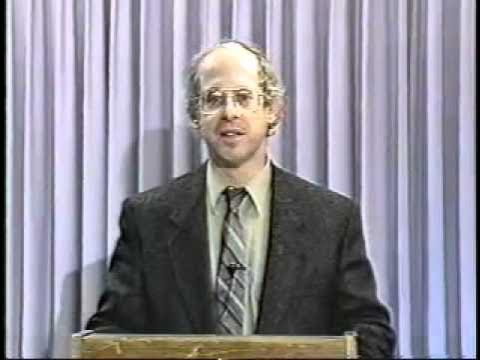
Mark Rounds
Human beings acquire language exclusively by understanding messages in low-anxiety environments, rendering speech production an outcome of comprehension rather than a tool for practice.
AI-assisted summary of Stephen Krashen on Language Acquisition — original source. Check the original for full context.
Source published:
Key ideas
- Human language acquisition relies on a single biological design, operating through comprehensible input rather than mechanical drills or forced output. (0:00)
- Speech production is the delayed result of subconscious acquisition rather than its cause, meaning talking alone does not constitute effective practice. (4:42)
- The natural silent period allows learners to build comprehension internally before speech emerges on its own, as demonstrated by young second-language acquirers. (6:42)
- Under the Affective Filter Hypothesis, heightened anxiety and low self-esteem physically block comprehensible input from reaching the Language Acquisition Device. (13:59)
Detailed notes
## Background This presentation was uploaded to YouTube by Mark Rounds on October 15, 2010. According to the video description, it features linguist Stephen Krashen delivering a lecture on second language acquisition originating from the 1980s.
## TL;DR Stephen Krashen argues that language acquisition is a biologically universal process shared by all humans, rather than a fragmented outcome of disparate learning styles. Through practical demonstrations in German, he demonstrates that language is acquired exclusively through comprehensible input—focusing on meaningful messages rather than grammatical mechanics—meaning that talking alone does not constitute practice. He recounts the case of a young Japanese child named Hitomi to illustrate the necessity of an initial silent period where speech naturally emerges as a byproduct of sustained listening. Finally, he outlines the Affective Filter Hypothesis, demonstrating that language acquisition requires a low-anxiety environment where psychological barriers are minimized so input can reach Chomsky's Language Acquisition Device.
## Atmosphere & style The presentation carries the engaging, charismatic energy of a masterclass lecture, blending sharp academic theory with accessible, self-effacing humor. Krashen commands the room using quick wit, theatrical chalkboard sketches, and deadpan storytelling, keeping the audience chuckling while methodically dismantling traditional pedagogical dogma. The mood feels both revelatory and reassuring, transforming complex cognitive linguistics into an intuitive, common-sense argument for patience, empathy, and low-stress learning.
## Bulletin - [00:00](https://www.youtube.com/watch?v=NiTsduRreug&t=0s) Human language acquisition relies on a single biological design, operating through comprehensible input rather than mechanical drills or forced output. - [04:42](https://www.youtube.com/watch?v=NiTsduRreug&t=282s) Speech production is the delayed result of subconscious acquisition rather than its cause, meaning talking alone does not constitute effective practice. - [06:42](https://www.youtube.com/watch?v=NiTsduRreug&t=402s) The natural silent period allows learners to build comprehension internally before speech emerges on its own, as demonstrated by young second-language acquirers. - [13:59](https://www.youtube.com/watch?v=NiTsduRreug&t=839s) Under the Affective Filter Hypothesis, heightened anxiety and low self-esteem physically block comprehensible input from reaching the Language Acquisition Device.
## Key takeaways - [00:00](https://www.youtube.com/watch?v=NiTsduRreug&t=0s) Human beings acquire language in fundamentally the same biological way, regardless of individual cognitive styles, brain hemisphericity, or cultural variations. - [02:04](https://www.youtube.com/watch?v=NiTsduRreug&t=124s) Traditional instructional techniques like repetition, speaking louder, cloze exercises, and copying text fail if learners cannot understand the underlying message. - [04:02](https://www.youtube.com/watch?v=NiTsduRreug&t=242s) Comprehensible input is the sole mechanism of language acquisition, requiring contextual scaffolding like visuals and background knowledge to make messages clear. - [04:42](https://www.youtube.com/watch?v=NiTsduRreug&t=282s) Talking does not equal practicing; output cannot be mechanically forced, and speaking ability emerges on its own after sufficient input has been absorbed. - [06:42](https://www.youtube.com/watch?v=NiTsduRreug&t=402s) A prolonged silent period is a normal and necessary stage where learners internalize input before producing spontaneous, generative speech. - [10:40](https://www.youtube.com/watch?v=NiTsduRreug&t=640s) Low-anxiety classrooms where students are never put on the spot or forced to speak yield vastly superior language acquisition outcomes. - [11:08](https://www.youtube.com/watch?v=NiTsduRreug&t=668s) Student speech plays only an indirect role in language development by eliciting communicative, tailored conversational responses from others. - [11:30](https://www.youtube.com/watch?v=NiTsduRreug&t=690s) Three core affective variables govern acquisition efficiency: motivation, self-esteem, and anxiety, with language acquisition thriving best when anxiety approaches zero. - [12:51](https://www.youtube.com/watch?v=NiTsduRreug&t=771s) While facilitative anxiety can motivate general academic work, any anxiety directed at the target language raises emotional defenses and sabotages progress. - [13:59](https://www.youtube.com/watch?v=NiTsduRreug&t=839s) The affective filter acts as an invisible barrier that prevents comprehensible input from entering Chomsky's Language Acquisition Device when learners feel threatened or defensive. - [15:00](https://www.youtube.com/watch?v=NiTsduRreug&t=900s) The universal formula for acquiring language consists of receiving comprehensible input within a low-anxiety environment.
## Detailed walkthrough ### [00:00](https://www.youtube.com/watch?v=NiTsduRreug&t=0s) The Universal Nature of Language Acquisition
Stephen Krashen introduces his presentation by focusing on what he views as the central and most consequential question in the entire field of language education: how human beings actually acquire language. To start the discussion, he deliberately makes what he calls an outrageous statement: “In my opinion we all acquire language the same way.” He acknowledges that in modern pedagogy this claim sounds provocative, because education currently finds itself preoccupied with individual variation, obsessing over how learners differ from one another rather than examining the underlying traits they share.
Krashen walks through past educational trends to illustrate this pendulum swing toward differentiation. Fifteen to twenty years earlier, researchers were fixated on categorizing students into field-dependent versus field-independent learners, administering diagnostic tests to assign each group a distinct treatment. About fifteen years earlier, the trend shifted to hemisphericity, dividing students into left-brain and right-brain thinkers. A decade earlier, the focus moved toward cognitive styles and the cultural friction between home learning styles and school culture. Krashen grants that these frameworks possess merit and that real individual variation exists; however, he stresses that beneath such differences, human biological systems operate identically across populations.
To ground this principle, Krashen draws parallels to basic human anatomy and physiology. Human digestion functions uniformly across the globe without significant variation: food enters the mouth, gets chewed, travels down the esophagus, and enters the stomach, whether a person lives in North America, South America, Europe, Asia, or Africa. Similarly, the human visual system processes sight exclusively in the occipital lobe at the back of the brain—never in the side, the front, or the elbow. Krashen jokes that he used to cite sex as another universal process, until someone pointed out counterexamples (prompting him to confess that he actually just watched a movie). In that same biological sense, human language acquisition operates on a single universal design.
[02:04](https://www.youtube.com/watch?v=NiTsduRreug&t=124s) Two German Lessons: The Failure of Drills vs. Comprehensible Input
Rather than arguing the point solely in the abstract, Krashen conducts a live demonstration using two brief, contrasting German lessons to see which one works better for learners:
``` Lesson 1: "Wir werden jetzt anfangen, Deutsch zu lernen. Und ich möchte im Voraus sagen, dass nach meiner Meinung: Deutsch ist eine sehr schöne Sprache. Und ich hoffe, dass Sie alle sehr viel Erfolg mit Deutsch haben werden." ```
Addressing the audience, Krashen asks whether listening to continuous speech like that would lead anyone to pick up German. The audience agrees it would not. He systematically dismantles traditional teaching strategies by asking what would happen if he modified the delivery: - Repeating the passage would not help. - Saying it louder would not help. - Having students parrot the sentences back would not help. - Displaying the printed text on a screen would not help. - Having students copy the text by hand would not help. - Conducting a cloze exercise—reading the passage while omitting every fifth word for students to guess—would likewise accomplish nothing.
Krashen emphasizes that none of these pedagogical tricks carry any value if the learner does not grasp the meaning. He then transitions to lesson number two, instructing the audience to watch his gestures and sketches closely. He points to his anatomy and draws on a board: “Das ist meine Hand,” eliciting a “Ja!” from the audience, followed by “Das ist mein Kopf.” He sketches a head on the board, turns it into Mr. Spock with pointed ears (“Mr. Spock hat zwei Ohren”), sketches eyes while counting them (“Eins, zwei, drei Augen... Nein! Wir haben nur zwei Augen”), adds a mouth (“Mund”), and humorously draws a cigarette before crossing it out (“Zigaretten sind nicht gut”).
Krashen explains that if the audience understood the second lesson, even roughly, he had accomplished everything required to teach them German. He unveils what he considers the profession's best-kept secret: “We acquire language in one way and only one way: when we understand messages.”
```mermaid flowchart TD accTitle: The Comprehensible Input Process accDescr: A flow diagram showing how visual aids and context turn messages into comprehensible input, leading to language acquisition. subgraph Scaffolding["Contextual Scaffolding"] A["Spoken Input / Text"] B["Visual Aids & Pictures<br>(e.g., Mr. Spock drawing)"] C["Real-World Knowledge & Realia"] end
subgraph Understanding["Comprehension"] D["Comprehensible Input<br>(Focus on 'What' is said, not 'How')"] end
subgraph Acquisition["Outcome"] E["Language Acquisition"] end
A --> D B --> D C --> D D --> E ```
[04:42](https://www.youtube.com/watch?v=NiTsduRreug&t=282s) The Input Hypothesis and "Talking Is Not Practicing"
Krashen defines this mechanism as *comprehensible input*, which posits that humans acquire language exclusively by understanding content—the meaning of what is said or read—rather than the formal linguistic mechanics of how it is packaged. He notes with irony that comprehensible input has functioned as the language teaching profession’s absolute last resort, tried only after exhausting grammar translation, repetitive audiolingual drills, worksheets, and computerized drills. In the second German lesson, visual scaffolding, realia, background knowledge, and the illustration of Mr. Spock provided the bridge that rendered the raw language intelligible.
From this foundation, Krashen introduces the central corollary to the Input Hypothesis, one that frequently shocks educators and learners alike: “talking is not practicing.”
To demystify the phrase, Krashen explains its practical implications: - Practicing speaking alone in your car on your morning commute will not improve your Spanish. - Locking yourself in the bathroom to talk to your reflection in the mirror will not build proficiency. - Conversational fluency cannot be forced out through mechanical speech production.
Instead, if learners participate in an environment providing around an hour a day of lively, engaging, comprehensible German input, internal acquisition takes root on its own. Speaking ability is not the engine of acquisition; it is its delayed result, emerging gradually and automatically once a sufficient reservoir of mental comprehension has been built.
[06:42](https://www.youtube.com/watch?v=NiTsduRreug&t=402s) The Silent Period: The Story of Hitomi
To substantiate the claim that speech is an outcome rather than a cause of language acquisition, Krashen steps away from academic journals and shares a personal story from 1974. At the time, he was living what he jokingly calls an exile from California, directing the English as a Second Language program at Queens College within the City University of New York. He lived in a typical New York apartment complex where the unit next door was leased by an international Japanese company. Every year, a new Japanese family moved in, bringing young children who spoke no English. Armed with his title as ESL director, Krashen resolved to teach the children English and brag about his pedagogical prowess to his colleagues.
His first student was the neighbor's four-year-old daughter, Hitomi. Krashen admits that at the time, neither he nor the broader profession understood the true dynamics of acquisition. Working under the prevailing assumption that learning requires forced output, he tried repeatedly to make her speak:
- He began with simple social greetings: “Itomi, talk to me!”, “Say good morning”, and “Say hi!” She gave no response. - Assuming he needed to be more concrete, he held up an object: “Itomi, say ball!” Still, she remained silent. - Concluding that he had to break the task down into phonics and articulatory mechanics, he said: “Say bah! Look at my lips!” Hitomi refused to respond. - He then resorted to behavioral coercion, a widely held belief that children must have speech forced out of them: “I won't give you the ball until you say ball!” That strategy also failed completely.
Hitomi remained entirely silent week after week, month after month. Krashen notes that during this initial phase, children often pick up situational neighborhood idioms—not authentic, generative language, but memorized formulas associated with specific social interactions, such as “Leave me alone!” or “Get out of here!” (He recalls another child whose sole English phrase was “I kick your ass,” delivered indiscriminately).
For five full months, Hitomi produced no self-generated English. When she finally began speaking, her output showed two distinctive features: 1. It developed exactly like primary language acquisition, starting with one-word utterances, advancing to two-word phrases, and steadily growing in structural complexity. 2. It accelerated rapidly. By the time the family returned to Japan at the end of the year, Hitomi’s spoken English was nearly indistinguishable from that of the local neighborhood children.
Krashen reflects on what was actually happening during those five months of complete silence: Hitomi was constantly listening and extracting comprehensible input from her surroundings. Her speech did not mark the starting line of her learning: “When she started to speak, it was not the beginning of her language acquisition. It was the result of all the comprehensible input she had gotten over those five months.” Krashen concludes that this prolonged silent period is completely natural and expected rather than pathological, inviting adult language learners to imagine how much more comfortable they would feel if their own language classes offered a similar silent period without the pressure of forced production.
[10:40](https://www.youtube.com/watch?v=NiTsduRreug&t=640s) The Low-Anxiety Classroom and the Indirect Role of Speaking
Stephen Krashen paints a picture of an ideal, low-stress language classroom: students are free to talk, raise their hands, and volunteer as much as they like, but they are never cold-called or put on the spot. Furthermore, accountability is flipped—if an utterance or lesson is incomprehensible, it is recognized as the instructor’s failure rather than the learner’s. Krashen notes that implementing this philosophy in modern instruction produces remarkable outcomes: “That's how we're doing it now, and the results we're getting aren't a little better than other methods, they're actually much, much better.”
Before turning away from basic comprehension mechanics, Krashen shares what he terms a “brief commercial message for speaking.” While some might assume his focus on input means he opposes student production, he clarifies that speaking is entirely welcome. However, its true value is often misunderstood: the primary mechanism of progress is not the words coming out of the student's mouth, but the communicative response it triggers in return. When learners speak, they prompt interlocutors to provide rich, tailored conversational feedback. Krashen summarizes this distinction clearly: “So I'm in favor of students speaking, but we have to understand it makes an indirect; a helpful, but indirect contribution to language acquisition.”
[11:30](https://www.youtube.com/watch?v=NiTsduRreug&t=690s) The Affective Filter Hypothesis
Transitioning toward the Affective Filter Hypothesis, Krashen outlines the emotional and psychological variables that govern whether language acquisition can actually succeed. Research identifies three primary factors: motivation, self-esteem, and anxiety. Higher motivation and self-esteem correlate with greater success. Anxiety, on the other hand, shows an inverse relationship: as anxiety decreases, language acquisition improves. Krashen takes this finding to its logical extreme, stating: “In fact my hypothesis is, for language acquisition to really succeed, anxiety should be zero.”
He appeals to the audience’s personal experiences to illustrate this phenomenon. Most people attempting a foreign language have encountered a moment where a discussion became so captivating that they temporarily forgot they were operating in a non-native tongue. In those exact moments, when self-consciousness fades and attention rests entirely on meaning, true acquisition takes place.
- **Motivation**: Higher motivation correlates with stronger acquisition outcomes. - **Self-Esteem**: Confidence and high self-esteem support openness to the target language. - **Anxiety**: Operates inversely; lower anxiety fosters better acquisition, ideally reaching zero in communicative contexts.
[12:51](https://www.youtube.com/watch?v=NiTsduRreug&t=771s) Facilitative Anxiety vs. Language Acquisition
As an aside or “sidebar,” Krashen nuances his stance on low anxiety, pointing out that zero anxiety is not a universal prescription for all forms of learning. Speaking as both a parent and a professor at the University of Southern California, he humorously admits that he is not entirely permissive: “I think my students at the University of Southern California should suffer.” In challenging university coursework with demanding requirements, students must do the work or fail. Drawing on educational psychology, he acknowledges that the optimal drive or anxiety depends on the specific task, and a modest amount of “facilitative anxiety” can push students to accomplish difficult academic goals without crossing into torture.
Language acquisition, however, stands apart from general academic drill. Anxiety cannot be aimed at the language itself without sabotaging the acquisition process. Referencing literacy theorist Frank Smith, Krashen notes: “Frank Smith puts it this way: for the child to develop literacy, the child has to assume that she's going to be successful.” When an environment triggers defensiveness, low self-esteem, or fear that personal weaknesses will be exposed, emotional barriers prevent input from reaching the cognitive systems responsible for acquisition.
[13:59](https://www.youtube.com/watch?v=NiTsduRreug&t=839s) The Affective Filter Mechanism and Core Summary
Krashen incorporates this dynamic into formal theory by drawing upon Noam Chomsky's concept of the Language Acquisition Device (LAD). The fundamental pedagogical goal is to deliver comprehensible input directly into this internal mental mechanism. When a student experiences self-doubt, low motivation, or heightened anxiety, an invisible psychological barrier—the affective filter—raises up and blocks the path. Even if the input is completely comprehensible, it bounces off the barrier and fails to penetrate the regions of the brain that govern subconscious acquisition. This model resolves a classic classroom paradox: two students can sit side by side receiving identical comprehensible messages, yet one advances rapidly while the other stagnates because their internal filter is closed.
```mermaid flowchart LR accTitle: The Affective Filter Model accDescr: Comprehensible input passes through the affective filter into Chomsky's Language Acquisition Device when anxiety is low, but is blocked when the filter is raised.
subgraph External ["External Input"] Input["Comprehensible Input"] end
subgraph FilterState ["Affective Filter"] Filter{"Affective Filter<br/>(Motivation, Self-Esteem, Anxiety)"} end
subgraph Internal ["Cognitive System"] LAD["Language Acquisition Device (LAD)"] Acq["Language Acquisition"] end
Input --> Filter Filter -->|"Low Anxiety / Filter Down"| LAD Filter -.->|"High Anxiety / Filter Up (Blocked)"| Blocked["Input Blocked"] LAD --> Acq ```
Concluding his lecture, Krashen reduces the entire theoretical framework down to a single, essential takeaway: “We acquire language in one way, and only one way. When we get comprehensible input, in a low anxiety environment.”
## Notable quotes > [13:59](https://www.youtube.com/watch?v=NiTsduRreug&t=839s) We acquire language in one way, and only one way. When we get comprehensible input, in a low anxiety environment. — Stephen Krashen
> [11:30](https://www.youtube.com/watch?v=NiTsduRreug&t=690s) In fact my hypothesis is, for language acquisition to really succeed, anxiety should be zero. — Stephen Krashen
> [10:40](https://www.youtube.com/watch?v=NiTsduRreug&t=640s) I'm in favor of students speaking, but we have to understand it makes an indirect; a helpful, but indirect contribution to language acquisition. — Stephen Krashen
> [00:00](https://www.youtube.com/watch?v=NiTsduRreug&t=0s) In my opinion we all acquire language the same way. — Stephen Krashen
## Mentioned Stephen Krashen, Noam Chomsky, Frank Smith, Mr. Spock, Hitomi, Queens College, City University of New York, University of Southern California
## Video description Stephen Krashen on Language Acquisition from the 80s.
[Source](https://www.youtube.com/watch?v=NiTsduRreug)