OpenBSD Breaks ABI Defaults to Drive Industry Security, de Raadt Says
fuckyoustupidzombie
Theo de Raadt argues that operating systems must break backward compatibility to enforce security mitigations by default, leaving OpenBSD to absorb upstream application breakage so the broader software ecosystem can adopt critical defenses without friction.
AI-assisted summary of Theo de Raadt (ruBSD 2013) — original source. Check the original for full context.
Source published:
Key ideas
- Commercial operating systems like Windows and macOS have aggressively integrated proactive exploit mitigations by methodically updating ABIs, whereas FreeBSD and mainstream Linux distributions have lagged by keeping protections disabled by default. (0:14)
- OpenBSD acts as an empirical security research vehicle, deploying aggressive mitigations into production—such as early ASLR and malloc guard pages—and tuning them only after real-world performance and third-party software impacts are observed. (8:12)
- Operating without corporate patrons or formal roadmaps, OpenBSD finances its infrastructure through physical merchandise sales and hackathons while relying on developers scratching their own technical itches. (3:30)
- By transitioning to 64-bit time_t at the lowest system level across all architectures, OpenBSD patched its entire ports collection to absorb the pain of upstream software breakage for the wider operating system ecosystem. (12:42)
Detailed notes
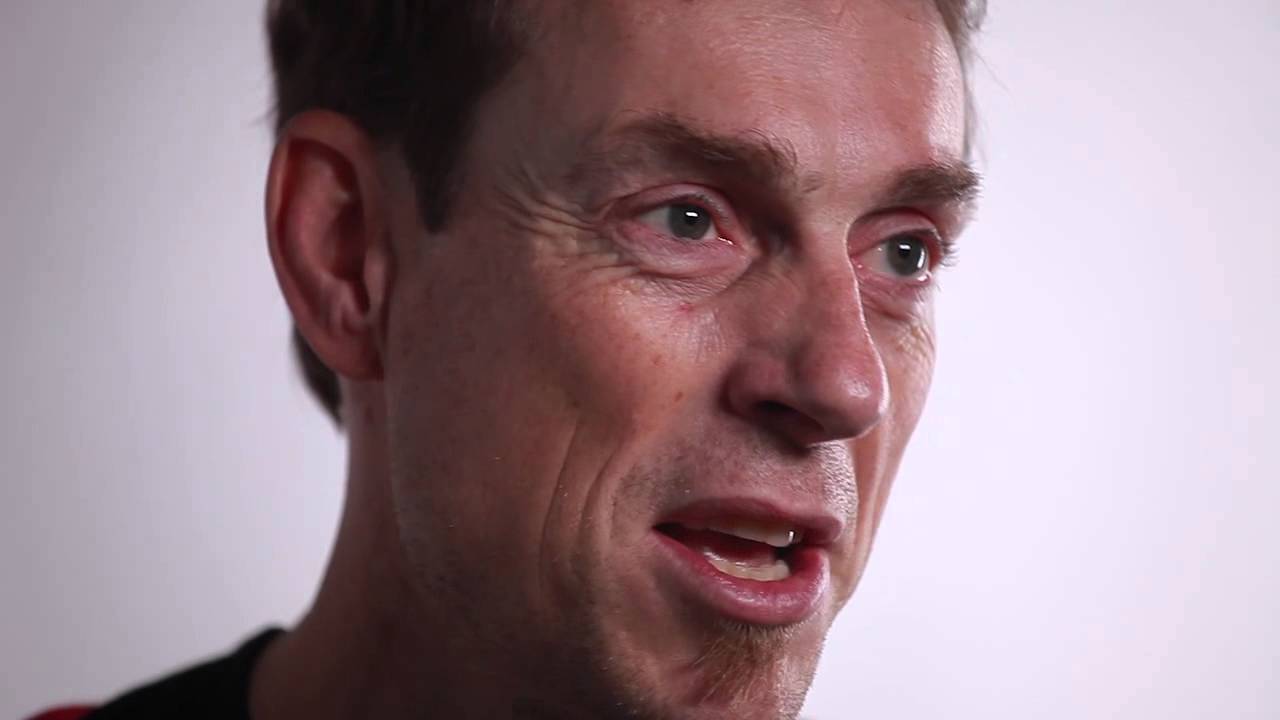
## Background This video was published on YouTube by user fuckyoustupidzombie on January 30, 2014. The description identifies the speaker as Theo de Raadt, the founder of the OpenBSD project, speaking at the ruBSD 2013 conference.
## TL;DR Theo de Raadt reviews the state of operating system exploit mitigations, contrasting OpenBSD, Microsoft, and Apple's proactive adoption with the reluctance and default-off postures seen across Linux distributions and FreeBSD. He details OpenBSD's operational reality as an entirely volunteer-driven project that relies on physical CD sales rather than corporate grants, while continuing to maintain diverse architectures to expose latent code defects. Finally, de Raadt highlights OpenBSD's philosophy of acting as a living research vehicle—exemplified by pushing radical changes like 64-bit time_t and default ASLR into production to force the broader open-source ecosystem to clean up upstream code.
## Atmosphere & style The presentation carries the candid, pragmatic, and unpretentious vibe of an open-source veteran who has weathered decades of industry cycles and has matured out of overt anger into steady resolve. De Raadt speaks with conversational directness, demystifying the project's gritty daily realities and freely acknowledging technical debts like SMP kernel locking alongside hard-won architectural victories. It feels like an intimate, behind-the-scenes engineering post-mortem where raw software integrity and personal developer motivation consistently take precedence over polished corporate roadmaps.
## Bulletin - [00:14](https://www.youtube.com/watch?v=OXS8ljif9b8&t=14s) Commercial operating systems like Windows and macOS have aggressively integrated proactive exploit mitigations by methodically updating ABIs, whereas FreeBSD and mainstream Linux distributions have lagged by keeping protections disabled by default. - [08:12](https://www.youtube.com/watch?v=OXS8ljif9b8&t=492s) OpenBSD acts as an empirical security research vehicle, deploying aggressive mitigations into production—such as early ASLR and malloc guard pages—and tuning them only after real-world performance and third-party software impacts are observed. - [03:30](https://www.youtube.com/watch?v=OXS8ljif9b8&t=210s) Operating without corporate patrons or formal roadmaps, OpenBSD finances its infrastructure through physical merchandise sales and hackathons while relying on developers scratching their own technical itches. - [12:42](https://www.youtube.com/watch?v=OXS8ljif9b8&t=762s) By transitioning to 64-bit time_t at the lowest system level across all architectures, OpenBSD patched its entire ports collection to absorb the pain of upstream software breakage for the wider operating system ecosystem.
## Key takeaways - [00:14](https://www.youtube.com/watch?v=OXS8ljif9b8&t=14s) Modern compiler warnings have elevated general application code quality, but proactive operating system mitigations are still necessary to trap logic errors and prevent exploitation. - [00:14](https://www.youtube.com/watch?v=OXS8ljif9b8&t=14s) Operating system vendors diverge sharply on security mitigations: Microsoft and Apple systematically update their platforms, while Linux distributions leave them fragmented and FreeBSD avoids default stack protection to preserve backward compatibility. - [03:30](https://www.youtube.com/watch?v=OXS8ljif9b8&t=210s) OpenBSD operates on an entirely volunteer basis, allocating foundation donations directly to core operational hosting, bandwidth, and subsidized developer hackathons rather than payroll. - [03:30](https://www.youtube.com/watch?v=OXS8ljif9b8&t=210s) In the tradition of UC Berkeley's CSRG, OpenBSD released critical tools like OpenSSH under unencumbered licenses to benefit the wider computing ecosystem without expecting corporate financial returns. - [05:12](https://www.youtube.com/watch?v=OXS8ljif9b8&t=312s) Maintaining diverse non-x86 architectures such as SPARC64, MIPS, and DEC Alpha serves as a vital diagnostic tool that exposes structural memory, cache, and endianness bugs masked by x86 hardware. - [05:12](https://www.youtube.com/watch?v=OXS8ljif9b8&t=312s) While an Intel monoculture dominates modern networking hardware, OpenBSD continues to confront major technical hurdles around fine-grained SMP kernel locking and native hypervisor virtualization. - [07:17](https://www.youtube.com/watch?v=OXS8ljif9b8&t=437s) Direct appeals for open-ended donations fail to sustain the project, making traditional physical CD sales both a critical financial lifeblood and a community-building mechanism. - [08:12](https://www.youtube.com/watch?v=OXS8ljif9b8&t=492s) Aggressive early security implementations required calibration: early ASLR generated excessive page-table memory overhead, and default malloc guard pages triggered crashes in third-party code due to widespread off-by-one errors. - [11:06](https://www.youtube.com/watch?v=OXS8ljif9b8&t=666s) OpenBSD relies on a rigid six-month release cycle with dedicated snapshot windows where widespread user testing exposes flawed assumptions before releases are finalized. - [11:59](https://www.youtube.com/watch?v=OXS8ljif9b8&t=719s) The project operates without top-down roadmaps or speculative feature promises, relying entirely on individual contributor motivation to address specific pain points. - [12:42](https://www.youtube.com/watch?v=OXS8ljif9b8&t=762s) Rather than introducing parallel APIs that third-party developers ignore, OpenBSD addressed the Year 2038 problem by replacing time_t with a 64-bit type directly at the lowest system level across 32-bit and 64-bit platforms alike. - [12:42](https://www.youtube.com/watch?v=OXS8ljif9b8&t=762s) Absorbing the disruption of system-wide changes within the OpenBSD ports tree forces upstream software developers to modernize, allowing other operating systems to adopt these defenses later without breaking application compatibility.
## Detailed walkthrough ### [00:14](https://www.youtube.com/watch?v=OXS8ljif9b8&t=14s) Code Quality, Compiler Warnings, and the OS Mitigation Landscape
Theo de Raadt begins by drawing a firm line between two distinct disciplines in system security: overall code quality and exploit mitigations. When looking strictly at code quality, the state of the art has improved noticeably because modern compilers issue far sharper, more comprehensive warnings. Furthermore, developers have grown more conscientious because a few operating systems now enforce proactive mitigations that catch standard bugs during ordinary execution—not merely security flaws, but everyday logic and memory errors. This has caused software development methodology across the ecosystem to mature.
However, when surveying how different operating system vendors implement exploit mitigations, de Raadt sees a sharp divergence between commercial platforms and certain open-source projects:
* **Microsoft and Apple:** Microsoft has genuinely taken the security mitigation message to heart, methodically stepping their ABI forward so security measures deploy across the whole ecosystem without shattering their broader application base. Apple’s macOS has similarly found a path to activate mitigations and carefully manage backward-compatibility breaks without crippling user software. * **Linux:** De Raadt expresses skepticism about whether the Linux community has fully embraced mitigations, pointing out that while many mitigation techniques technically exist, mainstream distributions typically leave them disabled or only activate them selectively. * **FreeBSD:** FreeBSD lags drastically behind, lacking these mitigations entirely or leaving them turned off by default. Although FreeBSD has mainline support to enable the compiler stack protector (SSP), it remains unactivated, likely because enabling it would require bumping library major versions and breaking backward compatibility. FreeBSD does not even randomize the top of the stack, keeping existing code disabled in the tree, and de Raadt notes that reading their mailing lists reveals no active, systematic source tree auditing.
Regarding legacy application code, de Raadt observes that the worst historic practices have diminished, stating: “No, those problems have mostly gone away. The message has been received by the application writers and largely things are clean.” While unbounded calls like `strcpy` still linger across third-party software, OpenBSD simply flags them with compiler warnings rather than panicking over them as singular threats, since those same risks affect every operating system identically until upstream developers modernize their code.
```mermaid flowchart TD accTitle: OS Security Mitigation Adoption accDescr: Comparison of exploit mitigation adoption across OpenBSD, commercial operating systems, and other open-source projects. subgraph Leaders["Aggressive / Systematic Adoption"] OB["OpenBSD<br/>(Pioneer & default enforcer)"] MS["Microsoft Windows<br/>(Incremental ABI evolution)"] AP["Apple macOS<br/>(Gradual deployment)"] end
subgraph Lagging["Reluctant / Fragmented Adoption"] LX["Linux Distributions<br/>(Features exist, largely disabled by default)"] FB["FreeBSD<br/>(SSP & stack ASLR disabled; backward-compat blockers)"] end
OB -.->|"Influences & proves concepts"| MS OB -.->|"Influences & proves concepts"| AP ```
[03:30](https://www.youtube.com/watch?v=OXS8ljif9b8&t=210s) Daily OpenBSD Development, Funding, and the Free Software Ethos
Theo de Raadt demystifies the routine operations of the OpenBSD project. There are no paid staff members on payroll; the entire collective operates on volunteer labor. A typical day for de Raadt begins by checking in on what developers have hacked on overnight, processing incoming email, answering architectural questions, and circulating diffs back and forth across the mailing lists. Occasionally, the OpenBSD Foundation channels modest funds toward specific vital milestones—such as paying for development to bring modern X.Org graphics and KMS device drivers into the OpenBSD kernel—but the vast majority of engineering is uncompensated.
When the OpenBSD Foundation collects community donations, it directs the funds straight toward core operational infrastructure:
* Paying for network hosting, bandwidth, and rack infrastructure. * Organizing and subsidizing hackathons, which de Raadt describes as renting cheap group accommodation near university facilities where developers pay their own airfare to gather and write code together.
When asked whether massive corporate enterprises that rely on OpenBSD’s technologies should provide direct financial backing, de Raadt reflects philosophically. While corporate patronage would be welcome, it has never materialized, and he holds no lingering bitterness about it. Recalling the decision to release OpenSSH under an unencumbered license, de Raadt explains:
> “I'm still proud of the fact that we made that decision to make OpenSSH free in that particular way so that nobody would have to write it themselves.”
He views this work as continuing the noble lineage of the Computer Systems Research Group (CSRG) at UC Berkeley: accelerating a concept, validating it inside a real, working operating system, and giving the source code away freely to anyone who wishes to adopt it.
[05:12](https://www.youtube.com/watch?v=OXS8ljif9b8&t=312s) Aging Out of Anger and Confronting Modern Hardware Challenges
Reflecting on the tone of OpenBSD release songs and project commentary over the years, de Raadt admits that the collective temperament has mellowed over time: “I think we're getting older and we're not as angry anymore, right?” In the project’s earlier eras, release artwork and songs served as direct protests against external disputes—such as chip manufacturers refusing to publish open hardware documentation or the IETF compromising protocol integrity by accommodating software patents. In recent years, rather than mounting vocal public confrontations, the developers have preferred to quietly putter along and focus on shipping code.
The broader hardware ecosystem, however, has transformed dramatically into an Intel monoculture. At the common gigabit networking tier, non-Intel Ethernet controllers have virtually vanished, leaving Intel holding an effective monopoly across network and wireless chipsets. While having fewer hardware vendors simplifies driver breadth, OpenBSD faces substantial technical hurdles:
* **Symmetric Multiprocessing (SMP):** OpenBSD has yet to fully conquer the fine-grained SMP kernel locking challenge and continues working through major performance and scalability issues. * **Modern x86 Virtualization:** The project has not yet built its own native hypervisor solutions for modern x86 virtualization extensions and must take steps to address that domain. * **Multi-Architecture Portability:** Unlike FreeBSD, which focuses its engineering resources on one or two dominant x86-based architectures, OpenBSD maintains active support across older, diverse architectures such as SPARC64, MIPS, and DEC Alpha.
De Raadt stresses that maintaining these non-x86 architectures provides enormous hidden diagnostic value to the codebase. When software breaks due to strict memory alignment, cache quirks, or unusual endianness on an Alpha or SPARC64 box, it exposes fundamental structural bugs that x86 architectures quietly conceal.
[07:17](https://www.youtube.com/watch?v=OXS8ljif9b8&t=437s) Community CD Sales vs. Corporate Foundation Sponsorships
Addressing the project’s perpetual financial constraints, de Raadt explains why OpenBSD has maintained its long-running practice of selling physical CD sets and release merchandise rather than relying on standard corporate grant models. Pure fundraising pleas asking for open donations have yielded poor returns: “The other approaches of just asking for people to fund us so we can keep doing what we're doing, those approaches are not working all that well.” Unlike the deep-pocketed Linux Foundation or the FreeBSD Foundation, OpenBSD possesses no vast roster of commercial corporate underwriters.
Instead, the traditional CD release business serves as both an essential revenue stream and a cultural touchpoint. It provides users a physical way to support development while fostering camaraderie. De Raadt shares fond memories of visiting community members in cities across the world and seeing whole bookshelves lined with colorful jewel cases:
- Loyal users proudly display complete sequential runs of OpenBSD CD sets spanning over a decade of releases. - The only gap in almost every collection is OpenBSD 2.5, simply because the project underestimated demand and did not manufacture enough copies at the time.
[08:12](https://www.youtube.com/watch?v=OXS8ljif9b8&t=492s) Bugtraq Roots and the Reality of Address Space & Malloc Mitigations
Reflecting on the evolution of software vulnerability hunting, de Raadt recalls his firsthand involvement in the 1990s Bugtraq disclosure community. He collaborated closely with pioneering security researchers from L0pht and Core SDI during the era when OpenBSD initiated its rigorous, continuous source code audits. Operating systems lacking default mitigations expose their users directly to disaster whenever application bugs emerge, whereas proactive mitigations raise the bar to exploitability to make attacks economically and technically prohibitive. Now that Unix-like systems have become ubiquitous across all consumer electronics and servers, rigorous internal defenses are vital.
De Raadt characterizes OpenBSD as a living research vehicle that discovers practical boundaries by actively deploying aggressive features into production:
> “Somebody has to do the innovation and push things into the ecosystem quickly and try to get a large enough install base so we can actually learn which things work and how they need to be changed.”
He highlights two specific historical experiments that initially overreached and required careful tuning:
1. **Address Space Layout Randomization (ASLR):** Early implementations in OpenBSD were overly aggressive, scattering allocations too chaotically across the virtual address space. This extreme entropy blew up the size of virtual address memory management structures, causing heavy pressure on kernel soft tables, CPU page tables, and hardware translation caches compared to traditional flat memory maps. 2. **Malloc Guard Pages:** The OpenBSD allocator originally inserted guard pages around virtually every memory allocation to trip buffer overruns instantly. However, the OpenBSD Ports developers discovered that widespread real-world third-party software was riddled with small off-by-one errors and memory bugs, causing widespread crashes. The team had to scale back mandatory default guard pages to a less restrictive policy, keeping aggressive guard pages as an opt-in per-application toggle so developers can flush out bugs upstream over time.
De Raadt emphasizes that an engineering team can only learn these critical architectural lessons by shipping changes directly to users and intentionally breaking backward compatibility where necessary—a process enabled by an understanding OpenBSD community that trusts the project's long-term trajectory.
[11:06](https://www.youtube.com/watch?v=OXS8ljif9b8&t=666s) The Six-Month Cycle and Community Testing
Addressing the balance between rapid evolution and stability, Theo de Raadt reflects on how the OpenBSD user and developer communities handle breaking changes. In OpenBSD, users recognize that when backwards compatibility is broken, a particular modification might not immediately benefit their individual setup, but future changes down the line will. This creates an implicit social contract and an essential give-and-take dynamic between developers and the wider user base.
Crucial to this model is OpenBSD’s rigid six-month release cycle. Theo de Raadt emphasizes that there must always be a designated window within that cycle during which a large body of users runs identical snapshot code simultaneously. This widespread real-world deployment serves as the project’s reality check, exposing flawed assumptions or misjudged architectural impacts before a release is finalized. As Theo de Raadt puts it: “there has to be sort of in our six month cycle there has to be a period of time when lots of people run the same code so that if we've made a mistake um if we kind of Mis misjudged the impact of one of our changes that's the time when we're really going to find out and people are going to deploy that code and run with it and it's going to work out fine”. Ultimately, developers rely on learning directly from user deployment to refine those small, cascading side effects.
[11:59](https://www.youtube.com/watch?v=OXS8ljif9b8&t=719s) Developer Motivation and the Absence of Roadmaps
When asked about future plans, Theo de Raadt is candid about the decentralized, itch-scratching ethos that governs OpenBSD. Unlike corporate software projects driven by executive mandates or fixed feature schedules, progress in OpenBSD relies entirely on the personal motivations of its contributors. Developers tackle problems because those problems irritate them personally and demand a solution.
Because of this philosophy, Theo de Raadt refuses to make formal promises about future roadmaps, whether regarding Symmetric Multiprocessing (SMP) scalability or networking performance improvements. He knows his own pain points and has an awareness of what other developers wish to tackle, but he will not promise speculative features to users. As Theo de Raadt explains: “the primary thing that happens in our project is that the developers who make those changes have to want to make those changes they have to have an itch they want to scratch so I don't know what the future road map is”. The only guarantee he is willing to commit to is that there will inevitably be more backwards compatibility breaks in the future—though he reassures the audience that upcoming breaks will be minor in comparison to the massive transition to 64-bit `time_t`.
[12:42](https://www.youtube.com/watch?v=OXS8ljif9b8&t=762s) The 64-Bit time_t Transition and Dragging the Ecosystem Forward
Theo de Raadt highlights OpenBSD's handling of the Year 2038 problem through its implementation of 64-bit `time_t` across all platforms, including 32-bit architectures. While various theoretical proposals and prototypes for 64-bit time had circulated across the internet for years, no operating system project had fully confronted the logistical nightmare of pushing it completely into production or getting application developers to rewrite their code for separate new time APIs. Rather than introducing alternative parallel APIs, OpenBSD made the radical decision to alter the fundamental type directly at the lowest level of the operating system.
```mermaid flowchart TD accTitle: OpenBSD Upstream Ecosystem Impact accDescr: Diagram illustrating how OpenBSD forces low-level platform changes through its ports tree to fix upstream software for other operating systems.
subgraph OpenBSD_Core["OpenBSD Base System"] A["Low-Level System Change<br>(e.g. 64-bit time_t, ASLR)"] end
subgraph OpenBSD_Ports["OpenBSD Ports Tree"] B["Audit and Patch Third-Party Software<br>(Fix broken assumptions across packages)"] end
subgraph Wider_Ecosystem["Broader Ecosystem"] C["Upstream Open Source Projects<br>(Mozilla, system utilities, daemons)"] D["Other Operating Systems<br>(Can adopt changes by default with zero breakage)"] end
A --> B B --> C C --> D ```
By switching the low-level type, OpenBSD took on the burden of repairing every single package in its ports tree to make it compile and run cleanly with 64-bit time. Theo de Raadt explains that this strategy essentially drags the entire third-party application ecosystem forward: “by the time we get to the point where anybody else wants to actually switch to 64 B time the application space will be ready for them”. He draws a direct parallel between this transition and OpenBSD’s pioneering work on exploit mitigation and Address Space Layout Randomization (ASLR). In both cases, OpenBSD enforced the security and architectural changes system-wide by default, resolving the resulting application failures internally so that downstream and competing operating systems could eventually enable these protections with zero friction. Because OpenBSD forced the ecosystem to adapt, other operating systems can adopt these measures tomorrow knowing that complex consumer software like Mozilla will function without breaking.
- Theoretical 64-bit time solutions avoided low-level ABI breakage by proposing new APIs, but failed because application authors never adopted them. - OpenBSD resolved the problem directly by changing the fundamental time type underneath userland and patching the breakage across the entire ports collection. - This mirrors OpenBSD's earlier deployment of ASLR and exploit mitigations, which proved that modern, complex software stacks can operate under strict security defaults once upstream application assumptions are corrected.
## Notable quotes > [08:12](https://www.youtube.com/watch?v=OXS8ljif9b8&t=492s) Somebody has to do the innovation and push things into the ecosystem quickly and try to get a large enough install base so we can actually learn which things work and how they need to be changed. — Theo de Raadt
> [03:30](https://www.youtube.com/watch?v=OXS8ljif9b8&t=210s) I'm still proud of the fact that we made that decision to make OpenSSH free in that particular way so that nobody would have to write it themselves. — Theo de Raadt
## Mentioned Theo de Raadt, OpenBSD, OpenBSD Foundation, OpenSSH, Microsoft, Apple, Linux, FreeBSD, FreeBSD Foundation, Linux Foundation, Computer Systems Research Group (CSRG), UC Berkeley, Intel, Bugtraq, L0pht, Core SDI, Mozilla, X.Org, IETF, SPARC64, MIPS, DEC Alpha
## Video description Theo de Raadt OpenBSD Founder
[Source](https://www.youtube.com/watch?v=OXS8ljif9b8)