William Li Deploys Anti-Angiogenic Foods to Starve Early-Stage Cancer
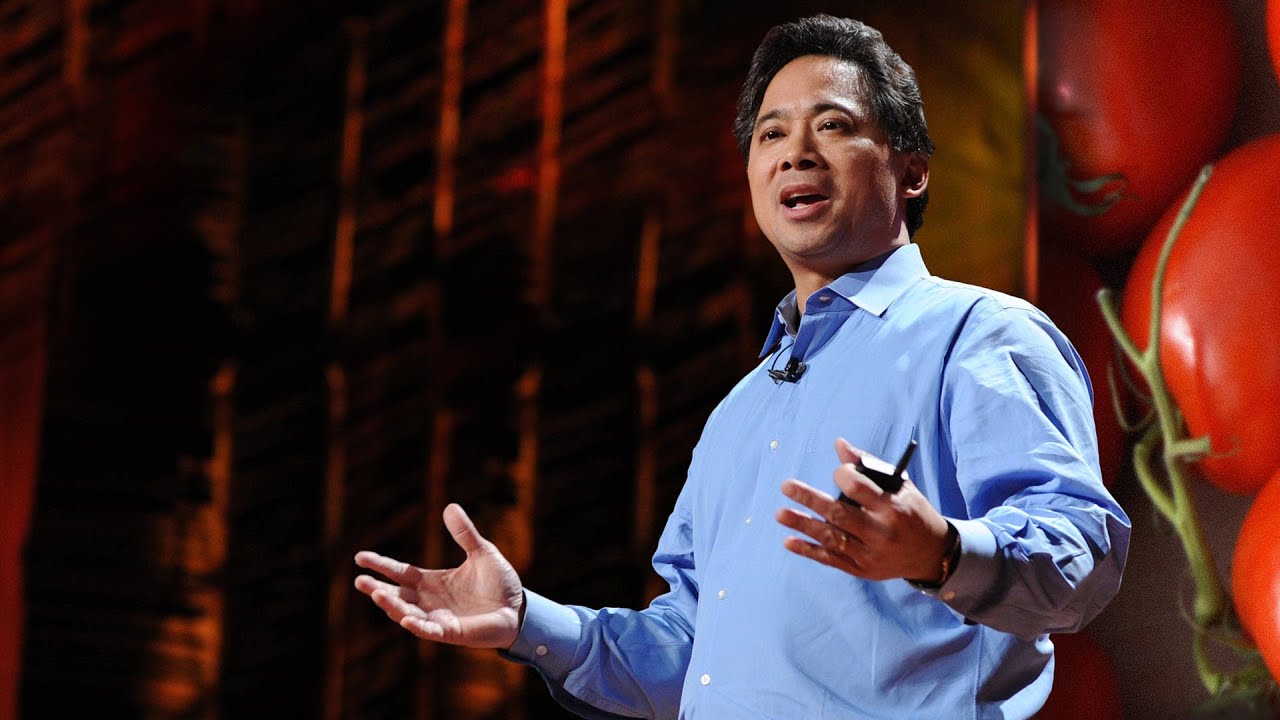
TED-Ed
Microscopic tumors remain harmless without dedicated blood vessels, enabling everyday anti-angiogenic foods to cut off vascular supplies and halt malignant growth before clinical detection.
AI-assisted summary of Can we eat to starve cancer? - William Li — original source. Check the original for full context.
Source published:
Key ideas
- Angiogenesis governs whether microscopic, harmless cell clusters turn into lethal, invasive tumors by providing them with dedicated blood vessel networks. (3:49)
- Everyday foods like red grapes, strawberries, soybeans, garlic, and parsley show anti-angiogenic potency in laboratory assays that rivals or outperforms standard medications and cancer drugs. (13:06)
- A 20-year prospective study of 79,000 men revealed that consuming cooked tomatoes 2–3 times weekly reduced prostate cancer risk by up to 50%, with biopsies verifying markedly reduced microvessel density inside tumor margins. (14:48)
- Adipose tissue expansion requires new capillary sprouting; treating genetically obese mice with anti-angiogenic agents caused them to shed fat down to normal baseline weight without slipping below healthy parameters. (16:34)
Detailed notes
## Background This TED-Ed presentation features Dr. William Li and was published on the TED-Ed YouTube channel on April 8, 2014. The video explores the medical concept of anti-angiogenesis, focusing on how individuals can potentially starve cancer and manage health by incorporating specific cancer-fighting foods into their daily diet.
## TL;DR Dr. William Li introduces the concept of angiogenesis, the process by which the body grows blood vessels, and explains how tumors hijack this system to survive and spread. While standard medical treatments focus on killing cancer after it has already established a blood supply, Li argues for a preventative approach using dietary angiogenesis inhibitors. By identifying and consuming foods like grapes, strawberries, and cooked tomatoes, individuals may be able to cut off the nutrient supply lines to microscopic tumors before they ever become dangerous. This strategy, supported by observational studies and laboratory assays, suggests that daily food choices can function as a powerful, accessible form of preventive self-treatment.
## Atmosphere & style The presentation carries an optimistic, revolutionary tone, framing complex oncology and vascular biology as a solvable puzzle rather than an insurmountable tragedy. Dr. Li speaks with the calm, authoritative confidence of a pioneer, using vivid metaphors—such as the human body’s 60,000 miles of vessels—to bridge the gap between abstract science and human health. The atmosphere is intellectually empowering, shifting the viewer from a passive observer of disease to an active participant in their own well-being. It feels like a moment of discovery, where the mundane act of eating is suddenly imbued with life-saving significance.
## Bulletin - [03:49](https://www.youtube.com/watch?v=OjkzfeJz66o&t=229s) Angiogenesis governs whether microscopic, harmless cell clusters turn into lethal, invasive tumors by providing them with dedicated blood vessel networks. - [13:06](https://www.youtube.com/watch?v=OjkzfeJz66o&t=786s) Everyday foods like red grapes, strawberries, soybeans, garlic, and parsley show anti-angiogenic potency in laboratory assays that rivals or outperforms standard medications and cancer drugs. - [14:48](https://www.youtube.com/watch?v=OjkzfeJz66o&t=888s) A 20-year prospective study of 79,000 men revealed that consuming cooked tomatoes 2–3 times weekly reduced prostate cancer risk by up to 50%, with biopsies verifying markedly reduced microvessel density inside tumor margins. - [16:34](https://www.youtube.com/watch?v=OjkzfeJz66o&t=994s) Adipose tissue expansion requires new capillary sprouting; treating genetically obese mice with anti-angiogenic agents caused them to shed fat down to normal baseline weight without slipping below healthy parameters.
## Key takeaways - [00:00](https://www.youtube.com/watch?v=OjkzfeJz66o&t=0s) The human body contains roughly 60,000 miles of blood vessels and maintains an intricate balance between angiogenic stimulators and inhibitors to prevent disease. - [00:00](https://www.youtube.com/watch?v=OjkzfeJz66o&t=0s) Abnormal angiogenesis is the common underlying denominator across more than 70 major clinical conditions affecting over one billion individuals globally. - [03:49](https://www.youtube.com/watch?v=OjkzfeJz66o&t=229s) Microscopic, dormant tumors are pervasive across asymptomatic populations, but without angiogenesis, they cannot grow beyond half a cubic millimeter. - [06:23](https://www.youtube.com/watch?v=OjkzfeJz66o&t=383s) Tumor blood vessels are structurally porous and defective, rendering them selectively vulnerable to targeted anti-angiogenic pharmacological and dietary interventions. - [06:23](https://www.youtube.com/watch?v=OjkzfeJz66o&t=383s) Veterinary clinical trials in dogs, dolphins, and horses demonstrate that anti-angiogenic cocktails can achieve high remission and survival rates across species. - [09:33](https://www.youtube.com/watch?v=OjkzfeJz66o&t=573s) Late-stage oncological intervention remains a primary bottleneck in human cancer therapy, underscoring the urgent imperative to prevent vascularization much earlier. - [10:48](https://www.youtube.com/watch?v=OjkzfeJz66o&t=648s) Diet accounts for an estimated 30% to 35% of all environmentally induced cancers, offering an opportunity to proactively add anti-angiogenic foods to daily meals. - [10:48](https://www.youtube.com/watch?v=OjkzfeJz66o&t=648s) Extracts from red grapes, strawberries, and soybeans effectively inhibit endothelial vessel sprouting in controlled laboratory ring assays. - [13:06](https://www.youtube.com/watch?v=OjkzfeJz66o&t=786s) Blending different teas, such as Chinese Jasmine and Sencha, produces synergistic anti-angiogenic effects greater than either tea variety brewed individually. - [14:48](https://www.youtube.com/watch?v=OjkzfeJz66o&t=888s) Epidemiological data demonstrates that bioavailable lycopene in cooked tomatoes physically restricts microvessel development in human prostate tumors. - [16:34](https://www.youtube.com/watch?v=OjkzfeJz66o&t=994s) Targeting blood vessel growth controls adiposity in obese animal models, cycling body weight predictably while respecting natural lean set points. - [18:19](https://www.youtube.com/watch?v=OjkzfeJz66o&t=1099s) Dietary choices act as an accessible, cost-effective form of preventive medicine that individuals can actively manage three times a day.
## Detailed walkthrough ### [00:00](https://www.youtube.com/watch?v=OjkzfeJz66o&t=0s) The Architecture of Angiogenesis and the Balance of Vessels
Dr. William Li introduces an emerging medical revolution centered on angiogenesis—the physiological process the human body uses to grow blood vessels. This biological mechanism holds the key to tackling some of society's most formidable conditions, notably cancer. The human vascular network is staggeringly vast: an average adult houses roughly 60,000 miles of blood vessels, enough to wrap around the Earth twice if laid end to end. Within this vast network reside approximately 19 billion capillaries, the smallest vessels in the body. While these capillaries serve as the indispensable conduits of life, delivering oxygen and vital nutrients, Dr. Li warns that under aberrant conditions, they can swiftly transform into the vessels of death.
```mermaid flowchart TD accTitle: Angiogenic Balance and Disease States accDescr: A diagram illustrating how angiogenic balance maintains health while imbalance leads to disease.
subgraph Regulation["Vascular Regulation"] Stim["Angiogenic Stimulators<br/>(Growth Factors / Fertilizers)"] Inhib["Angiogenic Inhibitors<br/>(Natural Pruning Signals)"] Stim <-->|"Homeostatic Set Point"| Inhib end
subgraph States["Clinical Consequences"] Deficit["Insufficient Angiogenesis<br/>• Non-healing wounds<br/>• Heart attacks & stroke<br/>• Poor circulation & nerve damage"] Excess["Excessive Angiogenesis<br/>• Cancer growth & metastasis<br/>• Blindness & arthritis<br/>• Obesity & Alzheimer's"] end
Stim -.->|"Loss of Inhibitors / Excess Stimulators"| Excess Inhib -.->|"Failure to Sprout / Vessel Loss"| Deficit ```
Blood vessels exhibit an extraordinary capacity to morph and adapt to the specialized requirements of their resident tissue. In the liver, they construct permeable channels designed to detoxify circulating blood; in the lungs, they wrap tightly around air sacs for gas exchange; in skeletal muscle, they adopt a corkscrew architecture so that muscle contraction does not pinch off blood flow; and along nerves, they run parallel like protective power lines to maintain nerve viability. The overwhelming majority of these conduits form while a human is still in the womb. Consequently, healthy adult blood vessel growth occurs only under tightly constrained circumstances: in women, to rebuild the uterine lining each month; during pregnancy, to construct the placenta bridging mother and fetus; and following injury, where hundreds of newly sprouted vessels traverse under a scab toward the wound's center to facilitate repair.
To control this dynamic architecture, the body operates an elegant system of checks and balances using biochemical stimulators and inhibitors. When a transient burst of vessel formation is required, tissues release angiogenic factors—proteins that function like natural fertilizer—spurring endothelial cells to sprout. Once healing completes or the tissue need recedes, naturally occurring inhibitors prune back the excess vasculature to an exact baseline set point. However, when defects impair this equilibrium, catastrophic health outcomes follow: - **Insufficient angiogenesis** (failure to sprout or regenerate) underpins chronic non-healing wounds, peripheral artery disease, heart attacks, fatal strokes, and ischemic nerve damage. - **Excessive angiogenesis** (failure to prune or suppress unwanted vessels) drives cancer, inflammatory arthritis, blinding eye diseases, obesity, and Alzheimer’s disease. - Across the globe, more than 70 major diseases affecting over one billion individuals share abnormal angiogenesis as their common underlying denominator.
---
[03:49](https://www.youtube.com/watch?v=OjkzfeJz66o&t=229s) Cancer Without Disease and the Angiogenic Switch
Focusing on oncology, Dr. Li emphasizes that angiogenesis represents an absolute hallmark across every form of cancer. When inspecting a malignant brain tumor such as an ominous glioblastoma, histological examination reveals hundreds of brown-stained capillaries relentlessly feeding the tumor mass with oxygen and fuel. Yet cancers never originate in this hyper-vascular state. Instead, they begin as tiny, microscopic clusters of cells that are physically incapable of exceeding half a cubic millimeter in size—an expanse roughly equivalent to the tip of a ballpoint pen. Deprived of dedicated blood vessels, these microscopic lesions stall because simple diffusion fails to deliver adequate oxygen and metabolites.
Autopsy investigations performed on victims of fatal car accidents confirm that microscopic tumors are shockingly common, silently populating seemingly healthy bodies without causing clinical illness. Approximately 40 percent of women between 40 and 50 years old possess microscopic breast cancers; roughly 50 percent of men in their 50s and 60s harbor microscopic prostate cancers; and nearly 100 percent of adults reaching their 70s develop microscopic thyroid carcinomas. Despite their prevalence, these cellular clusters remain completely harmless so long as the body prevents them from acquiring an independent blood supply. As Dr. Li recalls, “Dr. Judah Folkman, who was my mentor and who is the pioneer of the angiogenesis field, once called this 'cancer without disease.'”
The body's physiological capacity to hold angiogenesis in check acts as one of our most decisive defense systems against lethal malignancy. A tumor turns deadly only when its malignant cells undergo genetic mutations that allow them to hijack the vascular machinery, secreting vast floods of angiogenic growth factors that overcome natural inhibitors. Once new blood vessels penetrate the tumor core, the cancer transitions from dormant to explosive, growing exponentially, infiltrating nearby organs, and using these newly minted vascular gateways to shed circulating metastases throughout the body. Regrettably, it is precisely at this advanced, vascularized stage—when angiogenesis is already running unchecked—that most cancers are first diagnosed.
---
[06:23](https://www.youtube.com/watch?v=OjkzfeJz66o&t=383s) Starving Tumors: Anti-Angiogenic Therapy Across Species
Because angiogenesis serves as the critical tipping point dividing a harmless cellular cluster from an invasive killer, targeting this mechanism provides a novel paradigm: anti-angiogenic therapy. Unlike traditional chemotherapy, which indiscriminately attacks rapidly dividing cells throughout the body, anti-angiogenic agents selectively attack and cut off the blood supply feeding the malignancy. This targeted intervention is possible because the vessels constructed by tumors are structurally malformed, porous, and inherently defective, rendering them exquisitely vulnerable to targeted pharmacological disruption. In human clinical trials, brain tumors such as gliomas show marked vascular regression under experimental anti-angiogenic regimens, and breast cancer patients treated with the FDA-approved monoclonal antibody Avastin demonstrate a swift collapse and disappearance of the vascular halo surrounding the tumor.
```mermaid flowchart LR accTitle: Therapeutic Starvation of Tumors accDescr: Comparison between standard chemotherapeutic approach and anti-angiogenic targeted vessel starvation.
subgraph Conventional["Chemotherapy"] direction TB C1["Non-specific Cytotoxins"] --> C2["Attacks Rapidly Dividing Cells"] C2 --> C3["Systemic Toxicity & Side Effects"] end
subgraph AntiAngiogenic["Anti-Angiogenic Therapy"] direction TB A1["Target Malformed Vessels"] --> A2["Cut Off Supply Lines"] A2 --> A3["Tumor Starvation & Remission"] end ```
Observing these dramatic vascular responses in human trials prompted Dr. Li and his colleagues to explore whether anti-angiogenic strategies could be applied across species to rescue companion animals suffering from terminal malignancies: - **Milo the Boxer**: A nine-year-old dog diagnosed with an aggressive, lung-metastasized malignant neurofibroma on his shoulder was given only three months to live. By formulating an anti-angiogenic drug cocktail blended directly into his daily food alongside a topical anti-angiogenic cream applied directly to the lesion, researchers halted tumor expansion. Milo lived six times longer than his terminal veterinary prognosis, maintaining a high quality of life. - **Canine Clinical Outcomes**: Following Milo's protocol, over 600 dogs facing euthanasia have been treated with anti-angiogenic regimens, achieving an overall clinical response rate of approximately 60 percent. - **Dolphin in Florida**: A 20-year-old dolphin developed chronic oral mucosal lesions over three years that transformed into invasive squamous cell carcinomas. Applying a specially engineered anti-angiogenic paste to the lesions three times per week over seven months achieved complete eradication of the tumors, with post-treatment biopsies confirming completely normal histology. - **Guinness the Quarter Horse**: Presenting with a lethal, aggressive angiosarcoma on his lip that had already spread to regional lymph nodes, Guinness was treated using a dual strategy—topical anti-angiogenic cream externally and an oral cocktail internally. Over six months of treatment, the horse achieved complete clinical remission and remained cancer-free and vigorous more than six years later.
---
[09:33](https://www.youtube.com/watch?v=OjkzfeJz66o&t=573s) Human Clinical Realities and the Fatal Flaw of Late Intervention
The translation of anti-angiogenic principles into human clinical practice has yielded notable milestones. Twelve distinct anti-angiogenic therapies have secured approval across eleven different human cancer indications. When examining patient survival data spanning eight separate oncological conditions, the timeline following the 2004 introduction of targeted anti-angiogenic therapies demonstrates significant therapeutic gains compared to the prior baseline era of surgery, radiation, and cytotoxic chemotherapy alone.
For specific malignancies—namely kidney cancer (renal cell carcinoma), multiple myeloma, colorectal cancer, and gastrointestinal stromal tumors (GIST)—anti-angiogenic interventions have yielded a striking 70 to 100 percent improvement in patient survival duration. However, across various other tumor types, survival gains have proven frustratingly modest. Analyzing the structural limitations of modern cancer outcomes, Dr. Li identifies a glaring therapeutic bottleneck: “And the answer to me is obvious: we're treating cancer too late in the game, when it's already established, and oftentimes it's already spread or metastasized.” Attempting to halt an advanced, widespread disease after it has already hijacked the systemic circulation presents an uphill medical struggle, underscoring the urgent imperative to intervene far earlier in the disease process.
[10:48](https://www.youtube.com/watch?v=OjkzfeJz66o&t=648s) Starving Cancer by Diet and Anti-Angiogenesis Testing
William Li explains that once cancer reaches advanced clinical stages, achieving a cure becomes exceptionally difficult, if not impossible. Reflecting on the basic biology of angiogenesis, he began to question whether the ultimate answer to cancer might lie in preventing blood vessel growth altogether—beating cancer at its own game before microscopic tumors ever have the opportunity to turn dangerous. Such an approach offers promise not only for healthy individuals aiming to avoid the disease entirely, but also for cancer survivors seeking reliable strategies to prevent recurrence. Examining environmental drivers of malignancy, Li was struck by the realization that diet accounts for roughly 30 to 35 percent of all environmentally caused cancers. While conventional thinking typically revolves around what harmful items to eliminate or strip away from the plate, Li inverted the inquiry to ask what natural, anti-angiogenic foods could be added to bolster the body's vascular defense systems and selectively starve incipient tumors.
To investigate whether everyday foods can actively cut off tumor blood supplies, Li and his team took their search directly to markets, farms, and spice cabinets, discovering that nature has infused a wide array of foods, beverages, and herbs with potent angiogenesis inhibitors. In the laboratory, they established a specialized testing system consisting of a central tissue ring from which hundreds of blood vessels sprout in a starburst pattern. By exposing this assay to dietary extracts at concentrations genuinely achievable through normal eating, they quantified their biological potency. Adding an extract from red grapes—rich in resveratrol, which is also present in red wine—inhibited abnormal angiogenesis by 60 percent. Similar tests demonstrated that extracts of strawberries and soybeans also exerted potent inhibitory effects on vessel sprouting, laying the groundwork for a systematic catalog of cancer-fighting dietary ingredients.
```mermaid flowchart TD accTitle: Dietary Inhibition of Angiogenesis accDescr: Diagram showing how dietary intake of anti-angiogenic foods halts tumor vessel growth and microscopic cancer expansion. subgraph Intake["Dietary Sources"] F1["Red Grapes & Wine<br/>(Resveratrol)"] F2["Berries & Soybeans"] F3["Cooked Tomatoes<br/>(Lycopene)"] end subgraph Vascular["Vascular Target"] V1["Vascular Endothelial Growth"] V2["Vessel Starburst Sprouting"] end subgraph Outcome["Clinical Impact"] T1["Vessel Sprouting Inhibited<br/>(up to 60%)"] T2["Microscopic Tumors Starved<br/>(Prevented from Growth)"] end Intake -->|"Bioactive concentrations"| Vascular V1 --> V2 V2 -->|"Inhibition"| T1 T1 --> T2 ```
- Diet accounts for an estimated 30% to 35% of environmentally induced cancers. - Resveratrol extract derived from red grapes inhibits abnormal blood vessel sprouting by 60%. - Laboratory ring assays measure capillary growth in starburst formations under realistic dietary concentrations.
---
[13:06](https://www.youtube.com/watch?v=OjkzfeJz66o&t=786s) Tea Blends, Food Synergy, and Foods vs. Drugs
Li notes that potency is not uniform across generic categories; individual strains, cultivars, and varietals of fruits and teas exhibit distinct biological activities. When Li's team tested four common teas—Chinese Jasmine, Japanese Sencha, Earl Grey, and an experimental house blend—they observed marked differences in how effectively each inhibited angiogenesis. Most remarkably, when they combined two of the individually less potent teas, the resulting blend demonstrated greater anti-angiogenic potency than either variety exhibited on its own, demonstrating clear food synergy. Li stresses that understanding these variations allows consumers to deliberately select the most potent options when brewing tea or purchasing produce.
To benchmark these findings, the team pit dietary compounds head-to-head against conventional pharmaceutical agents. In laboratory assays where tumor angiogenesis is tracked against a control, researchers evaluated both established cancer drugs and everyday medications known to correlate epidemiologically with reduced cancer risk, such as statins and non-steroidal anti-inflammatory drugs (NSAIDs). When tested under identical conditions, everyday foods like soy, parsley, garlic, grapes, and berries matched or even exceeded the inhibitory potency of prescription pharmaceuticals. Reflecting on this parity, Li notes that one could prepare a gourmet dinner composed of ingredients that actively match the potency of commercial anti-angiogenic medications.
> “Imagine if we could create the world's first rating system in which we could score foods according to their anti-angiogenic cancer preventative properties and that's what we're doing right now.” — William Li
- Four tested tea varieties (Chinese Jasmine, Japanese Sencha, Earl Grey, and an experimental blend) showed distinct, measurable variations in anti-angiogenic strength. - Combining two weaker teas produced an amplified synergistic effect exceeding both individual components. - Whole-food extracts from parsley, garlic, soy, and berries held their own against and in certain instances outperformed statins, NSAIDs, and traditional cancer therapies.
---
[14:48](https://www.youtube.com/watch?v=OjkzfeJz66o&t=888s) Human Evidence, Tomato Sauce, and Systemic Impact
Moving beyond laboratory cell dishes, Li presents epidemiological evidence confirming that dietary anti-angiogenesis functions directly in human populations. A landmark observational study tracked 79,000 men over a 20-year span, finding that individuals who consumed cooked tomatoes two to three times per week experienced up to a 50 percent reduction in their risk of developing prostate cancer. Tomatoes supply rich concentrations of lycopene, a known anti-angiogenic compound that becomes more bioavailable when cooked. Crucially, among the subset of participants who nevertheless developed prostate tumors, those with higher intakes of tomato sauce exhibited noticeably fewer blood vessels feeding their malignancies upon biopsy, providing physical proof that dietary compounds restrict real tumor vasculature in human patients.
Li highlights ongoing collaborative studies with Dean Ornish at the University of California, San Francisco (UCSF) and Tufts University to analyze how comprehensive healthy diets alter circulating angiogenesis biomarkers in human bloodstreams. The ramifications extend beyond clinical oncology into grocery retail, food supply chains, public health initiatives, and health insurance models. Li references early insurance adoption, highlighting an educational campaign by Blue Cross Blue Shield of Minnesota promoting dietary lifestyle awareness. For developing economies and marginalized populations, nutritional prevention offers an accessible, affordable alternative to costly late-stage pharmaceutical regimens.
> “Not everybody can afford expensive end-stage cancer treatments but everybody could benefit from a healthy diet based on local sustainable anti-angiogenic crops.” — William Li
- A 20-year prospective study of 79,000 men associated eating cooked tomatoes 2–3 times weekly with a 50% decrease in prostate cancer incidence. - Biopsies from tomato consumers who developed cancer verified significantly reduced microvessel density inside tumor margins. - Clinical collaborations with Dean Ornish (UCSF) and Tufts University evaluate real-time changes in bloodstream vascular biomarkers following dietary interventions.
---
[16:34](https://www.youtube.com/watch?v=OjkzfeJz66o&t=994s) Angiogenesis in Obesity and Healthy Set Points
Li shifts focus to adipose tissue, revealing that body fat is fundamentally angiogenesis-dependent. Just as a solid tumor cannot enlarge beyond microscopic dimensions without recruiting an dedicated capillary network, adipose tissue requires continuous vascular expansion to store additional mass. To explore whether adipose expansion could be arrested by pruning its blood supply, researchers studied genetically obese mice that feed incessantly, ballooning until they resemble what Li jokingly describes as "furry tennis balls." When administered an angiogenesis inhibitor, these obese mice shed body fat rapidly; when the drug was halted, their weight climbed back up. Researchers were able to cycle mouse body weight up and down simply by turning vascular inhibition on and off.
Crucially, administering angiogenesis inhibitors never caused the mice to waste away below the natural baseline weight of a normal, lean mouse. The therapies did not drive the animals into an emaciated state; as Li puts it with a smile, the researchers discovered that “we can't create supermodel mice.” This ceiling effect illustrates that vascular control mechanisms respect homeostatic biological set points rather than causing unmitigated tissue destruction. Citing Nobel laureate Albert Szent-Györgyi, Li underscores that transformative discoveries arise from looking at familiar phenomena through an entirely unconsidered lens, arguing that attacking angiogenesis offers a unified paradigm for managing both cancer and obesity.
> “Albert Szent-Györgyi once said that discovery consists of seeing what everybody has seen and thinking what nobody has thought.” — William Li
- Adipose tissue expansion requires co-occurring capillary vessel generation, rendering body fat vulnerable to vascular deprivation. - Obese mice treated with anti-angiogenic agents shed weight down to normal mouse parameters, but vascular inhibition never dropped them below healthy baseline body mass. - Halting and restarting anti-angiogenic therapy predictably cycled rodent weights up and down, validating vascular supply as a regulator of adiposity.
---
[18:19](https://www.youtube.com/watch?v=OjkzfeJz66o&t=1099s) Q&A: Patient Action, Clinical Trials, and Food as Daily Medicine
Following the presentation, the host steps forward to ask practical questions about current clinical adoption, noting that while anti-angiogenic treatments are gaining ground, they are not universally applied across standard oncology practices. When asked whether active cancer patients should pursue these therapies, Li clarifies that multiple anti-angiogenic drugs are already approved by the FDA for specific malignancies. He encourages patients, family members, and patient advocates to inquire about approved drugs and research ongoing clinical trials. Li notes that the Angiogenesis Foundation tracks approximately 300 companies actively working in the space, with roughly 100 new candidate drugs advancing through the investigational pipeline.
Beyond prescription medicines, Li insists that the most critical frontier rests in patient empowerment through lifestyle and nutritional literacy. When the host asks whether people with known hereditary or environmental risk factors should seek prophylactic drug treatments or simply adjust their lifestyle with foods like tomato sauce, Li highlights the accessibility of peer-reviewed epidemiological research. In the modern information era, patients can verify dietary risk-reduction data independently through platforms like PubMed and the National Library of Medicine. Li emphasizes that what patients put on their plates empowers them to engage in health management multiple times every single day.
> “And between what the doctor can do for you we need to start asking what can we do for ourselves and this is one of the themes that I'm talking about is we can empower ourselves to do the things that doctors can't do for us which is to use knowledge and take action and if Mother Nature has given us some clues we think that there might be some a new future in the value of how we eat and what we eat is really our chemotherapy three times a day.” — William Li
- Multiple anti-angiogenic medications currently hold full regulatory approval from the FDA, with roughly 100 additional candidates under commercial evaluation across 300 tracked biotechnology firms. - Public medical databases, including the National Library of Medicine's PubMed service, allow patients to directly evaluate epidemiological literature on cancer risk reduction and dietary interventions. - Li characterizes daily dietary selections as an accessible form of preventive self-treatment that individuals administer three times a day.
## Notable quotes > [14:48](https://www.youtube.com/watch?v=OjkzfeJz66o&t=888s) Not everybody can afford expensive end-stage cancer treatments but everybody could benefit from a healthy diet based on local sustainable anti-angiogenic crops. — William Li
> [09:33](https://www.youtube.com/watch?v=OjkzfeJz66o&t=573s) We're treating cancer too late in the game, when it's already established, and oftentimes it's already spread or metastasized. — William Li
## Mentioned William Li, Judah Folkman, Avastin, Dean Ornish, University of California, San Francisco, Tufts University, Blue Cross Blue Shield of Minnesota, Albert Szent-Györgyi, FDA, The Angiogenesis Foundation, PubMed, National Library of Medicine
## Video description View full lesson: http://ed.ted.com/lessons/can-we-eat-to-starve-cancer-william-li
William Li presents a new way to think about treating cancer and other diseases: anti-angiogenesis, preventing the growth of blood vessels that feed a tumor. The crucial first (and best) step: Eating cancer-fighting foods that cut off the supply lines and beat cancer at its own game.
Talk by WIlliam Li.
[Source](https://www.youtube.com/watch?v=OjkzfeJz66o)