Spacey Tells TV Networks to Ditch Pilot Season and Let Viewers Binge
The Telegraph
Broadcasters risk repeating the music industry's piracy collapse unless they abandon wasteful $400 million pilot cycles and give audiences immediate on-demand access to entire seasons.
AI-assisted summary of Kevin Spacey urges TV channels to give control to viewers — original source. Check the original for full context.
Source published:
Key ideas
- Every major traditional US television network passed on 'House of Cards' because they insisted on a mandatory pilot episode, whereas Netflix used subscriber viewing data to commit directly to two full seasons. (0:04)
- The traditional American pilot season burns between $300 million and $400 million annually shooting 113 to 146 pilots, only a fraction of which ever reach air or survive renewal. (1:05)
- Television risks replicating the music industry's catastrophic anti-piracy missteps unless platforms deliver content in viewers' preferred format and timing at a reasonable price. (2:00)
- Technological and generational shifts are rendering distinctions between film, television, and internet video obsolete, with emerging audiences caring only about story quality rather than delivery medium. (2:49)
Detailed notes
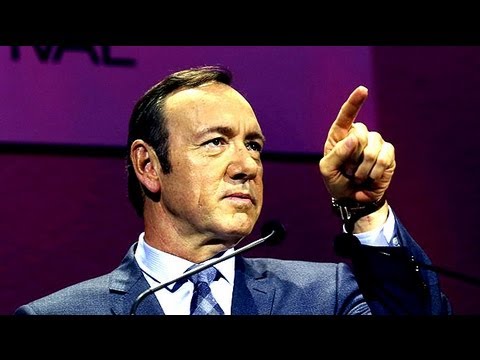
## Background Published on YouTube by The Telegraph on August 23, 2013, this video captures actor Kevin Spacey delivering the keynote James MacTaggart Memorial Lecture at the Edinburgh Television Festival. According to the page description, Spacey challenges traditional television channels to grant control and freedom to audiences through flexible streaming or risk being left behind in a changing entertainment landscape.
## TL;DR In his speech, Kevin Spacey contrasts the traditional American pilot season—which wastes hundreds of millions of dollars annually on unviable concepts—with Netflix's data-driven, straight-to-series commitment for House of Cards. He warns broadcasting executives not to repeat the fatal mistakes of the music industry, urging them to embrace binge-watching by giving audiences content when, where, and how they want it at a fair price. Concluding with a forward-looking vision, Spacey predicts the collapse of arbitrary platform labels like 'television' versus 'film,' emphasizing that audiences across generations simply hunger for rich, uncompromising storytelling.
## Atmosphere & style Spacey speaks with theatrical polish, sharp wit, and authoritative ease, balancing self-deprecating quips with pointed critiques of the entertainment industry's antiquated practices. The atmosphere is that of an electrifying, disruptive wake-up call delivered directly to the executive establishment in a formal conference setting. Moving from hard-nosed financial critiques to an impassioned celebration of narrative artistry, the lecture feels urgent, prescient, and inspiring.
## Bulletin - [00:04](https://www.youtube.com/watch?v=P0ukYf_xvgc&t=4s) Every major traditional US television network passed on 'House of Cards' because they insisted on a mandatory pilot episode, whereas Netflix used subscriber viewing data to commit directly to two full seasons. - [01:05](https://www.youtube.com/watch?v=P0ukYf_xvgc&t=65s) The traditional American pilot season burns between $300 million and $400 million annually shooting 113 to 146 pilots, only a fraction of which ever reach air or survive renewal. - [02:00](https://www.youtube.com/watch?v=P0ukYf_xvgc&t=120s) Television risks replicating the music industry's catastrophic anti-piracy missteps unless platforms deliver content in viewers' preferred format and timing at a reasonable price. - [02:49](https://www.youtube.com/watch?v=P0ukYf_xvgc&t=169s) Technological and generational shifts are rendering distinctions between film, television, and internet video obsolete, with emerging audiences caring only about story quality rather than delivery medium.
## Key takeaways - [00:04](https://www.youtube.com/watch?v=P0ukYf_xvgc&t=4s) Kevin Spacey emphasizes that the creative vision of 'House of Cards' aligned with the British television model by rejecting the American network pilot tradition. - [00:41](https://www.youtube.com/watch?v=P0ukYf_xvgc&t=41s) A 45-minute pilot forces writers to contrive cliffhangers and rush character introductions, restricting the breathing room needed for complex, sophisticated drama. - [00:55](https://www.youtube.com/watch?v=P0ukYf_xvgc&t=55s) Netflix was the sole distributor confident enough in its viewer analytics to bypass the pilot phase and offer a straight-to-series commitment. - [01:05](https://www.youtube.com/watch?v=P0ukYf_xvgc&t=65s) The traditional pilot pipeline is financially inefficient, spending hundreds of millions of dollars each year on dozens of pilots that never get broadcast or renewed. - [02:00](https://www.youtube.com/watch?v=P0ukYf_xvgc&t=120s) Granting viewers the autonomy to binge-watch an entire season simultaneously reflects consumer demand for schedule control over outdated appointment television. - [02:20](https://www.youtube.com/watch?v=P0ukYf_xvgc&t=140s) Providing convenient, fairly priced, on-demand access is the only proven defense against digital media piracy, a lesson the music industry failed to heed. - [02:49](https://www.youtube.com/watch?v=P0ukYf_xvgc&t=169s) Industry labels separating feature films from television shows primarily serve agents, lawyers, and contracts rather than the audience. - [03:14](https://www.youtube.com/watch?v=P0ukYf_xvgc&t=194s) Modern audiences view content interchangeably whether watching a movie on a tablet, online video on a television set, or high-end drama on a computer. - [03:42](https://www.youtube.com/watch?v=P0ukYf_xvgc&t=222s) Engaged television viewers develop a deep intimacy with long-form stories, voluntarily promoting shows through social media, memes, and fan communities. - [04:20](https://www.youtube.com/watch?v=P0ukYf_xvgc&t=260s) Broadcasters and studios risk sabotaging a golden age of narrative entertainment if they refuse to adapt to consumer habits and modern distribution models.
## Detailed walkthrough ### [00:04](https://www.youtube.com/watch?v=P0ukYf_xvgc&t=4s) Pitching *House of Cards* and the Waste of Pilot Season
Kevin Spacey opens his speech with a light-hearted quip directed at the audience of media executives, reassuring them that they do not have to worry about him trying to climb the corporate ladder: “The relief for all of you is that I am not someone with an important job in broadcasting using this speech to audition for an even more important job in broadcasting.” He explains that creatively, *House of Cards* aligned far closer to the traditional British broadcasting model, where the television industry has never felt the compulsion to embrace the American pilot season. When pitching *House of Cards*, the creative team met with every major network. While all showed interest, every single one insisted on shooting a pilot episode first.
Spacey clarifies that bypassing the pilot process was not born out of arrogance on the part of director David Fincher, showrunner Beau Willimon, or himself. Rather, their goal was to construct a sprawling, intricate narrative that required breathing room. The structural demands of a 45-minute pilot force writers into a corner: they must introduce every key player, engineer contrived cliffhangers, and scramble to prove the concept works right out of the gate. Netflix proved to be the lone exception. Backed by their internal analytics indicating that their subscriber base would eagerly consume the show, Netflix bypassed the pilot altogether and offered a straight-to-series commitment.
```mermaid flowchart TD accTitle: US Network Pilot Model vs Netflix Direct-to-Series Model accDescr: Diagram contrasting traditional network pilot attrition and costs with Netflix's data-driven direct commitment. subgraph Traditional["Traditional US Pilot Model"] direction TB A["113–146 Pilot Scripts Produced"] --> B["35–56 Picked Up to Series"] B --> C["13 Renewed (Most Later Cancelled)"] D["Annual Cost: $300M–$400M"] -.-> A end
subgraph Netflix["The Netflix Model"] direction TB E["Analyze Viewing Data"] --> F["Straight-to-Series Order (2 Seasons)"] F --> G["Multi-Layered, Sophisticated Storytelling"] H["Cost-Effective & Creative Freedom"] -.-> F end ```
By comparison, Spacey breaks down the massive financial and creative waste inherent in the traditional network pipeline: - In the previous television cycle, 113 pilots were commissioned; only 35 aired, 13 received renewals, and most of those have since disappeared. - In the current year, 146 pilots were shot and 56 advanced to series, with the ultimate survival rate still unknown. - The financial cost of developing and filming these pilot batches runs between $300 million and $400 million every year. - Setting those figures against the two-season upfront commitment secured for *House of Cards* demonstrates just how cost-effective the direct-to-series approach truly is.
[02:00](https://www.youtube.com/watch?v=P0ukYf_xvgc&t=120s) Audience Control and the Lesson the Music Industry Missed
Reflecting on the audience response to Netflix releasing the full run of *House of Cards* simultaneously, Spacey argues that the old broadcast gatekeeping mechanics are thoroughly obsolete. Viewers do not want appointment television dictated by programming executives; they demand absolute autonomy over how, when, and where they consume entertainment. He jokes about fans confronting him on the sidewalk to say, “Thanks, you suck three days out of my life,” celebrating binge-watching as an inevitable and welcome evolution in consumer behavior.
Spacey directly invokes the historical blunders of the music business, warning television executives that fighting consumer habits only breeds mass piracy. The only effective countermeasure is offering frictionless accessibility. As Spacey summarizes: “And through this new form of distribution we have demonstrated that we have learned the lesson that the music industry didn't learn — give people what they want, when they want it, in the form they want it in, at a reasonable price, and they'll more likely pay for it rather than steal it.” Providing convenience at a fair price will not eliminate digital theft entirely, but it systematically undercuts the black market by removing the incentive to steal.
[02:49](https://www.youtube.com/watch?v=P0ukYf_xvgc&t=169s) The Death of Platform Labels and the Appetite for Story
Looking ahead into the next ten to twenty years, Spacey predicts that categorical distinctions between cinema, broadcast television, and digital platforms will disintegrate completely. He challenges the audience to justify why a 13-hour cinematic continuous narrative should be treated differently from a two-hour theatrical release, or why watching a feature film on a television makes it any less of a film. Rigid terminology such as "TV show" or "film" serves the transactional needs of agents, managers, and entertainment attorneys structuring contracts, but it means nothing to the next generation of consumers. Younger audiences freely switch between watching *Avatar* on an iPad, user-generated videos on YouTube via a television screen, or *Game of Thrones* on a laptop. To them, it is all storytelling on equal footing.
Spacey emphasizes that viewers are intensely hungry for high-quality narratives and are eager to champion shows that respect their intelligence: - Audiences do not merely watch good television; they carry it with them everywhere, obsessing over it on the bus or at the hairdresser. - Viewers evangelize content by pressuring friends to watch, building social buzz on Twitter, Facebook, and personal blogs, and creating fan pages, memes, and GIFs. - This ground-level enthusiasm generates an emotional resonance and deep intimacy that tentpole Hollywood blockbuster movies cannot match.
Urging creators and network leaders not to let traditional distribution habits choke off this unprecedented golden age of storytelling, Spacey declares that “the prize fruit is right there, shinier and juicier than it's ever been before, so it will be all the more shame on each and every one of us if we don't reach out and seize it.” He concludes his address by invoking director Orson Welles's famous conflicted relationship between creative artistry and the medium: “I hate television. I hate it as much as peanuts. But I just can't stop eating peanuts.”
## Notable quotes > [02:00](https://www.youtube.com/watch?v=P0ukYf_xvgc&t=120s) give people what they want, when they want it, in the form they want it in, at a reasonable price, and they'll more likely pay for it rather than steal it — Kevin Spacey
## Mentioned Kevin Spacey, House of Cards, Netflix, David Fincher, Beau Willimon, Avatar, Game of Thrones, YouTube, iPad, Twitter, Facebook, Orson Welles, Edinburgh Television Festival, The Daily Telegraph
## Video description Double Oscar-winner Kevin Spacey has challenged TV channels to give "control" to their audiences or risk losing them at his address at the James MacTaggart Memorial Lecture at the Edinburgh Television Festival.
The Hollywood star, whose recent foray into television -- House Of Cards -- has been a commercial and critical hit after it was released on streaming service Netflix, said there was a danger of "thinking that something which is working now will necessarily work a year from now".
Spacey, who gave the keynote James MacTaggart Memorial Lecture at the Edinburgh Television Festival this evening, said: "Clearly the success of the Netflix model -- releasing the entire season of House Of Cards at once -- has proved one thing: the audience wants control. They want freedom. If they want to binge -- as they've been doing on House Of Cards -- then we should let them binge."
The actor said that way of working "demonstrated that we have learned the lesson that the music industry didn't learn -- give people what they want, when they want it, in the form they want it in, at a reasonable price, and they'll more likely pay for it rather than steal it".
Spacey, who starred in and was also executive producer on the show which was nominated for nine Emmy Awards, warned the audience of media executives that "labels" were becoming meaningless and they risked being "left behind".
He said: "If you watch a TV show on your iPad is it no longer a TV show? The device and length are irrelevant ... For kids growing up now there's no difference watching Avatar on an iPad or watching YouTube on a TV and watching Game Of Thrones on their computer. It's all content. It's all story."
Read more: http://www.telegraph.co.uk/finance/newsbysector/mediatechnologyandtelecoms/10261424/Kevin-Spacey-urges-TV-channels-to-give-control-to-viewers.html
Get the latest headlines http://www.telegraph.co.uk/
Subscribe to The Telegraph http://www.youtube.com/subscription_center?add_user=telegraphtv
Like us on Facebook http://www.facebook.com/telegraph.co.uk Follow us on Twitter https://twitter.com/telegraph Follow us on Google+ https://plus.google.com/102891355072777008500/
Telegraph.co.uk and YouTube.com/TelegraphTV are websites of The Daily Telegraph, the UK's best-selling quality daily newspaper providing news and analysis on UK and world events, business, sport, lifestyle and culture.
[Source](https://www.youtube.com/watch?v=P0ukYf_xvgc)