For-Profit Colleges Exploit GI Loophole as US Student Debt Tops $1T
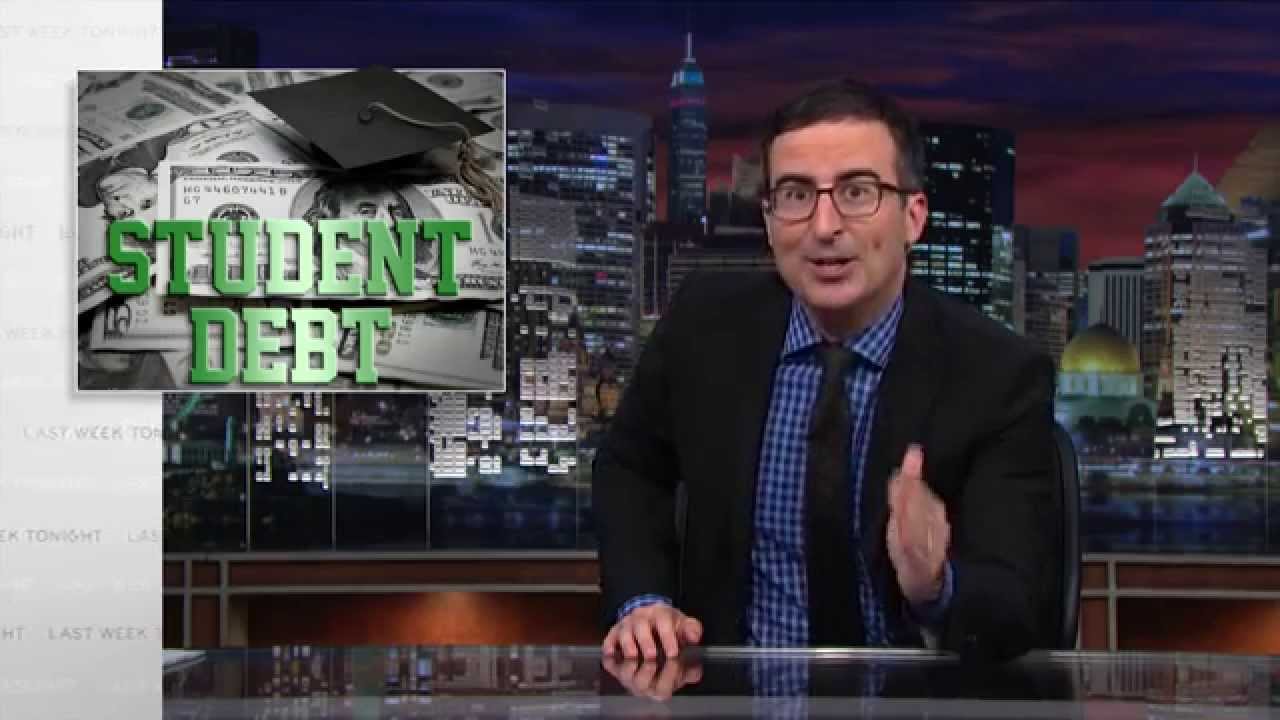
LastWeekTonight
The student debt crisis will persist even if predatory for-profit colleges close because lawmakers refuse to fund public higher education.
AI-assisted summary of Student Debt: Last Week Tonight with John Oliver (HBO) — original source. Check the original for full context.
Source published:
Key ideas
- Total outstanding U.S. student loan debt surpassed $1 trillion, tripling over a decade to become the second-largest pool of consumer debt behind home mortgages. (0:04)
- For-profit colleges enroll just 13% of American higher education students but account for nearly one-third of all federal student loans, spending twice as much on sales and advertising as on instruction. (4:04)
- A loophole in the federal 90/10 rule exempts GI Bill benefits from Title IV loan caps, driving for-profit institutions to pull in $1.7 billion in military educational funds while targeting vulnerable veterans. (11:14)
- State funding cuts of 23% to higher education have shifted costs onto students at public institutions, ensuring the broader debt crisis persists even outside the for-profit sector. (1:40)
Detailed notes
## Background Published on YouTube by LastWeekTonight on September 8, 2014, this episode examines the ballooning student debt crisis in the United States. According to the show description, host John Oliver focuses on the harsh realities of student loans alongside for-profit colleges that aggressively push debt onto prospective students.
## TL;DR John Oliver investigates how declining state funding and soaring tuition drove total U.S. student loan debt past $1 trillion in virtually non-dischargeable debt. He exposes predatory for-profit colleges like ITT Tech and Corinthian Colleges, which consume disproportionate shares of federal aid while spending heavily on deceptive marketing and yielding dismal completion and employment rates. Oliver details how these institutions exploit regulatory loopholes in the 90/10 rule to target military veterans' GI Bill benefits, using well-funded lobbying and astroturfed campaigns to resist federal oversight. Ultimately, he emphasizes that the broader student debt crisis stems from a systemic political refusal to adequately fund public higher education, jokingly advising current students to maximize their college experience before loan repayment sets in.
## Atmosphere & style The segment balances rapid-fire investigative journalism with John Oliver's trademark blend of righteous indignation, absurdity, and dry wit. Moving from grim economic statistics to astonishing corporate practices—such as nursing students completing psychiatric clinicals at a Scientology museum—the show builds a palpable sense of outrage. The piece oscillates between scathing corporate takedowns and laugh-out-loud shock humor, concluding with a manic, darkly comic call for freshmen to live out every campus cliché before financial reality catches up.
## Bulletin - [00:04](https://www.youtube.com/watch?v=P8pjd1QEA0c&t=4s) Total outstanding U.S. student loan debt surpassed $1 trillion, tripling over a decade to become the second-largest pool of consumer debt behind home mortgages. - [04:04](https://www.youtube.com/watch?v=P8pjd1QEA0c&t=244s) For-profit colleges enroll just 13% of American higher education students but account for nearly one-third of all federal student loans, spending twice as much on sales and advertising as on instruction. - [11:14](https://www.youtube.com/watch?v=P8pjd1QEA0c&t=674s) A loophole in the federal 90/10 rule exempts GI Bill benefits from Title IV loan caps, driving for-profit institutions to pull in $1.7 billion in military educational funds while targeting vulnerable veterans. - [01:40](https://www.youtube.com/watch?v=P8pjd1QEA0c&t=100s) State funding cuts of 23% to higher education have shifted costs onto students at public institutions, ensuring the broader debt crisis persists even outside the for-profit sector.
## Key takeaways - [00:04](https://www.youtube.com/watch?v=P8pjd1QEA0c&t=4s) Seven out of ten graduating seniors now complete college burdened by student debt. - [00:04](https://www.youtube.com/watch?v=P8pjd1QEA0c&t=4s) Student debt is uniquely enforceable and almost impossible to escape because federal law prevents it from being discharged in bankruptcy. - [00:04](https://www.youtube.com/watch?v=P8pjd1QEA0c&t=4s) More than 90% of all student loan debt in the United States is subsidized or guaranteed by the federal government. - [01:40](https://www.youtube.com/watch?v=P8pjd1QEA0c&t=100s) State legislatures reduced higher education funding appropriations by an average of 23%, forcing public colleges to hike tuition rates. - [01:40](https://www.youtube.com/watch?v=P8pjd1QEA0c&t=100s) Severe budget constraints have forced community colleges to restrict capacity, leading to waiting lists just to join program waiting lists. - [04:04](https://www.youtube.com/watch?v=P8pjd1QEA0c&t=244s) For-profit colleges charge tuition up to double that of four-year state universities and five to six times higher than community colleges. - [04:04](https://www.youtube.com/watch?v=P8pjd1QEA0c&t=244s) For-profit schools allocate 20% to 25% of overall revenue to marketing and recruitment, while investing only 10% to 20% in faculty and instruction. - [07:34](https://www.youtube.com/watch?v=P8pjd1QEA0c&t=454s) Recruiters at for-profit schools were trained to exploit prospects' psychological 'pain points,' manipulating low-income recruits into taking on heavy debt. - [07:34](https://www.youtube.com/watch?v=P8pjd1QEA0c&t=454s) Programs at for-profit institutions often show dismal career outcomes; an ITT Tech engineering cohort saw three-quarters drop out and only 13 secure field employment. - [07:34](https://www.youtube.com/watch?v=P8pjd1QEA0c&t=454s) Following a federal probe into falsified job placement statistics, Corinthian Colleges agreed to close or sell off every campus it operated. - [11:14](https://www.youtube.com/watch?v=P8pjd1QEA0c&t=674s) The 90/10 rule loophole treats military educational funds like the GI Bill as non-federal revenue, incentivizing aggressive recruitment of veterans. - [11:14](https://www.youtube.com/watch?v=P8pjd1QEA0c&t=674s) For-profit college recruiters targeted severely wounded service members, including Marines with traumatic brain injuries residing in barracks. - [12:42](https://www.youtube.com/watch?v=P8pjd1QEA0c&t=762s) The for-profit industry spent $10 million in a single year lobbying against Obama administration 'gainful employment' rules. - [12:42](https://www.youtube.com/watch?v=P8pjd1QEA0c&t=762s) Trade group APSCU flooded federal regulators with astroturfed public comment letters containing unedited template placeholders like 'institution' and 'program.' - [14:51](https://www.youtube.com/watch?v=P8pjd1QEA0c&t=891s) Eliminating predatory for-profit schools would not solve the debt epidemic because government leaders consistently underfund higher education across all sectors.
## Detailed walkthrough ### [00:04](https://www.youtube.com/watch?v=P8pjd1QEA0c&t=4s) The $1 Trillion Student Debt Epidemic
As hundreds of thousands of students head off to begin classes at colleges and universities across the country, John Oliver points out that most graduates will end up leaving school with far more than just a cheap polyester gown and a tearful aunt's gift copy of *Oh, the Places You'll Go!*. Instead, seven out of ten graduating seniors now leave college buried under loans, pushing the total outstanding student debt in the United States past $1 trillion. Student loan debt has tripled over the past decade, outpacing both credit card debt and auto loans, and sitting second only to residential mortgages. Oliver remarks that student loans have replaced Bob Marley's *Legend* as the one thing virtually every college student owns, describing its invasive permanence with a sharp analogy: “Essentially, student debt is like HPV. If you go to college, you're almost certainly going to get it. And if you do, it will follow you for the rest of your life.”
Part of what makes student debt uniquely terrifying is its legal enforceability. It is practically the most collectible debt in the entire financial system because federal law makes it non-dischargeable through bankruptcy. Defaulting borrowers face relentless federal collection tools: authorities can garnish wages, seize tax refund checks, and bring federal lawsuits. Oliver jokes that collectors will go so far as to steal your wallet, hock your baby shoes, or magically shrink down to two inches tall just to camp in your pocket and take their money back one dime at a time.
```mermaid flowchart TD accTitle: The Cycle of Shrinking State Funding and Rising Student Debt accDescr: Flowchart showing how state budget cuts lead to tuition increases, nursing waitlists, and reliance on heavily marketed for-profit schools.
subgraph StateCuts["State Level Austerity"] A["States slash higher education funding by 23%"] --> B["Colleges raise tuition to offset deficits"] A --> C["Community college capacity reduced"] C --> D["North Carolina nursing program creates waitlist to get on waitlist"] end
subgraph DebtSurge["Rising Student Debt"] B --> E["Students forced into massive federal borrowing"] E --> F["National student loan total surpasses $1 Trillion"] end
subgraph ForProfits["For-Profit College Explosion"] D --> G["Students look elsewhere to better their lives"] E --> G G --> H["For-profit colleges target applicants with aggressive marketing"] end ```
- More than 90% of all student debt in the United States is subsidized or guaranteed by the federal government. - Student debt now ranks as the second-largest pool of consumer debt in the nation, trailing only home mortgages.
---
[01:40](https://www.youtube.com/watch?v=P8pjd1QEA0c&t=100s) LBJ's Vision and the Ballooning Loan Program
The modern student loan system grew out of the best intentions of the Higher Education Act, championed by President Lyndon B. Johnson, who declared at its inception: “Poverty must not be a bar to learning. And learning must offer an escape from poverty.” Oliver notes that an open higher education system was one of Johnson's crowning priorities—alongside turning Vietnam into a lethal disaster and trying to find tailored pants capable of holding his oversized testicles. To prove this is not an exaggeration, Oliver plays archival Oval Office audio of an authentic phone call between LBJ and a representative at the Haggar Clothing Company, where Johnson painstakingly details his tailoring needs:
> “The crotch down where your nuts hang is always a little too tight. So, when you make them up, give me a inch that I can let out there. Uh because they cut me. It's just like riding a a wire fence. But, see if you can leave me about an inch from the where the zipper ends round under my back to my bunghole.”
Oliver quips that while people assumed the "B" in LBJ stood for Baines, it actually stood for his big, bulbous balls sitting too close to his bunghole. Yet just like Johnson's anatomy, the federal loan system has since swollen to painful extremes. In recent years, state legislatures have slashed higher education appropriations by an average of 23%. Public colleges responded to these budget shortfalls by jacking up tuition rates, forcing students to borrow ever-larger sums. Oliver jokes that the explosion of college a cappella groups isn't an artistic trend; colleges simply cannot afford musical instruments anymore. These austerity measures have also forced community colleges to slash class capacity, leaving programs like a North Carolina community college nursing degree with a waiting list just to get on the waiting list—a baffling outcome in a state famous for barbecue and tobacco, where healthcare workers are desperately needed.
---
[04:04](https://www.youtube.com/watch?v=P8pjd1QEA0c&t=244s) The For-Profit College Business Model
While Americans turn to higher education to better their lives and take advantage of broad federal financing, that exact pool of public money has fueled one of the most predatory drivers of student debt: publicly traded, for-profit colleges like ITT Technical Institute and the University of Phoenix. These corporations run slick daytime television ads promising instant upward mobility. Oliver highlights one ITT Tech commercial featuring an alumnus who got a degree, landed an aerospace career, started a family, and beamed: “Everything is perfect.” Oliver remains immediately suspicious, remarking that the only other person claiming everything is perfect is Janice in accounting, who secretly spikes her office coffee with Jim Beam while whispering “Keep it together, you can do this, Janice” into the restroom mirror five times a day.
The scale of these corporations within the higher education landscape is drastically out of proportion:
| Metric | Non-Profit / Community Colleges | For-Profit Institutions | |:--- |:--- |:--- | | **Share of Total U.S. Students** | ~87% | **13%** | | **Share of All Federal Student Loans** | ~67% | **Nearly 33%** | | **Tuition Cost** | Baseline | **5x to 6x community college tuition**; up to double 4-year state universities | | **Budget on Marketing & Sales** | Minimal | **20% to 25% of total corporate revenue** | | **Budget on Faculty & Instruction** | Majority of instruction budget | **Only 10% to 20% of revenue** |
Oliver points out that for-profit institutions charge exorbitant tuition while spending twice as much on sales and advertising as they do on their teaching faculty. An analyst in a news clip justifies this disparity by comparing it to perfume manufacturing, where the liquid and glass cost 50 cents while marketing runs five or six dollars. Oliver dismisses the defense in disgust: “Okay, for a start, stop buying perfume for your mom, you creep... And secondly, perfume is not education.” While department stores push perfume by spraying customers in the face, for-profit colleges use recruitment practices that are far more insidious.
---
[07:34](https://www.youtube.com/watch?v=P8pjd1QEA0c&t=454s) Pain Points, Poor Outcomes, and the Scientology Clinic
To fill desks and keep federal funds flowing, for-profit schools deploy aggressive, psychological enrollment tactics. Former Westwood College recruiter Zara Crowley revealed she resigned because she could no longer stomach exploiting vulnerable prospects through “pain points.” She described targeting low-income recruits with emotional manipulation: “Pain point would be something they work at McDonald's. They don't want to be like their parents. We'd turn it on them and say, 'I thought you wanted to do something with your life. Do you want to work at McDonald's for the rest of your life?'” Oliver notes that the only professionals whose job should involve pressing pain points are dominatrixes and emo bands. An actual training slide for ITT Tech recruiters even featured Laurence Olivier’s sinister Nazi torturer character from *Marathon Man*, signaling an institutional embrace of relentless psychological pressure.
When students do enroll, the educational payoff is often non-existent. Oliver revisited the ITT Tech aerospace graduate from the commercial, whose graphic stated he earned an associate degree in engineering from the Sylmar, California campus. A check of ITT Tech’s own regulatory filings revealed that out of 115 students enrolled in that specific 2012 cohort, three-quarters dropped out, and only 13 landed work in the field. Oliver quips that the rest of the cohort would have gotten more value studying engineering at Hogwarts because they would have at least walked away with an owl.
Outcomes were equally disastrous for graduates of Corinthian Colleges. Former nursing students revealed in an interview that prospective employers routinely asked if they had ever set foot in a functioning hospital, forcing them to admit they had not. Instead, Corinthian fulfilled their psychiatric clinical rotation by sending them to a Museum of Scientology—an organization that vehemently rejects psychiatry and whose exhibit is literally titled *Psychiatry: An Industry of Death*. Oliver remarks:
> “Going to the Museum of Scientology for your psychiatric rotation is certifiably insane.”
Following inquiries by the show, Corinthian Colleges’ legal team demanded *Last Week Tonight* note that the students later reached a settlement, eventually passed their boards to become registered nurses, and that omitting this context would demonstrate “reckless disregard for the truth.” Oliver retorts that failing to mention it might be reckless, but not quite as reckless as sending nursing students to a Scientology museum. Oliver concludes by complying with Corinthian’s request to note subsequent events: following an extensive federal investigation into falsified job placement statistics, Corinthian Colleges agreed to close or sell off every single campus they operated across the United States.
[11:14](https://www.youtube.com/watch?v=P8pjd1QEA0c&t=674s) The 90/10 Rule and Exploitation of Veterans
While the federal government attempts to regulate for-profit colleges by capping their federal loan revenue at 90%, institutions have exploited an egregious loophole in the so-called 90/10 rule. Under the statute, schools cannot receive more than 90% of their revenue from standard federal student loans, but the remaining 10% can come from veterans' educational benefits, such as the GI Bill, because military funds are technically exempted from the cap. Consequently, for-profit colleges treat military veterans as financial leverage: enrolling a single veteran funded by the GI Bill allows an institution to enroll multiple non-veteran students funded entirely by Department of Education loans. As John Oliver dryly puts it, “Yeah, they're going after veterans. And the only time going after veterans is okay is when you let them walk through the door in front of you, not when you try to take their money.”
This regulatory carve-out created a massive financial incentive that channeled $1.7 billion in GI Bill money to for-profit colleges in the most recently reported year alone. To capture those lucrative funds, schools have engaged in predatory tactics on military installations. A news report revealed that an Ashford University recruiter visited the wounded warrior barracks at a Marine Corps base in North Carolina, actively signing up service members with severe traumatic brain injuries who were incapable of even remembering what courses they were enrolled in. Reacting to the depths of this recruitment strategy, Oliver remarks that for-profit schools have managed to give everyone a first-class education in human depravity.
```mermaid flowchart TD accTitle: The 90/10 Rule Loophole accDescr: Diagram illustrating how veteran benefits unlock federal loan caps for for-profit colleges.
subgraph RevenueCap["90/10 Rule Mechanics"] A["Standard Federal Student Loans<br>(Capped at 90%)"] B["Exempted Revenue Source<br>(Required 10%)"] end
subgraph VeteranTargeting["Exploitation Loophole"] B -->|"Filled by"| C["GI Bill & Military Tuition Assistance"] C -->|"Enables institution to unlock"| A C -->|"Drives predatory recruiting"| D["Ashford University targets Wounded Warrior barracks"] end ```
- Under the federal 90/10 rule, at least 10% of a for-profit college's revenue must come from non-Title IV sources. - Military educational benefits were excluded from the definition of federal funding under Title IV, incentivizing schools to aggressively target service members. - For-profit institutions collected $1.7 billion in GI Bill funding in a single reported year. - Recruiters specifically solicited brain-injured Marines in North Carolina barracks to hit enrollment quotas.
---
[12:42](https://www.youtube.com/watch?v=P8pjd1QEA0c&t=762s) The Battle Over Gainful Employment and APSCU Form Letters
Efforts to rein in predatory practices have faced fierce resistance from the industry's well-funded lobbying apparatus. When the Obama administration attempted to implement stricter "gainful employment" standards—which sought to tie a program's eligibility for federal aid to whether its graduates actually earned enough to pay off their loans—the for-profit sector launched a counteroffensive, pouring $10 million into lobbying in a single year. In addition to high-powered political spending, the industry's primary trade group, the Association of Private Sector Colleges and Universities (APSCU), inundated federal regulators with thousands of astroturfed form letters allegedly sent by students and faculty protesting the rules.
The grassroots illusion collapsed under scrutiny because countless submissions were filed without the sender bothering to replace the template placeholders. Oliver reads one verbatim to the audience: “I am a career college student at institution studying program. Institution is providing me with the education and training necessary to obtain the job I've always wanted as a career.” Oliver jokes that submitters could have at least treated the exercise like Mad Libs—claiming to attend "Butt Cheese University" for a degree in "wiener studies." Despite the sloppy execution, the lobbying blitz succeeded: the gainful employment regulations were drastically weakened and subsequently struck down in court. With a revised version of the rules pending, Oliver offers viewers a similarly unfinished form letter addressed to APSCU to register their disgust, featuring blanks for creative insults and bodily indignities.
- The for-profit college industry spent $10 million on lobbying efforts against the Obama administration's proposed gainful employment regulations. - APSCU flooded regulators with astroturfed letters containing unedited template text such as "institution" and "program." - Federal courts eventually struck down the initial gainful employment regulations following industry legal challenges. - Oliver urged viewers to mail APSCU an uncompleted form letter condemning the trade association for shielding the sector's worst actors.
---
[14:51](https://www.youtube.com/watch?v=P8pjd1QEA0c&t=891s) The Broader Student Debt Crisis and Advice to College Freshmen
Oliver broadens the perspective beyond the for-profit industry, cautioning that eliminating unscrupulous schools would do little to cure the nation's overarching $1 trillion student debt crisis. Public and private non-profit institutions present the exact same fundamental dilemma: state and federal leaders view higher education as a societal priority in rhetoric alone, consistently refusing to fund it at levels that keep tuition affordable. As Oliver explains the core political reality, “If they all went away, student debt problem would still be here because our leaders have decided that while education is incredibly important, it is not important enough to actually pay for.”
Addressing college freshmen who are financing their degrees with student loans, Oliver delivers an urgent, comic call to action. Since borrowers are likely to be burdened by debt payments for decades to come, Oliver insists they stop watching his broadcast and immediately make the most of the college experience while they can. He urges them to seize every college cliché available—drinking beer from a funnel, kidnapping the rival school mascot, experimenting sexually, riding a unicycle across campus, stealing an idea from campus peers like the Winklevoss twins, and lighting off fireworks. He concludes that students must ensure their undergraduate years are the absolute peak of their lives, because the crushing financial legacy being handed down to them guarantees that they almost certainly will be.
## Notable quotes > [00:04](https://www.youtube.com/watch?v=P8pjd1QEA0c&t=4s) Essentially, student debt is like HPV. If you go to college, you're almost certainly going to get it. And if you do, it will follow you for the rest of your life. — John Oliver
> [01:40](https://www.youtube.com/watch?v=P8pjd1QEA0c&t=100s) Poverty must not be a bar to learning. And learning must offer an escape from poverty. — Lyndon B. Johnson
## Mentioned John Oliver, Bob Marley, Lyndon B. Johnson, Higher Education Act, Haggar Clothing Company, ITT Technical Institute, University of Phoenix, Westwood College, Zara Crowley, Laurence Olivier, Corinthian Colleges, Museum of Scientology, Ashford University, United States Marine Corps, Barack Obama, Association of Private Sector Colleges and Universities (APSCU), Cameron and Tyler Winklevoss
## Video description John Oliver discusses student debt, which is awful, as well as for-profit colleges, who are awfully good at inflicting debt upon us.
Connect with Last Week Tonight online... Subscribe to the Last Week Tonight YouTube channel for more almost news as it almost happens: www.youtube.com/user/LastWeekTonight Find Last Week Tonight on Facebook like your mom would: http://Facebook.com/LastWeekTonight Follow us on Twitter for news about jokes and jokes about news: http://Twitter.com/LastWeekTonight Visit our official site for all that other stuff at once: http://www.hbo.com/lastweektonight
[Source](https://www.youtube.com/watch?v=P8pjd1QEA0c)