Fauci Advises Public Against Face Masks to Avert Medical Shortages
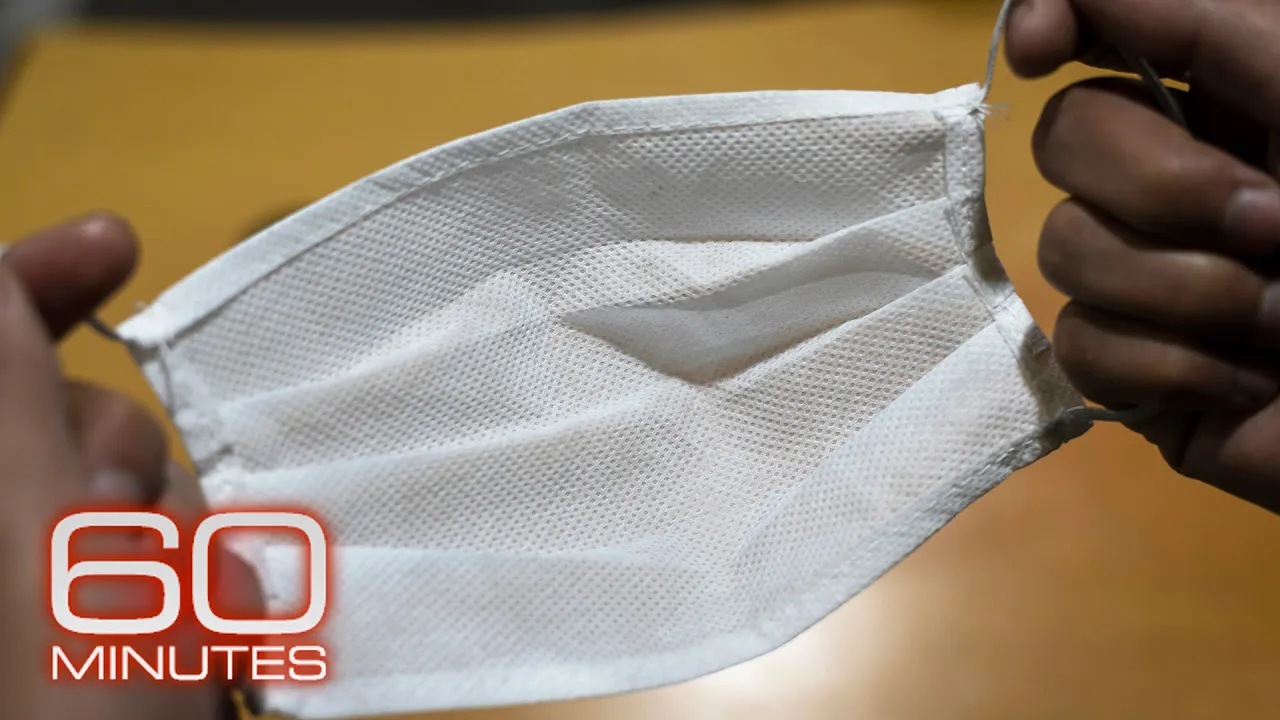
60 Minutes
Anthony Fauci warns that widespread civilian mask use fails to provide complete protection and threatens to strip vital protective gear from frontline healthcare workers.
AI-assisted summary of March 2020: Dr. Anthony Fauci talks with Dr Jon LaPook about Covid-19 — original source. Check the original for full context.
Source published:
Key ideas
- In March 2020, Dr. Anthony Fauci advised the American public against general mask-wearing, stating there was no reason for healthy individuals to walk around wearing masks. (0:29)
- Fauci highlighted that while masks may provide psychological reassurance and block an occasional respiratory droplet, they do not provide the foolproof protection people assume. (0:29)
- Public health concerns included behavioral downsides, specifically that frequent mask adjustments lead to increased face-touching and potential contamination. (0:29)
- A primary operational concern driving the guidance was preventing critical shortages of personal protective equipment for frontline healthcare workers and symptomatic patients. (0:29)
Detailed notes
## Background Published on YouTube by 60 Minutes on March 8, 2020, this clip features infectious disease expert Dr. Anthony Fauci discussing COVID-19 mask guidance with Dr. Jon LaPook. According to the page description, Fauci argued that masks should largely be reserved for healthcare providers and that the public had no reason to wear them, prior to recommendations broadening in April to include simple masks for everyday citizens.
## TL;DR In this early pandemic interview, Dr. Anthony Fauci clarifies federal guidance on face masks, advising everyday Americans against wearing them in public despite widespread adoption in countries like China and South Korea. Fauci explains that masks primarily serve as source control to keep infected individuals from spreading the virus, rather than providing foolproof protection for healthy wearers. He also warns that casual use can lead to frequent face touching and contamination. Ultimately, Fauci stresses the critical need to prevent civilian hoarding so that vital supplies remain available for frontline healthcare providers and those who are actively ill.
## Atmosphere & style The segment carries a sober, urgent, and focused broadcast tone reflecting the heightened anxiety of the pandemic's opening weeks. Dr. Jon LaPook questions Fauci with direct, deliberate gravity, explicitly reminding him that millions of anxious viewers are hanging on his every word. Fauci responds with calm, unhesitating authority, projecting clinical certainty as he seeks to demystify foreign headlines and discourage a run on essential medical supplies.
## Bulletin - [00:29](https://www.youtube.com/watch?v=PRa6t_e7dgI&t=29s) In March 2020, Dr. Anthony Fauci advised the American public against general mask-wearing, stating there was no reason for healthy individuals to walk around wearing masks. - [00:29](https://www.youtube.com/watch?v=PRa6t_e7dgI&t=29s) Fauci highlighted that while masks may provide psychological reassurance and block an occasional respiratory droplet, they do not provide the foolproof protection people assume. - [00:29](https://www.youtube.com/watch?v=PRa6t_e7dgI&t=29s) Public health concerns included behavioral downsides, specifically that frequent mask adjustments lead to increased face-touching and potential contamination. - [00:29](https://www.youtube.com/watch?v=PRa6t_e7dgI&t=29s) A primary operational concern driving the guidance was preventing critical shortages of personal protective equipment for frontline healthcare workers and symptomatic patients.
## Key takeaways - [00:00](https://www.youtube.com/watch?v=PRa6t_e7dgI&t=0s) Significant public confusion and misinformation surrounded the effectiveness and necessity of face masks at the onset of the COVID-19 outbreak. - [00:00](https://www.youtube.com/watch?v=PRa6t_e7dgI&t=0s) The primary clinical purpose of face masks was identified as source control, preventing an infected person from spreading respiratory droplets to others. - [00:00](https://www.youtube.com/watch?v=PRa6t_e7dgI&t=0s) Universal mask-wearing practices observed in Asian nations like China and South Korea contrasted with early U.S. federal recommendations. - [00:00](https://www.youtube.com/watch?v=PRa6t_e7dgI&t=0s) Dr. Fauci explicitly stated that circumstances in the United States in March 2020 did not warrant healthy citizens wearing masks in public. - [00:00](https://www.youtube.com/watch?v=PRa6t_e7dgI&t=0s) When pressed by Dr. Jon LaPook on whether he was certain about the recommendation, Dr. Fauci reaffirmed his position against general public mask usage. - [00:29](https://www.youtube.com/watch?v=PRa6t_e7dgI&t=29s) Dr. Fauci acknowledged that masks can offer psychological comfort during an outbreak, but cautioned that they fail to provide complete protection. - [00:29](https://www.youtube.com/watch?v=PRa6t_e7dgI&t=29s) While masks might physically block an occasional droplet, casual use does not guarantee immunity from viral exposure. - [00:29](https://www.youtube.com/watch?v=PRa6t_e7dgI&t=29s) Fidgeting with and adjusting a mask can lead to unintended consequences, including touching the face more frequently and trapping contaminants against the skin. - [00:29](https://www.youtube.com/watch?v=PRa6t_e7dgI&t=29s) Civilian purchasing and hoarding risked causing severe personal protective equipment shortages for frontline medical personnel. - [00:29](https://www.youtube.com/watch?v=PRa6t_e7dgI&t=29s) Federal guidance prioritized mask allocation specifically for healthcare providers treating patients and individuals who were actively ill.
## Detailed walkthrough ### [00:00](https://www.youtube.com/watch?v=PRa6t_e7dgI&t=0s) Public Mask Guidance and International Comparisons
Dr. Jon LaPook opens the discussion by noting the widespread confusion and misinformation spreading among the public regarding the use of face masks to combat COVID-19. In response, Dr. Anthony Fauci clarifies the primary clinical purpose of masking, explaining that masks are vital for someone who is already infected in order to prevent them from transmitting the virus to others. Fauci acknowledges the striking visual imagery emerging from abroad, pointing out that in news broadcasts and films from countries such as China and South Korea, practically everyone can be seen wearing a mask in public.
However, Fauci explicitly draws a distinction between those settings and the current domestic situation. He firmly states that the general public in America should not be adopting widespread mask-wearing at this time. Sensing the gravity of this advice and how closely the public is following public health guidance, Dr. Jon LaPook presses for absolute clarity: “You're sure of it cuz people are listening really closely to this.” Fauci stands by his stance, emphasizing that the circumstances in the United States do not warrant everyday citizens wearing masks out in public.
- Dr. Fauci states: “Right now in the United States, people should not be walking around with masks.” - The primary recognized function of masks at this stage is source control—keeping an infected individual from spreading droplets to others. - Public scenes in Asian countries like China and South Korea, where universal masking is commonplace, contrast sharply with the prevailing U.S. federal recommendations in March 2020.
[00:29](https://www.youtube.com/watch?v=PRa6t_e7dgI&t=29s) Efficacy, Unintended Consequences, and Supply Shortages
Dr. Fauci doubles down on his recommendation, unequivocally telling viewers: “There's no reason to be walking around with a mask.” While acknowledging that putting on a mask during an outbreak can provide psychological comfort and might physically intercept an occasional respiratory droplet, he cautions that it fails to offer the complete, foolproof shield that the public assumes it does. Furthermore, Fauci points out the behavioral downsides of casual mask usage: people frequently adjust and fiddle with the material, inadvertently touching their faces far more often. When Dr. LaPook asks whether that behavior risks trapping contamination or “schmutz” inside against the face, Fauci readily agrees that it does.
Beyond individual efficacy, Fauci stresses the critical issue of medical logistics and resource allocation. While he remarks that it is fine if people in foreign countries choose to wear masks at an 85% rate, the primary concern in the United States is preventing a run on personal protective equipment. The overarching priority for masks must remain focused on frontline medical personnel and patients who are actively sick. Dr. Fauci underscores that civilian hoarding carries severe ramifications: “It could lead to a shortage of masks for the people who really need it.”
- Dr. Fauci explains the limits of mask protection: “When you're in the middle of an outbreak, wearing a mask might make people feel a little bit better and it might even block a a droplet, but it's not providing the perfect protection that people think that it is.” - Behavioral risks include constant face-touching, mask adjustments, and trapping debris or pathogens inside the mask perimeter. - Dr. Fauci defines who should receive priority access: “When you think masks, you should think of health care providers needing them and people who are ill.”
## Notable quotes > [00:29](https://www.youtube.com/watch?v=PRa6t_e7dgI&t=29s) There's no reason to be walking around with a mask. — Dr. Anthony Fauci
> [00:29](https://www.youtube.com/watch?v=PRa6t_e7dgI&t=29s) When you think masks, you should think of health care providers needing them and people who are ill. — Dr. Anthony Fauci
## Mentioned Dr. Anthony Fauci, Dr. Jon LaPook, 60 Minutes, United States, China, South Korea
## Video description In March, Fauci told 60 Minutes that masks should largely be reserved for healthcare providers. In April, the recommendations were broadened to include simple masks for the general public.
Infectious disease expert Dr. Anthony Fauci tells 60 Minutes: "There's no reason to be walking around with a mask." See the full report, here: https://cbsn.ws/3csvMQi
Subscribe to the "60 Minutes" Channel HERE: http://bit.ly/1S7CLRu Watch Full Episodes of "60 Minutes" HERE: http://cbsn.ws/1Qkjo1F Get more "60 Minutes" from "60 Minutes: Overtime" HERE: http://cbsn.ws/1KG3sdr Relive past episodies and interviews with "60 Rewind" HERE: http://cbsn.ws/1PlZiGI Follow "60 Minutes" on Instagram HERE: http://bit.ly/23Xv8Ry Like "60 Minutes" on Facebook HERE: http://on.fb.me/1Xb1Dao Follow "60 Minutes" on Twitter HERE: http://bit.ly/1KxUsqX Follow "60 Minutes" on Google+ HERE: http://bit.ly/1KxUvmG
Get unlimited ad-free viewing of the latest stories plus access to classic 60 Minutes archives, 60 Overtime, and exclusive extras. Subscribe to 60 Minutes All Access HERE: http://cbsn.ws/23XvRSS
Get the latest news and best in original reporting from CBS News delivered to your inbox. Subscribe to newsletters HERE: http://cbsn.ws/1RqHw7T
Get your news on the go! Download CBS News mobile apps HERE: http://cbsn.ws/1Xb1WC8
Get new episodes of shows you love across devices the next day, stream local news live, and watch full seasons of CBS fan favorites anytime, anywhere with CBS All Access. Try it free! http://bit.ly/1OQA29B
--- "60 Minutes," the most successful television broadcast in history. Offering hard-hitting investigative reports, interviews, feature segments and profiles of people in the news, the broadcast began in 1968 and is still a hit, over 50 seasons later, regularly making Nielsen's Top 10. "60 Minutes" has won more Emmy Awards than any other primetime broadcast, including a special Lifetime Achievement Emmy. It has also won every major broadcast journalism award over its tenure, including 24 Peabody and 18 DuPont Columbia University awards for excellence in television broadcasting. Other distinguished awards won multiple times include the George Polk, RTNDA Edward R. Murrow, Investigative Reporters and Editors, RFK Journalism, Sigma Delta Chi and Gerald Loeb Awards for Distinguished Business and Financial Reporting. "60 Minutes" premiered on CBS Sept. 24, 1968. The correspondents and contributors of "60 Minutes" are Bill Whitaker, Steve Kroft, Scott Pelley, Lesley Stahl, Anderson Cooper, Sharyn Alfonsi, Jon Wertheim and Norah O'Donnell. "60 Minutes" airs Sundays at 7 p.m. ET/PT. Check your local listings.
[Source](https://www.youtube.com/watch?v=PRa6t_e7dgI)