Cirrus Adds Push-Button Autoland to Vision Jet for Pilot Emergencies
Cirrus
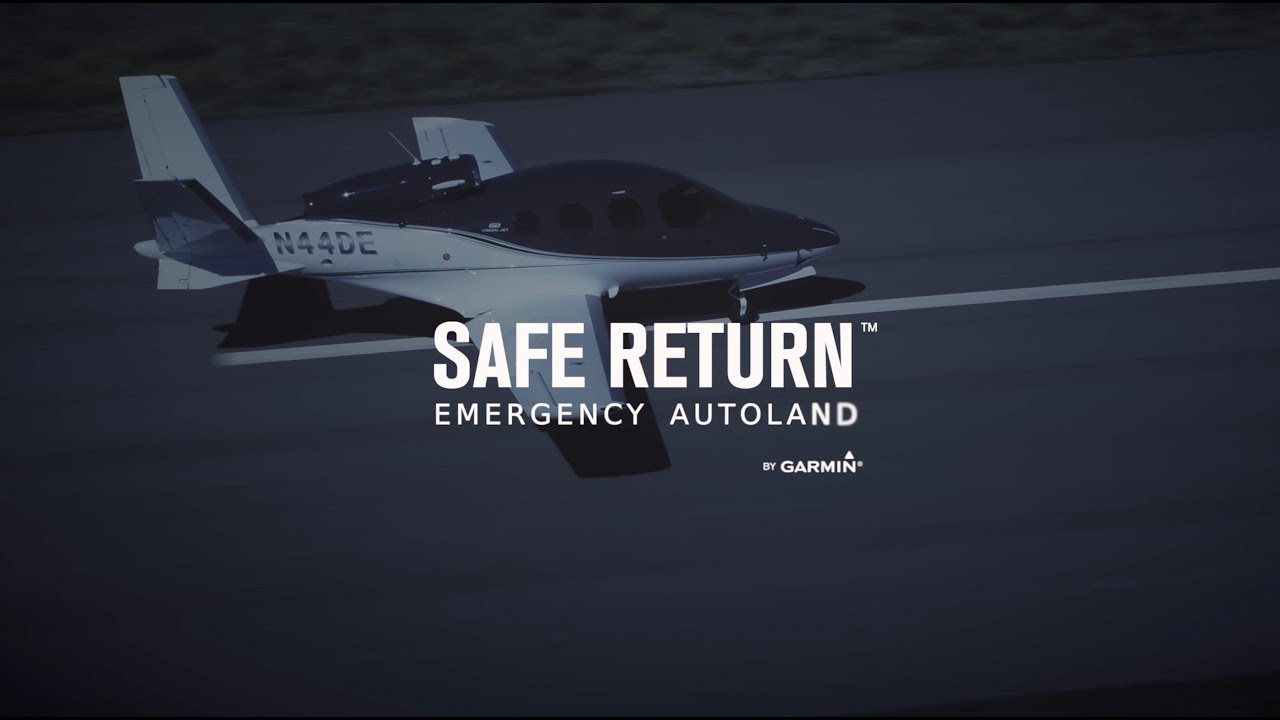
By integrating terrain mapping, autothrottle control, and automated emergency routing into a single cabin button, the Safe Return system allows passengers to autonomously navigate and land the aircraft if the pilot becomes incapacitated.
AI-assisted summary of Introducing Safe Return Emergency Autoland — original source. Check the original for full context.
Source published:
Key ideas
- Cirrus Aircraft unveiled the Safe Return emergency autoland system aboard the Vision Jet, enabling passengers to safely land the aircraft with the touch of a single overhead button during pilot incapacitation. (1:30)
- Upon activation, the system automatically squawks transponder code 7700 to alert Air Traffic Control, analyzes terrain, weather, fuel, and winds, and routes the jet to an optimal airport and runway. (1:30)
- During approach and landing, Safe Return autonomously manages the autothrottle, flaps, landing gear, flare, and mechanical braking to bring the jet to a complete stop on the runway centerline. (3:00)
- Safe Return pairs with the Cirrus Airframe Parachute System (CAPS) as part of the Vision Jet's Total Safety Solution, serving as an initial step toward full flight autonomy. (3:00)
Detailed notes
## Background Published by Cirrus on YouTube on October 30, 2019, this video introduces the Safe Return™ emergency autoland system aboard the Vision Jet. The official description highlights the technology as a bold new layer in Cirrus Aircraft's suite of safety features, designed to allow passengers to safely land the aircraft with the touch of a button in an emergency.
## TL;DR The video presents Safe Return, an emergency autonomous landing system built into the Vision Jet for situations where a pilot becomes incapacitated. Once activated by an overhead button, the system assumes full flight control, shifts avionics displays to a passenger-friendly interface, alerts Air Traffic Control with squawk code 7700, and selects an optimal runway based on fuel, winds, terrain, and weather. Using autothrottle, radar altimeters, and GPS, Safe Return manages the entire approach, descent, flare, and rollout to bring the aircraft to a full stop. Alongside the Cirrus Airframe Parachute System (CAPS), the technology marks a major milestone in personal aviation and the broader transition toward autonomous flight.
## Atmosphere & style The presentation carries a polished, inspiring, and reassuring corporate tone centered on technological innovation and human safety. The narrative transitions smoothly from the futuristic dream of autonomous flight to a practical, step-by-step breakdown of how the automated system protects lives during an inflight crisis. It feels both authoritative and comforting, projecting quiet confidence through clear engineering explanations that emphasize passenger peace of mind.
## Bulletin - [01:30](https://www.youtube.com/watch?v=PiGkzgfR_c0&t=90s) Cirrus Aircraft unveiled the Safe Return emergency autoland system aboard the Vision Jet, enabling passengers to safely land the aircraft with the touch of a single overhead button during pilot incapacitation. - [01:30](https://www.youtube.com/watch?v=PiGkzgfR_c0&t=90s) Upon activation, the system automatically squawks transponder code 7700 to alert Air Traffic Control, analyzes terrain, weather, fuel, and winds, and routes the jet to an optimal airport and runway. - [03:00](https://www.youtube.com/watch?v=PiGkzgfR_c0&t=180s) During approach and landing, Safe Return autonomously manages the autothrottle, flaps, landing gear, flare, and mechanical braking to bring the jet to a complete stop on the runway centerline. - [03:00](https://www.youtube.com/watch?v=PiGkzgfR_c0&t=180s) Safe Return pairs with the Cirrus Airframe Parachute System (CAPS) as part of the Vision Jet's Total Safety Solution, serving as an initial step toward full flight autonomy.
## Key takeaways - [00:00](https://www.youtube.com/watch?v=PiGkzgfR_c0&t=0s) Cirrus has focused on personal aviation innovation and safety engineering for more than thirty years. - [00:00](https://www.youtube.com/watch?v=PiGkzgfR_c0&t=0s) True flight autonomy—from taxi and takeoff to cruise and landing—remains a long-term industry vision that Cirrus is actively advancing. - [00:00](https://www.youtube.com/watch?v=PiGkzgfR_c0&t=0s) Safe Return was demonstrated on the Vision Jet to show how autonomous systems can directly safeguard passengers. - [01:30](https://www.youtube.com/watch?v=PiGkzgfR_c0&t=90s) The Safe Return system is designed specifically for pilot incapacitation emergencies, allowing passengers to trigger an autonomous landing sequence. - [01:30](https://www.youtube.com/watch?v=PiGkzgfR_c0&t=90s) Activating the system transforms the Perspective Touch+ cockpit displays into intuitive, passenger-focused status interfaces. - [01:30](https://www.youtube.com/watch?v=PiGkzgfR_c0&t=90s) The system queries global terrain databases and satellite datalink weather in real time to steer clear of hazardous obstacles and storms. - [01:30](https://www.youtube.com/watch?v=PiGkzgfR_c0&t=90s) Diversion airport and runway selection is automated based on remaining fuel, winds aloft, and surface wind vectors. - [01:30](https://www.youtube.com/watch?v=PiGkzgfR_c0&t=90s) Voice updates broadcast directly to passengers via the cabin audio system, communicating estimated minutes remaining until touchdown. - [01:30](https://www.youtube.com/watch?v=PiGkzgfR_c0&t=90s) Safe Return automatically sets the transponder to squawk code 7700, alerting Air Traffic Control to arrange emergency response vehicles. - [03:00](https://www.youtube.com/watch?v=PiGkzgfR_c0&t=180s) The aircraft's integrated autothrottle continuously controls airspeed from approach descent down through final touchdown and rollout. - [03:00](https://www.youtube.com/watch?v=PiGkzgfR_c0&t=180s) Avionics combine radar altimeter data with GPS positioning to execute a precise autonomous flare and runway centerline touchdown. - [03:00](https://www.youtube.com/watch?v=PiGkzgfR_c0&t=180s) Progressive mechanical wheel braking brings the aircraft to a complete halt on the runway so occupants can safely egress. - [03:00](https://www.youtube.com/watch?v=PiGkzgfR_c0&t=180s) Safe Return complements the Cirrus Airframe Parachute System (CAPS), forming a multi-layered Total Safety Solution exclusive to the Vision Jet. - [03:00](https://www.youtube.com/watch?v=PiGkzgfR_c0&t=180s) Cirrus positions Safe Return as a concrete operational milestone leading toward fully autonomous personal aviation.
## Detailed walkthrough ### [00:00](https://www.youtube.com/watch?v=PiGkzgfR_c0&t=0s) The Next Frontier in Personal Aviation
For more than thirty years, Cirrus Aircraft has pursued constant evolution and engineering innovation, defining and refining the modern category of personal aviation. Over that time, the company has worked to make its brand synonymous with aviation safety, and its engineering team has developed what it considers a transformative leap forward. The broader dream of aviation has long been true autonomy—a reality where a traveler can simply press a button and let an aircraft taxi, take off, cruise across the continent, and touch down at a chosen destination. While that complete vision remains in development, Cirrus has taken a significant concrete step toward it.
Because pilots and passengers alike prioritize feeling safe each time they step into an airplane, Cirrus introduced the Safe Return™ emergency autoland system aboard the Vision Jet field demonstration aircraft to showcase how autonomous capabilities can directly serve passenger protection. As an executive explains the ambition behind the project: “Cirrus has become synonymous with safety and our engineers, our world-class engineers have really outdone themselves this time, they've created a product that we believe is going to change personal aviation forever.”
[01:30](https://www.youtube.com/watch?v=PiGkzgfR_c0&t=90s) How Safe Return Works: From Activation to Descent
Safe Return is an emergency system created for situations where the pilot becomes incapacitated for any reason, enabling a passenger to initiate an autonomous landing with the push of a single overhead button. The moment the system triggers, the Vision Jet converts into an autonomous vehicle. The flight deck's Perspective Touch+ displays immediately shift away from complex piloting instruments into intuitive, passenger-friendly screens showing flight progress. Internally, Safe Return queries its global terrain database to plot an evasive flight path around hazardous topography while simultaneously leveraging satellite datalink weather to steer around storm systems.
```mermaid flowchart TD accTitle: Safe Return Autonomous Flight Logic accDescr: The automated sequence from passenger activation through hazard navigation, airport selection, and final descent.
subgraph Activation ["Activation & Assessment"] A["Passenger Presses Button"] --> B["Perspective Touch+ Switches to Passenger UI"] B --> C["Scan Global Terrain Database & Datalink Weather"] end
subgraph Routing ["Routing & Communication"] C --> D["Evaluate Fuel, Winds Aloft & Surface Winds"] D --> E["Select Optimal Airport & Runway"] E --> F["Broadcast Squawk 7700 & Cabin Audio Updates"] end
subgraph Approach ["Approach & Descent"] F --> G["Autothrottle Sets Approach Speed"] G --> H["Deploy Gear & Flaps on Centerline"] H --> I["Radar Altimeter & GPS Stabilized Descent"] end ```
The system evaluates critical variables—including remaining fuel load, winds aloft, and ground wind vectors—to automatically select the best diversion airport and the most suitable runway. Safe Return also reassures those on board by broadcasting voice updates over the cabin audio system detailing the exact number of minutes remaining until touchdown. Concurrently, it sets the transponder squawk code to 7700, notifying Air Traffic Control of an onboard emergency and pre-dispatching airport emergency ground vehicles to meet the jet upon arrival.
- **Automated squawk:** Automatically tunes to emergency transponder code 7700. - **Flight display reformatting:** Perspective Touch+ panels convert into accessible passenger status screens. - **Cabin announcements:** Periodic voice notifications alert passengers to remaining flight time until touchdown. - **Weather & terrain monitoring:** Fuses satellite datalink weather and a global elevation database to navigate clear of obstacles.
[03:00](https://www.youtube.com/watch?v=PiGkzgfR_c0&t=180s) Precision Landing and the Total Safety Solution
Managing the descent and touchdown requires coordination of the aircraft's control surfaces and propulsion. The Vision Jet relies continuously on its integrated autothrottle to modulate airspeed throughout the sequence, configuring flaps and lowering the landing gear while aligning perfectly onto the runway centerline. During the final descent, the avionics fuse radar altimeter data with GPS ground-position calculations to determine runway clearance with pinpoint accuracy. Upon crossing the threshold, the system pulls the throttle back, commands an automated flare to arrest the sink rate, floats just above the pavement, touches down, and applies progressive wheel braking to bring the airframe to a complete halt, at which point the cabin door can be opened for egress.
This capability integrates into the broader “Total Safety Solution” of the Vision Jet, serving as a companion layer to the airframe-mounted Cirrus Airframe Parachute System (CAPS). Safe Return represents an initial operational milestone on the road toward fully autonomous flight. Reflecting on the accomplishment and the future roadmap, one team member emphasizes: “Safe return is a first step down that path to autonomous flight and I can assure you the entire Cirrus aircraft team is going to be leading the way.”
- **Autothrottle management:** Continuously regulates engine power through flight, approach deceleration, flare touchdown, and rollout. - **Multi-sensor altitude check:** Combines radar altimeter data with high-precision GPS positioning to execute the autonomous flare. - **Runway braking:** Automatically engages mechanical brakes until the jet reaches a full stop on the runway. - **Comprehensive safety stack:** Combines Safe Return autonomous landing with the Cirrus Airframe Parachute System (CAPS).
## Notable quotes > [03:00](https://www.youtube.com/watch?v=PiGkzgfR_c0&t=180s) Safe return is a first step down that path to autonomous flight and I can assure you the entire Cirrus aircraft team is going to be leading the way.
## Mentioned Cirrus Aircraft, Safe Return, Vision Jet, Cirrus Airframe Parachute System (CAPS), Perspective Touch+
## Video description Safety has been fundamental to innovation at Cirrus Aircraft since the beginning. Now, we’ve added a bold new layer to our suite of safety features – the Safe Return™ emergency autoland system – allowing passengers to land the Vision Jet with the simple touch of a button in an emergency situation.
Safe Return and the Cirrus Airframe Parachute System® (CAPS®) provide the ultimate level of confidence in a comprehensive, must-have total safety solution offered only in the Vision Jet.
[Source](https://www.youtube.com/watch?v=PiGkzgfR_c0)