Feynman Says Unexplained Anomalies Drive Physics Toward Simpler Laws
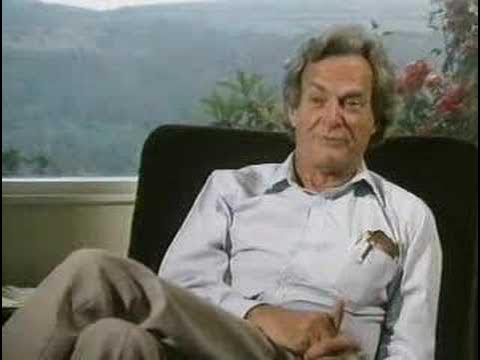
defjam99b
Unlike chess where additional rules increase complexity, physics progresses by resolving unexpected anomalies through periodic unifications that simplify fundamental laws.
AI-assisted summary of Feynman :: Rules of Chess — original source. Check the original for full context.
Source published:
Key ideas
- Richard Feynman frames scientific inquiry as observing a cosmic chess game played by gods, where human scientists must deduce fundamental laws solely from intermittent glimpses of the board. (0:00)
- Progress in fundamental physics is driven primarily by anomalies and phenomena that fail to match existing expectations, rather than repeated confirmation of known rules. (0:00)
- Scientific revolutions occur when long-standing assumptions are disrupted by unexpected edge cases, analogous to a bishop appearing on a new color following pawn promotion. (1:14)
- Unlike chess, which grows more complex as special rules are added, fundamental physics periodically achieves simplicity through unifications that integrate diverse phenomena. (1:14)
Detailed notes
## Background Published on YouTube by channel defjam99b in February 2007, this archival clip features physicist Richard Feynman discussing the rational scientific method. The description notes that the segment explores scientific increments, revolutions, and the rule of castling.
## TL;DR Richard Feynman illustrates the scientific method by comparing nature to a grand game of chess played by gods, where human observers must deduce underlying rules from partial glimpses of the board. True scientific progress occurs when anomalies—such as castling or a promoted pawn changing bishop colors—disrupt settled expectations, driving researchers to look deeper. Feynman contrasts the analogy with physics, noting that while chess rules become more complicated with added exceptions, nature ultimately tends toward simplicity through periodic unifications that synthesize disparate phenomena.
## Atmosphere & style The presentation carries Feynman's signature intellectual charm, blending playful storytelling with profound philosophical clarity. His conversational and intuitive delivery turns an abstract epistemological concept into an accessible, gripping detective story about observing gods at play. It feels both intimate and expansive, evoking a genuine sense of curiosity and wonder at how nature's deepest regularities hide behind apparent anomalies.
## Bulletin - [00:00](https://www.youtube.com/watch?v=o1dgrvlWML4&t=0s) Richard Feynman frames scientific inquiry as observing a cosmic chess game played by gods, where human scientists must deduce fundamental laws solely from intermittent glimpses of the board. - [00:00](https://www.youtube.com/watch?v=o1dgrvlWML4&t=0s) Progress in fundamental physics is driven primarily by anomalies and phenomena that fail to match existing expectations, rather than repeated confirmation of known rules. - [01:14](https://www.youtube.com/watch?v=o1dgrvlWML4&t=74s) Scientific revolutions occur when long-standing assumptions are disrupted by unexpected edge cases, analogous to a bishop appearing on a new color following pawn promotion. - [01:14](https://www.youtube.com/watch?v=o1dgrvlWML4&t=74s) Unlike chess, which grows more complex as special rules are added, fundamental physics periodically achieves simplicity through unifications that integrate diverse phenomena.
## Key takeaways - [00:00](https://www.youtube.com/watch?v=o1dgrvlWML4&t=0s) Nature can be analogized to a grand chess game played by gods, observed by humans who are never directly told the rules. - [00:00](https://www.youtube.com/watch?v=o1dgrvlWML4&t=0s) Scientists must infer the underlying laws of the universe from partial, intermittent glimpses of only small corners of reality. - [00:00](https://www.youtube.com/watch?v=o1dgrvlWML4&t=0s) Observing that a lone bishop stays on one color represents an initial empirical regularity discovered through observation. - [00:00](https://www.youtube.com/watch?v=o1dgrvlWML4&t=0s) Discovering that bishops move along diagonals reveals a deeper fundamental rule that explains the surface-level color regularity. - [00:00](https://www.youtube.com/watch?v=o1dgrvlWML4&t=0s) The emergence of an unexpected move like castling disrupts settled understanding and forces observers to investigate novel exceptions. - [00:00](https://www.youtube.com/watch?v=o1dgrvlWML4&t=0s) Fundamental physics advances by focusing on the things that do not fit rather than continually re-verifying working conclusions. - [01:14](https://www.youtube.com/watch?v=o1dgrvlWML4&t=74s) Scientific revolutions take place when long-established physical laws encounter unexpected conditions that reveal their limits. - [01:14](https://www.youtube.com/watch?v=o1dgrvlWML4&t=74s) An apparent violation of a rule—such as a bishop on an unexpected color—can lead to discovering mechanisms like pawn promotion. - [01:14](https://www.youtube.com/watch?v=o1dgrvlWML4&t=74s) The game of chess becomes increasingly complicated as more special rules and exceptions are added to the rulebook. - [01:14](https://www.youtube.com/watch?v=o1dgrvlWML4&t=74s) Exploring new domains of nature initially floods physics with apparent complexity, such as new particles and phenomena. - [01:14](https://www.youtube.com/watch?v=o1dgrvlWML4&t=74s) Nature diverges from chess through periodic unifications that integrate disparate observations into simpler underlying laws.
## Detailed walkthrough ### [00:00](https://www.youtube.com/watch?v=o1dgrvlWML4&t=0s) Observing the Chess Game of Nature and Unexpected Anomalies
Richard Feynman introduces an analogy to describe the scientific effort to understand nature. He suggests imagining that the gods are playing a grand game of chess while human observers watch without being told any of the rules. Observers are only permitted to look at the board from time to time, perhaps catching glimpses of only a small corner. From these partial observations, they must deduce the underlying rules governing how the pieces move. Over time, an observer might notice an initial empirical pattern: whenever there is only one bishop on the board, it always remains on squares of the same color. Later on, they discover a deeper rule—that bishops move strictly along diagonals. This discovery provides a deeper explanation for why the bishop never changes color, demonstrating how science progresses from identifying superficial regularities to uncovering fundamental principles that explain them.
Everything can appear settled and well understood until a sudden, unexpected phenomenon occurs in a corner of the board: castling. Because this move does not conform to the observer's established rules, it demands immediate investigation. Feynman points out that fundamental physics operates in precisely this manner: scientists do not spend their careers merely confirming conclusions they already understand. As Richard Feynman explains, “The thing that doesn't fit is the thing that's the most interesting.” The primary drive of physics is to pursue the phenomena that fail to align with current expectations rather than perpetually re-verifying the things that already work.
- The analogy envisions nature as a grand chess game played by gods, with scientists as observers trying to deduce the rules from limited views of the board. - An initial rule (a lone bishop stays on its color) is later explained by a deeper rule (the bishop moves on diagonals). - The emergence of castling represents an anomaly that forces observers to investigate unexpected exceptions rather than resting on settled conclusions.
[01:14](https://www.youtube.com/watch?v=o1dgrvlWML4&t=74s) Revolutions in Physics and the Search for Unification
Feynman extends the chess analogy to explain scientific revolutions. After observers watch bishops move along diagonals and maintain their square color for a very long time, that behavior becomes universally accepted knowledge. Then, unexpectedly, an observer witnesses a bishop changing its color. Only after further investigation do they uncover the full mechanism: the original bishop was captured, and an advancing pawn reached the far end of the board to be promoted into a new bishop on the opposite color. In the same way, physical laws can appear completely reliable across extensive testing until an unforeseen gimmick exposes their limitations, prompting researchers to determine the precise conditions responsible for the anomaly and formulate a deeper rule.
Feynman highlights a crucial difference between the game of chess and fundamental physics. In chess, learning additional rules—such as castling or pawn promotion—makes the rule set increasingly complicated. In physics, however, nature exhibits an underlying drive toward simplicity. While expanding into new experimental domains introduces a flood of new particles and phenomena that initially make physical laws seem complicated, periodic breakthroughs synthesize these discoveries. As Richard Feynman notes, “Every once in a while we have these integrations in which everything is pulled together in a unification, which it turns out to be simpler than it looked before.”
```mermaid flowchart TD accTitle: Scientific Discovery via Feynman's Chess Analogy accDescr: Progression from basic observations to anomalies, revolutions, and ultimate physical unification. subgraph Observation ["Initial Observation"] A["Observe board corners intermittently"] --> B["Empirical rule: Bishop stays on one color"] B --> C["Deeper rule: Bishop moves diagonally"] end subgraph Anomaly ["The Unexpected Anomaly"] C --> D["Anomaly observed: Bishop appears on new color"] D --> E["Underlying mechanism: Pawn promotion creates new Bishop"] end subgraph Divergence ["Chess vs. Nature"] E --> F["Chess: Accumulates complex special rules"] E --> G["Physics: New domains reveal more particles"] G --> H["Unification: Integrations reveal simpler fundamental laws"] end ```
- Revolutions occur when long-standing assumptions fail, exemplified by a bishop appearing on the opposite color due to pawn promotion. - Unlike chess, where special moves make the rulebook increasingly complicated, physics moves toward conceptual unification. - Although exploring wilder regions of nature initially adds apparent complexity by uncovering new particles, periodic syntheses reveal that the core laws are simpler than previously believed.
## Notable quotes > [00:00](https://www.youtube.com/watch?v=o1dgrvlWML4&t=0s) The thing that doesn't fit is the thing that's the most interesting. — Richard Feynman
## Mentioned Richard Feynman
## Video description Richard Feynman on the rational scientific method; increments and revolutions and castling.
[Source](https://www.youtube.com/watch?v=o1dgrvlWML4)