H&M Promotes In-Store Recycling as Fast-Fashion Output Dwarfs Capacity
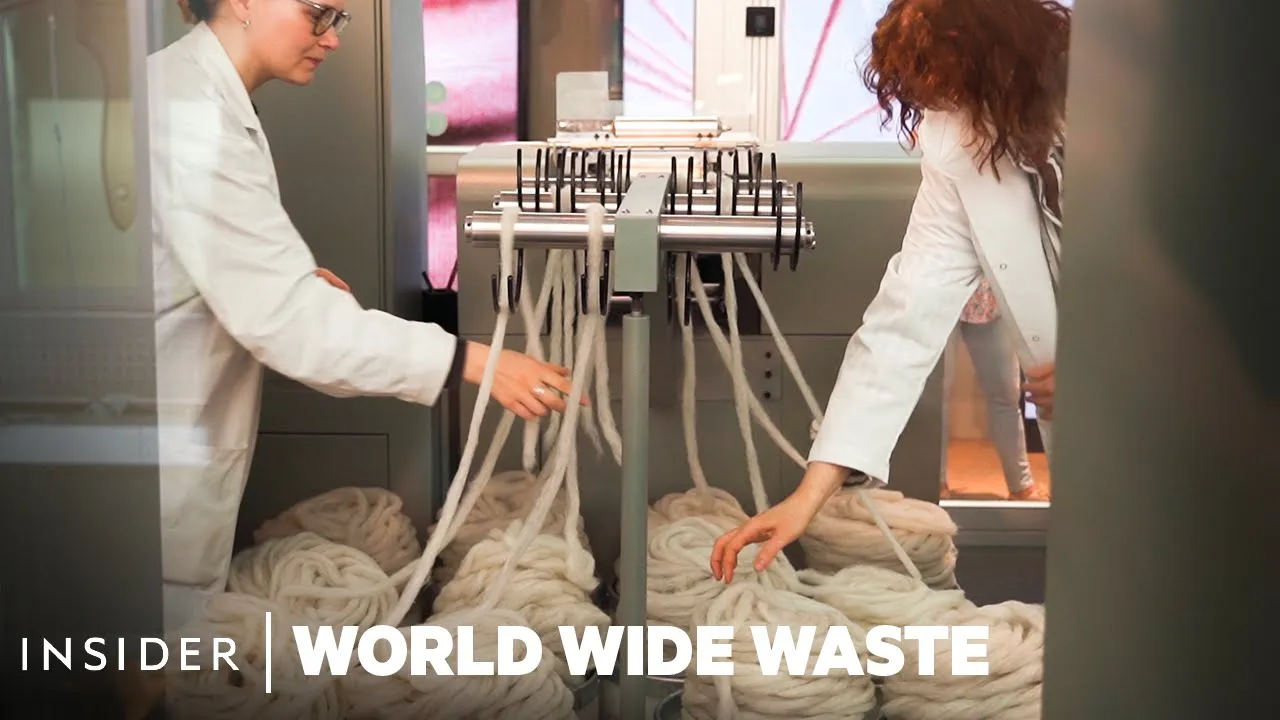
How H&M’s Recycling Machines Make New Clothes From Used Apparel | World Wide Waste — Business Insider

Business Insider

Garment recycling technologies cannot curb global textile pollution while fast-fashion retailers refuse to cut their rising production volumes.

AI-assisted summary of How H&M’s Recycling Machines Make New Clothes From Used Apparel | World Wide Waste — original source. Check the original for full context.

Source published:

Key ideas

  • HKRITA and H&M developed an in-store garment-to-garment recycling system that mechanically breaks down discarded clothes, sanitizes them via ozone, and spins them with virgin cotton into new apparel. (0:01)
  • The consumer-facing Looop machine at H&M's Stockholm flagship costs roughly $18 per garment but takes three full days of continuous processing to remake a single item. (2:35)
  • An estimated 15 million secondhand garments arrive weekly in Accra's Kantamanto market, where roughly 40% to 50% end up burned, dumped in landfills, or washed into the ocean. (4:20)
  • Less than 1% of the world's discarded clothing is currently recycled into new textiles, while fast-fashion output is on track to double again by 2030. (6:15)

Detailed notes

## Background Published by Business Insider on YouTube on June 10, 2021, as part of its 'World Wide Waste' series, this video investigates H&M's bet on in-store clothing recycling machines. The piece questions whether a global fast-fashion giant can meaningfully solve the massive environmental crisis and textile waste problem it helped create.

## TL;DR The report examines the garment-to-garment recycling assembly line developed by HKRITA and deployed by H&M as the in-store 'Looop' machine in Stockholm. While the technology can mechanically sanitize, shred, blend, and knit an old garment into a new sweater, it takes days to process a single item while fast-fashion consumption continues at an astronomical pace. The video contrasts this boutique innovation with the catastrophic downstream reality in Accra, Ghana, where millions of discarded Western garments overwhelm local ecosystems weekly. Ultimately, researchers and critics argue that technological recycling cannot compensate for endless corporate growth and unchecked overproduction.

## Atmosphere & style The piece opens with the sleek, optimistic curiosity of high-tech retail engineering, showcasing clean glass display boxes and rhythmic automated machinery. It quickly shifts into a sobering, investigative critique as the camera moves from affluent shoppers to the staggering, polluted beaches and open landfills of Ghana. This visual and narrative whiplash creates a tension between corporate sustainability promises and ecological disaster, leaving viewers with a grounded, cautionary sense of skepticism toward industry-driven circularity.

## Bulletin - [00:01](https://www.youtube.com/watch?v=obO1PKfXGpQ&t=1s) HKRITA and H&M developed an in-store garment-to-garment recycling system that mechanically breaks down discarded clothes, sanitizes them via ozone, and spins them with virgin cotton into new apparel. - [02:35](https://www.youtube.com/watch?v=obO1PKfXGpQ&t=155s) The consumer-facing Looop machine at H&M's Stockholm flagship costs roughly $18 per garment but takes three full days of continuous processing to remake a single item. - [04:20](https://www.youtube.com/watch?v=obO1PKfXGpQ&t=260s) An estimated 15 million secondhand garments arrive weekly in Accra's Kantamanto market, where roughly 40% to 50% end up burned, dumped in landfills, or washed into the ocean. - [06:15](https://www.youtube.com/watch?v=obO1PKfXGpQ&t=375s) Less than 1% of the world's discarded clothing is currently recycled into new textiles, while fast-fashion output is on track to double again by 2030.

## Key takeaways - [00:01](https://www.youtube.com/watch?v=obO1PKfXGpQ&t=1s) Historically, recycled textiles were downcycled into low-grade industrial materials rather than returned to consumers as wearable garments. - [00:01](https://www.youtube.com/watch?v=obO1PKfXGpQ&t=1s) The HKRITA mechanical recycling sequence sanitizes garments with ozone in approximately one hour, completely avoiding water-intensive laundry baths. - [00:01](https://www.youtube.com/watch?v=obO1PKfXGpQ&t=1s) Because mechanical shredding damages and shortens staple fibers, recycled yarn must be blended with virgin cotton to provide structural tensile strength. - [02:35](https://www.youtube.com/watch?v=obO1PKfXGpQ&t=155s) H&M's in-store Looop recycling machine serves primarily as an educational pilot, requiring three continuous days of operation to complete a single garment. - [02:35](https://www.youtube.com/watch?v=obO1PKfXGpQ&t=155s) Massive hyper-consumption creates an insurmountable volume gap: the average American discards the textile equivalent of 200 cotton T-shirts every year. - [04:20](https://www.youtube.com/watch?v=obO1PKfXGpQ&t=260s) The dominance of petroleum-derived polyester since 2000 lowered production costs by half compared to cotton, driving rapid global clothing overproduction. - [04:20](https://www.youtube.com/watch?v=obO1PKfXGpQ&t=260s) Global clothing production doubled between 2000 and 2020 and is projected to double again by 2030, flooding developing markets with low-quality synthetic waste. - [04:20](https://www.youtube.com/watch?v=obO1PKfXGpQ&t=260s) It would take a single Looop recycling machine approximately 50,000 years to recycle just one week of textile waste dumped at Accra's Kantamanto market. - [06:15](https://www.youtube.com/watch?v=obO1PKfXGpQ&t=375s) Through a $12 million investment, HKRITA engineered the chemical hydrothermal 'Green Machine' to separate and recover blended polyester and cotton materials. - [06:15](https://www.youtube.com/watch?v=obO1PKfXGpQ&t=375s) HKRITA CEO Edwin Keh notes that meaningful circularity requires facilities handling thousands of tons daily, not boutique lab machines processing single tons. - [06:15](https://www.youtube.com/watch?v=obO1PKfXGpQ&t=375s) Fast-fashion executives affirm that capping or reducing gross manufacturing output is off the table, maintaining that corporate growth remains essential. - [06:15](https://www.youtube.com/watch?v=obO1PKfXGpQ&t=375s) Researchers and industry critics warn that modest recycling targets without systemic production cuts amount to greenwashing that distracts from core business models.

## Detailed walkthrough ### [00:01](https://www.youtube.com/watch?v=obO1PKfXGpQ&t=1s) The World's First In-Store Garment-to-Garment Recycling Line

Historically, the small fraction of textiles that did get recycled underwent downcycling: industrial scraps swept from factory floors were shredded into low-grade mattress stuffing or building insulation. Post-consumer apparel—the clothes discarded by everyday shoppers—almost never returned to the consumer market as wearable garments. Inside a glass-walled research facility at a shopping mall in Hong Kong, the Hong Kong Research Institute of Textiles and Apparel (HKRITA), in partnership with the H&M Foundation, built an assembly line designed to change that dynamic by executing an entire garment-to-garment recycling sequence under one roof.

```mermaid flowchart TD accTitle: Garment-to-Garment Mechanical Recycling Workflow accDescr: The step-by-step mechanical recycling system developed by HKRITA from discarded apparel to finished sweater. subgraph Prep ["Preparation & Deconstruction"] A["Sanitization in Ozone Chamber"] --> B["Manual Removal of Trims & Cutting"] B --> C["Mechanical Shredding"] end subgraph Blending ["Fiber Processing"] C --> D["Blending with Virgin Cotton"] D --> E["Carding into Fiber Web"] E --> F["Bundling into Slivers"] end subgraph Production ["Re-Spinning & Assembly"] F --> G["Spinning into Ply Yarn"] G --> H["Automated Computer Knitting"] end ```

The mechanical transformation begins when technician Emily Shao inspects the incoming garment before placing it inside an ozone sanitizing chamber, where dry sanitation treats the material in roughly an hour. Once sanitized, all non-recyclable structural elements—zippers, plastic buttons, and garment tags—are cut away by hand, and the fabric is sliced into smaller swatches so the machinery can handle it. These pieces pass into a mechanical shredder that pulls the weave apart into raw fibers. Because recycled staple fibers become shortened and degraded during mechanical pulling, the system must blend in a portion of virgin cotton to provide structural tensile strength. The mixed fibers are rolled into clusters and fed into a machine that cards them into a wide, airy sheet called a fiber web. From there, the web is pulled into thick, continuous snake-like slivers, which are spun onto bobbins as ply yarn—the essential building block for a brand-new garment. Finally, an automated knitting machine takes instructions from a digital design file and knits the yarn directly into a brand-new sweater, while an on-site researcher notes the public educational intent: “Well, that's one of the reasons why we have a glass box, doing research in a shopping mall.”

- Shoppers in the Hong Kong facility pay roughly $65 to have an old garment broken down and recycled into a new piece. - Sanitizing through ozone treatment requires approximately 60 minutes and avoids water-intensive laundry baths. - Virgin fibers must still be integrated into the mechanical recycling process to ensure the resulting yarn does not snap during knitting.

---

[02:35](https://www.youtube.com/watch?v=obO1PKfXGpQ&t=155s) Scaling the Looop: Stockholm Storefront and the Pilot Paradox

Backing this technological breakthrough was a commercial licensing agreement between HKRITA and the H&M Foundation, which allowed the retail giant to bring a stylized, consumer-facing version of the technology directly into its flagship store in Stockholm, Sweden. Dubbed the "Looop," this in-store system invites shoppers to observe the process behind glass for about $18—a fee roughly equivalent to buying a brand-new pair of H&M sweatpants. In the store, an operator named Virginia monitors the machinery and finishes off the knitted product by snipping away stray yarn. However, running an individual garment through the system requires three days of continuous mechanical processing. H&M's leadership frames this deliberate bottleneck as a necessary pilot on the path to an industrial revolution, with an executive declaring: “The holy grail is garment-to-garment recycling, and that's for me where today, most our investment going to.”

Yet the system operates against an unrelenting tide of consumer demand driven by fast fashion's business model. Outside on the streets of Stockholm, shoppers cheerfully admit to buying new clothes as often as once a week, with one woman joking that her current wardrobe occupies half her apartment and another adding, “We're retail kings and queens.” Even so, European consumers are outpaced by American buying habits: the average American consumer spends more than $1,800 annually on apparel and discards the equivalent of 200 cotton T-shirts in textile waste each year. The speed of fashion has rendered clothing virtually disposable, creating an exponential volume gap between what tiny boutique machines can remake and what mass consumers discard.

- The Stockholm Looop machine takes a full three days to process a single garment from start to finish. - Industrial factories capable of recycling thousands of tons of discarded post-consumer garments per day do not currently exist. - American consumers discard an average of 200 T-shirts' worth of clothing per person each year.

---

[04:20](https://www.youtube.com/watch?v=obO1PKfXGpQ&t=260s) Fast Fashion’s Plastic Addiction and the Kantamanto Crisis

The modern waste crisis is directly rooted in the synthetic textile revolution of the 1990s, when petroleum-derived polyester became the dominant fiber across the retail supply chain. Synthetics cost roughly half the price of natural cotton, lowering production costs to the point where apparel could be manufactured in massive excess and priced as disposable ephemera. By the year 2000—the exact moment polyester officially bypassed cotton as the planet’s most widely produced fiber—H&M opened its first American store in New York City. In the two decades that followed, global clothing output doubled, with forecasters projecting another doubling by 2030. The resulting reality is that consumers walk around wrapped in fossil-fuel plastic without recognizing the ecological permanence of their wardrobes.

The catastrophic downstream consequence of this production model is visible in places like Accra, Ghana, home to the sprawling Kantamanto secondhand market. Each week, approximately 15 million garments sent from affluent Western nations flood the market, but local vendors cannot sell the sheer volume or the degraded quality of modern synthetic items. Nearly half of that weekly haul is dumped in informal landfills, burned in open-air pits, or washed into the ocean. Researcher Liz Ricketts, who has spent more than a decade tracing the international flow of used textiles, points out that the discarded clothes piled on Ghanaian beaches bear labels from household fast-fashion giants, including H&M, Zara, Marks & Spencer, Adidas, Nike, and Gap. The math highlights the stark contrast between corporate PR and physical reality: running continuously, an H&M Looop unit would require nearly 50,000 years to recycle just one single week's worth of Kantamanto’s textile waste. Looking across mountains of discarded synthetic garments, Ricketts observes: “You can't really convince yourself that creating clothing but doing it better is somehow going to solve this issue that there's simply too much clothing.”

- Polyester is manufactured from petroleum and sells at roughly half the cost of raw cotton. - Every single week, 15 million secondhand garments enter Accra's Kantamanto market, with around 40 to 50 percent ending up as immediate waste. - It would take the single-garment Looop recycling machine approximately 50,000 years to recycle the waste produced by the Kantamanto market in just seven days. - Liz Ricketts highlights the cultural shift toward disposability: “We've completely devalued what clothing is. Clothing is now disposable, and I don't know how we come back from treating it like a plastic bag or like a plastic bottle.”

---

[06:15](https://www.youtube.com/watch?v=obO1PKfXGpQ&t=375s) Overproduction, Technological Limits, and the Greenwashing Threat

H&M executives maintain that technical innovation remains their primary lever for mitigating environmental harm, pointing to public pledges to transition entirely to recycled polyester by 2030. Through a $12 million investment from the H&M Foundation, HKRITA developed the "Green Machine," a chemical hydrothermal recycling apparatus designed to separate and recover blended polyester and cotton materials, alongside blueprint plans for a scaled facility capable of handling 3,000 pounds of apparel per day. Yet even the technologists behind these systems concede that lab-scale wins fall far short of the crisis. HKRITA Chief Executive Edwin Keh explains that meaningful recycling cannot happen at the level of boutique storefronts or single-ton facilities; it requires industrial complexes capable of processing thousands of tons daily. With less than 1% of the world's discarded clothing currently recycled into new textiles, Keh warns of an impending deadline: “We have this danger of doing too little too late.”

| Organization / Figure | Role / Position | Core Perspective or Claim | Key Metrics / Commitments | |:--- |:--- |:--- |:--- | | **H&M** | Global Fast-Fashion Retailer | Tech-driven circularity; views corporate expansion and environmental targets as compatible | 100% recycled polyester by 2030; $12M invested via H&M Foundation | | **Edwin Keh** | CEO, HKRITA | Engineering breakthroughs are vital, but current scale is negligible; fears superficial targets | Commercial viability requires processing thousands of tons daily; <1% garments recycled today | | **Liz Ricketts** | Sustainable Fashion Researcher | Technological recycling is a distraction; overproduction and endless corporate growth are the true drivers | Kantamanto receives 15M garments/week; recommends consumers pause purchases for one year |

Fashion critics and waste researchers argue that technological fixes are actively weaponized by retailers to distract from the fundamental flaw of their business models. As Liz Ricketts argues, retail brands have systematically convinced the public that pollution stems from a mechanical engineering deficit rather than rampant corporate overproduction. For its part, H&M acknowledges that cutting back overall manufacturing is off the table, with leadership confirming: “We are a growth company. Our ambition is how do we make that growth being meaningful?” Ultimately, both independent watchdogs and HKRITA's leadership caution that if fast-fashion players rely on modest recycling pilots while escalating gross garment output, circularity initiatives will fail to avert ecological collapse. As Edwin Keh concludes on the risks facing the retail industry: “My nightmare scenario in the industry is that we are satisfied. We're happy with very modest goals, but that doesn't really do anything for anybody. And then we'll be accused of greenwashing, and by and large, it will be true.”

## Notable quotes > [04:20](https://www.youtube.com/watch?v=obO1PKfXGpQ&t=260s) You can't really convince yourself that creating clothing but doing it better is somehow going to solve this issue that there's simply too much clothing. — Liz Ricketts

> [04:20](https://www.youtube.com/watch?v=obO1PKfXGpQ&t=260s) We've completely devalued what clothing is. Clothing is now disposable, and I don't know how we come back from treating it like a plastic bag or like a plastic bottle. — Liz Ricketts

## Mentioned H&M, H&M Foundation, Hong Kong Research Institute of Textiles and Apparel (HKRITA), Looop, Green Machine, Liz Ricketts, Edwin Keh, Emily Shao, Kantamanto market, Accra, Ghana, Stockholm, Sweden, Hong Kong, Zara, Marks & Spencer, Adidas, Nike, Gap

## Video description H&M bets clothing recycling could eventually solve some of the industry’s biggest environmental problems. But can a fast fashion company solve the problem it helped create?

MORE WORLD WIDE WASTE VIDEOS: Inside The Mall Where Everything Is Recycled | World Wide Waste https://www.youtube.com/watch?v=LctHCGe91gk How Rotting Vegetables Make Electricity | World Wide Waste https://www.youtube.com/watch?v=c1adiK8nLbA This $500 Designer Handbag Is Made From Aluminum Cans | World Wide Waste https://www.youtube.com/watch?v=GHYGvCxsmuc

------------------------------------------------------

#Fashion #Recycling #BusinessInsider

Business Insider tells you all you need to know about business, finance, tech, retail, and more.

Visit us at: https://www.businessinsider.com Subscribe: https://www.youtube.com/user/businessinsider BI on Facebook: https://read.bi/2xOcEcj BI on Instagram: https://read.bi/2Q2D29T BI on Twitter: https://read.bi/2xCnzGF BI on Amazon Prime: http://read.bi/PrimeVideo

How H&M’s Recycling Machines Make New Clothes From Used Apparel | World Wide Waste

[Source](https://www.youtube.com/watch?v=obO1PKfXGpQ)

中文简报

快时尚产量远超回收能力 H&M力推店内旧衣循环 在快时尚零售商拒绝削减不断上升的产量之际,衣物回收技术无法遏制全球纺织品污染。 该报道审视了由HKRITA研发并由H&M以“Looop”机器形式引入斯德哥尔摩店内的“旧衣重制”回收流水线。尽管这项技术能够通过机械方式对旧衣物进行消毒、撕碎、混纺并重新编织成新毛衣,但处理单件衣物需要耗费数天时间,而快时尚的消费却仍在以惊人的速度持续。视频将这种精品式的创新举措与加纳阿克拉灾难性的下游现实进行了对比——在那里,每周有数百万件被西方废弃的衣物淹没当地生态系统。研究人员和批评人士最终指出,技术回收无法弥补企业无休止的增长和不受约束的过度生产。 HKRITA与H&M共同开发了一套店内旧衣重制回收系统,该系统通过机械方式分解废弃衣物,利用臭氧进行消毒,并将其与原生棉混纺制成新服装。 (0:01) 设在H&M斯德哥尔摩旗舰店面向消费者的Looop机器每件衣物收费约18美元,但重制单件衣物需要持续处理整整三天。 (2:35) 据估计,每周有1500万件二手衣物运抵阿克拉的坎塔曼托市场,其中约40%至50%最终被焚烧、倾倒进垃圾填埋场或冲入海洋。 (4:20) 目前全球废弃衣物中只有不到1%被回收重制为新纺织品,而快时尚的产量预计到2030年将再次翻番。 (6:15)

Reading summary

While H&M and the Hong Kong Research Institute of Textiles and Apparel (HKRITA) have engineered in-store systems to mechanically recycle old clothes into new garments, researchers and industry observers caution that boutique technological demonstrations cannot counter the massive scale of fast-fashion overproduction. The Mechanics of In-Store Garment Recycling (0:01) Developed by HKRITA and backed by the H&M Foundation, the experimental garment-to-garment assembly line executes an entire mechanical recycling sequence in a single retail-adjacent facility. The workflow begins with a 60-minute dry ozone sanitation cycle, bypassing water-heavy washing baths. Technicians then manually strip away zippers, buttons, and tags before feeding fabric swatches into a mechanical shredder that pulls the weave into loose fibers. Because mechanical tearing degrades and shortens recycled staple fibers, technicians must blend in virgin cotton to maintain tensile strength. The fiber mixture is subsequently carded into an airy web, drawn into continuous slivers, spun into ply yarn on bobbins, and finally converted into a new sweater using an automated, computer-directed knitting machine. Throughput Bottlenecks Against Rapid Consumer Disposal (2:35) Commercialized as the "Looop" in H&M’s Stockholm flagship store, the customer-facing machine charges shoppers approximately $18 to observe their garment being remade behind glass. However, running an individual garment through the system requires three full days of continuous mechanical processing. H&M executives frame the installation as an educational pilot on the path toward an industrial circular economy, but the machine's throughput remains negligible compared to consumer purchasing speeds. In Europe, shoppers frequently purchase new clothing weekly, while the average American consumer spends over $1,800 annually on apparel and discards the equivalent of 200 cotton T-shirts per year. Synthetic Fibers and the Kantamanto Crisis (4:20) The broader textile waste crisis accelerated after 2000, when petroleum-derived polyester eclipsed natural cotton as the dominant commercial fiber. Costing roughly half the price of cotton, synthetic fabrics enabled retailers to manufacture apparel in disposable volumes, with global clothing output doubling over the subsequent two decades. The environmental burden falls heavily on destinations in the Global South, such as Accra, Ghana, where the Kantamanto secondhand market receives roughly 15 million discarded Western garments every week. Vendors cannot sell the overwhelming volume or lower-grade synthetic materials, leading to an estimated 40 to 50 percent being discarded in informal landfills, burned in open pits, or swept into the sea. Continuous operation of a single Looop machine would require roughly 50,000 years to process just one week of Kantamanto’s textile waste. Technological Limits Versus Business Growth Models (6:15) H&M has pledged to transition entirely to recycled polyester by 2030 and invested $12 million through its foundation to develop HKRITA’s chemical hydrothermal "Green Machine" to separate polyester-cotton blends. Nonetheless, HKRITA Chief Executive Edwin Keh concedes that lab prototypes handling 3,000 pounds per day fall far short of the thousands of tons in daily industrial capacity required to address global waste, especially with less than 1% of discarded garments currently recycled into new textiles. Sustainable fashion researcher Liz Ricketts argues that retail brands use technical recycling projects to frame pollution as an engineering challenge rather than a symptom of systemic overproduction. Because H&M explicitly prioritizes corporate expansion, Keh warns that settling for modest technological targets risks amounting to greenwashing. Unless retail brands reconcile their reliance on infinite production growth with scalable, multi-ton industrial recycling capacity, in-store demonstrations remain largely educational showcases unable to absorb the accelerating output of synthetic fashion waste.

精炼阅读摘要

快时尚巨头H&M与香港纺织及成衣研发中心(HKRITA)合作推出了店内“旧衣重造”机械回收系统,但研究人员与环保学者指出,这种微型技术试点难以应对合成纤维过量生产与全球性废弃物危机之间的巨大体量差距。 机械回收的技术流程与物理损耗 (0:01) 在香港一处购物中心的玻璃实验室内,HKRITA与H&M基金会合作展示了全球首套将旧衣直接还原为新衣的店内微型生产线。整个机械分解与重构流程分为预处理、纤维加工与自动化编织三个阶段:技术人员首先将旧衣放入臭氧消毒室处理约1小时以替代耗水浸洗,随后人工拆除拉链、塑料纽扣和标签,并将织物剪成小块送入机械撕碎机拉散成原纤维。由于机械撕扯会破坏并缩短纤维长度,系统必须掺入一定比例的原生棉以提供必要的抗拉强度,避免纱线在编织时断裂。随后,混合纤维经梳理机形成纤维网并聚成粗纱条,纺成股纱后,由电脑编织机依据数字设计文件直接织成一件新毛衣。该系统向香港顾客收取约65美元的处理费用,兼具公众科普展示目的。 概念性试点与消费周期的速度鸿沟 (2:35) 通过技术授权,H&M在瑞典斯德哥尔摩旗舰店推出了名为“Looop”的消费端回收装置,顾客支付约18美元(相当于购买一条该品牌运动裤的价格)即可观看机器将旧衣重构。然而,这套单件处理系统从投料到产出需要整整3天连续运转。尽管H&M管理层将此技术视为企业核心投资的“圣杯”与未来产业革命的起点,但其缓慢的处理节奏与快时尚的商业模式形成鲜明反差。在斯德哥尔摩街头,消费者普遍承认每周都会购入新衣;而在美国,平均每位消费者每年在服装上的支出超过1800美元,人均每年丢弃相当于200件纯棉T恤的纺织废弃物。目前全球根本不存在日处理量达数千吨的工业级旧衣机械回收工厂,概念性机器的处理能力远落后于废弃速度。 合成纤维泛滥与全球南方的废弃危机 (4:20) 当前的纺织废弃危机根源于20世纪90年代的合成纤维革命,来自石油的涤纶(聚酯纤维)成本仅为天然棉花的一半,促使快时尚以低廉价格制造海量一次性服装。2000年涤纶正式超越棉花成为全球产量最大的纤维,过去20年间全球服装产量翻了一倍,预计到2030年还将再翻一倍。这种生产模式的恶果集中爆发在加纳阿克拉的坎塔曼托(Kantamanto)二手服装市场:西欧和北美每周向该市场倾倒约1500万件二手衣物,其中40%至50%因质地低劣或破损无法转售,最终被填埋、露天焚烧或冲入海洋。研究员Liz Ricketts指出,加纳海滩上堆积的衣物带有H&M、Zara、Marks & Spencer、Adidas、Nike及Gap等品牌的标识;按照目前的处理速度,一台H&M的Looop机器需要运转近5万年,才能处理坎塔曼托单周所产生的纺织垃圾。 规模化障碍、增长逻辑与漂绿争议 (6:15) 面对环境批评,H&M承诺到2030年全面改用回收聚酯纤维,并通过基金会出资1200万美元资助HKRITA研发“绿色机器”(Green Machine)水热化学回收技术,以分离涤棉混纺面料,并规划了日处理能力3000磅的示范工厂。然而HKRITA首席执行官Edwin Keh坦言,全球目前回收制成新纺织品的废旧服装比例不足1%,实验室或小吨位设备无法解决根本危机,唯有日处理数千吨的工业级综合设施才具备实际意义,他警告行业存在“行动太少、为时已晚”的风险。与此同时,废弃物研究者指责零售商利用技术突破制造转移焦点的叙事,掩盖过度生产的根源;H&M高层也明确表示不会缩减生产规模,坚称其本质仍是“追求增长的企业”。Edwin Keh直言,若行业满足于微小的技术试点而不解决根本体量,最终将不可避免地面临真实的“漂绿”指控。 HKRITA与H&M的技术研发证实了衣物闭环回收在工程层面的可行性,但单件长达3天的加工周期与原生纤维混入要求,凸显出机械回收的物理局限。在品牌方坚持追求销量扩张、全球服装产量持续攀升的背景下,微型回收机器无法弥合数以亿计的合成纤维废弃物缺口,若不从源头遏制过度生产,技术手段终将被质疑为掩饰生态转嫁的公关修饰。

Detailed notes — zh

## Background 该视频由 Business Insider 于 2021 年 6 月 10 日发布在 YouTube 平台。视频简介探讨了快时尚巨头 H&M 将解决重大纺织环境问题的希望寄托于衣物闭环回收技术,并深刻质疑一家快时尚公司是否真能解决由自己亲手制造的废弃物危机。 ## TL;DR 视频聚焦 H&M 联合研发并引入门店的“衣到衣”闭环微缩回收系统(如斯德哥尔摩旗舰店的 Looop),展现将旧衣消毒、拆解、粉碎并重新编织成新毛衣的技术流程。然而,该装置单件成衣耗时长达三天,而仅加纳坎塔曼托市场一周产生的废弃旧衣就需要该机器运转近五万年才能处理完毕。当前全球废旧衣物真正实现“衣到衣”循环再造的比例不足 1%,且廉价聚酯纤维驱动的快时尚产量仍在成倍攀升。环保学者与研发负责人坦言,纺织垃圾危机的本质是过度生产与无序消费,若不打破盲目追求商业增长的商业模式,单纯依赖技术方案难逃“绿色洗白”的嫌疑。 ## Atmosphere & style 全片节奏紧凑且充满调查性报道的锋利张力,构筑了鲜明而残酷的视听反差。画面由斯德哥尔摩和香港明亮洁净、充满未来感的透明玻璃回收工坊,猝然切入加纳海滩与二手集市堆积如山的刺眼垃圾废墟,迅速击碎了技术乌托邦的幻象。叙事基调由最初对精细机械闭环运作的新奇探寻,转为对庞大消费陷阱与资本扩张逻辑的冷峻剖析,给观者带来极强的现实幻灭感与沉重警醒。 ## Bulletin - [02:35](https://www.youtube.com/watch?v=obO1PKfXGpQ&t=155s) H&M 联手 HKRITA 开发店内闭环旧衣再造系统,但目前单件旧衣重制耗时需长达 3 天,且必须掺入原生新纤维保证强度。 - [03:47](https://www.youtube.com/watch?v=obO1PKfXGpQ&t=227s) 全球纺织垃圾危机核心在于廉价涤纶推动的过度生产:加纳坎塔曼托市场每周接收 1500 万件二手衣物,其中近半数直接沦为垃圾被填埋或焚烧。 - [03:47](https://www.youtube.com/watch?v=obO1PKfXGpQ&t=227s) 斯德哥尔摩的单台 Looop 回收机需运转近 5 万年才能消化加纳市场一周产生的废弃旧衣,凸显技术产能与实际污染体量的悬殊脱节。 - [06:15](https://www.youtube.com/watch?v=obO1PKfXGpQ&t=375s) 全球废旧服装通过“衣到衣”闭环回收制成新衣的比例不足 1%,环保专家直指快时尚巨头在未解决“无限增长与过量生产”商业模式前,此类技术难逃漂绿质疑。 ## Key takeaways - [00:01](https://www.youtube.com/watch?v=obO1PKfXGpQ&t=1s) 传统纺织品回收多为降级利用(Downcycling),被打碎作为填充或保温材料,极少实现由旧衣直接再造成全新服装的闭环。 - [00:01](https://www.youtube.com/watch?v=obO1PKfXGpQ&t=1s) 香港与斯德哥尔摩的微型闭环系统涵盖臭氧消毒、人工拆解、面料粉碎、混入新棉、梳理成纤维网、加捻纺纱及针织成型等完整工序。 - [02:35](https://www.youtube.com/watch?v=obO1PKfXGpQ&t=155s) 斯德哥尔摩店内的“Looop”系统再造一件新衣需耗时 3 天,而能达到日处理数千吨旧衣服的工业级闭环回收工厂目前在全球尚不存在。 - [03:47](https://www.youtube.com/watch?v=obO1PKfXGpQ&t=227s) 快时尚自 2000 年以来的爆炸性扩张依托于廉价的聚酯纤维(涤纶),其成本仅为棉花的一半,促使大量衣物沦为一次性塑料消耗品。 - [03:47](https://www.youtube.com/watch?v=obO1PKfXGpQ&t=227s) 普通美国消费者每年扔掉的纺织物相当于 200 件 T 恤重量,全球服装年产量自 2000 年起翻番并预计在 2030 年再度翻倍。 - [03:47](https://www.youtube.com/watch?v=obO1PKfXGpQ&t=227s) 全球最大的二手衣集散地之一——加纳坎塔曼托市场每周接收 1500 万件旧衣,近 50% 沦为无法售出的废弃物,充斥着 H&M、Zara、Nike 等跨国品牌。 - [03:47](https://www.youtube.com/watch?v=obO1PKfXGpQ&t=227s) 斯德哥尔摩的单台 Looop 设备处理加纳坎塔曼托市场一周的衣物垃圾需持续运转近 50,000 年,揭示了微型概念回收机在处理全球垃圾洪流时的杯水车薪。 - [06:15](https://www.youtube.com/watch?v=obO1PKfXGpQ&t=375s) 目前全球废弃衣物中能够实现“衣到衣”闭环回收的比例低于 1%,行业专家警告商业化实用系统必须达到日处理数千吨的门槛才能起到实质作用。 - [06:15](https://www.youtube.com/watch?v=obO1PKfXGpQ&t=375s) 研究学者与环保人士指出,纺织废弃物危机的根源在于过量生产而非缺乏回收技术,品牌宣称用技术解决问题实则是转移对资本增长与产能过剩的批判。 - [06:15](https://www.youtube.com/watch?v=obO1PKfXGpQ&t=375s) 研发合作方 HKRITA 坦言,若服装品牌的无限增长商业模式不从根本上重塑,仅仅设定并满足于温和的技术小目标,行业将不可避免地坐实“漂绿”(Greenwashing)的指责。 ## Detailed walkthrough ### [00:01](https://www.youtube.com/watch?v=obO1PKfXGpQ&t=1s) 废旧衣物再造成衣:香港商场里的“衣到衣”闭环微缩工厂 传统纺织品回收大多只是降级利用(Downcycling),往往是将工厂车间裁剪遗留下来的边角料打碎,制成床垫填充物或隔音保温材料,极少直接回收消费者丢弃的旧衣服。然而,坐落在香港某商场内的一处透明设施打破了这一常态,成为全球首个能在同一个地方将旧衣直接再造成全新服装的系统。快时尚巨头 H&M 将赌注押在这一技术上,期望借此解决每年数以十亿吨计的纺织废弃物难题。 整个闭环回收流程在现场清晰展开。首先,技术人员 Emily Shao 会对顾客送来的旧衣服进行全面检查;随后将其送入臭氧消毒室(Ozone chamber),耗时约一小时杀菌完毕。紧接着,Emily 必须手工拆除衣服上的纽扣、拉链和标签,并将布料剪开便于后续加工。碎布机接着将面料撕扯打碎。为了保证再造纤维的强度,该工艺环节需要混入一部分新原料(Virgin cotton),由机器将新棉与拆碎的旧裙子纤维均匀搅拌。Emily 将混纺纤维揉成团状并喂入下一台设备,机器会将其梳理成所谓的“纤维网”(Fiber web)。随后,纤维网被收拢成长条蛇状的粗条(Slivers),再经过机器加捻纺成股线(Ply yarn)。最后,针织机根据电脑设计的款式程序,直接现场编织出一件全新的毛衣。 ```mermaid flowchart TD accTitle: 香港与斯德哥尔摩店内的旧衣闭环再造流程 accDescr: 展示从一件旧衣服经过清洁、拆解、梳理、纺线到针织成新毛衣的完整闭环流程 subgraph PREP["预处理与清洁阶段"] A["检查旧衣 (Technician Inspection)"] --> B["臭氧舱杀菌 (Ozone Chamber 约1小时)"] B --> C["人工拆除纽扣/拉链/标签并剪切面料"] end subgraph FIBER["纤维解构与重混"] C --> D["碎布机撕扯粉碎 (Shredder)"] D --> E["混入全新原料 (如原生棉 Virgin Cotton)"] E --> F["梳理成纤维网 (Fiber Web)"] end subgraph SPIN["纺线与成衣再造"] F --> G["聚拢成蛇形粗条 (Slivers)"] G --> H["纺成股线 (Ply Yarn)"] H --> I["电脑程控针织机编织新毛衣"] end ``` 在香港这处位于商场内的玻璃房科研空间,顾客体验一次回收再造服务的费用约为 65 美元。相关负责人指出,设置透明玻璃房的目的就是为了让公众亲眼目睹整个流程,促使消费者换个角度审视自己的穿衣消费观。 ### [02:35](https://www.youtube.com/watch?v=obO1PKfXGpQ&t=155s) 斯德哥尔摩的“Looop”系统与极度悬殊的产能现实 这项技术最初由 H&M 基金会(H&M Foundation)与香港纺织及成衣研发中心(HKRITA)合作开发。H&M 随后通过授权将这套系统引入其总部所在地——瑞典斯德哥尔摩的一家零售旗舰店,命名为“Looop”。在斯德哥尔摩,顾客仅需支付 18 美元即可体验这一再造过程,其花费与购买一条 H&M 自家运动卫裤的价格相当。现场技术人员 Virginia 展示了从机器中吐出的全新针织衫,只需剪去多余的线头即可上身。Virginia 兴奋地表示:“That's how it comes out. And then this is the only part that has to be removed.” 然而,光鲜的环保秀场背后是极其缓慢的生产节奏。目前该系统回收再造一件单品需要整整三天时间。之所以花费如此巨大的时间和精力仅为“一件旧毛衣换新毛衣”,是因为当今世界上根本不存在能够日处理数千吨旧衣服的工业级工厂。即便如此,H&M 坚信这套概念代表了纺织行业的未来方向,公司管理层直言:“The holy grail is garment-to-garment recycling, and that's for me where today, most our investment going to.” - 香港示范线单件回收收费:约 65 美元 - 斯德哥尔摩 Looop 系统体验收费:约 18 美元(相当于一条普通卫裤售价) - 当前单件再造成品耗时:3 天 - 行业目标产能门槛:日均至少数千吨级才能产生规模效应 ### [03:47](https://www.youtube.com/watch?v=obO1PKfXGpQ&t=227s) 廉价涤纶、过度消费与加纳坎塔曼托的二手衣坟场 快时尚商业模式的内核依然是源源不断地向更多人兜售廉价服装。镜头记录了瑞典年轻人的日常心态:每周逛街买一次衣服,衣橱塞爆甚至占据了半个公寓,自嘲为“购物国王与王后”。然而,瑞典人还不是纺织垃圾的最大制造者。普通的美国消费者平均每年花费超过 1800 美元购置新衣服,每年扔掉的纺织物相当于 200 件 T 恤的重量。 人类并非生来就将衣服视为一次性用品。快时尚在 20 世纪 90 年代的大爆发,核心动力来自聚酯纤维(Polyester/涤纶)。这种提炼自石油的合成纤维成本仅有天然棉花的一半。受访者感叹,如今极少有消费者意识到自己身上绝大部分时间穿的其实就是塑料。到了 2000 年,聚酯纤维正式超越棉花成为全球最广泛使用的面料纤维;恰在同年,H&M 在纽约开设了美国第一家门店。自 2000 年以来,全球服装产量已经翻了一番,若趋势不改,到 2030 年还将再度翻倍。 海量被遗弃的旧衣物最终漂洋过海,涌向了加纳阿克拉(Accra)等地,这里坐落着全球最大的二手服装集散地之一——坎塔曼托市场(Kantamanto Market)。每周有多达 1500 万件旧衣涌入该市场,其中近半数因品质低劣或过剩而无法售出,最终被填埋、焚烧,或被雨水冲刷进排污渠道与海洋。多年专注于记录富裕国家二手衣出口真相的研究学者 Liz Ricketts 痛心疾首地指出:“We've completely devalued what clothing is. Clothing is now disposable, and I don't know how we come back from treating it like a plastic bag or like a plastic bottle.” 这些倾倒在发展中国家的纺织垃圾堆里,充斥着人们耳熟能详的大品牌:H&M、Zara、Marks & Spencer、Adidas、Nike、Gap。经测算,仅要处理坎塔曼托市场短短一周内产生的服装废弃物,斯德哥尔摩那台小小的 Looop 回收机器就需要不眠不休运转近 5 万年。Liz Ricketts 一针见血地驳斥了纯技术方案的幻想:“You can't really convince yourself that creating clothing but doing it better is somehow going to solve this issue that there's simply too much clothing.” - 美国人均每年衣物开支:超 1800 美元 - 美国人均每年丢弃量:相当于 200 件 T 恤的纺织品 - 聚酯纤维成本:约为天然棉花的 50% - 加纳坎塔曼托市场吞吐量:每周 1500 万件旧衣,近 50% 直接沦为垃圾 - Looop 处理加纳一周纺织废弃物所需时间:近 50,000 年 ### [06:15](https://www.youtube.com/watch?v=obO1PKfXGpQ&t=375s) 治标不治本的技术迷局:绿色洗白还是增长陷阱? 面对排山倒海的质疑,H&M 坚称正在全力扩大回收规模,并立下目标在 2030 年代末前全面改用回收聚酯纤维。H&M 基金会斥资 1200 万美元,与 HKRITA 共同研发了名为“Green Machine”的聚酯纤维回收设备,并计划建造每天能回收超过 3000 磅旧衣的大型工厂。但 HKRITA 的首席执行官 Edwin 坦承,现阶段回收技术距离扭转产业废弃物狂潮还差得很远:“The commercial-scale, useful recycling systems have to be in the order of magnitude of at least thousands of tons a day.” 令人绝望的行业基准数据显示,当今全球废弃服装中,能够通过“衣到衣”闭环回收制成新衣的比例不足 1%。Edwin 满怀紧迫感地警告:“It is clear to us that we don't have a lot of time. We have this danger of doing too little too late.” 批评人士与环保专家则认为,单凭回收技术绝不可能根治纺织垃圾危机,品牌方是在混淆视听。Liz Ricketts 明确指出问题根源:“Brands have basically convinced citizens that we have a waste problem because we don't have recycling technology. That is not why we have a waste problem. It's only going to be solvable if we confront growth and if companies stop overproducing.” 但站在商业立场的快时尚巨头并不打算减产。H&M 方面直言不讳:“We are a growth company. Our ambition is how do we make that growth being meaningful?”专家建议普通消费者至少尝试一年不买任何新衣服,延长现有衣橱的寿命。就连主导研发的 HKRITA 首席执行官 Edwin 也承认,光靠技术根本行不通,整个服装制造企业的商业模式若不发生根本蜕变,所有技术演示都将沦为虚妄。他道出了行业最深层的忧虑:“My nightmare, my nightmare scenario in the industry, is that we are satisfied. We're happy with very modest goals, but that doesn't really do anything for anybody. And then we'll be accused of greenwashing, and by and large, it will be true.” ## Notable quotes > [03:47](https://www.youtube.com/watch?v=obO1PKfXGpQ&t=227s) You can't really convince yourself that creating clothing but doing it better is somehow going to solve this issue that there's simply too much clothing. — Liz Ricketts > [03:47](https://www.youtube.com/watch?v=obO1PKfXGpQ&t=227s) We've completely devalued what clothing is. Clothing is now disposable, and I don't know how we come back from treating it like a plastic bag or like a plastic bottle. — Liz Ricketts > [06:15](https://www.youtube.com/watch?v=obO1PKfXGpQ&t=375s) My nightmare, my nightmare scenario in the industry, is that we are satisfied. We're happy with very modest goals, but that doesn't really do anything for anybody. And then we'll be accused of greenwashing, and by and large, it will be true. — Edwin > [06:15](https://www.youtube.com/watch?v=obO1PKfXGpQ&t=375s) Brands have basically convinced citizens that we have a waste problem because we don't have recycling technology. That is not why we have a waste problem. It's only going to be solvable if we confront growth and if companies stop overproducing. — Liz Ricketts > [06:15](https://www.youtube.com/watch?v=obO1PKfXGpQ&t=375s) It is clear to us that we don't have a lot of time. We have this danger of doing too little too late. — Edwin > [06:15](https://www.youtube.com/watch?v=obO1PKfXGpQ&t=375s) We are a growth company. Our ambition is how do we make that growth being meaningful? — H&M 方面 > [06:15](https://www.youtube.com/watch?v=obO1PKfXGpQ&t=375s) The commercial-scale, useful recycling systems have to be in the order of magnitude of at least thousands of tons a day. — Edwin > [02:35](https://www.youtube.com/watch?v=obO1PKfXGpQ&t=155s) The holy grail is garment-to-garment recycling, and that's for me where today, most our investment going to. — H&M 管理层 ## Mentioned H&M, H&M 基金会 (H&M Foundation), 香港纺织及成衣研发中心 (HKRITA), Looop, Green Machine, Emily Shao, Virginia, Liz Ricketts, Edwin, 坎塔曼托市场 (Kantamanto Market), Zara, Marks & Spencer, Adidas, Nike, Gap ## Video description H&M bets clothing recycling could eventually solve some of the industry’s biggest environmental problems. But can a fast fashion company solve the problem it helped create? MORE WORLD WIDE WASTE VIDEOS: Inside The Mall Where Everything Is Recycled | World Wide Waste https://www.youtube.com/watch?v=LctHCGe91gk How Rotting Vegetables Make Electricity | World Wide Waste https://www.youtube.com/watch?v=c1adiK8nLbA This $500 Designer Handbag Is Made From Aluminum Cans | World Wide Waste https://www.youtube.com/watch?v=GHYGvCxsmuc ------------------------------------------------------ #Fashion #Recycling #BusinessInsider Business Insider tells you all you need to know about business, finance, tech, retail, and more. Visit us at: https://www.businessinsider.com Subscribe: https://www.youtube.com/user/businessinsider BI on Facebook: https://read.bi/2xOcEcj BI on Instagram: https://read.bi/2Q2D29T BI on Twitter: https://read.bi/2xCnzGF BI on Amazon Prime: http://read.bi/PrimeVideo How H&M’s Recycling Machines Make New Clothes From Used Apparel | World Wide Waste [Source](https://www.youtube.com/watch?v=obO1PKfXGpQ)

Source quotes

[3:47] Liz Ricketts: You can't really convince yourself that creating clothing but doing it better is somehow going to solve this issue that there's simply too much clothing. [3:47] Liz Ricketts: We've completely devalued what clothing is. Clothing is now disposable, and I don't know how we come back from treating it like a plastic bag or like a plastic bottle. [6:15] Edwin: My nightmare, my nightmare scenario in the industry, is that we are satisfied. We're happy with very modest goals, but that doesn't really do anything for anybody. And then we'll be accused of greenwashing, and by and large, it will be true. [6:15] Liz Ricketts: Brands have basically convinced citizens that we have a waste problem because we don't have recycling technology. That is not why we have a waste problem. It's only going to be solvable if we confront growth and if companies stop overproducing. [6:15] Edwin: It is clear to us that we don't have a lot of time. We have this danger of doing too little too late. [6:15] H&M 方面: We are a growth company. Our ambition is how do we make that growth being meaningful? [6:15] Edwin: The commercial-scale, useful recycling systems have to be in the order of magnitude of at least thousands of tons a day. [2:35] H&M 管理层: The holy grail is garment-to-garment recycling, and that's for me where today, most our investment going to.

Source quotes

[4:20] Liz Ricketts: You can't really convince yourself that creating clothing but doing it better is somehow going to solve this issue that there's simply too much clothing. [4:20] Liz Ricketts: We've completely devalued what clothing is. Clothing is now disposable, and I don't know how we come back from treating it like a plastic bag or like a plastic bottle.

Original transcript

[0:01] Narrator: These fibers are made from old clothes. [0:05] It's part of a process that can turn nearly any used fabric [0:08] into something brand new. [0:12] And fashion retailer H&M bets this solution [0:16] could eventually recycle some of the billions [0:18] of tons of textile waste produced every year. [0:23] But can a fast-fashion company solve the problem [0:26] it helped create? [0:28] We went to Hong Kong and Sweden to find out. [0:32] Most recycled textiles are turned into mattress stuffing [0:36] or insulation. [0:39] And the original materials are scraps [0:41] from the factory floor, not used clothing. [0:45] But this facility inside a Hong Kong shopping mall [0:49] is the first in the world to turn used clothes [0:52] into new clothes, all in one place. [0:56] First, a technician like Emily Shao examines the garment. [1:04] Narrator: This ozone chamber sanitizes the fabric [1:07] in about an hour. [1:09] Then Emily removes the buttons, labels, and zippers [1:13] and cuts the garment so the fabric is easy to work with. [1:18] The shredder strips the bits of cloth down further. [1:27] Narrator: But this part of the process [1:28] does require some new materials. [1:37] Narrator: Another machine mixes that cotton [1:39] with the recycled skirt. [1:43] Emily then rolls the mixed fibers into clumps [1:48] and feeds them into a machine [1:49] that turns them into what's called a fiber web. [1:55] But what happens next makes the assembly line in Hong Kong [1:59] the first of its kind. [2:01] The fiber web gets bundled into these snake-like slivers. [2:08] The slivers are then spun into ply yarn, [2:11] the building blocks of a new garment. [2:16] Finally, a machine knits a new sweater [2:18] based on a computer design. [2:22] Shoppers pay about $65 to recycle clothing here. [2:27] How do we help consumers think [2:29] about their clothes differently? [2:31] Well, that's one of the reasons why we have a glass box, [2:33] doing research in a shopping mall. [2:35] Narrator: The H&M Foundation partnered [2:37] with the Hong Kong Research Institute [2:39] of Textiles and Apparel. [2:41] That investment allowed the company to license [2:44] and install the technology at one of their stores [2:47] in Stockholm, where the company is headquartered. [2:50] H&M calls it the Looop. [2:53] Here, shoppers pay only $18 [2:56] to see the recycling process in action. [2:59] That's about the price of a new pair [3:01] of the brand's sweatpants. [3:04] Virginia: That's how it comes out. [3:06] And then this is the only part that has to be removed. [3:09] Narrator: Virginia, the technician, [3:11] trims the extra yarn, and the garment is ready to go. [3:16] It takes three days to recycle one garment. [3:19] That seems like a lot of time and effort [3:21] to turn a sweater into a new sweater. [3:25] That's because a factory like this, [3:27] that can recycle thousands of tons of clothes a day, [3:30] doesn't exist yet. [3:32] But H&M says that eventually this kind of technology [3:35] could be a global solution for textile waste. [3:38] The holy grail is garment-to-garment recycling, [3:41] and that's for me where today, most our investment going to. [3:47] Narrator: But the fashion retailer continues to grow [3:50] by selling cheap clothes to more and more people. [3:54] Cameraperson: How often do you go and buy new clothes? [3:57] Maybe one time a week. [3:59] Filmmaker: How big is your wardrobe? [4:00] It's like maybe half of my apartment. [4:03] We're retail kings and queens. [4:05] She needs a walk-in closet, yes. [4:07] Narrator: But Swedes aren't the biggest contributors [4:09] to textile waste. [4:11] The average American spends over $1,800 a year [4:14] on new clothes [4:15] on new clothes [4:15] and throws away 200 T-shirts' worth of textiles every year. [4:20] People didn't always treat clothing as disposable. [4:23] Fast fashion really took off in the 1990s, [4:26] thanks to polyester. [4:28] The synthetic fiber made from petroleum [4:30] costs half as much as cotton. [4:33] I think very few people realize that [4:35] most of the time today, they're wearing plastic. [4:38] Narrator: By the year 2000, [4:40] polyester overtook cotton as the most popular fiber [4:43] in the world. [4:44] That's the same year H&M opened its first US store [4:48] in New York City. [4:49] Since then, global clothing production has doubled. [4:52] And if nothing changes, it will nearly double again by 2030. [4:58] All that used apparel can end up in places [5:01] like Accra, Ghana, [5:03] which has one of the world's largest [5:05] secondhand clothing markets. [5:08] Every week, 15 million garments [5:10] pass through the Kantamanto market. [5:13] And nearly half of that goes to landfill, [5:15] is burned, or gets swept into waterways. [5:20] Liz Ricketts: We've completely devalued what clothing is. [5:22] Clothing is now disposable, [5:24] and I don't know how we come back from treating it [5:26] like a plastic bag or like a plastic bottle. [5:29] Narrator: Liz Ricketts has spent over a decade [5:31] documenting how used clothes from wealthy countries [5:34] are exported around the world. [5:37] The clothing that's going to landfill, [5:39] a lot of it is wearable. [5:41] Narrator: And a lot of the waste [5:43] comes from familiar brands. [5:45] It's definitely, top 10, what you would expect. [5:50] It's H&M, it's Zara, MNS, Adidas, Nike, Gap. [5:56] Narrator: It would take the Looop recycling machine [5:58] almost 50,000 years to deal with just one week's worth [6:03] of waste from the market. [6:04] Liz: You can't really convince yourself that creating clothing [6:07] but doing it better is somehow going to solve this issue [6:10] that there's simply too much clothing. [6:15] Narrator: Still, H&M executives say they're serious [6:18] about scaling up recycling. [6:20] The company has set a goal of using only recycled polyester [6:24] by the end of the decade. [6:25] We have developed together with Hong Kong RITA [6:27] the machine called the green machine. [6:30] Narrator: The H&M Foundation invested $12 million [6:33] into technologies like this machine that recycles polyester, [6:37] and plans to build a larger factory [6:39] that can recycle over 3,000 pounds of clothes per day. [6:44] But HKRITA's CEO admits that recycling has a long way to go [6:48] before it can make a dent [6:49] in the industry's growing waste output. [6:53] The commercial-scale, useful recycling systems [6:57] have to be in the order of magnitude [7:00] of at least thousands of tons a day. [7:03] Narrator: Today, less than 1% of used clothing [7:06] is recycled into new garments. [7:12] Edwin: It is clear to us that we don't have [7:15] a lot of time. [7:16] We have this danger of doing too little too late. [7:21] Narrator: Experts say that recycling [7:22] can never solve the problem of textile waste. [7:25] Liz: Brands have basically convinced citizens [7:28] that we have a waste problem [7:29] because we don't have recycling technology. [7:34] That is not why we have a waste problem. [7:36] It's only going to be solvable if we confront growth [7:39] and if companies stop overproducing. [7:44] Narrator: H&M has no plans to reduce production [7:47] of new clothing. [7:48] We are a growth company. [7:51] Our ambition is how do we make that growth being meaningful? [7:56] Narrator: And consumers can do their part by buying less [7:59] and holding onto their current wardrobe longer. [8:02] Liz: We always recommend that people take a year off [8:04] of buying anything new. [8:06] Narrator: Even HKRITA's CEO recognizes recycling alone [8:10] can't solve the problem. [8:12] The companies that manufacture clothes [8:15] will need to change the way they do business. [8:18] And that is what keeps him up at night. [8:20] Edwin: My nightmare, my nightmare scenario in the industry, [8:24] is that we are satisfied. [8:25] We're happy with very modest goals, [8:27] but that doesn't really do anything for anybody. [8:30] And then we'll be accused of greenwashing, [8:32] and by and large, it will be true.