Bell System Deploys Rotary Dials to Replace Manual Switchboards
The Dial Comes To Town — PVid88

PVid88

Bell argues that automating local telephone service spurs call volumes that expand human operator payrolls rather than eliminate jobs.

AI-assisted summary of The Dial Comes To Town — original source. Check the original for full context.

Source published:

Key ideas

  • Bell Telephone produced the 1940 educational short to familiarize communities with the transition from manual switchboard telephones to automated dial systems. (0:29)
  • The technical cutover occurs instantaneously by pulling heat coils and fuses on manual switchboards while simultaneously closing contact springs on automated dial switching apparatus. (5:54)
  • The Bell System addressed mechanization concerns by noting that higher call volumes under dial service resulted in employing more human operators than ever before. (9:17)
  • Dial pulses are generated strictly during the dial's free return; forcing or retarding the wheel disrupts the timing and causes misdirected calls. (9:17)

Detailed notes

## Background Published on YouTube by PVid88 on December 14, 2012, this archival video is a 1940 educational short produced by Bell Telephone. Originating from Archive.org, the film was designed to explain to customers why manual switchboards were being replaced and how to properly operate the newly introduced rotary dial telephones.

## TL;DR When a small town learns that its manual telephone system is being converted to automatic dial service, the news sparks excitement from youth like Janie and stubborn skepticism from traditionalists like Grandpa. To prepare the community, local Bell Telephone representatives hold informational meetings explaining the extensive infrastructure work, the technical 'cutover,' and reassuring citizens that human operators are still needed for special assistance. A live demonstration details the essential mechanics of placing a call, including listening for the dial tone, pulling each digit to the finger stop without forcing the wheel, and practicing proper party-line courtesy. Ultimately, the simple rules demystify the technology, leading even skeptical residents to successfully place their first automated calls.

## Atmosphere & style The film carries a folksy, nostalgic, mid-century Americana charm, blending lighthearted domestic sitcom banter with polished corporate reassurance. It begins with the wry comedic warmth of family generational divides—exemplified by Grandpa tricking nosey party-line neighbors with tall tales—before shifting into a formal, earnest, and methodical public demonstration. Watching it feels like attending a reassuring 1940s community hall assembly, where complex industrial modernization is broken down step by step until apprehension gives way to collective pride and everyday convenience.

## Bulletin - [00:29](https://www.youtube.com/watch?v=p45T7U5oi9Q&t=29s) Bell Telephone produced the 1940 educational short to familiarize communities with the transition from manual switchboard telephones to automated dial systems. - [05:54](https://www.youtube.com/watch?v=p45T7U5oi9Q&t=354s) The technical cutover occurs instantaneously by pulling heat coils and fuses on manual switchboards while simultaneously closing contact springs on automated dial switching apparatus. - [09:17](https://www.youtube.com/watch?v=p45T7U5oi9Q&t=557s) The Bell System addressed mechanization concerns by noting that higher call volumes under dial service resulted in employing more human operators than ever before. - [09:17](https://www.youtube.com/watch?v=p45T7U5oi9Q&t=557s) Dial pulses are generated strictly during the dial's free return; forcing or retarding the wheel disrupts the timing and causes misdirected calls.

## Key takeaways - [00:29](https://www.youtube.com/watch?v=p45T7U5oi9Q&t=29s) The announcement of replacing manual wall telephones with dial instruments triggers both enthusiasm from younger residents and skepticism from older generations used to established routines. - [00:29](https://www.youtube.com/watch?v=p45T7U5oi9Q&t=29s) Shared party lines required informal social tactics, such as inventing stories about skywriting airplanes, to get eavesdropping neighbors to hang up their receivers. - [03:49](https://www.youtube.com/watch?v=p45T7U5oi9Q&t=229s) Local telephone management organized PTA meetings and school assemblies to prepare both adults and children for using the incoming rotary dial technology. - [05:54](https://www.youtube.com/watch?v=p45T7U5oi9Q&t=354s) Upgrading to dial service required extensive physical infrastructure, including erecting new pole lines, running underground lead-sheathed cables, and constructing neighborhood-friendly central office buildings. - [05:54](https://www.youtube.com/watch?v=p45T7U5oi9Q&t=354s) The central office cutover was engineered to avoid any service interruption, transferring connections from manual cord boards to automatic switches in mere seconds. - [05:54](https://www.youtube.com/watch?v=p45T7U5oi9Q&t=354s) The automated dial tone functions as the technical equivalent of the manual operator's traditional prompt, 'Number, please?' - [09:17](https://www.youtube.com/watch?v=p45T7U5oi9Q&t=557s) Automation did not eliminate human operators, who remained essential for toll calls, long-distance routing, emergency handling, and unlisted number lookups. - [09:17](https://www.youtube.com/watch?v=p45T7U5oi9Q&t=557s) Telephone dials transmit electrical impulses to step-by-step central office switches only as the dial mechanism rotates freely back to its resting position. - [15:40](https://www.youtube.com/watch?v=p45T7U5oi9Q&t=940s) Premature dialing before hearing a continuous dial tone drops initial pulses and causes the central office switches to route calls to incorrect numbers. - [15:40](https://www.youtube.com/watch?v=p45T7U5oi9Q&t=940s) Party-line etiquette under dial service requires subscribers to hang up gently when hearing conversation or the clicking pulses of a neighbor dialing. - [15:40](https://www.youtube.com/watch?v=p45T7U5oi9Q&t=940s) A standard rapid cadence indicates a busy signal, requiring the caller to hang up and retry after a brief waiting period. - [17:13](https://www.youtube.com/watch?v=p45T7U5oi9Q&t=1033s) Successful operation relies on three fundamental rules: checking the new directory for updated numbers, waiting for the dial tone, and letting the dial return unassisted. - [18:29](https://www.youtube.com/watch?v=p45T7U5oi9Q&t=1109s) Firsthand use quickly dispels customer skepticism as direct four-digit dialing connects callers instantly with clear audio fidelity.

## Detailed walkthrough ### [00:29](https://www.youtube.com/watch?v=p45T7U5oi9Q&t=29s) The Newspaper Announcement and Party-Line Shenanigans

A typical evening at home begins as Charlie arrives from work, greeted by his daughter Janie, who is busy finishing an algebra problem before helping her mother with supper. Charlie hands the evening paper to his father, Grandpa, who immediately spots a headline announcing that the local telephone company is preparing to remove all existing manual switchboard telephones and replace them with dial instruments. Janie reacts with enthusiasm, exclaiming that having dial phones within a few weeks will be "just super." Grandpa, however, is deeply annoyed by the impending modernization. Frustrated by the constant push for progress, Grandpa complains, “Soon as a man gets used to one thing, by golly, somebody wants to take it away from him!” When Janie reminds him that their current wall set has been there since her father was a boy and that they should welcome modern improvements, Grandpa retorts that young folks care more about being modern than about three square meals.

Determined to find an ally, Grandpa picks up the wooden wall phone, asks the operator for "344-J," and calls his friend Ed Hawkstead. Aware that other neighbors on the multi-party line are listening in on the ring, Grandpa quickly invents a story to clear the eavesdroppers off the shared wire. He loudly tells Ed that an airplane is doing aerobatic skywriting tricks right over town and can be seen from the front porch. The trick succeeds, causing several clicks as nosey neighbors hang up their receivers to rush outside. Grandpa chuckles at his cleverness: “By grabby, I knew that'd make all them eavesdroppers hang up and run outside!” Yet to his disappointment, Ed admits he heard about the upcoming conversion at the grocery store that morning and that townspeople generally think it is a fine idea. Still grumbling, Grandpa insists he will not give in easily, insisting he is no more old-fashioned than anyone else.

- Janie's reaction: Delighted by the news, describing the conversion as "yummy" and "just super." - Grandpa's reaction: Grumpy skepticism, viewing modernization as an unnecessary disruption of things that still work fine. - Grandpa's party-line trick: Fabricating a story about an airplane performing skywriting tricks right over town to get nosy neighbors to hang up.

---

[03:49](https://www.youtube.com/watch?v=p45T7U5oi9Q&t=229s) Family Dinner and Upcoming Community Meetings

In the kitchen, Charlie and Janie's mother reminisce about Grandpa’s past resistance to household innovations, laughing about how he refused to touch the new washing machine for weeks when it was first bought, though he now enjoys running it himself. Over dinner preparations, Charlie explains the benefits of the dial conversion, noting that it represents fast, up-to-date telephone service for the entire town. He mentions that the company will soon host informational meetings led by John Cook, the local telephone manager. The first community presentation is scheduled for an upcoming Parent-Teacher Association (PTA) meeting, alongside a dedicated assembly for school children so students like Janie can learn the mechanics of dial operations directly.

Grandpa wanders into the dining room, complaining about the noisy household and looking for supper. Charlie informs him that the telephone company is hosting meetings to explain the new service to subscribers. True to character, Grandpa immediately searches for an excuse to skip the event, claiming he cannot attend because he plans to watch Ed Hawkstead paint his wife's pantry. Charlie reassures him that the meeting will not take place for some time, meaning he will have no valid excuse to miss it.

```mermaid flowchart TD accTitle: Dial System Community Outreach and Implementation Flow accDescr: Diagram illustrating the steps from planning and community meetings to the technical cutover and subscriber education. subgraph Planning["Engineering & Production"] A["Engineers Design Equipment"] --> B["Western Electric Builds to Specs"] end subgraph Infrastructure["Local Preparation"] B --> C["Install Central Office Apparatus"] C --> D["New Pole Lines, Cable & Rewiring"] D --> E["Install Dial Telephones in Homes"] end subgraph PublicOutreach["Subscriber Education"] E --> F["PTA Community Meetings (John Cook)"] E --> G["School Assembly Sessions"] end subgraph Transition["Service Cutover"] F & G --> H["Cutover Night (Mr. Johnson)"] H --> I["Pull Fuses on Old Switchboard"] I --> J["Close Dial Contacts in Central Office"] end ```

---

[05:54](https://www.youtube.com/watch?v=p45T7U5oi9Q&t=354s) John Cook and Mr. Johnson on the Technical Cutover

At the public auditorium meeting, Telephone Manager John Cook addresses the assembled townspeople, congratulating them on receiving a communication system as modern as any in America. Cook outlines the extensive infrastructure upgrades that have taken place behind the scenes: - Checking existing drop wires leading into homes. - Erecting new pole lines across town. - Pulling new aerial and underground lead-sheathed cables. - Erecting architectural buildings to house switching equipment that harmonize with neighborhood surroundings. - Constructing central office switching frames tailored by Western Electric to fit the community's future growth.

Cook introduces Mr. Johnson from the Plant Department to explain the mechanics of the instantaneous transition, termed the "cutover." Johnson emphasizes that the community's telephone service cannot experience an interruption during the switch: “So that there'll be no break in the community's service, this must all be done in a few seconds.” He describes the dramatic moment when technicians receive the signal: workers pull the heat coils and fuses that connect lines to the manual cord switchboard, letting the old manual system die, while simultaneously closing the contact springs on the automatic dial switching apparatus. From that instant forward, the switchboard operator's manual answering phrase "Number, please?" is replaced around the clock by an automated dial tone.

---

[09:17](https://www.youtube.com/watch?v=p45T7U5oi9Q&t=557s) Miss White: Human Operators and the Big Dial Demonstration

Miss White of the Traffic Department takes the stage to ease public fears regarding the loss of telephone operators. She directly counters the common misconception that mechanization eliminates human jobs, noting that even though over half of American telephones are already dial-operated, the Bell System employs more human operators than ever before. Enhanced and faster service encourages greater calling volume, which in turn demands a large staff of switchboard operators to handle toll and long-distance connections, look up unlisted numbers, and manage urgent emergency calls: “Better service means that people make more calls, and more calls mean more operators.”

```mermaid flowchart LR accTitle: Calling Cycle on a Dial Telephone accDescr: Step-by-step visual sequence of dialing a call from picking up the receiver to hearing the ringing signal. A["Pick up receiver"] --> B["Listen for dial tone"] B --> C["Pull dial to finger stop"] C --> D["Release dial freely"] D --> E["Central office registers light pulses"] E --> F["Ringing signal heard in receiver"] ```

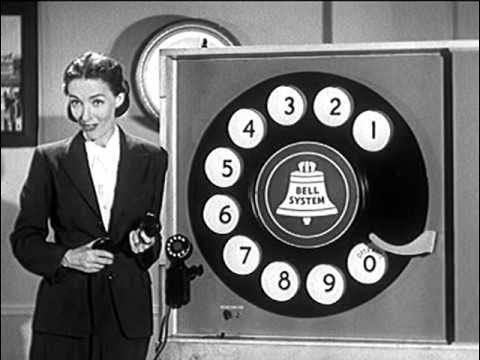
To demonstrate the operation of the telephone dial, Miss White positions herself beside a large mechanical replica of a rotary telephone dial linked to four vertical columns of electric indicator lamps, which simulate how step-by-step central office switches register subscriber pulses:

- **Listening for Dial Tone:** Miss White instructs callers to lift the receiver and wait for the steady humming dial tone before placing a finger in the wheel, noting that the tone serves as the automated equivalent of an operator asking "Number, please." If no dial tone is heard within a reasonable timeframe, the caller must replace the receiver, pause briefly, and try again. - **Pulse Transmission:** When dialing a sequence such as 4-5-6-7, the user pulls the corresponding hole clockwise until reaching the metal finger stop and releases the dial smoothly. - **Natural Return:** Miss White warns callers never to force, retard, or touch the dial during its clockwise rebound: “This is important, because the electrical signals are sent to the dial equipment only as the dial swings back; any interference with the return of the dial may result in you getting a wrong number.” - **Visual Switchboard Analogy:** As the dial returns freely on each digit, electrical impulses travel through the line, stepping the switches in the central office into position—demonstrated on the stage by illuminated numbers rising within the vertical light banks. - **Ringing Signal:** After the final digit (7) is registered, an intermittent, low buzzing feedback sound—the ringing signal—is transmitted back through the caller's receiver. At the same time, the called party's bell rings in steady, timed bursts until answered or abandoned.

[15:40](https://www.youtube.com/watch?v=p45T7U5oi9Q&t=940s) Party-Line Etiquette and Waiting for the Dial Tone

The narrator demonstrates what callers will encounter when the party they are trying to reach is already using their telephone. After dialing, if a line is occupied, the caller will hear the rapid, rhythmic cadence of the busy signal. The instruction in this scenario is simple: replace the receiver, wait a few minutes for the conversation to conclude, and try placing the call once more. Similar courtesy and patience are required on shared party lines. If a subscriber lifts the receiver to make a call and hears neighbors already engaged in a conversation, they must promptly hang up and wait a reasonable length of time before trying again. Likewise, if one picks up the receiver and hears clicking sounds indicating that another party on the line is in the middle of dialing, the user should hang up as gently and carefully as possible so as not to interrupt their pulses.

Above all, the narrator stresses that subscribers must never begin dialing until they clearly hear the continuous hum of the dial tone. Dialing prematurely confuses the central office machinery, leading to misdirected calls or errors. As the narrator explains: “The reason is really very simple: you started to dial before the equipment was ready, and so it didn't receive all the electrical signals you tried to send it.” If an eight is dialed before the dial tone registers, the central exchange switches might only register a portion of the pulses—such as a five—causing an entirely different telephone to ring.

```mermaid flowchart TD accTitle: Handling Party Lines and Dial Tone accDescr: Flowchart showing the steps to verify the line state before placing a call.

subgraph CheckLine["1. Check Line Status"] A["Lift receiver"] --> B{"Listen to line"} end

subgraph LineConditions["2. Line Conditions"] B -->|"Voices or clicking heard"| C["Party line in use:<br/>Hang up gently & wait"] B -->|"Rapid buzz after dialing"| D["Busy signal:<br/>Hang up & try later"] B -->|"Steady dial tone"| E["Equipment ready to receive pulses"] end

subgraph Dialing["3. Place Call"] E --> F["Dial full number"] end ```

- When encountering a busy signal or an in-use party line, callers should hang up and allow a few minutes before re-trying. - Clicking sounds heard on the line mean another party-line subscriber is actively spinning the dial; users must hang up immediately to avoid spoiling their call. - Dialing before the dial tone appears causes the mechanical switching gear to drop electrical pulses, registering the wrong digits.

---

[17:13](https://www.youtube.com/watch?v=p45T7U5oi9Q&t=1033s) The Golden Rules of Dial Telephony

To ensure smooth service across the community, the presentation summarizes the procedure into three fundamental rules every customer must follow. First, subscribers should always look up the desired telephone number in their newly issued telephone directory, as number assignments and prefixes frequently change with the conversion to automatic switching. Second, users must lift the receiver and patiently listen for the dial tone before touching the dial. Third, each digit must be dialed carefully by placing a finger into the correct hole, rotating the wheel smoothly clockwise until it hits the metal finger stop, and then letting go completely.

The narrator cautions customers against attempting to force the wheel back to its resting position in an effort to speed things up, as the telephone’s internal governor controls the exact timing of the electrical pulses sent to the central office. Adhering to these basic operating principles ensures that callers experience the full advantages of modern automatic switching. The narrator concludes the formal presentation with encouragement: “I'm sure if you follow these simple rules you'll find your new dial telephones easy to operate, convenient to use, and quick in service.”

- **Rule 1:** Look up the telephone number in the new directory. - **Rule 2:** Raise the telephone receiver and listen for the dial tone. - **Rule 3:** Pull the dial all the way around to the finger stop for each digit, release it cleanly, and never force or hurry it back.

---

[18:29](https://www.youtube.com/watch?v=p45T7U5oi9Q&t=1109s) First Call on the New Dial Phone

Following the instructional presentation, the scene shifts to an everyday local resident testing out the newly installed dial telephone in his home. Carefully lifting the handset, he pauses to listen to the receiver, smiling with relief as he recognizes the steady hum and mutters, “Yes, that's the right noise.” Keeping his eyes on the number he needs, he methodically rotates the dial for each digit—four, one, nine, and two—patiently letting the dial spin back on its own after each turn.

Within seconds, the call connects through the automated central office switches without needing an operator's intervention. As the party answers on the other end, the caller speaks into the transmitter with pleasant surprise: “Hello? This A. Hawk? Why, Gran said this thing isn't hard to work.” Delighted by the immediate connection and the fidelity of the audio, he marvels at how effortlessly the modern technology operates: “Call blame if I don't think this dial thing is going to work out pretty good at that!”

- The caller successfully places an automated call by dialing the four-digit local number **4-1-9-2**. - The resident notes that the line connected on the very first try and was noticeably clear and easy to hear.

## Notable quotes > [09:17](https://www.youtube.com/watch?v=p45T7U5oi9Q&t=557s) Better service means that people make more calls, and more calls mean more operators. — Miss White

> [00:29](https://www.youtube.com/watch?v=p45T7U5oi9Q&t=29s) Soon as a man gets used to one thing, by golly, somebody wants to take it away from him! — Grandpa

## Mentioned Bell System, Bell Telephone, Charlie, Ed Hawkstead, Janie, John Cook, Miss White, Mr. Johnson, Plant Department, Traffic Department, Western Electric

## Video description A 1940 educational short by Bell Telephone to show customers that were recieving new dial phones how to use the new device, and why they were getting these new sets.

From Archive.org: http://archive.org/details/DialComesToT

[Source](https://www.youtube.com/watch?v=p45T7U5oi9Q)

中文简报

贝尔系统推广旋转拨号以取代人工总机 贝尔公司坚称,本地电话服务的自动化会刺激通话量增长,进而增加人工接线员的编制,而非削减就业岗位。 当一座小镇得知其人工电话系统将被改造成自动拨号服务时,这一消息既引起了像珍妮这样的年轻人的兴奋,也招致了像爷爷这样的守旧派顽固的怀疑。为了让社区做好准备,当地贝尔电话公司的代表举办了宣讲会,解释了大量的技术基础设施工作以及技术上的“接切”,并向居民保证特殊协助仍需人工接线员。现场演示详细说明了拨打电话的基本操作方法,包括倾听拨号音、将每个数字拨到挡手处且不强行拨动拨盘,以及践行适宜的合用线礼仪。最终,这些简单的规则消除了新技术的神秘感,就连持怀疑态度的居民也成功拨打出了他们的第一通自动电话。 贝尔电话公司制作了这部1940年的科普短片,旨在让社区居民熟悉从人工总机电话向自动拨号系统的过渡。 (0:29) 技术接切在一瞬间完成:工作人员在拔掉人工总机上的热圈和熔断器的同时,闭合自动拨号交换设备的接触簧片。 (5:54) 贝尔系统对机械化引发的担忧作出回应,指出拨号服务下更高的通话量促使他们雇用了比以往任何时候都多的人工接线员。 (9:17) 拨号脉冲仅在拨盘自由回转时产生;强行拨动或阻碍拨盘转动会扰乱时序,导致误拨电话。 (9:17)

Reading summary

The transition to automated telephone service depended on extensive behind-the-scenes engineering paired with systematic public education designed to ease domestic resistance, allay fears of technological unemployment, and instruct subscribers in the mechanics of rotary dialing. Generational Skepticism and Community Reactions (0:29) The announcement that local telephone companies would replace manual switchboards with dial instruments revealed a sharp generational divide within households. Older subscribers resisted abandoning functional wooden wall sets, viewing modernization as an unnecessary disruption of proven household equipment, while younger family members welcomed dial phones as fast and modern improvements. Shared multi-party lines also reinforced established habits, including eavesdropping on neighborhood rings and fabricating ruses to clear the wire of listening neighbors. To counteract domestic skepticism and teach proper usage before the equipment went live, telephone management planned widespread educational outreach. Representatives scheduled presentations for community groups such as the Parent-Teacher Association (PTA) as well as dedicated school assemblies, ensuring both adults and students learned how the automated system functioned before the transition took place. Infrastructure Overhauls and the Instant Cutover (5:54) Converting a town to automated service required months of infrastructure installation followed by an instantaneous transfer termed the cutover. Telephone Manager John Cook described extensive preliminary work that included inspecting drop wires into homes, erecting new pole lines, running aerial and underground lead-sheathed cables, constructing neighborhood-compatible central office facilities, and installing customized Western Electric switching frames designed to accommodate future municipal growth. According to Plant Department representative Mr. Johnson, the physical cutover had to occur within seconds to avoid disrupting emergency and everyday communication. Technicians executed the switch simultaneously by pulling heat coils and fuses to disconnect lines from the manual cord switchboard and closing contact springs on the automatic dial apparatus, instantly replacing the human operator's manual greeting with a continuous 24-hour dial tone. Preserving Operator Jobs Amid Mechanization (9:17) Addressing public apprehension that automation would eliminate telephone company jobs, Traffic Department representative Miss White stated that mechanization did not displace human operators. While over half of American telephones were already dial-operated at the time, the Bell System employed more human operators than ever before. Miss White argued that faster, modernized service drove higher overall calling volumes across the network. This surge in traffic necessitated large staffs of switchboard operators to manage long-distance and toll connections, look up unlisted numbers, and handle urgent emergency situations, demonstrating that automated switching handled routine local routing while shifting human labor toward specialized services. Rotary Pulse Mechanics and Party-Line Etiquette (15:40) Because step-by-step central office switches relied on precise electrical signals transmitted as the dial returned to resting position, subscriber operating technique directly dictated call routing accuracy. Demonstrations emphasized three basic rules: consulting updated directories for new numbering assignments, waiting for the steady humming dial tone before touching the wheel, and pulling the dial clockwise to the metal finger stop before releasing it cleanly without forcing or retarding its motion. The educational campaign also stressed strict party-line etiquette. Callers who picked up and heard neighbor conversations or rapid clicking—which indicated another party was actively spinning the dial—were instructed to hang up gently to avoid distorting pulses. When callers encountered a busy signal, they were instructed to hang up and wait several minutes rather than repeatedly seizing the line. Once properly executed, the dial mechanism stepped central office switches to complete four-digit connections without manual operator intervention. The program portrays telephone automation as a shared technical and civic undertaking, demonstrating that the success of automated infrastructure ultimately depended on customer adherence to operating rules, directory lookups, and line courtesy.

精炼阅读摘要

本片记录了美国小镇电话网络从人工插孔交换台向自动化转盘拨号全面过渡的历程,系统展示了电话公司如何通过隐蔽工程改造、平滑割接技术与深入的社区教育,化解公众对技术失业及操作复杂性的疑虑。 社区转型初期的代际分歧与公众宣导 (0:29) 当地方电话公司宣布将拆除传统人工交换电话并全面换装转盘拨号设备时,社区内部产生了明显的代际态度分歧。以珍妮(Janie)为代表的年轻群体对现代化改造表现出高度热情,认为转盘电话快速而便捷;而祖父(Grandpa)等老一辈居民则持强烈的怀疑与抵触情绪,认为更换运转良好的旧设备是对生活习惯的不必要打扰,甚至试图寻找各种借口规避宣导活动。此外,多户共用电话线(party-line)上的偷听现象也暴露出旧系统的私密性缺陷,祖父曾编造空中有飞机进行特技空中打字表演的谎言,才将偷听的邻居从共享线路上引开。 为了消除居民的抵触并普及新设备的使用机制,电话经理约翰·库克(John Cook)筹备了系统性的公众宣导活动。公司计划率先在家长教师协会(PTA)会议上向成年订户进行说明,并在学校礼堂举办专场集会向青少年学生演示操作规范,确保全镇不同年龄段的用户都能在正式投入使用前掌握转盘电话的运作方式。 隐蔽工程升级与秒级系统平滑割接 (5:54) 电话经理约翰·库克在公众大会上指出,实现转盘拨号并非仅是在居民家中更换话机,其底层依赖于庞大的网络基础设施升级。工程人员在全镇范围内系统检查了入户引入线,设立了全新电线杆,铺设了架空与地下铅包电缆,并兴建了外观与社区环境相融合的机房建筑,由西方电气(Western Electric)根据社区未来的扩展需求量身定制了中心局交换机架。 工厂部的约翰逊先生(Mr. Johnson)详细阐释了被称为“割接”(cutover)的关键切换瞬间。为确保全镇的通信服务在过渡期间完全不发生中断,整个转换过程必须在数秒内同步完成。接到切换信号后,技术人员会迅速拔掉连接人工绳路交换台的热线圈与熔断器以关停旧系统,同时瞬间闭合自动拨号交换设备的触点弹簧。自此,以往接线员人工询问“请问要几号”的应答被全天候运转的自动化拨号音彻底取代。 自动化转型与人工接线员岗位的辩证关系 (9:17) 针对公众普遍担忧机械化将淘汰人工接线员并引发失业的顾虑,话务部(Traffic Department)的怀特小姐(Miss White)在宣讲中给出了明确反驳。她援引数据说明,尽管全美已有超过半数的电话采用了转盘自动拨号,但贝尔系统(Bell System)雇佣的人工接线员总数却创下了历史新高。 怀特小姐解释称,自动化带来的高效与便捷极大地刺激了居民的呼叫总量,而业务规模的扩大反过来要求公司配置更多的人工接线员,以专门负责处理长途收费通话、查询未登记号码以及协助紧急呼救服务。这种“更优质的服务催生更多呼叫,更多呼叫需要更多接线员”的行业逻辑,有效化解了社区对于技术进步损害劳工利益的道德疑虑。 脉冲拨号规范、合用线礼仪与操作法则 (15:40) 怀特小姐借助巨型转盘模型展示了步进式交换机的工作机制。用户摘机后必须耐心等待稳定的嗡鸣拨号音,这代表机房设备已准备就绪;若在拨号音出现前抢先拨号,中心局机械开关将丢失部分电脉冲,从而导致误拨。拨号时,用户须将手指插入对应孔位顺时针旋转至金属档板处并完全松开,严禁在表盘回弹过程中施力或阻挡,因为话机内部调速器仅在表盘自由回转时才会向中心局发送断续的电脉冲信号。输入全部号码后,受话方铃声响起的同时,呼叫方听筒内会同步传来断续的低频回铃音。 针对共用线环境,宣讲强调了严谨的使用礼仪:若摘机后听到邻居正在通话或听到代表他人正在拨号的咔哒声,必须轻柔挂机并等待数分钟后再试,以防打断对方信号;拨号后遭遇急促忙音亦需挂机等待。最终,官方将全套流程提炼为三大黄金法则:首先查阅新发放的电话簿以核对新号码与前缀,其次摘机并确认听到稳定拨号音,最后平稳旋转拨盘至档板并完全任其自然回弹。 在新设备启用后,原本持怀疑态度的居民在家中试拨四位号码(4-1-9-2)即刻接通,通话声音清晰且无需人工介入,从而迅速接受了新技术。该片表明,公共基础设施的技术迭代能否成功落地,不仅取决于底层工程的严密与秒级无缝割接,更依赖于将复杂的机电脉冲原理转化为通俗易懂的操作规范,进而消除大众对自动化的心理隔阂。

Detailed notes — zh

## Background 本视频由 YouTube 频道 PVid88 于 2012 年 12 月 14 日上传,记录了贝尔电话公司(Bell Telephone)在 1940 年制作的一部科普教育宣传短片。根据视频简介,该短片旨在向当时即将换装新型转盘拨号电话的小镇居民解释为何要进行设备升级,并向大众系统演示新电话的操作方法。 ## TL;DR 影片从小镇晚报宣布将拆除老式摇把电话、全面换装转盘电话切入,展现了老一辈人的怀旧抗拒与年轻一代的热情期待。随后,电话公司通过小镇宣讲会,由经理、工程人员及话务部门详细介绍了后台线路铺设、“接割(Cutover)”无缝切换技术,并澄清自动拨号不仅不会淘汰人工接线员,反而因业务量增加需要更多话务员。讲解员现场拆解了旋转拨号的脉冲原理,强调“先听拨号音、旋拨到底并让转盘自行回弹”等操作守则;最终,原本满腹疑虑的老居民亲自拨通电话且通话清晰无比,打消了全部顾虑并欣然接纳了这项通信革新。 ## Atmosphere & style 全片洋溢着 20 世纪中期美国公共科普片特有的淳朴温情与循循善诱的教育基调。前段以家庭客厅和厨房的闲聊琐事开场,老少代际间关于“老物件与新时髦”的打趣拌嘴生动幽默,充满生活气息;中段转入市政厅式的宣讲演示,主讲人们谈吐从容、条理清晰,以耐心的教学姿态打消公众对失业与复杂技术的焦虑;尾声老者由怀疑转为惊喜的情绪弧线自然舒展,整部作品在融洽亲切的时代温情中达成了技术普及的目的。 ## Bulletin - [00:29](https://www.youtube.com/watch?v=p45T7U5oi9Q&t=29s) 贝尔电话系统在小镇推广自动转盘电话,全套硬件由西方电气(Western Electric)定制制造,旨在全面取代旧式摇把电话与人工接线系统。 - [05:54](https://www.youtube.com/watch?v=p45T7U5oi9Q&t=354s) 技术部门通过拔出旧交换机线路熔丝并瞬时接通新设备触点的“接割(Cutover)”操作,在数秒内完成新老系统无缝切换,确保全镇通话零中断。 - [09:17](https://www.youtube.com/watch?v=p45T7U5oi9Q&t=557s) 话务部门澄清自动化不会淘汰人工接线员;随着全美过半电话实现转盘自动化,通话频率增加反而促使在职人工接线员数量创下历史新高,继续承担长途及急救支援等关键服务。 - [10:14](https://www.youtube.com/watch?v=p45T7U5oi9Q&t=614s) 转盘电话的电脉冲信号是在拨号盘被拉至挡手后“自主回弹”的区间内编码发送的,任何外力推拉干预都会导致脉冲畸变从而拨错号码。 ## Key takeaways - [00:29](https://www.youtube.com/watch?v=p45T7U5oi9Q&t=29s) 老式电话的淘汰引发了代际观点碰撞:年轻一代渴望现代化体验,而老一辈则对打破习惯、淘汰可用旧物怀有抵触与怀旧心理。 - [02:02](https://www.youtube.com/watch?v=p45T7U5oi9Q&t=122s) 当时普遍使用的合用线(Party Line)容易被邻居偷听并产生线路杂音,严重影响通话清晰度与隐私。 - [02:02](https://www.youtube.com/watch?v=p45T7U5oi9Q&t=122s) 电话公司通过家长教师联谊会(PTA)和学校集会等公共宣讲渠道,在全镇铺开新技术科普与操作培训。 - [05:54](https://www.youtube.com/watch?v=p45T7U5oi9Q&t=354s) 转盘系统的落地伴随大规模基础设施改造,包括重设电线杆、铺设地下与架空电缆以及新建适配社区风格的机房建筑。 - [05:54](https://www.youtube.com/watch?v=p45T7U5oi9Q&t=354s) “接割(Cutover)”工序通过毫秒级拔熔丝与闭合触点实现自动化切换,全天候运转的“电气接线员”由此全面接管线路。 - [09:17](https://www.youtube.com/watch?v=p45T7U5oi9Q&t=557s) 自动化交换机的普及反而带动了整体呼叫需求上涨,促使人工接线员岗位不减反增,转而专注长途、查号与紧急呼救处理。 - [10:14](https://www.youtube.com/watch?v=p45T7U5oi9Q&t=614s) 拨号前必须摘机并确认连续平稳的“拨号音”,若抢在设备就绪前拨号会导致局端脉冲信号丢失并拨错号码。 - [10:14](https://www.youtube.com/watch?v=p45T7U5oi9Q&t=614s) 转盘回转机制通过弹簧自主回弹控制发条速率以发送标准电脉冲,严禁用户用手推拉拨盘或人为干涉回转过程。 - [15:40](https://www.youtube.com/watch?v=p45T7U5oi9Q&t=940s) 合用线用户必须遵守礼让规则:遇他人通话或听到拨号咔哒声时需轻柔挂断避让,严禁干扰他人的拨号脉冲。 - [17:13](https://www.youtube.com/watch?v=p45T7U5oi9Q&t=1033s) 影片将拨号规范精炼为三条守则:查阅新号码簿、摘机等待拨号音、顺时针拨至挡手后完全松手任其回弹。 - [18:29](https://www.youtube.com/watch?v=p45T7U5oi9Q&t=1109s) 原本心存疑虑的老用户在首次按规程自主拨通电话并体验到高清晰音质后,完全消除了对新技术实用性的担忧。 ## Detailed walkthrough ### [00:29](https://www.youtube.com/watch?v=p45T7U5oi9Q&t=29s) 晚报上的新技术:转盘电话即将取代老式摇把电话 傍晚时分,一家人陆续回到家中。女儿珍妮(Janie)正在做代数作业,准备做完后就去帮妈妈准备晚饭;父亲查理(Charlie)进门带回了晚报,递给坐在客厅的老爷子(Gramp)。老爷子翻看报纸时,赫然发现了一条轰动的小镇新闻:电话公司计划拆除镇上现有的老式电话,全部更换为带旋转拨号盘的新型转盘电话(Dial Phones)。对于这项新技术,正值青春期的珍妮兴奋不已,称赞这“太棒了(yummy / super)”,并打听是不是几周后就能装上;然而,祖父却对此大为光火,表现出极其强烈的怀旧与抗拒心理,嘟囔着世道变了。在面对珍妮提醒“家里的老电话可能从爸爸还是个小男孩时就在用、大家应该为用上现代电话感到高兴”时,祖父反唇相讥,认为如今的年轻人永远不会满足。 老爷子对盲目追求现代化的现象嗤之以鼻,愤愤不平地说道:“As soon as a man gets used to one thing, by golly, somebody wants to take it away from him.” 他甚至抱怨现在的年轻人比起踏踏实实吃饱三餐,反而更操心自己够不够时髦。为了证明自己的看法,祖父决定立刻打电话给老朋友埃德·霍克斯泰特(Ed Hawkstedt),打听镇上其他人对此事的真实反应。 - 祖父阅读报纸得知,全镇的老式电话将在数周内统一更换为新型转盘电话。 - 珍妮代表了年轻一代对新技术的热情期待,而祖父则对打破固有习惯深感不满。 --- ### [02:02](https://www.youtube.com/watch?v=p45T7U5oi9Q&t=122s) 共用线上的闲聊与全镇宣讲会计划 祖父走到走廊的挂壁式老电话前摇响把手,呼叫接线员帮他转接“344-J”。电话接通后,由于共用线(Party Line)上有其他人偷听导致线路杂音极大、声音微弱,祖父心生一计,对着话筒大喊镇子正上方有架飞机在做特技飞行表演和空中文字书写(Skywriting),自家前廊看得一清二楚。这招果然奏效,共用线上的偷听者纷纷挂机跑出门去看热闹,线路瞬间变得清晰。祖父询问埃德对转盘电话的看法,不料埃德在杂货店听到的反馈却截然相反——镇上居民普遍认为这是个大好事。挂断电话后,祖父依旧嘴硬,坚称自己绝非跟不上时代,只是想不通为什么要更换明明还能正常工作的东西。 在厨房里,查理和妻子看着走廊里气呼呼的老爷子相视而笑。妻子打趣说,当年家里买新洗衣机时老爷子也是这副态度,好几个星期都不肯靠近,如今用得比谁都顺手;查理也笑着表示,等镇上大兴土木铺设新线缆时,老爷子保准天天跑去现场指手画脚。查理告诉家人,电话经理约翰·库克(John Cook)正计划在镇上举办一系列宣讲会向居民普及拨号系统,首场宣讲设在家长教师联谊会(PTA),随后还会在学校集会上为学生们单独讲解。当晚饭端上桌时,老爷子走进饭厅,嘴上依然不饶人,甚至找借口说今晚还要去看埃德给妻子的餐具室刷油漆,试图以此推脱参加宣讲会,但查理安慰他离正式开会还有相当长的一段时间。 - 老式共用线电话容易被邻里窃听导致通话质量下降,祖父利用空中杂技的假消息成功诱使偷听者挂机。 - 电话公司计划通过家长教师联谊会(PTA)和学校集会全面向全镇居民和学生宣传新设备操作。 --- ### [05:54](https://www.youtube.com/watch?v=p45T7U5oi9Q&t=354s) 电话经理与工程部门:转盘系统的幕后工程与“接割”瞬间 转盘电话的公开讲解会在镇上如期举行,电话经理约翰·库克(John Cook)作为主讲人率先登台。库克向在场居民表示,随着新电话机走进各家各户,小镇即将拥有与全美任何地方一样先进的现代通信系统。他向公众揭示了这项升级背后庞大的基础设施建设:不仅入户线路全面检修,工人们还架设了新的电线杆,铺设了全新的地下与架空电缆;几个月前,工程师便完成了图纸设计,所有设备均由西方电气(Western Electric)工厂按照小镇未来多年的通信需求定制制造,甚至建造了与周边街区建筑风格协调一致的新机房建筑。 随后,外线/设备部(Plant Department)的约翰逊先生(Mr. Johnson)上台,详细解释了从人工交换向自动化拨号过渡的核心时刻——“接割”(Cutover)。为了确保全镇通信完全不发生中断,这套转换必须在短短数秒钟内一气呵成。约翰逊生动地描述道,一旦指令下达,工作人员会迅速拔掉连接旧人工交换机线路上的小熔丝,“老系统随即停止运转;几乎在同一瞬间,我们闭合转盘自动设备的连接触点,新系统便立即接管全镇通话”。自此,全镇迎来了一台全天候24小时在线的“电气接线员”,老式的接线员询问声“请问要几号(Number please)”将被现代化的拨号音所取代。 ```mermaid flowchart TD accTitle: 电话系统接割流程图 accDescr: 展示从旧人工交换系统无缝切换到新转盘自动系统的接割步骤。 subgraph StepOld["旧系统下线"] A["接割信号下达"] --> B["拔出人工交换机线路熔丝"] B --> C["人工交换系统停止运作"] end subgraph StepNew["新系统上线"] C --> D["瞬间闭合自动转盘设备触点"] D --> E["电气接线员全天候接管线路"] E --> F["提供连续拨号音替代人工询问"] end ``` - 硬件制造与定制:全套设备遵循贝尔系统(Bell System)标准,由西方电气制造,兼顾小镇当下及未来的扩容需求。 - “接割(Cutover)”操作:通过拔出旧系统熔丝并瞬间接通自动设备触点,在几秒内实现无缝切换,杜绝通信中断。 --- ### [09:17](https://www.youtube.com/watch?v=p45T7U5oi9Q&t=557s) 话务部门的澄清:人工接线员不会消失 来自业务/话务部门(Traffic Department)的怀特小姐(Miss White)接替登台。她首先针对公众常见的误解进行了重要澄清:虽然自动转盘系统引入了“电气接线员”,但这绝不意味着人类接线员将被彻底淘汰。相反,随着通信质量的提高,人们打电话的频次大幅增加,反而促使系统需要更多的人工话务员。怀特小姐强调,用户在拨打长途电话、查询未登记电话号码(Unlisted Numbers)或遭遇紧急求助时,人工接线员依然会随时提供协助。 怀特小姐用具体数据消除大家的失业疑虑,明确指出:“Although more than half the telephones in America are dial, we have more operators than we ever had before. Better service means that people make more calls, and more calls mean more operators.” - 全美已有超过半数的电话升级为转盘电话,但贝尔系统雇用的人工接线员数量却创下历史新高。 - 人工接线员依然承担长途外线呼叫、特殊号码查询及各类紧急通信支援等核心职责。 --- ### [10:14](https://www.youtube.com/watch?v=p45T7U5oi9Q&t=614s) 现场演示:转盘电话的工作原理与正确拨号规范 怀特小姐移步至讲台侧面的大型教学模拟装置旁,向大家拆解转盘电话的运作机制。她指着与家中电话完全一致的大号拨号盘,分步讲解正确的使用规程:拿起听筒后的第一件事,必须是倾听是否有连续稳定的“拨号音(Dial Tone)”。这个声音正是电气系统准备就绪的信号,相当于接线员在问“请问要几号”。若拿起听筒后未能在合理时间内听到拨号音,用户必须先挂断电话,等待数秒后再重新拿起尝试,切勿盲目拨号。 在拨号演示环节,怀特小姐利用讲台上代表局端自动交换设备(Central Office Equipment)的灯柱,直观展示了脉冲信号的传输过程。当拨号盘被拉至金属挡手(Finger Stop)并松开时,电话会向局端发送电气编码脉冲,各列灯柱会依次点亮对应的数字。怀特小姐特别强调了一个关乎拨号成败的机械细节:拨号时必须用手指将转盘一直顺畅拉到金属挡手处,随后必须“完全移开手指”,任由转盘依靠内部弹簧力量自行回弹(Swings back of its own accord)。因为向中心机房发送电脉冲的过程完全发生在转盘自然回弹的区间内,如果用户用手推拉拨盘、减缓回弹或干扰其回转,就会造成脉冲畸变,直接导致呼叫拨错号码。最后,她演示了拨打“4567”的全过程,并展示了拨号完成后局端传来的回铃音(Ringing Signal)以及受话方电话清脆、有节奏的鸣响。 ```mermaid flowchart LR accTitle: 正确拨打电话操作流程 accDescr: 拿起听筒、确认拨号音、顺畅拨号回弹到听取回铃音的标准操作流程。 A["提起听筒"] --> B{"听到拨号音?"} B -- "否" --> C["挂断并等待数秒重试"] C --> A B -- "是" --> D["手指拨至挡手处并完全松开"] D --> E["拨号盘自然回弹发出脉冲"] E --> F["完成全部数字拨号"] F --> G["听取回铃音等待对方接听"] ``` - 拨号关键步骤:查阅新电话簿确定号码 $\rightarrow$ 提机倾听拨号音 $\rightarrow$ 顺次拨打数字并保证每次均拉至金属挡手 $\rightarrow$ 完全松开手指任其自主回弹。 - 机械与电气原理:电信号是在拨号盘“自主回弹”阶段编码发送至局端的,任何外力推拉干预都会导致接错号码。 - 听觉信号区分:提机时的平稳蜂鸣为“拨号音”,拨号结束后的间歇性声音为告知对方电话正在鸣响的“回铃音”。 ### [15:40](https://www.youtube.com/watch?v=p45T7U5oi9Q&t=940s) 信号识别与合用线操作规范 影片向用户详细演示了拨打号码后可能遇到的各种声音信号及其应对方法。如果在拨完号码后听到快速断续的忙音信号,说明对方线路正在占线通话中。解说员明确告知用户:“如果听到忙音信号,只需挂断电话,等待几分钟让正在通话的人讲完,然后再试一次。”(“If you hear the Busy Signal simply hang up and wait a few minutes for the people who are talking on the line to finish and try again.”) 对于当时常见的合用线(Party Line)用户,影片强调了基本的电话礼节与排队规则。当你拿起听筒准备听拨号音,却发现线路上已经有人在说话时,应当自觉挂机,并在等待一段合理时间后再尝试。同样,如果提起听筒时听到了连续的“咔哒”声,这代表线路上共用该线路的其他邻居正在拨号,此时必须尽可能轻柔、小心地挂断听筒,切勿干扰对方的拨号脉冲。 此外,解说员特别严肃地告诫观众,无论拨打电话多么频繁或是在什么时间呼叫,都必须养成先听拨号音的好习惯:“但无论你呼叫得多么频繁或何时呼叫,拨号前务必先听拨号音。”(“But no matter how often or when you call always be sure to listen for the dial tone before you start to dial.”)片中举例说明:如果用户在拨号音出现之前就抢先拨了数字“8”,交换机设备可能根本无法识别,或者最终只错误地记录成数字“5”等其他号码。其背后的机械原理非常简单——因为拨号过早,中央局的自动交换设备尚未准备就绪,导致用户发出的部分电脉冲信号丢失。 ```mermaid flowchart TD accTitle: 拨号电话呼叫流程 accDescr: 展示从拿起听筒识别信号到拨号完成的标准操作流程 subgraph Listen["1. 摘机听音阶段"] A["拿起听筒监听"] --> B{"线路状态判定"} B -->|"听到他人讲话/拨号咔哒声"| C["小心挂机,稍后重试"] B -->|"听到平稳拨号音"| D["设备就绪,开始拨号"] B -->|"抢先拨号(未等拨号音)"| E["脉冲丢失,导致拨错号"] end subgraph Dial["2. 拨盘操作阶段"] D --> F["手指按顺时针旋转拨盘"] F --> G["完全触碰金属限位挡钩"] G --> H["松开手指,让拨盘自行回位"] H --> I{"对方线路状态"} end subgraph Complete["3. 通话与应答"] I -->|"连续忙音"| J["挂机等待数分钟后再拨"] I -->|"振铃接通"| K["正常开始通话"] end ``` ### [17:13](https://www.youtube.com/watch?v=p45T7U5oi9Q&t=1033s) 拨号电话的核心使用守则 为了让新接触自动电话的居民能够轻松掌握技巧,解说员将正确的操作流程归纳为三项核心守则。第一步,在打电话前必须先查阅新的电话号码簿,确认目标用户的最新号码;第二步,提起话机听筒,静心等待平稳的拨号音响起;第三步,沉着且仔细地拨出每一个数字,拨号时手指必须将拨盘一直顺时针旋拨到底,直到触碰到金属限位挡钩(Finger Stop),然后完全松开手指让拨盘自行回弹。 讲解中特别警告用户切勿在拨盘回弹过程中用手去推或者加速拨盘,因为交换机依靠拨盘自由回旋时的发条速率产生标准的电脉冲间隔,强行干预会导致设备无法正确辨识数字。解说员充满信心地总结道:“我相信只要你们遵循这些简单的规则,就会发现新的拨号电话操作简单、使用方便,并且服务非常快捷。谢谢大家。”(“I'm sure if you follow these Simple Rules you'll find your new dial telephones easy to operate convenient to use and quick in service. Thank you.”) - **核对号码**:使用当地随转制更新印发的新版电话号码簿。 - **确认信号**:听筒中必须传来稳定的嗡鸣拨号音,方可下指拨号。 - **拨到位与自回转**:每拨一个数字都必须转到挡钩处松手,严禁外力催赶拨盘回位。 ### [18:29](https://www.youtube.com/watch?v=p45T7U5oi9Q&t=1109s) 首次拨号实践:老用户的惊喜体验 讲解告一段落后,镜头转向了一位原本对新技术心存疑虑的小镇老居民。老先生站在崭新的拨号电话机前,小心翼翼地把听筒凑到耳边,听到耳机中传来预期的拨号音,他脸上露出释然的神情,自言自语道:“对,这就是那个声音。”接着,他对照着记录的号码,一板一眼地在拨盘上依次旋拨数字:先是转动“4”,接着拨“1”,再转动“9”,最后拨入“2”。 电话迅速被接通,老先生兴奋地对着送话器打起招呼:“喂,是霍克吗?”(“Hello, this Arthur Hawke?”)他惊喜万分地向老友分享亲身体验:“老天作证,这玩意儿使起来一点都不难!真神了,我头一回试就把电话打通了!”(“By golly, said this thing isn't hard to work! No sir, got the call through first time I tried.”)听筒那头传来的声音清晰无比,老先生连声赞叹通话质量真是又好又清楚,完全消除了此前对没有人工接线员后电话可能不好使的疑虑,心满意足地感叹道:“真神了,我看这拨号的新玩意儿指不定还真挺好用的!”整部宣传片在老一辈用户从怀疑到欣然接受自动拨号现代化的温馨笑语中圆满落幕。 ## Notable quotes > [09:17](https://www.youtube.com/watch?v=p45T7U5oi9Q&t=557s) Although more than half the telephones in America are dial, we have more operators than we ever had before. Better service means that people make more calls, and more calls mean more operators. — 怀特小姐 > [00:29](https://www.youtube.com/watch?v=p45T7U5oi9Q&t=29s) As soon as a man gets used to one thing, by golly, somebody wants to take it away from him. — 老爷子 ## Mentioned The Dial Comes To Town, Bell Telephone, Western Electric, Charlie, Janie, Gramp, Ed Hawkstedt, John Cook, Mr. Johnson, Miss White, Arthur Hawke, Parent-Teacher Association, Bell System ## Video description A 1940 educational short by Bell Telephone to show customers that were recieving new dial phones how to use the new device, and why they were getting these new sets. From Archive.org: http://archive.org/details/DialComesToT [Source](https://www.youtube.com/watch?v=p45T7U5oi9Q)

Source quotes

[9:17] 怀特小姐: Although more than half the telephones in America are dial, we have more operators than we ever had before. Better service means that people make more calls, and more calls mean more operators. [0:29] 老爷子: As soon as a man gets used to one thing, by golly, somebody wants to take it away from him.

Source quotes

[9:17] Miss White: Better service means that people make more calls, and more calls mean more operators. [0:29] Grandpa: Soon as a man gets used to one thing, by golly, somebody wants to take it away from him!

Original transcript

[0:29] la [0:31] hi folks hi Daddy oh hello Char what's [0:35] new today oh same old thing I guess [0:38] here's a paper if you wanted Dad good I [0:41] was wondering where that dog on kid was [0:44] where's mom Janie starting supper I'm [0:47] going to help her as soon as I finish [0:48] this algebra [0:56] problem oh Jenny you know what he says [0:59] here [1:01] they're going to take out all our phones [1:03] and put in them kind with dials on them [1:06] oh gramp that's yummy does it St soon [1:09] few weeks I guess that' be just [1:12] super oh sure where did say gra I said [1:16] oh sh soon as a man gets used to One [1:19] Thing by golly somebody wants to take it [1:21] away from him but gra we've had that old [1:25] phone since well I bet since Daddy was a [1:28] boy we want to be be glad to have modern [1:31] telephones a you young are never [1:34] satisfied these [1:36] days folks are getting more worried [1:38] about being modern than they are over [1:41] the three Square [1:42] meals I'm going to call our bed HW [1:45] sitter and find out what he thinks about [1:47] all this business [2:02] give me three four 4 [2:04] J thank you kindly don't talk too long [2:08] GRS SE will be ready in a few minutes [2:10] never missia ain't going to start now [2:12] all [2:14] right hello [2:17] Ed I say is this Ed hawkstead [2:21] talking [2:23] huh well get along close to your phone [2:26] ain't got to bite yet head [2:30] what [2:31] say can't you hear [2:35] me I was talking about the Aeroplan [2:40] skywriting doing all kinds of [2:43] Tricks right over town sure I can see it [2:47] from a front [2:52] porch by grabby I knew that' make all [2:55] them ease droppers hang up and run [2:58] outside [3:04] olly you ain't changed a [3:07] bit that's pretty slick of you getting [3:09] them off the line so we can hear [3:14] better D [3:17] telephone yes I did hear something about [3:20] it down at the grocery store this [3:23] morning yeah everybody thought was a [3:27] good [3:28] idea oh did they [3:32] uh-huh [3:33] uh-huh no I ain't going to get it [3:37] in no I just wondering why they wanted [3:40] to change something that still works all [3:43] right I see here I ain't no more [3:46] oldfashioned than you [3:49] are Grandpa get used to it Genie he said [3:53] the same thing when I got my new washer [3:55] remember yes and he wouldn't go near it [3:57] for weeks he even likes to work it now [4:00] Charlie Jean says we're going to have [4:02] dial phones put in Grant read about it [4:04] in the paper yes I heard about it today [4:07] about to be a fine Improvement for us [4:08] here in town you mean pretty fast [4:11] upto-date service you can pour the water [4:13] honey okay [4:15] m' gr got all worked up he's trying to [4:18] get hacked at now yes I heard him [4:20] hollering out there in the hall but [4:23] he'll be all right when he hears there [4:24] might be some new construction going on [4:27] you'll go down there every day if he can [4:29] and tell tell them how to do it from [4:31] what I hear they're planning to hold [4:33] some meetings around town later on what [4:35] kind of meetings Charlie oh to tell [4:37] folks all about the new system how it [4:39] works and everything John Cook will be [4:41] the main Speaker John Cook you know he's [4:43] the telephone manager oh yeah sure the [4:46] first talk will be at the next parent [4:48] teachers meeting I guess we'll have to [4:50] figure on going then can I go too Daddy [4:52] you won't have to Genie he's going to [4:54] talk at a meeting in the school assembly [4:56] for you kids you'll hear about it then [4:58] oh hey hey what's going on [5:01] here you can't even talk where is that [5:05] suppar hour was going to be late for oh [5:07] you're just in time we're talking about [5:09] going to a meeting Dad the telephone [5:11] company wants to tell us all about this [5:12] new dial service meeting tonight can't [5:15] go going to watch Ed hu paint his wife's [5:18] Pantry well Dad you'll be able to go to [5:21] this meeting all right it won't be for [5:23] some time yet [5:54] friends it won't be long now until your [5:56] no dial telephones are ready to serve [5:58] you [6:00] and I know you're as glad as I am that [6:02] we're going to have an as upto-date [6:04] telephone system here as any in [6:07] America now most of you are acquainted [6:10] with what a dial telephone looks like [6:12] because nearly all of the installations [6:14] have been made in your homes but lots of [6:16] other work has been going on around town [6:18] too as you probably [6:21] noticed the wiring that runs to your [6:23] homes has been [6:24] checked new pole lines have been put [6:28] up and and new cable has been pulled [6:31] into place things were happening behind [6:34] the scenes too in fact the planning and [6:37] the work on your new dial system has [6:39] been underway for some time a good many [6:43] months ago our Engineers Drew up the [6:45] plans for the new equipment it was built [6:48] to these specifications in Western [6:50] electrics [6:51] factories telephone equipment is pretty [6:54] much standard throughout the whole Bell [6:55] System but each Community has its own [6:58] telephone needs [7:00] and our equipment must be built to fit [7:02] those needs not only for today but for [7:06] years to [7:08] come sometimes new buildings are [7:10] required to hold the dial equipment in [7:13] these cases we try to have them [7:16] harmonize with the [7:18] surroundings it took a lot of time for [7:20] our men to install equipment for dial [7:23] service and it took many days to put the [7:26] new telephones in your homes a little [7:29] later on I'm going to ask Miss White of [7:31] our traffic department to demonstrate [7:34] how to make a call with your dial [7:36] telephone but right now I want you to [7:39] listen to a man who has been working on [7:41] the job of getting dial service ready [7:43] for use I'd like Mr Johnson of our plant [7:45] department to get up and tell you what [7:47] happens during the actual cut over from [7:50] the old system to the new [7:57] one well ladies and gentlemen [8:00] of course you know from what you've [8:01] already heard that putting things in [8:04] good shape for the new system has been [8:06] quite a job the main thing now is we're [8:10] heading toward the time when we make the [8:12] actual change to the new service what we [8:15] call the cutover so that there'll be no [8:18] break in the community service this must [8:21] all be done in a few [8:24] seconds you can see these are Mighty [8:26] important seconds and mighty exciting [8:30] seconds when the signal is given the [8:34] little fuses are pulled out of the lines [8:36] that were part of the switchboard [8:38] service and the old service dies and at [8:42] almost the same instant few seconds at [8:44] most we close the connections in the [8:47] dial apparatus and it is ready to handle [8:50] your [8:51] calls from then on you will have a [8:53] Dependable electrical operator At Your [8:56] Service ready at an instance notice one [9:00] that will be there 24 hours a day to [9:03] handle your calls instead of hearing the [9:06] familiar number please you will hear the [9:08] dial tone which says the same thing [9:13] electrically thank you Mr [9:17] Johnson and now miss white will give you [9:19] some pointers on using your new dial [9:22] telephone Miss [9:26] White a Mr Johnson has just told told [9:29] you that your calls are handled in the [9:31] dial system by an electrical [9:34] operator of course you've got to [9:36] understand that the dial system doesn't [9:38] do away with a need for human [9:41] operators although more than half the [9:43] telephones in America are dial we have [9:46] more operators than we ever had [9:49] before better service means that people [9:52] make more calls and more calls mean more [9:56] operators dial or no dial you'll still [9:58] be faing out of town calls you'll still [10:01] want us to find unlisted numbers for you [10:04] or you may need help in an emergency so [10:07] don't worry you'll find operators just [10:09] as before when you need [10:11] them now I'm sure that most of you have [10:14] used a dial telephone before but perhaps [10:17] you'd like to know why it works the way [10:19] it does we'll use this equipment over [10:22] here to [10:25] demonstrate as you can see this big dial [10:28] looks like the one you have on your new [10:31] telephone suppose you've got a number [10:33] you want to call what's the first thing [10:36] you [10:36] do take up your receiver and listen for [10:40] the dial [10:42] tone here's how it [10:51] sounds the dial tone is the equipment's [10:54] way of telling you that it's ready to [10:56] put through your call as Mr Johnson [10:59] pointed out it's the same as an operator [11:02] saying number [11:04] please if you don't hear the dial tone [11:07] within a reasonable time hang [11:10] up wait a few seconds and then try [11:15] again as soon as you hear the dial [11:20] tone you're ready to dial the number you [11:24] want but before we do that let's examine [11:27] the dial itself for a moment [11:30] when you operate the dial bringing it [11:33] around to the finger [11:36] stop and then release it an electrical [11:40] code message is sent to the automatic [11:42] equipment in the central [11:46] office you'll get some idea of what [11:49] happens over at the central office if [11:51] you'll think of these Columns of Lights [11:54] as representing the central office dial [11:57] equipment for example if the first [11:59] number you dial is five a five signal is [12:04] received at the central [12:18] office here the signal appears in the [12:21] First Column of Lights as [12:24] five say the next number you dial is six [12:33] the signal appears in the next column of [12:36] Lights as [12:37] six suppose we say the third number dial [12:40] is also a [12:46] six it will appear in the third column [12:49] of lights and so [12:51] on of course the dial equipment [12:54] receiving these signals in the central [12:56] office is quite different from anything [12:58] we have here on the platform pH but in [13:00] any sequence of numbers the number you [13:02] dial will cause a particular signal to [13:06] be sent to the dial equipment in the [13:08] central [13:12] office now let's start at the very [13:14] beginning and see what you do when you [13:16] want to call [13:17] someone [13:19] first you get the number from your new [13:23] directory let's say the number is four [13:26] five 6 7 [13:29] then pick up your telephone and listen [13:32] for the dial tone as soon as you hear [13:35] the dial tone you can start to dial the [13:39] number here's the dial [13:47] tone [13:51] four notice the First Column has [13:54] received the signal [13:55] four and so on with five [14:08] six and [14:12] seven always pull the dial all the way [14:15] around to the finger stop and lift your [14:17] finger after each number so that the [14:20] dial swings back of its own [14:24] accord this is important because the [14:26] electrical signals are sent to the dial [14:28] equip M only as the dial swings back any [14:32] interference with the return of the dial [14:34] may result in you getting a wrong [14:37] number soon after the last number is [14:39] dialed you will usually hear this tone [15:00] that's the ringing signal it tells you [15:03] that the telephone at the number you [15:04] called is [15:06] ringing the party at this number will [15:08] hear a clear evenly spaced ring that [15:11] sounds like this [15:33] the ring will continue until the [15:35] telephone is answered or if no one [15:38] answers until you hang [15:40] up when you've dialed a number and that [15:42] line is busy you'll hear a signal like [15:45] this [16:00] if you hear the Busy Signal simply hang [16:04] up and wait a few minutes for the people [16:06] who are talking on the line to finish [16:08] and try again when you raise your [16:12] telephone and listen for the dial tone [16:15] but discover someone else talking on the [16:17] line hang up and try again after you've [16:21] waited a reasonable [16:23] time also if you lift your receiver and [16:27] hear the clicks that indicate someone [16:29] else on the line is dialing hang up as [16:31] carefully as [16:33] possible but no matter how often or when [16:36] you call always be sure to listen for [16:38] the dial tone before you start to dial [16:42] for instance if you should dial eight [16:45] before hearing the dial tone the [16:48] equipment may register only well some [16:50] other number [17:00] five the reason is really very [17:04] simple you start a dial before the [17:07] equipment was ready and so it didn't [17:09] receive all the electrical signals you [17:11] tried to send [17:13] it the main things to remember are [17:17] first look up the number in your new [17:21] directory [17:23] second raise your telephone and listen [17:26] for the dial tone [17:33] third dial each number carefully making [17:37] sure you bring the dial all the way [17:40] around to the finger stop each time then [17:43] let [17:46] go don't try to hurry it [17:52] back I'm sure if you follow these Simple [17:55] Rules you'll find your new dial [17:57] telephones easy to operate convenient to [18:01] use and quick in [18:04] service thank you [18:29] a [19:19] y yes that's the right [19:22] noise now let me [19:25] see [19:27] 4 One [19:31] 9 [19:39] 2 [19:41] hello this a a [19:44] hawk by Gran said this thing isn't hard [19:47] to [19:48] work no sir got the call through first [19:51] time I [19:53] tried real nice and clear too isn't [19:56] it call blame if I don't think this D [19:59] thing is going to work out pretty good [20:01] at [20:02] that yeah