Peachtree City Replaces Transit With 100-Mile Golf Cart Grid
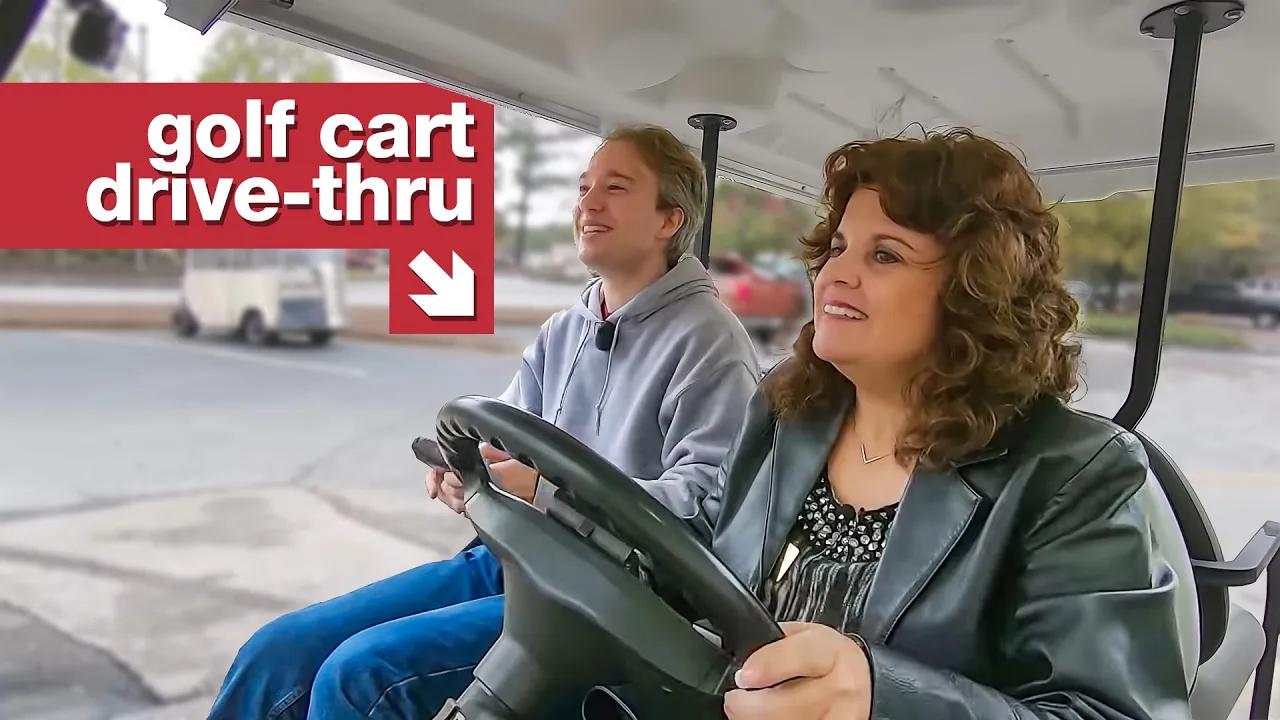
The city of golf carts — Tom Scott

Tom Scott

Other municipalities cannot replicate the model because cart transit demands full network connectivity from day one before residents will invest in vehicles.

AI-assisted summary of The city of golf carts — original source. Check the original for full context.

Source published:

Key ideas

  • Peachtree City, Georgia, maintains a parallel transit system of more than 100 miles of paved paths supporting over 11,000 registered golf carts. (0:00)
  • The municipal cart network includes 29 bridges and 29 tunnels to achieve grade separation from automotive traffic, costing $1.8 million annually to maintain. (3:10)
  • Municipal regulations since the 1970s mandate that developers build cart path extensions in every new residential subdivision, ensuring continuous grid connectivity. (1:32)
  • Replicating the system in existing cities is impeded by network effects, as residents will not purchase carts unless the network already connects to essential destinations. (3:10)

Detailed notes

## Background Published on YouTube by Tom Scott on December 10, 2018, this video explores an unconventional suburban transit solution. The description highlights Peachtree City, Georgia, where over a hundred miles of dedicated golf cart tracks help keep passenger cars off the road in place of traditional public transit.

## TL;DR Peachtree City, Georgia, operates a unique municipal transit network consisting of more than 100 miles of multi-use asphalt paths serving over 11,000 registered golf carts. Guided by Mayor Vanessa Fleisch, Tom Scott investigates how this master-planned community enables everyday errands, school commutes for licensed teenagers, and even drive-thru visits via low-speed vehicles. Founded in 1959, the city mandated path connectivity across new developments since the 1970s, maintaining the grade-separated system with 29 bridges and 29 tunnels at an annual cost of $1.8 million. Scott notes that while other towns envy the setup, retrofitting such infrastructure is nearly impossible due to high costs and the necessity of an established network effect.

## Atmosphere & style The video carries Tom Scott's trademark curious, informative, and lightly humorous tone, blending on-the-ground travelogue with urban planning insights. Riding passenger beside Mayor Fleisch creates a relaxed, conversational rapport as the pair navigate wooded trails, school parking lots, and fast-food drive-thrus. Watching it feels like a charming tour through an alternate suburban reality, punctuated by amusing moments like Scott reacting to the sudden brakes, student cart modifications, and the sudden realization that their cart lacks seat belts.

## Bulletin - [00:00](https://www.youtube.com/watch?v=pcVGqtmd2wM&t=0s) Peachtree City, Georgia, maintains a parallel transit system of more than 100 miles of paved paths supporting over 11,000 registered golf carts. - [03:10](https://www.youtube.com/watch?v=pcVGqtmd2wM&t=190s) The municipal cart network includes 29 bridges and 29 tunnels to achieve grade separation from automotive traffic, costing $1.8 million annually to maintain. - [01:32](https://www.youtube.com/watch?v=pcVGqtmd2wM&t=92s) Municipal regulations since the 1970s mandate that developers build cart path extensions in every new residential subdivision, ensuring continuous grid connectivity. - [03:10](https://www.youtube.com/watch?v=pcVGqtmd2wM&t=190s) Replicating the system in existing cities is impeded by network effects, as residents will not purchase carts unless the network already connects to essential destinations.

## Key takeaways - [00:00](https://www.youtube.com/watch?v=pcVGqtmd2wM&t=0s) Peachtree City operates an extensive parallel infrastructure of 8-to-10-foot-wide asphalt paths accommodating pedestrians, cyclists, and over 11,000 registered golf carts. - [00:00](https://www.youtube.com/watch?v=pcVGqtmd2wM&t=0s) Capped at 20 mph, golf carts serve as a primary transit mode for families and provide teenagers with independent mobility. - [01:32](https://www.youtube.com/watch?v=pcVGqtmd2wM&t=92s) High school sophomores with learner's permits can drive golf carts to school, where the campus features 615 dedicated cart parking spaces. - [01:32](https://www.youtube.com/watch?v=pcVGqtmd2wM&t=92s) Teenagers frequently tamper with or remove factory-installed speed limiters to make their carts travel faster than intended. - [01:32](https://www.youtube.com/watch?v=pcVGqtmd2wM&t=92s) Municipal subdivision ordinances enacted in the 1970s require every new housing development to integrate cart paths into the citywide network. - [01:32](https://www.youtube.com/watch?v=pcVGqtmd2wM&t=92s) Cart infrastructure extends into everyday commerce, permitting cart drivers to run errands and use fast-food drive-thrus. - [01:32](https://www.youtube.com/watch?v=pcVGqtmd2wM&t=92s) The path network is so expansive that out-of-town drivers occasionally mistake the asphalt trails for regular roads and drive full-sized cars onto them. - [03:10](https://www.youtube.com/watch?v=pcVGqtmd2wM&t=190s) The city originated in 1959 as a planned weekend retreat around Lake Peachtree, founded by college student Joel Cowan. - [03:10](https://www.youtube.com/watch?v=pcVGqtmd2wM&t=190s) To keep low-speed carts separated from standard automotive traffic, the city operates 29 bridges and 29 tunnels funded by $1.8 million in annual maintenance. - [03:10](https://www.youtube.com/watch?v=pcVGqtmd2wM&t=190s) Older cities struggle to replicate the model because a partial network fails the network-effect threshold needed to drive widespread cart adoption. - [03:10](https://www.youtube.com/watch?v=pcVGqtmd2wM&t=190s) Despite functioning as road-going daily transport, standard golf carts in the network operate without seat belts.

## Detailed walkthrough ### [00:00](https://www.youtube.com/watch?v=pcVGqtmd2wM&t=0s) A Parallel Road Network for Golf Carts

While most American municipalities rely on standard transit systems like buses, light rail, or trains, Peachtree City, Georgia, has embraced an unconventional alternative: an extensive infrastructure designed primarily for golf carts. Located roughly twenty minutes south of Atlanta, this municipality of approximately 35,000 residents operates a dedicated network of asphalt paths spanning more than 100 miles. These paths, which range from eight to ten feet wide, run parallel to traditional roadways and accommodate pedestrians and cyclists alongside over 11,000 legally registered golf carts. As Mayor Vanessa Fleisch guides Tom Scott along the winding paths, the system behaves just like an ordinary roadway network, requiring drivers to register their vehicles and observe conventional traffic etiquette, such as keeping to the right when passing oncoming traffic.

The network reaches nearly every corner of the community, turning the humble golf cart into a primary means of family logistics and teenage mobility. Parents routinely use the paths to collect their children from school, while high school sophomores who possess a learner's permit are permitted to commute to campus behind the wheel of their own carts. Mayor Fleisch points out that this setup provides young residents with an early taste of independence, noting, “The majority of the city is accessible by carts and that's a huge attraction because parents can pick up their kids at school if they want to.” With vehicle speeds generally capped at twenty miles per hour, the system also minimizes the severity of potential traffic accidents.

- Peachtree City has a population of approximately 35,000 people and is situated roughly 20 minutes south of Atlanta. - The path system includes more than 100 miles of paved asphalt trails measuring between 8 and 10 feet wide. - Over 11,000 golf carts are officially registered with the city. - High school sophomores holding a learner's permit are legally permitted to drive golf carts to school.

```mermaid flowchart TD accTitle: Peachtree City Multimodal Path System accDescr: Diagram illustrating how the multi-use asphalt paths integrate community destinations and user types. subgraph Users["Path Users"] GC["Registered Golf Carts (11,000+)"] PD["Pedestrians & Cyclists"] ST["Students (Learner's Permits)"] end

subgraph Network["100+ Miles of Multi-Use Paths"] TR["Asphalt Paths (8-10 ft wide)"] GR["Grade Separations (29 Bridges & 29 Tunnels)"] end

subgraph Destinations["Key Destinations"] HS["High School (615 Cart Spaces)"] DT["Drive-Thru Dining & Retail"] RE["Residential Subdivisions"] end

Users --> Network Network --> Destinations ```

[01:32](https://www.youtube.com/watch?v=pcVGqtmd2wM&t=92s) High School Commutes, Souped-Up Carts, and Drive-Thrus

The high school showcases the sheer scale of cart adoption, boasting a dedicated parking lot capable of accommodating 615 golf carts. When classes let out, the simultaneous departure of hundreds of teenage drivers creates what Mayor Fleisch admits is a chaotic, gridlocked cart traffic jam that “is not always pretty.” Although the vehicles come equipped with factory-installed speed limiters to keep them at safe speeds, students frequently tamper with or remove them altogether. Mayor Fleisch cautions, “They do, but sometimes they can be removed and they go faster than they should, which isn't good,” to which Tom jokingly confesses that modifying the governor is precisely what he would have done as a fifteen-year-old. Beyond speed modifications, residents frequently customize their carts with aftermarket luxuries like cabin heaters, sound systems, and custom enclosures.

This pervasive cart culture is maintained through strict urban planning regulations initiated in the 1970s. As the city expanded, municipal codes mandated that developers of every new residential subdivision build and integrate cart paths directly into the wider citywide grid at the same time standard streets were laid out. Carts are legally permitted on ordinary city streets only when a dedicated path is absent, prompting the city to continually extend the network to keep low-speed carts separated from standard automotive traffic. The paths are so wide and established that confused out-of-town motorists have occasionally driven full-sized passenger automobiles straight onto the cart trails. Demonstrating the network's integration into everyday commercial life, Mayor Fleisch drives Tom straight through a local McDonald's drive-thru window in their cart, pausing to navigate the vehicle's abrupt, sensitive brakes.

- The local high school provides dedicated parking for 615 golf carts. - Subdivision regulations adopted during the 1970s require all new housing developments to connect directly to the existing path network during construction. - Carts may operate on regular roads only in areas where dedicated paths have not yet been constructed. - Confused visiting drivers in full-sized automobiles occasionally mistake the multi-use trails for regular roads and drive onto them.

[03:10](https://www.youtube.com/watch?v=pcVGqtmd2wM&t=190s) The Origins and Infrastructure of a Purpose-Built Cart Town

Peachtree City was formally founded as a master-planned community in 1959 by Joel Cowan, who laid out and designed the city while still a college student. It originated as a weekend retreat for Atlanta residents centered around Lake Peachtree, an artificial body of water created when Cowan and his cousin constructed a dam and spillway through which 100,000 gallons of water flow every second. As weekenders began driving their golf carts down regular roads after finishing rounds on the golf course, municipal planners realized they needed a segregated trail network specifically to funnel low-speed golf traffic off the thoroughfares and provide a safe route home.

Maintaining this alternative transit grid requires substantial municipal investment. Peachtree City expends approximately $1.8 million annually to maintain the asphalt trails, along with 29 bridges and 29 tunnels that allow cart traffic to cross major automobile roadways without grade conflicts. While other affluent American suburbs often express interest in replicating the concept, Mayor Fleisch explains why older municipalities struggle to adopt the model: “Most mayors when they see or hear about us and they think 'oh, we can do that', well, they've got older cities, so they really can't.”

Tom points out that retrofitting such a system faces a steep network-effect hurdle: building a piecemeal or quarter-finished cart network provides little utility, because residents will not invest in buying carts unless the paths connect their homes to all essential daily destinations. As the journey concludes, Tom makes one final, startled observation about the city's beloved mode of transport: the golf cart they have been riding has no seat belts installed.

- Peachtree City was established in 1959 by founder Joel Cowan when he was a college student. - Lake Peachtree was created by a dam and spillway engineered by Cowan and his cousin, carrying roughly 100,000 gallons of water per second. - Annual maintenance for the path network costs the city $1.8 million, funded by municipal tax revenues. - The path system incorporates 29 bridges and 29 tunnels to achieve complete grade separation from standard street traffic.

## Notable quotes > [00:00](https://www.youtube.com/watch?v=pcVGqtmd2wM&t=0s) The majority of the city is accessible by carts and that's a huge attraction because parents can pick up their kids at school if they want to. — Vanessa Fleisch

## Mentioned Tom Scott, Vanessa Fleisch, Joel Cowan, Titan Miller, Michelle Martin, Peachtree City, Georgia, Atlanta, Lake Peachtree, McDonald's

## Video description Some American cities use buses, or trams, or trains. Peachtree City, Georgia, has a different solution: it's not quite public transit, but a hundred miles of golf cart tracks helps to keep cars off the road.

More about Peachtree City: https://www.peachtree-city.org/ and https://visitpeachtreecity.com

Edited by Michelle Martin https://www.youtube.com/@OnTheCrux With thanks to Titan Miller for emailing me the idea, back in 2017!

🟥 MORE FROM TOM: https://www.tomscott.com/ (you can find contact details and social links there too) ❓ LATERAL, free weekly podcast: https://lateralcast.com/ https://youtube.com/lateralcast/ 👥 THE TECHNICAL DIFFICULTIES: https://youtube.com/techdif

[Source](https://www.youtube.com/watch?v=pcVGqtmd2wM)

中文简报

桃树城以百英里高尔夫球车路网替代传统公交 其他市政机构难以复制该模式,因为球车交通系统必须从一开始就具备完整的网络连通性,居民才愿意购置车辆。 佐治亚州桃树城运营着一套独特的市政交通网络,拥有超过100英里的多用途沥青步道,服务于11,000多辆注册高尔夫球车。在市长瓦妮莎·弗莱施的带领下,汤姆·斯科特调查了该总体规划社区如何借助低速车辆满足日常出行、持有驾照青少年的通学,乃至汽车穿梭餐厅的点餐需求。该市成立于1959年,自20世纪70年代起便强制要求所有新开发项目必须接入步道网络,并通过29座桥梁和29条隧道维持立体交叉系统,年均维护成本为180万美元。斯科特指出,尽管其他城镇对此羡慕不已,但由于改造成本高昂且必须具备成熟的网络效应,后期改造此类基础设施几乎是不可能的。 佐治亚州桃树城维护着一套超过100英里的铺砌步道平行交通系统,为11,000多辆注册高尔夫球车提供支持。 (0:00) 该市政球车网络包含29座桥梁和29条隧道,以实现与汽车交通的立体分流,每年维护费用为180万美元。 (3:10) 自20世纪70年代以来的市政法规强制要求开发商在每个新建住宅小区修建球车道延伸段,以确保路网的持续连通。 (1:32) 由于网络效应的制约,现有城市复制该系统困难重重,因为除非网络已经连通至重要目的地,否则居民不会购买高尔夫球车。 (3:10)

Reading summary

Peachtree City, Georgia, operates a 100-mile parallel network of multi-use asphalt paths that allows over 11,000 registered golf carts to function as a primary mode of municipal transportation for families and students. Daily Transit and Youth Independence (0:00) Across Peachtree City, a community of approximately 35,000 residents located south of Atlanta, golf carts function as the primary vehicle for everyday logistics rather than mere recreation. Over 11,000 registered carts share more than 100 miles of eight-to-ten-foot-wide paved paths with cyclists and pedestrians, governed by standard road etiquette and a 20-mile-per-hour speed ceiling intended to limit severe accidents. The system significantly impacts teenage mobility: high school sophomores with learner's permits can legally drive carts to school, where the campus provides dedicated parking for 615 carts. Mayor Vanessa Fleisch notes that the cart network provides young residents with early autonomy and eases school pickups, though end-of-day departures produce noticeable cart traffic jams. Residents frequently adapt their vehicles for all-weather and commercial utility, adding aftermarket heaters, sound systems, and enclosures, while using the trail system to access retail drive-thrus. Planning Mandates and Historical Origins (1:32) The cart network originated shortly after Peachtree City was founded in 1959 as a planned retreat around Lake Peachtree by college student Joel Cowan and his cousin, who built a dam and spillway discharging 100,000 gallons of water per second. When weekend visitors began driving golf carts directly onto standard roads from local courses, planners recognized the necessity of segregated corridors to keep slow vehicles separated from automotive traffic. To institutionalize this transit model as the city grew, municipal regulations adopted in the 1970s mandated that developers construct and link cart paths to the citywide grid whenever establishing new residential subdivisions. Carts are restricted to designated paths and are only permitted on standard streets where paths have not yet been built. The multi-use trails are so wide and established that visiting motorists occasionally mistake them for regular streets and mistakenly drive full-sized automobiles onto the paths. Infrastructure Costs and Replication Challenges (3:10) Sustaining the alternative network requires substantial ongoing investment. Peachtree City allocates roughly $1.8 million annually in municipal tax revenue to maintain its asphalt paths, alongside 29 bridges and 29 tunnels built to provide complete grade separation from major automotive roadways. Mayor Fleisch explains that despite widespread interest from other suburban leaders, older municipalities face severe physical constraints that prevent retrofitting similar grids. Furthermore, Tom Scott highlights a steep network-effect barrier: a partially constructed path network offers little utility to commuters, meaning residents will not invest in golf carts unless the system connects homes to all essential destinations. Scott also observes that despite their routine use for high school commutes and daily transit, the vehicles operate without seat belts. Peachtree City illustrates how low-speed, lightweight electric vehicles can supplant automobile trips in suburban settings, but its success relies on decades of mandatory subdivision integration, comprehensive grade separation, and a mature network effect that older, already-built municipalities cannot easily duplicate.

精炼阅读摘要

美国佐治亚州皮奇特里市(Peachtree City)依托一条超过100英里的专用沥青路径网络,将高尔夫球车转变为服务全市的主导交通工具,形成了一套与传统汽车路网平行、高度融入日常生活的低速慢行体系。 专用路网与全城代步体系 (0:00) 皮奇特里市位于亚特兰大以南约20分钟车程处,常住人口约3.5万人,拥有超过1.1万辆合法注册的高尔夫球车。该市并未依赖公交或轨道交通,而是铺设了总长超100英里、宽度在8至10英尺之间的沥青专用道路。这些慢行道与传统公路平行,除球车外也允许行人和自行车通行。车辆在网络中需遵守靠右通行等常规交规,最高行驶时速通常限制在20英里以内,从而大幅降低了潜在交通事故的严重程度。 该网络深度渗透至全城的家庭物流中,成为居民接送学生与青少年独立出行的主要途径。持有学习驾照的高中二年级学生被允许自行驾驶球车通勤。时任市长瓦妮莎·弗莱施(Vanessa Fleisch)指出,全城绝大部分区域均可通过球车抵达,这种极高的通达性使球车成为接送孩子和培养年轻人独立性的核心工具。 校园文化、商业场景与规划约束 (1:32) 高尔夫球车在当地衍生出独特的社区与校园文化。当地高中专门配置了拥有615个球车车位的停车场,放学高峰期常出现由球车构成的密集交通拥堵。部分学生会私自改装或拆除车辆出厂自带的限速装置以提高车速,居民也普遍为车辆选装车厢暖气、高级音响及定制外罩等改装配件。商业配套同样适配了这一出行习惯,球车可以直接驶入麦当劳等商户的得来速窗口进行消费。 这一生态的长期维系得益于严格的市政规划法规。自20世纪70年代起,该市法规强制要求所有新建住宅小区在施工时必须将球车道接入全市主网。法律仅允许球车在尚未修建专用道的部分常规街道上临时行驶。由于球车道规整宽阔,外地到访的传统汽车驾驶员偶尔会误将其当作机动车道驶入。 规划起源、立体基建与网络壁垒 (3:10) 皮奇特里市由乔尔·考恩(Joel Cowan)于1959年在其大学时期规划建立,最初围绕人工修建的皮奇特里湖作为周末度假胜地运营。随着早期的度假者打完高尔夫球后频繁驾驶球车直接驶上公路,规划部门决定专门铺设物理隔离路径以分流低速车辆。为了实现与主要机动车道的完全立体交叉,该系统修建了29座桥梁与29座隧道,每年需由市政税收支出约180万美元的维护费用。 弗莱施市长与主持人汤姆·斯科特(Tom Scott)讨论认为,由于老旧城市普遍缺乏充裕的空间规划,此类模式难以直接复制。低速路网具备显著的网络效应门槛:若无法从一开始就实现住宅与所有核心目的地的全面闭环连接,零散的路径很难驱动居民普遍购置球车。此外,当地行驶的高尔夫球车普遍未配备安全带。 皮奇特里市证明了微型低速车辆替代传统郊区机动车出行的可行性,但该模式极度依赖始于规划初期的土地预留、巨额的立体交叉维护投入以及高密度的路网覆盖;由于存在高昂的改造成本与网络效应门槛,传统既有城市很难低成本复制这一体系。

Detailed notes — zh

## Background 该视频由知名科普创作者 Tom Scott 于 2018 年 12 月 10 日发布在 YouTube 平台上。视频简介指出,与依赖公共汽车、有轨电车或火车的传统美国城市不同,佐治亚州皮奇特里市另辟蹊径,通过建设长达一百英里的高尔夫球车道网,成功分流了机动车道上的汽车流量。 ## TL;DR 在佐治亚州皮奇特里市,高尔夫球车取代汽车成为了居民的日常核心代步工具,市内不仅拥有超过 1.1 万辆球车,还铺设了逾 100 英里与常规公路平行的专用沥青路网。从拥有 615 个球车位的高中校园到麦当劳的免下车点餐通道,整座城市的公共服务与商业设施均被无缝串联。这套体系始于 1959 年从零起步的科学规划,并通过严苛的城市建设法规持续扩建,每年耗资 180 万美元维护桥隧;其强大的“网络效应”与独特的空间历史条件,也使其成为其他传统成熟城市几乎无法后天复制的交通奇迹。 ## Atmosphere & style 视频基调轻快幽默且充满好奇心,Tom Scott 标志性的英式机智与皮奇特里市长热情从容的东道主姿态相映成趣。伴随着在微风中穿行林间小径、排队驶入免下车点餐通道的日常镜头,观众能切身体会到一种将度假玩具融入严肃市政的奇妙反差感。整部短片在轻松诙谐的现场体验与深刻透彻的城市规划机理分析之间自如切换,兼具趣味性与认知启发性。 ## Bulletin - [00:00](https://www.youtube.com/watch?v=pcVGqtmd2wM&t=0s) 佐治亚州皮奇特里市构建了长达 100 多英里的沥青专用道网络,支撑市内超过 1.1 万辆注册高尔夫球车作为日常核心出行工具。 - [01:32](https://www.youtube.com/watch?v=pcVGqtmd2wM&t=92s) 当地从 1970 年代起通过法规强制要求所有新建住宅分区必须无缝接入市政球车路网,高中校园甚至配备了多达 615 个球车专用车位。 - [03:10](https://www.youtube.com/watch?v=pcVGqtmd2wM&t=190s) 维护这套包含 29 座桥梁和 29 条隧道的独立系统每年需耗费 180 万美元纳税人预算,其高门槛与网络效应使得传统旧城市极难后天复制。 ## Key takeaways - [00:00](https://www.youtube.com/watch?v=pcVGqtmd2wM&t=0s) 皮奇特里市拥有约 3.5 万人口,建立了一套与普通公路平行、总长超 100 英里且宽 8 至 10 英尺的独立高尔夫球车沥青路网。 - [00:00](https://www.youtube.com/watch?v=pcVGqtmd2wM&t=0s) 市内登记的高尔夫球车超 1.1 万辆,行驶遵循右侧通行等标准交规,限速约每小时 20 英里,大幅降低了严重交通事故率。 - [00:00](https://www.youtube.com/watch?v=pcVGqtmd2wM&t=0s) 高尔夫球车深入融入当地生活骨干,家长可用其接送学生,持初学者驾照的高中低年级学生亦可合法驾车上下学。 - [01:32](https://www.youtube.com/watch?v=pcVGqtmd2wM&t=92s) 当地高中专设 615 个球车车位,放学高峰期常出现球车大拥堵,不少学生还会违规拆除出厂限速器以提升车速。 - [01:32](https://www.youtube.com/watch?v=pcVGqtmd2wM&t=92s) 居民将高尔夫球车视为微型汽车,常加装暖风机、音响等豪华配置,球车甚至可直接驶入麦当劳的免下车点餐通道。 - [01:32](https://www.youtube.com/watch?v=pcVGqtmd2wM&t=92s) 自 1970 年代起当地立法确立城市规划硬性指标,强制要求所有新建社区开发商必须将内部小道无缝接入城市主干网。 - [03:10](https://www.youtube.com/watch?v=pcVGqtmd2wM&t=190s) 该体系源于 1959 年大学生乔尔·考恩的度假区规划,为避免打完球的居民在机动车道上慢速晃荡才顺势修建专用道实行人车分流。 - [03:10](https://www.youtube.com/watch?v=pcVGqtmd2wM&t=190s) 市政每年投入高达 180 万美元维系该系统,基础设施包含 29 座跨线桥梁与 29 条下穿隧道。 - [03:10](https://www.youtube.com/watch?v=pcVGqtmd2wM&t=190s) 这套系统依赖强大的网络效应,只有实现全域完整连通市民才会购买并使用球车,空间格局已固化的传统城市几乎无法后天复刻。 - [03:10](https://www.youtube.com/watch?v=pcVGqtmd2wM&t=190s) 出于日常低速代步的定位,当地行驶的常规高尔夫球车按规定普遍不配备传统汽车的安全带。 ## Detailed walkthrough ### [00:00](https://www.youtube.com/watch?v=pcVGqtmd2wM&t=0s) 高尔夫球车之城与平行的路网系统 许多美国城市依赖公共汽车、有轨电车或通勤火车来运转,但在佐治亚州,有一座城市却走出了一条极为罕见的路线——以高尔夫球车作为日常核心出行工具。皮奇特里市(Peachtree City)市长瓦内萨·弗莱施(Vanessa Fleisch)介绍,该市坐落于亚特兰大以南约 20 分钟车程处,是一座拥有约 3.5 万人口的精致小城。整座城市铺设了超过 100 英里(约 160 公里)的专用沥青小径,路宽从 8 英尺到 10 英尺不等。尽管小径上也允许行人和骑自行车者通行,但它们绝大多数时候是被高尔夫球车占据;目前该市注册登记的高尔夫球车已超过 1.1 万辆。 行驶在这套系统上需要遵守与普通公路类似的交通规则,例如所有车辆一律靠右行驶、靠右让行超车。Tom Scott 形象地将其概括为一个与机动车道平行的独立路网系统。对居民而言,高尔夫球车不仅是一种消遣,更是日常生活的骨干支撑:整座城市的大部分核心设施均可通过球车直达,家长们习惯开着球车去学校接孩子放学,甚至高中的低年级学生在考取初学者驾照(learner's permit)后,也可以合法开着球车独立上学。这种专属的出行自由深受年轻人喜爱,而大约每小时 20 英里的限速,也大幅降低了严重交通事故的风险。 谈及这套基础设施为何能融入市民生活并成为核心吸引力时,瓦内萨·弗莱施市长解释道:“The majority of the city is accessible by carts and that's a huge attraction because parents can pick up their kids at school if they want to.” - 地理与规模:位于亚特兰大以南约 20 分钟车程,常住人口约 35,000 人。 - 基础设施规格:拥有超过 100 英里(约 160 公里)的沥青专用道,宽度在 8 至 10 英尺(约 2.4 至 3 米)之间。 - 车辆规模:市内注册登记的高尔夫球车超过 11,000 辆,车主依法必须向市政登记备案。 - 通行规则:遵循右侧通行法则,车速普遍限制在约 20 英里/小时(约 32 公里/小时)。 --- ### [01:32](https://www.youtube.com/watch?v=pcVGqtmd2wM&t=92s) 高中车位、改装文化与开进麦当劳的点餐通道 随着两人乘车来到当地的高中,眼前的一幕令人惊叹:单是这所高中就专门规划了多达 615 个高尔夫球车停车位。每逢放学时分,数百辆小车同一时间驶离校园,场面极易演变成一场颇为壮观但也令人头疼的“高尔夫球车大堵车”。虽然球车出厂时都装有限速器,但许多高中生会私自将其拆除以提高车速,Tom 对此打趣道,如果自己在 15 岁时能拥有一辆高尔夫球车,也绝对会干出拆限速器这种事。除了速度改装,居民们还会给爱车加装车载暖风机、音响广播等豪华配置,完全将其当作微型汽车来打造。 这套体系并非一蹴而就,而是在半个世纪中通过法规逐步固化下来的。自 1970 年代高尔夫球车风靡全城后,当地出台了严格的城市规划硬性指标:任何新建的住宅分区,开发商都必须负责将小区内的小径接入城市主干网;绝大多数情况下,球车道在规划之初就与机动车道路同步设计铺设。若某些路段确实缺少专用道,法规允许球车驶上常规机动车道,但市政府一直在通过扩建小径尽力避免这种混行情况。市长甚至提到,过去有些不熟悉情况的外地访客,甚至会误把真正的汽车开上狭窄的球车道。随后,市长带 Tom 开车穿过了麦当劳的 Drive-thru(免下车点餐通道),Tom 坐在球车里排队点餐时显得格外兴奋,还不忘声明这绝非商业广告植入,并调侃球车的刹车性能突兀而灵敏。 在谈到放学时校门口数以百计的球车蜂拥而出的混乱场面时,瓦内萨·弗莱施市长坦言:“It is a traffic jam of golf carts and it's not always pretty.” - 校园配置:当地高中建有整整 615 个高尔夫球车专属停车位。 - 规划法令:自 1970 年代起,新建住宅小区被法律强制要求无缝接入城市球车路网。 - 改装与混行:居民常加装收暖气、音响等设备;偶尔会有外地机动车误驶入专用道。 --- ### [03:10](https://www.youtube.com/watch?v=pcVGqtmd2wM&t=190s) 规划起源、维护成本与“不可复制”的网络效应 皮奇特里市之所以能拥有全美独一无二的球车生态,根源在于其独特的规划历史。该市由乔尔·考恩(Joel Cowan)于 1959 年规划创立,令人称奇的是,考恩当时还只是一名在校大学生。最初,这里被定位为亚特兰大富裕居民的周末湖滨度假区;前来度假的人们打完高尔夫球后,往往直接开着球车在机动车道上晃晃悠悠地回家。为了将这些慢速小车彻底从小汽车道上分流出去,市政才顺势修建了专用的独立路网。两人乘车途经考恩与其表亲当年筑坝蓄水形成的皮奇特里湖(Lake Peachtree),奔涌的溢洪道每秒倾泻下 10 万加仑的湖水,沿途风景优美,Tom 途中甚至一度被湖里的鸭子吸引了注意力。 维护这样一套独立的交通帝国代价不菲。皮奇特里市每年仅用于日常维护路网、29 座跨线桥梁以及 29 条下穿隧道的预算就高达 180 万美元,全由当地居民纳税支撑。许多外地市长来访考察后,往往会萌生在自己辖区复刻一套的想法,但弗莱施市长指出,绝大多数传统城市历史悠久、空间固化,根本无法进行这种后天改造。Tom Scott 进一步总结道,这本质上是一个巨大的“网络效应”问题:一个只建了四分之一的路网没有任何意义,因为如果路网无法带你去往任何想去的地方,市民就不会买车,更不会放弃开汽车;只有像皮奇特里市这样从零开始完整规划、彻底打通全境,整套系统才能良性运转。行程尾声,Tom 突然意识到自己乘坐的高尔夫球车竟然连安全带都没有,市长微笑着淡定确认了这一点。 ```mermaid flowchart TD accTitle: 皮奇特里市高尔夫球车路网形成与维系机制 accDescr: 展示从1959年度假社区演进到全市高尔夫球车独立专用道网络的闭环过程 subgraph Origin ["历史起源 (1959)"] A["周末湖畔度假地"] --> B["居民打完球后直接将球车开上公路"] B --> C["为了人车分流修建独立小道"] end subgraph Expansion ["制度保障与扩展 (1970年代起)"] C --> D["法规强制新建小区连入车道网"] D --> E["机动车道路与球车道同步铺设"] end subgraph NetworkEffect ["网络效应与高门槛壁垒"] E --> F["覆盖全域的无缝连接网络"] F --> G["每年180万美元专项维护<br/>(含29座桥梁与29条隧道)"] G --> H["老旧城市受空间限制无法后天复制"] end ``` 谈及其他城市的市长为何无法复制这一奇迹时,瓦内萨·弗莱施市长直言:“Most mayors when they see or hear about us and they think 'oh, we can do that', well, they've got older cities, so they really can't.” Tom Scott 则从系统完整性的角度给出了精辟的论断:“You can't have a quarter of a cart network because no one will buy a cart and no one will use it. You need to connect everything or it's not worth it.” - 创立历史:1959 年由大学生乔尔·考恩(Joel Cowan)规划创立,皮奇特里湖溢洪道每秒泄洪量达 100,000 加仑。 - 维护成本:全市每年投入 180 万美元用于路网维护,基础设施包含 29 座桥梁和 29 条专用隧道。 - 安全细节:车道上的常规高尔夫球车按规定通常不配备汽车常用的安全带。 ## Notable quotes > [03:10](https://www.youtube.com/watch?v=pcVGqtmd2wM&t=190s) You can't have a quarter of a cart network because no one will buy a cart and no one will use it. You need to connect everything or it's not worth it. — Tom Scott > [03:10](https://www.youtube.com/watch?v=pcVGqtmd2wM&t=190s) Most mayors when they see or hear about us and they think 'oh, we can do that', well, they've got older cities, so they really can't. — 瓦内萨·弗莱施 ## Mentioned 皮奇特里市, 瓦内萨·弗莱施, Tom Scott, 乔尔·考恩, 皮奇特里湖, 麦当劳, 亚特兰大, 佐治亚州 ## Video description Some American cities use buses, or trams, or trains. Peachtree City, Georgia, has a different solution: it's not quite public transit, but a hundred miles of golf cart tracks helps to keep cars off the road. More about Peachtree City: https://www.peachtree-city.org/ and https://visitpeachtreecity.com Edited by Michelle Martin https://www.youtube.com/@OnTheCrux With thanks to Titan Miller for emailing me the idea, back in 2017! 🟥 MORE FROM TOM: https://www.tomscott.com/ (you can find contact details and social links there too) ❓ LATERAL, free weekly podcast: https://lateralcast.com/ https://youtube.com/lateralcast/ 👥 THE TECHNICAL DIFFICULTIES: https://youtube.com/techdif [Source](https://www.youtube.com/watch?v=pcVGqtmd2wM)

Source quotes

[3:10] Tom Scott: You can't have a quarter of a cart network because no one will buy a cart and no one will use it. You need to connect everything or it's not worth it. [3:10] 瓦内萨·弗莱施: Most mayors when they see or hear about us and they think 'oh, we can do that', well, they've got older cities, so they really can't.

Source quotes

[0:00] Vanessa Fleisch: The majority of the city is accessible by carts and that's a huge attraction because parents can pick up their kids at school if they want to.

Original transcript

[0:00] Some American cities have buses. [0:02] Some use trams and trains. And there's one... [0:06] that uses golf carts. [0:09] - My name is Vanessa Fleisch [0:11] and I am the mayor of Peachtree City, Georgia. [0:14] It's a small city of about 35,000 people that is about 20 minutes south of Atlanta. [0:21] It's asphalt paths, we have over 100 miles of them. [0:24] They range from 8 feet to 10 feet wide in some places. [0:30] They're used for golf carts mostly. [0:33] We have over 11,000 registered golf carts in the city. [0:38] Obviously, pedestrians, bicyclists, all kinds of traffic is on these paths. [0:43] Morning! [0:45] - You do have to register them? - Yes, you do. [0:48] The people in the city do register them. [0:50] - There's someone else approaching us now. I assume it's like regular roads. [0:54] You pass on the right and... [0:55] - Correct. - Yeah? [0:56] - Yeah. - It's a parallel road network, basically. [0:59] - The majority of the city is accessible by carts [1:03] and that's a huge attraction because parents [1:06] can pick up their kids at school if they want to. [1:09] - And some of the kids can drive themselves? [1:12] - Yes, the younger kids or the sophomores at the local high schools are allowed [1:19] with their learner's permit to drive their carts to school. [1:23] - Wow. [1:23] - It's a bit of freedom that they enjoy. [1:27] - And I guess if it's limited to 20 miles an hour, [1:28] there's less of a chance of a bad bump. [1:32] So, this is the high school. [1:33] - This is. [1:34] There's parking at the high school for 615 carts. [1:40] - That is a lot of golf carts. Do all the students leave at once here? [1:44] Is it just a traffic jam of golf carts? [1:46] - It is a traffic jam of golf carts and it's not always pretty. [1:50] - Some of them have a limiter? [1:51] - They do, but sometimes they can be removed [1:53] and they go faster than they should, which isn't good. [1:58] - No, that's exactly what I'd have done at age 15 with my own golf cart. [2:01] I would have removed the limiter on it. [2:02] - Some of the carts have heaters inside them and radios. [2:06] You can soup them up as much as you want really. [2:09] After they saw the popularity in the '70s what they did [2:13] was they required, whenever there was a new subdivision of houses built, [2:18] that they connected the paths. [2:21] For the most part, the cart paths are laid out [2:25] at the same time they lay out the roads. [2:27] - So, what are the road rules here? [2:28] It's like you're in a regular vehicle, [2:29] you've just got more paths that you can go on? [2:31] - Yes, and if there is no path, [2:34] you are allowed to be on the road, but that's why [2:36] we've expanded the paths because we're trying [2:39] to keep people off of them as much as possible. [2:42] Sometimes people who have never been here have been caught [2:46] on cart paths with their cars [2:48] thinking that that's the right thing to do. - Wow! [2:52] - I wanted to take you through a drive-thru. So up here is McDonald's. [2:55] - I'm still getting over the fact that I'm in a drive-thru in a golf cart! [2:59] - Thank you. [3:00] - Should point out, not sponsored. This is not product placement. [3:04] - The brakes on this are very good. I'm sorry, it's very abrupt on them. [3:08] - Better than the alternative. [3:10] Peachtree City was a planned community, right? [3:12] - Correct. [3:14] - How did it go from "we're gonna build some houses here" [3:16] to we're gonna have something that [3:18] that I don't think any other city in America has? [3:20] - It got started originally as a lake retreat for Atlanta residents. [3:28] And the people who were here, basically only on the weekends, [3:32] they started taking their golf carts on the roads leaving from playing golf. [3:39] This whole separate network came up as a result of that [3:44] to get them off the roads on their way home. [3:47] - So, this was founded in the 1950s. [3:50] - 1959 by Joel Cowan. [3:52] He was a college student when he designed and founded this city. [3:59] - Wow. - It's very quiet... [4:03] See what I mean? [4:07] - Death wish, good grief! [4:08] - Along here, this is Lake Peachtree-- [4:12] - Sorry, I got distracted by ducks. [4:14] - The Founder, Mr. Cowan and his cousin were the ones [4:18] that put up the dam and spillway originally [4:21] that made this lake. [4:22] 100,000 gallons a second goes over this. [4:28] People do pay taxes to pay towards these roads. [4:32] It costs us $1.8 million a year to maintain what we have [4:37] as well as the 29 bridges and 29 tunnels. [4:40] - This is a pretty affluent city, which I guess is one [4:42] of the reasons that the golf cart paths work, [4:45] but there are a lot of cities like that in America [4:49] and I'm trying to work out why it's worked here [4:53] and it hasn't elsewhere. [4:55] - Most mayors when they see or hear about us and they think [4:59] "oh, we can do that", well, they've got older cities, [5:04] so they really can't. [5:06] - And I guess part of it is cost. [5:08] Part of it is you need a huge amount of upkeep and tax [5:12] and everything to make this work, but it's also because [5:15] you need to set the whole thing up or it doesn't work. [5:20] You can't have a quarter of a cart network [5:22] because no one will buy a cart and no one will use it. [5:24] You need to connect everything or it's not worth it. [5:28] - Right. [5:31] - Lovely! Thank you very much. [5:32] - Thank you. [5:33] - You can find out more about Peachtree City in the links in the description. [5:45] I've just realised there's no seat belts on this. [5:47] - No.