Amazon Backer Hanauer Urges Minimum-Wage Hikes to Avert Revolt
TED
Unchecked inequality will trigger violent uprisings unless democracies mandate higher wages to fuel the middle-class purchasing power that sustains capitalism.
AI-assisted summary of Beware, fellow plutocrats, the pitchforks are coming | Nick Hanauer — original source. Check the original for full context.
Source published:
Key ideas
- Nick Hanauer warns fellow plutocrats that historic income inequality threatens to transform the United States into a pre-revolutionary French neo-feudal society, risking widespread social uprising. (2:38)
- Between 1980 and the 2010s, the top 1% income share surged from ~8% to over 20%, while the bottom 50% dropped to 12%-13%, heading toward 30% and 6% respectively under current trajectories. (2:38)
- Advocating for 'middle-out economics,' Hanauer argues that a thriving middle class and living wages drive aggregate demand, debunking trickle-down claims that higher wages destroy jobs. (5:15)
- Seattle passed a $15 minimum wage ordinance within 350 days of Hanauer's 2013 Bloomberg op-ed, demonstrating the viability of policy-driven wage increases in high-growth economies. (8:08)
Detailed notes
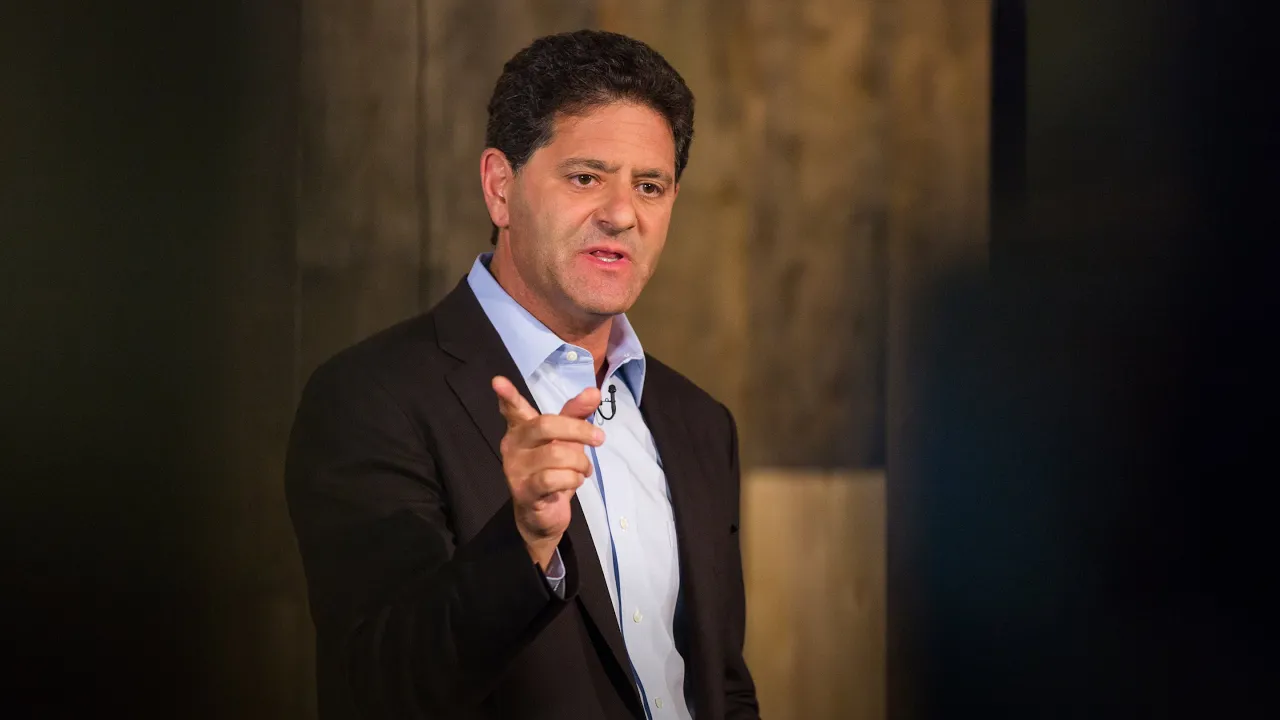
## Background Published by the TED channel on YouTube on August 12, 2014, this talk features unapologetic venture capitalist Nick Hanauer issuing an urgent wake-up call to his fellow plutocrats. According to the page description, Hanauer warns that surging inequality threatens to recreate the conditions of pre-revolutionary France, arguing that raising the minimum wage can rebuild the middle class and stave off a violent social uprising.
## TL;DR Venture capitalist Nick Hanauer addresses the top 0.01 percent, arguing that extreme wealth concentration is economically self-defeating and heading toward social revolt. He dismantles orthodox trickle-down theory, explaining that rich plutocrats cannot consume enough goods to sustain aggregate demand on their own. Citing Henry Ford's $5-a-day wage and Seattle's successful passage of a $15 minimum wage, Hanauer advocates for 'middle-out economics'—a framework where well-paid workers provide the customer base that drives hiring, innovation, and corporate profits. Ultimately, he urges elites to embrace inclusive capitalism and support working-class prosperity before popular rage culminates in pitchforks outside their gates.
## Atmosphere & style The presentation carries the candid, insider urgency of an ultra-wealthy elite blowing the whistle on his own social class. Hanauer's delivery blends wry, self-effacing humor about his own lifestyle and modest academic record with sharp, cutting assessments of orthodox economic dogma. The mood transitions steadily from an ironic, conversational confession into an escalating, hard-headed warning, making the talk feel less like a dry academic seminar and more like an emergency intervention among billionaire peers.
## Bulletin - [02:38](https://www.youtube.com/watch?v=q2gO4DKVpa8&t=158s) Nick Hanauer warns fellow plutocrats that historic income inequality threatens to transform the United States into a pre-revolutionary French neo-feudal society, risking widespread social uprising. - [02:38](https://www.youtube.com/watch?v=q2gO4DKVpa8&t=158s) Between 1980 and the 2010s, the top 1% income share surged from ~8% to over 20%, while the bottom 50% dropped to 12%-13%, heading toward 30% and 6% respectively under current trajectories. - [05:15](https://www.youtube.com/watch?v=q2gO4DKVpa8&t=315s) Advocating for 'middle-out economics,' Hanauer argues that a thriving middle class and living wages drive aggregate demand, debunking trickle-down claims that higher wages destroy jobs. - [08:08](https://www.youtube.com/watch?v=q2gO4DKVpa8&t=488s) Seattle passed a $15 minimum wage ordinance within 350 days of Hanauer's 2013 Bloomberg op-ed, demonstrating the viability of policy-driven wage increases in high-growth economies.
## Key takeaways - [00:13](https://www.youtube.com/watch?v=q2gO4DKVpa8&t=13s) Hanauer attributes his immense wealth not to superior intellect or effort, but to luck, risk tolerance, and an intuition for future shifts. - [02:38](https://www.youtube.com/watch?v=q2gO4DKVpa8&t=158s) Extreme income inequality in the U.S. mirrors pre-revolutionary France, leading inevitably toward civil unrest or a police state if left uncorrected. - [05:15](https://www.youtube.com/watch?v=q2gO4DKVpa8&t=315s) Capitalism functions as a complex, adaptive evolutionary ecosystem rather than an efficient, self-correcting machine in natural equilibrium. - [05:15](https://www.youtube.com/watch?v=q2gO4DKVpa8&t=315s) Henry Ford's $5-a-day wage established a virtuous feedback loop by turning factory workers into middle-class consumers capable of buying products. - [05:15](https://www.youtube.com/watch?v=q2gO4DKVpa8&t=315s) Economic prosperity represents the sum total of solutions to human problems, requiring wide participation rather than narrow wealth hoarding. - [08:08](https://www.youtube.com/watch?v=q2gO4DKVpa8&t=488s) The rich cannot personally drive an economy because high earners do not consume proportionally more everyday goods than average citizens. - [08:08](https://www.youtube.com/watch?v=q2gO4DKVpa8&t=488s) The push for a $15 minimum wage transitioned from a mocked proposal in Forbes to Seattle city law in roughly 350 days. - [08:08](https://www.youtube.com/watch?v=q2gO4DKVpa8&t=488s) Skyrocketing executive compensation from 30x to over 500x the median wage since 1980 contradicts claims that paying labor more inevitably eliminates positions. - [13:28](https://www.youtube.com/watch?v=q2gO4DKVpa8&t=808s) Real-world evidence from Washington state proved that high baseline and tipped minimum wages were compatible with rapid job creation and booming restaurant sectors. - [13:28](https://www.youtube.com/watch?v=q2gO4DKVpa8&t=808s) The foundational law of capitalism states that when workers have more money, businesses gain more customers and hire more employees. - [15:43](https://www.youtube.com/watch?v=q2gO4DKVpa8&t=943s) The structural function of democratic government is to manage the inherent tendency of complex market systems to drift toward inequality and collapse. - [18:02](https://www.youtube.com/watch?v=q2gO4DKVpa8&t=1082s) Orthodox economic theories often serve as ideological narratives designed to morally justify prevailing elite status and power hierarchies. - [18:02](https://www.youtube.com/watch?v=q2gO4DKVpa8&t=1082s) A thriving middle class is the primary cause of prosperity in capitalist economies rather than a fortunate byproduct of wealthy patrons.
## Detailed walkthrough ### [00:13](https://www.youtube.com/watch?v=q2gO4DKVpa8&t=13s) The Confessions of a Plutocrat
Nick Hanauer introduces himself not as an academic or a politician, but as a member of the top 0.01 percent—an unapologetic capitalist and, by any reasonable definition, a plutocrat. Addressing his fellow oligarchs directly, he explains that it is time for them to have a candid conversation. Hanauer has founded, co-founded, or funded over 30 businesses across diverse industries: he was the first non-family outside investor in Amazon, co-founded aQuantive (which sold to Microsoft for $6.4 billion), and even owns a bank alongside his friends. He readily acknowledges that this capitalist journey has rewarded him obscenely, providing a lifestyle complete with multiple homes, a private plane, and a yacht.
Yet Hanauer insists that his astronomical wealth is not the product of superior intellect or outsized effort. He openly admits he was merely a mediocre student, has zero technical expertise, and cannot write a single line of software code. Instead, he credits his fortune to extraordinary luck—of birth, circumstance, and timing—coupled with an exceptionally high tolerance for risk and a keen intuition about future shifts. Looking ahead today, however, his foresight reveals a dark forecast: he sees pitchforks, carried by angry mobs targeting the wealthy elite as the gap between the richest citizens and everyone else grows untenable.
- **Investments & ventures**: First non-family investor in Amazon.com; co-founder of aQuantive (sold to Microsoft for $6.4 billion); co-owner of a bank; funded or founded 30+ companies. - **Self-assessment**: Not the hardest-working or smartest; mediocre student; non-technical; success driven by luck, risk tolerance, and future intuition.
---
[02:38](https://www.youtube.com/watch?v=q2gO4DKVpa8&t=158s) The Imbalance: From Democracy to Neo-Feudalism
Hanauer charts the dramatic concentration of American wealth over recent decades to demonstrate why popular rage is mounting. In 1980, the top 1% captured around 8% of national income, while the bottom 50% accounted for 18%. Three decades later, the top 1% claims more than 20%, whereas the bottom 50% has dropped to 12% or 13%. If current trends persist for another 30 years, the top 1% will monopolize over 30% of the national income, leaving the bottom half of the country with a meager 6%. While Hanauer emphasizes that some inequality is necessary for a capitalist democracy to function, the current historic extremes threaten to collapse the system entirely, transforming the United States into an 18th-century, pre-revolutionary French neo-feudal rentier society.
Addressing his peers living inside gated bubbles, Hanauer issues an urgent wake-up call, stating: “You show me a highly unequal society, and I will show you a police state or an uprising.” He warns that pitchforks are an inevitability rather than a possibility if inequality is left unaddressed, and the fallout will be disastrous for everyone—especially the plutocrats. He clarifies that his stance is not driven by moral do-gooder liberalism, but by raw self-interest and economic realism: extreme inequality is stupid, self-defeating, and terrible for business.
```mermaid flowchart TD accTitle: Income Share Shift Over 60 Years accDescr: Visualizing the widening gap between the top 1 percent and the bottom 50 percent from 1980 projected through 2044.
subgraph Y1980["1980 Reality"] Top1980["Top 1%: ~8% of Income"] Bottom1980["Bottom 50%: 18% of Income"] end
subgraph Y2010["Today (circa 2014)"] Top2010["Top 1%: >20% of Income"] Bottom2010["Bottom 50%: 12%-13% of Income"] end
subgraph Y2044["30-Year Projection"] Top2044["Top 1%: >30% of Income"] Bottom2044["Bottom 50%: ~6% of Income"] end
Top1980 --> Top2010 --> Top2044 Bottom1980 --> Bottom2010 --> Bottom2044 ```
- **1980 income shares**: Top 1% held ~8%; bottom 50% held 18%. - **Current income shares**: Top 1% holds >20%; bottom 50% holds 12%–13%. - **Projected trajectory (30 years out)**: Top 1% captures >30%; bottom 50% drops to 6%. - **Historical parallel**: Pre-revolutionary France, characterized by extreme wealth concentration and eventual mob uprisings.
---
[05:15](https://www.youtube.com/watch?v=q2gO4DKVpa8&t=315s) Henry Ford and Middle-Out Economics
To resolve this crisis, Hanauer urges capitalists to look to Henry Ford as their operational model. When Ford instituted the landmark $5-a-day wage—doubling the going rate at the time—he did not just boost factory productivity; he transformed exploited, impoverished line workers into a thriving middle class capable of buying the very automobiles they manufactured. Ford recognized that the economy functions like a biological ecosystem governed by feedback loops between businesses and customers: higher wages generate consumer demand, prompting companies to hire more workers, which in turn fuels further wages, demand, and corporate profits. Hanauer laments that this virtuous cycle is the exact component missing from the modern economic recovery.
He calls on leaders to abandon the failed trickle-down dogma shared by both major political parties and replace it with "middle-out economics." Neoclassical economic theory incorrectly models the economy as a mechanistic, linear, efficient machine that naturally seeks equilibrium and fairness. In reality, modern complexity economics reveals that economies are complex, adaptive ecosystems that drift away from equilibrium toward severe inequality unless properly managed. Under this paradigm, capitalism succeeds not merely by shuffling existing resources, but by serving as an evolutionary solution-finding engine that rewards individuals for solving society's problems. A nation's prosperity is simply the sum of the solutions it produces, which explains the immense wealth generated by innovators like Google, Amazon, Microsoft, and Apple.
```mermaid flowchart LR accTitle: The Virtuous Economic Cycle accDescr: Henry Ford's feedback loop connecting living wages directly to heightened business profits.
W["Raise Wages"] --> D["Higher Consumer Demand"] D --> H["Increased Business Hiring"] H --> P["Higher Profits & Further Wages"] P --> W ```
- **Henry Ford’s breakthrough**: Doubled wages to $5 per day, creating the consumer base for his own Model T cars. - **Middle-out vs. Trickle-down**: - *Neoclassical view*: Mechanistic, linear, naturally tends toward fair equilibrium. - *21st-century view*: Complex, non-linear, adaptive ecosystem; drifts toward runaway inequality without intervention. - **True prosperity defined**: The accumulation of solutions to human problems, driven by wide participation rather than narrow capital hoarding.
---
[08:08](https://www.youtube.com/watch?v=q2gO4DKVpa8&t=488s) The Limits of Plutocrat Spending and the $15 Battle
Economic problem-solving requires broad participation from citizens serving as both entrepreneurial problem solvers and well-paid consumers. Hanauer rejects the foundational trickle-down assumption that pampering the rich creates widespread prosperity, observing that his personal consumption cannot support an economy: “I earn 1,000 times the median wage, but I do not buy 1,000 times as much stuff, do I?” Demonstrating with his own attire—what his business partner Mike calls his "manager pants"—Hanauer explains that while he bought two pairs, he could never wear or utilize 2,000 pairs. A billionaire cannot consume infinite haircuts or restaurant dinners; therefore, only an empowered middle class can drive robust national aggregate demand.
Addressing peers who claim nothing can be done in the modern era, Hanauer recounts how he decided to test his theories in the public square. On June 19, 2013, he published an article with Bloomberg titled *"The Capitalist’s Case for a $15 Minimum Wage."* The response from corporate circles was immediate ridicule—*Forbes* labeled it “Nick Hanauer's near-insane proposal.” Yet just 350 days later, Seattle Mayor Ed Murray signed an ordinance establishing a citywide $15 minimum wage, more than double the federal rate of $7.25.
Hanauer explains that this campaign succeeded because advocates clearly showed workers and business owners how higher pay benefits everyone: - Low-wage workers rely heavily on taxpayer-funded safety-net programs like food stamps, medical aid, and rental subsidies; a living wage shifts this financial responsibility back onto employers. - Underpaid laborers make ineffective taxpayers, whereas wage bumps generate robust local spending that offsets labor costs across the entire market. - Across-the-board minimum wage increases ensure a level playing field where every competitor adapts equally.
When orthodox economists and politicians protest that increasing the cost of labor inevitably destroys jobs, Hanauer points to executive compensation as clear contradictory evidence. Since 1980, CEO compensation skyrocketed from roughly 30 times the median worker's wage to over 500 times, yet companies have neither automated, offshored, nor eliminated executive jobs. Demand for highly paid tech and finance specialists expanded in tandem with their surging salaries. Hanauer notes that Seattle's wage hike is not a reckless experiment, but a competitive strategy building on the success of Washington state, which already enjoyed the nation's highest minimum wage at $9.32 while outperforming economic competitors.
- **Consumption disparity**: Earning 1,000× the median wage does not yield 1,000× consumption of pants, meals, or haircuts. - **Bloomberg op-ed**: Published June 19, 2013; mocked by *Forbes* as a "near-insane proposal." - **Seattle victory**: Enacted within 350 days by Mayor Ed Murray, doubling the federal baseline of $7.25 to $15.00 per hour. - **Counter-evidence to orthodox wage theory**: Executive pay multiplied from 30× to 500× the median wage since 1980 without lowering CEO headcounts or exporting corporate leadership overseas.
[13:28](https://www.youtube.com/watch?v=q2gO4DKVpa8&t=808s) The Evidence of Washington State and the True Law of Capitalism
Hanauer addresses the orthodox conservative claim that raising the minimum wage destroys employment, testing it against real-world evidence from his home state. At the time, Washington state maintained a minimum wage nearly 30 percent higher than the federal baseline of $7.25, and a staggering 427 percent higher than the federal tipped minimum wage of $2.13. By the logic of trickle-down theory, Washington should have suffered catastrophic joblessness and Seattle should have been economically sliding into the ocean. Instead, Seattle became the fastest-growing major city in the United States, Washington led the country in small-business job creation, and the local restaurant sector boomed. Hanauer explains that this is not an anomaly, but the direct result of basic economic mechanics: when hospitality workers earn enough to actually eat in restaurants, restaurant owners gain a broader customer base.
While acknowledging that economic systems contain complex dynamics, Hanauer demands an end to the fearmongering narrative that higher base pay triggers economic ruin. He identifies the core ideological cruelty embedded in orthodox supply-side thought: its defining offense is not merely claiming that enriching the wealthy helps everyone, but insisting that paying the poor more money harms the broader economy. Furthermore, he skewers the self-aggrandizing myth that billionaire entrepreneurs built American prosperity through sheer personal genius. Without the specific purchasing power of the American public, he points out, even the most capable business leaders would find their talents squandered: “We plutocrats know, even if we don't like to admit it in public, that if we had been born somewhere else, not here in the United States, we might very well be just some dude standing barefoot by the side of a dirt road selling fruit.”
- Washington state’s baseline minimum wage exceeded the federal rate ($7.25) by almost 30%. - Washington’s rate exceeded the federal tipped minimum wage ($2.13) by 427%. - Despite these mandates, Washington generated small-business jobs faster than any other major state, while Seattle led the nation in big-city growth. - As Hanauer summarizes the fundamental dynamic: “Because the fundamental law of capitalism is, when workers have more money, businesses have more customers and need more workers.”
[15:43](https://www.youtube.com/watch?v=q2gO4DKVpa8&t=943s) Designing a "New Capitalism" Through Inclusion and Democracy
Hanauer outlines an alternative economic framework he terms "new capitalism." Premised on the belief that market mechanisms remain the best system available, this approach argues that capitalism functions better the wider its circle of participation becomes. He challenges conservatives on their own terms regarding the size of government: rather than shrinking government by gutting assistance programs for vulnerable citizens, policymakers should ensure employers pay wages high enough that working people have no need for welfare in the first place. Reinvesting in the middle class creates genuine competition, unlocking the talent needed to solve human problems—which Hanauer identifies as the authentic engine of economic growth.
```mermaid flowchart TD accTitle: Inclusive Capitalism Feedback Loop accDescr: Diagram contrasting how middle class investment drives growth versus how unmanaged capitalism leads to collapse.
subgraph Virtuous ["The Inclusive Economy"] A["Higher Wages & Public Investments"] --> B["Increased Middle-Class Purchasing Power"] B --> C["Greater Demand for Goods & Services"] C --> D["Broad-Based Business Growth & Innovation"] D --> A end
subgraph Unmanaged ["Unchecked Capital Dynamics"] E["Capital Accumulation & Power Imbalance"] --> F["Multiplicative Concentration of Wealth"] F --> G["Stagnant Consumer Demand & Instability"] G --> H["Social Fracture & Systemic Collapse"] end ```
Left entirely to its own devices, capitalism inherently destabilizes itself. Because complex systems exhibit multiplicative mathematical dynamics, unmanaged markets tilt inexorably toward wealth concentration, extreme inequality, and eventual collapse. Hanauer asserts that the structural purpose of a democratic government is to counter this drift by fostering broad inclusion rather than shielding oligarchic fortunes. Pragmatic capitalists should therefore view basic social safeguards—livable wages, affordable healthcare, paid sick leave, and progressive tax rates funding education and research—not as burdensome concessions, but as the foundational investments that make wealth generation possible.
- “Capitalism is the greatest social technology ever invented for creating prosperity in human societies, if it is well managed, but capitalism, because of the fundamental multiplicative dynamics of complex systems, tends towards, inexorably, inequality, concentration and collapse.” - “The work of democracies is to maximize the inclusion of the many in order to create prosperity, not to enable the few to accumulate money.” - “Balancing the power of capitalists like me and workers isn't bad for capitalism. It's essential to it.”
[18:02](https://www.youtube.com/watch?v=q2gO4DKVpa8&t=1082s) Plutocratic Storytelling and the Threat of the Pitchforks
Hanauer takes aim at the pretense of economics as a neutral, value-free hard science. Instead, he views it largely as an ideological apparatus employed to formalize and sanctify prevailing power structures, social status, and moral hierarchies. Throughout history, ruling elites have required compelling moral justifications to persuade the public that extreme hierarchy serves everyone's interest. Centuries ago, monarchies justified their privileged status by invoking the divine right of kings; in modern America, economic elites justify it through trickle-down doctrine, claiming that plutocrats are indispensable job creators while working people are interchangeable and expendable.
Under this prevailing narrative, tax breaks for the wealthy are framed as engines of growth, while public investments in regular citizens are demonized as fiscal recklessness that will bankrupt the republic. Hanauer dismisses this rhetoric as transparently self-serving fiction. He reminds his peers that American society created their fortunes, not the other way around, and that middle-class purchasing power is the indispensable prerequisite for capitalist success. He closes with an urgent ultimatum to his fellow elites: they can proactively adopt an inclusive capitalism that safeguards the nation's future, or retreat behind the gates of their estates, private schools, superyachts, and private jets—and wait for the pitchforks.
- “Many economists would have you believe that their field is an objective science. I disagree, and I think that it is equally a tool that humans use to enforce and encode our social and moral preferences and prejudices about status and power...” - “We plutocrats need to see that the United States of America made us, not the other way around; that a thriving middle class is the source of prosperity in capitalist economies, not a consequence of it.” - Hanauer's final warning to his peers: “Or alternatively, we could do nothing, hide in our gated communities and private schools, enjoy our planes and yachts — they're fun — and wait for the pitchforks.”
## Notable quotes > [02:38](https://www.youtube.com/watch?v=q2gO4DKVpa8&t=158s) You show me a highly unequal society, and I will show you a police state or an uprising. — Nick Hanauer
> [15:43](https://www.youtube.com/watch?v=q2gO4DKVpa8&t=943s) Balancing the power of capitalists like me and workers isn't bad for capitalism. It's essential to it. — Nick Hanauer
> [15:43](https://www.youtube.com/watch?v=q2gO4DKVpa8&t=943s) The work of democracies is to maximize the inclusion of the many in order to create prosperity, not to enable the few to accumulate money. — Nick Hanauer
> [18:02](https://www.youtube.com/watch?v=q2gO4DKVpa8&t=1082s) We plutocrats need to see that the United States of America made us, not the other way around; that a thriving middle class is the source of prosperity in capitalist economies, not a consequence of it. — Nick Hanauer
> [15:43](https://www.youtube.com/watch?v=q2gO4DKVpa8&t=943s) Capitalism is the greatest social technology ever invented for creating prosperity in human societies, if it is well managed, but capitalism, because of the fundamental multiplicative dynamics of complex systems, tends towards, inexorably, inequality, concentration and collapse. — Nick Hanauer
## Mentioned Nick Hanauer, Amazon, aQuantive, Microsoft, Henry Ford, Google, Apple, Bloomberg, Forbes, Ed Murray, Seattle, Washington
## Video description Nick Hanauer is a rich guy, an unrepentant capitalist — and he has something to say to his fellow plutocrats: Wake up! Growing inequality is about to push our societies into conditions resembling pre-revolutionary France. Hear his argument about why a dramatic increase in minimum wage could grow the middle class, deliver economic prosperity ... and prevent a revolution.
Watch more TED Talks on inequality: http://www.ted.com/topics/inequality
TED Talks is a daily podcast of talks and performances from TED events, where the world's leading thinkers and doers give the talk of their lives in 18 minutes (or less). Look for talks on Technology, Entertainment and Design -- plus science, business, global issues, the arts and much more.
Find closed captions and translated subtitles in many languages at http://www.ted.com/translate
Follow TED Talks on Twitter: http://www.twitter.com/tedtalks Like TED on Facebook: https://www.facebook.com/TED
[Source](https://www.youtube.com/watch?v=q2gO4DKVpa8)