Running out of Time | Documentary on Holistic Management
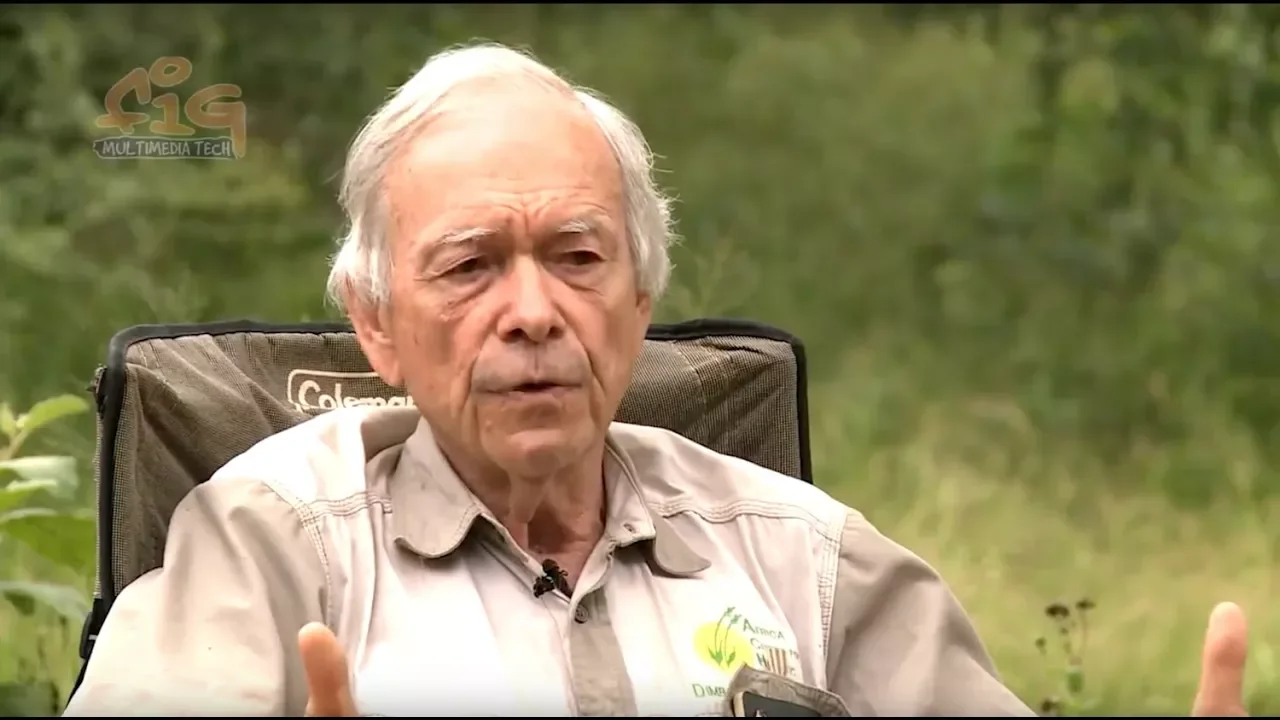
Running out of Time | Documentary on Holistic Management — Savory Institute

Savory Institute

AI-assisted summary of Running out of Time | Documentary on Holistic Management — original source. Check the original for full context.

Source published:

Key ideas

  • Agriculture generates over 75 billion tons of eroded soil worldwide annually, equating to more than 10 tons of soil lost per living person each year while each person consumes roughly half a ton of food. (0:09)
  • Allan Savory contends that livestock do not inherently cause desertification; rather, unmanaged animals roaming widely destroy ground cover, whereas high-density, planned herd movement mimics historical migratory herds and restores soil structure. (2:12)
  • Fields conditioned with mobile overnight kraals that concentrate livestock dung, urine, and trampling produce five to eight times the crop yields of traditional communal agriculture. (13:36)
  • Holistic planned grazing has expanded to an estimated 16 million hectares globally through the Savory Institute and regional learning hubs in over 10 countries. (27:07)
  • Savory argues that institutional academia historically resists new scientific paradigms until public consensus forces a shift, crediting his viral 2013 TED Talk with circumventing decades of official opposition. (43:08)

Detailed notes

## Background Published on YouTube by the Savory Institute on May 1, 2018, this documentary was produced by Trevor Langham and Fig Multimedia Tech in Zimbabwe. It explores how ecologist Allan Savory developed Holistic Management to transform degraded rangeland in Zimbabwe, highlighting practical grassland restoration as a planetary solution to desertification, climate change, and rural poverty.

## TL;DR The film chronicles Allan Savory's proposition that desertification in brittle environments is driven not by overgrazing or drought, but by the loss of biological decay and ineffective rainfall caused by bare soil. By using bunched, moving livestock and movable overnight kraals to mimic ancestral wild herds, land managers break soil caps, restore ground cover, recharge aquifers, and multiply crop yields fivefold to eightfold. Rooted in empirical results at Dimbangombe Ranch and surrounding Hwange communal lands, the documentary shows how the Africa Centre for Holistic Management and the global Savory Institute network scale these principles worldwide. Despite facing decades of academic and institutional resistance, Savory argues that holistic decision-making is an urgent, indispensable prerequisite for civilizational survival.

## Atmosphere & style The film carries an impassioned, contemplative, and resilient tone, alternating between grand ecological stakes and gritty, tactile field demonstrations in the Zimbabwean bush. Allan Savory speaks with the quiet gravitas and weathered conviction of an elder scientist who has endured decades of institutional scorn, infusing technical discussions of soil crusting and rainfall infiltration with deep personal grief and dedication. Watching the documentary feels grounded and authentic, juxtaposing satellite-linked Skype calls with remote bush camp encounters—from lions prowling outside the kitchen to clear streams flowing through once-barren landscapes.

## Bulletin - [00:09](https://www.youtube.com/watch?v=q7pI7IYaJLI&t=9s) Agriculture generates over 75 billion tons of eroded soil worldwide annually, equating to more than 10 tons of soil lost per living person each year while each person consumes roughly half a ton of food. - [02:12](https://www.youtube.com/watch?v=q7pI7IYaJLI&t=132s) Allan Savory contends that livestock do not inherently cause desertification; rather, unmanaged animals roaming widely destroy ground cover, whereas high-density, planned herd movement mimics historical migratory herds and restores soil structure. - [13:36](https://www.youtube.com/watch?v=q7pI7IYaJLI&t=816s) Fields conditioned with mobile overnight kraals that concentrate livestock dung, urine, and trampling produce five to eight times the crop yields of traditional communal agriculture. - [27:07](https://www.youtube.com/watch?v=q7pI7IYaJLI&t=1627s) Holistic planned grazing has expanded to an estimated 16 million hectares globally through the Savory Institute and regional learning hubs in over 10 countries. - [43:08](https://www.youtube.com/watch?v=q7pI7IYaJLI&t=2588s) Savory argues that institutional academia historically resists new scientific paradigms until public consensus forces a shift, crediting his viral 2013 TED Talk with circumventing decades of official opposition.

## Key takeaways - [00:09](https://www.youtube.com/watch?v=q7pI7IYaJLI&t=9s) Global topsoil erosion outpaces food consumption at an unsustainable rate, with over 75 billion tons of soil eroded annually against roughly half a ton of food consumed per person. - [02:12](https://www.youtube.com/watch?v=q7pI7IYaJLI&t=132s) Desertification is driven by bare ground and ineffective rainfall rather than drought alone; rain striking exposed earth evaporates or runs off instead of recharging soil aquifers. - [05:34](https://www.youtube.com/watch?v=q7pI7IYaJLI&t=334s) In brittle grassland environments, resting land causes vegetation to oxidize and die rather than decompose biologically, which historically prompted destructive seasonal burns across more than one billion hectares in Africa annually. - [08:11](https://www.youtube.com/watch?v=q7pI7IYaJLI&t=491s) Holistic planned grazing uses livestock bunched and moved deliberately to break crusts, trample plant litter, and fertilize soil without causing overgrazing. - [11:54](https://www.youtube.com/watch?v=q7pI7IYaJLI&t=714s) Mobile predator-friendly kraals built from opaque plastic sheeting protect livestock from predators at night while concentrating animal impact to dramatically rejuvenate degraded soils. - [13:36](https://www.youtube.com/watch?v=q7pI7IYaJLI&t=816s) Overnight kraaling transforms poor Kalahari sands into fertile soil, delivering five- to eightfold increases in crop yields and buffering fields against erratic rainfall. - [16:39](https://www.youtube.com/watch?v=q7pI7IYaJLI&t=999s) The Africa Centre for Holistic Management (ACHM) was founded at Dimbangombe Ranch in 1992 to demonstrate the restoration of degraded catchments, forage, and perennial river systems. - [18:46](https://www.youtube.com/watch?v=q7pI7IYaJLI&t=1126s) Expanding holistic grazing into communal areas requires overcoming social and cultural hurdles—such as clan taboos and livestock pooling hesitations—via community action frameworks. - [24:34](https://www.youtube.com/watch?v=q7pI7IYaJLI&t=1474s) Consolidating communal herds in Hwange virtually eliminated dry-season livestock starvation, enabled multi-fold crop yield gains, and prompted Zimbabwe to form an inter-ministerial committee to scale holistic management nationally. - [27:07](https://www.youtube.com/watch?v=q7pI7IYaJLI&t=1627s) The Savory Institute was established in 2010 to deploy a global network targeting 100 locally governed learning hubs across seasonal rainfall environments. - [35:26](https://www.youtube.com/watch?v=q7pI7IYaJLI&t=2126s) Effective rainfall management at Dimbangombe ensures rivers run clear after heavy rains, contrasting sharply with severe flash flooding and dry beds on unmanaged neighboring lands. - [38:10](https://www.youtube.com/watch?v=q7pI7IYaJLI&t=2290s) Operations at Dimbangombe integrate livestock with wildlife and have relied primarily on safari hunting revenues due to a lack of funding from mainstream environmental groups. - [40:25](https://www.youtube.com/watch?v=q7pI7IYaJLI&t=2425s) Vigorous regeneration of Faidherbia albida and indigenous teak on dry sands treated with kraals disproves conventional theories that tree recruitment failures stem strictly from altered river flooding. - [43:08](https://www.youtube.com/watch?v=q7pI7IYaJLI&t=2588s) Savory emphasizes that paradigm shifts occur when widespread public awareness overrides institutional resistance, pointing to the international impact of his 2013 TED Talk. - [45:18](https://www.youtube.com/watch?v=q7pI7IYaJLI&t=2718s) Holistic Management is positioned as an urgent civilizational necessity, directly linking soil health, water security, and rural livelihoods to planetary stability.

## Detailed walkthrough ### [00:09](https://www.youtube.com/watch?v=q7pI7IYaJLI&t=9s) A Radical Solution to Global Desertification

On February 27, 2013, Zimbabwean wildlife ecologist and international consultant Allan Savory stepped onto a stage before a global audience to address desertification and climate change. His proposition challenged mainstream ecological doctrine, sparking standing ovations from supporters and bitter hostility from conventional circles. Rather than accepting environmental decline as an inevitable consequence of human existence, Savory argued that our fundamental understanding of resource consumption and soil loss is critically broken.

To illustrate the sheer scale of the crisis, Savory pointed out the staggering gap between the food humanity consumes and the topsoil lost to produce it. Every human requires approximately half a ton of food annually for basic healthy maintenance, yet global agricultural systems discard topsoil at an unsustainable rate. Allan Savory summarized the grim arithmetic: “Clearly we're going out of business.”

- Humans require roughly half a ton of food per person annually. - Agriculture generates over 75 billion tons of eroded soil worldwide each year. - This loss equates to more than 10 tons of eroding soil per person currently alive on the planet.

---

[02:12](https://www.youtube.com/watch?v=q7pI7IYaJLI&t=132s) Rethinking Livestock and the Mechanics of Desertification

A longstanding assumption among ecologists and conservationists is that livestock cause land degradation and desertification. Savory argues the exact opposite: it is not the animals themselves that degrade the land, but the way humans manage them. Left to wander without herders or the natural pressure of predators, small numbers of livestock disperse across wide areas, grazing selectively and continuously damaging plant communities. Under this dynamic, having too few animals aimlessly roaming the land causes far more destruction than having large, tightly concentrated herds.

Walking across parched Zimbabwean rangeland punctuated by bone-dry riverbeds that only briefly flash flood, Savory dismissed the prevailing view that changing weather patterns originate the damage. Desertification—the process of land drying out and becoming barren—stems from management practices that destroy ground cover and render rainfall completely ineffective. When rain strikes exposed, sun-baked earth, high surface temperatures drive immediate evaporation while remaining water sheets off, carrying away protective plant litter and topsoil.

Allan Savory directly challenged conventional ecological teaching: “And this saying that people have that droughts cause the bare ground is nonsense it's the background that causes the the droughts it's the other way around.”

```mermaid flowchart TD accTitle: The Desertification Cycle of Bare Soil accDescr: Flowchart illustrating how bare ground prevents water infiltration and accelerates drought conditions.

subgraph LandDegradation["Surface Exposure"] A["Unmanaged / Dispersed Livestock"] --> B["Loss of Ground Cover & Plant Litter"] B --> C["Hot, Exposed Bare Soil"] end

subgraph HydrologicalFailure["Ineffective Rainfall"] C --> D["High Evaporation Rates"] C --> E["Surface Runoff & Silt Loss"] D --> F["Flash Flooding & Rapid Desiccation"] E --> F end

subgraph Impact["Ecosystem Collapse"] F --> G["Man-Made Drought & Desertification"] G --> B end ```

- Two-thirds of the world's landmass is currently desertifying. - In Saudi Arabia's Tihamah desert, 25 millimeters (1 inch) of rain dumped the equivalent of 1,250 drums of water per hectare, yet the surface dried out completely by the next day due to runoff and rapid evaporation. - Water must leave the soil primarily through living plants or subterranean movement into aquifers and rivers, rather than through direct surface runoff and solar evaporation.

---

[05:34](https://www.youtube.com/watch?v=q7pI7IYaJLI&t=334s) The Paradox of Rest: Plant Oxidation and Grassland Fires

At Dimbangombe Ranch, located 30 kilometers south of Victoria Falls in Zimbabwe, Savory manages land through erratic wet seasons by maximizing rainfall effectiveness. Standing out in the downpour, he demonstrates that where grass and plant litter carpet the ground, water soaks directly into the soil profile with zero surface runoff. In contrast, nearby bare patches wash silt away immediately. Yet maintaining this vital ground cover presents a counterintuitive challenge: grasslands deteriorate and die if they are merely rested and left ungrazed.

In brittle environments, standing grass that is not eaten or trampled before the dry season cannot break down biologically through soil organisms. Instead, it slowly oxidizes in the air, changing color to a lifeless gray and choking new growth at the plant base until the grass tuft dies. Pastoralists have historically used fire to clear this decadent, oxidized vegetation, but burning incurs an enormous environmental penalty.

Allan Savory highlighted the catastrophic atmospheric scale of burning rangelands: “Burning one hectare of grassland gives off more and more damaging pollutants than six thousand cars.”

- When grass is not grazed, chemical oxidation replaces rapid biological decay, causing perennial grass plants to self-terminate. - Across the African continent, more than one billion hectares of grassland are deliberately burned every single year. - This widespread seasonal burning emits immense quantities of pollutants with minimal public or scientific scrutiny.

---

[08:11](https://www.youtube.com/watch?v=q7pI7IYaJLI&t=491s) Holistic Planned Grazing: Mimicking Natural Herds

Because grasslands depend on cycling matter through biological digestion, Savory contends that eliminating livestock or relying on technology cannot restore rangelands. The only practical mechanism capable of reversing desertification at a planetary scale is utilizing livestock to mimic the dense, migrating wild herds that historically shaped these ecosystems alongside pack-hunting predators.

Allan Savory underscored this singular intervention: “There is only one option I repeat to you only one option left to climatologists and scientists and that is to do the unthinkable and to use livestock bunched and moving as a proxy for former herds and predators and mimic nature.”

Simply bunching animals together is not enough; past pastoral cultures bunched livestock for millennia and still created deserts when grazing lacked structured timing. Savory's Holistic Management framework replaces guesswork with a formal chart-based planning process. Grazing planners divide the land, plot the months across a planning chart, list individual paddocks down the side, and map out wildlife movements, calving seasons, and forage ratings before laying out animal movements.

On Dimbangombe, a mixed herd of over 500 cattle alongside sheep and goats moves through designated paddocks according to the grazing plan. Herders keep the animals gathered, allow them to graze, escort them to midday water for a rest, and drive them into scheduled grazing blocks. The animals trample standing moribund vegetation into a protective litter layer, scallop the soil crust with their hooves so water and carbon can penetrate, and enrich the ground with dung and urine before being moved before they can overgraze the recovering plants.

- Hoof impact breaks up capped soil surfaces, enabling moisture and aeration to reach seedbeds. - Trampled grass covers the soil, insulating it from the desiccating effects of sun and wind. - Because animals will not feed where they foul, dense herds are kept on the move, naturally curbing overgrazing while cycling carbon purely through solar energy. - Cattle are grazed across all terrains—including steep, rocky hillsides—to establish uniform seasonal ground cover.

---

[11:54](https://www.youtube.com/watch?v=q7pI7IYaJLI&t=714s) Predator-Friendly Mobile Kraals

Managing a combined herd of 500 animals across a 3,000-hectare ranch creates a logistical problem at nightfall. Forcing livestock to trek miles back to fixed, permanent enclosures (kraals or bomas) every evening drains animal energy, causes erosion along trails, and disrupts the grazing plan. To solve this, the ranch engineered mobile, predator-friendly kraals constructed from opaque plastic sheeting. Lions, hyenas, and other carnivores will not attempt to breach or jump a barrier they cannot see through, providing total protection for the animals out in the bush.

These portable enclosures move across the landscape in tandem with the grazing schedule. Confining hundreds of hoofed animals within a small perimeter for seven consecutive nights concentrates incredible amounts of dung, urine, and trampling into targeted areas. A mobile chicken coop moves alongside the kraal, allowing poultry to scratch through the manure. Once the temporary fence is dismantled and moved, the heavily impacted patch undergoes rapid biological rejuvenation, rebounding with significantly higher fertility and vegetative productivity than the surrounding untrammeled rangeland.

[13:36](https://www.youtube.com/watch?v=q7pI7IYaJLI&t=816s) The Overnight Kraal: Soil Transformation and Crop Yields

```mermaid flowchart LR accTitle: Overnight Kraal Soil Transformation Cycle accDescr: Diagram tracing the use of movable predator-friendly kraals on poor sands to fertilize crop fields and multiply yields. subgraph Kraal["Movable Overnight Kraal"] A["Poor Kalahari Sand"] --> B["High-impact dunging, urine & trampling"] B --> C["Short duration / frequent moves"] end subgraph Soil["Enriched Soil Profile"] C --> D["Thick protective layer of manure & litter"] D --> E["Dark, rich, fragrant topsoil"] end subgraph Harvest["Cropping Phase"] E --> F["5x to 8x higher crop yields"] F --> G["Stalks & crop residue for ground cover"] end ```

When livestock are concentrated inside a kraal (corral) and periodically moved, the soil undergoes a dramatic transformation. High animal impact—the concentrated deposition of dung, urine, and the physical trampling of hooves—triggers strong grass growth rather than degradation, provided the animals are not kept in place for too long. Demonstrating on an area of Kalahari sand chosen specifically for its poor fertility, Allan Savory scrapes away the surface layer to show visitors how an overnight kraal, shifted across the ground, completely changes the land. Beneath a thick blanket of manure and plant litter lies dark, rich, fragrant soil that looks and smells entirely distinct from the dry, infertile sand just steps outside the treated perimeter:

> “The higher the impact from the cattle, the more of the dunging, the trampling, the more grass tends to grow, as long as you don't repeat it too long—as long as it's a short time.”

Visitors to Dambangombi Ranch discover a simple, economically viable mechanism to elevate rural livelihoods, especially for communities trapped in dependency on food aid programs. On fields where cattle had been corralled overnight during the previous year, heavy stalks and crop residues remain from an abundant harvest:

- **Yield comparison:** Fields conditioned by overnight kraals produce on average five to eight times the crop yields obtained through traditional communal agriculture. - **Resilience under stress:** In a demonstration field, crops still grew remarkably well despite two severe setbacks: the area had received only half of its expected seasonal rainfall, and a troop of baboons had invaded and wrecked the entire first crop, forcing a replanting after Christmas.

---

[16:39](https://www.youtube.com/watch?v=q7pI7IYaJLI&t=999s) Dambangombi Ranch and the Birth of ACHM

When Allan Savory purchased Dambangombi in the 1970s, the ranch was in severe distress. Grasslands were virtually eliminated, and recurrent veld fires swept across the landscape. The previous owner had grazed cattle down in a single vlei every day of the year, reducing it to hard bare earth:

> “And this was so bare that you could see a guinea fowl at 100 yards almost any time in the year, and now I can't see anything a yard from me, it's so well grown up now.”

This marked turnaround supplied empirical proof that holistic management could rehabilitate degraded grasslands anywhere on Earth, validating years of research. But Savory recognized that an isolated success on a private ranch was meaningless without universal application across the African continent and globally.

In 1992, Savory and his wife, Jody Butterfield, established the Africa Centre for Holistic Management (ACHM) at Dambangombi Ranch as a regional learning hub. The center focuses on practical skills for communal self-sufficiency: - Restoring water catchments and perennial river flows. - Increasing forage, livestock numbers, and wildlife abundance simultaneously. - Multiplying crop yields through concentrated animal impact. - Rehabilitating degraded and bare ground. - Implementing low-stress livestock handling techniques.

---

[18:46](https://www.youtube.com/watch?v=q7pI7IYaJLI&t=1126s) Scaling Holistic Management into Communal Lands

```mermaid flowchart TD accTitle: ACHM Community Rollout Process accDescr: Workflow from ACHM training and funding to community consensus and herd consolidation. A["$5.8M ACHM Program Grant"] --> B["Training materials, staffing & field officers"] B --> C["Hwange Communal Lands outreach"] C --> D["Community Action Cycle"] D --> E{"Overcoming Clan Hesitations"} E -->|"Address cultural medicines & clan history"| F["Consolidated village herds"] F --> G["Coordinated planned grazing & kraaling"] G --> H["Improved animal condition, forage & self-reliance"] ```

To take the philosophy beyond ranch fences, ACHM designated the adjacent Hwange communal lands as its proving ground to expand across Zimbabwe and southern Africa. Supported by a donor award of nearly $5.8 million over five years, the center formulated training manuals, hired local personnel, and addressed communal adoption.

The primary barrier was not ecological, but social. Historically, small communal factions had attempted holistic management in isolation, but the process demands whole-community participation to function properly. Using a mobilization tool called the Community Action Cycle, facilitators helped villages build self-reliance and collective pride. They had to navigate deeply rooted mythic and cultural fears: many families initially dreaded grouping their livestock together because of clan-specific traditional medicines, ancestral taboos, and long-standing domestic conflicts. Over time, as communities observed healthier, fatter cattle emerging from the pilot herds, these anxieties receded. Reflecting on the slow societal uptake, Savory laments the decades of lost opportunity:

> “The tragedy of all this is that it doesn't have to be like it is; if we could have begun doing what we're doing for the communities now 40 years ago, we would be a long way ahead of it now.”

---

[21:12](https://www.youtube.com/watch?v=q7pI7IYaJLI&t=1272s) Extension Work in Hwange: Water, Health, and Village Livelihoods

Despite an exhausting international travel schedule promoting holistic management abroad, Allan Savory routinely drives 50 kilometers out to rural villages to review local progress. In the Hwange communal lands, ACHM livestock management specialist Innocent Tshuma mentors smallholders who have abandoned fragmented, solitary herding in favor of pooled, planned grazing. Cattle managed under the collective system are visibly heavier and healthier than the thin, struggling stock grazing unmanaged along the nearby roads.

ACHM's strategy began on the ranch and is now spreading into a broader target community of roughly 150,000 people. Field officers demonstrate integrated land and water planning step-by-step:

- **Water and garden infrastructure:** Villagers constructed a water reservoir tank on an old kraal site, establishing productive vegetable gardens directly beside livestock watering points. The sale of excess produce has created new household income and elevated family nutrition. - **Grazing plans in action:** Field officers review rotational grazing charts alongside local herders like Philip, moving herds methodically through mapped paddocks (advancing from paddock 5 to paddock 6, and onwards to paddock 7). - **Yield increases:** Moving night kraals across family arable lands every week before sowing generates a threefold to fivefold jump in crop production across the fertilized strips.

---

[24:34](https://www.youtube.com/watch?v=q7pI7IYaJLI&t=1474s) Community Voices: Dignity, Food Security, and National Support

Local villagers express relief at the practical turnaround in their households. Where cattle mortality once depleted family assets every dry season, communal herd consolidation and managed rotations have virtually ended starvation losses:

> “Now we don't have any cow dying, because they taught us how we should do keep them, and I'm sure at the moment when these five cattle I'm having now, they will increase and I'll have money to buy more, which is something very good.”

Villagers celebrate managing their own affairs independently without perpetual external intervention. Reliable water storage tanks have replaced daily shortages, ensuring both garden irrigation and herd watering needs are met year-round.

The impact on local women has been especially stark: two to three years earlier, local mothers could feed their households for only three to four months of the year, leaving their families vulnerable to hunger for the remaining eight to nine months. Under the new grazing and cropping regimen, they produce reliable, year-round food supplies.

These communal outcomes have captured the attention of the Zimbabwean national government. Observing the turnaround in land stability, cattle health, and rural food security, the government established a permanent inter-ministerial committee of ministry heads tasked with scaling holistic management throughout the country, including initiatives to integrate these ecological decision-making frameworks directly into the national school curriculum.

[27:11](https://www.youtube.com/watch?v=q7pI7IYaJLI&t=1631s) Animal Impact on Crops and the Global Reach of Holistic Management

Educating future generations begins by instilling foundational environmental literacy in children at an early age. They need to understand the paradox of pastoral land: having too few livestock can destroy communities and dry up water sources, whereas running significantly higher numbers of animals under proper management can regenerate the land. A clear example of this is Regina's crop field. She applied concentrated animal impact to her plot, planting it on January 14. Inspected on March 6, her maize stands tall, lush, and vigorous. In contrast, an adjacent plot planted much earlier without animal impact looks visibly stunted and unhealthy. Regina was able to produce enough food from her treated field to feed visitors and her family.

In 2010, the Africa Centre for Holistic Management won the prestigious Buckminster Fuller Challenge for its breakthroughs in reversing desertification. That same year, Allan Savory, his wife Jody Butterfield, and other partners founded the Savory Institute in Boulder, Colorado, to spearhead the large-scale restoration of the world’s grasslands. Today, Holistic Management is practiced by tens of thousands of land managers internationally. An estimated 16 million hectares (roughly 40 million acres) are managed holistically across the globe, with the greatest impact occurring in seasonal rainfall environments that constitute nearly two-thirds of Earth’s land surface. This worldwide movement represents the flowering of an idea that took root in the African bush half a century ago.

- **Award:** Winner of the 2010 Buckminster Fuller Challenge. - **Savory Institute headquarters:** Boulder, Colorado (founded 2010 by Allan Savory, Jody Butterfield, and partners). - **Global scale:** Reliable estimates indicate up to 16 million hectares (40 million acres) managed holistically. - **Target eco-region:** Seasonal rainfall environments comprising approximately two-thirds of the planet's land area.

---

[29:07](https://www.youtube.com/watch?v=q7pI7IYaJLI&t=1747s) The Global Hub Strategy and International Visitors

The site at Dimbangombe operates as the primary prototype for a worldwide network of regional hubs. As Allan Savory explains: “What we're doing here is a small part of our global operations the Savory Institute is headquartered in Boulder Colorado and they run the global effort from there and then part of our strategy to get this to go to scale worldwide because of the seriousness of climate change desertification is to have locally led locally managed learning hubs around the world and this was the first of the hubs on which we're modeling others from 10 different countries Mexico chile Argentina turkey the UK Ireland United States etc so there are many countries getting involved.” People from at least 21 countries have traveled to this facility for training. Accommodating groups of 30 or more, the hub relies on comprehensive materials, including Savory's foundational textbook, handbooks authored by Jody Butterfield, and expanding digital resources. The overarching goal is to seed 100 self-led, locally governed learning hubs worldwide where communities learn and teach in their own languages and cultural contexts.

International trainees visit Zimbabwe to observe these biological principles in person. Matt Rales and Katrina Fowler, cattle producers from Maryland who finish beef on grass, traveled to witness the reversal of desertification firsthand. Matt noted: “I can't believe it's taken us this long to get here it succeeded my expectations beyond imagination.” He was startled by grass stands that were thicker and more diverse than he anticipated, resolving to return to the United States to implement planned grazing across as many head of livestock as possible. Similarly, Sally Nicoll, a business owner from Johannesburg, arrived with little prior concern for ecological issues: “Two months ago I had no interest in climate change and I discovered managing holistically and it has completely changed my life.” She was deeply moved after meeting a local widow whose husband died in 2011, leaving her with eight children (and another lost the previous year). By combining her livestock with her neighbors' to form a herd of 15 animals, treating her field, and borrowing seed, the woman grew the healthiest stand of maize (*mealies*) in the area without synthetic fertilizers, securing enough food to sustain her seven remaining children for the entire year.

---

[33:00](https://www.youtube.com/watch?v=q7pI7IYaJLI&t=1980s) Bush Camp Life and Global Connectivity

At the close of each day, Savory unwinds at his bush camp alongside Jody Butterfield, his wife and collaborator of 32 years. Savory holds deep familial roots in the landscape, having been born just south in Bulawayo and raised on a 45,000-acre ranch roughly 25 miles away. His personal history is woven into the earth: “My father I buried his remains in the river and my sister and my eldest son here are buried here and my youngest son so it's very much just home to me and this is the way I like to live here amongst the game I don't actually like living in a house at all.” While the couple maintains a second home in New Mexico—which they jokingly refer to as Jody’s home compared to Allan’s bush camp—Savory prefers outdoor life among wildlife.

Daily existence in the camp brings routine encounters with the wild. Elephants frequently roam near the camp perimeter after nightfall, wild dogs chase down bushbuck right outside the windows, and lions have pursued kudu down along the riverbank in plain sight of the kitchen. Despite its remote setting, the camp functions as an operational command post. Powered entirely by solar panels and battery banks, it uses satellite broadband to maintain contact with the international team. Savory and Butterfield routinely conduct Skype conferences with Daniela Howell, CEO of the Savory Institute in Boulder, coordinating international programs and scheduling addresses to European conferences before traveling abroad.

---

[35:26](https://www.youtube.com/watch?v=q7pI7IYaJLI&t=2126s) Water Catchment Dynamics: Runoff vs. Effective Rainfall

A passing morning shower illustrates how soil surface conditions dictate the fate of water. Upstream in the catchment area where ground cover is poor, rainwater fails to penetrate. The surface water pools into a dense, muddy brown slurry where one cannot see half an inch below the surface. Severe soil erosion actively cuts trenches into the ground around struggling perennial grass plants, washing critical topsoil away. By the time water travels down into the managed sections of the ranch, however, the river runs crystal clear.

The primary difference lies in making rainfall effective by enhancing infiltration and drastically curtailing bare-ground runoff. Two days prior, a heavy downpour delivered 50 millimeters (two inches) of rain only a kilometer upstream. Savory observed: “What's amazing to me here is because we've made the rainfall more effective soaking into the soil less surface flow so that the soil really absorbs the rain is that this remained clear after we'd had 50 millimeters or two inches of rain two days ago only a kilometer above this.” In previous decades, that storm would have unleashed a violent, silt-choked torrent that required days to settle; now the river barely rises and stays clear. In sharp contrast, a neighboring river draining national park and hunting lands demonstrates massive destructive flooding. Debris lines reveal floodwaters reaching 50 meters back from the riverbank, deep enough to submerge a vehicle. Because that surrounding land is capped and bare, millions of gallons rush away as floodwaters instead of recharging the aquifers, guaranteeing that the river will run completely dry later in the season. Meanwhile, the permanent pool on the Dambangombe River—though experiencing its lowest level in 15 years—continues to hold water, conserved by Savory for hundreds of visiting wild elephants and buffalo while livestock are watered elsewhere.

```mermaid flowchart TD accTitle: Catchment Management and Water Outcomes accDescr: Diagram contrasting runoff and water retention under conventional degraded land versus holistically managed land.

subgraph Degraded["Unmanaged / Neighboring Land"] A1["Rainfall Event\n(e.g., 50mm / 2 inches)"] --> B1["Bare, Capped Soil Surface"] B1 --> C1["Severe Surface Runoff & Soil Cutting"] C1 --> D1["Destructive Flash Floods & Muddy Rivers"] D1 --> E1["Aquifers Depleted: River Dries Up Rapidly"] end

subgraph Managed["Holistically Managed Dimbangombe Catchment"] A2["Rainfall Event\n(e.g., 50mm / 2 inches)"] --> B2["Trampled Litter & Dense Perennial Cover"] B2 --> C2["High Water Infiltration into Soil Profile"] C2 --> D2["Minimal Surface Flow & No Silt Runoff"] D2 --> E2["Living Aquifers: Sustained, Crystal-Clear Pools"] end ```

---

[38:10](https://www.youtube.com/watch?v=q7pI7IYaJLI&t=2290s) Integrating Wildlife, Bare Ground, and Safari Hunting Funding

While Dimbangombe's primary mission began as regenerating degraded ground and wildlife habitats, Savory realized cattle were indispensable as the primary biological tool to mimic ancient herding ungulates. Across the 3,000-hectare property, livestock and abundant game are integrated through planned grazing. Paradoxically, successful grassland restoration creates a new challenge: grass grows so densely across the property that managers must deliberately preserve select areas of bare ground so that wildlife requiring open terrain do not abandon the area.

Financing these operations requires pragmatic economic decisions. Savory highlights that mainstream conservation groups have consistently withheld practical backing: “Wildlife and this whole project are a critical part of it not just because of my passion but because it takes funds to run this sort of operation and we've been completely unable to get any support or financial support from environmentalists or environmental organizations and the bulk of the funding that supports us and has done all this work has come from the hunting so we are safari hunting at the same time and that literally has been what has supported most of this work.”

To observe wildlife on the open patches, staff built viewing blinds (hides). On one occasion, guests inside the blind found themselves pinned when three wild lions climbed onto the roof of the blind, terrifying the visitors while providing dry amusement for the staff. The property is also home to Dojiwe, a gentle orphaned elephant rescued 15 years earlier. Because she was hand-reared, staff stay by her side during the day and keep watch over her at night to protect her from predators.

[40:25](https://www.youtube.com/watch?v=q7pI7IYaJLI&t=2425s) Tree Regeneration and Wildlife Return

Mana Pools National Park in the Zambezi Valley is considered one of the last unspoiled sanctuaries on Earth, earning recognition as a UNESCO World Heritage site. The park is renowned for a cathedral-like atmosphere created by surreal light filtering through the forest canopies. However, one of its most prolific tree species, *Faidherbia albida*, is facing a mysterious decline and failing to regenerate across the valley. While mainstream consensus attributes this failure to upstream dam construction and the cessation of natural flooding, Allan Savory demonstrates that saplings are regenerating vigorously in his own maize garden on dry Kalahari soils, far removed from river alluvial floodplains. As Savory explains: “Well here we are far from alluvial soils we're on a Kalahari soil and this is a *Faidherbia albida* that has established with the cattle grazing that we're doing and it's now freely growing showing that it was nothing to do with flooding or any of the things we were saying and again I think it's the buildup of the soil structure that is affecting this.”

Convinced that holistic principles apply universally across ecosystems, Savory has expanded his trials to the struggling Kalahari sand forests in a neighboring national forest, where indigenous teak trees (*Baikiaea plurijuga*) have ceased natural regeneration. By setting up mobile overnight cattle kraals on the Kalahari sand, the team uses livestock impact to break the soil cap, deposit dung and urine, and trigger dormant seeds. Decades earlier, the hills appeared lush only during peak growing seasons, while the valleys suffered heavy overgrazing and pervasive bare ground. Today, bare earth is restricted strictly to the designated water points provided for wild game, with herds of buffalo, sable antelope, and elephants congregating in large numbers across restored grazing land. Savory underscores that “every bit of this has been made possible by the cattle used as a tool.”

```mermaid flowchart TD accTitle: Tree and Landscape Regeneration via Livestock accDescr: Diagram illustrating how overnight cattle kraaling transforms soil and regenerates trees and wildlife. subgraph Intervention["Livestock as a Tool"] A["Mobile Cattle Kraal on Kalahari Sand"] --> B["Dung, Urine & Hoof Action"] end subgraph SoilTransformation["Soil & Vegetation Recovery"] B --> C["Buildup of Soil Structure & Moisture"] C --> D["Faidherbia albida & Teak Regeneration"] end subgraph EcosystemResults["Ecosystem Resurgence"] D --> E["Elimination of Bare Valley Ground"] E --> F["Return of Wildlife: Elephant, Buffalo, Sable"] end ```

- **Mana Pools National Park**: Designated a World Heritage site in the Zambezi Valley, facing an unaddressed ecological crisis with *Faidherbia albida* die-off. - **Dispelling Flooding Theories**: Seedlings established on upland Kalahari soils without seasonal inundation prove that soil structure, rather than damming or flooding, governs regeneration. - **Teak Forest Experiments**: First trial using overnight cattle kraals placed directly on sand forest soils to stimulate dormant teak tree recruitment. - **Landscape Transformation**: High-density cattle trampling replaced bare valleys with permanent perennial cover, leaving exposed ground only immediately around wildlife drinking sites.

[43:08](https://www.youtube.com/watch?v=q7pI7IYaJLI&t=2588s) Academic Resistance, Public Opinion, and the TED Talk

Despite five decades of demonstrable on-the-ground ecological recovery, holistic management continues to encounter entrenched rejection from mainstream academic and institutional circles. Savory recalls that even though the foundational textbook had circulated for over twenty years, expanded into a Spanish translation, and was preparing for a third edition, established environmental bodies and universities systematically refused to peer review it—even while over twenty universities and agricultural colleges adopted it into their active curricula. Reflecting on decades of institutional hostility, Savory attributes his endurance to deep commitment rather than personal grievance: “I kept going despite all the abuse and ridicule rejection and people claiming it doesn't work and it just comes down to one word I believe and that is caring.”

He notes that scientific history demonstrates that institutional resistance never yields to data, logic, or empirical evidence alone; instead, institutional inertia breaks only when broader public sentiment shifts. Savory highlights this dynamic by pointing to the viral reach of his 2013 TED Talk, emphasizing that direct public engagement accomplished what decades of academic debate could not: “And that's why 20 minutes of talk on the TED Talk has literally done more to advance this knowledge in worldwide than 50 years of struggling against an official opposition has done.” With the lecture viewed over two million times and continuing to accumulate thousands of views daily, broad societal awareness has begun circumventing institutional gatekeeping.

- **Textbook Dismissal**: Major academic and conservation institutions refused formal reviews of the core Holistic Management textbook, despite its adoption across more than 20 colleges and universities. - **Mechanics of Scientific Change**: Historical evidence indicates paradigms shift only after public consensus changes, rather than through empirical evidence alone changing institutional minds. - **Global Reach**: The 2013 TED Talk bypassed traditional barriers, quickly surpassing 2 million views and accelerating international recognition of holistic planned grazing.

[45:18](https://www.youtube.com/watch?v=q7pI7IYaJLI&t=2718s) Global Proof, Livelihoods, and the Urgency for Civilizational Change

Demonstrating ecosystem recovery at the Africa Centre for Holistic Management proves the framework's viability under the most adverse political, social, and economic conditions imaginable. Project leaders challenge detractors to abandon secondhand preconceptions, visit the site in person, and inspect the restored perennial rivers, recharged aquifers, and reversed desertification with their own eyes. Drawing on thirty years of field experience spanning Latin America and Africa, practitioners argue that Holistic Management provides unparalleled sustainability because it anchors directly into community survival, social cohesion, and rural livelihoods, bridging vital human and ecological dimensions that conventional development schemes overlook.

In his closing reflections, Savory stresses that soil erosion, escalating biodiversity loss, desertification, and climate destabilization represent interlocking symptoms driving human poverty, armed conflict, and the breakdown of human civilization. The era of debating whether decision-making should account for the whole is over. As Savory warns, the implementation of holistic, cross-disciplinary science can no longer be delayed: “Now while it might have been argued 30 years ago today I don't believe any scientist would argue that management needs to be holistic embracing all science all sorts of knowledge and but if we're to have a hope it has to be done now.”

- **Standing Challenge to Critics**: Detractors are urged to travel to the Africa Centre in Zimbabwe to inspect the reversed desertification, flourishing grasslands, and year-round surface water firsthand. - **Multicontinental Validation**: Three decades of community implementations across African and Latin American countries demonstrate that the framework secures local food systems and social stability far beyond conventional aid programs. - **Existential Urgency**: Unchecked topsoil loss, climate disruption, and environmental degradation threaten civilizational continuity unless holistic management is deployed immediately at global scale.

## Notable quotes > [08:11](https://www.youtube.com/watch?v=q7pI7IYaJLI&t=491s) There is only one option I repeat to you only one option left to climatologists and scientists and that is to do the unthinkable and to use livestock bunched and moving as a proxy for former herds and predators and mimic nature. — Allan Savory

> [13:36](https://www.youtube.com/watch?v=q7pI7IYaJLI&t=816s) The higher the impact from the cattle, the more of the dunging, the trampling, the more grass tends to grow, as long as you don't repeat it too long—as long as it's a short time. — Allan Savory

## Mentioned Allan Savory, Jody Butterfield, Trevor Langham, Fig Multimedia Tech, Savory Institute, Africa Centre for Holistic Management (ACHM), Dimbangombe Ranch, Hwange Communal Lands, Innocent Tshuma, Daniela Howell, Matt Rales, Katrina Fowler, Sally Nicoll, Buckminster Fuller Challenge, TED, Mana Pools National Park, Zambezi Valley, UNESCO, Victoria Falls, Bulawayo, Boulder, Colorado

## Video description http://savory.global | This in-depth documentary explores Allan Savory and how he has used Holistic Management to completely transform his land in Zimbabwe. See more of our docs here: https://www.youtube.com/playlist?list=PLRLvOlmv3cRbZ1-n8wBv1Hptm-G0vGZ_Q

Holistic Management was made popular in Savory's 2013 Ted Talk, How to Fight Desertification and Reverse Climate Change.

This documentary was produced by Trevor Langham and his crew at Fig Multimedia Tech in Zimbabwe. We share this video in hopes that Trevor's amazing work will reach a wider audience to honor his memory.

Stay connected: http://savory.global https://www.facebook.com/savory.global/ https://twitter.com/SavoryInstitute https://www.instagram.com/savoryinsti...

About Savory Institute: Loss of grasslands leads to climate change, floods, droughts, famine, and worldwide poverty. It’s our mission to promote large-scale restoration of the world’s grasslands through Holistic Management.

Holistic Management is a process of decision-making and planning that gives people the insights and management tools needed to understand nature: resulting in better, more informed decisions that balance key social, environmental, and financial considerations.

[Source](https://www.youtube.com/watch?v=q7pI7IYaJLI)

中文简报

时间所剩无几 | 整体管理纪录片 该片记录了艾伦·萨弗瑞的观点,即脆弱环境中的荒漠化并非由过度放牧或干旱引起,而是由于裸露土壤导致的生物分解丧失和降雨无效。通过利用密集、移动的牲畜群以及可移动的夜间畜栏来模拟原始野生动物群,土地管理者能够打破土壤硬壳、恢复地面植被覆盖、补给含水层,并将农作物产量提高五至八倍。这部纪录片立足于丁班戈姆贝牧场和周边万基公有土地的实证结果,展示了非洲整体管理中心和全球萨弗瑞学会网络如何在世界范围内推广这些原则。尽管数十年来一直面临学术界和机构的阻力,萨弗瑞仍认为,整体决策是人类文明存续不可或缺的当务之急。 全球农业每年造成超过750亿吨水土流失,相当于每个活着的人每年损失超过10吨土壤,而每个人消耗的食物大约只有半吨。 (0:09) 艾伦·萨弗瑞主张,牲畜本身并不必然导致荒漠化;相反,不受管制的动物大范围漫游会破坏地面植被,而高密度、有计划的畜群移动则能模拟历史上的迁徙兽群,从而恢复土壤结构。 (2:12) 利用移动夜间畜栏(集中牲畜的粪、尿和踩踏)进行改良的田地,其农作物产量是传统公有农业的五至八倍。 (13:36) 通过萨弗瑞学会以及分布在10多个国家的区域学习中心,整体计划放牧在全球已扩展至估计1600万公顷的土地。 (27:07) 萨弗瑞认为,学术体制历来都会抵制新的科学范式,直到公众共识迫使其发生转变,并将自己绕过数十年官方阻力的成果归功于2013年爆红的TED演讲。 (43:08)

Reading summary

Ecologist Allan Savory contends that global desertification stems not from climate change or livestock numbers, but from management practices that leave soil bare and render rainfall ineffective. He argues that holistic planned grazing, which bunches livestock to mimic ancient migratory herds, is the only scalable mechanism to reverse land degradation and stabilize topsoil. Hydrological Failure and the Bare Soil Paradox (2:12) Savory disputes conventional ecological doctrine by asserting that bare soil causes droughts rather than the reverse. In brittle environments, when ground cover is removed, high surface temperatures drive immediate evaporation, and rainfall sheets off as erosive runoff, depriving aquifers of recharge. For example, during a 25-millimeter rainfall event in Saudi Arabia's Tihamah desert, the moisture completely vanished by the following day due to rapid runoff and evaporation. At the catchment scale, degraded land produces violent, silt-laden flash floods, whereas covered soil absorbs heavy rain and keeps downstream river pools clear. Leaving grasslands unmanaged compounds this degradation. In seasonal rangelands, ungrazed standing perennial grass fails to break down biologically through soil microbes; instead, it slowly oxidizes into a moribund gray, suffocating new growth. Pastoralists traditionally burn rangeland to clear this dead matter, but Savory notes that burning one hectare releases more damaging pollutants than 6,000 cars, with over one billion hectares burned across Africa annually. Planned Grazing and Mobile Kraal Systems (8:11) To cycle organic matter without fire or industrial inputs, Savory advocates using concentrated livestock herds as a proxy for the wild ungulates and pack predators that originally shaped grasslands. Under Holistic Planned Grazing, managers map out paddocks, wildlife corridors, and forage ratings on formal charts. Herds move continuously to prevent overgrazing: hooves break surface crusts to aerate seedbeds, standing stalks are trampled into an insulating litter layer, and dung and urine enrich the soil. At Dimbangombe Ranch in Zimbabwe, managers deploy predator-proof mobile kraals made of opaque sheeting to protect herds of over 500 cattle, sheep, and goats at night without permanent enclosures. Confining animals for seven consecutive nights on poor Kalahari sands concentrates manure and trampling, turning dry sand into rich, fragrant topsoil. When rotated onto arable plots, these treated soils yield five to eight times more crops than traditionally farmed communal plots, demonstrating resilience even during droughts. Communal Adoption and Food Security in Hwange (18:46) Scaling the model beyond private ranches required overcoming significant cultural hurdles rather than biological constraints. Supported by a five-year, $5.8 million program grant, the Africa Centre for Holistic Management (ACHM) implemented the Community Action Cycle in the adjacent Hwange communal lands. Organizers had to address clan rivalries and ancestral taboos regarding traditional medicines before villagers agreed to pool their livestock into consolidated herds. Collective herd management ended seasonal cattle starvation losses and revitalized household livelihoods. Villagers developed water storage tanks on former kraal sites to irrigate vegetable gardens, and rotational kraaling across family arable plots boosted crop yields three- to fivefold. For local women who previously faced household food deficits for eight to nine months of the year, the system established reliable, year-round nourishment, prompting the Zimbabwean government to form an inter-ministerial committee to evaluate integrating the framework into national schools. Institutional Resistance and Global Hub Expansion (43:08) Despite an estimated 16 million hectares managed holistically worldwide and the establishment of local learning hubs across multiple countries, Savory’s framework has encountered decades of academic and institutional skepticism. Major environmental bodies and universities long refused to peer-review the core textbook, even as dozens of agricultural colleges incorporated it into curricula. Additionally, because environmental organizations withheld financial backing, Dimbangombe funded its operations largely through safari hunting revenues. Savory asserts that scientific paradigms shift only when public consensus changes. Bypassing institutional gatekeepers, his 2013 TED Talk reached millions of viewers and stimulated international uptake. Grassroots practitioners and overseas visitors report successful regeneration, citing restored soil structures that stimulate indigenous tree recruitment, such as Faidherbia albida and teak, without relying on seasonal river floods. Savory frames reversing desertification as an urgent civilizational challenge, pointing to global agricultural losses exceeding 75 billion tons of topsoil annually. However, while localized field implementations demonstrate significant ecological and yield improvements, questions remain regarding the model's reliance on private safari hunting for operating capital and the social complexity of replicating communal herd consolidation across broader political jurisdictions.

精炼阅读摘要

津巴布韦生态学家Allan Savory提出,全球荒漠化与干旱并非因家畜过度放牧或降水减少引起,而是源于土地管理不当导致的裸地蔓延;唯有通过“整体管理计划放牧”(Holistic Planned Grazing)模拟野生群兽与捕食者的动态互动,才能在大尺度上逆转生态退化并保障粮食安全。 裸地循环与荒漠化的真正机理 (0:09) 根据Savory的论点,主流生态学将土地退化归咎于牲畜是错误的。当少数牲畜缺乏捕食者压力或牧人看管而分散游荡时,会发生选择性过度啃食,导致地面植被凋零并暴露土壤。全球每年因农业流失超过750亿吨表土,人均侵蚀量超过10吨。Savory指出,并非干旱造成了裸地,而是裸地引发了干旱。当降雨落在暴晒硬化的地表时,水分因高温迅速蒸发或形成地表径流并带走表层土壤与枯落物,导致降雨完全失效。沙特阿拉伯提哈迈沙漠的数据表明,每公顷相当于1250桶水的25毫米降雨在次日便因蒸发与径流彻底干涸。目前全球约有三分之二的陆地正处于荒漠化进程中,而恢复地表覆被是确保降雨有效渗入地下水层的核心前提。 休牧悖论与计划放牧的仿生逻辑 (5:34) 在干旱脆弱环境中,单纯停止放牧(休牧)会导致草原退化死亡。未被草食动物进食或践踏的直立草类无法被土壤微生物降解,而是发生空气化学氧化,变成灰白死草并抑制根部新芽,直至整株草死亡。尽管传统牧民使用火烧清理植被,但非洲大陆每年故意焚烧超过10亿公顷草原,Savory指出焚烧1公顷草原排放的有害污染物超过6000辆汽车。他认为,唯一可行的修复手段是使用高度聚集、定时移动的家畜群体作为替代物,模拟历史上被天敌追逐的大型野生迁徙兽群。在津巴布韦Dimbangombe农场,管理人员利用图表工具制定严格的轮牧计划,统一调配500多头牛、绵羊和山羊。牲畜蹄印踏破土壤硬壳,将枯草压入地面形成保护层以隔绝风吹日晒,排泄物富集土壤养分,且在过度啃食前迅速转移,使植被获得充分恢复期。 移动畜栏改良土壤与社区农业增产 (11:54) 为解决野外放牧与食肉动物袭击的矛盾,团队设计了由不透明塑料布搭建的防捕食者移动畜栏(kraals)。狮子和鬣狗无法翻越看不透的屏障,牛群连续7晚被集中在选定地块内,高密度的踩踏、尿液和粪便沉积触发了强烈的土壤生物重构。在原本极其贫瘠的卡拉哈里沙地上,经移动畜栏处理后的表土覆盖着厚实的粪肥和植物残渣,转变为深色且气味芳香的沃土。对比数据显示,在曾搭建夜间畜栏的地块上,农作物平均产量是传统公社农业的5到8倍;即便遭遇季节降雨量减半以及狒狒破坏后重新补种的双重打击,庄稼依然生长茂盛。在Hwange公社土地的推广中,每周在播种前移动夜间畜栏,使家庭耕地的粮食产量提升了3至5倍,显著终结了旱季牲畜饿死与家庭长达数月的饥荒问题。 流域水文修复与林木自然更新验证 (35:26) Dimbangombe流域的实践表明,地表覆盖状态决定了水流走向。在未改善的上游退化区,暴雨形成视线不足半英寸的泥泞洪流,冲刷切割土壤表层;而当下游牧场建立起密集的多年生草被与枯落物后,雨水完全下渗,河流即便在1公里外发生50毫米(2英寸)强降雨后依然保持清澈,且不再发生破坏性洪峰。这一土壤改良机制同样颠覆了传统林业认知:被列为联合国教科文组织世界遗产的马纳波尔斯国家公园内,白金合欢树(Faidherbia albida)普遍无法自然更新,主流观点归咎于上游大坝阻断洪水;然而Savory在远离漫滩的干燥沙地农田中,仅依靠牲畜放牧改良土壤结构,便成功让白金合欢幼苗自由生长。此外,团队还在邻近国有林开展试验,利用移动牛栏唤醒休眠的卡拉哈里沙地柚木(Baikiaea plurijuga)种子,使裸露的山谷重新被多年生草被覆盖。 全球推广网络与突破学术建制阻力 (43:08) Savory与妻子Jody Butterfield于1992年建立非洲整体管理中心(ACHM),后于2010年获得巴克敏斯特·富勒挑战赛大奖,并在科罗拉多州博尔德成立Savory Institute。目前全球估计有1600万公顷(约4000万英亩)土地按此模式管理,国际战略旨在建立100个由本地主导的自主学习枢纽。然而该理论在长达50年中持续遭遇主流学术界和建制机构的抵制,其核心教科书虽被20多所高校纳入课程体系并出版多语种版本,却长期被主流机构拒绝同行评审。Savory指出,科学史表明范式转变无法单靠经验数据说服保守体制,往往必须借助公众观念的觉醒。其2013年TED演讲在短时间内突破200万次播放,推动了公众绕过学术阻力直接认知该管理法,并促使津巴布韦政府成立跨部委委员会,尝试将整体管理决策框架引入国家学校课程。 该纪录片总结认为,表土流失、荒漠化与气候失衡是引发贫困和冲突的连锁根源,整体管理提供了一条将生态自愈与社区生计紧密绑定的低成本路径。然而,尽管其在全球多地展示了恢复多年生水系与倍增农业产量的实证案例,主流学术界和部分环保组织对其依然存在巨大分歧与资金支持缺位,该模式能否克服制度性阻力在更广泛的全球公社土地上迅速铺开,仍取决于公众认知与跨学科政策的采纳速度。

Source quotes

[8:11] Allan Savory: There is only one option I repeat to you only one option left to climatologists and scientists and that is to do the unthinkable and to use livestock bunched and moving as a proxy for former herds and predators and mimic nature. [13:36] Allan Savory: The higher the impact from the cattle, the more of the dunging, the trampling, the more grass tends to grow, as long as you don't repeat it too long—as long as it's a short time.

Original transcript

[0:09] there is only one option I repeat to you [0:13] only one option left to climatologists [0:16] and scientists and that is to do the [0:18] unthinkable [0:20] on February the 27th 2013. this man went [0:25] before a worldwide television audience [0:27] to propose a controversial solution to [0:30] the greatest environmental threat to the [0:32] survival of the planet as we know it [0:34] today [0:35] his topic was how to Halt [0:38] desertification and reverse climate [0:41] change [0:45] he was given a standing ovation [0:51] his name is Alan savory [0:54] he'd waited a long time for this moment [1:07] how are you my girl a Zimbabwean by [1:10] birth Wildlife ecologist and [1:12] international consultant Alan Savory is [1:16] a passionately committed conservationist [1:18] driven by an unshakable belief in an [1:21] idea [1:22] an idea so radical it has provoked [1:25] extraordinary hostility in some quarters [1:28] yet he stubbornly persists in being [1:30] heard citing compelling evidence to get [1:33] his message across so what people need [1:36] to understand is some very basic facts [1:39] for example we need about half a tonne [1:42] of food per human every year to for [1:46] healthy maintenance of Life Etc but what [1:49] we're doing today is we're producing [1:53] more than 75 billion tons of eroding [1:57] soil because of Agriculture and that is [2:01] equal to more than 10 tons of eroding [2:04] soil for every human alive today [2:07] clearly we're going out of business [2:12] Savory is adamant that if we are to [2:15] survive ideas have to change [2:17] foremost of which is the long-held [2:20] belief that land degradation is caused [2:22] by livestock [2:23] rather it is the way humans manage [2:26] livestock he argues [2:28] put simply it is not too many animals on [2:31] the land that are to blame but too few [2:33] that are causing the destruction [2:39] thank you [2:42] well this is typical of what we [2:44] tragically have here just miles of [2:47] country like this people on permanent [2:49] food Aid and every year is a drought it [2:52] doesn't matter what rain we get I've [2:54] been watching this for years and it's [2:56] just like this it's now virtually desert [2:58] country [3:00] you see this [3:01] this is a typical River in the area bone [3:05] dry almost throughout the occasionally [3:07] it'll flash flood after a storm and [3:10] that's it and I'm afraid that's typical [3:12] here [3:22] typical now of a few cattle wandering [3:25] past and we're 10 past 12 in the day [3:28] they're not out grazing they're just [3:30] wandering around the land they're not [3:32] with any herder and this is what's [3:36] destroying the land just too few animals [3:38] wandering around [3:41] but the problem is not limited to Africa [3:44] Savory says two-thirds of the world's [3:46] land is in fact desertifying [3:49] so what is desertification [3:53] desertification is just a fancy word for [3:57] land drying up and turning to Desert [4:00] ultimately and there's a good spot to [4:02] illustrate it it happens because of our [4:05] practices that make the rainfall that we [4:07] receive less effective and you see it [4:11] here where soil is exposed any rain [4:14] soaking into the soil will just [4:17] evaporate out of it again because this [4:19] is hot it's hot even to touch now and [4:23] when high rainfall Falls it runs off and [4:27] you can actually see the runoff and the [4:29] layer of litter that has swept off that [4:31] as water runs and this saying that [4:34] people have that droughts cause the bare [4:37] ground is nonsense it's the background [4:38] that causes the the droughts it's the [4:41] other way around what we're needing to [4:43] do worldwide and particularly where the [4:46] country is desertifying is to make the [4:48] available rainfall more effective now [4:51] this is not taught in any University of [4:54] the world and it's well Illustrated in [4:57] this picture this was taken while 25 [5:00] millimeters or an inch of rain was [5:02] falling in the Tehama desert and you can [5:06] see the water running now in terms of [5:07] drums of water that was equal to 1 250 [5:12] Drums of water on every hectare of land [5:14] but the next day that land was [5:17] completely dry and that is the [5:20] desertification process [5:22] [Music] [5:29] thank you [5:34] in Zimbabwe it's the tail end of a poor [5:37] rainy season on this Ranch 30 kilometers [5:39] south of the Victoria Falls called [5:42] dimbangombi it's been savory's home for [5:45] many years [5:47] and while he's seen enough bad wet [5:50] Seasons to have learned to accept nature [5:52] on its own terms he no longer believes [5:55] he's a helpless victim to vagaries in [5:58] the weather [6:00] so the really the aim of what we're [6:03] doing is trying to make the available [6:04] rainfall more effective we're out in the [6:07] rain right now and you can see it where [6:09] the soil is bare this water is flowing [6:12] and its depositing silt or carrying silt [6:15] depositing it down there where the [6:18] grassland is where we've got grass [6:20] plants growing in some litter there's [6:22] absolutely no water flowing this is all [6:25] just soaking in and that's what we've [6:28] got to get and then that water should [6:30] only leave the soil through growing [6:33] plants or underground flow in the water [6:36] to aquifers and in the soil to aquifers [6:39] and the river [6:42] how he solved the problem or providing [6:44] that necessary ground cover we shall see [6:47] later in the program [6:49] for now he has a problem with the [6:51] grasses grown in this Paddock [6:53] he doesn't have enough cattle to graze [6:55] it and if it is not grazed in the next [6:57] few months the grass must Decay [7:00] biologically before the new growing [7:02] season [7:03] because if it doesn't this grassland and [7:06] its soil will begin to die [7:11] here's a good spot to show you why we [7:14] have to get more animals and are [7:16] desperate to get the money and buy the [7:18] cattle that we need because here you [7:20] have grass that we did not graze last [7:22] year and it just kills itself it's [7:25] changed to oxidation you see the [7:27] different color that is gradual chemical [7:30] breakdown not rapid biological breakdown [7:32] and the plants just kill themselves [7:36] the traditional response has been to use [7:38] fire [7:39] however that creates an arguably even [7:42] greater problem [7:45] burning one hectare of grassland gives [7:48] off more and more damaging pollutants [7:51] than six thousand cars [7:54] and we are burning in Africa every [7:57] single year [7:59] more than one billion hectares of [8:02] grasslands and almost nobody is talking [8:05] about it [8:06] what are we going to do [8:11] there is only one option I repeat to you [8:14] only one option left to climatologists [8:17] and scientists and that is to do the [8:20] unthinkable [8:22] and to use livestock [8:25] bunched and moving as a proxy for former [8:29] herds and predators and mimic nature [8:34] Savory calls it holistic management and [8:37] planned grazing [8:38] and it works like this [8:40] cattle sheep and goats are masked into [8:43] large herds and because they dung and [8:46] urinate over their own food source the [8:49] animals have to keep moving which [8:51] prevents over grazing [8:53] more importantly however the impact of [8:56] their Hooves breaks up hard ground [8:59] allowing air and water to penetrate the [9:01] soil [9:03] the trampling of old grass provides [9:06] cover from the drying effects of the sun [9:07] and the wind and the Animals dung and [9:10] urine enrich the soil [9:15] because they cattle are the main tool [9:18] using their Hooves Etc to grow the grass [9:21] they graze everywhere on the ranch so as [9:24] you look up on these Rocky Hills you'll [9:26] see all of that as fresh Cross of the [9:28] season and that's because the cattle are [9:31] grazed right over the hills and [9:33] everywhere there's no area where we [9:36] don't use the cattle at some time in the [9:38] year [9:42] but Savory emphasizes without a [9:45] carefully structured grazing program [9:47] holistic management simply will not work [9:51] the whole secret of the success here [9:54] isn't just using the animals as a tool [9:56] people think that all you have to do is [10:00] to Bunch the animals and move them but [10:03] people have done that for thousands of [10:05] years and created the deserts that [10:07] doesn't work the secret to this is a [10:10] planning process whereby we divide the [10:13] land up into divisions then the people [10:16] doing the planning follow a set of steps [10:19] where they focus on one at a time and [10:22] they bring the information onto a chart [10:24] and it has to be put on a chart and they [10:27] plot them months that they're planning [10:28] across the top of the chart they put the [10:31] paddocks down here then in another step [10:34] they put the ratings and they fill in [10:36] yeah all the wildlife [10:39] carving periods other factors that have [10:42] to be born in mind on the land and when [10:45] the chart is all prepared finally they [10:47] plot the movements of the animals and [10:50] it's plotted where they'll go [10:53] here is the main management herd uh for [10:57] of cattle about 500 plus there are sheep [11:01] and goats as well and they're Grazing In [11:05] this block of land following the plan [11:07] and right now the herders are moving [11:10] them down towards water and they'll [11:12] drink it [11:14] at this midday period lay up for a [11:17] couple of hours and then the herders [11:19] will move them out again and continue [11:21] the Grazing In this block that's that's [11:24] planned to be raised at the moment [11:29] okay I love this because the guttle herd [11:32] has done everything we want they've [11:34] flattened grassed laid litter scalloped [11:36] the soil so the water carbon everything [11:39] is getting into the soil now this will [11:40] rebound immediately we've used nothing [11:42] but solar energy and we can do this day [11:45] after day after day on different parts [11:47] of the land creating the wildlife [11:49] habitat we need and healing the land [11:54] the herd will have covered a lot of [11:56] ground by Nightfall which begs the [11:58] obvious question where will it spend the [12:01] night [12:03] driving 500 cattle sheep and goats to [12:06] permanent crawls cited at distant points [12:09] around the 3000 hectare Ranch every [12:11] evening is not a viable option and [12:14] defeats the basic principle of planned [12:16] grazing [12:17] Savory solution is to have the herders [12:19] Drive the animals into temporary [12:21] enclosures called Predator friendly [12:24] crawls [12:30] developed on dimbangombe they are made [12:32] from plastic sheeting which forms a [12:34] protective fence that lions and hyenas [12:36] will not challenge [12:38] these crawls move with the herd [12:46] while the primary purpose of the crawl [12:49] is to provide secure overnight shelter [12:51] for the herd concentrating a large [12:54] number of hooed animals in such a [12:55] confined space for a week provides a [12:58] graphic demonstration of their impact on [13:00] open grassland [13:03] [Music] [13:08] bonus [13:10] when the herd moves on this site becomes [13:13] far more productive than surrounding [13:15] land [13:19] we've had 500 odd cattle in here for a [13:23] week if this is the overnight crawl [13:26] and you can see that that's heavily [13:29] dunged and trampled and this is where [13:31] the chicken coop was there's a mobile [13:33] Chicken Coop that moves with the cattle [13:36] when the scroll moves and from that you [13:39] can see what this soil was like before [13:41] we put that in and that will come [13:44] through to very good grass whereas this [13:47] will remain bad [13:51] the higher the impact from the cattle [13:54] the mole of the donging the trampling [13:56] the more grass tends to grow as long as [13:59] you don't repeat it too long as long as [14:02] it's a short time [14:06] visitors to dim bengombi Come Away [14:09] convinced that here is a simple and [14:11] economically viable means of improving [14:13] the livelihoods of rural communities [14:15] throughout Africa particularly those [14:19] reliant on food Aid programs [14:22] what I want to show you here is this is [14:25] where we bring the overnight crawl but [14:28] we're bringing it more frequently to [14:30] this side because we wanted as a crop [14:32] field and let me show you this is on a [14:35] Kalahari sand we could selected a very [14:38] poor soil area but you can see it's [14:41] totally covered with manure and litter [14:43] and if I dig through this [14:46] to try to get to the soil [14:50] okay now I'm getting to soil and you can [14:53] see how dark and and Rich that is [14:57] all right let me show you the contrast [14:59] with this soil now and what it was like [15:02] now you guys are going to be amazed at [15:05] the comparison here now that's the soil [15:08] I picked up in there the same soil you [15:10] see how totally different they are and [15:13] this is just a sand let me feel it you [15:16] can smell it [15:18] smell the total difference that we're [15:21] growing really good crops in now but [15:23] it's the same poor soil and we're doing [15:25] that entirely by just using the [15:27] overnight predator-friendly crawl [15:31] now we've come into the area that we [15:33] treated last year so this is where you [15:36] had the cattle last year yes as you can [15:39] see you can see the nice stalks Etc [15:42] laying around from the very good yield [15:44] of crop we got so what will the crop [15:47] yields be out of an area like this when [15:50] we look at the average crop fields in [15:52] the community with the traditional [15:55] agriculture at the moment over here [15:57] we're averaging or at least five to [16:00] eight times the yield on these fields [16:07] now this is the field we looked at [16:10] before the rains and now it's got the [16:14] crop in it unfortunately the crop is [16:16] small because of two things first we got [16:19] half the rainfall we should have had by [16:21] now and second baboons got into the [16:24] field one day and wrecked everything so [16:26] we had to replant after Christmas but [16:29] the crops despite that is looking [16:31] remarkably good to me [16:34] but we're happy with it despite the [16:36] problems [16:39] when say report dimbangombi in the 1970s [16:42] the ranch was in a bad state [16:45] its grasslands virtually destroyed and [16:48] its landscape ravaged by continual felt [16:50] fires [16:52] it's an entirely different story today [16:56] okay now when I bought this Ranch the [16:59] fellow who I bought it from had kept his [17:02] cattle down in this Flair every day of [17:05] the year and this was so [17:07] bare that you could see a guinea fowl at [17:10] 100 yards almost any time in the earth [17:12] and now I can't see anything a yard from [17:15] me it's so well grown up now [17:19] here was conclusive proof that used [17:22] properly holistic management could [17:24] restore degraded grasslands anywhere in [17:27] the world [17:29] this was the Vindication of the years of [17:32] meticulous research Savory had carried [17:34] out [17:35] he was aware however that like any idea [17:38] to be truly effective it needed to be [17:40] put into Universal practice [17:43] and this meant worldwide [17:46] he began by targeting Africa so this is [17:49] the size of Africa which people have no [17:52] idea of even living in Africa in 1992 [17:56] Savory and his wife Jody Butterfield set [18:00] up the Africa Center for holistic [18:02] management as a learning site for people [18:05] from all over the continent [18:07] located on dim bengombi the center is [18:10] tasked with empowering rural communities [18:13] to manage their lives and natural [18:15] resources effectively by making [18:18] decisions that are economically and [18:20] environmentally sound with the emphasis [18:23] on acquiring the Knowledge and Skills to [18:26] restore water catchments and River flow [18:29] increase forage livestock and Wildlife [18:31] production [18:32] raise crop yields through concentrated [18:35] animal impact [18:36] restore damaged or degraded land [18:40] and employ low-stress animal handling [18:46] achm singled out the nearby huangier [18:50] communal lands as the springboard for [18:52] its plans to spread the holistic [18:54] management message throughout Zimbabwe [18:56] and the southern Africa region [19:00] here I'm director of our our program for [19:03] developing holistic Management in [19:06] communities bringing holistic management [19:07] to communities so that means I've been [19:10] in charge of developing training [19:12] materials a training program hiring the [19:15] staff [19:16] and making it happen this program [19:18] started about four years ago [19:20] and we've got a large Award of almost [19:24] five 5.8 million [19:27] and we've managed to do it in about five [19:31] years to really start to where we're [19:33] seeing success in communities [19:36] we have been working with communities in [19:39] the past [19:41] where communities were struggling to [19:44] understand [19:45] what decision making using holistic [19:48] management is all about what you get is [19:52] you get a few people in the community [19:54] wanting to do it [19:56] but [19:58] the [19:59] holistic management concept will require [20:02] the whole Community if it is to work [20:05] smoothly [20:06] when we are doing their training we also [20:08] make use of the mobilization tool which [20:11] we call Community Action Cycle and this [20:14] is a very powerful tool in bringing [20:16] communities together and we have seen a [20:18] lot of changes in communities in terms [20:21] of our communities being able to be [20:24] self-reliant and also in terms of [20:27] bringing back their dignity the major [20:30] challenges that we good at [20:33] ugly based mythical I would like to say [20:35] where people dread to mix their [20:38] livestock together because of different [20:40] cultural medicines that they believe [20:42] each home has and some historical [20:44] conflicts that each family or each Clan [20:46] Has in each Community but we are seeing [20:49] a lot of improvement and this community [20:51] is one of them [20:53] and my cattle are looking very very [20:55] healthy and fat [20:57] tragedy of all this is that it doesn't [21:00] have to be like it is if we could have [21:03] begun doing what we're doing for the [21:05] communities now [21:07] 40 years ago we would be a long way [21:09] ahead of it now [21:12] much of holistic Management's growing [21:15] Acceptance in these rural communities is [21:17] due to Alan savory's total personal [21:20] commitment despite a hectic promotional [21:23] schedule it takes him abroad for many [21:25] months of the year he'll try to find [21:27] time to drive 50 kilometers to visit a [21:30] local community where belief in his [21:33] message is having a profound impact on [21:35] the lives of thousands of families [21:50] yeah things are moving on very well good [21:54] exactly and the community is very very [21:55] committed to the program okay yeah [21:57] innocent monkey should know [22:01] as a livestock management specialist [22:03] employed by the center to advise the [22:05] villagers he's hugely encouraged by this [22:07] community's decision to abandon their [22:10] traditional goit alone herding practices [22:12] for the collective holistic management [22:15] alternative [22:20] well in a sense I see the cattle are [22:22] looking better than they were the ones [22:23] we saw on the road yeah that's very true [22:25] there is a very big difference with [22:27] Kettle which are not in the program [22:29] having demonstrated very clearly on the [22:32] branch back at our headquarters what can [22:35] be done we're now extending that into [22:37] this Greater Community of about 150 000 [22:41] people but starting with some of the [22:43] smaller communities and this is one of [22:45] the starting programs where having [22:48] provided water for the cattle it is also [22:52] providing water for the gardens [22:57] innocent here is the Man In Charge who [22:59] is coaching and training the people [23:02] first of all we constructed Elizabeth [23:04] tank and before after that yeah it used [23:08] to be a kettle a kettle crawl then after [23:10] that we'll put a garden then the garden [23:12] is enabling people to have to improve [23:14] their nutrition as well as their income [23:16] the selling vegetables yes they are [23:18] selling [23:25] Philip what can you tell me from your [23:27] plan now is happening now we we are we [23:32] are on the on part of number five on the [23:34] kegu [23:36] and then from where do they go which is [23:38] the plan show they're what did they plan [23:40] then from Paddock five we'll be going to [23:43] Paddock six so part of six down here [23:46] yeah this part of six and then from [23:48] there then from part of six then we'll [23:51] be going to Paddock seven but that is [23:54] seven this is the area where we'll be [24:01] this is where the cattle have been [24:03] crawled for about a week or so and up [24:06] until yesterday on this portion of the [24:09] field and now they will plant crops all [24:13] over the field but get three to five [24:16] times the yield on these areas where we [24:18] put the crawls overnight the community [24:20] is very very excited even personally as [24:23] the field officer I'm very very excited [24:25] because there is a very high adoption of [24:28] the method by the community really this [24:30] is this really this is bringing a very [24:32] big change with the community when this [24:34] program intro was introduced in the [24:36] community [24:37] then it was something new to us because [24:40] we could not even understand it to start [24:42] with but after exercising what you were [24:46] taught to do grazing together we [24:48] experienced that there was a very big [24:51] change [24:52] the way how they look there's a very big [24:55] change than previous they taught us [24:57] everything [24:59] now we don't have any cow dying [25:03] because they taught us how we should do [25:06] keep them [25:08] and I'm sure [25:10] at the moment when these five cables I'm [25:12] having now [25:13] they will increase and I'll have money [25:16] to buy more [25:17] which is something very good the [25:19] holistic management what they did we [25:21] have quietly learned a lot we are doing [25:25] everything on our own [25:44] [Music] [25:48] um [26:00] foreign [26:19] we used to struggle with water but now [26:22] we have a water tank that supplies all [26:25] the water we need for our livestock and [26:27] gardening project [26:34] okay [26:37] okay so about two to three years ago [26:40] these women here could not feed their [26:43] families for the whole year they could [26:45] do only do it for three to four months [26:47] in a year but now we have food all year [26:49] round [26:52] the present government of Zimbabwe has [26:55] seen the results of what we're doing up [26:57] here and become very supportive they've [26:59] formed a permanent Committee of heads of [27:02] Ministries to try and spread the [27:03] knowledge around the country and what we [27:06] are going to be doing shortly is [27:08] recommending that in all schools we [27:11] begin with the kids very young and [27:14] giving them the basic environmental [27:16] literacy and understanding of why [27:20] livestock too few livestock destroy the [27:22] people's lives water Etc and how we can [27:26] Rectify all of this by running many more [27:28] animals but properly managed [27:31] [Music] [27:33] here [27:35] this crop field here is Regina's field [27:38] which she treated using animal impact [27:41] and if you can just take this a look at [27:44] this ones today is the 6th of March this [27:47] was planted on the 14th of January and [27:49] look at the crop right on the other side [27:52] which is much older but still looks very [27:55] unhealthy [27:57] and this is the same lady who fed all of [28:00] us today [28:06] in 2010 the Africa Center for holistic [28:10] management won the Buckminster Fuller [28:12] challenge for its work in reversing [28:14] desertification [28:16] in that same year Alan and Jody with [28:19] other partners pounded the Savory [28:22] Institute in Boulder Colorado to promote [28:25] large-scale restoration of the world's [28:27] grasslands [28:30] today holistic management is practiced [28:33] by tens of thousands of people in [28:35] countries across the globe [28:37] it's reliably estimated that up to 16 [28:40] million hectares or 40 million acres are [28:43] under holistic management worldwide with [28:46] the largest impact on the ranges and [28:48] grasslands of the seasonal rainfall [28:50] environments at about two-thirds of the [28:52] world's land surface [28:55] foreign [28:58] endorsement of the seeds of an idea that [29:00] grew out of the African bush half a [29:03] century ago and still has its roots [29:05] there [29:07] what we're doing here is a small part of [29:09] our Global operations the Savory [29:12] Institute is headquartered in Boulder [29:14] Colorado and they run the global effort [29:17] from there and then part of our strategy [29:20] to get this to go to scale worldwide [29:22] because of the seriousness of climate [29:24] change desertification is to have [29:27] locally LED locally managed learning [29:30] hubs around the world and this was the [29:33] first of the hubs on which we're [29:34] modeling others from 10 different [29:36] countries Mexico chile Argentina turkey [29:40] the UK Ireland [29:42] United States [29:45] Etc so there are many countries getting [29:47] involved [29:50] the last time I counted we trained [29:53] people from 21 countries I think just [29:55] here [29:57] Matt rails and Katrina Fowler are [30:01] Americans from Maryland where they [30:03] grass-finish beef cattle we're here to [30:06] see firsthand the reversal of [30:08] desertification in action [30:11] I can't believe it's taken us this long [30:13] to get here [30:14] it succeeded my expectations Beyond [30:16] imagination [30:18] the grass is even thicker and more [30:21] diverse than I was ever expecting [30:25] and at this Hub we can accommodate 30 or [30:28] more people and we have continuous [30:31] trainings going on big bodies small [30:33] parties coming here and we have training [30:36] materials the textbook I wrote the [30:39] handbook that Jody Butterfield wrote and [30:41] many other training materials and [30:43] increasingly because of the scale of the [30:45] problem globally we're going into [30:47] internet training self-help more and [30:51] more things and we are aiming to [30:53] establish a hundred learning hubs around [30:55] the world where people are learning [30:57] teaching each other in their own [30:59] language own culture [31:02] self-led virtually managed locally [31:05] formed locally and so it's a strategic [31:09] move we're taking on a global scale now [31:11] I'm going to take what I've learned from [31:13] here back to the United States and do [31:16] the best I can to get as many animals [31:19] managed holistically under plan grazing [31:22] as we can and try to scale well [31:26] this kind of management [31:29] as great as we can [31:33] Sally nickel is a South African business [31:35] owner from Johannesburg [31:38] two months ago I had no interest in [31:40] climate change [31:42] and I discovered managing holistically [31:44] and it has completely changed my life [31:48] it's completely changed the way I think [31:51] about the environment and about what is [31:54] possible and about how we are connected [31:57] to the land and [31:59] yesterday I met a woman who had used her [32:04] livestock and her neighbor's livestock [32:06] she put 15 animals together and impacted [32:08] her crop field [32:10] she then got borrowed seed from her [32:12] neighbors and she has grown with without [32:16] fertilizer the most healthy crop of corn [32:20] or Millies that I saw in that entire [32:23] area I'd never seen anything like it [32:28] so this is one of the most remarkable [32:29] women in this community she lost her [32:32] husband in 2011 left her with eight kids [32:36] now she lost one last year she is seven [32:39] to take care of is the program has [32:41] helped it feed her family it is healthy [32:44] take care of her cattle it has helped [32:46] they even have enough food for the whole [32:47] year [33:00] day's end find Savory relaxing back home [33:03] with Jody his wife for 32 years who has [33:06] played an active role in the development [33:08] of holistic management [33:10] I was born just south of here and below [33:14] and grew up in the country [33:17] my home was a 45 000 acre Raj about 25 [33:21] miles down that way and my kids were [33:24] brought up there [33:26] my father I buried his remains in the [33:28] river and my sister and my eldest son [33:31] here are buried here and my youngest son [33:35] so it's very much just home to me [33:38] and this is the way I like to live here [33:41] amongst the game I don't actually like [33:44] living in a house at all [33:46] we have another home in New Mexico [33:49] when we're out and lived there and we [33:51] tend to jokingly say that's Jody's home [33:54] and this is mine [33:56] I love it no I do love it and all my [33:59] life I've been a person who likes to [34:01] live out of doors I grew up Hunting [34:02] Fishing doing all those things with my [34:05] dad and and I've just loved this it just [34:09] um [34:11] it's Heaven all the dramas seem to [34:14] happen when I'm away yeah that's when [34:16] the elephants will be over there and or [34:19] coming in at night or wild dogs will [34:23] chase a bush buck and kill it right [34:25] outside my window and I'm always here [34:26] alone when that happens one day walking [34:28] out of the kitchen Three Lions chased a [34:30] kudu right there in front of the river [34:33] it's just this incredible drama I get to [34:35] see every day [34:40] well those seems we're remote living in [34:42] a bush camp like this for six months of [34:44] the year as we do thanks to technology [34:46] we can keep in touch everything here is [34:49] just solar powered operates all [34:50] batteries down here but we've got a [34:54] satellite connection and get some [34:56] Broadband right now Jody is on a Skype [35:00] call to Daniela Howell our CEO in [35:03] Boulder Colorado and so routinely we're [35:06] holding conferences with people around [35:08] the world I I have to set up one [35:10] tomorrow morning to speak to people in [35:13] Switzerland before I go to London at the [35:15] weekend [35:16] but although it's not all that efficient [35:19] always but it Matt we manage [35:22] foreign [35:26] of a new day and it's raining again [35:30] but it's only a passing shower not heavy [35:33] enough to raise the level in the river [35:34] in front of savory's camp [35:37] however something will have happened to [35:40] this water on its Journey Downstream [35:45] we've now come up higher in the [35:47] catchment of the river that flows past [35:50] my camp now you can see the water in the [35:53] pool is Muddy you cannot see a half an [35:56] inch under the water and that's flowing [35:58] down here as you look here you can see [36:01] how much soil has been washed away from [36:03] this perennial grass and it's cutting [36:06] now by the time this gets to our camp [36:09] now we are seeing clear crystal clear [36:11] water and this is very high rains up [36:13] here [36:15] oh [36:16] what's amazing to me here is because [36:19] we've made the rainfall more effective [36:22] soaking into the soil less surface flow [36:24] so that the soil really absorbs the rain [36:28] is that this remained clear after we'd [36:32] had 50 millimeters or two inches of rain [36:35] two days ago only a kilometer above this [36:38] now how do we come here a few years ago [36:42] that simply would not have been possible [36:43] this would have flowed far more strongly [36:46] muddy water and then settled over the [36:49] next day or two this time it remained [36:51] clear right throughout and hardly Rose [36:54] at all [36:59] now we've joined a river of about the [37:01] same size coming off the neighboring [37:03] land national parks hunting land and you [37:06] can see where the flood water has [37:08] reached this year and the vehicle in [37:11] fact would be underwater where we are [37:13] and we are 50 meters from the river and [37:17] all of these millions and millions of [37:20] gallons of water that Rush down here [37:21] should have soaked into the land to keep [37:24] Rivers flowing aquifers Etc it won't [37:27] that River will go dry this year [37:32] this pool on the Diane gombi River has [37:35] never gone dry though it is the driest [37:37] it has been in 15 years [37:40] it won't rain for another three months [37:42] and as this is the only surface water in [37:45] the area Savory is preserving it for the [37:47] hundreds of elephants in Buffalo that [37:49] water here and making other arrangements [37:52] for the domestic livestock [37:56] while dimban gombi was primarily [37:58] concerned with regenerating the land and [38:01] Wildlife [38:02] Savory found that this could not be [38:04] achieved without using cattle as the [38:07] main tool of Wildlife and land [38:08] regeneration [38:10] today this 3000 hectare property is also [38:14] home to a large population of wildlife [38:17] fully integrated with the livestock [38:19] through the grazing planning [38:24] what I want you to see now is [38:27] where we're preserving bare ground for [38:30] the Wildlife otherwise we'll begin to [38:33] lose some of the wildlife and here you [38:34] see it [38:36] wildlife and this whole project are a [38:40] critical part of it not just because of [38:41] my passion but because it takes funds to [38:44] run this sort of operation and we've [38:46] been completely unable to get any [38:48] support or financial support from [38:51] environmentalists or environmental [38:53] organizations and the bulk of the [38:55] funding that supports us and has done [38:57] all this work has come from the hunting [38:59] so we are safari hunting at the same [39:02] time and that literally has been what [39:04] has supported most of this work [39:11] this is a hide or blind that we [39:14] constructed for people to sit in and [39:17] watch the game coming to the bare area [39:20] and take pictures and so on and we had [39:22] an amusing incident where we had some [39:25] guests in here and when we came back [39:27] there were three lines sitting on the [39:29] top and very terrified guests in here [39:31] which we thought was very amusing but [39:33] they didn't [39:37] there's one large animal however that [39:40] visitors do like to meet [39:47] okay [39:53] her name is and we found her as an [39:56] orphan she's about 15 years old now and [39:59] she's very very gentle very sweet [40:02] we have people with her all day and [40:06] we're close to her at night because she [40:09] still exercised with the alarms could [40:11] kill her [40:19] [Music] [40:25] this must be one of the last unspoiled [40:28] places on planet Earth [40:30] Milner pool's National Park in the [40:33] Zambezi Valley is so special it's been [40:36] declared a world heritage site [40:39] The Surreal light filtering Through the [40:41] Trees of the forest creates a [40:43] distinctive cathedral-like atmosphere [40:45] for which the park is renowned [40:48] one of the most prolific of those trees [40:50] the fade herbia albeda is in danger of [40:54] dying out [40:55] nobody knows why yet they are growing in [41:00] Alan savory's maze Garden for all my [41:03] life almost they have not been [41:04] regenerating at all and people say it's [41:07] because we've built dams and we're not [41:09] getting the flooding well here we are [41:11] far from alluvial soils we're on a [41:13] Kalahari soil and this is a federbia [41:16] Alberta that has established with the [41:19] cattle grazing that we're doing and it's [41:21] now freely growing showing that it was [41:24] nothing to do with flooding or any of [41:26] the things we were saying and again I [41:28] think it's the buildup of the soil [41:30] structure that is affecting this [41:34] is so convinced that managing [41:36] holistically applies to all environments [41:39] that he's embarked on a project to to [41:41] see whether he can save the Teak trees [41:43] in a nearby National Forest [41:47] so this site that I'm photographing for [41:49] our record now is we're at the first [41:53] site that we've put the cattle crawl [41:55] overnight where we hold them on the sand [41:58] on the Kalahari sand much like we've [42:01] done all over the ranch but this being [42:03] the first on the sand to see what [42:05] happens because these Kalahari sand [42:08] forests are in bad trouble without the [42:11] Teak trees regenerating and we want to [42:14] see if by using the animals we can get [42:17] the Teak trees regenerating as we are [42:19] getting with some other species [42:23] many years ago this superficially would [42:26] have looked um good on the hills in the [42:29] growing season but down in the valley [42:32] there was Heavy over grazing a lot of [42:34] bare ground and now you can only see [42:37] bear patches right at the water points [42:39] we've provided for wildlife and we're [42:42] getting Buffalo and Sable and elephants [42:45] and everything coming here and you can [42:47] sit from this point and see them [42:51] every bit of this has been made possible [42:53] by the cattle used as a tool [43:08] Savory could well argue he's proved [43:11] conclusively that holistic management [43:13] works [43:14] yet 50 years after he first expounded [43:18] his theory it is still being dismissed [43:21] out of hand by established thinking [43:25] what is very disappointing is although [43:27] this textbook has been out for over 20 [43:30] years we're writing the Third Edition [43:32] now there's a Spanish Edition and it was [43:35] sent out like all textbooks are for [43:38] review to all sorts of organizations and [43:41] environmental organizations universities [43:44] Etc wouldn't even review it and yet the [43:46] textbook is in use in more than 20 [43:49] universities and colleges when I last [43:51] counted up [43:55] I kept going despite all the abuse and [43:59] ridicule rejection and people uh [44:03] claiming it doesn't work and it just [44:05] comes down to one word I believe and [44:07] that is caring if you care enough about [44:10] your country Wildlife the people [44:13] you'll do whatever you have to do to [44:16] keep going I realize it's not personal [44:18] it's happened to every single scientist [44:21] without exception that I'm aware of in [44:24] the history of the world that opposition [44:26] the research shows does not ever die [44:30] down based on facts evidence anything of [44:33] that nature it only dies down and [44:36] institutions change when the [44:40] views of society overall begin to accept [44:43] it in other words when public opinion [44:45] changes and that's why 20 minutes of [44:49] talk on the Ted Talk has literally done [44:52] more to advance this knowledge in [44:56] worldwide than 50 years of struggling [45:00] against an official opposition has done [45:03] and that's because the Ted Talk went has [45:06] already gone to well over two million [45:08] viewers and it's still going up by [45:11] thousands a day [45:14] thank you [45:18] it's been very rewarding we have a long [45:21] way to go but at least we can say it can [45:24] happen in in a very challenging [45:26] environment politically economically and [45:29] if it can work here it could work anyway [45:31] I would say to any detractor of holistic [45:34] management first and foremost come and [45:36] see this here at the Africa center with [45:38] your own eyes come and see the reversal [45:41] of desertification and the recreation of [45:44] surface water the second thing I would [45:46] say is understand what you're detracting [45:49] look into what managing holistically and [45:53] holistically planning grazing has done [45:55] all over the world [45:57] is what I've worked over the past 30 [45:59] years [46:03] Latin America Africa many countries [46:07] this is the program that I think is the [46:10] most sustainable of all of them because [46:13] it really touches to the core of [46:15] people's people's livelihoods people's [46:18] social existence [46:21] it brings together so many of those [46:23] pieces that many other programs don't [46:28] it's common knowledge today that [46:30] biodiversity lost climate change loss of [46:33] soil poverty violence Rising all these [46:36] things are threatening civilization as [46:38] we know it now while it might have been [46:41] argued 30 years ago today I don't [46:43] believe any scientist would argue that [46:45] management needs to be holistic [46:48] embracing all science all sorts of [46:50] knowledge and but if we're to have a [46:53] hope it has to be done now