State Legislators Curb Ballot Access While Ghost Voting in Capitols
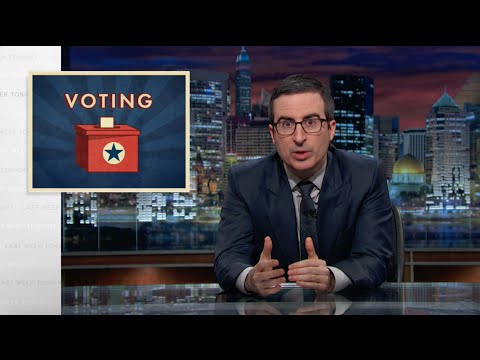
Voting: Last Week Tonight with John Oliver (HBO) — LastWeekTonight

LastWeekTonight

Strict voter ID laws disenfranchise minority voters to combat virtually non-existent fraud, exposing deep political hypocrisy as the lawmakers championing these rules routinely commit voter impersonation themselves through ghost voting.

AI-assisted summary of Voting: Last Week Tonight with John Oliver (HBO) — original source. Check the original for full context.

Source published:

Key ideas

  • Since 2011, 13 states have introduced strict photo identification requirements for voting, leaving millions of registered Americans without qualifying IDs, including over 500,000 in Texas and 300,000 each in North Carolina and Wisconsin. (0:04)
  • Academic tracking found only 31 credible allegations of in-person voter impersonation out of more than one billion ballots cast in the U.S. between 2000 and 2014. (5:50)
  • A South Carolina state investigation into allegations that 953 dead individuals voted revealed zero cases of intentional voter impersonation, tracing the flagged ballots to clerical and administrative blunders. (5:50)
  • State lawmakers who champion restrictive voter ID laws have been repeatedly recorded engaging in 'ghost voting'—pressing electronic voting buttons on behalf of absent colleagues in legislative chambers in Texas, Wisconsin, and Tennessee. (10:50)

Detailed notes

## Background Published on YouTube by the official LastWeekTonight channel on February 15, 2016, this segment addresses how equal access to the ballot box is increasingly compromised across several American states. The video explores how restrictive voting laws disenfranchise eligible citizens under the guise of preventing election fraud.

## TL;DR John Oliver investigates the surge in strict state voter ID laws and reductions in early voting that have emerged since the weakening of the Voting Rights Act. He details the severe bureaucratic and financial obstacles that prevent hundreds of thousands of legitimate voters—disproportionately minorities—from obtaining requisite IDs, while demonstrating that in-person voter impersonation is virtually non-existent. Ultimately, the segment exposes the partisan motives behind these restrictions and highlights the blatant hypocrisy of state lawmakers who routinely engage in illegal 'ghost voting' on each other's desks inside their own legislative chambers.

## Atmosphere & style The segment blends John Oliver’s signature high-energy investigative journalism with biting satirical outrage, punctuating alarming civil rights regressions with absurd, vivid analogies. Watching the piece feels like a swift escalation from exasperation over bureaucratic red tape to stunned amusement and righteous indignation as news footage reveals lawmakers sprinting across legislative floors to cast unauthorized votes for their peers. Oliver's delivery is razor-sharp and punchy, turning dry legislative and statistical data into a gripping critique of political double standards.

## Bulletin - [00:04](https://www.youtube.com/watch?v=rHFOwlMCdto&t=4s) Since 2011, 13 states have introduced strict photo identification requirements for voting, leaving millions of registered Americans without qualifying IDs, including over 500,000 in Texas and 300,000 each in North Carolina and Wisconsin. - [05:50](https://www.youtube.com/watch?v=rHFOwlMCdto&t=350s) Academic tracking found only 31 credible allegations of in-person voter impersonation out of more than one billion ballots cast in the U.S. between 2000 and 2014. - [05:50](https://www.youtube.com/watch?v=rHFOwlMCdto&t=350s) A South Carolina state investigation into allegations that 953 dead individuals voted revealed zero cases of intentional voter impersonation, tracing the flagged ballots to clerical and administrative blunders. - [10:50](https://www.youtube.com/watch?v=rHFOwlMCdto&t=650s) State lawmakers who champion restrictive voter ID laws have been repeatedly recorded engaging in 'ghost voting'—pressing electronic voting buttons on behalf of absent colleagues in legislative chambers in Texas, Wisconsin, and Tennessee.

## Key takeaways - [00:04](https://www.youtube.com/watch?v=rHFOwlMCdto&t=4s) Access to voting in America has diverged significantly by geography following the Supreme Court's weakening of the Voting Rights Act. - [00:04](https://www.youtube.com/watch?v=rHFOwlMCdto&t=4s) Millions of registered voters across the country do not possess the specific state-issued photo IDs required by newly enacted election laws. - [02:44](https://www.youtube.com/watch?v=rHFOwlMCdto&t=164s) Obtaining official government IDs presents significant bureaucratic hurdles and documentation requirements for ordinary citizens, such as the elderly. - [02:44](https://www.youtube.com/watch?v=rHFOwlMCdto&t=164s) Restricted hours at licensing offices, such as locations open only on the fifth Wednesday of a month, create severe logistical barriers to obtaining voter identification. - [02:44](https://www.youtube.com/watch?v=rHFOwlMCdto&t=164s) Strict voter ID laws disproportionately affect minority populations, with Black and Latino voters significantly less likely to possess qualifying identification than white voters. - [05:50](https://www.youtube.com/watch?v=rHFOwlMCdto&t=350s) Photo ID requirements exclusively target in-person voter impersonation, offering no protection against other election issues like ballot tampering or vote buying. - [05:50](https://www.youtube.com/watch?v=rHFOwlMCdto&t=350s) In-person voter impersonation is an irrational crime carrying severe penalties of up to five years in prison and a $10,000 fine for a single fraudulent ballot. - [05:50](https://www.youtube.com/watch?v=rHFOwlMCdto&t=350s) Claims of widespread dead voters, such as those investigated by South Carolina law enforcement, repeatedly resolve into data matching errors and administrative mistakes rather than fraud. - [09:47](https://www.youtube.com/watch?v=rHFOwlMCdto&t=587s) Public admissions from political officials indicate that restrictive voter ID laws are frequently motivated by partisan efforts to suppress opposition turnout. - [10:50](https://www.youtube.com/watch?v=rHFOwlMCdto&t=650s) State lawmakers who advocate for voter ID laws frequently commit actual voter impersonation on legislative floors through the practice of ghost voting. - [12:35](https://www.youtube.com/watch?v=rHFOwlMCdto&t=755s) In Tennessee, lawmakers formalized the ghost voting process by utilizing custom wooden sticks to push voting buttons for absent colleagues across aisles. - [12:35](https://www.youtube.com/watch?v=rHFOwlMCdto&t=755s) Politicians excuse their own fraudulent floor voting as a minor scheduling convenience while simultaneously defending burdensome voting requirements for ordinary citizens.

## Detailed walkthrough ### [00:04](https://www.youtube.com/watch?v=rHFOwlMCdto&t=4s) Voting Rights and the Push for Voter ID Laws

John Oliver opens by noting that the country has finally entered an election year, turning his attention to voting as the unshakable cornerstone of American democracy—a principle dictating that every single citizen deserves an equal voice, even idiots. While his vote might be difficult to stomach, it should rightfully count just as much as anyone else's, including the president's. In recent years, several states have modernized access by conducting elections almost entirely by mail (three states) or allowing online voter registration (30 states plus Washington, D.C.). However, other states have reversed course. Prompted in part by the Supreme Court’s decision weakening the Voting Rights Act, access to the ballot box has become significantly harder depending on geography and identity. Since 2011, seven states have curtailed early voting, and 13 states have introduced strict requirements for voters to present photo identification at the polling place.

Lawmakers promoting these measures frame them as basic common sense. News clips feature state officials insisting that everyone needs and carries identification to conduct daily life—such as visiting a hospital or making purchases—and North Carolina legislators claiming their law will not impact a significant number of residents. Oliver mocks that reasoning, observing that an arbitrary plan to incinerate everyone named Warren would also affect an statistically insignificant fraction of people, but you would still have a completely furious Warren Beatty to answer to. In reality, vast numbers of registered Americans do not possess qualifying state identification.

- In Texas alone, at least 500,000 registered voters do not own the forms of ID required to vote. - North Carolina and Wisconsin each have roughly 300,000 registered voters without a driver's license or state ID card. - In Virginia, an estimated 200,000 voters lack the necessary identification. - Most Americans personally know someone without an ID, whether an elderly grandparent whose license was taken away, an eccentric relative who rollerblades everywhere, or a cousin who lost their license after multiple DUIs.

[02:44](https://www.youtube.com/watch?v=rHFOwlMCdto&t=164s) The Reality of Acquiring an ID and Institutional Barriers

Securing an official photo ID solely to vote is far from trivial. Oliver highlights the story of Doris Clark, a 68-year-old Pennsylvania resident who was rejected three times while attempting to obtain a voter ID card. State clerks repeatedly demanded additional documentation: first her original birth certificate, then her original Social Security card, and finally her deceased husband's death certificate to verify her married name. Exasperated, she remarked:

> “You feel like, why am I going through all these things? I'm not bin Laden's wife.”

Oliver jokes about the peculiar phrasing, proposing that Osama bin Laden be instead identified as the husband of Amal al-Sadah, Siham Sabar, or Khairiah Sabar under feminist naming conventions. Despite these bureaucratic hurdles, conservative lawmakers dismiss concerns. Wisconsin State Representative Joel Kleefisch defended his state's strict measure on the floor by comparing voting to cold remedies:

> “I find it frustrating that so many of the same people who today are telling us that a photo ID is just too gosh darn much to maintain the integrity of the ballot... many of the same people in this room made sure two sessions ago that you had to have a photo ID to buy stuffy nose medicine.”

Oliver points out the glaring flaws in this comparison: Sudafed regulations were designed to tackle Wisconsin’s meth crisis, whereas voting is a constitutional right. Denying voting destroys democracy, while denying Sudafed merely ruins a runny-nosed person's shirt sleeve. Compounding the issue, ID-issuing offices in several states maintain notoriously limited hours. A 2012 study discovered that fewer than half of all ID-issuing offices in Wisconsin, Alabama, and Mississippi were open five days a week. In Sauk City, Wisconsin, the licensing office is open only on the fifth Wednesday of the month—a calendar anomaly that occurs only four times in the entire year of 2016. Furthermore, multiple studies demonstrate that these laws disproportionately disenfranchise minority populations; Texas experts confirmed that Black registered voters were nearly twice as likely, and Latino voters nearly two and a half times as likely, to lack acceptable voter IDs compared to white voters.

[05:50](https://www.youtube.com/watch?v=rHFOwlMCdto&t=350s) The Phantom Menace of In-Person Voter Impersonation

Lawmakers insist these measures are essential to stop elections from being stolen. Texas State Representative Debbie Riddle, a co-sponsor of the state's ID legislation, made the case on television:

> “The very freedom of our nation is based on the integrity of our ballot box, and if things are so lax that that fraudulent voting can occur, that means your vote can be stolen, and simply showing an identification is not too much to ask.”

Oliver counters that asking people to produce specific paperwork actually is asking a lot, and photo ID laws only prevent a single, hyper-specific crime: in-person voter impersonation. It does nothing to stop systemic ballot box stuffing, vote buying, or vote tampering. Committing in-person voter impersonation is completely irrational, requiring an individual to wait in line at a polling station and risk a $10,000 fine and five years in prison simply to cast a single, inconsequential fraudulent ballot. Oliver equates the risk-to-reward ratio to forging Bed Bath & Beyond coupons.

```mermaid flowchart TD accTitle: South Carolina Dead Voters Investigation Breakdown accDescr: Chart illustrating how 207 investigated ballots alleged to be cast by deceased voters were resolved into clerical errors and zero cases of fraud.

subgraph Allegation["Initial DMV Claim"] A["953 Alleged Dead Voters Reported by DMV"] --> B["207 Suspicious Ballots Investigated from Prior Election"] end

subgraph Findings["State Law Enforcement Investigation Findings"] B --> C["92: Shared Names (e.g., Father & Son)"] B --> D["56: Living Voter SSN Mismatched to Dead Person"] B --> E["32: Polling Place Scanner Errors"] B --> F["1: Absentee Ballot Mailed Before Voter Passed Away"] B --> G["21: Miscellaneous Clerical Errors"] B --> H["5: Unaccounted Ballots (Out of 1.3M Cast)"] end ```

To stoke panic, politicians frequently claim that dead people are voting. In South Carolina, the Department of Motor Vehicles produced a statewide report asserting that 953 deceased individuals had cast ballots, prompting one lawmaker to declare that the state needed certainty that zombies were not participating in elections. Yet when the State Law Enforcement Division (SLED) performed a forensic investigation of 207 suspicious ballots from a prior election, the entire claim evaporated into administrative and clerical blunders. Out of more than 1.3 million total ballots, investigators found zero instances of intentional voter impersonation and only five ballots that could not be fully reconciled.

Across the entire United States, comprehensive tracking by academic researchers identified a mere 31 credible allegations of in-person voter impersonation out of more than one billion votes cast between 2000 and 2014. Oliver compares panic over voter fraud to the hazard of crabs wielding kitchen knives: isolated bizarre incidents may technically occur, but they do not warrant sweeping nationwide crackdowns.

[09:47](https://www.youtube.com/watch?v=rHFOwlMCdto&t=587s) Partisan Admissions and Hidden Hypocrisy

The true partisan motivations behind strict ID legislation occasionally slip out when advocates speak unguardedly. During an interview, a Pennsylvania Republican official openly bragged that their voter ID law would allow Mitt Romney to win Pennsylvania. In Wisconsin, an official admitted on air that highlighting voter ID helped suppress President Barack Obama's margin of victory from 10% against John McCain down to 5% against Romney. Oliver likens these slips to putting "I'm desperate to bone" on a dating profile or a musical group dubbing their tour "We Ran Out of Money"—saying out loud the quiet reality everyone already understands.

Oliver concludes by setting up the ultimate irony: while legitimate cases of voter impersonation are virtually nonexistent among the general public, documented instances caught on camera do exist—carried out inside state legislatures by the very politicians, such as Texas Representative Debbie Riddle, who championed the restrictive rules.

[10:50](https://www.youtube.com/watch?v=rHFOwlMCdto&t=650s) Ghost Voting in State Legislatures

While conservative state lawmakers aggressively pursue restrictive voter ID laws under the banner of protecting election integrity, the very same standards are openly flouted inside their own legislative chambers. In Texas—a state boasting some of the strictest voter ID laws in the country—an investigative news report captured widespread, frantic button-pressing among state representatives during roll-call record votes. State Representative Debbie Riddle, who authored strict photo ID legislation, was caught on camera casting her own vote before spinning around to hit the voting button of fellow representative Edmund Kuempel. Lawmakers were filmed scrambling across desks: Representative Gary Elkins rushed toward Tommy Merritt's desk, only to be beaten by Kelly Hancock, and when Elkins hurried back toward his own station, Joe Crabb wheeled around and pressed Elkins's button before he could even reach it. John Oliver marvels at the absurd spectacle of lawmakers literally racing each other to impersonate their colleagues on official government records.

This widespread practice is known as "ghost voting," and it regularly takes place in state capitols across the United States. In some instances, it has even crossed into literal ghost voting, such as when a deceased Texas lawmaker was officially recorded casting three legislative votes later on the day he died. Oliver points out the sheer ridiculousness of the scenario, joking that an actual spirit would never waste eternity voting on mundane legislation when it could instead be terrorizing a young family in their new home or trying to recreate the iconic pottery wheel scene with Demi Moore. The hypocrisy extends far beyond Texas; Wisconsin Assemblyman Joel Kleefisch, an outspoken champion of voter ID measures, was similarly caught on a mobile phone recording pressing the voting machine button for an absent colleague. Rather than admitting fault, Kleefisch pushed back against the evidence, prompting Oliver to ridicule his defensive excuse:

> “Clayfish says the online video is an attempt at character assassination.”

Oliver dismisses the excuse outright, pointing out that an unedited video showing someone actively committing the act in question is not character assassination at all, adding, “If anything, that is character autoerotic asphyxiation.”

- **Observed Ghost Voters in Texas:** State Representatives Debbie Riddle, Edmund Kuempel, Gary Elkins, Tommy Merritt, Kelly Hancock, and Joe Crabb. - **Literal Ghost Vote:** One deceased Texas legislator was recorded as voting three times posthumously on the legislative floor. - **Wisconsin Incident:** Representative Joel Kleefisch was caught on camera casting a vote on behalf of an absent assembly member.

---

[12:35](https://www.youtube.com/watch?v=rHFOwlMCdto&t=755s) Tennessee Voting Sticks and Oliver’s Counter-Proposal

In other state capitols, lawmakers have abandoned all subtlety and turned ghost voting into an organized mechanical routine. In Tennessee, House members keep custom-made wooden sticks at their desks specifically designed to reach across aisles and strike their neighbors' electronic voting buttons without getting up. Oliver mocks the contraption, asking if they could pervert democracy with a slightly less creepy tool, observing that the implement looks like something an evil leprechaun would use to beat a child. Yet when champions of voter ID laws like Debbie Riddle are confronted about committing actual voter impersonation on the House floor, they routinely insist they have done nothing wrong and frame their rule-breaking as an unavoidable workplace necessity:

> “We have a lot of votes. We have a lot of amendments. And there's times when we don't break for lunch and we don't break for dinner. We don't have bathroom breaks.”

Oliver sarcastically suggests she simply invest in one of Tennessee's extra-long voting sticks to solve her scheduling dilemmas. Highlighting the stark contrast between lawmakers excusing their own fraudulent voting practices while disenfranchising ordinary citizens who face genuine burdens, Oliver closes with a modest proposal for the political class:

> “Any politician who has ever supported an unnecessary voter ID law should be forced to obtain a new ID every single time they want to pass a bill just to make sure they are who they say they are.”

Anticipating that politicians would immediately complain that such an ID mandate is ridiculous, completely unnecessary, and so cumbersome that it would prevent them from participating in the democratic process, Oliver delivers the punchline: “Welcome to the club.”

## Notable quotes > [05:50](https://www.youtube.com/watch?v=rHFOwlMCdto&t=350s) The very freedom of our nation is based on the integrity of our ballot box, and if things are so lax that that fraudulent voting can occur, that means your vote can be stolen, and simply showing an identification is not too much to ask. — Debbie Riddle

## Mentioned John Oliver, Supreme Court of the United States, Voting Rights Act, Warren Beatty, Doris Clark, Osama bin Laden, Amal al-Sadah, Siham Sabar, Khairiah Sabar, Joel Kleefisch, Sudafed, Debbie Riddle, Bed Bath & Beyond, South Carolina Department of Motor Vehicles, South Carolina State Law Enforcement Division, Mitt Romney, Barack Obama, John McCain, Edmund Kuempel, Gary Elkins, Tommy Merritt, Kelly Hancock, Joe Crabb, Demi Moore

## Video description Every American deserves an equal vote. But in some states, access to voting is becoming less and less equal.

Connect with Last Week Tonight online... Subscribe to the Last Week Tonight YouTube channel for more almost news as it almost happens: www.youtube.com/user/LastWeekTonight

Find Last Week Tonight on Facebook like your mom would: http://Facebook.com/LastWeekTonight

Follow us on Twitter for news about jokes and jokes about news: http://Twitter.com/LastWeekTonight

Visit our official site for all that other stuff at once: http://www.hbo.com/lastweektonight

[Source](https://www.youtube.com/watch?v=rHFOwlMCdto)

中文简报

州议员限制选民投票权,却在议会大厦内替人代投“幽灵票” 严格的选民身份识别法打着打击几乎不存在的舞弊的旗号剥夺少数族裔的投票权,暴露出深层的政治虚伪,因为倡导这些规则的议员自己就经常通过幽灵投票进行冒名顶替。 约翰·奥利弗探讨了自《选举权法》遭到削弱以来,各州激增的严格选民身份法以及提前投票时间的缩减。他详细列举了数以万计的合法选民——其中不成比例地多为少数族裔——在获取必要身份证明时所面临的严重官僚和经济阻碍,同时指出当面冒名顶替投票的情况几乎根本不存在。最后,该节目揭露了这些限制措施背后的党派动机,并突显了州议员的公然虚伪——他们自己在立法机构会议厅内却经常在同事缺席的桌位上替其非法代投“幽灵票”。 自2011年以来,已有13个州出台了严格的带照片选民身份证明要求,导致数百万已注册的美国人没有符合资格的身份证件,其中包括得克萨斯州的50多万人,以及北卡罗来纳州和威斯康星州各30万人。 (0:04) 学术追踪发现,在2000年至2014年间美国投出的超过10亿张选票中,仅有31起可信的当面冒名投票指控。 (5:50) 南卡罗来纳州对所谓“953名死者参与投票”的指控展开了州级调查,结果显示故意冒名投票的案件为零,被标记的选票全部归因于文书和行政失误。 (5:50) 积极推动限制性选民身份证法的州议员,多次被拍到在得克萨斯州、威斯康星州和田纳西州的立法机构会议厅内进行“幽灵投票”——替缺席的同事按下电子表决按钮。 (10:50)

Reading summary

John Oliver argues that strict voter identification laws disenfranchise hundreds of thousands of eligible citizens under the guise of preventing voter fraud—a virtually nonexistent issue—while the politicians who champion these restrictions openly acknowledge partisan motives and routinely commit voting impersonation on legislative floors. Disproportionate Disenfranchisement and Institutional Hurdles (0:04) Following the Supreme Court's decision weakening the Voting Rights Act, 13 states introduced strict photo identification rules, and seven reduced early voting. While lawmakers frame these measures as common-sense requirements, vast portions of the electorate lack acceptable identification. Registration data indicates that at least 500,000 registered voters in Texas, 300,000 each in North Carolina and Wisconsin, and 200,000 in Virginia do not own the necessary IDs. In Texas, experts established that Black registered voters were nearly twice as likely, and Latino voters nearly two and a half times as likely, to lack qualifying identification compared to white voters. Acquiring a state-issued ID involves significant logistical barriers. Pennsylvania resident Doris Clark faced three separate rejections and was required to produce multiple original documents, including her deceased husband's death certificate, simply to verify her married name. Furthermore, a 2012 study showed that fewer than half of ID-issuing offices in Wisconsin, Alabama, and Mississippi operated five days a week. In Sauk City, Wisconsin, the licensing office opened exclusively on the fifth Wednesday of the month, providing only four days of operation during all of 2016. The Disconnect Between Fraud Claims and Reality (5:50) Proponents justify strict ID laws as necessary to protect ballot integrity, yet these mandates only address in-person voter impersonation—an irrational crime that risks five years in prison and a $10,000 fine to cast an individual ballot, while doing nothing to stop vote buying or ballot box stuffing. Across the United States, researchers identified only 31 credible allegations of in-person impersonation out of more than one billion votes cast between 2000 and 2014. Similarly, claims that dead people are casting ballots routinely collapse upon inspection. After South Carolina's Department of Motor Vehicles asserted that 953 deceased individuals voted, a state law enforcement investigation of 207 flagged ballots found zero instances of fraud. The anomalies resulted from administrative and technical errors: 92 name overlaps between living and deceased relatives, 56 mismatched Social Security numbers, 32 polling place scanner errors, and one absentee ballot submitted prior to the voter's death. Ultimately, only five ballots out of 1.3 million cast could not be fully reconciled. Partisan Motives and Legislative Ghost Voting (10:50) Partisan admissions occasionally surface regarding the true objective of voter ID laws; officials in Pennsylvania and Wisconsin acknowledged on air that these measures were intended to depress opposing margins and aid Republican presidential candidates. Meanwhile, the very politicians who demand strict verification from citizens openly practice voter impersonation inside legislative chambers through 'ghost voting.' In Texas, anti-fraud sponsor Debbie Riddle and colleagues such as Gary Elkins, Kelly Hancock, and Joe Crabb were filmed racing across desks to press electronic voting buttons for absent representatives. In one instance, a deceased Texas legislator was recorded voting three times posthumously. Similar practices were documented in Wisconsin, where ID advocate Joel Kleefisch pressed an absent colleague's button, and in Tennessee, where lawmakers use custom wooden sticks to push neighbors' buttons across aisles. When confronted, lawmakers dismissed their actions as harmless workplace necessities driven by skipped breaks and tight schedules. Oliver concludes that lawmakers maintain a self-serving double standard by excusing their own fraudulent voting practices while imposing cumbersome, disenfranchising barriers on the public. He proposes that any politician who supports restrictive voter ID measures should be forced to obtain a new ID before voting on every bill, exposing the burden of the restrictions they champion.

精炼阅读摘要

John Oliver指出,美国多州以维护选举诚信为名推行严苛的选民身份识别法,实质上设立了不成比例的选民准入壁垒,不仅针对的是现实中极为罕见的现场冒名犯罪,更暴露了党派压制选民的政治意图与立法者自身在议会代投选票的虚伪双标。 选民身份法的扩张与被忽视的无证群体 (0:04) 自2011年最高法院削弱《选举法案》(Voting Rights Act)以来,美国已有7个州缩短了提前投票时间,13个州出台了严格的附照片身份证明要求。立法支持者常宣称日常办事均离不开证件,因此携带ID投票属于不影响多数人的基本常识。然而,统计数据显示大量已登记的美国合法公民并未持有合规证件:仅德克萨斯州就有至少50万名登记选民缺少所需ID,北卡罗来纳州与威斯康星州各自约有30万人,弗吉尼亚州也有约20万人面临同样问题。无法出具指定证件的群体广泛存在于现实生活中,包括驾照被收回的老年人、日常不驾车的家庭成员以及因违规被吊销驾照的普通民众,其规模绝非可以忽视的统计尾数。 办证行政壁垒与少数族裔面临的不平等影响 (2:44) 获取一张仅用于投票的官方照片ID需要克服繁杂的官僚程序。例如,宾夕法尼亚州68岁居民Doris Clark因被办事机构反复索要出生证明原件、社保卡原件及亡夫的死亡证明以核实婚后姓名,先后三次申请均遭拒绝。与此同时,多州的办证机构服务时间极为有限。2012年的一项研究显示,威斯康星州、阿拉巴马州和密西西比州不到一半的发证机构能保证每周开放五天;威斯康星州索克城(Sauk City)的办事处甚至仅在全年中出现“第五个星期三”的日子办公,导致2016年全年仅开放四天。 针对威斯康星州众议员Joel Kleefisch将选民ID等同于购买含伪麻黄碱感冒药(Sudafed)限制的言论,Oliver反驳指出购买感冒药的限制是为了遏制冰毒危机,而投票是宪法赋予公民的根本权利,二者性质完全不同。此外,相关法规在客观上对少数族裔造成了不成比例的冲击:德克萨斯州专家研究证实,该州黑人登记选民缺少合规ID的概率约为白人选民的两倍,拉美裔选民缺少合规ID的概率更是白人选民的近两倍半。 冒名投票的虚构威胁与执法实证调查 (5:50) 以德克萨斯州众议员Debbie Riddle为代表的法案支持者主张,严格的证件审查是防止选票被窃取所必须付出的微小代价。但Oliver强调,照片ID法唯一能针对的违法行为是极具局限性的“现场冒名投票”(in-person voter impersonation),它对填塞选票箱、买票或篡改统计等系统性造假毫无防御作用。现场冒名投票本身收益极低而风险畸高,违规者需排队并冒着高达1万美元罚款和5年监禁的风险去投下一张微不足道的选票,在犯罪逻辑上完全不合常理。 政客渲染的“死人投票”危机在执法调查下同样破灭。南卡罗来纳州机动车辆管理局曾声称全州有953名已故选民参与投票,然而州执法部门(SLED)对207张可疑选票进行取证排查后,证实其中并不存在蓄意造假:92起属于父子等同名同姓混淆,56起为在世选民的社保号录入错误,32起为投票站扫描仪故障,另有邮寄选票后去世及各类文书失误,全州130余万张选票中仅有5张无法完全核实。全美学术追踪更显示,在2000年至2014年全国超过10亿张投票记录中,可信的现场冒名指控仅有31起。 党派算计与州议会内部的幽灵投票奇观 (9:47) 部分倡导者在非公开场合透露了身份识别法背后的党派动机:宾夕法尼亚州一名共和党官员曾公开吹嘘该法将帮助Mitt Romney赢得该州;威斯康星州官员亦在受访时承认,强化选民ID限制成功将奥巴马在该州的领先优势从10%压低至5%。然而最具讽刺意味的是,虽然普通公众中的现场冒名投票近乎绝迹,但在制定严苛法规的州立法机构内部,议员互相代按表决键的“幽灵投票”(ghost voting)却屡见不鲜。 在推行极严选民ID法的德克萨斯州,新闻调查镜头记录下议员们在表决时四处奔跑代按他人投票按钮的混乱场面,法案起草人Debbie Riddle亲自被拍到在完成自身投票后转身代按同僚按钮,甚至该州一名已故议员在去世当天仍被记录投下了三次票;在威斯康星州,支持选民ID法的众议员Joel Kleefisch同样被手机拍摄到代缺席同僚按键投票,事后却辩称录像是针对他的人格抹黑;田纳西州众议员甚至专门配备定制木棍,以便跨越走道触碰隔壁工位的表决器。面对实质上的“冒名投票”指控,Riddle等立法者以表决密集、缺乏用餐及如厕时间为由进行开脱,形成了自身违规合理化而严厉剥夺公众投票权的鲜明反差。 针对政客一方面以微弱借口剥夺普通公民选举权、另一方面对议会内部冒名代投百般宽容的现实,Oliver提出反讽倡议:所有支持过严苛选民ID法的政客,每当需要表决法案时都必须重新申领并验证证件。这一主张以荒谬应对荒谬,揭示了现行部分选民限制性立法绝非为了守护民主基石,而是借维护诚信之名行使选民压制之实。

Detailed notes — zh

## Background 该视频由 YouTube 频道 LastWeekTonight 于 2016 年 2 月 15 日发布。视频简介强调,每一位美国人都应享有平等的投票权,但在某些州,获得投票机会的门槛却变得越来越不平等。 ## TL;DR 约翰·奥利弗深入剖析了全美多州推行严苛选民身份法(Voter ID Laws)的现状,揭露其如何以“防止选举舞弊”为由,对少数族裔和低收入群体的投票权造成严重且不成比例的打击。节目引用详实调查指出,法律宣称要防范的“选民冒名顶替”在现实中发生的概率极低,所谓死人投票等恐慌言论绝大多数纯属文书与机器误读。奥利弗进一步揭发了保守派推动立法的真实党派私利,并曝光了立法者自身在议会大厅公然“幽灵投票”甚至用木棍代按表决键的虚伪双标。最后,他提出让强推法案的政客每次表决前都必须重新办证的以毒攻毒提议,以捍卫平等投票的民主基石。 ## Atmosphere & style 节目的整体基调犀利辛辣且充满快节奏的荒诞幽默,奥利弗在生动的脱口秀包袱与严肃的新闻调查之间切换自如。从普通人办证受阻的啼笑皆非,到政客在议会大厅争抢代投的滑稽录像,叙事弧线逐步推高观众对政治虚伪与体制不公的荒谬感与愤慨。整场节目既能引发阵阵大笑,又在笑声背后留下了对民主权利被侵蚀的沉重审视。 ## Bulletin - [00:04](https://www.youtube.com/watch?v=rHFOwlMCdto&t=4s) 自2011年以来,全美已有13个州增设投票出示照片ID的硬性规定,但仅得克萨斯州就有超过50万名登记选民缺乏合规证件,对少数族裔造成了严重不成比例的门槛限制。 - [05:48](https://www.youtube.com/watch?v=rHFOwlMCdto&t=348s) 政客推行选民身份法常借口防止“选民冒名顶替”和“死人投票”,但2000至2014年逾10亿张选票中仅查出31起冒名嫌疑,南卡罗来纳州排查的953张“死人选票”中最终仅有5张无法解释。 - [09:47](https://www.youtube.com/watch?v=rHFOwlMCdto&t=587s) 多名政客公开失言承认选民身份法旨在压低对手选票、帮助党派赢得大选,暴露出法案背后的纯粹党派私利。 - [10:50](https://www.youtube.com/watch?v=rHFOwlMCdto&t=650s) 力推选民身份法的立法者在议会大厅内公然替缺席同僚“幽灵投票”,甚至在田纳西州发明使用长木棍隔空代按按键,展现出极端的双重标准。 ## Key takeaways - [00:04](https://www.youtube.com/watch?v=rHFOwlMCdto&t=4s) 投票权是美国民主的核心基石,但多州通过削减提前投票时间和推行严苛选民身份法,导致投票准入门槛日益不均等。 - [00:04](https://www.youtube.com/watch?v=rHFOwlMCdto&t=4s) 立法者声称“人人都有身份证”与现实严重脱节,得州、北卡、威斯康星和弗吉尼亚等州有数十万合法选民缺乏符合要求的政府证件。 - [02:42](https://www.youtube.com/watch?v=rHFOwlMCdto&t=162s) 普通公民申请选民ID面临层层繁文缛节与苛刻证明材料要求,普通民众的合法投票权被行政障碍阻隔。 - [02:42](https://www.youtube.com/watch?v=rHFOwlMCdto&t=162s) 威斯康星州等地的发证机构开放时间极度受限(如索克城发证处仅在有第5个周三的月份开放),人为制造办证困难。 - [02:42](https://www.youtube.com/watch?v=rHFOwlMCdto&t=162s) 选民身份法对少数族裔形成系统性障碍:得州非裔缺乏合格ID的概率是白人的近两倍,拉美裔更是白人的近两倍半。 - [05:48](https://www.youtube.com/watch?v=rHFOwlMCdto&t=348s) 选民身份法唯一能防范的仅是现场“冒名顶替”,这种面临重罪惩罚却收益极低的违法行为在现实选举中几乎不存在。 - [05:48](https://www.youtube.com/watch?v=rHFOwlMCdto&t=348s) 针对“死人投票”的政治恐慌被调查证实绝大多数纯属同名同姓、社保号匹配错误和机器扫描失误等文书瑕疵。 - [09:47](https://www.youtube.com/watch?v=rHFOwlMCdto&t=587s) 宾州众议院共和党领袖等人公开承认,推行选民身份法的核心目的在于压低特定选民投票率,从而在选举中获利。 - [10:50](https://www.youtube.com/watch?v=rHFOwlMCdto&t=650s) 得州等州议会普遍存在议员互相代按表决键的“幽灵投票”乱象,甚至出现过已故议员在去世当天仍留下3次投票记录的荒唐闹剧。 - [12:33](https://www.youtube.com/watch?v=rHFOwlMCdto&t=753s) 田纳西州议员甚至使用特制长木棍隔空替缺席同僚代投,政客们以“会期漫长没空上厕所”为由为自己的违规代投行径开脱。 - [12:33](https://www.youtube.com/watch?v=rHFOwlMCdto&t=753s) 强推选民身份法的立法者自身公然践踏“一人一票”原则,对其自身违法代投毫无悔意,暴露了虚伪的政治双标。 - [12:33](https://www.youtube.com/watch?v=rHFOwlMCdto&t=753s) 约翰·奥利弗讽刺性提议让支持严苛投票法的政客每次表决前都必须重新繁琐办证,以此体验普通选民被剥夺投票权的荒谬处境。 ## Detailed walkthrough ### [00:04](https://www.youtube.com/watch?v=rHFOwlMCdto&t=4s) 投票权与全美各州收紧选民身份法(Voter ID Laws)的现状 随着大选年的到来,约翰·奥利弗(John Oliver)将当晚的核心议题聚焦于投票——美国民主的基石,即人人享有平等投票权的坚定原则。即便面对言行荒谬滑稽的普通人,奥利弗也强调,尽管这有时令人难以接受,但每个人的选票都应该和总统的选票一样拥有同等的分量。近年来,虽然有些州在简化投票流程(例如有 3 个州几乎完全通过邮寄选票进行选举,30 个州加华盛顿特区允许线上登记选民),但另一些地方却在背道而驰。受美国最高法院削弱《投票权法案》(Voting Rights Act)等因素的影响,选民在 11 月大选中面临全新障碍。自 2011 年以来,已有 7 个州削减了提前投票时间,13 个州增设了在投票站必须出示某种身份证件(ID)的要求。 推动这些选民身份法的立法者坚称这只是“常识性举措”,声称使用带照片的证件是为了保护投票过程的完整性,并想当然地认为“每个人都有身份证”。一位北卡罗来纳州官员甚至自豪地表示,该州已加入其他 34 个州的行列,颁布了一项“不会对绝大多数北卡罗来纳人造成重大影响”的常识性选民身份法。对此,奥利弗讽刺道,按照这种逻辑,政府也可以宣布“我们要焚化所有叫沃伦(Warren)的人”,这在总人口中同样不算显著比例,但被波及的好莱坞影星沃伦·比蒂(Warren Beatty)绝对有充分理由感到愤怒。事实证明,并非人人都拥有符合规定的证件。 ```mermaid flowchart TD accTitle: 选民身份法引发的恶性循环 accDescr: 展示选民身份法如何从立法初衷走向剥夺特定选民投票权的实际后果 subgraph Leg ["立法理由与政策"] A["最高法院削弱《投票权法案》"] --> B["多州推行选民身份法"] B --> C["严苛证件要求与行政限制"] end subgraph Reality ["现实困境"] C --> D["缺乏证件的选民群体庞大"] C --> E["办证机构开放时间极度受限"] C --> F["不成比例冲击少数族裔"] end subgraph Impact ["最终后果"] D --> G["合法选民丧失投票权"] E --> G F --> G end ``` - 仅在得克萨斯州,就有至少 50 万登记选民没有投票所需的合格身份证件。 - 北卡罗来纳州和威斯康星州各有约 30 万选民既没有驾照也没有州颁发的身份证件。 - 弗吉尼亚州估计有 20 万选民缺乏此类证件。 ### [02:42](https://www.youtube.com/watch?v=rHFOwlMCdto&t=162s) 办证困境、荒谬类比与少数族裔面临的系统性障碍 为了投票而去申请身份证件本身就极其艰难。宾夕法尼亚州 68 岁的多丽丝·克拉克(Doris Clark)在申请选民身份证时被连续拒绝了三次,每次办事人员都向她索要新的原件:出生证明原件、社保卡原件,后来办事员甚至要求提供其丈夫的死亡证明以核实她的婚后姓氏。这让克拉克无奈直言:“搞得你感觉‘我为什么非得经历这一切?我又不是本·拉登的老婆’。”(“You feel like, why am I going through all these things? I'm not bin Laden's wife.”)奥利弗吐槽这种表述很奇特,完全可以从女权视角说成“奥萨马·本·拉登是阿迈勒(Amal)或希哈姆(Seham)的丈夫”。 然而,威斯康星州州众议员乔尔·克莱菲施(Joel Kleefisch)等立法者却对这种民间疾苦视而不见。克莱菲施在议会慷慨陈词,将投票证件与买感冒药类比,声称两届会议前大家立法要求出示带照片证件购买治鼻塞的药(伪麻黄碱 Sudafed),现在怎么能说为了维护选票尊严要求照片 ID 是小题大做。奥利弗对此严正驳斥道:“投票是一项权利。如果你剥夺了它,你就毁了民主。如果你拿走某个人的伪麻黄碱,你毁掉的不过是他的衣袖。”(“voting is a right. If you take it away, you ruin democracy. If you take away someone's Sudafed, the only thing you'll ruin is their sleeve.”)限制购买感冒药是为了打击冰毒问题,二者性质完全不同。此外,许多发证机构的办公时间极其离谱: - 2012 年的一项研究发现,在威斯康星州、阿拉巴马州和密西西比州,全州只有不到一半的发证办事处每周开放 5 天。 - 威斯康星州索克城(Sauk City)的发证处甚至只在“每月第五个星期三”开放,而 2016 年全年中,只有 3 月、6 月、8 月和 11 月这 4 个月份拥有第五个星期三。 - 这些限制措施对少数族裔造成了严重不成比例的打击:得克萨斯州专家的研究显示,非裔选民缺乏合格身份证件的概率是白人选民的近两倍,拉美裔选民缺乏证件的概率则是白人的近两倍半。 ### [05:48](https://www.youtube.com/watch?v=rHFOwlMCdto&t=348s) “选民冒名顶替”神话与南卡罗来纳州的“幽灵选票”闹剧 选民身份法的支持者坚称,立法是为了杜绝选举舞弊。得克萨斯州选民身份法共同提案人德比·里德尔(Debbie Riddle)在接受采访时声称:“国家的自由建立在投票箱的完整性之上……要求出示身份证件并不过分。”(“The very freedom of our nation is based on the integrity of our ballot box... And simply showing an identification is not too much to ask.”)然而奥利弗指出,尽管美国历史上充斥着买票、篡改选票和往票箱塞假票等舞弊行为,但选民身份法唯一能防范的只有“选民冒名顶替(voter impersonation)”——即一个人跑到投票站假冒他人。这本身是极其愚蠢的低收益犯罪:冒着面临 5 年监禁和 1 万美元罚款的巨大风险排长队,只为了投出一张几乎无关痛痒的多余选票,荒谬程度堪比伪造 Bed Bath & Beyond 优惠券。 保守派政客还经常炒作“死人投票”的恐慌。南卡罗来纳州机动车辆管理局(DMV)在一项全州调查中声称,在往届选举中发现了 953 张由已故选民投出的选票,引发了立法者关于“必须确保南卡罗来纳州没有僵尸在投票”的恐慌。但当南卡罗来纳州执法部门(SLED)进行深入调查后,这个庞大数字迅速化为乌有: - 在重点复核的 207 张可疑选票中,有 92 起是因为在世选民与死者同名同姓(多数是父子同名)。 - 56 起是因为在世选民的社会安全号码被系统误匹配到了死者名下。 - 32 起纯属扫描仪机器读取错误。 - 1 起是选民申请了缺席选票并填写寄出,但在邮件寄送途中离世。 - 其余绝大多数属于行政文书杂项错误,全州在超过 130 万张选票中,最终仅有 5 张选票无法解释。 奥利弗评价道,选民身份法是对一个极小问题的极度过度反应,就像《睡美人》里公主被纺锤刺伤后,国王下令烧毁全国所有纺车一样荒唐。从 2000 年到 2014 年全美投出的逾 10 亿张选票中,有学者追踪到的冒名顶替嫌疑事件仅有 31 起。 ### [09:47](https://www.youtube.com/watch?v=rHFOwlMCdto&t=587s) 掩盖不住的党派私利与政治真相 真正揭示这些立法背后动机的,往往是支持者们不小心说漏嘴的真心话。宾夕法尼亚州众议院共和党领袖迈克·特扎伊(Mike Turzai)曾公开吹嘘:“选民身份法,将让罗姆尼州长拿下宾夕法尼亚州。搞定。”另一位官员在被问及选民身份法是否影响了选举时,也坦白承认该法案削弱了奥巴马在当地的优势,帮助缩小了共和党与民主党的差距。正如奥利弗所讽刺的,他们不小心把大家都心知肚明却不该公开说出口的潜规则说了出来,场面就像在相亲交友资料上直接写“我极度渴望上床”,或者某支乐队干脆把重聚巡演命名为“我们没钱了巡演”一样露骨。最具讽刺意味的是,镜头真正记录下的选民冒名顶替案例,恰恰发生在那些力推法案的议员自己的圈子里。 ### [10:50](https://www.youtube.com/watch?v=rHFOwlMCdto&t=650s) 议员们的“幽灵投票”:立法者自身的双重标准 得克萨斯州拥有全美最严苛的选民身份证明法案(Voter ID laws),讽刺的是,起草并强推选民身份证明法案的立法者们,自己在议会大厅里却公然践踏“一人一票”的基本原则。一段当地新闻曝光的录像揭露了立法机构内普遍存在的“替人投票”乱象:得州众议员黛比·里德尔(Debbie Riddle)刚投完自己的票,便立即转身替缺席的州众议员加里·埃尔金斯(Gary Elkins)投票;而在另一侧的镜头中,几名议员甚至像玩抢答游戏一样争先恐后地替别人按键——埃尔金斯本想过去替梅里特(Tommy Merritt)代按,却被手更快的凯利·汉考克(Kelly Hancock)捷足先登;当埃尔金斯折回自己的座位时,众议员乔·克拉布(Joe Crabb)又抢先帮他按下了表决键。这种被称为“幽灵投票”(ghost voting)的操作在全美各州议会屡见不鲜。在得州,甚至曾出现过一位已经去世的议员在身故当天晚些时候仍被记录投票三次的荒谬案例。约翰·奥利弗(John Oliver)对此调侃道,真正的鬼魂才不会把宝贵的时间浪费在表决法案上,它们要么忙着在新宅里恐吓年轻家庭,要么正拼命想在陶艺拉坯机旁最后一次与黛米·摩尔(Demi Moore)重温旧梦。 推动选民身份证明立法的政客们在自身行为被曝光后的反应同样令人发指。此前强推该法案的威斯康星州议员乔尔·克利菲施(Joel Kleefisch)被手机录像拍到替缺席的同僚按下投票键,他随后公开辩称该视频是对他的“人格谋杀”(character assassination)。奥利弗当即辛辣反驳:“不,那绝不是人格谋杀,那是你显而易见做过的事的未剪辑原片;如果非要说是谋杀,那也是你在进行‘人格窒息自慰’。” - **得克萨斯州幽灵投票竞争**:镜头记录下黛比·里德尔、埃尔金斯、汉考克与乔·克拉布等多名议员在议事大厅争抢替他人按动投票键。 - **已故议员离奇投票**:得州曾有一名议员去世后,在当天晚些时候仍留下了三次正式投票记录。 - **威斯康星州丑闻**:支持选民 ID 法案的州议员乔尔·克利菲施代投被抓现行,反咬曝光视频为政治陷害。 ### [12:33](https://www.youtube.com/watch?v=rHFOwlMCdto&t=753s) 田纳西的“投票木棍”与奥利弗的以毒攻毒提议 在田纳西州议会,代投现象更是被政客们发展成了一门“精致的艺术”。由于互相替人按键太过普遍,不少议员干脆在工位上常备专用长木棍,直接隔着走道去戳其他议员桌上的投票按钮。奥利弗看着新闻画面里那一根根打磨光滑的木棍吐槽道:“退一步讲,就算你们非要玷污民主,能不能至少别用那么诡异的木棒?那玩意儿看着就像邪恶的小矮妖用来打小孩的工具。”然而,当被问及这种事实上的“选民冒名顶替”时,像黛比·里德尔这样的立法者却毫无悔意,将自己的违规行为粉饰为客观条件所迫。里德尔在接受采访时为自己开脱道:“我们有大量的表决,有大量的修正案,有时候我们根本不能休息吃午饭,也不能休息吃晚饭,我们甚至连上厕所的时间都没有。”(“We have a lot of votes. We have a lot of amendments. And there's times when we don't break for lunch and we don't break for dinner. We don't have bathroom breaks.”) 面对这些一边以防止“几乎不存在的舞弊”为由剥夺普通选民投票权、一边又在议会里替人肆意违规投票的政客,奥利弗提出了一项针锋相对的“立法建议”:任何曾经支持过不必要选民 ID 法案的政客,今后每想通过一项法案,都必须被强制重新办理一次新的身份证件,以此严密核实他们是否真的如其所声称的那样是本人。奥利弗预见到政客们一定会跳脚抗议:“约翰,这太荒谬了!根本没有任何实际理由强迫我们这么做,而且这道手续极其繁琐,会彻底阻止我们参与民主进程!”对此,奥利弗给出了终极回击:“欢迎加入这个俱乐部。” ```mermaid flowchart TD accTitle: 选民身份法案与议员代投的双标逻辑对比 accDescr: 对比政客对普通公民投票设立的严苛门槛,与立法者自身在议会内通过幽灵投票和木棍代投的虚伪双标。 subgraph Citizens["对普通选民的苛求"] C1["声称存在'选民冒充舞弊'"] --> C2["出台严苛 Voter ID 法案"] C2 --> C3["普通民众因证件不足被剥夺投票权"] end subgraph Politicians["对立法者自身的纵容"] P1["议事大厅公然'幽灵投票'"] --> P2["田纳西议员使用特制长木棍隔空代按按键"] P2 --> P3["辩称'会期太长没空吃饭上厕所'"] end subgraph Solution["奥利弗的对等提议"] S1["强推法案的政客每次表决必须重办新身份证"] --> S2["政客抱怨手续繁琐妨碍民主"] S2 --> S3["'欢迎加入普通选民的受阻俱乐部'"] end ``` ## Notable quotes > [02:42](https://www.youtube.com/watch?v=rHFOwlMCdto&t=162s) voting is a right. If you take it away, you ruin democracy. — 约翰·奥利弗 > [05:48](https://www.youtube.com/watch?v=rHFOwlMCdto&t=348s) The very freedom of our nation is based on the integrity of our ballot box... And simply showing an identification is not too much to ask. — 德比·里德尔 > [09:47](https://www.youtube.com/watch?v=rHFOwlMCdto&t=587s) 选民身份法,将让罗姆尼州长拿下宾夕法尼亚州。搞定。 — 迈克·特扎伊 ## Mentioned 约翰·奥利弗 (John Oliver), 多丽丝·克拉克 (Doris Clark), 乔尔·克莱菲施 (Joel Kleefisch), 德比·里德尔 (Debbie Riddle), 迈克·特扎伊 (Mike Turzai), 加里·埃尔金斯 (Gary Elkins), 凯利·汉考克 (Kelly Hancock), 汤米·梅里特 (Tommy Merritt), 乔·克拉布 (Joe Crabb), 沃伦·比蒂 (Warren Beatty), 米特·罗姆尼 (Mitt Romney), 贝拉克·奥巴马 (Barack Obama), 黛米·摩尔 (Demi Moore), 奥萨马·本·拉登 (Osama bin Laden), 美国最高法院 (Supreme Court of the United States), 投票权法案 (Voting Rights Act), 南卡罗来纳州机动车辆管理局 (South Carolina DMV), 南卡罗来纳州执法部门 (SLED), Bed Bath & Beyond, 睡美人 (Sleeping Beauty), 伪麻黄碱 (Sudafed) ## Video description Every American deserves an equal vote. But in some states, access to voting is becoming less and less equal. Connect with Last Week Tonight online... Subscribe to the Last Week Tonight YouTube channel for more almost news as it almost happens: www.youtube.com/user/LastWeekTonight Find Last Week Tonight on Facebook like your mom would: http://Facebook.com/LastWeekTonight Follow us on Twitter for news about jokes and jokes about news: http://Twitter.com/LastWeekTonight Visit our official site for all that other stuff at once: http://www.hbo.com/lastweektonight [Source](https://www.youtube.com/watch?v=rHFOwlMCdto)

Source quotes

[2:42] 约翰·奥利弗: voting is a right. If you take it away, you ruin democracy. [5:48] 德比·里德尔: The very freedom of our nation is based on the integrity of our ballot box... And simply showing an identification is not too much to ask. [9:47] 迈克·特扎伊: 选民身份法,将让罗姆尼州长拿下宾夕法尼亚州。搞定。

Source quotes

[5:50] Debbie Riddle: The very freedom of our nation is based on the integrity of our ballot box, and if things are so lax that that fraudulent voting can occur, that means your vote can be stolen, and simply showing an identification is not too much to ask.

Original transcript

[0:04] We are finally in an election year. So [0:07] for our main story tonight, let's look [0:09] at voting. The cornerstone of American [0:12] democracy. The unshakable principle that [0:14] everyone should have an equal vote. Even [0:17] idiots. Even this guy. Go. [0:21] [Applause] [0:23] Now, I know it's painful, but his vote [0:26] should count as much as yours. It should [0:29] count as much as the presidents. That's [0:31] what America is all about. Now, in [0:33] recent years, some states have made [0:35] voting easier. Uh, for instance, three [0:37] states now hold their elections almost [0:38] entirely by mail and 30 states plus DC [0:41] now let you register to vote online. [0:44] Sadly, others have gone in the opposite [0:46] direction because depending on who you [0:48] are and where you live, you may face new [0:50] obstacles to voting this November thanks [0:52] to, among other things, the Supreme [0:54] Court's decision to weaken the Voting [0:56] Rights Act. For instance, since 2011, [0:59] seven states have curtailed early voting [1:01] and 13 have added requirements that [1:04] voters show some kind of ID at the [1:06] polls. And the lawmakers pushing those [1:08] voter ID laws claim that they are just [1:10] simple common sense measures. It is [1:12] common sense that you would use picture [1:14] ID to protect the integrity of the [1:16] voting process. It's an ID. Everyone has [1:19] an ID. The people that are homeless, the [1:21] people that go to vote, they get sick, [1:23] they go to the hospital, they buy [1:26] They buy stuff. They need IDs. I'm proud [1:28] that North Carolina has joined the 34 [1:31] other states to enact a common sense [1:33] voter ID law that that is isn't going to [1:36] impact a significant amount of North [1:38] Carolinians. Oh, it's not going to [1:40] impact a significant number of North [1:42] Carolinians. Well, that's fine. [1:44] Although, by that standard, you could [1:46] also say we're going to incinerate [1:48] everyone named Warren. That's that's not [1:50] a significant number of people, but you [1:53] are going to have a pretty justifiably [1:54] upset Warren Batty on your hands. That [1:57] law is significant to him because not [2:00] everyone actually does have ID. In Texas [2:03] alone, at least half a million [2:05] registered voters do not have the form [2:07] of ID necessary to vote. North Carolina [2:09] and Wisconsin have roughly 300,000 [2:11] voters a piece with neither a driver's [2:13] license nor a state ID. And in Virginia, [2:15] an estimated 200,000 voters may not have [2:18] one. And if you think about it, you [2:20] probably know at least one person who [2:22] doesn't have an ID. Whether it's your [2:24] grandma who had her license taken away, [2:27] uh your recluse uncle who rollerblades [2:29] everywhere, or your cousin who lost his [2:31] license after his third DUI. Come on, [2:34] Jace. You can't fool a breathalyzer by [2:36] whispering the word sober into [2:38] it. And and even if you try to obtain an [2:42] ID just in order to vote, it can be [2:44] difficult. Listen to what a Pennsylvania [2:46] woman went through when her state's ID [2:48] law was in effect. 68-year-old Doris [2:51] Clark was turned down three times [2:54] applying for her Pennsylvania voter ID [2:56] card. And every time she says the state [2:59] wanted another document, original birth [3:02] certificate, original social security [3:04] card. Then she needed her husband's [3:06] death certificate when a clerk demanded [3:08] proof of her married name. You feel [3:10] like, why am I going through all these [3:13] things? I'm not bin Laden's wife. [3:17] Wait, Bin Laden's wife? That is a [3:21] strange way to frame it. Why not say [3:23] Assama bin Laden was Amal Al-Sadar's [3:26] husband or Seam Sabbar's husband or [3:29] Korea Sabar's husband? # Assama bin [3:31] Laden # [3:33] feminism. And yet, and yet none of these [3:37] difficulties seem to trouble legislators [3:39] like Wisconsin's Joel Clayfish, who [3:41] argued for a strict ID law by pointing [3:43] out his state's photo ID requirement to [3:45] buy Sudafed. I find it frustrating that [3:49] so many of the same people who today are [3:53] telling us that a photo ID is just too [3:56] gosh darn [3:59] much to maintain the integrity of the [4:02] ballot. And those same people two [4:05] sessions [4:07] ago made sure those same people, many of [4:10] the same people in this room made sure [4:13] two sessions ago that you had to have a [4:15] photo ID to buy stuffy nose medicine. [4:19] Okay. Okay. Couple of things there. [4:22] First, that bill was designed to help [4:23] curtail Wisconsin's meth problem. And [4:26] and second, voting is a right. If you [4:29] take it away, you ruin democracy. If you [4:31] take away someone's pseudafed, the only [4:33] thing you'll ruin is their sleeve. And [4:35] and in some parts of the country, the [4:37] offices that issue IDs are hardly ever [4:39] open. In 2012, a study found that in [4:42] Wisconsin, Alabama, and Mississippi, [4:44] fewer than half of all ID issuing [4:46] offices in the state are open 5 days a [4:48] week. And in Sock City, Wisconsin, just [4:51] a few districts over from where that [4:53] business casual Kevin Smith lives, the [4:56] ID office is only open on the fifth [4:58] Wednesday of every month. And only four [5:01] months in 2016 even have five [5:04] Wednesdays. Oh, but don't worry, there's [5:07] a rhyme. Uh, March, June, August, [5:09] November have five Wednesdays. But [5:10] remember, if you come on days, not [5:12] those, yourself. They're [5:16] closed. Every first grader in Wisconsin [5:19] gets taught that one. [5:22] We should also mention that that studies [5:24] have shown these restrictions tend to [5:26] disproportionately impact [5:28] African-American and Latino voters. In [5:30] Texas, for instance, experts found that [5:32] African-American voters were nearly [5:34] twice as likely to lack voter ID and [5:36] Latinos were nearly two and a half times [5:39] as likely. It's just one of those things [5:40] that white people seem to be more likely [5:43] to have, like a sunburn or an Oscar [5:46] nomination. So, so what why are we doing [5:50] this? Well, if you listen to the [5:52] legislators who helped pass these laws, [5:53] they'll say that they are necessary to [5:55] prevent fraud. Here is a co-sponsor of [5:57] Texas's voter ID law, Debbie Riddle. The [6:00] very freedom of our [6:01] nation is based on the integrity of our [6:06] ballot [6:07] box. And if things are so lax that that [6:12] fraudulent voting can can occur, that [6:16] means your vote can be stolen. And [6:19] simply showing an [6:21] identification is not too much to ask. [6:24] Are you sure about that though? Don't [6:27] eat fish on the subway is not too much [6:29] to ask. Never start a Facebook status [6:32] with that moment when is not too much to [6:34] ask. Requiring ID can actually be asking [6:38] a lot. And and as for fraudulent [6:41] elections, well, let's look at that for [6:42] a moment. Because while American history [6:44] is littered with vote buying, vote [6:46] tampering, and ballot box stuffing, [6:47] voter ID doesn't prevent those crimes. [6:50] The only crime it prevents is voter [6:52] impersonation. one person showing up to [6:55] the polls pretending to be someone [6:56] they're not, which is a pretty stupid [6:58] crime because you have to stand in line [7:01] at a polling place and risk 5 years in [7:03] prison and a $10,000 fine all to cast [7:06] one probably not consequential extra [7:09] vote. In terms of pointless crimes, it's [7:11] right up there with forging a Bed Bath [7:13] and Beyond coupon. It's a lot of trouble [7:16] with low reward. And yet people insist [7:20] that this happens a lot. Without photo [7:22] ID, what do you fear could happen? Well, [7:25] without photo ID, I mean, let's be [7:26] clear. I don't want dead people voting [7:28] in the state of South Carolina. I've [7:29] said that from the very beginning. And [7:31] authorities say there is evidence that [7:33] dead people voting is a real problem. [7:35] According to a statewide investigation [7:37] by South Carolina's Department of Motor [7:39] Vehicles, in January, it found that 953 [7:43] ballots were cast by voters who were [7:45] deceased. Now, that's true. The DMV did [7:49] say that. And the study caused such a [7:51] stir that one lawmaker stated, "We must [7:53] have certainty in South Carolina that [7:56] zombies aren't voting." And look, he's [7:58] right. He's right. No one wants that, [8:01] except possibly for upstart candidate [8:03] Philip [8:05] Brains. But but when the state's law [8:08] enforcement division investigated the [8:10] DMV's claims, it found no real basis for [8:13] them. In fact, of the prior elections [8:15] 207 suspicious ballots, 92 of them were [8:19] cases where someone had the same name as [8:20] a deceased voter, usually a father and [8:22] son. 56 of them were cases where the [8:25] social security number of a living voter [8:27] was mistakenly matched with a dead [8:29] person. 32 were simply scanner errors. [8:32] Uh, one person requested an absentee [8:34] ballot, completed it, and then died [8:36] while it was in the mail. And and most [8:38] of the others were an array of random [8:40] clerical errors. Altogether, the [8:42] investigation found five ballots that [8:44] could not be accounted for. This is an [8:46] election where more than 1.3 million [8:48] votes were cast. These voter ID laws are [8:51] the biggest overreaction to a manageable [8:53] problem since sleeping beauty's father [8:55] ordered all the spinning wheels in the [8:57] lands to be burnt. This is an agrarian [9:00] economy. We need those wheels. Why don't [9:03] you just watch your daughter for [9:05] literally one day in her life? [9:08] One day. One day. [9:12] The the truth here [9:14] is voter impersonation fraud is [9:17] incredibly rare. One researcher who [9:19] tracked it closely found that from 2000 [9:22] to 2014, there were 31 possible [9:24] incidents in the entire country out of [9:27] over a billion ballots cast. Voter voter [9:30] fraud is a problem the way that deadly [9:32] knife play from crabs is a problem. I'm [9:35] not saying it doesn't exist. There are [9:37] cases where it has happened. But let's [9:40] not overreact to one stabby [9:43] crab. But but these laws do actually [9:47] tend to make a little more sense [9:48] whenever you see someone slip up and [9:51] suggest other reasons for why they may [9:52] support them. Voter ID, which is going [9:54] to allow Governor Romney to win the [9:56] state of Pennsylvania. Done. Do you [9:58] think all the attention drawn to voter [10:00] ID affected last year's elections? [10:03] Uh yeah, I think a little bit. I think [10:05] we probably had a better election. Think [10:07] about this. Uh we cut Obama by 5%. Uh [10:10] which was big. You know, a lot of people [10:12] lost sight of that. He he won. He beat [10:14] McCain by 10%. He only beat U. Romney by [10:17] 5%. I think that probably photo it had a [10:19] a helped a bit in that. Oh no, you're [10:23] saying the thing that everyone knows, [10:25] but you're not supposed to say out loud. [10:28] That's like writing I'm desperate to [10:29] bone on an online dating profile or a [10:32] band calling their reunion tour we ran [10:35] out of money. [10:37] But but perhaps the most gling thing [10:39] here is that there there are actual [10:42] cases of voter impersonation caught on [10:45] camera and you will never believe where [10:47] they happen. This is State [10:49] Representative Debbie Riddle. She [10:50] authored a bill that would require [10:52] voters to show a photo ID. Kirk, bring [10:54] the bell. It's a record vote. It's all [10:56] about integrity. Record vote. But the [10:59] integrity of one person, one vote [11:01] doesn't apply at the legislature. We [11:03] found many lawmakers vote more than [11:05] once. [11:07] Take a look. Riddle votes, turns around, [11:09] votes again for state rep Kimple. Rewind [11:12] and watch the men on the screen. Elkins [11:14] goes to vote for Merritt, but Hancock is [11:16] faster. Elkins heads back to his desk, [11:19] but before he can vote, Joe Crab turns [11:21] around and beats him to it. Holy [11:24] they are literally competing to press [11:26] other people's voting buttons. And [11:28] remember, this is Texas, which has the [11:31] strictest ID laws in the country. And [11:33] apparently this process is called ghost [11:35] voting and it happens in state [11:37] legislatores all over the country. And [11:40] sometimes they involve literal ghost [11:41] votes. One lawmaker in Texas died and [11:44] was recorded voting three times later [11:47] that day, which is clearly ridiculous. A [11:49] real ghost wouldn't waste its time [11:51] voting on bills. It would be out [11:54] terrorizing a young family in their new [11:56] house or trying desperately to bang Demi [11:58] Moore on a pottery wheel one last time. [12:01] And and Debbie Riddle is not the only [12:04] voter ID proponent who has done this. [12:06] Remember Wisconsin's Joel Clayfish? I [12:08] mean, there is there is no way that he [12:11] got caught doing it, right? A cell phone [12:13] video posted online shows Clayfish [12:15] placing a vogue for an absent assembly [12:18] member. Clayfish says the online video [12:20] is an attempt at character [12:21] assassination. Uh, no, no, no, no, no. [12:24] That's not character assassination. It's [12:26] unedited footage of something you [12:28] obviously did. If anything, that is [12:31] character autoerotic [12:33] asphyxiation. And and law lawmakers in [12:36] Tennessee are so shameless about this. [12:39] They've got the whole thing down to a [12:40] fine art. It's such a common practice in [12:43] the House, in fact, that many lawmakers [12:45] have sticks they use to reach each [12:47] other's voting buttons. Look, if you are [12:51] going to pervert democracy, could you at [12:53] least do it with a less creepy stick? [12:57] That looks like what an evil leprechaun [12:59] would use to beat a [13:00] child. And yet, whenever legislators [13:03] like Debbie Riddle are asked about this [13:05] actual voter impersonation, they say [13:08] they've done nothing wrong and are only [13:09] acting out of necessity. We have a lot [13:12] of votes. We have a lot of amendments. [13:15] And there's times when we don't break [13:17] for lunch and we don't break for dinner. [13:20] We don't have bathroom breaks. Okay. [13:23] Well, quick suggestion. Have you [13:24] consider getting some extra long voting [13:26] sticks? They tend to [13:28] help. You know what? At this point, I [13:31] would like to propose something. Any [13:32] politician who has ever supported an [13:34] unnecessary voter ID law should be [13:36] forced to obtain a new ID every single [13:40] time they want to pass a bill just to [13:42] make sure they are who they say they [13:44] are. And yes, they might say, "Well, [13:46] John, that's ridiculous. There is no [13:48] real reason to make us do that and it's [13:50] so cumbersome it could prevent us from [13:52] engaging in the democratic process. To [13:54] which I would say, welcome to the [13:56] club.