Derren Brown Beats Grandmasters by Secretly Mirroring Their Own Moves
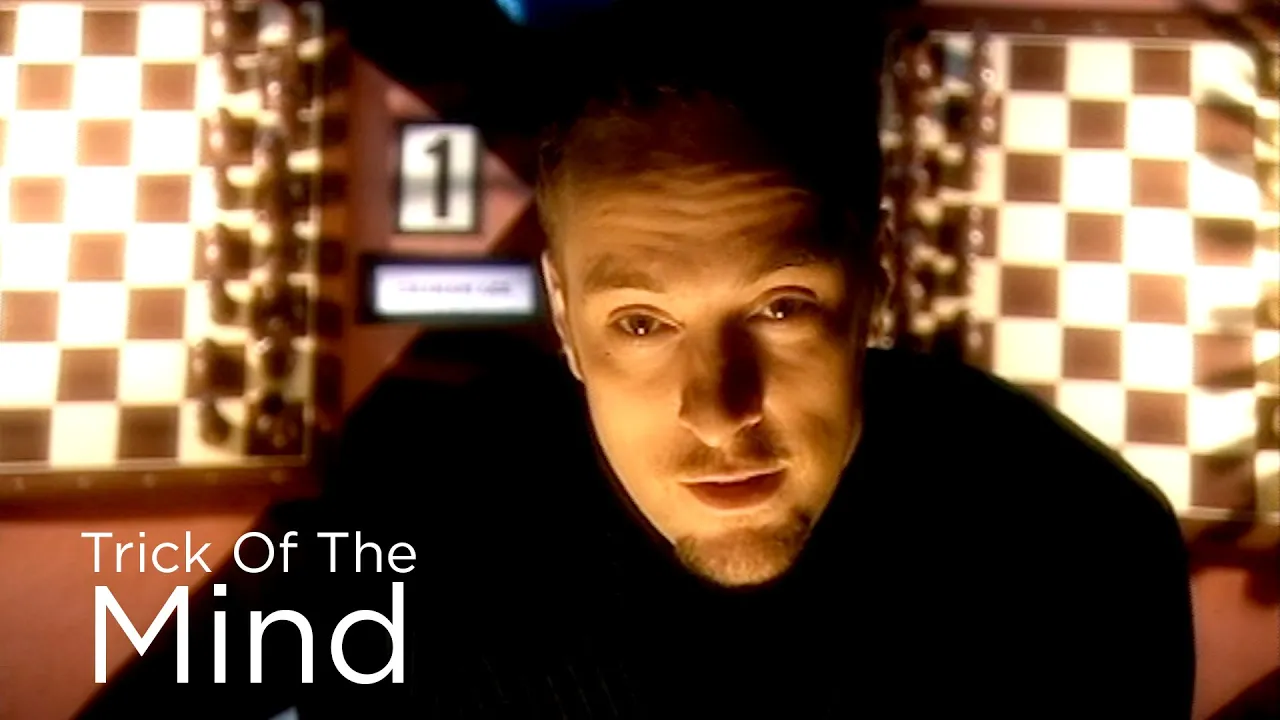
Derren Brown
Brown secured an overall victory against nine opponents by secretly relaying moves between eight paired masters to guarantee an even split, relying on a single genuine game against the weakest player to tip the score.
AI-assisted summary of Derren Brown vs 9 Chess Players — original source. Check the original for full context.
Source published:
Key ideas
- Derren Brown stages a simultaneous chess exhibition against nine opponents, including four world-rated Grandmasters, despite privately acknowledging to viewers that his personal chess ability is poor. (0:03)
- Brown finishes the simultaneous session with an aggregate winning record of four wins, three losses, and two draws, including victories against two Grandmasters. (3:18)
- A sealed prediction envelope handed to player Graham Lee prior to the match accurately details the final surviving piece counts across every board, including an annotated error. (3:18)
- The simultaneous stunt relied on secretly mirroring moves between four pairs of masters across eight boards, while Brown only genuinely played against the weakest player in the room. (7:25)
Detailed notes
## Background Published on YouTube by Derren Brown on November 11, 2015, the video depicts the mentalist taking on nine highly skilled chess opponents, including four international Grandmasters, in a simultaneous exhibition.
## TL;DR Derren Brown challenges nine elite chess players simultaneously, admitting to viewers that his chess skill is poor while bluffing the masters into believing he has intensively studied their play. Across the nine tables, he secures an overall room victory with four wins, three losses, and two draws, astonishing the participants further by opening a sealed envelope that accurately predicted the exact count of pieces remaining on each board. Brown subsequently reveals the core method behind the feat: he mentally paired eight of the grandmasters and masters against one another by memorizing and mirroring their moves across opposite tables, needing only to win a single genuine game against the least experienced player on the final board to secure the overall victory.
## Atmosphere & style The presentation carries a sharp contrast between Derren Brown's candid, self-deprecating commentary to the camera and the poised, intimidating atmosphere within the playing hall. Watching seasoned Grandmasters display genuine bewilderment and humility creates an aura of quiet suspense and intellectual tension. The mood shifts effortlessly from high-stakes mentalism to an engaging, mischievous reveal as Brown exposes the mechanics of the game, ultimately closing with a playful, enigmatic shrug regarding the piece-count prediction.
## Bulletin - [00:03](https://www.youtube.com/watch?v=rIAXIubSTkc&t=3s) Derren Brown stages a simultaneous chess exhibition against nine opponents, including four world-rated Grandmasters, despite privately acknowledging to viewers that his personal chess ability is poor. - [03:18](https://www.youtube.com/watch?v=rIAXIubSTkc&t=198s) Brown finishes the simultaneous session with an aggregate winning record of four wins, three losses, and two draws, including victories against two Grandmasters. - [03:18](https://www.youtube.com/watch?v=rIAXIubSTkc&t=198s) A sealed prediction envelope handed to player Graham Lee prior to the match accurately details the final surviving piece counts across every board, including an annotated error. - [07:25](https://www.youtube.com/watch?v=rIAXIubSTkc&t=445s) The simultaneous stunt relied on secretly mirroring moves between four pairs of masters across eight boards, while Brown only genuinely played against the weakest player in the room.
## Key takeaways - [00:03](https://www.youtube.com/watch?v=rIAXIubSTkc&t=3s) Derren Brown faces nine formidable opponents at once, a lineup featuring four Grandmasters, several Masters, and a university chess club president. - [00:03](https://www.youtube.com/watch?v=rIAXIubSTkc&t=3s) Brown highlights the immense calculation gap in chess, contrasting a Grandmaster's twenty-move foresight with his own admission of having poor chess skills. - [00:03](https://www.youtube.com/watch?v=rIAXIubSTkc&t=3s) Brown uses psychological misdirection, falsely claiming to the room that he spent a year studying their individual playing transcripts. - [00:03](https://www.youtube.com/watch?v=rIAXIubSTkc&t=3s) Before play begins, Graham Lee is handed a sealed envelope to hold inside his jacket pocket under strict instructions not to open or tamper with it. - [03:18](https://www.youtube.com/watch?v=rIAXIubSTkc&t=198s) The simultaneous games conclude with Brown earning four wins, three losses, and two draws, defeating two Grandmasters in the process. - [03:18](https://www.youtube.com/watch?v=rIAXIubSTkc&t=198s) Participants praise Brown's tactical sharpness, with seasoned masters remarking that his moves felt like playing against a top-tier grandmaster. - [03:18](https://www.youtube.com/watch?v=rIAXIubSTkc&t=198s) Brown writes out a multi-digit number representing the exact count of pieces left on each board before asking the players to tally their remaining pieces. - [03:18](https://www.youtube.com/watch?v=rIAXIubSTkc&t=198s) Graham Lee opens the sealed envelope from the start of the match to find the identical sequence of remaining pieces, including a note marking a mistake on table one. - [07:25](https://www.youtube.com/watch?v=rIAXIubSTkc&t=445s) Brown reveals that he did not play chess against eight of the opponents, but instead mentally paired them up across the room. - [07:25](https://www.youtube.com/watch?v=rIAXIubSTkc&t=445s) By memorizing and transferring moves between paired tables—such as table one versus table five—the masters were effectively playing each other through Brown. - [07:25](https://www.youtube.com/watch?v=rIAXIubSTkc&t=445s) Mirroring four pairs mathematically guarantees an even point balance across those eight boards regardless of how the individual games unfold. - [07:25](https://www.youtube.com/watch?v=rIAXIubSTkc&t=445s) Brown secures an overall room victory by targeting table nine, playing a legitimate game against the least experienced opponent to tip the overall score. - [07:25](https://www.youtube.com/watch?v=rIAXIubSTkc&t=445s) Brown intentionally leaves the method behind the sealed piece-count prediction unexplained, brushing it off with a comedic deflection.
## Detailed walkthrough ### [00:03](https://www.youtube.com/watch?v=rIAXIubSTkc&t=3s) The Simultaneous Chess Challenge
Derren Brown introduces the formidable roster of nine elite chess opponents assembled in the adjoining room. The lineup includes FIDE Master Graham Lee, Grandmaster John Nunn, Grandmaster Julian Hodgson, International Master Paul Littlewood, former England junior Desmond Tan, Grandmaster Jonathan Levitt, Grandmaster Chris Ward, FIDE Master Nathan Alfred, and Robert Chan, president of the King's College London Chess Society. Brown explains the immense intellectual disparity involved: an average-to-good chess player calculates roughly two to three moves ahead, whereas a Grandmaster can look ahead as many as twenty moves. Among his opponents are rising circuit stars, International Masters, and four world-rated Grandmasters.
```mermaid flowchart TD accTitle: The Simultaneous Chess Challenge Roster accDescr: Diagram grouping the nine chess players facing Derren Brown by their titles and experience.
subgraph GM["Grandmasters"] direction TB G1["John Nunn"] G2["Julian Hodgson"] G3["Jonathan Levitt"] G4["Chris Ward"] end
subgraph IM_FM["Masters & Juniors"] direction TB M1["Graham Lee (FIDE Master)"] M2["Paul Littlewood (International Master)"] M3["Nathan Alfred (FIDE Master)"] M4["Desmond Tan (Former England Junior)"] end
subgraph Club["University Chess"] C1["Robert Chan (President, KCL Chess Society)"] end ```
Despite the caliber of these players, Brown announces his intention to take them all on simultaneously. He openly admits to the viewers that his strategy does not rely on chess mastery: “I'm going to go in there and absolutely lie to them.” He hopes these psychological deceptions will give him enough of an edge to defeat a few of them and perhaps even take down a Grandmaster. As a frank caveat to the audience, he adds: “Do bear in mind as you watch this, my chess is shit.”
Addressing the room, Brown adopts an entirely different persona. He thanks the masters for their time, falsely assuring them that his chess is very good and that he spent an entire year reading game transcripts to familiarize himself with their playing styles. Before beginning, he hands a sealed envelope to Graham Lee at table one, asking him to keep it safe inside his jacket pocket without opening it until the end of the session. He also explicitly assures the players that no trickery, supercomputers, or hidden earpieces are involved in the demonstration.
[03:18](https://www.youtube.com/watch?v=rIAXIubSTkc&t=198s) The Games Conclude and the Prediction Reveal
As the simultaneous games wrap up, the stunned chess masters reflect on the matches and Brown's surprising caliber of play. One player admits, “I lost. I was beaten by the better man. I thought I was playing okay, but he just came up with some really good moves.” Another grandmaster confesses that during the first fifteen moves, “I felt as though I was playing a leading grandmaster opponent.” Julian Hodgson, a four-time British champion and a mainstay of top-tier English chess for fifteen years, concedes that what Brown achieved was extraordinarily impressive. Across the nine tables, Brown achieves four wins, three losses, and two draws—delivering an overall group victory that includes wins over two Grandmasters.
Before concluding, Brown asks each participant to count the exact number of their own pieces remaining on their board. He writes a long number on a pad—61171061118105—and asks if it means anything to them. Going down the tables, each player reads out their remaining piece count: - Table 1 (Graham Lee): 7 pieces (Brown remarks, “that's a mistake then. That should be a seven”) - Table 2: 11 pieces - Table 3: 1 piece - Table 4: 7 pieces - Table 5: 10 pieces - Table 6: 6 pieces - Table 7: 11 pieces - Table 8: 8 pieces - Table 9: 10 pieces (preceding Robert Chan) - Table 10 / Final Board (Robert Chan): 5 pieces
Brown invites Graham Lee forward to open the sealed envelope that had remained untouched in his jacket pocket since the very start of the match. Inside is a written slip showing the exact sequence: `6 (mistake) 11 7 10 6 11 8 10 5`. Lee and the other players are dumbfounded, with Lee affirming that the envelope was never switched or touched: “This game finished because it was a draw at some random point and yet he's predicted the number of pieces left in all the games. This is going to keep me awake tonight.”
[07:25](https://www.youtube.com/watch?v=rIAXIubSTkc&t=445s) The Secret Revealed: Pairing and Mirroring
Brown pulls back the curtain to reveal the core method behind the simultaneous exhibition. The entire setup hinges on mentally dividing eight of the top players into four pairs across the room. He assigns Graham Lee at table one (playing White) against Desmond Tan at table five (playing Black). When Graham opened with 1. e4, Brown did not formulate a response; he simply memorized the move, walked across to table five, and played 1. e4 against Desmond. Desmond countered with 1... c5 (the Sicilian Defence). Brown committed that reply to memory, walked back to table one, and mirrored 1... c5 against Graham.
```mermaid flowchart LR accTitle: The Mirror Technique in Simultaneous Chess accDescr: Flowchart illustrating how Derren Brown mirrors moves between Table 1 and Table 5 without playing his own moves.
subgraph PairOne["Paired Opponents"] T1["Table 1: Graham Lee (White)"] T5["Table 5: Desmond Tan (Black)"] end
subgraph Derren["Derren Brown (Conduit)"] M["Memorize & Transfer Moves"] end
T1 -->|"1. e4"| M M -->|"Plays 1. e4"| T5 T5 -->|"1... c5"| M M -->|"Plays 1... c5"| T1 ```
Brown explains the broader mechanism: “I'm not actually playing chess with either of them. I'm just remembering the moves and then mirroring them across on the other person's table. In fact, they're playing chess with each other.” Running this system across tables one through eight creates four self-contained games between the masters: - Moves from Table 1 are relayed to Table 5, and Table 5's replies are relayed back to Table 1. - Moves from Table 2 are relayed to Table 6, and Table 6's replies go back to Table 2. - Moves from Table 3 are relayed to Table 7, and Table 7's replies go back to Table 3. - Moves from Table 4 are relayed to Table 8, and Table 8's replies go back to Table 4.
Because each pair is playing against one another through Brown, the four pairs will inevitably produce an equal balance of wins and losses (or draws), balancing Brown's record at four points on one side and four on the other. To guarantee an overall winning record against the room, Brown isolates Table 9. Robert Chan, the university chess club president, is the least experienced player in the room. By playing a single genuine game of chess against Chan and defeating him, Brown tips the overall room score in his favor: “Robert is the least strong player of the group, and as long as I beat him, the result will tip in my favor. That's how I win.” As for how he pulled off the sealed prediction of the exact remaining piece counts, Brown wryly signs off with a classic magician's dodge: “As for how I predicted the number of pieces left on each board, I genuinely can't remember. Good night.”
## Mentioned Derren Brown, Graham Lee, John Nunn, Julian Hodgson, Paul Littlewood, Desmond Tan, Jonathan Levitt, Chris Ward, Nathan Alfred, Robert Chan, King's College London Chess Society, FIDE, Sicilian Defence
## Video description Derren takes on 9 highly skilled chess players, including 4 Grandmasters of the game, all at once.
For more subscribe to our channel - http://www.youtube.com/user/OfficialDerren #DerrenBrown #DerrenBrownMiracle #DerrenBrownShowman
[Source](https://www.youtube.com/watch?v=rIAXIubSTkc)