Exposing FRAUD And DECEPTION In The Retro Video Game Market
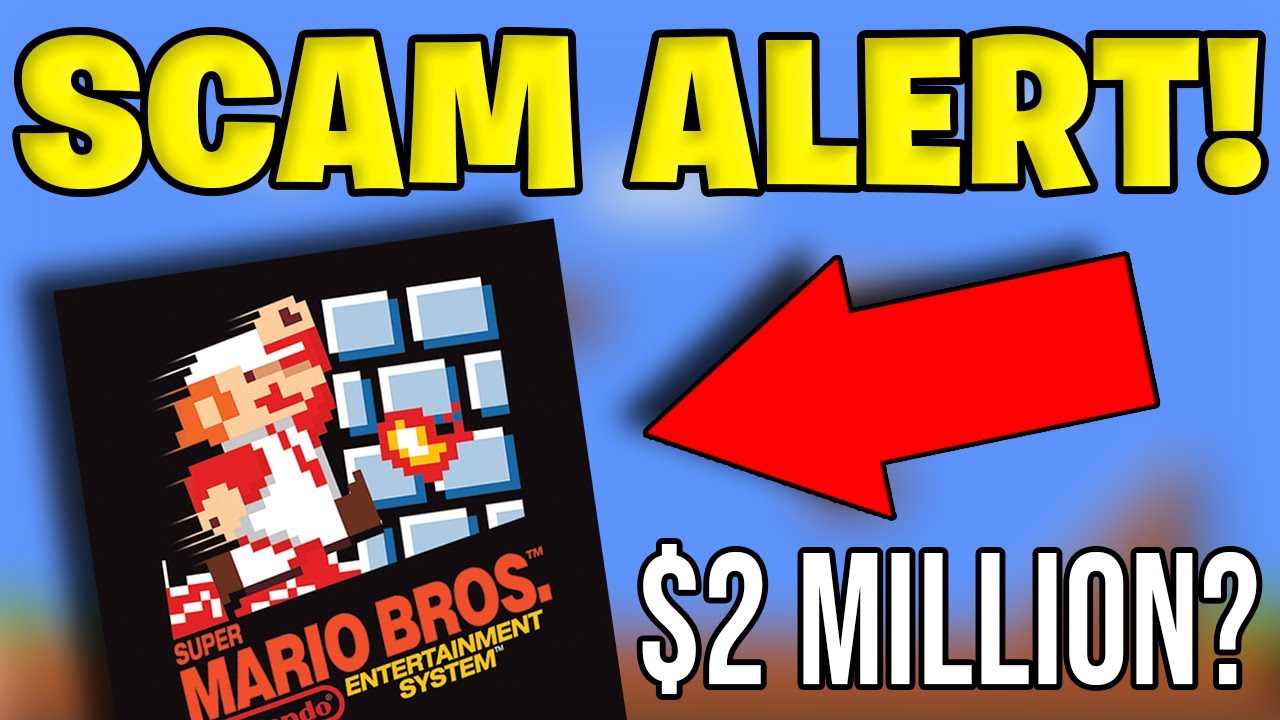
Karl Jobst
AI-assisted summary of Exposing FRAUD And DECEPTION In The Retro Video Game Market — original source. Check the original for full context.
Source published:
Key ideas
- Karl Jobst argues that the multi-million-dollar explosion in retro video game prices between 2017 and 2021 was an artificially manufactured speculative bubble driven by collusion between grading firm Wata Games and Heritage Auctions. (0:00)
- Wata Games and Heritage Auctions operate on fee structures tied to fair market valuations and auction hammer prices, establishing an inherent conflict of interest that financially incentivizes higher recorded sales. (5:47)
- Insiders from Heritage and Wata participated directly in record-breaking purchases, such as the February 2019 sale of a Super Mario Bros. copy for $100,000, which were subsequently used to launch coordinated media and PR campaigns. (10:01)
- The retro video game speculation closely mirrors the 1980s rare coin bubble, where third-party grading prompted institutional speculation, leading to an eventual market crash and an FTC consent order against Heritage leadership for overgrading. (39:02)
Detailed notes
## Background Published by investigative gaming commentator Karl Jobst on YouTube on August 23, 2021, this video documentary examines the unprecedented speculative bubble in the retro video game market. According to the video's description, the presentation sets out to expose who engineered the price explosion, who is profiting from the inflated valuations, and what reforms are necessary to fix the hobby.
## TL;DR Karl Jobst investigates the meteoric rise of vintage video game prices, tracing multi-million-dollar sales like the $2 million Super Mario Bros. cartridge to coordinated market manipulation rather than authentic collector demand. The documentary reveals deep conflicts of interest and close entanglements between grading firm Wata Games and Heritage Auctions, whose executives orchestrated insider record sales, launched aggressive media hype campaigns, and concealed executive affiliations while grading and auctioning their own inventory. Drawing direct parallels to the 1980s rare coin market crash and Heritage co-chairman Jim Halperin's 1989 FTC consent order for overgrading coins, Jobst documents arbitrary grading standards, shill bidding allegations, and withheld population reports that disguise artificial scarcity. Ultimately, Jobst and veteran collectors call for strict transparency, independent population tracking, and community pushback to prevent speculators from exploiting gaming history for financial gain.
## Atmosphere & style The presentation carries the intense, methodical gravity of a white-collar crime exposé, blending analytical financial scrutiny with genuine grassroots indignation. Jobst delivers his narrative with measured, serious conviction, methodically peeling back corporate filings, historical court records, and broadcast footage to reveal systemic industry collusion. As the investigation transitions from dry economic mechanics to the perversion of beloved gaming artifacts into cynical speculative gambling chips, the tone escalates into an impassioned, protective rallying cry for authentic video game preservation and community accountability.
## Bulletin - [00:00](https://www.youtube.com/watch?v=rvLFEh7V18A&t=0s) Karl Jobst argues that the multi-million-dollar explosion in retro video game prices between 2017 and 2021 was an artificially manufactured speculative bubble driven by collusion between grading firm Wata Games and Heritage Auctions. - [05:47](https://www.youtube.com/watch?v=rvLFEh7V18A&t=347s) Wata Games and Heritage Auctions operate on fee structures tied to fair market valuations and auction hammer prices, establishing an inherent conflict of interest that financially incentivizes higher recorded sales. - [10:01](https://www.youtube.com/watch?v=rvLFEh7V18A&t=601s) Insiders from Heritage and Wata participated directly in record-breaking purchases, such as the February 2019 sale of a Super Mario Bros. copy for $100,000, which were subsequently used to launch coordinated media and PR campaigns. - [39:02](https://www.youtube.com/watch?v=rvLFEh7V18A&t=2342s) The retro video game speculation closely mirrors the 1980s rare coin bubble, where third-party grading prompted institutional speculation, leading to an eventual market crash and an FTC consent order against Heritage leadership for overgrading.
## Key takeaways - [00:00](https://www.youtube.com/watch?v=rvLFEh7V18A&t=0s) Between 2017 and 2021, top-end sealed video game prices exploded by over 6,000%, driven by intentional market engineering rather than authentic organic collector demand. - [02:52](https://www.youtube.com/watch?v=rvLFEh7V18A&t=172s) Speculative bubbles rely on manufactured extrinsic value and require buyers who lack intrinsic interest in the underlying collectible. - [05:47](https://www.youtube.com/watch?v=rvLFEh7V18A&t=347s) Grading services charging sliding-scale fees based on declared market values and auction houses taking buyer premiums create severe conflicts of interest. - [07:59](https://www.youtube.com/watch?v=rvLFEh7V18A&t=479s) Wata Games and Heritage Auctions launched an exclusive partnership in 2019 to promote Wata-certified games before the grading firm had proven long-term grading reliability. - [10:01](https://www.youtube.com/watch?v=rvLFEh7V18A&t=601s) Heritage Auctions co-founder Jim Halperin personally co-purchased a $100,000 Super Mario Bros. copy, which Heritage and Wata then leveraged into extensive press coverage predicting million-dollar video games. - [12:40](https://www.youtube.com/watch?v=rvLFEh7V18A&t=760s) Mainstream television and media outlets, including Pawn Stars and gaming news sites, acted as uncritical conduits for Wata and Heritage promotional valuations. - [15:28](https://www.youtube.com/watch?v=rvLFEh7V18A&t=928s) High-end game acquisitions have been dominated by fractional ownership investment platforms like Rally, Mythic Markets, and Otis rather than traditional collectors. - [18:41](https://www.youtube.com/watch?v=rvLFEh7V18A&t=1121s) Media profiles promoted novice speculators backed by investment LLCs as passionate collectors, obscuring purely profit-driven motives aiming for hundred-fold returns. - [22:48](https://www.youtube.com/watch?v=rvLFEh7V18A&t=1368s) Heritage Auctions has faced historical allegations of shill bidding, including sworn testimony regarding the use of pseudonyms to manipulate bidding records. - [24:34](https://www.youtube.com/watch?v=rvLFEh7V18A&t=1474s) Whistleblower accounts describe auction house insiders bidding up their own items at auction to artificially establish inflated public valuation benchmarks. - [28:13](https://www.youtube.com/watch?v=rvLFEh7V18A&t=1693s) Undisclosed Wata leadership ties to the 'Carolina Collection' revealed that high-ranking corporate insiders submitted and flipped slabbed games despite public denials. - [32:47](https://www.youtube.com/watch?v=rvLFEh7V18A&t=1967s) Subjective grading disparities create extreme price gaps for minor numerical differences, fostering speculative practices like the 'crack-out game.' - [36:10](https://www.youtube.com/watch?v=rvLFEh7V18A&t=2170s) Wata co-founders accumulated massive stockpiles of sealed classic games at conventions prior to widespread public adoption of their grading service. - [39:02](https://www.youtube.com/watch?v=rvLFEh7V18A&t=2342s) The retro video game boom replicates the 1980s coin market bubble, which unraveled after encapsulation sparked Wall Street speculation and resulted in millions in investor restitution. - [40:48](https://www.youtube.com/watch?v=rvLFEh7V18A&t=2448s) In 1989, the FTC charged Jim Halperin, Steve Ivy, and Heritage affiliates with deceptive grading practices, concluding with a $1.2 million consumer redress settlement. - [45:04](https://www.youtube.com/watch?v=rvLFEh7V18A&t=2704s) Wata's refusal to publish population reports creates artificial scarcity, leaving buyers vulnerable to severe price collapses when surprise inventory enters the market. - [48:04](https://www.youtube.com/watch?v=rvLFEh7V18A&t=2884s) Speculative mania in high-end sealed software has spilled over into loose cartridge markets, prompting predatory pricing across casual retro game trading.
## Detailed walkthrough ### [00:00](https://www.youtube.com/watch?v=rvLFEh7V18A&t=0s) The Absurd Spike in Retro Video Game Prices
In 2017, the record for the most expensive video game ever sold was set at $30,000 for a mint-condition, factory-sealed copy of the original *Super Mario Bros.* Just four years later, in 2021, the record for the most expensive video game ever bought leaped to an astounding $2 million. That was not an entirely different rarity, but a sealed copy of the very same game—representing an increase of over 6,000% in a mere four-year span. Headlines began dominating the internet with tales of eye-watering sums, culminating in a sealed copy of *Super Mario 64* fetching $1.5 million. This kind of explosive growth is completely unprecedented in video game collecting. For decades, the hobby was a niche, grassroots space where collectors had little fame to gain and rarely possessed extreme wealth. Unlike the high-end traditional art world, where the ultra-wealthy publicly flaunt multimillion-dollar acquisitions, video game collecting was driven by passionate gamers and nerds scrounging whatever spare cash they could find to acquire cartridges as cheaply as possible. All one needed was passion and time, because retro games were simply never that expensive.
Everything changed with the launch of a company called Wata Games. Karl Jobst explains that this sudden price explosion was not an organic development, but the deliberate work of a select group of wealthy, powerful individuals pulling strings behind the scenes to enrich themselves. This is not an isolated phenomenon; the exact same speculative playbook has been executed across other collectible markets for nearly fifty years, frequently involving the exact same figures. Karl states: “This entire situation is fraught with unethical business practices, deception, collusion, and even fraud.”
- **2017 record:** $30,000 for a mint-condition, sealed *Super Mario Bros.* - **2021 record:** $2,000,000 for the same title, reflecting a >6,000% surge in four years. - **Mid-2021 headline:** $1,500,000 paid for a sealed copy of *Super Mario 64*.
---
[02:52](https://www.youtube.com/watch?v=rvLFEh7V18A&t=172s) Intrinsic vs. Extrinsic Value and Tulip Mania
Understanding how this market scheme functions requires grasping the distinction between intrinsic and extrinsic properties, and how they dictate perceived value. Intrinsic properties exist within the physical object itself—in the case of a painting, that means the physical canvas, the chemical composition of the oil paint, and the visual image formed on the surface. Extrinsic properties, by contrast, represent the object’s relationship to the outside world: who created it, when and under what circumstances it was made, historical context, and cultural demand. Extrinsic qualities are what generate astronomical price tags in collectibles. An identical reproduction of a Vincent van Gogh painting produced by a robotic arm might visually and materially match an original hanging in a gallery, but it would only be worth the raw cost of paint and canvas. Human psychology attaches immense value to extrinsic narratives, leading people to spend millions on historical provenance and rarity.
Karl draws a direct comparison between today's video game explosion and the famous 17th-century Dutch "Tulip Mania" during the Dutch Golden Age. Originally prized as luxury display items for their vibrant, exotic colors, tulip bulbs steadily rose in value until speculators entered the scene. Speculation occurs when someone purchases an asset not out of personal need or utility, but strictly in the hope that rising prices will yield a lucrative resale down the road. Speculator demand fueled a self-reinforcing positive feedback loop that pushed prices higher, drawing in even more buyers terrified of missing out. Karl points out the two defining rules of all speculative bubbles: buyers have no intrinsic interest in the underlying good, and the inflation is fundamentally unsustainable, culminating in a brutal market crash that leaves final holders holding worthless assets. Crucially, Karl stresses that the current video game bubble is no accident: “You see, if you know how speculative bubbles work, you can theoretically create them at will.”
```mermaid flowchart TD accTitle: The Speculative Feedback Loop accDescr: A cyclical flowchart illustrating how speculative buying feeds on itself until the bubble collapses. subgraph BubbleLoop["The Speculative Bubble Loop"] A["Artificial or Early Price Increase"] --> B["Speculators Enter to Flip for Profit"] B --> C["Demand Surges & Drives Prices Higher"] C --> D["FOMO Sparks Mainstream Speculator Rush"] D --> B end D -->|"Unsustainable momentum"| E["Demand Peaks & Buyers Vanish"] E --> F["Crash: Last Buyers Left Holding the Bag"] ```
---
[05:47](https://www.youtube.com/watch?v=rvLFEh7V18A&t=347s) The Real Beneficiaries: Grading Companies and Auction Houses
While buying early and flipping late is the obvious route to profiting from a bubble, far greater sums with far lower risk are harvested by institutional middlemen: grading companies and auction houses. A grading company acts as a third-party quality-assurance service, inspecting physical video games, certifying their authenticity, assessing their preservation state, and encasing them in tamper-evident plastic slabs with numerical scores. This standardization removes subjective friction, streamlining rapid-fire transactions. Grading houses do not merely collect flat service fees; their pricing models often scale as a direct percentage of the declared fair market value of the submitted item. Grading a game valued at $10,000 might set a submitter back $400, but having that exact same game graded when valued at $1,000,000 can cost upward of $20,000.
The biggest winners, however, are the auction houses. Heritage Auctions, the epicenter of the headline-shattering video game sales, charges a mandatory 20% buyer's premium on every hammer price. A collector winning a lot for $1,000,000 must hand over an extra $200,000 directly to Heritage, while the house also skims an additional 5% commission from the seller. This financial architecture gives auction houses and grading companies an overwhelming incentive to inflate game valuations as high as possible. Karl emphasizes why this poses a severe ethical hazard: “They have a huge conflict of interest, and whenever you see a grading company or an auction house talking about how valuable games are, you know it's because they want to drive prices up.”
- **Grading company fees:** Scale with asset valuation (e.g., ~$400 for a $10,000 game versus >$20,000 for a $1,000,000 item). - **Heritage Auctions fee structure:** - 20% buyer's premium added to the hammer price. - 5% seller's commission deducted from the payout. - Total auction house fee capture on a $1,000,000 transaction: ~$250,000.
---
[07:59](https://www.youtube.com/watch?v=rvLFEh7V18A&t=479s) The Entangled Launch of Wata Games and Heritage Auctions
The apparatus driving this speculative wave centers around two specific entities: Wata Games and Heritage Auctions. Wata was founded in 2017 and publicly launched its grading operations in April 2018 under President and CEO Deniz Kahn. Wata's encapsulation and numerical condition grading serve as the primary justification cited by buyers and media for the astronomical sale prices. Video game grading itself was not new; the Video Game Authority (VGA) had been slabbing and grading retro games since 2008 without ever distorting the broader market into a speculative frenzy. Unlike VGA, Wata aggressively engineered an artificial boom.
The auction platform facilitating these sales is Heritage Auctions, established in 1976 by Steve Ivy and Jim Halperin. While Ivy plays little role in this unfolding saga, Jim Halperin is an essential figure. Heritage built an empire auctioning high-end collectibles such as rare coins, comic books, and fine art, before introducing a dedicated retro video game department in 2019. From day one, Heritage restricted its game auctions exclusively to copies certified by Wata Games. Remarkably, this alliance predates Wata's actual operational record. When Wata first launched its public website, its "Dealer Spotlight" section already advertised that Wata-certified games would be featured in Heritage's online auctions. Karl points out the glaring absurdity of an elite auction house staking its credibility on an untested startup: “The entire point of certification is to guarantee authenticity and quality, but a guarantee is worthless if you haven't established a history of accurate work.”
| Organization | Key Personnel | Established | Role in Market | |:--- |:--- |:--- |:--- | | **Wata Games** | Deniz Kahn (President & CEO) | Founded 2017; launched April 2018 | Standardizes grades, encapsulates games, and legitimizes multi-million dollar valuations. | | **Heritage Auctions** | Jim Halperin (Co-founder) & Steve Ivy | Founded 1976; launched video game division in 2019 | Hosts high-profile sales, restricts lots to Wata-graded items, charges 20% buyer + 5% seller fees. | | **VGA (Video Game Authority)** | *(Pre-existing incumbent)* | Founded 2008 | Graded retro games for a decade without triggering artificial speculative market bubbles. |
[10:01](https://www.youtube.com/watch?v=rvLFEh7V18A&t=601s) The Unholy Alliance: Heritage Auctions, Wata Games, and Just Press Play
Karl Jobst questions why an established, prestigious institution like Heritage Auctions would agree to sell games authenticated by Wata Games—a completely unproven company that had not graded a single video game before partnering with them. A trusted entity like Video Game Authority (VGA) had already been in the business for ten years. The only reasonable explanation, Jobst argues, is that Heritage Auctions was directly involved in Wata's inception and knew the startup was aligned with its financial ambitions. That intimate connection was not even hidden: Jim Halperin, the co-founder and co-chairman of Heritage Auctions, was openly listed on Wata's website as an official advisor. Another founding partner was Just Press Play, a used video game retailer run by Zac Gieg, which also immediately pledged to retail Wata-certified titles.
Building a speculative bubble requires spreading information rapidly to entice new capital and convince onlookers that an explosive market is emerging. To achieve this, the actors behind the bubble staged headline-grabbing transactions. In February 2019, a copy of *Super Mario Bros.* sold for an unprecedented $100,000. Prior to that transaction, the highest price ever fetched by a video game was roughly $30,000. The true nature of this record sale becomes obvious once the buyers' identities are examined: it was jointly purchased by three insiders—Jim Halperin (co-founder of Heritage Auctions), Zac Gieg (owner of Just Press Play), and Richard Lecce, a prominent coin and video game collector.
Immediately after the sale, Heritage Auctions issued an official press release to maximize media coverage. The acquisition was never about preserving history; it was purely an advertising stunt. In that very press release, Halperin floated the idea that this copy might be consigned to a future auction. Dennis Kahn, CEO of Wata Games, also provided a quote designed to push the narrative: “Wata-certified video games have been selling for record prices ever since Heritage began auctioning them in January. While many video games sell regularly for five figures, breaking the six-figure mark shows that the hobby's upward trajectory indicates no signs of slowing down.”
```mermaid flowchart TD accTitle: The Wata and Heritage Speculative Loop accDescr: Diagram showing how Heritage Auctions, Wata Games, and insider buyers coordinate record purchases, press coverage, and resale hyping.
subgraph Insiders["The Insiders"] JH["Jim Halperin<br>(Heritage Auctions)"] ZG["Zac Gieg<br>(Just Press Play)"] RL["Richard Lecce<br>(Major Collector)"] DK["Dennis Kahn<br>(Wata Games CEO)"] end
subgraph TheStunt["Coordinated Sale & PR"] SALE["February 2019 Record Purchase:<br>Super Mario Bros. for $100,000"] PR["Heritage Auctions Press Release<br>& Mainstream Media Echo"] end
subgraph Speculation["Hype Machine"] TV["TV & Press Spots<br>(Pawn Stars, Ars Technica, Kotaku)"] PUMP["Forecasts of $1M+ Games<br>to Fuel Speculative Bubble"] end
JH & ZG & RL -->|"jointly buy"| SALE DK -->|"endorses & grades"| SALE SALE --> PR PR --> TV TV --> PUMP PUMP -.->|"future sales at higher valuations"| JH ```
- Halperin, Gieg, and Lecce paid $100,000 for the *Super Mario Bros.* cartridge in February 2019, eclipsing the prior all-time high of $30,000. - Heritage Auctions generated widespread press coverage from a transaction funded in part by its own chairman. - Jobst sums up the shameless circular nature of the scheme: “So what you have here is the chairman of the auction house buying a game for a record price and then creating a press release about his own purchase in which himself and the president of the grading company are stating that the value of games is going up.”
---
[12:40](https://www.youtube.com/watch?v=rvLFEh7V18A&t=760s) Dennis Kahn’s Media Campaign and TV Appraisals
The promotional blueprint succeeded, triggering a wave of articles from outlets like Kotaku and Ars Technica. Across every feature, Dennis Kahn aggressively pushed the idea that game values were destined to skyrocket. In Kotaku, Kahn boldly projected: “I've always said video games are going to go the way of comics or cars or coins. It's only a matter of time until a video game sells for a million dollars.” Halperin chimed in similarly in Ars Technica, declaring, “There are bets on what will someday be the first million dollar game, and many collectors believe that this will be the one.” Jobst expresses disbelief that mainstream reporters routinely allowed the owner of an item to openly hype its valuation to ten times what he had just paid without any skepticism.
To broaden their reach, the group brought the graded $100,000 *Super Mario Bros.* onto the reality TV show *Pawn Stars*, boldly declaring it was worth $1,000,000. The appearance served as prime marketing to establish Wata as the supreme grading authority despite its lack of track record compared to VGA. Kahn himself appeared on *Pawn Stars* repeatedly as an expert appraiser, evaluating games at astronomical figures—including asserting that items were worth triple their recent purchase prices. Although seasoned collectors saw through the scheme and criticized Kahn for using his platform to manipulate prices, he persisted unabated. He kept drumming up the speculation narrative all the way through the $1.5 million sale of *Super Mario 64* in July 2021, telling *The Verge*: “I think that we are going to continue to see record-breaking sales.”
---
[15:28](https://www.youtube.com/watch?v=rvLFEh7V18A&t=928s) Who Is Really Buying? Fractional Shares and Market Flippers
Jobst contrasts genuine video game collecting—where hobbyists gladly display their libraries on YouTube—with the secretive atmosphere surrounding modern record-breaking sales. Heritage Auctions conceals the true buyers behind non-disclosure policies and refuses to verify whether funds actually cleared. However, regulatory filings reveal the real buyers: investment firms rather than nostalgic gamers. While looking into Kahn appraising a copy of *Mike Tyson's Punch-Out!!* at $80,000 on *Pawn Stars*, Jobst tracked down an SEC purchase agreement showing that the seller, Brian, sold that exact cartridge for $80,000 to RSE Archive LLC, the entity operating as Rally.
Rally, along with Mythic Markets and Otis, represents a wave of fractional ownership apps that launched alongside Wata. These platforms acquire high-end assets and sell speculative equity shares to users hoping to flip their micro-stakes for quick cash. SEC filings confirm these fractional platforms purchased substantial inventory directly through Heritage:
- Rally purchased a copy of *Super Mario Bros.* for $140,000 in 2020 (the very same cartridge that was later resold for $2,000,000 in August 2021). - Rally bought *GoldenEye 007* for $22,800, *Grand Theft Auto* for $13,200, and *Donkey Kong* for $38,400 from Heritage. - Mythic Markets acquired a graded copy of *Metroid* for $46,800. - Otis purchased *Mike Tyson's Punch-Out!!* for $130,000, *Pokémon Yellow* for $78,000, and *Golf* for $18,000. - Speculators also bought high-ticket items at Heritage simply to relist them on eBay at absurd markups, such as an $84,000 copy of *Super Mario Bros.* posted with a $1.5 million asking price.
As Jobst summarizes the reality behind the bidding wars: “I haven't heard of a single legitimate collector buying any of these expensive games. It's entirely speculation purely for profit.”
---
[18:41](https://www.youtube.com/watch?v=rvLFEh7V18A&t=1121s) The Myth of the "Avid Collector": Eric Naierman
To manufacture the illusion that passionate video game collectors were fueling these price surges, promoters turned to figures like Eric Naierman. In 2019, *The Washington Post* published a widely syndicated profile celebrating Naierman, a dentist, for supposedly dropping over $1 million on vintage video games and framing him as one of the world's preeminent collectors.
Jobst dismantles this narrative as complete fiction. Naierman had only begun buying games in 2019, entering the hobby right as the bubble started inflating. Furthermore, Naierman was not spending his own personal fortune; he was merely the frontman deploying capital pooled from a syndicate of outside investors. Behind the scenes, familiar figures reappeared to stoke the hype: Dennis Kahn offered quotes magnifying the market's potential, and Heritage Auctions promoted the soaring valuations, all while Naierman leveraged the media spotlight to push the narrative of games as explosive financial instruments.
[19:50](https://www.youtube.com/watch?v=rvLFEh7V18A&t=1190s) The Manufactured Bubble and Eric Naierman's Speculative Play
The mainstream press, including outlets such as *The Washington Post*, has presented collector Eric Naierman as an organic pioneer at the leading edge of retro video game collecting, ignoring the fact that he only entered the scene in 2019. Reports falsely framed his massive multi-game acquisition as an individual purchase, obscuring the reality that the capital originated from a speculative investment partnership. Alongside Wata Games and Heritage Auctions executives, who routinely appear in print to offer glowing assessments of the market, this coverage functions far less as objective reporting and far more as coordinated promotion. As Karl Jobst bluntly frames the dynamic: “It's because this is not news, it's propaganda.” Naierman serves as a high-profile spokesperson whose financial incentive requires the public to believe that video games are legitimate multi-million-dollar assets before he cashes out.
Naierman openly acknowledged his speculative ambitions and investment thesis in a podcast interview. After discovering vintage video games listed on Heritage Auctions, he viewed the nascent sector through the same lens as the modern NFT boom and sports card markets. Seeing how high-end trading cards like Mike Trout modern issues had exploded, he realized video games were completely unmined by comparison and could offer 100x returns out of the gate. Naierman explained his drive as wanting a speculative “time machine,” comparing it to watching prominent card collectors on Instagram:
> “And then when I like when it played through in my head I'm like oh my god this is like so much better than cards and my for me I mean also it's a new and emerging market like you guys are having an NFTs. It's that excitement of like wow if this even catches up a quarter of to where cards have gone you know we could we could see 100x returns just at the beginning you know because it was so new. But as a as a collectible investment this was like everything that I was I saw on a Mike Trout card but like to the max on steroids. And for me it was a time machine.” — Eric Naierman
Acting on that instinct, Naierman organized an LLC, drafted a formal business plan, and raised capital directly from affluent friends and neighbors. While acknowledging the high-risk nature of the wager, his backers handed over sums such as $15,000 on the grounds that he was passionate and the loss would not break them. Early results showed immediate paper gains:
> “Well to show even on Heritage Auctions eBay auctions, look, we already what we spent appreciated 20 to 30 percent, this is working, I'm gonna get out there and I'm gonna I'm gonna help make the market, I'm gonna let people know about this, I'm forming a market around something that I feel that is severely underappreciated, so that's what I was doing.” — Eric Naierman
Jobst emphasizes that this capital wave is not driven by hobbyist passion: “My point is that it's not collectors that are buying any of these games, it's purely people with a lot of money trying to scam other people out of theirs by manufacturing a bubble that otherwise shouldn't exist.”
- Naierman treats vintage video games as an emerging alternative asset class alongside modern NFTs and high-end sports cards. - The investment vehicle was established as a formal LLC with outside capital from wealthy associates rather than personal hobbyist funds. - Rapid 20% to 30% jumps on initial eBay and Heritage purchases were leveraged to justify aggressive marketing and media appearances to push asset valuations upward.
---
[22:48](https://www.youtube.com/watch?v=rvLFEh7V18A&t=1368s) The Mechanics of Shill Bidding and Heritage Auctions' Legal Past
While misleading public relations campaigns help create hype, the auction mechanism itself relies on an even more destructive tactic to artificially ratchet up price records: shill bidding. In any competitive auction, pricing power is strictly dictated by the presence of multiple active bidders driving bids back and forth. Shill bidding subverts this process by inserting fraudulent bids into the auction to inflate final realized hammer prices. Often orchestrated in collusion with consignors who want maximum payout, a third party continually bumps the price upward until reaching a predetermined reserve or target figure, deliberately stepping aside at the last second to leave an authentic buyer holding the bill.
Crucially, this incentive structure is not limited to dishonest sellers; auction houses reap massive collateral rewards from elevated hammer totals. Higher closing prices yield higher buyer's premiums and simultaneously signal to prospective consignors that this specific platform commands the top market prices in the world. Heritage Auctions has faced direct legal scrutiny over this exact practice. In 2008, former employee Gary Hendershott filed a lawsuit accusing Heritage Auctions of utilizing a shill bidder operating under the pseudonym "N.P. Gresham" to systematically push hammer prices higher.
While the lawsuit ultimately concluded with an out-of-court settlement, sworn proceedings produced troubling inconsistencies regarding Heritage leadership. Heritage Auctions co-founder and co-chair Jim Halperin—who was also part of the small buyer syndicate that purchased the record-breaking $100,150 copy of *Super Mario Bros.*—was caught lying under oath. Halperin initially asserted under sworn testimony that the bidder "N.P. Gresham" was completely fictitious and did not exist, only to later reverse his testimony and admit under scrutiny that the identity was real.
```mermaid flowchart TD accTitle: Shill Bidding Feedback Loop accDescr: Diagram illustrating how shill bidding inflates prices and attracts future consignments to an auction house.
subgraph Auction_Fraud ["Manipulated Auction Event"] A["Legitimate Buyer Place Bids"] --> B["Shill Bidder / Insider Enters Fake Bids"] B --> C["Hammer Price Driven to Record Level"] end
subgraph Market_Consequences ["Ecosystem Impact"] C --> D["Higher Commission & Premium for Auction House"] C --> E["Media Outlets Broadcast Record Sales"] E --> F["New Sellers Consign Items Exclusively to Platform"] F --> A end ```
---
[24:34](https://www.youtube.com/watch?v=rvLFEh7V18A&t=1474s) Insider Whistleblowing: David Wilson and Jim Halperin's Playbook
The legal allegations from the 2008 lawsuit do not stand alone. While conducting investigative research into the space, Jobst conferred with prominent retro gaming archivist Pat Contri ("Pat the NES Punk"), who connected him with David Wilson, the founder and operator of the YouTube channel *Comic Book Investments* and the business Collector's Comics. Wilson's father was an elite comic book dealer during the 1980s and 1990s who shared a personal friendship with Jim Halperin spanning decades. That relationship led to his father taking a position inside Heritage Auctions as a professional comic book grader for roughly two years.
During his tenure at Heritage, Wilson's father observed the internal mechanics of how top executive collections moved through the house and shared those direct observations with his son. Halperin, who maintains one of the largest and most valuable comic book collections in the world, was alleged to have systematically used Heritage's own auction floor to artificially mark up the value of items he owned:
> “And he told me, he's like, yeah, so they're manipulating the market. And my dad gave me an example: Jim is one of the biggest comic collectors in the world, he has one of the biggest collections in the world, just huge. And what Jim does, and this is what my dad said, he would take a comic book, let's say he would take this book, right, he put in his collection, and like three four years later he'd throw it up on Heritage, and then he would manipulate the price by bidding it up. So say he bought the book for three grand forever ago, he throws it in a Heritage auction and then he bid it up to say like five grand, six grand, buy it from himself basically. He bids it up and then he sticks it away back in his collection. And then every couple years later, three, four, five years later, whatever, makes its way back into the Heritage auction, does it again. And what that does is it stimulates the market by pushing it up, propping it up higher than it is to show like, hey, there's been a sale of this comic book or video game for this price, so that means it must be worth that much.” — David Wilson
By repurchasing his own items through his own platform at higher price points, Halperin effectively created concrete sales records that permanently recalculated the established market value across the entire collectible category:
> “And that's, I, that's kind of like what I'm feeling that they're doing with video games, they're propping them up like super high, higher than they should be, to create a market, manipulate the market into thinking that these video games are actually worth this much because they have sales data to prove it.” — David Wilson
- When an asset sells at an inflated benchmark, every surviving copy of that item, as well as related releases across the category, sees its perceived retail appraisal surge. - Unprecedented closing prices generate free viral press coverage across major digital news publications, cementing Heritage as the primary market maker. - The extreme opacity of anonymous telephone and internet bidders shields the auction house from scrutiny, leaving the public unable to confirm whether recent milestones—such as Rally's headline-grabbing $2,000,000 *Super Mario Bros.* transaction—represent genuine arms-length deals or internal price propping.
---
[28:13](https://www.youtube.com/watch?v=rvLFEh7V18A&t=1693s) The Conflict of Interest at Wata Games
The structural issues uncovered at Heritage Auctions mirror equally problematic arrangements inside Wata Games. While manipulating an auction house involves phantom bidding or buying out one's own consignments, exploiting a grading firm centers on certifying items owned by the company's own leadership. If grading house officers grade their own submissions, an immediate structural conflict arises: their incentive is to award high numerical grades that drastically amplify the real-world cash value of their personal inventories.
Wata leadership has recognized this moral hazard publicly. In a statement given to *The New York Times*, Wata Games president Deniz Kahn explicitly laid out the company's stated ethics policy, affirming that employees are strictly forbidden from having their personal games certified by the firm or selling games that have been graded by Wata:
> “Wata employees are not allowed to have games graded by the company or sell those that were.” — Karl Jobst, quoting Deniz Kahn from *The New York Times*
Jobst underlines that while this restriction is an essential prerequisite for any reputable grading service, its integrity depends entirely on whether leadership enforces it. He transitions immediately to a major 2019 private exchange between two prominent figures in the collecting sphere. The first party in this transaction was Dain Anderson, the founder of NintendoAge—which, prior to its acquisition, served as the central home for retro gaming enthusiasts, hosting the single most comprehensive archival database of software variants and release details in the hobby.
[29:20](https://www.youtube.com/watch?v=rvLFEh7V18A&t=1760s) The Carolina Collection, Jeff Meyer, and Wata’s Secret Ties
Dain Anderson possessed one of the largest assortments of sealed Nintendo games in existence and operated NintendoAge, the premier community database and price reference for retro video games. In 2019, Anderson sold his entire collection to Jeff Meyer, the founder and CEO of the comic book price guide GoCollect. The acquisition was monumental—one of the largest transactions in hobby history. Wata Games marked the occasion by christening it the "Carolina Collection," a pedigree label reflecting that both Anderson and Meyer hailed from the Carolinas. Wata encapsulated the games with this exclusive title printed directly onto the grading labels. Meyer promptly flipped these newly slabbed titles through Heritage Auctions, generating over $500,000 from the first auction alone.
```mermaid flowchart TD accTitle: The Carolina Collection Transaction Flow accDescr: Diagram illustrating how Dain Anderson sold games to Jeff Meyer, who had them graded by Wata with pedigree labels and flipped them through Heritage Auctions. subgraph Origin["Foundational Deal"] A["Dain Anderson<br>(Wata Exec Officer 2017)"] -->|"Sells massive sealed collection"| B["Jeff Meyer<br>(Wata Director / GoCollect CEO)"] end subgraph Processing["Grading & Labeling"] B -->|"Submits inventory"| C["Wata Games"] C -->|"Applies pedigree 'Carolina Collection' label"| D["Specially Graded Inventory"] end subgraph Liquidation["Market Flipping"] D -->|"Consigns to auction"| E["Heritage Auctions"] E -->|"Yields $500,000+ return"| B end ```
The deeper issue lies in corporate disclosure: Jeff Meyer was not an ordinary client, but a director of Wata Games according to the company’s own SEC regulatory filings. While Wata president Deniz Kahn publicly asserted that employees were barred from grading and selling company-slabbed items, a sitting director had his personal holdings graded, distinguished with unique prestige labeling, and liquidated through affiliated auction channels for massive profits. Meyer’s ties were never disclosed to buyers. To make matters worse, Meyer purchased NintendoAge and immediately shut it down, while simultaneously buying Game Value Now, effectively consolidating and controlling access to historical video game pricing data. Meyer maintained this opacity online, discussing Wata in the third person in GoCollect blog posts by praising his “great relationships with the awesome folks at Wata Games.” Furthermore, Dain Anderson was Wata's original executive officer upon its incorporation in 2017, meaning the entire blockbuster deal unfolded between two insiders directly tied to Wata.
- Jeff Meyer: Founder/CEO of GoCollect and an undisclosed director of Wata Games. - Dain Anderson: Founder of NintendoAge and executive officer of Wata Games at its 2017 incorporation. - First auction yield: Over $500,000 realized on Heritage Auctions from the Carolina Collection run. - Data control: Meyer acquired and shuttered NintendoAge, followed by the purchase of Game Value Now. - As Karl Jobst points out regarding Kahn's double standard: “Dennis Khan obviously knows who the directors of his company are so it really makes you think when he blogs about the carolina collection on the water games website but fails to disclose that the purchaser of the collection is a director and it forces you to think even harder when you realize that at the very same time he is telling the new york times that employees cannot grade or sell water graded games.”
---
[32:47](https://www.youtube.com/watch?v=rvLFEh7V18A&t=1967s) The Subjectivity of Grading: From $1.5M Mario to Broken Seals
The incentive to self-grade and control inventory stems from the exponential pricing power tied to fractional grade increases. A pristine copy of *Super Mario 64* graded 9.8 A++ by Wata shattered records at Heritage Auctions when it hammered for $1.5 million. On that very same auction day, another copy of *Super Mario 64* carrying an 8.5 rating fetched just $31,000—a nearly 5,000% difference attributable almost entirely to a numerical rating. Because hundreds of thousands or even millions of dollars ride on fractional discrepancies, buyers rely on the assumption of absolute objectivity. Yet collectible grading remains an inherently subjective human appraisal prone to wild variance.
This human inconsistency drives the widespread practice of "re-grading" or the "crack-out game." Speculators who receive an unsatisfactory score frequently pry open the plastic slab and resubmit the item, betting that another grader will assign a higher number that exponentially inflates the market value. Shawn from Reserved Investments highlighted this exact dynamic in comic grading: “You have a lot of people playing what I call the crack out game meaning they get a comic book back and it comes back CGC 9.6, they think it should be a 9.8, so they crack that baby open and they keep sending it back to CGC hoping that at some point that grader is either going to slip up or that grader is going to get that book and go, 'Hey you know what, this is a 9.8.'” Shawn cautioned that market participants routinely fall prey to this illusion: “The average collector, the average speculator and the average investor out there is overvaluing a lot of these items based on the grade not realizing that in certain instances the grade is arbitrary, it is an estimation, it is not an exact science.”
Wata's internal inconsistencies can be seen without cracking cases. A copy of *Tomb Raider* for the Sega Saturn recently commanded $12,000 at Heritage Auctions bearing a Wata grade of 9.8 A+. Inspection of the physical item contradicted Wata’s own published standards: - The plastic wrap exhibited multiple large tears; Wata's explicit guidelines mandate that an A+ seal must contain no holes whatsoever. - The wrap displayed numerous smaller punctures, heavy scuffs, and stains that looked visibly disgusting, falling well short of standard B-grade examples. - Despite flagrant physical defects, the game received top-tier grades, demonstrating that the metrics justifying million-dollar market valuations are fundamentally unreliable.
---
[36:10](https://www.youtube.com/watch?v=rvLFEh7V18A&t=2170s) Insider Accumulation and the 1980s Coin Market Parallel
If someone possesses foreknowledge of an impending speculative surge, the obvious economic play is to hoover up relevant inventory before prices skyrocket. Mark Haspel, a co-founder and chief advisor of Wata Games with decades of history in comics but none in gaming, began aggressively accumulating sealed software right around Wata’s 2017 inception. Haspel traveled to retro expos, deliberately targeting iconic, high-demand NES franchises—such as *Super Mario Bros.*, *Metroid*, *Mega Man*, *Castlevania*, and *The Legend of Zelda*—the very titles that later produced multimillion-dollar auction records. One collector documented that Haspel bought sealed six-packs of games a full year before Wata launched its public operations.
Content creator Pat the NES Punk shared a firsthand account of seeing Haspel hunting games on expo floors: “In June 2019 I was a guest at a gaming convention, the weekend of the event I noticed a small group of individuals who were hurriedly acquiring sealed and complete in box games from vendors, at one point I witnessed an individual who I later learned to be Mark Haspel returning to the Wata expo booth while holding a stack of NES games, I did find it a little strange but was unaware of any affiliation that person may have had with Wata so I didn't think much of it at the time.” While private collecting is legal and personal motives are difficult to prove in court, the pattern indicates that key insiders accumulated blue-chip inventory ahead of an explosive run they helped engineer.
```mermaid flowchart LR accTitle: The Slabbing Bubble Precedent accDescr: Comparison showing how third-party slabbing caused the 1980s coin bubble and is now mirrored in retro video games. subgraph Historic["1980s Coin Market"] C1["Uncertified Coins"] --> C2["PCGS Slabbing & Plastic Holders"] C2 --> C3["Speculative Bubble & PCGS 3000 Spike"] C3 --> C4["Market Crash<br>(Unrecovered 30 Years Later)"] end subgraph Present["Modern Video Game Market"] G1["Raw Retro Games"] --> G2["Wata Encapsulation & Certification"] G2 --> G3["Record Heritage Auction Sales"] G3 -.-> G4["Potential Collapse"] end ```
This dynamic mirrors historical market manias, notably the 1980s coin collecting bubble. Tracking services like the PCGS 3000 Index—a numismatic equivalent of the Dow Jones—record a parabolic price spike during the late 1980s, followed by an aggressive collapse from which prices have failed to recover three decades later, even before adjusting for inflation. Historical analysis reveals the catalyst was not organic demand, but the advent of third-party encapsulation ("slabbing"), where raw items were sealed in plastic holders and stamped with subjective grades by third-party evaluators.
[39:02](https://www.youtube.com/watch?v=rvLFEh7V18A&t=2342s) The 1980s Coin Market Bubble and the Mechanics of Speculation
Around the mid-1980s, the formation of third-party grading services like PCGS (Professional Coin Grading Service) and NGC (Numismatic Guaranty Corporation) revolutionized numismatics almost overnight. An *Antique Trader* article notes that dealers, collectors, and investors suddenly felt comfortable buying and selling slabbed coins sight unseen because of the widespread trust placed in these grading numbers. This dynamic directly mirrors what is unfolding in retro video games: when standardized encapsulation makes purchasing effortless and seemingly risk-free, trading volume surges, prices climb, and mainstream investors take notice. Wall Street soon took the mania to another level, with major firms like Kidder, Peabody & Co., Merrill Lynch, and UBS establishing dedicated coin hedge funds to channel investor capital into rare coins, inflating the speculative bubble even further.
```mermaid flowchart TD accTitle: The Mechanics of the Coin Speculative Bubble accDescr: A flowchart illustrating the rise and eventual collapse of the 1980s coin market bubble.
subgraph Rise ["Bubble Formation"] A["Standardized Slab Grading<br>(PCGS & NGC)"] --> B["Sight-Unseen Trading<br>& Surging Confidence"] B --> C["Hedge Funds Enter<br>(Merrill Lynch, Kidder Peabody)"] end
subgraph Fall ["Bubble Collapse"] C --> D["Market Reaches Peak"] D --> E["Speculators Rush to Liquidate"] E --> F["Market Flooded with No Buyers"] F --> G["Price Collapse & Massive Lawsuits"] end ```
Every speculative mania ultimately collapses because prices cannot climb indefinitely. Speculative buyers hold no emotional attachment to the underlying items; their sole motive is profit, meaning that at the first whiff of a market peak, they stampede for the exits to liquidate inventory before their capital evaporates. The market suddenly becomes inundated with supply, yet new buyers vanish, destroying valuations and leaving late-coming participants holding worthless assets. The bursting of the 1980s coin bubble triggered extensive fallout, leaving hedge funds buried in legal actions from ruined clients. Merrill Lynch alone was forced to pay out more than $20 million in restitution to its burned investors, prompting the Federal Trade Commission (FTC) to step in and investigate the root causes of the disaster.
- Major Wall Street firms including Kidder, Peabody & Co., Merrill Lynch, and UBS established dedicated rare coin funds. - Speculators who buy purely for capital appreciation inevitably flood the market during downturns because they have no desire to keep the physical items. - Merrill Lynch paid back over $20 million to settle lawsuits arising from its collapsed coin investment fund.
---
[40:48](https://www.youtube.com/watch?v=rvLFEh7V18A&t=2448s) Jim Halperin, Heritage Auctions, and the FTC's 1989 Consent Order
The prevailing industry narrative often credits PCGS and NGC as the pioneers of third-party coin grading, but the very first was actually the Numismatic Certification Institute (NCI), established in 1984. Following an inquiry, the FTC determined that NCI systematically misled consumers regarding coin grading and values. A 1989 *Los Angeles Times* article covering the scandal highlighted a dilemma that remains acutely relevant decades later: while rarity is straightforward to verify, grading is inherently subjective. When an ostensibly impartial service overgrades a coin, it artificially inflates its perceived market price. The FTC ruled that systematic overgrading constituted a deceptive and unfair business practice under the FTC Act of 1914, penalizing two Texas corporations—Heritage Capital Corporation and NCI—along with their principals, Steve Ivy and James L. Halperin.
Under a 1989 consent order, Heritage and NCI were compelled to establish a $1.2 million redress fund for consumers who had bought NCI-graded coins through Certified Rare Coin Galleries (CRCG) of Miami. According to the FTC’s 1989 Annual Report, NCI, Ivy, and Halperin settled charges that their grading representations and omissions misled customers about coin values. Concurrently, affiliate Heritage Capital Corporation settled charges of aiding and abetting CRCG while knowing the retailer misrepresented the financial safety and profit potential of rare coins. Halperin’s numismatic influence ran deep: in 1985 he authored *How to Grade U.S. Coins*, a foundational text that directly informed the grading criteria later adopted by PCGS and NGC. Because Halperin helped design the grading philosophy behind the very companies blamed for the 1980s mania, an overwhelming historical case ties him directly to that collapse.
Karl Jobst argues that this historical precedent destroys any defense of innocence or lack of awareness:
> “As I’ve said before, it’s impossible to prove intent, but one thing you can certainly disprove is ignorance.”
Halperin experienced the mechanics of a grading-fueled collectible bubble firsthand and paid a seven-figure penalty for his involvement. Today, Halperin is an advisor and rumored investor in Wata Games, serves as co-chairman of Heritage Auctions (where these games hammer for record-breaking figures), and personally bought the $100,150 *Super Mario Bros.* copy that kicked off the current run. As Jobst observes, having the exact same figure entangled in every component of the ecosystem four decades later strains credibility beyond mere coincidence.
- The Numismatic Certification Institute (NCI) was established in 1984 as the first third-party coin grading company. - Steve Ivy, James L. Halperin, Heritage Capital Corporation, and NCI were charged by the FTC with deceptive practices related to coin overgrading. - Heritage and NCI signed a consent order contributing $1.2 million to reimburse defrauded buyers who purchased coins through Certified Rare Coin Galleries. - In 1985, Jim Halperin authored *How to Grade U.S. Coins*, which shaped the standards used by PCGS and NGC.
---
[45:04](https://www.youtube.com/watch?v=rvLFEh7V18A&t=2704s) Artificial Scarcity, Missing Population Reports, and the Atari Spider-Man Crash
The retro video game bubble faces severe vulnerabilities that could hasten an eventual collapse, foremost among them being the intentional absence of population reports. In every mature collecting hobby, certified grading authorities publish detailed population data outlining the exact quantity of an item authenticated along with their grade distributions. For instance, a comic collector can consult the Certified Guaranty Company (CGC) census to see precisely how many high-grade copies of *Action Comics* #1 exist before risking capital. Wata Games, however, suppresses this data, keeping the actual census hidden from buyers. This opacity creates an artificial perception of scarcity, leaving purchasers completely blind to true market supply.
```mermaid flowchart LR accTitle: The Atari 2600 Spider-Man Market Crash accDescr: Timeline demonstrating the collapse of Atari 2600 Spider-Man values once supply flooded Heritage Auctions.
subgraph May2020 ["May 2020"] A["First Wata 9.8 A++ Listed<br>Perceived Rare"] --> B["Sells for $9,000"] end
subgraph Flood ["Supply Discovered"] B --> C["Market Flooded with<br>9.8 A++ Copies"] end
subgraph April2021 ["April 2021"] C --> D["Wata 9.8 A++ Sells for $870"] D --> E["Over 90% Price Collapse<br>in Under One Year"] end ```
When real supply finally leaks out, prices inevitably crater, as demonstrated by *Spider-Man* for the Atari 2600. In May 2020, Heritage Auctions sold the first Wata-certified 9.8 A++ sealed copy for an astounding $9,000 under the assumption that a flawless, forty-year-old cartridge was extraordinarily scarce. Yet sealed copies of *Spider-Man* were never actually rare. Once that benchmark was set, Heritage was flooded with identical 9.8 A++ copies, causing market values to erode with each subsequent sale. By April 2021, an identical 9.8 A++ copy hammered for a mere $870—representing an astonishing price decline of more than 90 percent in under twelve months. Wata and Heritage withhold population reports precisely to avoid this inventory realization across more prominent titles. Jobst laments that everyday collectors lack the platform to combat this manipulation, while mainstream media outlets uncritically echo corporate press releases rather than addressing the glaring structural conflicts of interest.
- Population reports allow collectors to verify true rarity by seeing how many copies of an item exist at every grade tier. - Wata Games does not publish population reports, hiding overall submission and grade census numbers from the public. - An Atari 2600 *Spider-Man* graded Wata 9.8 A++ dropped from a $9,000 sale in May 2020 down to $870 in April 2021. - Mainstream gaming journalists repeatedly take soundbites from Wata and Heritage at face value without consulting veteran retro collectors.
---
[48:04](https://www.youtube.com/watch?v=rvLFEh7V18A&t=2884s) Longtime Collectors Speak Out: Pat the NES Punk on Market Exploitation
To contrast corporate marketing narratives with the perspective of the collecting grassroots, Jobst interviews veteran enthusiasts who have tracked the scene for decades. Longtime YouTuber, podcaster, and NES collector Pat Contri (known online as "Pat the NES Punk"), who has actively preserved and documented retro gaming since the late 1990s, shares his dismay over the speculative takeover of the hobby. Contri expresses heartbreak that decades of authentic community building, scholarship, and historic preservation by hobbyists, store owners, and forum researchers have been co-opted and distorted by an insulated circle of wealthy operators seeking financial windfalls.
Pat Contri condemns the current state of the sealed market:
> “The unfortunate end result is that this hobby that we all love has been perverted, it’s been twisted to the ends of a small group of people to line their pockets.”
Contri points out that the real passion, research, and sweat equity invested by store owners, hobbyists, and community archivists have been hijacked as marketing fodder for predatory speculation. He stresses that the entire ecosystem of genuine video game lovers has essentially been stepped on by wealthy players treating cultural artifacts as financial chips, concluding that while it may already be too late to halt the damage, the market desperately needs complete transparency and fundamental accountability.
[49:29](https://www.youtube.com/watch?v=rvLFEh7V18A&t=2969s) The Demand for Ethics, Transparency, and Population Reports
The video game collecting market suffers from a critical absence of accountability and disclosure regarding conflicts of interest. Collectors have a right to know if individuals helping to run an auction house are actively buying and selling the very items crossing the auction block, or whether the employees grading these games are trading them privately. When grading authorities and auction platforms fail to disclose these financial entanglements, bad behavior goes unchecked. Karl Jobst emphasizes that eliminating these vulnerabilities is entirely straightforward: Wata Games must regularly publish and update comprehensive population reports detailing exactly how many copies of each title and grade exist in circulation. Without these essential metrics, artificial scarcity is trivial to manufacture, leaving collectors vulnerable to market manipulation.
Instead of approaching the hobby strictly as an investment vehicle to turn a long-term profit, consumers and collectors are urged to hold these institutions accountable. Passionate enthusiasts must actively demand operational transparency and established ethical standards from grading firms, auction houses, and prominent industry figures alike. As Karl Jobst insists: “What you should be doing is demanding better from grading companies from auction companies from other players in the trade you should be demanding ethics and transparency.”
- The community needs clear disclosures showing whether auction house leadership or grading staff trade in the games they assess and auction. - Regular, public population reports from Wata Games would immediately mitigate manipulative scarcity tactics. - The fundamental issue plaguing the current market is a systemic lack of ethics and transparency.
[50:36](https://www.youtube.com/watch?v=rvLFEh7V18A&t=3036s) The Destructive Spillover Effect on Everyday Collectors
The artificial speculative bubble engineered at the top tiers does not remain isolated to six- and seven-figure sealed grails; its destructive effects ripple through the entire ecosystem. Over the course of two years, prices for ordinary, unsealed, and loose video games have surged dramatically across the board. Everyday collectors who genuinely care about the history and simply want to assemble a personal collection find themselves priced out of a hobby that has become financially inaccessible. Worse still, dishonest opportunistic sellers exploit breathless mainstream news reports of multi-million-dollar sales to prey on uninformed buyers. Loose, cart-only copies of *Super Mario 64* that are realistically worth around ten dollars frequently appear listed on platforms like eBay for hundreds or even thousands of dollars.
Wealthy and influential actors have hijacked the retro video game space, exploiting widespread nostalgia purely to construct speculative financial instruments. Jobst expresses deep frustration at watching heartfelt childhood memories transformed into an unregulated casino for profit extraction. As Karl Jobst bluntly reflects: “As someone who does care deeply about gaming it honestly sickens me that these people have turned these cherished possessions into a means to gamble and speculate and i hope this ridiculous practice of trying to extract profit from the suckers who buy the hype will end sooner rather than later.”
```mermaid flowchart TD accTitle: Speculative Bubble Spillover Effect accDescr: Diagram illustrating how high-end speculative auction prices inflate ordinary retro game prices and fuel scam listings.
subgraph TopTier["Market Manipulation"] A["Record-Setting Sealed Auctions\n(Millions of Dollars)"] B["Mainstream Media Hype &\nSpeculative Gambling"] end
subgraph BottomTier["Market Fallout"] C["Loose Cartridge Inflation\n(e.g., $10 Mario 64 listed for $1,000s)"] D["Everyday Collectors Priced Out"] end
A --> B B --> C C --> D ```
[51:31](https://www.youtube.com/watch?v=rvLFEh7V18A&t=3091s) Community Credit and Call to Action
To conclude the exposé, Jobst directs viewers toward several veteran collectors who provided vital context and insights into the mechanisms behind these collectibles markets. He encourages audiences to subscribe to Pat the NES Punk and Shawn from Reserved Investments, commending both for their decades of experience in vintage collecting and their courage in speaking openly about industry abuses. He also highlights David Wilson from Comic Book Investments, acknowledging the bravery required to share inside information regarding these coordinated market activities. Jobst emphasizes that uncovering and dismantling speculative bubbles requires an active, vigilant community willing to publicly call out powerful entities whenever they attempt to manufacture artificial hype. As Karl Jobst concludes: “Next time you see them trying to do it make sure you call it out and let them know that we won't tolerate it.”
- Viewers are urged to support veteran creators and whistleblowers, specifically Pat the NES Punk, Shawn from Reserved Investments, and David Wilson of Comic Book Investments. - Exposing artificial market manipulation relies on educated community members challenging and calling out bad actors in real time.
## Notable quotes > [07:59](https://www.youtube.com/watch?v=rvLFEh7V18A&t=479s) The entire point of certification is to guarantee authenticity and quality, but a guarantee is worthless if you haven't established a history of accurate work. — Karl Jobst
> [05:47](https://www.youtube.com/watch?v=rvLFEh7V18A&t=347s) Whenever you see a grading company or an auction house talking about how valuable games are, you know it's because they want to drive prices up. — Karl Jobst
> [02:52](https://www.youtube.com/watch?v=rvLFEh7V18A&t=172s) If you know how speculative bubbles work, you can theoretically create them at will. — Karl Jobst
> [12:40](https://www.youtube.com/watch?v=rvLFEh7V18A&t=760s) I've always said video games are going to go the way of comics or cars or coins. It's only a matter of time until a video game sells for a million dollars. — Dennis Kahn
> [40:48](https://www.youtube.com/watch?v=rvLFEh7V18A&t=2448s) It’s impossible to prove intent, but one thing you can certainly disprove is ignorance. — Karl Jobst
## Mentioned Action Comics #1, Ars Technica, Carolina Collection, Castlevania, Certified Rare Coin Galleries, CGC, Comic Book Investments, Dain Anderson, David Wilson, Deniz Kahn, Donkey Kong, eBay, Eric Naierman, Federal Trade Commission, Game Value Now, Gary Hendershott, GoCollect, GoldenEye 007, Golf, Grand Theft Auto, Heritage Auctions, Heritage Capital Corporation, Jeff Meyer, Jim Halperin, Just Press Play, Karl Jobst, Kidder, Peabody & Co., Kotaku, Mark Haspel, Mega Man, Merrill Lynch, Metroid, Mike Trout, Mike Tyson's Punch-Out!!, Mythic Markets, NGC, NintendoAge, Numismatic Certification Institute, Otis, Pat Contri, Pawn Stars, PCGS, Pokémon Yellow, Rally, Reserved Investments, Richard Lecce, RSE Archive LLC, Spider-Man (Atari 2600), Steve Ivy, Super Mario 64, Super Mario Bros., The New York Times, The Verge, The Washington Post, Tomb Raider, UBS, Video Game Authority, Vincent van Gogh, Wata Games, Zac Gieg
## Video description Support the channel on Patreon - http://patreon.com/karljobst Absolute Legend MERCH - https://streamlabs.com/karljobst/merch
In today's video we take a look at the current retro video game bubble. We learn who caused it to happen, who is profiting, and what needs to be done to fix it.
Subscribe to these collectors:
Pat the NES Punk - https://www.youtube.com/user/PatTheNESpunk Reserved Investments - https://www.youtube.com/channel/UCx7Bgclw--3869YPuztSH9A Comic Book Investments - https://www.youtube.com/channel/UCvllaJtVO3hlWTd8IM2cTnw
Please follow me on these platforms, it really helps!
Discord: https://discord.gg/EjDRvg7 Twitter: https://twitter.com/karljobstgaming Twitch: https://twitch.tv/karljobst
Music:
GTA V - Pause music Galaxy map - Mass Effect Steady - Veritas Deep Sea - Perfect Dark Carrington Institute - Perfect Dark Maian Tears - Perfect Dark Resurrections - Celeste Home Bay - Ecco Level 0 - Tetris Cd-i
[Source](https://www.youtube.com/watch?v=rvLFEh7V18A)