Flashback! The Internet In 1995 | Archives | TODAY
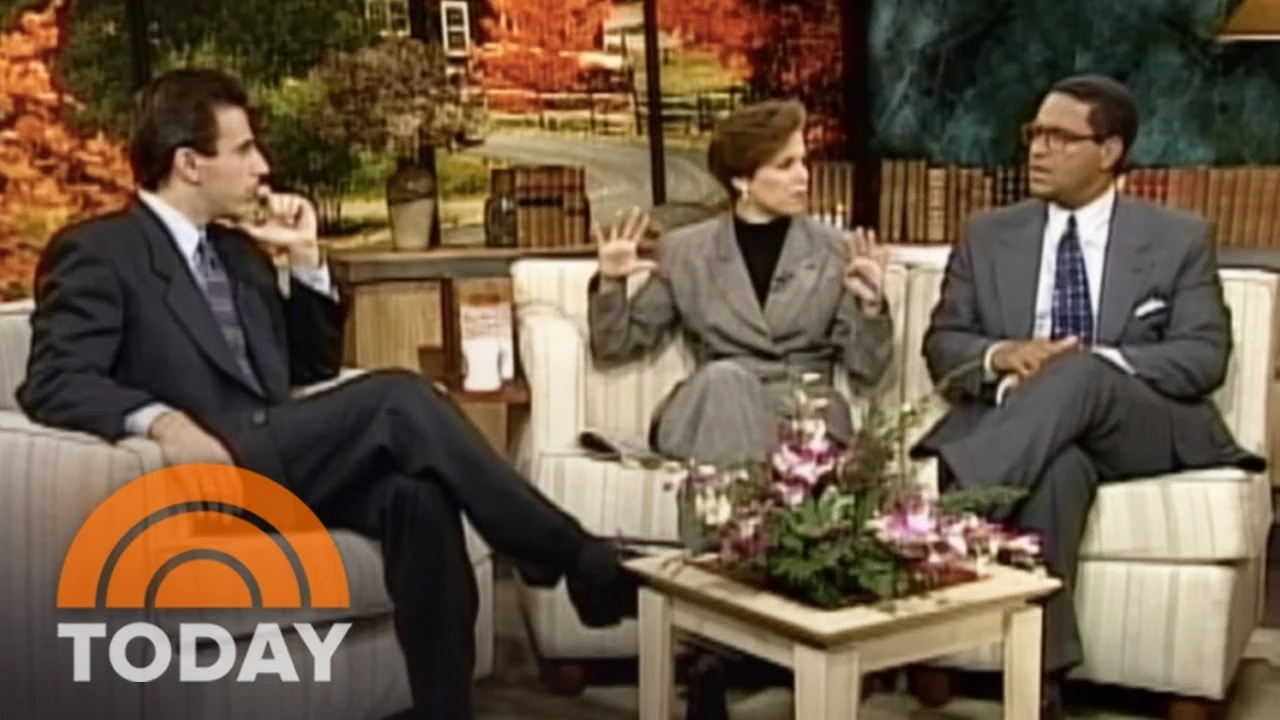
Flashback! The Internet In 1995 | Archives | TODAY — TODAY

TODAY

AI-assisted summary of Flashback! The Internet In 1995 | Archives | TODAY — original source. Check the original for full context.

Source published:

Key ideas

  • In the mid-1990s, consumer internet access was introduced to television audiences as requiring only a personal computer, a dial-up modem, a telephone line, and a modest monthly fee. (0:01)
  • Archival footage from the TODAY show captured mainstream bewilderment over basic digital conventions, including hosts Bryant Gumbel and Katie Couric struggling to identify and pronounce the "@" symbol in an email address. (0:01)
  • Tech analysts accurately forecasted that the "information superhighway" would disrupt traditional print directories like the Yellow Pages and achieve universal business adoption by the year 2000. (0:01)
  • Early media discourse reflected prescient anxieties regarding digital connectivity, with anchors warning of internet addiction, loss of family time, and inescapable information overload. (1:00)

Detailed notes

## Background Published on YouTube by the TODAY channel on June 13, 2014, this archival compilation revisits vintage NBC News footage from 1994 and 1995. The video showcases anchors including Bryant Gumbel, Katie Couric, Matt Lauer, and Tom Brokaw attempting to make sense of the burgeoning "World Wide Web" and internet culture when both were still mysterious novelties.

## TL;DR The video captures mid-1990s television hosts and commentators grappling with the early dawn of the digital age and the "information superhighway." On the TODAY set, Bryant Gumbel and Katie Couric puzzle over the basics of cyberspace, struggling to decipher the "@" symbol in an email address and asking their producers to explain what the internet actually is. While tech analysts accurately predict that online networks will replace print directories like the Yellow Pages and absorb every business by the year 2000, Couric and Gumbel voice sharp skepticism about the social costs. They debate whether chat rooms are merely the "group therapy of the '90s" and worry that constant connectivity will lead to addiction, family neglect, and inescapable information overload.

## Atmosphere & style The compilation plays like a charming, comedic time capsule, striking an amusing contrast between high-stakes technological change and the utterly baffled reactions of seasoned network broadcasters. The dynamic between Gumbel and Couric is candid, unvarnished, and playfully bewildered as they throw their hands up at basic computer jargon on live television. Beneath the vintage nostalgia, the segment carries an eerie prescience, making modern viewers laugh at the hosts' confusion over an email address while nodding in recognition at their eerily accurate fears of digital exhaustion.

## Bulletin - [00:01](https://www.youtube.com/watch?v=95-yZ-31j9A&t=1s) In the mid-1990s, consumer internet access was introduced to television audiences as requiring only a personal computer, a dial-up modem, a telephone line, and a modest monthly fee. - [00:01](https://www.youtube.com/watch?v=95-yZ-31j9A&t=1s) Archival footage from the TODAY show captured mainstream bewilderment over basic digital conventions, including hosts Bryant Gumbel and Katie Couric struggling to identify and pronounce the "@" symbol in an email address. - [00:01](https://www.youtube.com/watch?v=95-yZ-31j9A&t=1s) Tech analysts accurately forecasted that the "information superhighway" would disrupt traditional print directories like the Yellow Pages and achieve universal business adoption by the year 2000. - [01:00](https://www.youtube.com/watch?v=95-yZ-31j9A&t=60s) Early media discourse reflected prescient anxieties regarding digital connectivity, with anchors warning of internet addiction, loss of family time, and inescapable information overload.

## Key takeaways - [00:01](https://www.youtube.com/watch?v=95-yZ-31j9A&t=1s) Gaining early internet access required relatively accessible consumer hardware: a personal computer, a dial-up modem, a working telephone line, and a small monthly subscription. - [00:01](https://www.youtube.com/watch?v=95-yZ-31j9A&t=1s) Television anchors on the TODAY set struggled to decode basic digital syntax, including the onscreen email address violence@nbc.ge.com. - [00:01](https://www.youtube.com/watch?v=95-yZ-31j9A&t=1s) Bryant Gumbel noted that while he had seen the "@" symbol in print, he had never heard it spoken aloud and felt foolish attempting to pronounce it on air. - [00:01](https://www.youtube.com/watch?v=95-yZ-31j9A&t=1s) Katie Couric admitted she originally assumed the "@" symbol stood for "about" rather than "at." - [00:01](https://www.youtube.com/watch?v=95-yZ-31j9A&t=1s) Commentators described the expanding network as the backbone of the "information superhighway," forecasting major shifts in daily commerce and information retrieval. - [00:01](https://www.youtube.com/watch?v=95-yZ-31j9A&t=1s) Tech analysts predicted that every business, regardless of size, would have an online presence by the year 2000. - [00:01](https://www.youtube.com/watch?v=95-yZ-31j9A&t=1s) Pundits anticipated that the internet would quickly replace physical reference staples such as the Yellow Pages. - [00:01](https://www.youtube.com/watch?v=95-yZ-31j9A&t=1s) Observers noted that much of the mid-90s rush to get online was driven by cultural trendiness, observing that it was simply considered "very hip." - [01:00](https://www.youtube.com/watch?v=95-yZ-31j9A&t=60s) Bryant Gumbel famously voiced the public's confusion by throwing his hands up and asking off-camera producer Allison Davis, "What is internet anyway?" - [01:00](https://www.youtube.com/watch?v=95-yZ-31j9A&t=60s) Early conceptualizations of the internet described it broadly as a massive, rapidly growing computer network, with hosts questioning if users physically sent letters to it. - [01:00](https://www.youtube.com/watch?v=95-yZ-31j9A&t=60s) NBC integrated early email connectivity to allow viewers to send direct feedback to network writers and producers. - [01:00](https://www.youtube.com/watch?v=95-yZ-31j9A&t=60s) Katie Couric articulated early concerns about digital addiction, fearing that subscribing to the internet would lead to being hooked and neglecting family time. - [01:00](https://www.youtube.com/watch?v=95-yZ-31j9A&t=60s) Studio anchors expressed skepticism toward virtual communities, labeling online message boards and chat rooms the "group therapy of the '90s." - [01:00](https://www.youtube.com/watch?v=95-yZ-31j9A&t=60s) Couric resisted joining the internet due to information fatigue, stating she already felt inundated with data and had no desire for more. - [01:00](https://www.youtube.com/watch?v=95-yZ-31j9A&t=60s) The broadcast contrasted the internet with landline telephones, expressing anxiety that digital communication would create an inescapable barrage of unwanted messages.

## Detailed walkthrough ### [00:01](https://www.youtube.com/watch?v=95-yZ-31j9A&t=1s) Decoding the "@" Symbol and the Rise of the Information Superhighway

In the mid-1990s, the dawn of the digital age was introduced to television viewers as an accessible frontier: with millions of Americans already owning personal computers, glimpsing the future required little more than a modem, a standard telephone line, and a few dollars a month. Yet, as the technological wave arrived, even seasoned broadcasters struggled with its most basic conventions. During a live broadcast of the *TODAY* show, Bryant Gumbel and Katie Couric found themselves utterly bewildered by an onscreen email address (`violence@nbc.ge.com`). Examining the address syntax, Gumbel puzzled over the typography, remarking on “that little mark with the ‘a’ and then the ring around it.” When told it meant “at,” Gumbel admitted his initial confusion and pointed out Couric's own guess: “Katie said she thought it was about.” He confessed that while he had seen the typographical glyph in print, he had never heard it spoken aloud and felt foolish trying to pronounce it on air.

Beyond studio banter, news segments tackled the serious economic disruption promised by the burgeoning network. Commentators and tech analysts hailed it as the main artery of the "information superhighway," projecting a total transformation of daily commerce and media consumption. One analyst issued an audacious forecast: “Every business no matter how large and no matter how small will be on the internet in the year 2000.” The technology was predicted to become the primary medium through which ordinary citizens would look up information, ultimately displacing print staples like the Yellow Pages. When an anchor questioned whether businesses and individuals were flocking to the network simply out of fear of missing out on the competitive playing field, an expert wryly observed the cultural zeitgeist, noting, “Well, it's very hip to be on the internet right now.”

- **Hardware and cost requirements:** A household only needed a personal computer, a dial-up modem, a working telephone line, and a modest monthly subscription fee to gain online access. - **Commercial predictions:** Analysts accurately anticipated that the internet would eclipse print directories like the Yellow Pages and become ubiquitous across all commercial enterprises by the turn of the millennium.

---

[01:00](https://www.youtube.com/watch?v=95-yZ-31j9A&t=60s) “What Is Internet Anyway?”: Studio Confusion and Social Anxiety

Back on the *TODAY* set, the confusion deepened as the anchors tried to conceptualize what cyberspace actually was. Staring down at the prompt on his notes, Gumbel threw his hands up in bewilderment over the address formatting and called out to off-camera producer Allison Davis, insisting that she should know the answer: “What is internet anyway?” He ventured an explanation based on what he had gathered, describing it tentatively: “Internet is, uh, that massive computer network, the one that's becoming really big now.” Still grappling with how communication flowed across wires, Gumbel asked whether users physically wrote letters to it like traditional mail. Couric noted that viewers used it to communicate directly with NBC writers and producers, before playfully asking Allison whether she could summarize the internet in ten seconds or less—concluding that the technology was far too complex to distill into a quick soundbite.

```mermaid flowchart TD accTitle: Early Internet Perceptions in 1995 accDescr: Diagram illustrating the studio debate over the Internet as an information tool versus a source of social anxiety and overload.

subgraph TechUnderstanding["Conceptualizing the Internet"] A["Massive Computer Network"] --> B["Direct Communication\n(Email to NBC writers)"] A --> C["Online Forums &\nChat Rooms"] end

subgraph HostConcerns["Host Skepticism & Anxieties"] C --> D["'Group therapy of the '90s'\n(Whining with strangers)"] B --> E["Loss of Family Time\n('Fear of getting hooked')"] B --> F["Information Bombardment\n(Unwanted, inescapable messages)"] end ```

The discussion soon shifted from technical curiosity to deep skepticism about the social and mental health impacts of constant connectivity. Couric voiced a relatable personal worry about internet addiction, stating, “I'm afraid that if I subscribed to something like internet, I would get hooked and I would never spend time with my family.” She questioned the appeal of anonymous virtual interaction, wondering why anyone would want to spend their free time signing online to gripe and commiserate with total strangers, prompting the panel to dub online message boards the “group therapy of the ’90s.” Couric pushed back against the era's digital hype, expressing a strong desire to stay unplugged: “I have no desire to be a part of the internet because I feel like I'm so inundated with information all the time that I don't really—I don't want more.” The hosts agreed that unlike a ringing landline telephone—which one could simply choose not to answer—the internet represented a relentless bombardment of messages from people they had no desire to hear from.

## Notable quotes > [00:01](https://www.youtube.com/watch?v=95-yZ-31j9A&t=1s) Every business no matter how large and no matter how small will be on the internet in the year 2000.

> [01:00](https://www.youtube.com/watch?v=95-yZ-31j9A&t=60s) I'm afraid that if I subscribed to something like internet, I would get hooked and I would never spend time with my family. — Katie Couric

## Mentioned NBC News, TODAY, Bryant Gumbel, Katie Couric, Matt Lauer, Tom Brokaw, Bill Gates, Allison Davis, World Wide Web, Internet, Yellow Pages

## Video description Go back in time with these NBC News archive clips from 1994 and 1995 when the "World Wide Web" and Internet were mere mysteries. See what Matt Lauer, Katie Couric, Bryant Gumbel, Tom Brokaw, and Bill Gates had to say so many years ago. » Subscribe to TODAY: http://on.today.com/SubscribeToTODAY » Watch the latest from TODAY: http://bit.ly/LatestTODAY

About: TODAY brings you the latest headlines and expert tips on money, health and parenting. We wake up every morning to give you and your family all you need to start your day. If it matters to you, it matters to us. We are in the people business. Subscribe to our channel for exclusive TODAY archival footage and our original series "Behind The Tweet," "Orange Crush," and "Orange Roulette."

Connect with TODAY Online! Visit TODAY's Website: http://on.today.com/ReadTODAY Find TODAY on Facebook: http://on.today.com/LikeTODAY Follow TODAY on Twitter: http://on.today.com/FollowTODAY Follow TODAY on Google+: http://on.today.com/PlusTODAY Follow TODAY on Instagram: http://on.today.com/InstaTODAY Follow TODAY on Pinterest: http://on.today.com/PinTODAY

Flashback! The Internet In 1995 | Archives | TODAY

[Source](https://www.youtube.com/watch?v=95-yZ-31j9A)

中文简报

重温历史!1995年的互联网 | 档案影像 | 《今日秀》 这段视频记录了20世纪90年代中期的电视主持人和评论员面对数字时代初现与“信息高速公路”兴起时的困惑。《今日秀》演播室里,布赖恩特·古贝尔(Bryant Gumbel)和凯蒂·库里克(Katie Couric)对网络空间的基本概念感到不解,不仅费力想弄清电子邮件地址中的“@”符号,还让制片人解释互联网究竟是什么。尽管科技分析师准确预测了在线网络将取代黄页等纸质名录并在2000年前普及到各行各业,库里克和古贝尔仍对随之而来的社会代价表示强烈怀疑。他们讨论聊天室是否只是“90年代的集体心理治疗”,并担忧时刻保持连接会导致成瘾、忽视家庭以及避无可避的信息过载。 在20世纪90年代中期,向电视观众介绍的大众互联网接入方式仅需一台个人电脑、一个拨号调制解调器、一条电话线以及一笔适度的月费。 (0:01) 《今日秀》的档案画面记录了主流社会对基本数字规范的困惑,包括主持人布赖恩特·古贝尔和凯蒂·库里克难以识别和读出电子邮件地址中的“@”符号。 (0:01) 科技分析师准确预测了“信息高速公路”将颠覆黄页等传统纸质名录,并在2000年之前被所有企业普遍采用。 (0:01) 早期的媒体讨论反映出对数字连接具有前瞻性的担忧,主播们警告称这可能导致互联网成瘾、减少家庭相处时间以及带来不可避免的信息过载。 (1:00)

Reading summary

Archival footage from the TODAY show in 1995 highlights the stark divide between tech analysts' ambitious commercial forecasts for the "information superhighway" and mainstream broadcasters' confusion regarding basic digital conventions and social side effects. Commercial Predictions and Accessible Infrastructure (0:01) In the mid-1990s, the digital frontier was introduced to the public as broadly accessible, requiring only a personal computer, a dial-up modem, an active telephone line, and a modest monthly subscription fee. Amid this rollout, industry analysts hailed the burgeoning network as the foundation of the "information superhighway" and forecasted a sweeping transformation of commerce and media. Tech commentators offered aggressive forecasts, including one analyst's prediction that every business, regardless of size, would establish an online presence by the year 2000. Experts also anticipated that the internet would displace traditional print staples like the Yellow Pages as the primary tool for information lookup, with observers noting that joining the network had become a defining trend of the cultural zeitgeist. Broadcaster Confusion Over Basic Network Conventions (1:00) Despite ambitious economic predictions, the basic mechanics of online communication confounded national television anchors. During a live broadcast, TODAY hosts Bryant Gumbel and Katie Couric struggled to parse an on-screen email address (violence@nbc.ge.com). Gumbel expressed bewilderment over the "@" symbol, describing it as an "a" with a ring around it and confessing he had never heard it spoken aloud, while Couric recalled initially assuming the symbol meant "about." The confusion extended to the core nature of cyberspace itself. Gumbel openly questioned producer Allison Davis, asking, "What is internet anyway?" and wondering if communication functioned like physical mail. While Couric recognized that viewers were already using the network to write directly to network producers and writers, the anchors concluded that the rapidly expanding medium was too complex to summarize in a brief soundbite. Early Anxieties Over Addiction and Information Overload (1:00) The discussion expanded from operational confusion to skepticism regarding the social and psychological toll of digital connectivity. Couric expressed direct apprehension about online addiction, cautioning that subscribing to the internet might cause her to become "hooked" and lose valuable time with her family. The hosts also questioned the appeal of anonymous virtual forums where strangers aired grievances, leading the panel to label online message boards the "group therapy of the ’90s." Couric ultimately resisted the period's technological enthusiasm, stating she had no desire to participate because she was already inundated with information. Drawing a contrast with traditional landline telephones—which individuals could choose not to answer—the anchors voiced concern that the internet represented an unavoidable bombardment of unwanted messages from people they had no interest in hearing from. The archival segment illustrates a pivotal cultural moment where the internet was recognized as an impending economic juggernaut, even as mainstream observers grappled with basic terminology and voiced prescient concerns regarding digital burnout and social isolation.

精炼阅读摘要

1995年《今日秀》(TODAY)的历史档案记录了大众面对互联网初潮时的真实心态:虽然科技分析师已预言网络将彻底颠覆商业与信息检索,但电视名嘴不仅对电子邮箱语法感到困惑,更对随之而来的网络成瘾、虚拟社交和信息轰炸展现出强烈的怀疑与焦虑。 技术认知鸿沟与基本符号困惑 (0:01) 在1990年代中期,普通家庭仅需一台个人电脑、拨号调制解调器、电话线以及每月数美元的费用即可接入网络,但大众对数字技术的基本概念仍存在巨大的理解鸿沟。在《今日秀》直播中,主持人布赖恩特·甘贝尔(Bryant Gumbel)与凯蒂·库里克(Katie Couric)对屏幕上出现的邮箱地址(violence@nbc.ge.com)感到不知所措;甘贝尔将其描述为“带圆圈的小写字母a”,并坦言从未听过它被读出声来,而库里克起初则误认为该符号代表“about”。 甘贝尔随后向场外制作人艾莉森·戴维斯(Allison Davis)追问“互联网到底是什么”,并尝试将其理解为一个“正在迅速扩大的庞大计算机网络”,甚至疑惑用户是否像传统邮寄一样向网络写信。尽管库里克澄清观众可以用它直接联络NBC的编剧与制作人,但主持人普遍认为该技术的运作机制极为繁复,根本无法在几秒钟的电视串词内讲清。 商业普及预言与信息高速公路 (0:01) 在演播室的困惑之外,新闻评论员与行业分析师将互联网定义为“信息高速公路”的核心动脉,并预测其将重塑日常商业与媒介消费模式。一位分析师在节目中提出了激进预测,断言到2000年,无论规模大小,所有企业都将接入互联网,而这项技术也将彻底取代《黄页》(Yellow Pages)等传统纸质检索工具,成为公众查阅信息的首选渠道。 当主持人质疑企业和公众是否仅仅出于错失恐惧(FOMO)而跟风拥抱网络时,受访专家指出,在当时的大众文化中,“上网本身就是一件非常时髦的事”,生动反映出互联网商业化初期的狂热气氛与从众心理。 社交异化、网络成瘾与信息过载 (1:00) 演播室的讨论很快从技术好奇转向对心理健康与社会关系的担忧。库里克直言担忧网络成瘾,害怕一旦订购互联网就会彻底沦陷,从而丧失陪伴家庭成员的现实时间。她还质疑匿名虚拟互动的意义,不解为何有人愿意花时间上网向素未谋面的陌生人抱怨倾诉,主持团队更因此将当时的在线论坛讥讽为“90年代的集体心理治疗”。 面对席卷而来的数字化浪潮,库里克明确表达了保持离线的意愿,指出自己日常已深陷信息洪流之中,无意承受更多过载信息。主持人们一致认为,与可以选择不予接听的传统座机电话不同,互联网带来的是一种持续不断的、来自不想联系之人的无休止信息轰炸。 1995年《今日秀》的讨论不仅呈现了主流社会对革命性技术最初的认知困顿,也罕见地预言了当代数字社会的副产物;尽管分析师对企业全面联网的预判在数年后成为现实,但早期用户对注意力掠夺、人际关系疏离与信息超载的抵触,至今仍是数字时代未能解决的核心矛盾。

Detailed notes — zh

## Background 该视频由 YouTube 频道 TODAY 于 2014 年 6 月 13 日发布。视频内容选自 NBC News 在 1994 年至 1995 年的独家历史档案片段,回顾了早年万维网(World Wide Web)与互联网刚刚兴起、大众对此尚感陌生时,Matt Lauer、Katie Couric、Bryant Gumbel、Tom Brokaw 以及 Bill Gates 等人的真实反应与探讨。 ## TL;DR 视频展现了 20 世纪 90 年代中期大众与主流媒体初次接触互联网时的真实景象:普通家庭开始凭借调制解调器与电话线探索所谓的“信息高速公路”,专家更预言到 2000 年所有企业都将联网并淘汰传统纸质黄页。演播室内,《TODAY》主持人 Bryant Gumbel 和 Katie Couric 对电子邮件中的“@”符号该怎么读、互联网到底是什么感到百思不解,甚至需要向导播间场外求援。同时,主持人们在惊叹之余展开了充满先见之明的讨论,敏锐预言了网络成瘾对家庭时间的侵蚀、在线社交如同群体心理治疗的现象,以及可能随之而来的信息过载与隐私打扰风险。 ## Atmosphere & style 整段归档影像洋溢着浓厚且令人忍俊不禁的 90 年代怀旧复古感,主持人面对新兴事物时流露出的真切困惑与笨拙显得格外诙谐逗趣。演播室内你一言我一语的即兴吐槽轻松自然,而当他们从搞笑的“@”符号探讨转向对科技成瘾、信息轰炸和人际疏离的担忧时,幽默的调侃与超前敏锐的哲思奇妙交织,让当代观众在会心一笑的同时也体会到一种见证历史演进的奇妙穿越感。 ## Bulletin - [00:01](https://www.youtube.com/watch?v=95-yZ-31j9A&t=1s) 20世纪90年代中期,大众仅需个人电脑、调制解调器(Modem)、电话线及每月数美元订阅费即可接入互联网雏形。 - [00:01](https://www.youtube.com/watch?v=95-yZ-31j9A&t=1s) 早期专家准确预言了数字化趋势,断言到2000年所有企业都将接入互联网,网络将彻底取代传统的纸质黄页电话簿。 - [00:01](https://www.youtube.com/watch?v=95-yZ-31j9A&t=1s) 主流媒体主持人最初对网络术语极度陌生,曾对电子邮件地址中的“@”符号发音及其含义产生公开困惑与争论。 - [00:55](https://www.youtube.com/watch?v=95-yZ-31j9A&t=55s) 媒体人在互联网萌芽期便先见之明地提出了对屏幕成瘾、家庭陪伴减少、网络发牢骚群体心理治疗化以及信息过载的担忧。 ## Key takeaways - [00:01](https://www.youtube.com/watch?v=95-yZ-31j9A&t=1s) 90年代中期的美国家庭开始将个人电脑视为通往未来的窗口,“信息高速公路”概念进入大众视野。 - [00:01](https://www.youtube.com/watch?v=95-yZ-31j9A&t=1s) 早期普通用户接入互联网的门槛相对较低,主要依赖调制解调器、电话线和低成本订阅服务。 - [00:01](https://www.youtube.com/watch?v=95-yZ-31j9A&t=1s) 《TODAY》主持人曾对电子邮件中的“@”符号产生认知困惑,误以为其代表“around”或“about”。 - [00:01](https://www.youtube.com/watch?v=95-yZ-31j9A&t=1s) 电视媒体开始引入观众反馈邮箱(如“violence@nbc.ge.com”),并将其形容为信息高速公路的主动脉。 - [00:01](https://www.youtube.com/watch?v=95-yZ-31j9A&t=1s) 受访商业专家在当时大胆断言,到2000年不论规模大小的所有企业都必然会接入互联网。 - [00:01](https://www.youtube.com/watch?v=95-yZ-31j9A&t=1s) 专家指出互联网将彻底颠覆传统纸质黄页电话簿,成为未来大众检索信息的核心渠道。 - [00:55](https://www.youtube.com/watch?v=95-yZ-31j9A&t=55s) 凯蒂·库里克等主持人在直播中直接向导播间提问“互联网到底是什么”,体现了当时大众对网络底层概念的陌生。 - [00:55](https://www.youtube.com/watch?v=95-yZ-31j9A&t=55s) 早期电视人难以直观理解互联网的信息传输机制,困惑于用户究竟如何通过电脑与电视台编导实现双向互动。 - [00:55](https://www.youtube.com/watch?v=95-yZ-31j9A&t=55s) 主持人们表达了对科技沉迷的担忧,害怕订阅互联网后沉溺其中而失去陪伴家人的时间。 - [00:55](https://www.youtube.com/watch?v=95-yZ-31j9A&t=55s) 早期的网络在线交流与聊天室被戏称为“90年代的群体心理治疗”,人们聚在网上互相抱怨发牢骚。 - [00:55](https://www.youtube.com/watch?v=95-yZ-31j9A&t=55s) 主持人们预见到了信息过载的负面效应,抗拒日常生活被源源不断、无法阻挡的网络信息持续轰炸。 - [00:55](https://www.youtube.com/watch?v=95-yZ-31j9A&t=55s) 传统座机电话与网络即时通信被拿来对比:传统电话尚能选择拒接,而网络则让陌生人能随意发送不请自来的讯息,侵蚀私人边界。 ## Detailed walkthrough ### [00:01](https://www.youtube.com/watch?v=95-yZ-31j9A&t=1s) 探索“信息高速公路”:从 @ 符号的困惑到商业预测 在 20 世纪 90 年代中期,个人电脑开始逐渐走进美国家庭,新闻报道将其描绘为通往未来的全新窗口。当时的电视旁白向大众介绍道,数以百万计拥有个人电脑的美国人,如今仅凭“一个调制解调器(Modem)、一根电话线以及每月几美元的花费”,就能提前窥见未来。然而,对于习惯了传统广播电视与纸媒的主持人和大众而言,这个正在萌芽的数字世界充满了令人啼笑皆非的陌生概念。 在《TODAY》节目的经典归档镜头中,主持人布赖恩特·甘贝尔(Bryant Gumbel)和凯蒂·库里克(Katie Couric)对着屏幕上出现的电子邮件地址发愁,尤其是那个带有圈圈的符号“@”。甘贝尔回忆起演播室幕后的讨论,解释道:“那个带有 A、外面画了一圈的小标记是‘at’,看吧,我当时就是这么说的。”他打趣称库里克之前还以为那个符号代表“around”或“about”。库里克坦言自己经常在纸面上看到这个符号,却从未听人真正念出声来,以至于念出来时觉得自己听上去傻乎乎的。随后画面切到针对电视暴力议题的观众反馈邮箱“violence@nbc.ge.com”,记者在报道中将其称作“信息高速公路(Information Superhighway)的主动脉”。 与此同时,商业界对这一新技术的远景预测已经开始发酵。受访专家在镜头前断言,互联网绝非暂时的噱头,而是即将重塑商业模式的基础设施。当被问及许多人是否仅仅因为盲目跟风、想“挤进赛场”而接入网络时,报道指出在当时“上网”确实是一件极其时髦的事情,但其深层变革力量不可忽视。 - 普及门槛:当时普通人探索互联网仅需个人电脑、调制解调器、电话线以及每月少许订阅费。 - 商业预测:受访专家大胆预言:“Every business, no matter how large and no matter how small, will be on the internet in the year 2000.”(到2000年,无论规模大小,每家企业都会出现在互联网上。) - 颠覆传统黄页:专家强调互联网将成为人们检索信息的主要渠道,彻底取代当时人们所熟知的纸质黄页电话簿。 ### [00:55](https://www.youtube.com/watch?v=95-yZ-31j9A&t=55s) “互联网到底是什么?”:演播室内的困惑、沉迷担忧与信息过载 随着屏幕上再次显示出全国广播公司(NBC)的联络邮箱,主持人们的好奇与困惑达到了顶峰。面对屏幕上的技术术语,凯蒂·库里克忍不住直接向导播间提问,寻求场外支援:“Allison should know, what is internet anyway?”(艾莉森应该知道,互联网到底是什么啊?)场外制作人艾莉森·斯图尔特(Allison Stewart)试图通过耳机给出简明扼要的定义,解释称互联网是一个庞大的计算机网络,目前正变得越来越庞大。但这反而引出了更多疑问——甘贝尔不解地追问到底怎样才能把内容写进这个网络里,“难道像寄信一样写给它吗?”主持人们面面相疑,感叹在有限的十秒节目倒计时内根本无法把这么复杂的系统解释清楚。 随着话题深入,主持人们对互联网的潜在社会影响展开了一场颇具先见之明的讨论。一位主持人表达了对科技成瘾的深深恐惧,直言自己不敢订购这项服务:“I'm afraid that if I subscribed to something like internet, I would get hooked, and I would never spend time with my family.”(我担心如果我订阅了像互联网这样的东西,我会彻底上瘾,再也不会花时间陪伴家人了。)不仅如此,大家还对网上与陌生人社交的现象感到匪夷所思,认为所有人登录上线、聚在一起抱怨或发牢骚,简直就像是“90 年代的大众群体心理治疗”。 对话最后转向了对信息过载(Information Overload)的抗拒。部分主持人明确表示自己毫无加入互联网的欲望,因为日常生活已经被无穷无尽的信息所淹没,不想再承受更多“持续不断的轰炸”。他们甚至敏锐地察觉到了网络即时通信对私人边界的侵蚀:在家中如果传统座机电话铃声响起,主人尚且可以选择拒接;但在互联网上,陌生人可以源源不断地向你发送那些你根本不想看的讯息。 - 沟通形式的困惑:传统媒体人起初难以理解互联网的信息传输机制,疑惑用户究竟是如何通过电脑与 NBC 的编剧和制作人实现双向互动的。 - 早期网络社群文化:当时人们将网络聊天室里陌生人聚在一起发牢骚的现象戏称为“90 年代的群体心理治疗(Group therapy of the '90s)”。 - 隐私与骚扰担忧:主持人们对比了电话与网络邮件的差异,指出电话拥有不接听的选择权,而网络则带来了无法阻挡的垃圾信息与持续打扰。 ## Notable quotes > [00:01](https://www.youtube.com/watch?v=95-yZ-31j9A&t=1s) Every business, no matter how large and no matter how small, will be on the internet in the year 2000. > [00:55](https://www.youtube.com/watch?v=95-yZ-31j9A&t=55s) I'm afraid that if I subscribed to something like internet, I would get hooked, and I would never spend time with my family. ## Mentioned TODAY, NBC, Bryant Gumbel, Katie Couric, Matt Lauer, Tom Brokaw, Bill Gates, Allison Stewart, World Wide Web, Internet ## Video description Go back in time with these NBC News archive clips from 1994 and 1995 when the "World Wide Web" and Internet were mere mysteries. See what Matt Lauer, Katie Couric, Bryant Gumbel, Tom Brokaw, and Bill Gates had to say so many years ago. » Subscribe to TODAY: http://on.today.com/SubscribeToTODAY » Watch the latest from TODAY: http://bit.ly/LatestTODAY About: TODAY brings you the latest headlines and expert tips on money, health and parenting. We wake up every morning to give you and your family all you need to start your day. If it matters to you, it matters to us. We are in the people business. Subscribe to our channel for exclusive TODAY archival footage and our original series "Behind The Tweet," "Orange Crush," and "Orange Roulette." Connect with TODAY Online! Visit TODAY's Website: http://on.today.com/ReadTODAY Find TODAY on Facebook: http://on.today.com/LikeTODAY Follow TODAY on Twitter: http://on.today.com/FollowTODAY Follow TODAY on Google+: http://on.today.com/PlusTODAY Follow TODAY on Instagram: http://on.today.com/InstaTODAY Follow TODAY on Pinterest: http://on.today.com/PinTODAY Flashback! The Internet In 1995 | Archives | TODAY [Source](https://www.youtube.com/watch?v=95-yZ-31j9A)

Source quotes

[0:01] Every business, no matter how large and no matter how small, will be on the internet in the year 2000. [0:55] I'm afraid that if I subscribed to something like internet, I would get hooked, and I would never spend time with my family.

Source quotes

[0:01] Every business no matter how large and no matter how small will be on the internet in the year 2000. [1:00] Katie Couric: I'm afraid that if I subscribed to something like internet, I would get hooked and I would never spend time with my family.

Original transcript

[0:01] millions of Americans own a personal [0:03] computer if you're one of them you can [0:05] now Glimpse the future with nothing more [0:07] than a modem a phone line and a few [0:09] dollars a [0:10] [Music] [0:15] month that little Mark with the A and [0:18] then the ring around it at see that's [0:20] what I said mhm um Katie said she [0:22] thought it was about yeah oh but I'd [0:25] never heard it I'd never heard it said [0:27] I'd always seen the mark but never heard [0:29] it said and then sounded stupid when I [0:30] said it violence at NBC just what is [0:33] this main artery of the information [0:35] Super Highway every business no matter [0:37] how large and no matter how small will [0:39] be on the internet in the year 2000 it's [0:42] how the primary way that people will [0:43] look up information it will replace the [0:45] Yellow Pages as we know it today are a [0:47] lot of people just getting on to the [0:49] internet because they feel that they [0:50] have to get onto the playing field so to [0:52] speak well it's very hip to be on the [0:54] internet right now there it is violence [0:56] at NBC GE I mean [1:00] what Allison should know what internet [1:03] anyway internet is uh that massive [1:06] computer network the one that's becoming [1:09] really big now what do you mean that's [1:11] big how does one what do you write to it [1:13] like mail no a lot of people use it in [1:15] communicate with I guess they can [1:16] communicate with NBC writers and [1:18] producers Allison can you explain what [1:20] internet is no she can't say anything in [1:22] 10 seconds or [1:24] left I'm afraid that if I subscribed to [1:27] something like internet you would really [1:28] be hooked I would get get hooked and I [1:30] would never you know spend time with my [1:33] family do also do does it bother you at [1:36] all that these are all people that you [1:37] don't really know I mean that [1:38] everybody's you know signing on and [1:40] having these conversations and whining [1:42] together or griping together or whatever [1:44] to with people that I mean I I don't [1:46] know if I it is group therapy of the of [1:48] the '90s well I just as I mentioned I [1:49] have no desire to be a part of the [1:51] internet because I feel like I'm so [1:52] inundated with information all the time [1:55] that I don't really I don't want more [1:58] don't you ever feel like it's just [2:00] constant bombardment I know I guess the [2:02] thing i' resent most is is I would [2:04] resent the you know at least when you're [2:05] home if the phone rings you have the [2:07] option of not answering it on the [2:08] internet people can send you messages [2:10] all the time you don't even want to hear [2:11] from