Silicon Graphics Unveils IRIS 2400 to Eliminate Workstation Latency
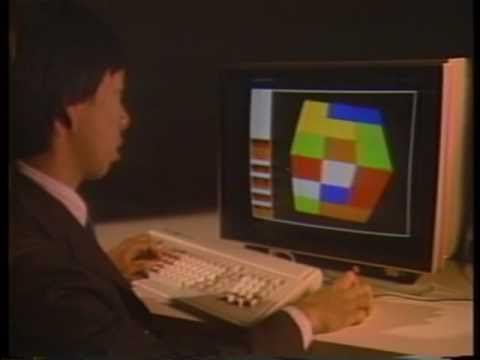
VintageCG
Citing IBM research on sub-half-second response times, Silicon Graphics argues real-time interactive rendering will dictate market winners because engineers will refuse to tolerate slower workstations.
AI-assisted summary of SGI IRIS 2400 (1985) — original source. Check the original for full context.
Source published:
Key ideas
- Silicon Graphics demonstrated the IRIS 2400 workstation executing real-time 3D graphics captured directly from monitor output to 1-inch videotape without video editing tricks or precomputed frame buffering. (0:00)
- Citing formal IBM research, the presentation argues that reducing display latency below 0.5 seconds triggers an exponential rise in engineering productivity and turnaround improvements exceeding 50% to 60%. (0:00)
- The IRIS 2400 achieves real-time 3D performance using a hardware pipeline of 12 custom VLSI Geometry Engine chips capable of processing 70,000 coordinates per second with 32-bit floating-point precision. (2:18)
- The system features Gouraud shading, hardware Z-buffering, and polygon raster fill rates up to 44 million pixels per second on Unix 4.2 BSD with Motorola 68010 or 68020 processors. (2:18)
Detailed notes
## Background Published on YouTube by VintageCG on March 7, 2010, this promotional demonstration highlights the 1985 Silicon Graphics IRIS 2400 workstation. The video's description humorously reflects on the machine's then-revolutionary ability to animate flat-shaded polygons at several frames per second, noting its 10 MHz 68010 CPU and exorbitant price tag long before SGI's famous Jurassic Park era.
## TL;DR The video showcases the Silicon Graphics IRIS 2400 workstation, presenting unedited real-time graphics captured directly from the display monitor to one-inch videotape. Citing IBM research on response latency, the narrator demonstrates how eliminating interface delay below half a second dramatically elevates engineering productivity. The presentation details the machine's Unix environment and its proprietary pipeline of twelve custom VLSI Geometry Engines that process 32-bit floating-point transformations, Gouraud shading, and hardware Z-buffering in silicon. Ultimately, Silicon Graphics argues that interactive 3D color graphics and real-time motion are fundamental necessities that redefine the entire technical design cycle.
## Atmosphere & style The presentation carries the measured, authoritative tone of a premium mid-1980s corporate technology briefing, starting with a crisp broadcast countdown and an emphatic insistence on optical honesty. Its serious, measured delivery balances hard microprocessor metrics and IBM ergonomics charts with a visionary pitch for the future of interactive computing. Watching the smooth wireframes and Gouraud-shaded solids execute across the display evokes the thrilling dawn of 3D workstation computing, when real-time geometry calculation was treated as an absolute engineering triumph.
## Bulletin - [00:00](https://www.youtube.com/watch?v=9EEY87HAHzk&t=0s) Silicon Graphics demonstrated the IRIS 2400 workstation executing real-time 3D graphics captured directly from monitor output to 1-inch videotape without video editing tricks or precomputed frame buffering. - [00:00](https://www.youtube.com/watch?v=9EEY87HAHzk&t=0s) Citing formal IBM research, the presentation argues that reducing display latency below 0.5 seconds triggers an exponential rise in engineering productivity and turnaround improvements exceeding 50% to 60%. - [02:18](https://www.youtube.com/watch?v=9EEY87HAHzk&t=138s) The IRIS 2400 achieves real-time 3D performance using a hardware pipeline of 12 custom VLSI Geometry Engine chips capable of processing 70,000 coordinates per second with 32-bit floating-point precision. - [02:18](https://www.youtube.com/watch?v=9EEY87HAHzk&t=138s) The system features Gouraud shading, hardware Z-buffering, and polygon raster fill rates up to 44 million pixels per second on Unix 4.2 BSD with Motorola 68010 or 68020 processors.
## Key takeaways - [00:00](https://www.youtube.com/watch?v=9EEY87HAHzk&t=0s) The demonstration footage was captured directly from an IRIS 2400 monitor to videotape in real time, relying entirely on standard high-level graphics software library calls. - [00:00](https://www.youtube.com/watch?v=9EEY87HAHzk&t=0s) SGI avoided standard rendering crutches of the era, such as custom microcoding software or replaying pre-rendered, frame-buffered image loops. - [00:00](https://www.youtube.com/watch?v=9EEY87HAHzk&t=0s) Minimizing display latency is framed as an economic imperative, as engineering productivity directly correlates with instantaneous system responsiveness. - [00:00](https://www.youtube.com/watch?v=9EEY87HAHzk&t=0s) IBM research showed that slashing interactive graphics display latency from 2.0 seconds to 0.5 seconds resulted in project turnaround gains of 50% to 60% or more. - [00:00](https://www.youtube.com/watch?v=9EEY87HAHzk&t=0s) User productivity in terms of transactions per hour climbs virtually vertically once response times drop below the half-second threshold. - [02:18](https://www.youtube.com/watch?v=9EEY87HAHzk&t=138s) The host architecture runs a Motorola 68010 or 68020 processor on Unix with 4.2 BSD extensions, demand-paged virtual memory, and Ethernet networking. - [02:18](https://www.youtube.com/watch?v=9EEY87HAHzk&t=138s) SGI's proprietary Multiple Exposure window manager offers engineers concurrent, overlapping workspaces. - [02:18](https://www.youtube.com/watch?v=9EEY87HAHzk&t=138s) Real-time graphics acceleration is embedded directly into foundational silicon using 12 custom VLSI Geometry Engines containing 80,000 transistors each. - [02:18](https://www.youtube.com/watch?v=9EEY87HAHzk&t=138s) The Geometry Engine pipeline handles 32-bit floating-point coordinate transformations and clipping at rates up to 70,000 coordinates per second. - [02:18](https://www.youtube.com/watch?v=9EEY87HAHzk&t=138s) The workstation draws up to 22,000 depth-cued vectors per second with true perspective correction. - [02:18](https://www.youtube.com/watch?v=9EEY87HAHzk&t=138s) The hardware natively calculates parametric cubic curves in real time, including Bézier, B-spline, and cardinal splines. - [02:18](https://www.youtube.com/watch?v=9EEY87HAHzk&t=138s) Rasterization throughput reaches up to 44 million pixels per second, featuring Gouraud shading and hardware Z-buffer hidden-surface removal. - [04:05](https://www.youtube.com/watch?v=9EEY87HAHzk&t=245s) SGI defines its modern engineering design cycle around three core visual pillars: color, dimension (2D and 3D), and real-time motion. - [04:05](https://www.youtube.com/watch?v=9EEY87HAHzk&t=245s) Color, depth, and kinetic simulation are treated as essential tools for iterative 'what-if' design exploration rather than cosmetic additions. - [04:05](https://www.youtube.com/watch?v=9EEY87HAHzk&t=245s) SGI concludes that once engineers experience true real-time responsiveness, industry expectations permanently shift away from high-latency computing.
## Detailed walkthrough ### [00:00](https://www.youtube.com/watch?v=9EEY87HAHzk&t=0s) Real-Time Interactive Graphics and the Value of Response Time
Following a crisp broadcast countdown, the demonstration opens with an uncompromised technical declaration: the footage being shown was captured directly from the display monitor of a Silicon Graphics IRIS 2400 workstation straight to one-inch videotape. The narrator stresses that there are zero special video editing effects, trickery, or post-production illusions involved. The fluid motion sequences unfolding on screen are recorded in genuine real time as they execute on the workstation display. Furthermore, the underlying code relies purely on standard calls to Silicon Graphics’ high-level graphics software library—bypassing traditional rendering crutches such as custom microcoding software or playing back precomputed, frame-buffered image loops. Silicon Graphics Computer Systems positions itself as the only workstation manufacturer truly matching the computational horsepower of a 32-bit architecture with equal or superior processing dedicated exclusively to instantaneous display response.
This architectural priority stems from an unforgiving commercial reality: in technical workstation environments, time equals money, and that cost is dictated directly by display latency. To reinforce the stakes, the presentation cites formal IBM research investigating the psychological and economic impact of system responsiveness. When system lag disappears, the dynamic between engineer and terminal undergoes a fundamental shift. In the words of the IBM study highlighted by the narrator, “When a computer and its users interact at a pace that ensures that neither has to wait on the other, productivity soars.” Work costs collapse, employee satisfaction rises, and output quality noticeably climbs.
In IBM’s specific investigations into interactive graphics applications, slashing display response times from two seconds down to half a second yielded measured project turnaround improvements of 50%, 60%, and higher. A related IBM study tracking operator throughput demonstrated that transaction-per-hour productivity spikes almost vertically once latency dips beneath that critical 0.5-second threshold. Silicon Graphics aims straight past sub-second delays toward absolute immediacy. As the narrator underscores: “We believe that the productivity of companies racing to market, or racing to deadline, or maximizing the output of key individuals will require a truly interactive system.” The engineering goal is simple yet uncompromising: provide the fastest interactive display response on the market without saddling the customer with a pricing penalty.
- Direct recording output: Taped directly from the IRIS 2400 monitor to 1-inch videotape without post-processing or optical effects. - Software baseline: Standard high-level graphics software library calls without microcoding tricks or pre-rendered frame buffering. - Empirical backing: IBM interactive graphics studies showing that cutting response time from 2.0 seconds to 0.5 seconds yields 50% to 60%+ project completion gains, with productivity curves going virtually vertical below half a second.
---
[02:18](https://www.youtube.com/watch?v=9EEY87HAHzk&t=138s) The IRIS 2400 Architecture: Geometry Engines and Hardware Acceleration
The hardware underpinning this real-time performance is tailored to satisfy demanding compute and networking standards right out of the box. The core system runs on either a Motorola 68010 or 68020 central processor, paired with the Unix operating system supplemented by 4.2 Berkeley (BSD) extensions, full demand paging, and Ethernet local area network connectivity. On the desktop interface side, SGI’s proprietary Multiple Exposure window manager provides engineers with simultaneous, overlapping, on-demand display workspaces. Crucially, the graphics performance does not rely on third-party outboard accelerators or tacked-on add-in boards; it is integrated directly into the foundational silicon architecture.
At the heart of the machine lies a pipeline of twelve custom VLSI Geometry Engine chips, each packing 80,000 transistors. Arranged in a dedicated hardware pipeline, these custom processors consume high-level Graphics Library commands and execute coordinate transformations and display calculations directly in hardware, slashing the software overhead traditionally required to render dynamic 3D visuals. Operating with full 32-bit floating-point precision, the subsystem transforms, clips, and renders visual data at speeds reaching 70,000 coordinates per second, alongside 22,000 depth-cued vectors per second drawn with perspective correction. The pipeline evaluates and draws complex parametric cubic curves—including Bézier, B-spline, and cardinal splines—in real time, while rendering smooth surfaces with Gouraud shading and hardware Z-buffer hidden-surface removal at raster polygon fill rates up to 44 million pixels per second.
```mermaid flowchart LR accTitle: SGI IRIS 2400 Hardware Pipeline accDescr: Diagram illustrating the flow from CPU and software down through the 12 Geometry Engines to the raster engine and CRT display.
subgraph Host ["Host Workstation"] CPU["Motorola 68010 / 68020 CPU"] OS["Unix 4.2 BSD + Demand Paging"] GL["Graphics Software Library"] CPU --- OS OS --> GL end
subgraph Geometry ["Geometry Pipeline"] GE["12x Custom VLSI Geometry Engines<br>(80,000 transistors each)"] Transforms["32-bit Floating-Point<br>Transforms & Clipping"] GE --- Transforms end
subgraph Raster ["Rasterization & Display"] ZB["Hardware Z-Buffer & Gouraud Shading"] Display["Color CRT Display<br>(Real-Time Interactive Output)"] ZB --> Display end
GL -->|"High-level graphics calls"| GE Transforms -->|"70,000 coords/sec<br>44M pixels/sec fill"| ZB ```
- Processor options: Motorola 68010 or Motorola 68020 microprocessor. - Operating environment: Unix operating system with 4.2 BSD extensions, demand-paged virtual memory, Ethernet networking, and the Multiple Exposure window manager. - Custom silicon: 12 pipelined VLSI Geometry Engines containing 80,000 transistors per chip. - Floating-point & vector metrics: Full 32-bit floating-point arithmetic; up to 70,000 coordinates per second transformed, clipped, and plotted; 22,000 depth-cued lines per second with true perspective. - Spline and surface support: Real-time generation of Bézier, B-spline, and cardinal spline cubic curves. - Shading & raster throughput: Gouraud shading, hardware Z-buffering for hidden surface removal, and fill rates scaling up to 44 million pixels per second.
---
[04:05](https://www.youtube.com/watch?v=9EEY87HAHzk&t=245s) Color, Dimension, and Motion: Defining the Modern Design Cycle
Silicon Graphics separates its platform from conventional workstations by structuring its visual architecture around three core pillars: the system thinks in color, it thinks in two and three dimensions, and it thinks in motion. The narrator stresses that in the iterative, exploratory "what-if" workflow central to modern engineering and industrial design, these three pillars are not cosmetic luxuries or optional enhancements—they represent the absolute essence of the design task itself.
Color allows engineers to instantly distinguish intricate layers in complex circuit layouts, inspect parts under varied simulated lighting setups, and evaluate surface finishes prior to manufacturing. True three-dimensional depth allows designers to properly judge spatial relationships and accelerate model building and iterative adjustments. Motion provides the interactive capability required to simulate real-world mechanical behaviors and kinetic performance before committing to physical prototypes.
The presentation closes with an ultimatum for organizations evaluating technical computing hardware. Design cycles inevitably follow speed: whichever process is fastest and most intuitive establishes itself as the standard for the entire discipline. The narrator warns that expectations cannot be rolled back once this threshold is crossed: “Once your users or your competitors' users have experienced real-time response, they will not settle easily for lesser productivity.” Silicon Graphics pitches the IRIS 2400 not merely as another piece of office hardware, but as the benchmark by which all future high-performance engineering workstations must be judged.
## Notable quotes > [00:00](https://www.youtube.com/watch?v=9EEY87HAHzk&t=0s) When a computer and its users interact at a pace that ensures that neither has to wait on the other, productivity soars.
> [04:05](https://www.youtube.com/watch?v=9EEY87HAHzk&t=245s) Once your users or your competitors' users have experienced real-time response, they will not settle easily for lesser productivity.
> [00:00](https://www.youtube.com/watch?v=9EEY87HAHzk&t=0s) We believe that the productivity of companies racing to market, or racing to deadline, or maximizing the output of key individuals will require a truly interactive system.
## Mentioned Silicon Graphics Computer Systems, IRIS 2400, IBM, Motorola 68010, Motorola 68020, Unix, 4.2 BSD, Multiple Exposure, Geometry Engine
## Video description BEHOLD the AWESOME POWER of the Silicon Graphics IRIS 2400 workstation. Able to animate DOZENS of flat-shaded polygons at SEVERAL frames per second! Long before SGI's Jurassic Park heyday, their early IRIS 2400 system cost more than a nice condo and came equipped with a 68010 CPU running at a blazing TEN megahertz!
[Source](https://www.youtube.com/watch?v=9EEY87HAHzk)