Uber Drivers Sleep in Cars to Chase Multi-Day San Francisco Fares
VICE News
High living costs and Uber's lack of daily driving caps push long-distance gig workers to live in their vehicles to capture algorithmic surge pricing.
AI-assisted summary of Driving For Uber, Sleeping In Her Car (HBO ) — original source. Check the original for full context.
Source published:
Key ideas
- Terri White commutes 83 miles from Stockton to San Francisco every Wednesday at 2:30 AM, living and sleeping in her Toyota Prius until Friday afternoon to earn fares in an unaffordable city. (0:01)
- White estimates that roughly one in five Uber drivers she encounters sleeps in their vehicle between shifts. (1:27)
- Unlike competitor Lyft, which locks drivers out after 14 hours in a single day, Uber imposes no daily driving hour caps on its platform. (3:07)
- When questioned about drivers residing in their vehicles, Uber claimed it was unaware of the practice and stated that it does not encourage anyone to sleep in their car. (3:07)
Detailed notes
## Background Published by VICE News on YouTube on December 19, 2016, this report follows Stockton resident Terri White as she commutes 83 miles to drive for Uber in San Francisco and sleeps in her car for days at a time. The accompanying description highlights the grueling routines of gig economy drivers serving cities they cannot afford to live in, contrasting Uber's lack of daily driving hour limits with Lyft's 14-hour cap.
## TL;DR VICE News correspondent Nellie Bowles examines the economic realities of the gig economy through Uber driver Terri White, who commutes weekly from Stockton to San Francisco and lives out of her Toyota Prius from Wednesday through Friday. Having traded a restrictive call center job for the autonomy of driving, White manages her schedule around algorithmic surge pricing and peak rush hours, breaking her sleep into fragmented daytime naps parked on city streets. The report reveals a broader subculture of gig workers who frequent local gas stations to eat and rest, while highlighting that Uber enforces no daily driving caps unlike competitors such as Lyft. Despite sleeping only one hour across a grueling 15-hour stretch, White remains committed to the grind to support her family.
## Atmosphere & style The piece carries an intimate, melancholic, yet quietly resilient tone, balancing the lonely stillness of predawn commutes with the frantic rhythm of urban rush-hour traffic. Viewers feel the heavy physical exhaustion through the cramped interior of White's Prius, contrasted sharply against her cheerful optimism and genuine appreciation for personal freedom. Bowles adopts an observant, empathetic journalistic presence, allowing the quiet absurdities of algorithmic labor and corporate detachment to speak for themselves.
## Bulletin - [00:01](https://www.youtube.com/watch?v=9abrZwnPThE&t=1s) Terri White commutes 83 miles from Stockton to San Francisco every Wednesday at 2:30 AM, living and sleeping in her Toyota Prius until Friday afternoon to earn fares in an unaffordable city. - [01:27](https://www.youtube.com/watch?v=9abrZwnPThE&t=87s) White estimates that roughly one in five Uber drivers she encounters sleeps in their vehicle between shifts. - [03:07](https://www.youtube.com/watch?v=9abrZwnPThE&t=187s) Unlike competitor Lyft, which locks drivers out after 14 hours in a single day, Uber imposes no daily driving hour caps on its platform. - [03:07](https://www.youtube.com/watch?v=9abrZwnPThE&t=187s) When questioned about drivers residing in their vehicles, Uber claimed it was unaware of the practice and stated that it does not encourage anyone to sleep in their car.
## Key takeaways - [00:01](https://www.youtube.com/watch?v=9abrZwnPThE&t=1s) Approximately 1.5 million people drive for Uber each month, frequently shuttling wealthy urban riders while taking home modest earnings. - [00:01](https://www.youtube.com/watch?v=9abrZwnPThE&t=1s) Terri White leaves Stockton at 2:30 AM on Wednesdays and remains in San Francisco working and living out of her Prius until Friday afternoon. - [00:01](https://www.youtube.com/watch?v=9abrZwnPThE&t=1s) San Francisco morning rush hour provides crucial target fares that can yield at least $50 an hour. - [01:27](https://www.youtube.com/watch?v=9abrZwnPThE&t=87s) White previously worked in a call center where managers dictated every minute of her schedule, leading her to value the autonomy of gig work despite its grueling physical demands. - [01:27](https://www.youtube.com/watch?v=9abrZwnPThE&t=87s) Sleeping in her Prius originated as a safety measure to prevent fatigued driving while working far from home. - [01:27](https://www.youtube.com/watch?v=9abrZwnPThE&t=87s) White reports having overcome initial embarrassment about sleeping in her car, framing the sacrifice as a practical choice made to support her family. - [01:27](https://www.youtube.com/watch?v=9abrZwnPThE&t=87s) An estimated one in five Uber drivers encountered by White sleeps in their vehicle. - [03:07](https://www.youtube.com/watch?v=9abrZwnPThE&t=187s) White manages her fatigue by sleeping in fragmented 3- to 4-hour intervals to stay positioned for algorithmic surge pricing windows. - [03:07](https://www.youtube.com/watch?v=9abrZwnPThE&t=187s) Local gas stations function as 24-hour community pit stops where long-haul gig drivers microwave food, park, and sleep. - [03:07](https://www.youtube.com/watch?v=9abrZwnPThE&t=187s) A gas station clerk reports encountering drivers who claim to have been working continuously for up to two days. - [03:07](https://www.youtube.com/watch?v=9abrZwnPThE&t=187s) Lyft restricts platform access after 14 hours of daily driving, whereas Uber operates without a cap on maximum consecutive driving hours. - [03:07](https://www.youtube.com/watch?v=9abrZwnPThE&t=187s) Uber responded to reports of drivers sleeping in cars by stating they had never heard of the situation and do not encourage the behavior. - [03:07](https://www.youtube.com/watch?v=9abrZwnPThE&t=187s) After 15 hours on shift with only a single hour of sleep logged, White parks on a city street to rest briefly before resuming driving late into the night.
## Detailed walkthrough ### [00:01](https://www.youtube.com/watch?v=9abrZwnPThE&t=1s) The 83-Mile Commute and Morning Rush Hour
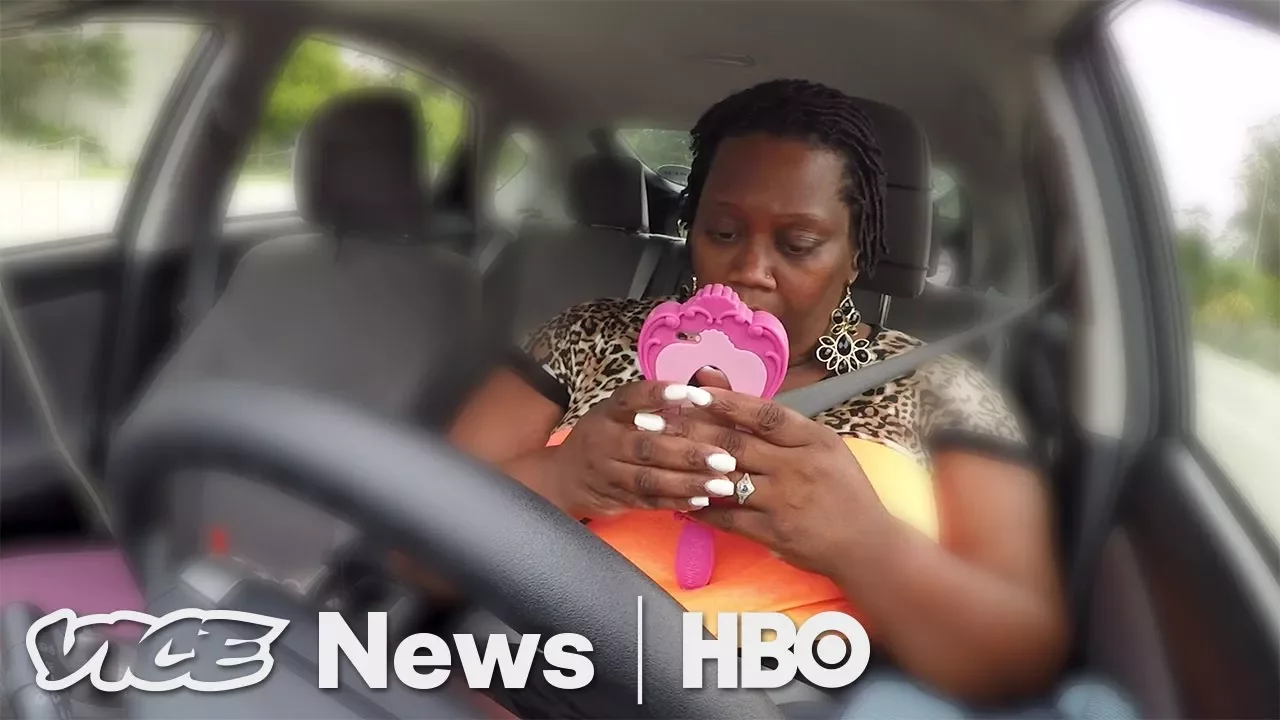
Around 1.5 million people drive for Uber each month, regularly shuttling affluent passengers through the streets of the world's wealthiest cities while clearing meager profits for themselves. In San Francisco, VICE News correspondent Nellie Bowles investigates what life looks like for a driver who cannot afford to live in the city she serves. The workweek begins in the quiet early hours of Wednesday at 2:30 AM in Stockton, California. Terri White tiptoes around her kitchen packing lunch while her entire household is fast asleep, trying to be as quiet as possible before embarking on an 83-mile drive west into San Francisco. Once she departs, she will not return home to Stockton until Friday afternoon. For the duration of her stay in the city, she lives and sleeps in the exact same vehicle she works out of: her Toyota Prius.
Arriving in San Francisco, White turns on the driver app, remarking that in this city, someone is always going somewhere. While she typically takes a quick nap as soon as she arrives in the Bay Area, today she cannot afford the rest. She needs to catch the morning rush hour immediately, where fares can bring in at least $50 an hour. Fares start coming in within moments, and she picks up passengers heading toward Market Street and Montgomery Street, greeting them warmly as the morning unfolds.
- **Monthly Uber workforce**: Approximately 1.5 million drivers worldwide. - **Terri White's commute**: 83 miles from Stockton to San Francisco every Wednesday at 2:30 AM, staying through Friday afternoon. - **Peak earning target**: Morning rush hour, which yields a minimum of $50 per hour.
```mermaid flowchart TD accTitle: Terri White Work Routine Cycle accDescr: Flowchart illustrating Terri White's weekly multi-day driving and sleeping routine between Stockton and San Francisco.
subgraph Stockton ["Home Base: Stockton"] A["Wednesday 2:30 AM: Pack lunch & leave"] G["Friday Afternoon: 83-mile drive home"] end
subgraph SanFrancisco ["Work Cycle: San Francisco"] B["Arrive in SF: Log into Uber App"] C["Morning Rush Hour: Target $50+/hr fares"] D["Midday Pause: 3-4 hr naps in parked Prius"] E["Gas Station Pit Stop: Microwave lunch & chat"] F["Evening Rush Hour: Drive late into the night"] end
A --> B B --> C C --> D D --> E E --> F F --> D F --> G ```
[01:27](https://www.youtube.com/watch?v=9abrZwnPThE&t=87s) Trading a Call Center Desk for Freedom and Car Naps
Before starting with Uber two years earlier, White spent her days working in a call center, an environment where supervisors scheduled every single minute of her shift. Despite the punishing and irregular schedule required to drive in San Francisco, she finds the gig economy far more liberating than being tied to a cubicle. As she explains to Bowles: “I love people, I love being able to breathe the air, I'm not confined to a desk, and I can do what I want.” She values having total agency over her workday, noting, “I don't have to wait for someone to relieve me for a break or a lunch, I just do it.” When fatigue sets in, she simply logs off the app.
The decision to sleep inside her Prius began as a practical safety measure rather than desperation. Explaining her reasoning, White states: “I just had this um idea to sleep in my car because I didn't want to drive when I was tired or fatigued and I just feel like it's it was safer.” When the morning rush hour peters out, she sets out to find a quiet street corner, pulls her emergency brake so the car won't roll away, reclines her driver's seat, and settles down to rest. When asked whether she feels any embarrassment about sleeping in her vehicle, White reflects that while she felt self-conscious early on, those feelings have disappeared: “At first I was but I'm not anymore because it makes sense and I do this for my family and if any of my family members say hey can you come home I'm there.”
- **Previous occupation**: Call center employee under strict, minute-by-minute schedule management. - **Tenure with Uber**: Two years. - **Driver community reality**: White estimates that one out of every five Uber drivers she encounters sleeps in their vehicle.
[03:07](https://www.youtube.com/watch?v=9abrZwnPThE&t=187s) Surge Chasing, Gas Station Pit Stops, and Platform Policies
Rather than getting an uninterrupted night of sleep, White sleeps in fragmented blocks of three to four hours. Breaking up her rest allows her to wake up refreshed and stay nimble enough to chase the shifting locations of algorithmic surge pricing. After waking up re-energized from a daytime nap, she heads to a local gas station to microwave the food she brought from home. The gas station serves as an informal hub for transient gig workers. A station employee observes that drivers cycle through 24 hours a day, stopping to eat, park, and sleep in their cars, adding: “I've met drivers that they're literally saying that they've been working for like 2 days straight.”
After eating, White returns to the road for the evening rush hour. While competitors enforce safety limits—Lyft forces drivers offline after 14 hours of continuous work in a day—Uber maintains no daily driving hour caps, allowing drivers to remain logged in as long as they choose. When Bowles contacted Uber regarding drivers living and sleeping in their vehicles, an Uber spokesperson claimed they had never heard of this occurring and issued an official written response: “We do not encourage anyone who drives with Uber to sleep in their car.” By just past 7:00 PM, 15 hours have elapsed since White left Stockton, during which she has slept for only one hour. Exhausted, she parks once more, remarking, “I'll probably sleep for a few hours and get back at it,” before reclining her seat into the night.
- **Shift duration**: Over 15 hours elapsed since leaving Stockton, with only about one hour of sleep logged prior to her evening nap. - **Sleep pattern**: 3- to 4-hour naps configured around peak surge pricing windows. - **Platform comparison**: Lyft locks drivers out after 14 hours in a single day; Uber imposes no daily hour limits. - **Uber official statement**: “We do not encourage anyone who drives with Uber to sleep in their car.”
## Notable quotes > [01:27](https://www.youtube.com/watch?v=9abrZwnPThE&t=87s) I love people, I love being able to breathe the air, I'm not confined to a desk, and I can do what I want. — Terri White
> [03:07](https://www.youtube.com/watch?v=9abrZwnPThE&t=187s) We do not encourage anyone who drives with Uber to sleep in their car. — Uber spokesperson
## Mentioned Terri White, Nellie Bowles, Uber, Lyft, San Francisco, Stockton, Toyota Prius, VICE News
## Video description On Wednesday at 2:30 AM, Uber driver Terri White left her home in Stockton, California, and drove 83 miles to San Francisco for work. She wouldn’t be home until Friday afternoon. White naps in her car between rush hours and heats up her lunch at a local gas station. She says one in five Uber drivers she meets sleeps in their car.
“I love people, I love being able to breathe the air, I’m not confined to a desk, and I can do what I want,” White told VICE News correspondent Nellie Bowles. “I don’t have to wait for someone to relieve me for a break or a lunch, I just do it.” Uber’s biggest competitor, Lyft, locks drivers out of the platform after they’ve worked 14 hours in a day. Uber does not.
Watch what its like to be an Uber driver in a city you can't afford to live in.
Read: "Uber is trying to convince Europe's highest court that it's not a taxi service" - http://bit.ly/2hA9ORR
Read: "Uber drivers discriminate against black users, new study says" - http://bit.ly/2h2o2dn
Subscribe to VICE News here: http://bit.ly/Subscribe-to-VICE-News
Check out VICE News for more: http://vicenews.com
Follow VICE News here: Facebook: https://www.facebook.com/vicenews Twitter: https://twitter.com/vicenews Tumblr: http://vicenews.tumblr.com/ Instagram: http://instagram.com/vicenews More videos from the VICE network: https://www.fb.com/vicevideo
[Source](https://www.youtube.com/watch?v=9abrZwnPThE)